




Abstract
Micro, small, and medium-sized enterprises (MSMEs) across the globe have been the major victims of the COVID-19 pandemic, which has plunged the business world into a crisis. However, employee engagement (EE) has been labeled as an essential nutrient that organizations need in order to survive in these turbulent times. This study was to investigate the effect of EE on employee performance during the COVID-19 pandemic and how job demands and job resources moderate this relationship. A sample size of 395 respondents were selected from a variety of MSMEs via a convenience sampling method. The study used a survey questionnaire approach as the main method for collecting primary data. The result of the correlation analysis showed that there was a significant relationship between EE and employee performance. It was revealed that job demands and job resources moderated the relationship between EE and employee performance. Finally, the result showed that job demands had an insignificant effect on EE, but job resources had a significant effect on EE. Thus, it can be concluded that, in the face of COVID-19, EE is a significant predictor of EP in the MSME sector.
Introduction
Employee engagement (EE) is the essential nutrient that modern organizations require in order to thrive (Dixit & Singh, 2020). Engagement is a feeling of responsibility and commitment to job performance at a higher level, for both job requirements and unrestricted effort (as cited in Ahad & Rahat Khan, 2020). Metaphorically, EE is being prescribed as the antidote to the recent crisis in the corporate business setting, and just as the world is relying on a vaccine for survival, organizations rely on EE to stay in business. Through engagement, employees are able to develop positive attitudes toward their organization and its objectives and values (Ahad & Rahat Khan, 2020). Furthermore, engagement can be used as an essential tool in transforming employees from being strategic tools to strategic partners (Rao et al., 2021). Rensburg et al. (2013) refer to engagement as employees’ involvement in their work and commitment to the organization’s vision, mission, and goals. These definitions suggest that an engaged employee goes beyond just the performance of his or her work to make sure that the performance leads to positive organizational outcomes. EE employs a three-pronged approach: intellectual engagement, which refers to how deeply an employee considers the work and ways to improve it; affective engagement, which entails a good feeling about one’s performance; and social engagement, which entails vigorously seeking out chances to talk about work-related advancements with coworkers (Chartered Institute of Personnel and Development, 2014).
Currently, the concept of EE has become one of the most popular and extensively explored fields in human resource management and academics alike (Bulińska-Stangrecka & Iddagoda, 2020; Hameduddin & Lee, 2021; Rameshkumar, 2020), as well as in the popular press (Saks & Gruman, 2020), particularly during the COVID-19 pandemic (Chanana, 2020; Kumar, 2021).
In today’s business world, most organizations are facing various forms of challenges in their efforts to develop interaction with their employees in order to build a robust labor force (Dinh, 2020). In line with this, HR managers and business leaders are compelled to focus more resources on engaging their valuable assets, as their output and performance have a direct effect on organizational productivity (Dhir & Shukla, 2019; Sharma & Sharma, 2014). Organizations globally have become much more aware of the importance of their human resources capital as a competitive edge over their competitors (Balogun & Afolabi, 2018). Through their performance, employees create a competitive edge for their organizations. According to Albrecht et al. (2015), there is a need for HR managers to include EE in their HRM policies and practices. Furthermore, organizations are required to concentrate on the elements that contribute to enhancing employees’ performance since performances have a direct linkage with the goal attainment of the organization (Biddle & Evenden, 2014).
Despite the fact that managers are responsible for ensuring EE, the managers themselves must be engaged in their work before they can effectively engage their employees (Clack, 2021). Thus, the desire to nurture effective engagement does not rest solely on the shoulders of employers and management but both the employee and the employer have active roles to play (Alharbi et al., 2021; Niranjan et al., 2021; Tauetsile, 2016). Managers may initiate EE systems, but the ultimate decision lies with employees to make use of the systems so that everybody in the organization will own them (Alharbi et al., 2021). However, in order to achieve effective engagement in the organization, there must be a clear distinction between organizational goals, and individual roles, as well as a comprehensive performance management system that provides opportunities for goal realization (Turner, 2020).
In support of the debate, there have been a few studies conducted across Africa. A study by Agyemang and Ofei (2013) in Ghana showed that between the private and public sectors, the level of EE is higher in the private sector as compared to the public sector. However, the study pointed out that EE in both sectors can be realized when employees are provided with the resources needed to perform their work roles. Again, a study by Amoako-Asiedu and Obuobisa-Darko (2017) in Ghana also revealed that employee performance in the public sector was directly related to engagement levels. That indicates that performance in the public sector is likely to be high if there is more engagement. Furthermore, a study conducted by Ohemeng et al. (2020) in Ghana also showed that EE positively and significantly influences employee performance. In Uganda, a study carried out by Sendawula et al. (2018) also revealed that EE influences employee performance in the health sector.
In line with the foregoing discussions, it is proven that engagement does not occur by chance but in an enabling work environment that has been strategically designed. Hence, certain elements or factors should be present in the organization to pave the way for EE. Thus, according to Gabr and El-Shaer (2013), factors like recognition and reward, perceived organizational support, procedural justice, and job characteristics are antecedents of EE. That is, organizational commitment, the intention to quit, employee involvement, and job satisfaction account for EE. In agreement with this, Heerden (2015) also pointed out that a number of issues that determine work engagement include family-work-related stress and personal relationships in the work setting.
There is no doubt that EE is a necessity for businesses because of its favorable impact on teams, organizational output, and employees (Bakker & Albrecht, 2018), and it is a way to enhance strategy implementation and decrease performance gaps and waste (Katili et al., 2021; Nienaber & Martins, 2020) in an organization. It is also a recipe for positive overall performance in an organization (Sutisna et al., 2020) and can, thus, be a game changer in organizational performance (Mburu et al., 2020) in this current business environment.
Although a number of studies have been done on EE, the majority of these studies have been done in developed countries, with a few in Africa, and the focus of these studies has been on employees working in health sectors and state-owned agencies, but there seems to be no study that has been carried out on EE and performance among employees of micro, small, and medium-sized enterprises (MSMEs) in sub-Saharan Africa, specifically Ghana, with the moderating roles of job demand and resources. This study is the first of its kind to attempt to study these four constructs in a single study in the context of Ghana.
However, the quality of individual performance in an organization is determined by the level of EE (Satata, 2021). This implies that it is actually EE that causes performance to influence the financial health of an organization, not performance on its own. In line with this and the presiding discussion, this study seeks to find out if EE really influenced the performance of employees in MSMEs in Ghana during the COVID-19 pandemic. Based on this, researchers ask the question:
RQ1: What is the effect of EE on employee performance in MSMEs during the COVID-19 pandemic in Ghana?
There are reliable secondary data that indicate that employees often regard job responsibilities as a source of stress since they involve putting in a lot of effort (Meijman & Mulder, 1998). That is, employees’ physical and emotional well-being has been found to be challenged by job expectations, which can result in energy exhaustion and adverse health consequences (Bakker & Demerouti, 2007; Bakker et al., 2003).
According to Schaufeli and Bakker (2004), the physical, social, and psychological needs of employees are classified as job demands. The physical job demands include components of the job that have a direct impact on the employee’s tasks, the tools used in a task, and the strength of labor in the course of task completion. The workload experienced during task performance is an example of a physical job requirement. When employees are unable to cope with the speed of work, have limited time, or basically have a lot of work to be done, this is an example of a workload (Bakker & Demerouti, 2007). On the other hand, social job demands or expectations take into account the stress that employees face as a result of their interactions with coworkers. Workplace interactions, for example, might cause anxiety if they are highly emotional and characterized by a high degree of interpersonal conflict (Schaufeli & Bakker, 2004). Interpersonal conflict, which relates to conflicting encounters with coworkers, is an example of social job demands (Spector & Jex, 1998). Employee stress levels have been proven to rise when there is a lot of interpersonal conflict in the workplace (Jehn, 1995; Jehn & Bendersky, 2003). Lastly emotional demand is the extent to which a job demands employees follow certain rules guiding their emotional displays so as to affect the feelings, attitudes, and behaviors of their clients (Heuven et al., 2006). Negative emotions, exhaustion, and other sentiments such as wrath and irritation are all examples of emotional demand (Miles et al., 2002). Depression, work anxiety, and a drop in job satisfaction are some of the other psychological pressures (Spector et al., 2006). Based on the discussion, researchers ask the following questions.
RQ2: What is the effect of job demands on EE on MSMEs during the COVID-19 pandemic in Ghana?
RQ3: Does job demand moderate the link between EE and employee performance in MSMEs?
Furthermore, some scholars have also indicated that job resources play a critical motivational function within organizations, which helps reduce sources of workplace stress (Bakker & Demerouti, 2007). In a study by Radic et al. (2020), it was shown that job resources have a favorable impact on employees’ engagement and well-being. Whereas Kenyi and John (2020) also found links between job demands, job resources, and EE. In line with their findings, EE is positively influenced by job resources. Job resources, according to Christian et al. (2011), include task diversity, task relevance, autonomy, a healthy connection with the supervisor, social support from coworkers, feedback, and transformational leadership. Job resources also refer to features of the job that (1) decrease job demands and related physiological and psychological costs; (2) aid in the achievement of work objectives; and (3) promote personal development, learning, and improvement (Schaufeli & Bakker, 2004). Job resources involve elements of an employee’s job that assist them in achieving their work goals while also stimulating their personal development (Bakker & Demerouti, 2007; Schaufeli & Bakker, 2004). Schaufeli and Bakker (2004) divided them into four categories, which correspond to the three types of job demands: physical, social, and organizational, as well as psychological. Resources (for example, copy machines and computers) that directly assist workers in completing job-related tasks are referred to as “physical resources.” Social or relational resources are interactions between employees and other members of the organization, for example, the level of social support obtained by supervisors or coworkers.
The organization provides organizational resources in general, such as financial awards and recognition. Personal attributes such as optimism and self-control are psychological resources that come from the employees themselves. Despite the fact that a variety of job resources have been found to predict EE, the impact of job resources on engagement varies by employee (Lipson, 2020). This is to say that each employee will react differently to a specific job resource. According to Zhang and Farndale (2021), employee age characteristics have a substantial effect on determining engagement. In particular, the researchers discovered that younger staff was more engaged than older ones. In this study, “job resources” refer to physical, social, organizational, and psychological resources that employees require in order to efficiently perform their tasks. In line with this discussion, researchers ask the question:
RQ4: What is the effect of job resources on EE on MSMEs during the COVID-19 pandemic in Ghana? RQ5: Does the job resource moderate the link between EE and employee performance in MSMEs?
As debated above, the majority of existing studies on the relationship between EE and employee performance have been conducted in developed countries among employees of private and public enterprises, the health sector, university staff, small-scale enterprises, and many more based on the European context, with a minimum of empirical studies looking at the impact of EE on the performance of MSMEs in sub-Saharan Africa, specifically Ghana.
Choosing Ghana as the research context is a step in the right direction for this study because Ghana, like every other country in the world, suffered hugely in terms of economic growth during the COVID-19 pandemic. Many workers lost their jobs, creating job insecurity among those who were still in post (Aduhene & Osei-Assibey, 2021), leading to the development of psychological turbulence; some even had to lose their lives, had family-related problems, and many more. All of these factors have a negative influence on the performance of employees when left unattended, which ultimately affects an organization’s ability to survive. As a developing country, our economic growth is largely dependent on MSMEs. In the Ghanaian economy, MSMEs serve as the key source of employment. The sector is the largest employer in both rural and urban Ghana, and 92% of all businesses in Ghana fall within this sector (Amoah & Amoah, 2018). In line with this, the study then set out to examine the impact of EE on employee performance, and how job demands and job resources moderate the link between EE and employee performance in some selected MSMEs in Ghana during the COVID-19 pandemic. This study is set to contribute to the knowledge gap in the areas of EE and EP by studying MSME sectors in the Ghanaian context with the inclusion of two moderating variables (job demand and job resources) in a single study, as there seems to be no study like this. Moreover, it can be assumed that the findings from this study will contribute considerably to the knowledge gap and the practice of in line with the study’s general objective, which is to examine the impact of EE on employee performance and how job demands and job resources moderate the link between EE and employee performance in some selected MSMEs in Ghana during the COVID-19 pandemic. The study’s specific objectives are as follows:
To examine the impact of EE on employee performance. To evaluate the effect of job demands on EE. To evaluate the effect of job resources on EE. To examine the extent to which the relationship between EE and employee performance is moderated by job demands and job resource.
Literature and Hypothesis Development
Employee Engagement
In the organizational sciences, engagement is becoming more widely acknowledged as a major study issue (Sonnentag, 2011). EE, for example, is positively connected to productivity (Rich et al., 2010), organizational commitment (Chalofsky & Krishna, 2009), and organizational citizenship behaviors, whereas it is negatively related to outcomes like turnover intentions and exhaustion (Schaufeli et al., 2009). Rao et al. (2021) define EE as the barometer that measures the relationship of an employee with his or her organization. EE is the willingness of employees to add value to their organizations beyond just the performance of their jobs (Alharbi et al., 2021). Thus, Turner (2020) argues that EE is a strategic rather than a tactical or operational concept due to its vast business advantages.
As a result, corporate organizations have also tried to define the concept of EE. Consequently, Storey et al. (2008) reviewed and highlighted some of the commercial definitions of the concept that have been put forward by some of the most renowned organizations in the world. First, EE, as defined by Caterpillar Company, refers to employees’ level of commitment, work effort, and willingness to stay in the organization. The Gallup institution simply defined EE as employees’ taking part in their work with enthusiasm. The company, however, expounded the meaning of the construct by referring to “engaged employees” as employees who are genuinely interested in their jobs, have a positive feeling about their organizations, and are more likely to promote innovation and propel the company ahead (Gallup Organisation, 2006). Dell Inc. also defines EE as a purposeful effort that businesses must make with the intention of winning their employees’ minds and hearts in a variety of ways that result in unexpected effort. Finally, the Corporate Leadership Council defines EE as the extent to which employees are dedicated to their jobs, the level of effort they put in, and the length of time they remain in the organization as a result of their dedication.
However, academics and practitioners have not been able to give a clear and generally accepted definition of the construct (Gupta & Sharma, 2016), resulting in variations in its definition (Shrotryia & Dhanda, 2020). That notwithstanding, Sun and Bunchapattanasakda (2019) categorized all the definitions of EE into two kinds after conducting an exhaustive assessment of the current literature on the subject. These are the multifaceted and unitary definitions. The multifaceted definitions of the construct take into consideration the three domains of EE: vigor, dedication, and cognitive engagement in the conceptualization of EE. For example, Shuck and Wollard (2010) describe EE as an employee’s emotional, behavioral, and cognitive state that is aimed directly toward the intended outcome of the organization. It is also referred to as the concurrent active utilization of one’s cognitive, emotional, and physical energies in the performance of his or her work (Rich et al., 2010). Similarly, Barrick et al. (2015) defined EE as the collective effort where all the members of an organization cognitively, physically, and emotionally put in their work. According to Shuck et al. (2017), EE is a constructive, vigorous, job-related mental state that is driven by the preservation, passion, and focus of mental, emotional, and behavioral vitality.
On the other hand, the unitary definitions conceptualize EE as a dedicated willingness, a positive state of mind, and the opposite of burnout. For instance, EE is said to be a goal-oriented psychological state whereby individuals completely concentrate on the activity at hand. Alias et al. (2014) further stated that EE refers to an employee’s level of devotion and interest in his or her company. According to De Braine and Roodt (2011), EE describes an employee’s motivation and ability to help their organization flourish by substantially providing discretionary effort on a long-term basis. In the same way, Myrden and Kelloway (2015) stated that EE refers to employees’ preparedness to devote themselves and increase their discretionary effort with the aim of helping the employer succeed by being passionate, enthused, and devoted to their work and the organization as a whole. It involves an employee’s participation and fulfillment at work, along with his or her passion for work (Harter et al., 2002).
These definitions clearly view EE as a positive state of mind (unitary) as well as encompassing vigor, dedication, and cognitive abilities (multifaceted). Employees who are highly engaged are more cognizant of the organizational setting and vigorously collaborate with coworkers to increase on-the-job performance for the company’s benefit (Robinson et al., 2004).
Employee Performance
Every organization requires talented employees who have the ability to complete their work (Kurniawan, 2018), because an organization’s success or failure is determined by its employees’ performance (Elnaga & Imran, 2013; Mathis, 2016; Obuobisa-Darko & Tsedzah, 2019). Mangkunegara (2009) describes employee performance as work results in relation to the quality and quantity attained by employees in performing their jobs. Dessler (2016) also defines employee performance as the result of the actual performance of an employee compared to their expected performance. Performance relates to the accuracy, cost-effectiveness, thoroughness, and pace with which tasks are completed in comparison to a set of standards (Jabeen & Rahim, 2021). Jabeen and Rahim (2021) define employee performance as both nonfinancial and financial outcomes relating directly to the success of an organization. Therefore, successful businesses hold employee performance in high esteem since the performance of employees defines the success of organizations. However, many organizations are struggling to manage the performance of their employees, and some are totally putting an end to their usual way of measuring performance because of the COVID-19 crisis (Aguinis & Burgi-Tian, 2021). Interestingly, this is the time when organizations require data on employee performance to make critical decisions to thrive in a crisis. Job performance or individual work performance are other terms for employee performance.
Employee productivity and output are used to assess employee performance, which impacts or aids the organization’s efficiency and effectiveness in attaining its objectives (Amoako-Asiedu & Obuobisa-Darko, 2017). Based on the foregoing viewpoints, it is reasonable to assume that employee performance is the consequence of one’s quality and quantity of work achieved in an organization while performing his or her job. In contrast, other researchers and scholars view performance in relation to an employee’s behavior rather than his or her actual work results. For instance, Campbell (1990) defined individual work performance as the actions or acts that are important to the organization’s objectives. Aguinis defines performance as what employees do rather than what they generate or the outcomes of their work (Simther & London, 2009). Performance is the ability to put in effort in conjunction with organizational policies in order to attain specific goals. According to Jex and Britt (2002), employee performance can be broadly defined as all of an employee’s actions while on the job. It is also defined as every employee’s true behavior expressed as work achievement relevant to their job in the company (Ahmed & Ramzan, 2013).
Several indicators can be used to evaluate organizational performance or employees whose performance has a direct influence on the output of the institution. According to Nassazi (2013), profitability denotes an organization’s capability to create consistent profits over time, and it is assessed as the profit-to-sales ratio or return on capital invested. Efficiency is the ability to deliver the best results with the fewest resources feasible, whereas effectiveness is the ability of people to achieve the intended goals or targets (Stoner, 1996). Productivity evaluates how an employee or organization converts inputs into output (in the form of goods and services), and it is quantified as the ratio of output generated to inputs needed to achieve that output (Stoner et al., 1995). Finally, quality refers to how well the qualities of a company’s products or services meet the demands and desires of its customers (Kotler et al., 2002; Nassazi, 2013). All in all, the output of each employee in an organization can be improved in the presence of EE (Garg et al., 2018). In this study, employee performance means explicit behaviors that are required to perform a task, go beyond the job description, and take initiative at work.
EE and Employee Performance
A company’s control over valuable, scarce resources and capabilities results in a long-term competitive advantage that is non-substitutable (Kaoud, 2018). From this viewpoint, EE may be a rare and valuable asset for organizations seeking to improve employee performance, particularly during this period of COVID-19. Several studies via the Resource Based View Theory have found a link between EE and employee performance, which leads to improved organizational outcomes (Govender & Bussin, 2020; Linggiallo et al., 2021; Satata, 2021; Tensay & Singh, 2020). Dhir and Shukla (2019), for example, studied the impact of organizational image on EE and performance. The study’s results give employees and employers a platform to better understand and increase EE and performance by establishing a good and consistent corporate image.
In a study by Anitha (2014) looking at drivers of EE and how they affect performance. The findings demonstrated that all of the selected elements were determinants of EE, with the work setting and team and coworker relationships having the greatest impact. The study also found that EE had a significant impact on employee performance. Furthermore, the study of Dajani (2015) established that EE had a significant impact on-the-job performance of 245 bank employees from both private and public sector banks in Egypt. However, EE was found to have less impact on organizational commitment.
In addition, the study carried out by Sendawula et al. (2018) in Uganda’s health sector to determine the impact of training and EE on employee performance revealed that EP predicted both training and EE by 44.7, whereas EE was found to be a more important predictor of employee success than training. In Jepkorir’s (2014) study on the perceived relationship between EE and performance at East African Portland Cement Company Limited, using a sample size of 260 people, it was shown that employees were committed to producing high-quality work that they were proud of and also worked for lengthy periods of time. Again, a study by Meswantri and Ilyas (2018) on the impact of transformational leadership, employee placement, competency, and EE on employee performance in DKI Jakarta construction and construction enterprises revealed that, transformational leadership, employee placement, and competence all had a positive and significant effect on EE, either partially or simultaneously. Also, a study by Shaheen et al. (2017) establishing the relationship between worker relations with supervisors, EE, and job performance in Bangladesh found that employee relations with supervisors significantly impact employee productivity and engagement. Again, EE was found to mediate the relationship between employee relations and employee performance. That is, employees with jobs that provided a higher degree of autonomy, task complexity, task identity, and responses were more engaged and, as a direct consequence, received higher ratings for performance from their supervisors.
Previous studies have found a positive relationship between EE and performance. Anitha (2014), Dajani (2015), Sendawula et al. (2018), Dhir and Shukla (2019), and many others are among those who have conducted studies on EE and employee performance but not on MSMEs in developing economies like Ghana. Therefore, very little is known about the potential relationship between EE and employee performance in sub-Saharan African countries such as Ghana within the MSME sector. Therefore, a hypothesis can be drawn from the above discussions as follows:
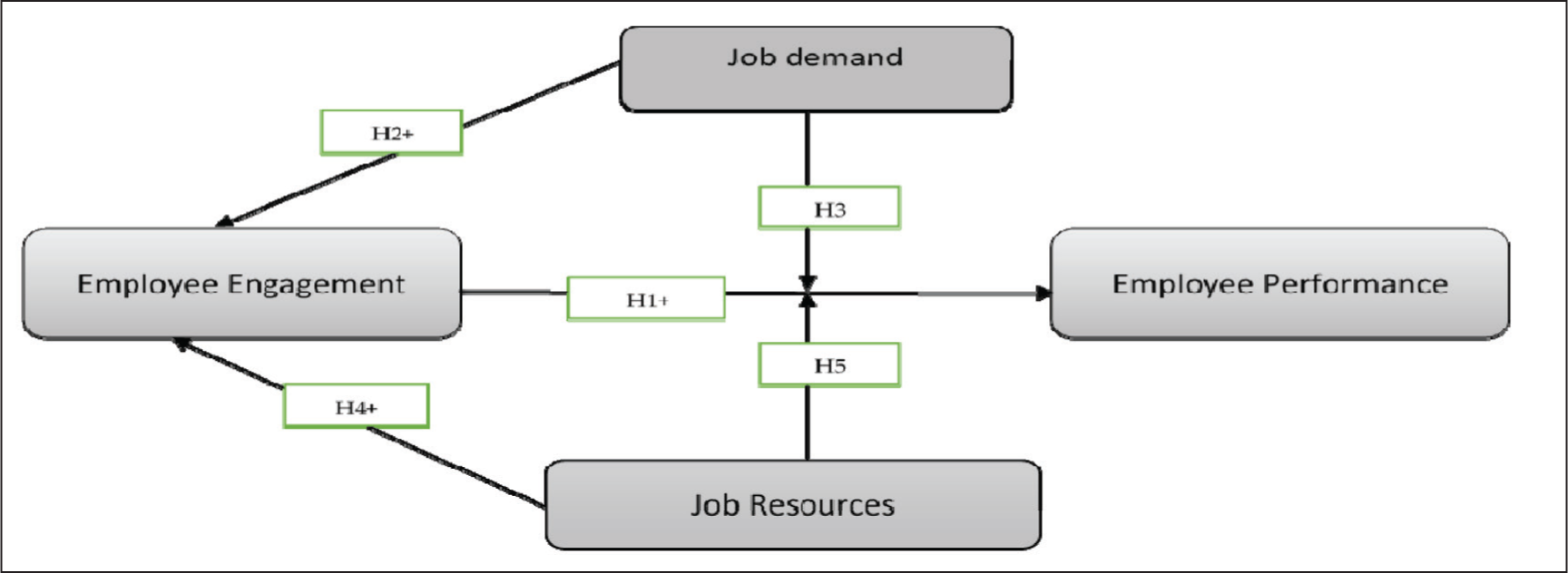
H1: EE has a positive correlation with employee performance.
Job Demands and EE
The job demands and resources (JD-R) theory can be used as an integrated theoretical framework for workplace monitoring with the goal of increasing work engagement and preventing burnout (Schaufeli, 2017). Job demands are work characteristics that cost energy, for instance, workload, complicated tasks, and disagreement (Bakker & Demerouti, 2018). They are job characteristics such as physical, social, or psychological demands that involve constant physical and/or psychological (mental and affective) exertion or abilities linked to physiological and/or psychological expenses (Bakker et al., 2007; Schaufeli & Bakker, 2004). Job demand is viewed as a cause of stress (Meijman & Mulder, 1998), draining employees’ energy and leaving them fatigued and unsure of where to focus their efforts. When a job requires more time investments and these efforts turn out to be extra difficult to make owing to excessively demanding work conditions, the likelihood of organizational citizenship behavior diminishes.
According to Crawford et al. (2010), the association between occupational demands and EE differed depending on the type of demand. As a result, the researchers identified two types of employment demands: stressors and challenges. Job demands that employees see as obstacles were shown to have a negative association with EE, whereas demands that employees see as challenges were found to have a good link with EE (Crawford et al., 2010). Job hindrances were also found to be negatively correlated with vigor, a crucial component of EE, by Van den Broeck et al. (2010), whereas job challenges were positively associated with vigor. As well, a study conducted by Radic et al. (2020) showed that job demands influenced engagement among cruise ship employees negatively. Again, Podsakoff et al. (2007) confirmed these relationships when the results of their meta-analyses of 183 independent samples revealed that hindrance stressors were negatively related to job satisfaction and organizational commitment; in contrast, challenge stressors were positively related to the same variables. Li et al. (2020) also found that the presence of high job demands resulted in negative outcomes; however, the negative outcomes were weaker in job demands that are perceived as high challenges. Clearly, the empirical review shows that job demands may influence EE negatively or positively.
In addition, a study by Peng (2015) looked at how work engagement is influenced by the outcomes of the relationship between job resources (i.e., perceived organizational support, immediate superior support, colleague support, autonomy, recognition, job prestige, and perceived external prestige), work-life enrichment, job demands, and core self-evaluations. The findings of the study revealed that job demands only had a moderating effect on the work-to-personal life enrichment and work engagement correlations, implying that when job demands are higher, the impact of work-to-personal life enrichment and work engagement is increased. In line with the above discussion, researchers hypothesize the following:
H2: Job demands will positively relate to EE. H3: Job demands moderate the relationship between EE and employee performance.
Job Resources and EE
Within an occupation, job resources can be found at various levels (Bakker & Demerouti, 2007). Job resources, according to Christian et al. (2011), include task diversity, task relevance, autonomy, a healthy connection with the supervisor, social support from coworkers, feedback, and transformational leadership. Job resources also refer to features of the job that (1) decrease job demands and related physiological and psychological costs; (2) aid in the achievement of work objectives; and (3) promote personal development, learning, and improvement (Schaufeli & Bakker, 2004). Furthermore, job resources are frequently viewed as playing a critical motivational function inside an organization and can assist in reducing sources of workplace stress (Bakker & Demerouti, 2007).
Quite a lot of studies have resorted to the JD-R theory as a basis to explain EE (Lee et al., 2020) and its relationship with job resources. For instance, Farndale and Murrer (2015) looked at the link between work resources and EE, along with the moderating role of national differences. The study’s findings revealed that in all three nations, (Mexico, the Netherlands, and the United States), job resources, for instance, team climate, financial rewards, and participation in decision-making, have a favorable impact on engagement. Furthermore, a study by Xanthopoulou et al. (2009) looking at the link between job resources, personal resources, and work engagement found that job resources were favorably associated with work engagement. Additionally, Bakker and Demerouti (2007) discovered that having additional job resources has a considerable positive impact on work engagement. Albrecht and Marty (2020) looked at the impact of self-efficacy and job resources on EE, affective commitment, and intention to leave and found that job resources have both direct and indirect effects on involvement. Similarly, Radic et al. (2020) discovered that job resources had a favorable impact on cruise ship employees’ engagement and well-being. In the context of South Sudan, Kenyi and John (2020) investigated the links between job demands, job resources, and EE. According to the findings, EE is positively influenced by job resources. This empirical evidence is sufficient to back up the JD-R theory that job resources lead to motivational processes like work engagement.
Furthermore, in the study by Peng (2015) on how job resources (i.e., perceived organizational support, immediate superior support, coworker support, personal freedom, recognition, job reputation, and perceived external reputation), work–life enrichment, job demands, and core self-evaluations influence work engagement, The study revealed that job resources only had a moderating effect on the work-to-personal life enrichment and work engagement correlations, implying that when job demands are higher, the impact of work-to-personal life enrichment and work engagement is increased. Again, the study revealed that work engagement was favorably linked to employee performance, and job resources substantially moderated the interaction. In addition, a study by Jauhari and Yulianti (2020) revealed that job resources have a strong beneficial influence on EE, and EE moderated the association between job resources and turnover intentions. From the above discussion, the study hypothesizes the following: Figure 1 is the conceptual framework of the study, which highlights the links between constructs of the study such as employee engagement, employee performance, job demand and job resources.
H4: Job resources will positively relate to EE.
H5: Job resources moderate the relationship between EE and employee performance.
Conceptual Framework
Highlights the Connections Between the Constructs Used in This Research.
Methodology
Sample and Procedures
The study used a self-administered, standardized questionnaire for data collection. The study population was selected by means of snowball sampling techniques. This was made possible through the personal and social contacts of the researchers. In all, 36 MSMEs were selected for this study. A total of 395 employees were selected from the 36 MSMEs, made up of operatives (244), supervisors (119), and those holding managerial positions within the Asante region of Ghana, specifically Kumasi. A questionnaire was administered to study respondents by means of convenience sampling. The convenience sampling was adapted due to the nature of work of employee whereby most often they are mostly not stationed within the enterprise. All respondents were provided with questionnaires to answer based on how they perceive EE and its impact on performance, using job resources and job demands as moderators in the midst of the COVID-19 pandemic. A total of 416 questionnaires were completed and returned, out of a total of 550 sent out. However, 21 out of the 416 were excluded because not all the items on these questionnaires were answered. Therefore, only 395 questionnaires were used for the data analysis, representing a response rate of 72%. Out of the 395 respondents, 213 (representing 53.9%) were females, while 182 (representing 46.1%) were males.
Research Instrument
The study instrument was an adapted standard structured questionnaire that had already been validated in previous studies. The questionnaire was divided into five major sections: Section A consisted of questions designed to elicit demographic information from participants. Section B contained questions measuring EE with a 10-item scale adapted from Sak’s Job Engagement and Organisation Engagement scales by Saks (2006). Section C contained questions measuring employee performance with a 17-item scale adapted from version 1.0 of the Individual Work Performance Questionnaire by Koopmans et al. (2014), having the following dimensions: task performance, contextual performance, and counterproductive work behavior. Section D measured job resources with a 10-item scale adapted from Schaufeli and Bakker (2004) and Chen and Kao (2012). Section E measured job demand with a 9-item scale.
Data Analysis and Results
The data gathered using questionnaires was physically inspected to remove any questionnaires that were not fully answered. Those deemed fully answered and appropriate were entered into Excel and exported into Statistical Package for Social Sciences (SPSS) version 22 for further cleaning and analysis. In order to test the proposed research model and hypothesis in this study, the partial least square (PLS) structural equation modeling (SEM) technique was employed to analyze the data. The Smart PLS 3.0 statistical software was used in analyzing the data. However, the validity and reliability of the constructs were established using SPSS version 22.0. Both correlation analysis and descriptive statistics were also performed using SPSS version 22.0.
Demographic Characteristics of Respondents
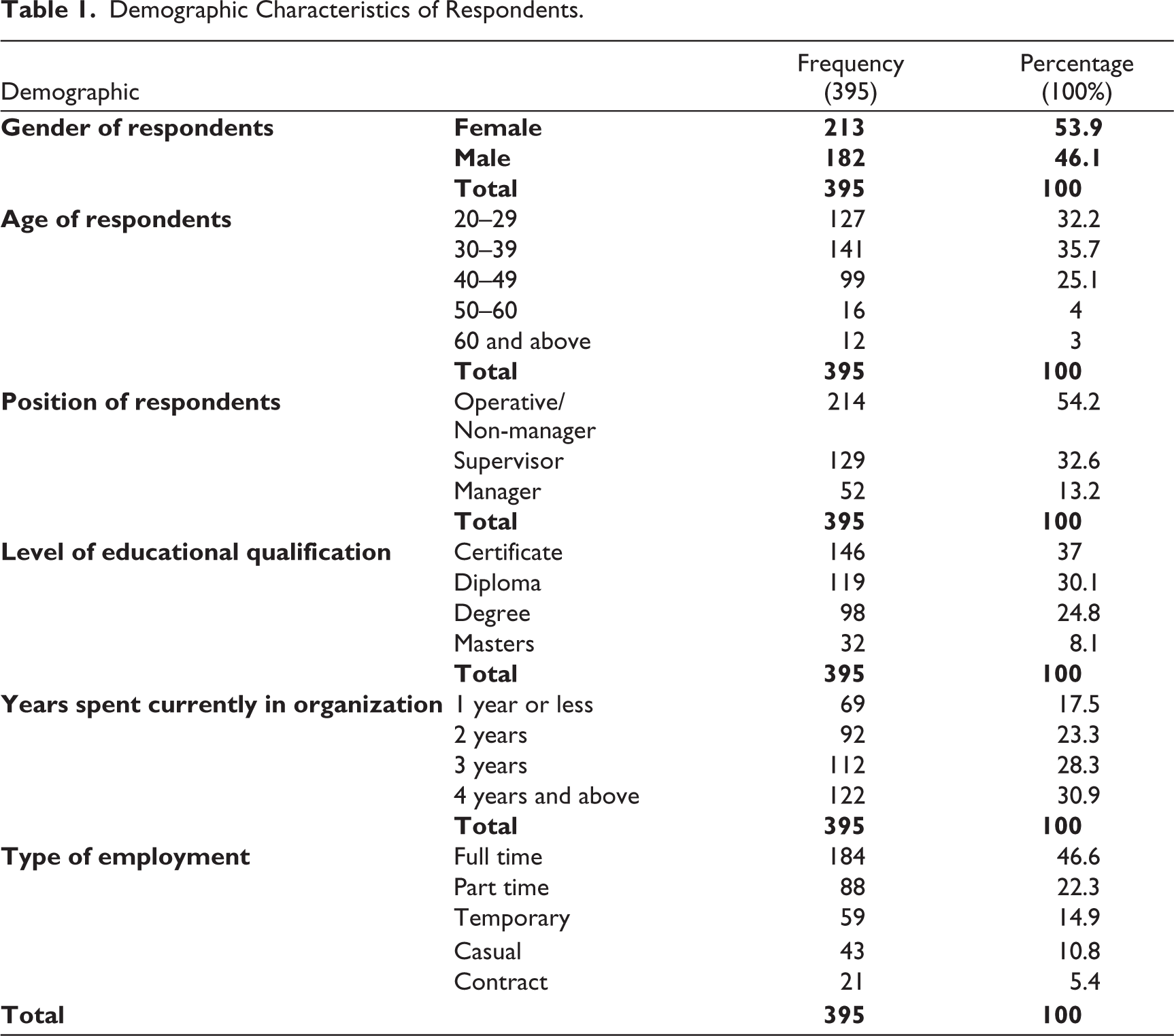
The demographic attributes of respondents are depicted in Table 1. The table contains the gender ratio, age of respondents, and type of employment. From Table 1, out of 395, 213 of the respondents (53.9%) were females, whereas 182 of the respondents (46.1%) were males. In terms of age, 141 of the respondents (35.7%) were between the ages of 30 and 39, while 127 of the respondents (32.2%) were between the ages of 20 and 29, with the least age brackets being 50–19 and 60 upward with 4% and 3%, respectively. In terms of respondents’ positions, more than half (214) of the respondents (54.2%) were operatives or non-managers, 129 of the respondents (32.6%) were supervisors, and 32 of the respondents (13.2%) held managerial positions. With educational level, out of 395 respondents, 146 (37%), 119 (30.1%), 98 (24.8%), and 32 (8.1%) were certificate holders.
Demographic Characteristics of Respondents.
Results
Table 2 shows the discriminant validity of the four constructs under study. The Fornell and Larcker test was used to test the discriminant validity of the variables. The square root of AVE, according to Fornell and Larcker (1981), should be more than 0.5. Having discriminant validity means that each construct captures a distinct phenomenon that is not reflected by any other construct in the model (Hair et al., 2017). This examines how distinct one construct is from another (Amoako-Asiedu & Obuobisa-Darko, 2017). The results presented in Table 2 show that the control and latent variables in this study are distinct from each other, as each of them recorded a value greater than 0.5.
Discriminant Validity Results.
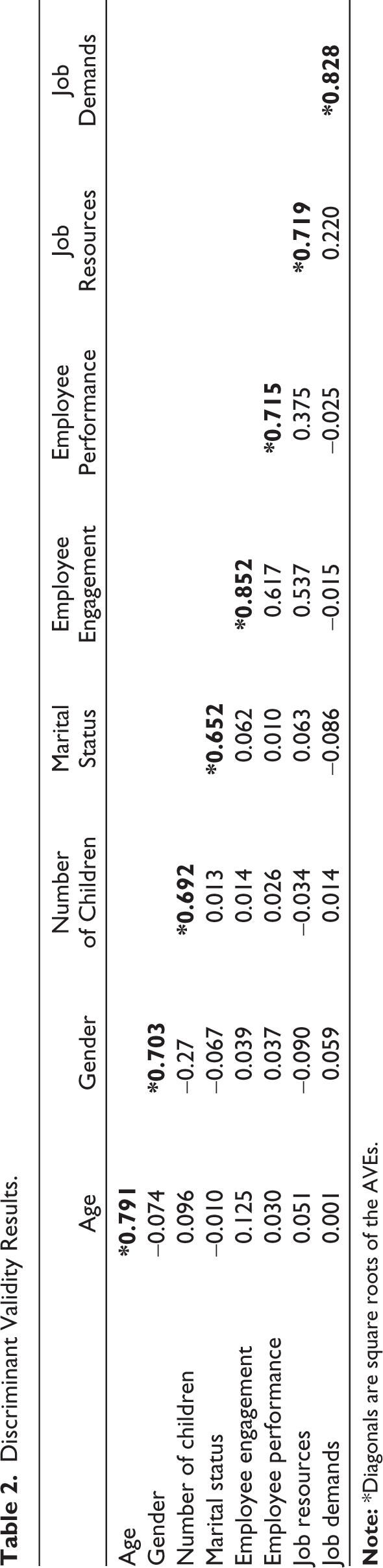
Table 3 is a Pearson correlation matrix analysis assessing the connection between the variables in the study. The correlation analysis was done based on the demographics (age, gender, marital status, and number of children). From the correlation analysis above, age was found to have a positive correlation with EE (r = 0.125, p < 0.01). This implies that the age profile of employees plays a significant role in predicting engagement. Similarly, gender was positively related to EE (r = 0.039, p < 0.01). This indicates that gender influences the engagement levels of employees. These findings are in agreement with those of a study conducted by Khodakarami and Dirani (2020), who discovered that age and gender have an impact on the level of EE. From the study’s findings, women were found to be more engaged than men are. Again, younger employees were more engaged than older employees were.
Pearson Correlation Matrix.
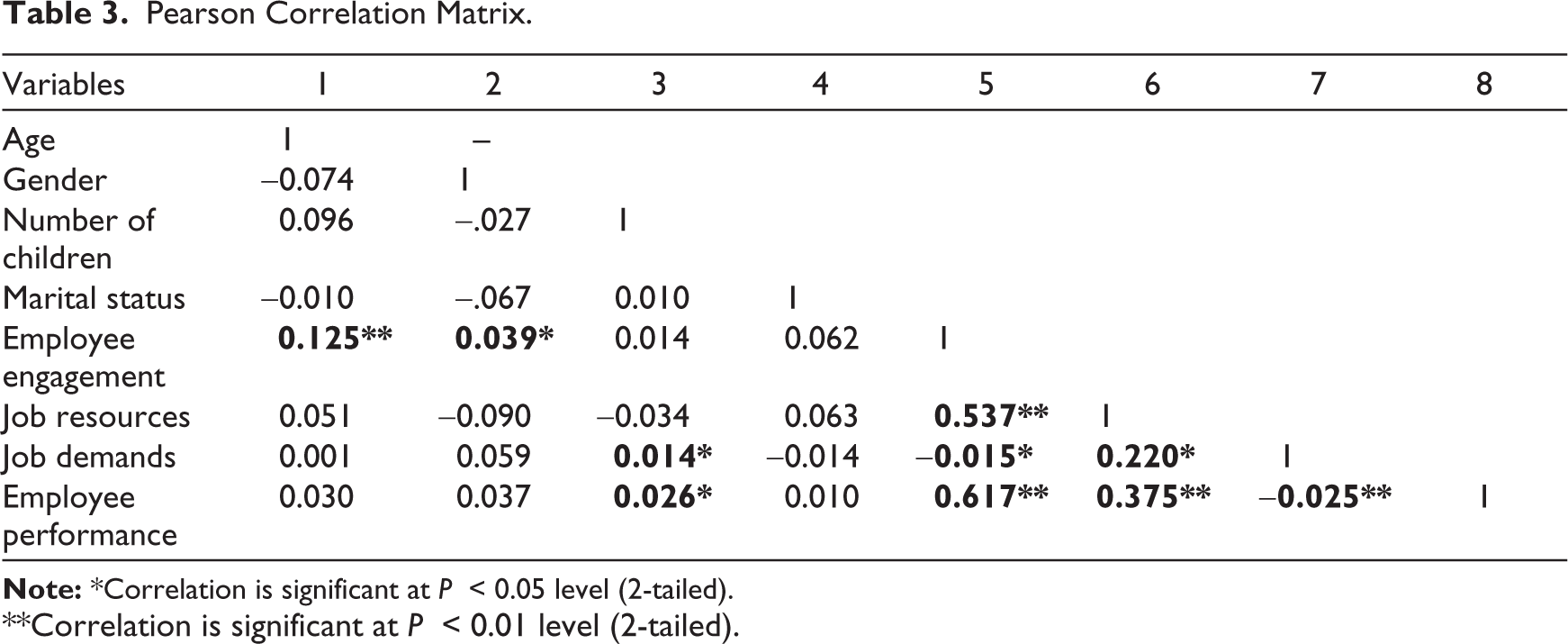
**Correlation is significant at P < 0.01 level (2-tailed).
Table 4 shows SEM of the relationship between constructs. The table displays the path relationships examined. The results are presented in line with RQ1, RQ2, and RQ4. From Table 4, path C shows the result of the direct effect of EE on employee performance. In path C, the coefficient value of (β = 1.550, p = 0.000) indicates that EE has a positive impact on employee performance in the selected MSMEs. This means that when EE levels go high, the performance of employees will also increase, and vice versa. This answer’s research question 1, which is in line with the first hypothesis (H1), is, therefore, supported. Again, from Table 4, path B shows the results of the direct effect of job demands on EE. Path B (β = –0.466, p = 0.136) shows that there was an insignificant relationship between job demands and EE. This suggests that job demands did not significantly predict EE in the selected MSMEs during the pandemic. Although there was a negative relationship between job demands and EE, the effect was insignificant. This answers research question 2, and per the findings, the study’s second hypothesis (H2) is not supported.
Direct Paths Results of Study Constructs.

Furthermore, Table 4, path A, shows the result of the direct effect of job resources on EE. Path A (β = 1.548, p = 0.001) shows that job resources significantly predicted EE in the selected MSMEs. Thus, once employees are provided with the needed resources, engagement levels will increase. This implies that EE will increase once employees have the necessary job resources. As a result, financial incentives, tools and materials, social support, training and development, autonomy, and flexibility have the potential to increase EE during crisis moments. This also answers research question 4, and per the findings, the study’s fourth hypothesis (H4) is supported. From the study between job resources and job demands, job resources have the highest coefficient (1.548), implying that job resources will have the greatest impact on EE. In contrast, job demands will have less of an impact on EE (0.446). Figure 2 shows, the path relationships between constructs. Path A shows the direct effect of job resources on EE; path B shows the relationship between job demands and EE; and path C shows the effect of EE on employee performance in the selected MSMEs.
The SEM Showing Path Relationships Between Constructs.
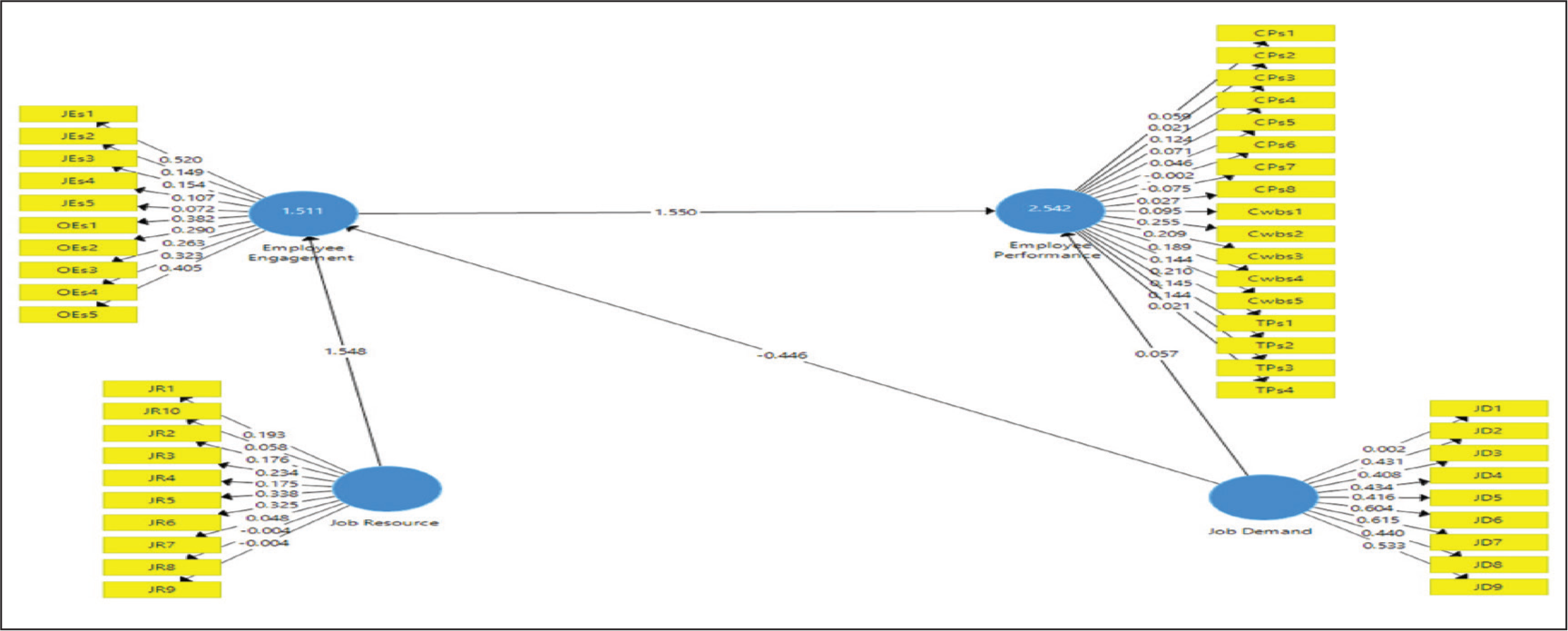
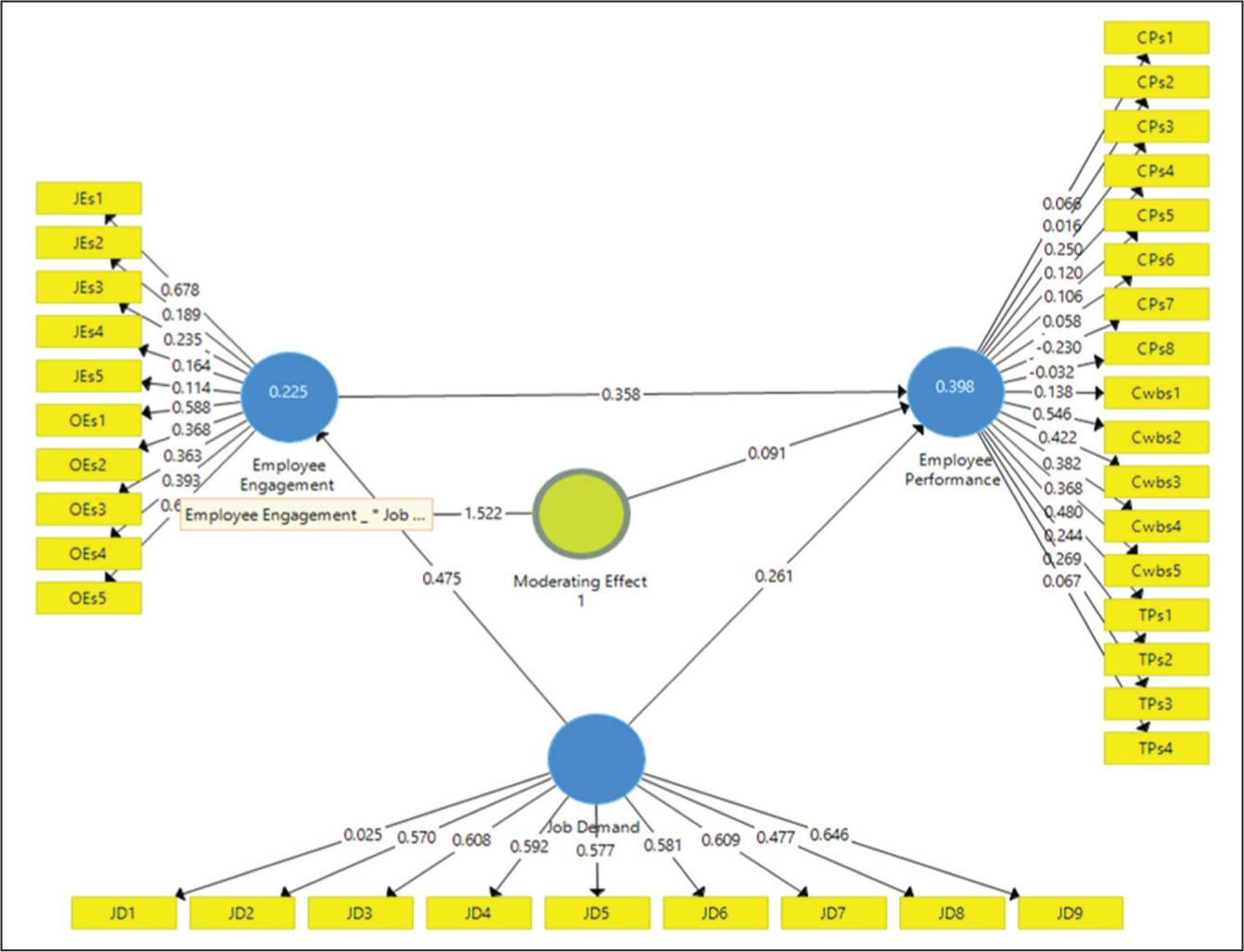
Table 5 also shows SEM of the relationship existing between constructs. Table 5 displays the path relationship, examining the moderating effects of job demands on the relationship between EE and employee performance. From the table, the coefficient value of (β = 0.358, p = 0.000) confirmed that there was a significant and positive correlation between EE and employee performance. Furthermore, the results (β = 0.475, p = 0.136) indicated that there was an insignificant relationship between EE and job demands. This means that job demands do not significantly predict EE in the selected MSMEs. Also, (β = 0.261, p = 0.016) pointed out that there was a significant correlation between job demands and employee performance in the selected MSMEs during the pandemic. With the moderation role, the results (β = 0.091, p = 0.026) showed that job demands significantly moderated the link between EE and employee performance in the selected MSMEs, as indicated in Table 5. This finding, therefore, answers research question 3, and per the findings, the study’s hypothesis three (H3) is, therefore, supported. Figure 3 shows the moderating effect of job demand in the link between employee engagement and employee performance.
Moderating Role of Job Demand.

Table 6 displays the path relationship examining the moderating effects of job resources on the relationship between EE and employee performance. Based on the findings in Table 6, the results (β = 0.300, p = 0.000) indicated that EE and employee performance have a positive and significant relationship in the selected MSMEs. Similarly, EE contributes to employee performance in the selected MSMEs. The following step investigated the link between job resources and EE; the resultant (β = 0.432, P = 0.001) demonstrated that job resources significantly predicted EE in the selected MSMEs. In step two, job resources were included in the equation, and the results show that job resources can predict EE significantly in the selected MSMEs. In step three, the relationship between job resources and employee performance was also tested. The results (β = 0.368, P = 0.000) revealed that there is a positive and significant link between job resources and employee performance in the selected MSMEs. Therefore, providing employees with the resources they require will influence them to improve their performance in the organization. Finally, the moderating effect tested shows that the coefficient value of (β = 0.122, P = 0.003) implies that job resources moderated the relationship between EE and employee performance in the MSME sector during the pandemic. Based on the finding that this answers research question 5, and per the study’s findings, the predicted hypothesis five (H5) is supported. Figure 4 shows the moderating effect of job resources in the link between employee engagement and employee performance.
The Moderating Role of Job Demand.
Moderation Effect Results for Job Resources.

The Moderating Role of Job Resources.
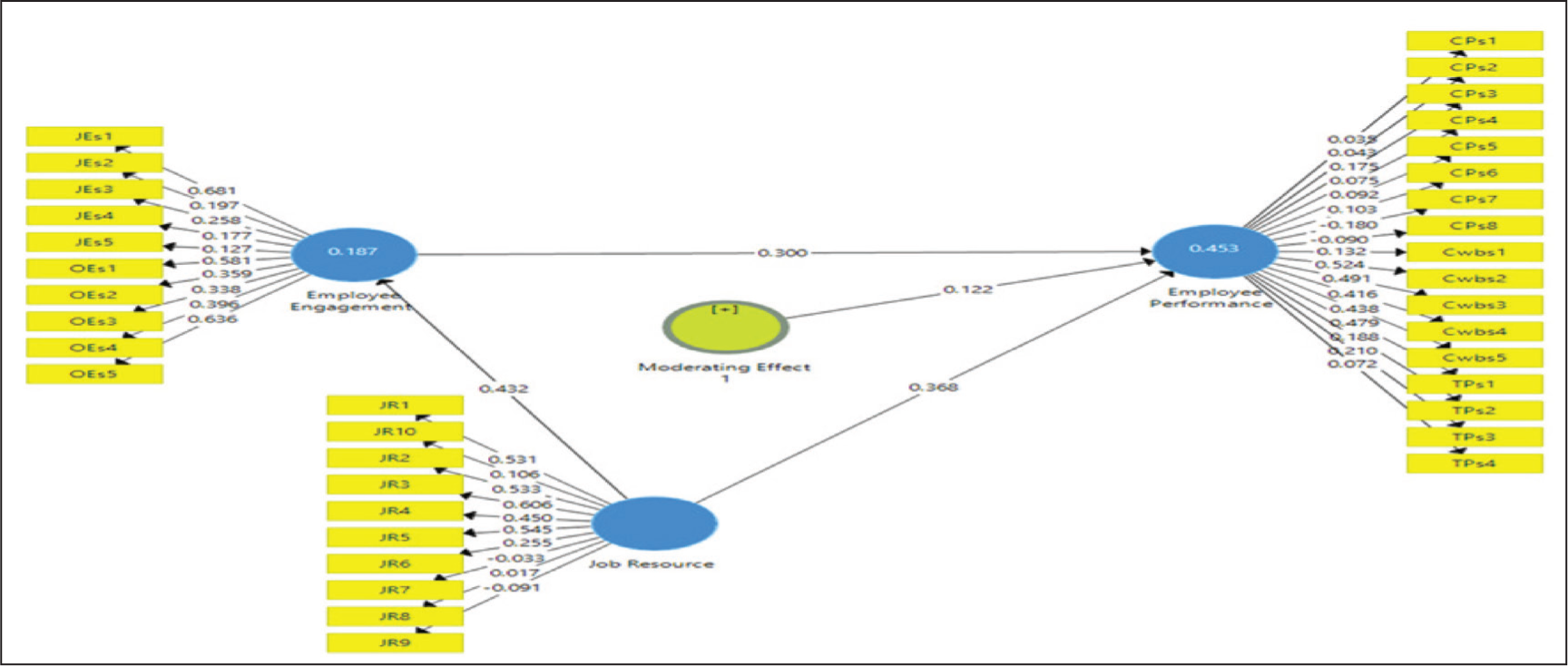
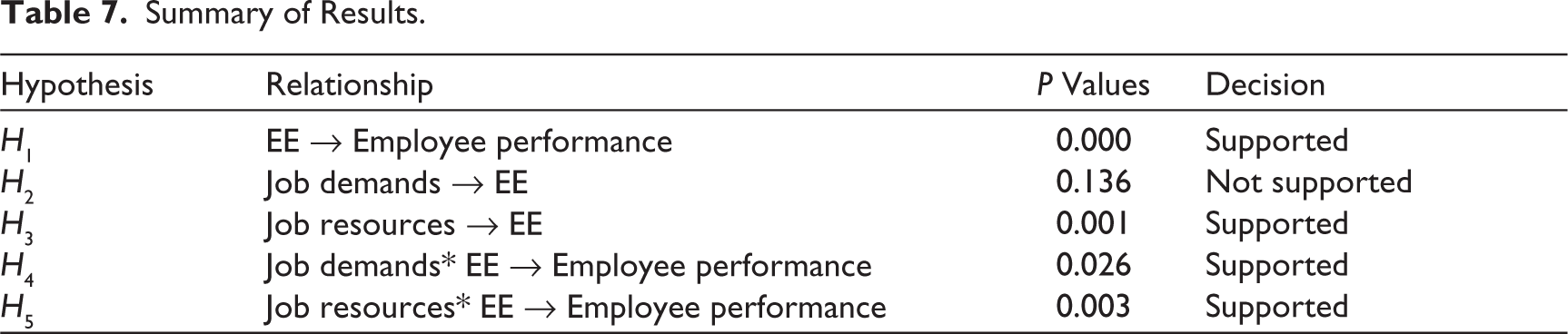
Table 7 gives a summary of the results of the study, Hypotheses Tested. The main estimation technique was PLS SEM. Out of five predictions, four of them were supported, as shown in Table 7.
Summary of Results.
Discussion and Key Findings
The hypotheses formulated from the conceptual framework revealed that four out of the five hypotheses were found to have been supported through empirical study.
Based on hypothesis 1, H1: EE has a positive correlation with employee performance. The study proposed that EE would have a positive relationship with employee performance. From the empirical testing discussed above in Table 4, it was clear that EE was a significant predictor of employee performance in the MSME sector during the COVID-19 pandemic in Ghana, thereby affirming the stated hypothesis H1. This implies that a positive change in job and organization engagement would result in a positive change in the task, contextual, and counterproductive performance of employees, and vice versa. This finding is consistent with previous studies (Anitha, 2014; Ismail et al., 2019; Jepkorir, 2014; Novitasari et al., 2020; Sendawula et al., 2018; Tanwar, 2017) all of which found a significant positive effect of EE on employee performance. In summary, the findings of the study indicate that EE is a driver of positive employee performance in Ghana’s MSME sector.
On the other hand, in line with hypothesis 2, H2: job demands will positively relate to EE. Based on the second objective of the study, researchers hypothesized that job demands would have significant positive effects on EE in the selected MSMEs. The results from both correlation and regression analyses revealed an insignificant relationship between job demands and EE. This indicates that the second hypothesis (H2) was not supported. Thus, EE was not unaffected by job demands in the MSME sector in the midst of the pandemic. This finding is in line with the findings from a study conducted by Li et al. (2017) and Radic et al. (2020). The non-significant effect of job demands on EE may be that even though a significant number of the respondents agreed that they came into contact with difficult customers and were also asked to perform excessive workload in the midst of COVID-19, such demands did not affect the engagement levels of the employees, possibly because the employees were given enough time to execute their tasks. Furthermore, the impact of the pandemic was not as devastating on the lives of employees in Ghana as it was in other countries. Thus, psychological stress such as fear, frustration, stress, anxiety, and burnout, which have been identified to be common among employees during the pandemic (Sahni, 2020) may not have been the case among employees in Ghana. According to the event system theory, not all employees may consider an event disruptive and critical (Morgeson et al., 2015). In the same way, employees in the Ghanaian MSME sector may not have considered COVID-19 infection rates to be a significant event. This might have accounted for the insignificant effects of job demands such as emotional demands, workload, time pressure, and interpersonal conflict on EE in the Ghanaian MSME sector during the COVID-19 pandemic.
In line with hypothesis H3, job demands moderate the relationship between EE and employee performance. The study found a positive and significant relationship among job demand, EE, and employee performance, thereby supporting hypothesis 3 (H3). This result is consistent with the findings of Lu et al. (2016), who investigated the moderating impact of job security on-the-job demands—job performance relationship and discovered three studies with cross-sectional and time-lagged designs. According to the findings of the study, job demands significantly improved employee performance from the perspective of higher job security, while job demands impaired performance to a certain degree in the context of lower job security.
With respect to the study’s fourth hypothesis, H4: Job resources will positively relate to EE, the study’s results showed a positive and significant link between job resources and EE in the selected MSMEs, as hypothesized, supporting H4. This empirical finding is supported by previous studies (Albrecht & Marty, 2020; Chavarria, 2016; Jauhari & Yulianti, 2020; Kenyi & John, 2020), all of which found a significant positive effect of job resources on EE. Job resources clearly have a positive relationship with engagement, as empirical evidence from several studies in different professions and countries confirms. According to Farndale and Murrer (2015), job resources like team climate, financial rewards, and participation in decisions impact EE in MSMEs. Christian et al. (2011) stated that job resources such as feedback, social support from supervisors, healthy relationships, and transformational leadership predictors increase EE. In this study, though the majority of the respondents reported that training and financial rewards were inadequate during this period of COVID-19, this did not greatly affect their engagement levels. This may be because employees are well aware of the global economic distress and its attendant job losses because of the pandemic, and thus, they are willing and ready to work, using the available job resources to help their enterprises thrive and secure their jobs. Indeed, job resources have an inherent motivating quality; they energize employees and make them feel engaged (Schaufeli, 2017). Similarly, this research postulates that during the COVID-19 pandemic, job resources drove EE.
Based on the last hypothesis, H5: job resources moderate the relationship between EE and employee performance. The empirical findings of this study show that job resources significantly moderate the link between EE and employee performance in the selected MSMEs during COVID-19. Indicating that hypothesis (H5) is supported. The result is in line with a study conducted by Van Wingerden et al. (2017), which examined the influence of organizational interventions on work engagement and performance. The study adopted the job demands-resources model and postulated that a personal resources intervention would have a positive effect on EE and performance. The personal resources initiative had a favorable, measurable impact on work engagement and job performance. Schaufeli (2017) also found out that job resources (the “good things”) have an intrinsic motivating quality; they boost employees’ morale and make them feel engaged, which leads to better outcomes, such as improved employee performance. Therefore, during the COVID-19 pandemic, the five job resources (financial rewards, training and development, social support, tools and materials, and flexibility and autonomy) proposed in the study are key drivers of EE, which in turn improves employee performance. The implication is that the performances of employees of the selected MSMEs in Ghana during the pandemic are enhanced via job and organizational engagement, which are also directly caused by these job resources.
Study Contributions
Theoretical Contribution
The majority of studies on EE originate in the United States and Europe (Alias et al., 2016; Vera-Gilces et al., 2019), with only a few emerging from sub-Saharan Africa (Ohemeng et al., 2020). Also, this study contributes to the empirical literature on EE, employee performance, job resources, and job demands in a Ghanaian context. By identifying specific job resources (social support, training and development, flexibility and autonomy, and tools and materials) as key antecedents of EE during COVID-19. Through this study, we gained a better understanding of how the ongoing pandemic affected specific job resources and how these resources also impact EE. Specifically, since most of the organizations in the sector are experiencing financial difficulties, focusing on other job resources such as providing employees with flexibility and autonomy, tools and materials, and social support is key to boosting EE. This is reinforced by the event system theory, which proposes that events that are classified as new, disruptive, and life-threatening have the tendency to alter organizational behavior.
Practical Contribution
EE has come to be a popular subject matter among policymakers and employers, who are using it to improve performance (Bailey et al., 2017). As a result, this study’s findings have a number of practical implications for human resource managers, owners of MSMEs, and policymakers. First and foremost, the study’s findings indicated that social support, flexibility and autonomy, tools and materials, and training and development are key job resources that can drive EE in the face of COVID-19. As businesses in the sector are struggling financially, they may not be in a good position to use financial incentives as the primary tool to boost EE. Therefore, the findings provide managers of MSMEs with alternative ways to boost EE. Also, the findings can help policymakers and MSME management implement policies and other interventions that will help to increase productivity in one of Ghana’s largest sectors, MSMEs, particularly during crisis moments. Furthermore, the study’s findings can be used to inform decisions made by government agencies and regulatory bodies such as the labor commission and the NBSSI. Finally, the study’s findings provide a foundation for comparing the effects of EE on employee performance in the sector prior to and during the COVID-19 pandemic.
Conclusion and Direction for Future Studies
The study’s general aim was to examine the impact of EE on employee performance and how job demands and job resources moderate the link between EE and employee performance in some selected MSMEs in Ghana during the COVID-19 pandemic. Based on the findings, it was discovered that a significantly positive correlation exists between job resources and EE; but an insignificant link exists between job demands and EE; EE and employee performance are positively and significantly related; job resources and job demand both significantly moderate the relationship between EE and employee performance. Based on these findings, the study concluded that in the midst of the pandemic, job resources such as flexibility and autonomy, tools and materials, and social support are key to stimulating EE in MSMEs in Ghana. In addition, it is concluded that job demands, as well as emotional demands, workload, time pressure, and interpersonal conflict, do not significantly affect EE. The study also concluded that organizational and job factors and respondent demographics comprising gender, age, marital status, and respondents’ number of children were antecedents of EE, which significantly predicted employee performance.
Considering the findings and conclusions of the study, the following recommendations are made:
Based on the findings, the study recommends that owners and managers of MSMEs focus more on improving EE levels in order to improve employee performance. Hence, it is recommended that management of MSMEs emphasize the design and implementation of EE policies in their respective organizations by including workforces in the design and execution of these policies.
Additionally, based on the demographic findings, which show that the majority of the respondents (37%) were certificate holders and (30%) were diploma holders, and the descriptive statistics results, the majority of the respondents were not allowed to attend training courses. Based on this, researchers recommend that management of MSMEs organize periodical training for employees to increase performance since the COVID-19 pandemic has brought about new ways of conducting business by means of ICT, etc.
Furthermore, management should make available the required resources employees need to efficiently perform their tasks, especially in the face of crises. In all, Schaufeli (2017) states that reducing job demands and increasing job resources prevents burnout and increases EE. For that reason, it is also recommended that owners and managers of MSMEs provide all the requisite resources adequately for their employees to prevent burnout and enhance engagement among them.
Limitations and Direction for Future Research
Despite its contributions, the current study has a few flaws. First, the study was carried out in a few selected MSMEs in Kumasi, which is one of the regions in Ghana. It is possible that the results will differ in other parts of the country. Future studies should include major cities throughout the country in order to produce more generalized results. Furthermore, because this study is the first of its kind to examine the moderating roles of job resources and job demands on the correlation between EE and employee performance during COVID-19, it is recommended that the study be conducted in different countries or cultures, particularly in the developing world.
This study also used a cross-sectional approach and a questionnaire with closed-ended questions. As a result, it is likely that variations in employee behavior over time are not observed. Also, when using closed-ended questions, a respondent’s ability to express his or her opinion is usually limited. Consequently, future research should employ a longitudinal and mixed methods design to fully comprehend the subject. Furthermore, while the study used a sample size of 395, which is adequate for SEM (Comrey & Lee cited by Rahi, 2017), it is recommended that future studies use a larger sample size to improve the accuracy of the findings.
Again, the study employed a convenience sampling technique, which means that only respondents who were within spitting distance and could easily be reached were included in the sample. It is possible that the sample chosen for this study was in the same line of work in the MSME sector. Thus, future studies should use the stratified random sampling technique to give proportionate representation to each business line within the MSMEs sector in order to achieve more generalized results. Finally, because this study is limited to MSMEs, future research should look into other sectors of the Ghanaian economy.
Footnotes
Declaration of Conflicting Interests
The authors declared no potential conflicts of interest with respect to the research, authorship and/or publication of this article.
Funding
The authors received no financial support for the research, authorship, and/or publication of this article, and have carried out the research in individual capacity as independent researchers.