




Abstract
E-pharmacies have become the latest trend all over the world, especially since the COVID-19 pandemic started in 2019. While buying online, along with the products/medicines in case of e-pharmacies, people also expect a user-friendly website, prompt and safe delivery, data and payment security, and convenient customer services. Hence, e-pharmacy organizations should satisfy all these factors to be the best in the market, enhance customer experience, and increase customer’s repurchasing intentions. The objective of this research is to compare the e-service quality between two of the top e-pharmacies in India—Tata 1mg and API Holdings Private Limited’s PharmEasy—using the e-service quality hierarchical model developed by Blut (2016). E-service quality is evaluated and compared using the following dimensions: website/application design, customer service, security/privacy, fulfillment, and overall e-service quality from the consumer’s perspective. Findings of the study reveal that there was no significant difference in the quality of dimensions—website design and customer service between 1mg and PharmEasy—while there is a significant difference in the quality of fulfillment, security/privacy, and overall e-service quality between 1mg and PharmEasy.
Introduction
E-pharmacy is an online platform that offers medicines and drugs over the internet and delivers the same through mail/post or third-party courier services to customers. As the entire world, businesses and services are stepping toward digitization/online markets, especially during/after the COVID-19 pandemic, primary physician consultation, diagnostics, and buying of medicines have also moved online. India is one of the largest producers of medicine in the world, and the COVID-19 pandemic has pushed the people in India to use telemedicine/teleconsultation and e-pharmacies to the forefront. As e-pharmacies have made medicine buying easy and reliable, this is resulting in the rise of e-pharmacy models in the pharmaceutical market. The e-pharmacy market is still in the initial stages in India and has not reached the maturity stage. A number of pharmaceutical key players are stepping into the online or e-pharmacy market challenging the existing market structure of retail sales of medicines.
The online pharmacy space in India and the world has been growing very fast. Between the beginning of 2020 and the end of 2021, the number of mHealth apps available to Android users via the Google Play Store kept growing, reaching over 65.3 thousand during the last quarter of 2021 (Statista, 2022). Savant et al. (2022) mention that there are approximately 30,000–50,000 e-pharmacies worldwide serving the public with pharmaceutical needs and that the e-pharmacies have a lot of advantages such as cost-effectiveness, free deliveries, quick serves, 24 × 7 service availability.
As online pharmacy is still an emerging sector in India, different pharma-tech giants are competing to supply better services to consumers in the e-pharmacy sector to increase the market share. To provide better service to the consumers, it is very essential to understand the thought process and the customer experience of the users. The Indian e-pharmacy market is divided into the type of drugs, type of product, business model, operating platform, zone or region, and the parent company. The drug-type segment is again classified into prescription drugs and over-the-counter (OTC) drugs. The prescription drugs segment dominated the market in FY2021 with a market share of 66.41% (Anon, 2021).
Quality is the key element to any business achievement (Cox & Dale, 2001). It is also an important factor in the success of e-pharmacies as better customer satisfaction brings more business and, in turn, leads to revenue growth. Results from the study conducted by Van Riel et al. (2003) indicate that the customers of online services have the least tolerance toward the two dimensions of e-service: quality reliability and security.
Tata 1mg is one of the leading certified digital healthcare platforms. Started in 2015, Tata 1mg has been conferred with prestigious titles such as BML Munjal Award for Business Excellence through Learning and Development, Best Online Pharmacy in India Award, and Top 50 ventures in The Smart CEO-Startup50 India. Tata 1mg has been selected as the only company from across the globe for SD#3 “Health & Well Being for All” by Unreasonable Group, US State Department. In 2019 alone, 1mg has received three awards, including the BMW Simply Unstoppable Award (Tata 1mg, 2022). The main services provided by Tata 1mg are e-pharmacy, lab tests, and e-consultation or teleconsultations.
PharmEasy is a consumer healthcare “super app” that provides consumers with on-demand, home-delivered access to a wide range of prescriptions, OTC pharmaceuticals, other consumer healthcare products, comprehensive diagnostic test services, and teleconsultations, thereby serving their healthcare needs. PharmEasy was rated among the “Most Trusted Brands in 2016” by World Consulting and Research Corporation. It was featured on CB Insights’ “The Digital Health 150” list in 2020, which ranks the most promising startups in the digital health sector, a list that US-based firms usually dominate (PharmEasy, 2022). 1mg and PharmEasy are two of the prominent online e-pharmacy applications in India as per the report by Goyal et al. (2021).
Aims and Objectives of the Study
E-service quality is defined as the extension of a site’s ability to effectively and efficiently facilitate shopping, purchasing, and distribution activities (Chase et al., 2006). In this research, two of the top players in the Indian e-pharmacy sector are considered to compare the e-service quality provided/perceived by the current consumer base. Dimensions such as the website/application design which means the user-friendliness of the application, appearance or the level of the aesthetic design of the website or smartphone application, and data privacy of the users (as the pharmacies usually register the user’s account with mandatory personal information and health records), fulfillment—the quality of the delivery of the medicine to the users, delivery accuracy, package, etc., and post fulfillment services such as the returns, if any, customer service support on post fulfillment queries, discounts for retention, etc., which constitute the overall customer satisfaction with the pharmacy. Then, a comparison of the data received for these dimensions from the users of both the e-pharmacies will be done and the impact of these attributes on the overall comparison will be drawn, which will help other/new entrants to the e-pharmacy market in India.
The Motivation for the Study
The main interest in undertaking this research is the passion for the new technologies in e-retail services and helping people in times such as pandemics to get the required medicines without having any concerns about e-pharmacy’s security/privacy aspects or the overall quality aspects. The findings of this study will help the new entrants in the e-pharmacy sector to better understand the important aspects of e-service and utilize the same to enhance the end-user expectations and experience, thus increasing word of mouth. Hence, this study is an excellent opportunity to study the responses from current users of two of the leading e-pharmacies and suggest the important factors of e-service quality from end users’ perspective for the better growth of the use of online pharmacy services in India.
Literature Review
E-pharmacy Industry in India
Satheesh et al. (2019) stated
Even though healthcare initiatives by the Indian government have improved affordability, the availability of medicines remains standard deficient in the public sector – insisting most of the population to rely upon the highly expensive private sector. India needs a more efficient and reliable pharmacy sector to solve this public health crisis.
This means as the scope of e-pharmacy increases in the country, there will also be a significant increase in the risks associated with self-medication and the sale of unregulated medications. Research by Srivastava and Raina (2021) on the consumers’ usage and adoption of e-pharmacy in India identified and validated the various elements for adoption, usage, and goal to suggest online pharmacy services for purchasing medications by customers and concluded that there is an increasing trend of usage of e-pharmacies for ordering medicines online among the younger populations, and, thus, customers are significantly happy with the “home delivery” of the required medications, the study also indicated that the sampling technique used in the research was weak to understand the adoption and usage of e-pharmacies as the research faced geographic constraint.
Arrunada (2004) conducted a study on the quality safeguards and regulations of online pharmacies, where the researchers used the regression model which confirms that the three independent variables: (i) insurance coverage; (ii) real assets (online pharmacies also running retail pharmacy stores); and (iii) PharmAge (number of operational years of the pharmacy) contributes to a substantial amount of impact on the quality of the e-pharmacies.
Since the pandemic started in 2020, many studies/articles were published on recommending the usage of e-pharmacies. According to Nambiar (2020), the availability of e-pharmacies and online health services have made life easier for people during the pandemic and also stated “It’s essential/important to deliver an experience to the customer that binds together the ease of purchase on website or application, superior logistics, prompt, and safe delivery and feedback along with the potency of the products.”
Saraswat et al. (2020) studied the challenges and scope of e-pharmacies in India and found that currently online pharmacy is catering to only 3% of the total medicine/pharmacy market and a majority of the buyers or customers are people with chronic diseases such as hypertension and diabetes who would require medicines on a regular/daily basis. Fatima et al. (2019), list down the following influencing factors of online buying of medicines: low price, convenience, discounts, doorstep delivery, privacy, customer support, authenticity, subscription reminders, e-consultation, alternate medicine facilities, etc.
Anbarasi and Kumar (2019), studying the impact of e-pharmacies and e-pharmacy’s validated growth of firms on herbal and organic products, reveal that the recent challenges in regulations and activities by pharmacists have filed a plea against e-pharmacies and medical stores, and more than 200 online drug stores such as Netmeds, 1mg, and PharmEasy, etc., which were established around 2010, have achieved significant growth by 2018, especially by selling medicines or products in the herbal, ayurvedic, and organic categories.
Nair and Middha (2019) researched the regulations in the e-pharmacy sector in India. They found loopholes in the current regulations imposed on the pharmacy sector by the government. For example, these do not prioritize or give importance to recording the details of the customer or patient such as the gender, address, age, prescription number, etc., and allow the use of photocopy of the prescription, which can make it unreliable as the same prescription can be used to get the medicines several times from different pharmacies.
Perveen et al. (2020) analyzed the quality of information on the drugs in Indian e-pharmacy applications and concluded that almost all the e-pharmacies pose risk since there are many loopholes in the current regulations and suggested to have rigid laws and regulations for the selling of drugs through e-pharmacies. To minimize the risks and increase the benefits of the services provided by e-pharmacies, Orizio et al. (2011) proposed a two-level framework: first, focus more on the policies that regulate the e-services, especially e-pharmacies at the global level; second, aim at enhancing or increasing the health literacy needed to buy appropriate health products, recognize the risks, and utilize the services provided e-pharmacies at the fullest. E-pharmacy is an important need; hence, it should be allowed to all customers in India. However, sufficient safety and proper regulatory conditions should be in place for the quality of medicines sold online and for the safety of consumers (Bansal et al., 2022).
Development of E-service Quality Evaluation Model(s)
Research has been going on for decades to establish a framework to evaluate the service quality of offline or online services and products, where most organizations use the SERQUAL model. Parasuraman et al. (1985) also used this model by modifying the methodology or adding/removing the attributes/dimensions to evaluate the service quality. Parasuraman et al. (2005) created a model for evaluating online service quality using the 22-factor scale of four dimensions: efficiency, fulfillment, system availability, and privacy. The second scale, E-RecS-QUAL, is important only to consumers who had out-of-common encounters with the sites and holds 11 items in three dimensions: responsiveness, compensation, and contact. In addition, Akter et al. (2010) introduced a method of evaluating the e-service quality using the partial least squares (PLS) method to gauge the attributes or dimensions of the hierarchical service quality model, i.e., the study concludes that it established e-service quality model with the following attributes/parameters: Platform quality, interaction quality, and the outcome quality are evidenced as hierarchical, multidimensional, and context-specific.
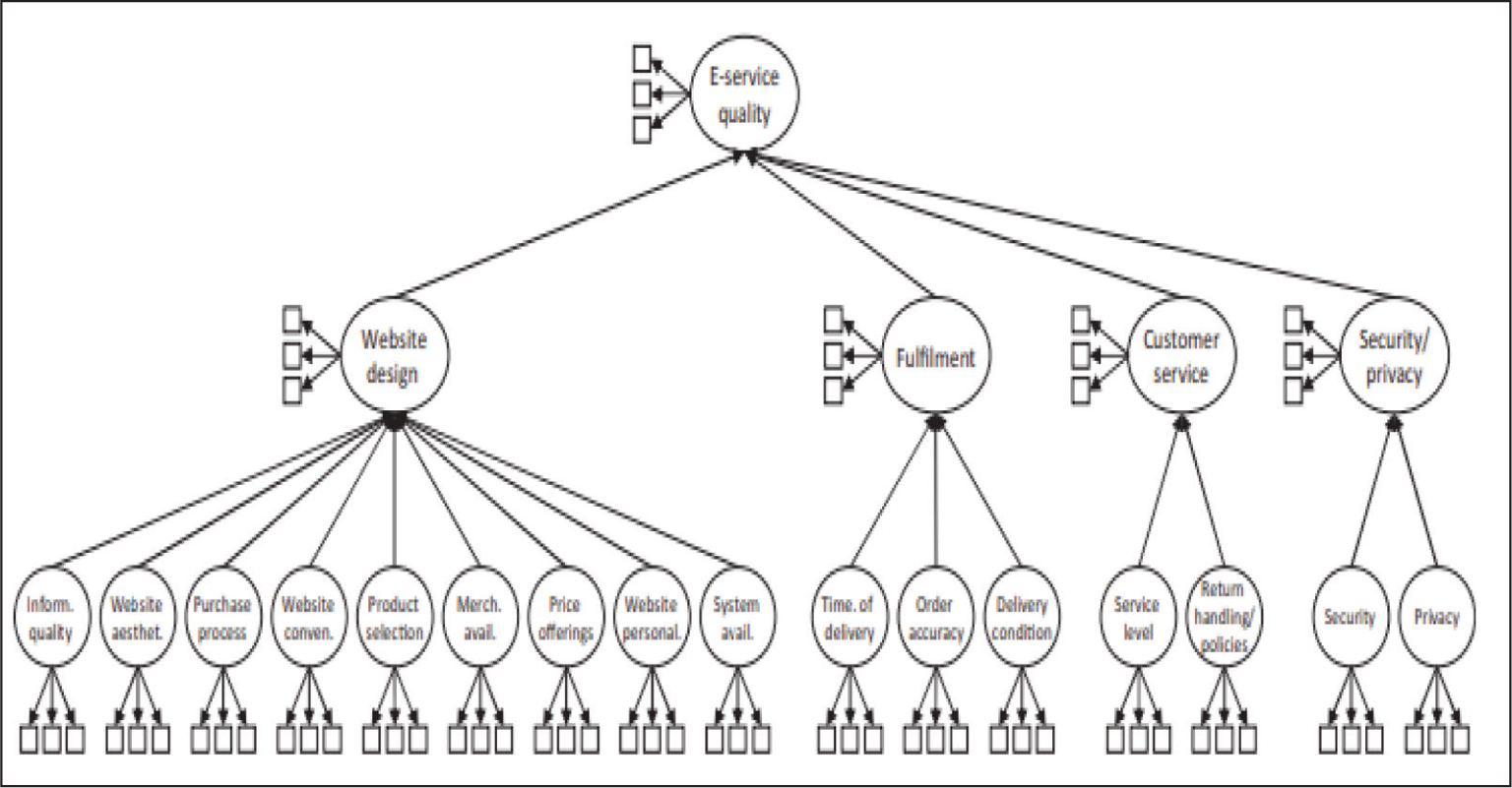
Later, Blut (2016) developed a hierarchical model that links online service quality to different attributes or dimensions such as website design, fulfillment, customer service, and security/privacy. Refer to Figure 1 for the model.
Using this hierarchical model developed by Blut (2016), Rita et al. (2019) researched the impact of e-service quality and customer satisfaction on customer behavior in online shopping and concluded that the findings give insights to the manager to better understand the way e-service quality can be organized and maintained, how does each attribute or dimension affect the customer satisfaction and in turn increase the customer retention for the service/products.
Attributes Defined in the Hierarchical Model Developed by Blut (2016).
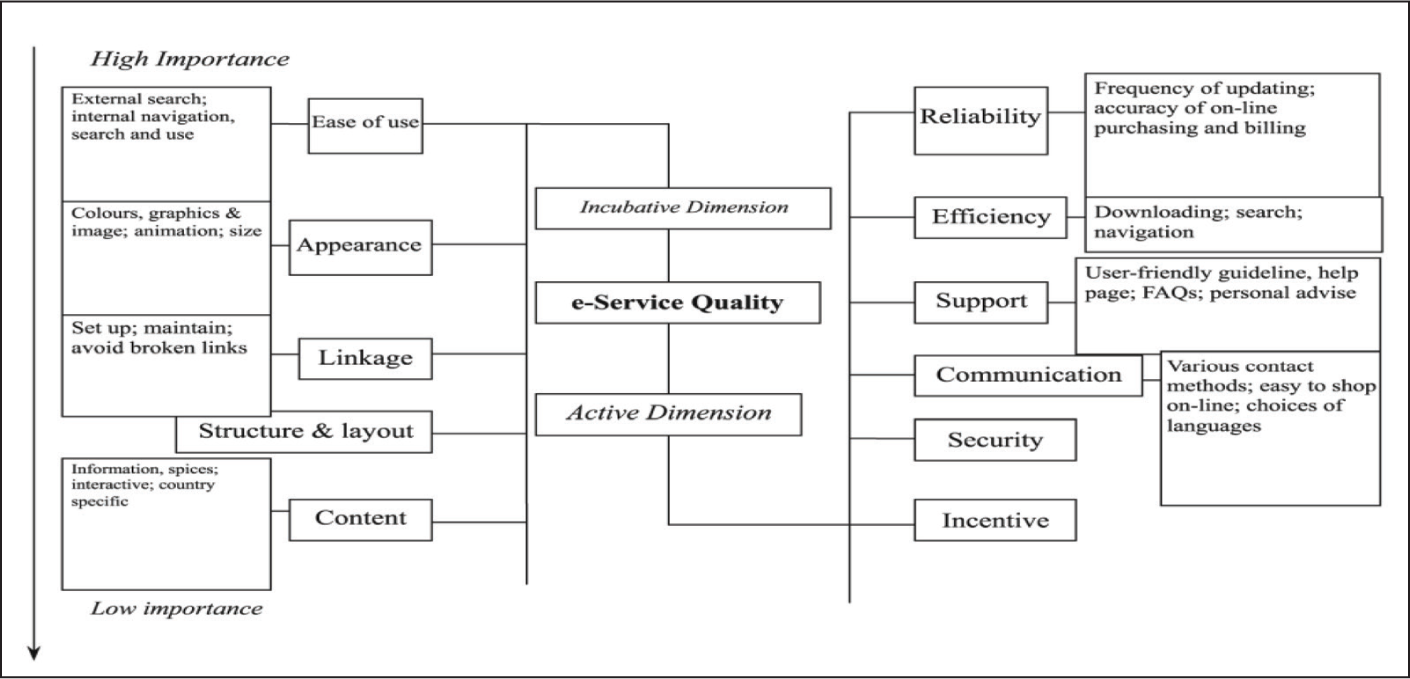
Two Dimensions of E-service Quality Measures as Defined in the Study by Santos (2003).
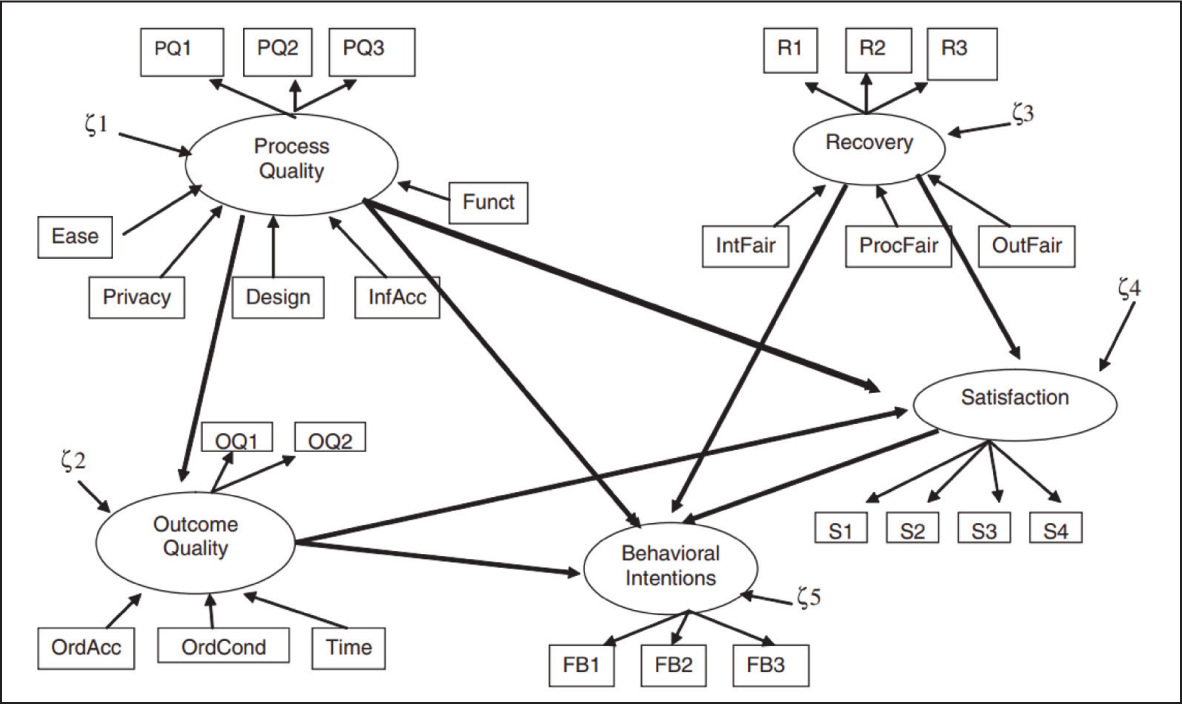
Conceptual Framework for Measuring E-service Quality by Collier & Bienstock (2006).
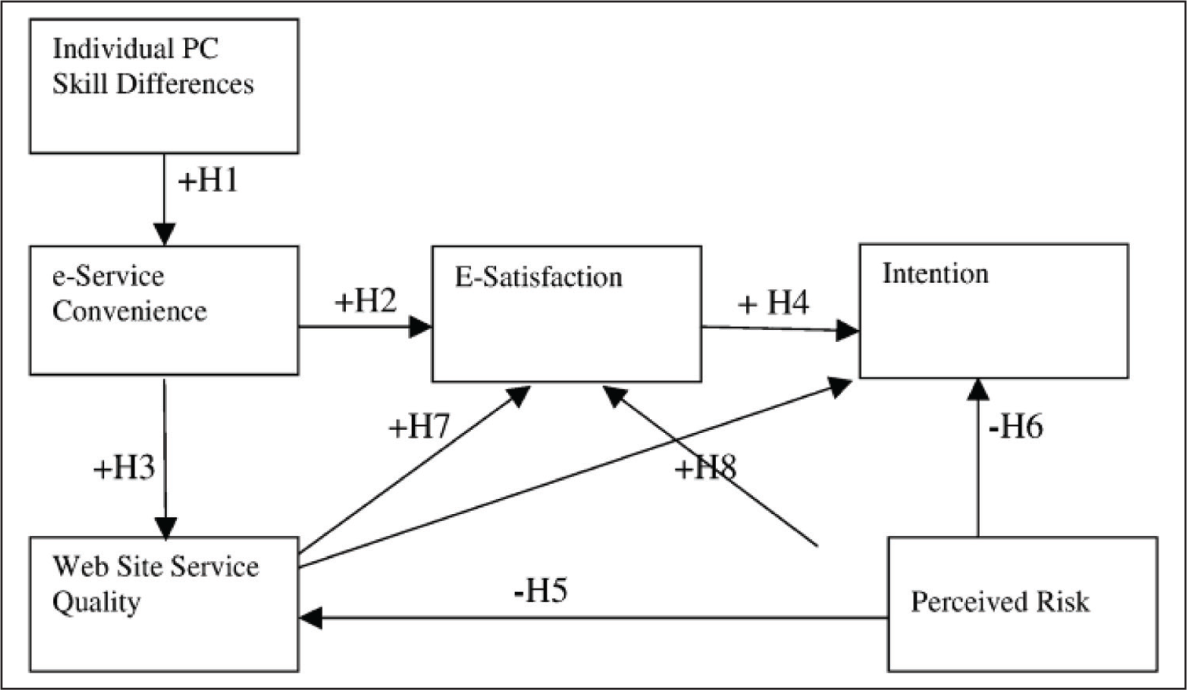
Zhang and Prybutok (2005) examined the attributes that impact the e-service and the connection between the factors and consumers’ behavior toward online services (Figure 4). The study validated and confirmed seven of the eight hypotheses from the results of the empirical study. The nonconfirmed hypothesis revealed that service convenience, risk, and website quality are the significant attributes affecting the consumers’ satisfaction level, which affects the intention as well.
Eight Hypotheses Research Model from the Empirical Study by Zhang et al. (2005).
Santos (2003) developed a model to measure the e-service quality by dividing the quality measuring dimensions into two categories, namely, the incubative dimension and the active dimension (refer to Figure 2). The author defines the incubative dimension as the proper design of the application or website and the way technology is utilized to provide e-service customers with easy access and design of the website and includes the following parameters/attributes in the Incubative dimensions: ease of use, linkage, appearance, content, and structure and layout. As per the study, the active dimension is defined as the support, speed of the application or portal, and attentive maintenance of the website/application, and the active dimensions comprise the following attributes/parameters: efficiency, support, reliability, security, communications, and incentives.
Another study by Nasser et al. (2015) defines e-service quality as the difference between the quality of the service received by the customers and the expectations about the quality of service before the service offering. Findings of the study show that the quality of the service provided was relatively significant in the customer trust in the e-service industry and according to the outcome of the research trust and satisfaction in the e-retailer were positively linked with the attitude/consumer behavior of the customers.
Herington and Weaven (2009) conducted research on e-service quality and the importance of e-service quality in the banking domain. Their findings provide a measure of e-service quality for the banking domain consisting of four important dimensions called a four-factor solution comprising personal needs, site organization, efficiency, and user-friendliness. Wilson et al. (2019) conducted cross-continental research on the impact of website design and quality of e-service on customers’ repurchasing intentions. They concluded that e-service quality played an important role in impacting the customers’ repurchasing intentions in Australia, Europe, and Asia, while in North and South America regions, the quality of website/application design played a significant role in customers’ repurchasing intentions.
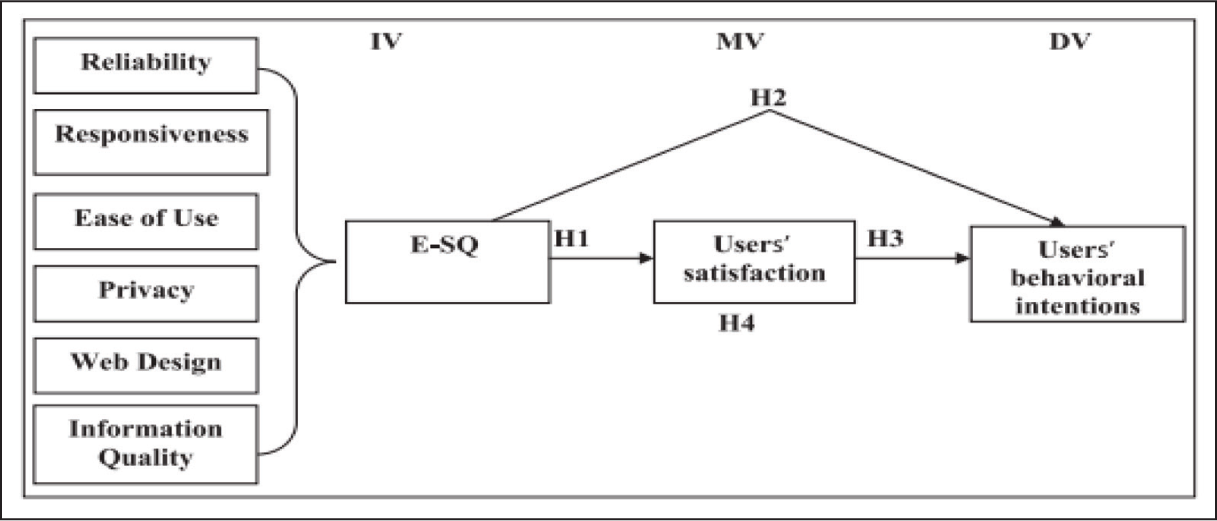
Zeglat et al. (2016), to understand the impact of online service quality of the academic databases on the consumer/users’ behavioral intentions, reveal that only four e-service quality attributes or dimensions—website design, ease of use, reliability variables and security—have a positive impact on customer satisfaction (Figure 5). The study also shows that these five dimensions of e-service quality—website design, ease of use, reliability variables, security, and responsiveness—have a significant impact on the customers’ behavioral intentions.
Research Model by Zeglat et al. (2016).
A study by Collier and Bienstock (2006) expands the knowledge on how to conceptualize and measure the quality of the service with e-commerce platforms using the three constructs, namely, the process dimension, outcome dimension, and recovery dimension in e-service quality. The study used the conceptual framework as shown in Figure 3. The following important attributes were used in the framework for the e-service quality measures: process quality, outcome quality, recovery, satisfaction, and behavioral intentions. Based on the three constructs framework study developed a questionnaire using the following attributes/dimensions to measure the e-service quality: ease of use, privacy, design, information accuracy, functionality, order condition, timelines, order accuracy, interactive fairness, outcome fairness, procedural fairness, satisfaction and behavioral intentions.
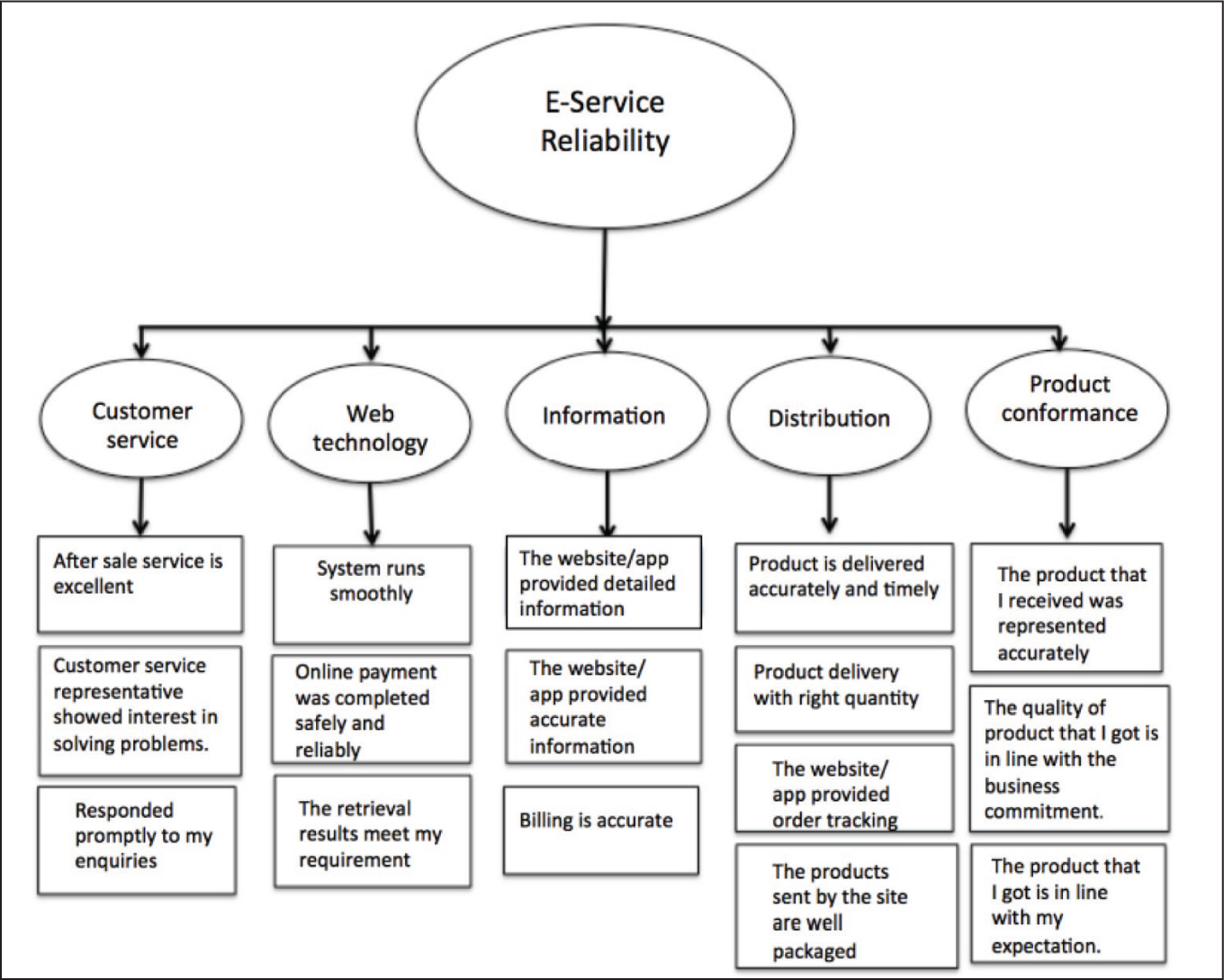
A comparative study by Geddam (2015) on e-tail service quality dimensions in the United States and India developed a 17-item scale model under the following attributes: customer service, information, web technology, distribution, and product conformance (Figure 6). The research shows that the web technology reliability has a very good t-value for the sample from the United States compared to India, and this can be because of the better advancement of technology in the United States when compared with India.
A 17-Item Scale under Five Important Attributes of E-service Quality from the Study by Geddam (2015).
Karsten et al. (2010) also conducted research on the quality of e-health services using the C-OAR-SE(construct definition, object classification, attribute classification, rater identification, scale formation, enumeration) procedure and defined/described e-health services quality is abstract and is operationalized with 13 items as the following: accessibility, competence, information, usability/user-friendliness, security, system integration, trust, individualization, empathy, ethical conduct, degree of performance, reliability, and ability to respond.
Fotiadis (2019) found that customer-responsible behavior has a significant positive impact on the perceived e-service quality and consumer satisfaction with the service, and seeking of information impacts the e-service quality. Further, the study states that these two dimensions of e-service quality are not influenced by information sharing.
Vatolkina (2020) conducted research on the e-service quality similarity and differences between hybrid and digital/online services and found that online service quality considers customer or consumer experience as the significant dimension that significantly influences the satisfaction of customers with the e-service and their repurchase intentions.
Addition of Empathy as a Dimension to the E-service Quality Measurement Model
Based on the review of the literature of several studies on the attributes to measure e-service quality, Li and Suomi (2009) proposed a new model comprising new attributes empathy along with website design, reliability, responsiveness, fulfillment, personalization and information. The authors explained that, though there are no direct one-to-one human interactions in the online services, there will always be some level of communication in terms of e-mail, and onsite support calls. Hence, prioritizing the customer’s attention represents the organization’s empathy toward customers. And the study also reveals that empathy can be achieved through parameters of good personal attention, adequate contacts, addressing the concerns of customers in a friendly manner, and being consistently courteous. The study also suggests that there is scope for further research on the e-service quality measures around pure service domains/sectors and the factors or parameters which impact the customers’ view of e-service quality and consumer experience/satisfaction and retention of online service adoption.
Impact of the Combination of E-service Quality and Logistic Service Quality
Lin (2016), while researching the quality dimensions or attributes affecting the consumer experience in the e-commerce industry using a triadic view including the logistics service, proposed a service quality model comprising two attributes/dimensions. Findings reveal that e-service quality and logistics service quality together strongly influence the customer experience of the service offered.
Issues Involved in Developing the E-service Quality Measurement Scales
Online service quality has a significant impact on e-commerce platforms. Hence, accurate measurement techniques or attributes/parameters have a significant influence on the measurement of the e-service quality. Ladhari (2010) conducted a literature review on the methodological issues in the development of e-service quality measurement attributes or scales and the problems regarding the dimensionality of the e-service quality measures such as the following: research methods, sampling methods, service industries considered, survey administration, generation of items, assessment, and purification of items, scale reliability and validity, analysis of dimensionality, the study concluded that the key attributes/dimensions of e-service quality are reliability/fulfillment, privacy/security, web design, responsiveness, information quality, ease of use of the platform and proposed several recommendations for the managers/management to ensure the e-commerce platform can provide the promised quality of service and products to the customers on time and deliver the e-service quality in a manner that exceeds or meets the customers’ expectations.
Impact of Achieving the Superior E-service Quality
As measuring the e-service quality is important for any organization, it is equally important to analyze the impact of superior e-service quality measured using the e-service quality measurement models. Sahadev et al. (2008) developed a conceptual model through a survey of literature on e-commerce platforms or services and tested and validated the same using a survey of users of job consultancies in India. Their findings show that the four attributes/dimensions of e-service quality—system availability, fulfillment, efficiency, and privacy—are connected to customer trust and satisfaction regarding the e-service.
Sukendia and Harianto (2021) conducted research on the impact of online service quality on customer experience in e-commerce and found that quality of e-service has a greater impact on the B2C e-commerce’s consumer experience, website design, customer service, security/privacy, and fulfillment/reliability are the dimensions that influence the customer experience.
Further, Putra and Antonio (2021) found that website design, customer service, and fulfillment have a higher influence on e-service quality which in turn has a higher impact on customer satisfaction and consumer trust. Further, customer satisfaction and consumer trust have a positive impact on customer repeat purchase intentions.
Yuniasih et al. (2022), while researching the impact of quality of product, price of the product and customer service on customer satisfaction with e-pharmacies, stated that consumer satisfaction is mainly influenced by price and quality of the product and that customer service has no significant influence on the e-services, since there is no direct physical contact in the online businesses.
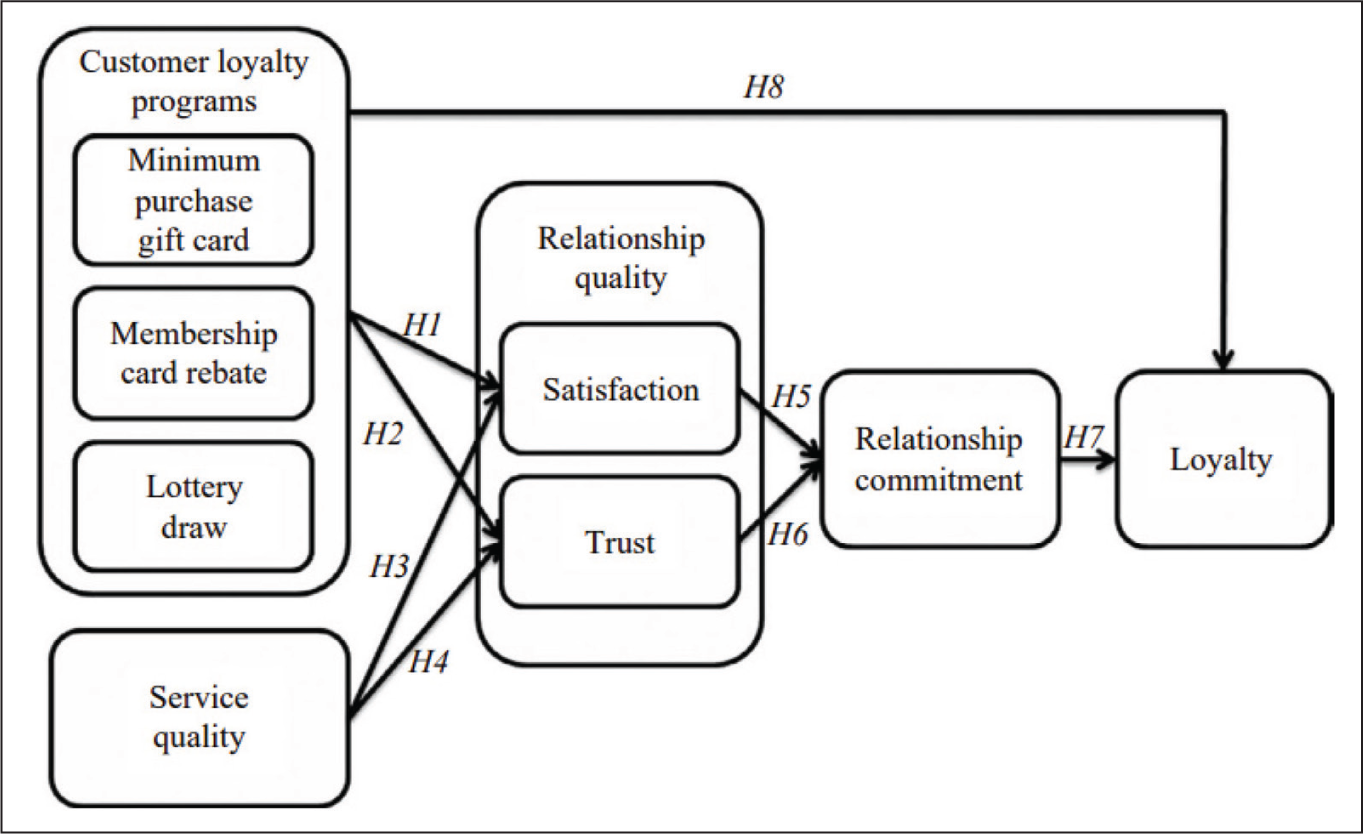
Ou et al. (2011) conducted a study on the impact of customer loyalty and e-service quality on relationship quality, commitment, and customer loyalty (Figure 7). Their findings show that service quality has a positive impact on relationship quality and which in turn impacts relationship commitment positively, and the higher the relationship commitment, the higher the customer loyalty.
Conceptual Framework of Impact of Customer Loyalty and E-service Quality on Relationship Quality, Commitment and Customer Loyalty by Ou et al. (2011).
Research Methodology
Collection of Primary Data
Primary data for this comparative study of e-service quality between 1mg and PharmEasy were collected using a reliable and validated questionnaire developed by Blut (2016) in the research development of a hierarchical model. Data from the 1mg and PharmEasy users were collected via online survey forms.
Reliability and Validity of the Questionnaire/Research Instrument
The questionnaire used in this research was developed by Blut (2016) which has a reliability score of 0.89 and the validity score of 0.72.
Primary Data Sample Size and Target Audience/Group
The survey covered the following five zones in India for primary data: east, west, north, south, and central parts. A total of 469 samples were collected from the online questionnaire/survey. Blut (2016) used the data collected from 358 respondents/online customers through a survey for the development of an e-service quality hierarchical model; hence, this comparative study is conducted by collecting around 400 responses.
Analysis
Data Collection and Refinement
Primary data for the research were collected using the validated questionnaire by Blut (2016). The questionnaire was divided into five main categories to measure the e-service quality of 1mg and PharmEasy, namely, website/application design, fulfillment, customer service, security/privacy, and overall e-service quality.
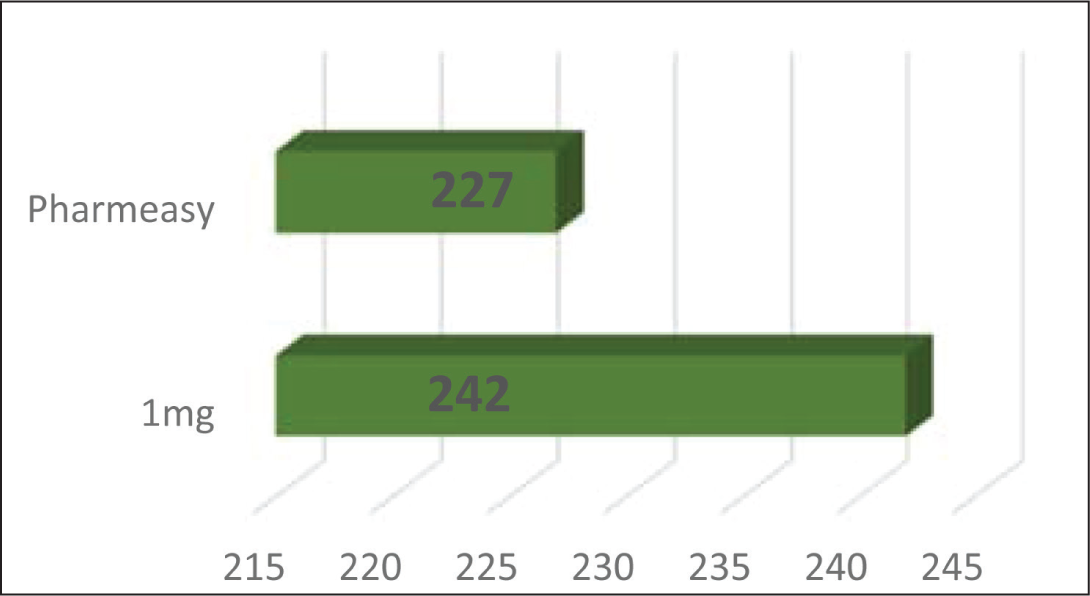
The questionnaire was circulated to the responders/e-pharmacy users through social media platforms such as Facebook, WhatsApp, LinkedIn, e-mail, etc. A total of 469 responses were collected through the questionnaire using Google forms. Of these, 227 (48.4%) responses were from PharmEasy users, while 1mg responses were 242 (51.6%), respectively.
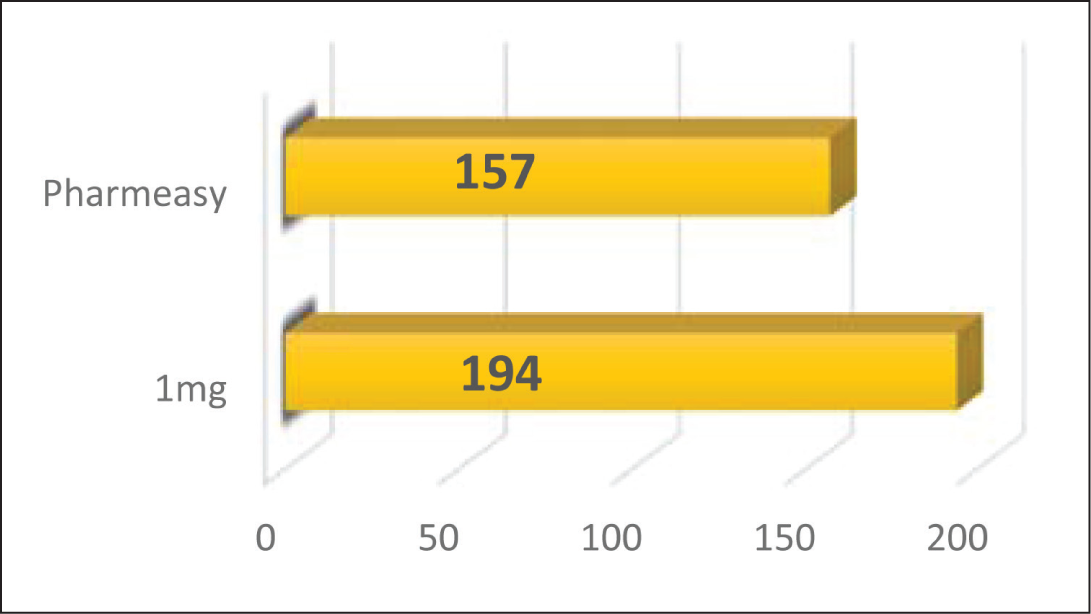
From the total of 469 responses, during the data refinement, around 118 responses were discarded as those responses had garbage input/response values (Figure 8). Hence, a total of 351 responses, 194 for 1mg and 157 for PharmEasy were considered for the data analysis after data refinement as shown in (Figure 9).
Total Responses.
Refined Responses.
Data Analysis
Descriptive Statistics
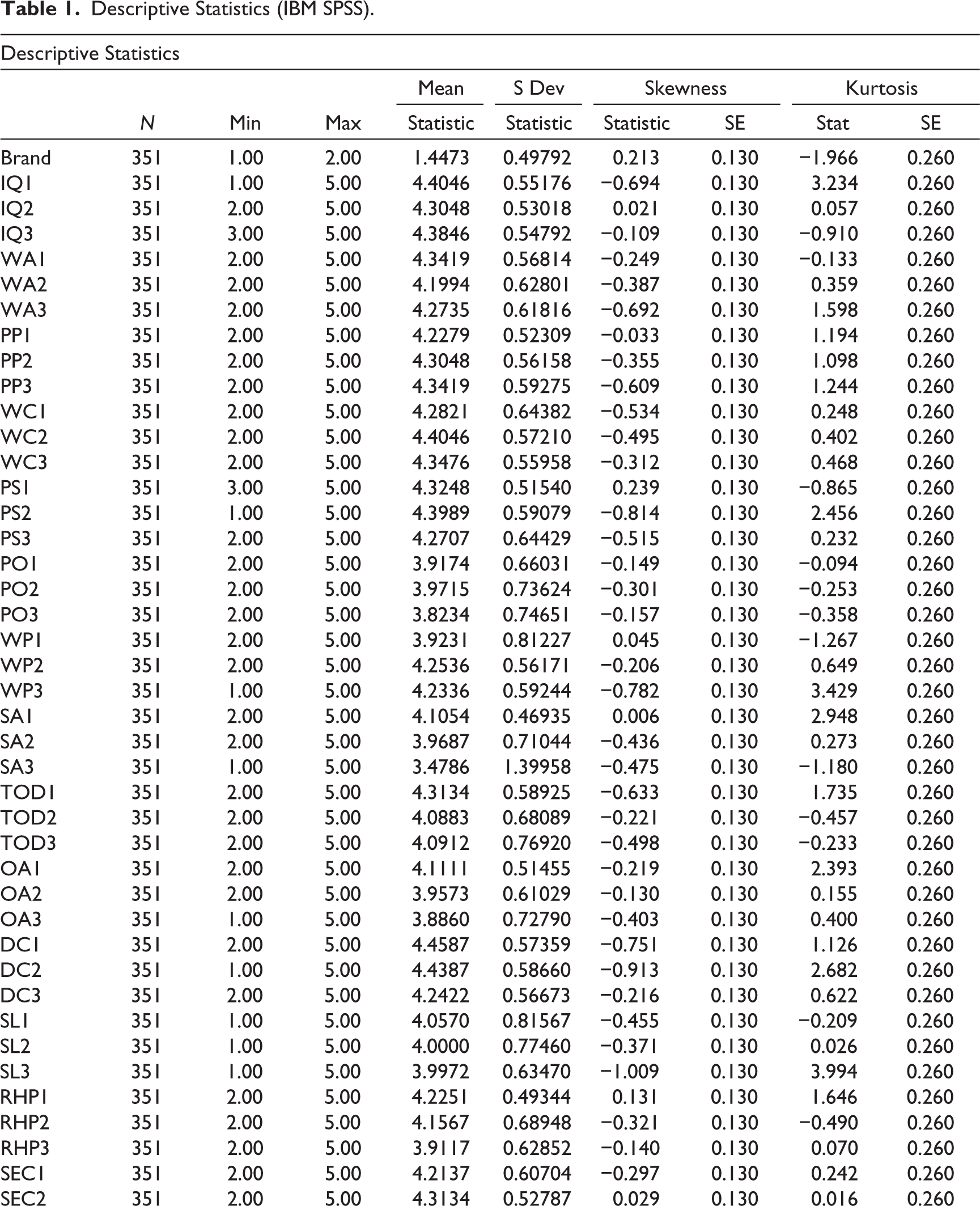
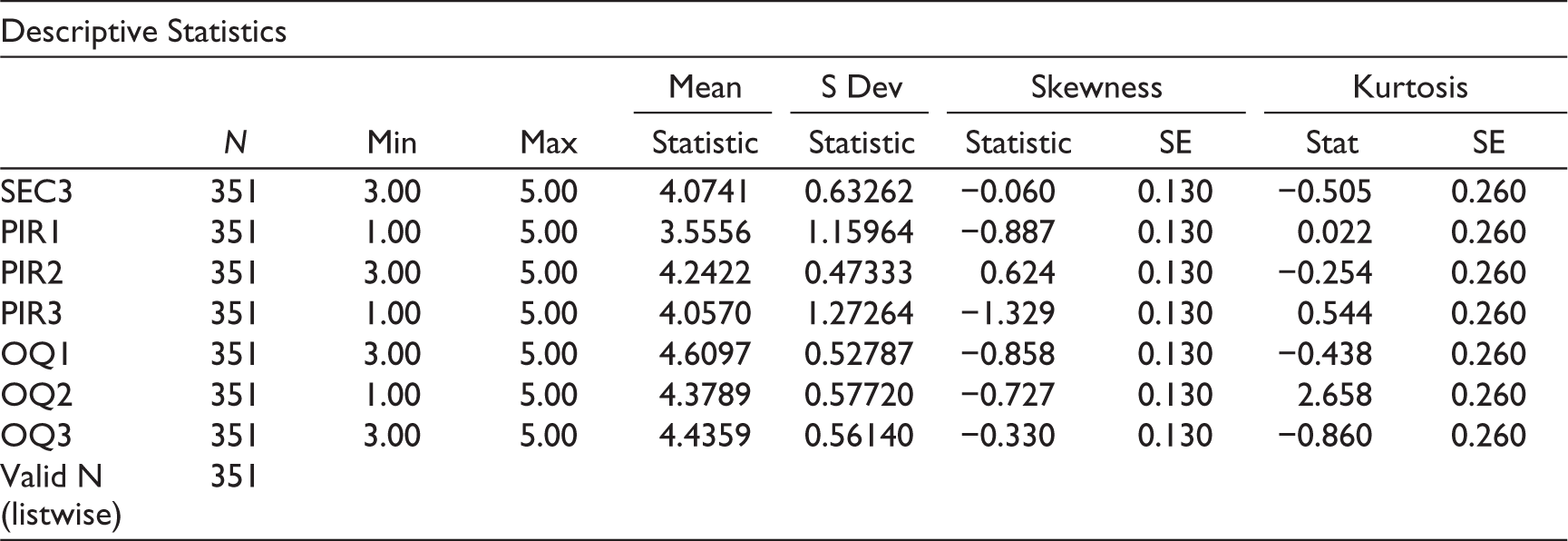
After the data refinement and conversion, converted data were fed into IBM SPSS, and each question was labeled with a header for identification. Descriptive statistics were derived from the data in IBM SPSS, from the descriptive statistics output as shown in the Table 1 to assess the normality of the data.
Descriptive Statistics (IBM SPSS).
Normality and Reliability Statistics
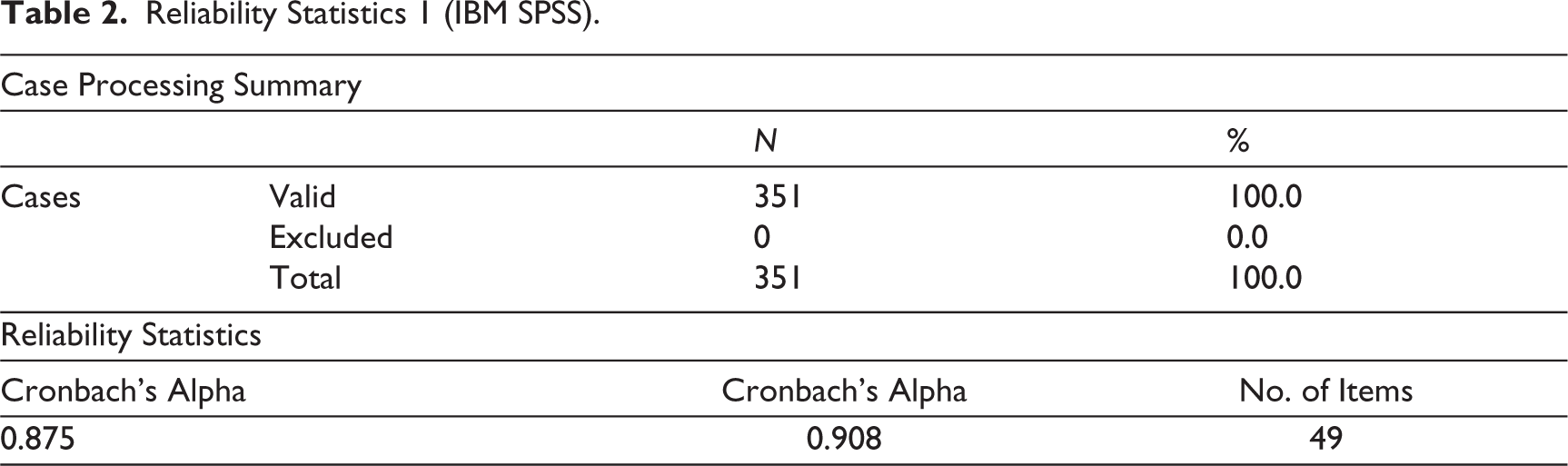
The refined, converted, and labeled data were then fed into a reliability model (IBM SPSS) to understand the normality and reliability scores of the data being used for analysis. Table 1 shows that the skewness and kurtosis values for most of the parameters of e-service quality measures were within the desired range of −2 to +2. Since widely accepted normality guidelines suggest that the skewness and kurtosis score should be in the range of −2 to +2 (Field, 2000, 2009; Gravetter et al., 2014; Trochim & Donnelly, 2006), the data were normally distributed. From reliability statistics, the overall data seem to be reliable with a Cronbach’s alpha score of 0.875, which is considered good for reliability as per the research by Malhotra et al. (2005) (Table 2).
Reliability Statistics 1 (IBM SPSS).
Results and Discussion
Analyzing the Results Through Hypotheses
Insights derived from the data analysis from IBM SPSS are used in this section against the hypotheses used to analyze the results/findings.
Hypothesis 1 (H01): There is no significant difference in website design between 1mg and PharmEasy.
Table 3 represents the descriptive statistics of Website/application design for 1mg and PharmEasy, the table indicates that there is a slight difference in mean scores between both the brands (4.17 and 4.20) and the standard deviations being slightly different (0.26 and 0.31).
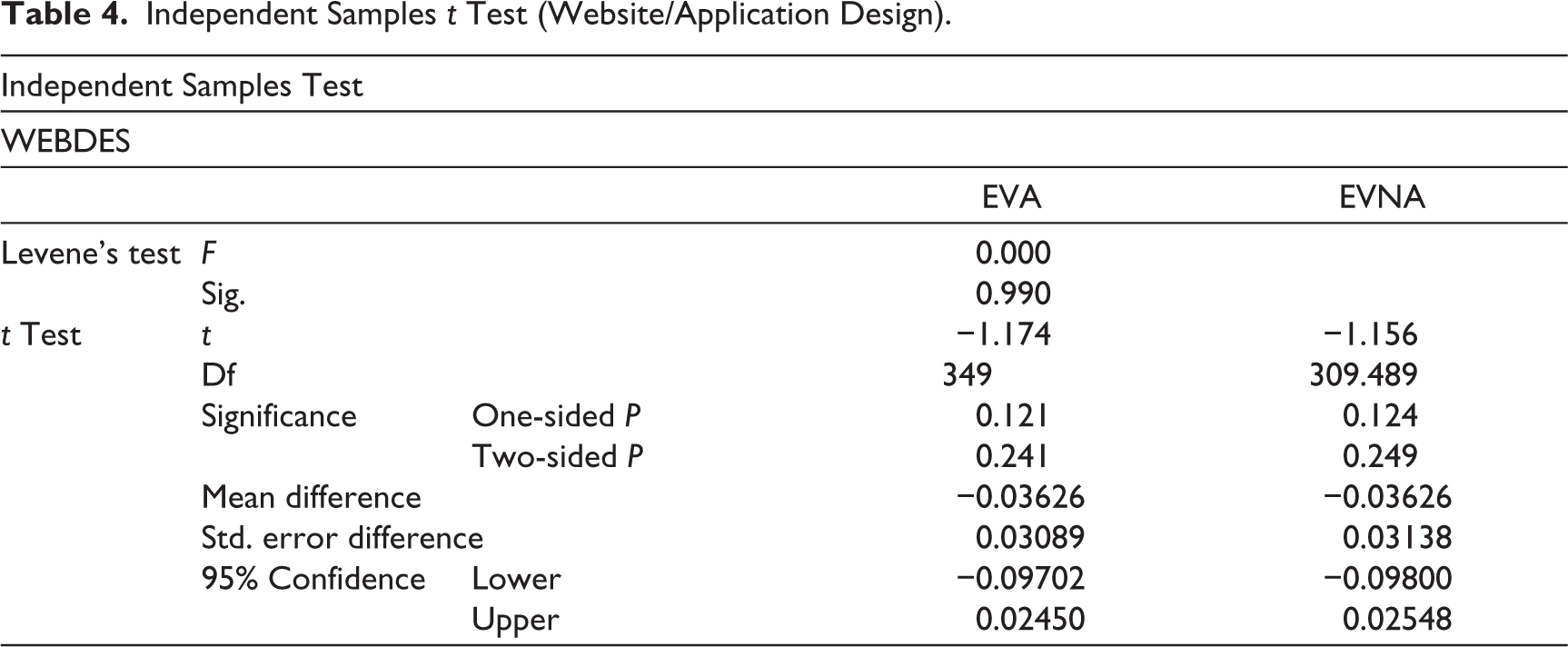
Table 4 describes the results of the t-test conducted for testing the statistically significant difference in website/application design between 1mg and PharmEasy. The value of T stat is −1.56(P = 0.249) and is found to be nonsignificant at a 5% level of significance, which indicates that the hypothesis framed H01 is accepted. Hence, it is concluded that there is no significant difference in the quality of website/application design between 1mg and PharmEasy.
Hypothesis 2 (H02): There is no significant difference in the quality of fulfillment between 1mg and PharmEasy.
Table 5 represents the descriptive statistics of fulfillment for 1mg and PharmEasy. The table indicates that there is a slight difference in mean scores between both the brands (4.01 and 4.16) and the standard deviations being slightly different (0.24 and 0.29).
Group Statistics (Website/Application Design).

Independent Samples t Test (Website/Application Design).
Group Statistics (Fulfillment).

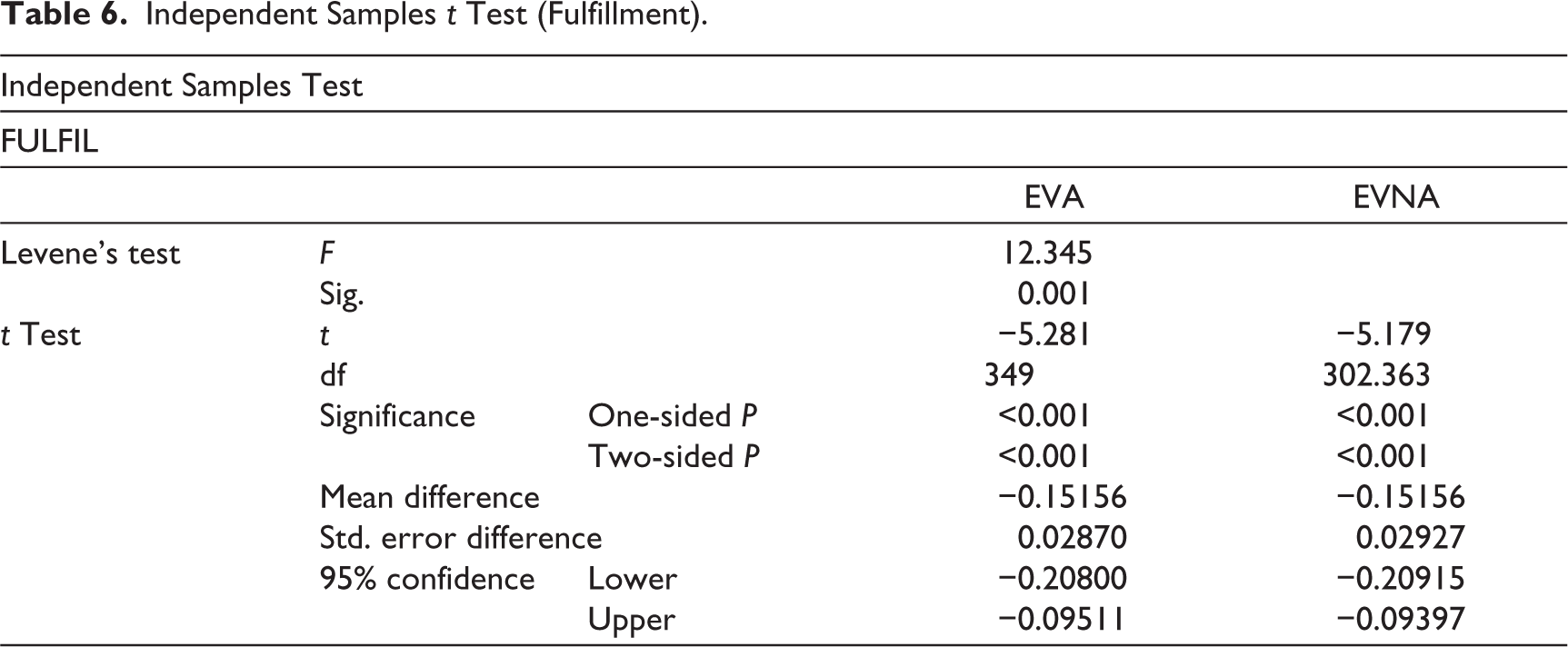
Table 6 describes the results of the t-test conducted for testing the statistically significant difference in fulfillment between 1mg and PharmEasy. The value of T stat is −5.179 (P = 0.001) and is found to be significant at a 5% level of significance, which indicates that the hypothesis framed H02 is not accepted. Hence, there is a significant difference in the quality of fulfillment between 1mg and PharmEasy.
From descriptive statistics for quality of fulfillment between 1mg and PharmEasy, the mean score of PharmEasy (4.16) is slightly higher than that of 1mg (4.01). Although the difference is small, and the standard deviation between 1mg and PharmEasy is very less, it implies that the e-pharmacy customers find PharmEasy’s quality of fulfillment better than that of Tata’s 1mg.
Hypothesis 3 (H03): There is no significant difference in the quality of customer service between 1mg and PharmEasy.
Table 7 presents the descriptive statistics of customer service for 1mg and PharmEasy. The table indicates that there is a slight difference in mean scores between both the brands (4.11 and 4.02) and the standard deviations being slightly different (0.43 and 0.53).
Independent Samples t Test (Fulfillment).
Group Statistics (Customer Service).

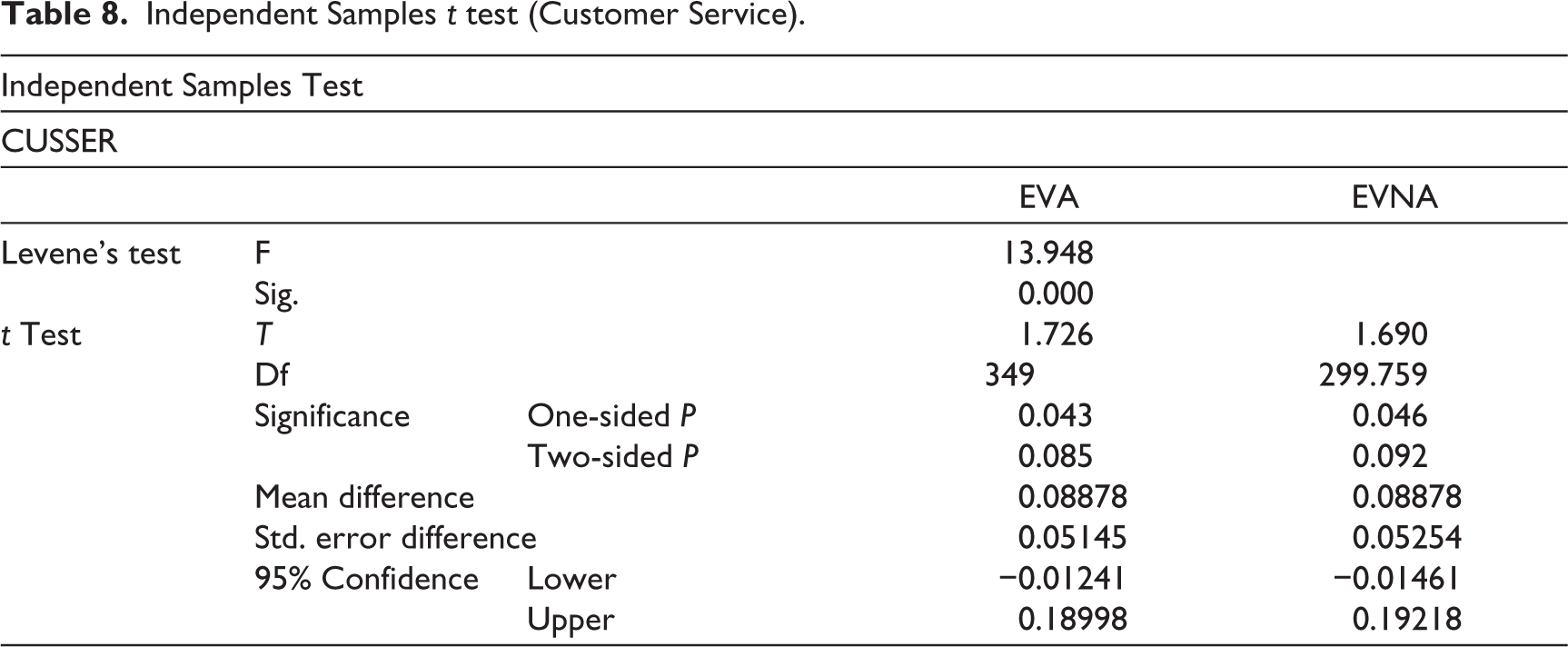
Table 8 describes the results of the t-test conducted for testing the statistically significant difference in the quality of customer service between 1mg and PharmEasy. The value of T stat is 1.690 (P = 0.092) and is found to be nonsignificant at a 5% level of significance, which indicates that the hypothesis framed H03 is accepted. Hence, it is concluded that there is not a significant difference in the quality of customer service between 1mg and PharmEasy.
Hypothesis 4 (H04): There is no significant difference in the quality of security/privacy between 1mg and PharmEasy.
Table 9 represents the descriptive statistics of security/privacy for 1mg and PharmEasy. The table indicates that there is a slight difference in mean scores between both the brands (4.29 and 4.07) and the standard deviations being slightly different (0.48 and 0.51).
Independent Samples t test (Customer Service).
Group Statistics (Security/Privacy).

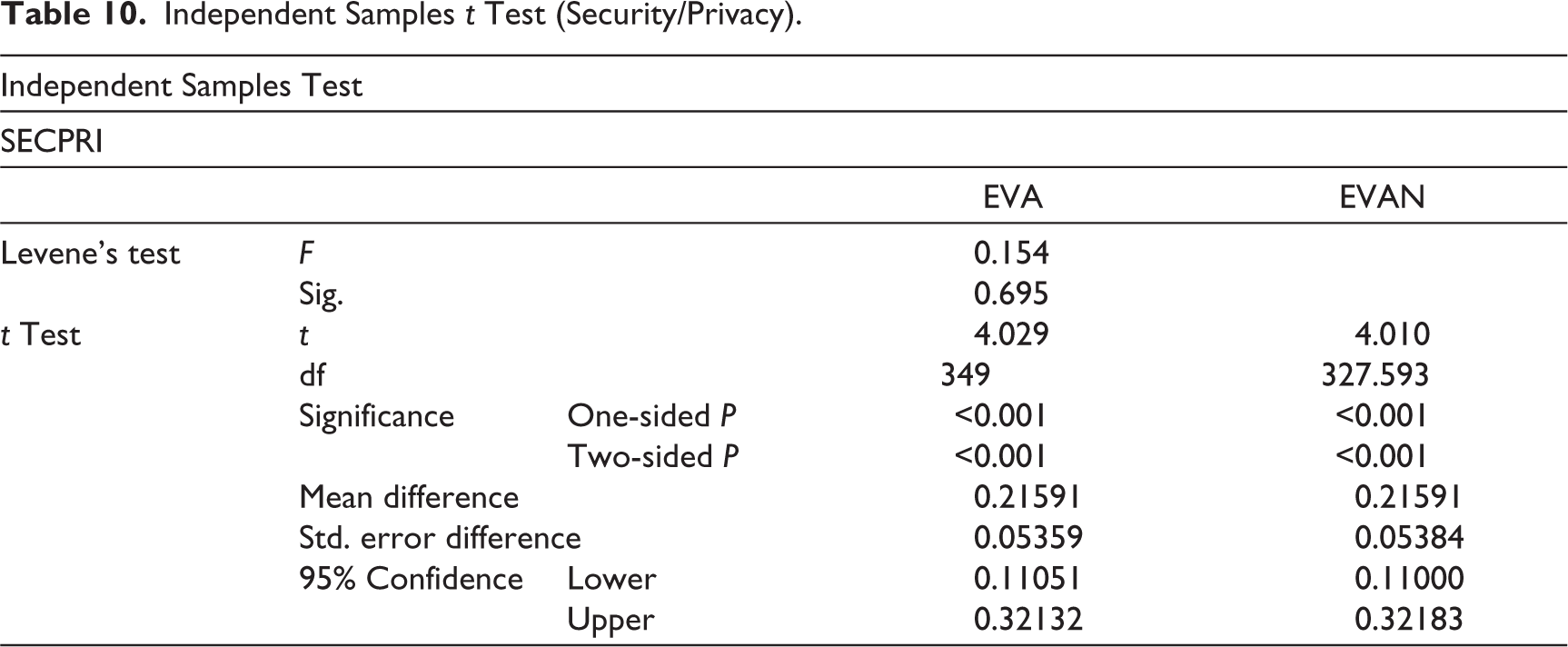
Table 10 describes the results of the t-test conducted for testing the statistically significant difference in the quality of security/privacy between 1mg and PharmEasy. The value of T stat is 4.010 (P < 0.001) and is found to be significant at a 5% level of significance, which indicates that the hypothesis framed H04 is not accepted. Hence, it is concluded that there is a significant difference in the quality of security/privacy between 1mg and PharmEasy.
From descriptive statistics for quality of security/privacy between 1mg and PharmEasy, the mean score of 1mg (4.29) is slightly higher than that of PharmEasy (4.07), and the standard deviation between 1mg (lesser compared to PharmEasy) and PharmEasy is very less, it implies that the e-pharmacy customers find Tata 1mg’s quality of security/privacy better than that of PharmEasy.
Hypothesis 5 (H05): There is no significant difference in the overall quality of e-service between 1mg and PharmEasy.
Table 11 presents the descriptive statistics of the overall quality of e-service for 1mg and PharmEasy. The table indicates that there is a slight difference in mean scores between both the brands (4.52 and 4.40) and the standard deviations being slightly different (0.43 and 0.37).
Table 12 describes the results of the t-test conducted for testing the statistically significant difference in overall quality of e-service between 1mg and PharmEasy. The value of T stat is 2.733 (P = 0.007) and is found to be significant at a 5% level of significance, which indicates that the hypothesis framed H05 is not accepted. Hence, it is concluded that there is a significant difference in the quality of security/privacy between 1mg and PharmEasy.
Independent Samples t Test (Security/Privacy).
Group Statistics (Overall Quality).

Independent Samples t Test (Overall Quality).
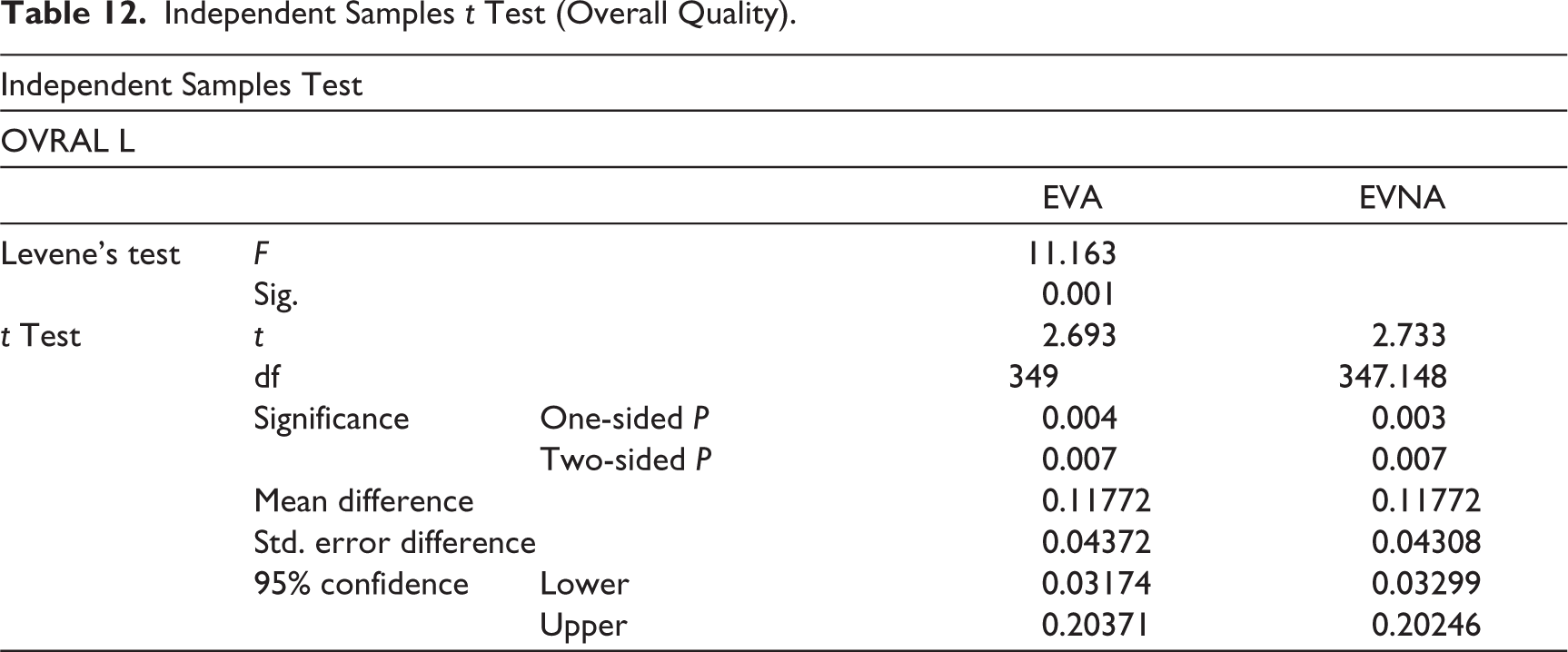
From descriptive statistics for the overall quality of e-service between 1mg and PharmEasy, the mean score of 1mg (4.52) is slightly higher than that of PharmEasy (4.40), which implies that the e-pharmacy customers find Tata 1mg’s overall quality of e-service better than that of PharmEasy.
Discussion
Website/Application Design
Findings of Bai et al. (2008) suggest that the quality of the website/application has a direct and significant positive influence on end-user satisfaction and, thus, the customer experience has a significant impact on their repeat purchase intentions. Based on the insights derived from the results section and the hypothesis framed for quality of website/application design, it is concluded that there is no significant difference in the website design between PharmEasy and 1mg. Means of the data collected for website design for PharmEasy (4.20) and 1mg (4.17) show that both PharmEasy and 1mg have a better quality of website/application design. Reviews from the Google Play Store also show that the quality of the website/application design is better and appreciated by the end users or customers (Google Play-Tata 1mg/PharmEasy, 2022).
Fulfillment
Fulfillment indicates behind-the-scenes services provided by the retailer/business, as e-service quality has a higher impact on the perceived value of an e-retail platform, it is to be noted that the quality of fulfillment has a greater influence on total e-service quality (Pearson et al., 2012). Gawor and Hoberg (2018) found that lead time is an important factor for the customers/consumers of e-service while placing an order. Insights from Analysis and Results suggest that there is a significant difference in the quality of fulfillment between 1mg and PharmEasy, and the mean value of PharmEasy (4.16) is better than that of 1mg (4.01). This indicates that PharmEasy is better than 1mg in terms of the quality of fulfillment. Further analysis of the customers’ feedback or comments on platforms, such as Google Play Store and Apple Appstore (Apple Appstore-Tata 1mg/PharmEasy, 2022), also aligns with the results that PharmEasy serves its consumers better in terms of the quality of fulfillment as compared to Tata’s 1mg.
Customer Service
In Stiakakis and Georgiadis (2009), it is stated that the criteria such as “prompt response” and “accessibility,” which come under customer service, seem to have been rather overestimated in importance by providers (service providers), as compared with the views of customers. This means that the service providers try to provide better customer service compared to the quality of customer service expected by the customers. Results from the data analysis present that there is no significant difference in the quality of customer service between Tata 1mg and PharmEasy. As the mean value of the data for 1mg (4.11) is better than that of PharmEasy (4.02), it can be concluded that 1mg provides the best customer support/service to its consumers. Customers’ feedback on the quality of customer service on internet sources such as Google reviews, Google Play Store, and Apple’s Appstore suggest that both Tata 1mg and PharmEasy need to focus more on the quality of customer service they provide.
Security/Privacy
Security is a crucial factor in restricting customers and companies from involving in e-commerce business. E-commerce organizations have carefully started enhancing their security issues on the internal and external portals (Bhatia et al. 2021). Svorc (2012) conducted a study on consumer’s intentions to shop for medicaments online and found that there is a negative relationship between the perceived risk of e-service and the customer’s intention to use e-pharmacies. In other words, if the customer trusts the online pharmacy’s data security or privacy capabilities, the consumer likes to use the e-pharmacies to buy medications. Findings from the results in the previous section show that both 1mg and PharmEasy provide a better quality of security/privacy to their customers as both have a higher mean of 4.29 and 4.07, respectively, and there is a significant difference in the quality of security and privacy between 1mg and PharmEasy. When the results from the study are compared with the customers’ testimonials on digital platforms such as Play Store and Appstore, it can be concluded that Tata 1mg has better customer trust in terms of the quality of security/privacy compared to PharmEasy.
Overall Quality of E-service
Handayani et al. (2021) found that the overall e-service quality has a positive and significant impact on customer loyalty. Overall e-service quality and trust have a significant impact on customer loyalty mediated by consumer satisfaction (Muharam et al., 2021). Customers’ reviews from Google Play Store (Google Play-Tata 1mg/PharmEasy, 2022) align with findings from the previous section that 1mg is better than PharmEasy in the overall e-service quality. Tata is one of the most valuable brands in India; its overall e-service quality aligns with one of its core values, i.e., excellence—being passionate about achieving the highest standards of quality and promoting meritocracy (Tata, 2022). Also, overall rating for Tata 1mg is better (4.6), while PharmEasy has an overall rating of 4.1 (Appstore-Tata 1mg/PharmEasy, 2022). Hence, it can be concluded that it aligns with the findings of the study that Tata 1mg provides better overall service quality than PharmEasy.
Conclusions and Recommendations
E-pharmacies or online pharmacies have become popular primarily because e-pharmacies offer customers ease of buying that regular brick-and-mortar stores do not usually provide (Al Sideiri et al., 2021). Hence, providing the best e-service quality and experience to consumers is a crucial task for e-pharmacies. Findings from the previous section conclude that 1mg and PharmEasy have a significant difference in the quality of fulfillment, security/privacy, and the overall e-service quality. Based on the mean values from results/findings it can be concluded that 1mg is better than PharmEasy in providing a better quality of customer service, security/privacy, and overall e-service quality, and PharmEasy proved to be elegant in the quality of website/application design and fulfillment.
Practical/Managerial Implications
The findings of this study support managers of e-commerce or e-pharmacies in many ways.
First, the findings help managers or new entrants of the e-pharmacy sector on the important dimensions or parameters of the e-service/e-pharmacies and the extent of the significance of dimensions or attributes from the customer’s perspective.
The questionnaire framework developed using the hierarchical model from the study by Blut (2016) can be used to derive insights into any type of e-service quality. These insights can help organizations understand the target dimensions of the e-service. The questionnaire constructed can be used by the managers as a customer satisfaction survey to understand changing customer preferences and for setting the target for e-service quality for the target period.
Future Avenues for Research
Based on the review of the literature collected and discussed in this research and the data collected and analyzed, the following are some of the recommendations for future research or studies on the comparison of e-service quality:
This study only considered the comparison of e-service quality of e-pharmacy business of 1mg and PharmEasy, while both the organizations have established business in online lab tests booking, e-consultations as well, thereby serving all types of healthcare needs. Hence, future research/studies can be performed on the e-service quality comparison of lab tests service or e-consultation services provided by Tata 1mg and PharmEasy. This research considered two of the top e-pharmacies in India to determine e-service quality. To understand customer needs, and consumer expectations at a global level, the same comparative study of e-service quality of e-pharmacies between India and other countries such as the United States, Europe, etc., was carried out. This can benefit new startups or new e-pharmacy organizations with the current expectations of consumers in the e-pharmacy sector, dimensions that significantly impact the overall service quality, etc. In future e-service quality comparative studies, the researchers need to consider the impact of demographics, occupation, and education level of the customers to understand the customers’ perception concerning e-service quality in a better way. The current study can be further explored with a wider sample size and include detailed statistical analysis such as factors affecting e-service quality of online pharmacies in general. Other emerging online pharmacies in India are increasing their market share day by day such as Apollo Pharmacy and NetMeds. They may also be included in the comparative study for wider academic discussion.
Limitations of the Research
The following are some limitations of the research:
Both Tata 1mg and Pharmacy have a strong market hold in e-healthcare services such as e-pharmacy, online lab tests and e-consultations and this research has only considered the e-pharmacy sector for the comparison of e-service quality. The study collected around 400 responses only, through the questionnaire to compare the e-service quality of Tata 1mg and PharmEasy. Since e-pharmacy is still an emerging sector in India, since most of the citizen still prefer to go to the traditional brick-and-mortar/retail shops to buy medicines, hence, the number of responses were a little less. Since only people from metropolitan or tier-2 cities have access to e-pharmacies (as most of the e-pharmacies only deliver the products in cities), responses from villages or small towns were not collected for the data analysis in this research. Few factors such as demographics, occupation, and education level of the e-pharmacy customers were not considered in this research.
Footnotes
Declaration of Conflicting Interests
The authors declared no potential conflicts of interest with respect to the research, authorship and/or publication of this article.
Funding
The authors received no financial support for the research, authorship and/or publication of this article.