




Abstract
The present study attempts to investigate the impact of the locational restriction imposed by the government, restricted mobility of the people and supply disruption at the customer interface arising out of COVID-19 on panic buying, product substitution and channel-shifting behaviour of consumers. A questionnaire survey was carried out to seek responses from Indian consumers on the items representing the above components on a 5-point Likert scale. A total of 425 usable responses were analysed using the structural equation modelling considering locational restriction and supply disruption at the customer interface as exogenous variables, difficulty in accessibility as a mediating variable, and panic buying and product substitution as endogenous variables. Further, the channel-shifting behaviour of consumers was investigated for different channels across different product categories during the lockdown. The study reveals that supply disruption at the customer interface has a significant influence on product substitution and panic buying behaviour. It was also observed that there has been a significant decrease in the use of traditional retail chains for staple food items post lockdown. The insights drawn from the study are useful for managers in designing appropriate channel strategies when faced with disruptions caused by a pandemic.
Keywords
Introduction
The COVID-19 pandemic has affected people across all walks of life in a varied manner, including loss of life, livelihood and occupation. This has caused significant mental and psychological stress and several adaptations in people’s behaviour (Rogers & Cosgrove, 2020). COVID-19 has reduced people’s affordability and, as a result, forced them to limit their discretionary spending and explore cheaper alternatives for essentials (Das et al., 2022; Martin et al., 2020). Interestingly, it has resulted in an increased health awareness that induced people to change their lifestyle (Arora & Grey, 2020) and spend more on wellness and entertainment products (Das et al., 2022). Most importantly, people were found to have displayed panic buying and stockpiling behaviour, product substitution and more usage of online channels. People panicked and bought large quantities of essential items due to the perceived scarcity of the same, resulting in shelves running empty (Leung et al., 2021; Sheth, 2020; Singh et al., 2021; Stalin & Srinivasan, 2020). The inability of the retail stores to match the increased demand also forced many consumers to substitute their original requirements (Richards & Rickard, 2020). In addition, the substitution of expensive essential items occurred with relatively inexpensive ones when the economic conditions of the consumers deteriorated during and after the pandemic (Das et al., 2022; Olubiyi, 2022). The fear of getting infected with the virus forced people to change their preferred channel of purchasing items (Caspedes, 2021). Channel-switching behaviour was also observed for fashion goods during the pandemic (Youn et al., 2021).
The foregoing discussion suggests that panic buying, product substitution and channel-shifting behaviour seem to be the important fallouts of COVID-19 from the perspective of consumer buying behaviour, which needs careful investigation. On a closer scrutiny, it was observed that lockdown, social distancing and self-isolation had a significant impact on consumers’ changing shopping behaviour (Kohli et al., 2020; Sheth, 2020). The imposition of the lockdown affected people’s mobility to purchase food and other essential items (Braut et al., 2022). In addition, people with disability faced difficulties in using transportation for getting access to essential items and medical care (Cochran, 2020; Rahman, 2021). The pandemic created severe disruption in the supply chain and affected the delivery of supplies to retail stores (Harapko, 2023). Disruption in the supply chain during the pandemic forced several manufacturers to consider a change of products (Chen et al., 2021). We observed that COVID-19 disrupted the supply chain in a significant way in the following manner: It (a) disrupted the supply side in terms of locked-out facilities and imposed restrictions on the movement of goods (Merk, 2020), (b) induced changes in the demand of end products due to the impact of the virus on the consumers’ day-to-day life (Knowles et al., 2020) and (c) disrupted the last mile delivery points primarily due to the imposed lockdowns and restrictions on consumers’ mobility (Melendez, 2020). Given the backend of the supply chain, where mostly the supply disruption originates, remains beyond the sight of the customers, such disruptions are mostly felt by the end customers at the customer interface points, that is, at the retail stores in the form of stockouts and longer queues. Moreover, as the rules of social distancing and restricted movement became stricter with the spread of the virus, accessing these shops became quite difficult (Mohanty & Sally, 2020), thus, disrupting the interface between the retail stores and their customers. Retail and consumer services suffered from this unusual development resulting from the policies of the government to stop the spread of the virus. However, we have hardly come across any paper on locational restriction due to lockdown, difficulty in accessibility or supply disruption at the customer interface and its impact on changing consumer behaviour in terms of panic buying, product substitution or the shift in channel preferences. Thus, there exist considerable research gaps that have motivated us to investigate the above phenomena from the context of a developing economy. With this background, this study focuses on the following research questions.
In what manner locational restriction due to the government-imposed lockdowns has affected consumers’ accessibility to retail stores and their panic buying behaviour?
How has the supply disruption at the customer interface affected the panic buying and product substitution behaviour among consumers?
Whether the consumers have exhibited any significant shift in their channel preference for the items of daily necessities from the pre-lockdown period to the lockdown period.
For addressing the first two research questions, stimulus organism response (S-O-R) framework has been adopted to investigate the impact of locational restriction during lockdown and supply disruption at the customer interface on panic buying and product substitution behaviour of the consumers. For the last research question, the channel-shifting behaviour of consumers was investigated for different channels across different product categories during the lockdown. The main findings of the study include a significant impact of supply disruption at the customer interface on product substitution and panic buying behaviour among consumers. In addition, it also reveals that there has been a significant decrease in the use of traditional retail chains and a consequent increase in the use of online retail for staple food items post lockdown. The contribution of the study lies in enhancing our understanding of the effect of lockdowns and supply disruption at the customer interface on consumer behaviour in terms of panic buying, product substitution and the shift in channel preference. The study provides useful insights to managers in terms of designing appropriate channel-mix and channel strategies when faced with disruptions caused by a pandemic.
The article is organized as follows. The second section discusses the theoretical background and the relevant literature. The third section introduces the development of hypotheses and the conceptual model. The fourth section describes the research methodology followed in this study, while the fifth section presents data analysis. The sixth section includes the major findings, and a discussion encompassing both theoretical contribution and managerial implications is presented in the seventh section. The article concludes with a brief summary, contributions, limitations and scope for future research directions.
Theoretical Background
Supply Chain Disruption and Changes in Consumer Behaviour During COVID-19
Events such as natural disasters (Campbell & Jones, 2011), economic recessions (Duquenne & Vlontzos, 2014), political unrest (Ashraf et al., 2015), pandemics, etc. (Chou et al., 2004; David, 2003) often disrupt supply chains. We, in this article, emphasise that consumers interact with a supply chain through retail stores, and such interaction (customer interface) was affected during the period of COVID-19. The disruption of the customer interface resulted in the products not reaching the retail stores, thus, creating shortages. Further, to prevent the contagion effect of the virus, the government imposed lockdowns and location-specific restrictions on the movement of people, making it difficult for them to access retail stores (Caselli et al., 2022). The local governments across both developed and developing countries took specific measures to drastically reduce the usage of public transport (Borkowski et al., 2021; Eisenmann et al., 2021; Molloy et al., 2021; Thombre & Agarwal, 2021), which created great difficulty for the common people in getting access to the essential items. In addition, the lockdowns and location-specific restrictions limited the normal business hours of the retail stores (Mukherjee & Malviya, 2020). This resulted in long queues in front of supermarkets and retail shops during the initial days of the lockdown (PTI, 2020). Earlier, researchers have noted that product scarcity and limited product availability created due to supply chain disruption contribute to building a sense of crisis and anxiety, forcing consumers to display non-routing behaviours (Kartika, 2019, Verhallen & Robben, 1994). Yoon et al. (2018) noted that a supply chain crisis can cause consumers to indulge in aggressive buying. In this context, Zheng et al. (2021) investigated the manner in which the behavioural changes in consumption spreads in a social group during a supply disruption. Several behavioural adaptations were also observed among consumers during COVID-19 (Kansiime et al., 2021; Laato et al., 2020; Pakravan-Charvadeh et al., 2021; Pantano et al., 2020; Rayburn et al., 2021). Rivera-Royero et al. (2022) reported that opportunistic buying visible during COVID-19 among consumers was a result of the lack of availability of products resulting in consumers scouting for alternatives. Papagiannidis et al. (2022) investigated the effect of lockdown restrictions on consumers’ shopping behaviour and choices. They reported that consumers started aggressive stockpiling resulting from the threat of supply disruption which also forced them to expand their channel preferences for shopping. Keane and Neal (2021) demonstrated through their model that the restrictions on the mobility of the people created difficulty in accessing retail stores, which led them to indulge in panic buying during the pandemic. The findings of Martinelli et al. (2021) revealed that many consumers switched their channels from offline to online in the aftermath of the lockdown to purchase groceries to prevent the spread of the virus. Gordon-Wilson (2021) identified changes in consumers’ shopping behaviour primarily in terms of store format preferences and consumption of unhealthy foods such as snacks and alcohol. Therefore, we view supply disruptions (Eger et al., 2021), social distancing (Cho et al., 2021), lockdowns and restrictions (Cariappa et al., 2022) and difficulty in accessibility (Borkowski et al., 2021; Caselli et al., 2022; Molloy et al., 2021) during the COVID-19 pandemic to have caused supply chains to fail to meet customers’ needs over a prolonged period of time.
Stimulus-Organisms-Response (SOR) Theory in the Context of Changing Consumer Behaviour During COVID-19
While the literature has extensively used the theory of planned behaviour for exploring consumers’ channel choice behaviour, an alternative approach is required for explaining consumers’ behaviour displayed during COVID-19 for the simple reason that consumers’ behaviour was more influenced by environmental factors as discussed in the previous subsection. Researchers have used many theories to explain adaptations in consumers’ behaviour during a crisis situation. Prominent among them are protection motivation theory (PTM), the risk–attitude–norms–abilities and self-regulation (RANAS) model, and stimuli–organism–response (SOR). The PTM relates the cognitive state of anxiety due to consumers’ perceived vulnerability to consumers’ behavioural adaptations (Kim et al., 2021a). The RANAS model considers social norms, attitudes, perceived risks, beliefs and knowledge while explaining consumers’ behaviour during a health crisis (Gamma et al., 2019). Guthrie et al. (2021) used the ‘react–cope–adapt framework’ to explain how COVID-19-induced stress influenced consumers’ usage of e-commerce. The dominant model that is used to explain consumers’ response to COVID-19 disruptions is the SOR model. The SOR model is based on the principle that context-specific external environmental factors shape consumers’ buying intentions and behaviour (Mehrabian & Russell, 1974; Su & Swanson, 2017). The SOR model emphasises how external stimuli, such as a disruptive event, arouse emotions and anxiety leading to adaptations in consumers’ behaviour (Islam et al., 2021). The model is based on three constructs, namely stimulus, organisms and response. Stimuli refer to visual, auditory or tactile cues from the physical environment affecting, consciously or unconsciously, the psychological state or cognition of the consumer (Bagozzi, 1986; Sun et al., 2021). Organisms refer to the cognitive and emotional reactions to external stimuli, whereas responses are attitudes and intentions (Eroglu et al., 2001; Jacoby, 2002). We use the SOR framework to explain consumers’ responses in the form of adaptions in their behaviour.
Using the SOR framework, we view the disruption of the customer interface as the trigger or stimuli that induced shifts in consumption and adaptations in consumer behaviour (Laato et al., 2020). Such adaptations in consumer behaviour may render strategies focusing on the resumption of supply ineffective. For example, panicked by the disruption of the customer interface, consumers resorted to hoarding and stockpiling (Chen et al., 2022; Omar et al., 2021; Prentice et al., 2020). Knowles et al. (2020) reported that consumers showed substitution behaviour during the pandemic when their preferred brands/products were not available. Further, locational restrictions due to the government-imposed lockdowns may motivate customers to change their channel preference for the purchase of essential items. Therefore, we recognise that such adaptations/shifts in consumers’ behaviour are their response to COVID-19-induced triggers, such as supply shortages, locational restrictions and accessibility. We especially identify panic buying, substitution behaviour and channel-shifting behaviour as the consumers’ responses and explore how consumers’ reduced mobility and accessibility contributed to such shifts in channel preference (Grimmer, 2022; Hall et al., 2020; Wang, 2023). The above phenomena of changing consumer behaviour and channel-shifting behaviour have important implications for the supply chain because the success of a high-performing supply chain depends on customer value proposition and revolves around giving customers what they value most (Vassiliadis & Goldbach, 2013).
Development of Hypotheses
Locational Restriction, Difficulty in Accessibility and Panic Buying
Several researchers tried to explain the panic buying behaviour displayed by consumers in anticipation of future shortages during the COVID-19 pandemic. Panic buying is being viewed, by many researchers, as a coping mechanism for consumers’ risk perceptions, situational ambiguity and supply uncertainty (Herjanto et al., 2021; Singh et al., 2021; Yuen et al., 2020, 2022). The dominant model that is used to explain panic buying is the SOR model which emphasises how external stimuli, such as a disruptive event, arouse emotions and anxiety in consumers leading to panic buying (Islam et al., 2021). We use the SOR framework to explain consumers’ responses in the form of panic buying. As a measure of controlling the pandemic, the Government imposed location-specific lockdowns and restrictions. Such lockdowns and restrictions have caused substantial panic among the public leading to elevated levels of anxiety and excessive buying (Billore & Anisimova, 2021; Keane & Neal, 2021; Prentice et al., 2022). During the restricted period of lockdown, the movement of public transport was curtailed in many countries including India in order to contain the spread of the virus (Eisenmann et al., 2021; Molloy et al., 2021; Thombre & Agarwal, 2021). Thus, many consumers faced inconvenience in their mobility in accessing a retail store inducing a sense of panic among them which finally resulted in their displaying stockpiling behaviour (Keane & Neal, 2021; Kirk & Rifkin, 2020). The sense of panic is a cognitive state of the consumer triggered by the difficulty in accessibility and refers to the organisms of the SOR model. The literature has referred to several psychological and cognitive states that induce consumers to display stockpiling behaviour. Prominent among them are: perceptions of severity, scarcity and anxiety, scarcity-induced impulse buying behaviour, sense of control, sense of security and guilt, and information overload (Islam et al., 2021; Laato et al., 2020; Omar et al., 2021; Prentice et al., 2020). Prentice et al. (2022) have shown how government actions, social media and peer influence induced the psychological perception of scarcity, leading to the display of panic buying behaviour. Similarly, we intend to understand how the stimuli of lockdown and difficulty in accessibility influence the consumers’ response in the form of panic buying as a combined effect of all psychological and cognitive states. Therefore, we propose the following hypotheses.
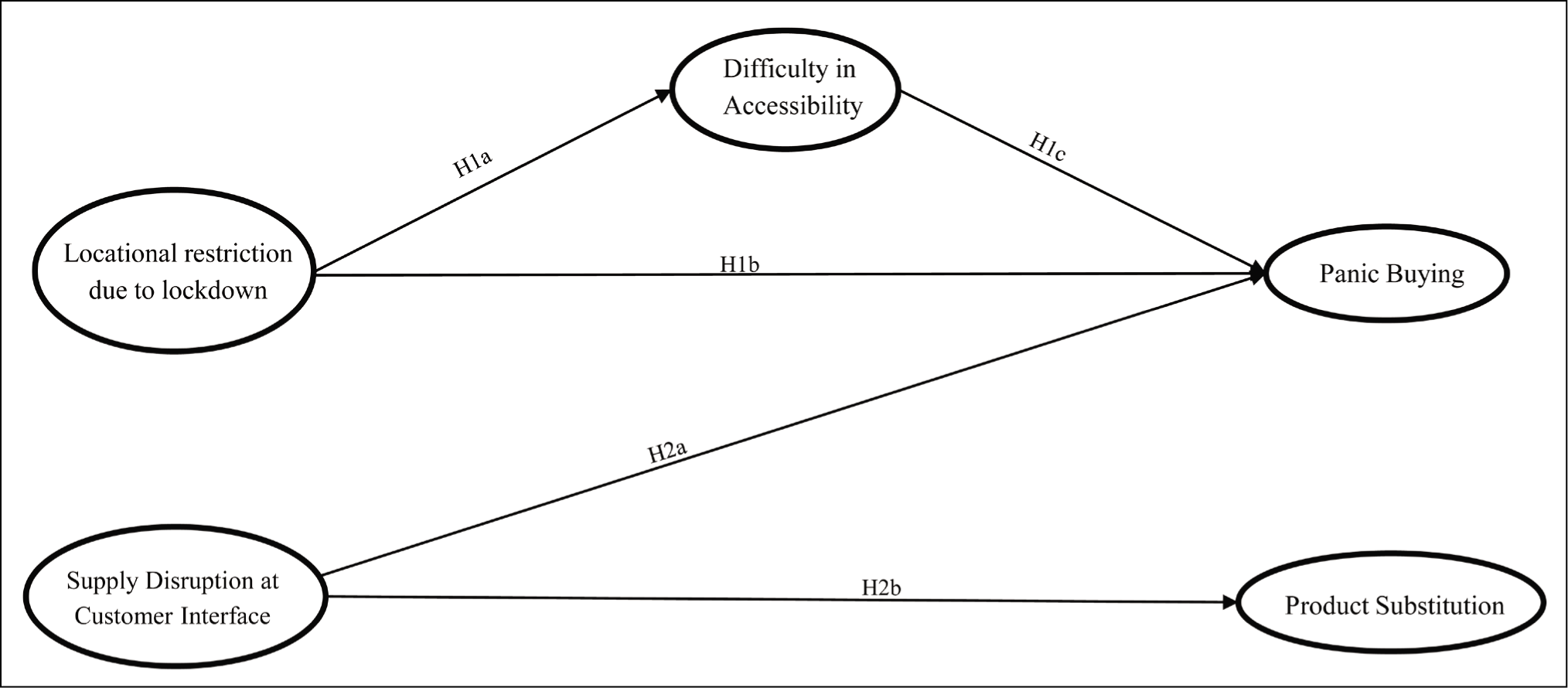
H1a: Locational restriction positively influences the difficulty in accessibility to visit stores/service centres and
H1b: Locational restriction positively influences the panic buying of daily necessities by the common people.
H1c: Difficulty in accessibility to stores is positively associated with the panic buying of daily necessities by the common people.
Supply Disruption at the Customer Interface, Panic Buying and Product Substitution
Stockouts or limited-time scarcity due to disruptions commonly induce stockpiling of goods or panic buying by consumers (Gupta & Gentry, 2019; Kirk & Rifkin, 2020; Robinson et al., 2016). In addition to facing supply shortages, retail stores were further forced to reduce the opening hours or were mostly closed or open for limited hours (Times of India, 2020). This created supply disruption at the customer interface, which, in turn, forced people to change their regular buying behaviour and led them to indulge in panic buying. Further, due to strict social distancing norms imposed by the government, there was an upper limit on the number of people a store could accommodate at a particular point in time. This significantly reduced a store’s capacity to serve its customers resulting in a longer waiting time (Roy, 2020). The longer waiting time of the customers is another form of supply disruption at the customer interface, which motivates them to stockpile goods of daily necessities. Several researchers have made similar observations that shortages and product scarcity created due to COVID-19-induced panic buying (Arafat et al., 2020; Islam et al., 2021; Yuen et al., 2020).
Supply disruption at the customer interface forced retail stores to offer limited product choices that also resulted in stockouts. Such external restrictions on product choice and stockouts are the stimuli that trigger product substitution behaviour among consumers (Hamilton et al., 2014; Tsao et al., 2019). The literature has identified supply disruption as the most important factor leading to consumers substituting products and switching brands (Lu et al., 2011). This pandemic too prompted consumers to substitute the available products and brands for the products and brands regularly consumed by them (Knowles et al., 2020) when the same were either not available or in short supply. In addition, supply disruptions experienced by the manufacturers during the pandemic triggered them to offer new products by changing product composition (Chen et al., 2021). Therefore, we propose the following hypotheses.
H2a: Supply disruption at the customer interface is positively associated with the panic buying of the items of daily necessities.
H2b: Supply disruption at the customer interface is positively associated with the substitution of items of daily necessities.
On the basis of the above discussion and the hypotheses proposed, we build a conceptual model as shown in Figure 1.
Conceptual Model Showing the Relationship among Locational restriction, Panic Buying, Product Substitution etc.
We further observed that the consumers are likely to exhibit a shift in their channel preference during the lockdown period across different product categories. This particular phenomenon, considered an important building block of the present study, could not be captured in the above conceptual model. We, however, conceptualize the same in the following subsection.
Channel-Shifting Behaviour of Consumers Before and During Lockdown
As a result of COVID-19, consumers were constrained in terms of usage of their favourite channel and were forced to explore alternative channels (Chopdar et al., 2022; Eger et al., 2021; Pantano et al., 2020). Especially, a significant rise in the usage of online channels was noted during COVID-19 (Kim et al., 2021b; Koch et al., 2020; Nielson, 2020). Researchers have observed a variety of triggers and influences on consumers’ channel preferences during COVID-19. Minimal physical contact and lessened risk of getting infected with COVID-19 were the dominant drivers of the increase in the usage of online retail channels (Martinelli et al., 2021; Ngoh & Groening, 2022). Moreover, reduced accessibility to retail stores and the government-imposed social distancing norms compelled consumers to use more online channels (Grimmer, 2022; Hall et al., 2020). Researchers have, earlier, used several theoretical frameworks to explain channel-shifting behaviour at different times. Kushwaha and Shankar (2013) studied the shopping patterns of consumers using the Regulatory Focused Theory (RFT) and concluded that the consumers would use multiple channels for hedonic products while using the traditional brick and mortar (online) channels for utilitarian products with high (low) perceived risk. Wang (2023) has used PMT to conclude that consumers’ perceived vulnerability towards loneliness and social isolation influences their channel preference. Interestingly, Mehrolia et al. (2021) have made a contradictory observation about the usage of online channels. They argued that the threat perception among the consumers was higher for the doorstep delivery of food in India, and therefore consumers were observed to have avoided the usage of online food delivery during the second phase of the pandemic. Further, although it is expected that consumers would exhibit channel-shifting behaviour during the pandemic, an intriguing fact about emerging markets, such as India, is that there is a very limited presence of online retailers that deal with product categories such as fruits and vegetables, and staple food items. Additional channel formats such as hyperlocal home delivery and vendors selling door-to-door are quite common in emerging markets for many categories of products of daily necessities. These channel formats also saw an increase in their usage during the pandemic (Bogdanova & Hoyler, 2020). Therefore, it can be expected that consumers would adopt different channels for different products during the pandemic. Ngoh and Groening (2022) investigated the shopping behaviour of different segments of customers during COVID-19 and also during the pre-COVID period and observed that consumers used more online shopping than in-store shopping during the pandemic than the pre-COVID period. Peermohamed (2021) observed that consumers were forced to change their channel preference from the pre-lockdown period to the lockdown period across different categories of products. Therefore, we posit that the nature of such changes in the channel preference would be product-specific and therefore propose the following hypothesis.
H3: There is a significant change in channel-shifting behaviour between the periods of pre-lockdown and lockdown across different categories of products among consumers in (a) traditional retail stores, (b) ‘vendors selling door-to-door’, (c) hyperlocal home delivery and (d) online store.
Research Methodology
Survey Instrument and Its Design
At the time of conducting the study during August–September 2020, we did not come across any appropriate questionnaire in the literature that is relevant to the present study and the hypothesized model as shown in Figure 1. However, the literature was replete with studies on various other types of disasters. We took cognizance of these research findings and also the reports as appeared in electronic media, print media and social media on the difficulties faced by consumers due to the locational restriction and lockdowns imposed by the government for curbing the exponential growth of COVID-19. These background literature and the reports helped us develop a preliminary understanding of the challenges faced by consumers due to COVID-19. For developing a complete understanding of the challenges faced by the consumers, we framed an open-ended questionnaire on the basis of the research questions for capturing the candid views of the respondents. The open-ended questionnaire is provided in Appendix A. Three bilingual experts assisted in translating the questionnaire into Hindi, Malayalam and Bengali. We identified 25 respondents with the following professional background: government and public sector organizations (five), multinational and private sector firms (five), micro, small and medium-scale enterprises (MSMEs) (five), businessmen (three) and daily wage earners (seven). All respondents were explained the purpose of this exercise before getting them to participate in the study. Incentives were also provided to the daily wage earners consisting of rickshaw pullers, street vendors and masons.
In the case of the daily wage earners, questions were asked verbally to which they replied in their respective mother tongues. The entire conversations were recorded, which were later transcribed. For other categories of respondents, responses were received in the text form. All these responses were first checked for inconsistency and ambiguity. After removing a few incongruent texts, these responses were arranged in an Excel file showing the questions in the columns and the respondents in the rows, which enabled us to properly visualize the data and understand the problem from a close angle. We further examined all the questions and the responses individually and explored the possibility of arriving at the items from the responses and subsequently creating codes from these items. Coding of qualitative data essentially implies the categorization of collected data. 1 From the open-ended questions and the collected responses, we arrived at six categories. Referring to the open-ended questionnaire (Appendix A), question numbers 1–4 reflect the category Locational restriction due to lockdown’, question numbers 5 and 6 indicate the category Difficulty in accessibility, question numbers 7–10 capture the category Supply disruption at the customer interface, question numbers 11 and 12 reveal the category Panic buying, question numbers 13 and 14 show the category Product substitution and finally question numbers 15–17 indicate the category Channel-shifting behaviour.
Based on the above categorization, a second-round questionnaire was designed. The purpose of this second-round questionnaire was to confirm with the experts whether we have adequately and appropriately included the items under different categories. This also helped in ensuring content validity. For example, we identified several items, for example, stock-out of essential items in the store, queuing in the stores and limited business hours in the stores, and put them under Supply disruption at the customer interface. We requested the experts to review whether the above items included truly represent a notion of Supply disruption at the customer interface. Experts were selected with diverse backgrounds, including both from academia (a marketing faculty and two researchers working in consumer behaviour) and the industry (one executive each from an offline grocery store and an online relater). The six categories that emerged out of the above exercise reflect the six constructs considered in our study. Further, we observed that similar types of constructs were also identified by the researchers, though at a later point in time. Supply disruptions and shortages were noted by Eger et al. (2021), lockdown and restrictions were identified by Cariappa et al. (2022), restrictions in mobility were observed by Caselli et al. (2022) and limited accessibility to the retail stores was identified by Mukherjee and Malviya (2020). Islam et al. (2021) observed panic buying, while Kirk and Rifkin (2020) noted stock-piling behaviour among consumers. In addition, product substitution was identified by Knowles et al. (2020), and the channel-shifting phenomenon was observed by Peermohamed (2021). Thus, the outcome of the exercise carried out by us through an open-ended questionnaire and validated through a panel of experts further reinforces our confidence in the results of the present study as the findings of our study mostly echo the findings of the literature.
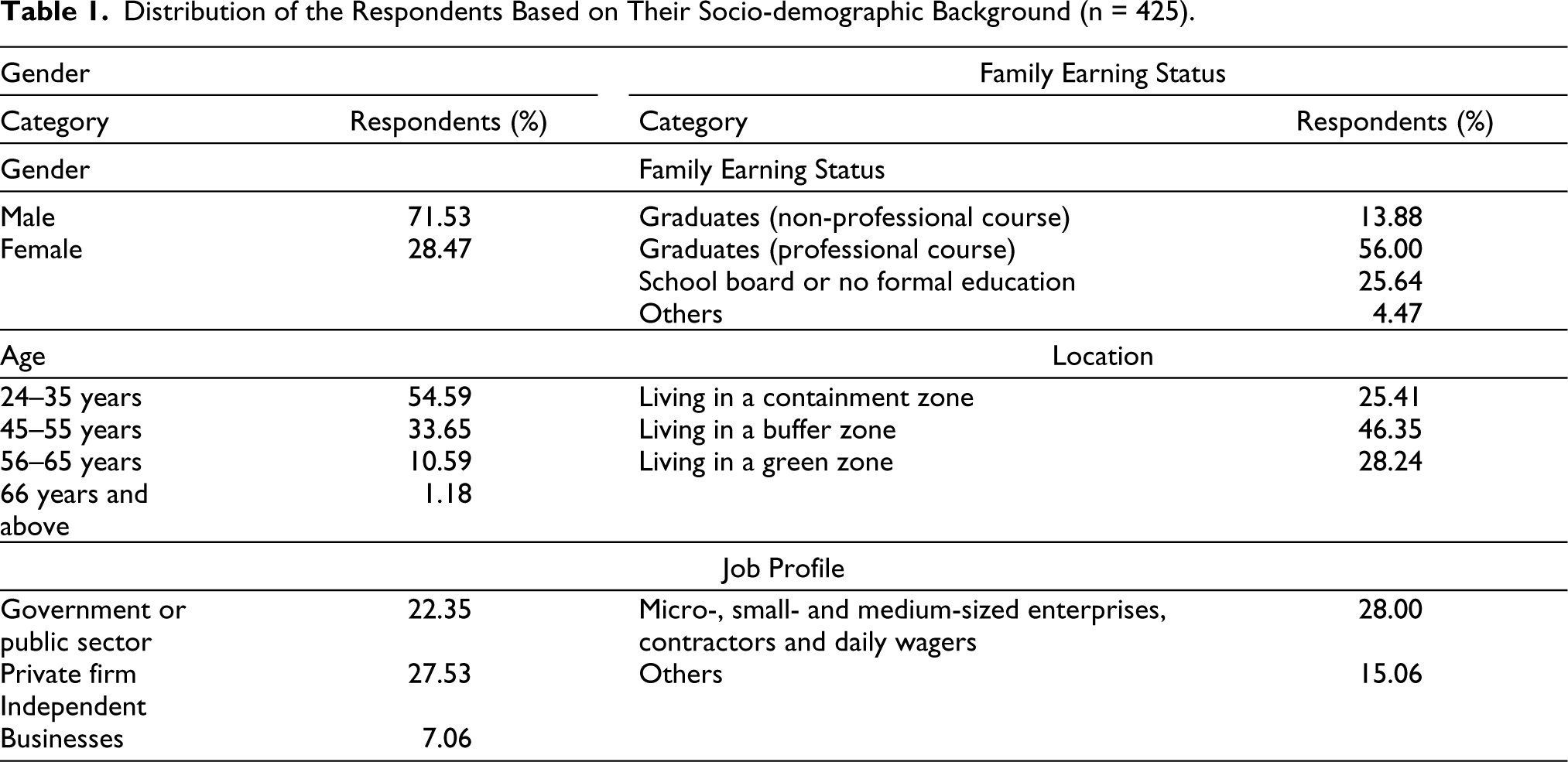
Subsequently, a close-ended questionnaire was designed which was divided into four parts. The first part of the questionnaire included items relating to the socio-economic profile and the government-imposed lockdowns in different locations. The second part included questions relevant to the factors reflecting the difficulty in accessibility to stores and supply disruption at the customer interface. The third part included questions pertaining to the adaptation in consumers’ buying behaviour due to the pandemic. Finally, the fourth part included questions pertaining to the channel-shifting behaviour of consumers during the pre- and post-announcement of the lockdown. In the second and third parts, we used a 5-point Likert scale for the responses where a score of 1 represented ‘Not at all True’, while a score of 5 represented ‘Absolutely True’. On the other hand, we used a nominal scale in part four. The questionnaire was further reviewed by the same experts once again, and based on their recommendation, some questions were rephrased. The first part of the questionnaire is provided in Table 1, while the second and third parts are shown in Appendix B. Table 6 captures the fourth part of the questionnaire.
Distribution of the Respondents Based on Their Socio-demographic Background (n = 425).
We carried out the survey for 30 respondents that were identified very diligently and tested the reliability of the questionnaire. Cronbach’s alpha of the scale used for the second and third parts of the questionnaire is 0.831. The corrected item-to-total correlations of the scale were very high suggesting high internal consistency. Following Hair et al. (2009), we considered the scale to be reliable as the scale showed an alpha value above the threshold level of 0.7.
Study Setting and Data Collection
We picked up India as the case in our study as India was experiencing an exponential increase in the number of infections at the time of conducting the study. Depending on the number and the severity of infections, the government imposed a variety of restrictions at different places. The questionnaire was circulated among the target population using both online and offline modes. Due to their immense popularity, we used social media platforms such as WhatsApp, LinkedIn and Facebook to circulate the questionnaire and urge people to respond to it. To reach out to offline respondents, we also used email as well as physical copies of the questionnaire in a language preferred by the respondents. We also hired field workers against a remuneration who visited the respondents at their doorsteps, shopping malls, popular restaurants and other shops. The questionnaire survey was carried out during August and September 2020. We received 494 responses in total, and 69 responses were either incomplete or incoherent. Thus, finally, there were a total of 425 usable responses.
Tests for Bias
In order to evaluate the non-response bias, a t-test was performed on the scores of responses received during August 2020 (early respondents) and during September 2020 (late respondents) assuming that the late respondents as non-respondents (Krause et al., 2001). Among the 425 final responses, 241 (56.7%) were received early (received in August 2020). On the other hand, a total of 184 responses (43.3%) were received late (received in September 2020). The t-test that was carried out between the 241 early responses and 184 late responses did not reveal any significant difference suggesting the data be free of the non-response bias.
Harman’s one-factor test was used on the scale representing consumers’ difficulty in accessibility to stores, supply disruption at the customer interface and consumers’ changing buying behaviour for evaluating any potential for the common factor bias. IBM SPSS (version 25) was used to conduct Harman’s one-factor test through the exploratory factor analysis without rotation. All 14 items were loaded into one single factor. The analysis showed that the common factor representing the constructs consumers’ difficulty in accessibility to stores, supply disruption at the consumer interface and consumers’ changing buying behaviour explained only 28.4% of the total variance. As the total variance is lesser than 50%, we assume that the common method bias was not of much concern for the present study (Podsakoff et al., 2003).
Data Analysis
Demographic Profile of the Respondents
Table 1 presents the details of the demographic profiles of the respondents of this survey. As can be seen in Table 1, a large number of the respondents are from the working age group with a considerable proportion of the respondents being male (71.53%). A greater proportion of the respondents are employed, while 69.88% of the respondents were graduates and 56% of the graduates have earned a professional degree.
Confirmatory Factor Analysis
The questionnaire was developed in several rounds in an iterative way, and the underlying constructs were validated by the experts. The constructs include difficulty in accessibility to stores by consumers, supply disruption at the customer interface, panic buying and product substitution. For the assessment of the extent to which the observed variables representing the four constructs reflect the unobserved or the latent constructs in the hypothesized model, we used the confirmatory factor analysis (CFA). IBM SPSS AMOS (version 24) was used for the analysis. In the above analysis, the four constructs were allowed to be correlated with each other by forming a composite measurement scale. The model was assessed using the maximum likelihood (ML) method.
All items representing restricted accessibility of people, supply disruption and consumers’ changing buying behaviour were evaluated on a number of criteria, including items squared multiple correlations, standardized regression weights and standardized residual covariance. Additionally, the model was refined based on theoretical reasonings and practical considerations. The goodness-of-fit (GOF) measures of the final measurement model are as follows: χ2 = 114.502, df = 47, p = 0.00, χ2/df = 2.436, GFI = 0.956, AGFI = 0.927, NFI = 0.938, TLI = 0.946, CFI = 0.962, RMSEA [90% CI] = 0.058 [0.045, 0.072]. In the above, we see that GFI, CFI and TLI measures are above 0.9, and the RMSEA is within 0.08. The fit indices that we obtain suggest that the measurement model fits the data on all major indices (Hair et al., 2009). The descriptive statistics of the constructs related to the restricted accessibility of people, supply disruption at the customer interface, panic buying and product substitution due to non-availability are presented in Table 2. The table also presents the mean, standard deviation and inter-construct correlations.
Summary of the Measurement Results and Inter-construct Correlations.
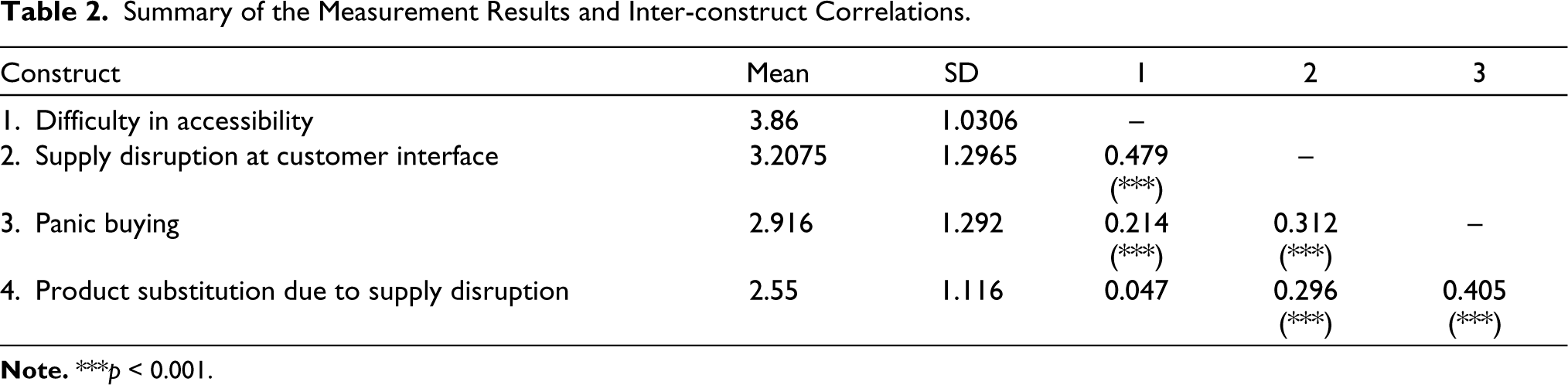
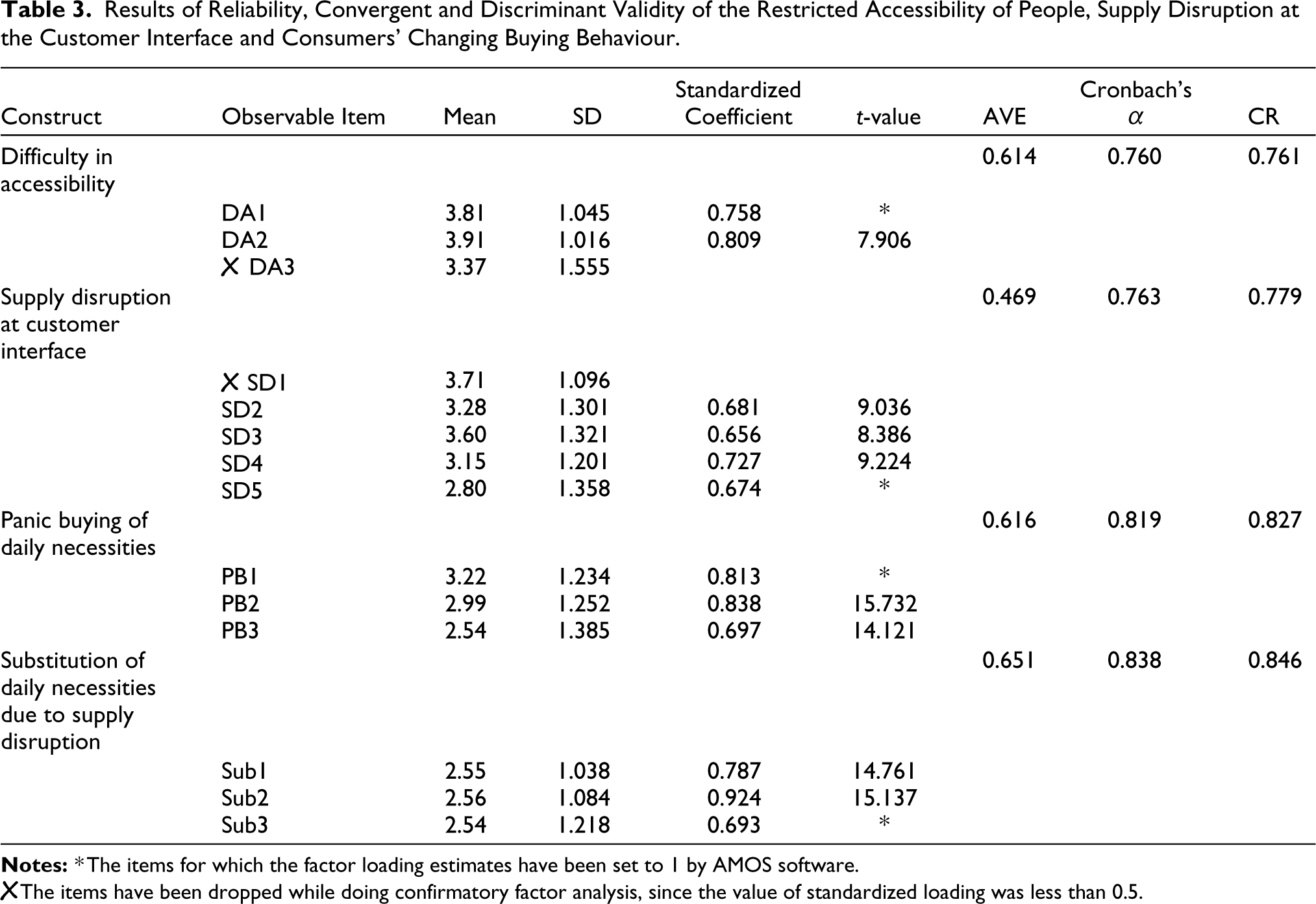
We observe in Table 2 that, at a 0.1% level of significance, we can conclude that the inter-construct correlations are significant. Significance of the inter-construct correlations facilitates ascertaining the discriminant validity and is discussed towards the end of this section. The reliability of the constructs was evaluated using Cronbach’s alpha and composite reliability (CR) coefficients. Additionally, convergent and discriminant validities were carried out to assess the validity of the constructs: restricted accessibility of people, supply disruption, panic buying and product substitution behaviour. The values of Cronbach’s alpha and CR coefficient of the four constructs are presented in Table 3. Both the measures for all four constructs exceeded 0.7, thereby suggesting an acceptable reliability of these constructs (Hair et al., 2009).
For convergent validity, it is necessary that the indicator variables of a construct share a very high proportion of variance in common. A high average variance extracted (AVE) in the range of 0.5 or more indicates convergent validity of a construct (Hair et al., 2009). As seen in Table 3, the four constructs have AVE values between 0.469 and 0.651. Please note that the construct ‘Supply disruption at the customer interface’ has an AVE value that is lower than the threshold value of 0.5. However, we observed that similar kinds of AVE values have been reported in the literature for considering the convergent validity of a construct (Das, 2018). Thus, we consider that this construct displays a satisfactory level of convergent validity, while the remaining three constructs possess a very good convergent validity.
Discriminant validity was evaluated in two ways. First, we investigate the paired correlation between the constructs using the CFA model. We observe all correlations to be below 0.9, suggesting that there is a lesser probability that a group of items loading on one construct significantly would also load on another (Kline, 2005). In the second method, we observed the square root of the AVE of each construct to be higher than the correlation of each pair of constructs. This suggests that the constructs have a higher proportion of variance in the items assigned (Fornell & Larcker, 1981). Table 3 shows that the minimum value of AVE of a construct is 0.469 and the square root of it (0.6848) exceeds the correlation between each pair of constructs. Thus, this is a necessary condition for the constructs to demonstrate satisfactory discriminant validity.
Results of Reliability, Convergent and Discriminant Validity of the Restricted Accessibility of People, Supply Disruption at the Customer Interface and Consumers’ Changing Buying Behaviour.
Structural Equation Modelling
The final measurement model was used as the input for the structural model. In the structural model, locational restriction and supply disruption at the customer interface were considered exogenous variables, while panic buying and product substitution were treated as endogenous variables. Difficulty in accessibility was considered a mediating variable. We used the ML estimation method for assessing the model. GOF measures of the structural model are as follows: χ2 = 239.761, df = 69, p = 0.00, χ2/df = 3.475, GFI = 0.925, AGFI = 0.886, NFI = 0.881, TLI = 0.883, CFI = 0.911, RMSEA [90% CI] = 0.076 [0.066, 0.086]. The above measures suggest that GFI and CFI fulfil the acceptable level (a value of 0.9). The RMSEA is also close to the acceptable value of 0.08 (Hair et al., 2009). Further, the value of TLI is closer to the threshold level of 0.9, and the model was considered to be a reasonable fit for the data. We can thus conclude that the findings display an acceptable level of fit.
Major Findings
Effect of Locational Restriction, Difficulty in Accessibility and Supply Disruption on Changing Consumer Behaviour
The respondents who participated in this study were divided into three categories based on their location, namely Location 1 through Location 3, and they are indicated beneath Table 3. The individual categorical variables are changed into binary variables using IBM SPSS before treating them as exogenous variables in IBM AMOS. In the structural model, Location 3 was considered as the reference category for the location following Cohen et al. (2003), as this is the most dominant category, and the people residing in this area also have a lower likelihood of getting affected by the pandemic than other categories. Out of the five hypotheses shown in the conceptual diagram, four hypotheses had a direct effect, while only one hypothesis involved both direct and indirect (mediating) effects. Table 4 presents the results of hypotheses having a direct effect, which show that the locational restriction significantly affects the accessibility of people residing in the containment zone (Location 1) compared with the zone having not reported any COVID-19 cases in the last 28 days (Location 3). The results of hypothesis H1a further indicate that the people residing in the buffer zone (Location 2) do not experience any significant difference in terms of accessibility from the people residing in Location 3. The results of hypothesis H1c indicate that the difficulty in accessibility has a significant positive impact on panic buying tendencies among consumers. Similarly, an increase in supply disruption at the customer interface shows a significant positive association with panic buying by the consumers as specified in hypothesis H2a. Hypothesis H2b shows that supply disruption at the customer interface has a significant positive influence on the product substitution behaviour of the consumers.
Results of the Structural Model (Direct Effects) (n = 425).
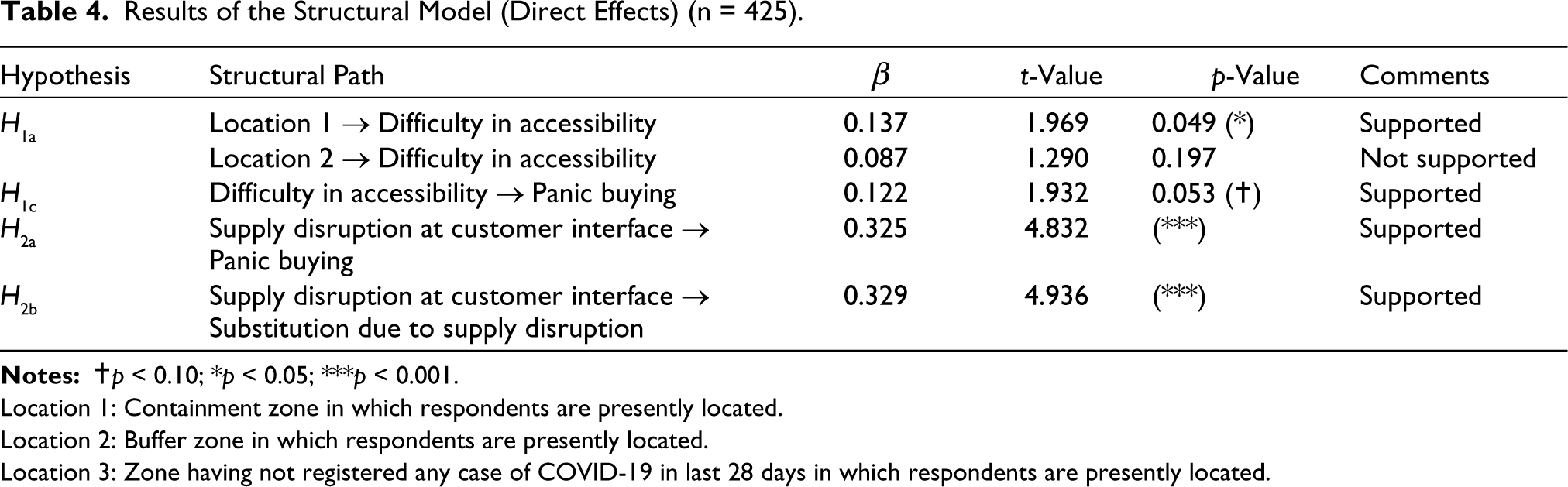
Location 1: Containment zone in which respondents are presently located.
Location 2: Buffer zone in which respondents are presently located.
Location 3: Zone having not registered any case of COVID-19 in last 28 days in which respondents are presently located.
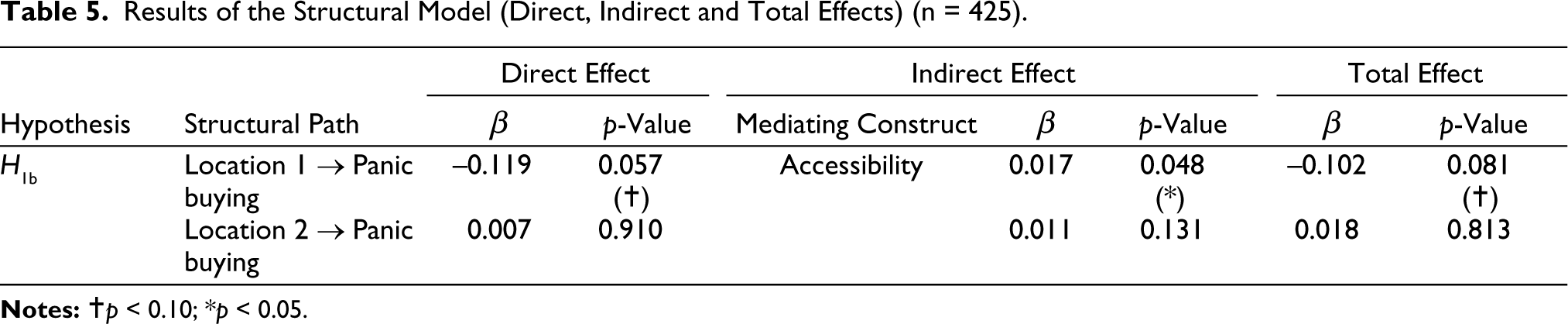
Table 5 represents the results of hypothesis H1b describing the impact of the locational restriction of the respondents on panic buying behaviour. It reveals the results of both the direct effect of locational restriction and the indirect effect of accessibility of consumers on panic buying. Taking Location 3 as the reference category, the direct effect shows that people residing in the containment zone (Location 1) are significantly less prone to panic buying than the people residing in those areas that have not reported any COVID-19 cases in the last 28 days (Location 3). The indirect effect shows a significant effect in the opposite direction. The net total effect reveals that the people residing in Location 1 are less prone to panic buying than those residing in Location 3. The relationship is supported at a 10% level of significance. Table 5 further reveals that the people residing in the buffer zone (Location 2) do not exhibit any significant difference from the people residing in Location 3 in terms of panic buying behaviour, considering both direct and indirect effects.
Results of the Structural Model (Direct, Indirect and Total Effects) (n = 425).
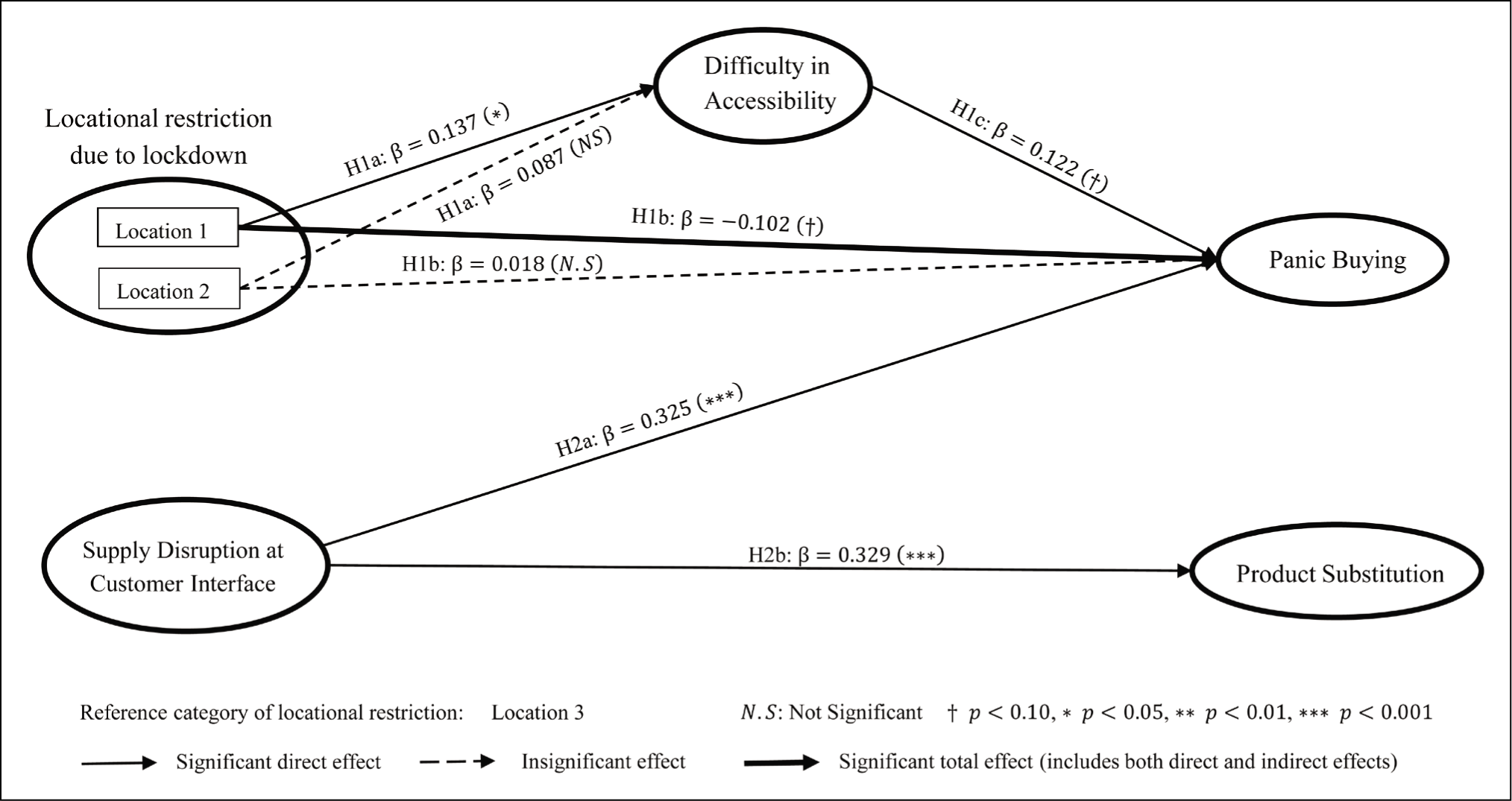
The final structural model is presented in Figure 2. The figure shows all significant and insignificant paths. Most of the significant and insignificant paths include only direct effects, while one path includes total effects.
Final Model Showing the Relationship among Locational restriction, Panic Buying, Product Substitution etc.
Channel-Shifting Behaviour of Consumers During Pre-lockdown and Lockdown Periods
Traditional Retail Channel
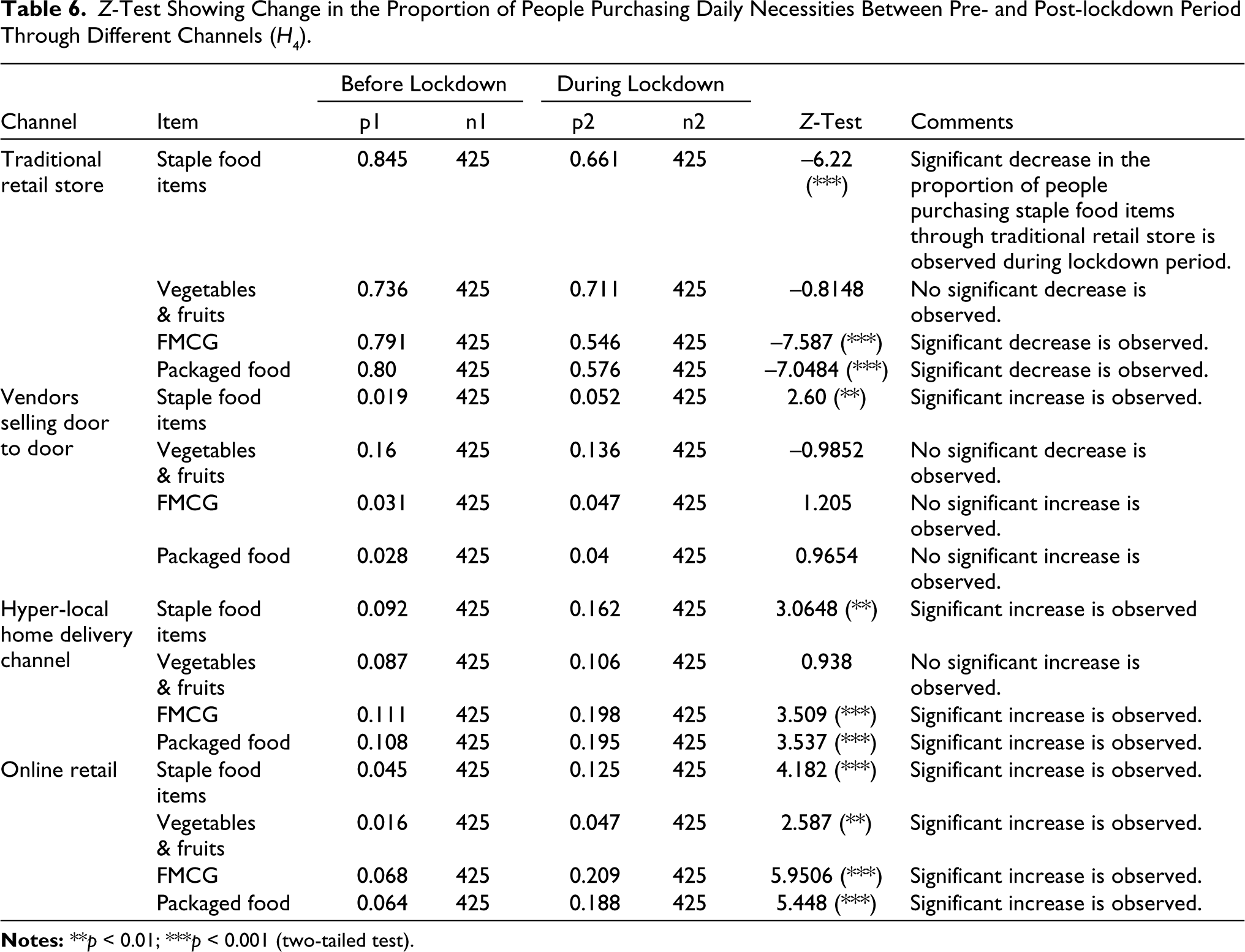
We applied the Z-test on the proportion of people utilizing traditional retail channels for the purchase of staple food items before and after the announcement of the lockdown in order to find out whether there has been any significant shift in the usage of the traditional retail channel after the announcement of lockdown. In a similar fashion, we carried out the analysis for other items, including vegetables and fruits, FMCG and packaged food through the traditional retail store. Table 6 presents the results of the Z-test that reveals that there has been a significant decrease in the proportion of people utilizing traditional retail channels for the purchase of staple food items during the lockdown. Similarly, the results of FMCG and packaged food items also reveal a significant decrease in the use of traditional retail stores. This suggests that due to the lack of accessibility to traditional retail stores and the limited time spent by consumers, there has been a significant decrease in the proportion of people purchasing necessary items through such stores. However, no significant change was observed in the case of vegetables and fruits between the pre- and post-announcement of the lockdown.
Vendors Selling Door to Door
We investigated the changes in the proportion of people purchasing items of daily necessities through vendors selling door to door between the pre- and post-announcement of lockdown by applying the Z-test. Table 6 presents the results that reveal that the consumers have significantly increased the use of such vendors during lockdown compared with the pre-lockdown period. This demonstrates that as the accessibility of retail stores became difficult for consumers, they had to rely on the vendors selling door to door for purchase of the staple food items. However, the results of FMCG and packaged food items show that there has not been any significant increase in the number of consumers making use of the channel ‘vendors selling door to door’ even after the announcement of lockdown. Moreover, the results for vegetables and fruits indicate that there has not been any significant decrease in the proportion of consumers purchasing through vendors selling door to door during lockdown.
Z-Test Showing Change in the Proportion of People Purchasing Daily Necessities Between Pre- and Post-lockdown Period Through Different Channels (H4).
Hyperlocal Home Delivery
The proportion of people purchasing daily necessities using hyperlocal home delivery during the pre- and post-announcement of lockdown was investigated, and the results obtained have been presented in Table 6. The result for staple food items reveals a significant increase in the number of consumers making use of hyperlocal home delivery channels during the lockdown. Similarly, the results of FMCG and packaged food items also show that the preference of people utilizing hyperlocal home delivery channels exhibited a significant increase. However, no significant difference in the proportion of people buying fruits and vegetables through hyperlocal home delivery was observed between the pre- and post-announcement of the lockdown. This suggests that the consumers did not resort to hyperlocal home deliveries to purchase vegetables and fruits during the pandemic.
Online Retail
The lockdown due to the pandemic has increased the dependency of consumers on online retail. Table 6 further presents the changes in the proportion of people utilizing online retail to purchase the items of daily necessities during the pre- and post-announcement of lockdown. The results for all four categories of items, including staple food, vegetables and fruits, FMCG and packaged food, reveal a significant increase in the proportion of people buying these items during lockdown compared with the pre-lockdown period. This demonstrates that the lack of accessibility of consumers to stores and the restrictions on their mobility forced them to stay indoors during the lockdown, which increased their dependency on online retail.
Discussion
Theoretical Contribution
The findings of the study enrich our understanding in terms of the impact of locational restriction, difficulty in accessibility and supply disruption at the customer interface on the panic buying behaviour of consumers. Using the SOR model, this study confirms the findings of Islam et al. (2021) in which we observed that disruption-induced shortages acting as stimuli trigger panic buying. The study adds difficulty in accessibility as an added dimension of stimulus that induces consumers to indulge in panic buying. Second, the SOR model does not explain the lack of panic-buying tendencies among people residing in containment zones. The present study reveals that the restricted movement of people as a result of being confined in a containment zone does exhibit a negative impact on the panic buying behaviour of consumers. The above finding is counter-intuitive given our understanding from the literature that information overload through social media develops a heightened level of anxiety in consumers’ psyche, thereby inducing stockpiling behaviour among them (Naeem, 2021). A possible explanation for this counter-intuitive observation is that the restricted movement of consumers and the limited time that they could spend in retail stores during this pandemic have not only reduced their accessibility to stores but have also limited the possibility of panic buying.
Third, the study reveals that consumers substituted their needs for a product when they could not find their preferred products and brands due to supply disruption at the customer interface. This finding confirms the observations of Knowles et al. (2020) and attributes product substitution behaviour during COVID-19 to supply disruption at the customer interface. This observation is different from the findings of Das et al. (2022), which demonstrates that the demand for affordable substitutes by consumers increases with the fall in their affordability. Thus, the current study highlights the product substitution behaviour of consumers due to reasons other than economic ones.
Finally, we observed significant shifts in consumers’ overall channel preference after the announcement of the lockdown and that such shifts differ across different product categories of daily necessities from the pre-lockdown period to the lockdown period. This supports the findings of Peermohamed (2021). The above revelation bolsters the theoretical argument articulated in the ‘Channel-Shifting Behaviour of Consumers Before and During Lockdown’ section that consumers display channel-shifting behaviour across different product categories during the pandemic.
Although we selected India as a case for carrying out the survey in the backdrop of the COVID-19 pandemic, the findings of the study provide important lessons to other developing economies suffering from the pandemic. The findings of the study showing the impact of locational restriction and supply disruption at the customer interface on panic buying and product substitution during COVID-19 have allowed us to develop a theoretical model, which could be generalizable for similar kinds of pandemics in developing economies. In addition, the channel-shifting behaviour of Indian consumers observed during the pandemic for products of daily necessities may likely be encountered in other emerging economies that have similar kinds of distribution channels for essential commodities.
Managerial Implications
The findings of the study provide several useful managerial insights to the practitioners. We observed that the supply disruption at the customer interface and the difficulty in accessibility resulted in panic buying tendencies among the consumers. However, the panic buying behaviour among people residing in the containment zones was found to be significantly lower than the same among people in other zones. This was primarily due to the closure of many retail stores and the limited opening hours of a few of them. This is insightful for a supply chain manager who expects a rush in her store when there is a recovery of the supply chain from such disruptions and restrictions, and the supply chain resumes normal operations. To manage such a rush, a supply chain can adopt a variety of measures, including, temporary overstocking, backup supply and dissemination of information allaying fears of stockouts.
The study also noted increased product substitution due to the non-availability of their preferred products and brands. This provides an important insight to the retailers in terms of making substitute products and brands available in their stores to avoid the loss of customers. In addition, the retailers could also consider the inclusion of substitute products in their product portfolio, which are locally available. This would serve as an effective risk mitigation strategy since this pandemic has crippled the supply network.
We observed significant shifts in consumers’ overall channel preference after the announcement of the lockdown. We also observed that such shifts differ across different product categories of daily necessities. Among all product categories, while there is a significant drop in the usage of the traditional retail store, no significant decrease was observed for vegetables and fruits. The drop in the usage of the traditional chain is mostly due to a combination of factors, including the fear of contagion, restricted mobility and the disruption of the traditional retail store. This was not the case for vegetables and fruits as vegetables and fruits in India, due to higher perishability and the demand for freshness, are mostly sold either through local stores or door-to-door delivery by small-time entrepreneurs. We observed a significant increase in the usage of online channels for all four categories of products. Further, consumers were observed to have increased the usage of the hyperlocal home delivery channel for staple food, packaged food and FMCG products. There are two major consequences of these observations for supply chain managers. First, the competition among the supply chains selling staple food items would be felt across all four channels. However, the traditional retail store continues to sell a major percentage of overall sales despite showing a decreasing usage during the lockdown. Therefore, such supply chains need to ensure their presence in multiple channels to remain in business. Second, the sale of staple food items, FMCG and packaged food items has exhibited a significant increase through both hyperlocal home delivery and online retail. Thus, the competition among the supply chains selling staple food items, FMCG and packaged food would be among the traditional channel, hyperlocal home delivery and the online channel, and therefore, the managers need to adopt an appropriate mix of an omnichannel strategy. Finally, the insights of this study suggest that the supply chain managers should focus, while choosing mitigation strategies during such kind of disruption, not merely on the backend of the supply chain but also the customer interface of the supply.
Conclusion
The major findings of this study include (a) people residing in the containment zone exhibit significantly less panic buying behaviour than the people residing in a zone unaffected by COVID-19; (b) supply disruption at the customer interface has a significant positive influence on the product substitution behaviour of the consumers; (c) supply disruption at the customer interface has a significant positive influence on panic buying; (d) there was a significant decrease in the use of traditional retail chain to purchase staple food items after the lockdown was imposed. We further observed a shift in the channel preference of consumers during this pandemic across different categories of products. The conclusions are very relevant for practising supply chain managers dealing with the grocery supply chain, especially in terms of emphasizing the value of product substitution and channel diversification as suitable mitigation strategies for taking care of the disruption at the customer interface.
Lockdowns and restrictions due to the rise in infection had put certain limitations on carrying out the study. We could not reach out to people covering the entire socio-economic strata of India. Moreover, in this study, we report the changes in consumer behaviour during the pandemic and have not explored much on the reasons behind these changes. This part has been left for further exploration in future studies.
Footnotes
Declaration of Conflicting Interests
The authors declared no potential conflicts of interest with respect to the research, authorship and/or publication of this article.
Funding
The authors received no financial support for the research, authorship and/or publication of this article.
Appendix A. Open-Ended Questionnaire
Background Note. COVID-19 has affected the lives of millions of people across the globe and endangered the livelihood of countless people. Common people faced extreme difficulties in getting their essential commodities because of the lockdown imposed by the government. In this particular survey, we wanted to understand the challenges faced by the people across different walks of life because of COVID-19 and the subsequent lockdown. Different challenges expected to be uncovered in this survey included restrictions on people’s mobility, difficulties faced by the people in getting access to the items of everyday use, and supply disruption. In addition, the survey further intended to capture relevant information relating to tendencies of the people to purchase in bulk in anticipation of short supply/shortages, changes in the shopping pattern and also the use of substitute items owing to the non-availability of preferred ones from the perspective of the common people.
This survey was exclusively designed for academic purposes. The same contains a few open-ended questions on which you are free to give your candid opinion. Your kind co-operation is solicited in terms of providing your valuable responses on different questions attached in this survey form.
Government Job/ Job in PSU Independent business/Start-up Job in large Private sector/MNC Job in MSME/Contractor/Businessman Others
No formal education Not cleared Class X Class X/Class XII Graduation in a non-professional program Graduation in a professional program
What is the current status of your locality/neighbourhood in respect of the spread of COVID-19? Is it reporting the new cases of COVID-19 infection on a regular basis since the last several weeks? If yes, are the people residing in the locality free to move? Is your locality yet to report a single case of COVID-19 infection in the last 28 days? If yes, are the people residing in the area free to move? Has your locality you live in not reported any case of COVID-19 infection in the last 28 days and at the same time, is it located in close proximity to a neighbourhood, which has reported the new cases of COVID-19 infection regularly? If answer to the above question is yes, is there any restriction imposed on the mobility of people residing in your locality? If yes, what kind of restrictions are imposed? Are you able to visit the retail stores to purchase the essential commodities and service centres to get the necessary items serviced as before without any fear of contagion or government restrictions? Are public transport available which would allow you to undertake visit to the retail stores/service centres to meet your daily necessities? If not, what mode of transportation do you use? While undertaking visit to the retail store, did you find the retail store open? If not, how did you meet your needs in respect of the daily necessities? During lockdown if you found the store open, did you encounter long queue? Did the long queue demotivate you to visit the store and purchase items from the physical store? During lockdown, did you find the store remaining open for limited hours? During lockdown if you found the store open, did you find all necessary items (Fast moving consumer goods, staple food, packaged food etc.) of your choice? Or did you experience stock-out of any of these items? During lockdown, you found that the store you most frequently visit to purchase your daily necessities is open and has tried to make most of the items available for the customers. Did you observe that the other customers indulged in purchasing the necessary items in large quantities due to the fear of short supply in the coming days? Did you also indulge in purchasing the necessary items in bulk with the apprehension that the same might be in short supply in the coming days? During lockdown if you found the store open and did not find the items of your choice, did you find substitutes for the same? Did the substitutes satisfy your requirements? Has the COVID-19 compelled you to substitute the items of daily necessities (staple food, packaged food, FMCG, etc.) not being available in the store with those items being available in the store? If yes, how important, you feel, the issue of stock-out of daily necessities has a bearing on you to go for purchasing substitute items? Has the COVID-19 led to the changes in the shopping pattern (from offline to online) of the items of daily necessities (staple food, packaged food, FMCG etc.)? If yes, how important, you feel, the availability of online platform is for shopping your daily necessities? Other than traditional retail stores, what other retail channels (both offline and online) you utilize for purchase of your daily necessities under normal circumstances? Has COVID-19 triggered a shift in the choice of your channels for purchase of daily necessities? If so, which channel do you most frequently use for what categories of items (e.g FMCG, staple food, packaged food etc.) during COVID-19?
Appendix B. Difficulty in Accessibility
DA1: Unlike normal circumstances, I am not able to visit the retail stores to purchase my necessities due to fear of contagion arising out of COVID-19.
DA2: Unlike normal circumstances, I am not able to visit the service centres to get my necessary items serviced due to fear of contagion arising out of COVID-19.
DA3: I am not able to visit the retail stores/service centres due to non-availability of public transport arising out of COVID-19
Not at all True Scarcely True Somewhat True Considerably True Absolutely True
SD1: While visiting our preferred retail store for purchase of daily necessities, me and/or my family found the same remaining closed several times.
SD2: While purchasing daily necessities from the retail store, me and/or my family found that many of these items are not available.
SD3: While purchasing necessary items from the retail store, me and/or my family had to wait in a queue for long time.
SD4: While purchasing necessary items from the retail store, me and/or my family found that a few substitute items are available in lieu of the items we regularly purchase.
SD5: While purchasing medicines from the Medical Store, me and/or my family found that the required medicines are often not available.
Never Rarely Sometimes Often Always
PB1: Panic buying of staple food items
PB2: Panic buying of Fast-moving consumer goods
PB3: Panic buying of packaged food
Very low Low Moderate High Very high
Sub1: Substitution of staple food items
Sub2: Substitution of Fast-moving consumer goods
Sub3: Substitution of packaged food