




Abstract
This article aims to critically examine India’s ban on the manufacturing and sale of blended mustard oil from a food nutrition point of view. The presence of erucic acid in India’s traditional mustard crop varieties is far higher than the internationally accepted level of erucic acid content in the rapeseed mustard oil and the canola-quality oil. Human consumption of rapeseed mustard oil containing high erucic acid has been a significant concern for public health and nutrition experts due to the perceived health hazards of erucic acid. As the concentration of erucic acid is proven to reduce if the mustard oil is blended with other edible oils, the ideal way to consume Indian mustard oil is by blending it with other edible oils. Therefore, from a public health point of view, the ban on mustard oil blending is not an appropriate policy move.
Introduction
Under the direction of the Government of India, effective from 1 October 2020, the Food Safety and Standards Authority of India (FSSAI) prohibited the manufacturing and sale of blended mustard oil in India even within the 20% 1 statutory limit (Ambwani, 2020; The Economic Times, 2020). 2 The government has taken this decision in the public interest to facilitate the sale of pure mustard oil. However, a month and a half later, the FSSAI lifted the prohibition after considering the representations made by the stakeholders (Ambwani, 2020). The edible oil industry was concerned about the adverse impact of the ban on the sale of blended mustard oil on their business and mustard oil prices. Meanwhile, in response to a petition challenging the ban, the Delhi High Court has stayed implementing the prohibition order. Interestingly, through a Gazette notification dated 8 March 2021, the FSSAI has again prohibited blending in mustard oil with effect from 8 June 2021. 3 To ensure effective implementation of its prohibition order, the FSSAI has issued a direction to the Commissioners of Food Safety of States/Union Territories and Central Licensing Authority to inspect mustard oil-producing units (PTI, 2021).
In this context, this article aims to critically examine the decision of the Indian government to prohibit the manufacturing and sale of blended mustard oil from a food nutrition point of view. The article argues that pure mustard oil derived from Indian mustard crop varieties is less desirable for human consumption due to the presence of high levels of unique fatty acid, namely erucic acid in it. Blending of mustard oil with other convention edible oils used for the culinary purpose lowers the contents of erucic acid in the mustard oil. Therefore, the FSSAI order to prohibit the sale of mustard oil blended with other edible oils needs to be re-examined.
The article is organized as follows. The second section discusses the presence of a high level of erucic acid in rapeseed mustard oil and its adverse health consequences. The practice of edible oil blending as a solution to reduce the high presence of harmful erucic acid in the Indian mustard oil varieties is discussed in the third section. The fourth section discusses the unintended result of edible oil blending, namely adulteration. The final section summarizes the article and concludes it.
Rapeseed-Mustard Crop and Erucic Acid
Rapeseed-mustard is the world’s third major oilseed crop, soybean oil and palm oil being first and second. In India, rapeseed-mustard has been the second-largest contributor (after soybean) to the country’s total oilseed production during the last 10 years (Reserve Bank of India, 2018). Further, rapeseed mustard oil is the third largest edible oil consumed in India, after palm and soybean oils. It is widely consumed in the Eastern and Northern regions of the country (Dorni et al., 2018).
Six species of rapeseed-mustard are available on the Indian sub-continent (Ahlawat, 2008; Chauhan et al., 2012). Of these, Indian mustard (botanical name Brassica juncea) is the predominant crop variety cultivated in India, accounting for 75%–80% of the total rapeseed cultivation area in India. This is because of its suitability to Indian agro-climatic conditions (Chauhan et al., 2012). It should be noted that while the edible oil extracted from classic or traditional rapeseed-mustard cultivars, including Indian mustard, is rich in nutritional value (Vemuri et al., 2018); it suffers from high levels of a unique fatty acid, namely erucic acid (40%–54% of total fatty acid) and glucosinolates (more than 100 micromoles/g of de-oiled seed meal or oil cake) (Dorni et al., 2018; Kumar et al., 2009; Przybylski & Eskin, 2011; Thomas et al., 2012). The high level of erucic acid in the rapeseed mustard oil extracted from traditional crop varieties is of great concern with regard to consumption of the oil. Experimental animals such as rodents, cattle, piglets and poultry who were fed a liberal dose of traditional rapeseed oil or regularly ate foods containing high levels of erucic acid developed heart diseases and other health conditions such as retarded growth, necrosis (a form of premature tissue death) and adverse changes to the liver, kidney, skeletal muscle, and adrenal glands (Abdellatif & Vles, 1970; Bremer & Norum, 1982; Chien et al., 1983; McCutcheon et al., 1976; Roine at al., 1960; Thomasson & Boldingh, 1955; Vles & Abdellatif, 1970). Due to the deleterious effects of high erucic acid rapeseed mustard oil in the experimental animals, the human consumption of the oil has been widely considered undesirable (Foster et al., 2009; World Bank, 1999), particularly in advanced countries. Though there are no conclusive studies in humans that reported that consumption of rapeseed mustard oil having high erucic acid is harmful, the stigma of the erucic acid in rapeseed mustard oil has stayed (Przybylski & Eskin, 2011).
The high glucosinolates content in classic rapeseed mustard oil gives it a pungent flavour, which makes it unappealing to consumers who prefer lighter cooking oils (Thomas et al., 2012). In addition, the high amount of glucosinolates content in the rapeseed mustard oil meal is considered to be detrimental to the health of animals. Livestock given such feed were reported to suffer from liver and kidney disease, reduced feed intake (leading to reduced growth, weight gain and yield), decreased reproductive performance and thyroid function, and anaemia (Bischoff, 2016; Eskin & Przybylski, 2003; Knutsen et al., 2016; Przybylski & Eskin, 2011).
The high levels of erucic acid and glucosinolates in traditional rapeseed-mustard have motivated world-wide plant-breeding programmes aimed at reducing these levels (Barthet, 2016; Eskin & Przybylski, 2003). Consequently, plant breeders in Canada developed rapeseed crop varieties that were low in both erucic acid (5% maximum) and glucosinolates (maximum of 30 micromoles/g of de-oiled seed meal) in 1974 and 1977, respectively (Barthet, 2016; Ghazani & Marangoni, 2016; Patterson, 2011; Eskin & Przybylski, 2003). The Rapeseed Association of Canada named the new crop ‘canola’ 4 in 1978 to differentiate it from rapeseed with higher levels of erucic acid and glucosinolates (Aukema & Campbell, 2011; Barthet, 2016). Subsequently, genetic modifications to the canola crop further reduced its erucic acid content to below 2% of its total fatty acids. In 1986, the canola crop was given an official definition that includes rapeseed cultivars having less than 2% erucic acid in the oil and less than 30 micromoles/g glucosinolates in the de-oiled seed meal (Eskin & Przybylski, 2003; Ghazani & Marangoni, 2016; Przybylski & Eskin, 2011). Rapeseed oil with these two characteristics is termed as canola-quality or ‘double low/zero’ oil. Canola oil has been considered to be very healthy as it has a high amount of polyunsaturated fatty acids, monounsaturated fatty acids (due to low erucic acid content) and oleic acid, a low amount of saturated fatty acids and the ability to suppress/reduce blood cholesterol levels— all of which have the property of reducing the risk of cardiovascular disease (Barthet, 2016; Beare-Rogers et al., 1998; Lin et al., 2013).
Presently, Canada and Europe are the major producers and exporters of canola-quality oil in the world (Ghazani & Marangoni, 2016). Whereas the former produces the oil primarily from genetically modified (GM) rapeseed seeds, the latter only allows the production of non-GM canola oil (Barthet, 2016; Ghazani & Marangoni, 2016; Przybylski & Eskin, 2011). The oil is used for cooking in the USA, Mexico, Canada, Australia, New Zealand and Japan as well as countries in the Middle-East, Western Europe and Eastern Europe (Przybylski & Eskin, 2011).
Indian mustard oil has limited acceptability in the international market, especially in the western countries, due to its high erucic acid content (Choudhary & Grover, 2013a; Kumar et al., 2009; Pahariya & Mukherjee, 2007). Interestingly, advanced countries such as the USA, Europe and Japan continue to use rapeseed oil with a high level of erucic acid as a lubricant in the polymer, detergent, photographic, cosmetic, pharmaceutical, textile, shipping and other industries (Aukema & Campbell, 2011; Foster et al., 2009; Patterson, 2011). The oil meal derived from canola has a premium price in the global market because of its lower glucosinolates content (Barthet, 2016; Kumar et al., 2009). On the other hand, rapeseed-mustard seed meal derived from Indian rapeseed-mustard varieties is not considered premium quality in the global market as it does not conform to international ‘canola-quality’ standards (World Bank, 1999).
Today, the level of erucic acid in rapeseed oil produced for culinary use is strictly controlled in most parts of the world. The advanced countries have strict controls over erucic acid content in rapeseed mustard oil (Dorni et al. 2018; World Bank, 1999). On the other hand, the health hazards associated with the high presence of erucic acid in Indian mustard oil have not received serious attention from policymakers in India. Other Asian countries such as China, Bangladesh and Pakistan also primarily grow rapeseed-mustard with a high level of erucic acid and use the oil for food preparation (Eskin & Przybylski, 2003; Knutsen et al., 2016; Patterson, 2011). Although canola-quality rapeseed mustard is considered superior to Indian mustard varieties, it only accounts for a negligible portion (<1%) of the total rapeseed-mustard growing area in India. This is due to the following reasons. First, the agroeconomic potential of the canola-quality rapeseed-mustard seed variety has been poor in India (Kumar et al., 2009; Centre for Genetic Manipulation of Crop Plants, 2016). In Canada, canola is a short-duration summer crop cultivated within 3–5 months. In contrast, in Europe and Australia, canola is a long-duration winter crop that matures within 9–12 months (Barthet, 2016). In India, various mustard varieties are cultivated in cool and dry climatic conditions for 3–5 months (Chauhan et al., 2012). Thus, the agronomy of rapeseed-mustard crop varieties available in India does not match with the agronomy of canola-quality rapeseed-mustard crops in Canada, 5 Europe or Australia.
Second, Indian agricultural scientists’ efforts to develop canola-quality mustard seed suitable to Indian climatic conditions have not yielded significant success (Centre for Genetic Manipulation of Crop Plants, 2016; Kumar et al., 2009). However, rapeseed-mustard crop improvement programmes have enabled India to develop 12 varieties of Indian mustard and 10 varieties of canola crop (botanical name Brassica napus) with low erucic acid (<2%) and glucosinolate content (National Mission on Oilseeds and Oil Palm, 2017; The Indian Express, 2017) 6 . These varieties are under cultivation in limited geographical areas due to their low yield and restrictive agro conditions.
Third, since canola grade oil is superior to the mustard oil extracted from traditional Indian mustard crop varieties, consumers have to pay a higher price for the former than the latter. As a result, the market for canola oil is a niche in India (Kumar et al., 2009). During the period 2008–2018, India’s share in the total import of canola oil from Canada was a meagre 0.23% compared to 59.59% for the USA and 28.79% for China. 7
Fourth, Indian consumers prefer rapeseed mustard oil with a very pungent aroma, which canola-quality oil does not have. Canola oil will continue to be of limited demand in India unless Indian consumers’ taste preferences change in favour of lighter oil, and India provides greater attention to the adverse health implications of the high erucic acid content in Indian mustard oil (Przybylski & Eskin, 2011).
Edible Oil Blending
Five samples of mustard oil were collected from four Indian cities—Chennai, Kolkata, Kozhikode and Mumbai—to test the presence of erucic acid in it. Of the five samples, three were in packaged/branded form and two in loose/unsealed/unbranded form. The samples were tested scientifically in a government and an accredited private analytical laboratory. The results are presented in Table 1. It is revealed that the erucic acid content was very high (ranging from 44.73 to 47.49% of total fatty acid) in four out of five mustard oil samples tested. This finding confirms that the mustard oil consumed in India contains high levels of erucic acid.
Results of the Laboratory Test on Purity of Mustard Oil.
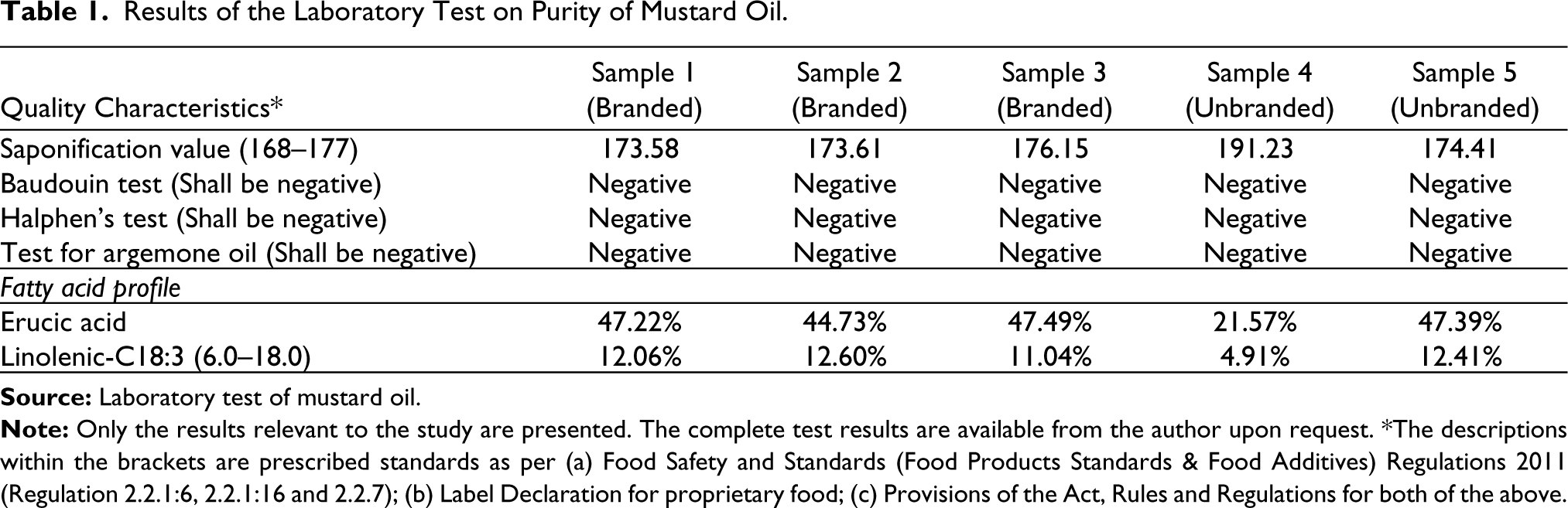
A simple and best possible way to reduce the high erucic acid content in the mustard oil used for the culinary purpose is to blend it with other conventional edible oils. The blending of mustard oil and other edible oils lowers the presence of erucic acid in the mustard oil (Ali et al., 2005; Choudhary & Grover, 2013a, Chugh & Dhawan, 2014; Ghafoorunissa, 1994). This is evident from the low erucic acid content (22.57% of total fatty acid) in the mustard oil Sample 4 (unbranded) compared to other four samples which are found to be pure mustard oil (Table 1). The test results reveal that there was an admixture of Sample 4 with palm oil, as evident in the sample’s high amount of palmitic and oleic acid. These two fatty acids are found abundantly in palm oil (Dorni et al., 2018). 8 Another way to confirm that mustard oil is blended with another oil is to examine the level of linolenic acid. Mustard oil has a high amount of linolenic acid (Azadmard-Damirchi & Torbati, 2015; Dorni et al., 2018), which is not the case for Sample 4 (4.91%). This finding shows that the blending of mustard oil and other edible oils lowers the presence of erucic acid in the former.
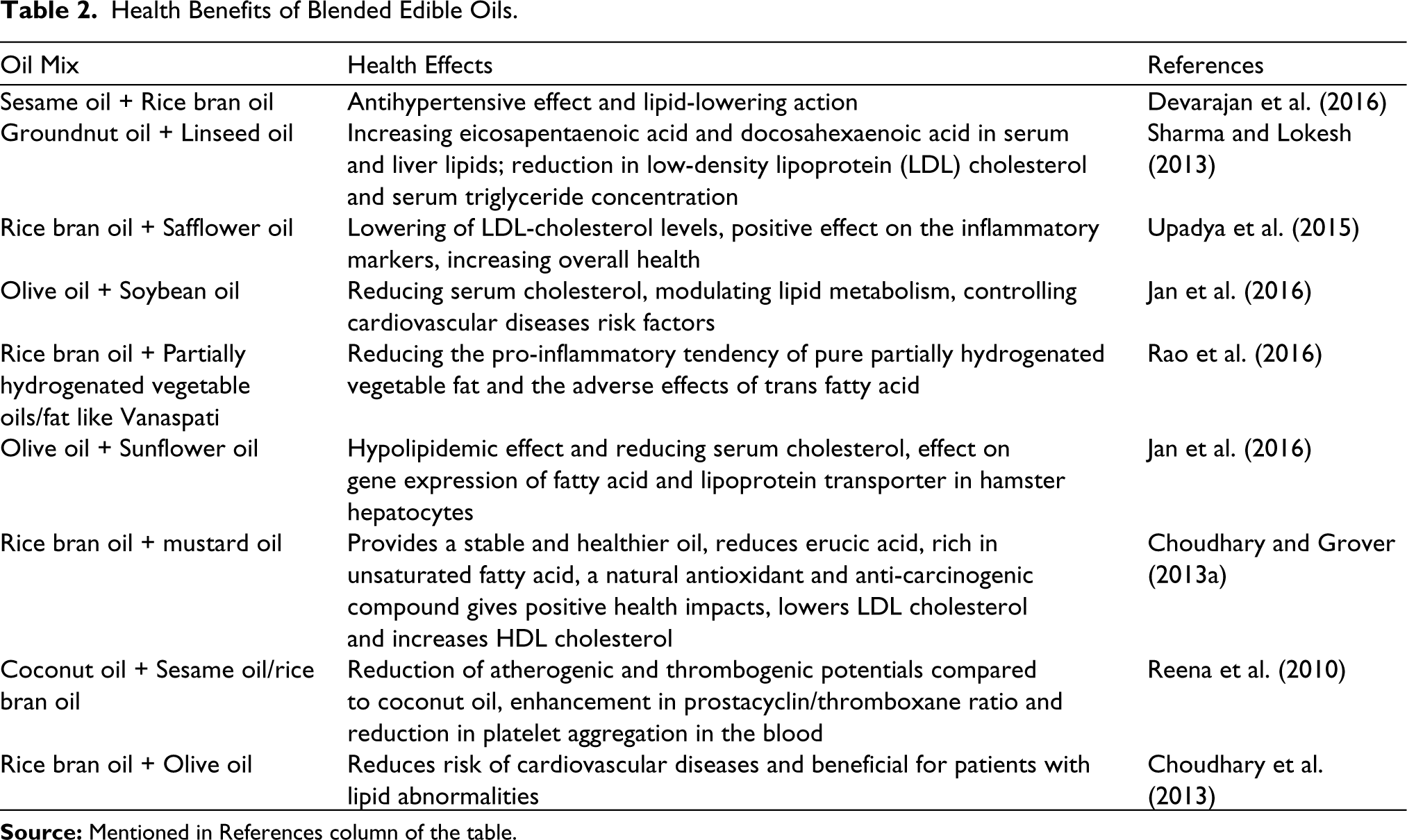
Apart from reducing the erucic acid content, using blended mustard oil for cooking purposes has several other benefits. First, most edible oils have limited culinary use in their crude form because of their low physical, 9 chemical and nutritional properties and their poor oxidative stability 10 (Hashempour-Baltork et al., 2016). One of the simple and most cost-effective methods that the world-wide edible oil industry uses to produce oils with desired properties is to blend any two oils with varied properties (Choudhary et al., 2015; Gulla & Waghray, 2011; Hashempour-Baltork et al., 2016; Reyes-Hernández et al., 2007). Second, since most of the highly unsaturated and non-conventional edible oils lack the flavour of locally preferred oils, blending the former with other oils would provide the required local flavour (Chopra at al., 2004; Choudhary et al., 2013; Murthi et al., 1987). Third, to meet the demand for traditional oils such as sesame and mustard oils and reduce their price, they can be blended with unconventional oils like rice bran, soybean and refined palm oils (Choudhary & Grover, 2013b; Gulla et al., 2010; Johnson et al., 2009). Fourth, several scientific studies have demonstrated the positive health effects of different blended edible oils, as summarized in Table 2. Indian food safety laws permit the manufacture and selling of blended edible oils, subject to conditions (Box I). As a result, blending oils have become common in the Indian edible oil industry (Sunitha et al., 1997).
Health Benefits of Blended Edible Oils.
According to industry sources, 12 around 60%–85% of the mustard oil sold in the Indian market is blended. With the exception of agri-business firms selling branded edible oils, all other sellers sell mustard oil blended with cheaper oils such as palm oil, rice bran oil, soybean oil and used cooking oils. Branded mustard oils are believed to be pure because (a) they are sold under the AGMARK Certification Mark, (b) firms are concerned about their brand reputation and (c) consumers are willing to pay more for branded oils. The proportion of other oils blended with mustard oil could range from 5% to 50%. Industry sources have revealed following reasons for blending mustard oil with other oils. First, the demand for mustard oil is huge and therefore it is more prone to be adulterated. Due to the dark colour of mustard oil, it can easily be mixed with any cheap oil. Second, if cost of production exceeds market prices, producers would blend mustard oil with a cheaper oil. Third, since rural consumers are price sensitive, selling pure mustard oil at a higher price is not profitable for any single seller, as other sellers provide blended oils at a lower price. Fourth, mustard seeds usually get contaminated because of weather conditions or other reasons, such as inadequate storage infrastructure. This contamination causes an unpleasant smell, which is subsumed when the mustard oil is mixed with another oil in equal proportion.
Key Requirements for Manufacturing and Selling of Blended Edible Oils in India.
1. The blended oils must be sold in sealed packages under the AGMARK Certification Mark and not in loose form.
2. The blended oil must be sold as ‘Blended Edible Vegetable Oil’11 and not as the common/generic name of the oil that has been mixed to create the blend.
3. The package containing blended edible oil must carry a label specifying the name and proportion of the oils used in the blend.
4. The proportion of any single edible oil used in the blend must not weigh less than 20%.
5. Three types of edible oil blends are allowed. They include oil blended from any two refined edible oils (expressed or solvent-extracted); oil blended from one grade of raw (expressed) edible oil and one refined edible oil (expressed or solvent-extracted); and oil blended from any two edible grades of expressed raw edible oils, with the exception of rice bran oil.
Edible Oil Adulteration
Although edible oil blending is desirable for various reasons, including reducing erucic acid content in the mustard oil, it has the unintended consequence of adulteration. A recent (August 2020) nationwide survey conducted by FSSAI to assess the quantum of adulteration and contamination of 15 edible oils revealed that 24.21% of 4,461 samples collected did not meet the quality parameters criteria, indicating adulteration of the oil with cheaper substitutes. 13 Notably, a maximum number of failed samples were reported under the mustard oil category. Technically, an edible oil is considered to be adulterated if a cheaper, inferior, harmful or unnecessary substance is added to it, thereby affecting its nature and quality (Abbas & Baeten, 2016). In other words, the adulteration of edible oils involves mixing pure/superior/expensive oils with impure/inferior/cheaper ones. On the other hand, the above discussion reveals that edible oil blending is desirable for varied reasons. The best way to reconcile the desirability and consequences of blending is to distinguish between blended edible oils which are sold in packaged/branded form and those which are sold in loose/unsealed/unbranded form. Generally, a blended edible oil would not be considered adulterated if it is sold in a packaged/branded form with a clear declaration regarding the oils that have been blended. A blended oil that is sold either in loose/unsealed/unbranded form or in packaged/branded form without a complete declaration of the oils mixed to prepare the blend would qualify as adulterated oil. 14 As per Indian food safety laws, blended edible oil is required to meet one more key condition in order to qualify as unadulterated: The proportion of any single oil blended with another oil should not exceed 20% (see Box I). Thus, the key element which differentiates a genuinely blended edible oil and an adulterated one is the proportion of the mix and the transparency of the product declaration. Misleading consumers about the oil mix/ingredients would be considered adulteration.
Notwithstanding this legal and regulatory definition of adulteration followed in India, as evident from Sample 4, in the case of mustard oil blending other edible oils beyond the legally permissible limit of 20% can be considered desirable from the point of view of reducing the harmful erucic acid. Therefore, sale of mustard oils admixed with other edible oils exceeding the 20% limit may be allowed with a clear declaration on the proportion of the other edible oil that have been blended. For this to happen, consumption of branded and packaged edible oils needs to be promoted. In India, unbranded and loose/unsealed edible oils constitute around 70% of the total edible oil consumed (Business Line, 2018; The Times of India, 2017) and importantly they are mostly sold in blended form to attract price-sensitive consumers and generate higher profit margins. Another concern is the practice of adulterating edible oils by mixing poisonous substances 15 and artificial flavours 16 with genuine/blended edible oils (Beare-Rogers et al., 1998; World Bank, 1999). According to one study which tested 291 samples of various edible oils in the city of Mumbai, 64% of the edible oils sold in loose form were adulterated (Bahri, 2015). Therefore, strict safety and regulatory controls need to be put in place to avoid such forms of adulteration.
Summary and Policy Conclusion
To facilitate the consumption of pure/unadulterated and safe mustard oil, India recently banned the blending of mustard oil with other edible oil. This policy move was expected to benefit the consumers as they would get access to pure mustard oil. In this context, this article critically examined the ban on blending of mustard oil from the point of view of consumer health. Due to available scientific evidence on the adverse effect of erucic acid on animal health, human consumption of rapeseed mustard oil containing high erucic acid has been widely considered to be unsafe. Therefore, in most parts of the world, particularly in advanced countries, canola-quality rapeseed mustard oil has been used for culinary use. The canola-quality oil contains significantly less erucic acid and hence safe for human consumption. In advanced countries, rapeseed mustard oil with high erucic acid content is used as a lubricant for industrial purposes. Due to low agroeconomic potential and yield of canola-quality rapeseed-mustard seed variety, high prices of canola-quality oil and Indian consumers’ preference for rapeseed mustard oil with a very pungent aroma, the production of canola-quality rapeseed mustard oil in India remains negligible.
A fatty acid profile test of five mustard oil samples sourced from different parts of India revealed that the oil contains high levels of erucic acid. The erucic acid content was found to be considerably lower in the mustard oil admixed with other edible oil. Since the concentration of erucic acid is found to reduce in the mustard oils blended with the other oils and since edible oil blending is desirable for various other reasons, blending is the best possible way to reduce the extent of erucic acid content in the mustard oil. Also, as the presence of erucic acid is unique to mustard oil, it is acceptable for the admixture of other oils in the mustard oil to exceed the 20% limit prescribed by Indian food safety laws. However, there is a concern that if oil blending is not well regulated, edible oils could be adulterated with harmful and artificial substances. Hence, to prevent such forms of adulteration, efforts must be taken by the central and state governments together to implement prevailing food safety and standards laws in India strictly. As health is a state subject, besides strengthening the food safety infrastructure at the state level, the state food safety administration has to be more vigilant about food adulteration and made accountable.
The results of this study suggest that the recent ban on mustard oil blending in India would cause more harm than good to consumers as the consumption of pure mustard oil increases erucic acid intake and the associated health risks. The decision once again underscores the neglect of the adverse health consequences associated with the high presence of erucic acid in Indian mustard oil. Unlike advanced countries, the health risk associated with a high level of erucic acid in the mustard oil derived from the traditional Indian mustard crop varieties has not received adequate attention from policymakers and public health experts in India. Therefore, India needs to re-examine its decision to prohibit the sale of mustard oil blended with other edible oils and continue its scientific efforts to develop a mustard crop variety with low erucic acid content.
It is important to note that since rapeseed was a winter crop in Europe, not the summer type canola crop developed in Canada, it was difficult for Europe to develop a low- erucic acid rapeseed variety suitable to a winter climate. Nevertheless, years of a plant breeding programme enabled Europe to succeed in introducing the low-erucic acid trait into its rapeseed cultivars (Przybylski & Eskin, 2011). In this context, the development of the indigenously developed GM mustard crop variety named Dhara Mustard Hybrid 11 (DMH-11) 17 by Indian scientists assumes significance. Although DMH-11 was developed with the primary purpose of improving the yield, 18 the crop has the quality of lower erucic acid content (30%–35% of total fatty acid) 19 than traditional Indian mustard seed varieties (40%–54%). Yet, compared to canola-quality oil (<2%) and internationally accepted level (<5%), the erucic acid content (30%–35%) in DMH-11 mustard crop is far higher (Dorni et al., 2018; Downey, 1983). Hence, DHM-11 cannot be a better substitute for reducing the harmful health effects of erucic acid. From a public health perspective, India needs to strengthen its plant breeding programme with a focus on developing an indigenous GM or high yielding mustard seed variety that contains an erucic acid level which meets human health standards. Until then, the ideal way to consume the mustard oil extracted from traditional Indian mustard seed varieties is by way of blending it with other edible oils.
Footnotes
Acknowledgements
The author is thankful for very valuable comments and suggestions from anonymous referees of this journal. Thanks are also due to Tenson Antony, Pooja Bhatia, Shailly Chaurasia, Sodeif Azadmard-Damirchi, Leena Mary Eapen, Babu Gopalakrishnan B, Aditya Kumar, Krishna Kumar R, R. P. Sneha Latha, Soumyatanu Mukherjee, Soumyadeep Mukhopadhyay, Abdul Muneer, Sreenath K. Namboodhiry, Lekshmi Pradeep, Lisa Sreejith, Subburaj M, Sunitha T, Lijo Thomas, and Mohammadali Torbati for their help in various ways in conducting this research. The author would also like to extend gratitude to Akshay K. Pradhan, Professor, Department of Genetics University of Delhi South Campus for providing the information about erucic acid and glucosinolate content in DHM-11.
Declaration of Conflicting Interests
The author declared no potential conflicts of interest with respect to the research, authorship and/or publication of this article.
Funding
The author received no financial support for the research, authorship, and/or publication of this article.