



Abstract
The management literature has extensively studied viral marketing in the last decade; however, there is a lack of research in understanding network structures and the role of influencers within popular cultural consumption, such as on-demand digital media and binge-watching. In this article, we investigate the role of social media in popularising the East Asian dystopian cultural drama Squid Game. We studied this phenomenon by analysing social network structures, dynamics and influencer characteristics that transformed Squid Game into a popular global digital cultural consumption sensation. Stemming from the foundational theories of popular culture binge-watching, network theory and the social media echo chamber effect, we demonstrate how careful ‘seeding’ and ‘broadcasting’ behaviour adopted by Netflix and key influencers helped the ‘reciprocal merging’ of creative media content within the broader social media space. Our study found that 13,727 Twitter users were tweeting or mentioned on the day show was released. Our research findings further present the characteristic of individual group-based echo chambers and their role in value co-creation towards expanding the network boundary through e-WOM. This phenomenon led to the show’s unprecedented popularity amongst a global audience within a short period. Contributions of our work expand viral marketing and echo-chamber concepts into the binge-watching and popular digital culture realm, where the interplay between dramatized Asian and Western dystopian social norms provided the very fabric of user-led promotion and value co-creation.
Introduction
Throughout 2021, popular media in various countries began breathlessly proclaiming the triumph of the most popular Netflix series to date. Squid Game, a dystopian and gory South Korean production, drew attention for various reasons. The strangeness of a Korean series becoming so popular, the apparent parallels to day-to-day life in countries such as the United States and the United Kingdom, and the shock factor provided fertile ground for media commentators. However, hidden behind the headlines of mainstream media were the social media ‘back channels’ (Sutton et al., 2008) that shaped many of these narratives and drove attention to this series into the mainstream. This study aims to develop a better understanding of the role of social media in promoting the show and contributes to the theory of social media virality and echo chambers. We selected Twitter as the channel for this study because it is the most open in terms of visibility for users and it is possible to study the platform using tools based on social network analysis SNA) by building on the associated research (Ahmed, Vidal-Alaball, et al., 2020; Fenton, Perry, et al., 2021). Twitter is more geared towards information-sharing and is powered by algorithms that control what users see, instead of more closed networks channels such as WhatsApp, closed groups and micro-communities (Fenton, Gillooly. et al., 2021).
At the time of writing, Netflix is one of the largest companies in the United States by market capitalization. It is a part of the Fortune 500 list, which includes the largest companies in the United States (Fortune, 2021). Netflix was founded in 1997 and initially offered Digital Video Disc (DVD) films by mail. It entered the online video streaming business in 2007 and then produced content from 2013 (Dias & Navarro, 2018). Netflix charges customers a monthly subscription to access its streaming service, which can be accessed via various platforms such as smart television (TVs), mobile phones and other electronic devices. Squid Game had a positive impact on the subscriptions to Netflix, and it was reported that there was a substantial increase in the third quarter of 2021, which saw Netflix add 4.4 million users (Rushe, 2022). This was double the subscribers from the previous quarter, and 142 million households were reported to have watched the show (Rushe, 2022).
In order to examine the social media footprint of the show, this study will draw upon social SNA. SNA methods have been recently utilized to analyse disinformation topics in relation to COVID-19. For instance, Das and Ahmed (2021) examined the role of social media users in spreading disinformation based on the 5G and Plandemic conspiracies, and they complemented SNA with interview data. Other research in this area has utilized SNA to analyse Twitter data around various conspiracy theories (Ahmed, Vidal-Alaball, et al., 2020).
SNA has also been applied to analyse data regarding the English Premier League (EPL), such as by Chadwick et al. (2021). This study found that when a high impact brand such as the EPL tweeted, it generated a vast number of further conversations, engagement and replies. The authors note that brand managers should be aware of the potential of social media for generating impact and instigating conversations in the online world. Although SNA methods have been applied in various domains, to the best of our knowledge, no previous empirical work has utilized these methods to gain insight into TV shows on the day of their release on streaming services.
Building on earlier work, including Chadwick et al. (2021) and Srivastava (2021), we respond to calls for future research for new products, information spread and influencers on social media using an SNA approach. More specifically, Srivastava et al. (2021) called for more research in e-word-of-mouth (WOM) and influencers using different methods (RQ1), and Fenton et al. (2021) called for more research relating to the exploration of social network shape, engagement and influence (RQ2 and RQ3). Furthermore, Chadwick et al. (2021) highlight that Twitter is the most open network and that tools such as NodeXL can be used for answering questions relating to impact, network shapes, conversation leaders and flows. They call for future research in SNA to analyse the structure and shape of conversations around high impact brands (RQ3).
The prevalence of brand-talk in networked spaces has been evaluated, and others have investigated why consumers engage in these conversations (Chu et al., 2016; Kim et al. 2014). This study provides a new understanding of brand-issue interactions in a social media context and seeks to address the following research questions (RQs):
RQ1. What was Twitter’s impact in spreading the word about Squid Game on the day of its release in relation to other TV shows, and what role did echo chambers play? RQ2. What are the characteristics of the most influential opinion leaders who helped to promote Squid Game through social networks? RQ3. What was the structure and shape of the conversation, and how can SNA determine if a topic has gained traction?
Twitter has transformed how new releases and major brands (Hennig-Thurau et al., 2014) such as Netflix promote their products and spark user conversations. Unlike traditional (non-digital) brand marketing techniques, organizations are not only engaging with users in public conversational threads but also seeding new content in such a way that it is picked up by highly influential Twitter channels to support a more organic tone of voice. The conversation threads, related likes and retweets have been labelled as ‘going viral,’ with ‘virality’ being used to capture users’ online behaviour and reactions shared in a public space (Alhabash and McAlister 2015). Virality provides one measure of success, but as we argue in this article, we can begin to track multiple key interactive points in the timing and transmissions of messages and in the impact of user engagement in the structure and shape of the conversations. This allows us to make recommendations for viral content creation.
Literature Review
Binge-Watching and New Media Consumption
On-demand media consumption has shifted dramatically in the past 20 years, transforming the landscape of consumer behaviour (Liu et al., 2018). The Internet has disposed of traditional barriers of content distribution and management, and the new emerging patterns of media consumption are often dubbed as ‘binge watching,’ where individuals are found to consume condensed media content over an extended period (Schweidel & Moe, 2016). Online video streaming companies such as Netflix, Hulu and Amazon Prime Video have seen a surge in their user base since the onset of the COVID-19 pandemic. The global video streaming market is expected to reach $223.98 billion by the end of 2028, with a forecast of 21% growth per year (Businesswire, 2021).
Previous studies in online media consumption have made significant contributions towards unpacking the binge-watching phenomenon. For example, in their pioneering work, Schweidel and Moe (2016), closely inspected (and modelled) Hulu series consumption behaviour by mathematically incorporating user viewing behaviour (such as frequency, continuous viewing and series hopping) against viewing variables such as episode depth, season depth and season finale. Their findings indicate that viewers exhibit addictive consumption behaviour towards selected genres and the nature of the programme, and not necessarily the content providing platform. Added variables such as advertisement interruptions negatively impact binge-watching engagement behaviour. On a similar note, Gai and Klesse (2019) write that online streaming mediums, such as Netflix, purposefully deploy user and item-based algorithmic frames to entice and engage viewers for longer periods using behaviour-based viewing recommendation system. Their findings advance viewers’ interpretation of recommendation and consumption adoption behaviour, whereas viewers with less experience are particularly susceptible to algorithmic manipulation (Srinivasan & Sarial-Abi, 2021). In contrast to social and behavioural science-based research, the psychological literature has focused on the perception of online streaming content as a unit of analysis (Liu et al., 2018).
In summary, the developing research stream in this area of investigation strongly advocated that binge-watching results from user-specific traits and situational factors related to previous consumption behaviour. The COVID-19 global pandemic has significantly impacted binge watching and video streaming behaviour. Here, it is important to recall Kim et al.’s (2021) study as they observed how viewer happiness was directly correlated to the ‘randomness’ of programme recommendation. In their opinion, it was the ‘perfect hack’ that Netflix deployed in 2021 because the company was aware of growing dissatisfaction against selected recommendations of wider video choices.
In this article, we argue that the story of Netflix’s Squid Game series and its global box office sensation phenomenon follows a different trajectory that does not fit any of the theoretical and managerial frameworks that are captured and presented in the academic literature. Squid Game, as an all-Korean socio-cultural drama, continues to influence global popular culture in much the same way that Korean pop culture has a strong influence on the world outside of Korea (Marinescu, 2021; Putri & Adani, 2021). More specifically, there has been active development of the exchange and convergence of East Asian culture since the beginning of the twenty-first century, referring to the new collective condition represented by the ‘reciprocal merging and penetrating within the once-separated practical, industrial, and business aspects of popular culture under the influence of digital culture’ (Hong, 2021, p. 10). Research by Kanozia and Ganghariya (2021, p. 220) explains this relationship clearly, noting:
The unique case of Korean pop culture’s ability to spread a wide range of products unlike any other country, as well as the changing consumption patterns and nature of audiences as a result of technological innovation and new media.
In this context, Netflix serves as a vital link to Korean culture and creative media content. We assert that the video streaming series became a top-viewed programme in 94 countries, attracting more than 142 million household viewers, as a result of its planned social media seeding strategy, which resulted in virality via the echo chamber effect (Rushe, 2022).
Social Media Echo Chambers
The concept of social media echo chambers has been nurtured in the social science and management literature over the last decade (Choi et al., 2020). Echo chambers are online user communities that tend to form homogeneous clusters based on their knowledge, opinion and ideology (Colleoni et al., 2014). Previous research in this area has indicated how echo chambers actively (or proactively) assimilate or amplify selective ideas and agendas with a view to promote and propagate information through a variety of network structures. The nature of echo chambers has attracted wider research interests investigating the characteristics and social properties of these clusters (Bonchi et al., 2019). Although previous research in this area has expanded into many disciplines, conceptual and thematic similarities are restricted to group polarisation (Wang & Song, 2020), misinformation propagation (Das & Ahmed, 2021) and political advocacy (Harris & Harrigan, 2015).
No clear focus has gone into understanding the network constructs of groups, subgroups and individual agents within online streaming and binge-watching social networks; neither have contemporary developments within the field unveiled the role of echo chambers in amplifying and shaping online series viewing preferences. In our endeavour, in this present study, we argue that extension of the echo chambers concept is paramount beyond its existing group polarisation and ideological conflict, and that instead, academics and managers should understand how echo chambers can play strategic roles in reinforcing and mobilizing consumption preferences.
In this research, we aim to investigate how social media users tend to gravitate and structure ‘homophilous communities’ based on socio-cultural interpretation and narratives of online video streaming consumption. We focus on the narratives surrounding Netflix’s Squid Game. By analysing characteristics and communications between individual echo chambers, we explore how polarised and shared beliefs can complement each other in enhancing the social propagation of marketing messages, reinforcing their reach and visibility to wider audiences. Such phenomenon had often been labelled as viral marketing in the management literature, but in this article, we argue that a combination of ‘selected exposure’ and subsequent ‘social cascading’ through echo chambers can enhance the perceived value of online video streaming series that goes beyond the definition of viral marketing, stretching the e boundaries of society, ethnicity and culture.
Another concept that has been researched in relation to social media is virality, which will be explored in the next section.
Social Media Virality and Social Network Analysis
The concept of virality is widely used, but is also heavily contested (Klinger & Svensson, 2015). Specifically, whether virality is reflected by simplistic metrics and how these play a persuasive role in the viral content mechanism (Kim, 2018). In the absence of a robust and systematic concept and definition of virality, the phrase has been used as a synonym for the rapid and successive spreading of a message across social media and growing exponentially. A defining factor is the distribution is both self-propelled (often seeded by opinion leaders) and exponential, almost ‘exactly like a biological or computer virus the object of viral marketing is “released” into the natural environment and spreads and multiplies independent of its creator’ (Mills, 2012, p. 163).
Wang and Liu (2021, p. 335)) writing in Communication Monographs, note the following in relation to virality:
Communication scholars have developed and tested virality metrics to capture peer reaction, including viral reach (i.e., the volume of message viewership, sharing, and forwarding), affective evaluation (i.e., users’ emotional response to online messages through like or favorite), and message deliberation.
In this study, we draw upon the theoretical concept of virality to understand the role and impact of opinion leaders in kickstarting interest in Squid Game on the day of its release and how SNA tools can be used to study ‘viral’ topics. We apply this concept of virality on Twitter in relation to SNA on Twitter. Our aim is to identify patterns in network structures that can indicate that a topic has widespread attention and has ‘taken off’ (Fenton et al., 2021). We also examine the role and ‘type’ of influencers in driving a topic to become viral using Squid Game as a case study and as a subject for research examination. Squid Game provides an interesting, rich, and topical set of data that can shed light on important network patterns.
In contrast to traditional forms of marketing communications, where the credibility of opinion leaders is considered critical, influencers drive conversations and social tagging in order to retain influencing capacity and enhance followers’ experiences when exposed to social media promotions (Belanche, 2021). There is growing but still scant literature on SNA and virality. Some authors have tried to map individual influencer networks to identify common thresholds for ‘influencer’ status (e.g., Casaló et al., 2020; Van Driel & Dumitrica, 2021).
Other research has investigated the commercial development of social media indexing to benchmark the effectiveness of influencer actions and predict the viral status of posts (e.g., Arora et al., 2019; De Veirman et al., 2017). Taking a different angle on consumers, new studies have looked into the impact of brand sponsorship visibility on sites like Instagram and consumers’ perceptions of paid-for promotional posts by influencers impacting viral content (e.g., De Cicco, 2021; Lee & Kim, 2020). The interest in the promotional actions of influencers and the responses to such content to achieve viral status is shared by these studies. Identifying viral marketing campaigns requires a detailed analysis of three distinct elements: the influencer, the brand and the followers (Chadwick et al., 2021).
Virality has become a marketing sector buzzword to donate when a message has achieved wide-scale reach and online success. Most traditional approaches to predicting and measuring viral status focus on the number of views to a post (e.g., several YouTube videos views; Lee & Yoon, 2020). This is comparable to click-through rates (CTRs) and page views, both of which have been heavily criticized for their unreliability in determining virality (Alahbash & McAlistair, 2015; Tucker, 2011). More sophisticated measurements take into account behavioural responses to persuasive messages such as the social media Like and additional commentary around an event or brand using a hashtag (Blevins et al., 2019; Wuebben, 2016).
In examining the relationship between online social networks and brand promotion and virality, scholars have utilized various methods, including content (Ahmed, Vidal-Alabal, et al., 2020) and sentiment analysis (Ahmed et al., 2018), explorations of big data to get macro-level perspectives, and the crude or cut down metrics provided by social media platforms. Each of these cases represents what Belanche et al. (2021, p. 103) refer to as an investigation into the ‘relational perspective,’ in which the creation of brand content on social media is a participatory process involving multiple authors, including professional marketing agents, paid-for influencers and consumers engaged in ever-shifting relationships. Horton and Wohl’s (1956) concept of ‘parasocial relationships’ is used by Hu et al. (2020) to categorize the types of bonds people believe they have formed with media personas as having parallels with consumers’ relationships with influencers.
Alhabash and McAlistair (2015) take this a step further, claiming that viral content reflects the ‘sophistication of interactivity on social media’ in terms of viral reach, affective responses to online messages and conditions of an emotional response (e.g., Like or Dislike), and structural features of the content relating to consumers’ active sharing of content. While the content of social media messages is important for investigating and predicting virality, it is insufficient for identifying the shape and structure of conversations, which is required to understand viral activation and change. In the context of Twitter, the sense of virality accompanying a tweet may have a significant impact on consumers’ behavioural intentions and reactions to an online message (Kim, 2018). In this present study, we argue that the method of SNA can be used by brands as a gauge for assessing the popularity and virality of topics and the key opinion leaders within these networks, and as a method of benchmarking products, services and items (Chadwick et al., 2021).
Methods
Data Retrieval
The Academic Track Twitter Application Programming Interface (API) was used to retrieve tweets from the 24-hour range 2021-09-17T00:00:0 to 2021-09- 18T00:00:00Z (Greenwich Mean Time), which corresponds to the day that Squid Game was officially released on Netflix. As opposed to using a longitudinal data collection method, we strategically adopted a cross-sectional data collection approach at the critical stage of the show’s popularity (Rindfleisch et al., 2008). This approach has helped us capture the social activities and underlying network dynamics, marking Squid Game’s phenomenal popularity right after its release. Furthermore, previous academic research studying health campaigns has also examined 24-hour time periods (Ahmed et al., 2018). The keyword ‘Squid Game’ was used to retrieve tweets that would also capture any mentions of ‘SquidGame’ or #SquidGame. There were a total of 13,727 Twitter users within the network that had 12,722 unique relationships such as mentions, retweets, replies and quotes. The data from Squid Game were compared with the data of adult animated comedy series Chicago Party Aunt that was released on the same date as Squid Game. This was selected because it provided a comparison point to another recently released show. Data were retrieved for Chicago Party Aunt using the same API and date range provided earlier for Squid Game.
Data Analysis
SNA was utilized to analyse the relationships between Twitter users, and NodeXL (version 1.0.1.447) was used to perform this analysis. Influential users were identified, drawing upon the betweenness centrality algorithm. More specifically, SNA was applied to two Netflix shows, one that had much higher popularity (high impact) and one with less popularity (low impact). NodeXL, drawing upon Natural Language Processing (NLP), can identify co-word correlations among clusters of users. NodeXL also imports tweets with their retweet and favourite count, among other meta-data. This data was systematically observed by one of the authors in order to identify a number of over-arching themes, which are described in Table 1. Researchers unfamiliar with SNA methods may wish to consult Smith et al. (2015), who provide a useful overview and introduction to the structures drawn upon in this article. We contribute to research in this area by providing an outline of the network shape and structure of viral topics. The study obtained University research ethics approval.
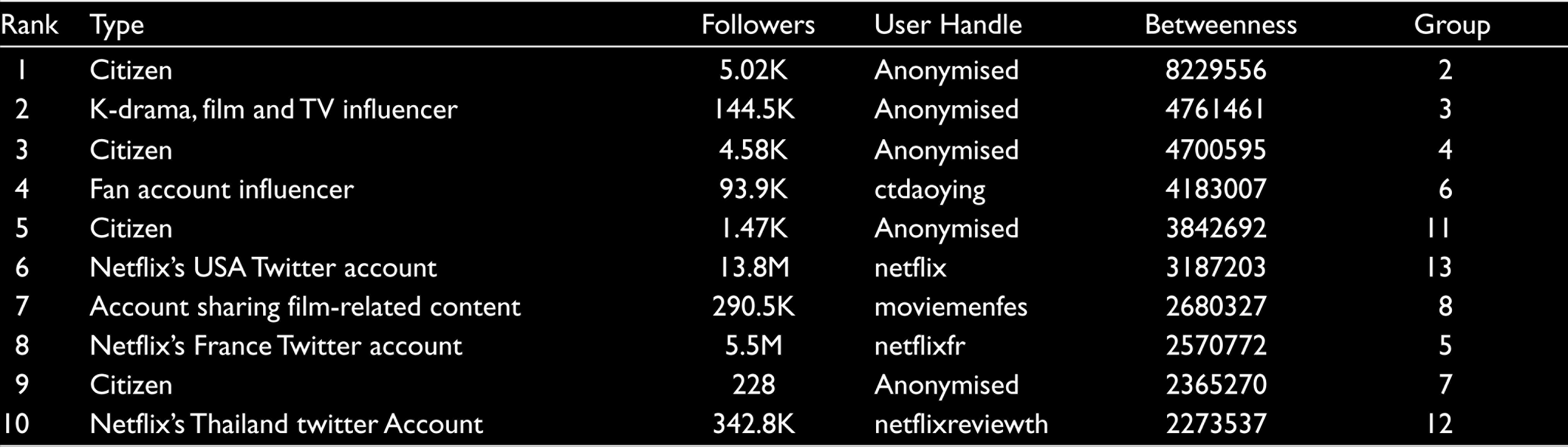
Top Ten Users Ranked by Betweenness Centrality.
Results
Results of Social Network Analysis
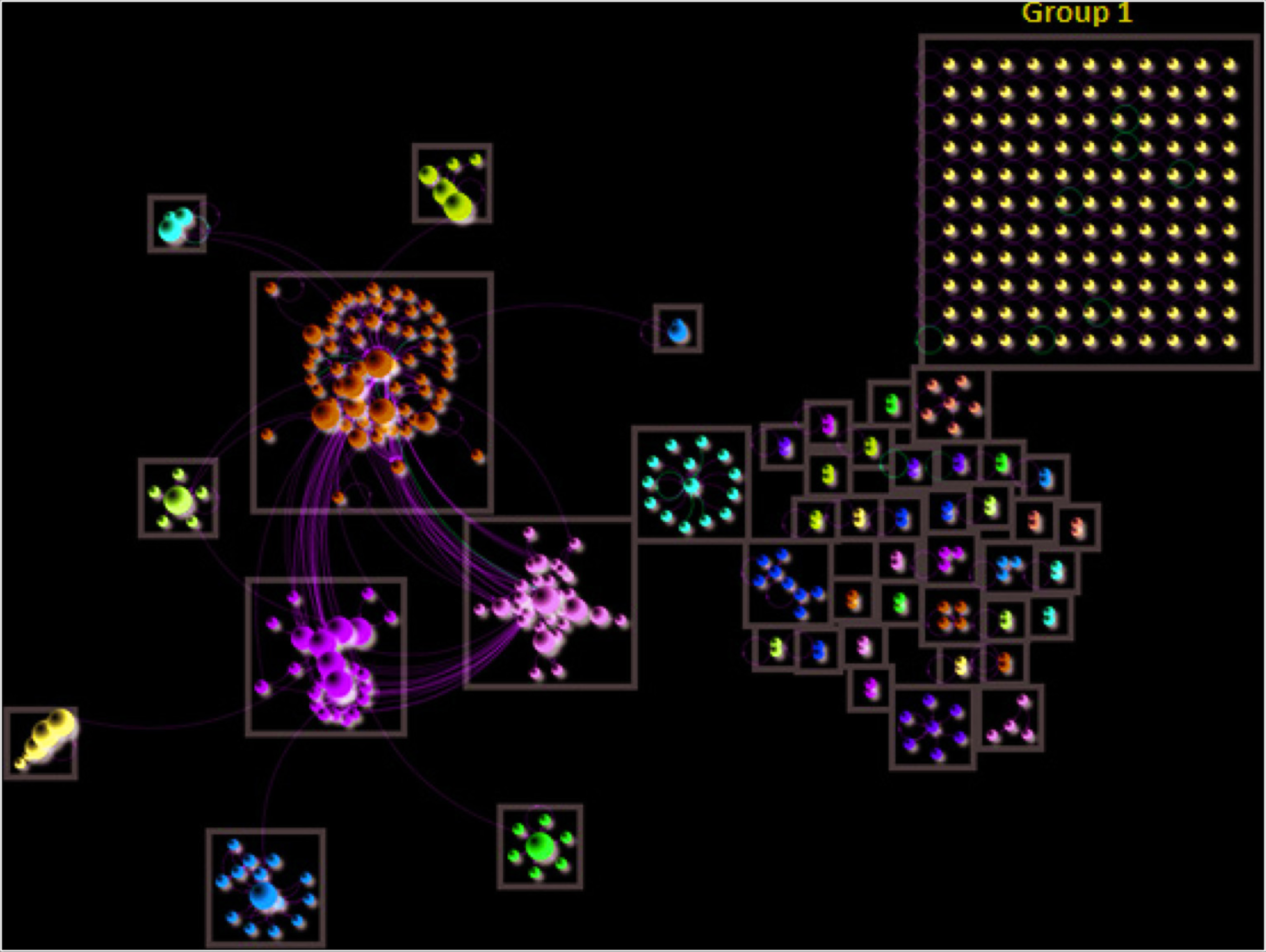
Figure 1 provides a visual representation of the interactions between all the users that were tweeting about Squid Game on the release date. The network is laid out using Harel-Koren Fast MultiScale (Clauset et al, 2004) algorithm with the force-directed layout option (Venturini et al., 2021), which has been predominantly used in social media network based academic research. Each of the Twitter users’ groups are highlighted in their own grey rectangle.
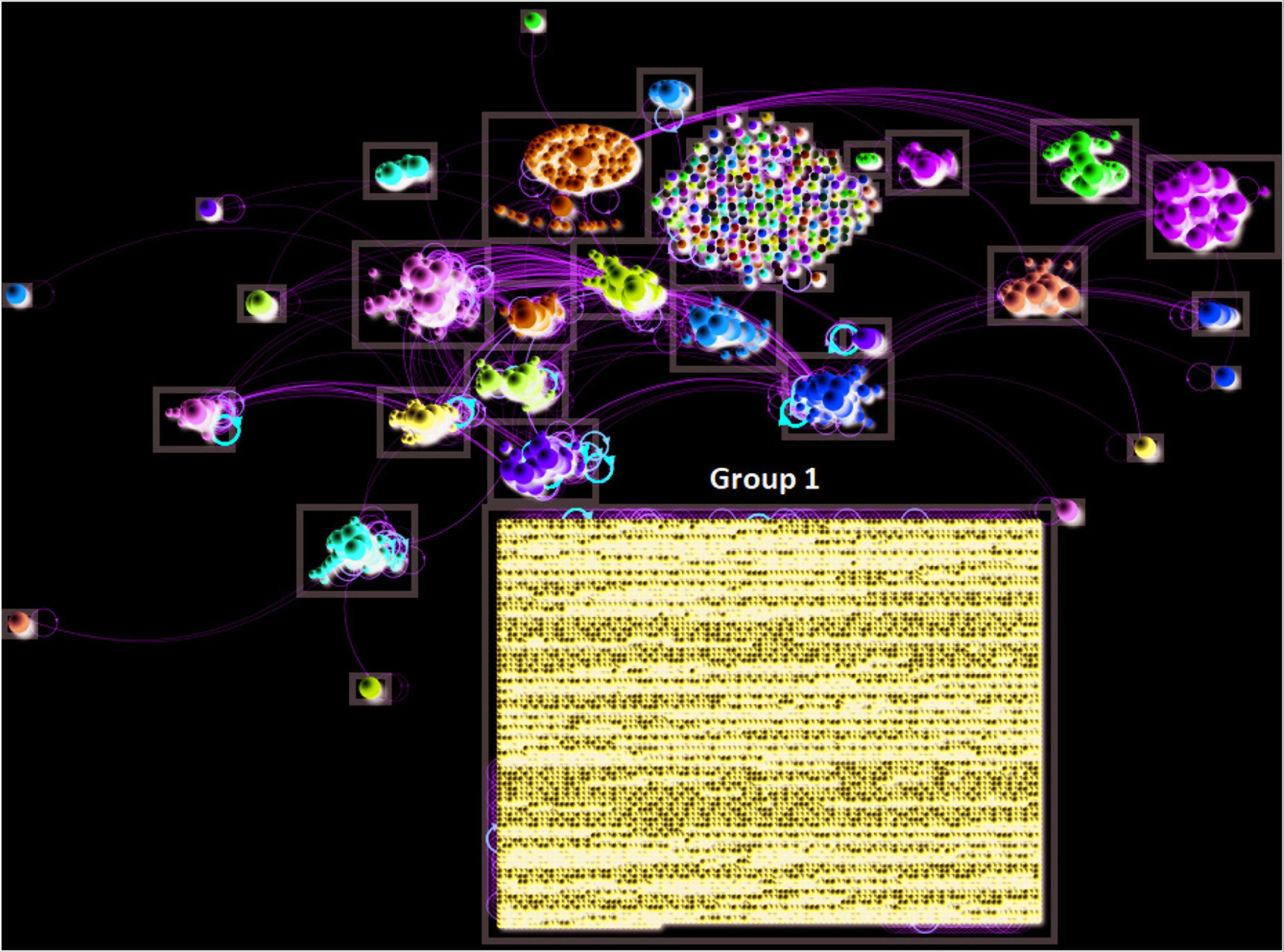
The different shapes in the network reveal insights about opinion leaders and the nature of the conversation and amplification of the topic-based series brand reputation enhancement. Based on interaction and engagement patterns (reply, retweet and quote tweet), the network visualization has identified the key user clusters within the network. The groups are weighed based on their size, and the largest group of the network appears on the bottom right-hand side of the visualization. This group has been labelled as Group 1 to help with identification.
Analysing the distinct characteristics of Group 1, they can be described as an ‘isolates’ group because the user’s tweets contain no mentions of other users. These users were tweeting only to their followers, mentioning and promoting Squid Game while contributing towards the vast expansion of the programme’s reputation through individually structured social networks. This group contains a total of 8,143 Twitter users, and the combined follower count is 20,168,045. In the network overall, there were 13,727 Twitter users. It is important to understand the combined follower counts because it highlights the potential reach and audience on the day the show was released.
The remainder of the groups can be characterized as either a broadcast group (Smith et al., 2015), where several users towards the centre are being retweeted and/or a community group (Smith et al., 2015) where users are conversing about the show among themselves. We captured detailed thematic characteristics of inter- and intragroup topic exchange and conversation, as shown in Table 2. Twitter users in these different groups were focused on different aspects of the show and were also helping drive further interest and attention by promoting the series to their followers. In contrast, several of the smaller clusters, including many of Netflix’s own Twitter accounts, appear influential in further amplifying broadcasting messages of the show, such as Groups 5, 7 and 9, among others. This is a tactic commonly utilized by Netflix and is effective in raising interest.
Influencer Characteristics
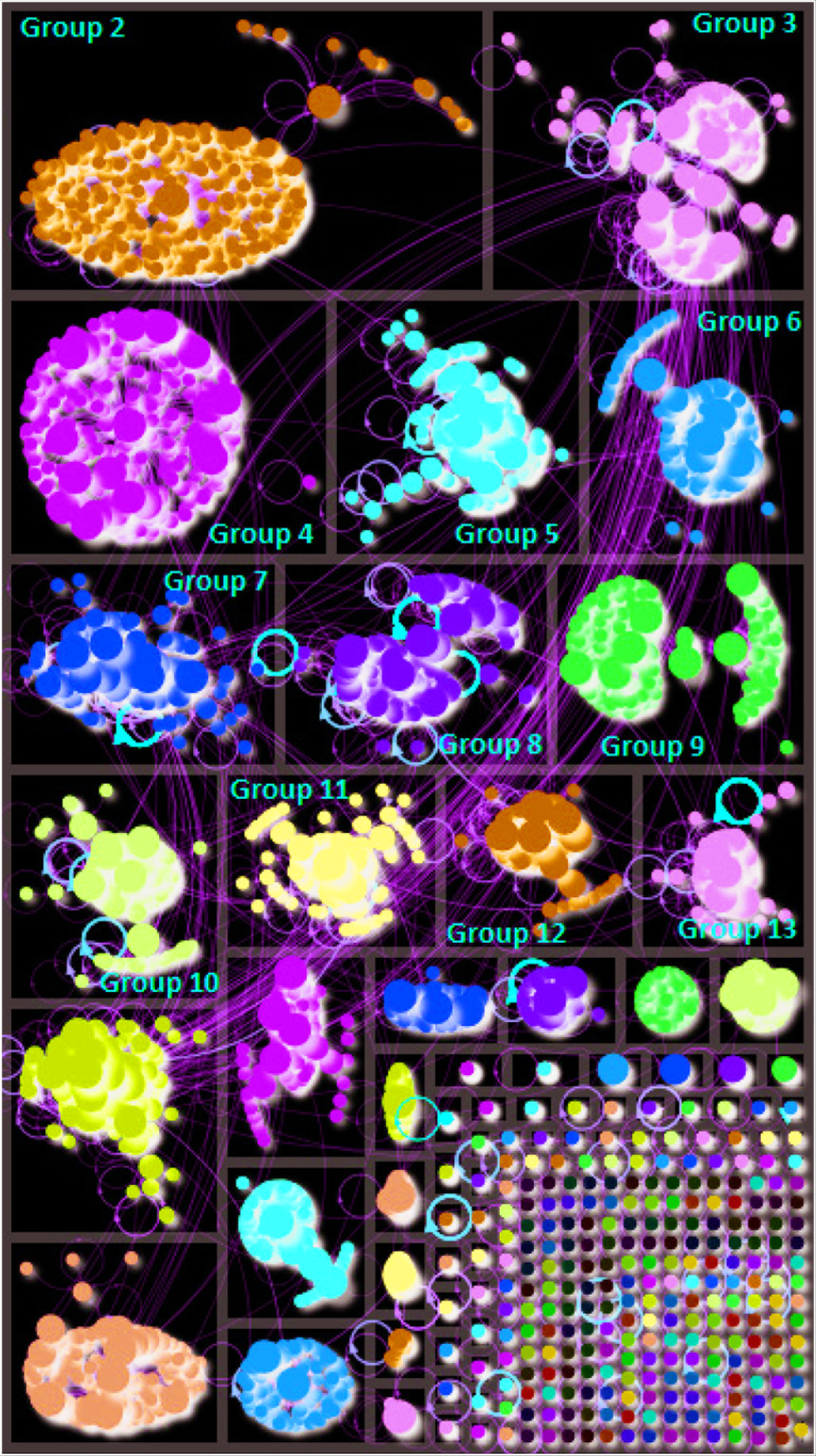
Table 1 provides insight into the Twitter users that were most influential based on their calculated betweenness centrality. Based on the values presented, we classified these users as key opinion leaders within the network. The group column within Table 1 corresponds to individual group characteristics presented within Figure 3, highlighting the strategic location of opinion leaders within the network.
A thorough investigation of the data presented in Figure 3 and Table 1 has helped us understand that opinion leaders were scattered around the network and stirred further conversations and discussions on four key areas (plot discussion, reference to other shows, anticipation and recommendation). In Figure 3, users that have not replied to, been replied to, retweeted or mentioned other users, or been retweeted or mentioned themselves have been removed. Compared alongside Table 1, key opinion leaders were equally distributed throughout the network. The distribution of influential users varies depending on the topic. Table 1 and Figure 2 can be cross-referenced in order to see the visual impact key users had within the network. An important aspect to note in this network is the number of ‘outsiders’ leading discussions about the show that are not Netflix accounts and/or employees connected to the brand. Arrows pointing outwards from the groups indicate connections and relationships with users in other groups. Figure 2 shows that the group with the most interactivity with others was Group 3, which contained a K-Dramas, Film and TV influencer with over 144,000 followers. Other groups of users were conversing within their own ‘echo chambers’ with little interaction with other groups.
The users with high betweenness centrality appear larger in size and are located within important parts of the network, such as towards the centre of the conversations. A number of influential accounts identified are well-known ‘social media influencers’ around film and TV. The results indicate that several independent opinion leaders formed on the day of Squid Game’s release that helped to propagate information related to the show for new audiences to see. Interestingly, four of the key influential users appeared to belong to ordinary citizens who all had a modest follower account. Although their follower counts were modest, they received many retweets and became influential within the network. Table 2 provides insight and a summary of the conversations that were taking place within these groups.
Group Characteristics and Themes.
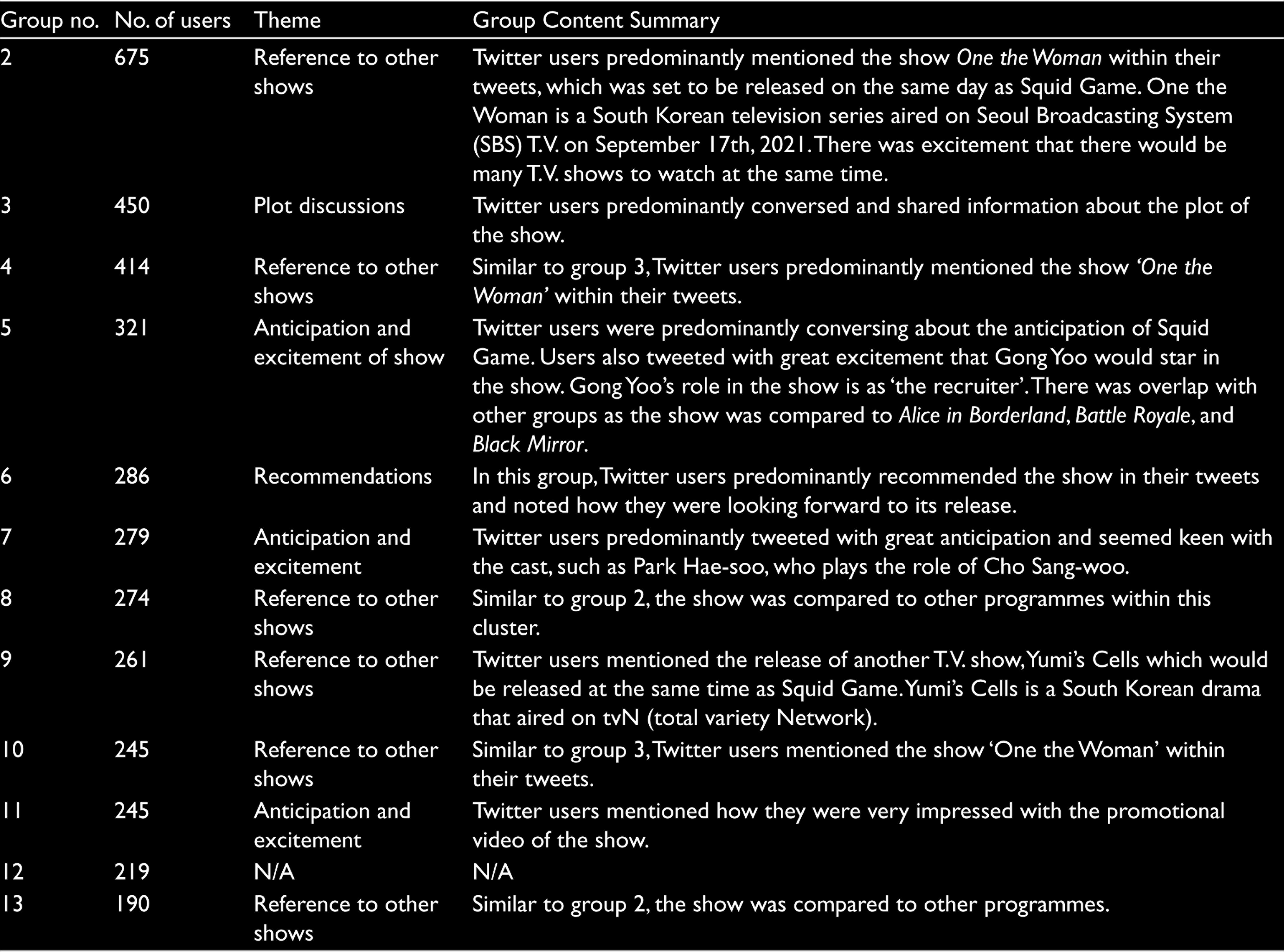
As highlighted in Table 2, users’ tweets were broadly based on several key themes, which were as follows:
Reference to other shows (Groups 2, 4, 8. 9 and 10) Plot discussions (Group 3) Recommendations (Group 6) Anticipation and excitement of show (Group 5, 7 and 11)
Comparison with Chicago Party Aunt
In order to compare the network of Squid Game, an SNA of Chicago Party Aunt was also conducted for the same time period as this was also the show’s premiere on Netflix, shown in Figure 3. Similar to before, the graph’s vertices were grouped using the Clauset-Newman-Moore cluster algorithm (Koren & Harel, 2003), and the graph was laid out using the force-directed layout algorithm (Venturini et al., 2021). Within this network, there were 387 Twitter users and 684 connections between Twitter users.
A differentiating factor when comparing the network graph of Squid Game to that of Chicago Party Aunt is the smaller sized isolated group, labelled Group 1. There are still a number of similarities, such as the smaller groups of users who are conversing about the show. However, the organic interest driven by opinion leaders is significantly less when compared to the network of Squid Game. The top two key users within this network included the Twitter account of the show itself (@ChiPartyAunt) and the US account of Netflix (@Netflix). The next three influential users were those who had a connection to the show and were directly involved with it. One of these users had over 1.5 million followers and tweeted about the show. The remainder of the key users included celebrity influencers, citizens and news accounts.
Discussion
In this section, we triangulate key thematic concepts identified in our literature with the results collected from our SNA in answering the key research questions.
RQ1. What was Twitter’s impact in spreading the word about Squid Game on the day of its release in relation to other TV shows, and what role did echo chambers play?
One of the aims of our research was to investigate how the social media echo chamber effect can have a widespread influence on customers’ exposure and consumption choice within the online streaming industry. Results from our in-depth analysis unveils that Twitter played an important role in spreading information about Squid Game. Compared to other shows, there were many opinion leaders sharing their views, opinions and reviews of the show to their own audiences. When opinion leaders were tweeting, they attracted replies and generated conversations about the show’s plot, generated recommendations, led to anticipation of the release of the show and produced comparisons to other shows. This phenomenon highlights two very important aspects of the social media echo chamber effect: ‘social exposure’ and ‘social cascading’ (Choi et al. 2020). As identified in Table 2, the majority of the content tweeted by opinion leaders exposed their extended network to either plot discussions or reference to an important aspect of the show. As these users attracted their own unique audiences into the network, such exposure generated further anticipation amongst the extended networks, enhancing the likelihood of more and more people willing to watch the show themself. As part of social cascading, our findings show that several groups have shared opinions related to the ‘thrilling’ and ‘anticipating’ nature of the programme while drawing users from other community networks associated with other TV and online stemming shows into the discussion.
Such cascading nature of information propagation presents a unique structural and temporal community perspective that has not been studied before (see Figures 1 and Figure 3) when compared to an average Netflix programme such as Chicago Party Aunt (Figure 4). Therefore, unintentional promotional messages of Squid Game have tended to propagate through non-members of the core fan base of the programme. Also, the propagation of messages tends to follow different trajectories within and outside influential opinion leaders and lone individual propagators. Such empirical evidence presents a new perspective on echo-chamber dynamics, highlighting the heterogeneity within the homophilic aggregation. These findings add to the body of research that has examined the role and potentials of eWOM (Srivastava et al., 2021) and the social media echo-chamber effect from a non-marketing and non-business-related perspective (Wang & Song, 2020). Our findings are also comparable to Chadwick et al. (2021), who found that the Twitter account of a high impact brand (EPL) containing several distinct opinion leaders can lead to the development of a unique amplified network. Another relevant study by Guzmán et al. (2021) examined tweets that were collected during Manchester United’s matchdays. The study used SNA to identify influential users within the network. The authors found that the different topics of discussion were being instigated by influential users and opinion leaders. Our study provides further evidence in the domain of online video streaming on how influential users can shape the topics that are being discussed as well as reach new and unique audiences within the network overall.
RQ2. What are the characteristics of the most influential opinion leaders who helped to promote Squid Game through social networks?
Like a mega sporting event, where key social media influencer networks were identified to have consisted of journalists, fans and players, among other related stakeholders (Guzmán et al., 2021), the Squid Game social network showed organized participation of a professional and non-professional fan base, who acted as key influencers or opinion leaders. An in-depth analysis of opinion leader characteristics within the network highlights several citizens, film and TV influencers, and even Netflix’s own different territory accounts that were influential within the network. These users enhanced and amplified the message to an audience group who otherwise would not get exposed to a streaming T.V. series developed on foreign soil. Several personal and professional interest-based topics were found to be the initial glue between core influencer networks that connected to each other in the form of teasers, snippet reviews or critiques of the show. Our analysis further shows that the proportion of retweets between opinion leaders and the members of their allied network base is proportionately high compared to other linked networks. Such findings indicate that the central influencer network often co-creates value within their own network before recruiting and amplifying messages to the peripheral agents.
RQ3. What was the structure and shape of the conversation, and how can SNA determine if a topic has gained traction?
We found that the network shape and structure of Squid Game revealed a community network shape with a sizable isolates group. An ‘isolates’ group is also known as a ‘brand’ network (Smith et al., 2015). The name ‘brand’ network derives from the fact that many large household brands, such as Apple Coca Cola, for instance, will have social media networks that have such network shape characterized by many users tweeting without connecting to other users. We note that one defining factor within the network of Squid Game is the existence of large isolate groups followed by smaller broadcast and community type groups. Our findings were based on the content that users were sharing, and they show that some individuals were using Twitter to identify the next best thing to watch as part of their binge-watching routine. Structural characteristics of social media brand networks are playing an important role in the dissemination of the next hyped streaming series, possibly much earlier than the streaming network algorithms could identify these popularity trends. Netflix and other brands that do not already may wish to add social network methods to analyse online discussions and to specifically examine the network clusters and chatter related to the release of new shows and benchmark them with one another. Twitter networks of TV shows with larger isolate groups and several broadcast network structures are likely to have more popularity both on and off social media. Squid Game highlights the potential of independent opinion leaders that helped to propagate information about the show. Linking back to the concept of virality, our study has highlighted how SNA methods and opinion detection can be utilized for better understanding the nature and characteristics of viral topics. Our study also demonstrates the potential for cross-case comparison between high and low impact TV shows.
Limitations
The study exclusively focuses on a cross-sectional (yet large) dataset collected at the introductory stage of the show. Our motive behind such an approach was to study why the show became such a phenomenal success across the globe without pre-audience awareness or active marketing programmes. More extensive and longitudinal data gathered from social media could help understand the evolving nature of audience opinion and influencers deploying differential e-WOM strategies at different stages of the viral phenomenon. Another important limitation of the study lies in the nature of the collected data. Twitter is a microblogging-based social platform that is effective in creating instant hype and anticipation towards a socio-cultural or political topic. Data from this platform is an excellent source for understanding the influencer network characteristics as intended in this study (Arora et al., 2019). However, the larger variety and veracity of opinion collected from more in-depth reviews posted on platforms such as the Internet Movie Database (IMDB) and Reddit can act as a further eye-opener towards consumer sentiment and acceptance of the programme. Such investigations can further aid our understanding of the role of renowned popular culture critiques towards amplifying or de-amplifying the Squid Game viral phenomenon. SNA comparison against Chicago Party Aunt also does not provide a common ground for comparison. The show was selected based on its proximity of release date to Squid Game, but these two programmes belong to very different genres of popular culture aimed at different audiences.
Research Implications
We set out to investigate the shape and structure of Twitter conversations related to Squid Game to develop a more comprehensive view of virality. Our research presents valuable theoretical and managerial contributions that go beyond capturing the logic of eWOM or internet virality (Donthu et al., 2021). In our endeavour, we used the concept of social media echo chambers and extended its theoretical horizon towards a systematic understanding of the cascading effect shaping consumer preference within the online streaming industry. Developing on the case of Netflix’s iconic steaming series Squid Game, we unveil that ‘social media seeding’ (Yerasani et al., 2020) are often strategically carried out by organizations, but their viral success is not guaranteed. The story of Squid Game’s success builds on two important things: (a) a unique influencer network and their co-created content that enhanced overall engagement and entertainment value of the series, and (b) a major group of ‘isolate’ agents who created the notion of ‘anticipation’ within their extended networks by either directly retweeting or adding value to the original content. In both cases, the Squid Game brand received more traction and exposure, attracting more and more audiences. From a methodological perspective, we demonstrate how social media virality and community dynamics can be examined using SNA methods by observing the network and information exchange patterns of homogenous groups and sizeable isolates groups followed by several groups that are led by the opinion leaders.
Our endeavour highlights the importance of future research utilizing SNA in clarifying how the conditions of virality bought by social media cab impact brand management and the transformation of marketing strategies within the ‘co-consumer’ era. Future research in this area can focus on capturing and understanding community interaction and cascading effect amongst the isolates using more qualitative measures such as network density, InDegree and network edges. Future research can also model echo chamber characteristics through topic modelling and latent Dirichlet allocation (LDA) analysis, and this is particularly important because the role of immediate and peripheral user content co-creation needs to be understood in greater detail. Finally, in-depth qualitative research work should be carried out to understand how opinion leader-led information dissemination shapes an individual’s preference and consumption choice within the new media space—how that information is gathered, transformed, assimilated and disposed of within popular culture space.
The findings from our study also generate potential managerial insights by highlighting the need for social media in catapulting brand reputation at a global stage. In recent years, brands have realized the impact that influencers can have across social media platforms giving rise to influencer marketing (Haenlein, 2020). In contrast, our study shows that influencer marketing efforts alone are not sufficient to transform brands into icons on a global stage.
Instead, a carefully crafted strategic social media seeding programming is essential, in addition to mapping echo chambers and cascading effects. Social media specialists should also encourage value co-creation in the online streaming industry by strategically encouraging more and more positive user-generated content (UGCs). Online streaming giants must realize that social recommendations are becoming more effective compared to algorithmic recommendations, and, as a result, companies should carefully craft their social media marketing plans catered to multiple interaction networks and their underlying echo chamber message amplifying analogy.
Footnotes
Declaration of Conflicting Interests
The authors declared no potential conflicts of interest with respect to the research, authorship and/or publication of this article.
Funding
The authors received no financial support for the research, authorship, and/or publication of this article.