




Abstract
Purpose:
The threat of the COVID-19 pandemic persists despite concerted global efforts to contain it. So also is its impact on social entrepreneurs. One of the main questions being, what is the extent to which small businesses overcome the imminent economic recession amid the threat of COVID-19? Many small businesses have already closed operations due to the countrywide lockdown in India and the resultant cash flow constraints. The government has introduced loan guarantee schemes as a way of support, but it is not sufficient for operational expenses. This study examines the survival traits of positive deviance and social entrepreneurial roles that may be pertinent to women’s empowerment, concerning the challenges that have emerged from the pandemic.
Methodology:
Case study methodology was adopted, engaging Rosenblatt’s Transactional Theory to collect qualitative data, which are part of the narratives based on the experiences of a focus group within the social entrepreneurial venture, called Pipal Tree, while a descriptive approach was deployed to isolate and analyze the relevant survival traits, that is, leadership, multidimensional resourcefulness, altruism, innovation, norm-violation and labelling/stigmatization.
Findings:
The findings revealed that every trait—that is, leadership, multidimensional resourcefulness, altruism, innovation, norm-violation, and labelling/stigmatization—could potentially play an important role and contribute towards the sustainability of social entrepreneurs to empower women amidst the pandemic. The paper observed that ultimately this insight might be relevant to social entrepreneurs, managers and policymakers in developing effective survival strategies during the COVID-19 pandemic.
Originality values:
This is a conceptualization and empirically based study that engaged in primary data collection, analysis and interpretation supported with literature evidence. As well as insights on the literature and methodology development, its unique contributions also include conceptualizing the phenomenon and strategy development. Additionally, it promotes diversity and inclusivity, as well as highlighting inequality.
Social implication/Practical values:
This study can serve as a guide towards addressing social issues relating to global social entrepreneurship policy-making. As such, it would be a powerful tool for women empowerment, policymakers, not-for-profit organizations, civil society and social entrepreneurs in the post-COVID-19 global environment.
Theoretical contributions:
This study has added the literature to the existing theory relating to social deviance, social entrepreneurship and women empowerment, thereby advancing knowledge. Highlighting issues about how humanity responds to this strange new threat from the COVID-19 pandemic is critical to saving lives. The new knowledge gained will often equip social entrepreneurs to capture new ways of survival (innovative ways) in complex and new challenges to cope with post-COVID-19 socio-economic circumstances. These benefits gained may be beneficial not only in Jharkhand India but nationally as well as globally. The authors also made an addition to the definition of positive deviance.
Practical contributions:
The study contributes towards enabling social entrepreneurs to cope in uncertain situations, which is critical to survival most challenging or crises and not just in entrepreneurship—so in critical decision-making, problem-solving, diversity management, gender equity, human rights advancement through women empowerment, business setting and expansion, in helping weakness into strengths and ensuring a level playing ground and inclusivity. Women empowerment can be a positive strength in policy formulation and implementation processes. These kinds of reflections from the perspective of women are significant, relevant and valuable in a post-pandemic environment across the Jharkhand India region and are transferable elsewhere across the globe.
Introduction
Women empowerment is a widespread phenomenon in social science studies. So also is the concept of social entrepreneurship. The interconnectivity of the present case of social entrepreneurial venture and women empowerment is linked by the common interest and desire to tackle the situation created due to the COVID-19 pandemic in the global environment. Every skill and knowledge would be needed to tackle the unforeseeable and unpredictable post-COVID-19 era and to know the unique potentiality and capabilities that social entrepreneurs possess in helping to resolve global issues. The subject matter and the substance of this discourse are vast, encompassing social entrepreneurship and human rights advocacy on the grounds of gender, economic, social, political and psychologically related inequalities.
The World Health Organisation (WHO) alerted the world on 30 January 2020 of the imminent threat of the new COVID-19 disease. After two months, WHO then declares COVID-19 a pandemic on 11 March 2020. Since then, the world has been battling it. Currently, the pandemic has dealt a devastating blow to the global economy. As a result of the pandemic, most parts of the world underwent an absolute lockdown, which caused health, social and economic devastation. The poor worldwide are in an unequal position in matters concerning access to necessities, while governments worldwide struggle to contain it and cope with these challenges associated with the pandemic.
Consequently, most of the business operations are closed and non-functional. Meanwhile, this scenario has created some unique opportunities for social entrepreneurs. In pandemic circumstances, it is believed that social entrepreneurs can help in supporting and future-proofing communities (Siddiqui, 2020). Crucially for social entrepreneurs, positive deviance traits like supportive, networking and collaborative roles are relevant.
Positive deviance is based on the fact that there are positive deviant individuals or groups in every community who can find innovative solutions to problems using limited resources (Pascale & Sternin, 2005; Pascale et al., 2010; Singhal & Svenkerud, 2018). Moreover, the positive deviance trait is observed in the worst possible situations. Given the present pandemic scenario, the study of positive deviance will encourage the least advantaged to strategize with their limited resources and survive against all odds (Sternin, 2003). The present study examines the positive deviance traits of social entrepreneurs in response to pandemic challenges towards women empowerment goals. The study is based on the social entrepreneurial venture called Pipal Tree. Social entrepreneurs may gain positive insight as a way forward and make a difference.
Research Problem
The rationale of this study is based on the notion of enriched capabilities, skills, and knowledge of social entrepreneurs in resolving a wide range of problems created due to the unrelenting threat of COVID-19 pandemics. It is critical to engage and involve the talent, skill and knowledge of everyone, including men and women and all countries worldwide, to search for solutions to the threat of the pandemic. There is no more urgent moment than now in which a more human positive-oriented innovative attitude and behaviour is required. Therefore, women empowerment through analysis of positive deviance and social entrepreneurship roles for advancing women empowerment becomes all the more critical (Kabeer, 2005; Mosedale, 2005).
The present study sees how positive deviance traits coupled with the roles of social entrepreneurship could be positively integrated towards promoting women’s empowerment, especially in a post-COVID-19 pandemic era. How can small businesses be supported is the interest and focus of the study? Highlighting insights on virtues and values of diversity and inclusivity and the inherent inequalities is critical to women empowerment.
Research Gap
The research gap has arisen out of the current state of uncertainty and inherent risk due to COVID-19. Due to time constraints, not enough empirical study has yet been undertaken to comprehend the challenges and possible solutions for the survival of small businesses amid the COVID-19 pandemic. The present study is positioned to address the challenges of pandemic COVID-19 on social entrepreneurial ventures.
Knowing the unique potentiality and capabilities that social entrepreneurs possess in helping to resolve global issues, the present case shared that urgency and significance for this study. Similarly, the subject matter and the substance of this discourse are vast: social entrepreneurship, women empowerment, and human rights advocacy on gender, economic, social, political and psychologically related inequalities (Bayeh, 2016; Rahman, 2013).
Research Objective
To critically examine the positive deviance traits of social entrepreneurship venture on women empowerment amid the COVID-19 pandemic.
To identify the relationship between positive deviance and social entrepreneurship towards women empowerment.
Significance of this Study
Critically, this strange COVID-19 pandemic is a challenge to humanity in general, regardless of who we are and where we are located. The global dynamics, social habits, and people’s behaviors have changed, especially demographics sensitives regarding social structures and age groups. These widespread and speedy changes have affected us all in an almost unprecedented way. They have radically impacted every aspect of life throughout the world with inherently devastating consequences from several perspectives: economic (including trade, tourism, foreign exchanges and employment), social (habits, values, perceptions and relationships), behaviour (reactions to one another, social distancing, working patterns and shopping patterns), psychological, legal, immigration and trade. This also implies that the world is a village in the true sense of the impact of globalization. So, it is crucial to know how the world should respond to the COVID-19 pandemic considering social, economic, behavioural, psychological and legal perspectives.
A social entrepreneurial approach can go a long way in setting a new plan from the bottom-up, driven from the grassroots level. This view of life preferences or values of social entrepreneurs enables them to achieve social impact with meaningful outcomes with their often-limited resources. They can sustain their businesses with the very least of resources, which is unlike conventional entrepreneurs. This is their kind of operating environment.
Crucially, social entrepreneurs are known to create social good due to their not-for-profit ethics. They achieve this by promoting social causes and fulfilling social impact, which most conventional entrepreneurs are unlikely to offer due to their profitability motives. The present case of Pipal Tree could be used as a success model of self-reliant ventures encouraging community development, women empowerment, skill development and craft entrepreneurship.
Social Entrepreneurship and Women Empowerment
In the study entitled ‘The Village Entrepreneur Change Agent in India’s Rural Development’, Broehl (1978), in his review, put forward a different perspective that made comprehension of the phenomenon of entrepreneurship more meaningful. Broehl’s study positioned that entrepreneurship represents a wide range of unique activities that could be transformative for communities if applied purposefully. Additionally, Broehl asserted that an entrepreneur is a fantastic tool that could fill the gap between ‘nothing’ and ‘something useful and purposeful,’ which makes the role of entrepreneurship unique and special. Hence, it could be described as a change agent. Against this backdrop, it could be seen as an essential transformative tool for rural development as much as for urban development. A study such as this is beneficial to India regarding rural economic development through better utilization of under-utilized resources such as the resourcefulness of women, as observed in the case of Pipal Tree. The efforts of rural women entrepreneurs are ‘true entrepreneurship’ or ‘traditional entrepreneurship’. This is based on their creativity and innovativeness.
Moreover, Broehl’s (1978) work had linkages with Schumpeter’s entrepreneurship (Schumpeter, 1912(2004), pp. 117–118, 1934, 2013) as an ‘intrusive’ phenomenon. While entrepreneurship might have helped rural Indian women get self-sufficiency and empowered, it also could be seen to have been intrusive into and interfering in traditional values and norms. This is a great choice and a conflicting one for all stakeholders: the rural women social entrepreneurs, the government institutions, and the rural and urban Indian communities.
Greg Dees, also known as the father of social entrepreneurship education, stated that social entrepreneurs are the individuals who act as change agents in the social sector (Dees & Dolby, 1996; Worsham, 2012). They adopt a mission to create and sustain social values. They identify and strive for new opportunities to serve that mission. They take innovative efforts for utilizing limited resources to attain the mission (Bornstein & Davis, 2010). They are keen to find ways to relocate society. They do not divert from that mission until it is done (Drayton, 2002). More recent studies in India, Patel and Chavda (2013) and Kumar (2016), also highlighted the significance of subject matter relating to the essential roles of rural social entrepreneurial ventures and social entrepreneurs in contributing toward positive social-economic development of India. It was found that more than 70% of social entrepreneurial ventures and social entrepreneurs are owned and run by small rural-based farmers, especially women, making tremendous contributions to the Indian economy through self-employment. Social entrepreneurship is a way of delivering social values, ensuring social impact with limited resources, primarily through women empowerment and rural community development, and ultimately contributing towards constructive national development (Bertaux & Crable, 2007). People are keen to work and earn, but they yearn for proper orchestration (Srivastava et al., 2009). In this situation, social entrepreneurs are emerging as a helping hand. Social entrepreneurs have an exceptional mindset to seize opportunities to unravel societal problems (Abu-Saifan, 2012). They are committed to attaining a contrast sustainably for themselves and their supporters (Ashton, 2011).
We could learn many lessons from the new rural India social entrepreneurial phenomena and narrative. Despite this criticism, if one were to truly analyze the true meaning of entrepreneurship, against the backdrop of ‘Schumpeterian entrepreneurship’, rural Indian social entrepreneurial ventures are in the proper process, which may be why they will be able to survive the COVID-19 pandemic. The modern meaning of ‘Schumpeterian Entrepreneurship’ is inadvertently driving the new rural Indian social entrepreneurial culture. It should represent one or more of the following characteristics: non-conformance or originality, self-driven, creativity, innovativeness, new products, new market, new supply chain processes, new organizational frameworks and new customers (whether innovators, early adopters, new majority or laggards; Rogers, 2010). The rural Indian social entrepreneurial ventures have also faced critical challenges: lack of finances to advance their experiences, lack of marketing intelligence and knowledge, traditional values, inadequate government support and competition. It appears that new rural social entrepreneurial ventures are there to grow further and more extensive. This emergence of a rural-based grassroots-driven entrepreneurial phenomenon would need more support towards making their dreams come true, as highlighted by several scholars (Broehl, 1978; Gainly & Mair, 2009; Kumar, 2016). Inevitably, they still have to deal with the enormous challenges inherent within the 21sr-century business environment: primary PESTS factors (political, economic, technological, competition, legal and socio-cultural). Nevertheless, their unique skills in doing things differently in different places may prove reliable, as the review findings have indicated. That is why they are perceived as being deviant.
There are diverse opinions on the meaning of women’s empowerment. Some scholars describe it as the process of empowering women in a whole range of ways (Kabeer, 2005; Mosedale, 2005). Others tend to go more broadly in their definition as they attempt to reflect and embrace every aspect of the broader meaning. A woman is empowered not only if she enjoys her economic status and well-being but also if she can control and benefit from the resources (Bayeh, 2016; Rahman, 2013). Ganly and Mair (2009), in their study, importantly emphasized the social change agent role of the Indian women across rural India. The survey of Ganly and Mair (2009) highlighted that despite the enormous barriers and challenges against women, nevertheless, they overcame such threats and succeeded in making positive and optimistic changes. This portrays the courageous light and resourcefulness of rural women in India. They exhibited their skills by engaging their often resilient and under-utilized skills and potentials towards constructive usages in agriculture and handicraft. Through such bold self-help efforts, tribal women have made essential successes not only for themselves as individual human beings but also, crucially, for their families in terms of additional incomes towards supporting their own families. They also helped revitalize and re-energizing often disadvantaged communities, which benefited the broader society of India. This has highlighted another positive source of employment for sustainability during and under the threat of the COVID-19 pandemic, therefore, once again confirming the crucial fact that social entrepreneurial ventures are change agents that could affect change regardless of the endemic structure of the barriers they face (social exclusions, inequalities and poverty). This could be seen not only as a strength but also as a positive factor for women entrepreneurs at the grassroots level (Ganly & Mair, 2009).
Also, structural change is possible in circumstantial situations where weaker players could emotionally get self-motivation to achieve their goal, despite being structurally disadvantaged or excluded, challenged with social inequalities (Mair & Marti, 2006; Seelos & Mair, 2005; Vasi, 2009). The lack of social empowerment, integration, encouragement, engagement, involvement and participation have been major hindrances. Also, social exclusion of the weaker and more vulnerable is the dominant norm that determines progress in society (Ganly & Mair, 2009; Vasi, 2009). This is no longer the case in the post-COVID-19 environment, which is a positive step. Also, these have been recognized by previous studies in other parts of India (Mair & Marti, 2006; before then by Seelos & Mair 2005), and even earlier in one of the worst socio-economically deprived areas of India, such as in Orissa (de Haan, 2008; Government of Orrisa, 2004).
This causes us to address the social change led by local social entrepreneurship practices, especially women empowerment, at a broader level. To be specific, our study addresses the question: What is the relationship of positive deviance traits of social entrepreneurship and women empowerment amid COVID-19 pandemic?
We can realize the potential of social entrepreneurship to empower women through local community-based sustainable business models (Handy et al., 2011; Jones et al., 2012; Mansuri & Rao, 2004). The favourable outcome of women empowerment through community-based social entrepreneurial ventures are collective mobilization of women (Subramaniam, 2011), access to microfinance (Goetz & Gupta, 1996; Kabeer, 2001; Leach & Sitaram, 2002; Mayoux, 2002) and self-employment (Jumani, 1993; Leach & Sitaram, 2002; Rose, 1992). The study of Haugh and Talwar (2016) suggested that social entrepreneurial ventures empower women and bring social change. Haugh and Talwar (2016) proposed that social entrepreneurial ventures empower women through economic empowerment, personal development, cultural empowerment and political empowerment. Moreover, social entrepreneurial ventures can empower women by bringing social change by changing attitudes towards women and paid work, changing underlying power relations within the family unit, changing attitudes towards gender discrimination and changing men’s roles in the family unit.
The Conceptualisation of Positive Deviance
It is essential to understand positive deviance by exploring the deviance literature to build a theoretical framework for the study. In the early 1900s, the concept of deviant behaviour surfaced to study the social nature of human beings—be it standard or at the margin of the society (Goffman, 1961; Merton, 1938). The deviance research started focusing on the negative social phenomena that are offensive and objectionable. However, only a few research attempts were made to study positive deviance in the late 1900s (Ben-Yehuda, 1990; Dodge, 1985).
Positive deviance can be defined ‘as a behaviour that people label (publicly evaluate) in a superior sense’, or put ‘approved deviation’ beyond the tolerance limits, such as wealth, health, wisdom and patriotism, or behaviour that ‘violates norms, in that norms are exceeded’ (Freedman & Doob, 1968; Winslow, 1965, 1970; as cited in Heckert & College, 1998, p. 27). Scholars such as Freedman and Doob (1968) adopted a more psychological (labelling or stigmatization) approach in their conceptualization of positive deviance, in the views of Heckert and College (1998). Critically, it is all about appreciating diversity amongst humanity, as differences are essential in building a unique, accessible and competitive society. That is where this theorization is crucial. Moreover, the phrase positive deviance suggests that the terminology automatically implies the existence of two sides to the same coin: positive and negative. Deviance itself means a rejection behaviour that may be deemed extraordinary or uncommon to some extent, which contains both negative and positive ways. In this paper, the authors have focused on positive deviance.
It is beneficial to explore possible aspects for defining positive deviance to comprehend the viable constructions of positive deviance traits of social entrepreneurship. Various theorists have asserted positive deviance from the paradigmatic perspective (Ben-Yehuda, 1990; Freedman & Doob, 1968; Hawkins & Tiedeman, 1975; Norland et al., 1976; Scarpitti & McFarlane, 1975; Steffensmeier & Terry, 1975). For example, Freedman and Doob (1968) explained positive deviance from a psychological perspective. Steffensmeier and Terry (1975) suggested that positive deviance is composed of the differentially assessed phenomenon, and generally include desirable positive behaviours like great beauty or heroism. So, positive deviance can be defined as behaviours that deviate from a normative perspective and are publicly evaluated in a superior sense (Heckert & College, 1998).
On the contrary, criticism of the phenomenon of positive deviance is intense but also inevitable. While the authors focus on the positive aspect, it is equally pertinent to highlight scholars who even contest and theorize that positive deviance exists. Their line of argument is that there is nothing like positive deviance (Best & Luckenbill, 1981; Goode, 1991; Sagarin, 1985), which justifies the very existence of negative deviance. There seems to be an unusual antagonism against the presence of the phenomenon of positive deviance. That antagonism itself appears to make this subject quite a challenge. These scholars contend that there is no positive deviance, claiming it is simply a false belief or a misleading narrative.
However, this antagonism against the existence of positive deviance is strongly contested by protagonists and followers of the positive deviance school of thought (Ben-Yehuda, 1990; Buffalo and Rogers, 1971; Ewald, 1981; Heckert & College, 1998; Katz, 1972; Lemert, 1951; Sorokin, 1950; Wilkins, 1965). Such dichotomy explains why the literature on this subject is scarce, and consequently the weaknesses in the literature on the topic of positive deviance. Either positive or negative deviance, each plays critical roles in the functioning of a society, which may be deemed either excellent or regular (positive), or bad or unusual (negative). It all depends on the application of context. This application of the phenomenon is all relative, subjective or objective, as they are all elements of societal construction, as shared by several scholars (Heckert & College, 1998; Steffensmeier & Terry, 1975; Wilkins, 1965; Winslow, 1970).
Some examples of positive deviance may include labelling, reactionists, norm-violators and a mixture or combination of these (integrated form). As noted earlier, ‘labelling’ is an act of stigmatization or psychological approach, for example, social entrepreneurship, in differentiating these outstanding, unique qualities, characteristics, attributes or traits of positive deviance, which constitutes positive deviance. The norm-violators may be leaders such as Indira Gandhi, Martin Luther King, Nelson Mandela and Mother Teresa, who stand out as unique, breaking norms in society through their non-violent approach to tackling the global human problem, somehow with selflessness. It is innovative, creative and enterprising, which can be psychologically threatening to a culture (Heckert & College, 1998), just as Schumpeter’s (1934) perception of destructive entrepreneurship conceptualization.
The norm-violation and reactionist approaches can achieve multidimensional roles perspective. At the same time, with Martin Luther King’s specifically exquisite oratorical skills, he also fits into the category of having been a possessor of innate characteristics. According to Heckert and College (1998), ‘all in all, many actions and actors can be explained by more than one type’. From a public good altruism perspective, they are prompters of good causes, welfare social liberals and self-sacrificing for others (Scarpitti & McFarlane, 1975), and are also standing for not-for-profit action, benevolence action, voluntary action undertaken by a person for the good of another person or public interest (Cialdini et al., 1982; Grusec, 1981; Leeds, 1963; Macauley & Berkowitz, 1970; Sorokin, 2016).
The present study is focusing on the altruistic, positive deviance behaviour of the social entrepreneur. It is crucial to understand the meaning and definition of altruism. Altruism believes in the welfare and well-being of others as much as of themselves, which is remarkable for them. This highlights a sense of selflessness and the good of the general public. However, there are also counterviews on this subject. If they believe in the well-being of others as much as of themselves, then this is not altruism. Also, true altruism does not exist in humans as there is no such thing as a truly selfless act, i.e., there is always some reward for the giver either extrinsically or intrinsically. Altruism is one form of positive deviant behaviour that can be demonstrated sacrificing heroes like saints and good neighbours (Scarpitti & McFarlane, 1975; Sorokin, 1950). Altruism can be defined as a voluntary act to assist other people without expecting anything in return (Cialdini et al., 1982; Grusec, 1981; Leeds, 1963; Macauley & Berkowitz, 1970). In genuine altruism, altruistic actions are taken out of motivation, without contemplating pleasures of utility (Sorokin, 1948).
So, in this sense, positive deviance people are social makers as much as social entrepreneurs. It involves self-sacrifice and proves beneficial to society (Heckert & College,1998). Besides, physical attractiveness as a form of innate characteristic usually results in an initial positive label and minimal adverse treatment—promoters of good causes, self-sacrificing leaders and public servants (Scarpitti & McFarlane, 1975).
Conceptualization of the Theoretical Model
Based on the aforementioned review and in light of the absence of an agreed theoretical framework on positive deviance, this study offers one (as seen in Figure 1). The authors believe that positive deviance and social entrepreneurship phenomena should be transformed into real-life benefits to make sense of these two powerful and interlinkable phenomena. This is more so in a post-COVID-19 environment when the characteristics of both phenomena are most needed. Thus, this study is designed purposively to explain how vulnerable persons, including women in the Jharkhand region of India and across the globe, could benefit from understanding the principles of both concepts. Women were among the most disproportionally affected group by the pandemic. Therefore, learning positive deviance traits of social entrepreneurs in pandemic challenges towards women empowerment is meaningful in the present circumstances. The study intended to achieve this by utilizing a readily functional small social entrepreneurial venture called Pipal Tree. Social entrepreneurs may gain positive insight as a way forward and make a difference. Positive deviance and social entrepreneurship traits have been rarely studied together in the bundle as a helpful link. As it appears, the COVID-19 pandemic is new and seemingly sustaining and is there to stay; it may be beneficial to apply a more strategic approach, which is the need for linkage to how to survive it, through enhancing entrepreneurial skills. Both positive deviance and social entrepreneurship are about survival processes, which are relevant and appropriate in this process. The authors argue that without abandoning the old norms (or dealing with positive deviance and social entrepreneurship separately), combining their characteristics (roles or traits) will help better cope with the post-COVID-19 pandemic threat challenges the foreseeable future.
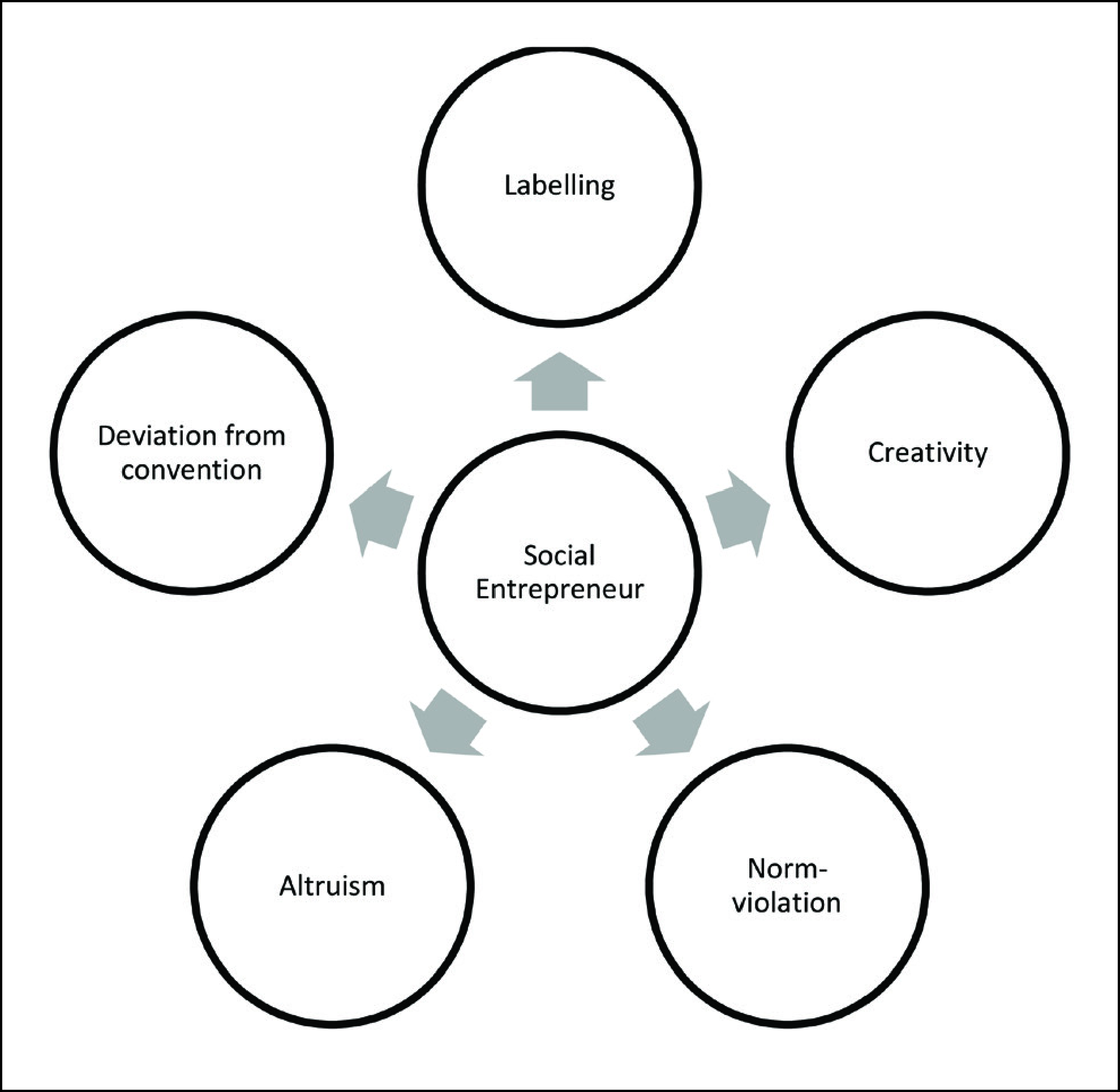
Comparison of Positive Deviance Traits and Social Entrepreneurship Traits.
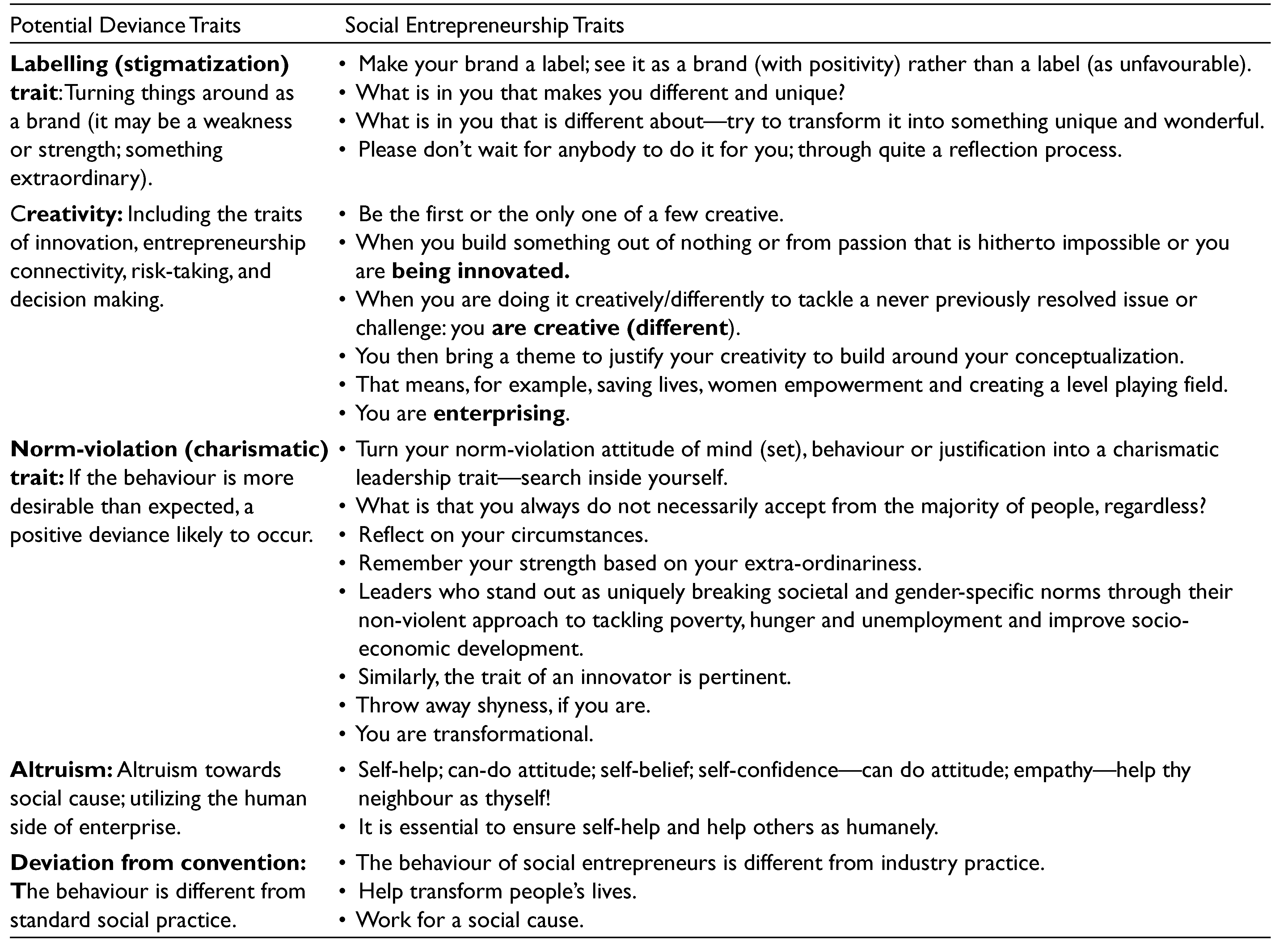
As noted in Figure 1, the authors attempted to use standard key variables of positive deviance and social entrepreneurship such as labelling, creativity, norm-violation, altruism and deviation from convention to help advance social change development.
Methodology
The present study explores the famous Gandhi Statement that ‘India lives in Villages; and that the rural areas are the core base of India; could not ignore the driving force of India growth and development’. Moreover, this may have motivated the current Prime Minister, Shri Narendra Modi’s, economic policy agenda and is somewhat driven by and oriented towards promoting and supporting creativity, innovation, entrepreneurship, skills acquisition and self-development amongst rural India (Kumar, 2016; Patel & Chavda, 2013).
The present study is based on the case of the Pipal Tree—a social entrepreneurship venture in the East-Singhbhum district of Jharkhand. The main aim of Pipal Tree is to eradicate poverty by providing skill development training to underprivileged rural tribal women. The venture is focused on those women who want to be empowered, predominantly victims of discrimination and domestic violence within their families or society.
The Pipal Tree started in 2014 with the woodcraft carved out of the scrap woods procured from Tata Steel at Jamshedpur city of Jharkhand, India. Utpal Shaw is committed to training rural tribal women for woodcrafts and making them economically independent. However, the journey is not as easy as it sounds. Initially, no women were interested in the programme as they were afraid of fraudulent activities. Later, it became a success in no time due to its reach to housebound women in Ghatshila. It has trained over 3,000 rural tribal women in Jharkhand and has employed more than 2,500 rural-tribal women. In 2019, MGNREGA (Mahatama Gandhi National Rural Employment Guarantee Act) considered Pipal Tree for skill training programmes for women.
Regrettably, despite these successes, presently, Pipal Tree business operations like production, supply chain and retailing had been put on hold from March 2020 to May 2020 due to the countrywide lockdown.
Data Collection
The present study adopted an interpretive research design using a case study methodology with naturalistic inquiry (Lincoln & Guba 1995; Patton, 2002; Yin, 1994). This approach enhances a better understanding by allowing us to know the real-life experiences around us by exploring social reality through diverse subjective perspectives. However, authors have exempted prior assumptions, empathy and bias towards the participant’s situations. For data collection, the authors conducted personal interviews through WhatsApp video calls at their residential and work settings in May 2020 to maintain the lockdown compliance. All of the respondents were using WhatsApp video-calling facility for their work-from-home purpose. The majority of respondents were at their homes, and the rest were at the workshops of Pipal Tree during the interview. To study the impact of COVID-19 on social entrepreneurial business operations, the authors asked open-ended questions from the social entrepreneur and women artisans to capture their personal experiences and subjective perspectives. To keep the records of these interviews, the authors maintained a manual log and transcribed them for further analysis. The study concentrated on a social entrepreneur and 52 women artisans’ narratives about their experience related to working at Pipal Tree amid the COVID-19 pandemic.
Rosenblatt’s Transactional Theory: Coding Personal Response to Text
The study is based on Rosenblatt’s Transactional Theory to Narrativizations of Experience. Rosenblatt argues that ‘meaning is not “in” the text or “in” the reader. Both reader and text are essential to the transactional process of making meaning’ (Rosenblatt, 1995). A text could be perceived differently depending on the reader’s emotional, cultural, mental and physical state while translating the text. There is no fixed meaning of a text as each experience with the text is shaded as per the current conditions of one’s transaction.
Scholars have argued that the combination of narrative with text (oral and written) is the best way to study experience (Chase, 2011; Riessman, 2008). It helps to get the broader perspective attached to narratives by the respondents in a particular context. As per Bauman (1986), ‘oral narrative performance as the indissoluble unity of the text, narrated events, and narrative event’. He argued that events are constructed from narratives. Moreover, ‘the narrative process—from start to finish—yields an ever emergent, pliant product that should be treated as something more dynamic than a more or less accurate, waiting-to-be-told text’ (Gubrium & Holstein, 2009).
Rosenblatt takes into account the notions of experience from Dewey’s (1934) narrativization approach. Dewey argued that narrativizations are not identical. Instead, people can experience the same moments differently because of distractions and dispersions (Dewey, 1934). This demonstrates that experience can be framed in many ways and leads to multiple meanings.
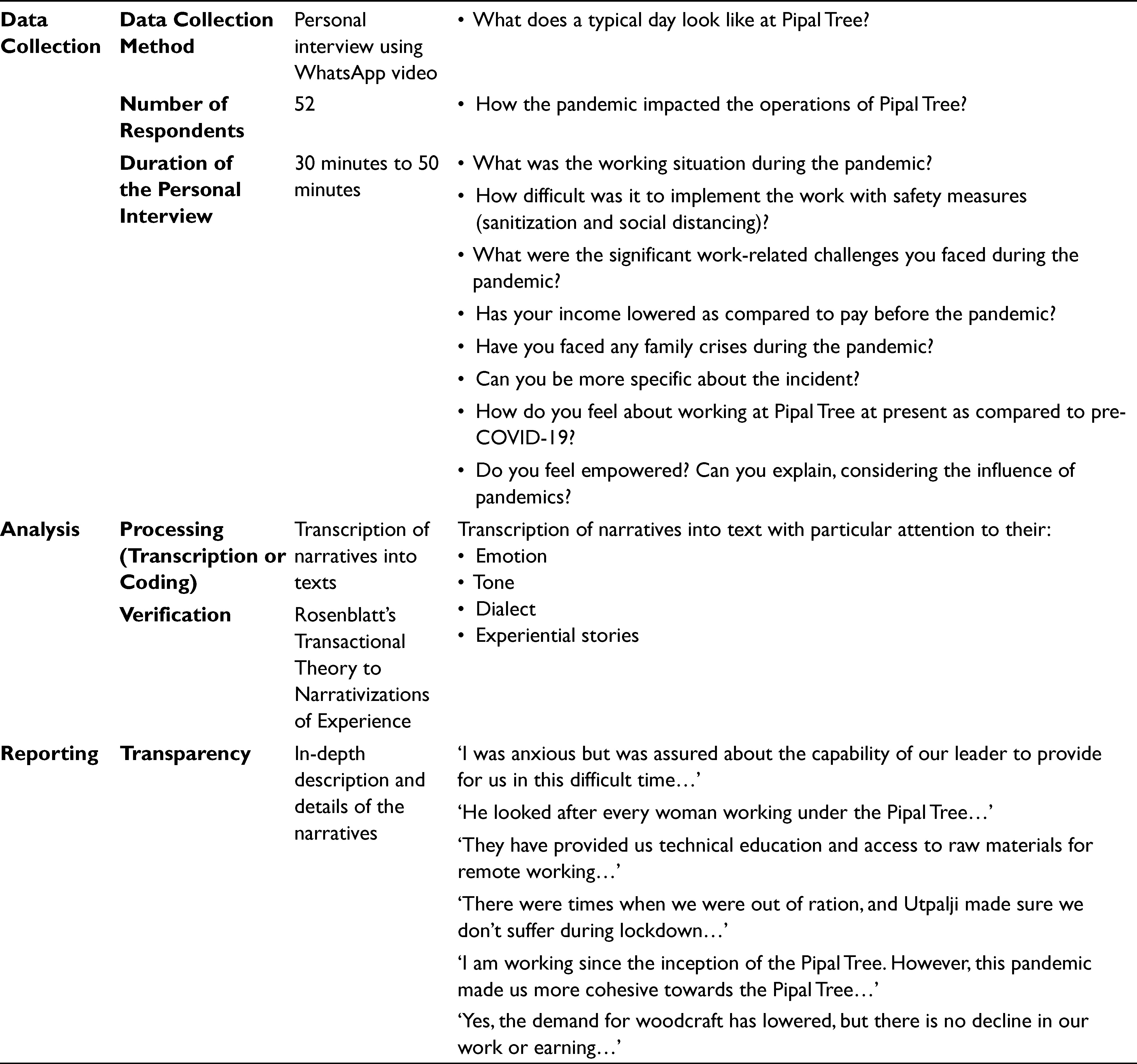
Rosenblatt’s transactional theory of narrativization has been applied to understand the respondents’ experience during pandemics through their narratives. The application of ‘narratives-in-interaction’ facilitates comprehending the significance of the ‘state-of-mind’ of the respondents and their expected response in an identical situation. From narrativization, researchers can draw analytic assessment (Rosenblatt, 1995). The application of Rosenblatt’s theory is demonstrated in three categories, that is, data collection, analysis and reporting (Table 2). The length of the personal interview varied from 30 to 50 minutes. Fifty-two respondents were asked the following significant questions:
What does a typical day look like at Pipal Tree? How the pandemic impacted the operations of Pipal Tree? What was the working situation during the pandemic? How difficult was it to implement the work with safety measures (sanitization and social distancing)? What were the significant work-related challenges you faced during the pandemic? Has your income lowered as compared to pay before the pandemic? Have you faced any family crises during the pandemic? Can you be more specific about the incident? How do you feel about working at Pipal Tree at present as compared to pre-COVID-19? Do you feel empowered? Can you explain, considering the influence of pandemics?
In the analysis phase, the transcription of recorded interviews into texts has been done. Rosenblatt’s transactional theory has validated the transcription of narration into texts to narrativizations of experience, where special attention was made to understand the meaning of emotion, tone, dialect and the experiential stories of the respondents.
In the reporting phase, the data is presented in a transparent and detailed manner. The responses recorded maximum number of times and with a special thrust by the respondents are taken into consideration to understand the study’s research objectives (Table 2).
Application of Rosenblatt’s Transactional Theory.
Data Analysis
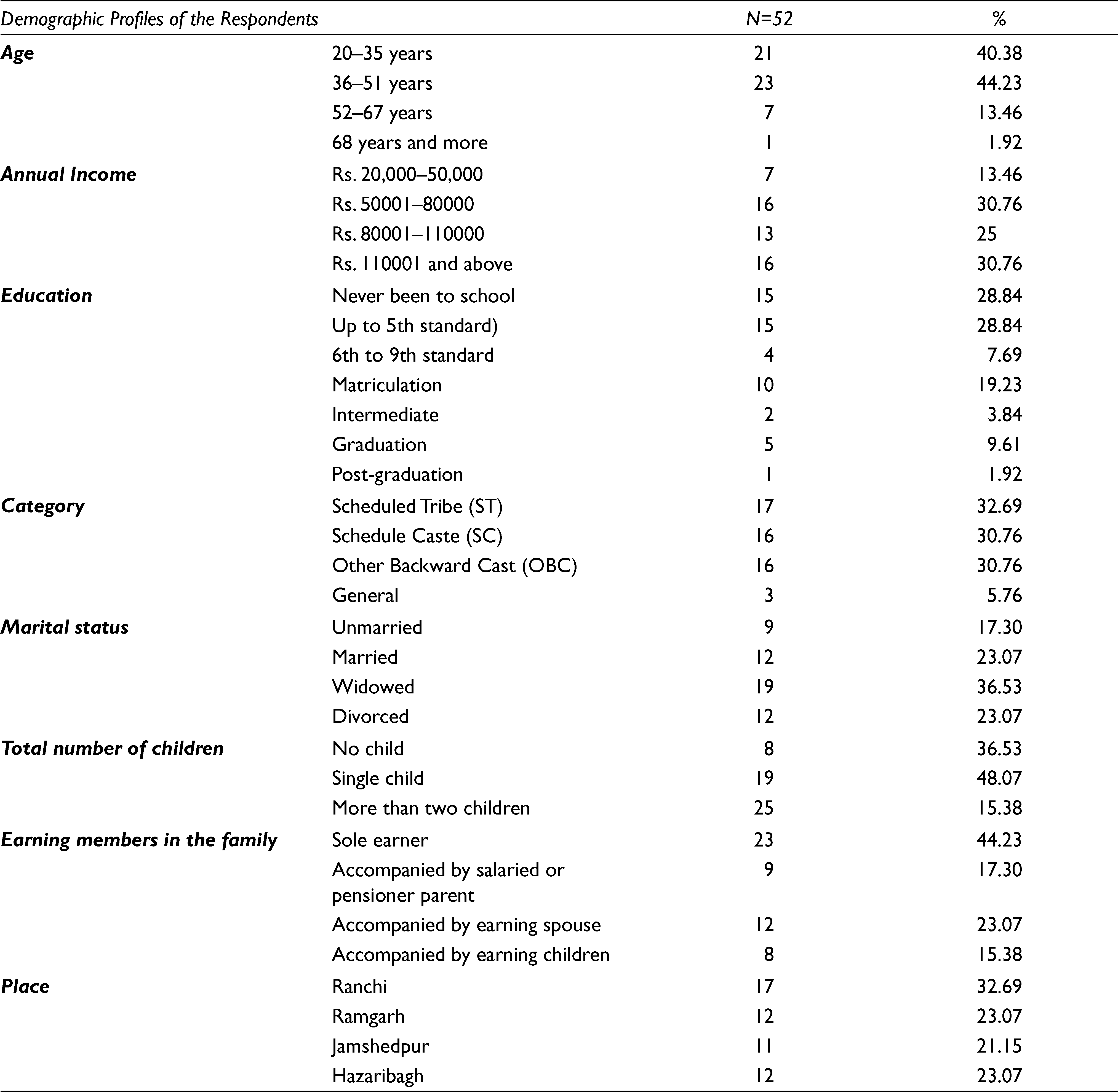
The data presented in Table 3 demonstrates the demographic profile of respondents. It shows the age, annual income, education, category (cast), marital status, number of children in the family, earning members in the family and workplace. The data shows that the age of majority of women artisans are from mid-30s to early 50s. Maximum women artisans have never been to school or have only primary education. Maximum women artisans belonged to the Scheduled Tribe cast. The majority of women artisans are married, and some of them are single or separated. The majority of women artisans have children, and are the sole breadwinner of the family. Also, maximum women artisans who have responded are from Ranchi.
Table 3 describes the demographic profiles of respondents. Table 4 describes the thematic analysis of the study.
Demographic Profiles of Respondents.
Thematic Analysis.
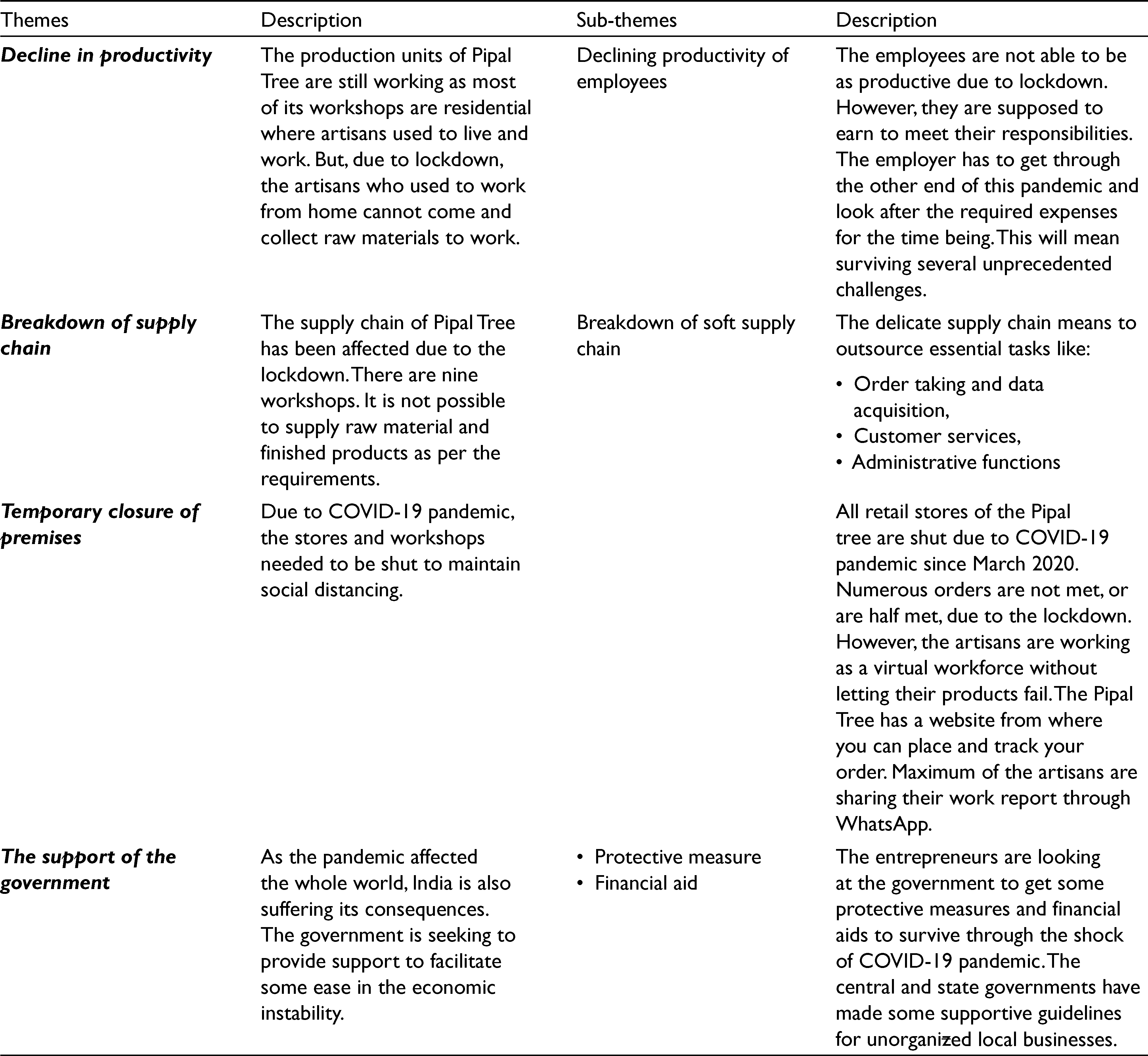
Findings and Discussion
Crucially, this study has intensely highlighted the significance of positive deviance to cope with the pandemic. This is manifested in the mode of social entrepreneurs as well as in the traits of positive deviance. They are changing values, attitudes and behaviours through persuasive methods, using conventional marketing techniques. Through this study, the authors have emphasized that amidst the COVID-19 pandemic, when there is a lack of operations from the most prominent market competitors and operators, the small enterprises could fill some gaps regardless of the constraints. It shows that small size may contribute the most significant values if appropriately utilized. It implies that well-supported, adequately resourced social entrepreneurs could probably offer, strategically speaking, even more effectively, efficiently, and sustainable, in a way that would benefit all stakeholders: policymakers, policy implementers (regulators), competitors, consumers, suppliers and employees. This is why positive deviance and social entrepreneurship methodologies are so linked to that approach.
As previously stated, the authors used the case of the Pipal Tree as the focus of this study. Accordingly, we present a few extracts from the narrative of Mr Utpal Shaw and women artisans, under four themes: the mission of Pipal Tree, productivity, retail and supply chain, and government support.
The Mission of Pipal Tree
Mr Utpal Shaw, the social entrepreneur, elaborated the mission of Pipal Tree:
We are training them and providing them a window to peep around and earn a primary livelihood for their family. We are a combination of technical skills along with entrepreneurial skills. We not only generate employment but generate light of hope for them to live, which was dimmed in their poverty.
Productivity
Most of the workplaces are residential workshops, where artisans work and live. So, the lockdown has not much affected the productivity at residential workplaces. One of the residential artisans of Pipal Tree said:
As we live here, nothing has changed. We used to wake up early in the morning and start working on our target as usual. We have all the resources. We are working as if there is no lockdown.
However, one of those artisans who used to work-from-home said:
We used to collect raw materials and product design from the workshop. But due to lockdown, we are not able to get it. We have to reach out to the workshop to see if they can deliver to our place.
On asking about the production pace, Mr Utpal said:
Amid COVID-19, I am utilizing this pandemic as a challenging opportunity. I am working on new product designs. It breaks my heart if I see any talented artisan unable to sell his/her artifact. I plan to start an initiative post-COVID-19 where I will provide my no-cost retail space to such artisans to provide a selling platform. They are not obligated to work with me or pay me.
Retail and Supply Chain
There is no transportation movement in the state except for essential goods. As a result, the artisans working from home cannot deliver finished products to the workshops. Also, the residential artisans are producing the products without any target to be given at the retails. The retailers of Pipal Tree are at Mall and sight-seeing spots that are considered top footfall spots. In COVID-19, when social distancing is mandatory, high footfall (here it means high ‘footfall spots’ where high frequency of people visits at the spot) spots are prohibited. Therefore the Pipal Tree is planning to take orders via WhatsApp, telephone and their website. They are encouraging customers to explore their products through their official website.
Government Support
On 13 May 2020, the government announced a financial relief package worth US$245 billion to combat the decreased sales and economic struggle due to COVID-19. It has enforced an accessible loan facility for MSMEs (Micro, Small, and Medium Enterprises). The package was focused on promoting make in India, local produce (Hindustan Times, 2020). This has provided a significant support to small businesses like Pipal Tree.
Regarding the study’s first objective, the authors identified the positive deviance traits of the social entrepreneurial venture Pipal Tree for women empowerment amid COVID-19. From a social entrepreneurship perspective, the study’s main findings highlight the survival strategy needed to survive a world of COVID-19 pandemic that is inevitably leading to recession and panic. The findings are as follows:
Concerning the study’s second objective, the authors identified the established relationship between positive deviance and social entrepreneurship towards women empowerment amid COVID-19. In the context of the applicability of traits of positive deviance, labelling/ stigmatization are some of the relevant traits. As noted from a labelling perspective, Mr Utpal Shaw aspires to be known as a positive deviant. In contrast, the norm-violation trait is another. From a norm-violation perspective, the social entrepreneur would like to be the next charismatic leader who stands out as uniquely breaking societal and gender-specific norms through their non-violent approach to tackling poverty and unemployment. Similarly, the trait of an innovator is pertinent. From an innovation perspective, the social entrepreneur feels like potential innovators making innovative handicrafts using innovative production techniques. He is trying to be creative and enterprising, as far as possible, in a way that makes them positively deviant. Also, altruism is another trait. From an altruist’s perspective, it is found that the social entrepreneur strives to benefit wider society. As noted from the perspective of multidimensional trait, the social entrepreneur would integrate various skills and knowledge in their craftsmanship businesses to make them positively deviant. Finally, leadership is another trait, that is, charisma and transformational. The central themes of positive deviance traits of the social entrepreneur were identified as follows:
Intent
The behaviour of the social entrepreneur was intentional, not fortuitous. The perturbation situation happened due to unforeseen lockdown during March 2020–June 2020. The social entrepreneur acted discretionarily.
Deviation from convention
The behaviour of the social entrepreneur is different from industry practice. The social entrepreneur cared for the artisans irrespective of low business.
Altruism towards a social cause
The behaviour of the social entrepreneur was altruistic towards women artisans. The actions are commendable.
Conclusion
The present study originally intended to satisfy two main objectives. First, it started to critically examine the positive deviance traits of the social entrepreneur for women empowerment amid the COVID-19 pandemic. With this objective, the study highlighted the attributes relating to positive deviance, including leadership, multidimensional resourcefulness of the social entrepreneur, altruism, innovation, norm-violation and labelling/stigmatization. The study finds that the most observable survival traits of the social entrepreneurial venture are the will to succeed, commitment, size, and flexibility; ability to manage their value-chain, for example, surplus raw materials; supportive work environment/teamwork spirit; the ability to engage research and development; emergency help; and being able to identify and absorb threats.
Second, the study highlighted that integration of positive deviance traits, social entrepreneurship roles and women empowerment would be essential for the effective functioning of the empowerment process concerning the post-COVID-19 economic recovery drive. These new dynamics may be helpful in the sustainability of small businesses (social entrepreneurs) such as Pipal Tree.
The new dynamics would help create survival and business sustainability strategies in the organized and unorganized sector during the pandemic threat. The maximum Indian rural population works in the unorganized sector, for example, farming, handicrafts, handlooms and daily wage earners. Therefore, the Indian Government is focusing on improving the working conditions of the unorganized sector. Most importantly, this study noted that if small and medium businesses (entrepreneurs) such as Pipal Tree are supported with more robust financial packages, small artisans within the Jharkhand areas can survive and be sustained despite the threat COVID-19 pandemic.
It also indicated that artisans have the potential to be self-reliant and self-sufficient if adequately supported. Therefore, the government should focus on boosting the capacity of entrepreneurs in MSMEs. Pipal Tree could be used as a success model of being ‘vocal for local’ and self-reliant ventures.
Regarding the limitation of the study, ultimately, social entrepreneurs’ view is advocating for the fundamental human rights approach to post-COVID-19 new world leadership, whereby there is no limit to human capital development if the support is provided. On the one hand, this empirical study is based on a case study on Pipal Tree, a social enterprise (small business) located in Jharkhand in India. On the other hand, it also opens up opportunities for other interested researchers to engage in a comprehensive study elsewhere or replicate it elsewhere if deemed beneficial. Nevertheless, the substance of the subject matter, importantly, the insight being contributed, makes it globally relevant amidst the COVID-19 pandemic.
Footnotes
Declaration of Conflicting Interests
The authors declared no potential conflicts of interest with respect to the research, authorship and/or publication of this article.
Funding
The authors received no financial support for the research, authorship, and/or publication of this article.