




Abstract
Dynamic business environments throw up many challenges for senior executives. To make strategic decisions in such environments, it is crucial for them to find the right fit between the intelligence required for decisions, and how their companies gather and process intelligence. This paper conceptualizes a ‘Decision Intelligence’ framework for achieving such a fit. The four major elements constituting the framework place the emphasis explicitly on senior executives adopting the right decision context, tailoring appropriate decision-making frameworks, innovating the access to diverse sources of intelligence and implementing the decisions proficiently. These elements are illustrated and elucidated by drawing on multiple firm experiences from automotive, agritech, pharma, banking and farming sectors. The paper concludes with a discussion on the major implications on intelligence processing capacity challenges of companies, and what this implies for management education and strategy research.
Keywords
Introduction
Companies around the world are progressively facing more volatile, uncertain, complex and ambiguous (VUCA) business environments (Bennett & Lemoine, 2014b, 2014a). As a result, companies experience that their existing business models are increasingly challenged (S. Kaplan, 2012, p. xiii) by developments such as swift policy changes, fast macro-economic and social changes as well as disruptive technological innovations and advancements. One such disruptive advancement is the shift to an increasingly knowledge-based and digitalized society and economy. This has triggered policy shifts, redefined how people communicate and share information, and consequently necessitated the development of completely new business strategies—even as there is a shift away from globalization to localization (Smith, 2014). These developments have been superimposed with dynamic institutional challenges and shifting political landscapes, and have been exacerbated by the COVID-19 pandemic and its multidimensional impact.
In such dynamic business environments, the information requirements (Glynn, 1996; Moser, Kuklinski, & Srivastava, 2017) of strategy practitioners to formulate competitive strategies are exacerbated (Xu & Meyer, 2013). Senior executives and decision-makers, therefore, increasingly rely on big data-driven approaches (George, Osinga, Lavie, & Scott, 2016; George, Haas, & Pentland, 2014; McAfee & Brynjolfsson, 2012). At the same time, the way individuals, groups, organizations, and industries work and collaborate is being transformed by the capacity to store, communicate and compute information globally (Baym, 2010; Hilbert & Lopez, 2011). However, with an almost unlimited access to an array of information sources, senior executives also face a host of challenges, such as potential information overloads (Eppler & Mengis, 2004) leading to biases in judgements, costs associated with managing vast information and the risk of being distracted from more relevant information.
For making the right strategic decisions, senior executives and decision-makers must be proficient at filtering relevant and impactful insights from the information (over)flows they are exposed to (Savolainen, 2007). Almost 30 years ago, scholars already identified that a misfit between the information requirements of a company, and the way it gathers and processes information increases the likelihood of accidentally neglecting relevant factors, filtering out important information, or relying on misleading cues (Huber & Daft, 1987; Weick, 1995). Recent research has further empirically confirmed that a fit between the various levels of information requirements of a company and its information processing capacities leads to superior levels of strategic insights and, subsequently, to better firm performance (Moser et al., 2017).
An Academy of Management Journal editorial recently pointed out that ‘Advances in information technology, mobile communications, and big data collection and storage mean that more people and firms have access to more information than ever before… Yet, our frameworks of attention and decision-making have not seen corresponding radical shifts’ (van Knippenberg, Dahlander, Haas, & George, 2015). Taking a decision-based view of strategy (Fredrickson, 1984; Fredrickson & Mitchell, 1984), there are strong indications that companies have not yet sufficiently adapted the way they leverage the multitude of available data, information, knowledge and insights for their strategic decision-making—we use ‘intelligence’ as an umbrella term here. Specifically, they have not tailored their approaches to gather and process intelligence, and to filter the insights that they need for their strategic decisions (strategy development and implementation) in increasingly dynamic business environments. In this context, the question rises on how senior executives can achieve the right fit between their intelligence requirements for strategic decision-making and their intelligence processing capacities.
The purpose of this paper is thus to conceptualize a ‘Decision Intelligence’ framework that can enable executives to create the insights they need in the dynamic business environments they face through the creation of a fit between their intelligence requirements and their intelligence processing capacities. We believe that staying competitive in different VUCA environments is not just about higher automation, smarter machines and algorithms for processing data that an organization can gather. Our central argument is rather that senior executives being confronted with information (over)flows in their business environments should be able to understand and identify insights that truly matter in their specific decision-making context, complemented by the ability to gather and process intelligence smarter than their competitors. This paper explains how this can be achieved through Decision Intelligence and illustrates it through multiple firm experiences, including the strategy department of a leading automotive multinational company (AutoIntel) and a successful start-up in the agritech sector (AgriIntel).
The paper starts with conceptually anchoring the work in extant literature to explain the need for fit. In the subsequent sections, it explains the Decision Intelligence approach and delves deeper into its constituent elements. Further, it draws on firm experiences to show how executives can leverage each element in practice. We conclude the paper with a discussion of the contributions of the approach, associated challenges and suggest directions for future research.
The Need for Fit
Organizational information processing theory has long established that the effectiveness of decision-making and firm performance is influenced by managers having an adequate information level (Galbraith, 1974; Tushman & Nadler, 1978). On the one hand, organizations have information processing requirements driven by the characteristics of the tasks they undertake and the business environment. On the other hand, the organizational structure dictates the information processing capacities of a company. When organizations have insufficient information to carry out a task, they are said to face uncertainty (Beckman, Haunschild, & Phillips, 2004; Galbraith, 1973). As the amount of uncertainty and ambiguity (Courtney, 2001; Courtney, Kirkland, & Viguerie, 1997) increases, they need to adapt how they gather and process information effectively and efficiently (Daft & Lengel, 1986). Successful organizations create a fit through the adaptation of their processes for acquiring, transforming and interpreting data, information and knowledge (i.e., their intelligence processing capacities), to the amount of uncertainty and ambiguity they face (i.e., their intelligence requirements) (Egelhoff, 1991). Further, it is empirically confirmed that there are distinct ideal profiles for information processing capacities contingent on the level of uncertainty in a specific business environment, and aligning the information processing efforts of a company with the corresponding ideal profile leads to higher strategy quality and firm performance (Moser et al., 2017). Taken together, it emphasizes that information gathering and processing is a fundamental type of asymmetry that can lead to a competitive advantage for companies (Makadok & Barney, 2001).
Over 25 years ago, Prof. James G. March wrote that ‘Decision-makers and organizations (a) gather information but do not use it, (b) ask for more and ignore it, (c) make decisions first and look for relevant information afterwards, and (d) gather and process a great deal of information that has little or no relevance to decisions’ (March, 1991). This is often still an apt reflection of today’s reality. In the last few years, rapid advances and innovations in digital and communication technologies have led to information ubiquity for executives. Beyond conventional sources of news, there is an increasing proliferation of social media channels as a means of communication (van Knippenberg et al., 2015). With increases in data storage capacities globally, advanced algorithms have been developed to determine correlations, and partially causations, from large data sets. This complements traditional approaches such as environmental scanning (Fahey, King, & Narayanan, 1981) and competitive intelligence (Babbar & Rai, 1993). These developments have led to a situation where decisions must sometimes be made under conditions of an information overload (van Knippenberg et al., 2015). With increased possibilities to process information enabled by technological advancements, senior executives are also facing increasing information processing capacity challenges (Manyika et al., 2011).
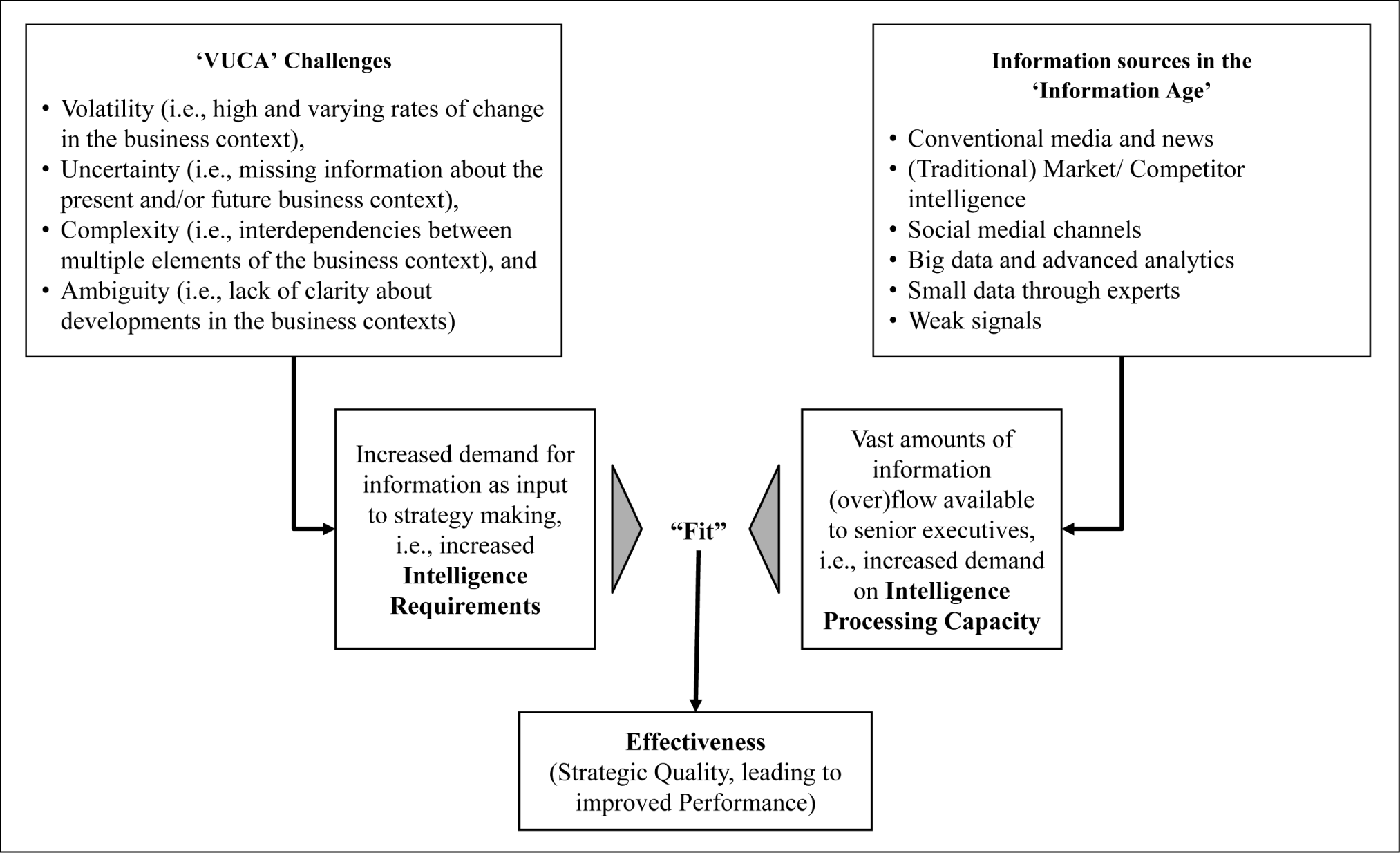
Approaches to deal with an information overload typically include either filtering out irrelevant information or limiting the number of information sources (Savolainen, 2007). However, in dynamic environments, a comprehensive decision-making approach (Fredrickson, 1984; Fredrickson & Mitchell, 1984) which considers all relevant alternatives and consequences of the decisions (Lindblom, 1959) portends dramatic changes to the environment. This is generally more successful (Bettis-Outland, 2012) than relying on heuristics and biases, which can lead to fewer extreme predictions about future outcomes (Denrell & Fang, 2010). Therefore, it is not only critical for senior executives to be able to filter the relevant information from what is available, but also to place emphasis upfront on determining what information is really required. Figure 1 summarizes these challenges faced by senior executives today in achieving a fit between their information requirements and information processing capacity.
Decision Intelligence Approach
Strategy development and implementation in dynamic environments requires senior executives to have a greater awareness of the importance of relevant intelligence, and to be better equipped in dealing with information ubiquity. Against this background, Decision Intelligence takes a different management perspective to help executives master the information acquisition challenges (Makadok & Barney, 2001) that they increasingly face, to invest in the right resources, position their companies in the right market segments, and appropriately affect or respond to institutional changes, pressures and voids (Mukundhan, 2013).
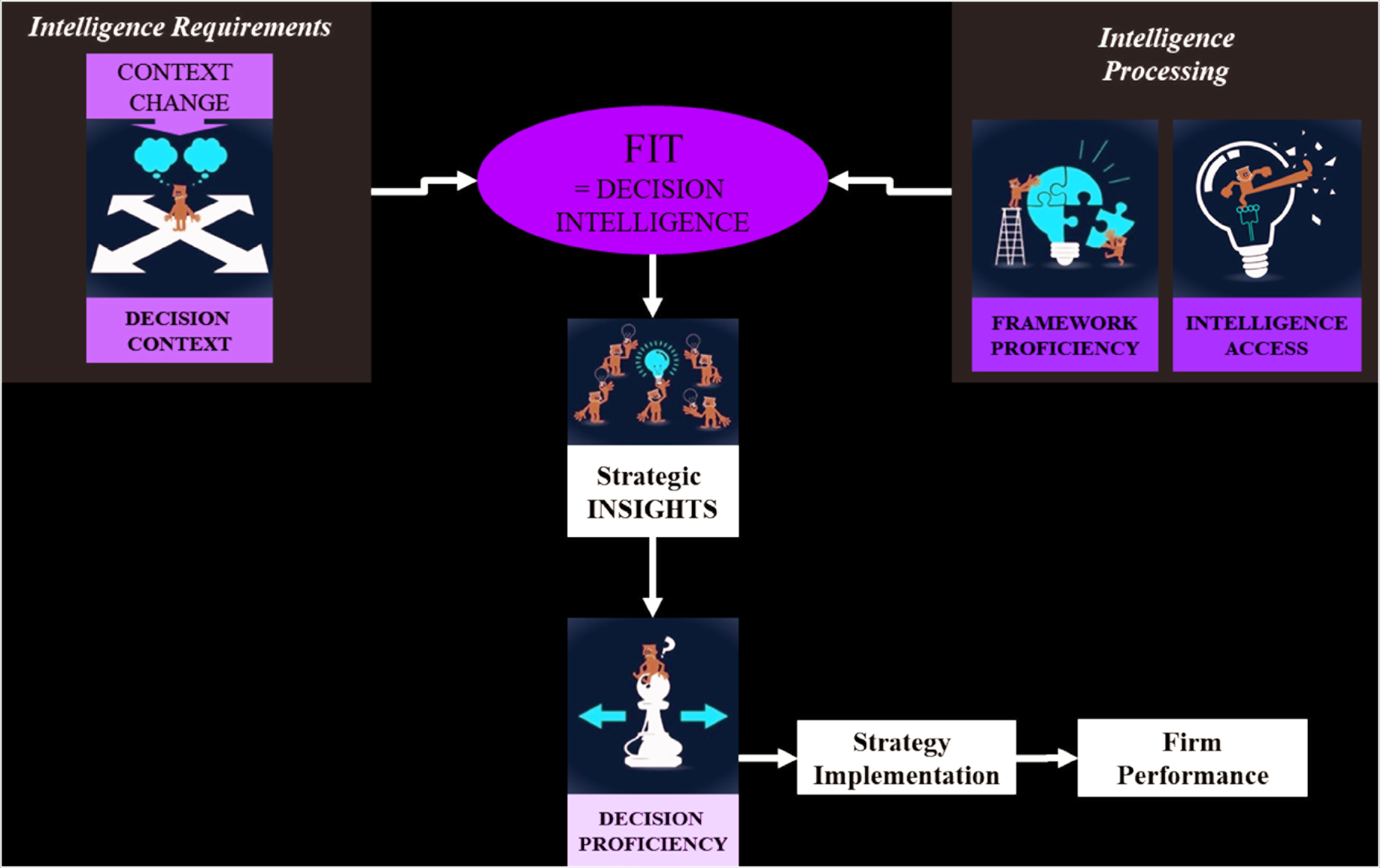
Its effective application builds on four elements of Decision Intelligence (see Figure 2). On the one hand, senior executives must recognize and understand the intelligence requirements arising from their business environments, represented by their Decision Context. On the other hand, they must also have sufficient intelligence processing capacities, through a combination of the relevant frameworks (Framework Proficiency) and the necessary access to intelligence (Intelligence Access), to create a fit with the respective intelligence requirements. Building on the analyses of strategic gaps (Harrison, 1996), achieving such a fit helps senior executives generate decision relevant knowledge in the form of strategic insights. Finally, they must be able to translate these insights into effective and efficient decisions through their Decision Proficiency. The following sections explain each of these elements and how they collectively help senior executives address their decision-making challenges in dynamic environments, and consequently create competitive advantages for achieving better firm performances.
These elements are further illustrated by primarily relying on the experience of two firms. The first one centres on AutoIntel’s strategy department at one of its divisions. The board of this division wanted to further expand the geographic presence beyond AutoIntel’s traditional markets through the development of new products and business models in China and Russia. As part of a large and successful company, the strategy team was well-versed in conventional industry and competitor analysis, strategy development tools, as well as strategic management frameworks, complemented by the services of leading consulting firms. However, they realized the need for a fresh approach, given the large number of decisions to be made with respect to future business models in the two highly dynamic environments. For example, AutoIntel wanted to evaluate the need for setting up a joint venture with a local manufacturer in Russia and develop a profitable business model for their existing joint venture in China. While AutoIntel is a well-established global automotive manufacturer, the second one draws on our work with AgriIntel, which is a tech-driven start up in India focusing on the agriculture sector. AgriIntel integrates various advanced capabilities in satellite data analytics to improve the transparency along the agricultural value chain in emerging markets. Their challenge was to develop a unique long-term strategy in a data-driven economy to be attractive for a large-scale investor that would understand how AgriIntel could create exponential returns. Additionally, each of the four elements are also illustrated through experiences of a Nordic healthcare firm (PharmaIntel), a European financial institution (BankIntel), and another agritech start-up in Australia (FarmIntel).
Decision Context
The importance of intelligence acquisition and processing efforts as a precursor to strategy formulation has long been recognized by leading strategy scholars. For instance, as Makadok and Barney (2001, p. 1636) wrote,
It is, in many ways, ironic that research in the field of strategic management has proceeded for so many years without a theory of information acquisition strategy tied to the creation of competitive advantage. Most work in the field has focused on answering the question, ‘Given a firm’s strategic situation, what actions should it take?’ while overlooking the logically prior question, ‘What information should a firm collect to understand its strategic situation?’ If firms do not collect the information they need to accurately assess their strategic situation, it is very unlikely that they will be able to make profit-maximizing strategic choices.
While this view can be intuitively applied across all three dimensions of the strategy tripod (Peng, Sunny Li Sun, Pinkham, & Hao Chen, 2009), it is important to note that senior executives face increasing dynamics across each of these dimensions in today’s business environments. This forms the foundation of the Decision Context element (see Figure 3).
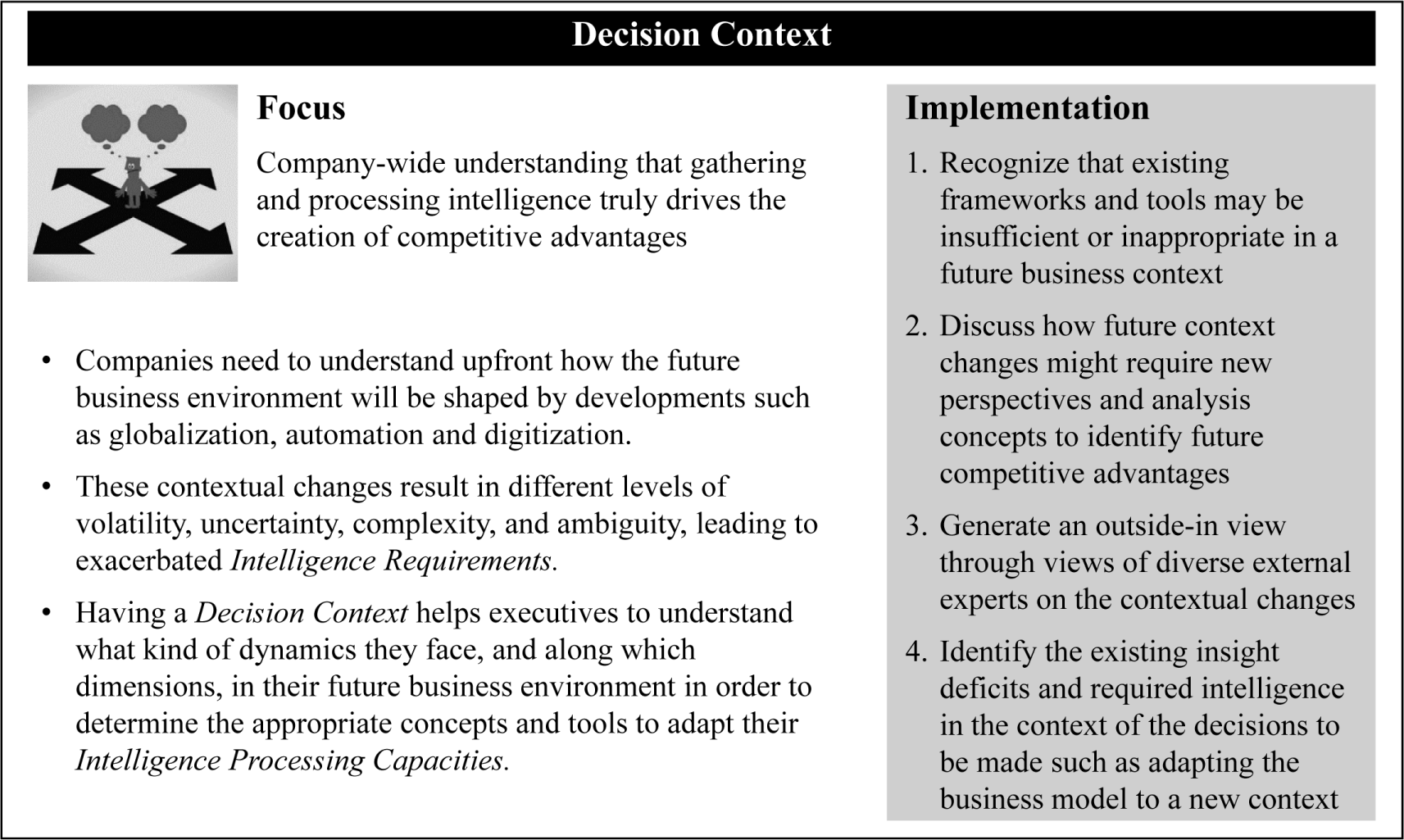
Against this backdrop, adopting a Decision Context at the organizational level comprises of two complementary aspects. Firstly, this entails an ex-ante focus on understanding and structuring the business environment and specific decision-making context. This draws on extant streams of literature, including situational awareness (Endsley, 1995) and contextual intelligence (Khanna, 2014). The business environment can be evaluated on various dimensions. In dynamic environments, for example, it is essential to consider dimensions like the level of volatility, uncertainty, complexity and ambiguity faced by the company (Bennett & Lemoine, 2014b; Courtney et al., 1997). In cases of companies facing significant disruptions as a result of digitization, it is worthwhile to consider the level of industry convergence (Geum et al., 2016; Kim, Lee, Kim, Lee, & Suh, 2015), ranging from a simple shift of best practices on a functional level to the complete blurring of industry boundaries. It is also important to be sensitive towards local factors such as informal institutions and culture (De Gersem, 2020).
The second aspect of a Decision Context builds on the first, and requires senior executives to proactively recognize, reflect upfront upon, and react to the implications of the contextual decision-making and their intelligence requirements. Research, such as that on organizational ambidexterity (Birkinshaw & Gibson, 2004; Turner, Swart, & Maylor, 2013), suggests that while cases of low environmental dynamics require an exploitative approach, higher levels of dynamics necessitate an explorative mindset to acquire the required intelligence for a decision. This level of dynamics determines how quickly the intelligence is needed, which also influences how the intelligence can be collected. This further translates into the senior executives’ understanding on when to rely on their experience to interpret available insights and when to rely on expertise to reduce uncertainties.
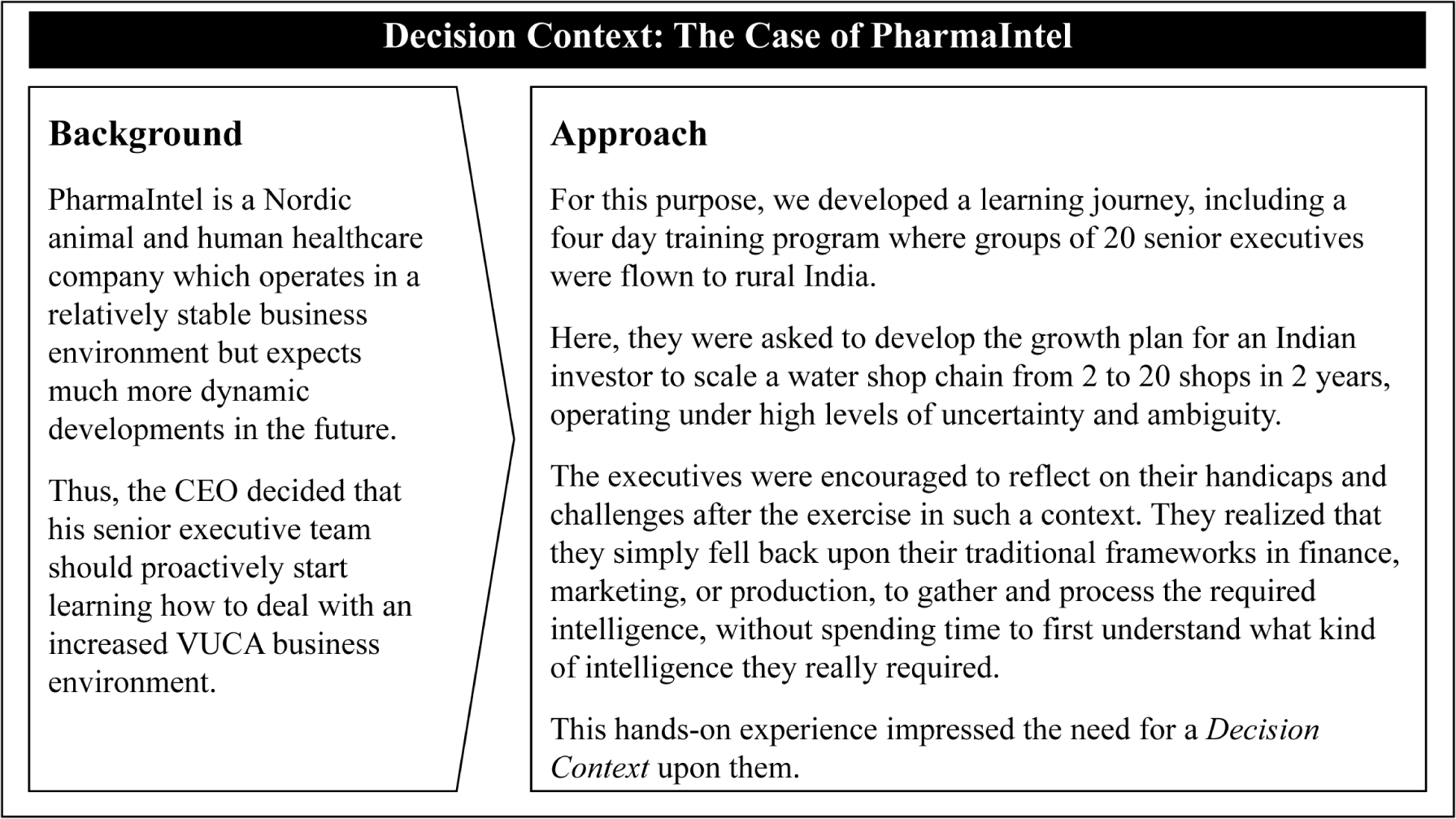
The explicit emphasis on the information requirements in a Decision Context acts as an enabler for the subsequent elements of the Decision Intelligence. Senior executives who adopt such a mindset understand the importance of achieving an intelligence processing fit (Moser et al., 2017) and the need for tailored frameworks and innovative approaches to gather intelligence. Companies that adopt a Decision Context enable executives to leverage ex-ante intelligence acquisition and processing practices to secure the most valuable resources (i.e. resource-based view), build their business upon the most powerful industry dynamics (i.e. market-based view), and prepare for the most significant changes in the industry environment (i.e. institution-based view). This is illustrated through the experience of PharmaIntel (see Figure 4). As a corollary, it is unlikely that senior executives will proactively make the necessary investments to master the subsequent Decision Intelligence elements without the right understanding of the Decision Context they face.
Given the dynamics in China and Russia, the strategy team at AutoIntel realized that their conventional approaches to strategy in developed markets was insufficient there. Adopting a Decision Context, they needed to spend much more time upfront to understand what kind of insights they require in the respective contexts to make better informed decisions. Numerous discussions were held with senior executives and strategy experts to understand which insights are essential to support the respective decisions and to develop future business models. This included generating a consensus on what intelligence was required as inputs and an understanding of how important the missing pieces were to complement what was already available through databases, reports, and inputs from external sources such as consultants and other information providers. The executives concurred that they were faced with a case of high uncertainty, ambiguity and dynamics. However, the industries in Russia and China were not threatened too much by convergence. This helped the China and the Russia strategy teams at AutoIntel identify the lack of essential insights and the strategic relevance of missing intelligence, such as the importance of an in-depth understanding of specific aspects of the national regulatory environments, value chains configurations of local competitors, relevant trends in multiple customer segments and interdependences in the respective business contexts.
On the other hand, AgriIntel was faced with missing insights and a revolutionary level of change due to a convergence of the traditional agriculture sector with sensor technologies and the insurance and banking sector. The founders were initially focused exclusively on their own technological capabilities but not on understanding the problems they were actually supposed to solve for their future customers—banks, insurers, governments, agri-input providers, and finally, farmers. That is, they were too focused on looking internally, without affording due attention to understand and engage with the external environment and value chain stakeholders (Elias, 2017). After a few weeks of adopting the Decision Intelligence approach, the founders were convinced that they needed to invest much more resources into understanding the specific decision-making needs of their future customers and become more technology-agnostic in order to offer integrated solutions beyond what their competitors could match.
Framework Proficiency
Over five decades ago, Peter Drucker wrote, ‘To know something, to really understand something important, one must look at it from 16 different angles’ (Drucker, 1967). This forms a cornerstone of the second element of Decision Intelligence. Companies that understand the value of intelligence to drive competitive advantage invest into the Framework Proficiency of their executives, that is, the capability of executives to apply multiple perspectives and approaches (Courtney, 2001; Menon & Thompson, 2016; Schoemaker & Krupp, 2015) to the major decision-making challenges that they face (see Figure 5). In dynamic contexts, senior executives need to be able to analyze their organizations and business environments through different lenses to have a more comprehensive understanding of the status quo and relevant future developments.
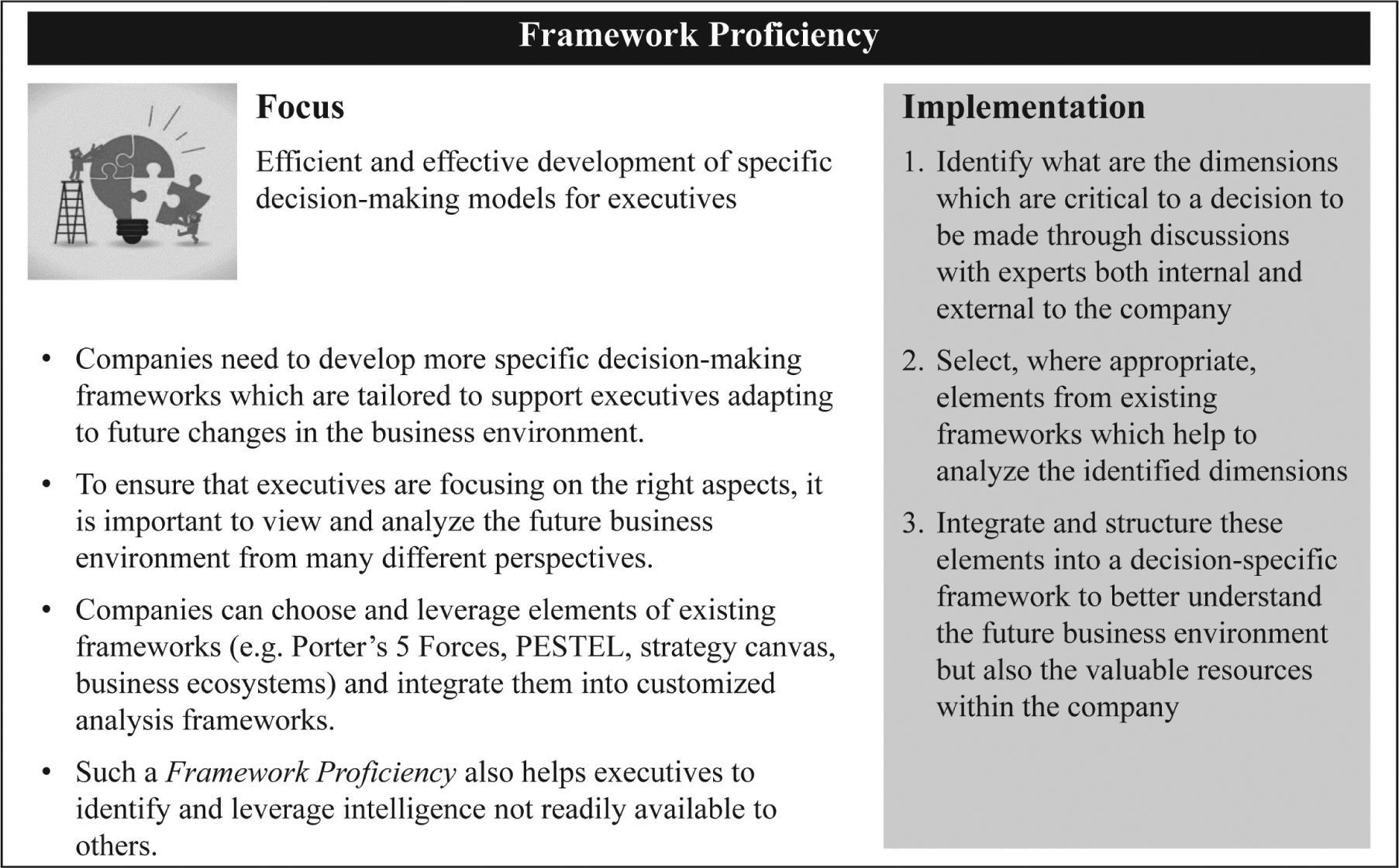
At the same time, in addition to adopting different perspectives, senior executives also need to adapt their strategy toolkits to the decision-making contexts they face. As Prof. Michael G. Jacobides noted, ‘When the environment changes profoundly, the maps with which we navigate it may need to shift as well’ (Webb, 2014). A recent example here is the work on alternative frameworks for strategy formulation and implementation in a digitized world in the context of new business realities (Gottschalck & Günther, 2017). This translates into the need for senior executives to refocus efforts to develop customized decision-making models, instead of simply trying to replicate existing frameworks with an insufficient appreciation of the contextual factors in which they succeeded in the past (Khanna, 2014; Rengarajan, Moser, & Narayanamurthy, 2021). Senior executives with Framework Proficiency thus focus on the development of tailored decision-making models which place emphasis on the most relevant and impactful questions. This could be either a proficiency in selecting the most appropriate one from existing frameworks in their toolkit or creating their own frameworks to generate insights that matter most for a specific decision they must make. Accordingly, they can adapt their information gathering and processing activities to fit their intelligence requirements (see Figure 6).
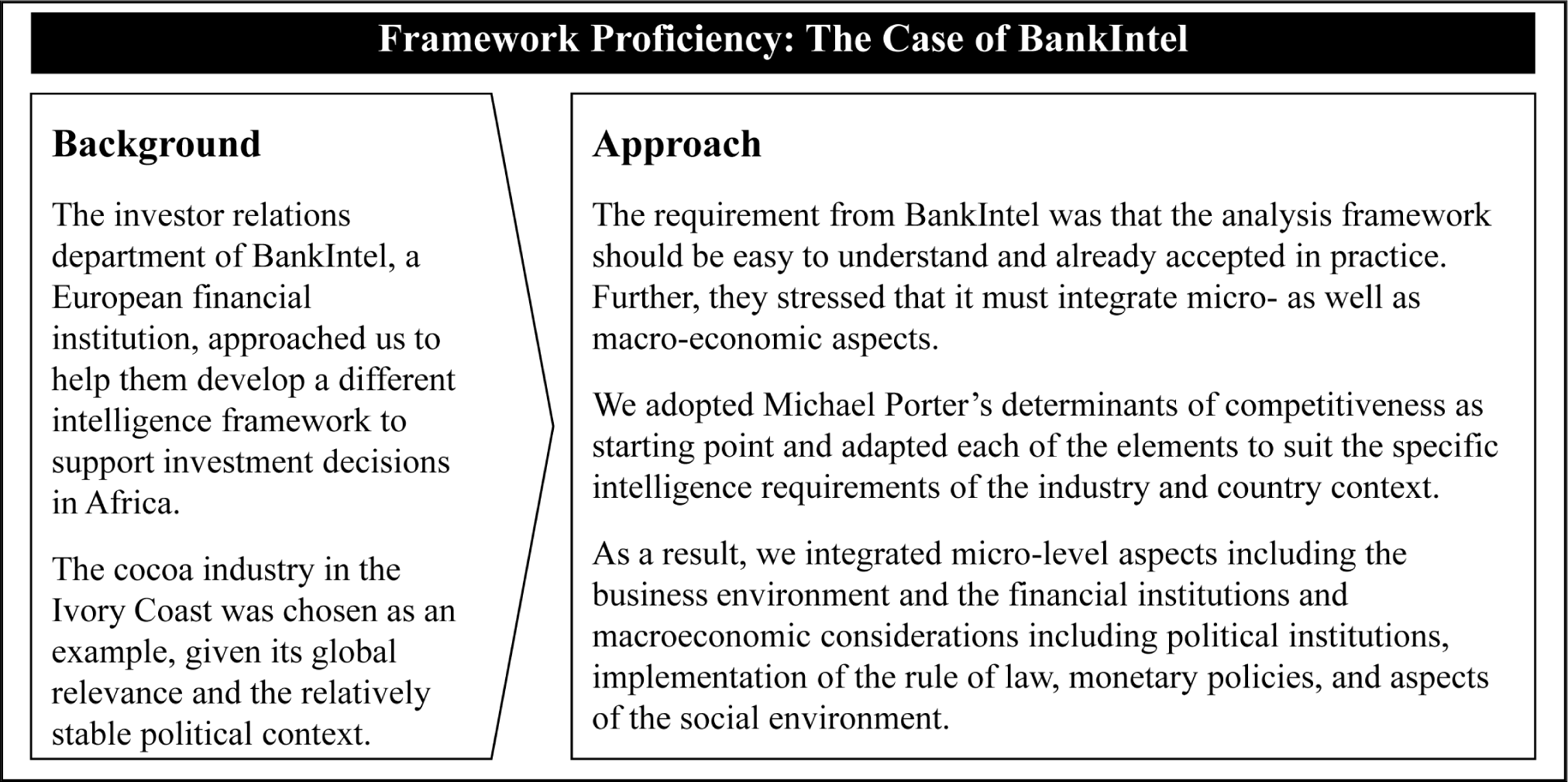
In the case of the strategy teams of AutoIntel, building up Framework Proficiency enabled the senior executives to develop an understanding of what intelligence they were missing as inputs for their strategy work. As a result, they identified a need for more tailored strategic analysis models for their projects in China and Russia, respectively. Through extensive desktop research, complemented with workshops and discussions with local industry experts, AutoIntel executives identified the key questions to be answered along the political, economic, social, technological, environmental and legal (PESTEL) dimensions (Johnson, Scholes, & Whittington, 2008) as well as aspects to be evaluated along the value chain and the extended business ecosystem (Rong, Wu, Shi, & Guo, 2015) for the respective decisions in Russia and China. Depending on the context, the emphasis placed on these dimensions varied. This helped them develop their induvial analysis frameworks as well as to identify the insight deficits to be addressed to achieve a fit between their intelligence requirements and their intelligence processing capacities. It further supported them in analyzing the available intelligence from diverse perspectives, and in understanding how different insights could support various elements of their strategic decisions.
In the case of AgriIntel, adopting Framework Proficiency helped the founders by exposing them to the concept of nascent business ecosystems (Hannah & Eisenhardt, 2018) and how a keystone player strategy (Iansiti & Levien, 2004) could create the strategic position they were aiming at. For this purpose, AgriIntel undertook extensive technology scanning and sales market analyses to understand which technologies would be most suitable to complement their satellite data analytics and market understanding in India. The founders consequently understood that they do not need to control all assets and be experts in all technologies but rather position themselves as solution integrators for their selected customer groups. Along this process, they also realized that although their mission was to finally help farmers in emerging markets to increase their productivity, they first needed to work with banks and insurers to achieve economies of scale.
Intelligence Access
While the first two elements of Decision Intelligence enable senior executives to customize context-specific decision frameworks, these can be severely handicapped without access to the required intelligence. Having such access, beyond what is available from conventional sources and traditional media, helps senior executives to address their insight deficits efficiently and effectively. While Framework Proficiency enables executives to identify and use ideas that nobody else has, Intelligence Access allows them to make better use of existing data as well as to acquire data that isn’t available to competitors (see Figure 7). In dynamic environments, this is a fundamental source of firm heterogeneity and, if leveraged effectively in a company’s strategic decision-making process, forms the basis of competitive advantages.
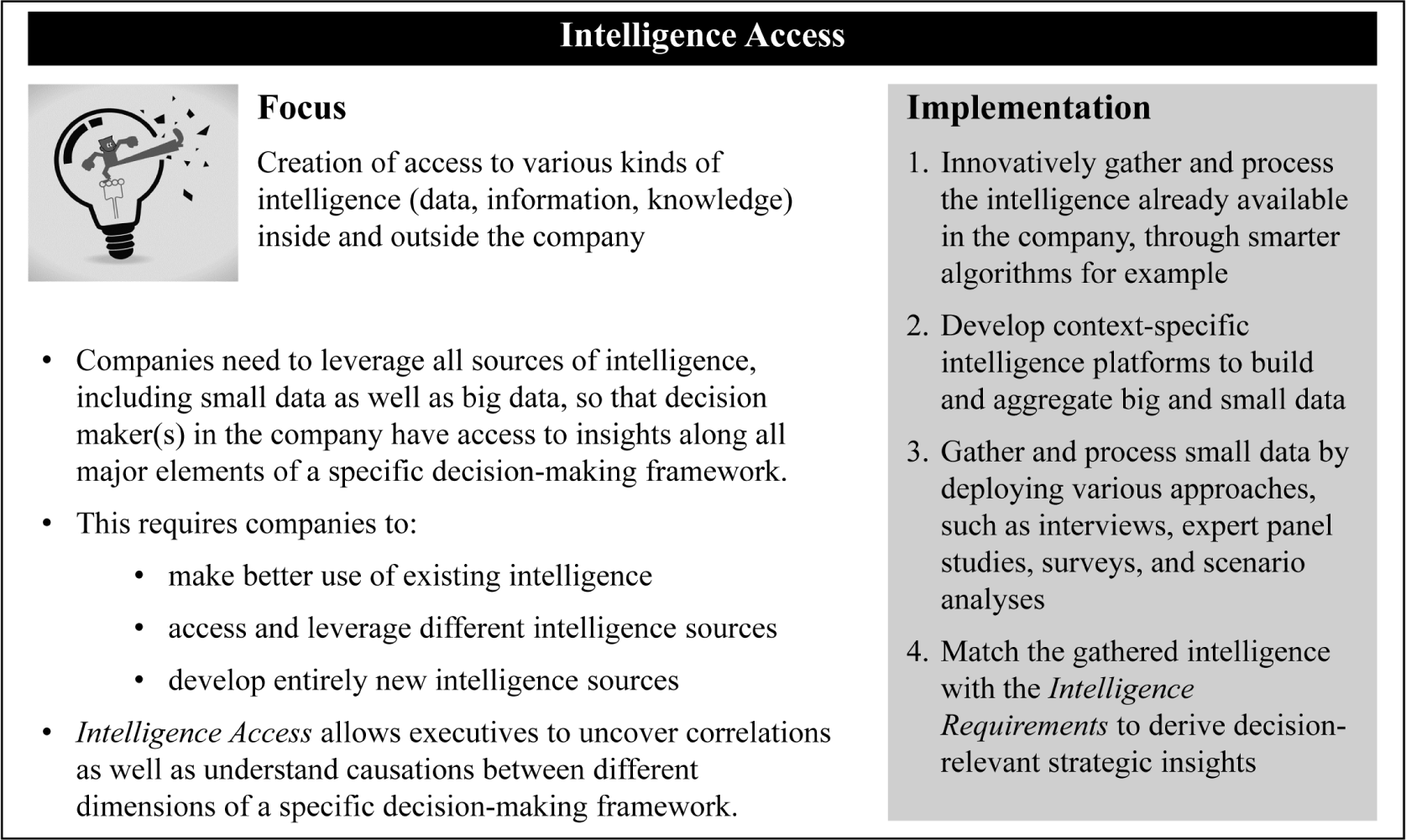
It should be emphasized here that Intelligence Access is not about being exposed to an endless amount of data. In fact, this will easily lead to an information overload for the decision maker (Eppler & Mengis, 2004; van Knippenberg et al., 2015). As Peter Drucker wrote: ‘The question we must ask is not, “How many figures can I get?” but “What figures do I need? In what form? When and how?” We must refuse to look at anything else’ (Drucker, 1967). In this sense, Intelligence Access can be exploited by using any of the following approaches:
Making use of existing intelligence, such as big data, in a way that nobody else does—for example, developing new algorithms; Making use of intelligence that nobody else has—for example, by applying new perspectives or frames (Bach & Blake, 2016) to analyze the current or future business environment of the company; Innovating the way of intelligence gathering and processing—for example, leveraging access to social capital or to new data transmission technologies such as low power wide area networks (LPWAN).
It is also necessary to highlight the difference between ‘small data’ and ‘big data’ that companies should access. On the one hand, big data (Mazzei & Noble, 2017; McAfee & Brynjolfsson, 2012) consists primarily of vast quantitative information and the correlations which they can reveal, where companies can leverage the almost endless possibilities of advanced (data) analytics. On the other hand, small data (Bonde, 2013; Lindstrom, 2016) refers to the opinions of a relatively limited number of people, and their qualitative views and assessments based on their experience and expertise to uncover causal relationships or disruptive future developments (Knowledge@Wharton, 2016). This is especially significant when an understanding of past developments does not allow drawing conclusions regarding the future—as in the case of most emerging geographical, as well as product and service markets and their policy environments. In such cases, referring to specific domain experts ensures the richness of the intelligence at hand since they draw upon their extensive knowledge and understanding of local contexts. Taken together, big and small data provide executives with an effective Intelligence Access.
At AutoIntel, the strategy teams first developed multilateral decision frameworks to support their strategy and business model development efforts. Then they faced the challenge to gather the necessary intelligence inputs for the actual decision-making. Today, large companies such as AutoIntel can typically rely on in-house competence as well as numerous professional service providers to gather and analyze big data. The challenge in the cases of China and Russia, however, was having access to the expertise and experiences of local experts who had a deep understanding of the local industry and institutional environment, respectively. Since AutoIntel, as a foreign company, did not have sufficient local networks and presence to access small data in either market, this challenge was addressed by collaborating with local organizations and building dedicated platforms (Kinni, 2016) for automotive intelligence, and to foster local social capital.
To illustrate, in the case of China, AutoIntel set up collaborations with local universities. Given the crucial role played by networks and social capital (i.e., guanxi) in China, the initial links to the local universities and initial industry contacts had a snowballing effect in building up a diverse local network. The additional inclusion of industry stakeholders such as urban planning experts, government officials, and diverse customers of AutoIntel into the intelligence platform helped bring in diverse opinions and perspectives. Various tools, such as online real-time Delphi studies (Winkler, Kuklinski, & Moser, 2015) and workshops for joint scenario analyses (Cornelius, Van de Putte, & Romani, 2005; Nowack, Endrikat, & Guenther, 2011; Schoemaker, Day, & Snyder, 2013) were employed to leverage the social capital accrued through this platform. These efforts also led to the adaptation of AutoIntel’s final decision-making frameworks, with the gathered insights playing a crucial role in developing their business model for the Chinese market.
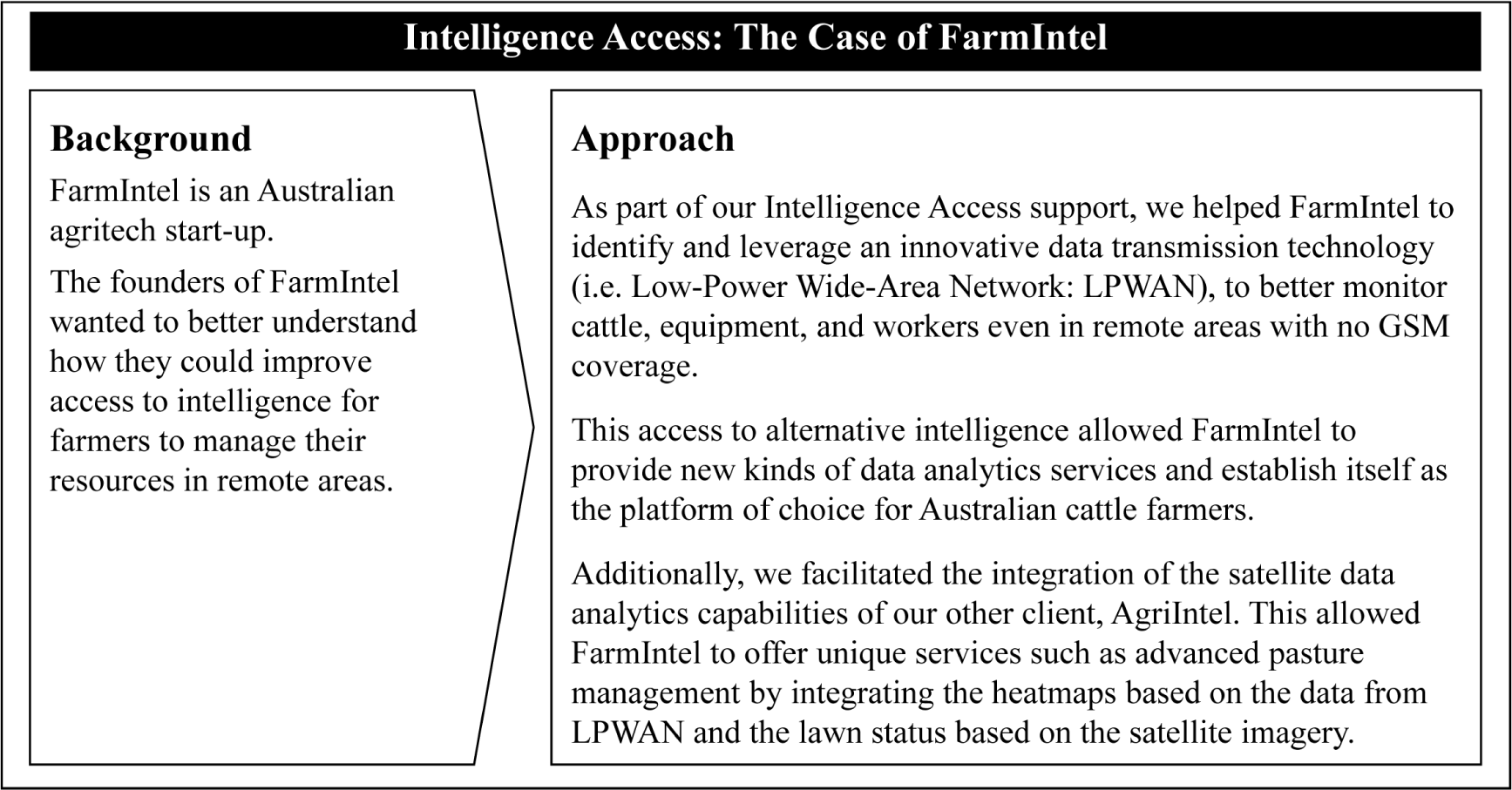
In the case of AgriIntel, the start-up did not have the same resources as AutoIntel. Thus, the founders had to find a different way to build up the required access to intelligence about potential bottleneck components (Hannah, 2015) and complementary technologies. The team identified which of AgriIntel’s existing technology assets were potentially valuable for other agritech start-ups in the most promising markets outside Asia to ensure a minimal overlap (e.g. FarmIntel in Australia, see Figure 8) and gather maximum additional intelligence about other technological developments. Further, AgriIntel developed a strategic collaboration with a boutique venture capital company to co-invest with them in other promising agritech start-ups within their global ecosystem, to ensure that they understood the latest trends and could potentially access strategically relevant capabilities. As a result, AgriIntel was able to significantly differentiate itself from its competitors. The founders followed this approach in three cases and successfully managed to create two complementary offers based on their platform solution, making them much more attractive for large-scale customers such as banks and insurers compared to similar satellite data analytics focused companies.
Decision Proficiency
Framework proficient executives with the right contextual mindset and intelligence access finally need to turn their insights into strategic decisions and implementation activities. Beyond understanding the current industry and institutional environments, and analyses of possible future changes, senior executives should evaluate the implications of the gathered intelligence for their firm and derive consequences on a functional level. Decision Proficiency is about understanding how to improve decision-making and increasing the capacity to deal with dynamic business environments (see Figure 9). It encourages the realization of the true value of decisions (Harrison & Pelletier, 1998) by translating them into concrete actions with implementation design and change management plans (Rengarajan, Moser, Tillessen, Narayanamurthy, & Jayanth, 2021).
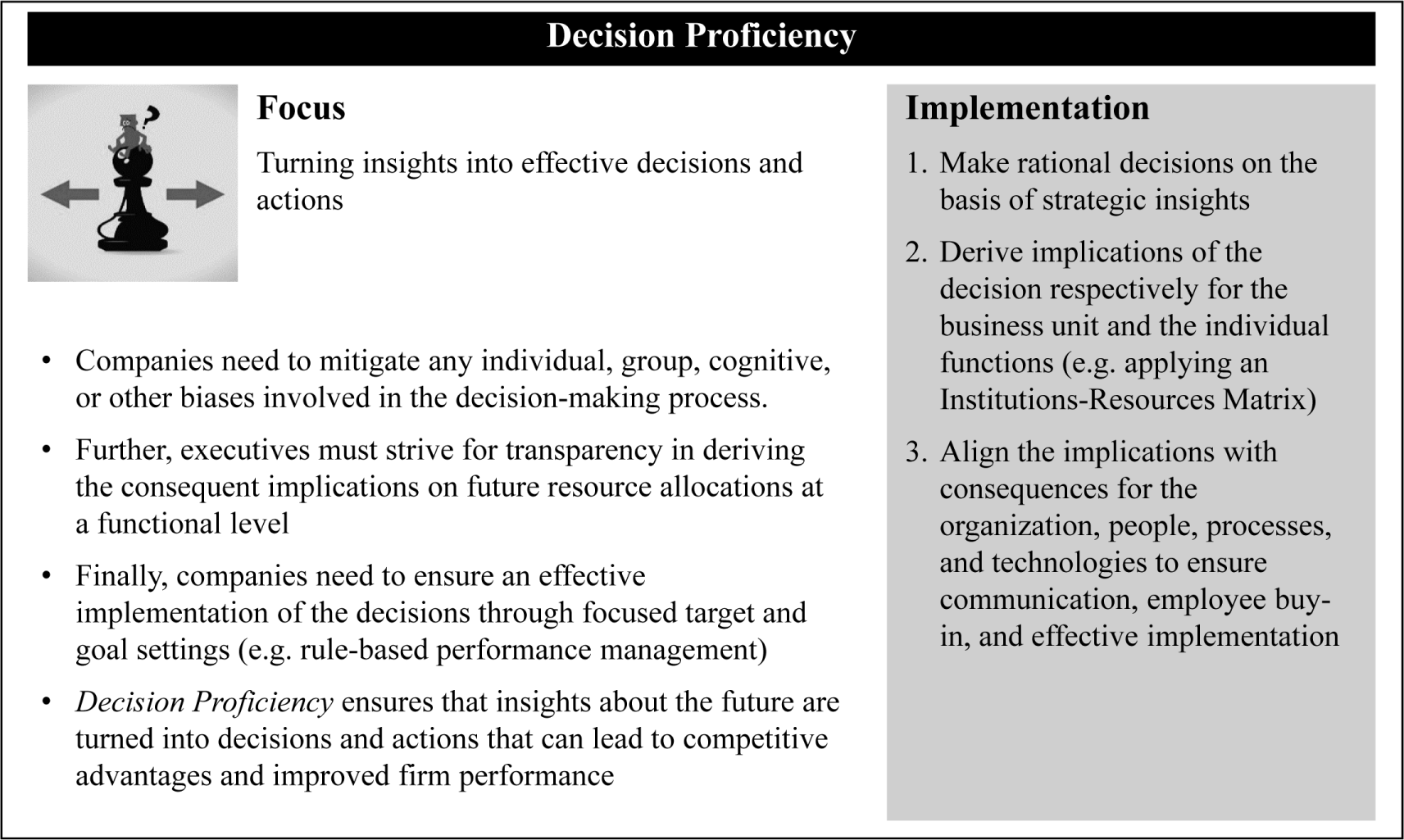
Improved decision-making starts with an understanding of how to avoid biases (Schoemaker & Day, 2009a) to effectively leverage the acquired intelligence. It is important for executives to protect themselves from being one-sided or predisposed to views. Therefore, knowledge about the cognitive and personal biases involved in decision-making processes is imperative (Busenitz & Barney, 1997; Schwenk, 1988). Nowadays, a lot of advice is available on this front and the numerous diversity programs in companies are a positive development to include a multitude of perspectives in analyses and decision processes (Simons, Pelled, & Smith, 1999; Wentling & Palma-Rivas, 1998). Extant literature has also documented the role of managerial social capital in mitigating biases. Taking the example of AutoIntel, the involvement of various participants and the resulting heterogeneous views in the Delphi studies and scenario planning exercises helped address some cognitive biases (Nowack et al., 2011; Winkler & Moser, 2016). Similarly, exposing the executives to well-reasoned arguments that they hadn’t previously considered, while discussing the strategic insights, helped reduce some personal and organizational biases (Schoemaker & Day, 2009b).
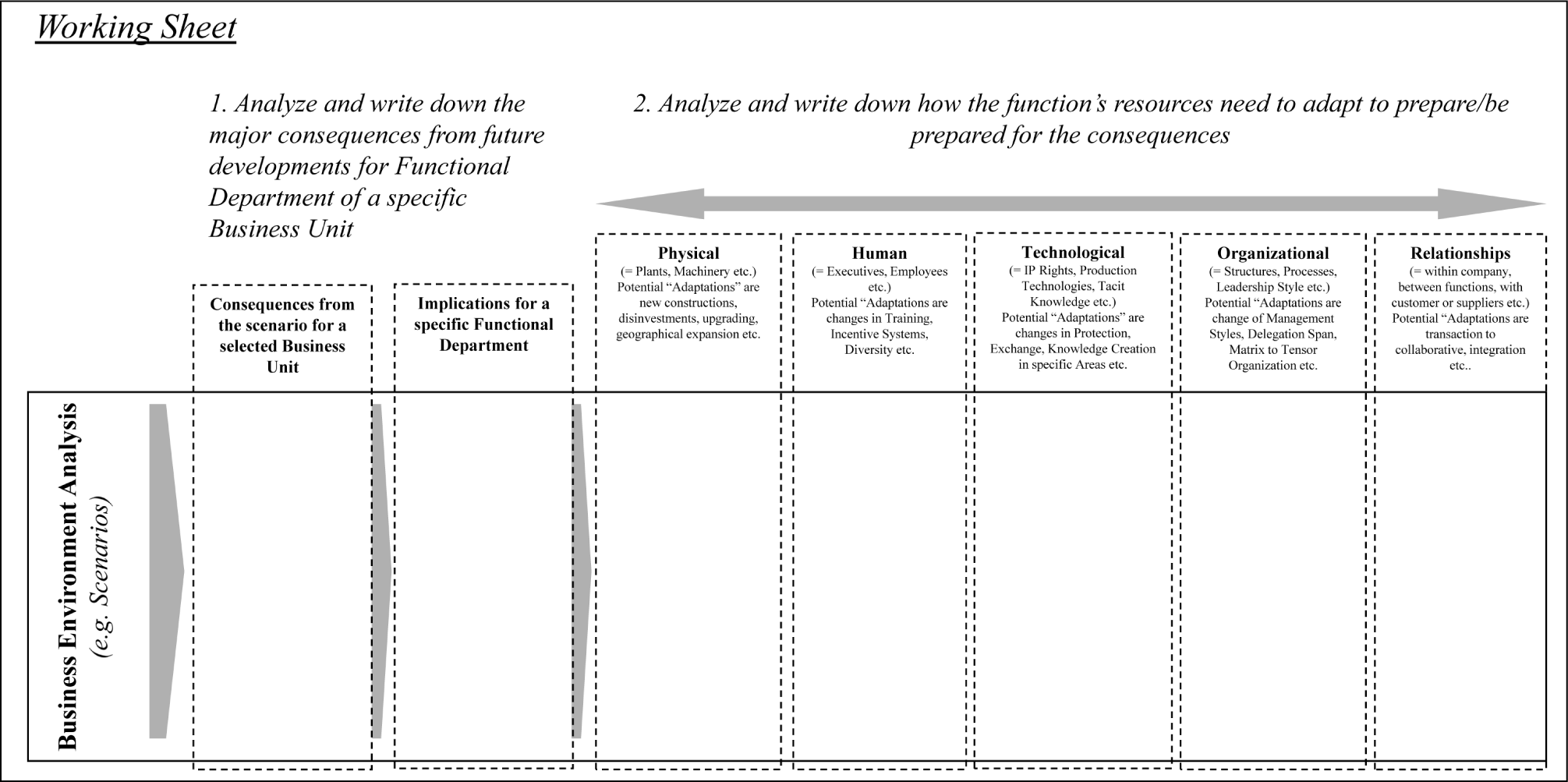
To advance Decision Proficiency in practice, the authors developed the Institutions-Resources Matrix based on research, interviews and workshop sessions with experts from various industries. This tool supports executives in systematically analyzing future institutional changes in the environment and breaking them down into consequences at the functional level (see Figure 10). It is specifically designed to allow for an individual application on the firm level, accounting for the requirements of individual departments, through the integration of two dimensions: the potential change of the external environment and a function’s key resource categories. This involves the following iterative steps:
Choose a specific future business environment scenario or single trend in the institutional environment, and derive the consequences for the focal company’s business unit strategy. Choose a specific functional focus (that is, after-sales, purchasing, human resources) of the business unit and identify those elements of the business unit strategy that have strategic implications for the chosen function. Transform the identified strategic implications from the business unit strategy level to the chosen functional strategy level. Finally, derive the consequences for the human, physical and technological resources, organizational structures, as well as internal and external relationships of the chosen function from the identified strategic implications. If required, assess the potential financial ramifications of any identified consequence for the resources of a function to provide an outlook on the required budget.
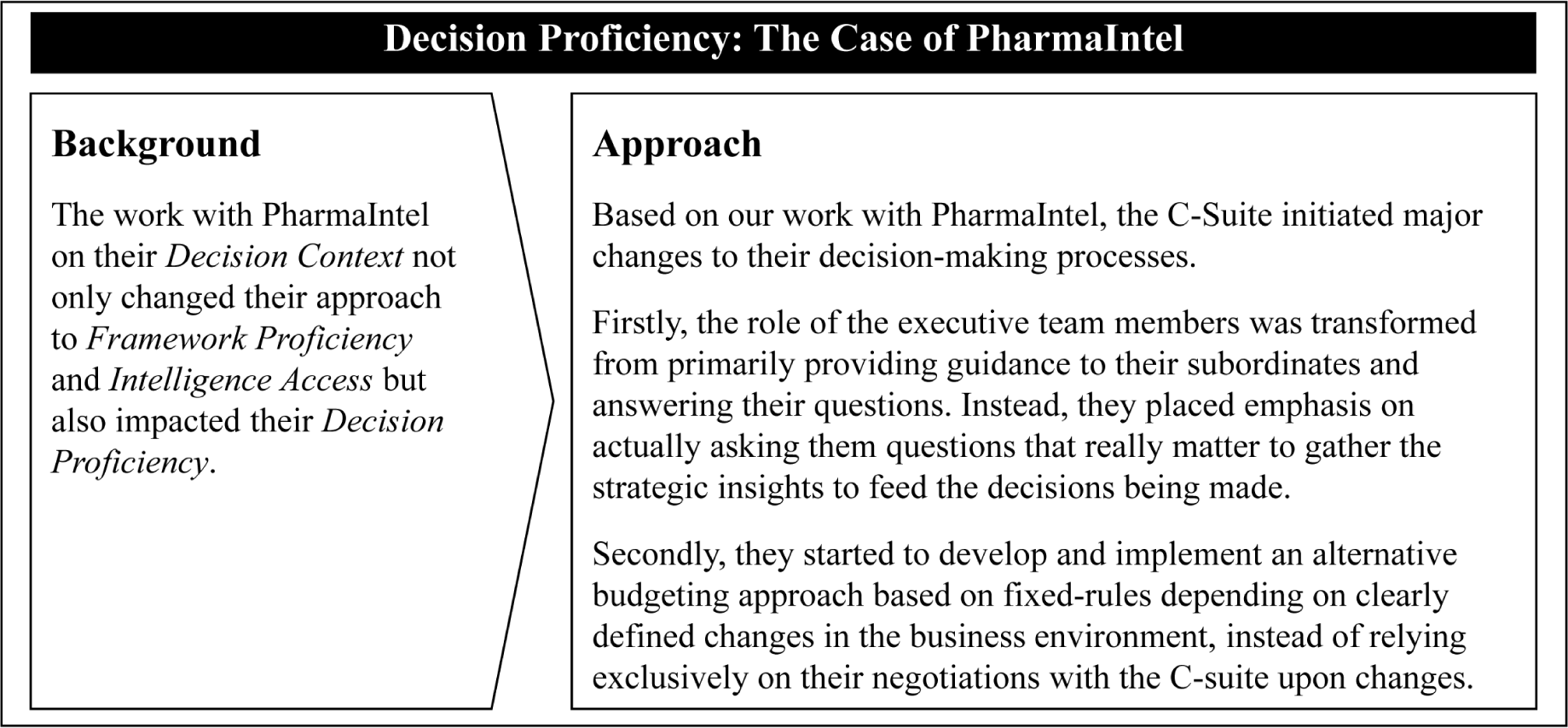
Finally, being aware of the implications of their decisions, senior executives need to know how to turn them into actions and design plans to implement the strategic initiatives resulting from their decisions (Rengarajan, Moser, Tillessen, et al., 2021). For this, targets must be broken down into timely, digestible and definable goals, complemented by a roadmap to align the day-to-day activities of the organization with the overarching mandates of their strategy (Allio, 2005; Miller, Wilson, & Hickson, 2004; Saunders, Mann, & Smith, 2008). It is also crucial that these sub-targets are communicated within the organization easily to ensure employee buy-in and commitment (Kaplan & Norton, 2001, p. 213). To do so, executives need to pivot their plans around the organization, people, processes and technologies. The experience of PharmaIntel (see Figure 11) provides further illustration of how Decision Proficiency was implemented, based on the other Decision Intelligence elements.
Decision Context, Framework Proficiency and Intelligence Access had a significant impact on AutoIntel’s Decision Proficiency. The multitude of perspectives and views available through the investments in Framework Proficiency and Intelligence Access gave AutoIntel a more nuanced view of future developments and dynamics in China and Russia. This resulted in decisions being driven more by rationale than by emotions, intuition or heuristics. AutoIntel used Decision Proficiency to break down their strategies in Russia and in China into relevant implications at a functional level. As an example, the strategic insights were leveraged in determining locally relevant characteristics and technologies in developing a new product for the Chinese market. Small data further helped in triangulating the product offer with the features that the end customers wanted, and were willing to pay for, while the local intelligence platform was leveraged to determine a differentiated product positioning against competitors’ offerings. This was in stark contrast to earlier product projects, where the design features and market positioning were largely determined at AutoIntel’s headquarters based on their outside-in perception of what could suit the local market. The response to the new product from various current and potential customers at the Beijing Auto Show in 2016, in contrast to the earlier products which were incurring losses and eroding market share, provided proof of the success of adopting Decision Intelligence.
The strategy teams at AutoIntel built and leveraged their local networks to gather not just contextually relevant intelligence, but also in collaboratively building decision-relevant knowledge in the form of strategic insights. The local networks served as a socio-cultural bridge to provide them with the contextual intelligence (Khanna, 2014, 2015) to understand and interpret developments. Subsequently, AutoIntel continues to leverage the local networks to identify and engage with experts and develop best practices to guide local executives in their strategy development and implementation. Thus, Decision Intelligence has transformed into a regular and ongoing practice complementing conventional strategy development and implementation. AutoIntel’s strategy teams today adapt and use Decision Intelligence for a variety of other strategy efforts. As an example, with the automotive industry undergoing a disruptive move towards electrification and autonomous vehicles, AutoIntel is applying Decision Intelligence to understand the dynamically changing industry context. Through tailored frameworks and by building diverse networks to access small data, their strategy teams are deriving strategic insights to formulate product and market strategies for future electric and autonomous vehicle offerings globally.
Similarly, at AgriIntel, the founders adopted a different contextual mindset which helped them understand what kind of intelligence they really needed to differentiate from their competitors and serve their customers. Framework Proficiency was essential to determine sustainable competitive advantages, by integrating the dominant frameworks encompassing satellite data analytics, agriculture management, insurance and banking practices, and other relevant data gathering technologies. The focus on Intelligence Access encouraged them to think of innovative ways to get the insights they needed regarding developments in their nascent ecosystems, without stretching their own time and resources too much. However, it was also decisive that the founders of AgriIntel decided early, based on their Decision Proficiency learnings, to complement their board of directors with external experts from the agriculture and insurance sectors. This ensured that the entire company was focusing on customer needs and not solely on technological possibilities.
Discussion
The explosive growth in information processing capabilities driven by technological innovations has thrown up the challenge for executives and organizations to manage a wealth of information and make the best use of it. Consequently, there is a need for management research to revisit extant attention and decision-making frameworks (van Knippenberg et al., 2015). At the same time, businesses are facing increasingly dynamic environments. From an information processing perspective, these developments lead to two major challenges. On the one hand, dynamic business environments trigger much higher information requirements for executives. On the other hand, today’s information ubiquity implies that executives are routinely faced with information overloads while still being constrained by limited individual attention and information processing capabilities. Together, this makes it much harder for executives to find the right fit between their intelligence requirements and their intelligence processing capacities.
In this context, this paper proposes that a Decision Intelligence approach can help executives to confront and manage handicaps while making decisions and achieve a fit that leads to better strategic insights, ultimately resulting in competitive advantages and improved firm performance (Moser et al., 2017). Decision Intelligence enables senior executives to drive competitive advantages by integrating the strategy tripod (Peng et al., 2009), that is, resource-based view, market-based view and institution-based view, and the three major strategy elements comprising analysis, development and implementation. This has significant implications for companies and practitioners—including Chief Strategy Officers, executives and entrepreneurs.
Decision Intelligence starts with companies understanding the value of intelligence and rejigging the efforts of their executives to leverage it. As a first step, executives need to spend sufficient time upfront to evaluate and structure the business environment they face. This can be in terms of various dimensions such as uncertainty, ambiguity, volatility, complexity or industry convergence, which in turn have implications for achieving a fit between their intelligence requirements and the intelligence processing capacities at hand. With Decision Context helping executives to gauge their business environment, they can contingently decide which intelligence processing capacities are best suited to generate the required strategic insights. Consequently, Framework Proficiency requires executives to develop customized strategic analysis frameworks to address the challenges and requirements of a specific decision that they need to make and highlights the need for them to master a multitude of management frameworks (Rengarajan, Moser & Narayanamurthy, 2021). The choice and combination of frameworks and analysis tools further has consequences for the required Intelligence Access. As in the case of AutoIntel, a PESTEL-based framework was complemented with elements from value chain and ecosystem perspective, while an online, real-time Delphi study and scenario development workshops were used as methods to access expert opinions and develop scenario matrices. In the case of AgriIntel, the Framework Proficiency focused on nascent business ecosystems, bottleneck components and keystone player behaviour, leveraging technology scanning, classic market analyses and investments into other early-stage agritech start-ups to provide the required Intelligence Access.
Decision Intelligence encourages companies to invest more strategically into their Intelligence Access infrastructure to also leverage recent developments in gathering and analyzing big data. Simultaneously, they also need tailored approaches to collect and use small data. FarmIntel provides a good example of leveraging technologies, partnerships and the associated small data to establish insights about their customers. Companies should consequently consider providing their executives with more resources to develop specific platforms to engage with a broad range of experts beyond the access that professional networking and social media platforms already provide. Together, Framework Proficiency and Intelligence Access allow executives to identify information asymmetries earlier and develop the necessary means to fill the gaps, better cope with information overload and accordingly adapt their intelligence processing capacities.
Finally, Decision Proficiency supports executives in turning their strategic insights into consequences to support strategy implementation. The Institutions-Resources Matrix is an example of a tool to translate strategic decisions into actionable goals at a functional level, as used in the cases of AutoIntel and PharmaIntel. Further, Decision Proficiency also requires executives to understand the dangers of mental biases in decision-making and take proactive countermeasures. To some extent, companies have been pushing diversity as a necessity to generate multiple and diverse perspectives in decision-making. However, they have not sufficiently adapted how they leverage diverse perspectives (Javetski & Koller, 2018) inside and outside the company to address their ex-ante information acquisition challenges in dynamic business environments. In sum, Decision Intelligence helps executives achieve a fit between exacerbated intelligence requirements and their capacities to gather and process intelligence despite information overloads.
Against this background, we propose some implications for academicians and business schools, in addition to the managerial implications discussed so far. While past approaches in management education were geared towards imparting knowledge on how things work (Jarzabkowski, Giulietti, Oliveira & Amoo, 2013; Schoemaker, 2008), the half-life of such knowledge has dramatically been reduced. As an example, tectonic shifts in social media are happening much faster than it can be brought into executive education and training. Today, it is as important that executives are innovative and can customize decision-specific frameworks as they are capable of applying pre-existing mental models and extant strategic analysis toolkits. Therefore, we are convinced that management education should not only focus on building executives’ knowledge and awareness of various tools, but also increasingly equip them with the proficiency to pick and integrate the right elements of different frameworks in a specific decision context. This also implies that research on strategy tools (Jarzabkowski & Kaplan, 2015; Vuorinen, Hakala, Kohtamäki & Uusitalo, 2017; Wright, Paroutis & Blettner, 2013) needs to explore how strategy practitioners perceive the applicability of already established tools and frameworks in different contexts, and leverage them in practice.
We also recognize potential to cross-pollinate our work on Decision Intelligence with a few major streams of strategy and management research. This paper primarily adopted an organizational information processing theory (Galbraith, 1974; Tushman & Nadler, 1978) driven view on decision-making frameworks. This puts the spotlight on intelligence processing based on recombined and customized management frameworks and innovative intelligence access methods. A natural extension of the work could include other aspects of strategic decision-making, such as behavioural (Schoemaker, 1993), psychological (Bateman & Zeithaml, 1989) and emotional (Daniels, 1998) factors to understand how executives deal with challenges in dynamic environments. While we take the bounded rationality of executives as a boundary condition, we see the potential of leveraging social capital in practice to support executives in working around this constraint. A related avenue of investigation could also be research on bounded reliability (Kano & Verbeke, 2015) to explore how executives can ensure that commitments are fulfilled while ensuring intelligence access.
Conclusion
This paper conceptualized a Decision Intelligence framework by explaining how senior executives and their companies can strategize more effectively while operating in dynamic business environments, and concurrently facing information ubiquity from an intelligence processing capacity perspective. Such a decision-based view of strategy suggests that it is the actual decisions with respect to market positions, resource allocations and institutional dimensions that finally lead to competitive advantages. The Decision Intelligence concept was elucidated through the experiences of AutoIntel, AgriIntel, FarmIntel, BankIntel and PharmaIntel. This offers a fresh perspective on how executives can achieve a fit between their intelligence requirements and the intelligence processing capacities of their companies, thereby revisiting their strategic analysis and decision-making frameworks in dynamic contexts. In doing so, this paper takes a step towards rethinking how individuals and organizations engage with networked and information-rich business environments in terms of processing, absorbing, and using intelligence.
We strongly believe that there are highly interesting opportunities for academia and practice to push the agenda further, and to test the proposed ideas in other business contexts and industry settings. We are convinced that these insights provide motivation and impetus to enable senior executives in dealing with decision-making challenges, and in doing so, helps companies achieve better strategy quality.
Footnotes
Declaration of Conflicting Interests
The authors declared no potential conflicts of interest with respect to the research, authorship and/or publication of this article.
Funding
The authors received no financial support for the research, authorship, and/or publication of this article.