




Abstract
This article discusses the linkage between Soft Power institutional conditions and their effects on inward foreign direct investment (IFDI) as a mediator of outward foreign direct investment (OFDI). We measured Soft Power through the use of selected indicators between 2016 and 2019. To evaluate the proposed Soft Power constructs and their relationship with IFDI – OFDI, we applied partial least squares – structural equation modeling (PLS-SEM) analysis. The model outcomes suggest that Government, Business, Culture, and Diplomacy conditions have a significant and positive effect on IFDI and OFDI. The findings are context-moderated due to the heterogeneity of the emerging economies evaluated.
Introduction
One of the most critical elements to know to comprehend global changes is power dynamics. Power is a pervasive concept that is fundamental to research into the interactions of the international system's actors. Each actor seeks to establish a consistent Power policy that is congruent with its crucial objectives.
The concept of Power has evolved, starting with the conventional realist view, with military Power being the cornerstone (Guzzini, 1998; Morgenthau, 1948). In the late 1970s, Kenneth Waltz's “Theory of International Politics” (Waltz, 1979) argued that global Power is held by those who control the supply of strategic resources. Two years earlier, Keohane and Nye (1977) published “Power and Interdependence: World Politics in Transition”. This publication aimed to capture the expanding importance of transnational ties, economic interdependence, international regimes, and institutions, as sources of Power.
In their book, Keohane and Nye introduced three models of Power: traditional power elements in a global structure; power resources specific to a certain issue area in a structural model; and complex interdependence in which security, military strength, and states were not the only significant actors. In the 1990s, the book “Bound to Lead: The Changing Nature of American Power” gained global traction and introduced the concept of Soft Power (Nye, 1990).
By conceptualizing Soft Power, this research aims to identify the relationship between the indicators of Soft Power and the dynamics of inward and outward foreign direct investments (IFDI – OFDI) within the framework of emerging economies supported by available quantitative data. This work contributes to the body of knowledge in three ways. To begin, our article departs from previous research to build a conceptual framework to understand the construct of Soft Power. Second, in terms of data sources and indicators used to assess Soft Power; we opted for the construction of a dataset covering 48 emerging economies from 2016 to 2019, including 13 indicators; this dataset will allow a more detailed comparison among economies and regions engaged; it can be updated over time, adding/removing countries or indicators. Third, we propose a partial least squares – structural equation modeling (PLS-SEM) approach to explore the relationship between Soft Power Indicators and foreign direct investment (FDI) (IFDI – OFDI).
This article is organized as follows: the theoretical approaches and development of the hypothesis are in Theoretical approaches and hypothesis development section; the methodological approach comes in Methodology section; results and discussion in Discussion of findings section; finally, the conclusions, limitations, and future research directions are in Conclusions section and Contributions and limitations of this study section.
Theoretical approaches and hypothesis development
What is Soft Power?
To understand Soft Power, it is important to first understand the concept of Power and the components that make up a nation’s power-in-existence and potential power. These factors can include both natural elements that are not easily controlled by humans, as well as those influenced by human actions, organization, and capabilities. According to Plano and Olton (1988), major components in the power equation include: "(1) the size, location, climate, and topography of the national territory; (2) the natural resources, sources of energy, and foodstuffs that can be produced; (3) the population, its size, density, age, and sex composition, and its per capita relationship to national income; (4) the size and efficiency of the industrial plant; (5) the extent and effectiveness of the transportation system and communications media; (6) the educational system, research facilities, and the number and quality of the scientific and technical elite; (7) the size, training, equipment, and spirit of the military forces; (8) the nature and strength of the nation's political, economic, and social system; (9) the quality of its diplomats and diplomacy; (10) the policies and attitudes of the nation's leaders; and (11) the national character and morale of its people."
No single aspect of national Power is likely to determine a country's power potential or the outcome of a conflict with another nation. Most power factors are temporal and relative to the strength of adversaries, and an assessment of national capabilities that ignores the comparative nature of the elements may jeopardize the nation's security.
Nye's conception of Power (2002), as the ability to influence the opponent's behavior to achieve the desired outcome; is in the same line as the definition given by Organski (1968: 104) “Power, then, is the ability to influence the behavior of others in accordance with one's own ends” meaning that a nation is not powerful unless it can exert influence over others, no matter how great, large or wealthy it can be; in that sense, States will use the elements of national Power to fulfill the national interest
Considering the historical process, Power as the primary tool for accomplishing a goal has evolved conceptually over time. At times, the hazy nature of these changes complicated the process of defining and demarcating Power. As a result, Power has benefited from a diverse array of factors and dimensions. As was previously the case, a country's ability to determine the intensity of its Power is no longer constrained by quantifiable resources such as land and a large population. (Lord, 2006).
There have been numerous attempts to express power definitions from the realist and liberal schools of international relations. Morgenthau (1948), a leading representative of the realist school, defines power as an individual's ability to exert influence over the ideas and actions of others. The liberal school states that Power is defined as an actor's ability to perform tasks that others are unable to perform under normal circumstances or to exert control over the outcome (Keohane and Nye, 1977).
In a close examination of the sources of Power it is clear that even though the sources are perceived differently, the definitions of Power remain consistent across disciplines. Briefly, the search for a balance of Power in the international system aims to prevent wars caused by the intentions of some actors to change the status quo through power combinations (Guzzini, 1998, 2013).
If Power is the ability to influence others, both tangible and intangible resources must be considered. The notion of Soft Power introduced by Organski (1968) comprises intangibles as ideals, propaganda, and granting of goodwill; in addition, Nye (2004) divided power into two broad categories, with distinctions for military, economic, and soft power (Table 1). Hard power, as he defined it, consists primarily of a country's military inventories. While economic power is technically a type of hard power, it does share some Soft Power characteristics.
Types and dynamics of power.
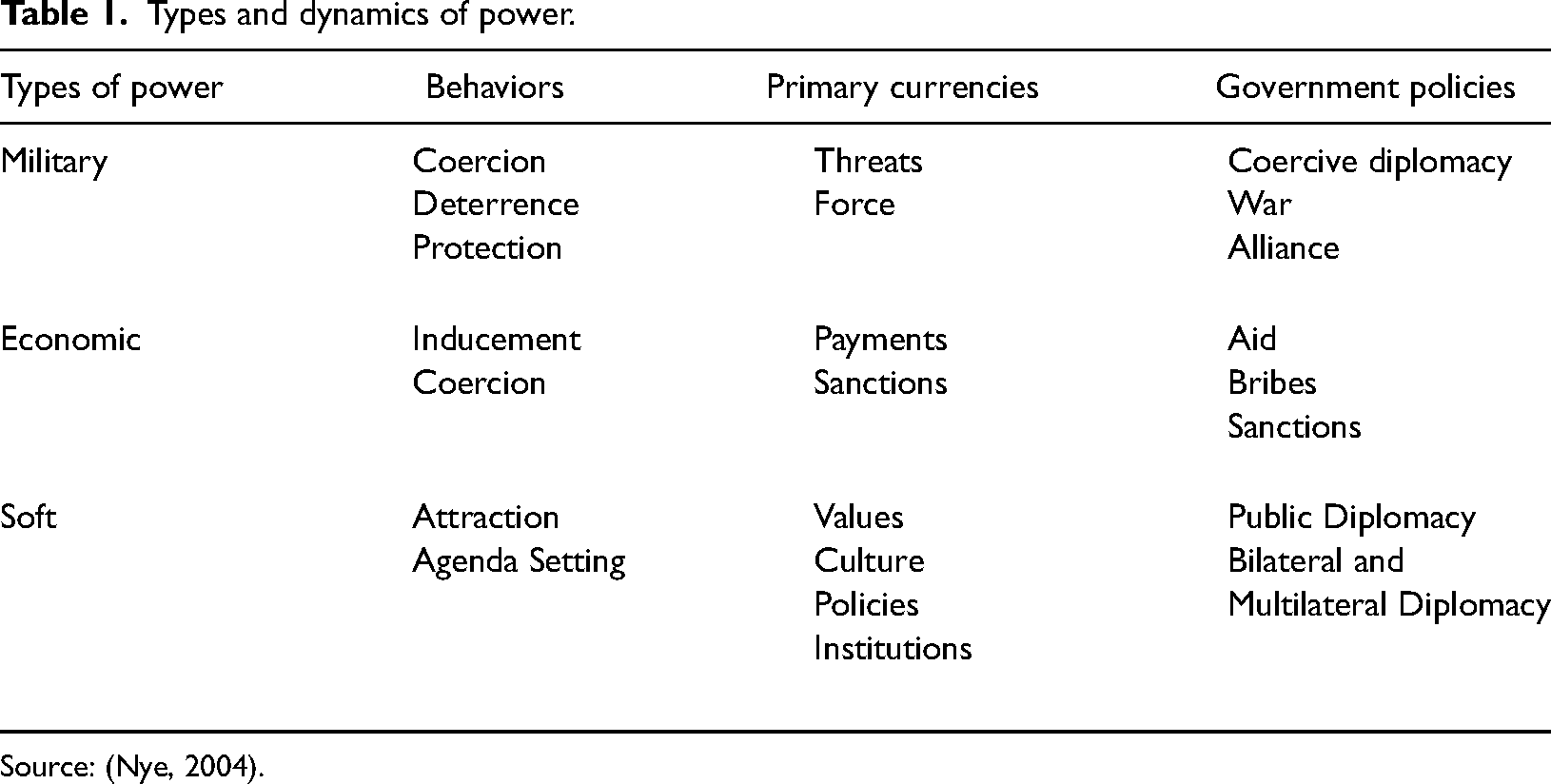
Source: (Nye, 2004).
Soft Power, according to Nye (2004), includes a country's history, geography, cultural diversity, economic strength, social pattern, democratic development, the prevalence and impact of civil society organizations, science and technology infrastructure, and the values produced by intellectual life, such as art and sports. Soft Power, according to Nye, is a country's power momentum generated by all of the country's possibilities and opportunities other than direct military force, but which also supports military forces when necessary. Nye argues that you can attract people without forcing them by ensuring that others want the same outcomes as you do. Soft Power, in a nutshell, is the ability to shape the preferences of others, and it is an appealing capability for many countries (Nye, 2004).
Soft Power mechanisms
Soft Power is based on three variables: cultural appeal, political values and norms, and foreign policy. Western countries score very high on Soft Power because they have been investing in developing it for a long time, which led to the more significant global influence of Western pop culture. On the other hand, Eastern countries only realized how Soft Power can be utilized effectively globally and have started investing in it only recently. The three sources of a state's Soft Power are “its culture” (in places where it is attractive), “its political values” (when it lives up to them at home and abroad), and “its foreign policies” (when they are seen as legitimate and having moral authority) (Nye, 2004)
According to Nye's definitions, Soft Power is concerned with the enhancement of attractiveness; the enhancement of national attractiveness has developed into a lucrative industry, with many governments now hiring nation brand consultants to advise them on how to enhance their attractiveness to investors, journalists, and tourists (Jansen, 2008; Volcic and Andrejevic, 2011). These nation branding consultants are engaged in the business of Soft Power development, acting as outsourced public diplomacy. Their work reveals a great deal about the mechanisms underlying the construction, maintenance, and loss of attractiveness that relies mainly on the quality of the home country's institutional framework.
Examples of how states configure and use Soft Power can be seen worldwide; developed, emerging, and frontier economies are looking for mechanisms to increase their attractiveness in the international system. We will illustrate these mechanisms briefly in different contexts:
China's Soft Power
According to Nye (2021), China achieved mixed success with its Soft Power strategy. One of the foremost Soft Powers used by China to influence other countries is through Panda diplomacy, where China sends one or two panda cubs to the museum of a country that it wants to influence (Anderlini, 2017). Pandas are found only in China and give that country a significant competitive advantage over other nations. According to Anderlini (2017), pandas act as a political symbol of China's power and its global role as an icon of conservation that gives Soft Power to its protector, China. China's second important international initiative in recent years is its Belt and Road Initiative, which is considered a Soft Power tool to influence developing countries where China loans billions of dollars to build infrastructure with moderate to high-interest rates. Many African countries without adequate financial resources readily accepted the offer and allowed Chinese companies to invest in their countries through the Belt and Road Initiative. Chinese martial arts and Chinese cuisine are also considered Soft Power tools in all major cities globally; one can spot a Chinese restaurant and martial arts studios easily in those markets. In many parts of the world, Chinese acupuncture (a medical treatment) is used to treat many illnesses. While China has become a solid military power next only to the United States, the Chinese Communist Party uses some of the Soft Power tools mentioned above to influence other countries without using its hard power, that is, its military strength.
India's Soft Power
The sources of India's Soft Power that have been identified include Ayurveda, Bollywood, Buddhism, Cinema, Cricket, Cuisine, Diaspora, Fine Arts (architecture, music, painting, poetry, and sculpture), Information Technology, Performing Arts (dance and theatre), and Yoga (Mazumdar, 2018). The Indian movie industry known as “Bollywood” (mimicking Hollywood) is the world's largest producer of Hindi movies. Today, Hindi movies are screened in many countries, including China, Japan, South Korea, the Middle East, Southeast Asian countries, and Indian Ocean countries. Even though people in those countries may know the Hindi language, they are dubbed in their native languages and screened there. Many Bollywood movie stars are well known in China. The locals know the actors and actresses by their Indian names and recall the movie scenes, characters, and even biographic information about these stars at ease. Such a scenario has created a favorable opinion of India among some Chinese moviegoers (Hong, 2021), making Bollywood a Soft Power for India. Another example of Bollywood's Soft Power happened in Syria during Hafez Al-Assad's (father of the current President of Syria) time. A diplomat working in Damascus, Syria, mentioned that the only other life-size portraits one can see in Damascus other than Hafez Al-Assad was the Bollywood actor Amitabh Bachchan (Tharoor, 2008). We can certainly understand that Bollywood is Soft Power through these examples, and the Indian government can leverage this Soft Power to propel its image abroad.
Oman's Soft Power
Oman is located in the Arabian Peninsula wedged between United Arab Emirates (UAE), Yemen, and Saudi Arabia, and the system of governance is based on the absolute monarchy. Oman is predominantly a Muslim country. The majority of Omanis follow the more moderate form of the Ibadi sect of Islam which gives an edge to Oman in international politics as they don’t side with the other two branches of Islam (Sunni and Shia). Oman takes an independent approach to geopolitical controversies without offending any party involved in a crisis. Until recently, Oman was ruled by Sultan Qaboos Al Said, and under his rule, the foreign policy of Oman was designed and implemented. He never tried to influence other countries and always found a middle ground while handling the international crisis. There are two we like to discuss in this article which gives Oman the Soft Power status through its foreign diplomacy. The first was Oman's successful negotiation capabilities in getting two Americans held as hostages by Iran, claiming they were spies for America. They were in prison for more than 2 years. However, Oman worked behind the curtains with Iran and secured the release of these hostages, which surprised many countries, including some of the most powerful countries in the region (Friedman, 2011). The second incident was related to the Nuclear Accord with Iran by six nations (China, France, Russia, the United Kingdom, United States, and Germany). While all these countries were trying to seal a Nuclear Deal, Iran was adamant about including certain conditions that other countries were not willing to accommodate. Finally, the talks broke down, and everyone thought that the Nuclear Accord was dead. However, it was Oman that revived the deal by bringing Iran to the negotiating table with five other countries, and finally, the Nuclear Accord was signed in 2015 by Iran and the five countries (Gulf International Forum, 2018). These two incidents explain the Soft Power of Oman in international politics and crisis management.
Soft Power and FDI
What constitutes “attractiveness” can serve as a proxy for today's Soft Power values; the most attractive nations are those that are characterized by political liberty, tolerance, and freedom of expression; have stable legal and regulatory frameworks; are environmentally friendly yet technologically advanced; provide a high standard of living for their citizens, as well as strong health and education systems; and which had well-developed culture, arts, and architecture (Anholt, 2005, 2007). Thus, this set of institutional conditions may be seen as a new driver for FDI in emerging economies.
The behavior of IFDI has been studied for decades (Alguacil et al., 2011; Lee and Rugman, 2012; Li et al., 2012). More recently, due to an increasing flow of OFDI from emerging market countries (Buitrago and Barbosa Camargo, 2020; Gaur et al., 2018; Stucchi, 2012), theoretical and empirical research has been published regarding this phenomenon (Buckley et al., 2009; Gammeltoft et al., 2012; Kottaridi et al., 2019). IFDI is the primary driver of OFDI in emerging market countries, according to prior research (Li et al., 2017; Qiu and Wang, 2011). Thus, elucidating the effect of IFDI on OFDI in emerging market countries is a relatively new but critical area of research (Luo et al., 2010; Luo and Tung, 2007). However, the extant literature contains contradictory findings regarding the effect of IFDI on OFDI; this effect appears ambiguous due to the coexistence of the spillover and competition effects (Gu and Lu, 2011).
The linkage between Soft Power and FDI has been studied previously; we conducted a search in Scopus and Web of Science databases looking for (“Soft Power” AND “foreign direct investment”), and the results show a strong emphasis on China as shown in Table 2, this finding gives additional support to our exploratory proposal of analysis in the context of more emerging economies.
Types and dynamics of power.
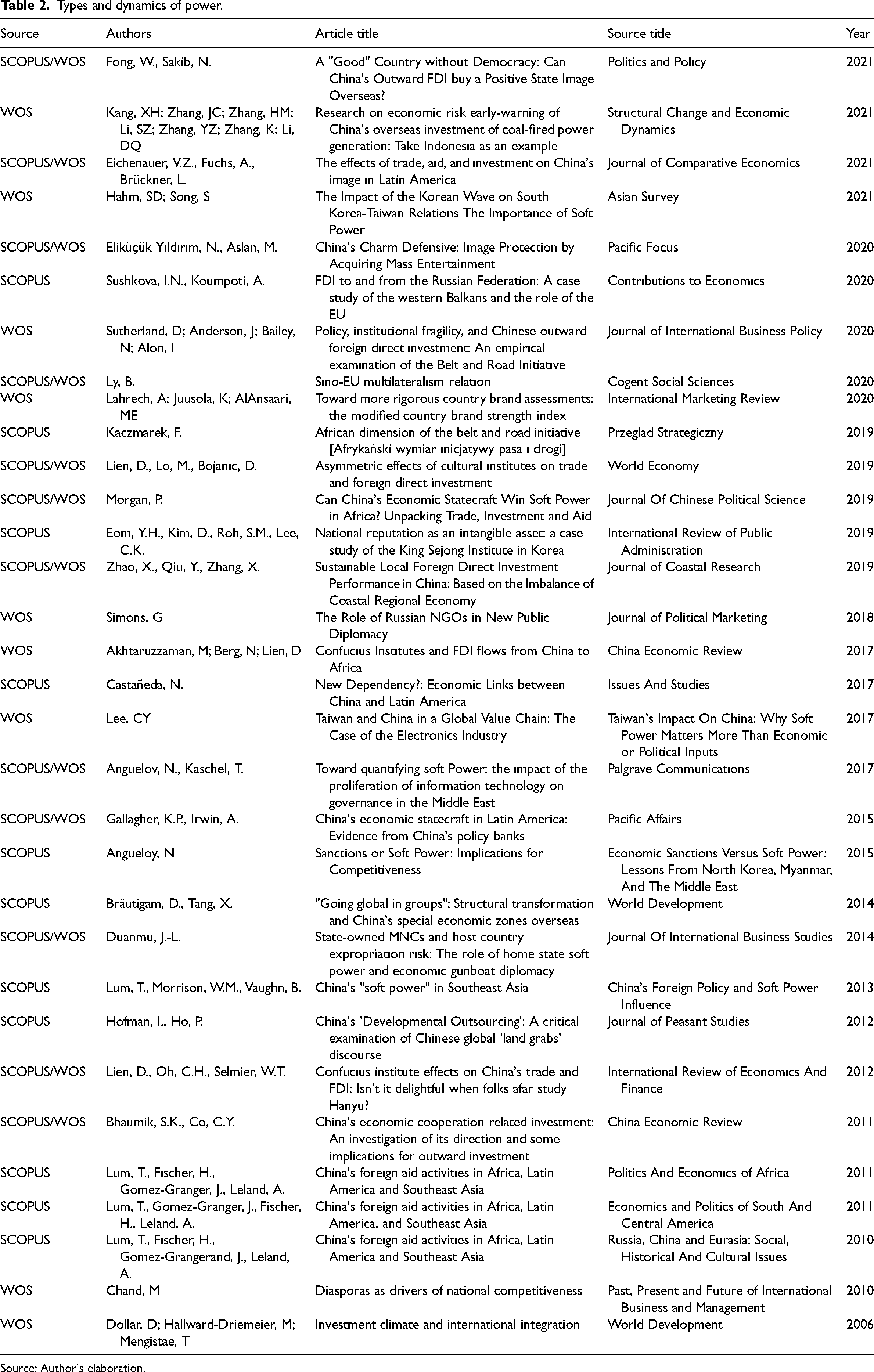
Source: Author's elaboration.
Measuring Soft Power and FDI
While prior research on measuring Soft Power has been sparse, the literature on Soft Power contains an extensive discussion of the constituent parts that contribute to its creation. Nye previously defined Soft Power as having three primary sources: culture, political values, and foreign policy (Nye, 2004). According to Nye, culture is defined in a Soft Power context as “the collection of practices that give meaning to a society” (Nye, 2008). This definition encompasses high culture, such as literature, art, and education, and popular culture, such as television, cinema, and pop music. The political values and institutions that govern a nation have a sizable influence on how others perceive the world. When domestic values such as transparency, justice, and equality are upheld effectively by government institutions, they become more attractive to foreign investors. Finally, foreign policy as a Soft Power tool is about a state retaining legitimacy and moral authority in its international conduct (Nye, 2004, 2008).
Other proposals to measure Soft Power include categories like Government, Culture, Diplomacy, Education, and Business/Innovation (McClory, 2012); Business & Trade, Governance, International Relations, Culture & Heritage, Media & Communication, Education & Science, and People & Values (Brand Finance, 2021); Immigrants, Foreign Students, Foreign Visitors, Foreign Movie Audience (Wu, 2019); Culture, Education, Engagement, Digital, Enterprise, and Government (McClory, 2019); Sports Politics (Nygård and Gates, 2013); Diplomatic Capacity (Freeman et al., 2020); and finally, Tourism, Sports, Culture, Information, Technology, Science, Education, and Cooperation for development (Real Instituto Elcano, 2020).
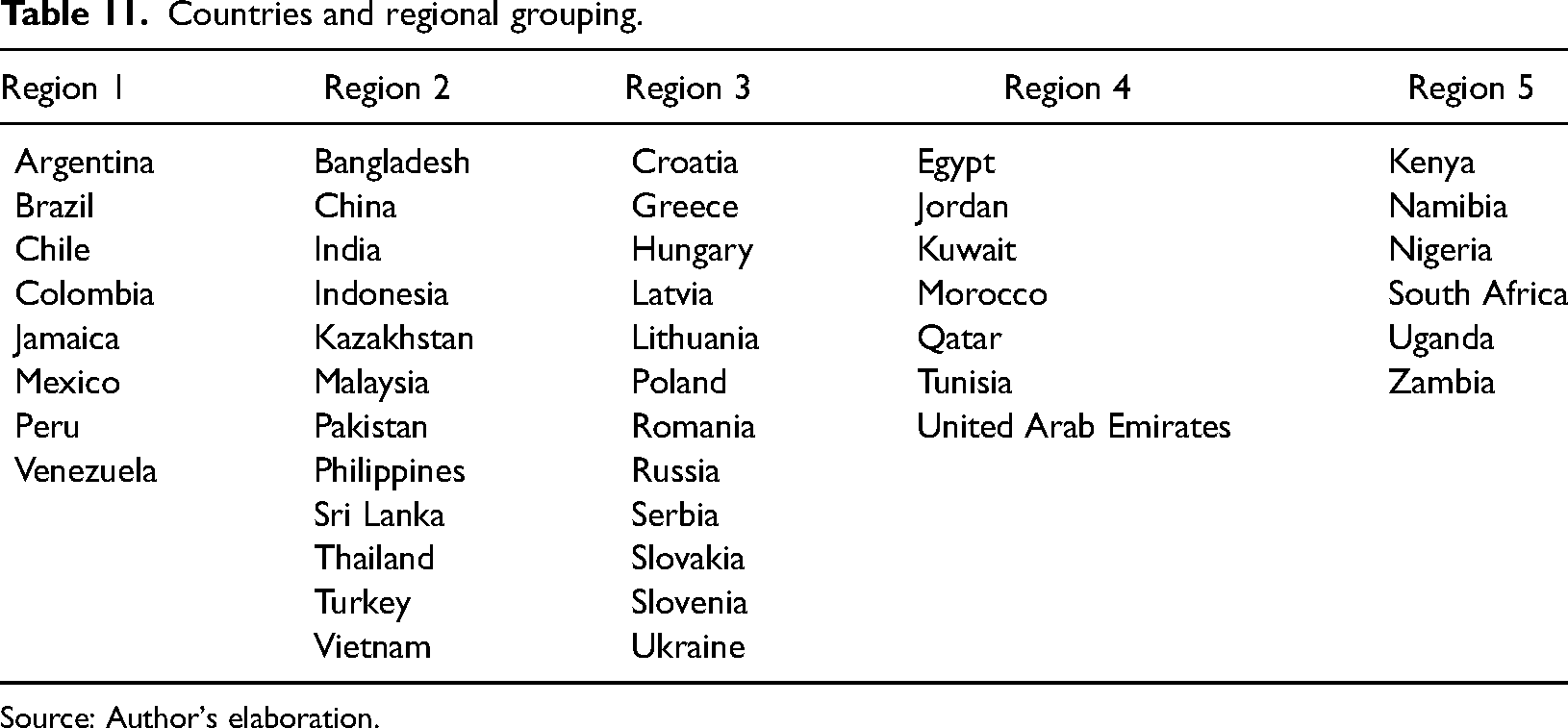
Based on the evidence that there is no comprehensive database for measuring emerging economies’ Soft Power, rather than creating a single index, and because the rankings/indexes mentioned above are not focused on emerging economies, we built a set of data for 48 emerging/frontier economies (Table 11), and for this selection, we did a cross-validation of four different classification sources (Buitrago et al., 2022; Casanova and Miroux, 2018; International Monetary Fund, 2020; Morgan Stanley Capital International, 2020; Standard & Poors, 2020).
There is no widely accepted definition of emerging economies; however, according to the sources consulted, they are economies capable of producing high-value-added goods, participating in global commerce, and integrating their financial markets. Furthermore, these economies have undergone institutional transformations that have resulted in the implementation of transparent rules of the game that apply equally to all market participants; however, there is still a lag.
According to the literature review, for this research, we selected four latent variables to analyze Soft Power in the mentioned emerging economies: Government, Business, Culture, and Diplomacy. To explain these latent variables, we gathered information from different sources comprising the indicators described in Table 3 between 2016 and 2019. We selected this period because of data availability and to avoid the distorting effect of the COVID-19 pandemic.
Indicators and sources to measure Soft Power.
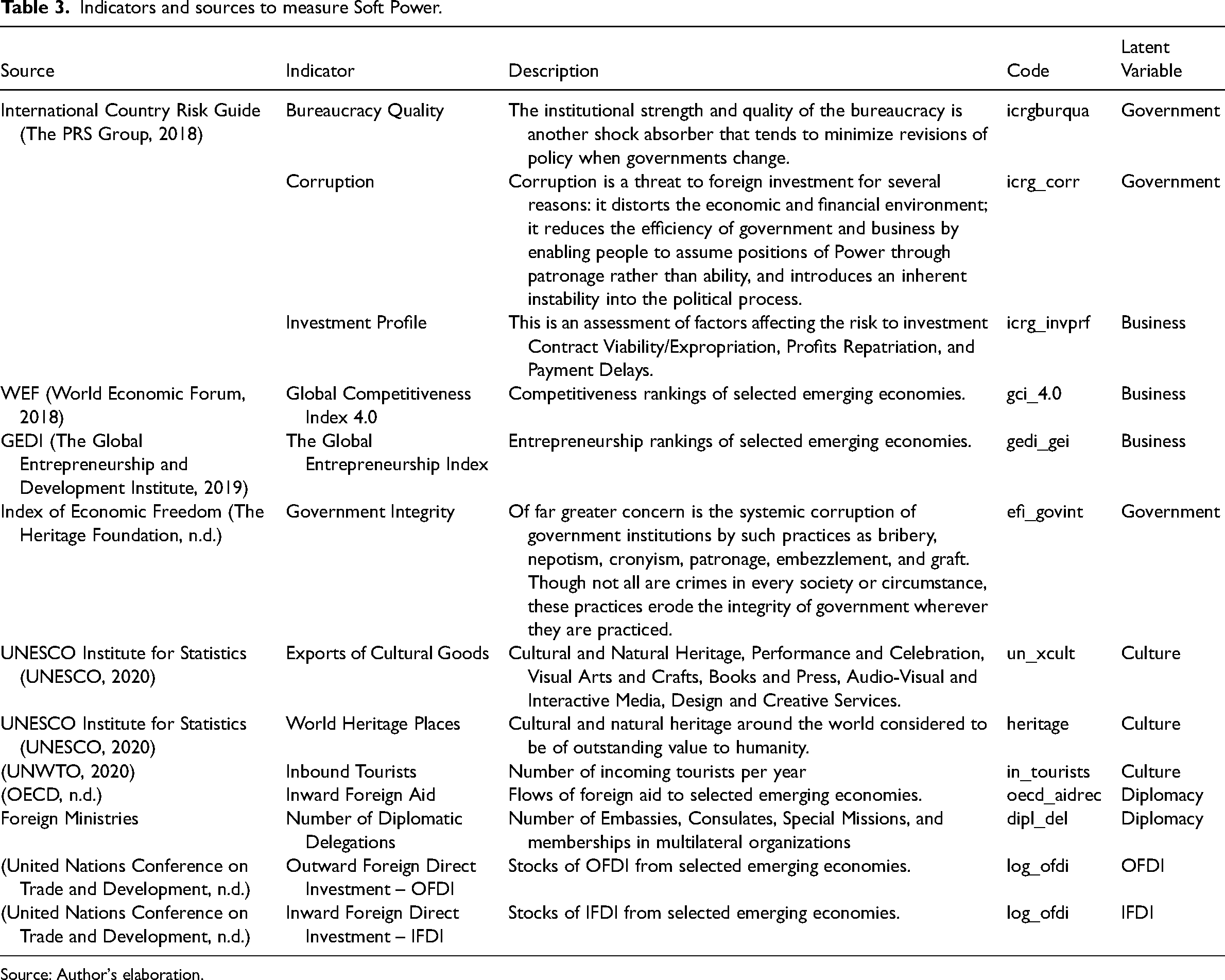
Source: Author's elaboration.
Why emerging economies?
Understanding how the global system is changing in the early decades of the twenty-first century demands an understanding of the rise of emerging states. The rise of these nations is redressing imbalances in the global system and the globalization process, which formerly reflected the primacy of historically powerful states and commercial entities. In addition, the emergence of new associations of states from the Global South that span regions and wield significant influence, particularly in international economic and social policy negotiations, is beginning to overcome the disarray that previously muted the contributions of emerging nations to global policy debates (Hoge, 2004; Layne, 2010; Ohnesorge, 2020; Zakaria, 2008).
The contemporary international system comprises a dynamic combination of entrenched major powers, newly emerging powers, and numerous localized entities. To explain the development and dynamics of developing powers such as Brazil, India, and South Africa, which are considered a center of the periphery in the ongoing global order and at the crossroads of intermestic politics, other perspectives are required. To comprehend the policies and strategies of these nations, it is a must also analyze their status as regional powers (Christensen and Xing, 2016; Cooper and Flemes, 2013; Deas, 2019; Stephen, 2017; Stuenkel, 2016). Our proposal aims to do this by examining the Soft Power characteristics of emerging powers.
Framework of analysis
As stated above, Soft Power is the ability to attract resources to fulfill different goals; in this case, we want to explore how the attractiveness of emerging countries influences the IFDI as a mediator of OFDI. Our proposal is based on an institutional approach, considering the Soft Power Indicators as institutional quality indicators.
Some studies support a strong connection between institutional quality and IFDI (Contractor et al., 2021; Jensen, 2008; Stein and Daude, 2007). According to these research studies, there is a statistically significant impact of government stability, regulatory quality, the rule of law, and the level of corruption on IFDI. But these factors remain explicitly challenged by regional experts for the role of attracting foreign investment in emerging countries. Others argue that the political system of a country has little to do with its investment ability. Multinationals appear to prize institutions that promote stability, efficiency, and not political rights. Strong institutions in the host country can improve the business climate by reducing transaction costs and securing ownership rights (Amal et al., 2010; Treviño and Mixon, 2004).
The preference of some investors for economies with unregulated environments or weak institutions may attract more IFDI due to the higher cost to operate in a more regulated environment. On the other hand, institutions operate via indirect economic policy channels, making countries more appealing to certain types of capital (Hausmann and Fernandez-Arias, 2000).
On the other hand, a country's OFDI is related to the “stage of its economic development, the structure of its factor endowments and markets; its political and economic systems; and the nature and extent of market failure in the transaction of intermediate products across national boundaries.” (Dunning, 1988: 15) As a result, having strong national institutions is a requirement for OFDI to ensure effective factor allocation and improved economic efficiency. Countries with weak institutions may face a variety of economic issues, including a lack of productivity, lower investment rates, and lower GDP growth, all of which discourage OFDI (Acemoglu et al., 2001; Hall and Jones, 1999; Knack and Keefer, 1995; Mauro, 1995; Rodrik et al., 2004).
We propose that Government conditions influence the business, cultural, and diplomatic conditions that affect the attraction of IFDI and ultimately generate effects on the OFDI. The rationale behind each construct is based on the literature review, and is explained in Table 2. Hence, we hypothesized:
H1: Perceived business environment positively moderates IFDI. H2: Perceived cultural environment positively moderates IFDI. H3: Perceived diplomacy structure positively moderates IFDI. H4a: Perceived Government environment positively moderates business contexts. H4b: Perceived Government environment positively moderates cultural contexts. H4a: Perceived Government environment positively moderates diplomacy contexts. H5: IFDI positively moderates OFDI.
Methodology
This study chose structural equation modeling (SEM) due to its ability to model all possible paths simultaneously. For the following reasons, we prefer partial least squares (PLS-SEM) over covariance-based (CB-SEM): (a) it identifies which element can cause which type of effect within the variables under study; (b) it tolerates small samples; (c) it does not require validation of the strongest statistical assumptions, such as normality, homoscedasticity, and nonlinearity; and (d) statistically, it enables the measurement of correlations (Busu and Busu, 2021; Chung and Liang, 2020; Hair et al., 2017, 2019; Hair et al., 2012a; Kock, 2016, 2019; Monecke and Leisch, 2012; Palos-Sanchez et al., 2021).
The literature on international business and international relations research demonstrates the growing complexity of research problems and models due to the contemporary interaction of established theories and data availability (Aharoni and Brock, 2010; Dunning, 2007, 2008). PLS-SEM is widely regarded as one of the most innovative approaches in extremely difficult-to-understand international fields; the method is particularly useful for exploratory purposes and is deemed appropriate for explaining intricate relationships, such as those arising from Soft Power and OFDI (Hair et al., 2012b; Richter et al., 2016).
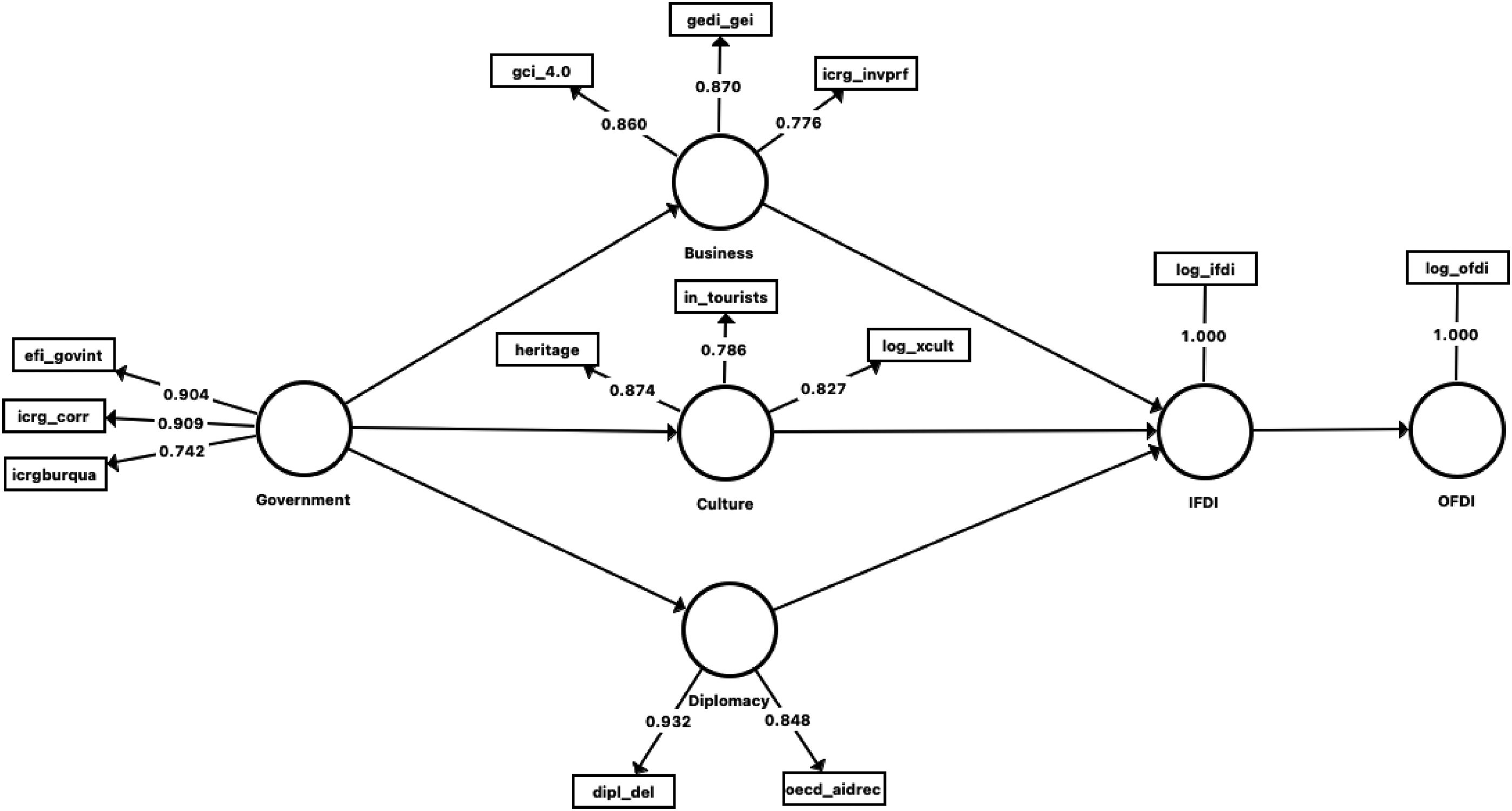
Data were assessed using SmartPLS (Ringle et al., 2015) to help determine the relationship between the latent variables (constructs) Government, Business, Culture, and Diplomacy as indicators of Soft Power and their effect on IFDI – OFDI.
Because the indicators are expected to covary, variables have been modeled as reflective constructs. The indicators in the reflective model all have the same theme; consequently, they must have the same antecedents and consequences (Coltman et al., 2008; Jarvis et al., 2003). These indicators were selected with the assumption that they would all measure the same fundamental phenomenon (construct). The magnitude with which each indicator shifts in relation to the underlying construct is determined by the indicator's ability to reflect the latent variable; this is determined by the loading, which is proportional to the amount of variance in the indicator for which the latent variable can account (Chin, 1998).
Model specification
The model consists of 13 indicators and 6 latent constructs as described in Table 2; the model's specification is shown in Figure 1.
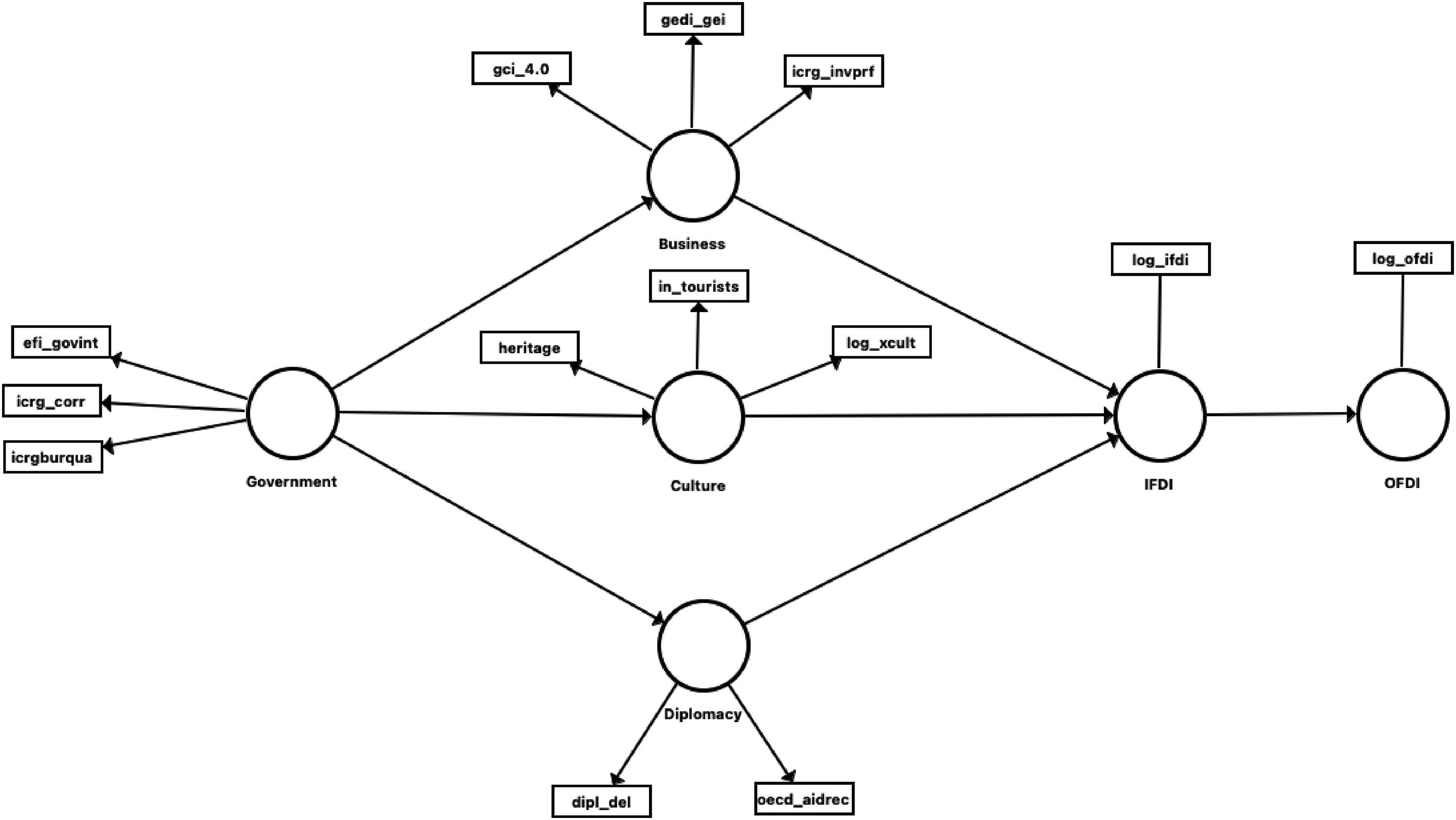
Model’s specification.
Assessment of the measurement model
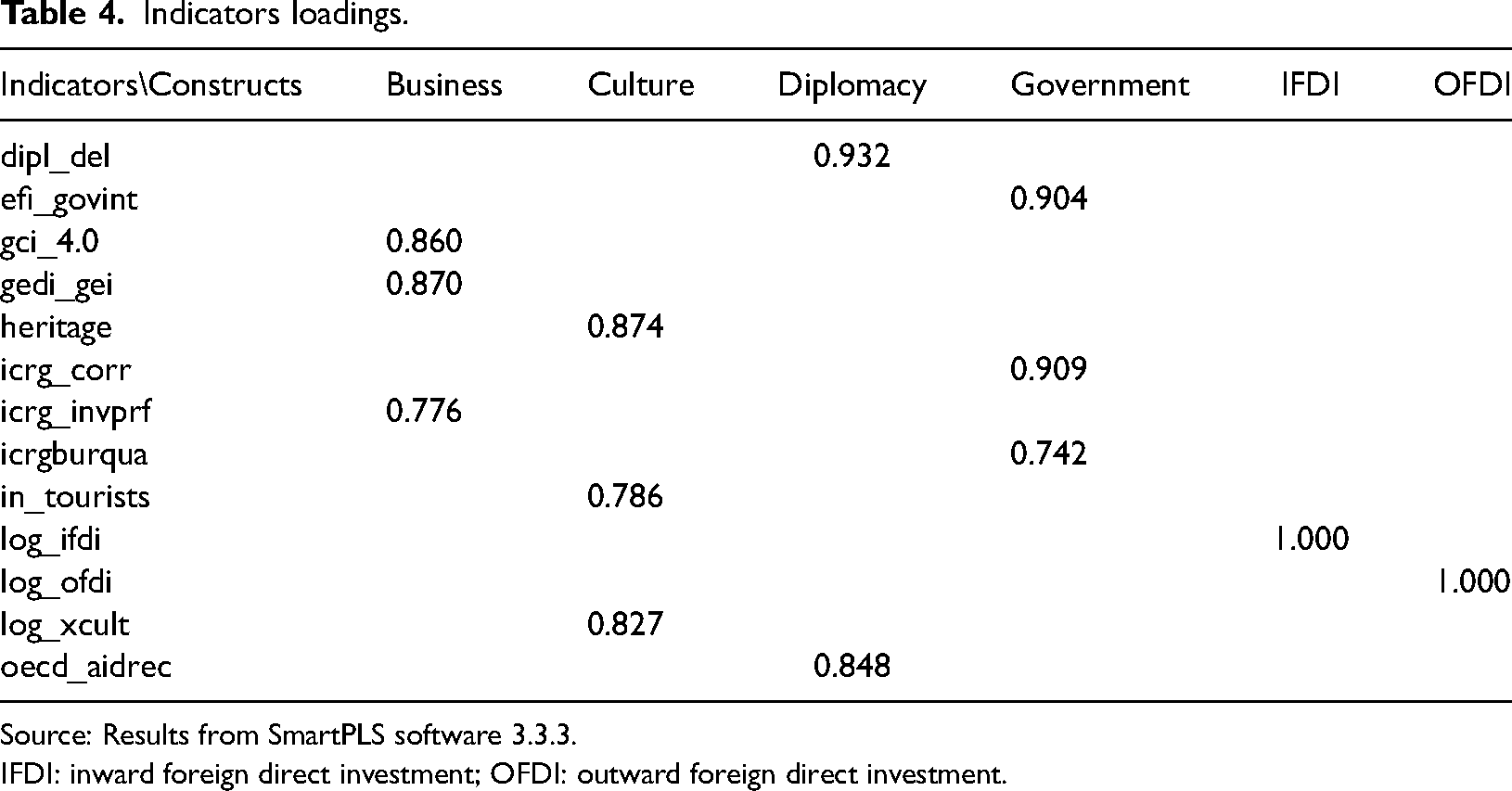
PLS bootstrapping with 5000 samples were used to determine the model's statistical significance (Hair et al., 2020; Hair et al., 2012b). Table 4 and Figure 2 show the results of the PLS-SEM analysis; the indicators are all highly correlated with the constructs for which they were designed. In addition, the construct indicators all scored higher than the cut-off value of 0.708, indicating that they accurately represented the construct (Buitrago et al., 2021; Busu and Busu, 2021; Chung and Liang, 2020; Coltman et al., 2008; Monecke and Leisch, 2012; Palos-Sanchez et al., 2021).
Indicator loadings.
Indicators loadings.
Source: Results from SmartPLS software 3.3.3.
IFDI: inward foreign direct investment; OFDI: outward foreign direct investment.
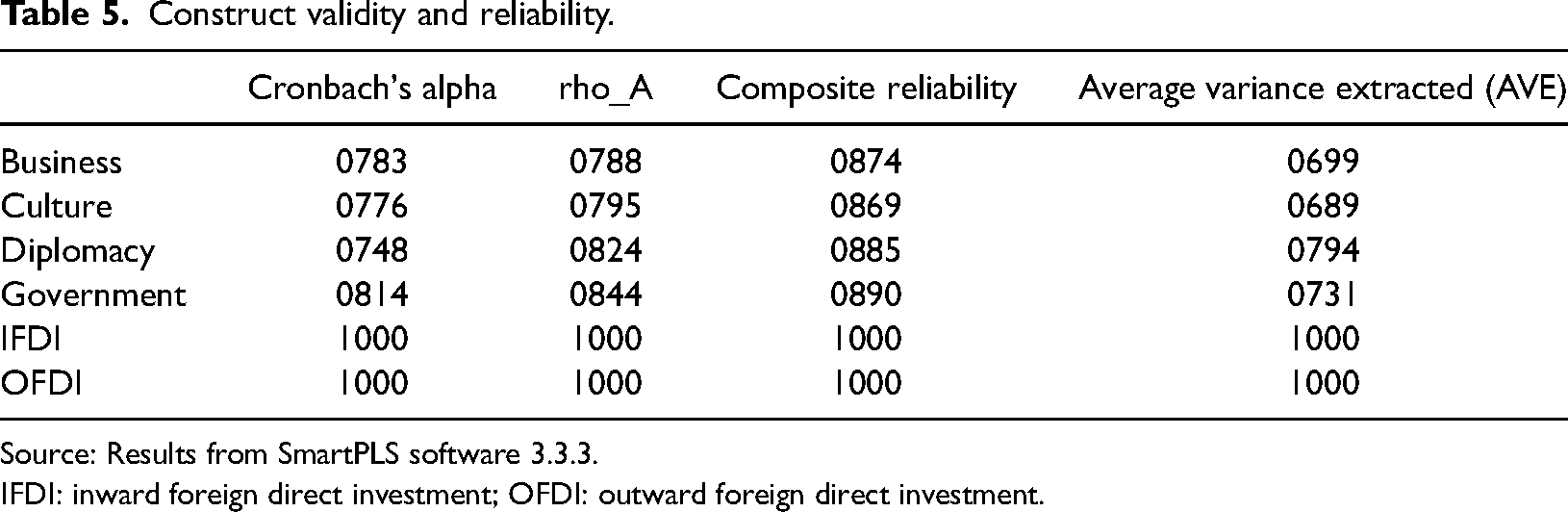
To assess internal consistency, Cronbach's alpha and average variance extracted (AVE) were used (Henseler et al., 2015). Cronbach's alpha values ranged between 0.748 and 1.000. All scores exceeded the minimum of 0.7; the Rho A score also exceeded this value. The composite reliability was greater than 0.7 and met the minimum criterion for adequacy, demonstrating that the data is consistent. AVE results were greater than the recommended minimum of 0.5. (Table 5) (Busu and Busu, 2021; Chung and Liang, 2020; Hair et al., 2017, 2019; Hair et al., 2012a; Kock, 2019; Monecke and Leisch, 2012; Palos-Sanchez et al., 2021).
Construct validity and reliability.
Source: Results from SmartPLS software 3.3.3.
IFDI: inward foreign direct investment; OFDI: outward foreign direct investment.
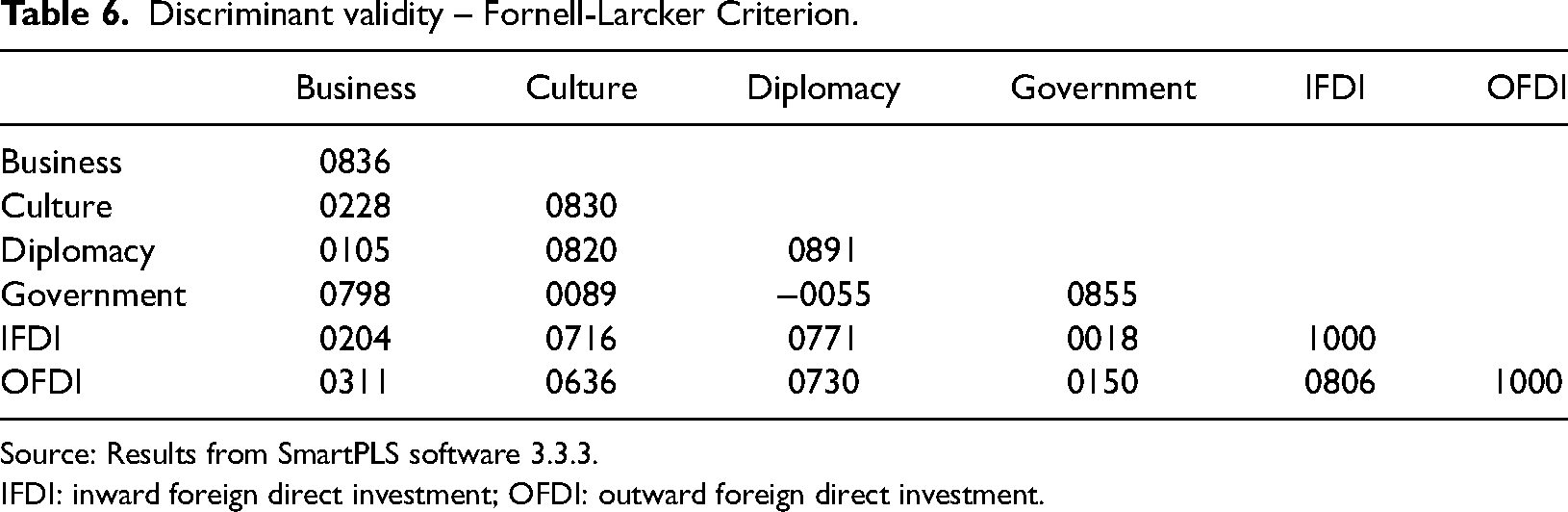
The discriminatory validity of the constructs was examined using the Fornell-Larcker Criterion; the square root of AVE in each latent variable was used to establish discriminant validity; the values are larger than other correlation values among the latent variables. The result indicates that discriminant validity is well established (Chung and Liang, 2020; Henseler et al., 2015; Kline, 2011) (Table 6).
Discriminant validity – Fornell-Larcker Criterion.
Source: Results from SmartPLS software 3.3.3.
IFDI: inward foreign direct investment; OFDI: outward foreign direct investment.
To assess the model's global validity, we used the global goodness of fit criterion (GoF index) as suggested by Tenenhaus et al. (2005); they define the GoF index as the geometric mean of the average communality index and the average R2 value. The following equation was used to calculate the GoF:
Discussion of findings
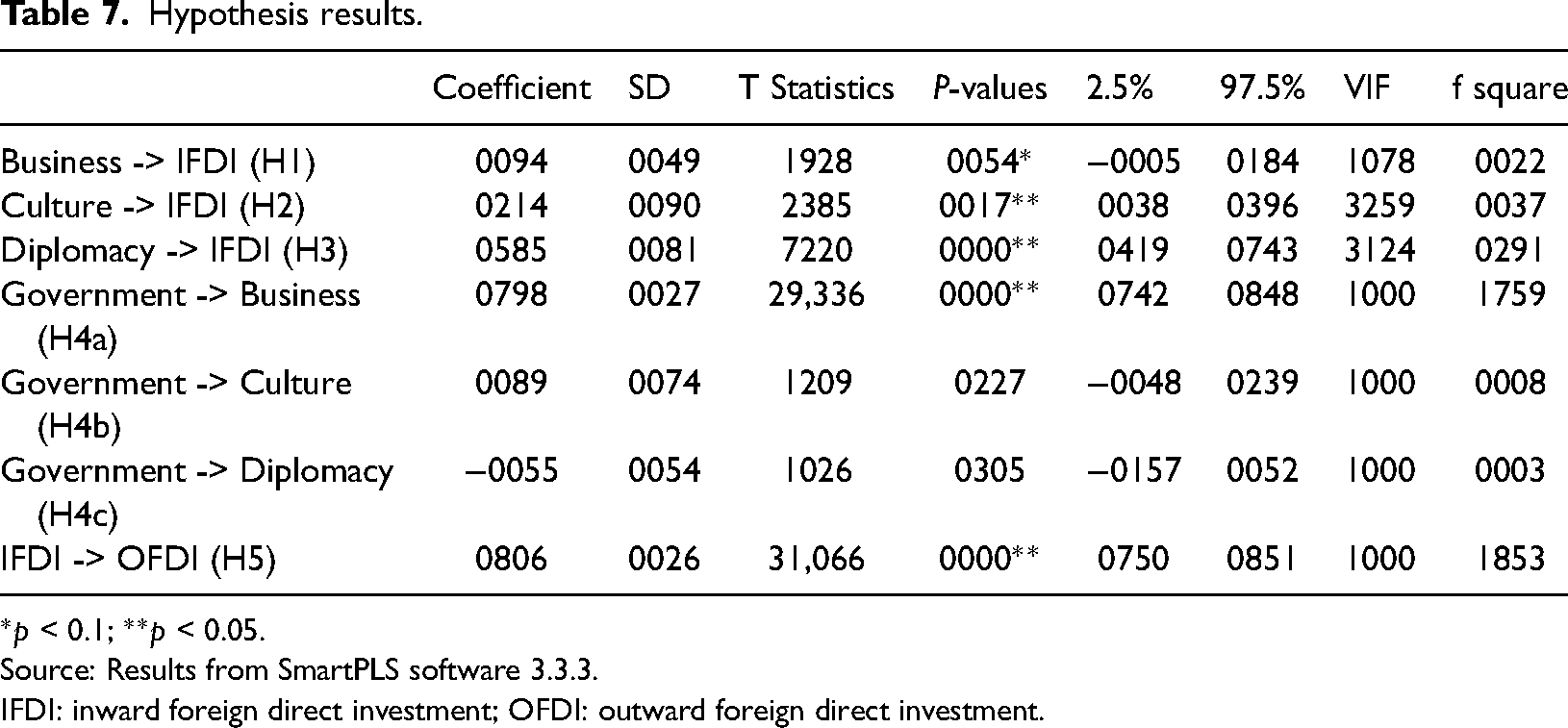
To determine the significance of the paths, the validity of the measures was determined using the path coefficients and their significance. The resulting p-values were calculated using SmartPLS by bootstrapping and calculating the p-values of various paths. The path coefficients and significance levels for the model were determined using a random sample of 5000 instances. Table 7 summarizes the findings that are corroborated by Figure 3.
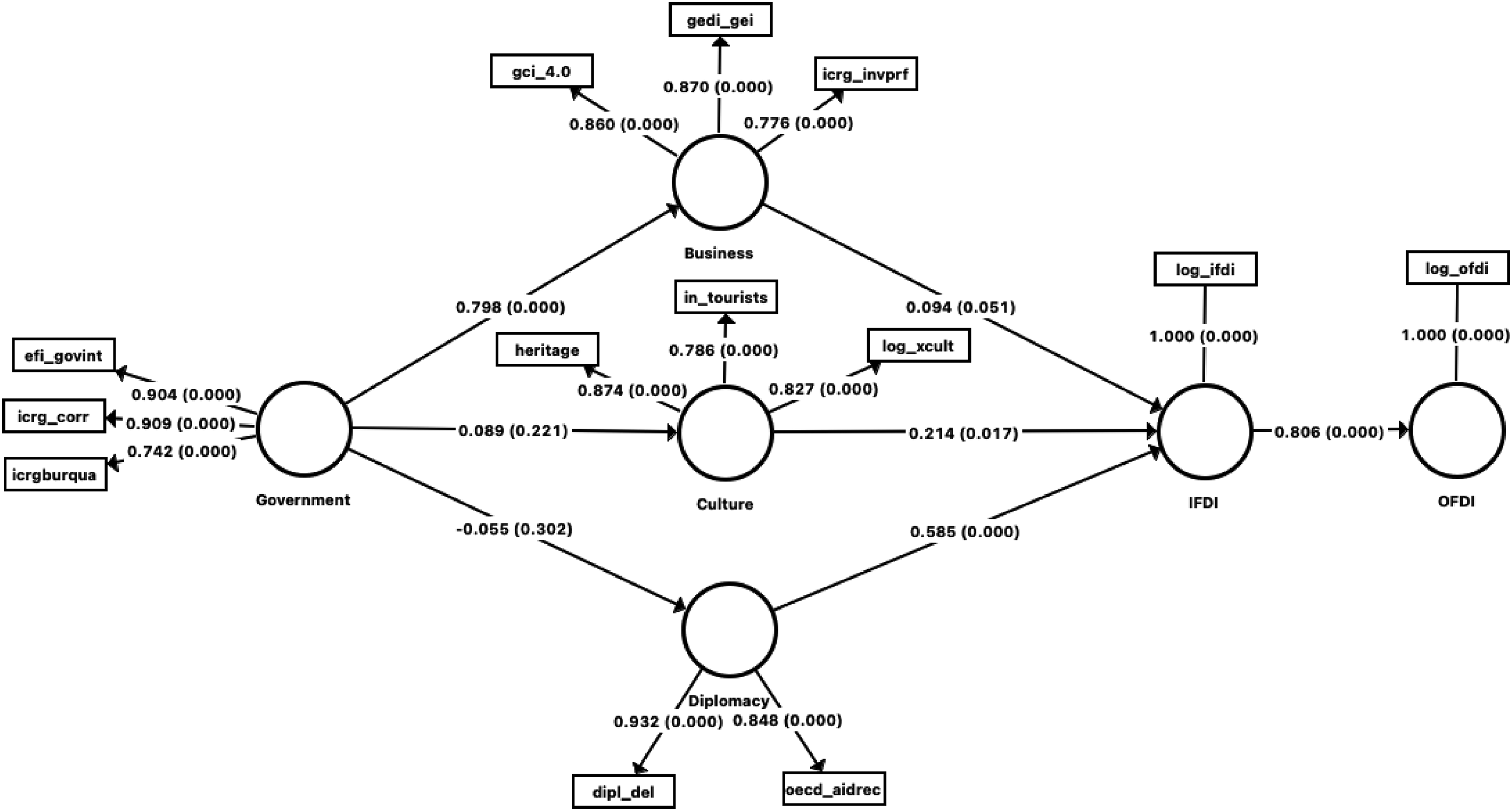
Model results.
Hypothesis results.
*p < 0.1; **p < 0.05.
Source: Results from SmartPLS software 3.3.3.
IFDI: inward foreign direct investment; OFDI: outward foreign direct investment.
Our findings support H1, H2, and H3, Business, Cultural, and Diplomacy conditions are statistically significant and positively moderate IFDI in the case of the analyzed emerging economies. In addition, Hypothesis H4a is also supported (0.798 and p < 0.05), in contrast, Hypotheses H4b and H4c are not statistically significant.
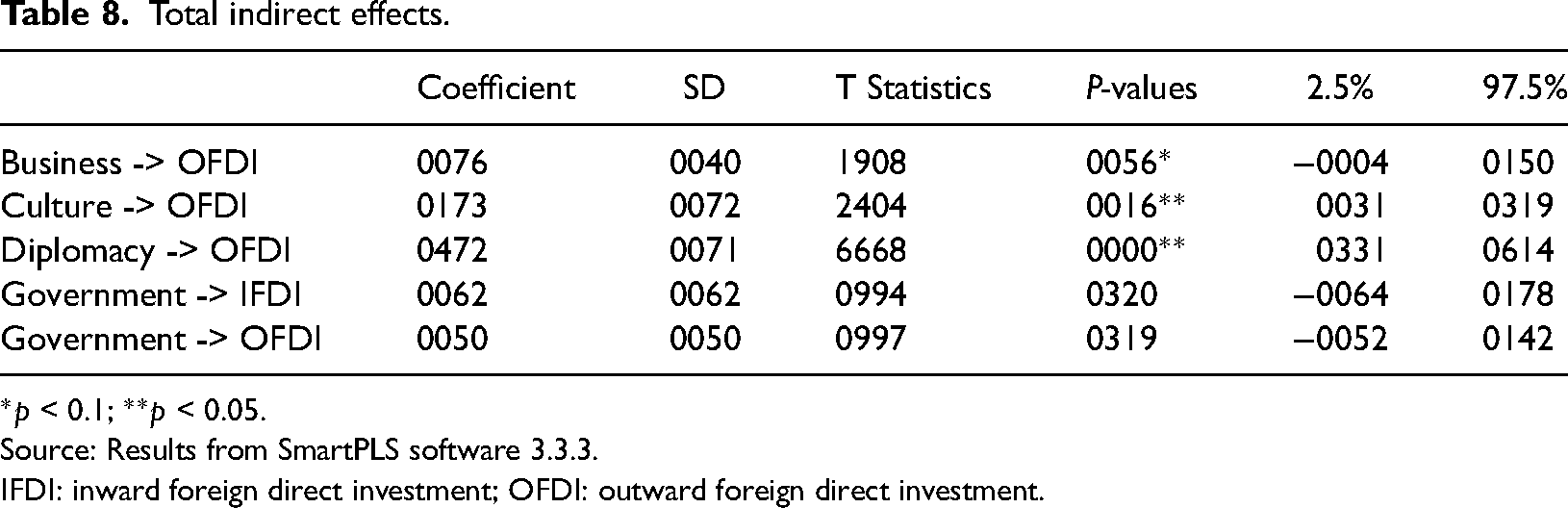
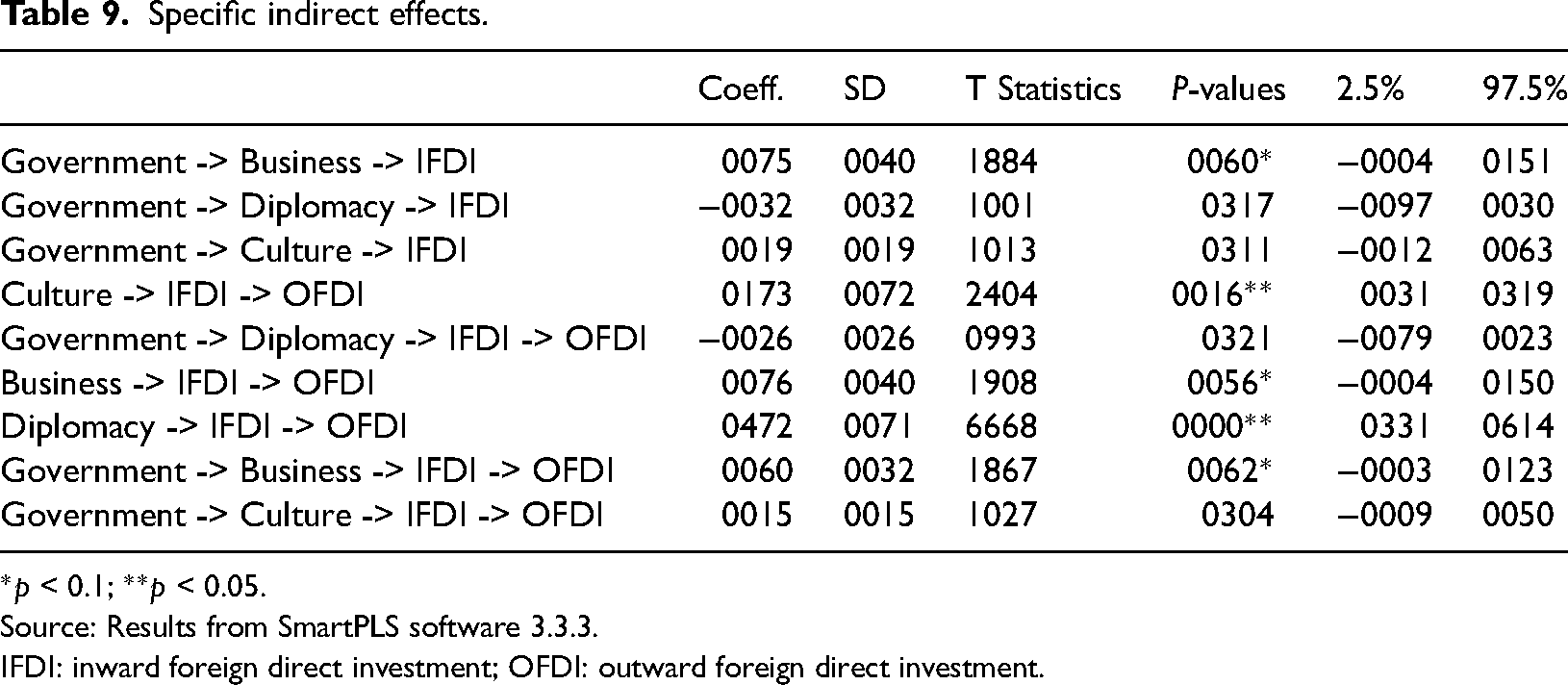
We also evaluated the constructs’ total and specific indirect effects on IFDI and OFDI; the findings are shown in Tables 8 and 9.
Total indirect effects.
*p < 0.1; **p < 0.05.
Source: Results from SmartPLS software 3.3.3.
IFDI: inward foreign direct investment; OFDI: outward foreign direct investment.
Specific indirect effects.
*p < 0.1; **p < 0.05.
Source: Results from SmartPLS software 3.3.3.
IFDI: inward foreign direct investment; OFDI: outward foreign direct investment.
As shown before, Business conditions have a positive indirect effect at 90% confidence on OFDI, Culture, and Diplomacy have a positive and significant indirect effect on OFDI. The indirect effect of Government on IFDI and OFDI is not statistically significant. Specific indirect effects show that the effect of Government on IFDI is positive and significant at 90% confidence; Culture is positive and statistically significant on OFDI; Business and Government are positive and significant at 90% confidence on OFDI, and finally, Diplomacy is statistically significant and positive on OFDI.
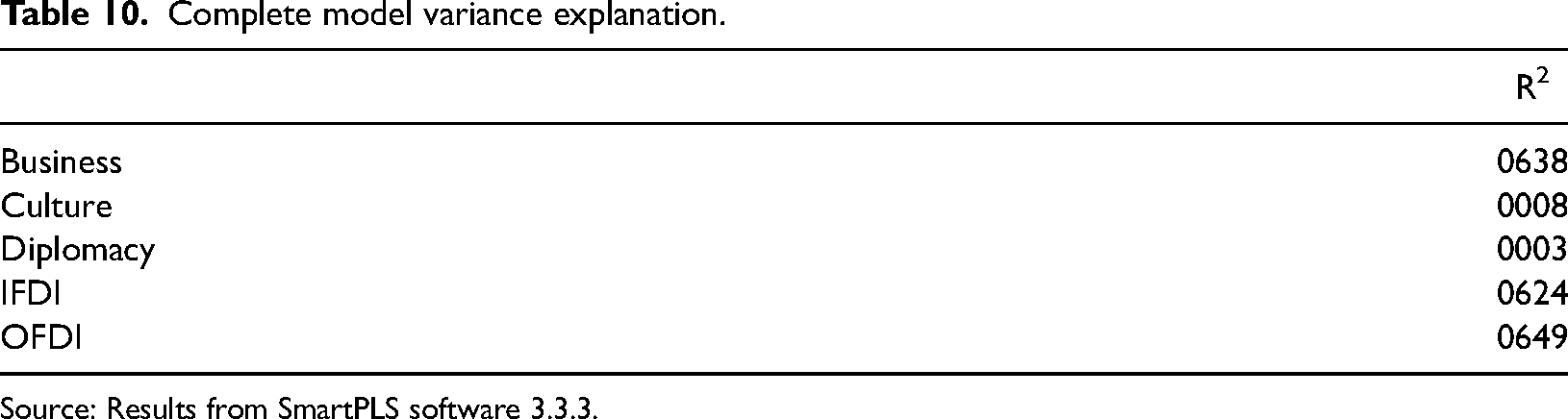
The complete structural model we tested indicates that Government conditions explain 63.8% of the variation on Business conditions but explain as little as 0.8% and 0.3% of the variation on Culture and Diplomacy conditions. At the same time, Business, Culture, and Diplomacy jointly explain 62.4% of the variation of IFDI, which in turn explains 64.9% of the variation on OFDI, as shown in Table 10.
Complete model variance explanation.
Source: Results from SmartPLS software 3.3.3.
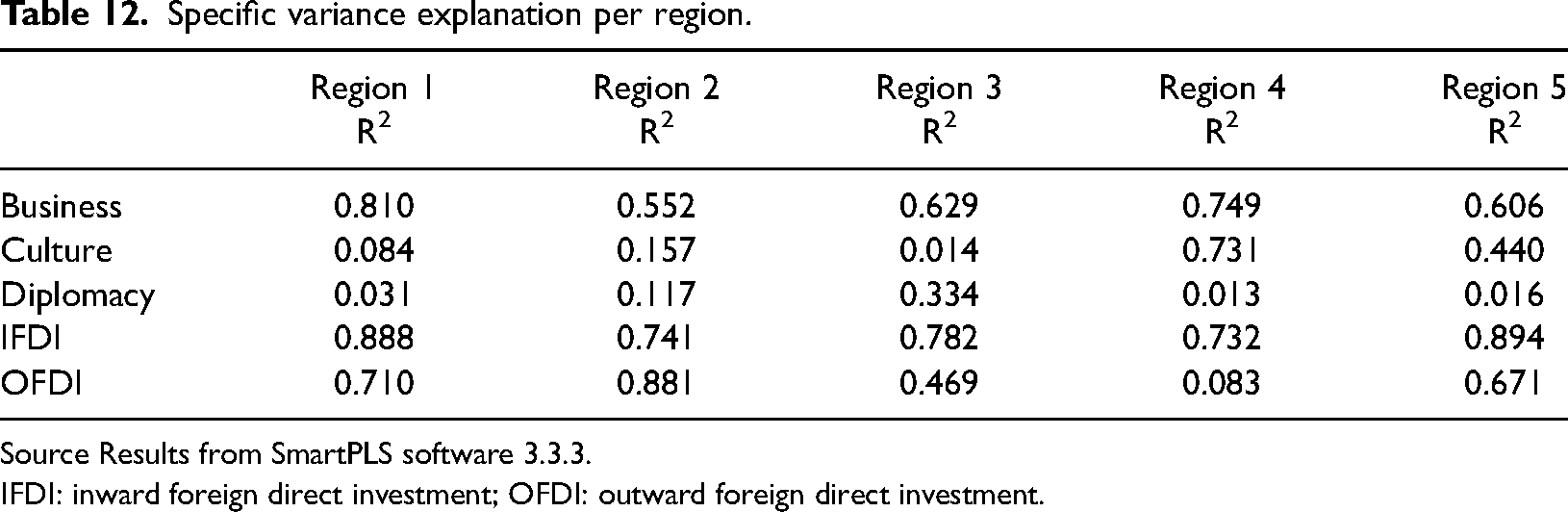
We grouped the emerging/frontier economies by geographic location (Table 11) to break down analysis per region; the comparative variations are shown in Table 12.
Countries and regional grouping.
Source: Author's elaboration.
Specific variance explanation per region.
Source Results from SmartPLS software 3.3.3.
IFDI: inward foreign direct investment; OFDI: outward foreign direct investment.
The analysis by region evidence interesting findings; the Government conditions explain 81% of the variance in Business conditions in Region 1, but only 55.2% in Region 2. In the case of Culture, the explanation is 73.1% in Region 3 and only 1.4% in Region 4. Finally, the variance in Diplomacy is explained in 33.4% in Region 3 and only 1.6% in Region 5.
The constructs Business, Culture, and Diplomacy also explain the variance differently on OFDI, going from 89.4% for Region 5 to 73.2 for Region 4.
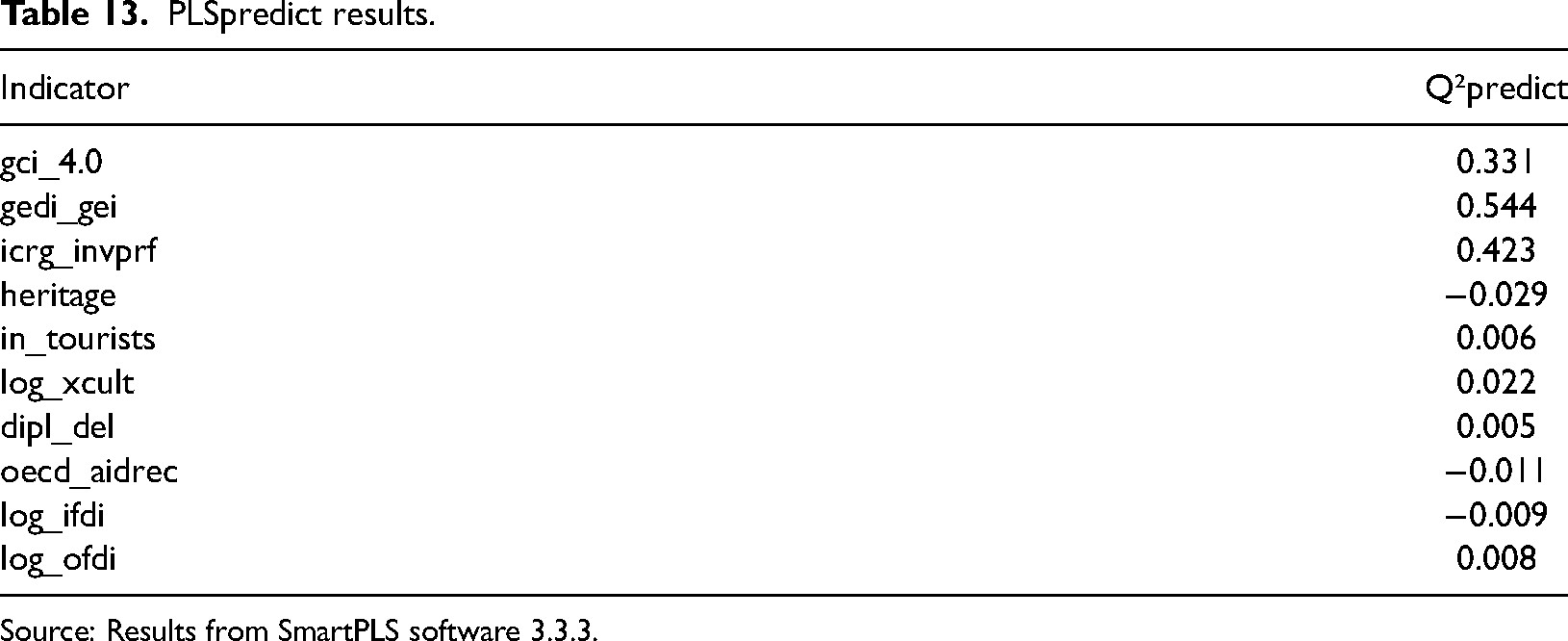
Finally, we run the predictive model assessment to identify if the results offer information on whether using a theoretically established path model improves (or at least does not worsen) the predictive performance of the available indicator data. If the Q² value is positive, the prediction error of the PLS-SEM results is smaller than the prediction error of simply using the mean values. In that case, the PLS-SEM models offer better predictive performance (Hair et al., 2019; Shmueli et al., 2015, 2019). The results are shown in Table 13.
PLSpredict results.
Source: Results from SmartPLS software 3.3.3.
As shown, the majority of the selected indicators have a good predictive power of the behavior of the IFDI – OFDI relationship; however, PLSpredict applications are still few and require more examples of its implementation (Shmueli et al., 2019); this exploratory study is one contribution to this issue.
Conclusions
Research in this field is complex because the research context frequently changes and the institutional environments in emerging economies undergo significant changes, entailing the use of alternative analysis methods. PLS-SEM exploratory modeling can handle complex models and relaxes the requirements for specifying data and relationships, which makes it extremely useful for this study.
The proposed model, which employs SEM-PLS to estimate and evaluate the correlation between selected indicators and the proposed Soft Power constructs, demonstrates that the independent latent variables account for a significant portion of the variability of the OFDI construct.
The model's results, which were analyzed using the PLS-SEM method, corroborate the literature's findings regarding the institutional framework's role in Government, Business, Culture, and Diplomacy. Thus, this article demonstrates the critical role of these institutional conditions in promoting OFDI from emerging economies.
As was stated previously, Power is the ability to influence others using tangible and intangible resources. In this exploratory research, we found that the emerging economies analyzed have used their Soft Power skills to attract investors (IFDI) and promote investments (OFDI), favoring their national interests.
Contributions and limitations of this study
This research contributes to the existing body of knowledge in a number of different ways. First, since a starting point, it highlights how important it is to understand the dynamics of Soft Power in emerging markets, as this is a crucial aspect in attracting and generating investment. Second, it highlights the conditional effect of regional (Soft Power) institutions on IFDI and OFDI. Third, it reinforces the crucial role that institutional conditions play in building confidence, which is necessary to attract resources and shift the power balance of the international system. Finally, it highlights the application of a unique approach for analyzing the complex linkages between Soft Power, IFDI, and OFDI; the PLS-SEM method allows us to explore the situations of emerging economies despite the limits stated below.
The study's sample size is small, which could be considered a weakness of the current study (528 observations divided into 5 distinct regions). Another disadvantage of the study is that it concentrated solely on a small number of indicators that were chosen after conducting a review of the literature and assessing the availability of data. However, by integrating new constructs, variables, and observations in the future, it is possible that the limitations of this study may be disregarded.
