




Abstract
The objective of this article is to assess the current political developments in Myanmar and the impact of the democratic transition on the country’s persistent ethnic conflicts. It analyses the dynamics in the triangular relations between the ruling elite, the democratic opposition and the ethnic groups – the three necessary parties in any peace process. It also examines some of the internal lines of conflict within each of these parties and delineates four scenarios related to various possible outcomes of the elections in 2015. The argument of the article is that democratization does not in itself provide a viable solution to the war-torn country. Without a political process that involves all ethnic groups, aiming to target core problems in the Constitution and to secure genuine political representation and self-determination for Myanmar’s minority populations, there is little hope for lasting peace.
Introduction
Expectations are running high for the political reforms and the democratic transition to succeed in Myanmar (Burma). The process that gained momentum as President Thein Sein announced his reform agenda after taking office in March 2011 represents the best opportunity in half a century to bring peace and progress to the troubled country. With the reforms, new ceasefire agreements have been signed, media censorship eased and political prisoners released, in turn leading to the suspension of international sanctions and increased anticipation in Myanmar for economic progress. It is also expected that the general elections in 2015 will mark Myanmar’s shift into a full-fledged democracy. The question remains, however, if democracy will also bring peace.
The assumption that democracy will be the solution to all of the country’s problems has been widely held among many of those struggling for democracy in Myanmar. The academic literature on democratization and peace, however, reveals a different reality. As Hegre et al. have shown, regime change clearly and strongly increases the probability of civil war. They have also shown that semi-democracies are more likely to experience civil war than either democracies or autocracies, and moreover that these two factors are partly overlapping, yet complementary (Hegre et al., 2001). That ethnically divided countries are unlikely to see democratic transitions without conflict, as argued by Horowitz among others (Horowitz, 1993), is also supported by this study. In fact, they found that the probability of civil war is twice as high in countries where the largest ethnic group constitutes half the population as in countries where it accounts for 95% of the population (Hegre et al., 2001). For an already civil war-torn country like Myanmar, where the Bamar majority constitutes roughly 65% of the total population (Smith, 1999: 30), and where the deomcratization process has been slow and tedious, and by all probability will continue to be so, there are good reasons for concern. In fact, since the start of the democratic transition in 2010 we have already seen a significant rise in battle-related deaths in Myanmar (Figure 1). 1
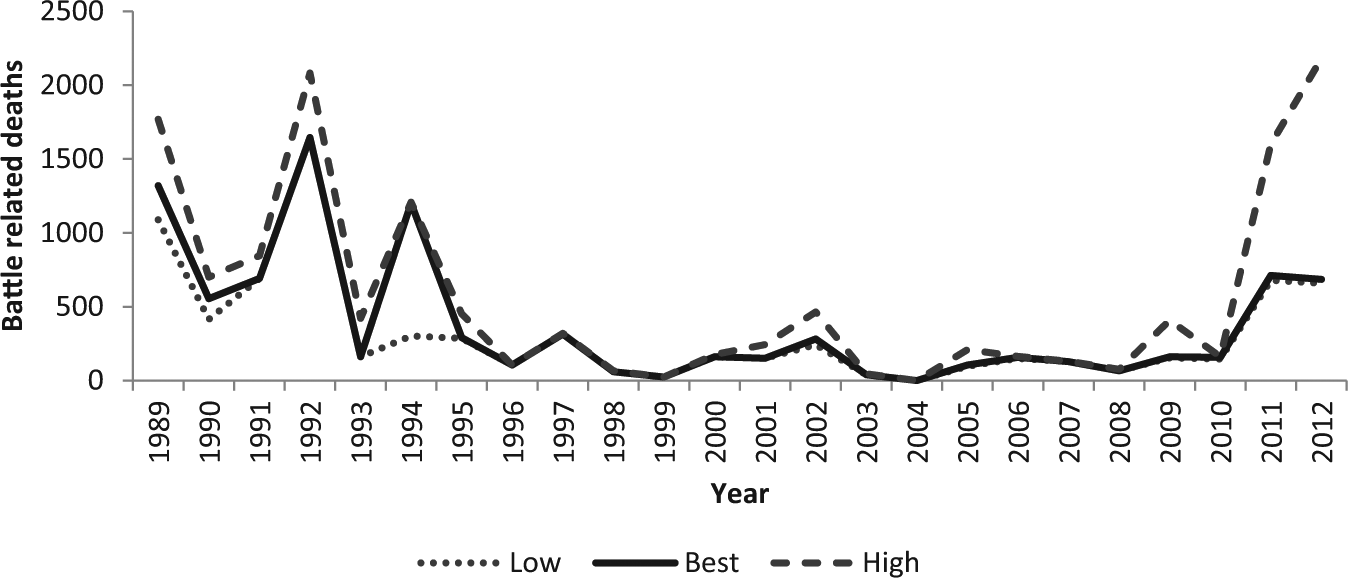
Battle deaths in Myanmar’s internal armed conflicts 1989–2012 (Uppsala Conflict Data Programme, February 2013).
The peace process and the ceasefire talks have led to an increase, rather than a decrease, in violent incidents. War has raged in Kachin State since a 17 year ceasefire broke down in June 2011. This war escalated drastically with the Myanmar army’s offensive over the Christmas holiday in 2012. There are also repeated reports of clashes between the Myanmar army and ethnic minority armies in Shan State and Kayin State.
As suggested by Cederman et al., democratization may also trigger new conflicts through the opening of the political arena, political competition producing winners and losers, and the destabilizing sequencing of democratic procedures (Cederman et al., 2010: 387). This may help explain why serious communal riots between Buddhist Rakhine and Muslim Rohingya in Rakhine State erupted in June and October 2012 (International Crisis Groups, 2012: 2–6) – a conflict that thus far has left more than 160 people dead and over 100,000 displaced, and thousands of homes burned (the vast majority of the victims are Rohingya). 2 There was also a series of attacks on Muslims in communal riots in the central parts of Myanmar in March and April 2013.
As long as Myanmar’s persistent ethnic conflicts – its main political challenge – remain unsolved, it is fair to predict that the trend of increased violence will continue through the decisive elections in 2015 and well into 2016. During political reforms and elections, the political stakes are high, and conflict may further increase. Yet what will be the long-term effect of the reforms?
In line with the studies referred to above, the argument of this article is that democratization does not in itself provide a viable solution to the country’s ethnic conflicts. Without a political process that involves all ethnic groups, aiming to target core problems in the Constitution and to secure genuine political representation and self-determination for Myanmar’s minority populations, there is little hope for lasting peace. With this hypothesis as a starting point, a research team of four researchers of peace and conflict from Peace Research Institute Oslo (PRIO) and Uppsala University conducted amongst themselves nine research trips to Myanmar (Central Myanmar, Kachin State and Shan State) and its border areas in China and Thailand, over the course of 2012 and into the first months of 2013. 3 As part of the team, this author carried out three research trips, interviewing several ethnic minority leaders in political parties, armed groups, religious groups and civil society organizations, as well as Burmese and international Myanmar analysts. The team also organized a conference on the impact of political reforms on Myanmar’s ethnic conflicts, in Myanmar, on 13–14 October 2012, and a similar seminar in Oslo on 13–14 December 2012, where several prominent Burmese and International Myanmar scholars contributed. Moreover, at the conference in Myanmar, more than 30 representatives of political parties and civil society organizations in Myanmar participated. The interviews, discussions and field observations from these research trips and events form the basis of the analyses presented here.
The objective of the article is to assess the current political developments in Myanmar and analyse the dynamics in the triangular relations between the three necessary parties in any peace process: (1) the ruling elite (Thein Sein’s government, the Union Solidarity and Development Party (USDP) and the Tatmadaw); (2) ethnic groups (political parties, armed groups and civil society groups); and (3) the democratic opposition (the National League for Democracy (NLD), the National Democratic Force (NDF), the 88 Generation and civil society groups). These three parties, which I also will refer to as power centres, are heterogeneous groups with diverse – sometimes divided – interests. They nonetheless represent the principle political groupings in Myanmar modern history. The article will also examine some of the internal lines of conflict within each of them, that is, between the government and the army; between the ethnic political parties and the ethnic armed groups, and between the various different ethnic groups; and between the NLD and other political opposition forces. Finally it delineates four scenarios related to various possible outcomes of the elections in 2015.
Ethnic armed conflicts and civil war
The Union of Burma never managed to unify after its founding in 1948. The transition from colonial rule to independence was marred by internal strife and conflict, and with the assassination of General Aung San and six of his cabinet ministers on 19 July 1947, the spirit of the Panglong agreement, aiming for an independent Burma by bringing together Burma proper and the frontier areas, had already perished. Only months after independence, the Communist Party of Burma (CPB) and some Arakanese groups rebelled. In 1949 the Karen National Union (KNU) took up arms, and since then, Burma – later to be known as Myanmar – has been in a continuous state of armed conflict and civil war. 4 Out of the 135 official ethnic groups, where eight major ethnic nationalities are the most dominant, there have emerged more than 30 different ethnically designated armies fighting the Burmese government as well as each other. A number of politically or economically motivated armed groups were also drivers of the country’s frontier conflicts, most notably the influential CPB until its demise in 1989.
Towards the end of the 1980s the conflict changed. With the fall of the CPB, the Burmese government seized the opportunity to negotiate ceasefires with Kokang (MNDAA) and Wa (UWSA) mutineers from the CPB. This gave the Burmese army, the Tatmadaw, the chance to concentrate on escalating its offensive against its other major enemy, the KNU and other KNU-allied ethnic armed groups in the National Democratic Front. When student democracy protesters, who fled to the jungle from the 1988 crackdown, joined these armed groups, this marked an additional incentive to step up the war. The abuse and violence in border areas were devastating, not least for the civilian population, who continued to suffer under the ‘four cuts’ strategy. 5
The National Democratic Front which, during the 1960s and 1970s, had received tactical support from Thailand as it was regarded as an anti-communist stronghold during a politically tense period, had lost its strategic value. The front was additionally weakened by the ceasefire between the government and National Democratic Front member, the Shan State Army (SSA), in 1989. When another major National Democratic Front member, the Kachin Independence Organization (KIO), in 1994 also reached a ceasefire agreement, the pressure on the remaining eastern border areas escalated further. 6 A split within the KNU the same year also contributed to this escalation. The Democratic Karen Buddhist Army (DKBA) rebelled against KNU’s predominantly Christian leadership and was soon met with a ceasefire proposal from the government and means and incentives to fight their former allies in the KNU. 7 The combination of these events led to the fall of the KNU headquarters in Manerplaw (1995), and since then, fighting ethnic armies in Eastern Myanmar have been subjected to guerrilla activities along the Thai/Myanmar border. Repeated attempts to reach a ceasefire agreement between the government and the KNU all failed (Keenan, 2012; Kramer, 2009: 8–15; Lintner, 1999; Smith, 1999: chapters 17–19; Taylor, 2009: 433–445).
The number of people killed in battles in Myanmar was significantly reduced after 1995 (Figure 2). 8 This was due to the fall of the CPB, the successful policies of the junta in achieving ceasefire agreements with as many as 17 armed groups (particularly the truce with Myanmar National Democratic Alliance Army, the United Wa State Army and the Shan State Army in 1989 and with the Kachin Independence Organization in 1994), and the partly successful repression of remaining fighting ethnic armies. The number of fatalities in clashes between the Thatmadaw and ethnic armed groups remained remarkably low until the resurgence of war with the KIO in June 2011, something that led to significantly improved living conditions for the civilian population in ethnic minority areas (Zaw Oo and Win Min, 2007: 47–50).
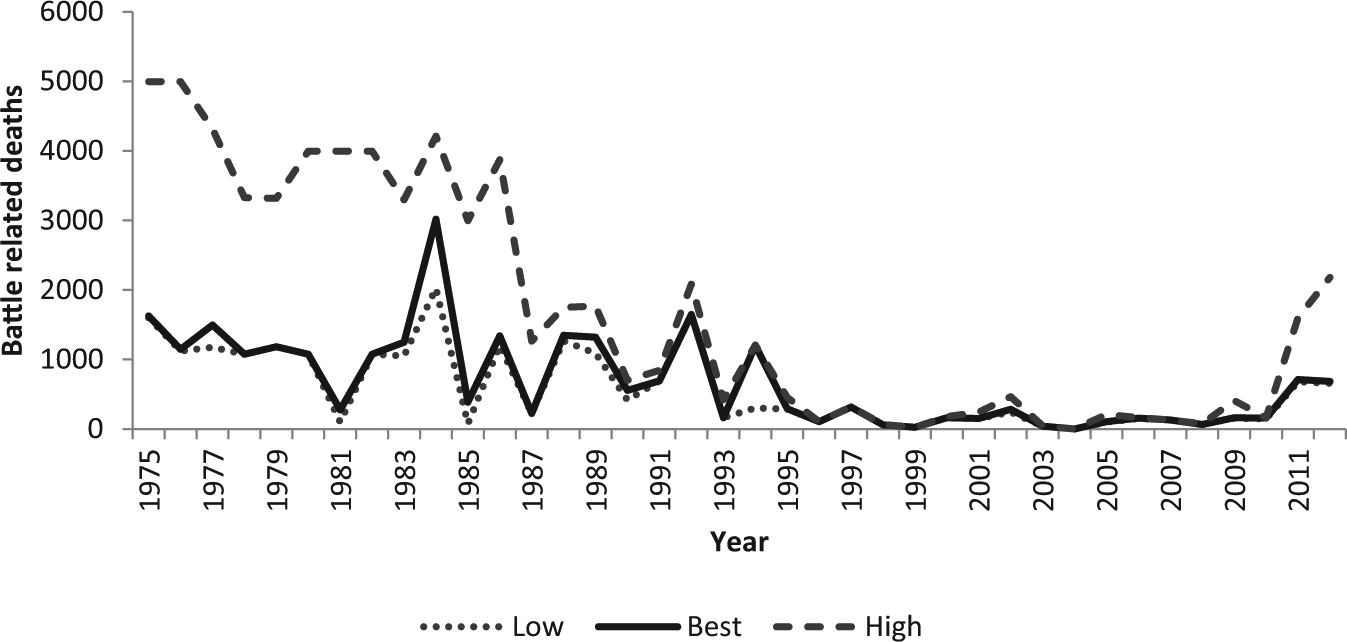
Battle deaths in Myanmar’s internal armed conflicts 1975–2012 (Uppsala Conflict Data Programme, February 2013).
However, the country’s ethnic conflicts were far from solved. Twelve armies remained as non-ceasefire groups and fighting continued in large parts of Myanmar’s border areas. However, even among the ceasefire groups there were no signs of a lasting peace. Although many of the earliest ceasefire agreements involved prevalent self-governing, it was explicitly communicated that these arrangements were only temporary. The Myanmar regime expected from the ceasefire groups that, once a new Constitution was in place, they would integrate and be represented in the political institutions of the union. However, none of the ethnic groups on their part were content with the political process leading up to the 2008 Constitution, and as political negotiations and constitutional amendments are the main demands of these groups today, it is worth giving a brief analysis of the main aspects of the democratization process, before discussing the current political situation.
The democratization of Myanmar
The democratization of Myanmar is a state-controlled and top-down affair. While a broad democracy movement (which includes many ethnic groups) has put continuous pressure on the regime, both from within the country and from exile, and has possibly contributed to enforcing some changes, these changes have all along been under the firm control of the military regime – initially the State Law and Order Restoration Council (SLORC), then the State Peace and Development Council (SPDC), before the government of Thein Sein took over in 2011. The National Convention convened in 1993 was the SLORC’s first attempt to develop a new Constitution for Myanmar, the third of its kind. 9 Ethnic minority representation was limited and, by and large, hand-picked by the regime. Only 15% of the delegates were chosen among those elected in the general elections of 1990, which were overwhelmingly won by the NLD. In 1995, those few members who represented the NLD were expelled after boycotting the meetings, and by 1996 the whole Constitution-making process was given up and the convention adjourned.
In 2003 the SLORC’s successor, the SPDC, made another attempt and launched its ‘roadmap to a discipline-flourishing democracy’. The roadmap aimed to reconvene the National Convention (step 1) in order to gradually introduce a ‘genuine and disciplined’ democratic system (step 2) by drafting a new Constitution (step 3), which should be endorsed in a national referendum (step 4). This should in turn lead up to free and fair elections for the formation of the required national legislative bodies (hluttaws; step 5), where elected representatives should convene in accordance with the new Constitution (step 6), so a ‘modern, developed and democratic’ nation could be built (step 7).
The roadmap was announced by Prime Minister Khin Nyunt, who as head of military intelligence had engineered the ceasefire agreements, and must be viewed against the background of the 1988 uprising, which revealed not just the economic bankruptcy of the Ne Win era since 1962, but also the state’s lack of legitimacy and the army’s inability to live up to its ideal of protecting the unity of the country. The illegitimacy of the regime was further confirmed when the SLORC decided to ignore the results of the 1990 elections and the NLD’s resounding victory. After that the regime always professed that its goal was to relinquish some of its control and return to constitutional rule, and the ceasefires agreed upon with various ethnic groups were seen as means to this end. The army continued, however, to alienate itself from the population through its repression and monopoly on political power, and only in 2003, was General Than Shwe’s regime ready to launch the reform plan.
The roadmap aimed to reinvent and maintain the political role of the military by making it constitutional and instituting a civilian government. Although Khin Nyunt was ousted from power and imprisoned shortly after the launch, General Than Shwe methodically, albeit slowly, continued the process and implemented the reform plan. This opened up new opportunities. However, from a democratic perspective and from the perspective of national reconciliation, the way the Constitution was drafted and adopted, as well as much of its content, was deeply flawed.
In 2004, the National Convention was reconvened with new members chosen by the SPDC. Since more ceasefire groups were invited to take part, the number of ethnically designated delegates increased significantly from 215 to 633, out of a total of 1086 delegates. Their influence was, however, limited. In all, 104 basic principles had already been settled, and although these included important provisions for Self-Administrated Areas for particular ethnic nationalities, other provisions – notably those ensuring the dominant role of the military and the steadfast refusal of federalism – were deeply problematic for the ethnic minority delegates.
The chance for delegates to influence the drafting process was restricted. One of the main ceasefire groups, the KIO, submitted a 19-point proposal for how the union could be rebuilt based on the Panglong agreement of 1947. Its core demand was democratic rights for all citizens, political equality for all nationalities, and the right to internal self-determination for all member states of the union. (In addition to the seven Bamar-dominated regions these are the Chin, Kachin, Karen, Karenni, Mon, Rakhine and Shan states.) None of KIO’s 19 proposals were taken into consideration. In fact, they were never put on the agenda – something that disillusioned many Kachin, as well as other ethnic nationalities. Today, against the backdrop of their negative experience, KIO and its Kachin Independence Army (KIA) have become the most recalcitrant of all the armed groups. What the Kachin see as a betrayal by the regime at the National Convention, together with the fact that the main Kachin political party was denied registration for the 2010 general elections, is considered a main reason why they refuse to enter into new ceasefire negotiations without first obtaining political concessions. 10
Another problem with the National Convention and the drafting of the Constitution was the absence of non-ceasefire groups. Crucial actors like the KNU, which had been in continuous armed conflict with the government since shortly after independence (the KNU waged their war against the central government in early 1949), were never consulted, although some Karen representation was ensured through other non-fighting representatives of the Karen community. 11 To engage in dialogue in conditions of active warfare is of course difficult. However, to expect that non-ceasefire groups would later accept a Constitution they had not taken part in drafting was unrealistic, particularly as many issues crucial to ethnic nationalities were ignored.
A constitutional referendum was held on 10 May 2008 (24 May in some townships) just as the cyclone Nargis devastated the country. Many criticized Myanmar for carrying out a national referendum at a time when it should have concentrated on a humanitarian effort. Allegations of ballot fraud were also numerous. Few therefore discovered the new Constitution’s potential for underpinning genuine change. The SPDC on its part claimed the process to have been free and fair and reported an overwhelming voter turnout and approval of the Constitution. The SPDC was content to finally see a prospect for transferring the administration of the country to a civilian government, while having obtained guarantees for its own ultimate power (Ghai, 2008; Taylor, 2009: 487–506).
On 7 November 2010 national elections were held to the new bicameral National Assembly and 14 state and regional assemblies. Owing to discontent with the Constitution and distrust in the sincerity of the government based on experience from 1990, most of the political parties from the 1990 elections, including many ethnic political parties and the NLD, chose not to take part. Others were denied registration by the regime, like the Kachin State Progressive Party, something that prevented any real representation of Kachin in the national and state parliaments. 12 Nonetheless, many new parties registered, many of which were derived from existing parties – for example the National Democratic Force (NDF), a breakaway group from the NLD, and the Shan Nationalities Democratic Party (SNDP), which leadership’s background is from the Shan Nationalities League for Democracy (SNLD), the second largest party in 1990. The decision to contest was controversial and the disagreements about participation in the 2010 elections created discord among former political allies, in the democratic opposition as well as in ethnic minority groups. The rationale behind participation was that involvement, despite shortcomings with the Constitution and the election laws, nonetheless would be preferable to being sidelined from the political process all together.
As many as 37 political parties contested the 2010 general elections, and the majority of them were ethnic minority parties. 13 At this point, however, no one imagined that the Constitution and the elections (which were not regarded as free and fair) would pave the way for real change. This only became clear when Thein Sein, the new President from the regime-loyal USDP, launched his reform policy in his inaugural address on 30 March 2011. 14 The President moved rapidly to implement an ambitious reform agenda aimed at reinvigorating the economy, reforming national politics and improving human rights. Political prisoners were released and a new round of ceasefire negotiations was initiated, primarily led by the Railway Minister at the time (Minister at the President’s Office since August 2012), Aung Min. Within the first months of 2012 Aung Min had reached agreements with all of the major ethnic fighting groups (former non-ceasefire groups), including the Shan State Army – South (Restoration Council of Shan State, RCSS/SSA; 2 December 2011), the Shan State Army – North (Shan State Progressive Party, SSPP/SSA; 28 January 2012) and the Chin National Front (6 January 2012). There was also the historic signing of an agreement with the KNU (7 February 2012; South, 2012: 35).
To some extent, the new round of ceasefire agreements represents a clear continuity from the policies of the central government in the 1990s and the first decade of the twenty-first century. However, in other aspects it marks a new era in Myanmar politics. The new ceasefire agreements are written as opposed to the previous oral agreements and they are firmly grounded in the government, not just individuals. Moreover, there has all along been a clear understanding between all parties that a political dialogue will follow the truce. In sum these aspects represent a long-awaited positive change with hopes for peace. However, the full picture is ambiguous. On the one hand Thein Sein’s government has reached an agreement with the main former non-ceasefire groups – a major accomplishment. On the other hand, it has not been able to maintain its truce with the KIO, who are disgruntled with 17 years of ceasefire that have not provided any political solutions, only mass exploitations of the rich natural resources of Kachin State. Fighting erupted in June 2011 and has continued since then. Over the Christmas holiday in December 2012 and well into 2013, the conflict further escalated as the Tatmadaw launched an intensive artillery assault against the KIA along the road between Myitkyina and Bhamo. President Thein Sein’s announcement on the 18 January of a unilateral ceasefire never materialized in a truce and on 26 January the Myanmar army seized Hkaya Bum, a strategic hill-top in the Laja Yang area close to the KIA headquarters in Laiza. 15
In other words, the tables have turned since the first round of ceasefire negotiations in the late 1980s. The former non-ceasefire groups are now engaging in dialogue, including the KNU, while one of the main former ceasefire groups, the KIO, is not part of this dialogue. The KIO’s communication with the government largely goes through the United Nationalities Federal Council, and the few attempts at direct negotiations have failed to bring results. The Kachin are, moreover, prevented from taking part in the new political opening. KSPP was not allowed to register at the 2010 elections, and owing to the fighting in 2012, the 1 April by-elections have been postponed indefinitely in Kachin State (elections to the three Pyithu Hluttaw seats from the Mogaung, Hpakant and Bhamo townships were suspended). With the renewed offensive of the Myanmar army in 2013, the outlook for peace in Kachin State remains grim.
The political reforms and the democratization process are positive developments towards building peace in Myanmar and ending ethnic conflicts. However, they form only the first steps. A precondition for lasting peace is an inclusive political process accommodating the aspirations of ethnic groups with regards to internal self-determination, equal rights and the establishment of a federal union – the main demands from ethnic minorities since the founding of the Union of Burma after independence in 1948. This process, which has yet to take off, will have to include active participation of the following three main actors: (1) the ruling elite (Thein Seins government, the USDP and the Tatmadaw); (2) ethnic groups (political parties, armed groups and civil society groups); and (3) the democratic opposition (the NLD, the NDF, the 88 Generation and civil society groups). In the following this paper will assess the latest political developments in Myanmar and estimate the prospect for a successful turnout of this political process. The dynamics in the triangular relations between the three parties, but also between different groupings within these diverse parties, will be examined.
Tripartite negotiations – possibilities and limitations
Since the collapse of the CPB and the democratic uprising towards the end of the 1980s, Myanmar’s conflicts have been dominated by three parties: the ruling military elite, the ethnic groups and the democratic opposition. Until recently most of the democratic opposition was excluded from the political scene and was submitted to persecution and repression from the military regime. It nonetheless held moral power (Mehta and Winship, 2010: 425–438). The symbolic power following the charisma of a leader like Aung San Suu Kyi, who embodies not only her own qualities, but also those of her father, General Aung San, and his struggle for independence and a unified Burma, is an omnipresent force that has confronted and challenged the more conventional power of the ruling military elite. Other leading figures, like Min Ko Naing and his comrades of the 88 Generation Student Group, possess a similar type of moral or symbolic power, and continue to build such power, although to a lesser extent than Aung San Suu Kyi. Ethnic groups may exercise conventional as well as moral power, but the moral power of ethnic leaders of political parties and civil society organizations is generally limited to their own ethnic communities. Armed groups, however, have supplemented this power with the use of violence.
It has long been widely recognized that national reconciliation and a solution to Myanmar’s enduring conflicts require tripartite negotiations between all these power groups/centres (Figure 3). 16 Communication and cooperation have to go along all three lines. The main scope of this paper is therefore to take stock of the possibilities and limitations within the current situation with regard to achieving national reconciliation and to assess the latest developments relevant to this process.
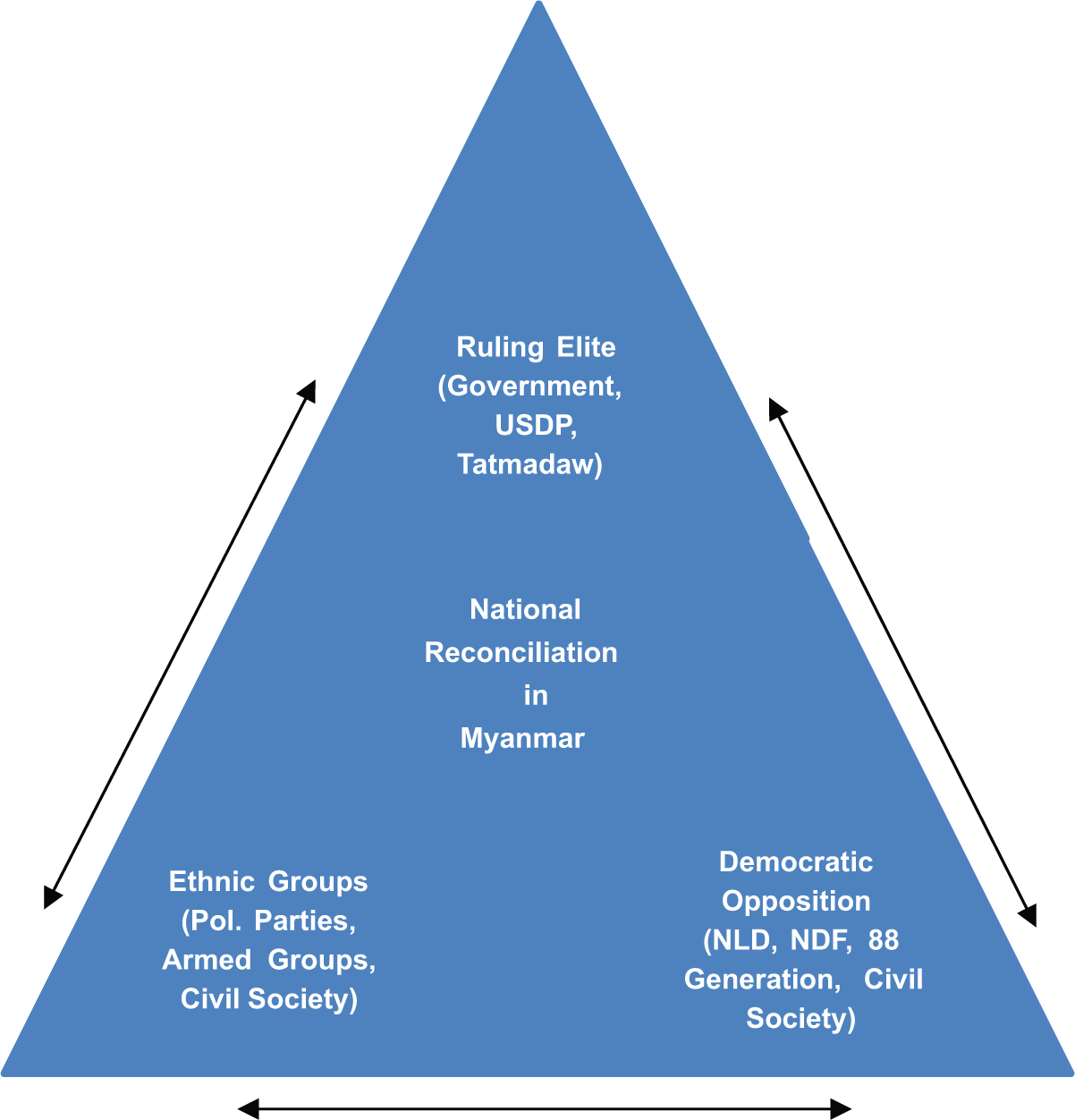
National reconciliation and tripartite negotiations.
The ethnic groups
With the exception of the Kachin, the relations between ethnic groups and the ruling elite have radically improved. Despite the serious situation in Kachin State, and repeated reports of clashes between ethnic armed groups and the Myanmar army in some of the ceasefire areas in Shan State and Kayin State, the fact that there are talks between the government and all ethnic armed groups and that 13 ceasefire agreements have been signed is a significant progress. Moreover, representatives from the government, most notably chief negotiator Aung Min, as well as mediators with close ties to the government, remain optimistic about brokering a deal with the KIO as well. Many people regarded the outlook for a solution in Kachin State to be improved after the May 2012 appointment of Aung Min as negotiator to replace Aung Thaung, who had failed to impress the KIO. By February 2013, however, there was still little progress and KIO had refused the invitation to meet the peace negotiators in Naypyitaw. Instead, initial meetings took place on more neutral ground in Ruili, China, on 30 October 2012 and 4 February 2013. China has since then made efforts to mediate, but the follow-up meeting that was to be held in April was delayed. There has also been the possibility of holding meetings at the headquarters of the powerful United Wa State Army (UWSA) in Pang Hsang, with UWSA as mediator. 17 However, without a halt to the offensives between the Tatmadaw and the KIA, there is little hope of fruitful discussions.
While most people acknowledge the commitment of the government to work for a solution to Myanmar’s ethnic conflicts, there are nonetheless doubts within armed groups about its ability to control the powerful Myanmar army. The Tatmadaw has ignored the President’s ceasefire orders in Kachin State on three occasions (the latest one was issued 18 January 2013, but the Tatmadaw continued its offensive the following day). From experience with earlier peace initiatives, ethnic armed groups are therefore cautious in their optimism. They are not likely to be fully engaged and committed before there are concrete signs of a political dialogue about power sharing and the rights to freely exercise their culture. 18 Moreover, during the rainy season of 2012 it became clear that there are stark disagreements about the way forward within the KNU, and brigades 2 and 5 have voiced a pending attitude towards the peace process. 19
The demand for more political talks was repeated at the Ethnic Nationalities Conference held on 14–16 September 2012 in the Thai–Myanmar border area. One of its statements included a three-step peace plan that emphasized: (1) ceasefires; (2) implementation of ceasefire agreements (instead of ‘development’ as proposed by the government); and (3) political dialogue. A six-step roadmap for the implementation of this peace plan was also developed. 20 Ethnic armed groups are impatient and want to take the process to the next level, and if the government is not able to start sincere political dialogues, their efforts to make peace thus far may have been in vain. While the trust in the President and key government negotiators like Aung Min seems to be high, representatives of the KNU, RCSS/SSA and CNF remain suspicious of the ruling elite’s sincerity in trying to reach a political solution. Many expressed distrust in the peace process and warned that the ruling elite first and foremost is interested in securing the status quo. 21
This impatience is also salient among ethnic political parties. Ethnic political parties that boycotted the 2010 elections refused, in line with the NLD, to compete on the unlevelled playing field of the 2008 Constitution and objected to a political reality where many of their leaders and most high-profile figures were imprisoned. Revision of the Constitution and political concessions in regard to power sharing are therefore crucial issues for these parties if they are to participate in national politics. While many of them have decided to run for the 2015 elections after the positive outcome of the 1 April by-elections, like the SNLD that reregistered in May 2012, the Arakan League for Democracy that re-registered in April 2012 and The Mon National Democratic Front that registered as the Mon Democracy Party in July 2012, their demands for fundamental political change are, nonetheless, maintained. 22 Ethnic political parties that ran for parliament in 2010 have promoted similar demands. The major difference between the parties contesting the 1990 and 2010 elections is their view on strategies to achieve change. It seems that these differences are less distinct after the entrance of the NLD on the national political arena and the release of political prisoners on 12 October 2011 and 13 January, 3 July and 17 September 2012, but political parties emanating from the same ethnic group may nonetheless bear grudges against each other because of differences in their political strategies concerning national politics, or personal differences between leaders. These are challenges that must be overcome if ethnic groups want to take on competition from the NLD. If the NLD decides to run for elections in all constituencies, including those with a high proportion of ethnic minority voters, it is crucial for the various ethnic political parties to stand united (Nilsen and Tønnesson, 2013). Another measure to avoid total electoral annihilation is to work for a change in the electoral laws and the implementation of a system with proportional representation, a system many ethnic political parties are likely to benefit from (International Crisis Groups, 2012: 18). Some Shan and Rakhine parties who believe they are able to compete against the NLD are nonetheless reluctant to support such changes and proportional representation was rejected in the SNLD’s six-point statement from their second congress in Tachilek on 2–3 January 2013. 23
An ethnic nationality is not just one group of people. It is a complex dynamic of different political forces that sometimes overlap, but also represents different perspectives and agendas. Although the main political objectives of each ethnic nationality in Myanmar are by and large the same (federalism, self-determination and religious and cultural rights), their viewpoints and thus their strategies to achieve these objectives may alter significantly. A constructive dynamic between various armed groups, various political parties and the emerging diversity of highly capable civil society groups – religious, humanitarian or community oriented groups – is therefore crucial (Figure 4).
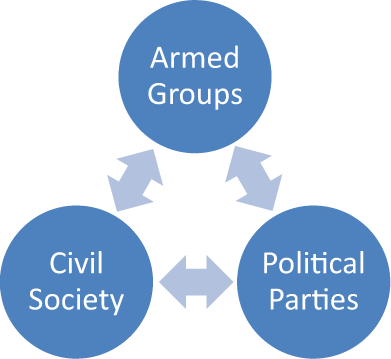
Dynamics within the ethnic groups.
In addition to altering viewpoints and strategies among different political forces, there are also differences, or cross-cutting cleavages (Lipset and Rokkan, 1967), that are manifested along geographical, linguistic or religious lines. Among the Karen we have seen examples of religious tension between Christian-dominated and Buddhist-dominated Karen armies, and among the Chin there are divides between the north and the south, and the two main language groups.
In a war-torn country like Myanmar, much emphasis is often put on the role of armed groups. It is worth reminding ourselves, however, that most ethnic minority people do not participate in armed struggles, but work for their political goals by other means (Ardeth Maung Thawnghmung, 2012). An interesting development is that ethnic civil society organizations (CSO) and community based organizations (CBO) have emerged as mediators between the different political forces within ethnic groups, but also between ethnic armed groups and the government. Civil society played a mediating role in the early ceasefire negotiations in the late 1980s and early 1990s – one concrete example is the Shalom Foundation (a Kachin-lead CSO), which acted as a mediator during the negotiations between the KIO and the government.
Civil society organizations have had to work under difficult conditions in Myanmar. To keep their status as officially registered organizations, a careful balance of their work and their statements has been vital, in order not to provoke the authorities. Civil society organizations have been restricted from working directly with political issues. Since the cyclone Nargis in 2008, however, during which CSOs and CBOs proved efficient in providing aid to the victims (when international aid organizations were restricted from providing help), they have gained confidence and trust and it has become easier to operate more freely. Experience has also taught them how to manoeuvre within the legal framework, and at all levels of mediation and peace negotiations – internal strategizing within an ethnic group, between ethnic groups, and not least, in the relations between ethnic groups and the government – civil society organizations play an active role driving reform processes forward (Kramer, 2011; South, 2008).
The process of developing coordinated strategies among various stakeholders within ethnic groups in order to stand poised for future political negotiations with the government has come furthest in Shan State, although the Shan State historically is the most divided and thus the most challenging state to unify. During a visit to Taunggyi in October 2012, I met with a wide range of Shan organizations that were getting prepared for the three-day Shan conference in November. There were preparation meetings with both the Shan political parties (SNLD and SNDP), civil society organizations and the SSA at the Centre for Shan Culture and Literature in Taungyyi, where political demands and proposals were discussed. Another major issue was the possible merging of SNLD and SNDP. 24 Similar meetings were held among Shan groups in other states. A major survey among Shan people had been organized on issues like the question of federalism, the merging of Shan political parties and armed groups, the ability to teach the Shan language in schools and the conservation of natural resources and how revenues from such resources should be allocated. 25 The Shan congress that followed in Yangon on 26–28 November with 150 representatives from various Shan groups and communities around Myanmar was the next step on the way towards a coordinated Shan position towards the peace process and political talks. The third step is the all-Shan State conference for peace that was scheduled to be held in the first part of 2013 and involves all ethnic groups within Shan State. 26
The question about merging the two major Shan political parties SNLD and SNDP will be particularly urgent as the 2015 general elections are approaching. This issue was high on the agenda among MPs and party members at the SNDP headquarters in Taunggyi in October 2012. 27 Similar discussions are on the agenda between political parties in Mon State where All Mon Region Democracy Party and Mon Democratic Party have agreed to merge; 28 in Rakhine State between the Arakan League for Democracy and the Rakhine Nationalities Development Party; and in Chin State between the Chin National Party and the Chin Progressive Party.
Constructive dynamics between all political forces within each ethnic group are imperative if they are to achieve progress in their quest for a federal union where ethnic minorities enjoy equal rights and internal self-determination. Equally important is a well-organized united front of all the ethnic nationalities. This requires good dynamics between the various ethnic groups as well (Figure 5).
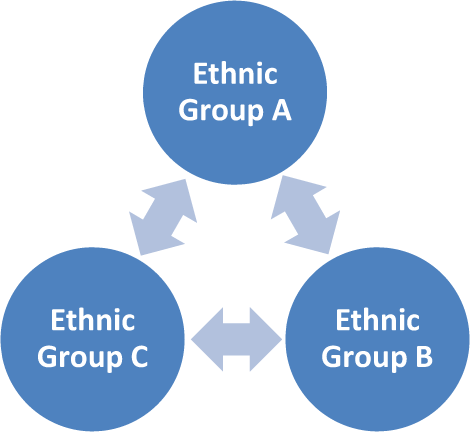
Dynamics between ethnic groups.
A main challenge in this regard is the cross-cutting cleavages reflected in the diverse realities on the ground in the various ethnic-minority states or areas. Mon State and Chin State in particular, are poor states with relatively few natural resources compared with Kachin State, Shan State and Kayin State. Chin and Mon states have therefore less interest in keeping revenues from the extraction of natural resources, something that many ethnic nationalities have called for. The Rakhine Nationalities Development Party, which represents a state with considerable gas and oil resources, presented a proposal to the Pyidaungsu Hluttaw in August 2012 to change the rules in the appendix to the country’s 2008 Constitution to allocate a percentage of revenue from natural resources to each of the country’s states and regions. The proposal gained support, perhaps surprisingly, from Minister Soe Thane at the President’s office. 29 For the poor Chin State, on the other hand, which has few natural resources, subsidized development projects creating jobs and improving infrastructure would be more beneficial to the local people. As it would be considerably easier for the government to give concessions in these matters, the government aims to engage in a political dialogue and negotiate a deal with Chin State first, before taking on the more challenging demands from ethnic-minority states richer in natural resources. However, during the second phase of the union-level peace talks between the Chin National Front and the government that took place at the Myanmar Peace Centre 7–9 December 2012, the CNF proved to be a strategic and tough negotiator and must have taken the government’s peace negotiating team by surprise. The signed agreement largely mirrored the CNF positions prior to the talks. 30
Another challenge is the different views on autonomy or self-determination among the various ethnic groups. The different interest of the Pa’O ethnic group and the Shan ethnic groups in Shan State is illustrative. The Pa’O group, which is the second largest ethnic group in Shan State, in addition to populating parts of Kayin and Kayah State, has a long record of cooperation with the ruling elite. The Pa’O National Organization (PNO) with its Pa’O National Army reached a ceasefire agreement with the SPDC in 1991. Since then the PNO has cooperated closely with the government. 31 PNO took an active part in the National Convention that drafted the 2008 Constitution and as a result the Pa’O was granted three Self-Administered Zones of Shan State, the Hopong, Hsihseng and Pinlaung townships. From a PNO point of view, this was a major achievement and the party’s political goal is to establish more such self-administrative zones in Shan State and in Kayin and Kayah State. 32 From a Shan point of view, however, the Self-Administered Zones of the Pa’O and the Wa in Shan State are not seen as steps towards autonomy or self-determination, but rather as a deliberate attempt by the ruling elite to split Shan State and undermine it as a political force. 33
Nonetheless, in regard to core demands of internal self-determination and federalist principles and the securing of religious and cultural rights, the ethnic groups are relatively united, and groups with different interests, like the SNDP and the PNO in Shan State, claim to work well together. Ethnic minority organizations have a long tradition of cooperation, and the building of alliances goes back to the Panglong conference in 1947 and the significant Taunggyi conference in 1961. This is not to say that there have not been divisions between ethnic nationalities. Various ethnic armed groups have previously nurtured loyalties to alliances that have rivalled alliances of other ethnic armed groups, most notably pro-CPB or anti-CPB (i.e. National Democratic Front) alliances. Since the democracy uprising of 1988, however, and the fall of CPB, these rivalries have been less prominent, and ceasefire groups as well as non-ceasefire groups have been engaged in dialogue and strategy meetings. Today, it is particularly the Ethnic Nationalities Council and the United Nationalities Federal Council (UNFC) that play this role. While the Ethnic Nationalities Council is a state-based organization established in 2001, the UNFC was established in 2011 and is a broad coalition of the armed and political ethnic groups. The challenge for these coalitions is not so much in uniting on a common platform, but rather in remaining unified when engaging in the realpolitik and compromises that negotiations with the government will require. While amendments to the 2008 Constitution are of high priority to all ethnic minorities, it is clear that it will be difficult to achieve substantial changes in the short run. However, ethnic minorities could also gain considerable political influence if they were able to campaign for more power to the region and state parliaments and an increase in their budgets, something that could be an opening for more autonomy and self-determination without controversial constitutional changes (Nilsen and Tønnesson, 2012).
Ethnic minority groups in Myanmar, armed groups, political parties and civil society organizations alike – with the important exception of most Kachin groups – all seem to support the current peace process. Despite the lack of trust in the sincerity of the ruling elite, most ethnic minority actors are cautious optimists. However, a lasting peace will require a profound political dialogue about federalism, internal self-determination and equal rights – a demand the Kachin also support. To achieve this goal, ethnic armed groups, political parties and organizations need to improve the coordination of their demands and strategies.
The ruling elite
As mentioned above, the main driver of reform in today’s Myanmar is neither the ethnic organizations nor the NLD, but the government of President Thein Sein. According to the president, democratization has been on the ruling elite’s agenda since the ‘Roadmap to Democracy’ was launched in 2003 by the Prime Minister at the time, Khin Nyunt. 34 Khin Nyunt was dismissed and imprisoned shortly after, but General Than Shwe continued the reform plan and followed it systematically. Nevertheless, at this stage, the internal dynamics within the ruling elite is the element in the reform process that is the hardest to determine. The most pressing issue is to what extent the Tatmadaw supports the reforms and how much power the Tatmadaw still holds over the cabinet and the MPs of the USDP. How much power are the armed forces willing to give up, and are they a unified actor (Figure 6)?
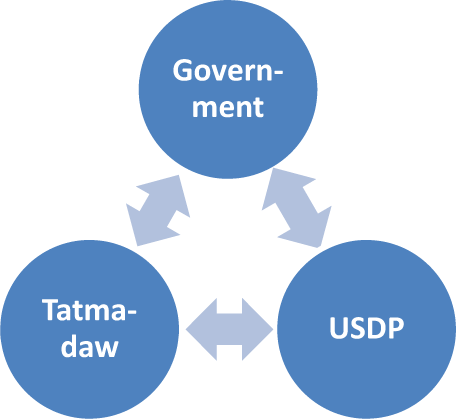
Dynamics within the ruling elite.
The continued conflict in Kachin State provides some indications. The President has three times ordered a halt to the fighting, and three times the Tatmadaw has ignored the orders. The army has also violated the ceasefire agreements in Shan State on a number of occasions and there are grave concerns among ethnic groups about extensive army movement in some ceasefire areas. This suggests that the army still exercises considerable power within the ruling elite. Indications of the inner dynamic of the ruling elite can also be found in the parliament and the political sphere. Thus far the military appointed MPs have not directly hindered the reforms of the government. The appointment of Nyan Tun as new Vice President has been interpreted by observers as a support to the government’s reform processes. In accordance with the Constitution, it was the commander-in-chief who nominated the Vice President (Myanmar Ministry of Information, 2008: Ch. III §60).
It is hard to verify, but the events of the past two years suggest that the army acknowledges that Myanmar is changing and that the role of the army has to change with it. In informal statements the commander-in-chief has recognized that the army in the future has to be under civilian control. However, this period has also revealed that the army intends to exercise its constitutional prerogatives of protecting the unity of the country and thus continue its presence in border areas. All in all, the prospects for developing a democratic future for Myanmar are promising. However, with regard to building trust with ethnic minorities and establishing a peaceful Myanmar, the prospects are less optimistic. While important progress has been made in the peace process with regard to the ceasefire agreements and the continued peace talks, the offensive in Kachin State reveals a pattern from the past where the Tatmadaw continues to use military force and divide and rule strategies to repress ethnic armies and rebel groups. The attack on Laiza in January 2013 resembles the attack on Manerplaw in 1995, also carried out in December and January. The offensive targeting Manerplaw was launched less than a year after the Myanmar government had reached a ceasefire agreement with the KIO. Similar to the situation with the KIO and KIA today, the government then was free to concentrate its military effort against the KNU. Although the Myanmar army failed to eradicate it, as a result of the offensive, the organization was for a long time a marginalized force (Lintner, 1999: 413; Zaw Oo and Win Min, 2007: 42). It is fair to speculate that similar strategies underpinned the offensive against the KIA. 35 By the scale of the operations it is clear that the attack on the KIA had backing from the top echelon of the army, and was not merely an offensive initiated by the regional commander. It seems, moreover, to have been an attack that the Tatmadaw had planned since the KIA in 2009 first refused to become border guard forces under the Myanmar army. 36 Thus, it cannot be ruled out that there may have even been an understanding between the army and the Thein Sein government about taking this calculated risk. Thein Sein, like the Comander-in-Chief Min Aung Hlaing, owe their current positions to Senior General Than Shwe, and although it is believed that Than Shwe has left everyday politics and the governing of the union to the President and Army Chief, it is unrealistic to think that the former dictator does not have a say in major strategic issues like the war in Kachin State. To what degree he gets involved in such matters is nonetheless uncertain.
There is also a degree of uncertainty with regard to the dynamics between the inner circles of the government and the remaining USDP party and its MPs, particularly those loyal to the speaker of the Pyithu Hluttaw, Shwe Mann. Shwe Mann was by many regarded as the most likely to become president in 2011. It is evident that Shwe Mann has political ambitions, and he has worked intensively to make the Pyithu Hluttaw a relevant political body. The constitutional crisis of August 2012, where the parliament disputed a ruling by the constitutional court and refused to abide by it – a dispute that included an unlikely alliance between the USDP and the NLD – has been interpreted as a power struggle between the parliament and the government and thus reveals a certain power struggle within the USDP as well. The USDP is also experiencing critique for its lack of democratic processes from party members. There was open criticism of the party leadership, from USDP members and MPs, as in October 2012 it became clear that the Chief Ministers of the region and state governments would be appointed as leaders of the party’s regional branches. 37 This may be an indicator that the USDP is also developing into a real political party (or at least that its members are developing into real politicians) where various interests are tried and contested, and where the party and its members are not merely an instrument for the top generals of the Tatmadaw.
With the general elections coming up in 2015, President Thein Sein and his government know that they are in a hurry. After the elections there will be other people running the country, and whatever policies the current government wants to see implemented must come fast. While several people within the USDP (like Minister Aung Min, Minister Soe Thane and Speaker Shwe Mann) are likely to nurture political careers also in the future, it is anticipated that it will be Aung San Suu Kyi and the NLD who will be ruling Myanmar in the coming years. (Despite the constitutional barrier that prevents Aung San Suu Kyi becoming president, owing to the Constitution’s Ch. III, §59f that disqualifies any person whose spouse or children owe allegiance to a foreign power from serving as president of the Union of Myanmar (her two children hold British citizenship), many people hope and believe that the required constitutional amendments will be made to allow her the presidency; Myanmar Ministry of Information, 2008.) This, of course, has implications for ethnic minorities as well and Ashley South has therefore noted that: ‘As a part of their calculations, armed groups must decide whether they expect to get a better deal from a post-2015 (presumably, NLD-dominated) government, with greater democratic credentials than the present regime – or if their best chance is now’ (South, 2012: 21). The same assessments should be made by ethnic political parties. It may be easier to achieve concessions from people who know that others than themselves will have to deal with the consequences. Moreover, with a radical shift in government, considerable competence and knowhow will also be lost, and the new government is likely to be preoccupied with internal affairs.
Several civil society organizations and political mediators and analysts I have interviewed in Myanmar identify the ruling elite as currently divided into three power centres led by President Thein Sein, Pyithu Hluttaw speaker Shwe Mann and Commander-in-Chief Min Aung Hlaing. As mentioned, there are also speculations as to the degree to which retired army chief General Than Shwe forms a fourth power base operating behind the scenes. In fact, many political organizations and civil society groups in Myanmar consider the construction of these three power bases as General Than Shwe’s attempt to control the political reform process. With three equally powerful centres or bases none of them are able to rule alone, and the political development is more likely to go according to what they believe is General Than Shwe’s plan – a slow and steady transition to democracy, albeit under the continued dominance of a powerful Tatmadaw. 38 The future of democracy, but also of peace, relies on how the balance of these power bases develops over the coming years. For now they seem to be equally strong, something which may ensure the steadfast progress of the reform processes.
While the ruling elite previously has been viewed as a unified force by outsiders, the reform process has revealed diverse clusters of interests, some of which are the drivers of the reforms, and others of which work against them – and yet others that are sitting on the fence. The main drivers of the reforms are found in the circle around the government, but the democratization seems to be supported by the leaders of the Tatmadaw as well. It appears that a critical mass of individuals within the ruling elite has sufficient to gain from the opening up of the economy to support further reforms. However, there are also indications that strong forces, particularly within the armed forces, are more reluctant to accommodate the ethnic minorities’ demands for a federal state and internal self-determination – necessary moves to build lasting peace. There is still no real political dialogue between the government and ethnic groups, but the lines are open, on the part of both the government and the ethnic groups. A positive signal was sent by the government’s chief negotiator, Aung Min, when in November 2012 he claimed that he was ready to engage in political dialogue with all ceasefire groups, as well as with the KIO. 39 The meeting between Aung Min and the UNFC in Chiang Mai 20 February 2013 was also a milestone, as this was the first time a government delegation met directly with this coalition of armed groups. Whether the Tatmadaw is also ready for this kind of dialogue, however, remains an open question.
The democratic opposition
The lines are also open between the ruling elite and the democratic opposition. The release of Aung San Suu Kyi from house arrest 13 November 2010 and the subsequent talks in 2011 and 2012 between her and the president are clear indications of new policies from the ruling elite. Her party the NLD is no longer ignored, but recognized as a political force, and the decision by the NLD to contest the 1 April by-elections in 2012 indicated that it is willing to negotiate and play a conciliatory role. The dispute over the oath where parliamentarians swear to safeguard the Constitution when entering parliament, on the other hand, was less constructive in improving the political climate (in April 2012 Aung San Suu Kyi and other MPs from the NLD delayed their entrance into parliament by nine days because they refused to take the oath). Another clear signal of the government’s open policy towards democratic forces came on 6 February 2013 when the New Light of Myanmar announced that Tin Shwe, a MP for the NDF at the Amyotha Hluttaw, had been appointed deputy minister of hotels and tourism – the very first opposition MP appointed to the Cabinet. 40
In this article, the somewhat inaccurate term ‘the democratic opposition’ refers to a broad coalition of political groups and activists that have challenged the ruling elite since the democracy uprising in 1988. The dominant group within this opposition is the NLD. This is first and foremost due to the immense popularity and charisma of Aung San Suu Kyi. The democratic opposition however, also includes a number of other political groups like the NDF and student’s organizations like ABSDF and the 88 Generation.
Although predominantly ethnic Bamar, many ethnic minority political parties and leaders are also affiliated with this democratic opposition. Some of the reformists within Thein Sein’s government and civil society groups, sometimes referred to as the third force, represent a similar democratic force. However, although there seem to be no real alliances between the NLD and reformists in the government at this point, there are important overlaps in the interests of the two groups. To refer to NLD as the only democratic force in Myanmar is therefore misleading.
While a main demand from this diverse and ambiguous group has been the implementation of a multi-party democracy in Myanmar, the democratic opposition is primarily an anti-regime constellation, rather than an eminently democratic movement. In the long struggle against an oppressive and brutal military regime, there has been little room for a broad debate about democratic principles, and many of these groups, including the NLD, lack basic democratic structures within their own organizations. At the same time, many of the key leaders, particularly from the older generation, have strong ties to the military institution, Aung San Suu Kyi included, whose father was a general. The democratic opposition is in other words exceedingly diverse and with few other focal points than being opposed to Myanmar’s long-ruling military regime.
From a democratic perspective, the recent internal turmoil within the NLD is therefore encouraging. As the NLD prepared for its first national congress that was held 8–10 March 2013 (and the following youth assembly), many party members raised their voice against what they experienced as undemocratic practices in the selection of delegates. The concern from the critics was that delegates were hand-picked by the party leadership rather than representing the diversity of the party. Interestingly, the leadership has all along denied the allegations of lack of democracy by arguing that the party has chosen the most competent delegates. 41 Another, more direct response, was the suspension of three veteran party members in the Pathein township of the Ayeyarwady delta and the closure of the NLD office in Pathein in August 2012 after similar critique. Aung San Suu Kyi on her part has warned fellow party members not to ‘misuse free speech for their own benefit’. In November 2012 as many as 130 NLD-members resigned in protest against the leadership. This shows that democratic principles are openly debated and that the party leadership is challenged and must expect to be held accountable. 42 Similarly to the tension within the USDP, this can be viewed as a sign of budding democratic consciousness within practical Myanmar politics.
As with the ethnic groups and the ruling elite, there is much interest concerning the internal dynamics within the democratic opposition (Figure 7). The divide in the NLD prior to the 2010 elections which led to the formation of the splinter party, the NDF, was harrowing, leading to enduring hard feelings between former allies. Similar divides may be found between those in the democracy movement who have navigated within the existing system and compromised with the regime, and those imprisoned or in exile who have not taken part in internal Myanmar politics. The NDF and a number of civil society organizations are part of the former group, while the NLD, the 88 Generation and various exile organizations are part of the latter. 43 At present it seems as though most groups are going in the direction of supporting the reform processes. Nonetheless, the different groups within the democratic opposition have some way to go before they are able to draw from each other’s experiences and insights. Similar to the reunification processes that are currently unfolding between political parties in various ethnic minorities, a reconciliation between the NLD and the NDF would serve the democratic opposition well. However, it is clear that the two parties are still too far apart for a reunification to take place before 2015. 44 Many people are therefore eager to see if the 88 Generation might be able to play a conciliatory role within the democracy movement as well as between the movement and the government, and the movement and ethnic groups. There are also expectations that some of them might form a new political party, something that could help bring Myanmar closer to a multi-party democracy. At the moment the dominant role of the NLD (combined with the single-member constituency electoral system) has unintentionally threatened to undermine political plurality. It will be a challenge to secure a unified democratic opposition that at the same time is able to provide space for the diversity of interests and opinions that exists in Myanmar.
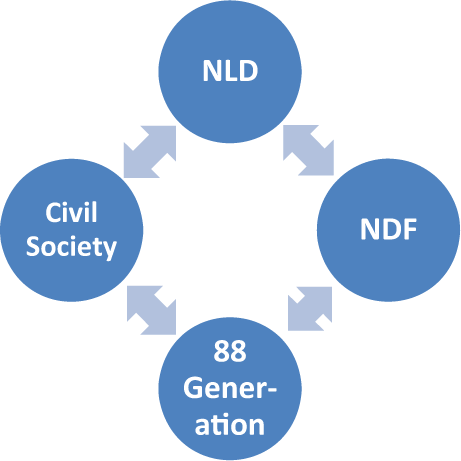
Dynamics within the democracy movement.
Given the historical strength of the army, and its vast constitutional prerogatives, good relations and cooperation between the democratic opposition and ethnic groups – to counter the power of the ruling elite – are of immense importance if political reforms are going to lead to a successful democratic transition and sustainable peace. To some extent there are large overlaps between the democracy movement and ethnic groups, many of which worked closely together both during and in the aftermath of the 1988 uprising. There are also close relations between the NLD and ethnic political parties that contested the 1990 elections. The NDF and ethnic political parties with seats in the union hluttaw have similar good relations after cooperating on practical political issues over the past two years. However, while most ethnic leaders – in armed groups, political parties and civil society alike – have trust in Aung San Suu Kyi and believe her to be working in their interest, many of them are less confident as to whether the NLD and the remaining Bamar-dominated democratic opposition are equally sensitive to their grievances and needs. 45 Moreover, it is worth noting that, despite Aung San Suu Kyi’s proposition to mediate between the government and the KIO, the KIO has thus far been reluctant to pick up on the offer. 46 The ability of the ethnic groups and the democratic opposition to unite on a common platform for the future of Myanmar is therefore in doubt.
The current triangular dynamics between the ruling elite, the ethnic groups and the democratic opposition are relatively positive with regards to developing a democratic and a peaceful Myanmar. For the first time there are open lines between all three parties, and although there are many obstacles to overcome, the potential for constructive tripartite talks are better than at any other time in the country’s modern history. There is, however, a real risk that the interests of ethnic groups may be overshadowed by a mutual understanding between the ethnic Bamar majorities in the ruling elite and the democratic opposition, where power is largely shared between the two. Internal coordination, both between the various ethnic groups and within each one of them, is therefore of particular importance if the ethnic minorities want to seize the opportunities and openings in the reform process. The dynamics of the current reforms reveal an implied structure where the ruling elite is willing to give up power to a civilian government in accordance with its own seven-step plan. The implied condition is that the main principles of the 2008 Constitution for the time being remain the base for this transition. Not only does this mean that the army will continue to imprint Myanmar politics in the coming years. It also means that it will continue its domination in border areas, and that impeachments or trials for past atrocities against the civilian population are out of the question. These are difficult conditions for both the democratic opposition and the ethnic groups and it is likely that attempts will be made at least to challenge the Tatmadaw’s prerogatives on its influential position in the union hluttaw. Within this structure, however, the leaders of the democratic opposition and people in the central areas of Myanmar will have much to gain. While the ethnic minority population also has much to gain from an overall reduced conflict level, there is a probability that Myanmar’s transition to democracy may take place without giving sufficient political concessions to ethnic groups on their claim for federalism and internal self-determination. The reforms may bring democracy and economic progress in most parts of Myanmar, including improving living conditions for people in former conflict areas, not least if programmes like the Myanmar Peace Support Initiative succeed in facilitating peace dividends. This transition, however, may not depend on a successful peace process and there is a risk that the country may see a continuation of the low-tension violence in changing areas – a continuation of the developments since the early 1990s. Central Myanmar may prosper while the border areas continue to lag behind. The prospects for peace are uncertain.
Prospects for peace following the 2015 elections
The real test of the political reform process and its impact on ethnic conflicts is the 2015 general elections; 2015 is the next milestone that will provide some indicators for Myanmar’s future. In the following I will outline four scenarios on the prospects for peace following 2015 (Figure 8). Scenarios are not predictions. They are attempts to categorize various series of events and create a picture of what impact they may have. In this context they are a way to structure the knowledge we have about current dynamics and place them into a selection of hypothetical cases. I here also seek to weigh the probability of their occurrence. Based on the analysis of this article, the outlook for democratic and economic progress in Myanmar seems to be relatively good. The outlook for peace, on the other hand, is more uncertain. While it is likely that the general conflict level will remain low, it is not given that the democratic transition will bring a sustainable peace. 47
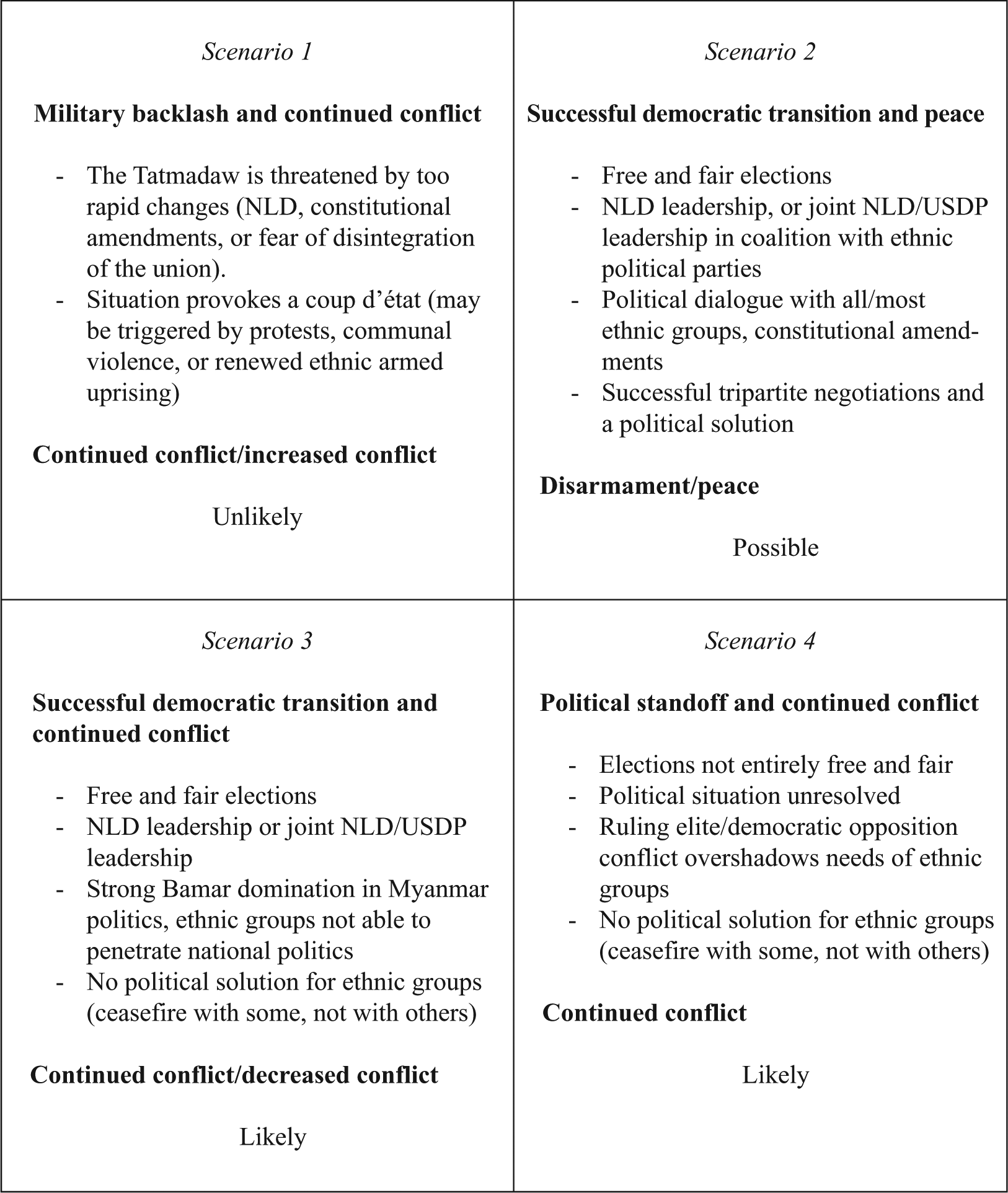
Prospects for peace following the 2015 elections – four scenarios.
Military backlash and continued conflict
The first scenario is the situation all actors in Myanmar politics are wary of. A military backlash and a new coup loom in the background of the political reforms and the peace process. The Tatmadaw, the armed forces, have intervened before when they have viewed their interests as threatened. The situation prior to General Ne Win’s military coup of 1962 was not radically different from the present peace process. Back then, U Nu’s government pursued a solution to the many armed struggles by discussing the demands for federalism and self-determination that ethnic groups had outlined during their conference in Taunggyi and a series of related meetings (Sai Aung Tun, 2009: 401–503). A scenario where the Tatmadaw consider the reforms to have got out of hand and decides to take back power is a real possibility. A new NLD-dominated government confident from a landslide victory in the 2015 elections may confront the military and seek to limit their privileges, by instigating major constitutional changes. The Tatmadaw may also fear a disintegration of the union if ethnic groups achieve too rapid and extensive concessions on the issue of federalism and self-determination in political negotiations with the present government or an NLD-led post-election government.
However, the army would need an extreme situation to justify the use of violence and the staging of a coup. This could be triggered by mass protests or by extensive communal violence similar to the riots in Rakhine State in June and October 2012. If these riots extended to violent anti-Muslim sentiments in other parts of Myanmar, as seen in March and April 2013, this could serve as an incentive for military intervention. Anti-Chinese or anti-Indian violence is another possibility. A further escalation of the Kachin conflict or renewed armed conflict in Shan State, something that reform sceptics within the armed forces could provoke, would also serve as an incentive for a coup.
Although the reform process is instigated and conducted by the former generals, it has now taken on its own dynamic, and a full return to a pre-1995 conflict level is hard to imagine at this point. A new coup is nonetheless the situation that would be the hardest blow to the positive developments of the last two years and could further increase the conflict level, as it is likely that both the democratic opposition and armed ethnic groups would be provoked by such an event. For time being, however, there are few indications that the reform sceptics within the ruling elite are strong enough to stage a coup. Moreover, all political actors in Myanmar are careful not to provoke such reactions. The likelihood of a military backlash thus seems unlikely.
Successful democratic transition and peace
The reverse scenario would be a situation where free and fair elections in 2015 lead to a successful transition into democracy, where the winning party, most likely the NLD and Aung San Suu Kyi, form a new government, either alone or in a coalition with some of the larger ethnic political parties or democratic parties, or even reformist elements from the ruling elite (i.e. some of Thein Sein’s most trusted Ministers and advisors or Shwe Mann). Successful tripartite negotiations prior to and in the aftermath of the elections engage all ethnic groups in political dialogue about power sharing and the future state formation of Myanmar and enable the three power centres to agree on some fundamental constitutional amendments – where ethnic minorities, the democratic opposition and reformists within the ruling elite experience cross-cutting cleavages – and thus help create a political solution to the country’s ethnic conflicts, which in turn could lead to disarmament and peace.
While this scenario requires focused coordination and skilled mediation at all levels, between and within all the three major power bases, and although much remains with regard to trust-building and reconciliation, this scenario of successful democratic transition and peace is still possible to achieve.
Successful democratic transition and continued conflict
More likely, however, are the two remaining scenarios. The third scenario is similar to the second as it predicts free and fair elections and thus also an NLD-led new government in a possible coalition with other parties. However, it differs from the previous scenario with regard to how the question of federalism and political rights for ethnic groups are dealt with. The risk with a strong NLD victory in the 2015 elections is an equally strong ethnic Bamar domination in the political sphere. In such a situation it may be difficult for ethnic minorities to penetrate Myanmar politics and existing cleavages could be reinforced (Lipset and Rokkan, 1967). Constitutional amendments are likely to be limited to governmental reform, while the question about reforming the union will be ignored and the question of a federal union and self-determination for ethnic minorities will remain unsettled.
This may in turn open up for a continuation of conflict where the government is able to negotiate a truce with some, perhaps even most, ethnic armed groups, while armed conflict will continue with others in some parts of a few ethnic states. Democracy and economic progress will thus be limited to central Myanmar and government-controlled parts of ethnic states, while the army will continue its offensives in the restive border areas, and will do so in compliance with the 2008 Constitution. For the majority of people in Myanmar this scenario will bring significant progress. Democracy and economic reforms are likely to have a positive effect on the livelihoods of the average population. For the part of the population that has suffered the most, however – the civilians in the most conflict-ridden ethnic areas – the outlook for the future is grimmer, although some consolation may be found in the statistics in Figure 2 above that suggest that the number of people killed in the conflicts is likely to remain low or even decrease.
This scenario illustrates how urgent it is for ethnic minorities to establish a firm footing in the political reform process as soon as possible. Coordinated demands and positions from the ethnic minority organizations are one important strategy, but such groups also need to nurture good relations with the reformists of the current government and the democratic opposition. If not, the likelihood of this third scenario is imminently probable.
Political standoff and continued conflict
Equally probable is the fourth scenario. The democratic transition is partly successful, but elections are not deemed entirely free and fair and there is discontent within the democratic opposition, not least in the NLD. Most ethnic political parties, with a few exceptions, are also discontent with the result. The power of the military-appointed parliamentarians is reduced, but they continue to act as guardians of the 2008 Constitution, and thus block the possibility of further democratic progress. Aung San Suu Kyi is barred from becoming president, in accordance with the Constitution’s Ch. III, §59f. Both the democratic opposition and ethnic minorities experience reinforcing cleavages that decrease the chances of reaching compromises and finding solutions to Myanmar’s democratic deficit and civil wars.
While the ruling elite is effectively marginalized from practical everyday politics, although the army continues to control the country’s security policies, the political situation remains unsolved both for the democratic opposition and the ethnic minorities. As an effect of this political standoff, the economic development is slower than anticipated and trust between the three power bases remains low.
Moreover, the continued power struggle between the democratic opposition and the ruling elite overshadows the political demands of ethnic minority groups and the probability of constructive political negotiations on the question of federalism and self-determination for ethnic minorities is low. The peace process is reduced to maintaining ceasefires and initiating development projects in some of the ethnic states. Some cultural concessions are also given and ethnic languages are taught, but outside the regular curriculum. Such minor improvements are not sufficient to accommodate ethnic grievances and there is a potential for continued conflict, and while most armed ethnic groups will accept the conditions, others will not. In this scenario of a political standoff, it is likely that Myanmar will experience continued conflict with some ups and downs in the statistics over the number of people being killed in violent conflicts or battles. Given the current lack of trust between the three power bases and the difficulties the various actors have in developing sound negotiation strategies, the prospects for this fourth scenario to occur must be considered as likely.
Conclusion
Three conclusions can be drawn from this paper. The first is that, since the democratic reforms and the following peace efforts are state-controlled processes, there are limitations to what the democratic opposition and the ethnic minorities can achieve in the short run. The ruling elite is still the most powerful force in Myanmar, and reforms are implemented on its terms. This means that the constitutional amendments necessary to create a federal union with self-determination and equal rights for all ethnic nationalities will be part of a long process. Control and influence over the border areas are likely to be the domain where the Tatmadaw will continue to dominate. Implicit in these state-controlled processes is also an understanding that atrocities committed by the former regime will not be prosecuted. Democracy is granted in exchange for justice.
The other conclusion is that the results of the 2015 general elections are likely to bring a political situation dominated by the interests of the Bamar ethnic group. Given the immense popularity of Aung San Suu Kyi, the Bamar-dominated NLD is likely to win the majority of seats, also in many ethnic minority areas. The interests of ethnic minorities and their political demands are in danger of being overshadowed by the political agenda of people in central Myanmar, and it is therefore urgent for ethnic minority groups (armed groups, political parties and civil society organizations alike) to seek influence and get a firm footing in the transition processes and political developments as soon as possible.
The current political opening and its peace process is the best opportunity in half a century for ethnic minorities to achieve political concessions. By engaging in the political discussions at the state/region and the union level and demanding political negotiations with the Thein Sein government, ethnic minorities have a chance to raise ethnic grievances and obtain political concessions. Both the ruling elite and the democratic opposition are currently open for political alliances, and if ethnic minority organizations and political parties engage on the political scene at the union level, there is a window of opportunity where ethnic groups can take part in defining Myanmar’s political future.
The third conclusion is therefore that, although there are many burning political issues that currently may be hard to manage, it is imperative for ethnic minorities to use the time up to 2015 in order to influence the course of Myanmar politics and position themselves within the political framework defined by the ruling elite. One way to do this is to campaign for an electoral reform to implement proportional representation rather than the current single-member constituency electoral system, which is likely to favour the NLD in most ethnic states (International Crisis Groups, 2012: 18). Another opportunity is to seek to strengthen the power of the state/region parliaments and an increase in their budgets. This could be a step on the way to strengthening local self-determination and creating some autonomy, without rocking the most controversial paragraphs of the Constitution (Nilsen and Tønnesson, 2012).
Since the former round of ceasefire negotiations between the Myanmar government and ethnic armed groups, in the first part of the 1990s, Myanmar has seen a radical and lasting reduction in battle-related deaths. However, as a political solution was never found to the long-running conflicts about state formation and equal rights for ethnic minorities, the conflict level as well as the number of people killed have again increased with the 2010 elections and the following political reforms and peace process. Unless these unresolved political issues (i.e. federalism, internal self-determination and minority rights concerning language, religion and culture) are handled, there is a risk that this trend will continue past the 2015 elections, despite well-intended efforts of peace-building on the part of the Thein Sein government and many ethnic armed groups. In the longer run, it is likely that ceasefire agreements and political integration of ethnic minorities will help keep the casualty figures low. However, without a political solution, repeated resurgences of violence and conflict will in all probability continue to plague Myanmar, and the incipient democracy may inherit the old regime’s most profound problem.
Footnotes
Funding
The study is funded by the Norwegian Ministry of Foreign Affairs.
Notes
Printed newspapers and online news agencies
Asia Times Online
China Daily
Democratic Voice of Burma
Independent Mon News Agency
Mizzima
Narinjara Independent Arakanese News Agency
Shan Herald Agency for News
The Myanmar Times
The New Light of Myanmar
The New York Times
