




Abstract
China is increasingly leveraging international education as a soft power tool to enhance global relationships, including with Tanzania. The study investigated Tanzanian international students’ adjustment to life in China and their social and academic experiences. Additionally, it examined students’ perceptions of China’s soft power in the context of China-Tanzania relations. The study used questionnaires and Focus Group Discussion (FGD). A total of 244 Tanzanian international students in Beijing completed the questionnaires, and 15 of them participated in a FGD. Results indicated that while students were satisfied with their academic experiences, their satisfaction in social and adjustment aspects was relatively low. Most students did not view China as a destination for post-graduation employment. Gender, age, and year of study significantly affected students’ perceptions of soft power, social, and adjustment dimensions, respectively. Visa processing in China and Tanzania, making friends with Chinese and international students, and completing university registration are key predictors of students’ overall life adjustment in China. These aspects are vital to China’s efforts to strengthen its soft power.
Keywords
Introduction
Amid the third wave of international student flows, China has emerged as one of the largest host countries for international students (Wen et al., 2018). Thus, international education is increasingly becoming important for realising the soft power of host countries (Gultekin, 2025; Metzgar, 2016; Sheng-kai, 2015). As regards, researchers have recently shown an increased interest in studying how international education influences soft power. International education has frequently been associated with the concept of soft power (Gultekin, 2025; Sheng, 2014; Sheng-kai, 2015; Waithaka & Maluki, 2016). Soft power strategies lead to nations’ reputation, identity and values recognition. International education, driven by globalisation and its impacts, has not only enabled students and academics to move across borders but also made such scholars into vehicles through which the destination country strengthens its soft power. In line with this view, researchers (Kavenuke & Kinyota, 2018; Nye, 2019; Waithaka & Maluki, 2016) have argued that due to their academic mobility, scholars are currently recognised as key actors in strengthening the soft power of destination countries. The central aim of soft power is to ensure that students from the sending country return with a positive image of the country providing the scholarship. The experiences of international students are closely tied to cultural diplomacy—the strategic use of culture to foster bilateral relations. Upon returning home, students are expected to share their experiences. Negative impressions about the scholarship and host country can harm its reputation. In this way, it sounds reasonable to concur with the idea that there exists a soft power value in international education (Gultekin, 2025; Pershina, 2016; Sheng-kai, 2015; Waithaka & Maluki, 2016).
International education offers exchange programmes and mobility, fostering friendship, respect, and understanding between sending and host countries. While used as a soft power tool (Pershina, 2016; Sheng-kai, 2015; Waithaka & Maluki, 2016), Gauttam et al. (2024) has noted that its potential remains undervalued and underexplored. As a result, the soft power inherent in international education is yet to be fully realised in some developed and developing countries.
Although China’s influence in Africa’s business and economy is well documented, its role in education, particularly international education, is less studied (Lee, 2015; Yuan, 2014). China’s aid to Africa primarily aims at gaining soft power. Historically, China has sent students worldwide, including to the US, Canada, Australia, and Europe (Sheng, 2014). For instance, Sheng (2014) noted that from 1978 to 2011, over 2.2 million Chinese students studied abroad, with 340,000 in 2011 alone. China has shifted in the past three decades from being a major sender to a key destination for international students. For instance, Wen et al. (2018) highlighted that the number of international students increased from 1,236 in 1978 to 297,635 in 2015.
While Ding (2016) celebrates a positive shift, he notes China still ranks low in international students’ satisfaction compared to other scholarship-providing countries. Growing competition between China and the US highlights China’s need to diversify its sources of soft power, which will likely alter the approach to achieving soft power. China is increasing international student enrollment to build soft power. To succeed, students must have positive experiences throughout the application process, their studies, and graduation. In that regard, it was deemed necessary to undertake a study examining whether Tanzanian international students’ experience in China is promising enough for China to continue strengthening its soft power.
International Students in Higher Education and the Soft Power
Universities have long served as destinations for students and academics to pursue international mobility. While soft power is not their primary goal, they significantly bolster it. However, the internationalisation of higher education has been overlooked in promoting soft power. The purpose of recruiting international students has generally tended to overlook the aspect of international students as a source of soft power (Lee, 2015). Nonetheless, scholars (Lee, 2015; Sheng-kai, 2015; Trilokekar & El Masry, 2022; Yuan, 2014) have recently observed a rapidly growing recognition of the important part these institutions can play in projecting soft power. There has been an increasing recognition that international students can strengthen soft power. Scholars (e.g., Kamil et al., 2024) have suggested that effective visa policies and migration strategies can significantly enhance a nation’s soft power. Thus, streamlined and simplified visa policies, along with relaxed work conditions, can increase a country’s appeal and influence abroad.
The assumption is that visa processing and relaxed post-study work arrangements enhance soft power, consequently attracting higher education international students. In response, China runs one of the world’s most extensive short-term and long-term training programmes (Yuan, 2019). China is among the few countries that have recently expanded African scholarships, with many African universities collaborating with Chinese institutions (Yuan, 2019). Evidence has shown that international students in higher education play a growing and significant role in leveraging soft power.
The Present Study
The researcher focused on Tanzanian international students studying in Beijing. The rationale for doing so was that Tanzania and China have maintained a strong bilateral relationship for several decades (Yuan, 2014, p. 87). The bilateral relationship is a ‘win-win’ for both countries, benefiting Tanzanian students through scholarships, exchanges, and skills transfer, which boost soft power. For example, in 2015, the author studied in Beijing on a scholarship and observed how the international students’ office supported students from around the world. During this time, the author observed the challenges Tanzanian international students faced in adapting academically and socially in China. These insights motivated the researcher to study their experiences and adjustment processes. The following research questions guided the study: (i) What is the status of Tanzania international students’ experiences regarding expectations, adjustment, soft power, and academic and social dimensions? (ii) What is the relationship between students’ experiences and their gender, age, employment status at home, future employment intentions, financial status, and year of study? (iii) What are the predictors of Tanzanian international students’ adjustment in China?
Factors Affecting Students’ Experiences in the Dimensions of Adjustment, Soft Power, Academic, and Social
Studies have examined the relationship between students’ experiences in the dimensions of adjustment, soft power, academic, and social with variables such as gender (Kaim & Romi, 2025; Kaur & Sharma, 2022), and age (Bastien et al., 2018; JO Aloka, 2023; Yadav, 2018). Additional research has focused on employment status at home, future employment intentions (Han et al., 2022; Malay et al., 2023), financial status (Al Juboori et al., 2025), and year of study (Corti et al., 2023; Oyeniyia et al., 2021).
Research suggests that gender plays a role in students’ academic and social adjustment, although findings remain mixed. Generally, women are more likely to seek help and demonstrate a stronger academic commitment (Kaim & Romi, 2025), which contributes positively to their academic adjustment. Additionally, their tendency to value social interactions as a means of academic support (Yau et al., 2012) reflects a greater emphasis on social adjustment. However, some studies also indicate that men may outperform women in social adjustment and interpersonal support (Kaur & Sharma, 2022), suggesting that gender differences manifest in diverse and sometimes contradictory ways across academic and social contexts.
Perspectives on international education as a tool of soft power vary by gender. Chinese women, for example, often seek study opportunities abroad to challenge domestic gender biases and potentially form a new social class (Hurst, 2019). Although a gender gap persists in international academic mobility, women are generally more likely than men to study abroad—especially in Western contexts, such as among liberal arts students in the US (Hurst, 2019). In contrast, this pattern shifts in South-South mobility, where male students dominate, as seen among Pakistani students in China (Tu, 2024). Tu (2024) highlights the success stories of male Pakistani students who travelled from remote areas to pursue funded postgraduate studies in China, resulting in promising jobs both in China and abroad. These gendered patterns in academic mobility suggest that women often seek personal empowerment and social change. Conversely, men can view studying abroad as a means to develop the skills needed for future employment.
Students’ age has an impact on several facets of student adjustment, with older and younger children performing better in different academic and social domains. For instance, JO Aloka (2023) conducted a study at a university in Kenya and found that older freshmen fared far better academically and socially than their younger counterparts. On the other hand, JO Aloka (2023) observed that there are occasions where younger students may adjust better than older students, although these results are less frequent. Moreover, studies (e.g., Bastien et al., 2018) have found that the age of international students predicts their social, psychological, and academic adjustment. Additionally, the association between age and soft power has been examined in previous studies. For instance, Yadav (2018) has noted that older Chinese view the country’s soft power efforts with some scepticism, prioritising domestic concerns over global influence. They expect the government to solidify internal foundations before extending soft power abroad. This observation by Yadav (2018) reflects a critical attitude toward international reception and the need to strike a balance between domestic challenges and international ambitions.
The relationship between employment statuses at home and/or in the receiving country and social experiences, as well as academic adjustment, has been investigated. Scholars (e.g., Han et al., 2022; Malay et al., 2023) have found that employment barriers impact the workforce integration and academic/social experiences of international students. Studies also examined how students’ perceptions of employment status relate to soft power. For instance, it has been noted that work permit and visa schemes influence international students’ decisions to stay and work, shaping perceptions of the host country’s soft power (Gutema et al., 2024). Countries like Canada, Finland, and Australia have policies on student work rights that impact students’ experiences and perceptions of soft power through employment options. Furthermore, research in China shows that international students’ employment experiences directly influence their perception of the country’s educational and cultural appeal, a key element of soft power (Dai & Pham, 2024). This means that if international students find employment opportunities readily available in their home countries and experience difficulties in exploring employment options in the recipient country, they are likely to leave the scholarship-providing country after graduation.
Moreover, studies on the relationships among international students’ financial status, social and academic adjustment, and perceptions of soft power have been widely conducted. Al Juboori et al. (2025) found that financial hardship among international students hampers social and academic adjustment. Access to resources improves coping, so financial aid can ease challenges. This also enhances their perception of soft power (Gauttam et al., 2024).
Lastly, previous studies (Corti et al., 2023; Oyeniyia et al., 2021) have shown that students’ year of study links to social and academic adjustment and perceptions of soft power. Findings suggest social adjustment improves with university progress; second-year students adjust better than first-year students, due to familiarity with the environment (Corti et al., 2023). Similarly, studies indicate that first-year students face greater challenges in adapting to social norms and to life in general (Oyeniyia et al., 2021). These issues affect international students’ perceptions of soft power, which change throughout their academic journey (Arslan & Sezgin, 2023). Greater adjustment and familiarity lead to more refined and favourable views of soft power.
Theoretical Framework
The paper used two theories, namely the Cross-Cultural Adaptation theory (CCA) and the Soft Power theory. To start with, the CCA theory was introduced by Young Yun Kim in 1988 and expanded in 2001 in her book “Becoming intercultural: An integrative theory of communication and cross-cultural adaptation” (Kim, 2001, 2017). The central idea of a broad view of cross-cultural adaptation is to attain an overall person–environment ‘fit’, meaning the harmony between international students’ internal conditions and the conditions of the new environment (Kim, 2001, 2017). People entering a new culture bring with them ingrained habits of mind from childhood. As unfamiliar outsiders to the host culture, they realise their understanding of the society’s communication system is limited. This prompts them to adjust to the new cultural norms (Kim, 2001, 2017).
The theory is based on several assumptions. The first is that humans naturally possess a drive to adapt, adjust, and grow, particularly when entering new environments that cross cultural boundaries (Guerriche & Grimshaw, 2024; Kim, 2001, 2017; Miao & Zhang, 2024). The second assumption is that adaptation happens through communication. To successfully adjust, individuals must learn new cultural communication practices (Guerriche & Grimshaw, 2024; Kim, 2001, 2017; Miao & Zhang, 2024). Third, adaptation and adjustment are complex and constantly evolving processes (Guerriche & Grimshaw, 2024; Kim, 2001, 2017; Miao & Zhang, 2024). A stress-adaptation-growth cycle is essential for promoting personal development and maintaining a positive relationship with the host country. Fourth, cross-cultural adaptation and adjustment consist of two interconnected sub-processes: acculturation and deculturation. Acculturation refers to the acquisition and embrace of new elements of the host culture, whereas deculturation involves discarding certain aspects of the original culture (Guerriche & Grimshaw, 2024; Kim, 2001, 2017).
This theory is important for this study because it shows how Tanzanian international students slowly adapted Chinese cultural patterns through communication and interaction with host Chinese students. In other words, a key part of adaptation is developing host communication skills, meaning aligning with the host culture’s norms. For Tanzanian international students in China, this involved learning to communicate effectively within Chinese society. Furthermore, the theory helped to explain how variables such as language proficiency and intercultural interactions influence adjustment. The theory provided a framework for understanding the challenges Tanzanian international students face as they adjust to a new cultural setting. In other words, the theory highlights factors that influenced adjustment, such as language proficiency, participation in sports, the openness of Chinese society to foreigners, and pressure to conform to Chinese customs.
The second theory used in this study is the Soft Power theory. The American political scientist Joseph Nye pioneered the concept of soft power in the late 1980s. The theory gained popularity in the 1990s when he wrote the book “Bound to Lead” (Nye, 2017, 2019). To quote his words, Nye (2017, p. 2), highlights that “after looking at American military and economic power resources, I felt that something was still missing—the ability to affect others by attraction and persuasion rather than just coercion and payment”. Thus, soft power is conceptualised as the art of winning hearts and minds to achieve shared goals through inspiration rather than force or financial incentives. According to Nye (2017), soft power theory believes in the following assumptions: firstly, influence without coercion. Soft power assumes that nations can influence others by appealing to their political beliefs, cultural norms, and values. Secondly, the reliance on cultural appeal. A nation’s culture and foreign policies are significant factors in generating soft power. The assumption is that cultural products (films, music, literature, and architecture) and values can create a favourable image abroad. Thirdly, higher education is an asset. Soft power examines the assumptions that educational institutions can strengthen ties with other countries through cultural exchange and cooperation, thereby enhancing a nation’s international reputation. Fourth, the theory believes that in this globalised era, countries are interdependent. In an interdependent international system, soft power is essential for establishing connections and collaborations.
In summary, the assumptions demonstrate that a country’s soft power depends on resources such as culture, values, and policies (Nye, 2019). Principally, all these soft power resources are connected to international education. International students are introduced to Chinese culture and values, and willingly abide by the Chinese policies, such as scholarship policies. In this way, one of the primary objectives of Chinese aid to education in other countries has been to acquire soft power through international education (Yuan, 2014). Nonetheless, strengthening soft power depends on the number of scholarships offered and how recipients perceive the host country (Abimbola et al., 2016). This highlights the need for scholarship providers to consider both the quantity of international students and the quality of their experience.
In this regard, international education has been utilised as a tool for soft power across countries (Metzgar, 2016; Sheng-kai, 2015). Given that role, Trilokekar and El Masry (2022) have maintained that the United Kingdom (UK) and the United States (US) have paid much attention to international education as a means to meet their nations’ interests and overall soft power goals. For instance, the US and UK governments have emphasised the importance of international education by asking the responsible organs to strive for more coordinated efforts to reposition international education as a soft power asset (Trilokekar & El Masry, 2022). Maintaining a close eye on evaluating the outcomes of international education in the US and the UK indicates the two countries’ trust in international education as a means of strengthening soft power.
Like the aforementioned countries, China has also been using international education as an instrument of soft power (Metzgar, 2016; Tam et al., 2018). In December 2014, a state conference on international education was held in Beijing (Wen et al., 2018). The conference included both Chinese students abroad and international students in China. At that conference, China’s President Xi Jinping emphasised the importance of recruiting international students as a national strategy for strengthening soft power and international competitiveness (Wen et al., 2018). The focus is on making China the largest host country for international students in Asia. Along with international education, foreign aid, investments, and academic exchanges, China is strengthening its soft power through cultural activities, such as establishing Confucius Institutes in various countries and regions (Zhou & Luk, 2016). These cultural efforts complement China’s broader strategy to enhance its global influence through soft power.
The study employed both the CCA and the Soft Power theories to understand international students’ experiences and adjustment in China. CCA theory emphasises the adjustments and challenges Tanzanian international students face, highlighting the importance of communication and adaptation strategies. Complementing this, soft power theory studies how China uses international education to enhance its global image and influence. Combining these frameworks provides a holistic view of the dynamics at play in international education and cross-cultural interactions.
Materials and Methods
Research Approach and Design
The study employed a mixed-methods research approach and a concurrent research design. In this design, both quantitative and qualitative data were collected concurrently. Concurrent research design is acknowledged for its usefulness in fostering a comprehensive understanding of the topic under study and in triangulating findings (Creswell & Creswell, 2023).
Study Sample
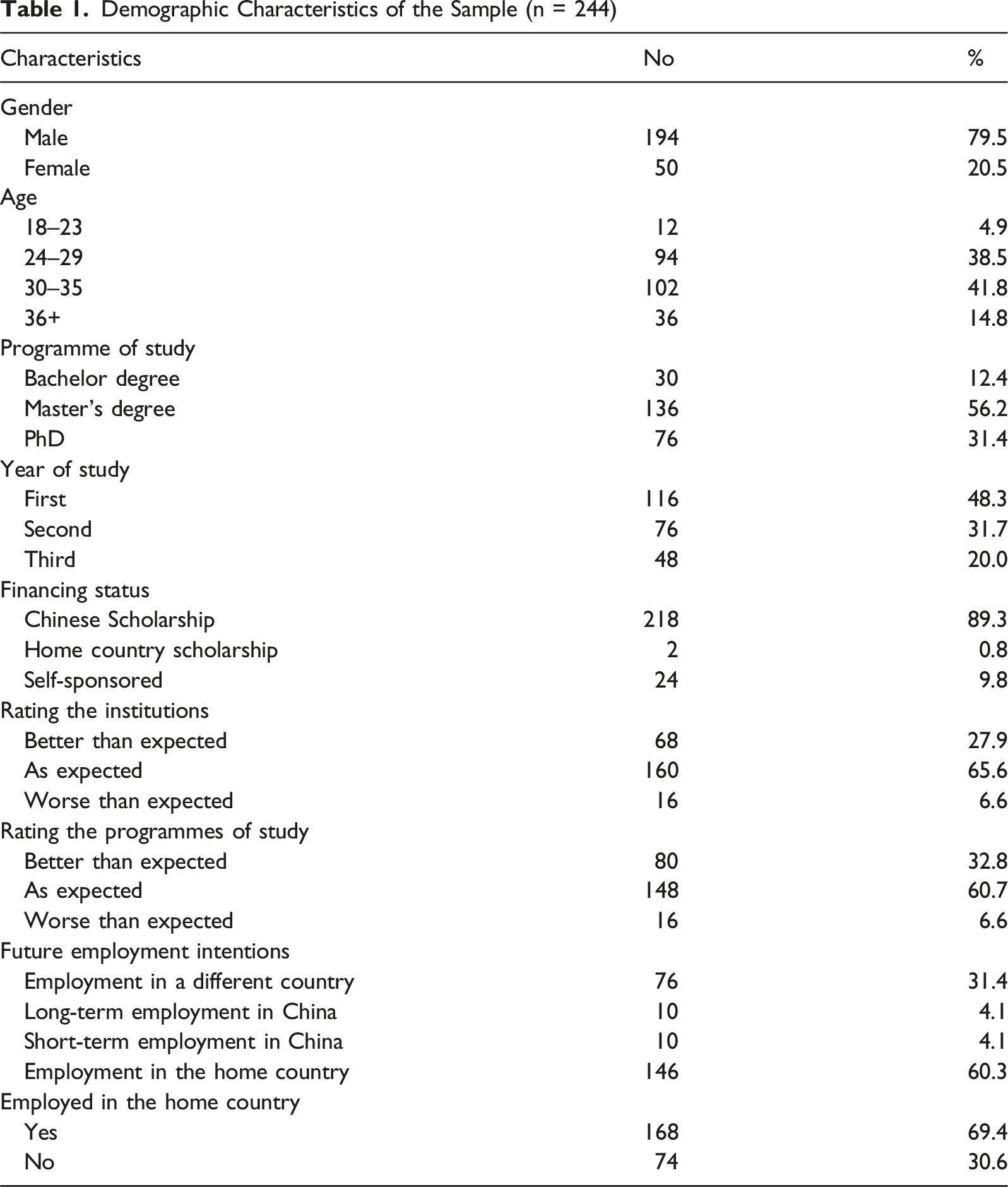
Demographic Characteristics of the Sample (n = 244)
Data Collection
Demographic Information of Tanzanian International Students Involved in FGD
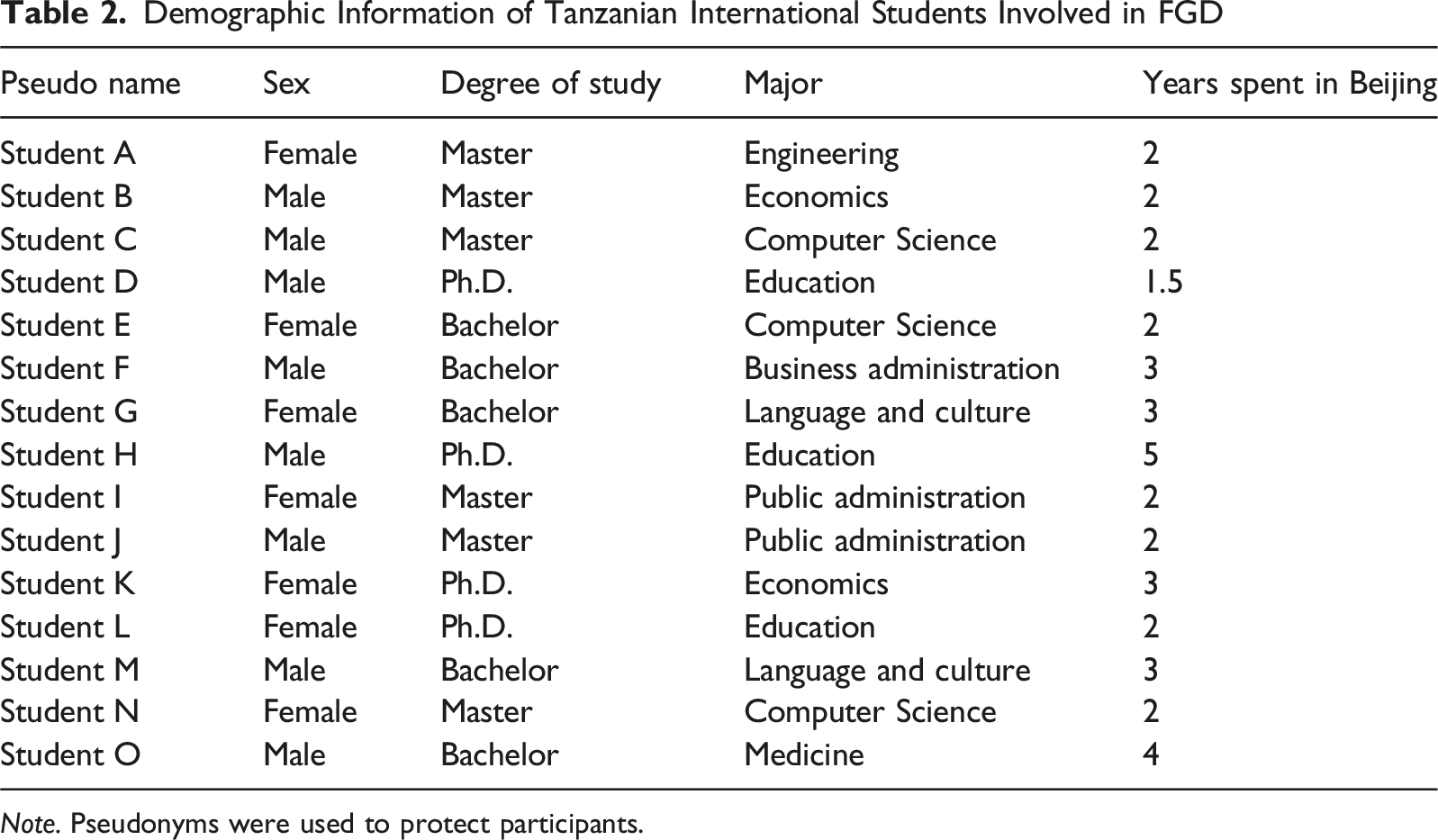
Note. Pseudonyms were used to protect participants.
Study Instruments
In developing the instruments used in this study, the researcher adopted questionnaire items from “Canada First: The 2009 Survey of International Students”. The researcher divided the items into four main dimensions to match the research questions. The first dimension was adjustment, where the researcher used a four-point scale (1 = very difficult, 4 = very easy) using six (6) items (e.g., “Adjusting to life in China”). A four-point scale (1 = strongly disagree, 4 = strongly agree) was used to measure the other three dimensions: soft power, academic, and social. Three (3) items were used to measure the soft power dimension (e.g., “Donor countries benefit more from the scholarship than the recipient countries”). The academic dimension was measured using four items (4) (e.g., “Instructor(s) care(s) about my academic progress”), and the social dimension was measured using six (6) items (e.g., “The university supports the formation of students’ unions or organisations”). Reliability analyses yielded Cronbach’s alpha coefficients of 0.74, 0.61, 0.61, and 0.71 for the adjustment, soft power, academic, and social dimensions, respectively.
The researcher controlled for variables such as gender, age, year of study, and employment status in the home country by including questions that measured these characteristics in the background section. The researcher also included other important descriptive features, such as future employment intentions in China and changes in expectations before and after arrival in China.
Data Analysis
The researcher conducted descriptive analysis to calculate the percentages, mean scores, and standard deviations. In interpreting the findings of this study, mean scores below 2 (M < 2) were considered low, scores between 2 (inclusive) and less than 3 (2 ≤ M < 3) were classified as moderate, and scores of 3 or higher (M ≥ 3) were regarded as high (Taherdoost, 2021). The researcher also performed independent t-tests, Analysis of Variance (ANOVA), and regression analysis. For qualitative data collected from the FGD, the researcher transcribed it, coded it, generated themes, and interpreted it by analysing patterns, relationships, and meanings. A few relevant quotes were used to support the themes generated.
Results
The purpose of this study was to examine the experiences of Tanzanian international students regarding their expectations, adjustment, soft power, and academic and social dimensions. The study investigated the relationship between students’ experiences and their gender, age, employment status at home, future employment intentions, and year of study. It also determined the predictors of Tanzanian international students’ adjustment in China. To start with, the first research question: What is the status of Tanzanian international students’ experiences regarding expectations, adjustment, soft power, academic, and social dimensions?
In this research question, participants were asked to rate their institutions and their programmes of study. In addition, they were asked to rate the items measuring the four dimensions: adjustment, soft power, academic, and social dimensions. Overall, the findings indicated that Tanzanian international students’ expectations of their institutions and programmes of study are relatively higher. Findings indicated that more than 60% of Tanzanian international students reported that their expectations were met in the institutional and programme aspects of their studies. Additionally, 27.9% of participants rated their institutions, and 32.8% rated their study programmes as “better than expected”. In support of this, during FGD, one student had this to emphasise: I studied public administration in my bachelor’s degree. I am happy to have joined a University in China that offers a programme with courses I expected to study in my Master’s degree programme. Overall, the programme courses I am studying meet my expectations (FGD, Student I).
This observation by Tanzanian international students in Beijing suggests that higher education institutions in China and the programmes of study meet the expectations of Tanzanian international students.
Mean Scores for Various Dimensions

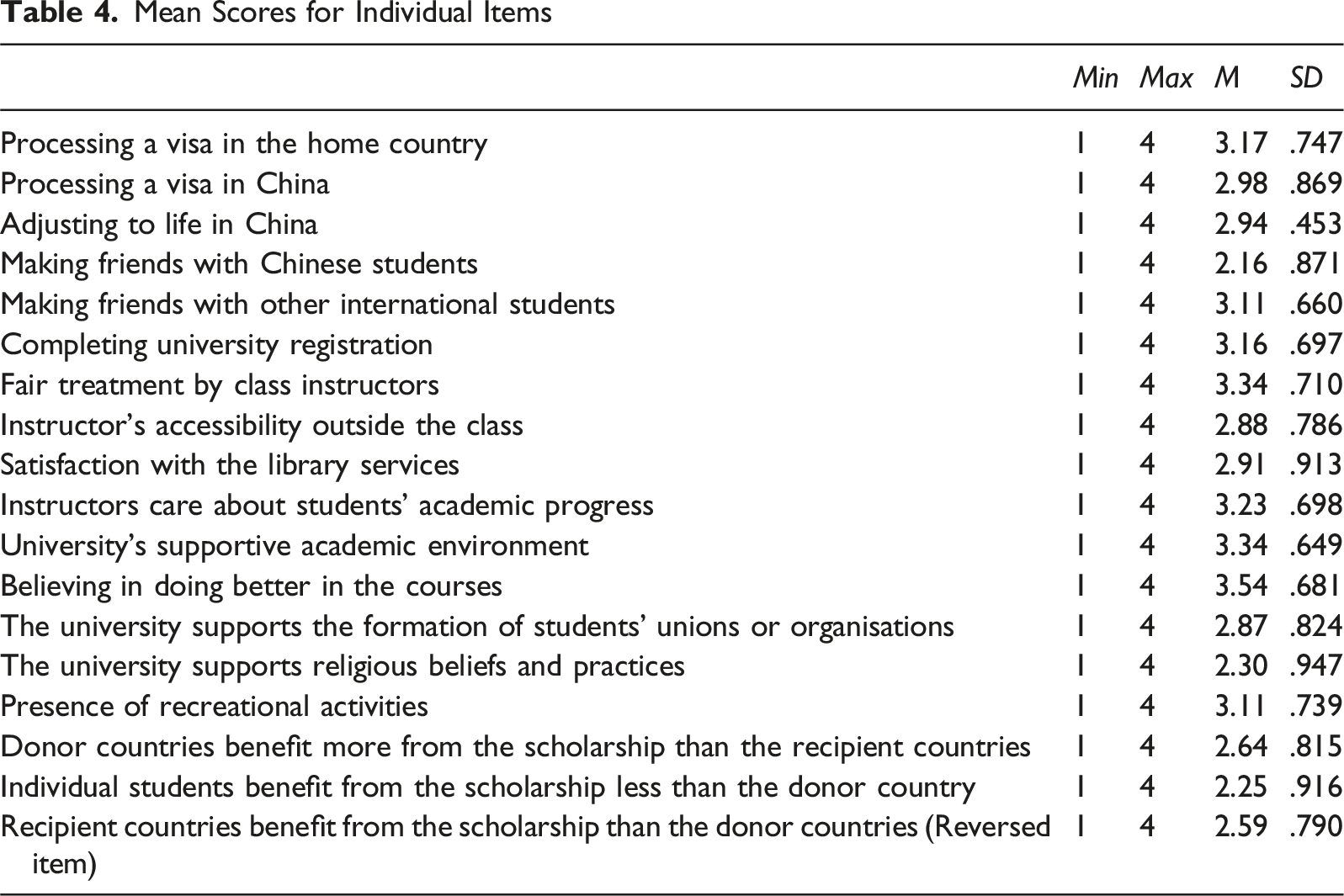
Mean Scores for Individual Items
What is the relationship between students’ experiences and their gender, age, employment status at home, future employment intentions, financing status, and year of study?
T-test and ANOVA Results for Various Dimensions

**p < .01, *p < .05.
Mean Scores for the Social Dimension by Age Group
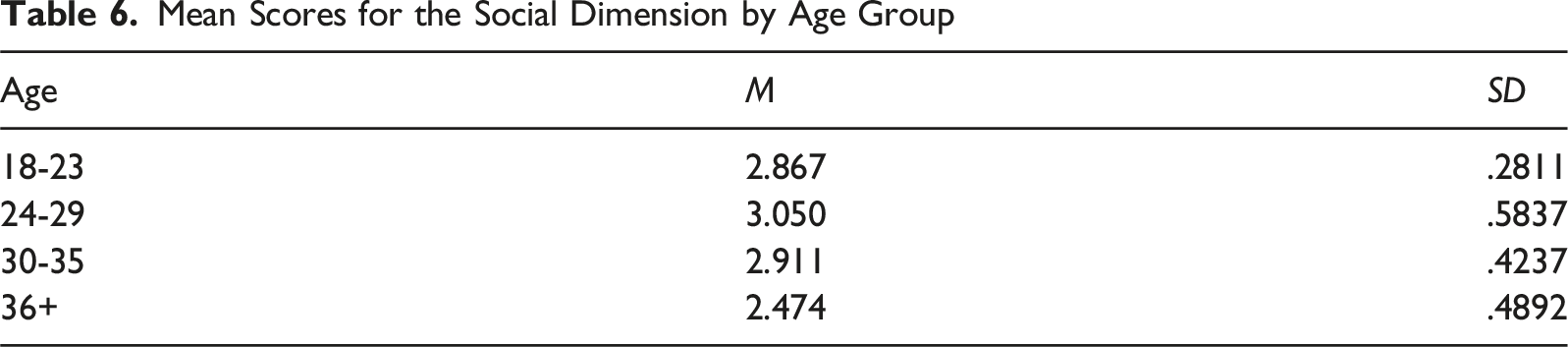
Regarding age and its relationship with social dimension, during FGD, participants highlighted that it is common for undergraduate students (usually younger) to interact more easily with Chinese students than students at the PhD level (who are usually older). To highlight this, one student argued that: In my experience, undergraduate students have more time to relax than master’s and PhD students. Hence, it is easy for undergraduate students to plan a walk around the city with native Chinese students. The practice enhances the social adjustment of Tanzanian international students (FGD, Student A).
Mean Scores for the Adjustment Dimension by Year of Study

Regarding forming friendships with other international students and Chinese students, participants in the FGD had varied experiences. To quote their words, one participant pointed out that: I find it easier to mingle with other international students than with Chinese students. For instance, I have friends from Ghana, Zambia, Malawi, Zimbabwe, South Korea, and India. Every time my supervisor invites me to attend some sessions with Chinese students, I feel alienated because they sometimes use the Chinese language, a language which I do not understand (FGD, Student D).
On the contrary, the other participant reported having easily developed a friendship with Chinese students. The participant reported that: I earned my Master’s Degree in China and, after graduation, pursued my Ph.D there. I speak Chinese. My fluency in Chinese has enabled me to make many Chinese friends. After class, I spend time with them in games and sports. Through those activities, I learn more about Chinese culture, and they learn English from me (FGD, Student H).
From the two verbatim quotes, it is evident that time spent in China and mastery of the Chinese language are key for Tanzanian international students who want to make social adjustments by making friends with Chinese students.
Regarding financing status, except for adjustment to life in China and soft power dimensions, study findings indicated a significant effect of financing status on Tanzanian international students’ academic (p < .05) and social experiences (p < .01) (see Table 5). Tanzanian international students who were under Chinese scholarship had the highest mean scores in both academic (M = 3.179, SD = .4937) and social (M = 2.941, SD = .5194) experiences. On the contrary, Tanzanian international students who were on the self-sponsorship scheme reported unsatisfactory academic and social experiences.
Concerning these findings, self-sponsored Tanzanian international students shared a similar experience. During the FGD, participants reported that Tanzanian international students receiving Chinese scholarships are more comfortable than their self-sponsored counterparts. One participant had this to highlight: I am currently in my second year of my Master’s degree. Regarding sponsorship, I am self-sponsored. Experiences have indicated that our colleagues who are sponsored by the Chinese government scholarship enjoy life here more than we do, because their stipend is usually given at the right programmed time. It is different from us who need to wait for our salaries back home (FGD, Student B).
From the quotation, it is interpreted that students under the self-sponsored scheme, whose source of income for tuition fees and accommodation highly depends on the socio-economic status of the parents in their home countries, do not enjoy life (social experiences) like those under Chinese government sponsorship. What are the predictors of Tanzanian international students’ adjustment in China?
Predictors of Students’ Adjustment in China

aPredictors: (Constant), Completing university registration.
bPredictors: (Constant), Completing university registration, Making friends with Chinese students.
cPredictors: (Constant), Completing university registration, Making friends with Chinese students, Processing a visa in China.
dPredictors: (Constant), Completing university registration, Making friends with Chinese students, Processing visa in China, Processing a visa in the home country.
ePredictors: (Constant), Completing university registration, Making friends with Chinese students, Processing a visa in China, Processing a visa in the home country, Making friends with other international students.
Overall, the five items were very strong and significant (p < .01) predictors of Tanzanian international students’ life adjustment in China. In descending order of predictive power, the five items—completing university registration, making friends with Chinese students, processing a visa in China, processing a visa in the home country, and making friends with other international students—together explained 87.1% of the variance in overall Tanzanian international students’ life adjustment.
Discussion and Conclusion
The study investigated Tanzanian international students’ experiences, adjustment in China and the extent to which China builds soft power through international education. Overall, the demographic data indicated that the proportion of female students in China was only 20.5%, suggesting that admission policies and scholarship programmes, as soft power tools, should place greater emphasis on gender. Additionally, the study revealed that the majority of Tanzanian international students (89.3%) were recipients of Chinese government scholarships. This is not surprising, given that the Chinese government has been generous in providing scholarships for Tanzanian students over the years as a tool for soft power. While the provision of scholarships is partly geared toward achieving soft power through improved bilateral relations (Yuan, 2014), the effectiveness of these scholarships in strengthening soft power depends on how institutions in the host country manage to influence international students.
Furthermore, as this study found, age is linked to the social dimension, aligning with Jo Aloka’s (2023) study, which noted that younger students sometimes adapt more easily to social situations than older students. This suggests that China should tailor social support to different age groups to enhance student adjustment and strengthen its soft power.
Unexpected findings were found regarding the relationship between the year of study and adjustment. Unlike earlier research (Corti et al., 2023; Oyeniyia et al., 2021), which suggested that students’ year of study influences their social and academic adjustment—specifically, second-year students adjusting better than first-year students because of increased familiarity with their environment (Corti et al., 2023)—this study presents different findings. It revealed that first-year Tanzanian international students had higher average scores in life adjustment compared to those in their second and third years.
Financial status influences students’ social and academic adjustment. This, in turn, affects students’ perception of soft power. The findings support the study by Al Juboori et al. (2025), which found that financial status among international students is a key factor in social and academic adjustment. The study suggests that when international students have access to adequate resources and support, they can easily adjust socially and academically, thereby strengthening their perceptions of soft power (Gauttam et al., 2024).
Moreover, the findings that Tanzanian international students who receive Chinese scholarships are more comfortable than their self-sponsored counterparts are worth reporting in relation to soft power. The findings support the claim in soft power theory that one of the primary objectives of countries such as China to offer scholarships to international students has been to acquire soft power through international education (Metzgar, 2016; Tam et al., 2018; Yuan, 2014). Higher education is leveraged as a tool to influence other nations without coercion (Nye, 2017).
With the assumption that international students’ experiences influence soft power (Lee, 2015; Metzgar, 2016; Tam et al., 2018; Waithaka & Maluki, 2016), the findings reveal several implications for China’s efforts to project soft power through international education. For example, the study found that a majority of Tanzanian international students did not find China as their employment destination. Among those employed at home, only 4.8% intended to secure short- or long-term employment in China, while 28.6% reported a desire to be employed in countries other than China. Likewise, among Tanzanian international students who did not have a job in their home country prior to coming to China, only 16.6% intended to work in China. In comparison, 38.9% mentioned other countries as their destination for employment. One possible explanation is that the findings suggest Tanzanian international students were relatively dissatisfied with aspects of social and overall life adjustment in China. For instance, Tanzanian international students found it challenging to obtain a visa in China, make friends with Chinese students, and exercise their religious freedom.
In connection with that, the findings indicated that, in descending order of importance, improving international experiences in completing university registration, making friends with Chinese students, processing a visa in China, processing a visa in the home country, and making friends with other international students will positively affect overall life adjustment in China, thus enhancing soft power. In general, these findings align with several studies (e.g., Gutema et al., 2024; Kamil et al., 2024), which have found that visa processing arrangements enhance soft power.
Additionally, earlier observations indicate that soft power theory holds that a country’s soft power depends on its culture, values, and policies (Nye, 2017). Fortunately, all these resources are connected to international education, as international students are exposed to Chinese culture and values, and tend to comply with Chinese policies, including scholarship regulations. No wonder Tanzanian international students scored a moderate mean on the soft power dimension; they were probably dissatisfied with the culture and values that prevented them from making friends with Chinese students.
In addition, the finding that Tanzanian international students were more satisfied with their academic experiences than their experiences in the social and adjustment-to-life dimensions is worth discussing. Tanzanian international students scoring a moderate mean in the social and adjustment dimensions replicate the CCA theory, which suggests that adaptation and adjustment are complex and constantly evolving processes (Guerriche & Grimshaw, 2024; Kim, 2001, 2017; Miao & Zhang, 2024). The findings echo the theory by showing how Chinese cultural patterns of interaction with host Chinese students challenged Tanzanian international students.
Furthermore, the findings reveal the power of social interactions and language proficiency as strategies for helping Tanzanian international students adjust to life in China. On the one hand, Tanzanian students who did not speak Chinese found it easier to socialise with other international students but felt isolated when they met Chinese students. On the other hand, those who could speak Chinese and participated in various games and sports adjusted more easily by forming friendships with Chinese students. These findings align with the CCA theory, which states that adaptation happens through communication (Guerriche & Grimshaw, 2024; Kim, 2001, 2017; Miao & Zhang, 2024). Therefore, language skills and participation in sports significantly affect adjustment.
Finally, the study acknowledges certain unexplained findings and, therefore, recommends further research to provide deeper insights. First, the researcher was unable to establish why males and females differed in their perceptions of soft power. Second, the major limitation is that the sample consisted of only Tanzanian international students studying in Beijing. Although it did not affect the validity of the findings in the present study, recommends conducting a similar study with an expanded scope.
Footnotes
Acknowledgements
I would like to express my sincere appreciation to the Tanzanian international students in Beijing for their participation in this study. My heartfelt thanks also go to my colleagues, Professor Mjege Kinyota and Grace Kihwele, for their invaluable assistance in completing this research.

Ethical Considerations
This research received ethical approval from the Beijing Normal University, China.
Consent to Participate
All research participants were provided with informed consent.
Funding
The author received no financial support for the research, authorship, and/or publication of this article.
Declaration of Conflicting Interests
The author declared no potential conflicts of interest with respect to the research, authorship, and/or publication of this article.