




Abstract
This article approaches educational and vocational career in contemporary China. Since 2012 the Chinese government has committed to a model for the development of individual’s career, where the decision-making of students should be guided by universalistic criteria. However, specific aspects and values of Chinese society must be considered while evaluating this model. While doing that through a questionnaire based on the concepts of professional educational guidance, cultural capital, economic capital, and social capital, we propose patterns of parental influence on children in educational and career guidance and a scale to measure them. We conclude that the family plays out a central role in what concerns vocational guidance of their children, but Chinese values may not specifically explain that interference.
Keywords
Introduction
China has undergone rapid transformation, prompting swift changes in its education system and labor market since the late 1970s. Recently, the government’s focus has been on transitioning China into a high-wage service economy (Dieppe et al., 2018), necessitating an increase in the average educational level of the population. Vocational guidance has emerged as a crucial component in aligning the education system with the labor market and enhancing Chinese human capital. The Chinese government, since 2012, has committed to an Educational and Professional Guidance (EPG) model, aiming to aid individuals in understanding their abilities, providing labor and academic information, and optimizing decision-making during educational and career transitions (Doncel-Abad, 2018).
Career information collection and processing, crucial in career development, are highlighted in the social cognitive career theory, emphasizing the role of learning experiences and thinking styles in decision-making. Despite the government’s emphasis on meritocratic criteria, various factors such as family socio-economic background and parental thinking styles significantly impact the decision-making process (Bodycott & Lai, 2012; Edgerton et al., 2013; Kim et al., 2017; Lin & Doncel Abad, 2023; Mao, 2022). There is a growing need for indigenous approaches addressing the specific influence of parents, considering the collectivistic culture, family orientation, and Confucianist values prevalent in Chinese society (Li, 2011; Qi, 2015; Sun, 2017; Xing et al., 2021). The paper’s objective is to gain insights into the elements influencing the decision-making process, including family socio-economic background and cultural values, particularly cultural capital and Confucian values in a changing social context.
The literature review explores the concept of traditionality, focusing on the sociological approach to identify cultural and social elements and social class in the decision-making process. Traditional Confucian values, such as filial piety, play a significant role (Fan & Leong, 2016), and parental intervention is influenced by the traditional or modern thinking styles of parents. The study delves into traditionality as a set of psychological characteristics and introduces the concept of modernity thinking style.
The paper also incorporates Bourdieu’s concepts of cultural capital and habitus, emphasizing their role in parental interventions. Cultural capital, encompassing symbolic resources gained through social learning experiences, and habitus, representing acquired affinities and class-related aptitudes, contribute to understanding the impact of parental background on educational choices. Disparities in cultural capital and habitus between families affect educational attainment, and the paper extends Bourdieu’s concepts to explore their role in the decision-making process regarding academic careers in China.
Overall, the study aims to contribute to the understanding of how Chinese families navigate decision-making regarding their children’s educational and professional trajectories in the context of evolving societal norms and values.
Literature review
Traditionality
In our literature review, we adopt a sociological approach to identify and delineate cultural, social elements, and social class in the decision-making process within the framework of Educational and Professional Guidance (EPG). Drawing on previous research on professional and educational orientation in China, we integrate Bourdieu’s approach to understand educational choices, with a focus on particularistic models of parenting in student guidance and decision-making processes.
In the context of Chinese society, factors such as collectivistic culture and family orientation are deemed relevant in the decision-making process. Traditional Confucianism continues to exert a substantial influence, emphasizing values like obedience to parents and teachers, and the parental duty to support their children’s endeavors. To incorporate these aspects, we employ the social influence model proposed by Liu et al. (2020). This model posits that parental intervention, influenced by the traditional Confucian notion of family hierarchy and obedience, occurs during the crucial phase of last-minute career decision-making when young individuals are often uncertain about their future choices.
Parents' perceived roles in the educational and professional trajectory significantly impact their intervention styles. Depending on whether parents adopt an active or less intervening stance, different parenting practices may emerge. The concept of traditionality encompasses various Chinese psychological characteristics such as submission to authority, filial piety, ancestral worship, conservatism, endurance, and fatalism defensiveness. Traditional parents emphasize respect for authority and obedience in the decision-making process, maintaining hierarchical relationships with their children. They consider intervention not only legitimate but also a parental duty. However, in the rapidly modernizing context of Chinese society, individuals transition from traditional to modern attitudes, beliefs, values, temperament, and behaviors. This transition is reflected in the emergence of parents with a modernity thinking style, characterized by egalitarianism, open-mindedness, social isolation and self-reliance, optimism, assertiveness, and affective hedonism. Less traditional parents exhibit a more horizontal approach to family relationships.
Comparative studies shed light on the concept of traditionality. Youn et al. (2023) observed that South Korean parents are more involved and influential on their children’s education until later stages, while South Korean students demonstrate less autonomy and struggle with career decisions. In contrast, U.S. students show greater autonomy and distance from parental influence at the same educational level. These findings align with Guan et al. (2016), suggesting that traditional beliefs may diminish personal agency crucial for career adaptability. It’s essential to note that traditionality should not be equated with Confucian values, as evidenced by Kumar’s (2016) study in Ethiopia, indicating that parental expectations, particularly influenced by the father, significantly contribute to career choices. Therefore, traditionality should be understood as indicative of greater parental intervention.
Cultural capital and habitus
To enhance our approach, we incorporate Bourdieu’s concepts of incorporated cultural capital and habitus to understand the influence of parental cultural capital in delimiting and discriminating between parental interventions (Edgerton et al., 2013; Lareau, 2011). In Bourdieu’s educational research framework, cultural capital encompasses symbolic resources acquired through social learning experiences across the life course, varying across social classes and status groups (Bourdieu, 1986). This concept provides a unique lens for investigating the education system’s role in perpetuating social and cultural inequalities, as well as the impact of origin background on educational achievements (Bourdieu, 1979). Habitus, on the other hand, refers to a set of acquired affinities and class-related aptitudes shaping individuals' perceptions, orientations in the world, aspirations, and desires related to the future. It is also influenced by family upbringing and one’s position in the social structure (Edgerton et al., 2013). Disparities in cultural capital and attitudes towards education (habitus) between families significantly impact educational attainment.
In the Chinese context, cultural capital has been widely employed to explore the rural-urban divide and the experiences of migrant children in cities (Shi & Li, 2019). Liu et al (2020) argue that Chinese structural factors, such as the hukou (the residence registration system), and cultural beliefs linked to Confucian culture, make Bourdieu’s analytical tools uniquely suited to examining education’s role in social class reproduction. Parental involvement and educational expectations play a crucial role in children’s educational achievements, overshadowing the impact of family socioeconomic backgrounds when compared to the rural-urban divide (Shi & Li, 2019).
Sheng (2017) explores the influence of family class background and financial income on students' decision-making processes regarding subjects and universities in China, highlighting the significant role of social class in university choices. Students from affluent families, benefitting from their family’s cultural capital, secure positions in leading schools and easily access key universities. High economic capital of parents facilitates higher education costs and a smooth transition to the job market.
Expanding Bourdieu’s concepts in quantitative studies, our work applies Gao’s (2011) model, establishing four phases in the process of choosing an academic career until reaching university. Two central elements, cultural capital and economic capital, are incorporated into this framework. Cultural capital includes three theoretical constructs: academic preparation, parental preferences and expectations, and parental involvement. Academic preparation indicators involve early family education, education planning, a reading and learning environment at home, and school choice. Parental preferences and expectations include indicators such as expectations about school, encouragement regarding schoolwork, communication style, discipline at home, and rules about schoolwork and grades. Parental involvement is measured through indicators like participation in college visits, helping with college set, and the final decision about college choice. An economic indicator is added to gauge the parents' capacity for involvement.
Lan Gao’s analysis results highlight that families from different social classes transmit distinct cultural values and knowledge to their younger generation, creating a gap between children from upper- and lower-class families. Parents with higher social status value university education, possess more information about university access, and play a more active role in their children’s university decision-making. In summary, the economic and cultural capital associated with the family’s social class significantly influences students' decision-making processes.
Methods
Construction of the model
In our quantitative research, we developed a questionnaire grounded in theories, models, and concepts to address defined research objectives related to Parental Traditionality and Parental Involvement. These constructs were operationalized as follows:
Parental traditionality
Defined as the level of submission to authority possessed by individuals across different parents (Liu, Mao, & Wong, 2020). Perceived social values of parents influence the way parents’ guide their children in academic matters. Operationalized using typologies and attributes from Li & Fan (2017) Liu, Mao, and Wong (2020), and Yang (2003). • Types: • Modern parents: Liberal, creative, egalitarian, open-minded, promoting self-reliance. • Traditional parents: Conservative, focused on traditional approaches, submission to authority, filial piety, and ancestral worship.
Parental involvement
Adopted the theoretical model of Gao (2011), considering the definition and variance of this concept based on social class. Gao found that parents with higher social positions are more likely to have information about college access, play an active role in college decision-making, and are less concerned about financial expenses. We aimed to explore variability in the ways parents collaborated in their children’s decision-making process based on their perception of their role, either traditional or not, and their perception of the schooling process influenced by their social structure.
Ideal Types of parental Guidance Patterns.
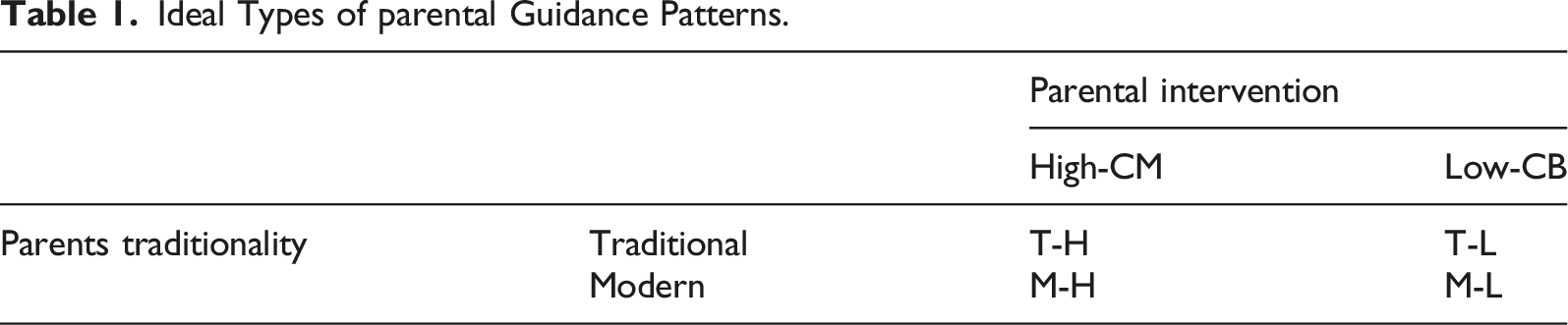
Table 1. Ideal types of parental guidance patterns: • • • •
These ideal types represent different profiles of parental conduct in educational and professional guidance, reflecting how students perceive relationships within the family in relation to their school process.
Methodology
Objective
In summary, the paper aims to explore elements influencing the decision-making process in career development, incorporating both indigenous and sociological perspectives. The approach considers values, decision-making styles, and vocational identity, emphasizing the impact of contextual factors and individual features, particularly within the changing social context of contemporary Chinese society undergoing modernization (Li & Fan (2017)). The objective is to gain deeper insights into the factors shaping the decision-making process, such as family socio-economic background and the social values upheld within families.
Questionnaire
Sample. Descriptive Statistics of age, course, and number of siblings.
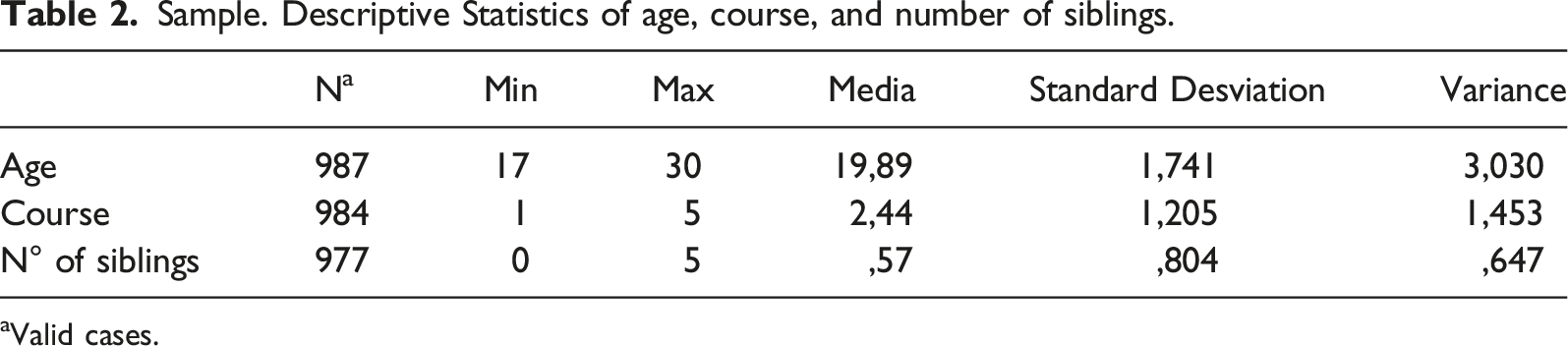
aValid cases.
Sample
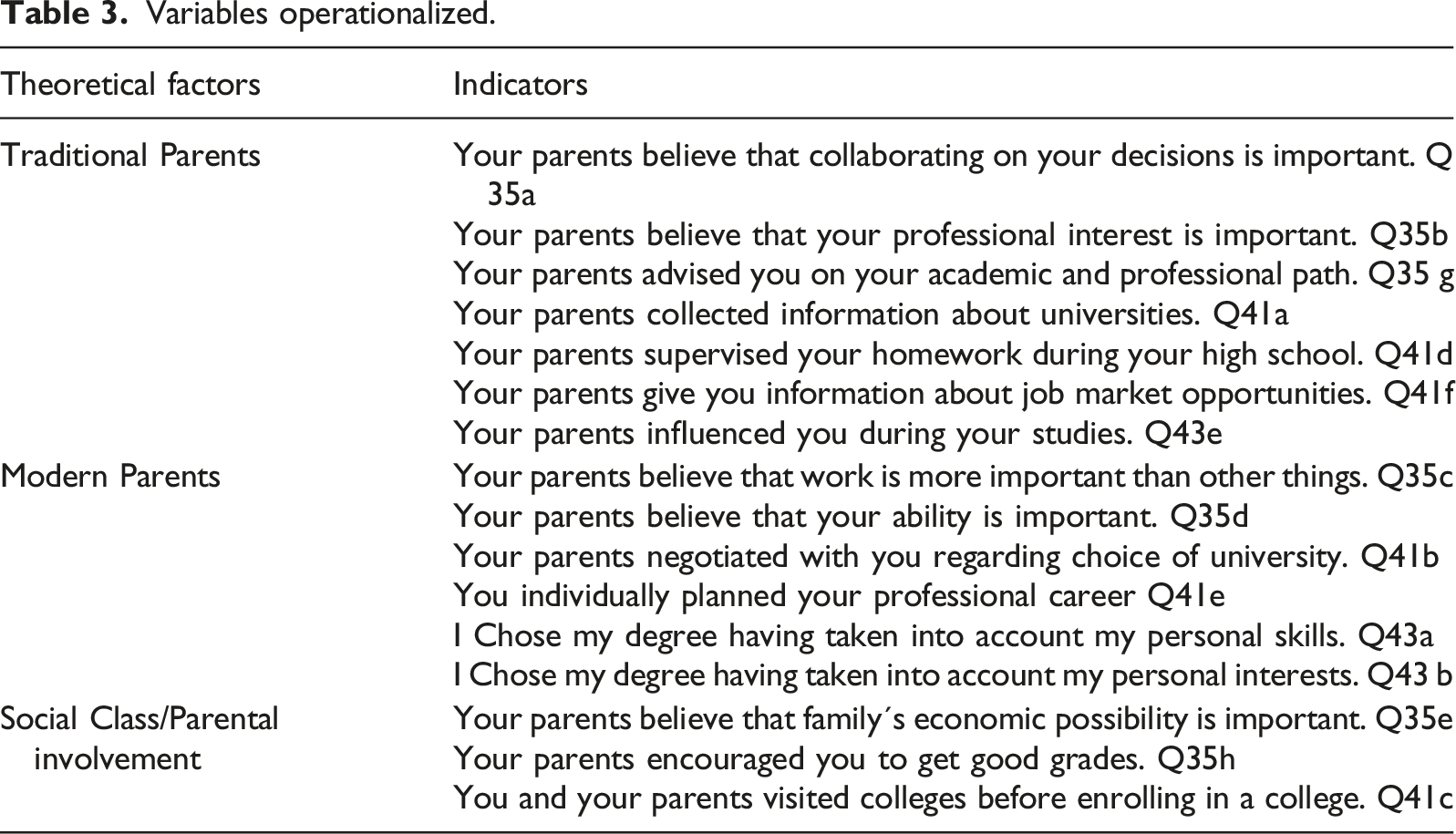
Variables operationalized.
Variables
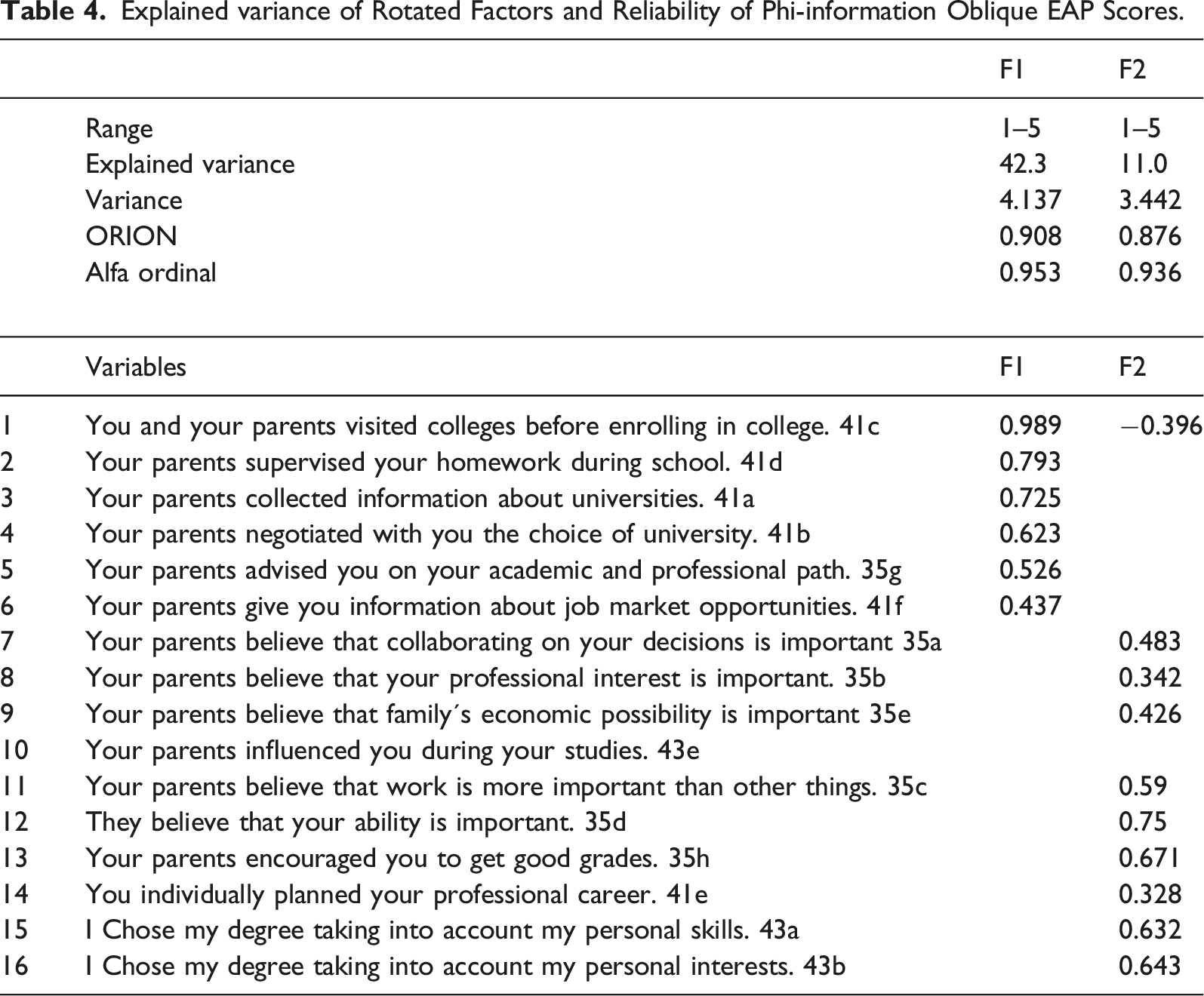
Explained variance of Rotated Factors and Reliability of Phi-information Oblique EAP Scores.
For the analysis, 16 indicators were utilized, each measured on a five-point Likert scale where (1) signifies no importance and (5) denotes very important. The list of indicators is detailed in Table 3.
Analytical technique and strategy
To accomplish the research objectives, a factor analysis was employed to explore parental influence on decision-making and identify potential patterns of influence, particularly focusing on social values. The Factor program was chosen for the Exploratory Factorial Analysis, as it is recognized for its accuracy in handling ordinal variables with Likert scales (Padilla, 2019).
The configuration of the software involved several key steps: 1. 2. 3. 4. 5. 6.
This meticulous approach aimed to derive meaningful and interpretable factors that capture the nuances of parental influence on the decision-making processes of Chinese university students, considering both traditional and modern values.
Analysis
In this study, the objective was to comprehend the influence of the nuclear family on the educational trajectories and decision-making processes of students in contemporary China. The analysis utilized a weighted least squares method with Promin rotation, specifically employing the robust Promin method to achieve a simplified and interpretable factorial structure.
Key findings
1. 2. 3. 4. • • 5.
In sum, the factorial solution, consisting of two factors, provides a comprehensive understanding of how parental influence operates in the context of educational decision-making among Chinese university students. The high variance explained, coupled with robust goodness-of-fit statistics, adds credibility to the identified factors. The ensuing paragraphs will delve deeper into interpreting and characterizing these factors, shedding light on the distinct patterns of parental influence in the evolving landscape of Chinese society.
In light of the data, distinctions between theoretical concepts and statistical factors were noted. Notably, the number of statistical factors was reduced from four to two in comparison to the four initially proposed theoretical ideal profiles. As we point out above, our findings reveal the presence of only two distinct profiles, namely F1 and F2. The model resulting from the factor analysis demonstrates internal consistency, indicating two identifiable dimensions of parental influence on their children’s educational paths.
These profiles amalgamate various indicators associated with different dimensions, encompassing parental traditionality, parental involvement, and social class. The F1 profile exhibits a more pronounced hierarchical nature, indicating heightened parental involvement in guiding their children academically and vocationally. Specifically, this profile revolves around indicators linked to upper-class cultural capital, such as parental involvement in academic guidance, especially concerning college choices.
Examples of indicators in F1 include visiting colleges before enrollment, parents gathering information about universities, providing guidance and negotiating university choices with their children, parents advising on academic and professional paths, and overseeing homework in high school. Additionally, F1 involves items related to guiding toward the labor market, like parents providing information about job market opportunities. This profile aligns with the works of Sheng (2012) and Gao (2011), emphasizing the association between university choice and family’s cultural, social, and economic capital. It suggests that middle-class families tend to be more traditional and involved in university choices to ensure the social success of their children.
F1 represents a more conservative parental guidance pattern, resembling the theoretical Ideal Type A. This implies that some students perceive their parents as more involved in decision-making regarding their academic future. Importantly, this involvement is not merely a desire but stems from the parents' ability to intervene due to their specific knowledge, particularly about universities and career opportunities. It reflects a form of enlightened family traditionalism.
Profile (F2) is linked to individual agency and considerations about the family’s material circumstances when decisions are made during educational trajectories. Indicators within this factor suggest that students believe their interests and abilities play a crucial role in selecting their academic path, with parents affording them significant involvement in the decision-making process. Examples of indicators in Factor 2 include: “Your parents believe that collaborating in your decisions is important (P 35a),” “Your parents believe that your professional interest is important (P35b),” “Your parents believe that your ability is important (P35d),” and “I chose my career taking into account my personal abilities (P43a).”
It is noteworthy to highlight indicator 41c, which, in addition to being characteristic of the middle classes (Gao, 2011) and a key element in Factor 1, also appears in Factor 2 but with a negative sign. This indicator is the most distinguishing factor between the two parental orientation patterns identified in the analysis, confirming that the educational and vocational orientation pattern reflected in F2 does not align with the middle-class parental involvement described by Gao (2011). Consequently, Factor 2 portrays parents who adopt a more horizontal approach, granting their children greater agency in the decision-making process. This factor aligns more with the ideal type D, where parents exhibit a more egalitarian stance in this process.
Discussion
Throughout this article, we have scrutinized the role of the nuclear family in the educational paths and decision-making processes of students in contemporary China. Our study underscores that a significant portion of the challenges facing China, such as the quality of human resources and, consequently, educational and career guidance, unfolds within the family sphere. However, the prominence of the Chinese family in vocational guidance is intricately linked to the imperative of averting failure.
Despite initially conceptualizing four theoretical models, our research has revealed two distinct models of orientation. The primary divergence between these empirical factors lies in the approach of parental involvement in the academic and vocational guidance of their children. Some parents have been actively engaged throughout their children’s educational journey, leveraging available resources, such as cultural capital, to provide steadfast support. Simultaneously, other parents entrust their children with agency, placing confidence in their abilities, interests, and decision-making processes.
The primary revelation is that within the evolving social landscape of contemporary Chinese society, two parental guidance strategies are associated with the educational success of children. One aligns with a more traditional paradigm, where parents endeavor to impart their cultural resources to their children, and the other reflects a modern approach, where parents afford more autonomy to their children. Traditional parents, equipped with cultural resources, tend to be more involved in their children’s school life, especially at higher education levels, possessing familiarity with information related to university entrance. Conversely, modern parents adopt this strategy as they believe it is the most effective means for their children to achieve academic success, trusting that their children can navigate their own career paths more effectively than they can.
In conclusion, the alignment between the number of theoretical factors and empirical factors was unexpected, as our aim was to comprehend the composition of empirical factors through exploratory analysis. While different factor analysis tests were conducted, providing a reliable and valid solution with these two patterns, we acknowledge the necessity of a confirmatory factor analysis to rigorously test the reliability and validity of these results. This, however, requires obtaining another sample for analysis.
Footnotes
Declaration of Conflicting Interests
The authors declared no potential conflicts of interest with respect to the research, authorship, and/or publication of this article.
Funding
The author(s) disclosed receipt of the following financial support for the research, authorship, and/or publication of this article: This work is part of the research project - Orientación Educativa y Profesional, formación del capital humano chino en cultura española - funded by the University of Salamanca under reference number PIC2-2020-09.
