




Abstract
The reform and opening-up of China have greatly improved the scale and quality of doctoral education for women. However, female doctors still face the “leaky pipeline” and the “unbreakable glass ceiling” in their development of academic careers. In this study, gender differences are investigated in doctoral graduates’ career choices, the level of educational institutions they attend, and their scientific research productivity after joining the institution. We analyzed the administrative data and scientific research publication information from ten years of doctoral graduates at a top research university in China. Results suggest that compared to their male counterparts, female doctors are more likely to pursue an academic career upon graduation, but they are also more likely to be employed in lower-level institutions as well as to publish Chinese scientific studies with lower influence and poorer quality. Moreover, gender differences in academic disciplines are heterogeneous. While academic career development for doctors in natural sciences is not gender-biased, female doctors in social sciences face the most significant challenges, and these results persist even after controlling for their scientific publications during graduate school. In other words, gender differences in academic career development are likely to result from gender symbols rather than differences in academic ability.
Keywords
Introduction
Since the reform and opening-up of China, doctoral education has developed rapidly and played a crucial role in the country’s development of nature science and technology. Doctoral education for female students has historically progressed during this period (Yan & Shang, 2021). By 2021, the proportion of female doctorates nationwide reached 41.87%, an increase of 6.4% from 2012 (MOE, nd). Doctoral education plays a crucial role in China’s development of science and technology, and female doctors are steadily becoming an emerging force that enhances the country’s strategic development (Ren et al., 2013). In 2021, the Ministry of Science and Technology, the All-China Women’s Federation, as well as other 11 departments launched “A Series of Measures to Support Female Researchers in Playing a Greater Role in Science-technology Innovation”, indicating that female sci-tech (i.e., science-technology) talents are a vital part of China’s sci-tech innovation team as well as play an integral role in China’s sci-tech innovation initiatives. Of China’s scientific and technological endeavors, half is the work of female scientists (Ministry of Science and Technology of the People’s Republic of China, 2021).
While the number of female doctors has grown rapidly in recent years, they still face many difficulties and challenges in their career development. On the one hand, female doctoral students have to bear multiple pressures from society, family, and academic advisors in their graduate training (Centra & Gaubatz, 2000). Compared to their male counterparts, the deferral rate for female doctoral students is higher, but the amount of scientific research produced is lower when they are in graduate school (Li & Chen, 2021). This disadvantage will be extended to female doctors’ quality of employment, the amount of scientific research produced, as well as the promotion of professional titles. On the other hand, female doctors face an “unbreakable glass ceiling” in their development of academic careers. Although female doctors are more likely than male doctors to pursue academic careers in higher education institutions (Wang & Hao, 2006; Zhao & Shen, 2010), they tend to be employed in lower levels of higher education institutions (Jin et al., 2018). Upon joining the institutions, female doctors face the “Productivity Puzzle” as their scientific research productivity tends to be lower than that of male doctors. Female doctors often find it difficult to reach the highest positions of professional elites along with the improvement of their academic status, a phenomenon known as the “Leakey Pipeline” (Lin & Tong, 2012). In May 2023, the Chinese Academy of Sciences published statistics showing that females make up only 6% of the 824 academicians. A possible explanation for career development difficulties among female doctors lies in Sonnert and Holton’s “Deficit Model.” Typically, females are socialized to be gentle and dependent, leading to a deficiency in their ability development. Even if there is no difference in ability between females and males, gender as a symbol will cause females to be treated differently in career development. Although China has been committed to gender equality for many years and has repaired the formal structural barriers to gender discrimination, many hidden informal structural barriers still hinder female doctors' academic career development.
The purpose of this study is to identify whether the academic career development of female scholars differs significantly from that of their male counterparts, as well as the reasons behind the differences. This study empirically examines the differences and similarities in the academic career development of doctoral graduates across genders based on data from ten years of doctoral graduates at a top research university. Possible gender differences are explained by ability factors from an internal attribution perspective, and gender symbol signals from an external attribution perspective.
Literature review
Life development is irreversible. Gender differences in academic careers begin with differences in early life. After subtle “shaping,” labeling of stereotypes, and intensified discrimination, the gap between females’ academic career development and males’ is getting wider and wider in accumulating advantages.
Innate “gap” — Starting with Freud’s biological determinism
There is no doubt that there are innate physiological differences between genders. Freud’s (1987) biological determinism believed that men would be superior to women due to their physiological structure, but this statement was soon widely questioned by other scholars. While no consistent conclusion has been reached regarding whether males have gained career development advantages due to physiological advantages, the existence of gender differences in personality characteristics has been generally acknowledged by academia. It is harder for females to be in an advantageous position at work due to their dependence, avoidance of conflict, avoidance of taking credit, and non-complaining behaviors, as pointed out by Peterson (2018). In addition, females do not possess the same level of physical strength as men, which will also affect their ability to advance in their careers (Zhao & Bao, 2020). In terms of professional field preferences, males tend to choose interdisciplinary and more applied majors (Leahey, 2007), while females prefer to study family-related and health-related fields (Childress & Nault, 2019; Key & Sumner, 2019; Wullum Nielsen & Börjeson, 2019). Although these gender differences in personality and characteristics are innate and cannot be chosen, they will affect females’ academic career development.
Subtle “shaping” — Secret and real gender role socialization
The “gap” between female and male scholars will also continue to widen in the process of gender role socialization. Socialization theory believes that social status acquisition will be affected by social and cultural factors. Society, family, school, peers, and other groups pass on the gender concepts and norms that have been formed by society to individuals through formal education, family education, daily life, and work, enabling individuals to fulfill the gender roles required by society (Crespi, 2003; Gleitman et al., 2000). The gender role identity and expectations formed by an individual during the socialization process will have an impact on the individual’s career choices and expectations (Marini & Brinton, 1984; Zhu, 2012). The impact path of gender role socialization can be summarized as follows. On the one hand, it will affect individuals’ social role-playing expectations and further affect their concepts of work and making money (Betz & O’Connell, 1989; Granrose, 2005; Reskin & Padavic, 1994). On the other hand, it will drive men and women to seek employment based on their respective role positions and career preferences. Under the traditional social gender concept that “women work at home and men work outside”, male doctors prefer jobs with higher wages, while female doctors prefer stable jobs with low pressure, and enable them to spend time with their families (Lin & Tong, 2012). Gender role socialization explains the different preferences of males and females when choosing career types and reflects the problem of gender inequality. A family should be a shared property that requires both husband and wife to contribute time and energy; however, employers often place the responsibility of taking care of the family on females, even using it as an advantage for males. It is also an important reason why it is difficult for female doctors to obtain high-quality academic career development.
Unthinkingly “labels” — Emergence of gender stereotypes and symbolization
Both the above pieces of literature mainly explain gender differences from the perspective of females. Regarding how society spreads gender differences from the inside to the outside, and through what mechanism females are subjected to “absurd opinions” that they should not bear, the interaction between gender stereotypes and symbols in the sociology field provides an explanation.
Stereotypes refer to people’s innate stereotyped and fixed perceptions of different categories of people. This perception usually labels different categories of people in an extremely simple way and does not change the overall view of this group based on the specific person. Gender stereotypes refer to people’s generalizations and summaries about both genders' behavior and personality characteristics (Ma, 2000). Its existence has caused women in academic careers to bear labels that do not belong to them, such as “having to spend more time taking care of the family” and “worse scientific research ability” (Franco et al., 2021). It should be noted that compared with the actual differences in gender physiological characteristics, gender stereotypes are not supported by empirical data and may impose disadvantageous impressions that are not exclusively female on the entire female group.
The stereotypes currently imposed on females by society also play a role in gender symbolization. Females are generally symbolized as dependent, docile, and weak. Sociologist George Herbert Mead proposed the symbolic interaction theory, which believes that people understand others and themselves, form social relationships, as well as establish social structures through symbolic communication. In the widespread use of gender symbols and social interactions, social relations and social structures are affected; at the same time, both genders may further internalize the connotations behind the symbols during the symbolic interaction process, affecting the construction of females’ self-identities.
Intensified “discrimination” — Becker’s gender discrimination theory
Assuming that the explanations of “labels”, “gender symbols” and “gender stereotypes” are only at the “hidden level”, then the gender discrimination that arises from them is undoubtedly more irritating and harmful. Gary Becker’s discrimination theory believes that discriminatory behavior is caused by the unfair treatment of the weak by the strong and the negative stereotypes held by some groups against other groups. As a result of these negative impressions and unfair treatment, discriminatory behavior is formed as an inter-group control mechanism. In the event that discriminatory behavior occurs, the strong will gain certain benefits from the unfair treatment of the weak, thus encouraging the dominant group to perpetuate this discrimination and strengthening negative stereotypes of those who are disadvantaged. As a result, it achieves a cycle of self-satisfaction and dominance. In the academic labor market, males are generally considered to occupy the core position of resources in the academic community (Yuan, 2017). Men have more scientific research publications and better promotion opportunities than women (Schulze, 2015; Stack, 2004), while women are disadvantaged in terms of access to elite academic fields (Jin et al., 2018), wages (Lin & Tong, 2012), research publications (Sax et al., 2002; Shi & Chen, 2011), and promotions (Schulze, 2015). Based on the analysis of doctoral student survey data, researchers have found that 60% of females believed that they had been subjected to gender discrimination during the employment process, while only 1% of men believed that gender discrimination had taken place (Zhao et al., 2023).
Irreversible “snowball” — Analysis based on advantage accumulation and life cycle theory
The irreversibility of their emergence and development deserves more attention than the differences themselves. Merton’s theory of accumulated advantage believes that individual self-selection and social institutional selection affect people’s possibility of approaching opportunities in a particular field (Mendelsohn & Merton, 1989). When an individual’s role performance exceeds the standards required by the system, the process of accumulating advantages begins. In this process, the individual is provided with continuously expanding opportunities to further expand his or her access to the rewards associated with the job. As the direct bearers of population reproduction and participants in social production, females’ life cycles are closely linked to or even overlap with career development, and their reproductive and parenting functions have an important impact on career development (Tong & Pu, 2001). Academic committees pay special attention to females’ role in a family when recruiting young faculty members and are often unwilling to bear the additional cost of raising children that comes with hiring a female doctor. As a result, under the same conditions or when men are slightly worse off, they are more willing to hire male doctors (Wu & Jiang, 2015). Since elite institutions have relatively large resources, male doctors who are more likely to enter these institutions have a greater chance of gaining significant cumulative advantages. Some studies have found that this difference will affect their chances of entering elite institutions and various stages of future development, further widening the career development gap between female doctors and male doctors (Ying, 2009).
It can be seen from this that the academic career development of doctors of different genders may be affected by both individual abilities and gender discrimination in the workplace. Many studies have discussed the phenomenon of gender differences in career choice and development. There are, however, few empirical studies focused on the academic career field, and among those studies, most focus on the differences among genders in scientific research productivity, title promotions, and salaries. There is little in-depth analysis of the possible reasons for the gender difference, and it is difficult to answer questions such as: Whether gender differences in academic career development are due to differences in ability or gender symbols? Is there a distinction between academic disciplines in terms of gender differences?
Data and method
Data and variables
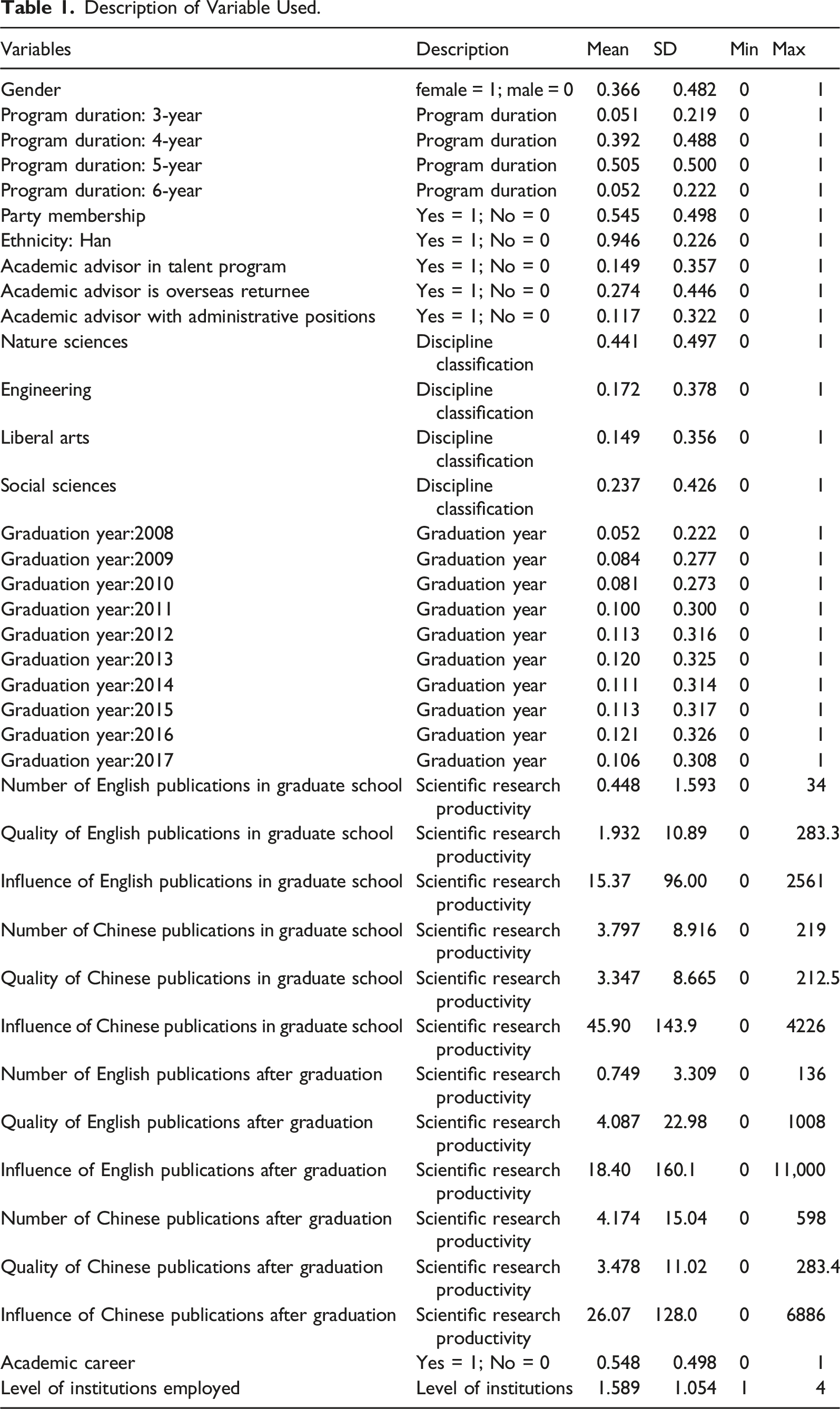
Doctoral graduates are the most likely to develop into leading scientific research talents in the future and are the best candidates for academic careers. Thus, in this study, ten years of doctors who graduated from a top university in China from 2008 to 2017 are studied, and two types of data are used to answer the research questions. The first type of data is administrative data, which does not only include a series of background characteristics of individual doctoral students, such as gender, ethnicity, admission method, admission department, graduation year, and graduation job destination, but also includes a series of characteristic variables of his mentor, such as position, and academic experience. The second type of data is the Chinese and English scientific research productivity data of doctoral students collected from the China National Knowledge Infrastructure and Web of Science websites, respectively. Compared with previous studies that mostly used questionnaire surveys to understand scientific research productivity, the data in this article have the advantage of being more objective and accurate. A total of 7,415 samples were analyzed, of which 3,651 chose academic careers upon graduation.
Description of Variable Used.
Model
In order to study whether there are gender differences in the academic career choices of doctoral graduates, this study mainly focuses on two factors. First, both students’ personal characteristics, as well as academic advisors’ characteristics may affect their employment choices. Further, many studies have shown a positive relationship between students' scientific research productivity in graduate school and whether they pursue academic careers. Therefore, this study uses a stepwise regression method to gradually control the personal characteristics of students, academic advisors’ characteristics, and scientific research productivity in graduate school. The model of multinomial logistic regression used in this study is as follows
An individual’s academic path is in part determined by the level of their educational institution once they decide to enter academics. To analyze whether there are gender differences in the levels of higher education institutions where doctoral graduates work this study takes doctoral graduates who choose academic occupations as the analysis objects. The model of ordered logistic regression used in this study is as follows
A young faculty member’s scientific research productivity will be an important factor in selecting and promoting them after choosing an academic career and enrolling in a higher education institution. To examine whether there are gender differences in scientific research productivity after engaging in academic careers, this study further constructs the following multiple regression model
It should be noted that the scientific research productivity of doctor graduates after they engage in academic careers is influenced by the level of institutions they enroll in and the academic resources they acquire. We thus control for the influence of the quality of employment institutions on one’s scientific research productivity by adding the variable indicating one’s employment institution level
To test whether there is academic discipline heterogeneity in gender differences, this study also conducts analyses on doctoral students in science, engineering, liberal arts, and social sciences based on the above model. The models are not described in detail here.
Results
Looming Shadow of gender role socialization: The academic career preferences of female doctors
Gender Differences in Doctoral Students’ Academic Career Choices.
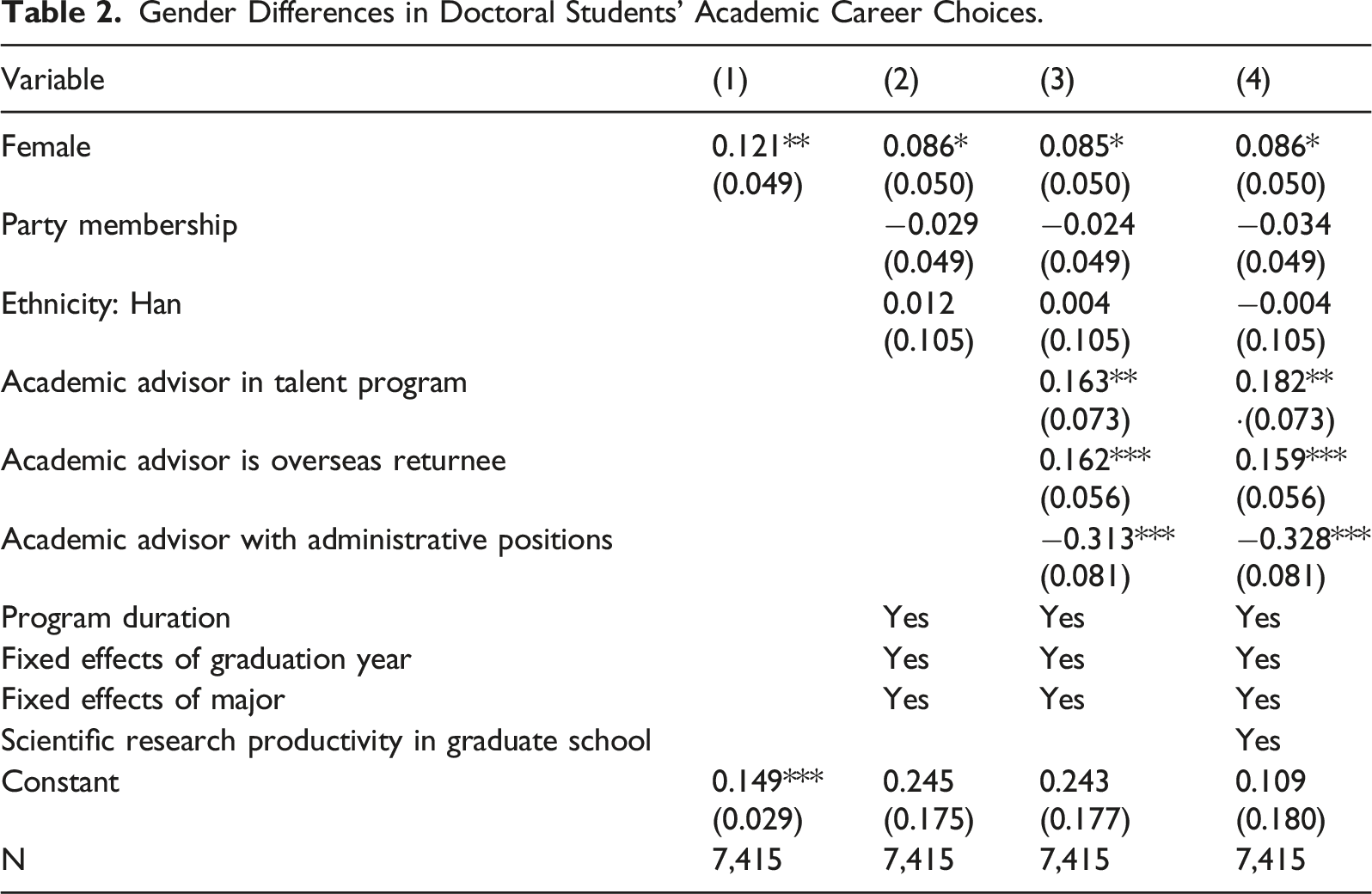
Two main factors influence an individual’s personal career choice: one is an individual’s career choice preference; and the other is whether individual abilities match professional requirements. The above regression results show that at the same level of scientific research ability, females are still more likely to enter academic careers. This not only shows that females’ abilities can fully meet the requirements of academic careers but also illustrates females’ preference for academic careers. One possible reason is that academic careers are more flexible, controllable, and stable than other careers, and can better meet females’ family needs. From another perspective, the preference of female doctors for academic careers reflects the socialization needs of females’ roles, which can prove that gender role socialization has a subtle impact on the career choices of males and females. This division of gender roles will make females more inclined to choose careers that are more compatible with family responsibilities when faced with career choices. However, this does not mean that females’ career choices are only subject to social factors. Personal abilities and personal career choice preferences are also critical factors.
Stereotypes under gender symbols: Gender inequality in the academic labor market
Gender Differences in Doctoral Students’ Education Institutions Employed.
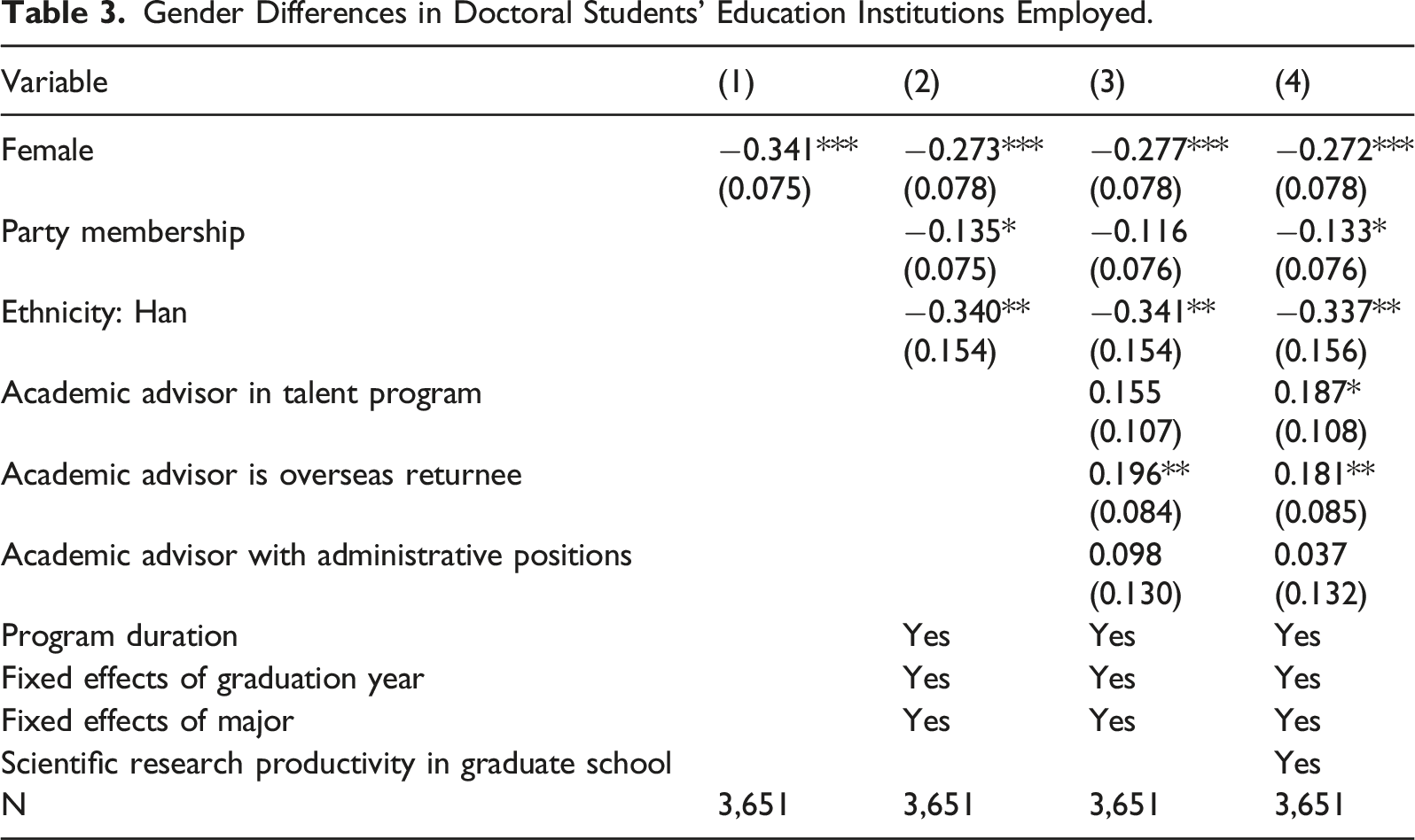
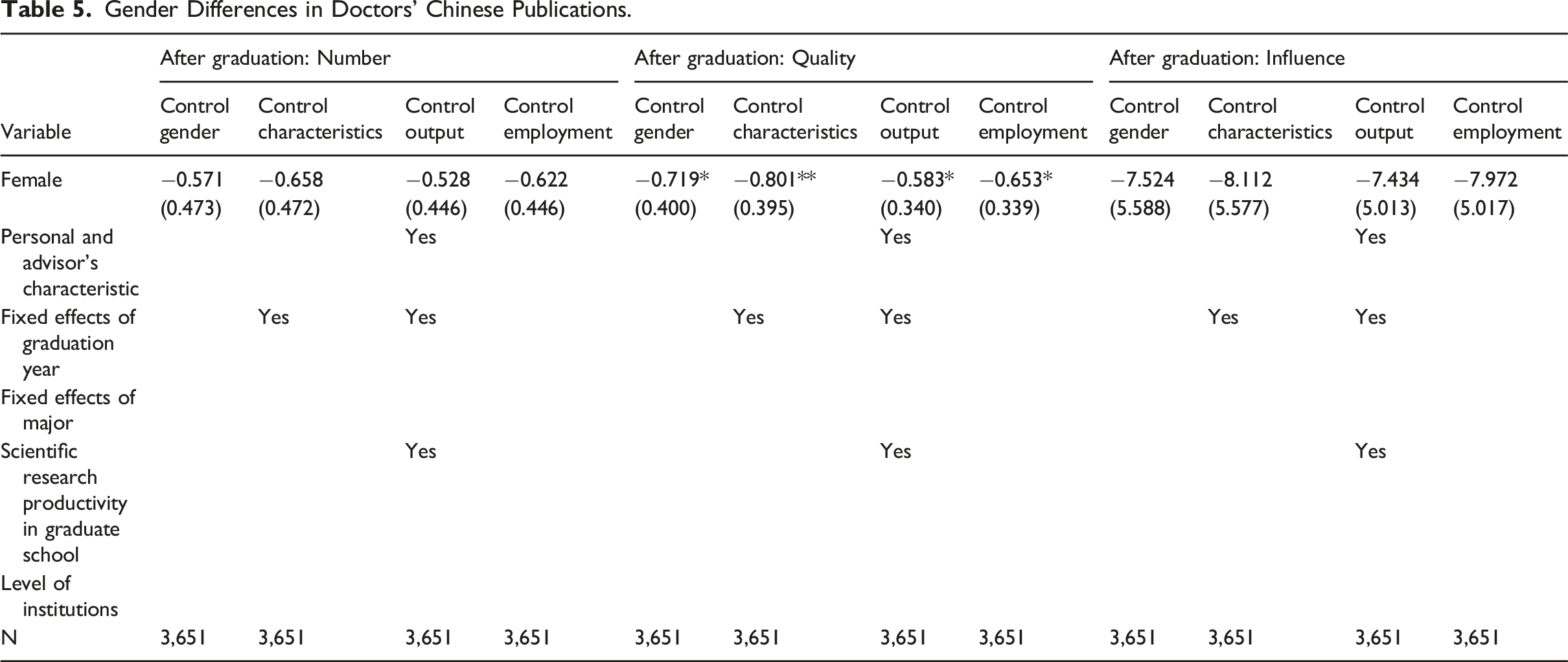
Gender symbols in scientific research publications: Gender segregation in Chinese publications
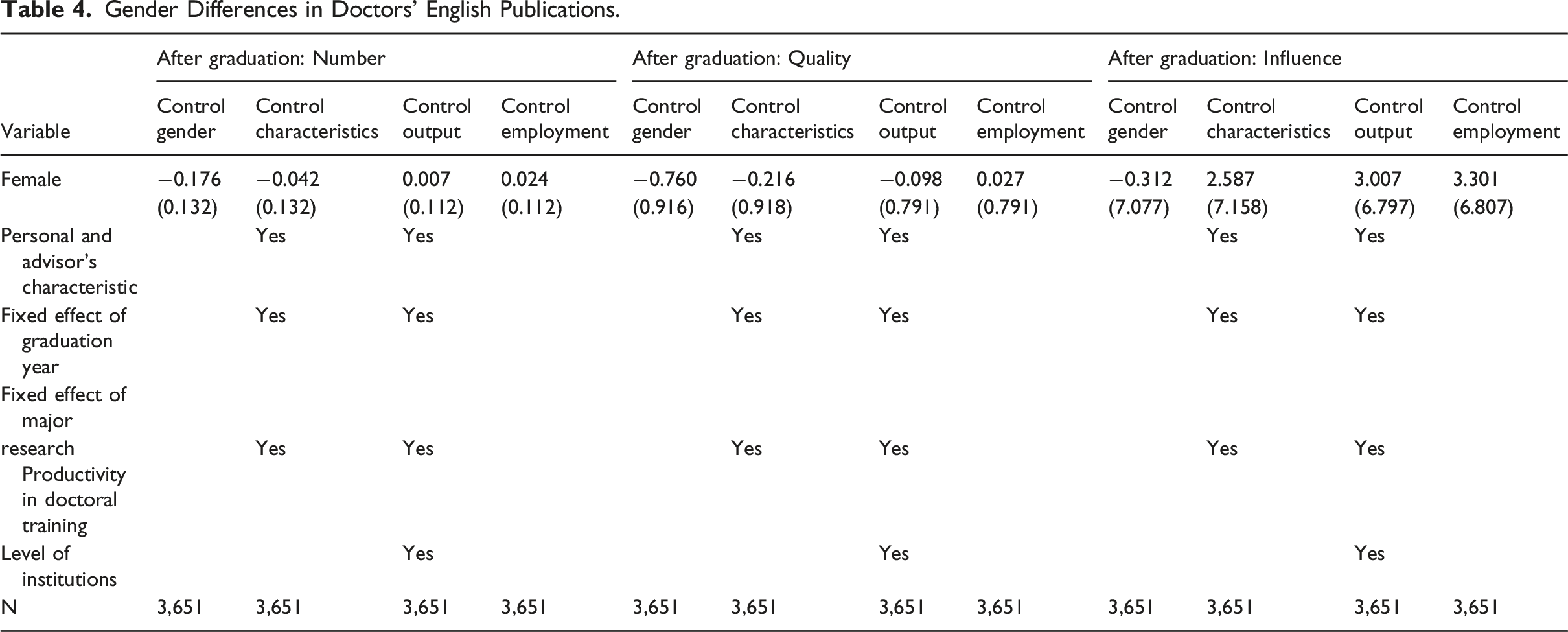
Gender Differences in Doctors’ English Publications.
Gender Differences in Doctors’ Chinese Publications.
Disciplinary heterogeneity of gender symbols—different responses to gender symbols in different disciplines
Doctors’ Scientific Research Productivity From Different Disciplines.
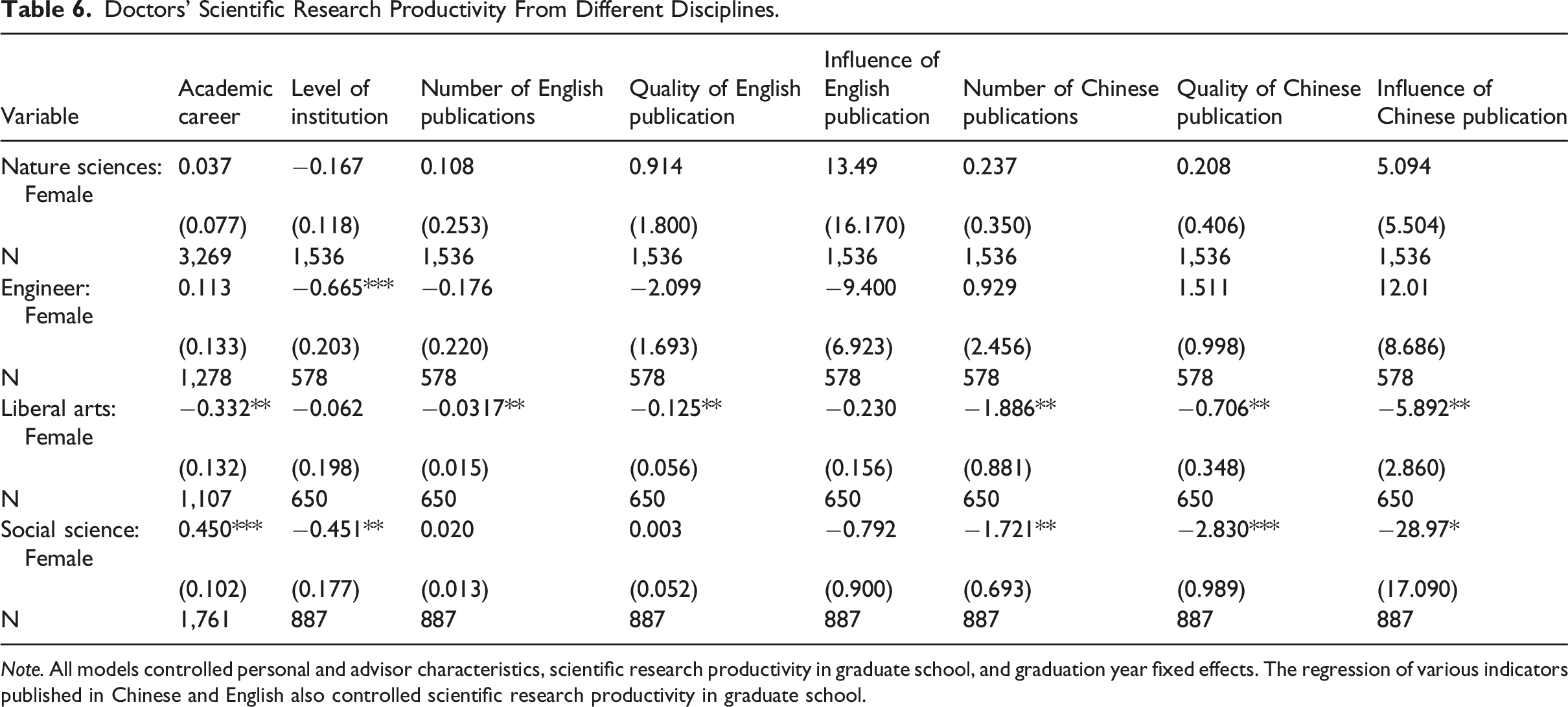
Note. All models controlled personal and advisor characteristics, scientific research productivity in graduate school, and graduation year fixed effects. The regression of various indicators published in Chinese and English also controlled scientific research productivity in graduate school.
In short, the results suggest that the impact of gender symbols differs in different academic disciplines. Female doctors majoring in science are less affected by the impact of gender symbols on their academic careers, and they have no gender disadvantages before and after entering academic careers. Women majoring in engineering and humanities are more or less impacted by gender symbols before and after entering academic careers, causing them to be disadvantaged in certain aspects of academic career development. Those most affected by gender symbols are female doctors in social sciences. Although they are more likely to enter academic careers, they face disadvantages in the hierarchy of teaching institutions and scientific research publications after entering academic careers.
Conclusion and discussion
In recent years, the number of females obtaining higher education opportunities, getting doctorates, and entering academic research has increased rapidly in China. In 2021, the proportion of female doctors nationwide has reached 41.87%, an increase of 6.4% from 2012 (MOE, n.d.)— an obvious result of China’s educational reform and social progress. Despite the increased participation of females in academic fields, however, they still face many difficulties and challenges in their career development. Existing research has attributed this to internal and external factors, of which internal factors mainly involve gender differences in abilities and personality traits. This view is related to biological determinism as well as gender role socialization theory. However, even after controlling internal factors such as scientific research ability, our results suggest that gender differences persist in academic career choice and development, illustrating the limitations of internal attribution.
External factors mainly come from a society’s gender stereotypes and gender discrimination. The existence of gender symbols and stereotypes makes females in academia often bear labels such as “need to spend more time taking care of the family” and “worse scientific research ability.” These labels undoubtedly pose a major obstacle to females’ academic career development, leaving them at a competitive disadvantage even if their abilities are the same as their male counterparts. Additionally, Becker’s gender discrimination theory further reveals the social mechanism behind this phenomenon. In the current academic labor market, the male preference for “similar abilities, giving priority to men” prevails. This preference not only stems from social structure and culture but also reflects the recognition of gender symbols and stereotypes in the academic labor market to a certain extent. This phenomenon of male preference has undoubtedly exacerbated the dilemma of females in academic career development. This study confirms that females are currently in a disadvantaged position in the academic labor market and academic career development. Meanwhile, this study reveals that this disadvantaged position is not mainly due to the difference in scientific research capabilities between genders; it is the gender symbols and stereotypes conveyed by the word “female” that are the decisive factors why females face many difficulties in academia.
For higher education institutions such as universities and scientific research institutions, more attention should be paid to the examination of applicants’ scientific research capabilities and comprehensive qualities, rather than evaluating applicants through symbols and stereotypes such as gender. The result is not only a reflection of fair treatment of individuals, but also a necessary path to promote gender equality and the healthy development of the academic field. Our research is consistent with many gender equality theories, such as liberal gender equality theory and social constructionist gender equality theory.
Instead of using gender as the main criterion for evaluation, gender discrimination should be eliminated, gender equality should be achieved, as well as individual abilities and contributions should be emphasized. To achieve this goal, we need to challenge and change existing gender stereotypes. This not only requires reforms at the social and policy levels but also provides more support and guarantees to female scholars, such as establishing fairer recruitment procedures and providing more flexible working time arrangements. Meanwhile, changes need to be made at the cultural and conceptual levels to challenge and eliminate stereotypes and gender symbols about females. Finally, a society’s awareness and understanding of gender issues also need to be deepened. This includes deepening the public’s understanding of gender discrimination, increasing the academic community’s attention to gender equality, and increasing employers’ enforcement of gender equality. Only in this way can we truly promote the progress of gender equality and achieve fairness and justice in academia.
Footnotes
Declaration of conflicting interests
The author(s) declared no potential conflicts of interest with respect to the research, authorship, and/or publication of this article.
Funding
The author(s) disclosed receipt of the following financial support for the research, authorship, and/or publication of this article:
This work was supported by the Ministry of Education Liberal Arts and Social Sciences Youth Fund Project “Academic Career Choice and Changing Trends of Doctoral Students in World-Class Universities: The Perspective of Academic Labor Market Changes” 21YJC880055); National Natural Science Foundation of China General Program “Research on the Structure and Career Development of Teachers in Higher Education Institutions in China” (71974007); Peking University Lanyuan Academy Academic Fund Project “Cultivation of Female Scholars and Academic Career Development”.
