




Abstract
The state plays an essential role in distributing higher education enrollment opportunities, especially in a state with a strong government like China. Many rural students have gained access to universities with the national higher education expansion in recent years, but their chances of entering elite universities still lag far behind that of their urban counterparts. By Analyzing the case of Tsinghua University, this study finds that the access gap between rural and urban students to elite universities, though still big, has been considerably narrowed since 2010 after a series of preferential policies on enhancing rural students’ educational access has been implemented. Due to the close relationship between Chinese government and its universities, China’s higher education system has responded quickly to national reform and has played an important role in promoting social mobility and reducing social inequalities. Besides, gender inequity in access to elite universities is still detected – the chance for female rural students to access elite universities was lower than for male students in either urban or rural districts. We suggest that the higher education enrollment policy should consider more about the intersectional status of rural students in favor of educational equity for the underprivileged.
Keywords
As a strong nation-state that shapes structures, funding, and priorities (Marginson, 2011, 2013), China possesses a distinctive form of governance by applying a post-Confucian state policy and mobilizing institutions and persons effectively. 1 Prior studies on the equity issue of higher education in China have highlighted the shaping impact that China’s state intervention has on the distribution of access to higher education, noting that the impact corresponds closely to state policy changes in different historical periods (Liang et al., 2012; Zhou et al., 1998).
China’s urban-rural dual system and the hukou (household registration) system have a significant impact on distributing educational access for urban and rural students. The urban-rural dual system is characterized by dual division in a series of social systems, including employment, welfare security, education, and investment in public services. In such a system, almost all high-quality education resources are concentrated in urban districts. Literature asserts that the urban-rural gap in higher educational access has long existed since the 1980s. Compared with rural students, urban students have more access to higher education institutions, especially at elite universities (Hannum et al., 2011; Hao et al., 2014; Li, 2014; LIU, 2007, 2014; Ma & Yang, 2015; Mao, 2022; Meng et al., 2017; Wu & Zhang, 2010).
In recent years, the urban-rural discrepancy in higher education access has gradually declined in terms of enrollment quantity, but rural students are still disadvantaged in entering elite universities (Ding & Liang, 2010). Many studies have shown that the urban-rural gap in access to higher education in China is broadly consistent with two hypotheses: maximally maintained inequality (MMI) and effectively maintained inequality (EMI). MMI assumes that when the number of educational resources is scarce, the needs of the advantaged class are always met first (Raftery & Hout, 1993). EMI assumes that even if educational resources are abundant in quantity, the advantaged class has the ability to ensure that their children receive higher-quality education (Lucas, 2001). In other words, inequalities in the distribution of educational opportunities are maximally and effectively maintained in the higher education system (Alon & Tienda, 2007; Lucas, 2001; Mare, 1980; Raftery & Hout, 1993).
The objective of this study is to complement several limitations of past studies. First, most prior research findings were based on data before 2010. It is imperative to revisit the urban-rural access disparities by considering the governmental preferential policies issued in the recent decade. For example, policies such as the “Collaborative Plan for Enrollment Support in the Central and Western Regions” in 2008 (MOE, 2008), “National Special Plan” in 2012 (MOE, 2012), the “Special Program for Colleges and Universities” and “Local Special Plan” for rural students in 2014 (MOE, 2014), aimed at further enhancing the opportunities for students from underdeveloped areas, western regions, and rural areas to access higher education, especially elite universities.
Second, previous literature has focused more on the role of the state and market in access to higher education while largely ignoring the agency of universities in the state-market-university triangle model (Clark, 1986). In fact, Chinese HEIs have played an essential role in the policy-making and implementation of preferential enrollment policies for rural students. In the “Special Program for Colleges and Universities” issued by the Ministry of Education, for example, the institutional enrollment policies were established by each university selected in the program.
Third, the urban-rural gap in access to higher education is a multi-layered problem intertwined with factors such as gender, region, family socioeconomic class, and ethnicity (Chiang et al., 2012). The gender gap in educational attainment is larger for rural students than for urban peers. Previous studies have found that the intersectional identities of rural students put them at a disservice when it comes to accessing elite higher education, but most studies still tend to regard them as a homogenous group of students and do not adequately address their intersectional identities. As Collins (1998, 2002) noted, “race, class, gender, and other power interactions form social systems, and these social systems, in turn, construct groups defined by these characteristics” (Collins, 1998, 2002). In the present study, we approach rural students as they have intersectional identities. It should also be noted that the perspective of intersectionality originated from the feminist in the US context and that the application of this lens into our present study warrants a critical perspective.
This study selected Tsinghua University as a case to first investigate the issue of the urban-rural disparities in access to elite higher education. Tsinghua is unique in that it is one of the oldest and best modern Chinese universities and has a close relationship with the state, acting as a’flagship’ institution for Chinese higher education system (Yang & Welch, 2012). Today, when the market has played a major role in distributing higher education resources, the central government still uses financial means (special funds), personnel means (appointment of school leaders), and quality assurance means (discipline evaluation) to achieve authority of these universities. It has gained more resources because of its close relationship with the state. Tsinghua has earned local and international status and prestige and thus enjoyed greater resources and institutional autonomy in China. The higher education institutions at the bottom of the pyramid are prone to adopt the strategy of imitation, imitating the higher education institutions from the goal to the development strategy (Schofer & Meyer, 2005). Since China has a special top-down path to build world-class universities, top universities with higher fundings act as role models for most universities and colleges. Tsinghua, at the top of the pyramid of the hierarchical system of higher education in China, has become the template of imitation by universities at all levels. Tsinghua’s story can vividly reflect the story of a state’s higher education development.
In the case of Tsinghua, this study aims to examine: 1) whether the urban-rural gap has been narrowed in recent years at Tsinghua University after several preferential policies for rural students’ access to elite universities was implemented; 2) whether the urban-rural gap in access differs by gender and family background.
The Changing “Triangle of Coordination” in Shaping Chinese Higher Education
Clark’s “triangle of coordination” (1983) explained the interplay of significant factors shaping the performance of higher education systems. The three legs of the model – the state, “academe” that includes colleges and universities, and the market – represent multi-directional forces that shape the performance of a higher education system while keeping centripetal and centrifugal forces in check (Kirp & Roberts, 2002). This study applies the model to explain the dynamics of the state, the market, and institutions in shaping higher education equity in China.
From the founding of the People’s Republic of China to the Reform and opening-up policy, China’s higher education was a typical national planning system, mainly manifested in the supply and distribution of higher education opportunities under the framework of the national unified plan. Specifically: 1) the supply and demand of higher education are fully allocated by the national plan. For example, the number of students recruited by each college/university and each major each year were assigned by MoE, and the graduates trained were also all distributed according to the needs of the administrative central ministries, such as the ministry of energy, education, or finance, to work in related areas in need; 2) The entire funding of the higher education system was fully borne by the state finances (so it was free for students); 3) In terms of the institutional system, all colleges and universities were run and managed by the government. Colleges and universities were “subordinate units” with limited organizational decision-making and full management authority. This was prominently manifested in the unified national enrollment, curriculum plan, syllabus, and teaching materials. This planning system was effective in achieving the goals of scale expansion and fair opportunity.
The impact of state intervention on higher education opportunities has changed since the 1980s. First is that the attributes of higher education have been redefined, and higher education is no longer a “public goods” shared by the state and its people but has become a “quasi-public goods”. Secondly, the role of the government and the market in the allocation of higher education resources has been realigned. The government has changed from the main funder, main provider, and sole regulator of higher education to one of the funders, providers, and regulators. The function of the market in resource allocation is gradually strengthened, which is mainly reflected in the fact that tuition fees and financing loans have become the main components of university funds (Bao & Liu, 2011). Certainly, the government still controls several key and elite universities through special funds and the appointment and the removal of their presidents.
The changing relationship of the triangular relationship between the state, the market, and the university has made the issue of educational equity questionable while maintaining the rapid expansion of China’s higher education (Shen et al., 2022; Xie et al., 2022). On the one hand, the scale of China’s higher education has been unprecedentedly expanded. Since the implementation of the higher education expansion initiative at the end of the 20th century, from 1997 to 2016, the total number of college students enrolled each year rose from 1 million to nearly 7.5 million, and the gross enrollment rate increased from 9.1% to 42.7%. Meanwhile, the number of higher education institutions in China increased 2.5 times, from 1020 to 2,596, during the same period (MoE statistics). On the other hand, many studies have found that the development of higher education in China remains limited. The opportunity gaps for Chinese urban-rural students to enter HEIs, especially elite ones, are becoming increasingly unequal (Li, 2010, 2014; Wu & Zhang, 2010).
Since entering the second decade of the 21st century, the Chinese government has strengthened the role of the state in promoting social equity and implemented a series of sophisticated, integrated, and flexible policy systems in the field of higher education. It aims to increase opportunities for students from impoverished, western, and rural regions to access higher education. Moreover, these policies are more directed towards elite universities. For example, universities participating in the “Local Special Program” are key universities directed by the provinces, and 97% of the universities participating in the “Higher Education Program” are national key universities. According to regulations, these key universities must allocate an enrollment quota of not less than 2% of the annual enrollment scale of the key universities to rural students every year. But in fact, these key universities accounted for about 10% of the special enrollment of students from rural and poor areas, and some key universities even reached 15% (Wen et al., 2018). In the same period, the number of rural students entering the university through the gaokao has not declined. In contrast, as the most influential public university system of the United States, the University of California (UC) system only reserves 4% of the enrollment quota each year for students from economically disadvantaged areas and families (Marginson et al., 2017).
China has taken advantage of the government’s dominant role in the higher education system to implement a series of equalization and preferential policies that promote equal access to elite universities. The ways in which the state and elite universities cooperate in promoting educational equity are examined by considering unfair societal factors such as urban-rural dualism and gender and the changing triangle between government, market and higher education in contemporary China.
Method and Data
Tsinghua University was chosen as the case for this study for several reasons. First, it is one of the oldest universities in China with a history of more than 110 years, and the development of Tsinghua has been closely tied to contemporary China’s societal developments and political movements. Second, Tsinghua is thought to have a very close relationship with the government, and its university-level initiatives are often closely aligned with government policies or guidelines. Many Tsinghua alumni are government officials, and President Xi Jinping and former President Hu Jintao are among them. Third, Tsinghua often acts as a policy testbed in China, piloting in many local policies and reforms in higher education.
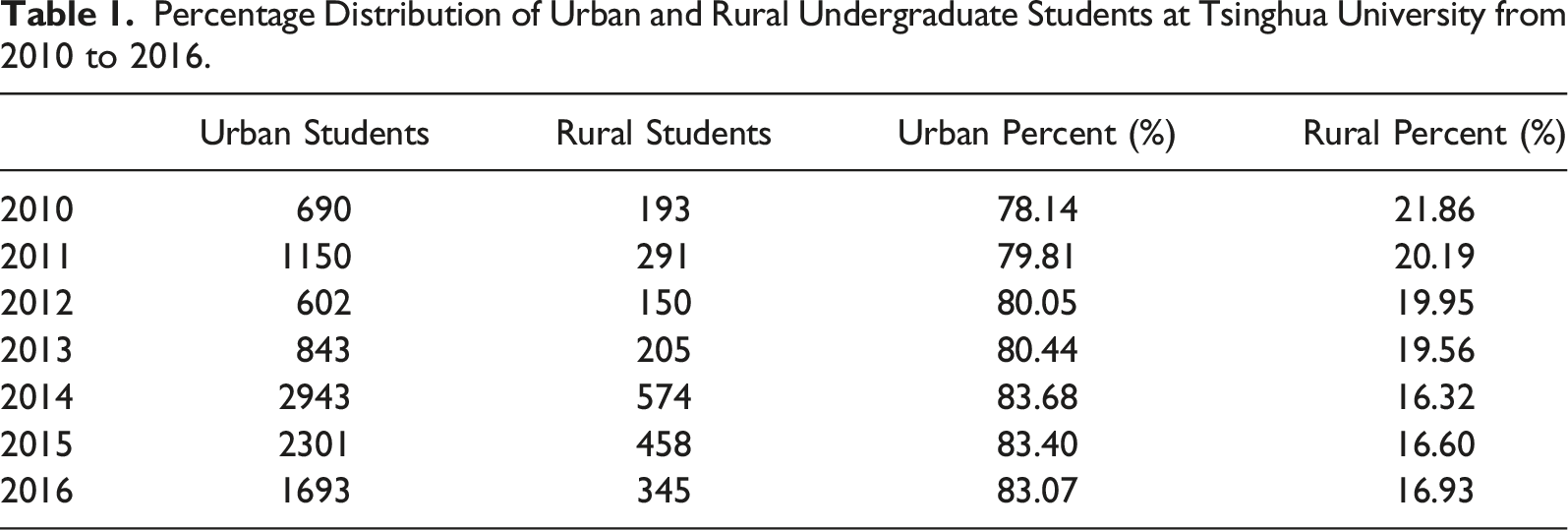
In 2011, Tsinghua University took the lead in implementing the “self-improvement plan” for impoverished rural students. Candidates qualified for this plan are those high school students who have been living and studying in rural areas, poverty-stricken areas, or ethnic minority areas for a long time while constantly striving for self-improvement and have both talent and political integrity (Yin & Yang, 2015). In fact, the “self-improvement plan” of Tsinghua precedes the series of nationwide preferential policies. In other words, Tsinghua leads the national higher education reform process in many ways. After the central government’s special plan for rural students was introduced, Tsinghua continued to implement the national preference policy in the form of a “self-improvement plan” enrollment. By utilizing Tsinghua as a case, this study will investigate how the close government-university relationship can reduce the institutional urban-rural gap in access to higher education. Second, Tsinghua is one of the most selective Chinese universities with an admission rate of around 0.1%. It also received the most government funding. Tsinghua’a public accountability has become the focus of the broader society – how Tsinghua recruits students and what it has done to promote access for rural students.
The analysis was based on three parts of datasets. First, the Tsinghua data utilized in this article were drawn from the “Chinese College Students Survey” dataset (CCSS), a national undergraduate student dataset. CCSS captures information of Tsinghua students and their personal and household information that includes urban/rural residence, gender, parental education, etc. In this study, we used the information, including gender, parental education, and home address of freshmen entering undergraduate from 2010 to 2016. Second, we used some student data from the Tsinghua Academic Affairs Office. Third, the previous Censuses of the National Bureau of Statistics of China and the national statistical yearbooks were used to collect the relevant data on the urban and rural population in China over the years analyzed in this article.
To measure the urban-rural gap in access, we use the concept of “stratification mobility rate” (SMR) in higher education. SMR is often used to study inter-generational changes in class, such as the correlation between child class and parent class. Specifically in the field of higher education, it is often used to study the equity of admission opportunities for students from different classes and with different parents' occupations (Hu & Zhang, 2007; Liang et al., 2012). In this study, we used the SMR concept to discuss the urban-rural gap. SMR in the urban/rural population refers to the ratio of the proportion of college students from urban/rural families to the proportion of the urban/rural population in the total population of the state (see formula below).


The gap in the distribution of higher education opportunities between urban and rural areas is measured by the ratio of the urban population’s SMR of higher education to the rural population’s SMR of higher education. The calculation formula is:

Results
Percentage Distribution of Urban and Rural Undergraduate Students at Tsinghua University from 2010 to 2016.
Difference in Stratification Mobility Rate Between Urban and Rural Areas.
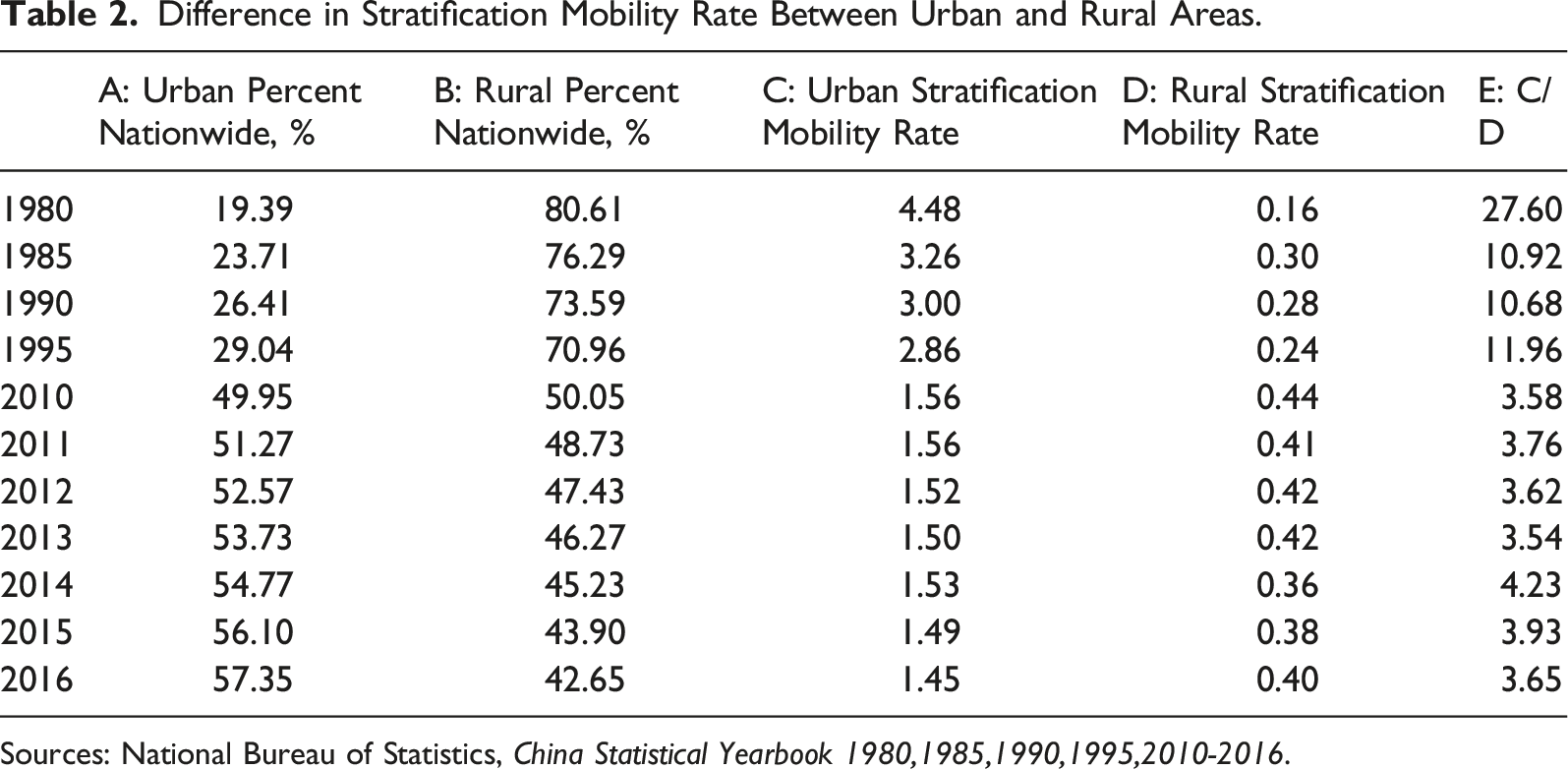
Sources: National Bureau of Statistics, China Statistical Yearbook 1980,1985,1990,1995,2010-2016.
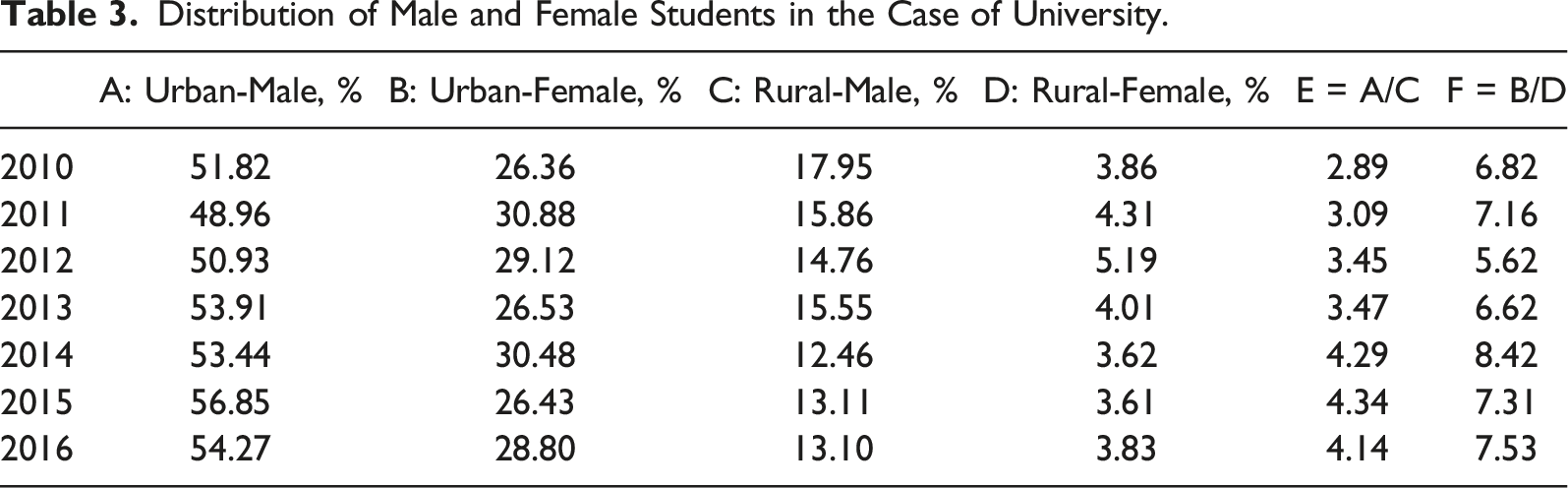
Distribution of Male and Female Students in the Case of University.
Comparison of the Difference Between Urban and Rural Elite Higher Education Stratification Mobility Rate (By Gender).
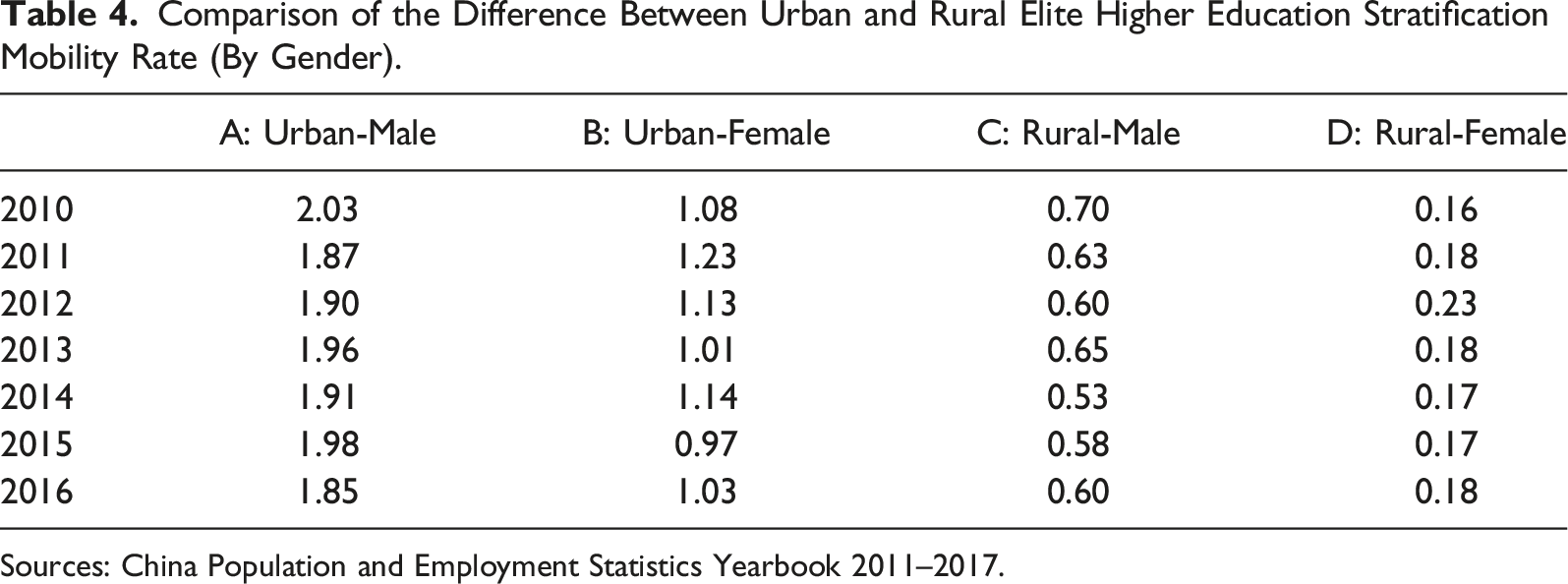
Sources: China Population and Employment Statistics Yearbook 2011–2017.
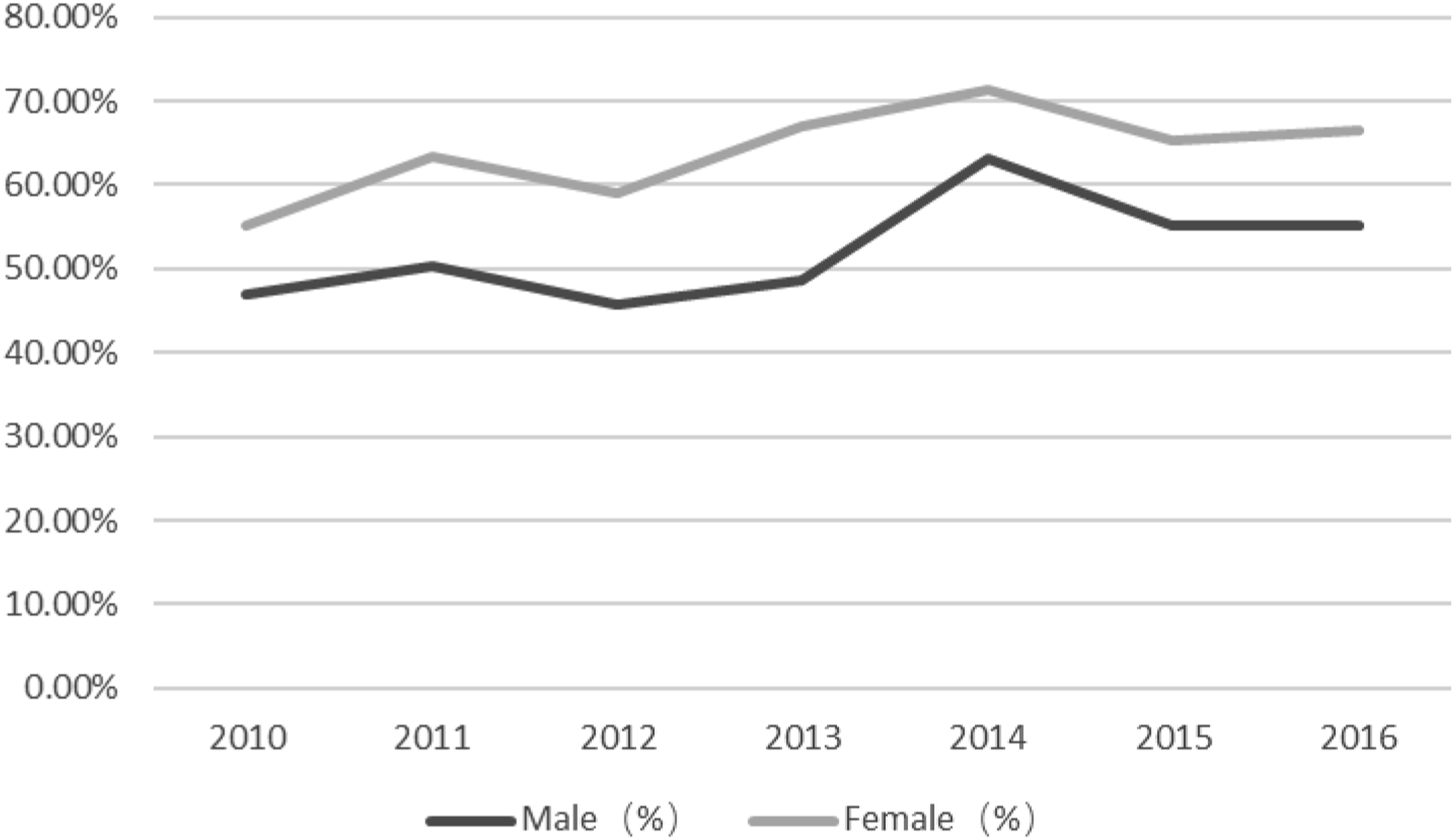
Percentage of Mothers of the Case University Students Who Have Received Higher Education.
Discussion and Conclusion
Prior to 2010, the access to elite universities for urban students was 10 times that of rural students. From 2010 to 2016, the access to elite universities for urban students was four times more likely to have access to elite universities than rural students. Compared with male students, female students’ chances of getting access to elite universities are still lower, especially for female students in rural distinct. Among rural students, the SMR of males is about three times that of females. Additionally, more female students than male students in Tsinghua come from a higher-educated family, indicated by whether their mothers have college degrees. Compared with elite private universities in the US, students from low-income families have a better chance of enrolling in Tsinghua on their own merits. At elite private colleges in the US in 2008, only 12% of students came from families with the bottom 50% of family income, and more than 30% of students came from families with the top 2.5% income (Liang et al., 2012). This situation continued in the next decade. According to a report in 2017, about 13% of the students in elite private universities from the bottom 50% of family income, and more than 14% of students came from top 1% income families (Chetty et al., 2017).
The findings of this study show that the urban-rural gap in the opportunity for Chinese students to enter elite universities has narrowed in recent years since 2010 when a series of preferential policies on enhancing rural students’ educational access has been implemented. Based on the close relationship between the government and universities in China, China’s higher education system has been quick in response to national reform and has played an important role in promoting social mobility and reducing social inequality. The government and elite universities are closely linked to one another, which contributes to the execution of preferential policies in those elite universities. This also proves once again that in China today, the state represents a new set of governance capabilities, fully involved in social life (Xiang & Shen, 2009). This is one of the most unique points in the construction of social justice in China, and it is also the unique feature of Chinese colleges and universities, especially elite higher education institutions, in constructing fairness and promoting agency.
It should also be noticed that the preferential enrollment policy of Tsinghua for rural areas began in 2011, which was earlier than the promulgation time of the overall preferential policy of the Chinese central government: 2012 and 2014. This reflects the Chinese elite university’s ability to accurately understand and operate the national demand for higher education and lead the nationwide university reform process. Related research results also show that the specific implementation measures and final results of different top universities in China differ when implementing the central government’s overall preferential policies (Cao et al., 2019; Wu & Cui, 2018). Tsinghua University, for example, conducted in-depth investigations into students' families and educational backgrounds and carried out detailed university-level policy designs based on national policies. To some extent, it avoided the slanted enrollment policy to gather high-quality educational resources and ensured that students from the poorest families had the opportunity to study at the best universities in China (Wen et al., 2018; Yin & Yang, 2015). More studies in the future could investigate the effects of preferential policies on reducing the urban-rural gap in access to other elite universities or second or third-tier universities to examine how government policies on enrollment distribution are executed differently at the institutional level and how the access to higher education differs by gender or family background in different tiers of universities. Therefore, policymakers can tailor targeted strategies to promote equal access different tiers of universities according to the varied situation. Furthermore, we suggest that continuous attention should be paid to the rural students in elite universities after admission, since they are likely to lag behind their urban counterparts in terms of academic performance and participation in high-impact educational activities (Wen et al., 2018).
Combined with the cross-sectional analysis of gender perspectives, rural female students are still in a very disadvantaged position in getting access to elite higher educational opportunities, and the promotion effect of women’s higher education on gender equality may have intergenerational transmission. Even if the fact that there is still a four-fold gap in elite higher education opportunities between China’s urban and rural areas, the government’s preferential policies in allocating elite higher education opportunities could still be improved in many ways. The existing preferential policies are aimed at students in rural areas and poor areas, which focus on “regional attributes” other than gender and social class attributes. The findings of this article demonstrate that the stratification mobility rate of elite higher education for rural males is about three times that of rural females, which suggests that gender inequality has worsened the situation of urban-rural inequality in access. The existing sloping policies are limited in reducing the inequality of opportunities for men and women to enter elite universities. Therefore, the Chinese government’s future corresponding preferential policies to promote educational equity for rural students should consider more factors that may affect the urban-rural gap in order to benefit the disadvantaged groups and enhance the distribution of elite educational resources. To gain a comprehensive understanding of the equity of admission opportunities, elite universities should develop policies that specifically support rural female students to bridge the gender gap and promote gender equality in higher education. Besides, based on our findings about intergenerational educational level of female students in the case university, elite universities can play a pivotal role in empowering the next generation of female leaders and professionals.
A limitation of this article is relying on one elite university’s data to illustrate the grand story of China’s higher education on the fairness of admission opportunities. However, a case study of a top research university can provide a new perspective. Future researchers should pay attention to the shaping effect of rapid social development on Chinese higher education and the cross-sectional influences of various factors when discussing the equity of higher education in China. To reveal how elite universities and states jointly shape higher education equity, research findings can also be generalized.
Footnotes
Declaration of Conflicting Interests
The author(s) declared no potential conflicts of interest with respect to the research, authorship, and/or publication of this article.
Funding
The author(s) disclosed receipt of the following financial support for the research, authorship, and/or publication of this article: This work was supported by the National Office for Education Sciences Planning Key Project: Research on the talent cultivation system of the rare disciplines (AIA220018).
