



Abstract
This study presents a comprehensive analysis of Inclusive Education in China, using a quadripartite system that synthesises the most recent policy documents concerning inclusion and segregation. The study addresses four research questions that focus on the status, merits and shortcomings of existing policies, implementation, and opportunities for improvement. The study adapts the European Agency for Special Needs and Inclusive Education (EASNIE) framework for assessing and ensuring quality inclusive education provision. Primary policy documents analysed include the National Plan 2010–2020, Compulsory Education Law of the People’s Republic of China 2010–2020, Law on the Protection of Persons with Disabilities, and Reports and documents from the China Disabled Persons’ Federation (CDPF). Tabulation and visualisation of data and findings are based on the Country Policy Review and Analysis, which includes 12 measures for assessment and implications, and the Prevent-Intervene-Compensate model provided by EASNIE. The study offers detailed findings and descriptions of inclusive education in China, highlighting both strengths and weaknesses, while providing implications and actions for improving the quality of inclusive education in the country. The study concludes that while China has unique forms of provision for inclusive education, there are still areas that require improvement to ensure better outcomes for all learners.
Keywords
Introduction
Recent research in inclusive education in China reported the positive impact of the expansion of inclusion compared to segregation (Alduais, 2020; Alduais & Deng, 2019; Alduais et al., 2019). Specifically, acculturation was reported to be influential in improving the thinking styles of hard-of-hearing learners in higher education (Cheng, 2021). Another study indicated the importance of social support to teachers of inclusive education in school education and found that four factors represent the perceived social support: professional, emotional, administrative, and material support (Xie, Deng, & Ma, 2021).
Therefore, this inspiration towards inclusive education manifests several obstacles. For instance, resource room teachers transferred to special education teachers do not have clear policies to perform their new roles effectively and efficiently (Xie, Deng, & Zhu, 2021). However, in another study, mainstream teachers with experience in inclusive education did not reveal such concerns when asked about their perception of individual differences between learners with disabilities (Xu & Cooper, 2020). Further, teachers of inclusive education, particularly early childhood education, need more support and specific training to help them teach more effectively (Zhang et al., 2019).
Moreover, inclusive education is being affected by the current pandemic in terms of “education policy design [which] lacks a disability perspective; technology offered is not accessible; mainstream schools overlook the responsibility for educating students with disabilities, and parents of students with disabilities are unprepared for distance and home-schooling” (Jia & Santi, 2021, p. 1186). Another shortcoming of inclusive education is the gap between rural and urban areas in China regarding teachers’ qualifications and skills and learning opportunities provided to learners with different needs (Li & Li, 2020).
The present study analyses policy documents concerning the quality and provision of inclusive education in China following the European Agency for Special Needs and Inclusive Education (EASNIE). The rest of the sections introduce inclusive education in China, a policy-analysis overview, the ecosystem model, and the questions of the present study. Methods, results, discussion, and implications follow this.
Inclusive Education in China
Current state, development, legislation and history
Much research has been conducted to review the current state of inclusive education in China. For instance, Poon-McBrayer (2016) conducted a study on resource teachers (RTs) as part of the LRC.
Further, (An et al., 2018) emphasised that two movements impacted the rise and development of inclusive education in China. They stated that “two national movements, Compulsory Education and Learning in Regular Classrooms (LRC), serve as important anchors for understanding the development of inclusive education in China” (p. 1). The authors looked at several obstacles preventing inclusive education growth, including a lack of research on the effectiveness of inclusive education in China and a lack of laws requiring public schools to educate all impaired students. Additionally, the Chinese public school system today includes some characteristics, including additional hurdles [subject-based instructors] caused by the current method of teacher preparation and a historical conception of families' responsibilities for their children’s education (An et al., 2018).
Of relevance to this study is the study on the legislation levels in China regarding inclusive education, illustrated in Figure 1 as described in (Fu et al., 2019). Legislation levels for special and inclusive education in China.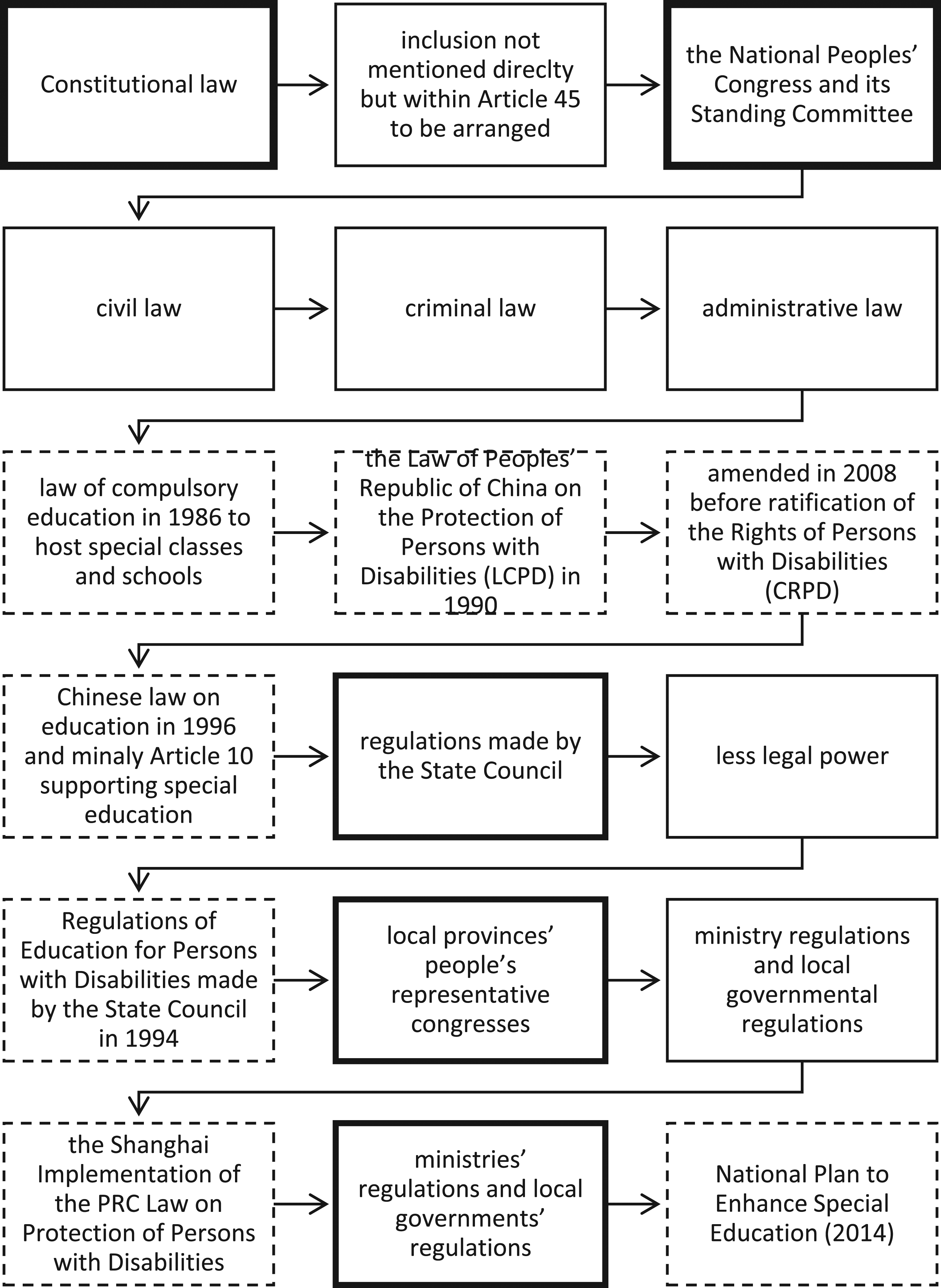
Finally, Huang and Zhang (2019) conducted a study on the allocation of special education resources in 31 provinces of China, excluding (Macau, Hong Kong, and Taiwan) concerning the National medium and long-term educational reform and development program (2010–2020) and the 13th Five-Year Plan for Nationayl Education Development. The authors found “Shanghai, Liaoning, Shandong, Jilin, Tianjin, Hebei, Zhejiang, Heilongjiang, Shanxi, and Beijing” are the top provinces in resources allocation of special education as compared to the lowest ones “Sichuan, Chongqing, Fujian, Jiangxi, Guizhou, Guangxi, Qinghai, Yunnan, Haibin Anhui” with the rest 11 provinces in the middle (p. 19). The authors also mentioned that while Beijing and Shanghai have the most developed ones, they have the disadvantage of having the largest number of special education students. The authors recommended the issuance of province-based policies and allocation of resources to bridge the gap of the imbalance among the provinces and provide equal education to people with disabilities, increasing the number of special education schools, recruitment and preparation of more professional teachers, communication among provinces, research on special education and increasing number of LRC students. Based on the description by (Huang & Zhang, 2019), the history of special education can be illustrated in Figure 2 as follows: History of special education policy in China.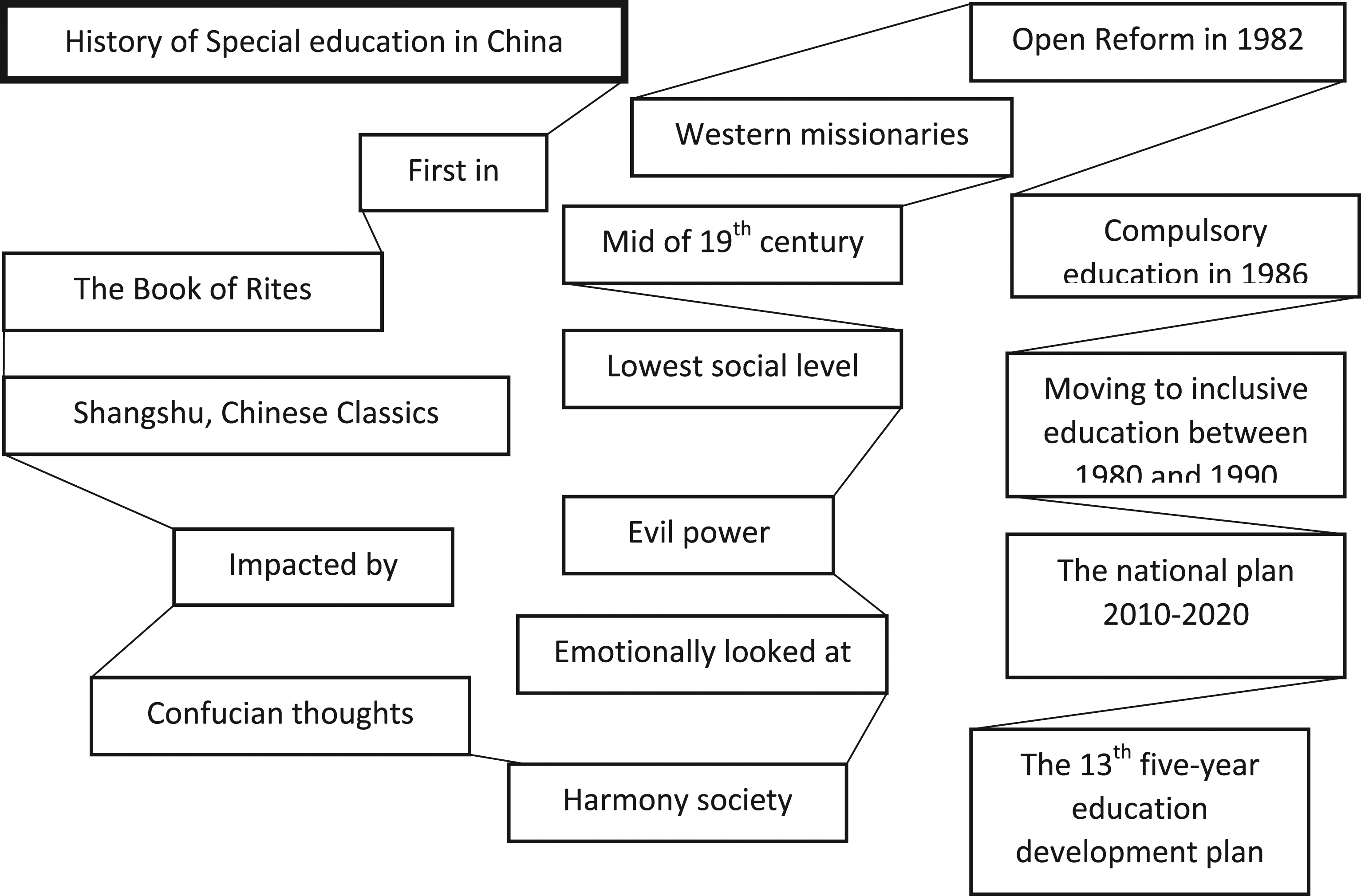
Challenges to inclusive education
Su et al. (2018) asserted that “inclusive education in China is far from a success” because ”according to a national survey in 2017 (as published on Sohu.com on March 14, 2018), only 45% of school-age children with disabilities receive some form of education” “of all the children with disabilities who applied to general schools, 28% were denied” “in addition, China has adopted what is called a ‘parallel system’ for general and special education” (p. 2). The authors found that “parents of children with autism spectrum disorder (ASD) held the most positive attitudes toward inclusion, whereas classroom teachers held the least positive attitudes toward the inclusion of children with ASD” and “not only were adults’ attitudes influenced by their identities as parents or teachers, but their background may also influence how they perceive inclusive education” (p. 10). The authors attributed the special education teachers’ negative attitudes to “their experience with students having [a] severer level of impairments in special segregated educational settings” (p. 11). This could also be attributed to several factors of which “little support from colleagues and administrators, limited training on inclusion, large classroom size, and test-oriented teacher-evaluation” (p. 12).
Moreover, Fu et al. (2019) found that barriers hindering the development of inclusive education include: a competitive exam-based school system, large class size (≥45), economic development and more investment, three modes of the education system (i.e., LRC, mainstreaming and home), and paucity of inclusive education in senior middle school (i.e., high school). Furthermore, to develop inclusive education, the authors proposed: improving legislation for inclusive education in general, providing detailed laws and policies, identifying the responsible agencies and roles of each concerning special education and inclusive education, involving the community in legislation processes, repealing laws that are not consistent with the CRPD convention, for instance, the law which states opening special education schools in counties with a population of more than 300,000 as this encouraged the segregation and decreases inclusion expansion.
In comparison to the rest of the world, Xu et al. (2018) described the difference between inclusion in China and the west as “in contrast to the social-political context of the LRC in China, the idea of inclusive education is grounded in a Western liberal democracy with individualism value” (p. 11). The authors also argue that the LRC is not identical to inclusive education in the western context. They stated, “Chinese researchers often translate the LRC into the integration or inclusion for internationally professional communication or academic exchanges. However, the LRC appears to differ from integration or inclusion” (p. 12).
Above all, there is an increase in children with disabilities. Mu et al. (2017) pointed out that “the past three decades have seen students with disabilities (e.g., autism, visual impairments, hearing impairments, learning disabilities, and physical disabilities) becoming increasingly visible in regular classrooms” (p. 132) and “multiple risks plague students with disabilities (e.g., disability, poverty, discrimination, bullying) and associated with undesirable outcomes. Of particular concern is the low teacher support perceived by these students” (p. 132). Additionally, Liu and Laura (2018) pointed out the vast flow of children from rural areas to urban areas and the efforts of the government to include them, but still, there is a gap in this inclusion policy. Kim et al. (2019) pointed out that “special education environments are associated with differential remission rates among more and less advantaged children” (p. 7).
Concerning the gap between urban and rural areas, Qiu and Zhao (2019) mentioned, “China has been experiencing rapid urbanization as the result of the most significant internal mass migration in history” (p. 57), and “urban inclusiveness changes the relative distribution of skilled and unskilled workers across Chinese cities and leads to increasing income inequality” (p. 64). Similarly, (Hu & Wang, 2019) claimed, “urbanization has driven economic growth in China and other developing countries, but urban dwellers do not benefit from growth equally” (p. 51). The authors conclude that “economic factors such as local income level and industrial structure are influential, whereas cultural openness only marginally affects urban inclusiveness” (p. 60).
However, Pang (2018) mentioned that “in recent years, with increased legislative support and evidence-based studies for individuals with disabilities, and China witnessed improved rehabilitative services and early intervention opportunities for individuals with disabilities” (p. 3). The author also asserted “inclusion of children with disabilities in general education classroom is more common in rural areas than in developed regions in China, where children with disabilities more likely attend special education programs” (p. 3) due to the availability of more facilities in the developed regions. Above all the researcher reported that the interviewed teachers on this study stated they “did not feel the teacher education program coursework adequately prepare them to work with children with disabilities” (p. 15).
Policy analysis: An overview
Macartney and McMillan (2016) emphasised the importance of education policy, stating that “education policy remains high up the public policy agenda, not only because of its potential for building fundamental skills in society but also because of a pervasive sense that many public schools continue to fail” (p. 1).
Haddad (1994) defined policy as the first step for any education planning and “an explicit or implicit single decision or group of decisions which may set out directives for guiding future decisions, initiate or retard action, or guide implementation of previous decisions” (p. 18). The author introduced a criterion for types of policies. Further, Haddad and Demsky (1995) presented eight policy processes: (1) Analysis of the existing situation; (2) Generation of policy options; (3) Evaluation of policy options; (4) Making the policy decision; (5) Planning for policy implementation; (6) Policy implementation; (7) Policy impact assessment, and (8) Subsequent policy cycles (p. 10). Waheed et al. (2015) adapted Haddad’s framework to analyse education policy in Pakistan, where they found that the education system in Pakistan did not match the standards of this policy.
The Ecosystem Model
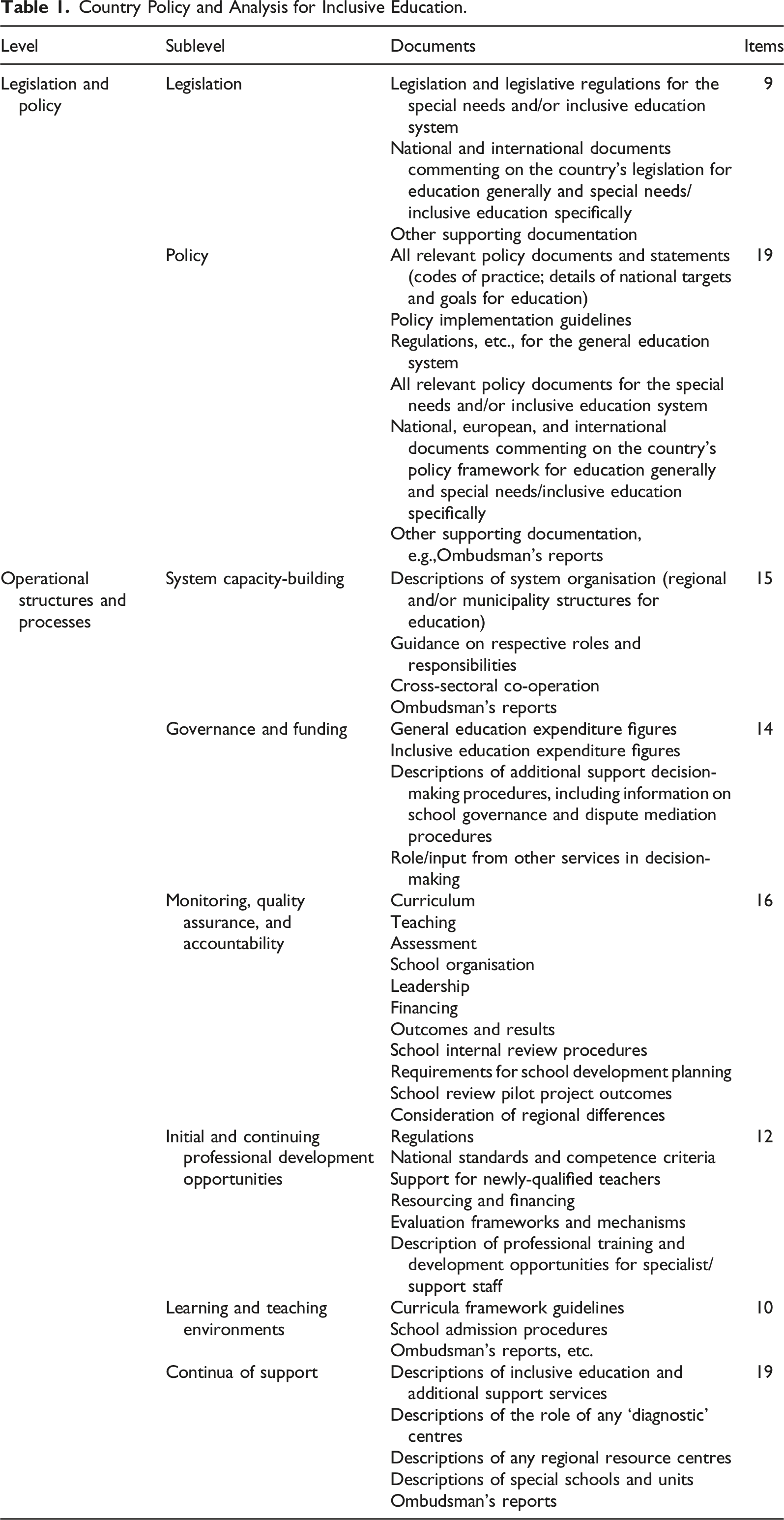
Country Policy and Analysis for Inclusive Education.
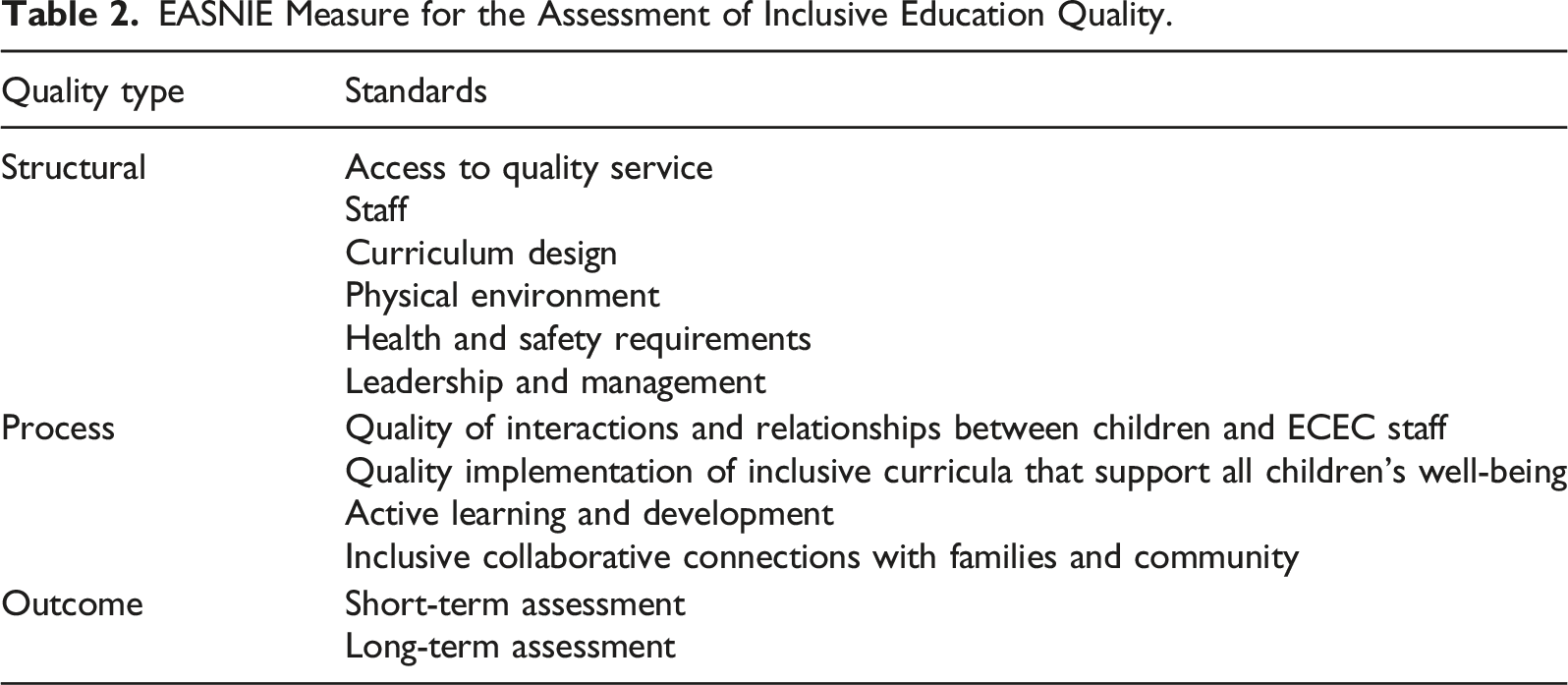
EASNIE Measure for the Assessment of Inclusive Education Quality.
EASNIE (2018a) “developed to map inclusive education policies. Specifically, it has been developed to systematically record available documentary evidence on country policies for inclusive education in a highly structured way” (p. 5). Further, “the analysis framework is a tool for the detailed mapping of international-, European- and national-level information on country systems for inclusive education. This involves examining a range of documents relating to legislation and policy” (p. 6). More importantly, “these structures and processes apply across all national education systems, from pre-primary to the end of upper-secondary education. The framework can therefore be used to examine all these levels – or any one of them individually” (p. 7). This mapping framework is illustrated below. According to this framework, the country and/or system profiles should include general and specific findings. The available findings refer to those that “apply across the education system” and the particular findings that “only apply to a specific system sector/level or thematic area” (p. 8.). There must also be a profile of strengths and challenges.
EASNIE (2018b) mentioned that “the CPRA work’s overall purpose is to aid country reflection regarding the development of policy for inclusive education. It aims to act as a tool for stimulating discussion in the country concerned” (p. 8). Further, “the synthesis section is drafted using the three types of policy actions (See Figure 3) that are in line with European-level work (notably the CSRs), as well as wider thinking about quality for education: namely prevention, intervention, and compensation” (p. 18). The PIC model for the development of inclusive education.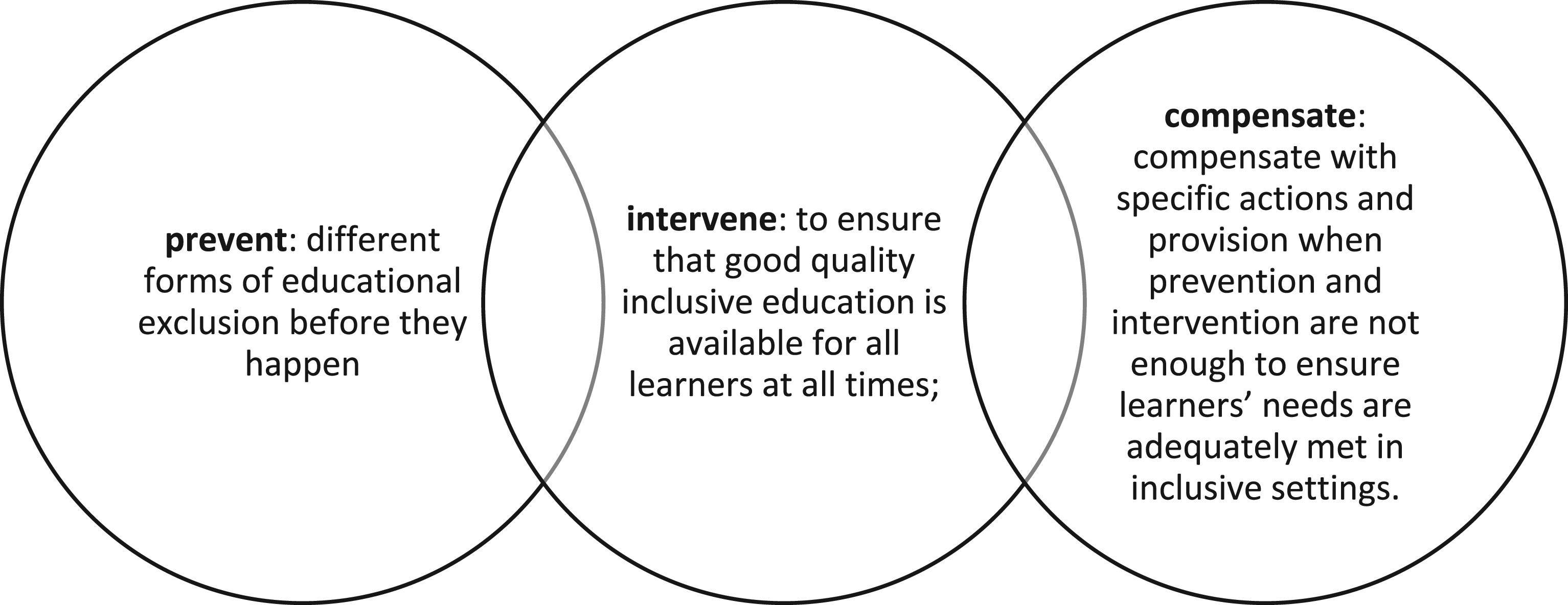
EASNIE (2018c) mentioned, “increasingly, many countries’ policies have a clear focus on special or additional ‘provision,’ rather than solely ‘in-learner’ factors” and “alongside this, many countries are moving away from definitions, assessment and provision based on a medical model, towards educational and ‘interactionist’ approaches” (p. 6). Regarding using mixed-method research for assessment, the EASNIE (2018c) stated: Quantitative data on identification and placement rates is of interest. Nonetheless, it cannot indicate the quality, suitability, or appropriateness of the education provided for children/learners with SEN. Other qualitative data must be considered about quantitative data to fully understand trends in provision and movement towards inclusion. (p. 7)
Also, three types of special education provision are mentioned: “all possible educational placements (mainstream, special classes and units, and special schools)” (p. 13).
EASNIE (2018d) stated that the financing system must consider all the elements in the assessment framework and three principles: efficiency, effectiveness, and equity.
EASNIE (2017d) proposed a framework for assessing early childhood education, which we will use to assess special education. This framework is a mixture of three frameworks: inclusive framework, structure-process-outcome framework, and ecological systems model. The first framework “ensure that all learners of any age are provided with meaningful, high-quality educational opportunities in their local community, alongside their friends and peers” European Agency (as cited in European Agency for Special Needs and Inclusive Education, 2017d, p. 6). The second one has three elements where structure refers to “focuses on the legal framework and the national, regional and local conditions that influence the quality of children’s experiences” (p. 6), process refers to “the interactions between children and the staff and peers and the ECE setting’s physical environment” and outcomes refers to “the impact that the structures and processes have on the children’s well-being, engagement, and learning” (p. 7). The ecological model refers to “the complex evolving influences on children, arising from their interactions and interrelations with all the surrounding systems in the school/home, community and region/country” (p. 7). Altogether has been developed to form the ecosystem model. This framework included five dimensions: outcomes (child belongingness, engagement, and learning), processes (positive social interaction, involvement in daily activities, child-centred approach, personalised assessment for learning and accommodations, adaptations and support), supportive structures within the setting (involvement, welcome for each child, holistic curriculum for all, environment for all children, appropriate staff qualification, cultural responsiveness, collaboration, and inclusive leadership), supportive structures within the community (family, relevant in-service training, community commitment, inter-disciplinary inter-agency cooperation and smooth transitions), and supportive structures at regional/national levels (rights-based approach, mainstream access for all, national curriculum standards, initial teacher education for IECE, good governance and funding, monitoring and evaluation and research on IECE), (pp. 10–13).
EASNIE (2018e) mentioned, “school leaders must be enabled to develop the wider range of competencies required in today’s diverse schools” where “they can no longer work alone and should involve others by sharing/distributing leadership tasks and working with a range of partners in the community and beyond” and above all “their potential role as change managers in wider system reform should be acknowledged” (p. 25).
The present study
The following four policy-analysis questions were addressed in this study: 1. What is the current state of inclusive education in China as presented in the analysed policy documents? 2. What are the strengths and weaknesses of the existing inclusive education policy documents in China? 3. How is inclusive education being implemented in China? 4. In what ways can the provision, intervention, and compensation be better utilized to enhance the effectiveness of inclusive education in China?
Methods
This study is qualitative since we used a qualitative synthesis to present the extracted data and policy analysis as measures for data collection. Although the included policy (National Plan 2010–2020), special education laws, and legislation represent the whole country, this policy analysis aimed at providing a deeper understanding of the nature and development of special education in China from the point of view of special education provision, mainly concerning inclusion, mainstreaming, segregation and exclusion. The used policy documents are public versions that do not require permission to use for research purposes as they are cited and documented.
Instrumentation and Data Collection
A short policy analysis review guided the selection of an instrument to analyse the policy documents. These reviewed policies included: Haddad and Demsky (1995), who introduced four levels to analyse policies: strategic, multi-programme, programme, and issue-specific, and this framework helped structure the second question of the study. Another policy is the PIC model, which was used to analyse the policy documents (The National Plan 2010–2020; Compulsory Education Law of the People’s Republic of China; Law on the Protection of Persons with Disabilities; and reports and documents from the China Disabled Persons’ Federation (CDPF)). The European Agency developed the PIC model for Special Needs and Inclusive Education (2018b) mentioned: “the Country Review Policy and Analysis work’s overall purpose is to aid country reflection regarding the development of policy for inclusive education … act as a tool for stimulating discussion in the country concerned” (p. 8).
Further, “the synthesis section is drafted using the three types of policy actions that are in line with European-level work …, as well as wider thinking about quality for education: namely prevention, intervention, and compensation” (p. 18). While prevention refers to preventing “different forms of educational exclusion before they happen,” intervention refers to ensuring “that good quality inclusive education is available for all learners at all times” (p. 80). Compensation stands for compensating “with specific actions and provision when prevention and intervention are not enough to ensure learners’ needs are adequately met in inclusive settings” (p. 8). This assessment tool includes 12 measures to evaluate the provision of special and inclusive education in terms of the PIC model.
To analyse the legislation, laws, policy, and the whole status of special education development, the researcher follows the framework proposed by the EASNIE. The EASNIE (2018a) “developed to map inclusive education policies. Specifically, it has been developed to systematically record available documentary evidence on country policies for inclusive education in a highly structured way” (p. 5) (see the 12 measures and the extracted data in the results). Further, “the analysis framework is a tool for the detailed mapping of international-, European- and national-level information on country systems for inclusive education. This involves examining a range of documents relating to legislation and policy” (p. 6). More importantly, “these structures and processes apply across all national education systems, from pre-primary to the end of upper-secondary education. The framework can therefore be used to examine all these levels – or any one of them individually” (p. 7). According to this framework, the country and/or system profiles should include general and specific findings. The general findings refer to those that “apply across the education system” and the particular findings that “only apply to a specific system sector/level or thematic area" (p. 8.). There must also be a profile of strengths and challenges.
Results
Inclusion and Segregation in Policy Documents
This section presents a condensed overview of the analysed policy documents, providing the extracted data using 12 measures. Initially, the section highlights the country’s primary education priorities, with a particular emphasis on the development of special and inclusive education. The section aims to address the four research questions that have been raised, specifically with regards to the utilization of prevention, intervention, and compensation measures through the PIC model. The PIC model primarily focuses on examining the quality of special and inclusive education provision to learners with special education needs (SENs) in China.
Analysis of policy documents and current state
Section 1: Country priorities for education
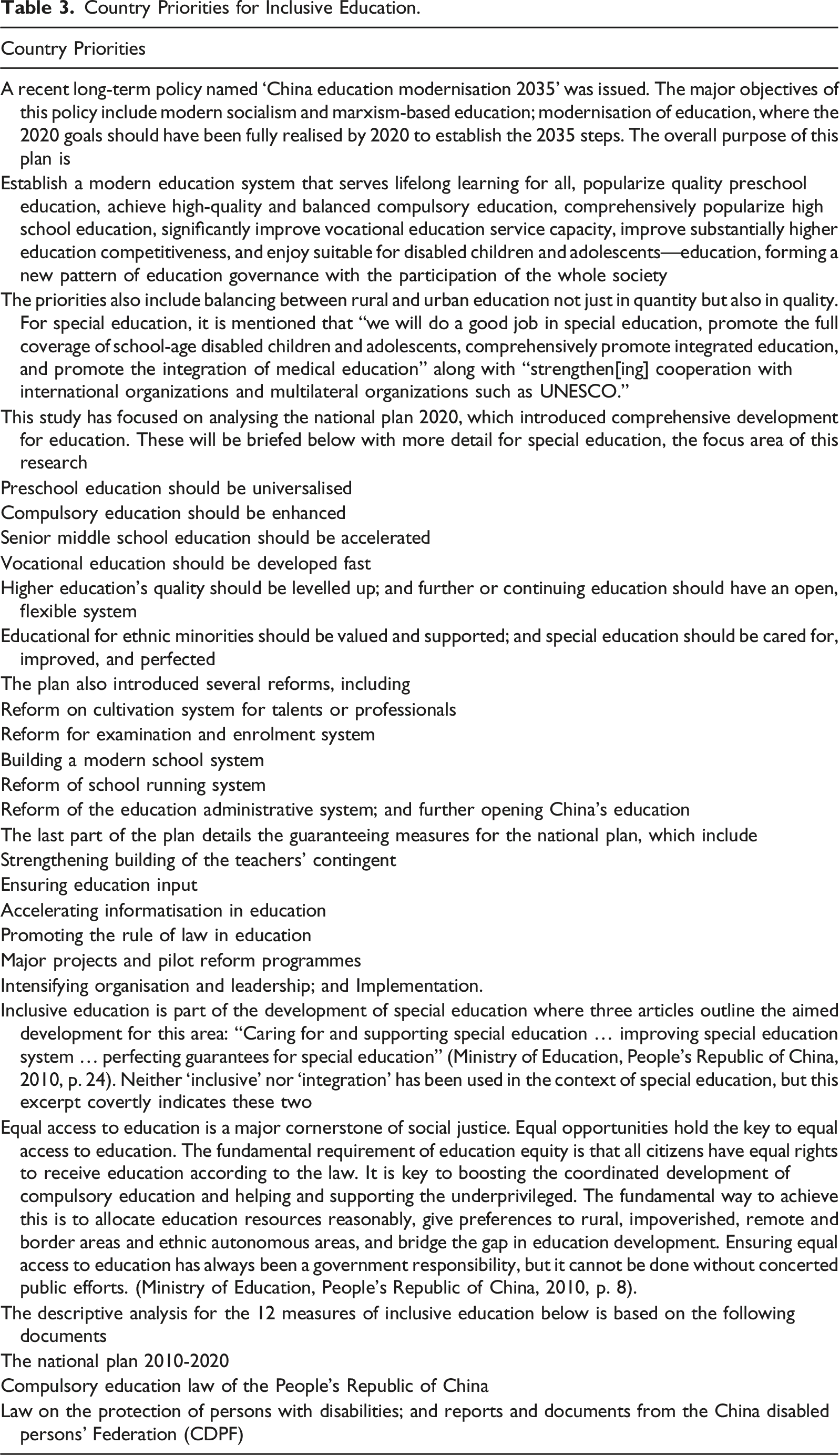
Country Priorities for Inclusive Education.
Section 2: Analysis of findings
The following section presents the findings for the policy analysis using the template provided by EASNIE using 12 measures. Each measure includes the agency recommendation and the formed country’s conclusion (i.e., China). The measure ends with evaluative comments. These 12 measures also imply a practice section provided after the discussion section (See Appendix Table 4A-L).
Synthesis
Stated Priorities for Inclusive Education
China’s stated policy priorities for education in the National Plan 2010–2020, the Compulsory Education Law of the People’s Republic of China, the Law on the Protection of Persons with Disabilities, and Reports and documents from the China Disabled Persons’ Federation (CDPF).
The National Plan
This policy document introduces a comprehensive plan for developing education: basic education, higher education, vocational education, and continuing education. This plan has more details on expanding education and making it accessible to the whole population. Although quality seems to be emphasised in several contexts, the researcher believes other policies approaching quality should be issued. For instance, special education has three articles (28–30) stating “caring for and supporting special education … improving special education system … perfecting guarantees for special education…” (Ministry of Education, People’s Republic of China, 2010, p. 24). There is also an emphasis on providing equal access to education [inclusion] and levelling the quality of education (p. 43). Inclusion does not seem to have a specific section or article, but many phrases, sentences, and excerpts covertly indicate the importance of inclusion.
The Law on the Protection of Persons with Disabilities
It consists of 68 articles, 21–29—related to education. These articles' overall point of view emphasizes that “the State shall guarantee the right of persons with disabilities to education” (The Law on the Protection of Persons with Disabilities, Article 21). These articles emphasise providing education at all levels to learners with special educational needs—starting from preschool to the college level. Not only this but the transition from education to employment is also ensured in this law. Although none of the articles mention inclusion clearly, the accommodation of learners with special educational needs is mentioned along with other options, including special classes within the same school, special schools, or education at home. The law also ensures that special education teachers have higher salaries than regular teachers. The laws provide a map for learners' rights with special educational needs and relevant educational personnel.
The State Council Information Office
The State Council Information Office of the People’s Republic of China released in July 2019—a paper titled ‘Equality, Participation, and Sharing: 70 Years of Protecting the Rights and Interests of Persons with Disabilities in the PRC’. The report has 10 chapters, of which the fourth chapter is for special and inclusive education. The document starts with an emphasis that: Persons with disabilities are equal members of the human family, and it is a bounden duty of the state and an essential requirement of socialism with Chinese characteristics to respect and protect their human rights and dignity, and to offer them equal opportunities to participate in social life and enjoy the fruits of the country’s material and cultural progress on an equal footing. (The State Council Information Office of the People’s Republic of China, 2019, p. 3)
According to this document, the special education population is around 85 million. The document mentions a noticeable change in the inclusion of this community in education and the expansion of special education services. The National Plan 2010–2020, China’s Education Modernisation 2035, and Regulations on the Education of Persons with Disabilities emphasise these aspects. In particular, the latter gives attention to the development of inclusive education: For the education of the disabled, the quality of education shall be improved, inclusive education shall be actively promoted, normal and special education methods shall be adopted in accordance with the types of disabilities and learning capacities of the disabled, and priority shall be given to the adopting of the normal education method. (Regulations on the Education of Persons with Disabilities, 2017, Article 3).
These documents seem to have clearer points about the inclusion and emphasis on special education and inclusive education quality.
In Conclusion, China’s stated policy priorities for education in the National Plan 2010–2020, the Compulsory Education Law of the People’s Republic of China, the Law on the Protection of Persons with Disabilities, and Reports and documents from the China Disabled Persons’ Federation (CDPF) introduce a detailed mapping for the provision of special education in China.
Shortcomings of current inclusive and special education policy documents
There is a need to improve inclusive education, involve parents, improve assessment and evaluation, improve cost-effectiveness, expand preschool education, upgrade teaching quality in an inclusive school, improve school ethos, reduce the effect on early tracking and grade retention, level up low-level schools, enhance the quality of staff, improve the transition from school to work, and improve care guidance. Regarding these 12 measures, it was found that the analysed policy documents manifest several shortcomings, as mentioned below.
There is a need to ensure the quality of inclusion education followed by the existing policy for the compulsory inclusion of learners with special educational needs. Additionally, Parents should not be only involved in taking the responsibility that their children must be enrolled in compulsory education, they should be able also to choose among schools, and there must be a way to approach the existing elite education system—enhancing gaps among social classes and different types of learners.
Further, there are no clear policies for assessing and evaluating inclusive education, at least in the major analysed policy documents and laws mentioned in sections 1 and 2. Furthermore, the quality of both special and inclusive education in rural areas, on the one hand, and in developing provinces remains a primary challenge for the country regardless of the economic power manifesting in the Chinese governance system. Besides, the compulsory accommodation of learners with special educational needs and expanding preschool education for this community seem promising. At all levels, the elite education system leads to overt equality but not covert equality of preschool education accessibility.
Furthermore, some regular education teachers fail to apply these existing inclusive methods for special and even regular education classes. The exchange of teachers at the national and international levels could help improve this issue.
The policies and laws are strict concerning school culture and prohibition of discrimination, but some regular education teachers' ignorance of inclusive education could still affect this culture. Awareness towards learners with special educational needs should shift from the moral model, social model, identity model, human rights model, cultural model, economic model, charity model, or limits model to an integrated model—biopsychosocial model—that can support achieving equality, learning and sense of belongingness for learners with special educational needs.
While the policies and laws leave it for the parents and schools to decide on the type of school for enrolment based on the requirements, the definitions and conceptualisations of disability need to be more detailed, helping both parties to avoid early tracking for learners with mild disabilities to be placed in special schools and keeping those with moderate levels for longer periods than needed instead of moving them earlier to inclusive education classes. The criteria of grade retention for learners without disabilities might be inappropriate for those with disabilities—considering the existing differences in abilities.
Teachers' salaries in rural and developing areas should be raised further to the extent that they can attract good-quality teachers to join them. The current privileges do not seem attractive enough to attract teachers to leave developed cities and work in such distanced areas.
The expansion plan and accessibility to education seem to be progressing well and extending fast. However, quality remains a challenge enhanced by the large size of the country and large population, albeit the economy is powerful and capable of reducing these challenges.
The government quota to provide no less than 1.5% of job opportunities for people with disabilities, The Rules on the Employment of Disabled Persons, The Employment Promotion Law in 2007, and the 12th Five Year National Programme on Disability (2011–2015) to provide a million jobs for people with disabilities—are remarkable efforts, albeit, the supervision of both government and non-government sectors for these laws and the availability of a violation reporting system and database could lead to better improvement.
Finally, the CDPF and International Labour Organization (ILO) report that most people with disabilities live and work in rural areas. This leads to a stricter supervision system as more violations happen in less developed and non-developed regions.
Summary of areas of strength and development
While the current special education policies and inclusive education initiatives manifest some areas of strengths like expansion and accessibility, they still lack some policy actions towards development like applying the prevention, intervention, and compensation (PIC) model because prevention ensures to take all learners into account, safeguard the rights of all learners to high-quality inclusive education, and promote the active participation of learners and their families in decision-making that affects them, intervention helps to monitor, evaluate and secure the effective implementation of the inclusive education system, and compensation guarantees identifying and addressing barriers to the inclusive education system.
First, inclusive education initiatives lack some policy action toward development, like applying the prevention, intervention, and compensation (PIC) model because prevention ensures to “take all learners into account…safeguard the rights of all learners to high-quality inclusive education … promote the active participation of learners and their families in decision-making that affects them” (European Agency for Special Needs and Inclusive Education (2017a, p. 41). The provision of special education, including inclusive education, is ensured within Chinese law and legislation. According to the Compulsory Education Law of the People’s Republic of China: The local people’s governments at the county level or above shall, where necessary, set up schools (classes) of special education to provide compulsory education to school-age children and adolescents with eyesight, hearing, and intellectual impairments. The schools (classes) of special education shall have places and facilities which suit the study, recovery, and living features of the children with disabilities. (2006, Article 19)
Besides, the last report on education achievements in 2018 reported increases in students with special educational needs—joining either regular schools or special classes—instead of special education classes. According to this report, the increasing percentage for the primary school level was 7.1%, 14.7% for middle school, 4.4% for high school, and 2.3% for professional teacher training—compared to 2017 (MoE report, 2018, Special Education). Furthermore, the Law on the Protection of Persons with Disabilities declares “persons with disabilities shall enjoy equal rights with other citizens in political, economic, cultural and social respects and family life as well” and “discrimination based on a disability shall be prohibited … insult of and a disservice to persons with disabilities shall be prohibited … disparagement of and infringement upon the dignity of persons with disabilities using mass media or any other means shall be prohibited” (CDPF, 2008, Article 3). The rights of learners with special educational needs are protected, albeit quality assurance is not explicitly detailed (Article 3). Flexible decision-making is not part of special education and inclusive education initiatives. However, it is stated that: Parents or other guardians of disabled children and juveniles shall respect and protect the rights of disabled children and juveniles to education, actively carry out family education, make disabled children and juveniles receive recovery training and education in a timely manner, assist and participate in the education and teaching activities of relevant educational institutions, and support disabled children and juveniles to receipt education.
It is also stated, “the state shall adopt measures to ensure that persons with disabilities, following the law and in various ways and manners, participate in the management of state affairs, economic and cultural undertakings and social affairs” (Law on the Protection of Persons with Disabilities, 2016, Article 6).
Additionally, intervention helps to “…monitor, evaluate and secure the effective implementation of the inclusive education system” (European Agency for Special Needs and Inclusive Education (2017a, p. 41). The Revised Regulation on the Education of the Disabled stated four forms of the provision of special education (2017, Article 17). First, students who can directly join regular education schools join them following the compulsory education law. Second, students can join regular education schools but still require support through special classes within the same school or living area. Third, students cannot join regular education schools and are enrolled in special education schools. Fourth, students who cannot even join special education schools are provided home education. The next article (18) makes it even more flexible, stating that students from special education schools can be transferred to regular education schools if recommended and vice versa, with parents and/or guardian confirmation. In one way or another, this makes the form of provision: inclusion, mainstreaming, segregation, and exclusion, emphasizing the first two (i.e., inclusion and mainstreaming). Besides, the intervention procedure seems to be detailed where it is stated that: A person with disabilities refers to abnormalities of loss of a certain organ or function, psychologically or physiologically, or in anatomical structure, and has lost wholly or in part the ability to perform an activity in the way considered normal. The term “a person with disabilities” refers to one with visual, or hearing, or speech, or physical, or intellectual, or psychiatric disability, multiple disabilities and/or other disabilities. The State Council shall establish the criteria for the classification of disabilities. (Law on the Protection of Persons with Disabilities, 2016, Article 2)
Finally, inclusive education initiatives lack some policy action towards development, like applying the prevention, intervention, and compensation (PIC) model because compensation “…guarantees identifying and addressing barriers to the inclusive education system” (European Agency for Special Needs and Inclusive Education (2017a, p. 41). Education offices at the county and province levels are responsible for providing education and addressing related barriers. The CDPF is assigned to supervise, research, and develop these issues. China Disabled Persons’ Federation (CDPF) and its local organizations shall represent the common interests of persons with disabilities, protect their lawful rights and interests, unite persons with disabilities and enhance education among them and provide service for them. The CDPF and its local organizations shall conduct work on disability and mobilize social forces to develop the undertakings for persons with disabilities according to laws, regulations, and its constitution or as commissioned by the government. (CDPF, 2016, Article 8)
Parents and guardians are also responsible for ensuring that learners with special educational needs receive the appropriate educational services according to available legislation, laws, and policies. The failure to implement all these is prohibited yet punished “state functionaries and other personnel engaged in the work on disability should fulfil their duties following the law and try their best to provide quality services” (CDPF, 2016, Article 8).
Thus, while the current special education policies and inclusive education initiatives manifest some strengths like expansion and accessibility, they still lack policy action towards development, like applying the prevention, intervention, and compensation (PIC) model.
Discussion
Parallel Provision of Special and Inclusive Education
Findings overview
While the current special education policies and inclusive education initiatives manifest strengths like expansion and accessibility, they still lack some policy actions toward development, like applying the prevention, intervention, and compensation (PIC) model. By doing so, prevention ensures to take all learners into account, safeguards the rights of all learners to high-quality inclusive education, and promotes the active participation of learners and their families in decision-making that affects them. Intervention helps to monitor, evaluate, and secure the effective implementation of the inclusive education system. Moreover, compensation guarantees identifying and addressing barriers to the inclusive education system. These are all elaborated on below.
Provision gap
First, inclusive education initiatives lack some policy action towards development, like applying the prevention, intervention, and compensation (PIC) model because prevention ensures to “take all learners into account…safeguard the rights of all learners to high-quality inclusive education … promote the active participation of learners and their families in decision-making that affects them” (European Agency for Special Needs and Inclusive Education (2017a, p. 41). The provision of special education, including inclusive education, is ensured within Chinese law and legislation. According to the Compulsory Education Law of the People’s Republic of China: The local people’s governments at the county level or above shall, where necessary, set up schools (classes) of special education to provide compulsory education to school-age children and adolescents who have eyesight, hearing, and intellectual impairments. The schools (classes) of special education shall have places and facilities which suit the study, recovery, and living features of the children with disabilities. (2006, Article 19)
Previous findings reported the existence of similar reforms in other countries. For instance, Smith (2014) mentioned that there is a further need to reform the prevention of inclusive education in Northern Ireland. This study and another one in South Korea emphasised the reliance on segregation towards inclusion Yoo and Palley (2014). Despite this, the concern raised is also found in other reported findings challenging the effectiveness of inclusive education compared to special education, namely segregation and exclusion (Dovigo, 2017). Similarly, the evaluation of inclusive education using a certain model or method like the proposed PIC model in this study, as evidenced by other studies—introducing a different model to ensure the quality of provided inclusive education (Booth & Ainscow, 2002; Calderón-Almendros & Habegger-Lardoeyt, 2017; Loreman et al., 2014).
Besides, the last report on education achievements in 2018 reported increases in students with special educational needs—joining either regular schools or special classes—instead of special education classes. According to this report, the increase in percentage for the primary school level was 7.1%, 14.7% for middle school, 4.4% for high school, and 2.3% for professional teacher training—compared to 2017 (MoE report, 2018, Special Education). Furthermore, the Law on the Protection of Persons with Disabilities declared that “persons with disabilities shall enjoy equal rights with other citizens in political, economic, cultural and social respects and family life as well” and “discrimination based on a disability shall be prohibited … insult of and a disservice to persons with disabilities shall be prohibited … disparagement of and infringement upon the dignity of persons with disabilities through mass media or any other means shall be prohibited” (CDPF, 2008, Article 3). The rights of learners with special educational needs are protected, albeit quality assurance is not explicitly detailed (Article 3). Flexible decision-making is not part of special education and inclusive education initiatives. However, it is stated that: Parents or other guardians of disabled children and juveniles shall respect and protect the rights of disabled children and juveniles to education, actively carry out family education, make disabled children and juveniles receive recovery training and education in a timely manner, assist and participate in the education and teaching activities of relevant educational institutions, and support disabled children and juveniles to receipt education.
It is also stated, “the state shall adopt measures to ensure that persons with disabilities, under the law and in various ways and manners, participate in the management of state affairs, economic and cultural undertakings and social affairs” (Law on the Protection of Persons with Disabilities, 2016, Article 6).
Intervention gap
Additionally, intervention helps to “…monitor, evaluate and secure the effective implementation of the inclusive education system” (European Agency for Special Needs and Inclusive Education (2017a, p. 41). The Revised Regulation on the Education of the Disabled stated four forms of the provision of special education (2017, Article 17). First, students who can directly join regular education schools join them following the compulsory education law. Second, students can join regular education schools but still require support through special classes within the same school or living area. Third, students cannot join regular education schools and are enrolled in special education schools. Fourth, students who cannot even join special education schools are provided home education. The next article (18) makes it even more flexible, stating that students from special education schools can be transferred to regular education schools if recommended and vice versa, with parents and/or guardian confirmation. In one way or another, this makes the form of provision: inclusion, mainstreaming, segregation and exclusion, emphasizing the first two (i.e., inclusion and mainstreaming). Besides, the intervention procedure seems to be detailed where it is stated: A person with disabilities refers to one who has abnormalities of loss of a certain organ or function, psychologically or physiologically, or in anatomical structure and has lost wholly or in part the ability to perform an activity in the way considered normal. The term "a person with disabilities" refers to one with visual, or hearing, or speech, or physical, or intellectual, or psychiatric disability, multiple disabilities and/or other disabilities. The criteria for classification of disabilities shall be established by the State Council. (Law on the Protection of Persons with Disabilities, 2016, Article 2)
Inclusion as a trend, not a mandate
Finally, inclusive education initiatives lack some policy actions towards development, like applying for the prevention, intervention, and compensation (PIC) model because compensation “…guarantees identifying and addressing barriers to the inclusive education system” (European Agency for Special Needs and Inclusive Education (2017a, p. 41). Education offices at the county and province levels are responsible for providing education and addressing related barriers. The CDPF is assigned to supervise, research, and develop these issues. China Disabled Persons’ Federation (CDPF) and its local organizations shall represent the common interests of persons with disabilities, protect their lawful rights and interests, unite persons with disabilities and enhance education among them and provide service for them. The CDPF and its local organizations shall conduct work on disability and mobilize social forces to develop the undertakings for persons with disabilities according to laws, regulations, and its constitution or as commissioned by the government. (CDPF, 2016, Article 8)
Moreover, parents and guardians ensure that learners with special educational needs receive the appropriate educational services according to available legislation, laws, and policies. The failure to implement all these is prohibited yet punished “state functionaries and other personnel engaged in the work on disability should fulfil their duties under the law and try their best to provide quality services” (CDPF, 2016, Article 8).
Thus, while the current special education policies and inclusive education initiatives manifest some strengths like expansion and accessibility, they still lack policy action toward development, like applying the (PIC) model. This conclusion is also shared by (Graham, 2015; Isaksson & Lindqvist, 2015). On the other hand, while the present study promotes the existence of specific policies to improve special and inclusive education, further studies view this as the radical role of special education (Furney et al., 2005; Itkonen, 2009; Marshall & Patterson, 2002; Penketh, 2016; Semmel et al., 1994; Thorius & Maxcy, 2015).
Needed Actions
Concerning the policy initiatives, the Chinese government took regarding the recommendations linked to the 12 measures, the following approaches are suggested by information collected about China. Existing evidence on inclusive education development in China seems inconsistent in some aspects of the 12 measures regarding special education and inclusive education prevention, intervention, and compensation.
First, the finding that inclusion regulations are being administered strictly to ensure zero rejection is credited (Carrington et al., 2015; Chen, 1996; Yu et al., 2011). Another finding of this is the need for equity in prevention, treatment, and compensation, especially between rural and urban areas and developed and developing areas (Hu & Wang, 2019; Huang & Zhang, 2019; Kim et al., 2019; Liu & Laura, 2018; Qiu & Zhao, 2019).
One more finding is that praising the current put efforts on developing inclusive education and special education, yet the need to implement more efficient and effective theories and practices from other existing models in other nations (Carrington et al., 2015; Deng & Guo, 2007; Deng & Manset, 2000; Deng & Poon-McBrayer, 2012; Hu et al., 2011).
Despite this, the findings of the present study contradict several studies having radical [negative] views on both special education and inclusive education in China and doubting the efficiency and effectiveness of the existing parallel system (i.e., having both special education and inclusive education, albeit, the present study presented possible evidence of the existence of not only two forms of provision but four methods: inclusion, mainstreaming, segregation and exclusion) (Deng & Zhu, 2016; Fu et al., 2019; Su et al., 2018; Xu et al., 2018).
Another crucial outcome was the need to implement efficient and effective training programmes for teachers, especially teachers of inclusive education who, in most cases, are regular education teachers—not well qualified to teach inclusive education (An et al., 2018; Carrington et al., 2015; Croft, 2012; Deng & Zhu, 2016; Feng as cited in; Pang, 2018; Poon-McBrayer, 2016; Wang et al., 2017).
Standardising Prevention-Intervention and Compensation Nationwide
Inclusion and segregation provision
The quadripartite analysis of policy documents using content analysis (i.e., The National Plan 2010–2020, Compulsory Education Law of the People’s Republic of China, Law on the Protection of Persons with Disabilities and Regulation on the Education of the Disabled-Revised) aimed at assessing special education using the Prevention-Intervention-Compensation (PIC) model, regarding other policy documents reviewed in the literature. Policy priorities for special and inclusive education were stated in these documents. While the current special education policies and inclusive education initiatives manifest some areas of strengths like expansion and accessibility, they still lack some policy actions towards development like applying the PIC model because prevention ensures to take all learners into account, safeguard the rights of all learners to high-quality inclusive education, and promote the active participation of learners and their families in decision-making that affects them, intervention helps to monitor, evaluate and secure the effective implementation of the inclusive education system, and compensation guarantees identifying and addressing barriers to the inclusive education system.
A Quadripartite system of provision
Given this, the current trend of special education can be called a quadripartite trend. Special education is provided in two major forms: inclusion and segregation. However, each of these two provision methods incorporates two methods. While inclusion includes mainstreaming, segregation includes exclusion. These can be described as full inclusion (inclusion), partial inclusion (mainstreaming), full exclusion (exclusion), and partial exclusion (segregation). Stakeholder perspectives reported in previous research (e.g., (Xie, Deng, & Zhu, 2021), policy documents analysis in this study, and the census bureau data analysed (Alduais & Deng, 2019; Alduais et al., 2019) supported the existence of these four methods of special education services. While exploring the census bureau data, it was noticed that it is divided into special education, exclusion, and some notes like this include integrated students with special educational needs, etc. Thus, analysing the policy documents, they mention that the students and parents have all these options, and schools must ensure the existence of all these methods within their educational system structure.
Limitations
This study’s included documents for analysis are considered the major ones supporting special education. However, the other documents' inclusion could have resulted in deeper content analysis. Besides, the content of these documents remains abstract if not supported by qualitative and quantitative studies evidencing their implementation, specifically with primary data.
This study has vital implications for educational science researchers, teachers, policy-makers, decision-makers, and parents. Researchers can benefit from the methodological procedures applied to conduct a qualitative synthesis using policy documents of a specific country. Teachers can use this synthesis to better understand the field’s theory and merge it with their experience towards more effective teaching. Of all parties, policy-makers and decision-makers can consider this built country profile as a starting point to upgrade the quality of inclusive education in China or apply it to other contexts.
Supplemental Material
Supplemental Material - The quadripartite system of inclusive education provision in China: A qualitative synthesis of policy documents
Supplemental Material for The quadripartite system of inclusive education provision in China: A qualitative synthesis of policy documents by Ahmed Alduais and Meng Deng in International Journal of Chinese Education
Footnotes
Declaration of conflicting interests
The author(s) declared no potential conflicts of interest with respect to the research, authorship, and/or publication of this article.
Funding
The author(s) received no financial support for the research, authorship, and/or publication of this article.

Supplemental Material
Supplemental material for this article is available online.
References
Supplementary Material
Please find the following supplemental material available below.
For Open Access articles published under a Creative Commons License, all supplemental material carries the same license as the article it is associated with.
For non-Open Access articles published, all supplemental material carries a non-exclusive license, and permission requests for re-use of supplemental material or any part of supplemental material shall be sent directly to the copyright owner as specified in the copyright notice associated with the article.
