Abstract
The BRI (Belt and Road Initiative) project is about to complete its 10 years, and its growth and legitimacy have invoked a wider interest leading to competing arguments about whether it serves any benefits to any BRI partner countries. Opponents contend that BRI serves China’s economic and political purpose without contributing to the partner economy. We attempt to settle this contention by exploring the empirical evidence on CPEC (China-Pakistan Economic Corridor), a pilot project of the BRI project that highlights the intellectual development of nations, science and technology progress and socioeconomic development. Socioeconomic theories explain that interactive structures contribute to the partner’s science, technology, and industrial development. Following these assumptions, we raised the empirical question: does the joint Sino-Pak publication predict an increase in Pakistan’s IVA (industry value added) in the post-BRI versus the pre-BRI period? We integrated publications from 27 disciplines from 2012 to 2020 (N = 243) and linked them to the IVA of Pakistan (estimated by the World Bank). Our robust analysis reveals strong support for the main hypothesis. First, Chinese science positively predicts Pakistan’s IVA, and it negatively predicts the IVA of a non-BRI partner. Second, joint science productivity positively predicts Pakistan’s IVA but not of the non-BRI partner. Third, science productivity predicts Pakistan’s IVA more in the post-BRI period than in the pre-BRI period. In short, Pakistan’s industrial added value through the development of the Chinese contribution to the intellectual development of Pakistan supports this argument, settling the outstanding issue of socioeconomic development of the BRI system. It reduces uncertainty and confusion created by narratives in popular literature of a rhetorical nature. Overall, the study provides a basis for future research and policy.
Keywords
Introduction
The Belt and Road Initiative (BRI) has gained political and economic legitimacy on the one hand and scrutiny on the other from politicians, the public and scholars (Dunford & Liu, 2019; Malik, 2020; Mobley, 2019; Wolf, 2019; Yu et al., 2020). Its scope is one reason behind this heightened attention from both camps. The BRI project spans about 64% of the world population and 30% of the global GDP (BRI, 2019). The proponents of the BRI system explain its legitimacy through multiple partner countries of different regions (Malik, 2020). A network of many countries can add to the legitimacy status once an organisation attains the status of ‘taken-for-granted’ (DiMaggio & Powell, 1983). Since its launch in 2013, the BRI has gained recognition globally, which is evident from the increased narratives of the opponents. While the proponent narrative suggests that BRI is a positive game changer for some countries, the opponent narrative suggests that the BRI project is a debt trap for all partners other than China.
According to opponents, including American Senators 1 , Chinese overseas lending through BRI is a political control mechanism to trap small partner countries (Horn et al., 2021). Most are economically poor and politically unstable in the adjacent regions of China. The primary beneficiary of the BRI project is China at the cost of other partners (Enderwick, 2018). Another argument illustrates that Chinese export has increased through the BRI project (Yu et al., 2020), which leads some writers to conclude that the BRI makes winners and losers (Lall & Lebrand, 2020), and China is the winner and partners being losers. Multiple studies have attempted to balance these tensions by reducing the impact of media narratives. For instance, one argument is that the BRI contributes significantly to partner countries' physical and socio-cultural development (BRI, 2019; Malik, 2020). Other authors have attempted to debunk the ‘Debt Trap’ notion associated with the BRI project (Jones & Hameiri, 2020). With the changing dynamics in the world, the contention has worsened.
Firstly, two partner countries of the BRI project are facing the consequences of the ‘debt trap’: Sri Lank and Pakistan. Secondly, the pandemic has delayed or reversed the expansion of BRI. Thirdly, the energy crisis has impacted the BRI member countries. Fourthly, the World Bank and International Monetary Fund (IMF) are saviours of those countries affected by the BRI project, implying that BRI is an institutional force that reduces the benefits of the institutional order of the past. Fifthly, while the partner countries have roots in the domestic situations, preferences and decisions that the previous institutional order supported, the BRI imposes on the partner countries their domestic decision. These narratives have no support in the empirical literature (Jones & Hameiri, 2020), and the reasoning is flawed that the BRI will harm its partners' strategic positioning at the cost of losing its legitimacy, reputation and economic benefits for the long-term future. The current empirical study refutes the argument that BRI does not contribute to the partner’s economy, proposing that the BRI project positive predicts development in science, technology and industry value added.
Does the BRI project positively predict the industry value added (IVA) of Pakistan, which is the most foundational system member through CPEC (China-Pakistan Economic Corridor)? We contend that the BRI project contributes to the IVA of Pakistan through the joint development of Science and Technology. Theories of innovation and economic development rest their arguments on science (Fagerberg et al., 2005), technology and industrial development through vertical (Geroski, 1992; Malik et al., 2021), horizontal, and cross-country transformation from science to commercial artefacts (Freeman, cite. Science refers to joint and independent publications of both partners in the BRI project, and technology is the prelude to the IVA of the partner. We find support for our posited hypothesis using data on integrated publications across 27 disciplines from 2012 to 2020. Firstly, we established a positive correlation between China and Pakistan. Secondly, we established that a non-BRI does not gain from China as the BRI partner does. Thirdly, we established a non-BRI partner country does not gain from a non-BRI country. Lastly, we confirmed that joint publications of China and Pakistan positively predict an increase in the IVA of the latter, showing a stronger contribution in the post-BRI previous than the pre-BRI period.
The following section develops the conceptual model, research methods and systematic analysis. The fourth section reports the findings in the article and the supplementary material. The last section expands the discussion in light of the literature.
Conceptual framework
Scholars of science and technology transformation into commercial artefacts for the socioeconomic well-being of society build their arguments on several assumptions. Firstly, integrated institutional systems (interaction between partners) develop the science and technology for commercial artefacts of all strategic partners (Granstrand et al., 1997; Patel & Pavitt, 1994; Pavitt, 1987). For instance, it increases the national absorptive capacity of the partners (Nelson & Phelps, 1966). National absorptive capacity creates a virtuous cycle of vertical technology transfer (Berger, 1982). The BRI project is an integrated institutional system comprising partners from Asia and Africa for mutual development. Knowledge transfer occurs from the home to host countries and vice versa through interpersonal interaction, inter-firm interaction and inter-state interaction (Dahlman & Nelson, 1996). Chinese universities are increasingly hosting students from BRI project partners, training them in language, culture and technical knowledge. At the same time, Chinese firms learn from partners and as well as they transfer technology. At the state level, science and technology development flows between partners through different structures and funding arrangements. Naturally, the system theory warrants national intellectual capital development through interaction with partners in this first point.
The second point of the interactive learning assumption in the national innovation system framework is that knowledge flows vertically and horizontally within and between systems. Vertically, knowledge flows from science and technology to industrial products and services; horizontally, knowledge flows at the same level of science, technology or industrial product. According to the system theory (Berger, 1982), the interaction between countries provides channels for these multidirectional technology transfers (Petricevic & Teece, 2019). These enabling mechanisms increase the transformation because interactive systems increase formal and informal links within the broader system of institutional structures (Woodward, 1965). Within national boundaries, inter-institutional interactions such as universities and industries induce technology transfer nationally and between partner countries (Nelson, 1959, 1993). The exemplary case is the interactive system between BRI partners in the context of the Sino-Pakistan dyadic link. The knowledge flows through the interaction of researchers, engineers, consultants, military personnel, and organisations at all levels.
The third assumption in the interactive learning and technology transfer from science to commercial artefacts rests in the input of intellectual capital repositories and industrial progress between partners. Input includes science published in articles, patents, and other structures; industrial progress’s output reflects the industrial value’s growth. Between the two, scholars of all disciplines of social sciences concur that the input predicts the output as a necessary and sufficient condition for the analysis of institutional efficiency and development (Hollingsworth, 2003). Accordingly, the interactive theory divides the partners in the system into donors and recipients of the knowledge flow. In our case of the BRI project, China is the donor, and Pakistan is the recipient of economic resources and intellectual capital development. Three necessary conductions support this donor-recipient link. Firstly, the donor has a higher position in intellectual capital development, which changes on an empirical scale over time. Figure 1 displays the proposed theoretical model for the empirical design and analysis. Science and Technology and the BRI partner’s industry value added. Note: Pakistan’s industry value added is the technological performance of the BRI partner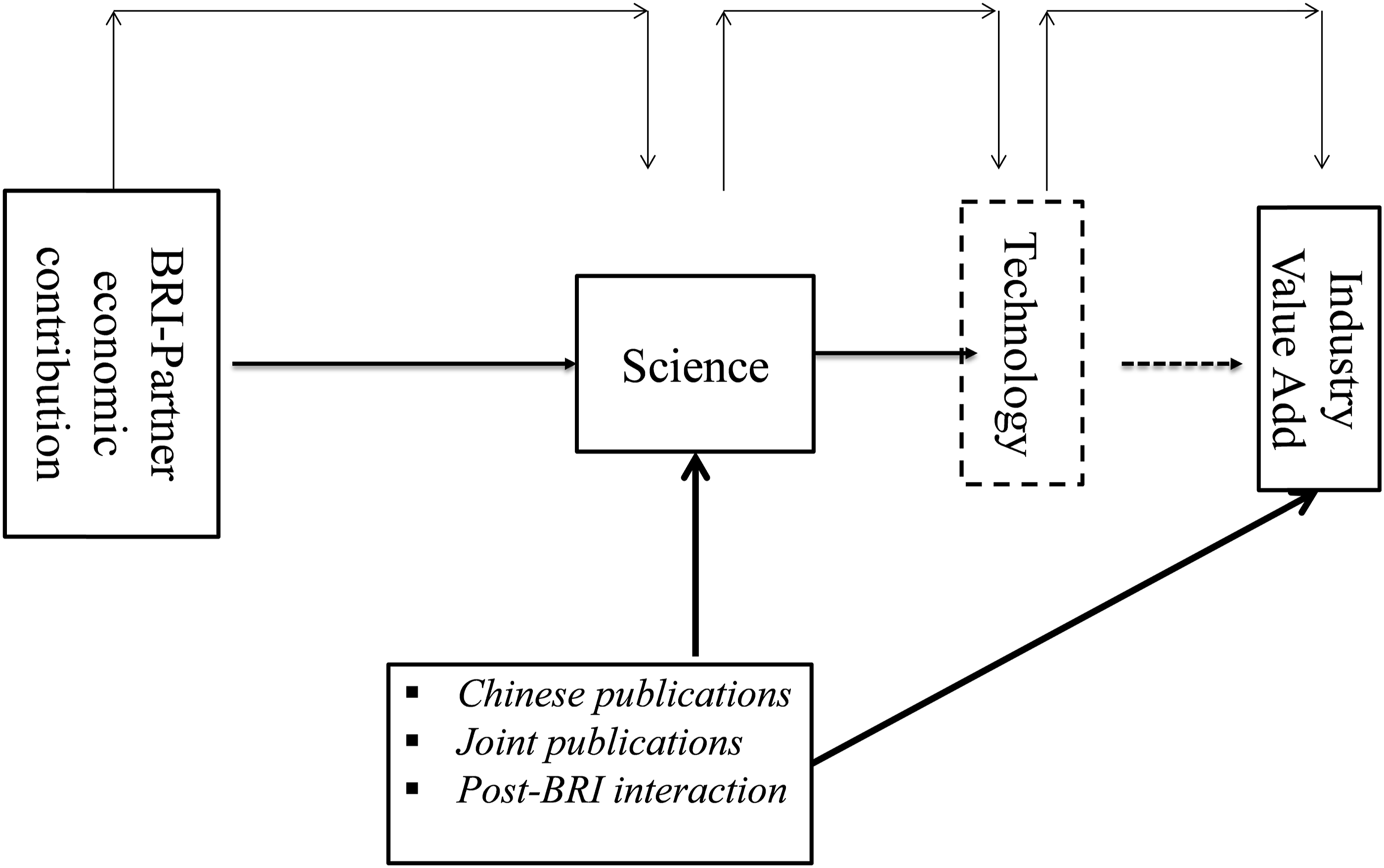
Following these assumptions, theoretical frames, and related concepts, the empirical model of the current investigation draws visual links. The direct link between the jointly developed intellectual capital of the partners predicts the IVA of the recipient partner in the selected case in point. In this case, it is the IVA of Pakistan. The BRI period is divided into two parts (pre-vs. post-BRI) and interacts with the direct link, changing the relationships.
Science and technology to industry value added
As noted earlier, intellectual capital refers to the development of science and technology of the individual, organisation or nation. Intellectual capital comes in two forms in most industrial settings: input, intermediaries and output of the value chain (Bush, 1945). The transformation process on this value chain passes through these linear and non-linear stages (Malik et al., 2021). Publications and patents as intermediary output become input for industrial production (Coyle et al., 2016). The earlier noted theories claim, and empirical evidence sustain that these intellectual capital metrics (publications) strongly correlate with industrial progress (Nelson & Phelps, 1966). Naturally, the use of the publication as a metric of intellectual capital development is sufficient to understand the development of the industrial progress of a nation (Romer, 1998). In other words, publications of a nation strongly correlate with its industrial development and socioeconomic well-being (Coyle et al., 2016). Since national science productivity positively correlates with the input and output of the national economic development (Mankiw et al., 1992), the BRI’s joint science productivity should reflect the predicted industrial development of its partner: Pakistan, in Figure 1.
Belt and road initiative development
Although its seeds were sown earlier, the BRI project was launched in 2013. By 2020, the BRI project has gained legitimacy globally. For instance, a search for the BRI term in OECD (Organisation of Economic Cooperation and Development) produced 1270 documents by the end of 2021. The latest document details the scope and scale of the BRI project 2 . Furthermore, the OECD database elaborates on six economic corridors under China’s Belt and Road Initiative: Mongolia and Russia; Eurasian countries; Central and West Asia; Pakistan; other countries of the Indian sub-continent; and Indochina. In the current investigation, Pakistan stands out as an important corridor in this system because of its founding role, strategic importance and geopolitical tensions. The second tangible evidence of the BRI development is the progress in foreign direct investment. In other studies, three visible signs of that progress are the Chinese outward foreign direct investment (OFDI) to BRI partners, the intensity of investment sectors, and international students in China from BRI partner countries.
The OFDI from China to BRI partner countries has consistently increased, refuting the idea that it is slowing down. The supplementary analysis shows that the OFDI was 12.3 billion in 2013, which increased to 22.54 billion dollars in 2020. This increase of 78% is a strong signal of its diffusion, legitimacy and development. For instance, the OFDI from China to partners under the BRI framework has increased (Yu et al., 2020). Moreover, the scope of the BRI project has expanded to multiple sectors mentioned in the media (Malik, 2020), which suggests technological transfer between partners (Mankiw et al., 1992).
Chinese OFDI to BRI countries by 2020 in Million Dollars.
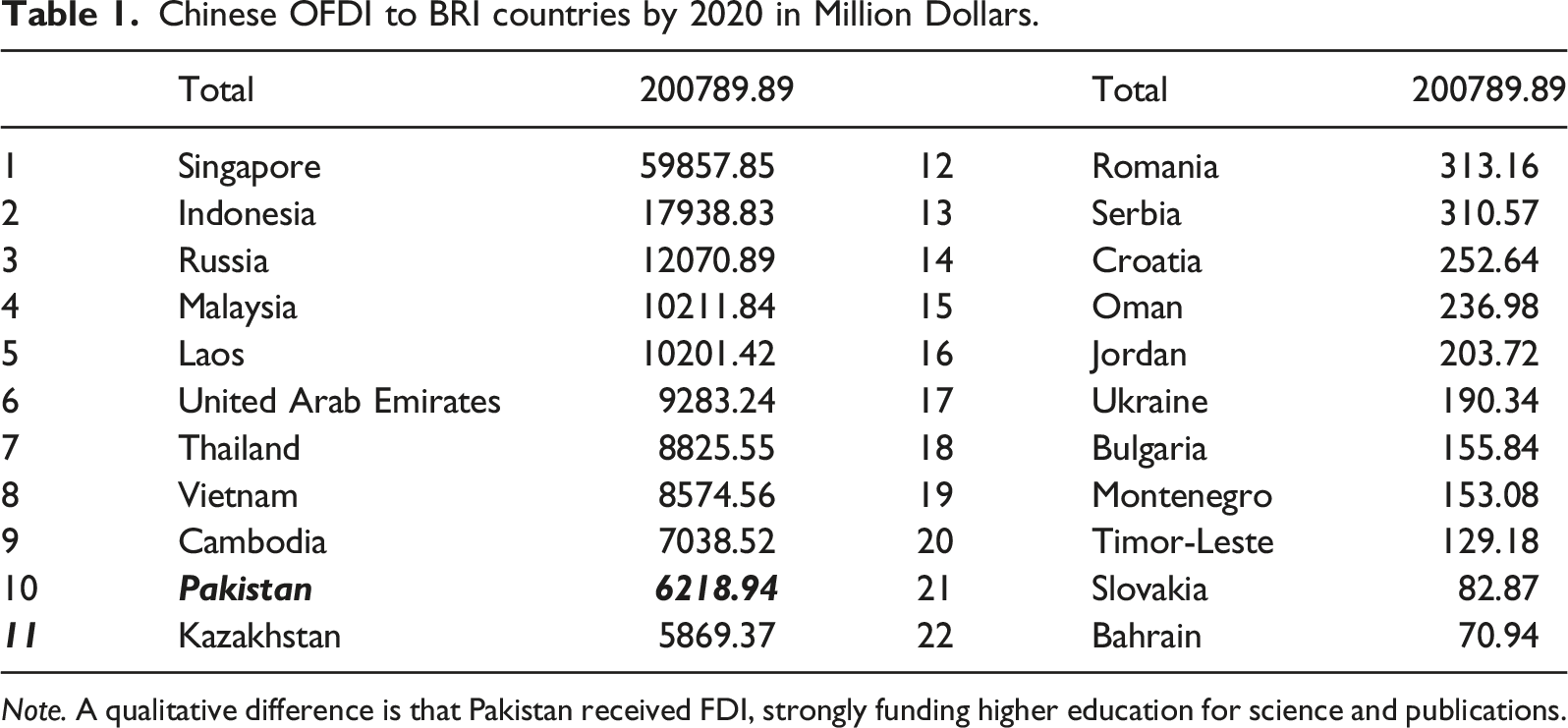
Note. A qualitative difference is that Pakistan received FDI, strongly funding higher education for science and publications.
Along with OFDI to partner countries, the inflow of students from partner countries to China under the BRI framework has increased. BRI (2019), the international students flow into China from partner countries had reached 500,000. Figure 2 shows these partners in the order of the size of the student population in China. Among them, South Korea (50,600) leads the pack, followed by Thailand (28,608) and Pakistan (28,023). We focus on Pakistan for two reasons: it is a founding member of BRI through the CPEC system and has postgraduate students (master’s and doctoral levels) in China. Compared to South Korean and Thai students, Pakistani students represent Chinese-funded postgraduate status through research and publications. Foreign Students in China from BRI partners (Pakistan). Source: Official statistics, 2018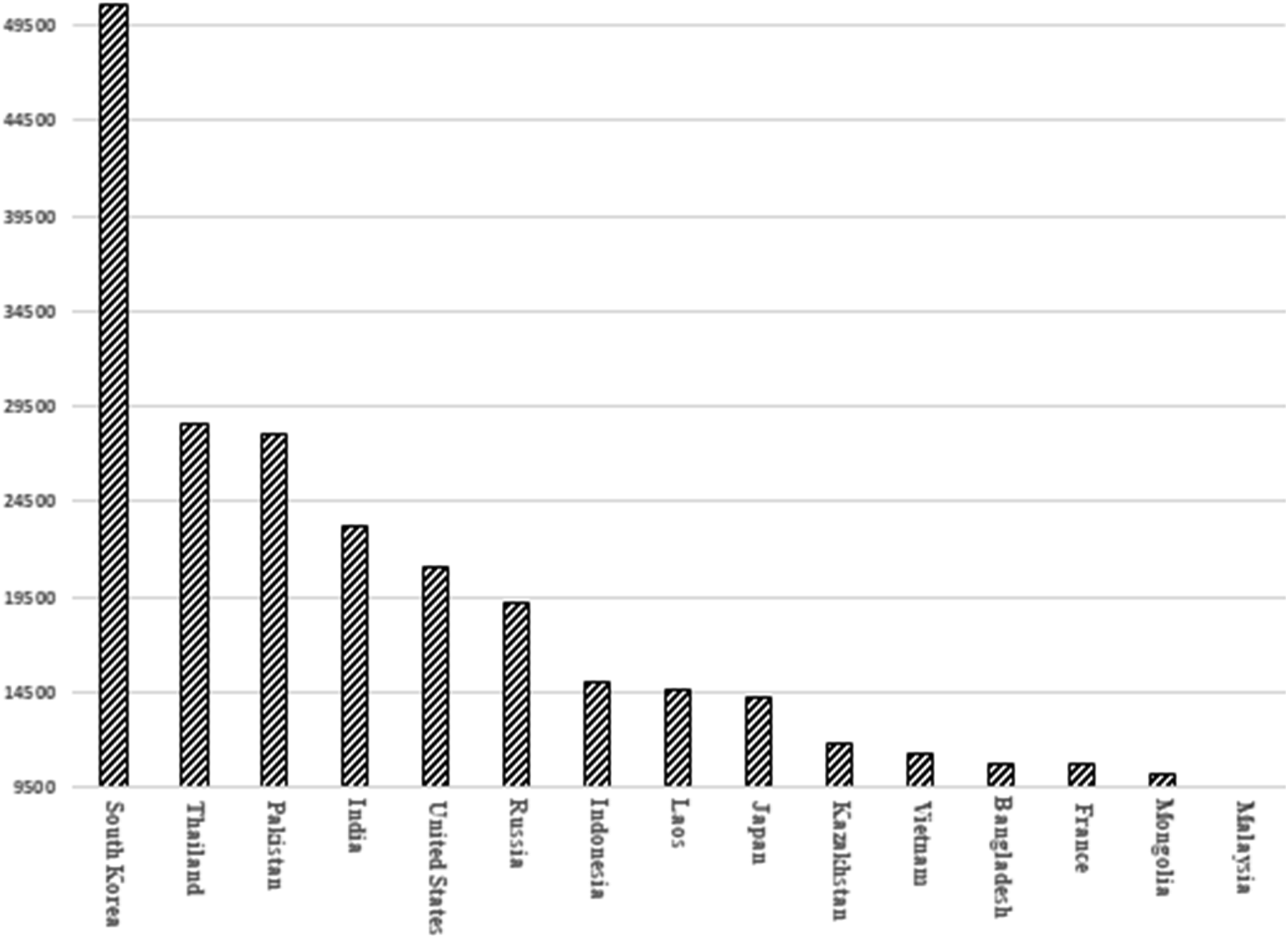
The official statistics suggest that China is the main destination for Pakistani students at all levels. Among 28,023 Pakistani students in China, about 22% (6156) are taking PhD programs, and 13% (11,100) are taking master’s programs in multiple STEM (science, technology, engineering and mathematics) courses that dominate social science and humanities. The combined PhD and Master’s scholarships account for 25% (7034). The remaining 40% (11,100) are taking bachelor studies, and 11% (3000) are taking short-term courses, such as language or exchange programs. Hence, the BRI project contributes to the intellectual capital development of its partner countries in policy and input.
Belt and road initiative-induced science and industrial development of Pakistan
The BRI project meets multiple conditions to support the intellectual capital development of its partners. Firstly, BRI is an innovation model in structure, practice and institutional development (OECD, 1997; Schumpeter, 1942). As a structural innovation, the BRI reflects inter-organisational relations at the national, especially the inter-university and state-university policies are an integral part of the BRI project (Petricevic & Teece, 2019). Secondly, the BRI project has integrated education and has formed Sino-foreign cooperation between universities, science centres and industries (Malik, 2020). On a global scale, China hosts more than 500,000 international students, taking the second position after the USA. In this list, Pakistan is among those countries with more research students in China than elsewhere because of the special arrangement under the socioeconomic structure of the CPEC (China-Pakistan Economic Corridor). Evidence indicates that the Chinese-funded research productivity of Pakistani authors in China, Pakistan, and other countries has increased to differentiate post-BRI patterns from pre-BRI patterns. Figure 3 shows an exponential increase in Chinese-funded publications—from a horizontal timeline before 2013 to a steep increase after the BRI took off. Sino-Pak publications from 1991 to 2021 (Chinese funded). Note: Chinese funded publications (joint or solo). Source: Web of science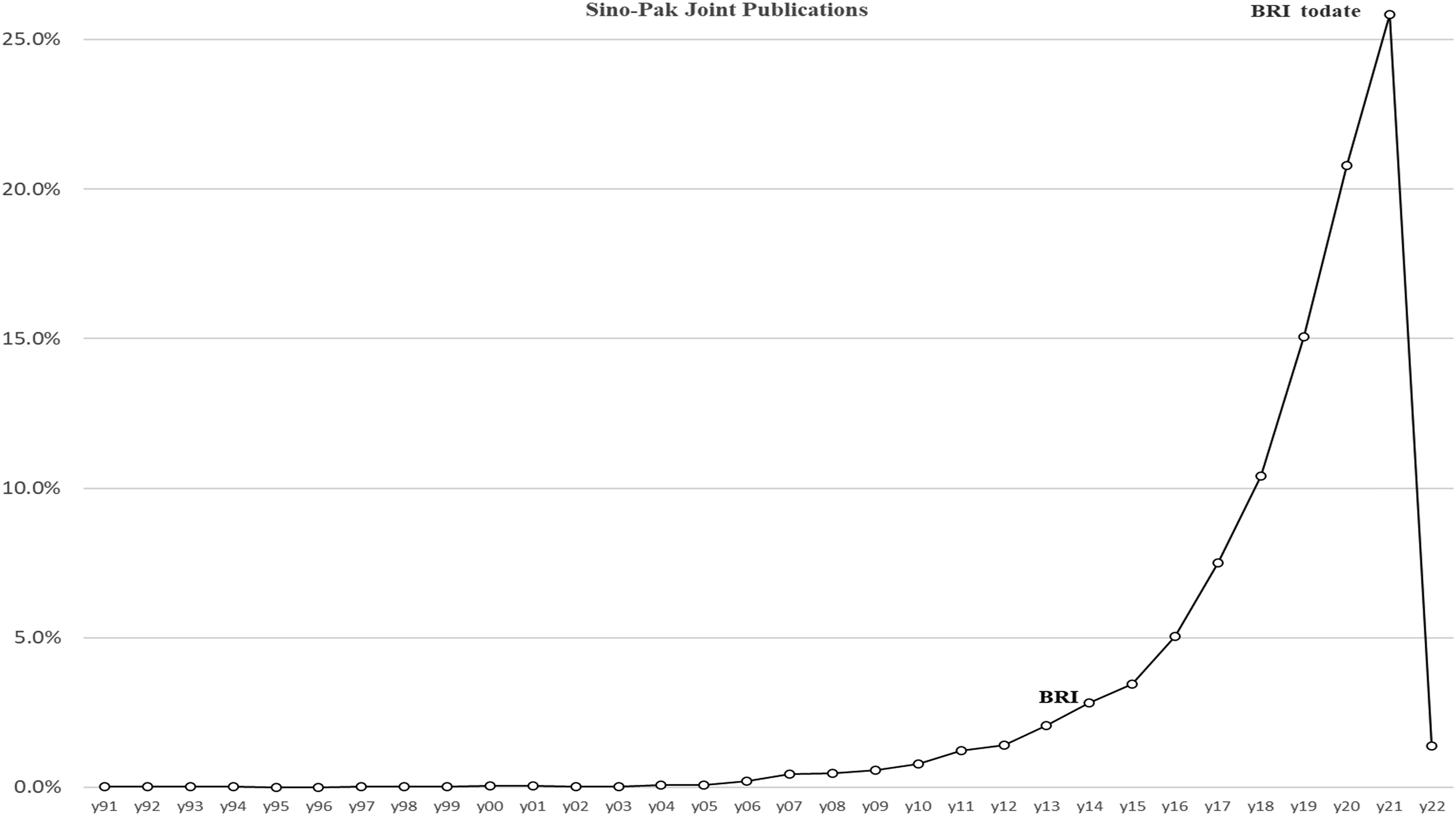
The question often arises from the popular and academic literature whether the BRI contributes to the partner (IVA of Pakistan) that is statistically different from non-BRI economies in the region. This comparable scenario between Pakistan (BRI partner) and India (non-partner) revealed the research productivity of Chinese-funded research projects and their output. Figure 4 reveals that the Chinese-funded research output in India for 100,000 per publication remained flat; it increased in Iran in 2018 and Bangladesh in 2016 because these countries joined BRI in the second half of the investigation period. These patterns support two answers to the critical questions. (1) Does BRI differentiate Pakistan from non-members? The answer is affirmative in the visualised trends. (2) Does Pakistan’s IV differs from a non-BRI member (China to India or India to Pakistan)? The statistical analysis will answer these questions in response to the following hypothesis. Pakistan vis-à-vis Bangladesh, India and Iran in Chinese funded publications (100,000 people). Note: China funded publications across four countries per 100,000 people. Source: Web of science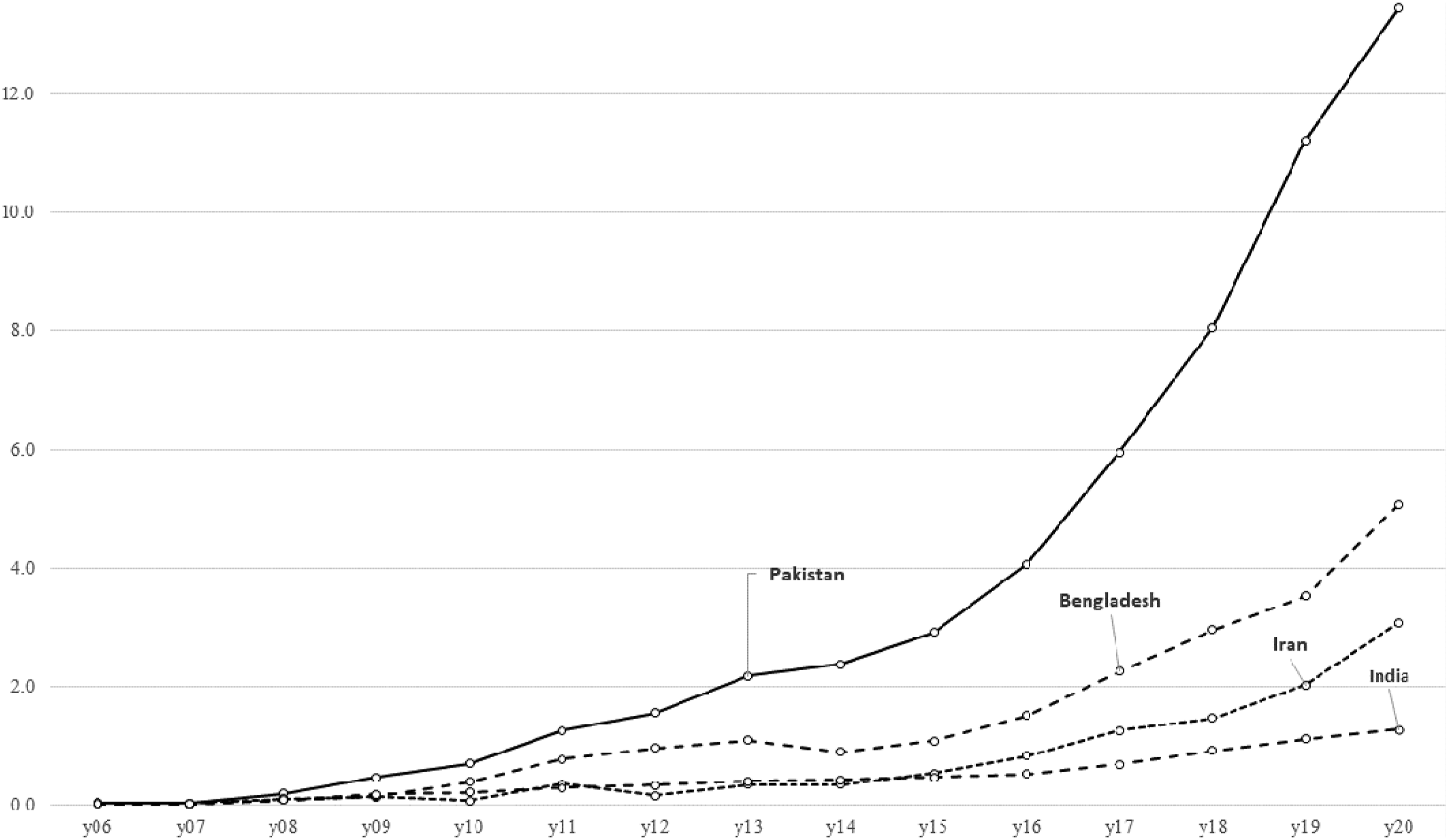
Joint Sino-Pakistan publications will positively predict Industry Value Added of Pakistan post-BRI compared to the pre-BRI period.
Methods
Research context
Whether the BRI project has contributed to the industrial development of a partner economy has been on the minds of scholars, politicians and media personalities of both camps: proponents and opponents of BRI. From a scholarly point of view, we have the answer in this delimited study to the empirical analysis of Sino-Pakistan—in a donor-to-recipient flow of resources and productivity relationship. This donor-recipient relationship in economic terminology refers to the transformation of science to technology and the flow of it between interactive partners. In the Sino-Pak interactive partnership, the context meets all theoretical assumptions listed in the framework. China and Pakistan are neighbours, geopolitically interdependent, strategically integrated and historically related. China and Pakistan formed the first economic corridor in the BRI project. In some ways, the BRI project started in Pakistan through the CPEC (China-Pakistan Economic Corridor).
Within the BRI framework, the Chinese research funding expedited the flow of intellectual research (research projects, research students, R&D investment, joint publications and inter-country industrial technology). With the start of the CPEC, many Pakistan Students have entered China for higher education. The number of disciplines and students has increased at the graduate and postgraduate levels across universities in China. By the end of 2019, the official record shows that 28,023 Pakistanis studied in Chinese universities. Among them, 6156 were studying for PhD degrees, 3600 were studying for master’s degrees, 11,100 were studying for bachelor’s degrees, and 3000 were studying for short-term exchange programs across China. About 7034 received scholarships from China. Hence, the specific relations and CPEC (a pilot project of BRI) facilitated this development.
Many Pakistanis institutions of higher education lacked research degrees, especially PhDs, and most Pakistan academics lacked a doctoral degree through proper research training and publications. The Chinese-hosted PhD programs offered opportunities to Pakistani academics to advance their careers, research productivity and socioeconomic contribution to the home or host nations and academic institutions. These research degrees use English as the medium of instruction, research and publications. After completing their doctoral studies, some of these graduates became academics in Pakistan, others in China, and others elsewhere. For instance, one doctoral graduate of a Chinese university obtained an academic position in Switzerland, another in France, several in China, and many in their home institutions.
Moreover, as noted earlier, the Sino-Pak research collaboration and publications have continued after graduation, increasing the output in Pakistan. However, the publication intensity varies across disciplines. Some disciplines dominate the others; energy science, engineering, computer science, medical field, and economics/finance have become more attractive for both sides—the candidate and the host institution in China. It logically delimits the focus of this research to sample research productivity of Chinese-funded and collaborated research output.
Sample
The unit of analysis is a yearly publication in a discipline in China and Pakistan, making three data points. Firstly, the timeline of the BRI project guided us to include observations from 2011 to 2020. Although the BRI project began in 2013, earlier observation serves as a comparison period for the temporal analysis. Secondly, interdisciplinary differences vary in scope and intensity of research focus, resource allocation and output because of its attractiveness, technical nature or both. For instance, social sciences attract different scopes and scales of incentives, structures, input and output. We used an integrated analysis of all disciplines in the sample. The sample includes 27 disciplines in a globally recognised scientific publication system 3 . Thirdly, we organised research output data as an intellectual contribution within the two countries: Pakistan and China. The sample includes 201 to 2020, making the observation size 243 of the panel dataset.
We used multiple sources for the data: BRI official report, national statistics, interviews, first-hand observations across universities in major cities, and the Web of Science. Chinese official report on the BRI and CPEC highlights the completion of intended goals (BRI, 2019). The official statistics provide concrete data on CPEC in the BRI framework. Interviews with international students in China offered us insights into the funding agencies, collaborative arrangements, requirements for graduation and need for publications. Observation of multiple universities in major cities offered qualitative information about Sino-foreign collaboration in higher education, especially the focus on Sino-Pak researched and published science at universities in Harbin, Shenyang, Dalian, Beijing, Nanjing, Shanghai, Hefei, Wuhan, Xian, Hangzhou, and Guangzhou. We also interviewed deans associated with Sino-foreign collaboration in the higher education sector. While the triangulated data benefited us in forming our propositions, the empirical analysis is the essence of our empirical analysis. Appendix A compares the publication of Pakistan with publications of China between disciplines. The ratio indicates that one publication in Pakistan meets 10 publications in China. These absolute values place China far ahead of Pakistan, a less precise comparison.
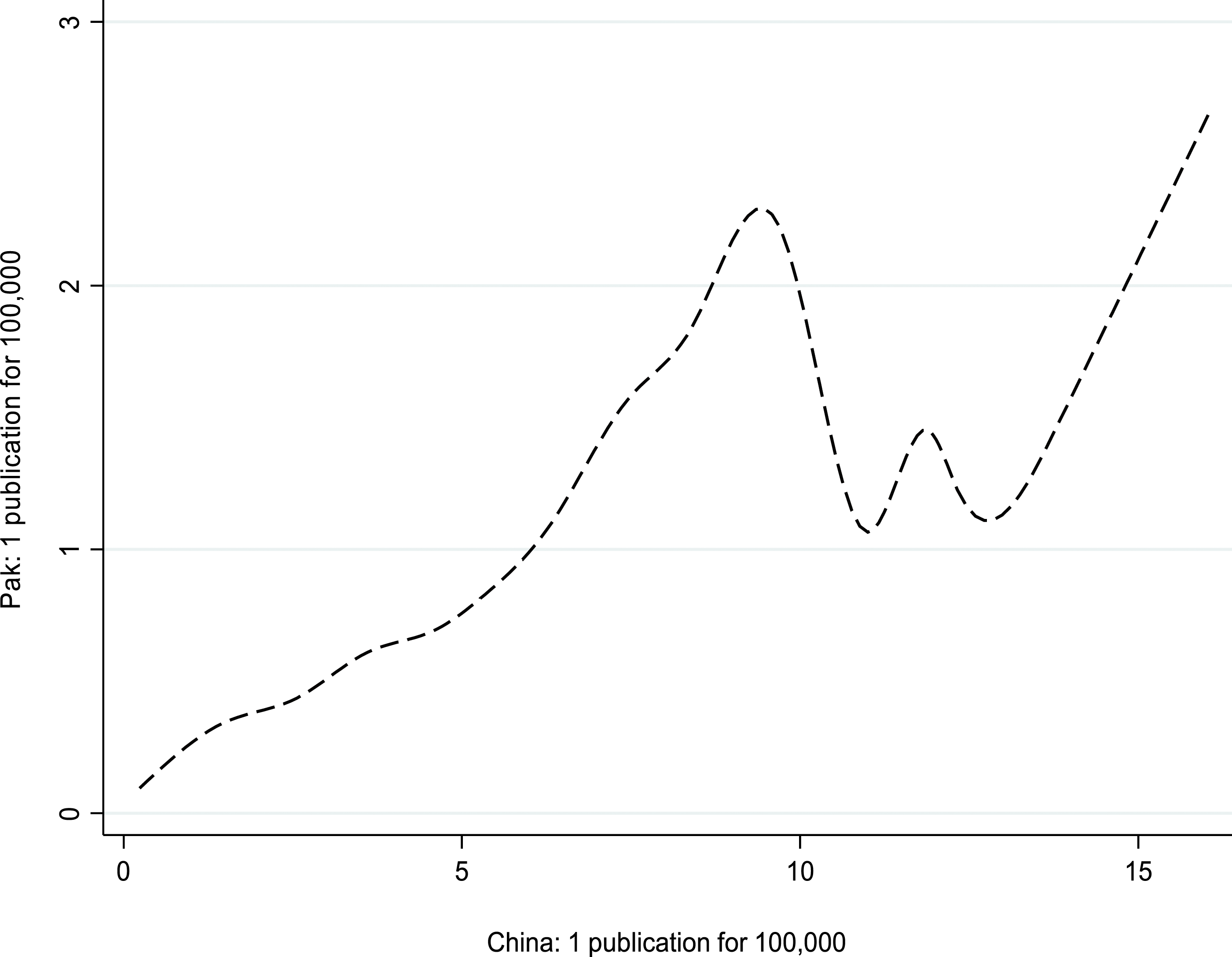
In relative terms, the precise comparison is the per capita publications in the two countries: Pakistani versus China. The interactive system and knowledge transformation theory support this comparison metric based on per capita output (Fagerberg et al., 2005). Appendix B shows the relative gap of one publication in Pakistan with four publications in China for the 100,000 population. The BRI project produced the CPEC, leading to interaction with the higher education sector. The flow of research students from Pakistan to China and back supports the internal mechanisms. Does the Chinese publication trend correlate with Pakistan’s publication? Appendix C answers in the affirmative. But it leaves the earlier questions in place about the indifferences between non-BRI countries and BRI-member countries in the same period. We developed variables to explore and answer these questions statistically.
Variables
Dependent variable: The dependent variable represents the IVA (industry value added % of GDP) of the focal country (Pakistan). According to the World Bank, the International Standard Industrial Classification (ISIC) includes divisions 05–43, comprising mining, manufacturing, construction, electricity, water, and gas. The IVA is measured as the “net output of a sector after adding up all outputs and subtracting intermediate inputs” (WB, 2020).
Independent variables
Chinese publications
Chinese publications measure one publication for 100,000 people. This per capita publication produces a continuous, standardised and comparable variable.
Pakistan publications
The variable measures publications per capita based on a 100,000 population. It is similar to the standardised value of one publication for 100,000 people in China.
Joint publications
It is a count variable of joint publications of authors, of at least one from China and the other from Pakistan. This difference is available across public databases such as the web of science.
BRI periods
The BRI period is a binary variable for inter-temporal comparison. It divides the decade of 2011–2020 into post-BRI and Pre-BRI for conceptual distinction. The post-BRI includes 2015 to 2020, and the pre-BRI includes 2011 to 2014. Because BRI was launched in 2013, a publication or/and industrial value-added takes effect after a year or more. Therefore, it makes logical sense to divide the time into periods.
Interaction variable
The interaction variable is the product of the post-BRI variable (binary) and other variables. Among others, two variables are relevant: Chinese per capita publication interacted with post-BRI; joint publication interacted with post-BRI. Both independent test the main argument and answer the research question by predicting Pakistan’s IVA.
Analysis
The dataset in the panel allowed us to use multiple models to strengthen the support for the proposition. We used OLS (ordinary least square), GLM (generalised least square model), Random Effect, and Mixed Effect in these inter-model comparisons. In all models, we used Robust Error estimation. For standardised variables, analysis and interpretable results, we chose OLS for the report because all models produced similar out (direction of the coefficients and effect size). The empirical analysis with robust results has merits that outweigh previous studies on the BRI project in many ways (Reeb et al., 2020). Firstly, prior studies rely on anecdotal evidence or political narratives (Gransow & Price, 2019). Secondly, the prior quantitative analysis research answers different questions: whether the media coverage of the BRI project towards legitimacy development of the project (Malik, 2020). Thirdly, prior studies support the opposite argument that BRI increases Chinese exports to partner countries (Yu et al., 2020). Fourthly, the study explores cultural differences in the operation of Chinese firms in BRI member countries (Li et al., 2019).
Model specification

Validity
The validity of the analysis rests on two conditions: necessary and sufficient. The necessary condition meets several points elaborated on in earlier sections of our analysis. We list them here briefly. i. Inter-country level research input and output a. Chinese-funded collaborative research students b. Chinese-funded collaborative research output c. Chinese-funded research output comparison between a BRI member (Pakistan), and non-BRI members. ii. Inter-institutional level analysis a. Collaborating Institutions b. Home and host institutions of the researchers in the academia c. The case study of a university in China and the publications of Pakistan graduates. iii. Reliable evidence exists in several independent organisations a. Industrial value added (IVA) for the BRI and non-BRI comparison vis-à-vis China b. Web of Science c. Publishers/journals d. Authors' home address e. Funding agencies
Robustness
Several factors support the robustness of the design and analysis of this study. i. It established a direct link between China’s IVA and Pakistan’s IVA. Then it confirmed that China does not predict India’s IVA the way it did Pakistan’s IVA. ii. It compared the post-BRI vs. pre-BRI joint publications and their implications. iii. It uses fixed effects of interdisciplinary differences (27 disciplines). iv. It drew linear functions and logarithmic functions to compare the results. v. It drew the margins plot to display the effect differences between the two time periods visually.
Together, the validity conditions and the robustness reduce the potential for concerns raised by some writers that researchers take the official line in their empirical query (Wolf, 2019).
Results
Variables, summary and correlations.
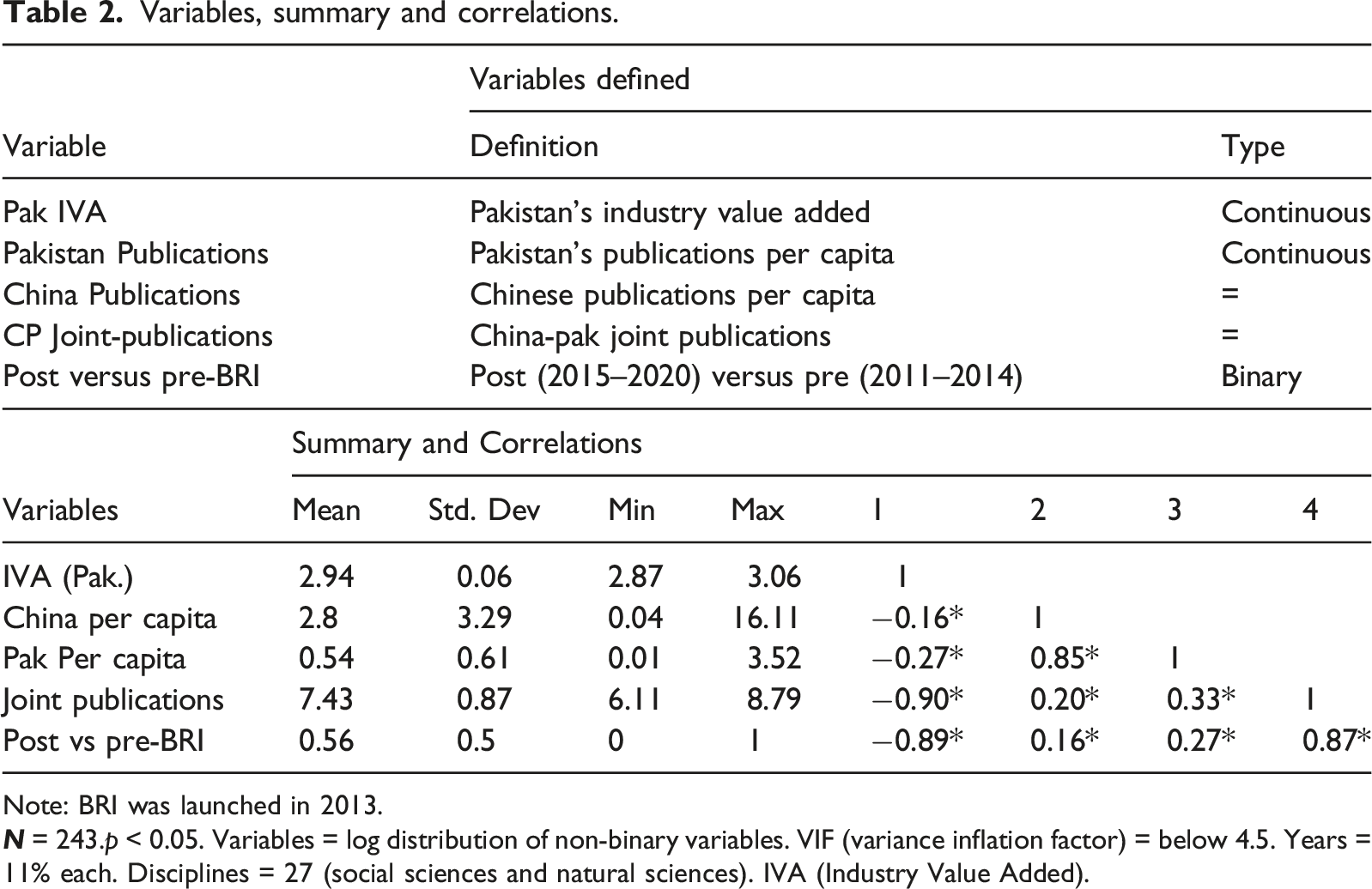
Note: BRI was launched in 2013.
Appendix A Shows the Absolute Ratio of 1 of Pakistan's Publications to Many of China's Publications (1–25 Unstandardised). The True Comparison Between the Two Partners in the BRI Project is Relevant in a Standardised Estimate Based on the Population Size (per 100,000). Appendix B (per Capita 100,000 People) Shows the Precise Comparison of 1:4. However, Comparing the Pre-BRI Relative Gap with the Post-BRI Relative Gap, We See the Relevant Difference. Before the BRI was Launched (2001–2011), the Relative Ratio was 1:8 for 100,000 People. After the BRI was Launched, the Ratio was 1:4 (per 100,000 People).
China’s IVA predicts Pakistan’s IVA.
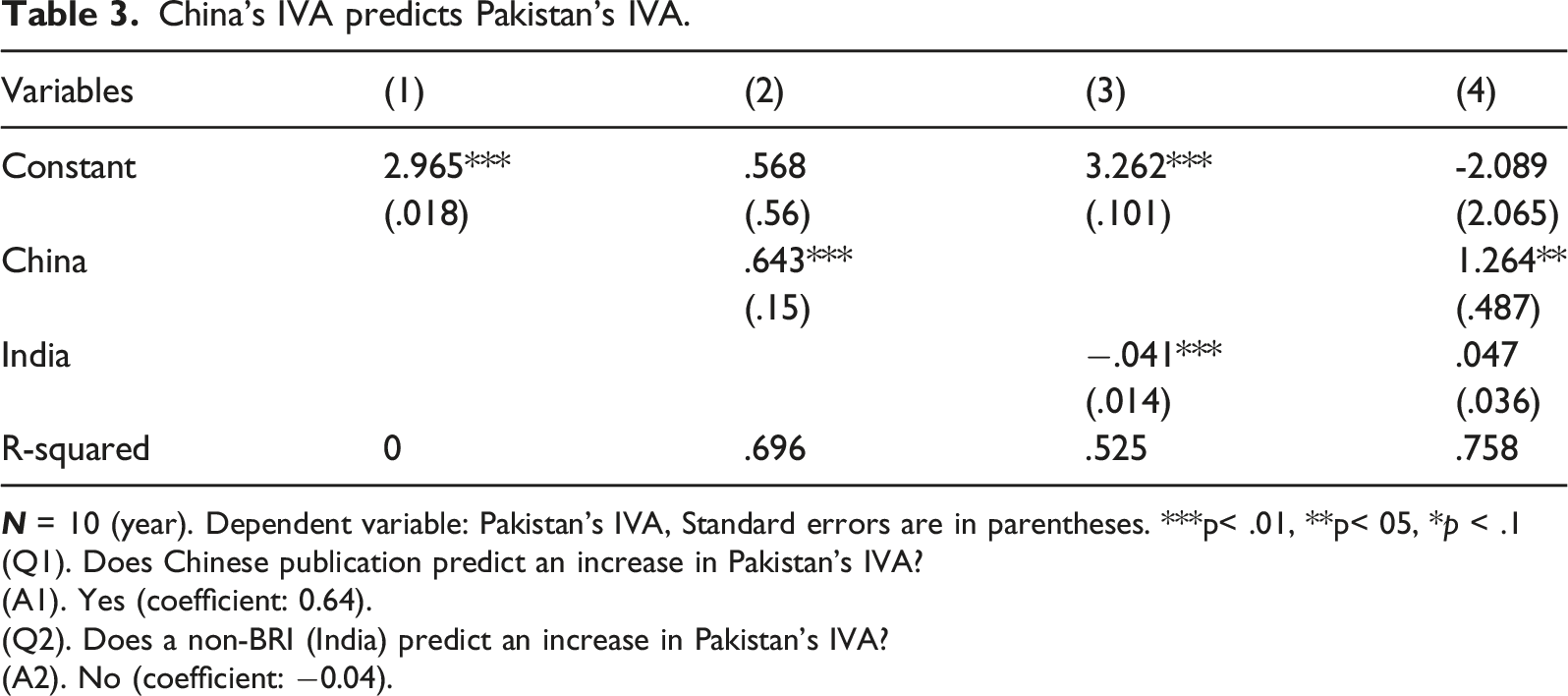
(Q1). Does Chinese publication predict an increase in Pakistan’s IVA?
(A1). Yes (coefficient: 0.64).
(Q2). Does a non-BRI (India) predict an increase in Pakistan’s IVA?
(A2). No (coefficient: −0.04).
China’s IVA predicts a non-BRI member’s IVA.
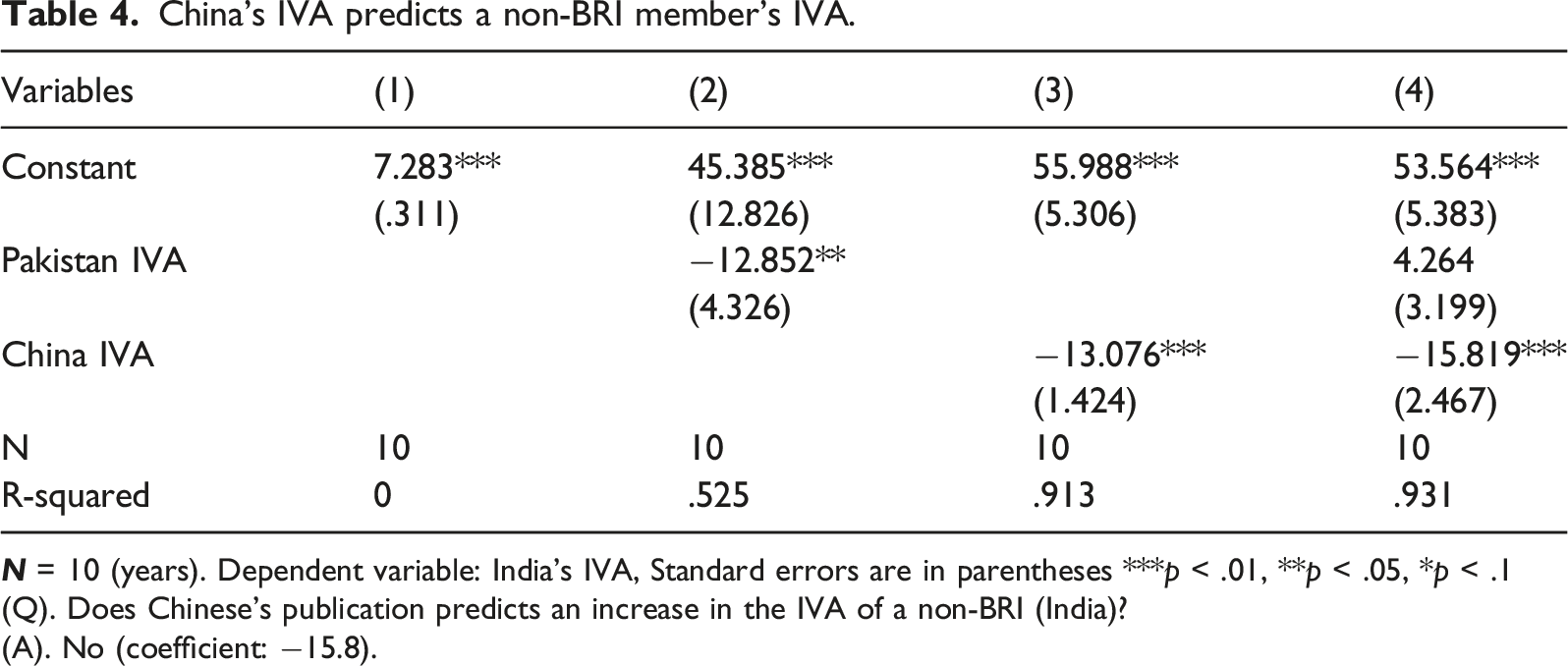
(Q). Does Chinese’s publication predicts an increase in the IVA of a non-BRI (India)?
(A). No (coefficient: −15.8).
Joint Sino-Pak publication predicts Pakistan’s IVA.
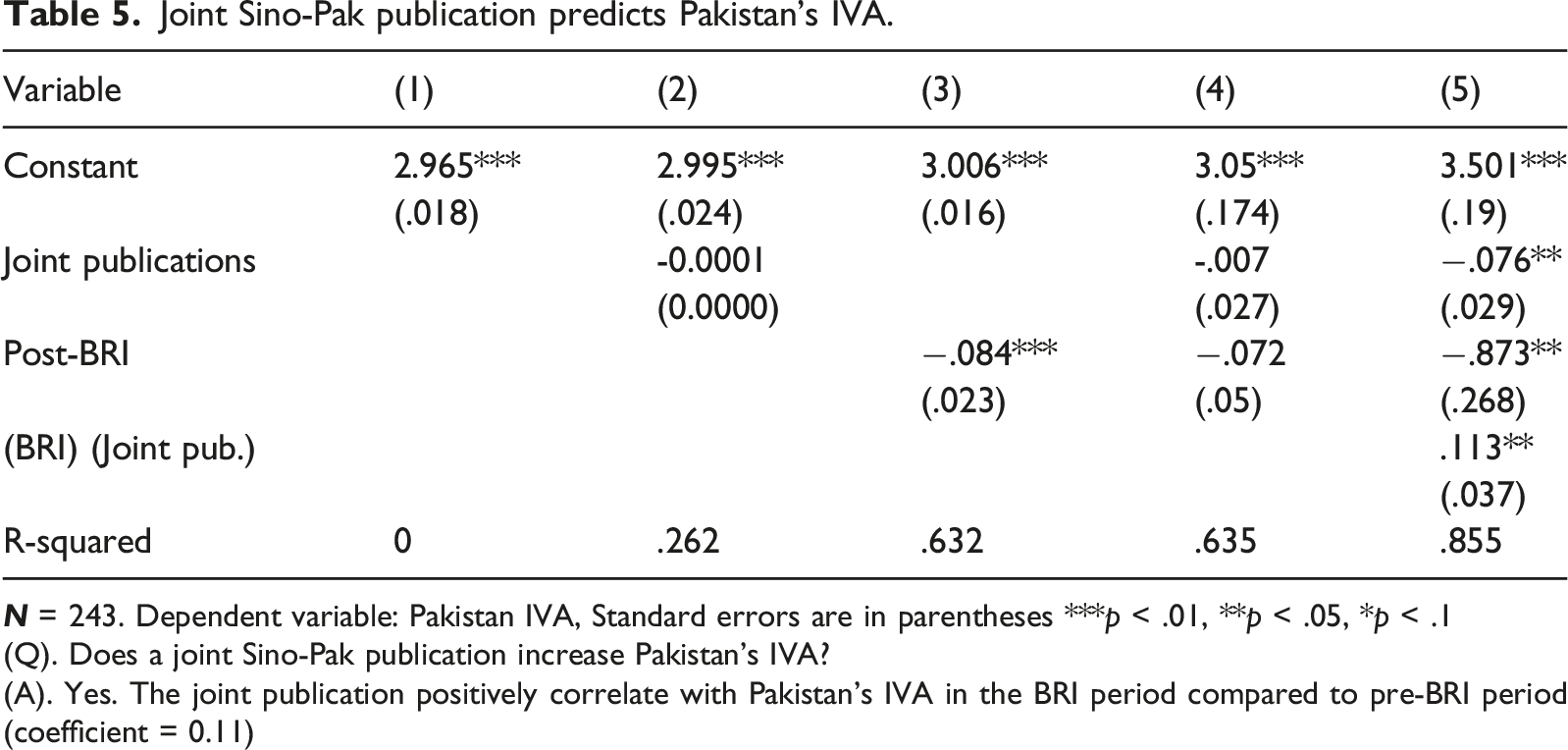
(Q). Does a joint Sino-Pak publication increase Pakistan's IVA?
(A). Yes. The joint publication positively correlate with Pakistan’s IVA in the BRI period compared to pre-BRI period (coefficient = 0.11)
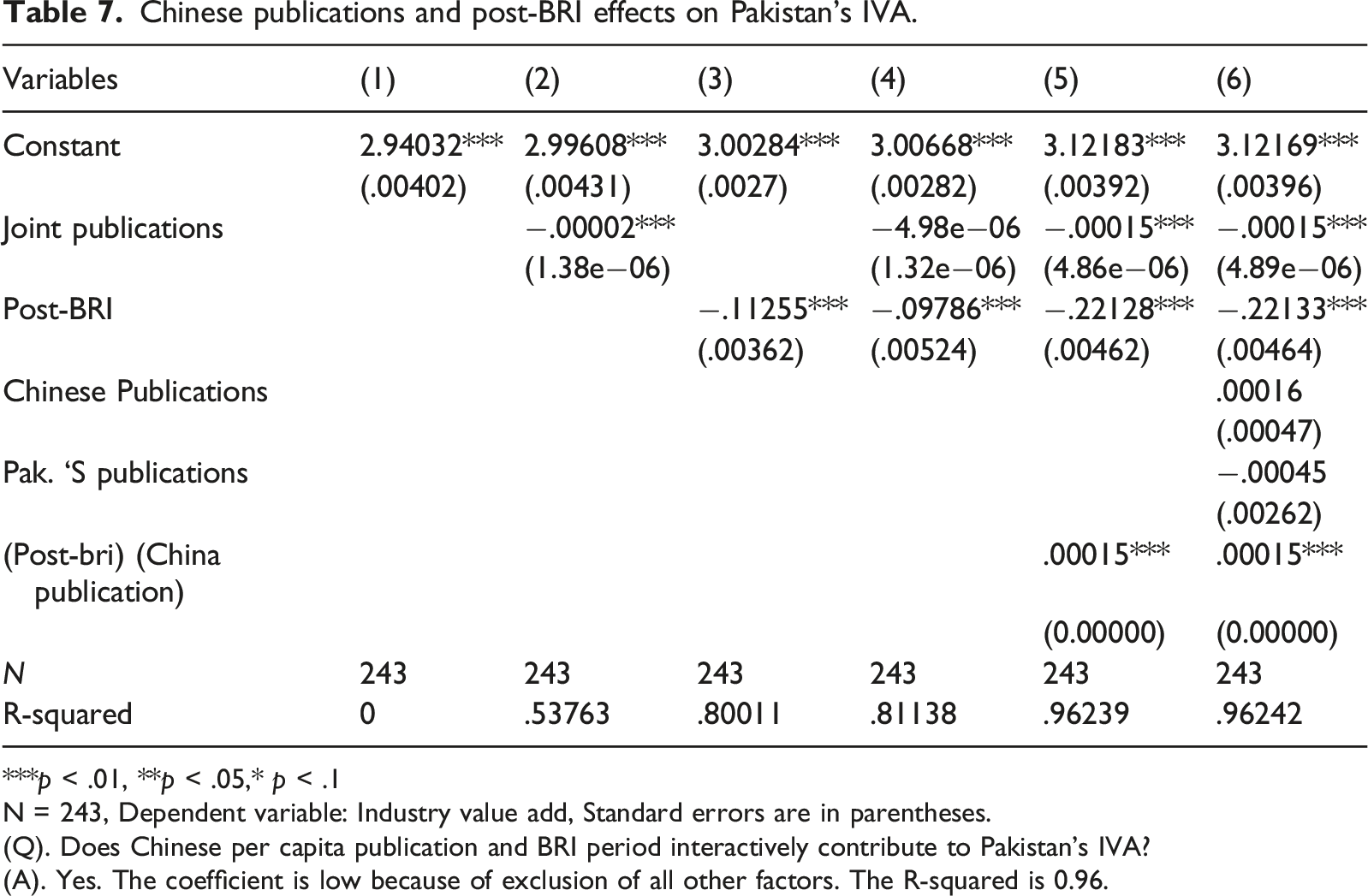
Figure 5 shows the margin plot of the interaction effect. The X-axis shows joint publications, and the Y-axis shows the IVA of Pakistan. The dark line shows the pre-BRI period, which shows a declining correlation between joint publications and IVA. The post-BRI period shifts the steep decline into a flat line towards a positive correlation between joint publications and the predicted IVA. Together, Table 5 and Figure 5 answer the focal research question and confirm the main proposition. Margins plot (post-BRI and joint publications). Note: Interaction effects of BRI periods and joint publication on IVA of Pakistan.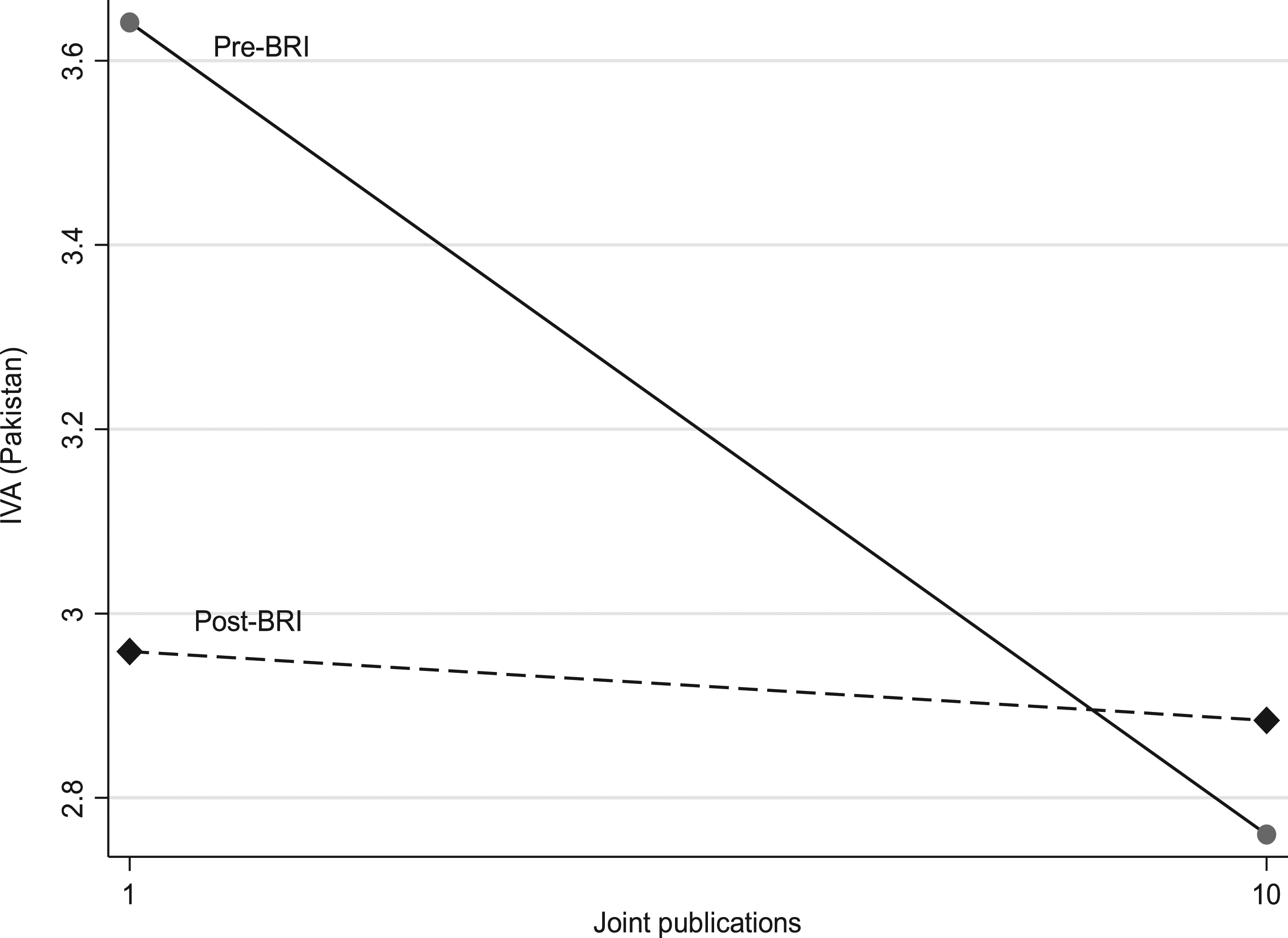
Joint publication and Chinese publication interactively predicts the IVA after confounding effects.
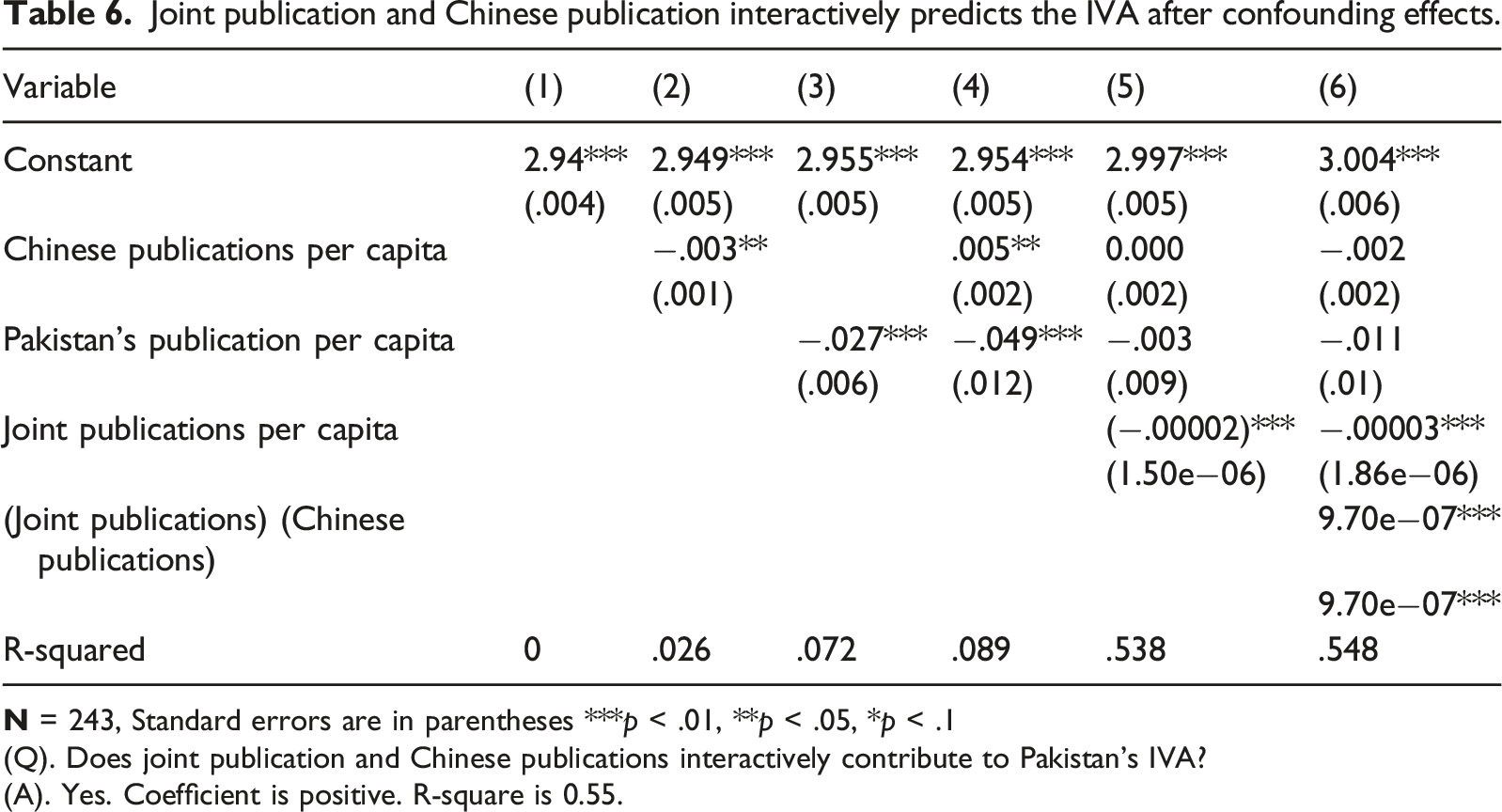
(Q). Does joint publication and Chinese publications interactively contribute to Pakistan’s IVA?
(A). Yes. Coefficient is positive. R-square is 0.55.
Chinese publications and post-BRI effects on Pakistan’s IVA.
***p < .01, **p < .05,* p < .1
N = 243, Dependent variable: Industry value add, Standard errors are in parentheses.
(Q). Does Chinese per capita publication and BRI period interactively contribute to Pakistan’s IVA?
(A). Yes. The coefficient is low because of exclusion of all other factors. The R-squared is 0.96.
Discussion
This article aimed to settle a critical debate about whether the BRI project causes absolute harm to the partner economy other than China. The opponents' narrative of the BRI’s positive contribution to China and negative contribution to partners point to the idea of exclusive benefits to China at the cost of others. Taking these lines in the reasoning, these critics of the BRI project reach three implicit conclusions. First, they argue that BRI member countries are worse off than those non-BRI members in terms of economic well-being. Second, they speculate that the BRI project is the ultimate cause of their instabilities. Third, the BRI project has inclusive side effects in science and technology (industrial upstream and downstream). The current study takes an empirical approach to explore whether the evidence confirms or refute these proposition. Departing from these arguments and reasons in the literature, we make surprising discoveries. The litmus test for the confirmation or refutation of the critique is that a joint input of science productivity and a positive correlation with the IVA of the partner will refute the reasoning in the literature. Conversely, a negative or indifferent correlation between joint science productivity and IVA will confirm the critics' argument.
We tested this argument in the industrial value added of Pakistan: a fundamental partner of the BRI project. First, the BRI project started in Pakistan through a bilateral relation, and the other five corridors began later. Second, this segment of the BRI has established an institutional structure to support academic development. Thousands of Pakistani research students have flocked to China for higher learning institutions. Third, the timeline from 2013 to 2020 offers sufficient evidence to analyse the contribution to intellectual capital development through Chinese-funded research, followed by the industrial value added in Pakistan. Last, the intellectual capital development in the CPEC system supports the theoretical argument of the coevolution of two interactive institutions for technology transfer and transformation. The finding shows logical support for the intellectual capital development of Pakistan in response to participation in the BRI project, and it systematically predicts a positive correlation with the IVA of Pakistan. The qualitative evidence of the science development shows that the gap between China and Pakistan in publications has decreased from 1:8 for 100,000 people before the BRI (2001–2011) to 1:4 during the BRI period (2013–2020). The quantitative evidence of the industrial development through the transformation of joint science into Pakistan’s IVA confirms an increase in the post-BRI period compared to the pre-BRI period.
In contextualising these robust findings into the prior literature, we divide the literature into categories: one that rejects the BRI contribution, one that supports it, and one that works on the boundary line to avoid either side or offer opinions about its potential implications. In the case of opponents who reject the role of the BRI project, the literature suggests adverse points of the BRI project. At best, it does not contribute to the member countries; therefore, they need not be in the BRI project system. In other words, the BRI project enforces bilateral relations between China and its partner countries in favour of pre-existing political and economic systems (Karrar & Mostowlansky, 2020). At worst, the BRI project benefits China because it replicates its domestic economic models to exploit opportunities and needs. For instance, China has replicated its domestic system to the internationalisation process in the BRI projects in Indonesia in constructing roads and railways in a choreographed fashion that favours its economy (Yan, 2020). Our findings refute these assumptions because most arguments in the prior literature are opinionated or anecdotal at best.
It leaves the proponents of the BRI project with some advantages. One study predicts that if managed in spirit and letter, the institution of the CPEC can increase the country’s production capacity up to 12.9% (about 15.8% average) in the energy sector (Duan et al., 2020). Another study reveals that the OFDI has increased partner countries' socioeconomic well-being, suggesting that uncertainties, challenges, and ambiguities persist in the quality of the host country’s culture, institutions and management (Yang & Li, 2021). Despite political narratives in the West that the BRI project is a political tool (Malik, 2020), China has never engaged in the domestic politics of the partner countries. Hardly anyone believes that China wants to change the so-called democracies on the line of its system like the USA wants to promote other systems into democracies. A third study indicates that the narratives differ, but the contribution remains positive and relevant. For instance, the Sino-Nepal partnership in the BRI project reflects differences in the Nepali media from the media elsewhere, which differs from that in China (Murton & Lord, 2020). A fourth study supports the idea of the institutional development of the BRI. For instance, the industrial development bank associated with BRI has a shared governance system in the structure and functions of BRI members (Gransow & Price, 2019). While proponents and opponents take sides, they are devoid of empirical support.
Empirically, several studies have emerged, but they take the borderline with hedging through contingencies. One study suggests that the BRI project will reveal its potential in the long run because the development rests on trust and effective communication (Zhao & Tan-Mullins, 2021). Trust comes from stability, and stabling emerges from a long-term perspective. Another study avoids the tension by resorting to cultural contingencies as moderators of Chinese exports to its BRI partners (Li et al., 2019). A third view presents the challenges to effective operations of the BRI project in inter-cultural gaps at the micro-level (Mukhtar et al., 2022). While our study counters some of them and complements others, it subtly advances the debate on the BRI project and research question with concrete evidence.
Why is our finding statistically different from the critiques that BRI serves the Chinese interest at best and is the worst debt trap for the host economies? We believe that most writers overlook three factors of the host countries. Firstly, corruption is so rampant in host countries like Pakistan that it has become a fashionable and acceptable phenomenon. Media and societies began to see the manipulation of the corrupted leaders as their wisdom and veracity. In China, the leadership is active in the idea that corruption harms socioeconomic well-being. Secondly, the upper echelon’s interests and lobbying capacities are based overseas than in the country in countries like Pakistan. For instance, the affluent members (politicians) have never built an institution in the country which would benefit the rest. Instead, their assets, health management, business interests and political influences are parked outside the country. Corruption is the reason behind these economic traps (Stephenson, 2020). Thirdly, decision-makers are the least capable politicians in most corrupt countries. The illiterate masses select illiterate leaders on the dynastic lines, and the resulting instability adversely contributes to the social and economic policies in the long term. In contrast, Chinese stable and intellectually informed leaders have contributed to the progress in China (Malik & Huo, 2019).
In concluding remarks, our analysis and evidence contribute to the broader technology transfer and transformation field in the broader industrial development. Besides contributing to the field by addressing whether the individual development of partners adds value to the partner’s economy, we set a stage for future arguments. Theoretically, we subscribe to the institutional view that socioeconomic progress needs meaningful institutions to realise technical value, and institutions affect and reflect effectiveness and efficiencies through interactive learning. Then the idea of the BRI is a theoretical success in a broader innovation system. The critique of the BRI project without the critique of the partner countries' institutional development is greatly misplaced and unwarranted. For instance, any failure in Pakistan is aligned with the BRI project’s failure or ills. Despite the BRI project never inducing a political or ideological change in Pakistan, and China has never imposed ideologies in Pakistan for the past 70 years, the failure of the previous political ideologies of the West might get passed on to the failure of China and its partners in the BRI project. China is not responsible for the corruption in the country and the lack of institutional development. China is not responsible for Pakistan’s declining literacy rates and education standards. China is not responsible for the American-led wars against the Soviets or militants in the region.
Instead, the quality of host institutions influences the development of the BRI project (Yang & Li, 2021), and many of these institutions echo the colonial past of American rhetoric. Masses in Pakistan are illiterate to meet the challenges of the rapidly changing world. Once the economic Noble Laureate, Amartya Sen, said, “India is the only country that aims to develop lifting the literacy rates of its masses”. Pakistan falls into that category. Therefore, the blame goes to host countries that are slow to capitalise on the BRI’s benefits, creating narratives that deviate from the fact.
We list several limitations of this study. First, this study has focused on, among many countries to analyse the IVA as evidence of science and technology development and its transformation into industrial value added. Future research can address potential issues of other BRI partners. Second, this study relies on secondary data through counts of publications and IVA outcomes. Multiple other opportunities exist at different levels of analysis and scope structures. Third, this study has excluded the environmental question of whether and how the European, American and Asian alliances will influence the success of BRI in concrete terms. Fourth, this study cannot answer the role of military power in supporting BRI. Historically, the European influence in the world two centuries ago and American influence in the last century have proven that the military complements internationalisation success. Fifth, communication and soft power played an important role in the past. Hollywood has depicted the American dream consistently and attractively. The South Korean entertainment industry has now enveloped Asia through Television and Film Industry. China lags in this important but often ignored aspect of socioeconomic development through software. The most visible instance of the BRI’s soft power is the Confucius institute, whose limited contribution is at the Chinese language level. Therefore, many opportunities exist for further research and informed arguments.
Footnotes
Declaration of conflicting interests
The author(s) declared no potential conflicts of interest with respect to the research, authorship, and/or publication of this article.
Funding
The author(s) received no financial support for the research, authorship, and/or publication of this article.

Notes
Appendix A
Comparative Summary of 27 Disciplines (Absolute Ratio)
Note. one Pakistan publication to the factor of Chinese publications across disciplines.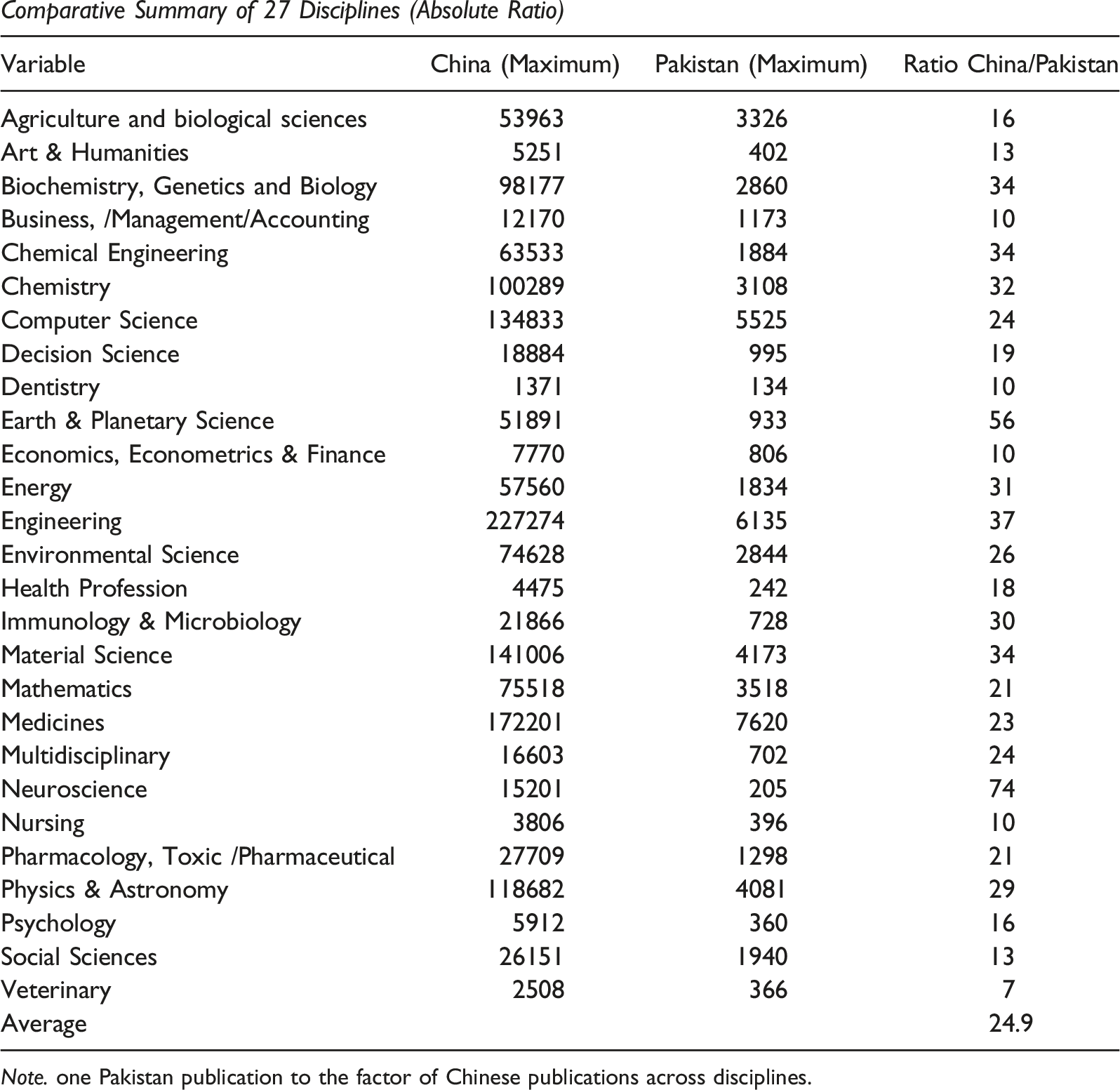
Variable
China (Maximum)
Pakistan (Maximum)
Ratio China/Pakistan
Agriculture and biological sciences
53963
3326
16
Art & Humanities
5251
402
13
Biochemistry, Genetics and Biology
98177
2860
34
Business, /Management/Accounting
12170
1173
10
Chemical Engineering
63533
1884
34
Chemistry
100289
3108
32
Computer Science
134833
5525
24
Decision Science
18884
995
19
Dentistry
1371
134
10
Earth & Planetary Science
51891
933
56
Economics, Econometrics & Finance
7770
806
10
Energy
57560
1834
31
Engineering
227274
6135
37
Environmental Science
74628
2844
26
Health Profession
4475
242
18
Immunology & Microbiology
21866
728
30
Material Science
141006
4173
34
Mathematics
75518
3518
21
Medicines
172201
7620
23
Multidisciplinary
16603
702
24
Neuroscience
15201
205
74
Nursing
3806
396
10
Pharmacology, Toxic /Pharmaceutical
27709
1298
21
Physics & Astronomy
118682
4081
29
Psychology
5912
360
16
Social Sciences
26151
1940
13
Veterinary
2508
366
7
Average
24.9
Appendix B
Comparative Summary of Relative Ratio Based on 100,000 People.
Note. Estimates are based on the population in 2020.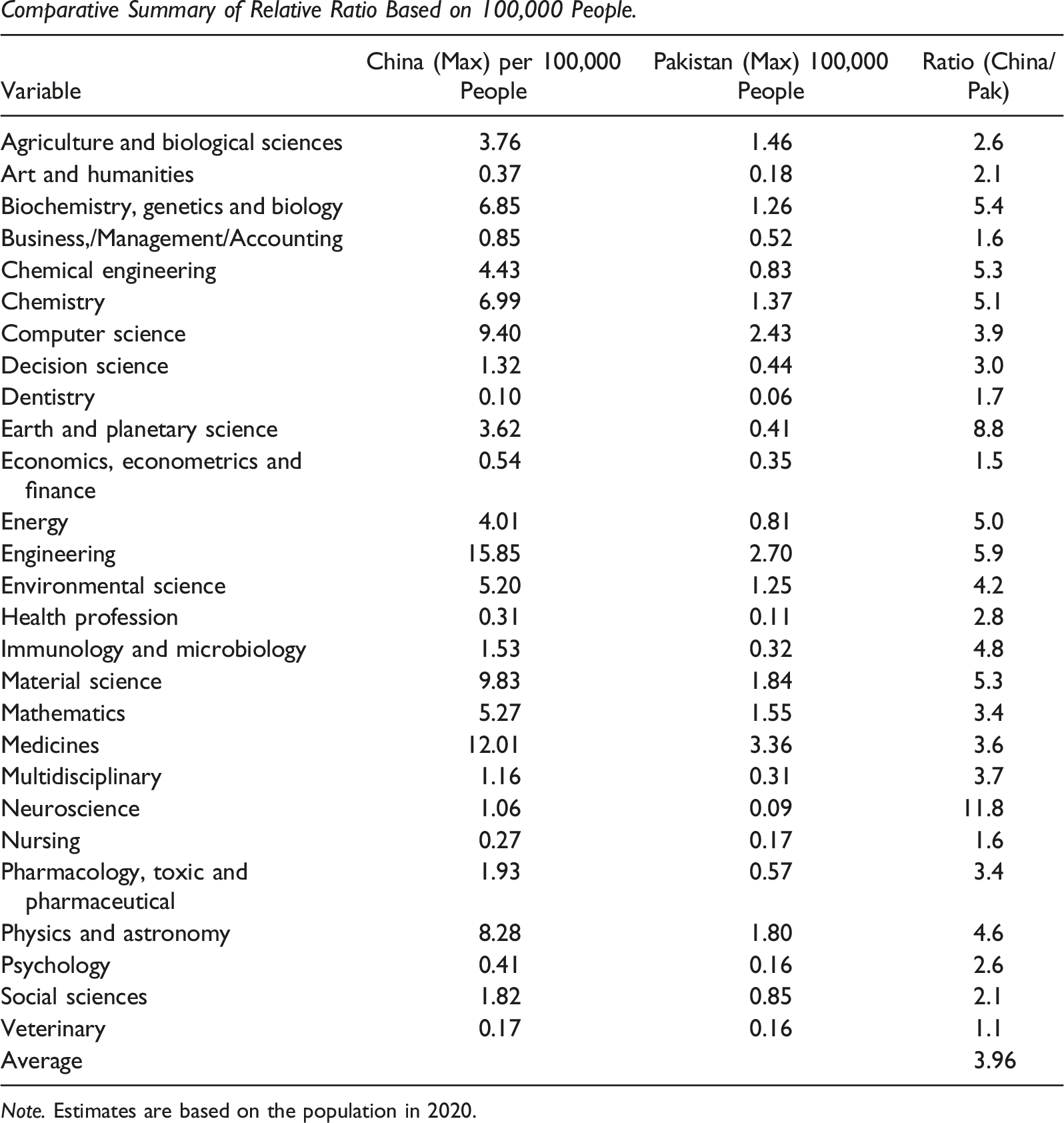
Variable
China (Max) per 100,000 People
Pakistan (Max) 100,000 People
Ratio (China/Pak)
Agriculture and biological sciences
3.76
1.46
2.6
Art and humanities
0.37
0.18
2.1
Biochemistry, genetics and biology
6.85
1.26
5.4
Business,/Management/Accounting
0.85
0.52
1.6
Chemical engineering
4.43
0.83
5.3
Chemistry
6.99
1.37
5.1
Computer science
9.40
2.43
3.9
Decision science
1.32
0.44
3.0
Dentistry
0.10
0.06
1.7
Earth and planetary science
3.62
0.41
8.8
Economics, econometrics and finance
0.54
0.35
1.5
Energy
4.01
0.81
5.0
Engineering
15.85
2.70
5.9
Environmental science
5.20
1.25
4.2
Health profession
0.31
0.11
2.8
Immunology and microbiology
1.53
0.32
4.8
Material science
9.83
1.84
5.3
Mathematics
5.27
1.55
3.4
Medicines
12.01
3.36
3.6
Multidisciplinary
1.16
0.31
3.7
Neuroscience
1.06
0.09
11.8
Nursing
0.27
0.17
1.6
Pharmacology, toxic and pharmaceutical
1.93
0.57
3.4
Physics and astronomy
8.28
1.80
4.6
Psychology
0.41
0.16
2.6
Social sciences
1.82
0.85
2.1
Veterinary
0.17
0.16
1.1
Average
3.96
Appendix C
Chinese publication predicts pakistan−ions. Note. Logarithmic (cubic) function of median values.