



Abstract
The study aimed to explore university presidents’ messages (PMs), which encompass missions, visions and strategies, to examine how Korean universities display their image in response to various stakeholders. Assuming the missions, visions and strategies vary according to the characteristics of universities, this study analysed the PMs according to institutional types: (1) public and private universities; (2) metropolitan and local universities; and (3) top-ranked and mid-to low-ranked universities. This study collected 105 PMs from Korean universities on a large scale and applied a text mining analysis to calculate the frequencies of keywords, draw word clouds, analyse the degree of centrality of keywords and examine bigrams across university types. The results showed that Korean universities project their images in a relatively homogenous way, but there are differences in the ways universities project their images between public and private universities, metropolitan and local universities, and top-ranked and mid-to low-ranked universities.
Introduction
Universities have been maintained since they were first introduced in the 11th century, and they are one of the most common social institutions found in any country in the world (Scott, 2000). This was possible because an institution could successfully maintain the original characteristics of the university, while responding sensitively to social changes and the demands of an era. Universities are representative socially institutionalized organizations that are pressured to conform to socially constructed norms, values, and belief systems (Meyer et al., 2007). They also seek legitimacy to adapt to external social pressures (van Vought, 2008), where legitimacy can be defined as a generalized perception or assumption that an organization’s behaviour is desirable and appropriate within socially constructed normative frameworks (Suchman, 1995). Legitimacy is more important than efficiency in maintaining organizational survival (Mampaey et al., 2015). Additionally, conforming to external pressures provides resources to universities, allowing them to remain continuously viable (DiMaggio & Powell, 1983).
University presidents’ messages (PMs), communicating the institution’s mission and vision statements, provide empirical evidence confirming universities’ pursuit of legitimacy (Fumasoli et al., 2020). In PMs published on university websites, the university president addresses stakeholders, including parents, students, the local community, government, local business sectors, and more, expressing the university’s image and history, mission, vision and strategies (Lee & Park, 2022; Shin, 2019; Teo & Ren, 2019). Universities establish missions to meet the needs of external stakeholders (Davies & Glaister, 1996), and they systematically widely communicate accepted institutional values to achieve legitimacy (Hartley & Morphew, 2008; Wæraas & Solbakk, 2009). However, there have been studies that questioned whether universities pursue only isomorphism strategies to ensure legitimacy (Pizarro Milian & Quirke, 2017; Quirke, 2013; Seeber et al., 2019). This is because university identities vary according to their characteristics. Pizarro Milian and Quirke (2017) analysed Canadian universities and found that those with low-level reputations adopted and presented specialized differentiation strategies, such as emphasizing their practicality as modern universities. Universities with high-level reputations or old histories adhered to existing strategies rather than adopting new ones, while universities with relatively low-level reputations and short histories used specialized strategies (Huisman & Mampaey, 2018; Stensaker et al., 2014). Universities also projected different identities according to the type of institution. Public universities, which are funded by governments and have relatively large campuses and thousands of students, represent themselves as public educational institutions that satisfy the people’s right to receive higher education and emphasize the public nature of higher education (Nam et al., 2018). Conversely, private universities, funded by endowments and other private sources, have higher fees and tuitions than public institutions (Toutkoushian, 2001) and tend to actively respond to students’ needs and market changes. Bae et al. (2017) compared the core competences pursued by public universities and private universities, and found that public universities seek to foster “talents that contribute to the nation”, while private universities demonstrate “talents with global citizenship” and “talents of practical competencies”. The location of universities also matters, and the mission or strategies pursued by universities differs according to the local community’s characteristics (Kim, 2011; Shin, 2017).
Higher education in Korea has already reached universal enrolment rates, and universities have played a key role in socioeconomic development based on government policies that regard higher education as a driving force for economic development. Korean universities are transforming into public management, and university presidents are becoming strategic leaders (Lee & Park, 2022). Therefore, the cases of Korean universities might be good examples to analyse how universities demonstrate their essential characteristics and explain their identity to numerous stakeholders. This study aimed to explore university PMs, which encompass the missions, visions and strategies (Lee & Park, 2022; Teo & Ren, 2019), to examine how Korean universities portray themselves to establish their legitimacy and respond to the needs of stakeholders. Assuming the missions, visions and strategies vary according to a university’s characteristics, the study analysed PMs according to institutional types: (1) public versus private universities; (2) metropolitan versus local universities; and (3) top-ranked versus mid-to low-ranked universities.
Literature Review
Presidents’ Messages
Contemporary universities have diverse interactions with students, governments, industrial sectors, local communities and global society. These institutions show and explain to various stakeholders who they are and what they do (Schmidtlein & Berdahl, 2005). University websites have been in the spotlight as communication channels where they can overcome their physical distance from numerous audiences and update information quickly to promote their competitiveness and convey friendly images (Lee & Park, 2022; Saichaie & Morphew, 2014; Teo & Ren, 2019). The PMs are one of the key components of university websites. Most PMs consist of six elements: (1) a welcome or greeting; (2) a university profile, including its history and strengths; (3) a mission statement; (4) awareness of societal changes, current crises and social responsibilities; (5) a vision for the future and the institution’s commitment; and (6) a farewell (Lee & Park, 2022; Shin, 2019; Teo & Ren, 2019). In PMs, the university president mentions the university’s mission and vision on behalf of all university members, reviewing how the university is making efforts to respond to internal and external demands, including how they are committed to the community and to global society.
There are several studies examining university websites (Saichaie & Morphew, 2014; Zhang, 2017) and mission statements (James & Huisman, 2009; Kosmützky & Krücken, 2015; Morphew & Hartley, 2006; Seeber et al., 2019), but only a few recent studies (Lee & Park, 2022; Shin, 2019; Teo & Ren, 2019) have analysed PMs. Lee and Park (2022) studied Korean university PMs to analyse how Korean universities portray themselves in the global marketplace. They applied a text mining analysis and examined the PMs according to whether the university was a research university, teaching university or technology university. They found that Korean universities’ PMs project hybrid images, portraying universities as public institutions and as globally competitive strategic entities. In addition, they found that Korean universities’ PMs emphasized education among the roles of the university, regardless of the university type. Shin (2019) analysed 10 Korean university PMs using critical discourse analysis to examine how today’s Korean universities reflect and shape their identities as they face unprecedented pressure in the fourth industrial era. The study found that most of the universities present themselves as having led the country’s democratization and industrialization, and indicate the institution is preparing for a future society. Shin’s (2019) study also mentioned that Korean universities showed a focus on the social responsibilities required in contemporary Korean society. Shin (2019) also observed that internationalization influenced the identity shaping of Korean universities and that Korean university discourse has become more customer-oriented.
There have also been a few studies that examined the PMs of Chinese universities. Teo and Ren (2019) used critical discourse analysis to examine the PMs published on the websites of 36 top-ranked universities in China and analyse the phenomenon of the marketization of higher education. They studied macro-level rhetorical structures, followed by a micro-level analysis of the discursive strategies used in PMs. They found that the PMs have three distinct discursive strands: bureaucratic, conversational and advertising-related. Teo and Ren’s (2019) study revealed the dual role of PMs in projecting a globalized outlook, while simultaneously portraying political ideologies and national interests as top-ranked Chinese universities. Zhang (2017) described the generic characteristics of the About Us sections of five Chinese university websites and analysed the structural organization, rhetorical moves and communicative purposes, as well as the discursive strategies, used in the text. Zhang (2017) found that universities had endeavoured to establish a friendly relationship with prospective students by using conversational discourse. Chinese universities try to strengthen the promotional elements in the website content that can attract readers’ attention by installing university logos, songs, and videos on their websites and choosing linguistic expressions that help to build a positive image of universities.
The findings of these previous studies pointed out that the PMs promoted excellent, conversational and friendly outlooks, while also presenting the hybrid image of a public actor and a competitive strategic actor. Several studies indicated that universities adapted to their institutional environments in relatively homogenous ways (Hartley & Morphew, 2008; Lee & Park, 2022; Saichaie & Morphew, 2014; Teo & Ren, 2019), but these studies did not consider the characteristics of the universities. Lee and Park (2022) analysed PMs only according to the university’s mission type, such as research, teaching and technology, and suggested that other characteristics, such as a public versus private university, needed to be considered in follow-up studies. This is because public and private universities are based on different governance and have divergent management styles and cultures (Bae et al., 2017; Nam et al., 2018). The location of universities is also a key factor influencing the characteristics and strategies of the university (Kim, 2011; Shin, 2017). In South Korea, various infrastructures of prestigious universities are concentrated in Seoul, and there is a big difference in the conditions and competitiveness of universities in the Seoul metropolitan area and local universities elsewhere in the country. Finally, top-ranked universities and mid-to low-ranked universities might have different strategies for securing legitimacy and enhancing competitiveness (Seeber et al., 2019). However, it is unclear from the previous studies how PMs display these unique identities and how universities respond to the needs of stakeholders according to the institution’s type. Therefore, this study focused on PMs according to the various types of universities, based on establishment type, location and reputation.
The Korean Context
Over the past decade, Korean universities have emphasized not only research functions but also competency-based education and student-centred education (Bae et al., 2022). Korean universities began to develop core competencies as important responsibilities based on several government policies. The Korean government initiated the University Education Capacity Enhancement (UECE) project in 2008 and the Advancement of College Education (ACE) project in 2010 to support universities’ educational goals. In particular, the ACE project was promoted to enhance the competitiveness of university education from 2010 to 2019. The purpose of the ACE project is to make “good teaching universities” and to set up advanced models of undergraduate education with a competency-based curriculum (Lee & Jung, 2022). The Ministry of Education simplified university financial support projects in 2019 to enhance institutional autonomy, and the University Innovation Support project integrated with five projects, including the ACE + project, to form a general financial support initiative centred on teaching in universities (Lee & Jung, 2022). Based on these projects, most Korean universities set core competencies and advocate a competency-based curriculum as an important task. The core competencies to be cultivated through university education include the competencies necessary for college students to have successful lives as adults, along with the various competencies required to enter the professional world (Byoun & Han, 2022; Kim et al., 2009). Competency-based education has recently been emphasized, given the goal of university undergraduate education is to foster talented people who have the competencies required by society or industry. Students come to universities and prepare to explore themselves, understand the world and move towards society, while having various learning experiences and social activities. The purpose of university education is to teach students to understand the world creatively and constructively and to encourage graduates to contribute to society (Gutmann, 2014).
Another key term that draws attention from Korean universities is student-centred. Behind student-centredness is a reflection on the practice of universities excessively emphasizing research rather than education (Bae et al., 2022). As the concept of student success spreads in university society (Bae et al., 2020), individualized education is emerging that promotes university education supporting and developing students’ educational needs and careers. In addition, the sense of crisis that universities must respond more nimbly to student needs in the face of a sharp decline in the school-age population is a practical reason for promoting student-centred university management. The number of undergraduate students at four-year universities gradually declined to 1,938,254 in 2021 after hitting a record high of 2,130,046 in 2014. The decrease in the number of students is an important issue in Korean universities’ management (Lee & Park, 2022).
Universities have endeavoured to enhance their reputations and competitiveness to recruit more foreign students as an option for compensating for the reduced number of students. Korean universities emphasize their research performance, particularly through internationally indexed journal publications, to enhance their reputation in world university rankings. In addition, the Korean government has traditionally considered universities’ competitiveness to be an engine of economic development, and therefore, universities have paid attention to university–industry cooperation and social contributions. Today’s Korean universities have a great demand for social usefulness in education and research and for the social engagement of universities through university–industry–government cooperation (Etzkowitz & Leydesdorff, 1997; Lee, 2019). Universities are now emphasizing the training of the human resources necessary for society and the activities of producing and disseminating socially useful knowledge. In addition to the emphasis on the social contributions of universities, the attributes of higher education are gradually becoming marketized and commercialized. Because market-oriented competition logic influences university management based on neoliberalism and new public management approaches, university ranking evaluations, student customer-oriented education services, commercialization of university research, securing external research funds and performance-based evaluations have been emphasized in university management (Slaughter & Rhoades, 2004).
Methodology
Data
This study extracted PMs from the official websites of Korean universities in June 2020. Among a total of 191 four-year universities, 48 (25%) specialized universities were excluded because of the unique characteristics of their education programmes. These specialized universities included theological colleges, arts colleges, sports colleges and medical universities. In addition, 38 (20%) universities were eliminated because they did not publish an English version of the PMs or did not have PMs on the website. Thus, the final dataset consisted of 105 Korean universities’ PMs in English. Of the 105 universities, 28 (27%) were public universities, and 77 (73%) were private universities. In addition, 51 (48%) were located in the Seoul metropolitan area and 54 (52%) were located in provinces. Moreover, 16 (15%) were included in the top 1000 of the 2020 edition of the Time Higher Education (THE) World University Rankings, and 89 (85%) were not included.
Analytical Methods
Text mining analysis was conducted using R program to examine PMs. Text mining analysis has been increasingly used in higher education fields (Lee & Park, 2022). It is a method of extracting information and revealing hidden meanings and relationships from a given text using natural language processing technology (Hotho et al., 2005). The analysis for the present study was conducted in the following process: text cleaning, calculation of frequencies of keywords, drawing word clouds, analysis of the degree of centrality of keywords and examination of the bigram according to the types of universities.
For this analysis, the numbers and punctuation marks were first deleted from the PMs, and stopwords (e.g. the, a, it, its, which, this, that, to, at, about) were deleted by applying the SMART list. In this study, also deleted were the word “university”, any basic greetings (e.g. welcome, greetings, thank you) and the name of the president. The upper and lower case letters were unified into lower case letters. Through the process of lemmatization, different forms of the same word were grouped into a single item or a dictionary form.
Next, the frequency of keywords was calculated and presented by word clouds according to the types of universities. The word clouds consisted of words with a frequency of more than 10 (or 20), to increase readability. The degree of centrality of the keywords was subsequently examined. The degree of centrality of a keyword indicates the number of links to the word (Scott, 2000), with a higher degree of centrality meaning the word is more central. Finally, a bigram, the sequence of two adjacent keywords, was investigated. This study presents the top 10 bigrams in order of frequency.
Results
Similarities and Differences Between Public and Private Universities
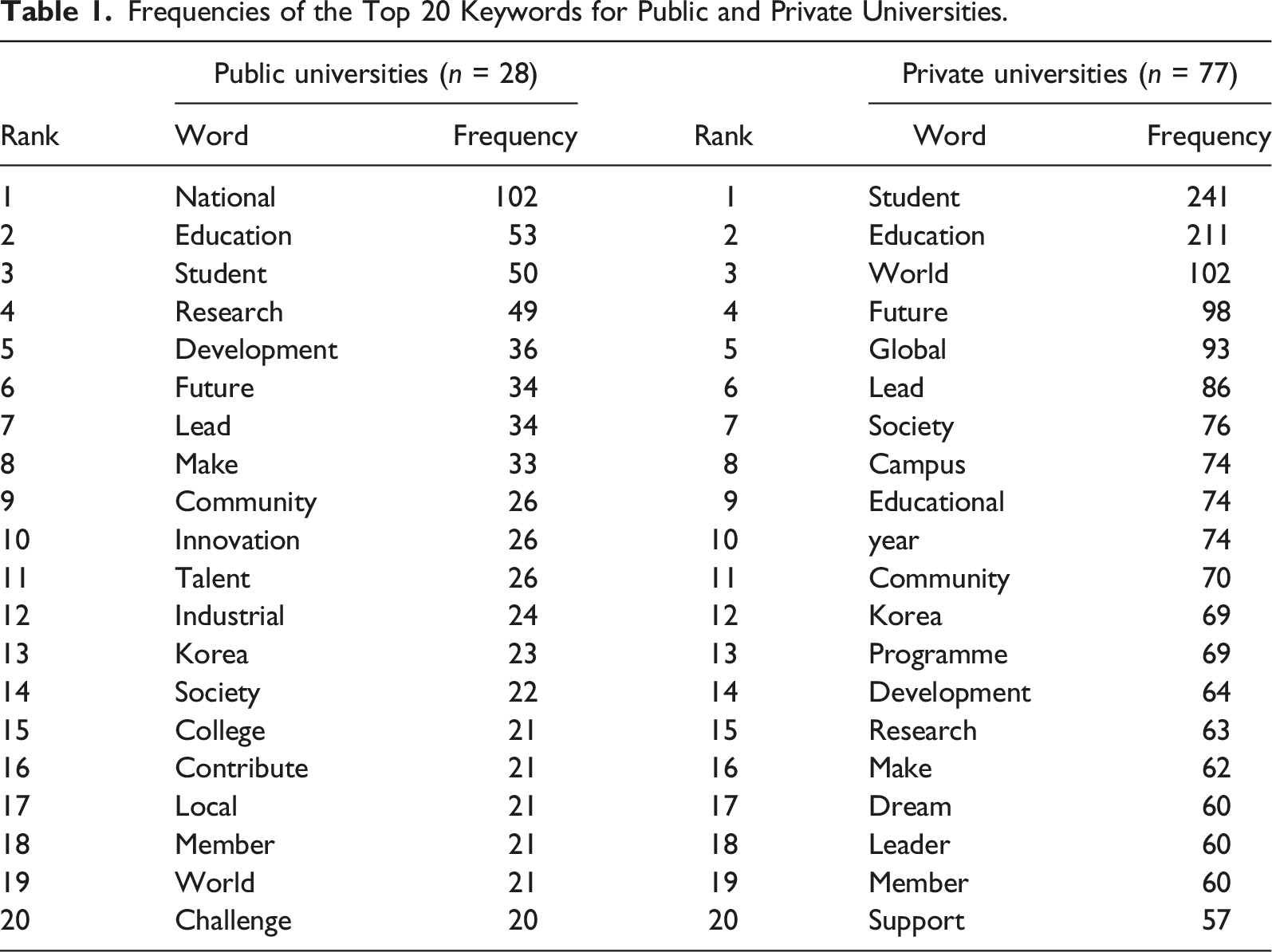
Frequencies of the Top 20 Keywords for Public and Private Universities.
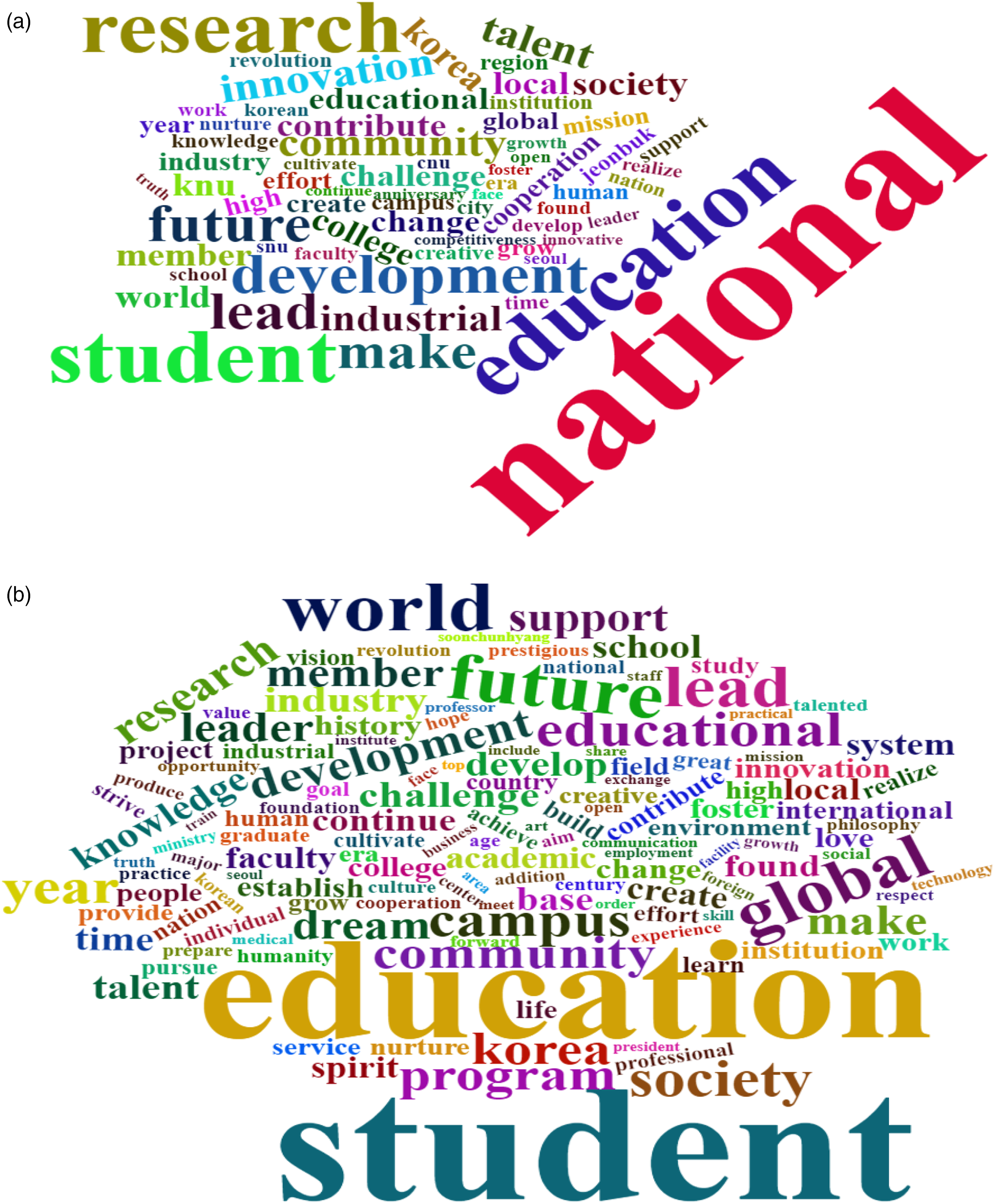
Word clouds of keywords with a frequency of
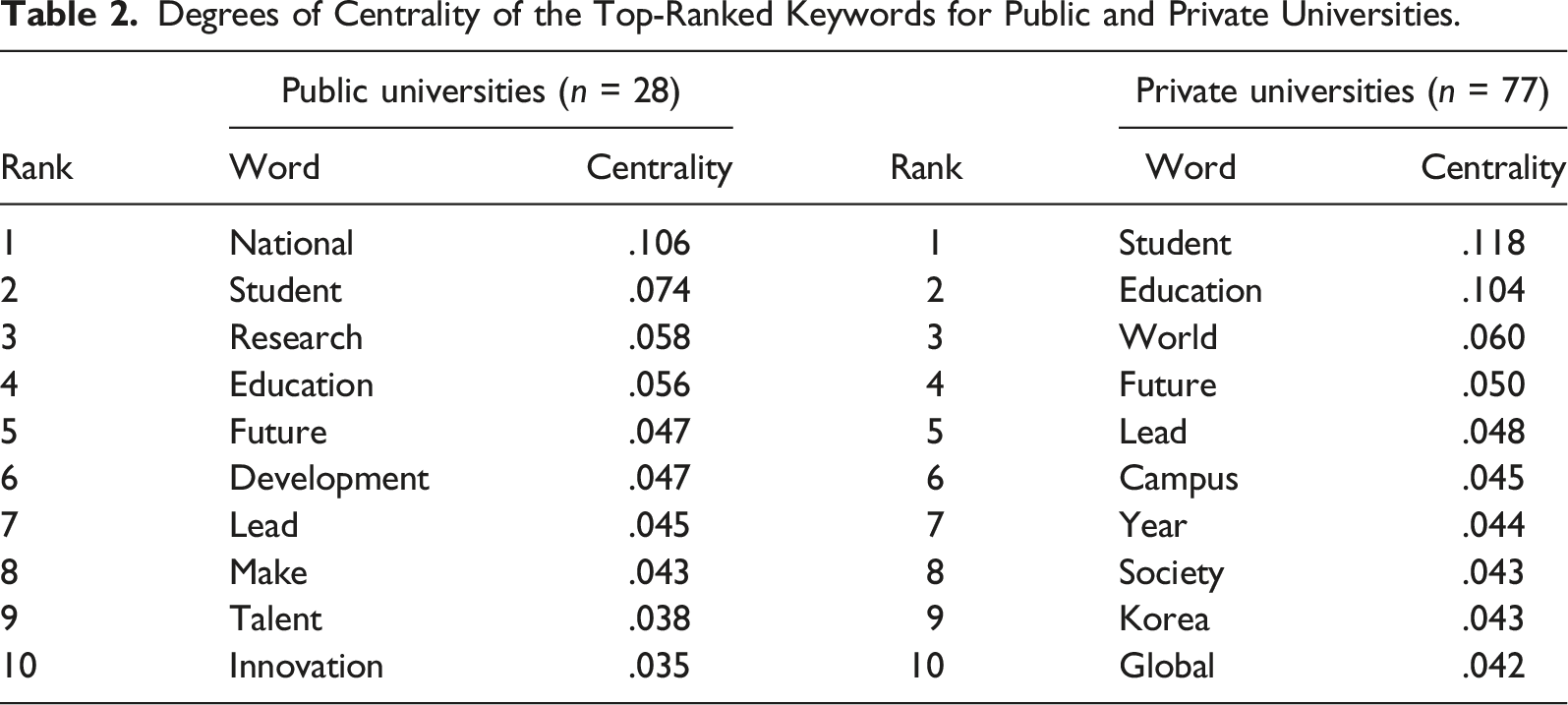
Degrees of Centrality of the Top-Ranked Keywords for Public and Private Universities.
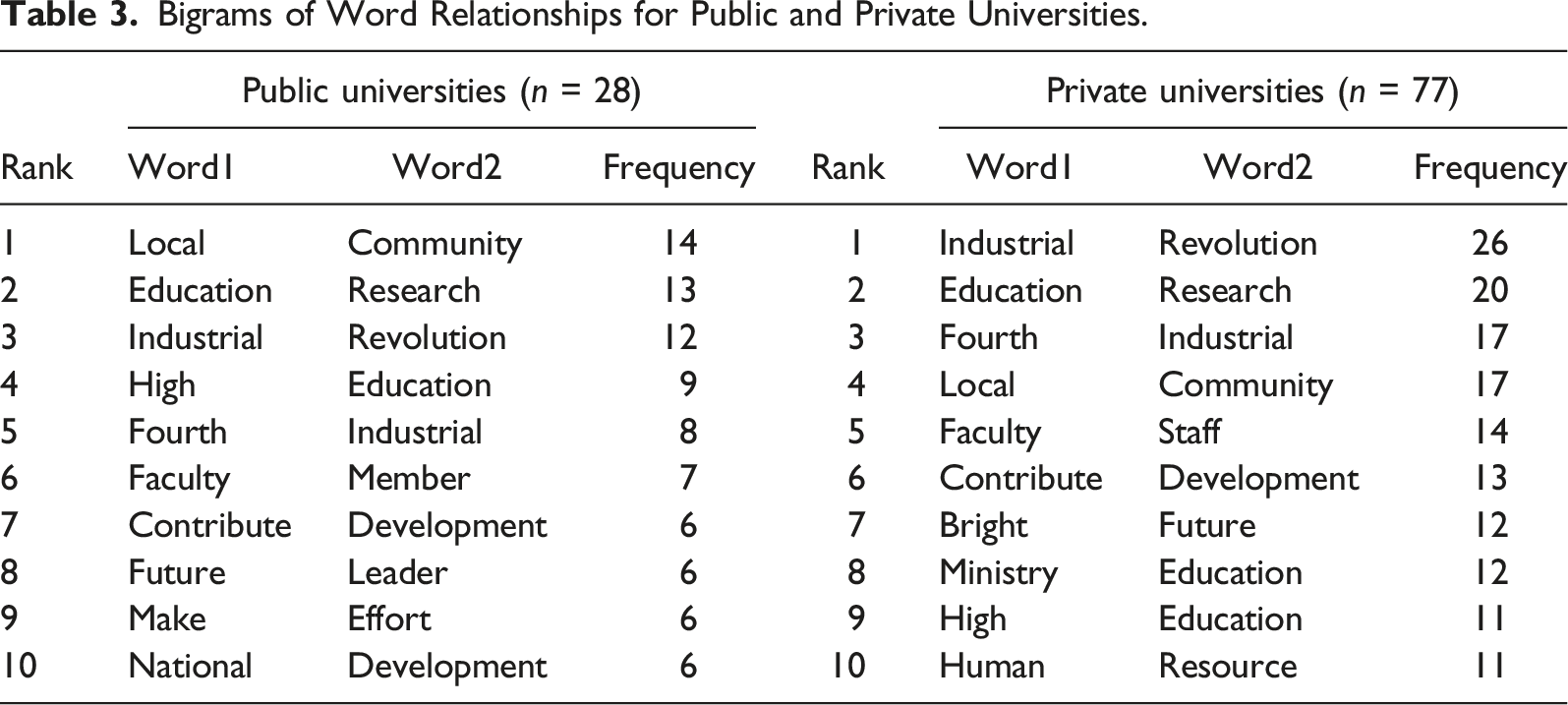
Bigrams of Word Relationships for Public and Private Universities.
Similarities and Differences Between Metropolitan and Local Universities
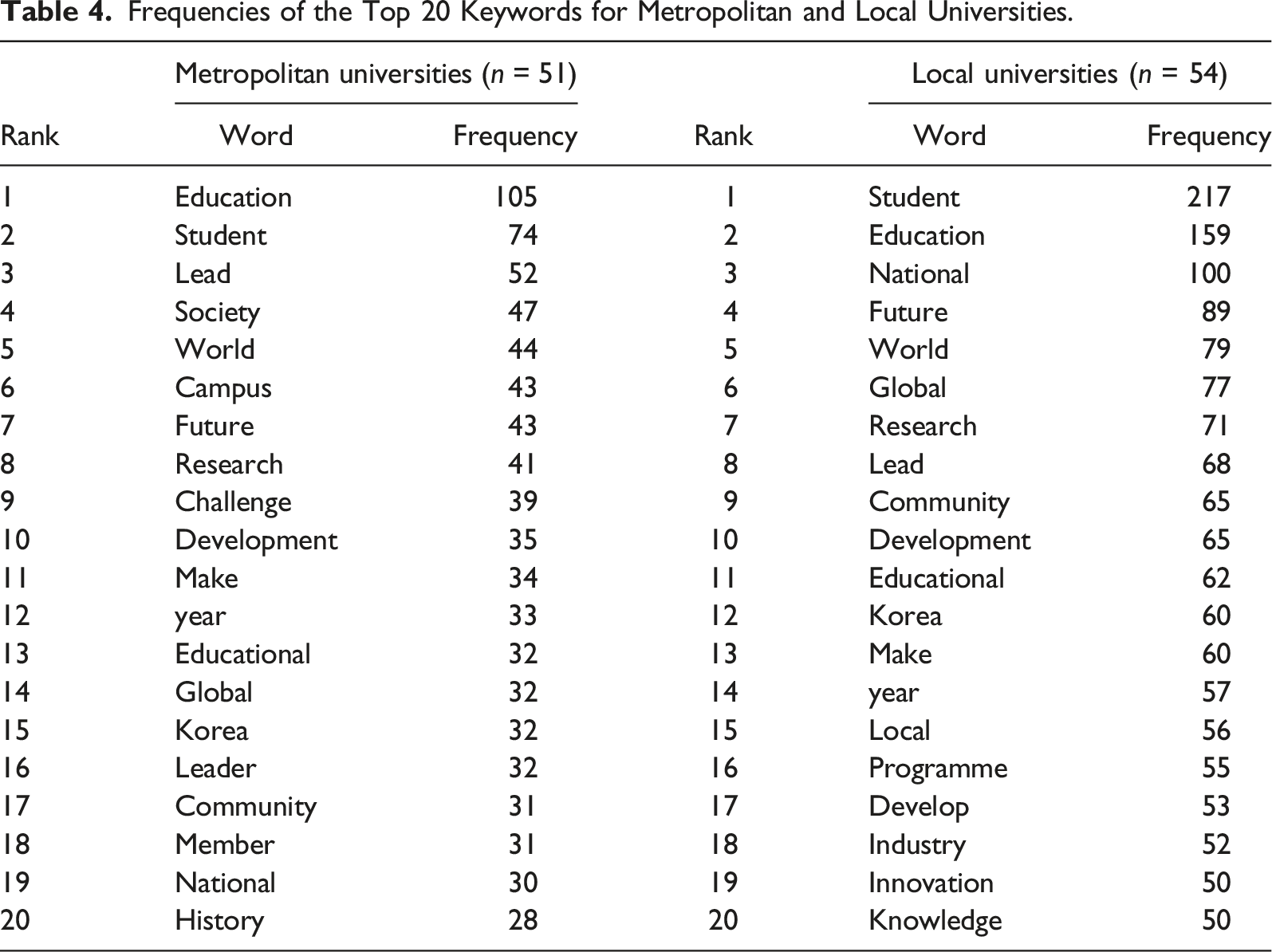
Frequencies of the Top 20 Keywords for Metropolitan and Local Universities.
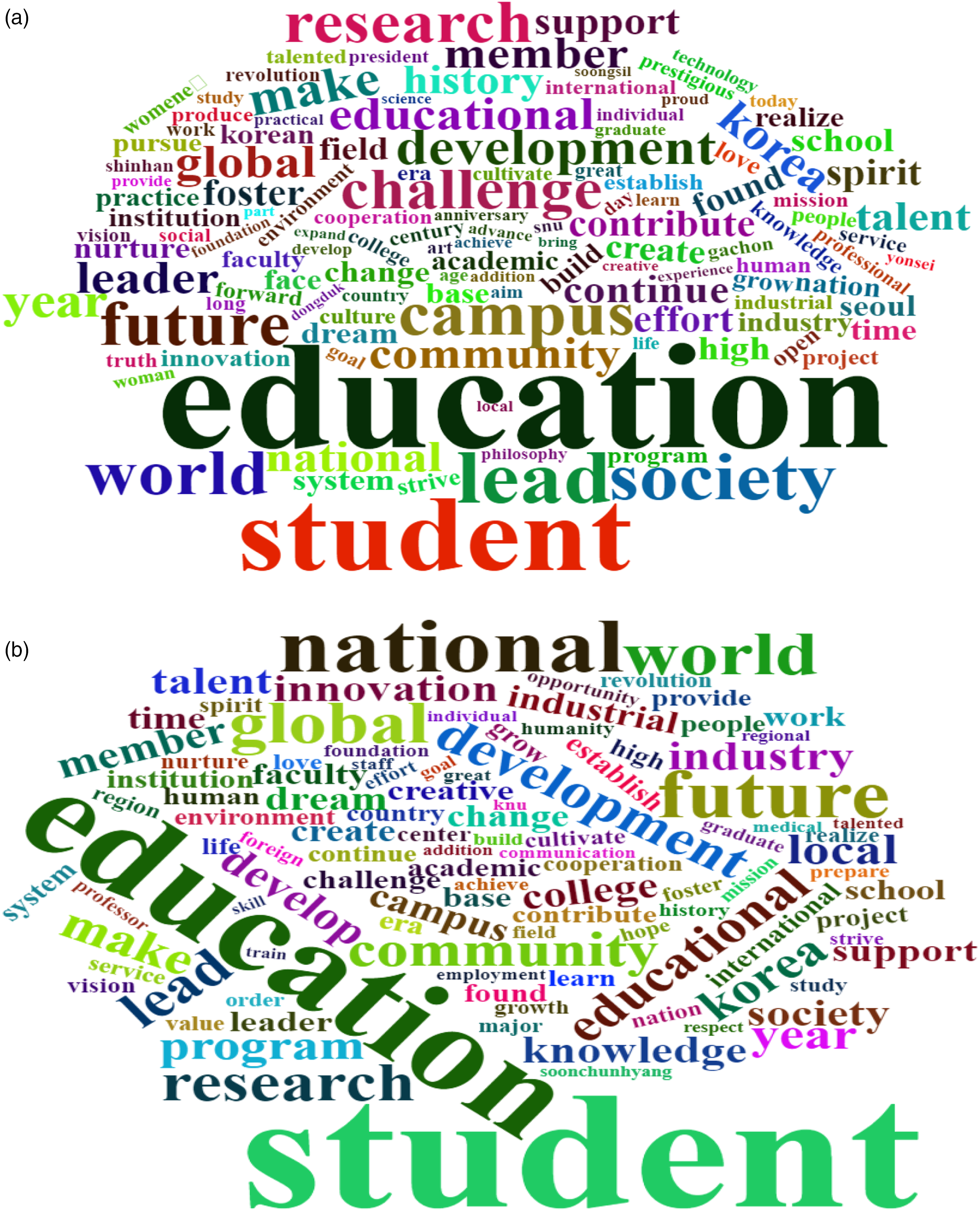
Word clouds of keywords with a frequency of
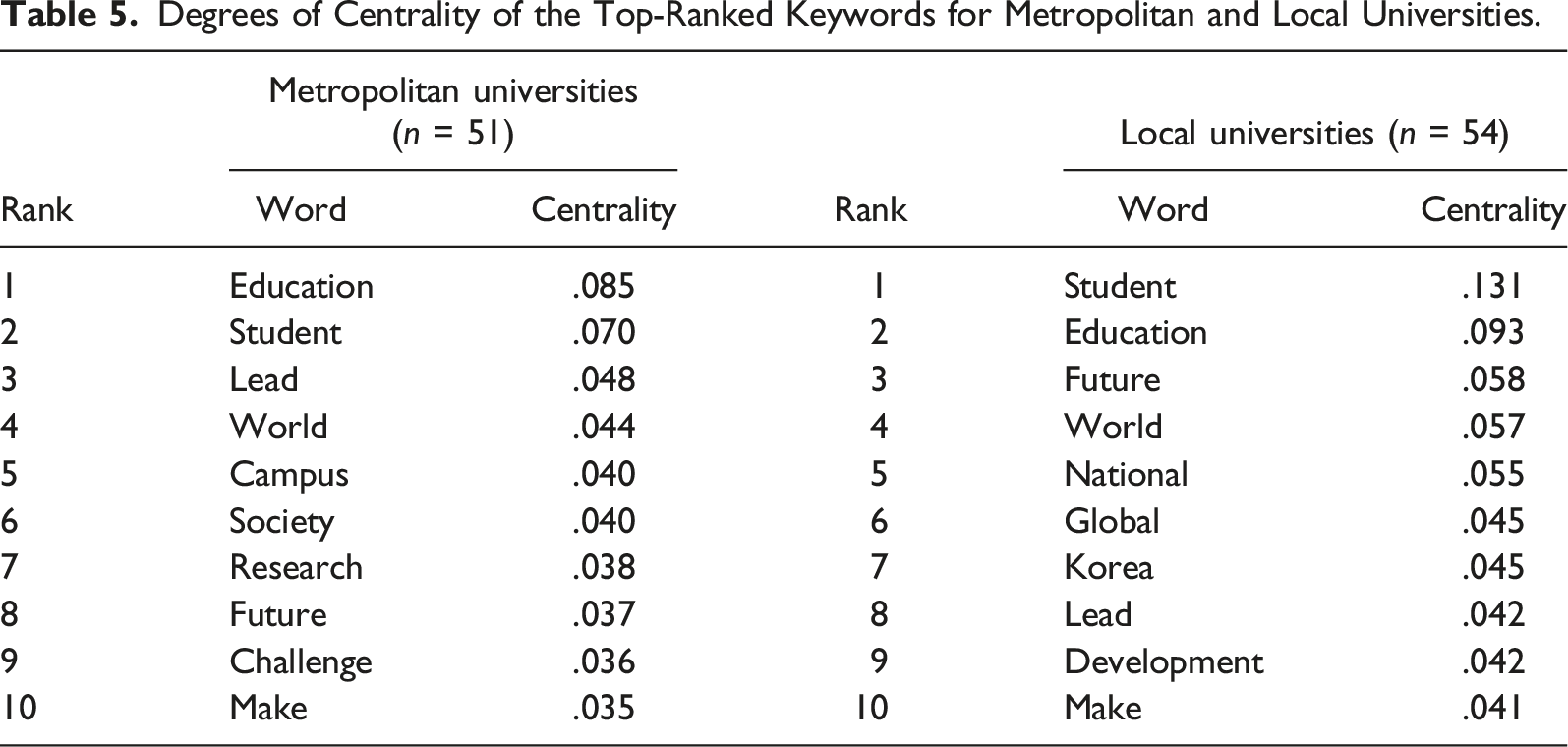
Degrees of Centrality of the Top-Ranked Keywords for Metropolitan and Local Universities.
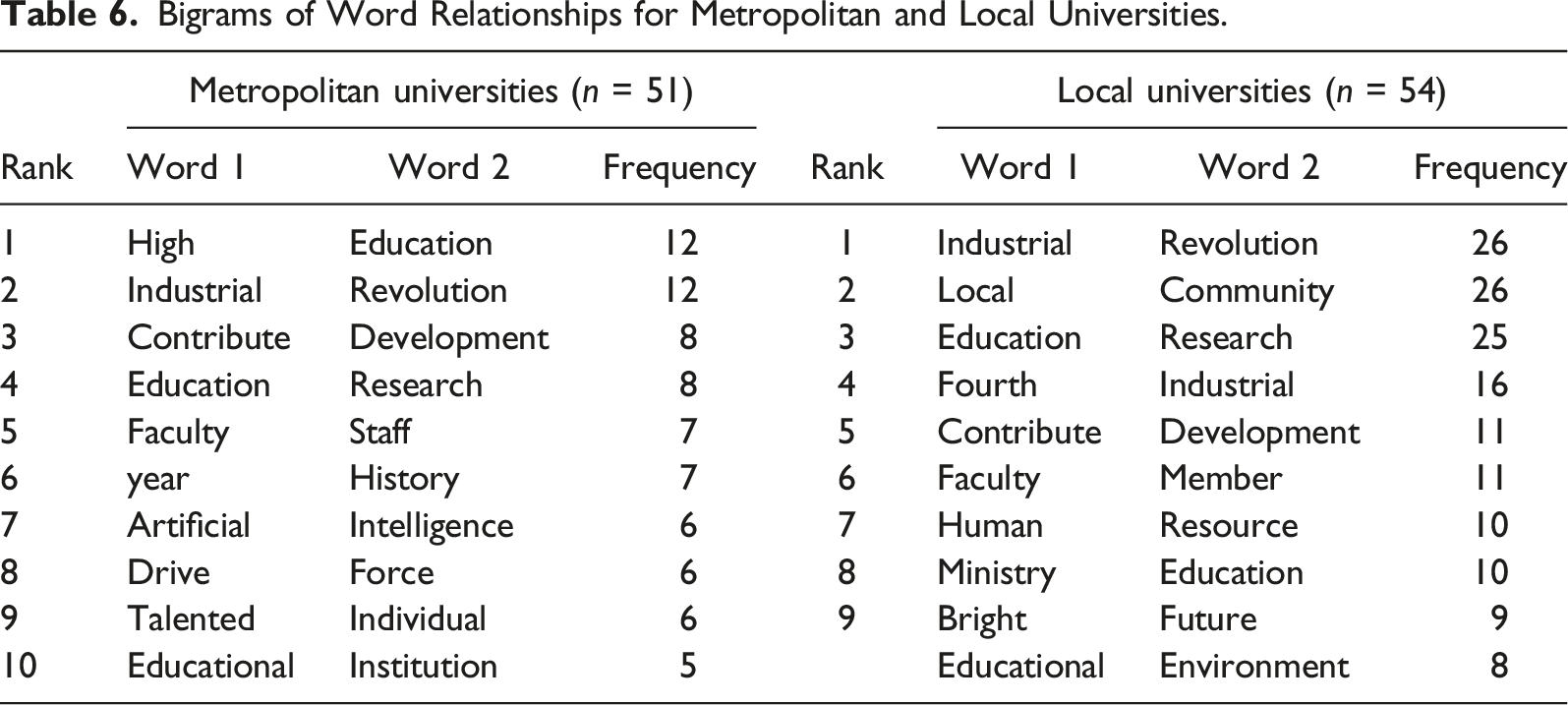
Bigrams of Word Relationships for Metropolitan and Local Universities.
Similarities and Differences Between Top-Ranked and mid-to Low-Ranked Universities
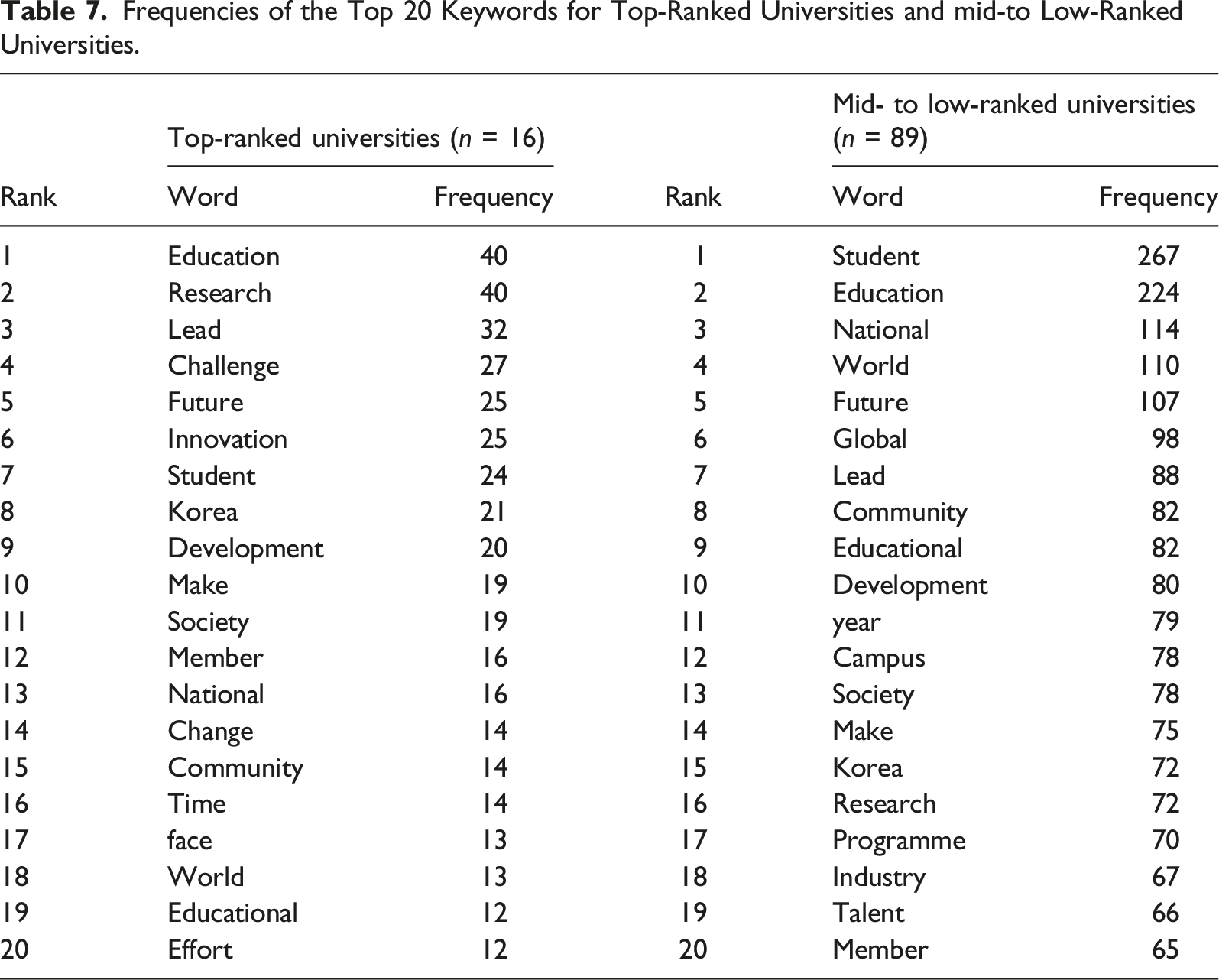
Frequencies of the Top 20 Keywords for Top-Ranked Universities and mid-to Low-Ranked Universities.
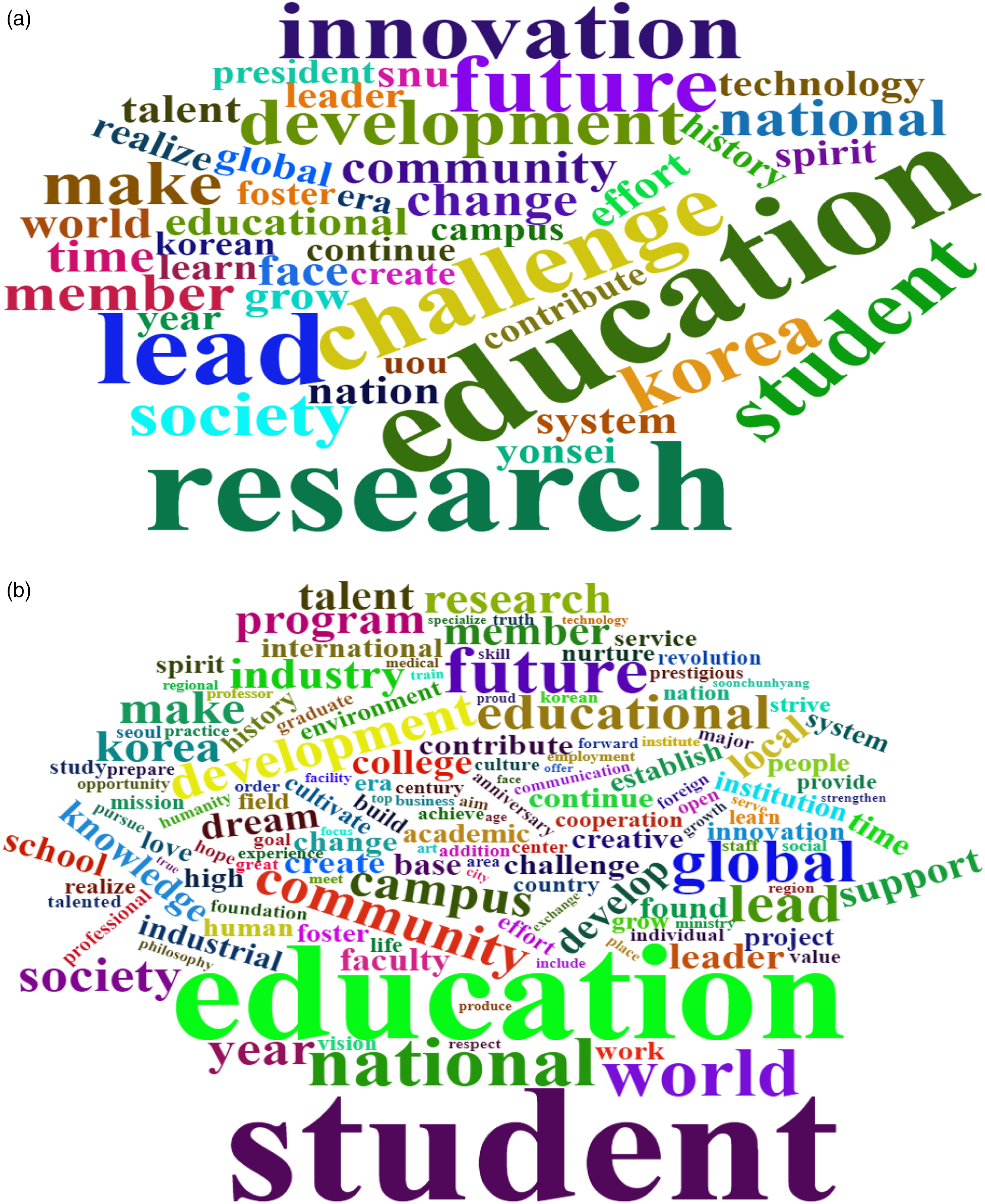
Word clouds of keywords with a frequency of
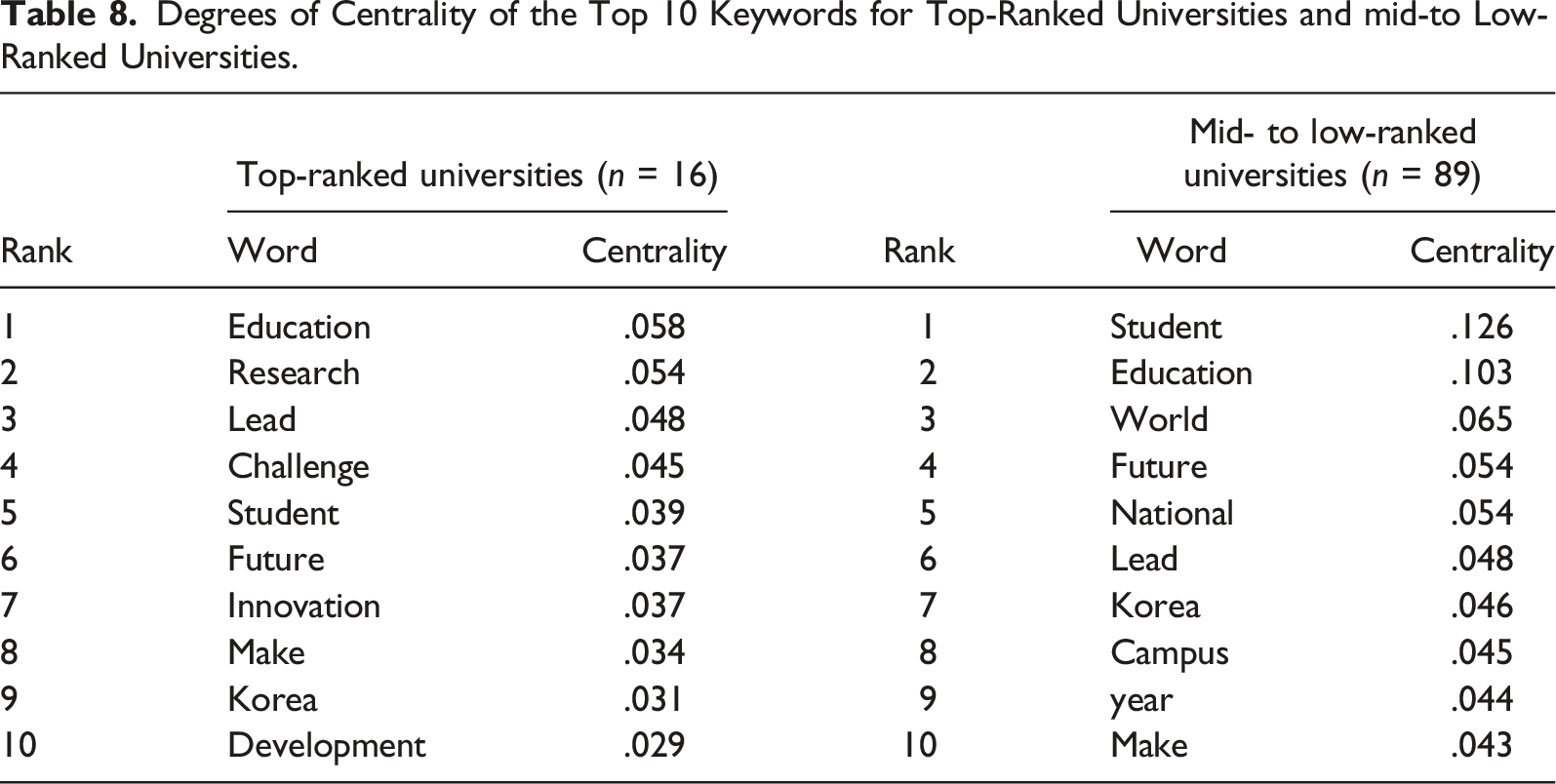
Degrees of Centrality of the Top 10 Keywords for Top-Ranked Universities and mid-to Low-Ranked Universities.
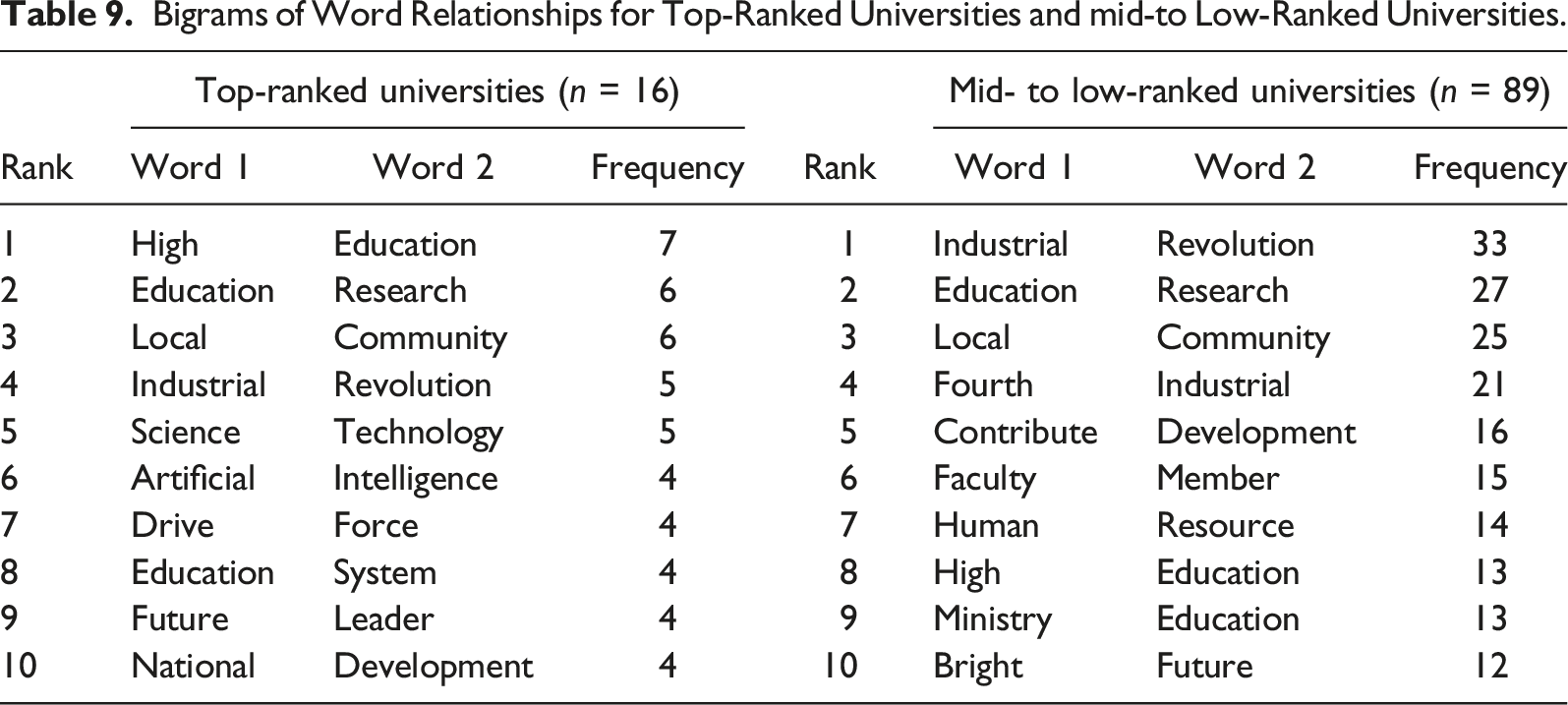
Bigrams of Word Relationships for Top-Ranked Universities and mid-to Low-Ranked Universities.
Discussion and Conclusion
Environments surrounding universities have changed rapidly and today’s universities face various external pressures such as the decline in the school-age population and the fourth industrial revolution. It has urged them to legitimise themselves to adapt to external social pressures (van Vought, 2008). Today’s universities engage in strategic positioning to communicate the institution’s mission and vision to students, parents, the community, the government, and the business sectors (Fumasoli et al., 2020). It might be different in how universities portray themselves to establish their legitimacy according to university types. PM is a key place where the university president demonstrates the university’s identity and vision for the future (Lee & Park, 2022; Shin, 2019). Therefore, this study used text mining analysis to examine 105 PMs according to various university types: (1) public versus private universities; (2) metropolitan versus local universities; and (3) top-ranked versus mid-to low-ranked universities. Also examined were the similarities and differences in how universities project their image and respond to numerous stakeholders.
The results showed that universities applied different strategic positioning depending on the type of institution and presents distinct features of keywords used in PMs. Specifically, PMs from public universities used the word “national” more frequently, while PMs from private universities used the word “student”. In terms of degrees of centrality, the word “national” showed the highest degree of centrality for public universities and the word “student” presented the highest degree of centrality for private universities. The bigram for “local–community” most often appeared in PMs from public universities, while the bigram for “industrial–revolution” most often appeared in PMs from private universities. These findings support the premise that public universities have tried to appeal to the public by portraying themselves as public actors and tend to demonstrate that they are committed to national and local development. These results echo those from Nam et al. (2018), who revealed the public nature of higher education and the role of national universities. For example, the president of A university, a national institution, mentioned, “Our future leaders should have a comprehensive vision of their community and others, a warm heart, and a sense of team spirit that enables them to respect and work with others who hold different points of view. . . . It is my aim to launch an innovative campaign in education to foster these leaders.”
In contrast, private universities have paid more attention to “students”, with customer-oriented perspectives and awareness of societal changes. For example, the president of B university pointed out, “[B] university will pioneer into the Fourth Industrial Revolution to face new challenges and lead innovation in higher education.” The president at S university stated, “We have established the ‘Global Campus for the local residents, companies, and schools nearby’ that connect the outstanding faculty of our University, businesses in our region, and the world.” Another private university’s president mentioned that the university “helps students build their competencies through project-based courses and nurtures well-balanced talents that play an important role in the world.” As shown in the examples above, private universities appeal to numerous stakeholders, emphasizing that they are agile in responding to and leading social changes. They also promote commercial activities that refer to building a student-friendly campus and providing student-centred education services.
Additionally, PMs from both metropolitan and local universities used the words “education” and “student” the most. The words “world” and “global” appeared in the top 20 rankings at both types of universities as well. The results showed that Korean universities project their images in a relatively homogenous way because of imitation of the strategies used at prestigious universities (Kim et al., 2011). Kim and colleagues (2011) examined visions and goals in university development plans and found that half of Korean universities used certain keywords, such as “global”, “globalization” and “internationalization”, in their visions and goals. They interpreted this trend as a combination of coercive and mimetic isomorphism driven by government policy and international ranking systems. The bigrams for “industrial–revolution”, “contribute–development” and “education–research” appeared in the top 10 rankings at both types of universities. This shows the challenges that current universities face in the fourth industrial revolution, echoing Lee and Park’s (2022) observations.
However, as shown in the intermediate frequency keywords, there are differences between metropolitan and local universities. Metropolitan universities referred to “campus”, “society” and “research”, while local universities mentioned “national”, “global” and “Korea”. Among the results of the bigrams, the relationships of “higher–education” and “contribute–development” appeared at metropolitan universities, and relationships of “industrial–revolution” and “local–community” appeared in the top 10 rankings at local universities. While emphasizing their community-based nature, it can be seen that local universities made efforts to attract local students by talking about their main roles in contributing to the national society, in addition to the local community. For example, the president at C university pointed out, “[C] university was founded on the needs of the community”.
Finally, PMs from top-ranked universities and mid-to low-ranked universities also used the words “education” and “student” most often. This indicates that Korean universities highlight educational institutions and position themselves as education oriented (Lee & Park, 2022). Shin (2019) mentioned that Korean society has developed based on human resources and that fostering talented people is the most important role of Korean universities. Conversely, there are differences in keywords used in PMs from top-ranked universities versus mid-to low-ranked universities. PMs in top-ranked universities more often used the word “research” than those in mid-to low-ranked universities. It is surmised that this is because world university ranking systems put weight on research competitiveness. PMs in mid-to low-ranked universities used the word “student” the most. The words “lead”, “challenge”, “future” and “innovation” were the next most frequent for top-ranked universities, while for mid-to low-ranked universities, the words “national”, “world”, “future” and “global” were the next most frequent. The top-ranked universities were more likely to express their global competitiveness, emphasizing their role as leaders in pursuing innovation. In contrast, mid-to low-ranked universities expressed their commitment to students, education and national development.
This study collected PM data from Korean universities on a large scale and analysed the PMs using text mining to explore whether universities had similar imaging plans or were trying to differentiate themselves according to the type of university. The findings of this study showed that Korean universities projected their images in a relatively homogenous way, while also adopting differentiated strategies across institution types. Universities have diverse expectations of what they should do (Bingham et al., 2001) and the need to pursue discriminatory strategies. In this study, public universities portrayed themselves as public actors to demonstrate that they are committed to national and local development while private universities appeal to students to promote commercial activities such as a student-friendly image and student-centred education services. Metropolitan and top-ranked universities formulate their position in the globalized environment while local universities emphasized their community-based nature and mid-to low-ranked universities expressed their commitment to students and national development. The pursuit of legitimacy requires universities to be similar to other universities in the field (Deephouse, 1999), but as shown in this study, universities also need to differentiate themselves for competitive advantages (Seeber et al., 2019). Therefore, an important task in the symbolic management of universities is to find a way to properly balance similarities and differences (Pedersen & Dobbin, 2006; Seeber et al., 2019). This study was limited to Korean cases, but as a follow-up study, other Asian universities need to be compared and how they project their image and describe themselves in PMs analysed.
Footnotes
Declaration of Conflicting Interests
The author(s) declared no potential conflicts of interest with respect to the research, authorship, and/or publication of this article.
Funding
The author(s) received no financial support for the research, authorship, and/or publication of this article.