



Abstract
The purpose of this study was to explore the internationalization of higher education institutions by analyzing partnerships of short-term exchange programs among universities in Korea and abroad. Based on data from 3 years (2008, 2013, and 2017), we used descriptive statistics to analyze the inbound and outbound statuses of overseas universities that have established credit exchange agreements with Korean universities. The analysis showed that the major components of short-term mobility in Korean universities are changing, and that credit exchanges among universities differ depending on the universities’ missions. The results suggest that the stratification of universities can affect the extent and quality of the international experiences to which students have access. Using university-level data, we proved that international exchange patterns differ according to the characteristics of universities.
Keywords
Introduction
As internationalization has become a critical factor influencing higher education institutions’ (HEIs) reputations, HEIs and governments have made great efforts to become more international (Hazelkorn, 2008). Governments introduce various support policies to enable universities to become internationalized and thus expect universities to improve their global competitiveness and increase their world university rankings. In particular, this trend is noticeable in Asian universities (including those of South Korea), which are latecomers in the higher education league table, because internationalization indicators directly affect their improvement of world university rankings (Byun et al, 2013). Since its initiation in 2004, the Study in Korea Project has promoted opportunities to study in Korea and developed the infrastructure to support international students. Moreover, several policies are associated with the Study in Korea Project, such as the Global Korea Scholarship policy for international candidates and the International Education Quality Assurance System, to help attract foreign students. These policies have mainly focused on attracting more international students to Korea, and student mobility programs are a representative internationalization strategy for Korean universities under the government’s incentivization plan (Jon et al., 2014).
As governments and universities seek to establish more internationalized institutions, the public has begun to pay attention to the diversity and performance of international student programs. Although the COVID-19 crisis has greatly reduced student exchange programs, it is clear that the demand of individuals and society for short-term student exchanges is likely to expand in the long term. As student mobility patterns have diversified, the importance of short-term study-abroad 1 programs, including those for credit exchanges and language learning, has increased (Larsen, 2016). This trend has been caused by the direct and indirect influences of a changing, globalized labor market and the rise of the knowledge economy (Shields & Edwards, 2010).
Some scholars are concerned about the uneven distribution of international student mobility (ISM). However, studies regarding this inequality have mainly focused on long-term mobility, as researchers have assumed that long-term mobility is vertical (from developing to developed countries), whereas short-term mobility is horizontal (Wächter, 2014). However, this assumption reflects the situation in Europe, where the Erasmus program accounts for most of the short-term mobility, so it is necessary to reconsider perceptions of “horizontal” short-term mobility in an Asian context. The biggest difference between short-term and long-term mobility is that students select destinations within a partnership of agreements among universities, which arguably contributes to university stratification (Courtois, 2018). Researchers should pay attention to how institutional factors and policies, rather than individual decisions, affect short-term mobility.
In particular, what this study intends to analyze in detail is the status of various spectrums of short-term mobility. Short-term mobility is a concept corresponding to long-term mobility and includes study abroad within 1 year that does not presuppose obtaining a degree. However, within short-term mobility, various short-term programs such as language training abroad, service learning, and credit exchange are mixed. (Larsen, 2016). The credit exchange of interest in this study is limited to programs that acquire credits by taking regular classes established at universities, even within the scope of the short-term mobility. Since credit exchange is based on inter-institutional partnerships, individual student preferences are relatively weak. Instead, at the institutional level, it is possible to check which universities the university wants to interact with. Since the credit exchange takes place within the regular curriculum, it can be assumed that the exchanged content will be academic, and the exchange partnership will be homogeneous. In this short-term mobility concept, heterogeneous elements are mixed, so it is necessary to separate and analyze the credit exchange from the language course or service learning.
This study aimed to confirm how the layered experience of short-term mobility reflects the institutional characteristics of universities. To explore the characteristics of exchange agreements through different university attributes, we asked the following research questions: (1) How has the volume of credit exchange programs among Korean and overseas universities been changed between 2008 and 2017? And (2) How do the partnerships differ according to universities’ mission?
Since networks and mobility are continuing to increase, in this study we focused on understanding the international networks of Korean universities using descriptive statistics that provided information about the different patterns and aspects of these networks. International exchange programs also require more in-depth quantitative analysis to measure factors such as frequency and duration. This paper yields general insights into the diverse aspects of the internationalization of HEIs in Korea based on an empirical analysis of university-level data.
Background and literature review
Internationalization and student mobility
ISM was expanding in higher education before the COVID-19 pandemic. Across the world, 6.1 million tertiary students crossed borders to study abroad in 2019 (OECD, 2021), and the patterns of this expanded ISM changed. Most studies have focused on long-term (degree) mobility, and relatively little is known about the extent of short-term mobility (De Wit et al., 2013). Diploma- or degree-oriented mobility refers to study-abroad experiences that occur throughout the study period and lead to qualifications. This type of mobility accounts for the majority of student mobility worldwide (Verbik & Lasanowski, 2007). Short-term study abroad refers to study-abroad experiences that constitute only part of a student’s overall program (Larsen, 2016), leading to relatively short-term, nondegree student mobility. It includes study-abroad language programs, international exchange programs, and international service learning for post-secondary students. This type of ISM has diverse characteristics. Many short-term study-abroad programs and international exchange programs have distinct requirements based on inter-institutional partnerships. Despite the increasing number of studies on ISM, they have rarely considered the differences between short-term and long-term mobility.
Research on ISM has mainly investigated the effects of programs and the experiences of participating students. Many studies conducted on ISM at the higher education level have sought to clarify the factors that promote or inhibit student mobility; for example, Altbach (1998) explained the process of studying abroad through the relationship between the push factors that prompt students to leave their home countries and the pull factors from foreign countries that attract international students. Also, many previous studies have explored the factors influencing decisions to study abroad and those determining the choice of destination (Cummings, 1993; De Wit, 2008). These can be divided into national, institutional, and individual factors. Factors at the national level include the immigration policies of destination countries, as well as the geographical proximity and political and economic relationships between the home and destination countries, including cultural and linguistic commonalities and the use of English. For factors at the institutional level, students are influenced by the reputations and rankings of universities, the availability of English language programs, the level of support for international students, and university advertisements. Factors at the individual level include students’ economic situations, genders, and courses of study.
Regarding short-term mobility, various studies have been conducted to determine the factors that explain why students decide to study abroad (Gaia, 2015; Roy et al., 2019; Scharoun, 2016). Although degree exchanges have the clear advantage of leading to overseas degrees, short-term programs do not, and researchers should focus more on what short-term exchange programs can offer. Previous studies on short-term study abroad have mainly considered the factors influencing students’ decisions to study abroad and the performance of programs. The choice of a short-term study-abroad program relates to what the program can offer. Prior studies have conceptualized the perceived value of short-term study abroad according to enhanced intellectual growth, personal development, increased global-mindedness, cultural understanding, and improved job-related skills (Dwyer & Peters, 2004; Watson et al., 2013). Among the effects of these various short-term study-abroad programs, personal growth and intercultural development are particularly mentioned. Through short-term programs, particularly exchange programs, participants can pursue personal growth, including modified worldviews and a better understanding of a nation’s views, values, and culture (GAO, 2009). Also, studying abroad is considered to have a positive impact on subsequent employment and work opportunities (Teichler & Janson, 2007), because international organizations seek to hire high-potential people who can cooperate in an international context (Hermans, 2007). However, most studies have not differentiated between the different purposes of ISM; thus, it is necessary to study international long-term/degree program mobility and short-term study-abroad mobility separately, and empirical studies on the direction and trend of short-term mobility need to be conducted.
Theoretical frameworks: World systems theory and stratified international mobility
Scholars have used various frameworks to explain the spread and patterns of ISM, including neo-liberalism, conflict theory, and neo-institutional perspectives. Of these, conflict theory emphasizes that higher education affects various life trajectories, such as those of occupation and health, assuming that higher education is at the core of social stratification (Stevens et al., 2008). From this perspective, the capitalization of higher education has been criticized for promoting social hierarchies (Stevens et al., 2008). Diplomas from top-ranked universities are highly valued in the job market, and students are attracted to these universities to secure relatively favorable positions, which causes social selection and exclusion. Besides degrees, students’ experiences in universities differ depending on the students, and at the same time, universities act as mechanisms for reproducing social inequality (Arum et al., 2008).
Although many studies have approached internationalization from the perspective of inequality at the national level (Altbach & Knight, 2007; Barnett & Wu, 1995; Shannon, 1996), a few have addressed inequality at the institutional level. Based on a survey of participants and non-participants in Erasmus—a representative international student exchange program in Europe—Ballatore and Ferede (2013) pointed out that the degree of participation in exchange programs differs according to individuals’ socioeconomic levels: an individual’s socioeconomic status influences access to international exchange programs. Similarly, Courtois (2018) identified discriminatory experiences in credit mobility using a case study of an international exchange program at the University of Ireland. Although credit mobility is believed to be less stratified than degree mobility, since it focuses on the overseas experience itself, students with financial means are free to choose their destinations regardless of distance or cost constraints. Ultimately, a small number of students with unrestricted choices acquire more valuable experiences.
In reaction to functionalism and positivism, conflict theory is associated with Wallerstein’s (1974) world systems theory, which argues that the world is a capitalist social system and that countries are divided into central, semi-peripheral, and peripheral countries. This view provides an effective framework for explaining the structure of ISM (Macrander, 2017). According to this theory, relationships among country groups are asymmetric, and the ISM network can be expected to have a similar peripheral core structure. The global ranking system has become increasingly influential in reinforcing center–periphery hierarchies (Gerhards et al., 2018) since, within the hierarchical structure of the ISM network, the centrality of the core countries reflects their economic and political influence.
However, studies have shown that the influence of world systems theory is gradually decreasing, whereas the influence of regional hubs is gradually increasing (Glass & Cruz, 2022; Hou & Du, 2020; Kondakci et al., 2018). According to recent studies, although core countries are still central to mobility networks, the destinations of international students are no longer traditional and are gradually diversifying (Barnett et al., 2016; Chen & Barnett, 2000). Various factors affect global student mobility trends, including the emergence of new hub countries, declining core statuses due to socioeconomic changes, and conflicts between countries, such as war and trade disputes.
Nevertheless, national economics still greatly affect international mobility flows. The flow of students from underdeveloped countries to developed countries is still valid in regions beyond the continent (Macrander, 2017). Most international students come from developing countries, which accounted for 67% of all international students in the OECD area in 2019 (OECD, 2021). This can be interpreted as an aspect of differentiation efforts to secure better labor market competitiveness and cultural capital for middle- or high-class students in underdeveloped countries because degrees acquired in developed countries are perceived as more valuable. If this is the case, it is necessary to investigate whether this pattern remains valid for short-term mobility that does not presuppose degree acquisition. These discussions raise questions about perceptions that the so-called quantitative expansion of student mobility is always good, and that attracting international students is vital for domestic development.
Internationalization and mobility in the context of Korean higher education
The Korean government’s internationalization policy, which started as a component of diplomatic policy in the 1960s, has increasingly relied on overseas training and exchanges to develop domestic students into global citizens in response to post-1990s globalization. Since the 2000s, the direction of these policies has shifted toward attracting international students and has continued to the present (Kim & Lee, 2019). Since the 2000s, Korea has introduced policies at the government level to internationalize higher education. Major examples include (1) the Study in Korea Project, (2) the Global Korea Scholarship Program, and (3) Special Act on the Establishment and Operation of Foreign Educational Institutions in 2005 (Byun & Kim, 2011; Jon et al., 2014). These policies are primarily intended to increase the inflow of international students to Korea, but short-term exchange programs are not, in fact, strongly supported at the government level.
Korea’s study-abroad structure focuses on outflows of students rather than inflows, and the country sends out the largest number of international students per unit of the population (Kim, 2016). However, the number of Korean students at overseas HEIs has decreased continuously since 2017, and the number of outbound students has decreased from more than 260,000 in 2010 to about 150,000 in 2021. In contrast, the number of inbound international students in Korea has steadily increased, from about 80,000 in 2010 to 150,000 in 2021 (MOE, 2021). Most inbound international students come from low-income countries in Asia, such as China, Vietnam, Uzbekistan, and Mongolia. In particular, Chinese and Vietnamese students accounted for 68% of all international students in 2021, indicating that inbound international students are limited to certain countries. Regarding the destinations of outbound international students, 80% are concentrated in the top seven countries (the USA, Australia, Canada, etc.), which differ greatly from the countries of origin of inbound students. In particular, the US is the most preferred destination for Korean students, and 31.8% of Korean students who stayed abroad in 2021 headed there (MOE, 2021).
The fact that most inbound international students heading to Korea are from low-income countries, whereas outbound international students from Korea go to developed English-speaking countries, such as the US and Australia, confirms that world systems theory applies to the student mobility network centered on Korea. In Korea, degrees obtained in developed countries, especially the US, are important for entering the upper class. This phenomenon is especially evident in academia, where a degree from the US is considered superior to a national degree when appointing professors (Kim, 2008; Shin et al., 2016). For this reason, despite the claims of some studies (e.g., Barnett et al., 2016; Jon et al., 2014) about new ISM flows, Asian students’ migration is still concentrated on traditional destinations. Asian students account for the highest percentage of international students enrolled in higher education. In 2017, 2.1 million students (56% of all international students) in higher education in OECD countries were Asian students, and two-thirds were concentrated in the US, the United Kingdom (UK), and Canada, which are traditionally preferred countries for studying abroad (OECD, 2019). Also, ISM from Asian countries has an outbound-oriented pattern due to factors such as the enthusiasm for higher education and economic growth in Asia. Despite the recent adoption of various strategies to attract international students from Asian countries to Korea, such as the Study in Korea Project, outbound-oriented student mobility remains more dominant than inbound-oriented student mobility.
However, although the fact that degrees obtained in the US and other Western countries are highly valued in the labor market can explain the orientation of long-term mobility toward advanced countries, it is more difficult to fully explain the orientation of short-term mobility toward advanced countries; hence, excluding long-term mobility leading to a degree, this study explored changing annual patterns of short-term mobility based on agreements between universities.
Methods
For the analyses, we drew the number of colleges and students participating in exchange programs from the Higher Education in Korea service at the Korean Council for University Education (Daehakalimi). 2 Data used in this study are analyzed only for credit exchanges based on university partnerships between short-term exchanges. This is a case where a ‘credit exchange agreement’ between universities has been signed and credits are recognized after taking ‘regular classes’ at the exchange university for a certain semester. This includes both online/offline credit exchange and is not equivalent to personal level of mobility such as language training. We used data from 2008, 2013, and 2017 3 to track changes in the number of participating universities and students over time. Each time point was a public disclosure, and the actual time point for the data was the previous year.
Description of Korean Universities.
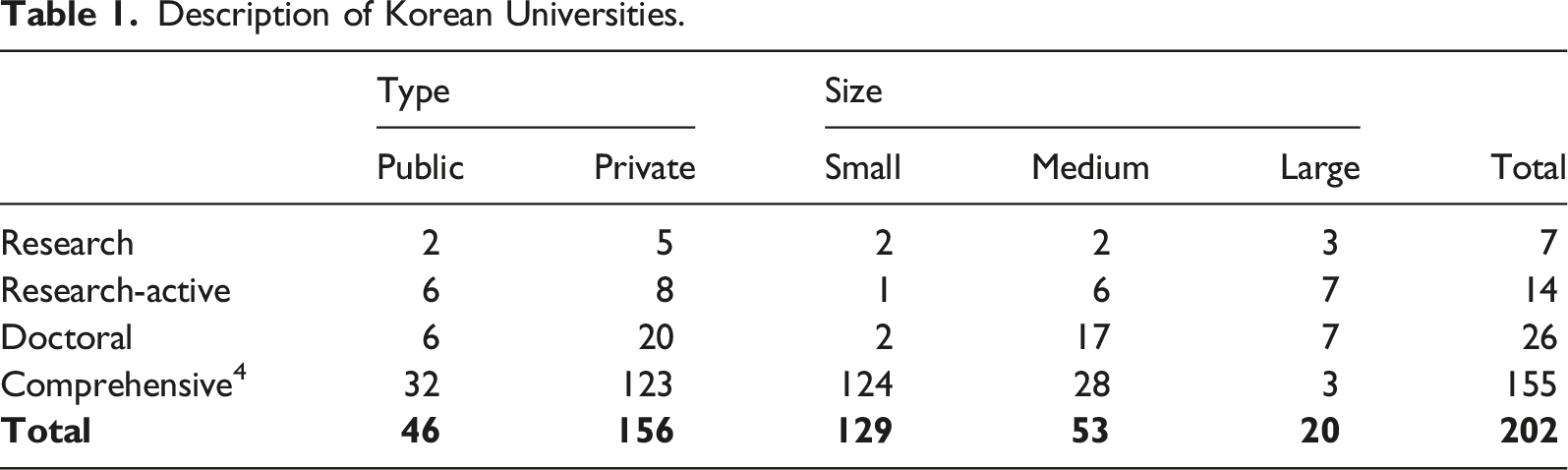
Based on the collected data, we used descriptive statistics to analyze how Korean university exchange programs had changed over the past decade. We analyzed the detailed patterns of exchange programs based on the types and missions of 4-year Korean universities. For the analysis, based on the characteristics of exchange programs through which mutual student exchanges occurred between two universities based on an agreement, we analyzed the links of the 4-year Korean universities with foreign universities, together with the inbound and outbound student data for each Korean university. We collected the data for this study exclusively from universities in Korea, imposing the limitation that partnership information should not be collected from foreign universities that had exchange agreements with Korean universities.
Findings
Differences in international partnerships based on institutional characteristics
The mobility of students based on institutional characteristics.
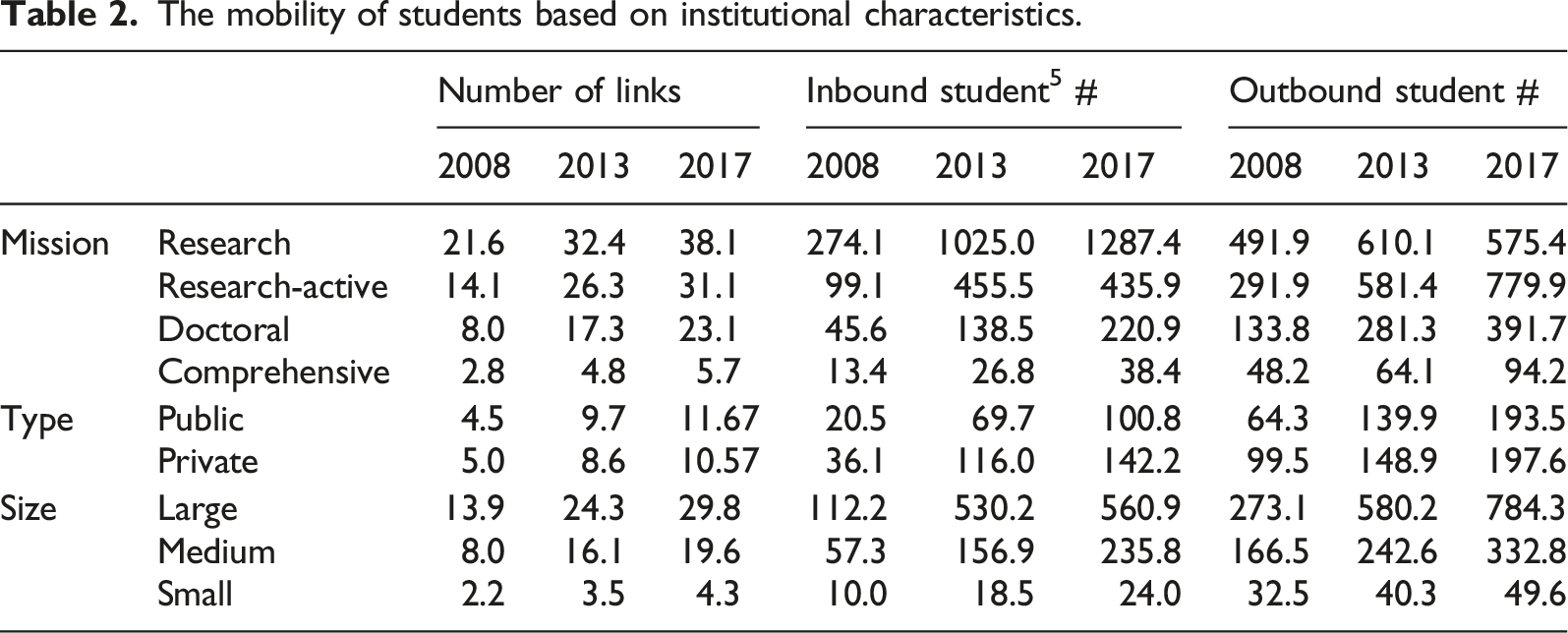
Overall, more comprehensive universities than research universities tended to attract a higher proportion of inbound international students from East Asia. Most foreign students from developed countries, especially those from North America, studied abroad at research universities. The proportions of inbound students from North America attended research, research-active, doctoral, and comprehensive universities, in that order. Across all university missions, the proportion of Korean students studying abroad in East Asia decreased, but the number of Korean students studying abroad in Europe increased. In top-ranked research and research-active universities, the proportion of Korean students studying in North America gradually decreased. In contrast, doctoral and comprehensive universities tended to have higher proportions of Korean students going to North America.
In the case of research-active and comprehensive universities, the proportion of Korean students studying abroad in Southeast Asia increased between 2008 and 2013; however, the growth rate recently declined. In doctoral universities, the proportion steadily rose in 2008–2013 and 2013–2017.
1) Inbound students
We analyzed the distribution of the increasing number of inbound international students according to university missions. As shown in Figure 1, in the case of research universities, inbound international students to Korea came from various continents. In 2008, the inbound student population of research universities came from North America (40.6%), East Asia (29.3%), and Europe (19.9%), and was more or less evenly distributed across continents. However, in other types of universities, East Asian students constituted the majority of inbound international students. In particular, the more comprehensive a university was, the higher its proportion of East Asian inbound students. In 2008, 84% of East Asian students attended comprehensive universities—nearly three times higher than the number attending research universities. The inbound flow from East Asia has appeared to lessen recently. Comparing the 2008 and 2017 figures, East Asian students in all types of universities gradually decreased, whereas students from Europe and Southeast Asia increased. In particular, inbound international students from Southeast Asia ranged from 1.5% (in research-active universities) to 6.0% (in research universities) in 2008, but from 9.3% to 22.9% in 2017—a rapid increase in the space of 10 years. The ratios of inbound students by origin according to each mission.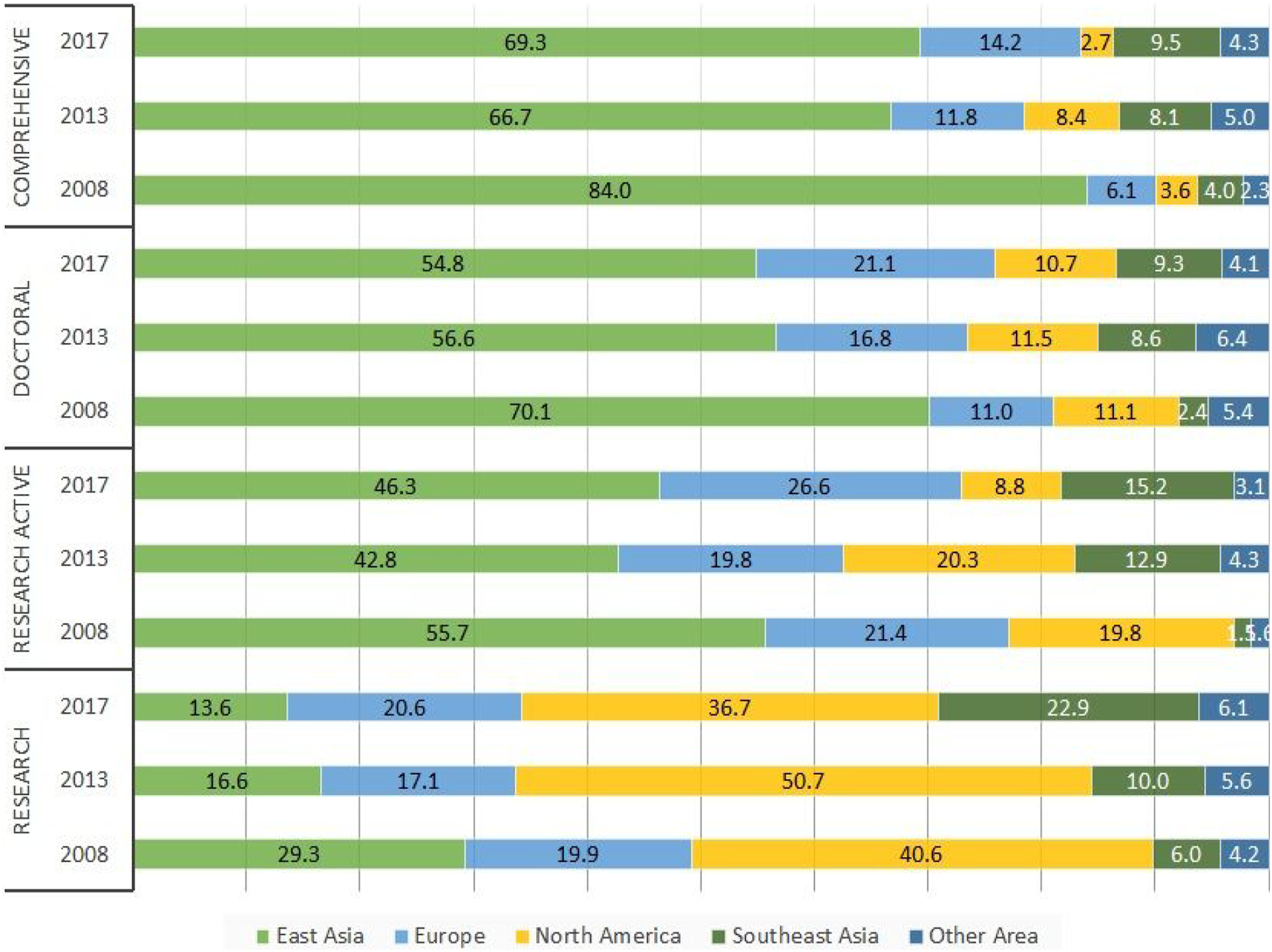
Among South/Southeast Asian countries, Singapore, Malaysia, and Indonesia show an increasing trend in both inbound and outbound. The increase in exchanges of students from Southeast Asia can be attributed to the expansion of exchanges between Korea and ASEAN countries. Since the commemorative summits of the 20th and 25th anniversary of the ASEAN-Korea exchange was an opportunity to develop political relations, Korea and ASEAN relations have developed at the institutional level between 2009 and 2016 (Migration Research and Training Centre, 2019). However, it is not easy to find the cause of the increase in the number of students from South/Southeast Asia, especially in Research universities. This graph presents the percentage, not the absolute number, of international students by continent by the mission of each university. Therefore, it would be desirable to interpret that the increased portion of South/Southeast Asia is not conspicuous because exchanges between education-oriented universities are still dominant in China and East Asia.
In contrast to the other three missions, which had similar patterns of continental proportions and increasing and decreasing trends, the research universities showed a somewhat different pattern. Research-active, doctoral, and comprehensive missions reflected a declining number of inbound students from East Asia. However, they still maintained more than half the rate, and the gap between East Asian students was filled by students from Europe and Southeast Asia. However, in the case of research universities, North American and European students (the largest proportions) remained at similar levels, but with a large decline in East Asian students and a rapid increase in Southeast Asian students.
2) Outbound students
As shown in Figure 2, for outbound students, the East Asian central phenomenon was less pronounced. However, the proportion of East Asian students was lower in research-oriented universities and higher in comprehensive universities. Similarly, East Asia’s share of outbound students gradually decreased from 2008 to 2017. In recent years, there have been differences in the inbound students from various continents, depending on the university missions. The continent with the highest growth rate at research universities was Europe, and in 2008, 17.1% of students were European students. Compared to East Asia (29.7%) and North America (43.0%), Europe was not a preferred destination for Korean students. However, in 2017, Europe accounted for 43.2% of the total number—a larger proportion compared to North America and East Asia. These outbound preferences for European countries were mainly found in research and research-active universities. In the case of doctoral and comprehensive universities, although the proportion of students going to Europe has increased in recent years, the preference for East Asia and North America has remained prevalent. The ratio of outbound students by origin for each mission.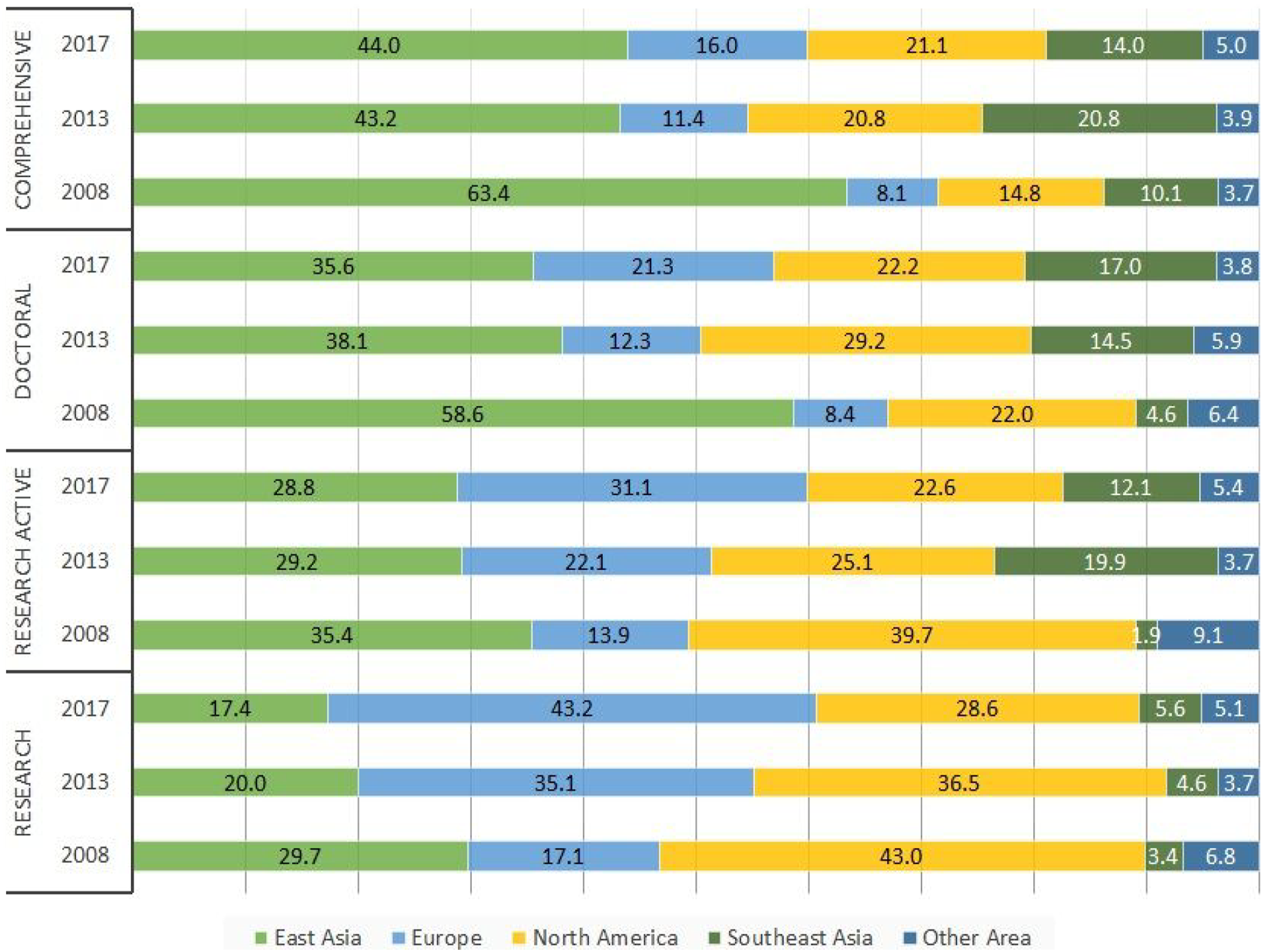
A distinctive feature was the contrast between research and other types of universities in the numbers of outbound students going to North America. In the case of research and research-active universities, the proportion of Korean students departing for North America between 2008 and 2017 decreased sharply, whereas the proportion remained the same or increased for doctoral and comprehensive universities. The fact that outbound students going to North America showed different trends depending on university missions suggests that North America’s status as a traditionally preferred destination may change in the future.
North America was definitely a preferred destination for Korean students, and it was consistently popular regardless of universities’ missions. However, in the case of research and research-active universities, the proportion of international students going to North America decreased. In contrast, the number of students going to North America from education-oriented universities seemed paradoxical. However, this was a convincing result when examining the characteristics of enrolled students.
Differences in international networks based on destinations
English-speaking countries, including the US, the UK, and Australia, have been preferred destinations for years, and this trend was evident for short-term programs. The reason is that English skills are considered important in the Korean job market, so many university students participating in short-term programs do so to improve their language skills.
According to Figure 3, research and research-active universities absorbed the majority of students from English-speaking countries.
6
Also, the domination of foreign students in these top-ranked Korean universities became more pronounced; although 58.5% of inbound international students from the US, Australia, and the UK headed to research universities in 2008, this percentage rose to 73.2% in 2017. Mobility between Korean and English-speaking countries’ universities according to mission.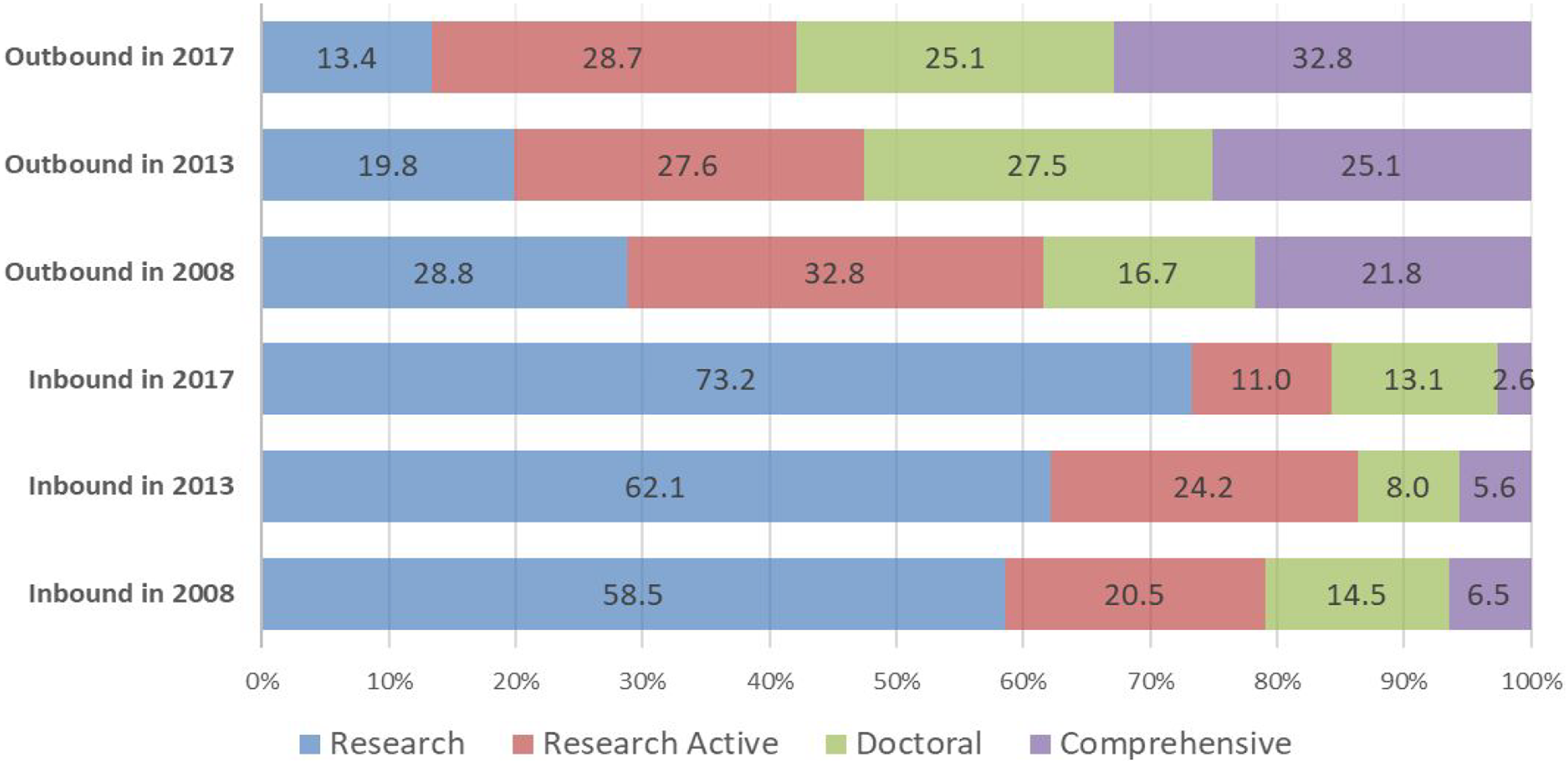
While inbound students from English-speaking countries were concentrated in research and research-active universities, the opposite was the case for outbound students. Korean students in research and research-active universities represented 30% of all students studying abroad in the US, Australia, and the UK in 2008. From 2008 to 2017, this proportion declined, while that of doctoral and comprehensive universities increased. The absolute numbers of inbound and outbound students in these countries were still significant. However, a change in the composition of students for each type of mission should be noted. More than 80% of students from English-speaking countries who came to Korea for exchanges were concentrated in a small number of research universities. The fact that this trend was maintained until recently means that internationalization experiences at home may differ depending on the university. As indicated in Figure 1, inbound students at educational universities were less diverse than those at research universities. This confirmed that students’ international experiences through credit exchange programs differed according to the university.
Discussion
The expansion of short-term mobility enables students to interact with more diverse countries, thereby allowing them to have various international experiences and develop global competencies. However, not all universities offer these benefits. A remarkable aspect of short-term mobility is that the main exchange area differs according to the university’s mission. Top research universities do not concentrate on a particular continent; they interact with students from East Asia, Southeast Asia, Europe, and North America. In doctoral and comprehensive universities, with their greater focus on education than research, East Asia-oriented exchanges are available for both inbound and outbound students.
Another characteristic of ISM is that the proportion of Korean students traditionally preferring English-speaking countries is decreasing (Kang et al., 2022). Due to the importance of English education in Korea (Byun et al., 2011), the US, the UK, and Australia are the preferred countries for both degree and nondegree courses. However, the proportion of Koreans studying in these countries is gradually decreasing, particularly in research and research-active universities. Although research and research-active universities are sending declining numbers of outbound students to the traditionally preferred English-speaking countries, international students from these countries are increasingly concentrated in these research and research-active universities.
What do the differences among short-term exchange programs, depending on universities’ missions and rankings, mean? The fact that a small number of top universities interact with various countries, whereas the majority of universities interact with a limited number of countries, means that the benefits of internationalization are discriminatively apportioned. Most doctoral and comprehensive universities offer only exchange programs with a limited number of countries in East Asia. Does this truly reflect an unequal structure in which top universities monopolize the resources of internationalization? Or may it be seen as universities strategically selecting and concentrating realistic internationalization strategies and limited resources and staff to suit their own situations?
This study tried to find out whether the credit exchange partnership also has a strong bias to developed countries as the World Systems Theory claims. The decrease in the proportion of exchanges with English-speaking countries, which are representative of developed countries, and the increase in the proportion of exchanges with South/Southeast Asia can be clues to support that the World System Theory is no longer valid. Since inequality according to the ranking of individual universities exists simultaneously, the World System Theory alone has a limit to sufficiently explain the uneven distribution of short-term mobility. Degree mobility tends to depend on the individual’s choices based on the value the individual acquires when obtaining a degree in the future. However, in the case of credit mobility, there is the global system inequality according to the location of the university and the inequality of partnership according to the ranking level of the university at the same time.
The differences in short-term exchange patterns appear to be caused by universities’ levels of resources and missions. Shin (2009) classified Korean universities according to four categories based on research performance, but a careful approach is needed when using this classification. Korea traditionally has a strong hierarchical structure for universities (Kim et al., 2014), and the classification of research-oriented and teaching-oriented universities is close to the ranks of universities in the ranking system, rather than based on simple differences between pursued goals. Not only ranking, but also the resources concentrated in large, research-oriented universities cause differences in their internationalization support systems.
When top-ranked research-oriented universities hire international faculty, increase their English-medium instruction ratios, and establish various support policies for exchange students, poorly financed, education-oriented universities have to focus on targeting countries that are likely to attract students and increasing the number of international students in a particular country. As this study shows, although the internationalization strategies of universities may be similar, the continents and countries they target are likely to differ. Short-term international exchange programs may be similar, but the target continents and countries are probably chosen according to universities’ missions based on realistic factors, such as the internationalization strategies of the universities, their available resources, and their overseas country preferences.
The data collection for this study has limitations in suggesting the reasons why high- and low-ranking universities exhibit different exchange patterns. However, considering that Korean universities suffer from financial difficulties due to decreasing numbers of domestic students, and are trying to compensate for insufficient funding by attracting international students, universities with lower rankings are likely to focus on exchanges centered on East Asia, including China, where international student management costs are relatively low (Lee et al., 2017). Just as individual international students consider geographic proximity and living cost when choosing their study destinations and institutions, universities with limited resources must consider increasing the quantity and quality of international exchange programs by operating mainly in countries where there are cost advantages or where it is relatively easy to attract students.
Another critical point is the mutually beneficial characteristics of short-term exchanges. Short-term exchanges influence the choice network at the institutional level beyond mere student preferences because students can choose destinations only from the pool of exchange universities with which the university has agreements. Therefore, the results of short-term exchanges reflect the personal preferences of the students, the internationalization strategy, and the choice of an HEI. Top universities have the advantage of entering into exchange agreements with universities in various countries, but lower-ranked universities face restrictions that result in international exchanges with lower-level universities on a specific continent.
According to the findings, more diverse inbound students can be attracted if universities organize exchange programs using their existing resources and reputations. In other words, high-ranking universities offer more diverse, high-quality internationalization experiences, while low-ranking universities offer only limited experiences. Therefore, it seems likely that the gap will gradually widen between universities. With foreign language ability and overseas experience recognized as essential in the job market, the demand for international exchange programs at universities will continue. Naturally, external pressure to expand exchange programs is intensifying, meaning that it is increasingly necessary to discuss the factors that influence university stratification. Although considerable research has investigated the individual-level variables that affect access to study abroad (Netz & Finger, 2016), research on variables at the institutional level remains inadequate. Unlike long-term degree mobility, short-term mobility limits the scope of individual decision-making to university partnerships, so it is vital to explore the influence of institutional frameworks and strategies on the stratification of short-term mobility (Courtois, 2018).
Conclusion
The COVID-19 crisis affected all aspects of higher education, such as the target groups and course delivery methods of higher education institutions. In the post-COVID-19 period, international exchanges between universities are expected to decrease (Altbach & De Wit, 2020). However, in the long term, the decrease in face-to-face international exchange programs is unlikely to continue. When the COVID-19 situation stabilizes, the suppressed demand for international exchanges could rebound vigorously. However, the online learning fever elicited by COVID-19 is expected to change the nature of international exchanges, either directly or indirectly. Therefore, researchers should consider various types of exchanges and ways of facilitating them. In this context, it is meaningful to examine the current status and change trends of short-term exchange programs.
This study has various policy implications. It is necessary to understand the aspects of short-term international exchange programs to better align them with universities’ missions and to see what they can achieve in individual university contexts. In particular, depending on university rankings, it is possible that the characteristics and degrees of internationalization that students experience may differ. The dominance of international students of a particular nationality at a specific type of university suggests that the type and quality of experiences students enjoy through international exchanges may vary. Therefore, it is necessary to develop and employ internationalization indicators to ensure the quality of international exchange programs, rather than evaluation indicators to assess international exchanges based simply on numbers of inbound and outbound students.
Also, policy support is needed to correct the imbalance in internationalization programs, which is biased in favor of a small number of research-oriented universities. Considering the impact of students’ international experiences on competitiveness and expected income in the job market, the gap between universities in terms of the diversity of their international exchanges is likely to widen these differences. Policy support and efforts are needed to ensure that international exchange programs do not become a mechanism for increasing the gap in outputs based on university rankings.
Footnotes
Declaration of conflicting interests
The author(s) declared no potential conflicts of interest with respect to the research, authorship, and/or publication of this article.
Funding
The author(s) received no financial support for the research, authorship, and/or publication of this article.
