




Abstract

Orchid Biocomputer is developing and commercializing proprietary methods and devices to advance ultra high-throughput processes for the pharmaceutical and diagnostic industries. The combination of microfluidic chips with proprietary assays and conventional laboratory automation will enable ultra high-throughput chemical synthesis, biochemical assays, scoring of Single Nucleotide Polymorphisms (SNPs) and other DNA and pharmacogenomic analyses. Orchid's multidisciplinary approach combines expertise in chemistry, molecular biology, material science, sensors, optical systems, electronics, microfluidics, microfabrication and bioinformatics.
Through the acquisition of Molecular Tool and rights to technology from Sarnoff Corporation, Orchid has become an industry leader in the development of chips that perform customized SNP genotyping for pharmacogenomic and diagnostic application assays.
TECHNOLOGY AND APPLICATION AREAS
PHARMACOGENOMICS AND PHARMACOGENETICS — THE NEW FRONTIER
The first phase of the genomics revolution has revolved around primary, de novo DNA sequencing, as exemplified by the global Human Genome Project and as driven by high-through put automated DNA sequencers. Sequencing the human genome has provided information to dramatically change the way diseases are studied, diagnosed and treated. The second phase in the genomics revolution is pharmacogenomics and pharmacogenetics. These fields focus on the variability and diversity of DNA, and how this diversity can impact biology, including response to drugs. The most common form of genetic diversity is thought to come in the form of individual DNA bases being different than the corresponding base in the average population. These single nucleotide polymorphisms (SNPs) are a natural form of mutation, which are hereditary in nature. Some SNPs may impart distinct characteristics to, and between, individuals, while others may impart subtle, yet important, differences in the biomolecules produced by the DNA. Some of these SNPs, through their effect on these modified biomolecules, are known to effect an individual's response to drugs and to effect their predisposition to contract specific diseases.
A single reactor of a multi-layer Orchid chip illustrating three-dimensional architecture and microfabricated valves for precise nanoliter fluid management.

SNPs are viewed as both direct and indirect markers for many human diseases. Therefore, the analysis, or “scoring,” of SNPs to determine their role in disease and drug efficacy may lead to the development of powerful diagnostics and therapeutics.
Many promising drugs developed by pharmaceutical companies never make it through clinical development because of genetically based adverse reactions (ADRs) in a small number of patients. Furthermore, drugs already on the market often suffer from ADRs in even smaller patient populations. According to a recent research article by J. Lazarou, et.al. in The Journal of the American Medical Association (JAMA), (1998, 1200–1205), ADRs represent the 4th or 5th leading cause of hospitalization and mortality in the USA. Therefore, ADRs represent a major healthcare problem with significant financial and medical impacts.
Scoring SNPs can identify at risk patients before the drug is prescribed and salvage potentially useful new drugs. Alternatively, patients with SNP-induced variations in their conditions, evident in diseases like hypertension, can be identified and then prescribed the drug most appropriate for their genetic variant.
SNPs will also be used during drug discovery and development in order to provide a better understanding relating to the variability of clinical response to drug candidates. The hope by many in the industry is that results gained during clinical trials will have a higher degree of rational connection to the underlying biology and physiology especially that which is variable in a typically diverse population. The economic gain could be substantial, by way of more drugs being approved, better choices of lead candidates, shorter clinical trails and eventually for more successful products.
MICROFLUIDIC CHIPS — INCREASING THROUGHPUTS & DECREASING COSTS
Microfluidics allows the reduction of the size of a sample in a given experiment with a corresponding increase in the throughput of handling, processing or analyzing the sample. Additional benefits of micro-enabled processes such as increased reaction rates, enhanced detection/analytical sensitivities, and control of adverse events have also begun to be reported and exploited. Now, microfluidics is being used by Orchid to continue this trend.
As the market has required higher throughputs, suppliers have begun to offer labware and devices that accommodate 384-well (4 × 96) plates and 1536-well (16 × 96) plates. Such applications as high-throughput screening have embraced and driven this trend. It is generally recognized that traditional means of moving fluids and measuring samples are severely challenged much above the 96, 384-well plate level. The microfluidic technology developed by Orchid provides a viable route to achieve much higher levels of densification, unachievable by traditional systems. Orchid is developing modular chip-based systems with 96, 384, 1536 and 12,288 (8 × 1536) reactor arrays that accommodate 100–800 nanoliter sample volumes. Such systems are being assembled to create SNP genotyping facilities to perform one million genotypes per day. Increased throughput must also be matched by a decreased cost per sample. Microfluidics enables both the increased throughputs and decreased reagent costs necessary to realistically address this level of discovery, necessary for future pharmacogenetics applications.
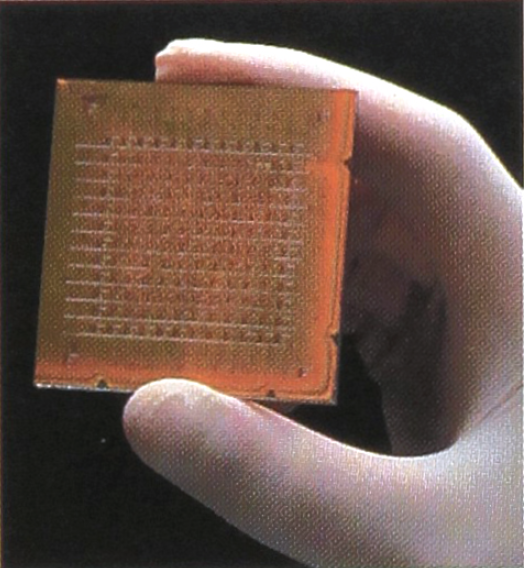
Orchid's 100 well Chemtel Chip
CHEMTEL™ CHIPS
One important application of Orchid's microfluidic technology is in parallel chemical processing as embodied in the Chemtel Chip. The unique features of the Orchid Chemtel chips include the ability to process hundreds of reactions in parallel through the use of precise fluidic delivery methods. A matrix of non-mechanical microvalves are fabricated within the multi-layered chip to control both vertical and lateral fluidic management, without any risk of evaporation or reagent degradation. The highly complex three-dimensional architecture of these chips enables the broadest range of capabilities of any chip in the industry.
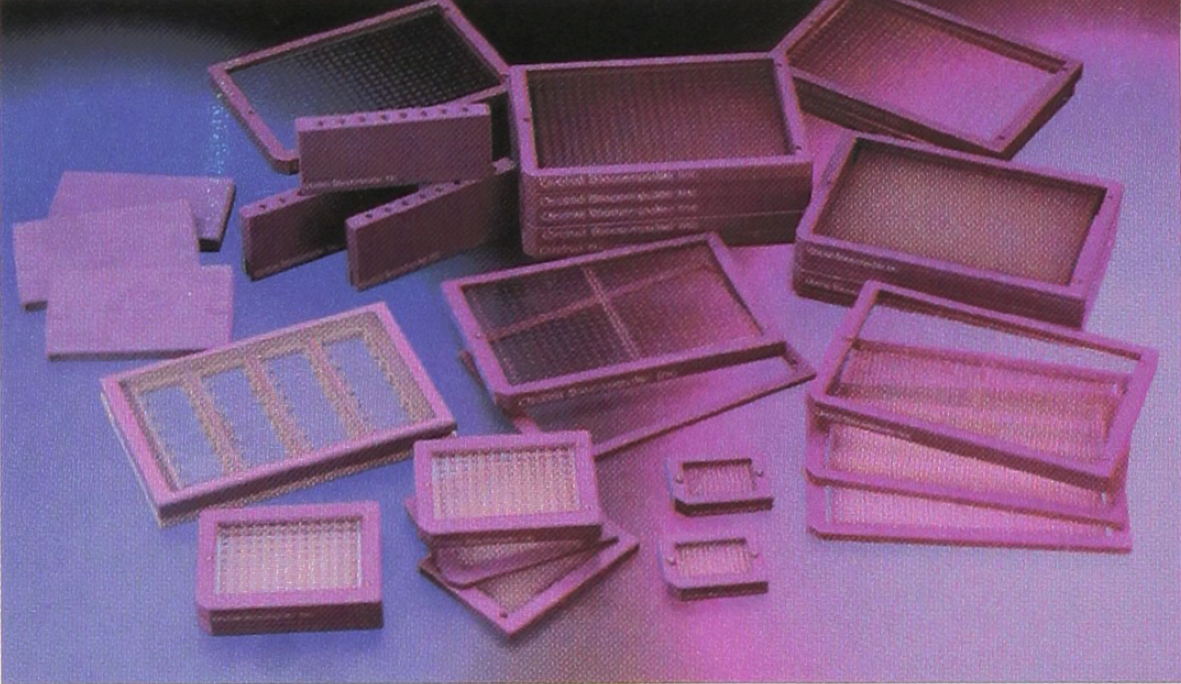
The family of Chemtel Chips will include 96, 384, and 1536 well chips which can be utilized independently, on the ChemStream 384, or modularly combined to generate libraries of more than 12,288 compounds at one time, on the ChemStream 12K (under development for SmithKline Beecham). The reusable chips provide means for multiple reagent additions, atmospheric control, temperature control, and product capture in a completely chemically compatible structure. The unique flexibility of these chips to achieve a very broad range of chemistries has been demonstrated at Orchid for reaction optimization and lead optimization efforts using both solution phase and solid phase chemistries at elevated temperatures.
CORPORATION OVERVIEW
Orchid Biocomputer serves the biomedical and pharmaceutical markets through innovations enabled by its proprietary microfluidics and pharmacogenetics technologies. By leveraging the same technologies used to design computer chips, Orchid has built an ultra high-throughput microfluidic platform that will develop a new generation of fast and reliable research tools for the pharmaceutical and diagnostic industries. These technologies enable higher throughputs, lower costs, and new modes of biomedical research.
The fields of pharmacogenomics and pharmacogenetics have rapidly emerged and entered the mainstream in the pharmaceutical industry over the last two years. The pharmaceutical industry's demand for a well proven high-throughput and low cost form of the techniques of these fields is growing rapidly. Orchid is applying its technologies in microfluidics and pharmacogenetics, specifically Single Nucleotide Polymorphism (SNP) assays or “scoring” to establish an ultra high-throughput SNP facility.
Orchid aims to establish this SNP scoring facility as the premier source of pharmacogenetic and genetic variability data and related intellectual property rights. Clinical samples are being accessed from Orchid's own Clinical Genetics Network (CGN). These samples will be used to find medically important correlations between SNPs and various attributes of the patients. These correlations will lead to use patents on new and existing drugs for label extensions where the indication for treatments includes the presence or absence of particular SNPs.
COMMERCIALIZATION STRATEGY
Orchid will commercialize both products and services to a variety of discovery and clinical research laboratories. The proprietary SNP scoring method will be available for use by scientists in macrofluidic formats within their own laboratories. Meanwhile, access to Orchid's ultra-high-throughput SNP scoring facility utilizing microfluidic technologies will be available as a service.
Orchid's microfluidic technology is available through a variety of Technology Access Programs that embody a wide range of chips and instruments. These systems will enable a variety of functions including DNA synthesis, small molecule synthesis, and MS analysis for applications in primer generation, reaction optimization, lead optimization, and chemical development.
PRODUCTS, MARKETING, & SERVICES
TECHNOLOGY ACCESS PROGRAMS
Orchid plans to provide limited use licenses to its technology, which will be included in the sales or lease transaction of its products. In the case of simple kits and consumables this will take the form of a license. In the case of full automation systems and related consumables, the sales transaction will take the form of the Technology Access Program (TAP) which will provide an automation system, reagents, consumables, and a limited license to use Orchid's technology. Examples of instrumentation TAP programs with reagents and/or consumables include SNPstream™, ChemStream™, and MassStream™.
CLINICAL GENETICS NETWORK™
The company has created a Clinical Genetics Network (CGN), enabling Orchid to initiate its own pharmacogenomics testing program. The CGN is comprised of clinicians and researchers who will provide clinical data and SNPs to Orchid. Orchid will then score the SNPs to determine their role in disease and drug efficacy. Both Orchid and CGN members will share in the outcome of the disease association studies. The University of Cincinnati and the University of Pennsylvania Health System are inaugural participants. Orchid is planning to continually enroll new physicians and researchers from around the world.
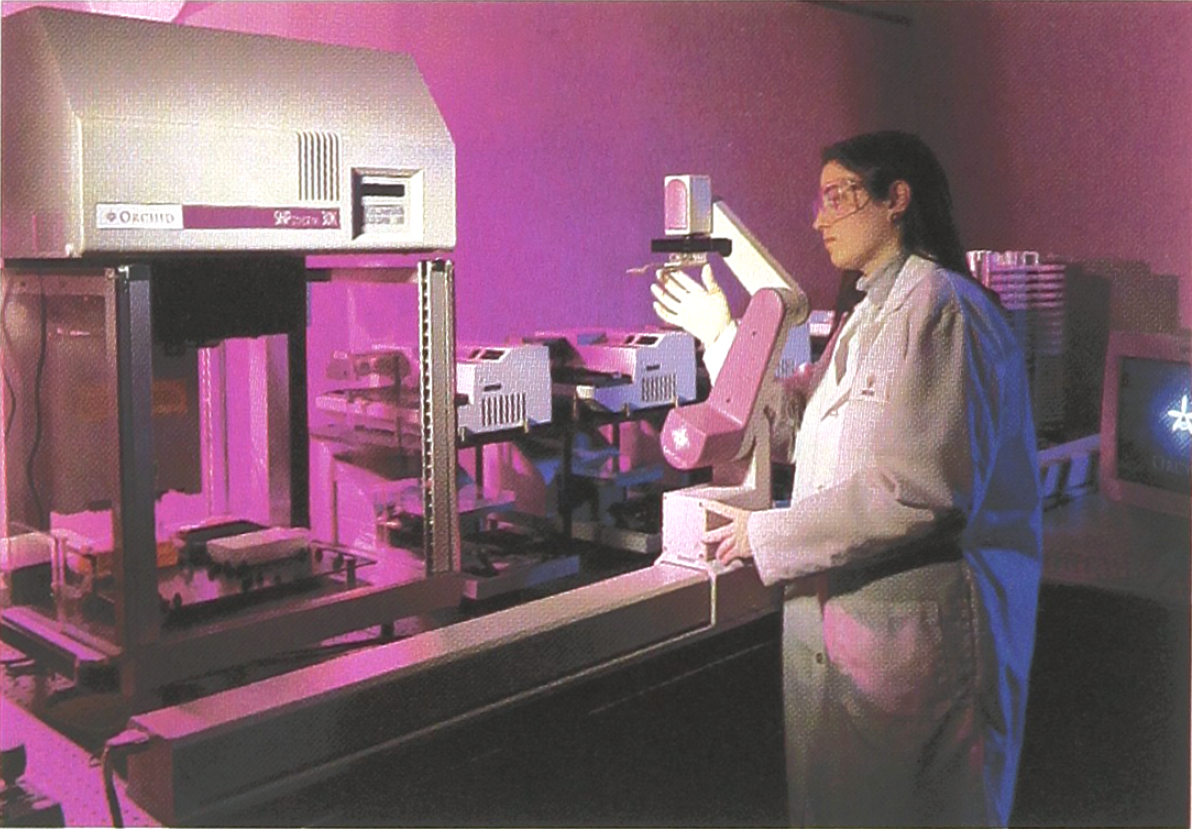
Orchid's SNPstream offers accurate, robust methods to perform massive SNP genotyping and analysis.
SNPSTREAM™
SNPstream unites the accuracy of primer extension using Orchid's proprietary genetic bit analysis (GBA) with the high throughput processing power of automation. An automated platform for industrial scale processing, SNPstream is designed to continuously process twenty-five plates per day in three shifts for a throughput of 30,000 genotypes per day. SNPstream is supported by a validated selection of reagents and software. Cost effective access to SNPstream will be available by the end of 1999.
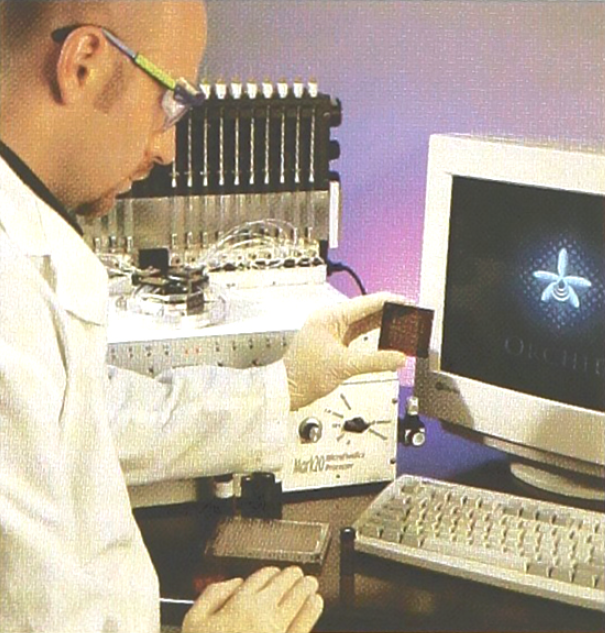
Orchid's Chemtel Chips and ChemStream Processors enable low-cost, high-throughput drug discovery and diagnostics.
CHEMSTREAM™ 384
The ChemStream 384 will enable the synthesis of 384 compounds simultaneously using revolutionary microfluidic technology in combination with traditional liquid handling robotic (LHR) automation. A unique feature of the interface between the Chemtel Chip and the LHR, is the use of on-chip reservoirs that enable macroscopic delivery of reagents using well-defined liquid handling methods. This interface leverages the strengths of LHRs with the strengths of microfluidics to distribute nanoliter volumes from microliter reservoirs.
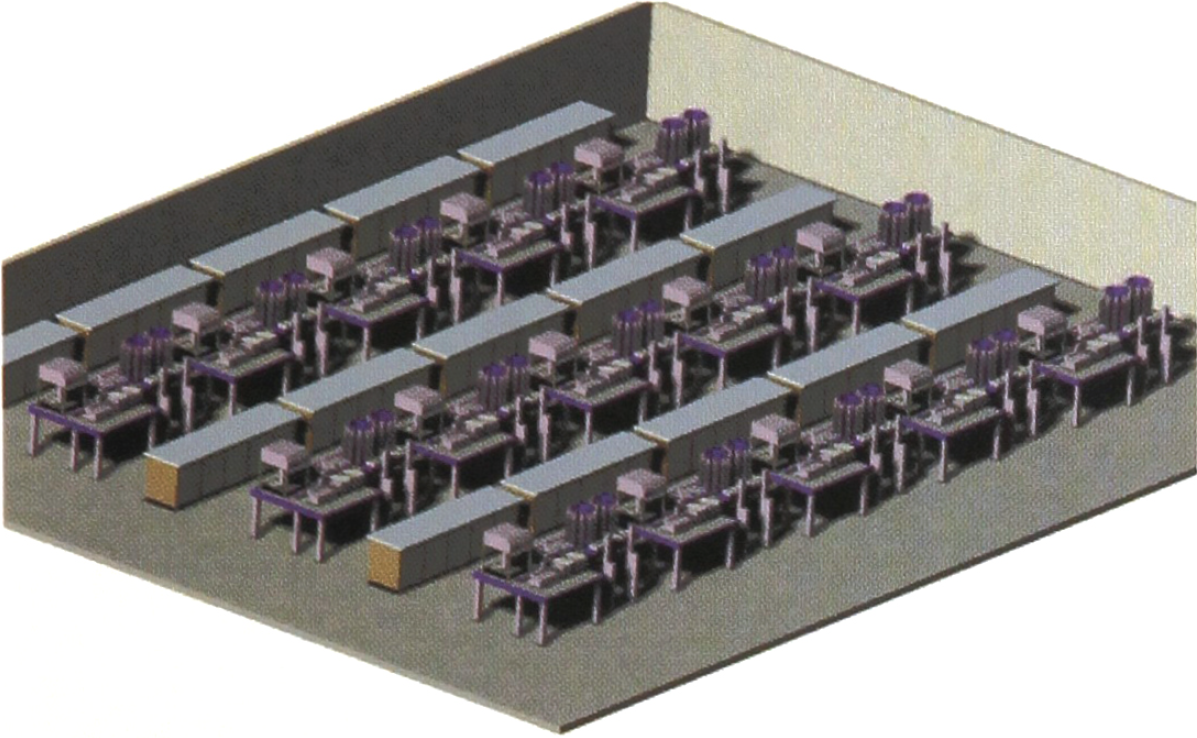
Representation of Orchid's Ultra High Throughput Genotyping facility.
MASSSTREAM™ 96
MassStream 96 will enable the integrated transport and analysis of 96 chemical synthesis products from Chemtel chips to a proprietary miniaturized electrospray MS chip. This product will be the result of a development collaboration with Advanced Bioanalytical Services, Inc. (ABS) directed toward the miniaturization and integration of synthesis and analysis, thereby dramatically increasing the throughput of product analysis and quality control. The system will enable the characterization and semi-quantitative analysis of up to 10,000 compounds in only five days while using less than 1/50th of the sample material currently required. Furthermore, these products will demonstrate the first integrated chip to chip system, overcoming the difficulties encountered with macrofluidic interfaces to microanalytical devices. This and similar technologies will also enable enhanced capabilities of other fields including drug metabolism, pharmacokinetics, and pharmacogenomics and pharmacogenetics.
INTELLECTUAL PROPERTY
Orchid's technology and intellectual property lies in several categories: 1) microfluidics and microfabrication, 2) biological, biochemical and chemical processors or systems, and 3) proprietary biologies, biochemistries or chemistries. The inventions and technologies that fall into these categories individually, or in combination, represent the majority of the Company's intellectual property rights.
PARTNERS
Orchid has a number of established or recently announced partnerships with the following companies or individuals: Advanced BioAnalytical Services, Inc., Beckman Coulter, Inc., Dynal A.S, Motorola Inc., National Institute of Standards and Technology's Advanced Technology Program, Sarnoff Corporation, SmithKline Beecham, University of Cincinnati, University of Washington, and Dr. Daniel Rader at the University of Pennsylvania Health System.
MANAGEMENT
Orchid has assembled a strong management team with a unique wealth of experience in several scientific and business development areas including drug discovery research and technologies, diagnostics, instrumentation, and engineering.