



Abstract

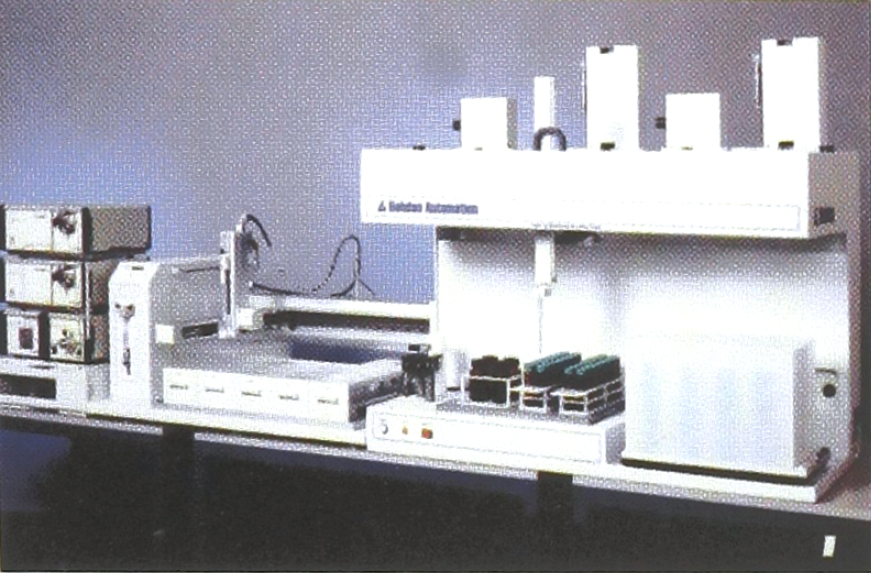
Bohdan Automation (Mundelein IL) and Gilson (Middleton, WI) have joined to offer a new Synthesis/Analysis Workstation designed to address process optimization. The Process R&D Workstation consists of a 12 position reaction block with automatic reagent addition and individual hearing, cooling and temperature control. Reaction products are sampled, quenched, and analyzed using HPLC with diode array detection, allowing visible thermodynamic and mechanistic data to be elucidated.
Circle 200
PSSoftware Solutions™ Ltd. Joins CENS Consortium™ as a Vendor Member
PSSoftware Solutions™, Ltd., (Ottawa, Ontario, Canada), a software development company, has joined the Collaborative Electronic Notebook Systems (CENS) Consortium™ (Woburn, MA) as a Vendor Member. The Collaborative Electronic Notebook System (CENS) Consortium is an international group of companies in the pharmaceutical, chemical, bio-tech, high tech, and related industries working together to on major automation problems. CENS represents over 550,000 employees working in the pharmaceutical, chemical, biotechnology, healthcare, high technology and related industries.
PSSoftware specializes in full, life-cycle management of enterprise-wide information through RIMS, a Windows-based, client/server system that provides comprehensive and flexible control of paper, electronic and image-based records. RIMS integration capabilities have grown to include seamless integration with electronic document management systems, imaging systems, workflow packages, report writers, full text systems, correspondence tracking and e-mail packages.
The Collaborative Electronic Notebook Systems Consortium contracts with software vendors to construct and improve integration engines, applications, and tools for mission-critical R&D team computing systems with complete collaborative electronic laboratory notebooks. It focuses on chemical based, regulated industries including the chemical, pharmaceutical, biotechnology, healthcare, food, beverage, and consumer goods industries.
Consortium End User Members include Bristol-Myers Squibb (Wallingford CT), Dow Chemical (Midland, MI), Procter & Gamble (Cincinnati, OH) and other Fortune 500 companies.
Circle 201
Beckman Coulter Introduces the DataLink™
Beckman Coulter (Brea, CA) has introduced a new data management system, the DataLink. This system was created specifically to facilitate information exchange between Beckman Coulter analyzers. The system can currently link two analyzers; future updates will allow the linking of three analyzers. The operation of each of these instruments can also be controlled from a single terminal.

The DataLink accesses information previously available through the LIS and adds features that may not be present on the LIS. If the DataLink is not interfaced to a LIS, it can still be used as a “mini-LIS” for the following systems:
SYNCHRON CX®3 or CX®3 Delta System SYNCHRON CX4 or CX4 Delta System SYNCHRON CX5 or CX5 Delta System SYNCHRON CX7 or CX9 ALX System LX™ 4201 Clinical System IMMAGE™ Immunochemistry System Array® 360/360CE System
Circle 202
IAI America, Inc. Releases New Products
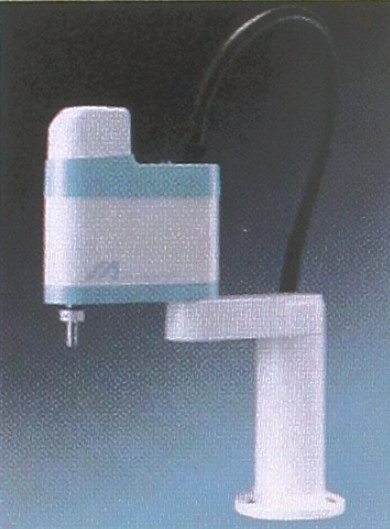
IAI America, Inc. (Torrance, CA), has recently released several new series of products. The SCARA series is the company's newest line of 4-axis robots. This IH series will be offered in four models in 1998. SCARA-type robots have their joints in the horizontal plane so that the arm can swivel about its base and fold in on itself in the manner of a “folding screen.” The work envelope is cylindrical.
This series uses an AC Servo motor, absolute encoders, and harmonic drives. Specifications include a maximum speed of 4710 mm/sec, a maximum payload of 4 kg, and full-path motion capability. The vertical axis comes standard in a 150 mm stroke, but has an option for a 300 mm stroke. The control package uses and enhanced version of the company's SEL programming language.
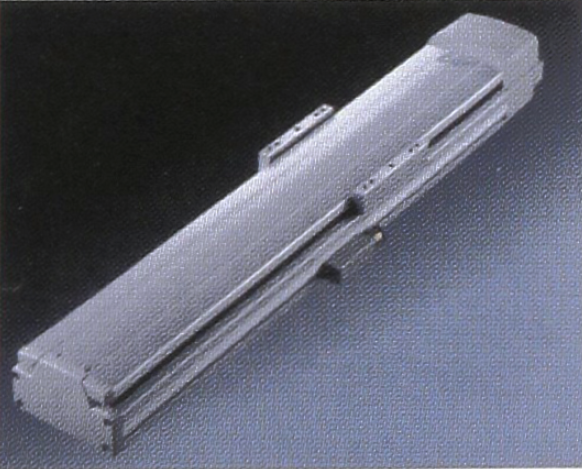
The new DS actuator and controller system has likewise been released. The actuators are powered by a 20W servo motor with incremental optical encoder. The actuators are ball-screw type and are available in 50 mm stroke increments from 50 mm to 400 mm (1.96″ to 15.7″), can position up to 17.64 lbs of payload at speeds of up to 800 mm/sec (31.5 in/sec) and with a repeatability of +/-0.02 mm (+/-0.0008″). The controller is programmable either by handheld teaching pendant (see picture) or via PC Interface Software. It requires an external 24V DC power supply and provides programming capability for 32 programs, 1000 programming steps, and up to 500 positions. Additionally included are 15 user inputs and 6 user outputs.

LAI has also released two new cleanroom series. The cleanroom positioning series is the ICS-CR. The system comes preconfigured in an X-Y orientation. It includes brackets, cableveyors, conduits, and tubing, as well as the company's standard SEL motion controllers. A single evacuation duct with an outer diameter of 38 mm is provided to the customer to attach to a vacuum source. The largest available system is a 1200 mm × 600 mm system with available stroke in 100 mm increments. Other specifications include a maximum speed capacity of 800 mm/sec (31.5 in/sec), a maximum payload of 55.5 kg (125 lbs), and positioning repeatability of +/-0.02 mm (+/-0.0008'). Special design features include a Raydent or rust-inhibiting treatment on its ballscrew, use of low-outgassing greases, and brushless AC Servo motors. The actuator series is designated the ISCR series. These share the special features of the ICS-CR series. The ISCR is offered in three sizes (small, medium, and large). Maximum stroke length is 1200 mm (47.2″). maximum speed is 800 mm/sec (31.5 in/sec), and the maximum payload capable in the series is 80 kg (176.4 lbs). Available options include magnetic brake, Limit switches, creeping sensors, and an option for right or left hand orientation for the standard vacuum fitting.

Circle 203
Robosynthon Introduces New Combinatorial Chemistry Workstation
RoboSynthon, Inc. (San Francisco, CA) announces the MultiReactor-2Ô, a combinatorial chemistry workstation. A synthetic chemist can perform simultaneous solution and solid-phase resin reactions in 25 mm O.D. glassware. The MultiReactor-2 maintains constant temperature and magnetic mixing in all tubes simultaneously. The instrument has manual or computer control. Mixing and temperature parameters can be logged for regulatory compliance. Volume and synthetic capacity is to 1 gm and volume to 30 mL. Applications include extraction and catalysis.

Circle 204
Rosys Anthos Releases New DNA Preparation Gene-Machine
Rosys Anthos (Hombrechtikon, Switzerland) has just released their new Gene-Machine, an instrument automating high throughput DNA preparation. It is also expected to automate other protocols in the future, such as PCR and post-PCR ELISA analysis. As an open system, the Gene-Machine users can apply a sample to FTA(tm) coated paper to immobilize the DNA, purify the DNA, punch sample disks onto PCR plates and set up the PCR protocols. The instrument also has 4 washable/disposable tips and a robotic arm to transfer plates between onboard modules, such as the plate-washer and drying oven. Bar code readers are available as an extra option.
In addition, the first product of the Rosys Anthos partnership is also still available. The Auto Lucy, a freely programmable plate/processor analyzer, combines the Rosys Plato 7 microplate processor and the Anthos Lucy microplate luminometer/photometer. The instrument can access reagents and samples from any liquid containers; up to 8 washable/disposable pipetting tips are used to assemble assays. Samples and/or plates can also be identified with bar codes. A robotic hand is used for plate transportation. Options are available to install combinations of photometric and luminometric filters covering a range of 405–690 nm.
Circle 205