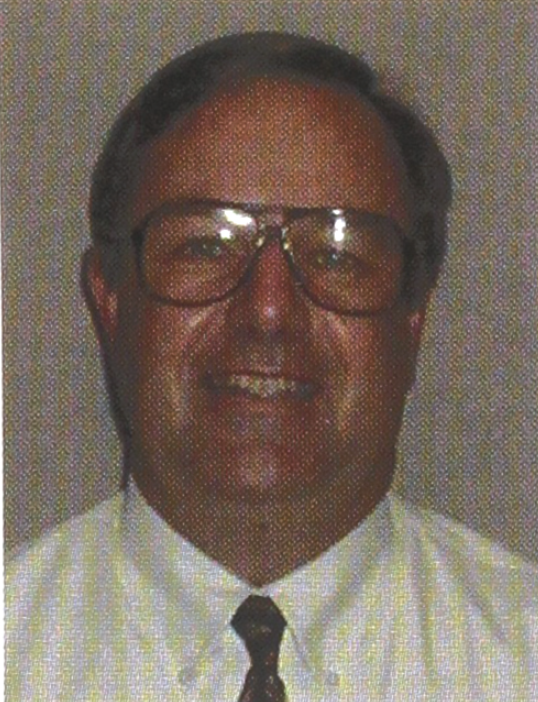
Dr. Thomas Raichle, Boehringer Mannheim GmbH, Mannheim
With more than 100,000 visitors per year, Medica calls itself “the world's largest information and ordering house” for the decision makers in hospitals and medical practices. Laboratory medicine has traditionally played a key role within this trade fair, because the roots of Medica have been in diagnostic testing since its foundation in 1969.
In contrast to American events like AACC and CLMA, laboratory automation has only been of a side aspect of Medica during the past few years. Exhibitors were surprisingly reluctant to show their large automation systems in Europe, and the concomitant scientific congress neglected the topic of laboratory automation almost completely.
This is now changing: From Nov. 19 to 22, 1997 the program of a satellite congress, organized by the European Confederation for Laboratory Medicine (ECLM) will deal with laboratory organization and reorganization topics such as point of care testing, total laboratory automation, quality improvements in the pre-analytical phase, and total quality management.
Symposium on Laboratory Automation
In symposium IV, Professor Robin Felder from the University of Virginia together with top level representatives of seven automation companies will discuss the actual topics concerning consolidated and integrated automation systems for clinical testing and pre-analytical sample handling.
Professor Felder, President of the international organization, the Association for Laboratory Automation, will start with a state-of-the-art overview and an outlook upon laboratory automation beyond the year 2000, followed by a short introduction by the chairman, Professor Georg Hoffmann from Germany.
These presentations will focus on the third generation of laboratory systems, which provides consolidation of analytical methods as well as integration with automated pre- and post-analytical procedures. Examples of successful laboratory automation will be demonstrated in a short video called “The third generation of laboratory systems”.
Dr. Thomas Raichle from Boehringer Mannheim GmbH, Mannheim, will discuss the State-of-the-art in the development of consolidated and integrated laboratory systems. He will present Boehringer's view that restructuring of laboratories will provide the transition from organization by technology into organization by process. Consolidation and integration are the key words for system development activities, which support the needs of those organizational changes. As a typical example for this new development strategy, Dr. Raichle will present the new Boehringer Mannheim/Hitachi system MODULAR. This system will initially provide a modular platform to consolidate clinical chemistry and immuno-chemistry and to integrate the pre-analytical worksteps centrifugation, de-capping, aliquotting and tube labelling.
Dr. R.M. Rowan from Sysmex / Toa Medical Electronics (Europe), Glasgow will then talk about systemization in the medical laboratory and the need to rethink laboratory operation and organisation. In hematology during the past 30 years, while workbench automation has increased, the potential for an automation cycle starting with patient specimen collection and transportation and ending with the transmission of meaningful reports to the clinician has received scant attention.
The technology now exists at Sysmex, to change this through the process of systems integration, the harnessing of robotics and information technology. In order to achieve this the laboratory must establish an analytical platform capable of interfacing seamlessly with mechanical specimen transportation and afferent and efferent computer links. This objective may be achieved by one of two routes, either by Total Laboratory Automation (TLA) or alternatively by a Modular Automation (MA) approach. To a Medical Electronics offers potential platforms for either approach with the Sysmex HST as the basis for TLA or the Sysmex SE-Avante for the modular approach. A powerful new data processing package (PC-DPS) can interface with either.
The title of the presentation of Stuart Wills from Coulter Corporation, Miami is “Laboratory automation: planning, implementation, and the future”. About ten years ago, Japanese scientists and entrepreneurs extended the concept of automation beyond the single instrument. Based on their pioneering work, automated transport and communication systems can now link entire laboratories into one coherent mechanism. Thus it becomes possible to purchase everything from a simple pipetting station to a completely integrated, multi-disciplinary, transport system. Coulter is among those who can complete automation solutions. Computer modeling may help both in the design of a system and in the prediction of the improvements to be gained from automation. Future developments will include more integrated methods to communicate patient information and to control laboratory operations. Internet links and enterprise-wide intranets will allow distant facilities to be controlled and monitored from a central location.
Kirk Kimler from Abbott Diagnostics, Chicago, recommends a stepwise approach to laboratory automation. In his opinion, a viable strategy for laboratory automation is to explore and implement it in a step by step process. What needs to be examined is which areas of the laboratory have the greatest impact in terms of efficiencies. Abbott's data indicates that front-end automation has the greatest impact on efficiencies. The next area that deserves focus is the actual processing of samples: instrumentation and their configuration within the laboratory. Consolidation of workstations within the lab is a major priority. Examples include Abbott's Architect system, and Abbott's Cell Dyn 4000/ slide maker stainer. Such workcells should be modular building blocks that allow expansion of instrument capabilities while maintaining a single user interface with the analyzer.
Dr. Jeff Quint from Beckman Instruments, Brea, CA will give a talk entitled ‘Preparing your laboratory for automation’. He will discuss an example of how productivity was improved in preparing for robotic automation of a specific laboratory.
Dr. Jeff Quint, Beckman Instruments
The initial phase of laboratory organization was to modernize the analyzers so that they can do primary tube sampling. This improved the efficiency of the workstations and reduced the labor required to run the tests.
The second phase was to improve the information flow from the point of order to the point of report generation. Examples of solutions used to improve information flow and reduce labor will be presented.
The third phase was to physically rearrange the laboratory so that central processing and the high volume analyzers were arranged in a core lab configuration. An example arrangement of a core laboratory and the flow of samples will be discussed. With these improvements this laboratory is now well set up to automate central processing as the volume justifies the investment.
Laura B. Fitzgerald from J&J Ortho Clinical Diagnostics, Rochester will present J&J's “New approach in laboratory automation”. Successful laboratory automation requires a new way of thinking about the laboratory as an integrated system whose product is information. This is equally true for both automated workcells and total automation systems. Product requirements to address the new integrated laboratory are fundamentally different from traditional system requirements. Automation products must enhance the overall ease of use and productivity of the system, while still complementing the inherent user friendly features of the instrumentation. This includes true automation-ready analyzers, intelligent process management software and flexible automation track systems. The elements required for successful laboratory automation implementation, as well as examples of successful installations and future product direction at J&J will be discussed.
Laura B. Fitzgerald, J&J Ortho Clinical Diagnostics
In the last presentation, Jan Timmers, TECAN, Hombrechtikon, Switzerland will present A modular platform for pre-analytical automation.
The ongoing concentration process in laboratory medicine has created an urgent need for cost-effective automation of labor-intensive tasks in the pre-analytical process.
The major dilemma for many laboratories is that pre-analytical automation must be installed right now, while the next generation of consolidated analyzer clusters is not available yet. Based on their broad range of liquid handling instruments and microplate devices, the TECAN group of companies has always marketed customer-specific solutions. The flexibility and experience needed for traditional tasks such as sample splitting and ELISA assays can now also be found in TECAN's new concept for automation of the pre-analytical process, which will be based on modular workcells.
Jan Timmers, TECAN
As a first step an aliquotter and secondary tube labeller will be launched, followed by other modules such as a sorter, decapper and fully automated centrifuge. All workcells will able to handle different types of sample racks and have open interfaces to transport systems.
The solutions provided by TECAN will be based on thorough sample flow and simulation studies.