




Abstract

Wintriss Introduces Edge Detection on MegaPixel Smart Camera

Wintriss Engineering (San Diego, CA) announces the availability of on-board intelligence capability on the recently announced OPSIS 1300AS Digital MegaPixel Camera. The OPSIS 1300AS has a 1300 × 1030 pixel resolution and built-in DSP and FPGA.
Wintriss has added Edge Detection and Thresholding functionality to the OPSIS 1300AS which facilitates image processing by a host PC for high-speed machine vision such as chip lead inspection, surface inspection, pattern defect detection, flat/notch alignment, BGA inspection and many other applications.
The OPSIS 1300AS Digital Camera also offers on-camera strobe control; bi-directional serial RS-422 ports operating up to 1.5 Mbaud; asynchronous electronic shuttering for multiple exposures as short as 1 m sec; low-latency external trigger for camera response down to 20 msec; 330 Mbit/ second serial communications between camera and the Wintriss Engineering PCIHOTLink Host Interface Board using the Cypress HOTLink; and (ANSI X3.230 Fibre Channel) chipset. Windows 95 and NT Application Programming Interface with function library
Wintriss Engineering (San Diego, CA) has also introduced the OPSIS 1300ASC MegaPixel Color Camera System.
The OPSIS 1300ASC offers 1300 × 1030 pixel resolution and an embedded DSP and FPGA for machine vision applications. The OPSIS 1300ASC MegaPixel Camera System consists of the OPSIS 1300ASC MegaPixel camera and the PCIHOTLink Host Interface Board (ANSI X3.230 Fibre Channel).

Combining on-camera edge detection and thresholding image processing functions with the RGB capability, the system offers a color optical inspection solution for food processing, pharmaceutical, biochemical and other machine vision applications.
Future color imaging algorithms will allow image areas to be segmented to differentiate between objects of different colors. Objects of the same color within a segment can be edge-detected for separation and identification purposes.

The OPSIS 1300ASC MegaPixel Camera capabilities include on-camera DSP and FPGA for image processing; 1300 × 1030 pixel color resolution; multiple exposures per image, with variable duration and variable spacing per exposure; quick image capture with low-latency asynchronous trigger; on-camera control of external light source for imaging high-speed motion; 330 Mbit/second PCIHOTLink serial digital video output; up to 1.5 Mbaud serial RS-422 input for remote camera control; and compatibility with Wintriss PCIHOTLink Host Interface Board. Windows 95 and NT Application Programming Interface with function library.
Hemoliance Releases Automated Hemostasis Analyzer
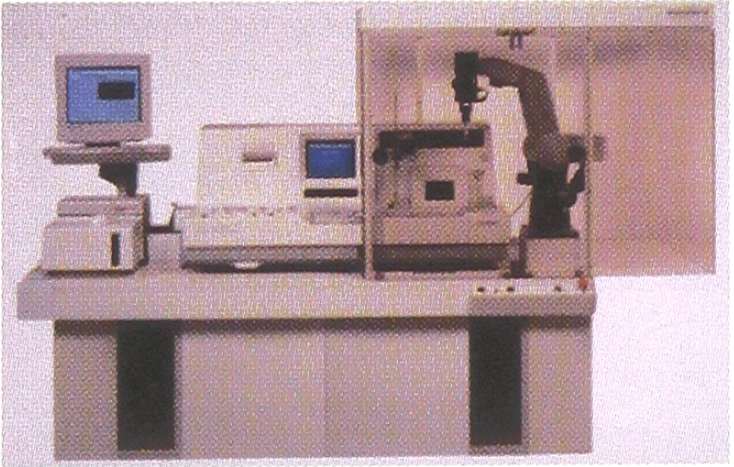
The new ELECTRA 1600AT system from Hemoliance (Pleasantville, NY) features a robotic hardware interface which “picks and places” samples from a laboratory automation track. The instrument menu supports all routine hemostasis assays. Automating these high-volume tests will enable laboratories to realize gains in efficiency and productivity promised by laboratory automation The new system is available immediately.
The system was designed in order to increase productivity while lowering costs. As a result of this system, hemostasis tests can be centrally combined, with STAT and routine tests on the same system. The ELECTRA 1600AT was also designed with numerous types of laboratory automation track interfaces in mind. The ELECTRA 1600AT system is currently being installed at customer sites. Two will be integrating the instrument with Coulter automation track. The third will hook the ELECTRA 1600AT into a LAB-Frame™ automation system from LAB-InterLink.
Note: Hemoliance is a trademark of Medical Laboratory Automation (MLA) and Ortho Diagnostic Systems. ELECTRA 1600AT is a trademark of MLA. LAB-Frame is registered trademark of LAB-InterLink.
Closed Tube Sampling Systems Released by Hemoliance
A new closed tube sampling (CTS) instrument from Hemoliance™ is attempting to raise the standards for operator safety and turnaround in coagulation testing.
The ELECTRA 1800C™ coagulation analyzer features a proprietary two-step “pierce and probe” technology for sampling through the stoppers of primary collection tubes. Closed tube sampling reduces the need for manual handling of coagulation samples, thus reducing reduces potential exposure to biohazards.
The ELECTRA 1800C is a coagulation testing system capable of analyzing both clotting and chromogenic assays simultaneously. Its menu supports routine and specialized hemostasis tests. The instrument holds up to 100 patient primary collection tubes, with or without caps.
In the ELECTRA 1800C, a dedicated piercer first puts a hole in the stopper so that the probe can enter the tube without disturbing the sample. An inert silicone oil is applied as a lubricant to the piercer and probe. The lubrication also protects the piercer and probe mechanisms, extending their lifetimes.
In addition, a vacuuming function during the piercing cycle removes debris and potential contaminates from the underside of the stopper to protect sample integrity. The probe is also vented, supporting correlation between closed and open tube samples. The piercer is sheathed, and the entire sampling mechanism is enclosed in shields to protect technologists during system operation.
NOTE: Hemoliance is a trademark of Medical Laboratory Automation (MLA) and Ortho Diagnostic Systems. ELECTRA 1800C is a trademark of MLA.
Cartesion Technologies Don Rose Receives Hewlett-Packard Award at LabAutomation '97
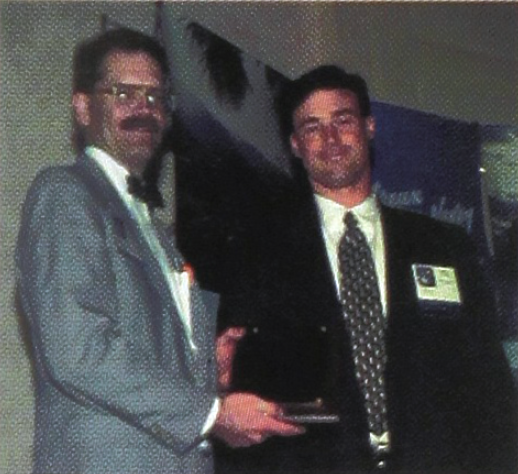
At the LabAutomation '97 conference, held in January 1997 in San Diego, CA, the ALA recognized Don Rose, Ph.D., with the Hewlett-Packard Award. This award is given annually for outstanding research in integrated analytical systems. Dr. Rose is currently Director of Product Development at Cartesian Technologies. He joined Cartesian from Glaxo Wellcome Pharmaceuticals, where he was a Research Investigator in the Diversity Sciences Department headed by Mario Geysen. During his five years at GW, he developed and promoted a number of technologies in bioanalytical and combinatorial chemistry, most notably the use of inkjet dispensing for high throughput combinatorial chemistry (see LAN Vol 2 No 4, September 1997). Prior to GW, Dr. Rose worked as a member of the Technical Staff at Hewlett Packard Laboratories, where he worked on various aspects of capillary electrophoresis instrumentation. Dr. Rose received his Ph.D. in Analytical Chemistry from the University of North Carolina. He has published 8 papers, 2 book chapters, and holds three US patents.
Hewlett-Packard Company designs, manufactures and services electronic products and systems for measurement, computing and communication used by people in industry, business, engineering, science, medicine and education. The company's more than 25,000 products include computers and peripheral products, electronic test and measurement instruments and systems, networking products, medical electronic equipment, instruments and systems for chemical analysis, handheld calculators and electronic components.
Users Test New Immunodiagnostic System
Customers evaluating the Johnson & Johnson Clinical Diagnostics (J&JCD) (Rochester, NY) Vitros™ ECi immunodiagnostic system (first noted in LAN Vol 2 Number 3, July 1997) reported satisfaction with the operation and effectiveness of the instrument. The Vitros ECi system is an Enhanced Chemiluminescence immunoassay diagnostics system featuring random access and continuous process operation. The system's launch menu, organized around disease states, includes six thyroid and six fertility assays. Future tests planned for the system include CKMB-Mass, testosterone and the Osteomark® test for NTx, which measures bone resorption.
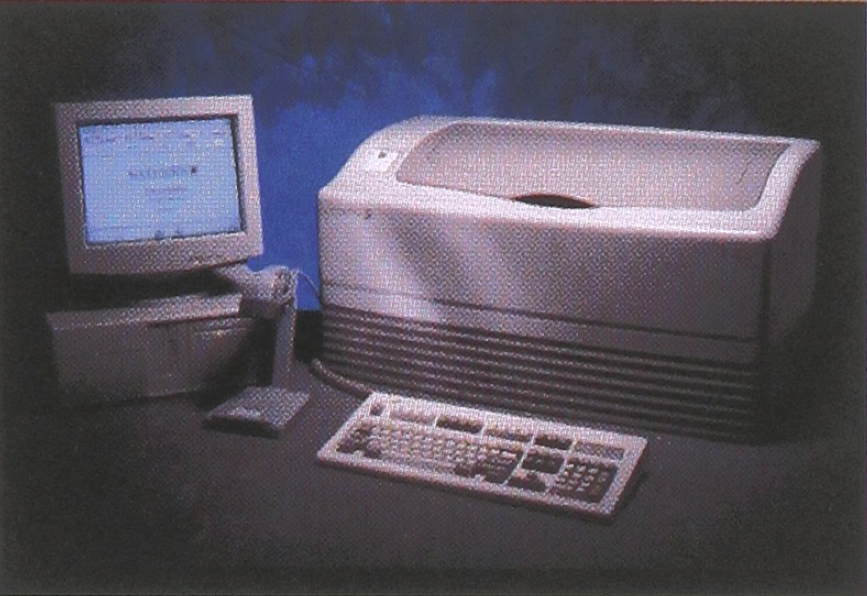
System evaluations have been underway in the United States for approximately six weeks and began in Canada three months ago.
St. Christopher's Hospital

At St. Christopher's Hospital for Children in Philadelphia, Barbara M. Goldsmith, Ph.D., director of clinical chemistry, reported positive feedback. “The system is very easy to use. In addition, we like the small sample size, which is so important in pediatrics. Clot and bubble detection is also extremely valuable, because we often have just one very small sample per patient,” she said. Goldsmith also noted that maintenance of the system is highly automated. “The instrument provides constant updates on the status of the reagents and tells operators when they need to calibrate. Its liquid and solid waste systems also notify operators when the containers are full.”
The Credit Valley Hospital
In Canada, Suba Krishnan, technical supervisor, The Credit Valley Hospital, Mississauga, has used a Vitros ECi immunodiagnostic system since June. “The precision of the instrument looks good for the assays we have evaluated,” she said. Krishnan also remarked on the system's use and reliability. “Our primary operator was able to train a second operator in just a few hours. And since installing the system we have had virtually no downtime.”
Krishnan also remarked on the future potential the Credit Valley Hospital hopes to see from the ECi system. “The ECi system provides an automated platform for immunoassay testing that could improve productivity and efficiency.”
Hershey Medical Center
The Milton S. Hershey Medical Center in Hershey, Penn., began its evaluation of the ECi immunodiagnostic system in mid-August. “We have two Vitros 950 clinical chemistry systems,” said Dr. Larry Demers, the center's director of clinical chemistry and professor of pathology and medicine. Demers was initially concerned with the time technologists would spend getting acquainted with the new instrument and software. “Every time you get a new analyzer that has a different software package you create problems,” he said. “It's not so much in the day shift when you have experienced people and a lot of backup. It's that 3 a.m. test result, where additional help is not readily available.” He added that instruments that are easy to use and require minimal operator involvement greatly reduce training costs, which can add up quickly.

“By adding the ECi instrument, we can handle more than 100 tests with a single workstation concept.”
The use of disposable tips was also an issue for Demers. “Carryover can be a considerable issue, particularly in immunodiagnostics where many analytes, like tumor markers, may be present in very low concentrations,” he noted. The Vitros ECi immunodiagnostic system has an on-board capacity of 2,000 tests. Up to 60 primary samples can be loaded at any time. System features include built-in inventory management, universal sample trays, universal bar code reader, disposable tips, sample tip metering and clot detection, ready-to-use reagent packs, and on-board refrigeration.
Assays now available on the system include thyroid Stimulating Hormone (TSH) with third generation sensitivity; free T4 (FT4); free T3 (FT3); thyroxine (TT4); triiodothyronine (TT3); total T3 uptake (T3U); estradiol (E2); luteinizing hormone (LH); follicle stimulating hormone (FSH); human chorionic gonadotropin (hCG); prolactin (Prl); and progesterone (Prog). The functional sensitivity of its TSH assay is 0.015 mIU/L. (Functional sensitivity is the concentration of an analyte at which the precision coefficient variable is 20 percent.)

Future test addition plans include cardiology, oncology, infectious disease, anemia, blood viruses, metabolism and bone health.
Note: Vitros is a trademark of Johnson & Johnson Clinical Diagnostics. Osteomark is a trademark of Ostex International Inc.
Accord for Microsoft Access97
Synopsys Scientific Systems Ltd. (Leeds, United Kingdom) recently released a 32-bit, Microsoft Access97 compatible version of Accord for Access, its desktop chemical/relational database system. This new version provides compatibility with the latest Microsoft Office release, allowing users to take advantage of new features in Access97, including the ability to publish chemical databases over the Internet or corporate intranet.
Accord for Access97 provides support for storing and searching chemical structure and reaction information directly within an industry-standard SQL framework. With Accord for Access97, databases of chemical structures or reactions can be searched by substructure on a standard desktop PC. Microsoft's development tools can be used throughout for developing display forms, reports, macros, etc. The Accord OLE Chemistry Control can be dragged-and-dropped onto a form or report to provide depiction of chemical moieties. In addition, a range of Access Basic functions allow power users to develop more applications and automate common tasks.

Using Accord for Access97, chemical moieties and associated data can be imported and exported to and from relational tables in a number of standard formats, including SD, RD and SMD. Hierarchical data can be mapped to a series of relational tables in Access97 for import and export to and from other databases. Users can perform exact, substructure or similarity searches in conjunction with other SQL terms, then transfer data sets of interest to Accord for Excel for spreadsheet analysis.
Accord for Access97 is compatible with Microsoft Access97 running on Windows95 or NT; Access95 and 16-bit, Access 2.0 compatible versions are also available. Accord for Access97 chemical databases can be searched via the Web using the Accord WebDriver. Standard chemical editors, such as ChemDrawa, ChemWindowa and ISISa/Draw, can be used to enter and modify structures, reactions and queries. Accord for Access97 is fully compatible with other products in the Accord Desktop range, including Accord for Excel, Accord Visual Objects and the Accord SDK.
Rosys Anthos Introduces Plato 7
The Plato 7 from Rosys Anthos (Hombrechtikon, Switzerland) is the latest product in their line of Robotic Microplate Processors. The Plato 7 offers a modular approach: the basic model integrates sample processing and the robotic handling of plates, and depending on their application, users can then select the specific functional modules required.
“Customising” options include incubator towers, shakers, plate washers, plate readers, a turntable, and stirrers. The Plato 7 operates under Windows 95 and Windows NT. Two different base sizes are available to accommodate up to 500 samples; the robotic carrier can handle any combination of microplate/tube formats and can have 4 or 8 washable or disposable tips. An optional “Magic eye”® video surveillance system monitors the workstation as an added safety precaution.

Rosys and Anthos Labtec form Joint Partnership
Rosys AG (Hombrechtikon, Switzerland) and Anthos Labtec (Salzburg, Austria) have formed a joint sales organization, Rosys Anthos. Products handled by the new organization will be targeted at automation, liquid handling, and analytical instrument markets. The first joint product, the “AutoLucy,” is already available. The “AutoLucy” is a fully automated robotic microplate processor, with integrated analyzers for both photometric and luminometric analyses. Rosys Anthos headquarters are in Hombrechtikon, Switzerland, with the sales office in Salzburg, Austria. Heinz Abplanalp is the President, Peter Fritz is the Sales Director, and Clare Dench is the marketing director.
Pneumatic Tube System Uses Windows-based Software
PEVO PT7000, designed for transport of hospital specimens and pharmaceuticals by PEVCO Systems International (Baltimore, MD), has become the first pneumatic tube system to use Microsoft Windows NT. On-screen task queue, device display, system configuration and activity windows allow system engineers to use the point-and-click method to monitor and operate system activities, including the status of blowers and diverters, and the location of carriers as they move through the system. Peripheral equipment (printers, barcoders, robotics, etc.) can be connected to the station interfaces.
LabVANTAGE Solutions™ and Justice Laboratory Software Agreement
LabVANTAGE Solutions™ (LVS; Seacaucus, NJ) has entered into an agreement with Justice Laboratory Software, Inc. (JLS; Pale Alto, CA) to market its chromatography data system as LabMAESTRO® Chrom Perfect™. This is a family of chromatography products which JLS originally introduced in 1989.