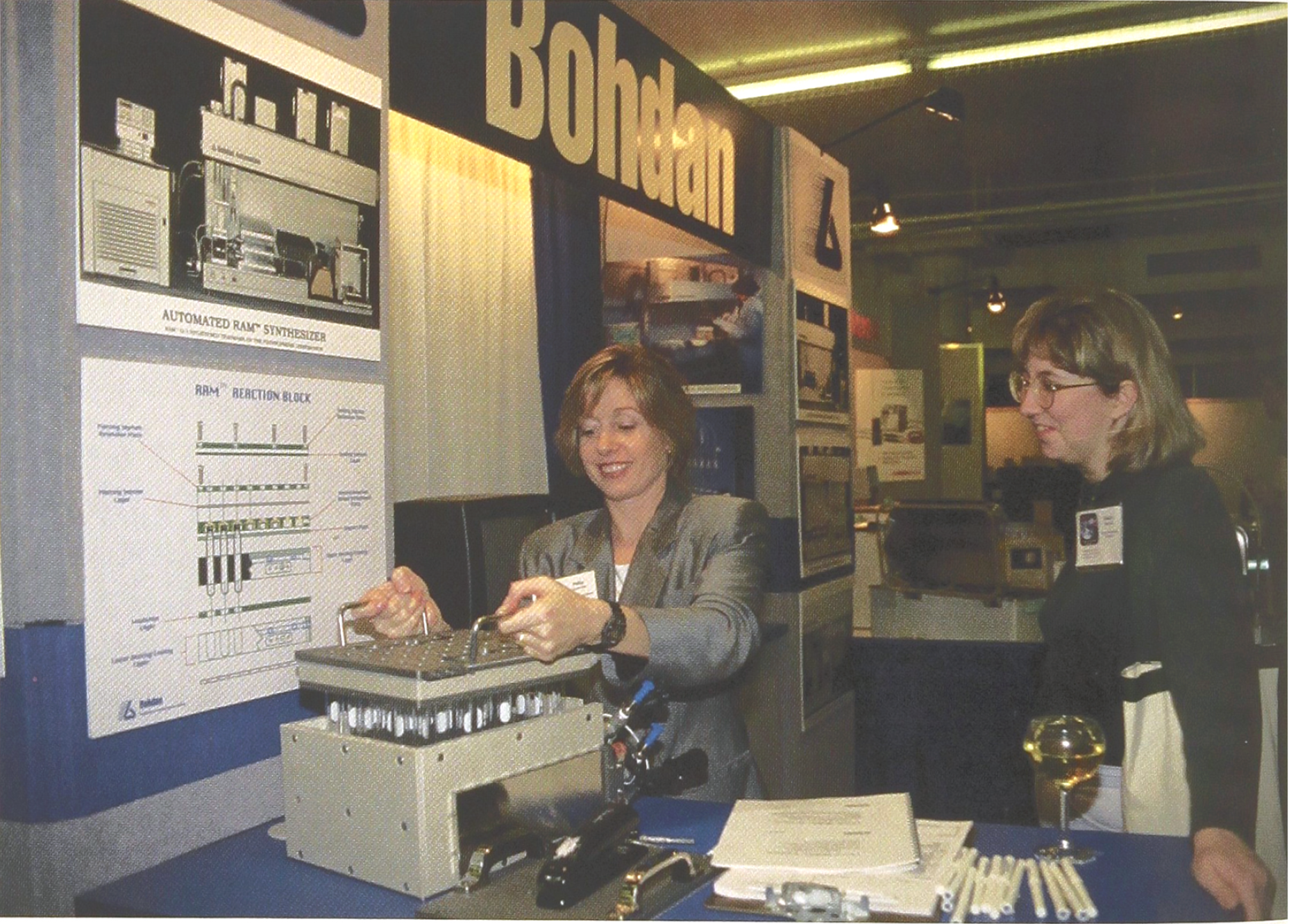
Lab Automation, the World's Premier Laboratory Automation and Robotics Meeting, was held this past January 17–21 at the Sheraton San Diego Hotel and Marina in San Diego, CA. This review is a summary of the activities and highlights of the meeting.
LabAutomation, now in its third year, is the premier meeting for exploring breaking developments in the expanding world of laboratory automation. Routine laboratory tests previously performed manually are being converted to fully automated procedures. However, there are many challenges in the interface between chemistry, biochemistry and mechanics. At LabAutomation leading scientists, vendors, and end users meet and develop collaborations related to laboratory robotics and automation.
The conference opened with a lecture from the winner of the annual Beckman Award, Joseph Engelberger, who is considered the father of modern industrial robotics. Mr. Engelberger summarized dramatic technologies that promise to make a significant impact on our future. He emphasized that robotics can and will become useful in our everyday life. For example, robots now fill drug prescriptions. Autoscript can fill over 2700 prescriptions per 8-hour shift without error or fatigue. Aoesop, a robotic surgical assistant, helps with the performance of laporoscopic surgery. Hip joints are being replaced by robots using machine precision at the University of California, Davis. If futuristic robots can postpone the transition of the elderly to nursing homes by one month they will save over 3 billion dollars annually. Home assistant robots are able to fetch and carry, prepare simple meals, clean house, monitor vital signs, assist with ambulation, and manage the environment (heat, air-conditioning, etc.). In his inspiring presentation, Mr. Engelberger explained that robots are capable of complex, human-like tasks whose only limit is our human imagination.
Financial opportunities in the robotics field were discussed by our plenary speaker, Skip Klein (Investment Manager, T. Rowe Price Health Sciences Fund, Baltimore, MD). T. Rowe Price Corporation manages over 100 billion dollars in assets, and has recently targeted the health care market for investment because of the growth potential of automation, process improvement, and high technologies. Automation technologies can improve the development of new drugs, physician patient interaction, and virtually all support services for health care delivery. Mr. Klein cited recent events in the news that signal investment opportunities, such as Columbia HCA's purchase of Blue Cross, Blue Shield of Ohio and Amgen's licensing of rights to the new obesity protein from Rockefeller Institute. Health care constitutes 14% of the USA's Gross Domestic Product and experiences an 8% growth per year.
Mr. Klein developed the premise that the patient should drive the health care system. Patients now choose health care without knowing enough about the economics of the system. There are 650,000 physicians; 2,000,000 nurses; and 165,000 pharmacists in the USA with virtually carte blanche ability to choose treatment options for patients. Americans are medically undereducated and are given price insensitive health credit cards by corporate America. The patient ought to be the real owner and driver of the US health care market. Current trends are shifting power from the physician to the market. Ultimately, the patient should be at the top of the power pyramid. Physicians will begin to band together to try and maintain their control of the health care dollar. Automation and robotics will come to the rescue of the health care system by lowering costs while not significantly altering the current practice of medicine.
Mr. Klein offered some insights of potential growth areas from an investors perspective. The principal growth areas will be diagnostic molecular biology, combinatorial chemistry, biosensors, microelectronics and materials science applied to medicine. He believed that the automated PAP smear technology was particularly promising but sited possible resistance from cytotechnologists as a challenge.
Al Kolb discussed the implications of miniaturization of analytical techniques on high throughput screening. Miniaturization will affect the dispensing of reagents, the size of the reaction vessel, spur the development of parallel instead of sequential detection systems, and change the assay design. Two new products are aimed at the small format high throughput screening process. Amersham has developed the scintillation proximity assay and DuPont NEN the flash plate to assist with the miniaturization of HTS. Similarly, there is also a luminescent plate system available for microplates. As laboratories miniaturize, there will be a need to retool. An increase in density from the 96 well plate to the 384 well plate will not necessitate the repurchase of automated pipetting stations. However, the future direction of using the 864 well and nanoplates will require high precision robotics. Assays consisting of total volumes of 1–10 nL will require specialized pipettes, such as the piezoelectric system offered by Packard Instruments. Challenges include signal strength, target concentrations, and evaporation.
Sheila Dewitt described the current market conditions that require the synthesis and screening of 10,000 compounds over a period of 3 years with a cost of over $350,000,000 to bring a new drug to market. High Throughput Screening could cost $500,000 per month and would help alleviate the backlogs 100,000 to 1,000,000 compounds in libraries that drug companies have waiting for screening. Merrifield laid the foundation for combinatorial chemistry in 1963. Since then the field has experienced explosive growth. One technology that had major impact on combinatorial chemistry was compound tagging, which effectively codes each compound for later retrieval. New drug leads have increased dramatically at pharmaceutical companies that have employed combinatorial techniques such as the use of random libraries, solid phase synthesis, and robotic automation of liquid delivery.
In the future much of combinatorial research will take place on silicone and glass microchips. Some leading companies to watch are Arqule (which focuses on aminimides), DTI/Park Davis (which focuses on Quinolones, and Houghten) which specializes in Quinazolines. Advanced Chemtec has the highest capacity combinatorial chemistry system available. The growth rate of combinatorial chemistry companies has been dramatic. Last year Arqules growth was 63%.
Mark Goldman defined approaches to lead identification used by pharmaceutical companies. For example, one can modify a known drug or an endogenous compound, engage in rational drug design using new computer tools, and screen synthetic or natural product extracts. Most large pharmaceutical companies are engaged in all of these activities to increase their odds of developing profitable leads. Mr. Goldman compared some of the automation strategies of clinical laboratories to those used by pharmaceutical laboratories. For example, clinical laboratories prioritize medical specimens into either routine analysis or STAT (those requiring rapid turnaround time). High throughput screening also has routine specimens and those whose priority is higher due to market pressures. In either case, the major challenge of automation teams is to reduce the queues in the process steps by adopting faster, more efficient automation strategies. Mr. Goldman went on to explain that electronic data storage and retrieval has had the most impact on the HTS process. Recent developments in screening methods such as cell based assays are giving the biochemist more options in drug discovery. Automation of biochemical assays as well as cell based assays will cover the spectrum of cell physiologic based drug discovery as well as biochemical leads on mechanism, site of action, affinity, and structure activity information. He described luciferase genes tied to specific promoters as a method to find drugs that turn on specific genes. Finally, he detailed the Zymate system that is used to test 15,000 unattended assays per week (except to replenish disposables). He looks forward to the day when many of the HTS assays are completed on microchips such as those being created by Caliper Technologies.
Ron Hendrickson spoke on the function of mass spectrometers using diagrams to describe the power of this sophisticated technology to screen for novel compounds. There have been some recent ground-breaking advances in ionization techniques coupled with improved instrument design that allows the generation of molecular weights over a wide dynamic range in only milliseconds. The principal advantage of mass spectrometry over other techniques is that it obviates the need to purify the compound prior to analysis. When coupled to high performance liquid chromatography, mass spectrometry becomes an extremely powerful technique.
An overview of state-of-the-art of clinical laboratory automation was presented by the Becton Dickinson award winner, Rod Markin. Mr. Markin presented a list of sites that have invested in laboratory automation. He also listed instruments that can be currently attached to specimen processing automation. Mr. Markin has created a company called Lab-Interlink, which specializes in hardware and software designed to automate clinical laboratories. Lab-Interlink is one of two companies in North America that specialize in process control software. Mr. Markin described the software infrastructure that supports laboratory automation workcells and full laboratory automation systems. He announced Lab-Interlink's alliance with the Coulter/IDS hardware and the Johnson & Johnson Diagnostics Vitros chemistry analyzers to create a chemistry workcell with a single LIS interface. Mr. Markin was awarded the Becton Dickinson award as a result of his and Lab-Interlink pioneering efforts in laboratory automation.
David O'Bryan (SmithKline Beecham Laboratories, Collegeville, PA) gave a presentation on laboratory automation from the clinical reference laboratory perspective. After nearly a decade of creating automation for the SKB laboratories, he has come to the conclusion that there is a large market for modular automation instead of total laboratory automation. Dr. O'Bryan showed videotape which described the details of the hardware which was chosen to automate their laboratory which analyzes over 10,000 tubes per evening. He suggested that only 10% of the market will buy total laboratory automation hardware, while 45% of the market will buy modular hardware which will can be linked together to form more complex and complete systems. Dr. O'Bryan received the Boehringer Mannheim award for his pioneering leadership in directing his group to create the first sophisticated automated clinical laboratory system outside Japan.
Georg Hoffmann (Trillium GmbH, Grafrath, Germany) explained how personal computers are being used to simplify the complex process of workflow analysis using computer based simulation modeling. He demonstrated a simulation tool called Simlab, which was produced by Boehringer Mannheim GmbH. Visual Basic was used by Peter Slapansky to create a user-friendly front end to facilitate data entry. Data on laboratory workflow, labor, and instruments were put into the model which could be used to choose automation hardware which best suited the laboratory site under investigation. The model was seeded with data from The University of Virginia and yielded results that justified a 3 FTE (Full time employee) reduction following the introduction of a Coulter/IDS pre-analytical processor. Three days were needed to enter data, and 6–9 days of labor to reduce the data to useable form. Mr. Hoffmann indicated that Trillium would act as a center for simulation studies for laboratories that needed this service.
Karl Frostrop presented a case history about his laboratories consolidation and their plans to consider automation to provide a consistent and reliable specimen handling capabilities. They used Automed (Richmond, British Columbia) equipment to provide automated specimen handling. The Automed system carries specimens in individual carriers that can be linked together by snapping into linear or two-dimensional matrices as the needs of the laboratory dictate. An Allen-Bradley Pyramid Controller (Allen-Bradley Inc., Milwaukee, WI) controlled their system. He suggested that the automation system be fully tested at the factory by the engineer who would be responsible for installation prior to shipment to the clinical laboratory. He elaborated on this theme by suggesting that a checklist of requested features, including routing routines, be agreed upon by both parties. Actual specimens should be tested at the factory since full specimens will have an effect on carrier center of gravity and hence affect transportation performance. Testing and validation through a controlled set of rules and protocols will also avoid installation and performance pitfalls such as the inability of the automation to achieve performance goals when challenged with the maximum number of specimens or the ability to read less than ideal barcodes.
Geof Auchinleck and Chris Bailey gave an overview of their approach to planning for automation. Ms. Bailey suggested that her team created goals that sought team acceptance of how the automation was to be integrated, the facility was to be modified, how workstations were to be organized, and how data was to be handled through acquisition and reporting. She described how routine chemistry and information handling are the areas that would benefit most from advanced automation. She ended her discussion by cautioning that one should only implement automation that would have a 3–5 year return on investment.
Geof Auchinleck provided the second half of this podium presentation by detailing the performance features of the Automed family of automation instruments. He described the Autoquot, Autofuge, and Autosort, which serialize the aliquotting, centrifugation, and sorting processes, and provides one of the highest throughputs in the industry for this class of automated device.
Barb Connell represented a laboratory that was in the process of consolidating 12 facilities that would feed their specimens into a central automated laboratory performing over one million tests/yr. The move towards automation was fueled by the loss of 2 FTEs coupled with a 10% increase in workload and requests for faster turnaround. Barb automated her hematology section using the Sysmex SE alpha workstation. Following the installation of automation there was a 25–40% reduction in review rate, a 30 minute reduction in turnaround time and 95% of specimens were reported in less than 1 hour. They also incorporated the use of the SP-100 slide maker and stainer. This presentation was one of the few examples of successfully implemented automation with complete cost justification.
Dennis Lamb (South Bend, Indiana) has created the first laboratory in the Western hemisphere to use the Boehringer Mannheim/Hitachi CLAS TLA system. They started their installation on October 21, 1996; their efforts were validated on November 18th when the laboratory was opened for routine use on December 21st for 8–12 hours per day. The consolidation of specimens from 3 hospitals prompted his move toward laboratory automation. His site also included the Sysmex hematology system. They experienced some software challenges that were due to inadequate understanding of exactly how the software worked. As a result, they have initiated a major retraining program so that more technologists were familiar with the system. A significant amount of time was spent “tweaking” the time-outs. Before they implemented the automated system, they were proactive in removing most of the fixed furniture and replaced it with portable furniture that could be moved quickly.
Arthur Glenz represented ACM Laboratories (Rochester, NY) that services 500 private physicians in the New York area. Samples from 4 rapid response hospitals feed their consolidated laboratory, yet their goal was to retain 75% of the testing at each location. They also service 40 nursing homes with phlebotomy and transportation as well as 25 collection centers. Mr. Glenz believed that LIS played a most important role in their automation project. He suggested that LIS negotiations should be started as early in the automation process as possible. His laboratory decided to implement the Coulter/IDS system because of a wide variety of successful installations across North America. Mr. Glenz had an interesting story to tell about the first LAS that was completely destroyed by a flood as a result of a broken pipe.
Kirk Kimler (Abbott Laboratories, Abbott Park, IL) represented Abbott Laboratories plans for automation. Abbott, he said, had to answer three questions for themselves, before they could chart a corporate path into the automation field. First they had to decide on their goals, what options were available, and who to partner with. Customers should demand instrument vendors provide adequate interfaces to the LAS. Finally, Mr. Kimler described that the workcell concept (instrument clusters operating through a common interface) would be their chosen pathway.
David Beckwith, Ph.D., (Health Network Laboratories) suggested that automation will only be viable in todays market if it adds value to the analytical test. Through automation value can be added by reducing duplication, reducing turnaround time, and assisting with the task of turning data into information. He also suggested that laboratories that do not increase the speed and quality of the analytical result would not be able to sustain their profitability. He developed a comprehensive Request for Proposal, which defined many features that should be considered for automation. Dr. Beckwith started with risk assessment, defined the importance of the eagerness of all parties to participate, defining a firm price, encouraged a long term contractual relationship with the vendor, a risk-sharing initiative for research and development. He also suggested that inventory should be held by the vendor which could be delivered and paid for as needed.
Alain Truchaud (Institute de Biologie, Nantes, France), described how laboratory automation has evolved from its manually operated past. He suggested that laboratory automation differs from industrial automation because the laboratory represents a disassembly process. Samples are first expanded at the analytical site and then simplified for storage and retrieval. Mr. Truchaud and his group have made quality control one of their primary objectives and have addressed typical quality control issues such as limiting carryover, and positive specimen identification.
Sue Steven (SmithKline Beecham Laboratories, King of Prussia, PA) is part of David O'Bryan's team that won the Boehringer Mannheim Award for the most novel use of robotics in the clinical laboratory. Ms. Steven provided a detailed description of their automated laboratory in Norristown, Pennsylvania. She showed one of the earliest industrial robots which was developed in part by her father. The SK&B laboratory implemented an automation system developed in house from a variety of retooled commercially available components. For example, they used the linear robot offered by Megamation to provide aliquotting and specimen pick and place operations at a rate of 25 inches per second with 0.25 inch stopping distance with only a 10 lb. force for safety. The Megamation robots cost approximately $80K — $125K depending on the tooling. At SK&B they were interested in 2000 meantime between failures which is a robotic industry standard. An additional attractive feature is the “heads” of the robot had a NEMA a 4 rating for moisture and a maximum 4 hour repair time. Their robotics team created a series of devices including a sorter, loader, and unloader. The sorters could handle 100,000 specimens per night with a two-year return on investment.
Mark Cederdahl (Lab-Interlink, Omaha, NE) represented an automation company with 40 employees which focus on process control software, a specimen conveyance system, provided a comprehensive overview of the operational details of their products. Mr. Cederdahl shared the podium with Beth Rokus who has completed the first Lab-Interlink installation at the Lehigh Valley Hospital. Ms. Rokus has extensive expertise in project management, which she shared with the registrants. She gave us sound advice about the features of successful projects with sound beginnings and endings with clearly defined scope. She cautioned the registrants about the dangers of redefining the scope in the middle of the project. Their site serves as a model of the successful implementation of modular automation and the integration of software and hardware systems.
Alain Laugier (Technidata, Grenoble, France) represents a company that has developed a Laboratory Information System that is capable of running the automated laboratory. Technidata has engineered a dashboard concept to manage laboratory data. Hypertext type navigation is used to link with detailed information on subjects presented in iconic form on the principal dashboard. The host provides protocols for data and device management. They have a workcell manager for maintenance record-keeping, database statistics, an instrument manager and sample conveyor manager. The system had extensive trouble shooting aids and icons which can access accuracy, turnaround time, accessibility, production costs, and error indicators. Color saturation of the icons is linked directly to the seriousness of the problem. The most impressive features of the system were the described status alerts with automatic diagnostics.
Michael Quinlan (Labotix, Peterborough, Ontario, Canada), viewed automation as applied to specimen analysis. Automation of manual operations has been less developed and has an uncertain future. He believes that the industry is in the data-gathering phase. Labotix has played a role in automating the MDS Health Group Ltd. Reference Laboratory in Toronto, Canada, as well as the SK&B laboratory and Metro-McNair Laboratory in Vancouver, British Columbia. He stressed that Labotix is not just a conveyor company but a full service group of professional engineers with extensive clinical laboratory experience.
The advanced technology session is an annual favorite of the LabAutomation registrants because the session features a glimpse into the future. M. Doktycz (Oakridge National Laboratory, Oak Ridge, TN) described sequencing through the use of hybridization of DNA oligomers to an array of many possible DNA sequences on a silicone chip. Microchip hybridization technology will soon prove useful for the detection of minute quantities of bacteria and DNA mutations that lead to human disease. In situ synthesis of DNA arrays is a technique used by Affimetrix since it has the potential of yielding vast arrays of DNA oligomers for mass production. They also used a Hamilton 2200 robot that gave 250um precision to give 100–400 DNA probes/sq cm. The placement of high-density probes without collision to yield drops that were absolutely distinct requires a binding substrate with dimples. The dimples prevent drop spreading that occurs on flat glass or silicone plates. The dimples were also found to act as light pipes that would reduce the cost significantly. X also explained in detail some of the chemistry involved in attaching probes to glass surfaces (for example base pairing, unpaired and dangling ends and use of secondary structures.
John Vogel (Lawrence Livermore National Laboratory, Livermore, CA) presented a novel mass spectrometer which involves the measurement of naturally occurring or low level radioisotope concentrations at attomolar sensitivities with zeptomolar precision. Although not quite portable (accelerator mass spectrometers take up a large sized room), Dr. Vogel expects this technology to become refrigerator sized within the next decade. The principle advantages of accelerator mass spectrometry is to take advantage of the power of measuring radioisotopes in biochemical reactions without perturbing the process, while obviating the radioactive waste disposal and toxicity issues.
Laboratory automation can take place in locations quite distinct from the standard laboratory bench. Often it is necessary to perform scientific experiments in hazardous environments.
R.C. Glatts (Scripps Institute of Oceanography, University of California, San Diego, CA) presented the details involved with engineering an autonomous, bottom transecting vehicle for making long time-series measurements of oxygen consumption in ocean sediments at 6000 meters in depth. The ocean ROVER resembles a fork lift with a forward mounted instrument assembly, a current meter to constantly orient the ROVER upstream (to assure measurement of undisturbed sediment), a double tread tank-like propulsion system, and the necessary electronic control subassembly. The ROVER was capable of operating autonomously for periods of up to 6 months.
The ultimate goal of unimolecular measurements using fluorescent tags has now been achieved. James Jett (Los Alamos National Laboratory, Los Alamos, NM) summarized the recent advances in fluorescent detection in both flowing and static systems. In flow cytometry, fluorescent particles are measured in a stream with a large dynamic range or over 9 orders of magnitude. The flowing steam can be analyzed at a rate of over 20,000 measurements per second and effectively used to sort microspheres at 4.5 kHZ (about 450 spheres/second). At Los Alamos, L. Sklar and J. Nolan have enhanced this technique by allowing 300-microsecond mixing for continuous flow kinetics.
Dr. Marziali (Stanford DNA, Sequencing and Technology Center, Stanford CA) discussed the development of an automated modular system for DNA sequencing at the rate of ten thousand samples per day (about one million bases of assembled sequence). The estimated cost was approximately $0.01 per assembled base. The system is composed of a plaque/colony picker, an incubator shaker, a template preparation robot, a thermal cycler, and a capillary electrophoresis device. The performance and design issues of the operational components were also discussed.
Colin McRavey (Bristol-Myers Squibb Pharmaceutical Research, Wallingford, CT), discussed the realization of the potential of high-throughput screening (HTS), and eventually ultra-high-throughput screening (UHTS). He stressed the importance of advancements in assay methodology, reagent/consumable cost reductions and faster, higher capacity automated systems. In addition, he discussed Bristol-Myers Squibbs challenge to design, develop and implement a new automated system capable of performing a wide variety of homogenous and non-homogenous assays in a high-throughput mode. The system was comprised of a stationary XP robot on a 9′ track, a reagent addition station (RAS/RAM), a plate washing/filtration unit, two microplate storage carousels (one of which is temperature controlled), a Hamilton MPH2200 liquid handling unit, a custom TOMTEC reagent cooling station, Packard's Discovery Homogenous Time Resolved Fluorescence (HTRF) plate reader, and a customized microplate shaker.
Sue Richards (Genetix, Ltd., Christchurch), presented the Q Bot multi-tasking robot, optimized for large-scale genome based library screening applications. The device performs colony picking, gridding, re-arraying, and replicating at increased speed, control, and reliability. Dr. Richards discussed the robot specifications and limitations: 1 mm accuracy on the x and y axes, 10 mm accuracy on the z axis, picking speeds in the range of 4000 colonies per hour, enabling a library of 200,000 clones to be picked in two weeks. The gridding rate is approximately 100,000 samples per hour, enabling a complete library of 200,000 clones to be gridded out in just a few hours. The current re-arraying rate is approximately 1000 clones per hour.
Doug Gurevitch (Sequana Therapeutics, La Jolla, CA), presented the automation efforts at Sequana, which are dedicated to developing more complex systems for identifying the genes responsible for common diseases. Sequana's approach involves several distinct stages: DNA collection; genetic mapping (genotyping); physical mapping; DNA sequencing and mutation analysis; and gene characterization and assay development. Projects discussed included a custom user interface for their Packard MultiPROBE robots, a work cell for pooling PCR product based on a CRS arm and a Sagian MultiPette, a work cell for sequencing reactions also based on the CRS and Sagian, Biomek integration, and other various projects.
Sarath Krishnaswamy and Chris French, (Acuity Imaging, Inc., Nashua, NH), spoke about machine vision as a mature technology in manufacturing automation. The technique is finding increased utility in the biotechnology laboratory for a number of applications such as robot guidance and process control. He presented the process of designing, calibrating, and implementing a vision-guided motion system for the MPI picker/spotter robot, a five axis gantry system capable of picking 0.5 mm colonies at speeds of approximately 3000+ colonies per hour. The system is capable of connecting to a variety of third-party robot controllers and provides a novel and simplified way to integrate machine vision and motion control for many laboratory tasks.
Marion Karasiuk, (CRS Robotics Corporation, Burlington, Ontario), presented CRS Robotics' new state-of-the-art software for integrated laboratory automation. The first element is a Windows NT-based user-interface which may provide the end-user with an easy-to-use single point of contact for all method-related programming such as specifying methods, scheduling methods, running and monitoring scheduled methods and handling errors. The second element of CRS' new lab software is the modular architecture with which systems are built and extended in a “plug and play” manner. The new modular architecture claims to provide true multi-tasking capability and is designed so that well integrated interfaces to almost any third party instrument may be created with a minimum of time and effort.
Dr. Robertson (Recombinant BioCatalysis, La Jolla, CA), addressed the advantages and increasing need in the chemical and pharmaceutical industries for efficient catalysts for the practical synthesis of optically pure materials. To increase the efficiency of biotope exploration and enzyme commercialization, RBI uses sophisticated molecular cloning techniques to access microorganisms in the Eubacterial and Archaeal domains. These organisms have been isolated from environments at the extremes of temperature, pressure, pH, ionic strength, and chemical concentration. To date RBI has constructed over 200 gene banks from Archaea as well as from other extreme environmental isolates. This process has resulted in the discovery of over 250 unique enzymes with industrial application. In this approach the activity of a chosen enzyme under specific conditions is altered through multiple rounds of mutagenesis and high throughput screening.
Next year's Lab Automation conference will be once again held at the Sheraton San Diego Hotel and Marina from January 17–21, 1998. For information, see pages 36–37 of this issue of LAN or contact our Web Site at <http://labautomation.org>.