




Abstract
Laboratory testing is a labor intensive and hazardous activity, and yet it is critical for patient care. In these days of rising healthcare costs, automation of the testing process is becoming a necessity.
Currently available laboratory automation systems have been designed for large high volume laboratories. They are expensive and do not meet the needs of mid-sized and smaller hospitals. Economic forces are driving a need for laboratory automation in these hospitals as well. To be effective we must discover and implement technologies that reduce labor, improve services, and be compatible with existing laboratory information systems, hospital testing equipment, and testing needs.
The Automated Stat Testing Laboratory (AST Lab) is an automated robotics workcell that is designed to sort and analyze most clinical blood specimens in a rapid, high quality manner to meet the needs of the smaller hospital. It consists of a gantry robot that provides sample handling, and a computerized control system that communicates with the Laboratory Information System, or LIS, as well as several existing hospital analyzers. Limited menu Hematology, Coagulation and Chemistry tests are performed and reported through the LIS automatically (Figure 1).
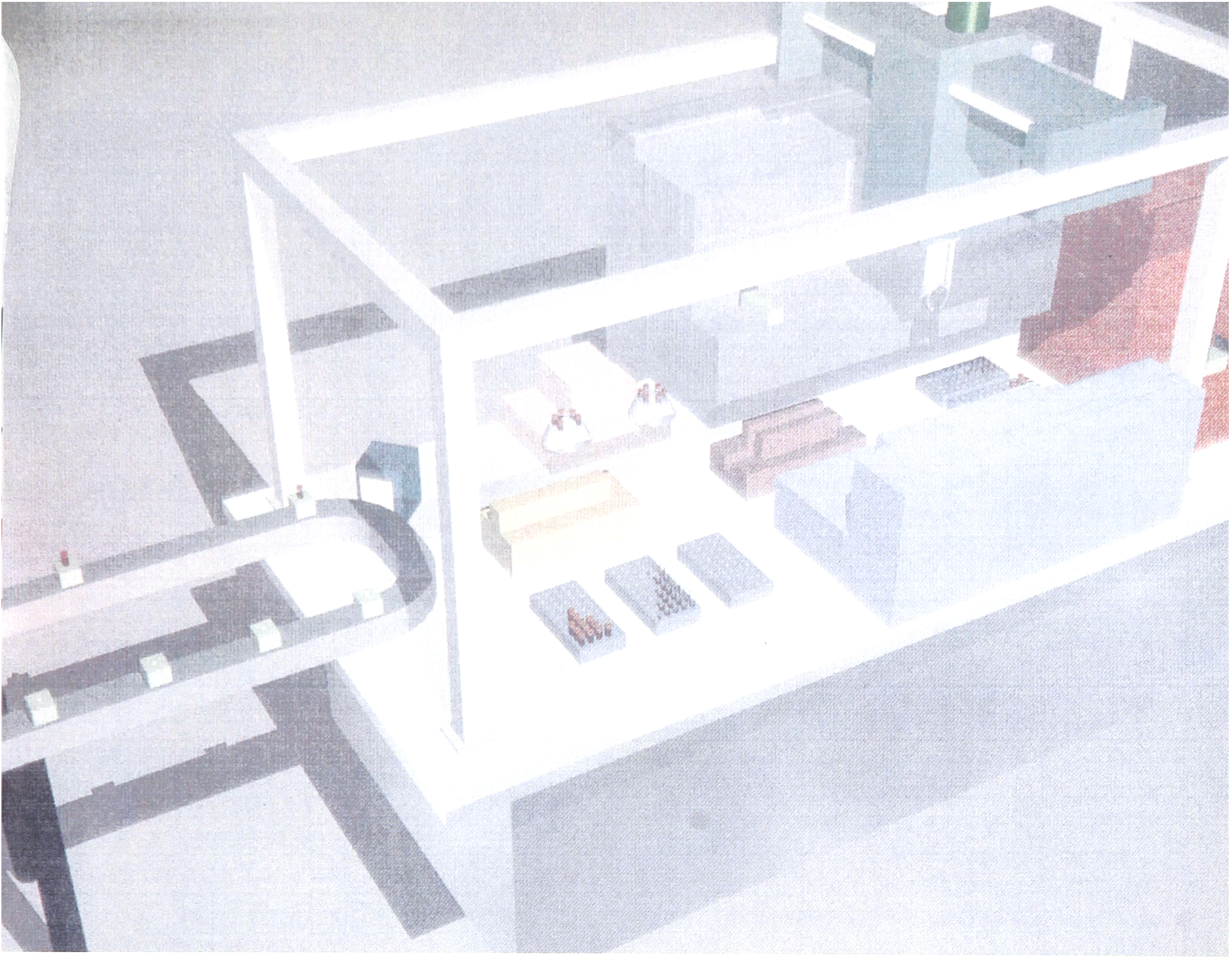
Automated Stat Testing Laboratory (AST Lab)
At the patient site, test requests are entered into the LIS, and a bar coded label is attached to the blood sample tube. The LIS informs the automated cell that a sample is in route, and the bar coded tube is placed in a carrier on the input conveyor and transported into the cell. Specimen handling and sortation is fully automatic once the sample is placed in the system.
The sample passes a bar code reader for identification to determine test requirements. The robot picks up the tube and transports it through one of three automatic operations (Figure 2).
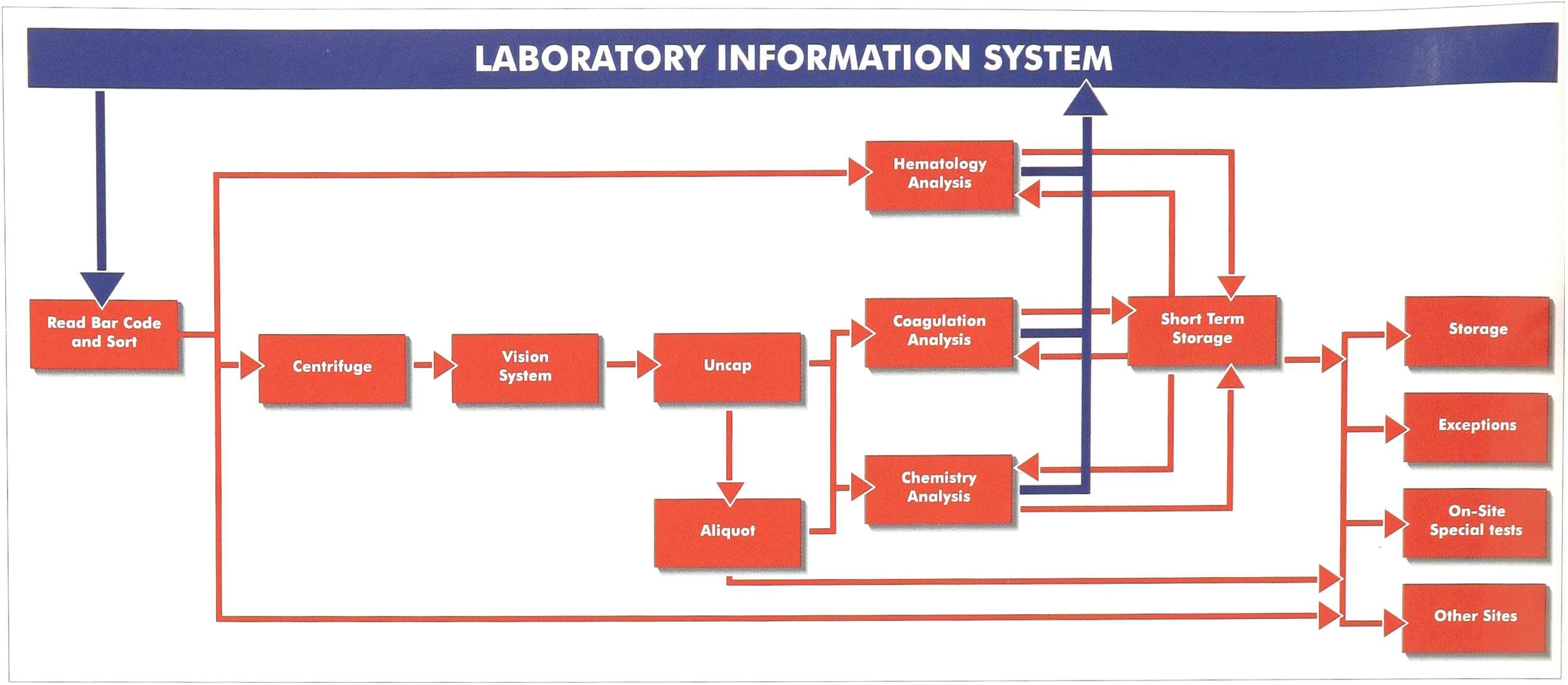
AST Lab Process Flow
Hematology samples are taken directly to the Hematology analyzer and automatically loaded by the robot. Analysis is performed, and results are reported by computer to the medical technologist for review and acceptance. The sample is placed in short term storage until the technologist releases the results, and is then moved to a rack to be taken to long term storage.
Chemistry test samples are automatically loaded into a centrifuge. After spinning, the robot transports the samples to a vision scanning station to determine the quality and volume of the sample. If the quality and volume are acceptable, the samples are moved through an uncapping device and loaded into the Chemistry analyzer. As with Hematology tests, the results are reported to the technologist for acceptance. The sample is placed in short term storage until the technologist releases the results. It is then moved to a rack to be taken to long term storage.
Coagulation test samples follow the same basic path as chemistry except they are loaded into the Coagulation analyzer for analysis.
Samples requiring either special testing outside the cell or transfer to other sites are sorted and passed directly through the system, with or without centrifuging as appropriate, and placed in racks for special handling.
The AST-Lab could be located near ER and/or Or providing a shorter transport time for Stat testing. Results would be electronically transmitted to the lab technician to be released directly to ER or OR.
Through-Put-Time will be improved to 10–20 minutes or less providing faster results for the physician. Quality improvements by elimination of human error will also be achieved while maintaining the oversight and control of skilled medical technologists.
The Automated Stat Testing Laboratory is tireless, precise, and allows utilization of existing analysis equipment. Increased testing volumes are accommodated without the need for added personnel while turn-around-time is reduced and quality improved.