




Abstract
The Boehringer Mannheim/Hitachi CLAS (Clinical Laboratory Automation System) offers a fully integrated automation solution for the clinical laboratory. CLAS incorporates walk-away automation of the mechanical steps of test tube handling, as well as a complete software interface to the laboratory information system.
The mechanical aspect of the CLAS system includes primary tube sorting, centrifuging, decapping, aliquotting, transferring of samples to analyzers, tube recapping, secondary tube aliquotting, bar code labelling, bar code sorting, sample stocking and aliquot stacking. The software interface allows sample tracking and coordination of all chemistry sample processing communication.
The CLAS system has been fully interfaced with more than 25 different analyzers in 60 complete installations to date in Japan and the Far East. Moreover, the CLAS automates the areas of laboratory testing which account for the largest portion of total testing for nearly all laboratories, i.e., chemistry and hematology. Seamless integration with chemistry analyzers (such as the Boehringer Mannheim/Hitachi) and hematology analyzers (such as those from Sysmex) is accomplished with direct tube or specimen delivery to and retrieval from the analyzers (Figure 1). Additional analyzers for coagulation, immunoassay and urinalysis testing can also be integrated with the CLAS system. (Due to closed front-end sampling design, many of these analyzers must employ an intermediary robot to interface with any automation system.) Also available are terminal stacker modules, which sort and stack secondary tubes for delivery to off-line analyzers.
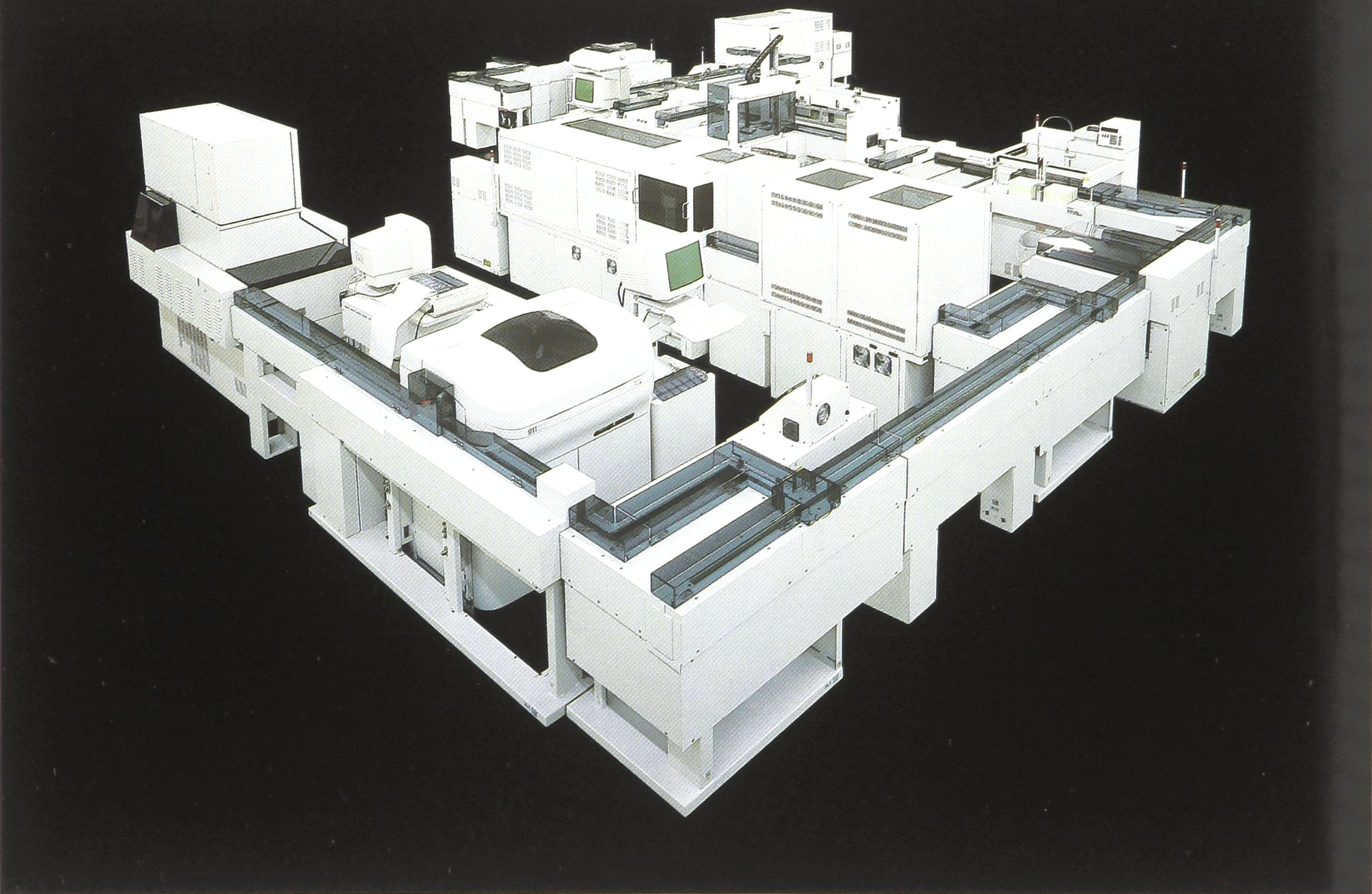
CLAS automates the areas of laboratory testing which account for the largest portion of total testing.
The completely integrated automation offered by the CLAS system has a number of advantages over a gradual approach. These include full compatibility between the automation system and the integrated analyzers, higher processing efficiencies which lower labor requirements and potential for greater, immediate, overall cost savings. In addition, the CLAS is a proven turnkey system backed by broad automation experience. In a large-volume core hospital laboratory, a fully integrated CLAS installation including chemistry and hematology analyzers can reduce direct processing staff by an average of 15 to over 30 FTEs. In the case of a reduction of 25 FTEs, an institution could expect a savings of $2.0 to 4.0 million above the cost of the system over a seven-year timeframe.
Fully Integrated Chemistry System Comparison
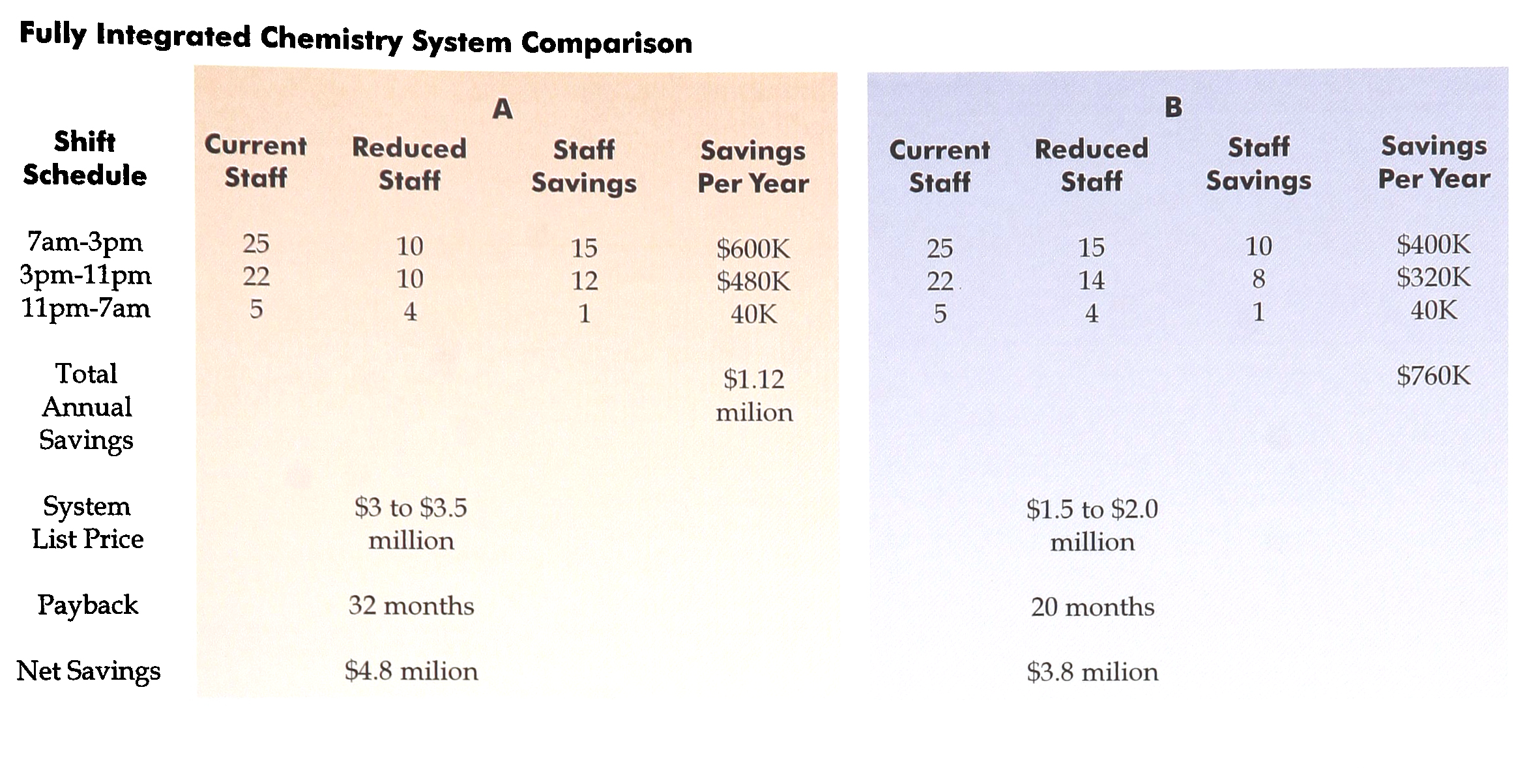
A: Includes one 747 and one 917 chemistry analyzer. Sysmex H5 Hematology system and sorting stations for on-line analyzers.
B: Includes one 747, one 917 chemistry analyzer and sample tube processing only. Analyzer costs are not included.
In addition to direct labor savings, a CLAS system installation typically positions a laboratory for an increase in testing volume of 30 % or more without the need for additional personnel. Based on the experience of many laboratories in which the CLAS has been installed, an further savings of $1.0 to $2.0 million can be expected from this source.
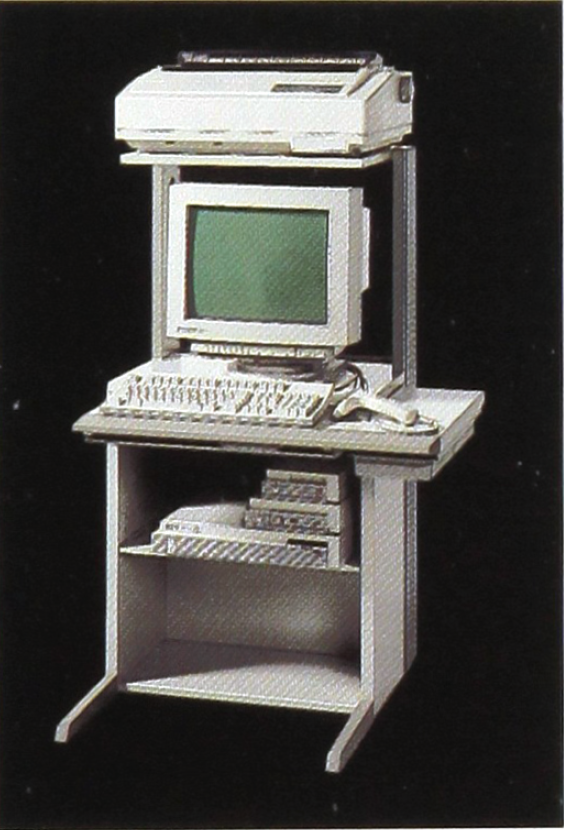
At the same time, the CLAS system allows testing times of less than 60 minutes, thus offering STAT performance and affording significant opportunity for reengineering and additional efficiency and cost improvements.
The price, capacity and throughput of CLAS systems varies depending on the system modules required and the configuration layout.
Sample statistics for full and partial installations are detailed in the table above.