




Abstract
In this work, the electrochemical potentiodynamic behavior of AISI C1018 lower-grade steel material was investigated in 20 wt.% methanesulfonic acid (MSA) solutions with or without different components to design corrosion inhibitor formulations based on acetylenic alcohol, cinnamaldehyde, 1-dodecylpyridinium chloride, and methanol. MSA has recently been considered as a new potential acid to be used in the matrix stimulation procedure and in well cleaning. It is demonstrated that AISI C1018 steel MSA needs to be inhibited. Inhibition type is determined for single components as well as for formulations.
Keywords
Introduction
One of the common methods to stimulate the oil and gas reservoir is matrix acidizing, in which acids are forced under pressure through the borehole into the pore spaces of the rock formation. In this manner, existing flow channels are enlarged or new channels are opened to the wellbore as the acids react with rock materials. This process improves oil and gas production originating in a rock reservoir.1–5 Acids are also used for well cleaning. During well-cleaning and matrix-acidizing procedures, the acid is at the elevated temperature that exists in production wells. The elevated temperature and acid gases induce a severe corrosive environment for tubulars, which are usually made of lower-grade steel materials.6–23
Acidizing treatments in the oil and gas industry are mainly performed with HCl at concentrations of 5–28 wt.%, 24 due to its high performance–cost ratio (metal chlorides are highly soluble in the aqueous phase, and HCl is inexpensive compared with other acids). However, due to HCl volatility, it is difficult to handle and can pose human health hazards. Other acids, such as HF, HCOOH, and CH3COOH, are also conventionally used for the above-described procedures but only in certain applications. 24 That is why alternatives are currently being sought.
Recently, we have focused on the potential use of methanesulfonic acid (MSA) as an acid to be used in the matrix stimulation procedure and in well cleaning. Furthermore, Ortega et al. 25 reported coreflood studies using limestone cores and a 10 wt.% MSA aqueous solution at 121 °C. They reported that MSA at that concentration is effective in creating wormholes in limestone cores. However, it was already known that MSA salts are highly soluble, 26 but its potential use in oilfield operations was only recently proven by Ortega et al. 25 MSA is usually described as a “green acid” and is frequently environmentally much more acceptable in comparison with some conventional acids. MSA has very low vapor pressure under normal atmospheric conditions and a high boiling point (167 °C); thus, it is odor-free, evolves no dangerous volatiles, and therefore is safer to handle compared with HCl.
It has also been shown that 2205 duplex stainless steel in noninhibited 20 wt.% MSA solution is highly resistive to corrosion at 150 °C. 27 This is a superior property of this steel material in the acid at elevated temperature. In contrast, numerous lower-grade steel materials have been tested (e.g., API L80, N80, J55, QT900, C75, and AISI C1018), and they all corrode in MSA solutions; therefore, they must be protected. Herein, we used AISI C1018 steel for the electrochemical study. We also found that AISI C1018 steel in MSA solution represents the corrosion properties of other lower-grade steel material well, such as L80, N80, and J55 (results not shown herein), which are materials for well construction, and will be the model steel for corrosion inhibitor formulation (CIF) design. In this article, 20 wt.% MSA was used, which is double the wt.% concentration already shown to be effective for creating wormholes (by Ortega et al. 25 ), and it will represent the worst-case scenario in terms of corrosion.
At elevated temperatures, organic corrosion inhibitors (CIs) alone are frequently no longer effective (but they are highly effective at room temperature).28–31 A solution to ensure higher corrosion inhibition effectiveness at elevated temperatures is to develop CIFs. They are typically a complex mixture of inhibitors, surfactants, solvents, and intensifiers. 32 Other components can also be added. 24 Based on our experience, intensifiers are needed for temperatures higher than 100–120 °C; therefore, intensifiers will not be used to design CIFs herein (tests at 70 °C are presented). Designing an effective CIF is a difficult task. The effectiveness of a single CI is usually known after corrosion tests at room temperature, and such compounds are subsequently used to develop a complex mixture together with other chemicals. The goal is to improve the inhibition effectiveness of the CIF as compared with a single CI.
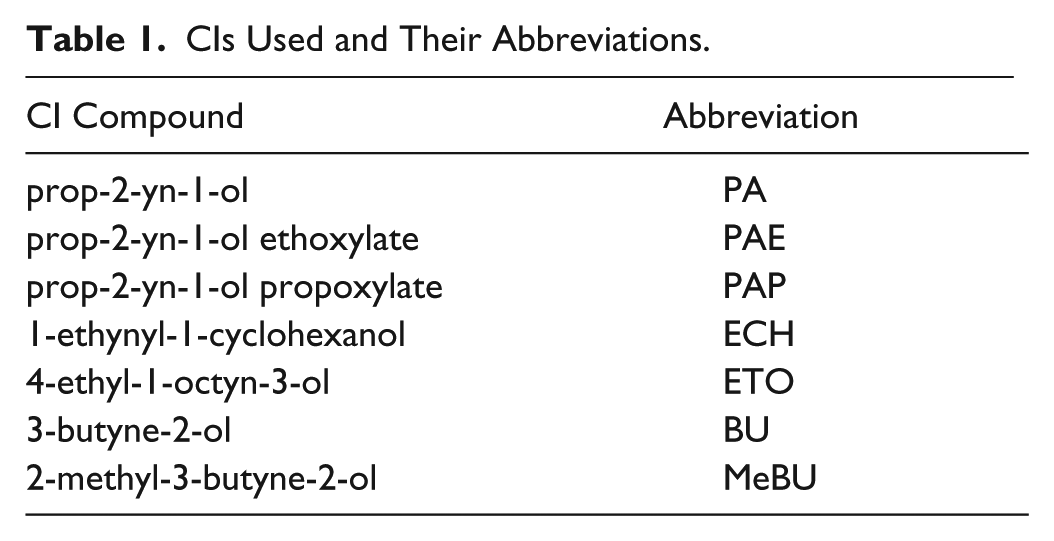
In the acidizing procedure, propargyl alcohol is usually considered to be a standard CI for lower-grade steel materials. 33 It frequently shows a significant synergistic effect with other compounds. Moreover, acetylenic alcohols have been the most widely used CI components in CIF design, especially for HCl, for more than five decades. 24 However, an acetylenic alcohol–based CIF design for MSA has not been reported yet. On that basis, we used seven different acetylenic alcohol components ( Table 1 ) to investigate corrosion behavior of lower-grade steel in MSA solution. They were formulated with three additional standard components to develop potentially effective CIFs in MSA solution. The electrochemical potentiodynamic behavior of AISI C1018 steel was studied in MSA solution containing CIFs designed in this manner.
CIs Used and Their Abbreviations.
Frignani et al. 34 claim that acetylenic alcohols’ efficiency is related to the formation of an insoluble, hydrophobic, thick polymeric film that lacks the original C≡C triple bond. They suggested that the mechanism of film formation involves inhibitor chemisorption onto the metal surface through π electrons of the triple bond, then triple-bond hydrogenation by atomic hydrogen evolving during the cathodic process, followed by dehydration (of the alcoholic function), with consequent reactive diene formation, and finally polymerization and reticulation.
Cinnamaldehyde (CIN) is one of the standard components in CIF design and is frequently used in oilfield operations.5,35–42 It has also been shown that CIN and N-dodecylpyridinium bromide show synergistic effects in mitigating corrosion. It has been claimed that CIN adsorbs onto protonated active sites to form a tenacious surface species, which serves as a primary barrier to mitigating corrosion, and that CIN subsequently polymerizes on the surface. It has been proposed that this is a time-dependent polymerization that may initially be assisted by the surfactants (that is why a 1-dodecylpyridinium chloride [DDPC] as surfactant will be used herein; see below).35,41,42 Moreover, derivatives of CIN can act as effective CIs.5,36–40 CIN is also sometimes considered to be a polymerization initiator for acetylenic alcohols. 24
A surfactant is a surface active agent. In a typical CIF, it improves the distribution of the CI on the metallic surface. One of the standard surfactants used in CIF design in the oilfield is DDPC, 9 and it will be used as a surfactant herein.
Solvents are used in CIFs to reduce viscosity for ease of handling and to ensure formulation stability in various environments. Ensuring stability means that they improve the solubility and dispersability of the CIF in the solution. The purpose of using solvents is also to enhance wettability on the solution–steel interface. Methanol (MeOH) is a very cost-effective solvent 40 and will be used as a solvent herein.
Hitherto, to the best of our knowledge, no literature data exist regarding the corrosion behavior and potential CIs and CIFs for lower-grade steel materials in MSA solutions. All concentrations in percentage are always reported as a mass fraction. In this work, all tests were performed at 70 °C, which is the temperature to simulate shallow wells. Under such a condition, an intensifier is usually not needed to design an effective CIF. This temperature is the starting point before conducting tests at 150 °C, which is a temperature usually used to simulate conditions for bottom-hole temperature in the well.
Materials and Methods
Preparation of Solutions and Samples
MSA was provided by BASF SE (Baso MSA as a 70 wt.% solution). Solution containing 20 wt.% MSA was prepared with Milli-Q water (resistivity, 18.2 MΩ cm). All CI compounds were supplied by BASF SE (with a purity ≥99 wt.%, as specified by the supplier). DDPC (with a purity of 98 wt.%, as specified by the supplier) and CIN (with a purity ≥99 wt.%, as specified by the supplier) were supplied by Sigma-Aldrich (St. Louis, MO, USA).
The AISI C1018 samples, whose composition is given in Table 2 , were cleaned ultrasonically in a bath of 50% ethanol/50% Milli-Q water (by volume), and afterward thoroughly rinsed with Milli-Q water.26,43–46
Composition of AISI C1018 Steel in wt.% (values as specified by the supplier).

Electrochemical Measurements
Experiments were performed in a three-electrode cell (volume, 1 L) that was closed to air under stagnant conditions at 70 °C and was controlled by a thermostat. AISI C1018 steel working electrodes in the shape of cylinders (Metal Samples, Munford, AL, USA) were embedded in a glass holder using Teflon sealing (Gamry Instruments, Warminster, PA, USA). The area of the working electrode exposed to the solution was 5.77 cm2. A saturated calomel electrode (i.e., SCE, 0.2444 V vs. SHE) was used as a reference electrode, along with a platinum mesh as a counterelectrode. The reference electrode was inserted in the Luggin capillary. All potentials in this work refer to the SCE scale. Measurements were carried out with a Gamry 600 potentiostat/galvanostat controlled by an electrochemical program. 47
Chronopotentiometric measurements were performed during the first 6 h of immersion. Potentiodynamic curve measurements were performed after 6 h of immersion. Measurements started at −250 mV versus the open circuit potential Eocp, and progressed with increasing potential in the anodic direction with a potential scan rate of ν = 0.1 mV/s. 47 A scan rate of 0.1 mV/s was used to avoid the effects of capacitance and so that the current–voltage relationship reflected only the interfacial corrosion process at every potential of the polarization scan.48,49 Three replicate measurements were performed in each case, and the most representative curve is reported.
Results and Discussion
Chronopotentiometric Measurements
The experiments for the Eocp determination were repeated several times in each solution until three values fitted within the Grubbs statistical test (outliers were discarded 50 ). Average values of Eocp after 6 h of immersion were then calculated and are reported in Table 3 .
The Eocp Potential for AISI C1018 in Solution Containing Different Components in 20 wt.% MSA and Measured after 6 h of Immersion.
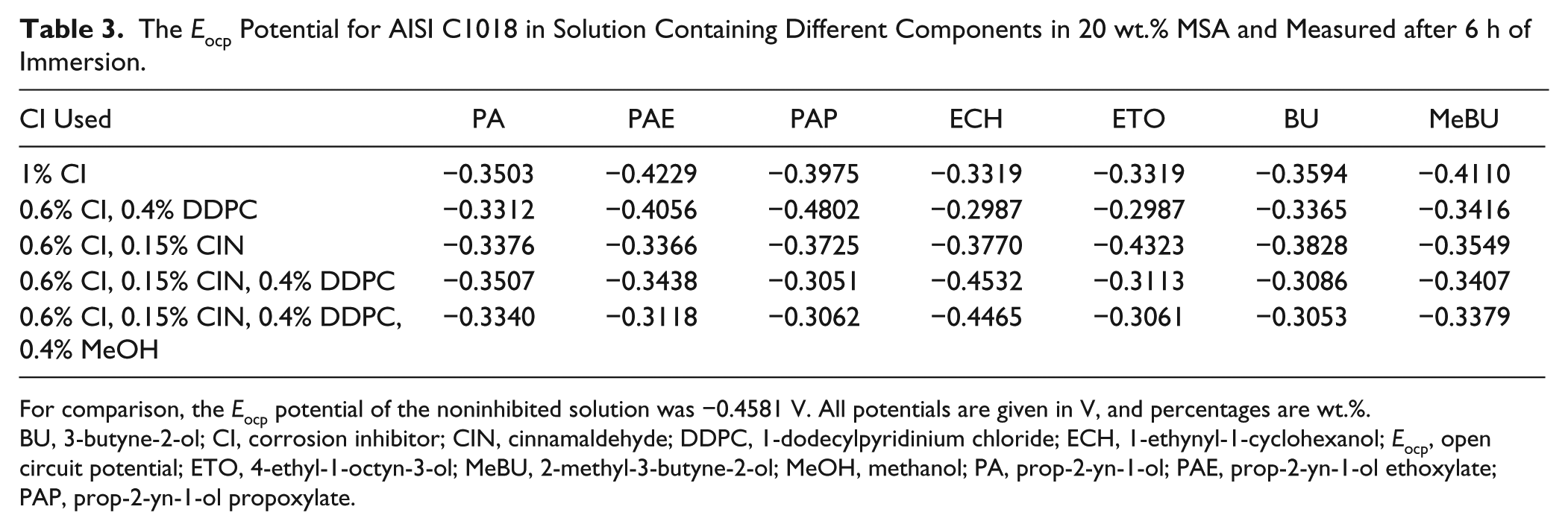
For comparison, the Eocp potential of the noninhibited solution was −0.4581 V. All potentials are given in V, and percentages are wt.%.
BU, 3-butyne-2-ol; CI, corrosion inhibitor; CIN, cinnamaldehyde; DDPC, 1-dodecylpyridinium chloride; ECH, 1-ethynyl-1-cyclohexanol; Eocp, open circuit potential; ETO, 4-ethyl-1-octyn-3-ol; MeBU, 2-methyl-3-butyne-2-ol; MeOH, methanol; PA, prop-2-yn-1-ol; PAE, prop-2-yn-1-ol ethoxylate; PAP, prop-2-yn-1-ol propoxylate.
As seen from Table 3 , the Eocp after 6 h of immersion for all potentiometric measurements is at more positive potentials compared to the measurements for the noninhibited solution (more negative Eocp potential was measured for only the PAP and DDPC combination). Therefore, the system became nobler with respect to the bare electrode in the 20 wt.% MSA solution. However, these potential changes are not significant compared to the noninhibited solution (not more than 0.2 V 51 ).
Potentiodynamic Curve Measurements
Potentiodynamic curves for AISI C1018 steel in 20 wt.% MSA solution were measured after 6 h of immersion in noninhibited solution and solutions containing combinations of CI, CIN, DDPC, and MeOH to design the CIF (a CIF can contain only certain components or all of them). Measurements are presented in
Figure 1
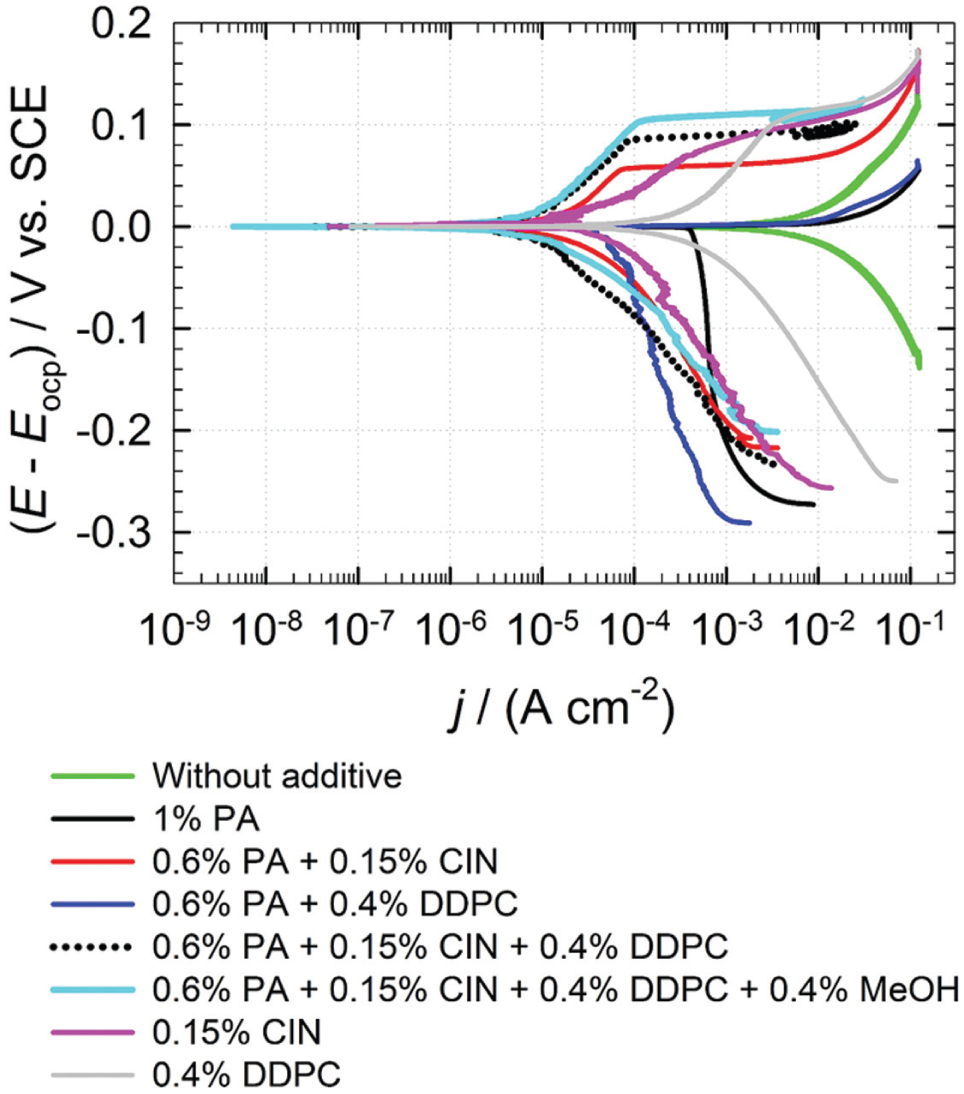
The influence of different components in PA-based CIF design on the potentiodynamic curve measurements of AISI C1018 steel after 6 h of immersion in 20 wt.% MSA at 70 °C, ν = 0.1 mV/s. Such PA-based CIF design is successful because it shows the lowest jcorr among all measurements. The final PA-based CIF is a mixed-type inhibitor. CIF, corrosion inhibitor formulation; jcorr, estimation of the corrosion current density; CIN, cinnamaldehyde; DDPC, dodecylpyridinium chloride; PA, prop-2-yn-1-ol.
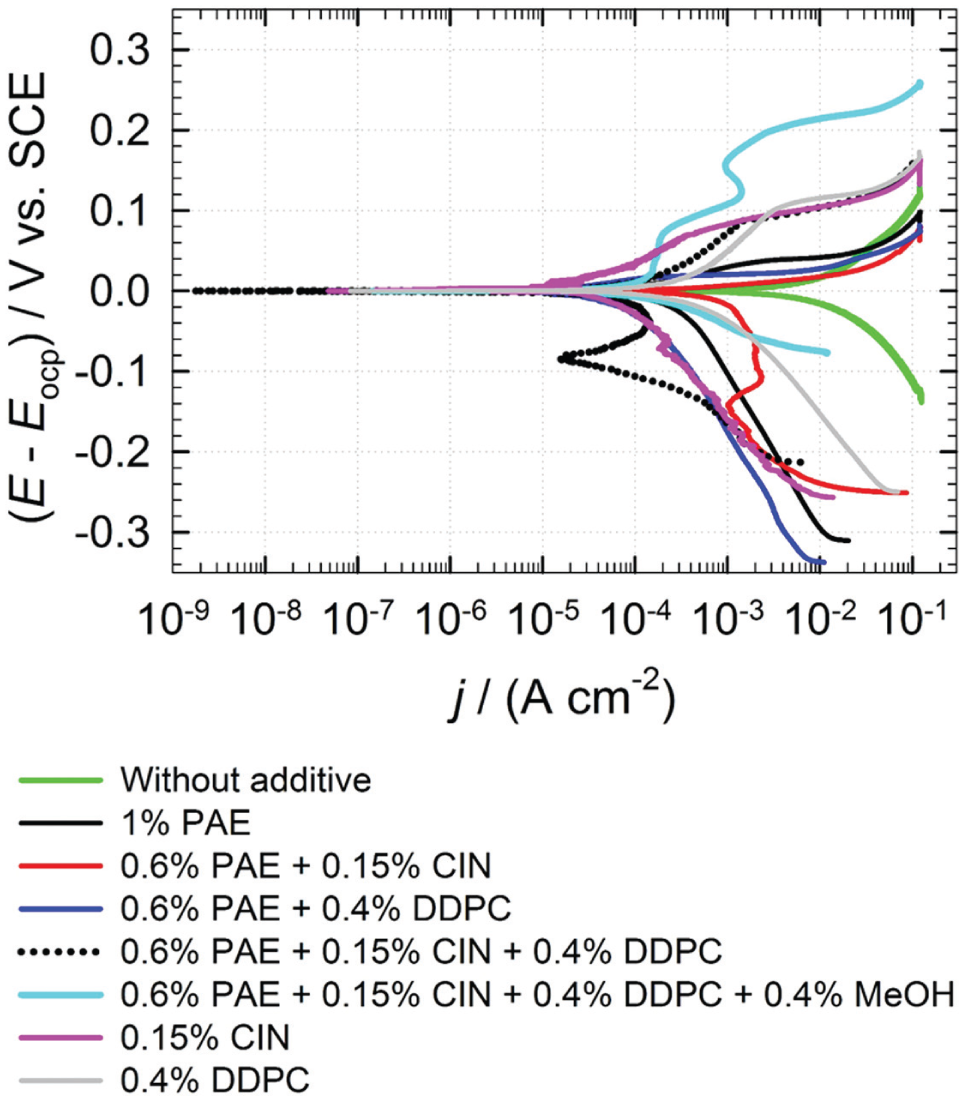
The influence of different components in PAE-based CIF design on the potentiodynamic curve measurements of AISI C1018 steel after 6 h of immersion in 20 wt.% MSA at 70 °C, ν = 0.1 mV/s. MeOH as a solvent has an influence on potentiodynamic behavior. Compared with the addition of CIN, the final CIF does not provide higher corrosion inhibition effectiveness. The PAE-based CIF is a mixed-type inhibitor. CIF, corrosion inhibitor formulation; CIN, cinnamaldehyde; DDPC, dodecylpyridinium chloride; MeOH, methanol; PAE, prop-2-yn-1-ol ethoxylate.
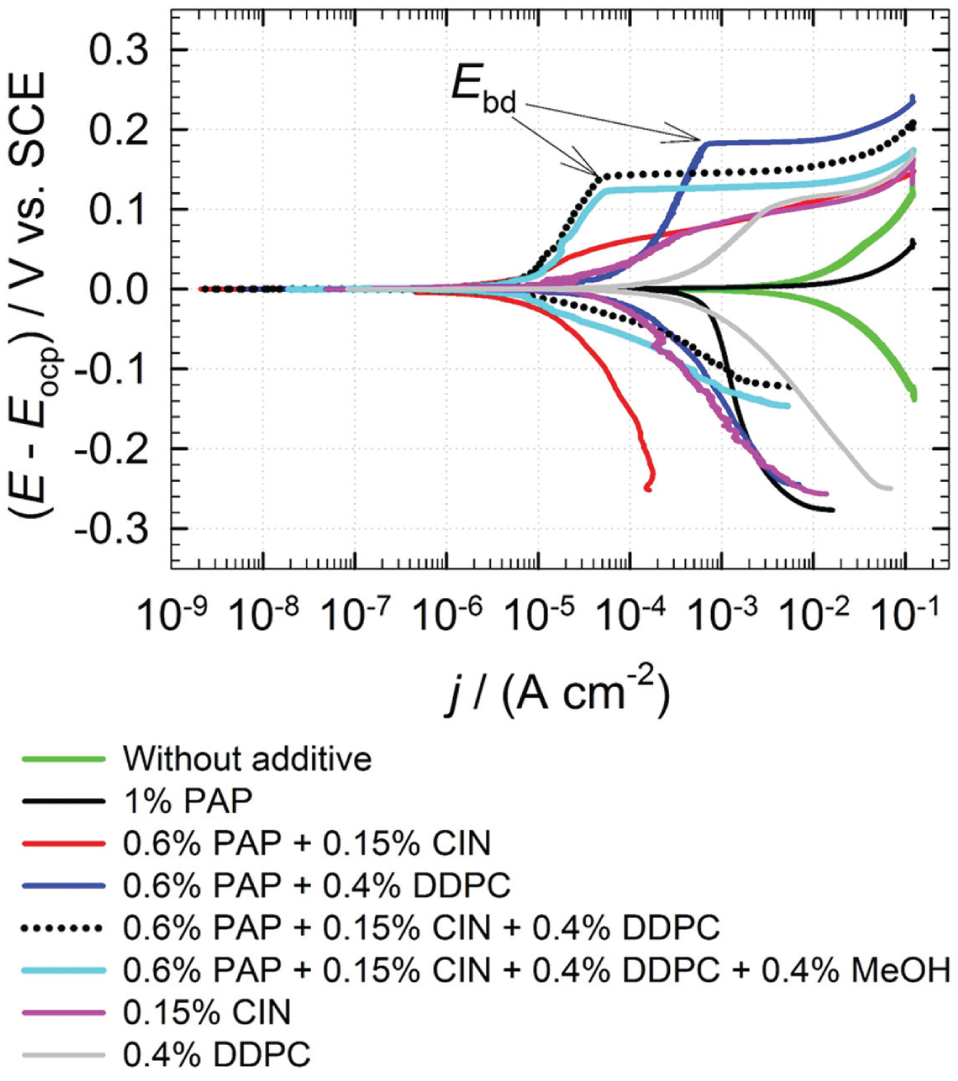
The influence of different components in PAP-based CIF design on the potentiodynamic curve measurements of AISI C1018 steel after 6 h of immersion in 20 wt.% MSA at 70 °C, ν = 0.1 mV/s. The PAP-based CIF and the combination of PAP and DDPC are effective in mitigating pitting corrosion compared with the noninhibited solution. Such a CIF design can be considered successful. CIF, corrosion inhibitor formulation; CIN, cinnamaldehyde; DDPC, 1-dodecylpyridinium chloride; PAP, prop-2-yn-1-ol propoxylate.
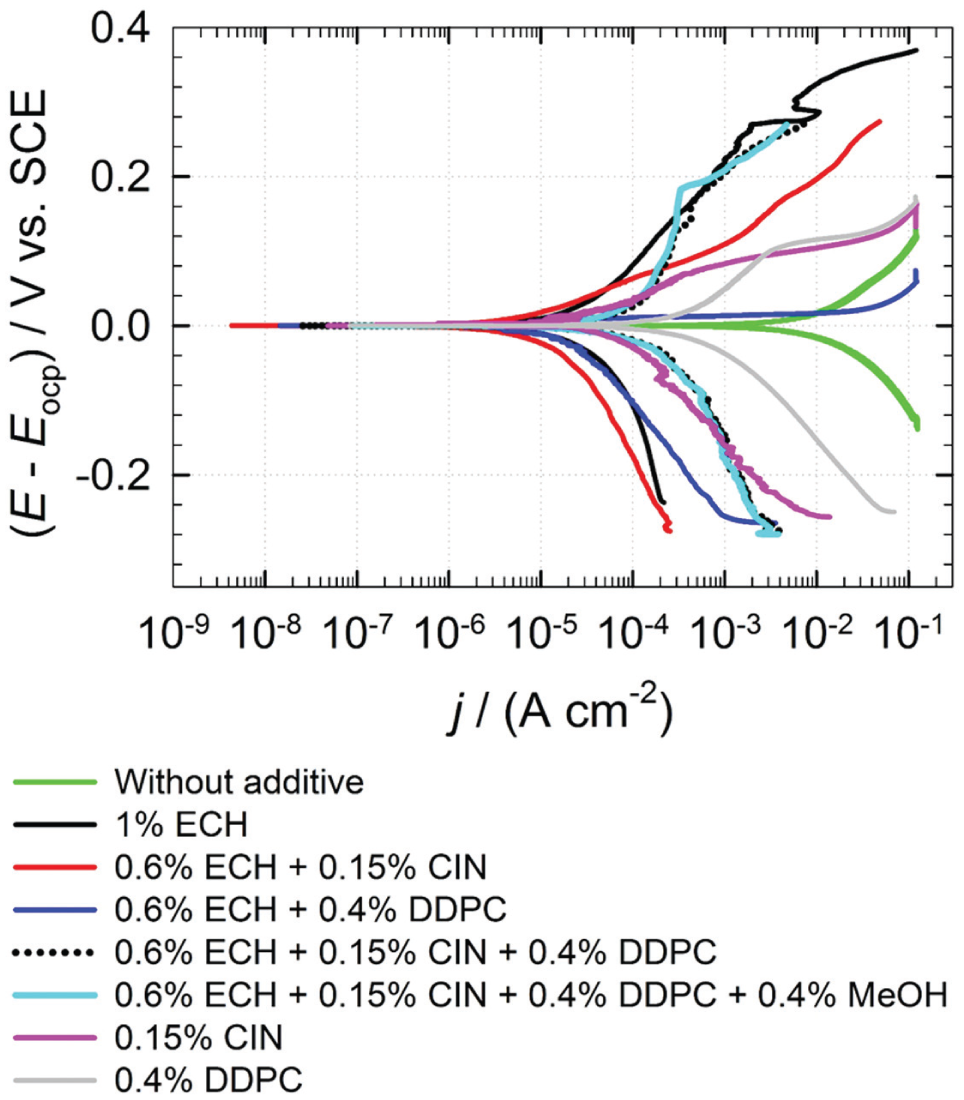
The influence of different components in ECH-based CIF design on the potentiodynamic curve measurements of AISI C1018 steel after 6 h of immersion in 20 wt.% MSA at 70 °C, ν = 0.1 mV/s. Such a CIF design cannot be considered successful because the ECH (or its combination with CIN) induces the lowest current densities among all measurements. However, ECH is a highly effective CI. ECH and ECH-based CIFs are mixed-type inhibitors. CI, corrosion inhibitor; CIF, corrosion inhibitor formulation; CIN, cinnamaldehyde; DDPC, dodecylpyridinium chloride; ECH, 1-ethynyl-1-cyclohexanol; MSA, methanesulfonic acid.
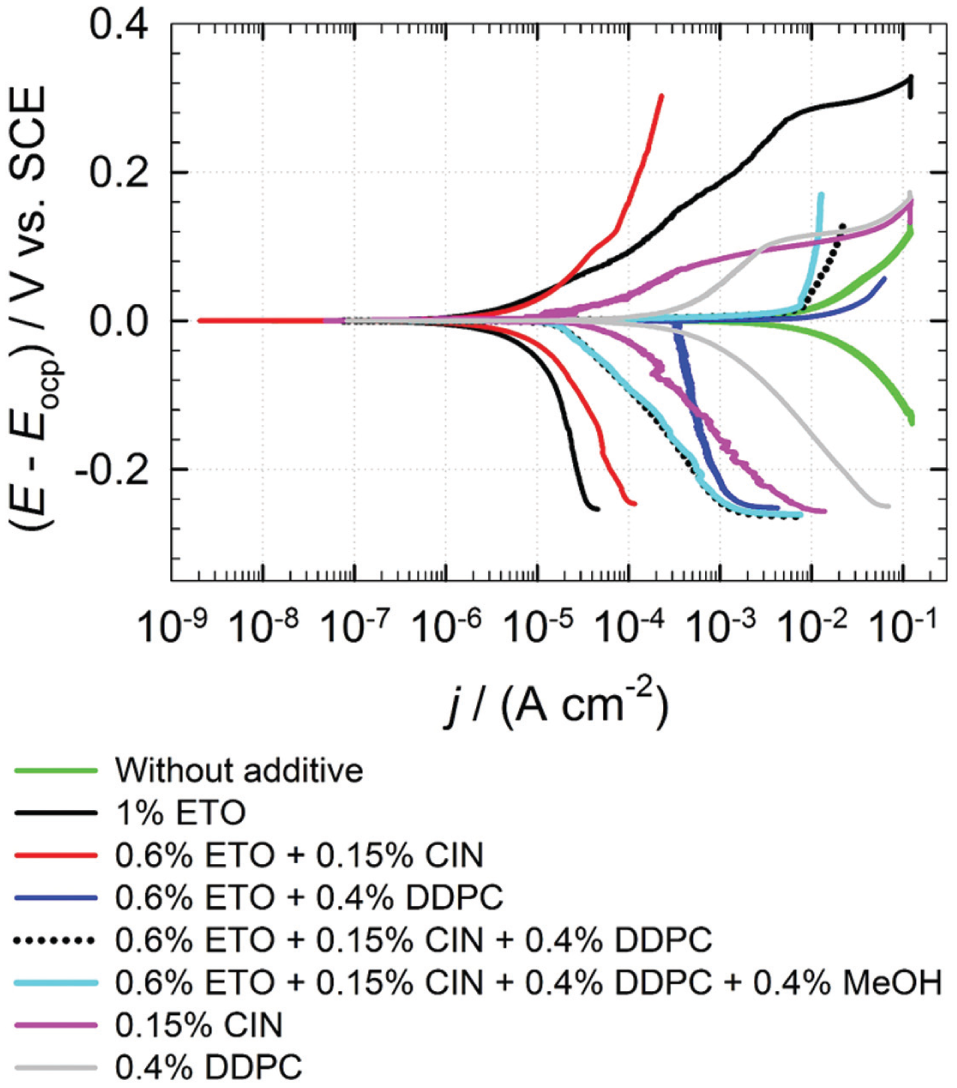
The influence of different components in ETO-based CIF design on the potentiodynamic curve measurements of AISI C1018 steel after 6 h of immersion in 20 wt.% MSA at 70 °C, ν = 0.1 mV/s. ETO is a highly effective mixed-type CI. Because ETO is more effective than the final CIF, this formulation design cannot be considered successful. CI, corrosion inhibitor; CIF, corrosion inhibitor formulation; CIN, cinnamaldehyde; DDPC, dodecylpyridinium chloride; ETO, 4-ethyl-1-octyn-3-ol.
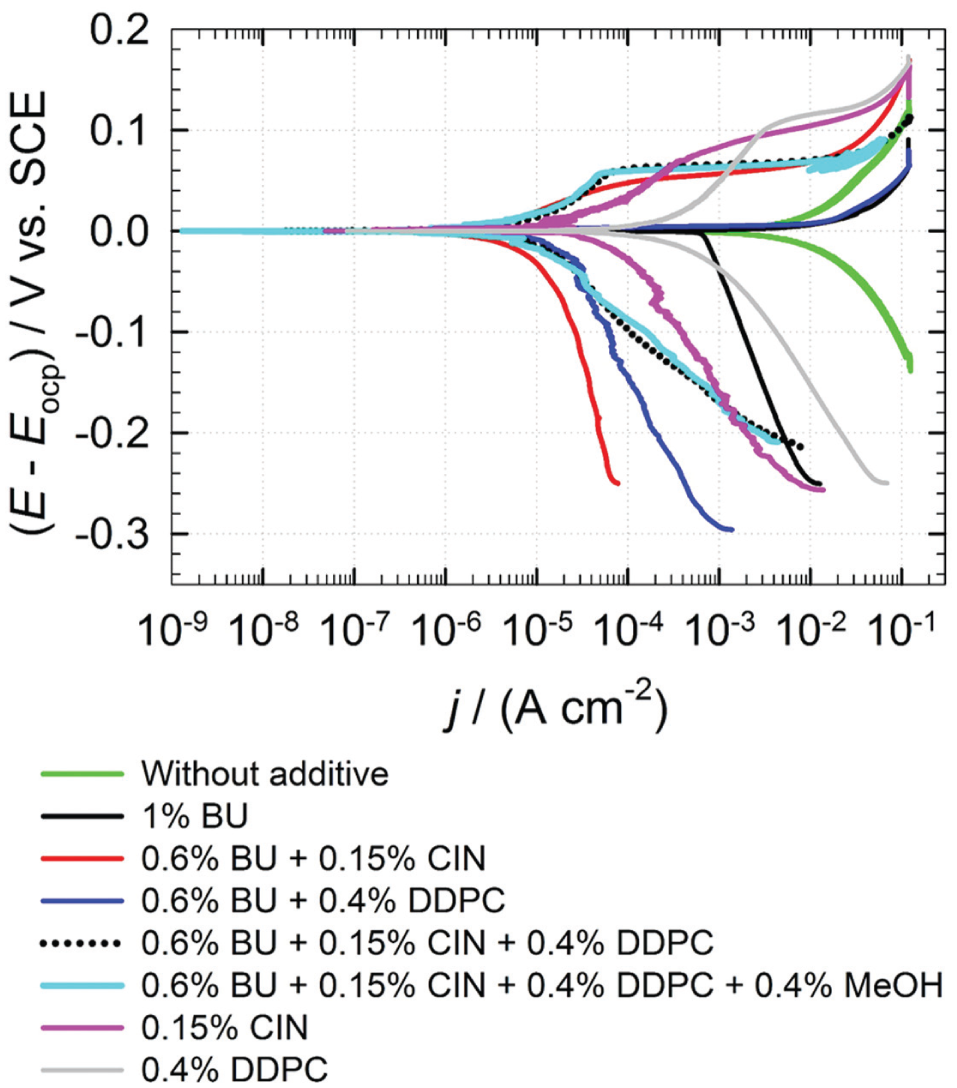
The influence of different components in BU-based CIF design on the potentiodynamic curve measurements of AISI C1018 steel after 6 h of immersion in 20 wt.% MSA at 70 °C, ν = 0.1 mV/s. The final BU-based CIF is a mixed-type inhibitor. However, the addition of BU and CIN is more effective than the final CIF in mitigating corrosion, therefore showing the limited success of this formulation design. BU, 3-butyne-2-ol; CIF, corrosion inhibitor formulation; CIN, cinnamaldehyde; DDPC, dodecylpyridinium chloride.
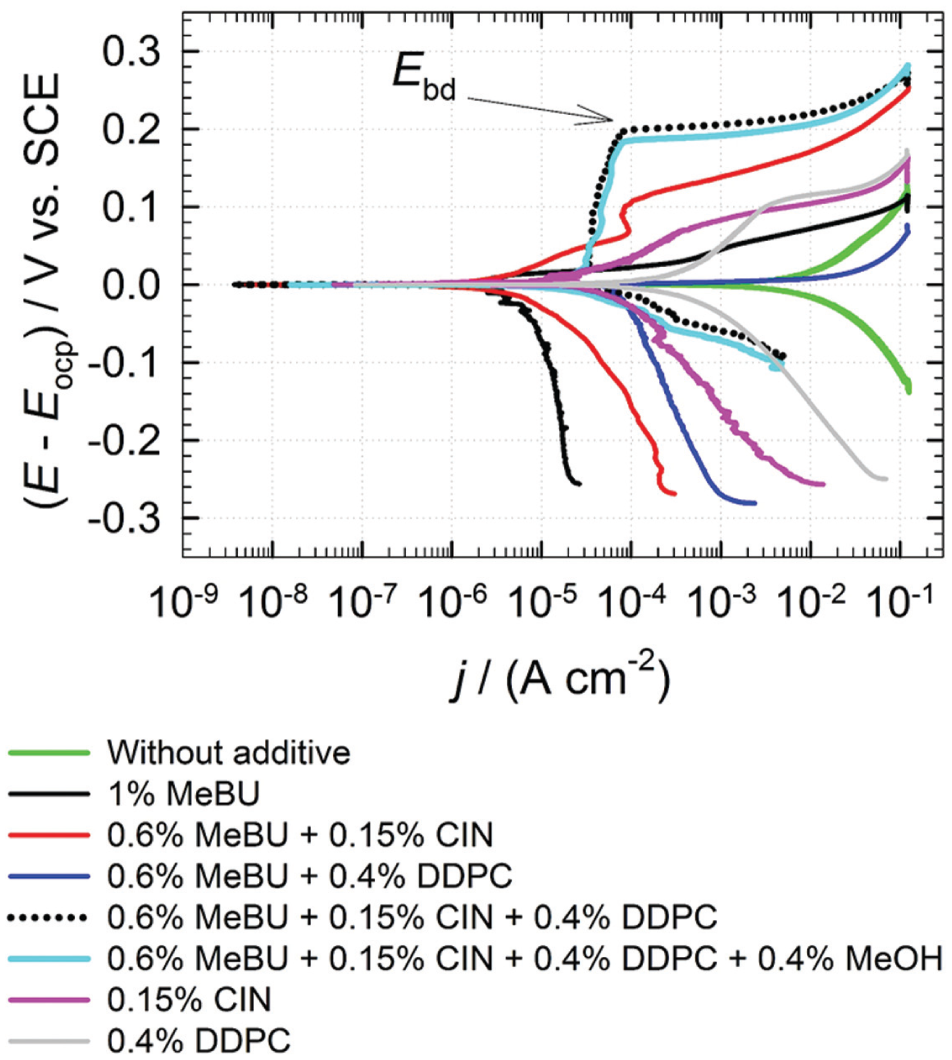
The influence of different components in MeBU-based CIF design on the potentiodynamic curve measurements of AISI C1018 steel after 6 h of immersion in 20 wt.% MSA at 70 °C, ν = 0.1 mV/s. The MeBU-based CIF significantly inhibits the anodic reaction of the corrosion couple, thus effectively mitigating the initiation of pitting. However, the final CIF is not more effective compared to CIFs with the addition of other individual compounds. CIF, corrosion inhibitor formulation; MeBU, 2-methyl-3-butyne-2-ol; CIN, cinnamaldehyde; DDPC, dodecylpyridinium chloride.
The estimation of the corrosion current density, jcorr, will be used on only a relative basis, because exact extrapolation of the Tafel curves is not the best way to evaluate corrosion inhibition effectiveness, as reported in References 24,52,53, due to the problems that can be encountered, such as concentration polarization, oxide formation, preferential dissolution of one alloy component, or a mixed control process (in which more than one anodic or cathodic reaction occurs simultaneously), which cause deviation from the original Tafel theory.24,54
The most important features in the potentiodynamic curves are potentials relative to the Eocp (e.g., the highest potential difference of Ebd–Eocp signifies the slowest pitting-initiation rate, where Ebd is the breakdown potential). 26 For this reason, all potentiodynamic measurements are represented on the basis relative to Eocp, which is set to zero.
Acetylenic alcohol CIs were used at 1 wt.% concentration. Commonly, a 1–3 wt.% concentration of CIs or CIFs is used to mitigate corrosion in oilfield applications. 24 Herein, a low concentration limit was used at 1 wt.% concentration because low temperature was also used, which simulates shallow wells (deeper wells are commonly simulated at 150 °C, as explained above). This system was compared with 0.6 wt.% concentration of the same compound in addition to 0.4 wt.% DDPC to get a 1 wt.% concentration of both compounds; therefore, this formulation allows a direct comparison with a 1 wt.% concentration of the individual inhibitor. Cinnanaldehyde was used at 0.15 wt.% and is considered to be a polymerization initiator for acetylenic alcohols. MeOH was used as a solvent at 0.4 wt.% concentration. Therefore, the latter two compounds are not substitutes for the CI content. Measurements for 0.15 wt.% CIN or 0.4 wt.% DDPC alone are also given for comparison. The above-mentioned concentrations are, in our experience, used commonly in industrial practice for an acetylenic alcohol–based CIF design (0.6 wt.% of the inhibitor, 0.4 wt.% of the surfactant, 0.15 wt.% of the polymerization initiator, and 0.4 wt.% of the solvent).
PA-based CIF design
Figure 1 shows the active corrosion behavior of AISI C1018 steel in 20 wt.% MSA (no active-to-passive transition is observed, i.e., no primary passivation potential developed 26 ). By adding PA to the solution, the corrosion inhibition effect is seen on the potentiodynamic curve. This curve is transferred by approximately two orders of magnitude to the lower current densities in the cathodic potential region, whereas the curve in the anodic potential region is not affected in the presence of PA compared with the noninhibited media (even higher anodic current densities are observed). The current density for the potentiodynamic curve representing the addition of PA in the potential region (Eocp – 0.2 V) to Eocp is almost independent of potential, implying a diffusion-controlled process. When both PA and CIN are added to the solution, the cathodic current density at potentials (Eocp – 0.2 V) to Eocp is even lower compared with the curve for the PA addition alone. Simultaneously, the anodic branch of the potentiodynamic curve is at significantly lower current densities compared with the measurements for noninhibited solution and for the addition of PA alone. The addition of the PA and DDPC combination has a significant effect on the cathodic reaction by transferring the cathodic branch to the lower current densities, which is even more significant than the measurement for the PA alone and for the combination of PA and CIN. Slightly higher current densities compared with the measurement for the combination of PA and CIN can be seen only in the potential region (Eocp – 0.05 V) to Eocp. However, the PA and DDPC combination has no inhibitory effect in the anodic direction. Formulations containing PA, CIN, and DDPC with or without MeOH show similar behavior (therefore, MeOH as a solvent does not influence the corrosion inhibition behavior of this formulation), with the lowest anodic current densities among all measurements. One can imaginatively extrapolate the corrosion current density (jcorr) with the Tafel slopes to get the approximate jcorr values. By doing so, the jcorr value would be the lowest for the final CIF containing PA, CIN, DDPC, and MeOH. Thus, this combination would significantly slow down general (uniform) corrosion compared with the noninhibited solution (approximately three orders of magnitude lower jcorr for the solution containing such a CIF, with or without MeOH). The reason for not performing the exact Tafel extrapolation is given above. Moreover, the final PA-based CIF (with or without MeOH) induces lower current densities in both the anodic and cathodic regions compared with those with a measurement for the addition of either CIN or DDPC. Therefore, in this case, the PA-based CIF design is successful.
Moreover, it is noted that when comparing individual CIN and DDPC additions, both cathodic and anodic current densities are lower in the case of CIN addition. That is why the measurements (given below) for the final CIFs will be compared mainly with the measurement for the CIN addition. However, both components induce lower anodic and cathodic current densities compared with the measurement for the noninhibited solution, and they can therefore be classified as mixed-type inhibitors.
PAE-based CIF design
The addition of PAE to 20 wt.% MSA solution significantly transfers the cathodic branch to the lower current densities, but it has only a minor effect on the anodic branch compared with the noninhibited solution ( Fig. 2 ). In contrast, diffusion-controlled processes cannot be detected for the PAE addition, as found for the PA addition (see above). The PAE and CIN combination slows down the cathodic reaction but does not have an impact on the anodic reaction (contrary to the PA and CIN combination; see above). This can also be noted for the addition of PAE and DDPC, with an even higher inhibition effect in the cathodic region (lower cathodic current densities), whereas anodic behavior is not significantly different compared with the noninhibited solution. Contrary to the measurement for the PA-based CIF, the final PAE-based CIF containing all components with or without MeOH shows that MeOH as a solvent influences the potentiodynamic behavior of AISI C1018 steel in 20 wt.% MSA solution; this is by demonstrating significantly higher cathodic current densities and lower anodic current densities for the measurement with MeOH compared with the PAE-based CIF without MeOH. However, the shape of the curve in the cathodic region for the measurement with MeOH looks like the system went through an active-to-passive transition and then returned back to an active state (multiple loops). This behavior is not desirable because a surface that can go to a passive state and then return back to an active state, by scratching the passive film or through some other mechanism, could proceed to complete destruction of the material. 55 The addition of CIN alone to a CIF induces higher cathodic current densities compared with the final PAE-based CIF without MeOH, whereas in the anodic region current density is lower in the former case. However, the measurement for the final PAE-based CIF (including MeOH) shows higher cathodic current densities and lower anodic current densities (at potentials more positive than Eocp + 0.05 V) compared with the measurement for CIN alone. Therefore, in this case, PAE-based CIF design is not particularly successful (compared to measurements for CIN alone, and therefore one individual component in the designed CIF).
PAP-based CIF design
Similarly, as found above for the PA or PAE additions alone, PAP significantly lowers the cathodic current density compared with the noninhibited solution, but it does not inhibit the anodic reaction ( Fig. 3 ). The addition of PAP and CIN significantly inhibits both reactions of the corrosion couple. The cathodic branch of the potentiodynamic curve is at the lowest current densities among all measured curves (even lower than the measurement for the final PAP-based CIF). The addition of PAP and DDPC also significantly inhibits anodic and cathodic reactions compared with the measurement for the noninhibited solution. Moreover, the potential difference between the breakdown potential (Ebd, clearly seen for that curve in Fig. 3 ) and Eocp is the highest. In general, the highest Ebd–Eocp potential difference indicates the slowest pitting-initiation rate.26,56–58 The Ebd–Eocp potential difference is lower for the final PAP-based CIF (with and without MeOH) compared with the addition of PAP and DDPC. Therefore, this indicates a higher pitting-initiation probability for the final PAP-based CIF. Next, the addition of MeOH to the PAP-based CIF does not significantly affect the potentiodynamic behavior (the same was also found for the PA-based CIF; see above). Potentiodynamic curves representing the PAP-based CIF (with or without MeOH) and with the addition of PAP and CIN show the lowest jcorr values (and are also lower compared to the measurement when CIN alone is added). Moreover, the final PAP-based CIF compared with the PAP and CIN combination even improves pitting-initiation inhibition effectiveness (a higher Ebd–Eocp potential difference). Therefore, in this case, PAP-based CIF design can be considered successful.
ECH-based CIF design
Figure 4
shows the influence of different components on the ECH-based CIF design. The addition of ECH to 20 wt.% MSA significantly transfers the potentiodynamic curve to lower current densities in both cathodic and anodic regions compared with noninhibited solution. Contrary to the measurements in
Figure 1
ETO-based CIF design
A similar potentiodynamic behavior impact of CIN and DDPC on the CIF design, as reported for the ECH-based CIF design, is present for the ETO-based CIF design, as shown in Figure 5 . ETO transfers the potentiodynamic curve to significantly lower current densities compared with the measurement for the noninhibited solution (approximately four and three orders of magnitude in the cathodic and anodic regions, respectively). Higher current densities are detected for the measurements representing the addition of ETO and DDPC, CIN alone, and DDPC alone, and final CIFs with or without MeOH, compared with the addition of ETO alone. This indicates that such CIF design is not successful (or needed) to improve the performance of the individual ETO component. In the case of the ETO and CIN combination, there are slightly higher current densities in the cathodic region, whereas lower current densities are found in the anodic region, compared with the measurement for ETO alone. By imaginatively extrapolating the jcorr, the lowest values can be detected for the addition of ETO alone or for a combination of ETO and CIN.
BU-based CIF design
The influence of different components on BU-based CIF design is presented in
Figure 6
. The addition of BU alone or BU
MeBU-based CIF design
The influence of different components on MeBU-based CIF design is shown in
Figure 7
. The addition of MeBU to 20 wt.% MSA significantly reduces the cathodic current density of the potentiodynamic curve compared with the measurement for the noninhibited solution. The cathodic branch is transferred by about four orders of magnitude to the lower current densities and is the lowest among all measurements. As found before for ECH and ETO (a minor effect was also found in the case of PAE), MeBU also inhibits the anodic reaction. A combination of MeBU and DDPC induces higher currents compared with the measurement for MeBU alone (i.e., cathodic and anodic current densities are higher). Moreover, the anodic reaction for the MeBU
Individual components vs. final CIFs
Compare the potentiodynamic curves of the individual compounds used as CIs and designed CIFs in
Figures 1
Figures 4
Conclusions
Electrochemical analyses of AISI C1018 steel in 20 wt.% MSA solution at 70 °C containing various designed CIFs, which were acetylenic alcohol based to inhibit corrosion, were carried out. The influence of certain components in such CIFs was studied. Lower-grade steel materials are used as well as construction materials, and MSA is potentially a new acid that can be used in the well-acidizing procedure. Formulations were designed that use cinnamaldehyde as a polymerization initiator, 1-dodecylpyridinium chloride as a surfactant, and methanol as a solvent. The goal is to improve corrosion inhibition effectiveness compared with the individual acetylenic alcohol components. The main findings are as follows:
The design of PA-, PAP-, and BU-based CIFs significantly improves corrosion inhibition effectiveness compared with the individual CI components.
MeBU-based CIF lowers the pitting initiation probability compared with MeBU.
The design of PAE-, ECH-, and ETO-based CIFs does not improve the performance of the individual components.
Methanol as a solvent does not affect the potentiodynamic behavior of the PA-, PAP-, ECH-, ETO-, BU-, and MeBU-based CIFs.
ECH and ETO are highly efficient mixed-type inhibitors.
MeBU and PAE are mixed-type inhibitors, but with the predominant inhibition effect on the cathodic reaction.
PA, PAP, and BU are cathodic-type inhibitors.
PA-, PAE-, PAP-, ECH-, ETO-, BU-, and MeBU-based CIFs act as mixed-type inhibitors.
Footnotes
Declaration of Conflicting Interests
The authors declared no potential conflicts of interest with respect to the research, authorship, and/or publication of this article.
Funding
The authors disclosed receipt of the following financial support for the research, authorship, and/or publication of this article: This work was supported by the Slovene Research Agency (grant no. Z1-6737)