



Abstract
Background
Cancellation during elective surgeries on the day of surgery is one of the many challenges that cause operational disruptions, resource waste, low patient satisfaction, and adverse influences on medical outcomes. Therefore, this study was conducted to determine the frequency of cancellation of elective orthopedic operations performed on the day of surgery.
Methods
This retrospective study was conducted to evaluate same-day cancellations of elective orthopedic surgeries over a one-year period from March 2022 to February 2023. Data were collected via hospital records, focusing on demographic information, type of operation, and causes of cancellation.
Results
Among 4954 intended elective orthopedic surgeries, 299 were cancelled on the day of surgery. Cancellations occurred mostly because of administrative (29.8%), surgeon-related (28.4%), and medical and anesthesiology factors (27.1%). Other factors included the administration of preoperative preparations (8.4%) and patient-related factors (6.4%). Fracture surgeries have the highest cancellation rates owing to administrative and anesthesia-related causes.
Conclusions
Cancellations of elective orthopedic surgery were due mainly to administrative, surgeon-related, and anesthesia-related factors. Improvements in theater resources, perioperative optimization, and good communication between surgeons and patients could effectively reduce such cancellation rates.
Introduction
The cancellation of elective surgeries is a global problem, with severe consequences for healthcare systems and patients. 1 These cancellations often lead to a waste of time, resources, and workforce, negatively affecting patients’ medical conditions and psychological well-being.2,3 A previous study reported that with each surgery cancellation, patients and their families are forced to miss an average of five days from work, which has a tremendous impact on the entire country's economic system. 4 Cancellation rates for elective procedures ranged between 1.96% 5 and 49%, 6 increasing the costs by up to 21.2%. 7 Studies have shown that cardiovascular and orthopedic cases are the most frequently canceled elective surgeries.8,9 The rate of surgical cancellations in orthopedics is estimated to be 20–45%.10–12 Understanding the reasons for these cancellations can help minimize losses and improve patient care. 13 This study evaluated the causes of same-day cancellations for elective orthopedic surgeries in an educational hospital and explored potential strategies to address them.
Methods
This retrospective study was conducted to evaluate same-day cancellations of elective orthopedic surgeries over a one-year period from March 2022 to February 2023 at Poursina Educational and Medical Hospital, a referral center located in Guilan Province, Iran. More than 12,000 surgical procedures and complicated orthopedic operations, such as trauma, joint replacement, and pediatric orthopedic procedures, are performed annually at our hospital. It consists of six specialized wards, two main surgical theaters with nine rooms, and a 23-bed intensive care unit (ICU).
All patients who were scheduled for elective orthopedic surgery and whose surgeries were canceled on the day of the procedure were included in this study. Excluded cases were cancellations that did not fall into any of the predefined categories.
Data were collected from patients in the orthopedic department of Poursina Educational and Medical Hospital during the study period. The study included surgeries that were canceled on the day of the procedure. The reasons for cancellation were extracted retrospectively from patient records. Hospital records were reviewed by a general physician to document relevant details, including the patient's age, sex, month of canceled surgery, type of operation, and reasons for cancellation. The study was approved by the Guilan University Medical Sciences Ethics Committee (IR.GUMS.REC.1402.161). Informed consent was obtained from all patients involved in the study, and all data collection adhered to the Declaration of Helsinki. Statistical analysis was performed using SPSS (version 28), and categorical variables are expressed as frequencies and percentages. Descriptive statistics were used to summarize the data. Inferential statistics, such as chi-square tests, were applied to identify significant predictors of cancellations.
Results
Over the study period, 12,294 surgeries were performed at Poursina Hospital, of which 4954 (40.3%) were elective orthopedic surgeries. Among these, 6% (299 cases) were canceled on the same day as scheduled. The majority of cancellations involved male patients, accounting for 72.2% (216 cases) of the cancellations, with a male-to-female ratio of 2.6:1. The mean age of the patients was 50.28 ± 21.66 years. The most common cause of cancellation was administrative factors, accounting for 29.8% of the cases. These include a shortage of intensive care beds and deficiencies in surgical equipment. Surgeon-related issues were the second most common cause, accounting for 28.4% of cancellations, and included the unavailability of surgeons and emergency priorities. Anesthetic and medical reasons contributed to 27.1% of the cancellations, including patients who were unfit for anesthesia or had abnormal laboratory results (Figure 1).
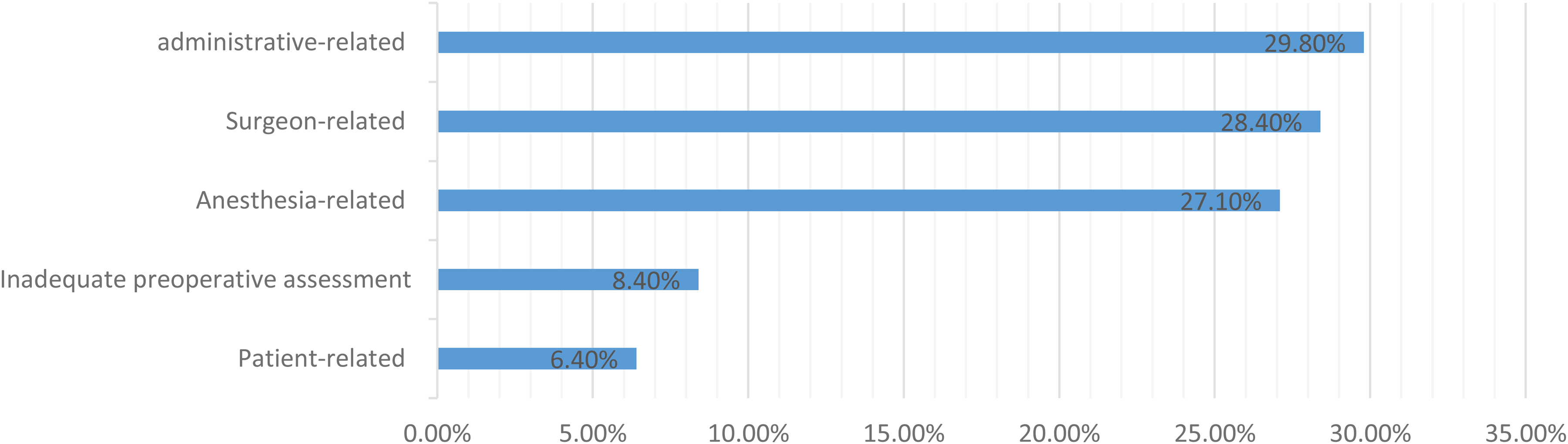
Reasons for same-day cancellations of elective orthopedic surgeries.
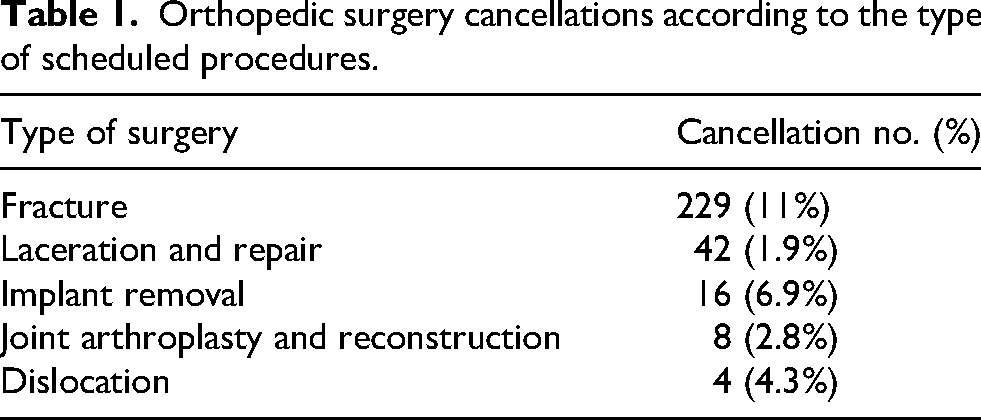
Patient-related factors such as failure to follow preoperative instructions accounted for 6.4% of cancellations, whereas inadequate preoperative preparation contributed to 8.4% of cancellations. Fracture surgery had the highest cancellation rate, accounting for 76.6% (229 patients) of all canceled procedures. Other canceled procedures included laceration and repair surgeries (14%), implant removal (5.3%), joint arthroplasty (2.7%), and dislocation surgeries (1.3%) (Table 1).
Orthopedic surgery cancellations according to the type of scheduled procedures.
The fracture surgery group had the highest frequency of cancellations, with administrative and anesthesia-related factors being the primary reasons (72 (31.4%) and 65 (28.4%) cases, respectively) (Figure 2).
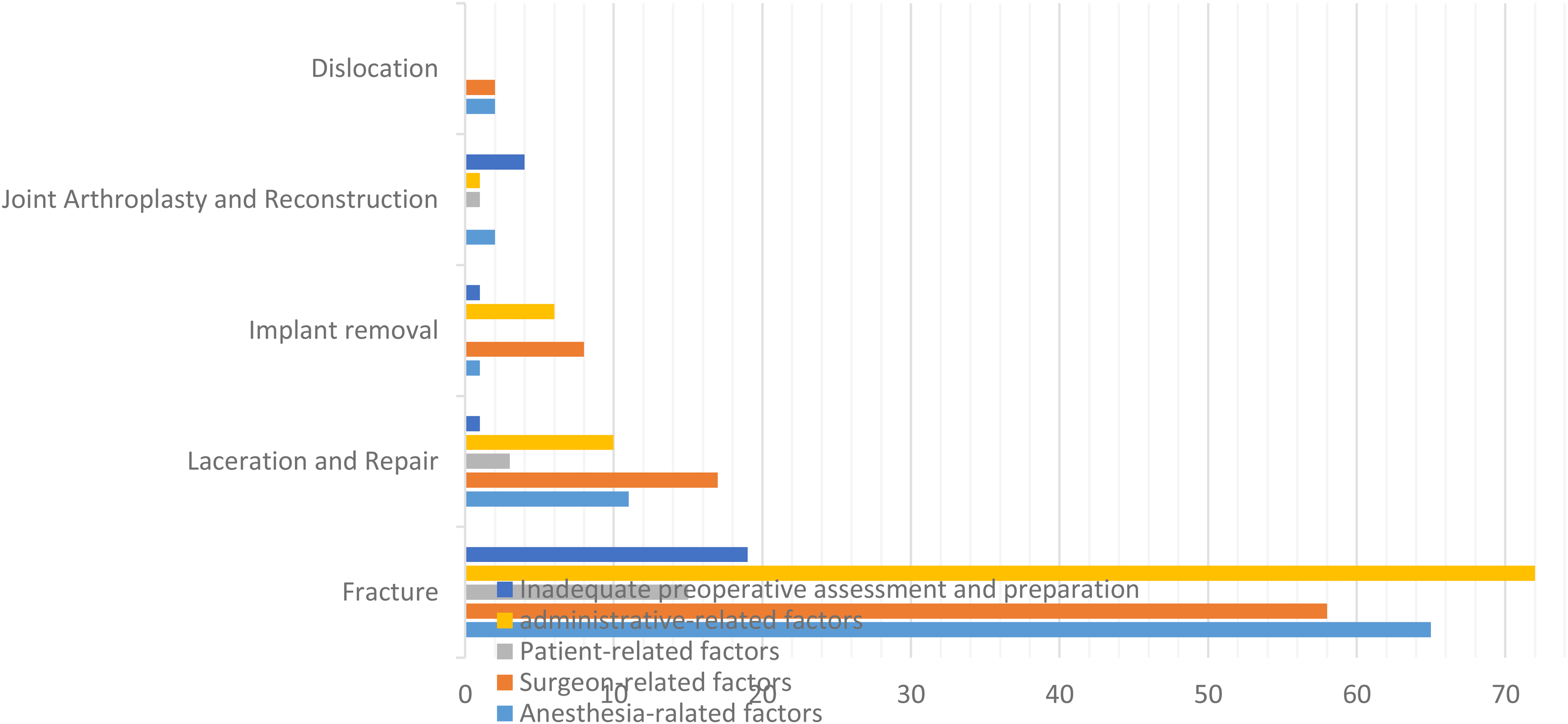
The frequency of reasons for cancellations in different types of orthopedic surgeries.
Most cancellations occurred in November and December, predominantly because of administrative factors, whereas surgeon-related issues were the leading cause in May (Figure 3).
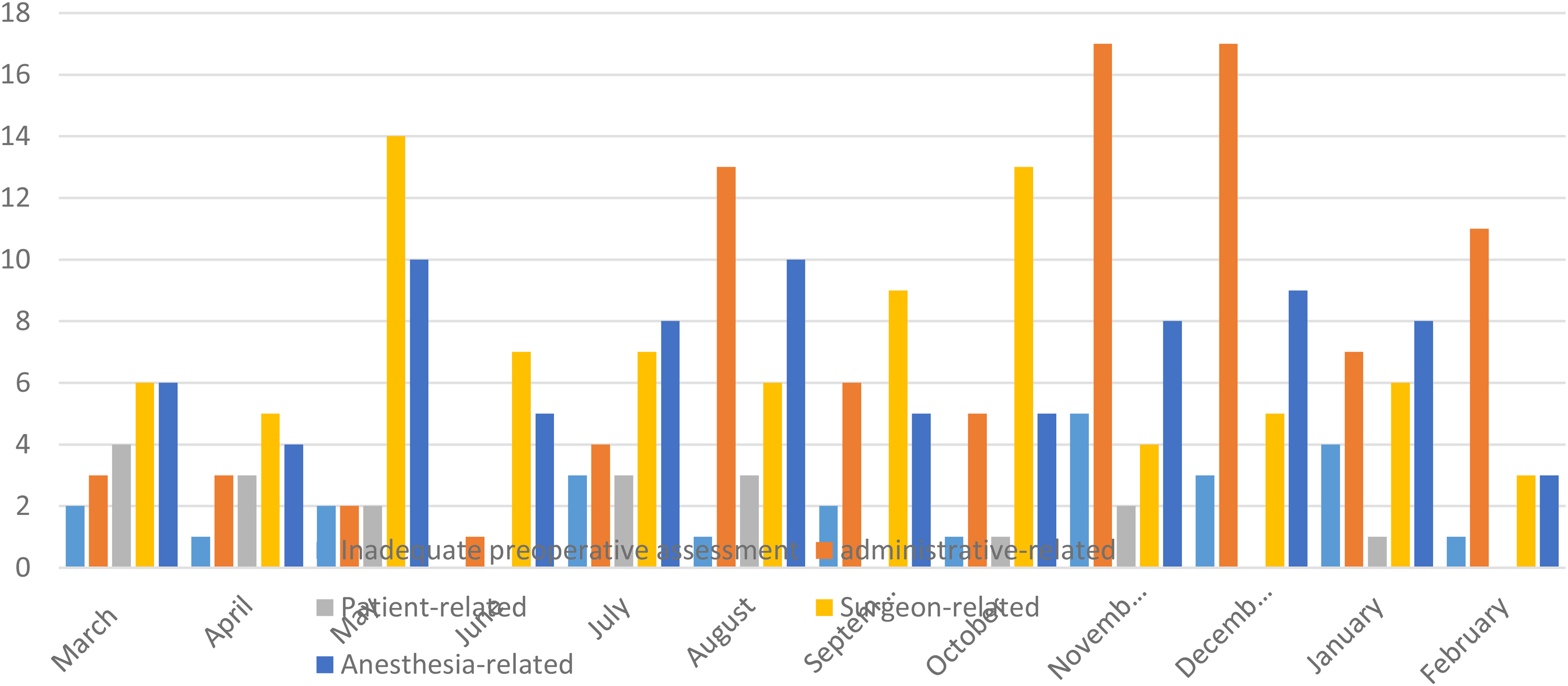
The frequency distributions of orthopedic operation cancellations in different months.
The majority of surgical cancellations occurred in November and December due to administration-related factors, with 17 (47.2%) cases, and 10 (33.3%) cases occurred in May due to surgeon-related factors (Figure 3).
Discussion
Cancellation during elective orthopedic surgery is a major problem in the healthcare system, potentially resulting in various adverse consequences. These factors may include inefficient allocation of hospital resources, negative impacts on patients’ health status, and an increase in the financial burden on both healthcare facilities and individuals seeking treatment. This study aimed to evaluate the frequency and underlying reasons for same-day cancellations of elective orthopedic surgeries at the Educational and Medical Hospital of Poursina over one year.
The magnitude of orthopedic cancellations in this study was 6%, which aligns with similar investigations where cancellation rates ranged significantly from 1.96% to 49%.3,6 This wide range may be attributed to differences in sociodemographic characteristics, study areas, sample sizes, healthcare systems, and methodological approaches. According to an authoritative meta-analysis conducted by Abate et al., the global cancellation rate of elective surgeries on the day of the procedure is 18% (95% CI, 16–20). 14 In contrast, according to Wong et al.'s prospective observational cohort study, 13.9% of the cases scheduled by the National Health Service were canceled on the day of the operation. 15 Cancellation rates are significantly lower in high-income countries, such as <2% in the US, 5 14.3% in Australia, 16 and 4.7% in Finland, 17 whereas developing countries generally report higher rates of cancellation, such as 49% in Nigeria. 6 Variations in the data perfectly demonstrate the influence of national healthcare systems and operational resources on surgical outcomes.
The primary reason for the cancellation of orthopedic surgeries in our survey was administration-related factors, which accounted for 29.8% of all cases (Table 2). This is consistent with the findings of Tayeb et al., who demonstrated that a shortage of ICU beds and other administrative factors are the most common reasons for delays in elective surgeries that require intensive postoperative care. 13 Moreover, a meta-analysis of 33 studies by Abate et al. revealed that the primary reasons for cancellation of orthopedic surgeries are administration-related factors, specifically ICU and ward bed shortages (22%). 14 According to other correlative investigations, insufficient numbers of ICU beds (0.1%–20.7%), high volumes of emergency surgeries (5.2%–21%), and equipment malfunctions in operating rooms (1.2%–11.5%) are also determining factors that contribute to operation rescheduling. 18
Reasons for same-day cancellation of elective orthopedic operation.
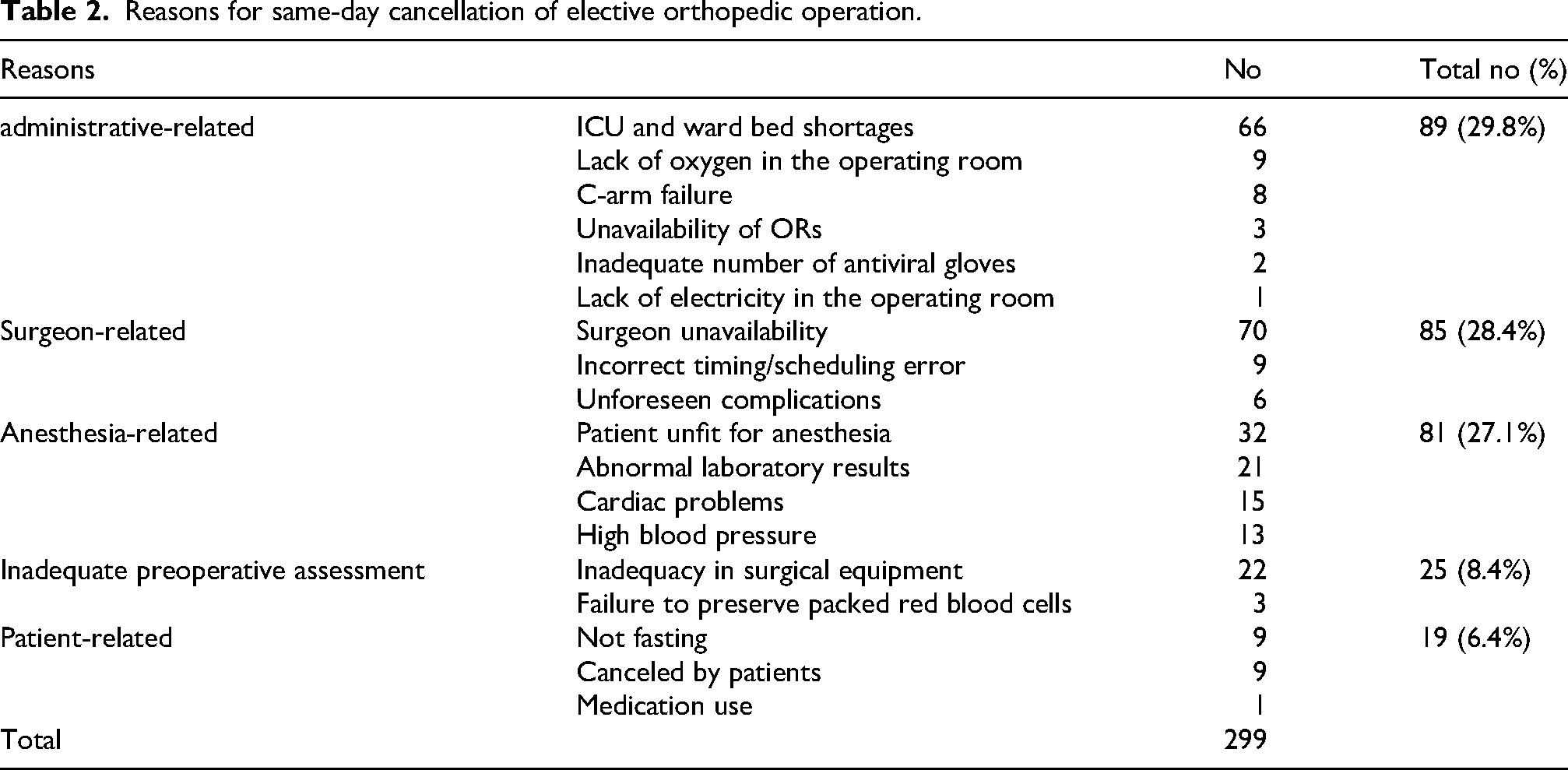
The second most frequent cause of cancellation in this study was surgeon-related factors (28.4%), including surgeon unavailability and scheduling errors. This agrees with the study by Desta et al., in which surgeon-related factors due to other emergency operations or unexpected complications were the most common reasons for canceling elective cases (35.8%). 19 According to previous studies, the main reasons for the lack of surgical time are related to the late start of surgery, the time required for cleaning and preparing the operating room between surgeries, and delays in transferring patients to and from the operating room. Preventing the late start of surgery can be performed with better cooperation between anesthesia and surgical teams.20,21 Garg et al. reported that 59.7% of operations were canceled because of the unavailability of operating rooms. 22 This highlights the importance of organizing a flexible and effective scheduling system for surgeons and surgical teams to manage these challenges.
According to our findings, anesthesia-related factors, accounting for 27.1% of the total cases, also play crucial roles in cancellations, mainly due to abnormal laboratory results, patient unfitness for anesthesia, and medical comorbidities such as diabetes and cardiovascular diseases. 23 These outcomes are consistent with those of previous studies, highlighting the role of preoperative evaluation in anesthesia-related cancellation. Therefore, it is recommended that surgeons evaluate patients for anesthesia issues before they are admitted or placed them on the surgery list and that evaluating patients for anesthesia-related issues not only significantly reduces the rate of surgery cancellations. 22 Knox et al. reported that a complete physical examination of patients and an evaluation of their medical history enabled the detection of potential anesthetic risks and increased their preparedness for surgery, which could decrease the cancellation rate by up to 30%. 24
Patient-related variables accounted for 6.4% of the cancellations in this study. A recent study revealed that these factors, specifically failure to follow preoperative instructions and fasting requirements, are leading causes of surgical delays. These statistics can be decreased by improving effective communication between patients and health care professionals. This can lead to better preoperative follow-up, such as following fasting requirements and subtle medication management of patients, including precise observation of the discontinuation of anticoagulants and similar drugs. 25 Previous research has shown that conducting preoperative phone conversations two days before the operation and regularly reviewing the surgical schedule can significantly decrease the occurrence of cancellations on the day of surgery. Many disorganizations can be prevented if patients are informed of the preparation required for surgery. 26 Our research revealed that the majority of cancellations occurred on the day of the operation while the patients were at the hospital, which resulted in unnecessary fasting and emotional stress. These findings emphasize the importance of associations between physicians, including surgeons and residents, and patients and their families.
One significant conclusion of our study was that fracture surgery, with 76.6% of cancellations, had the highest cancellation frequency. The close association of trauma-related situations, which often require urgent clinical examination and treatment, with fracture surgeries makes patients extremely vulnerable to unscheduled cancellations. 27 According to a survey conducted by Soleymanha et al., the rate of disorganization is higher in fracture procedures because of the competition between emergency and elective surgeries for healthcare resources. 28 University hospitals at the regional level often experience higher referral rates, leading to reduced operating periods, insufficient equipment and beds, surgeon unavailability, and a lack of cross-matched blood, which leads to the cancellation of planned procedures. This challenge can be worse because emergency cases often take precedence over elective cases. 29 Improving the issue of cancellation is a complicated and multifactorial obstacle that can be diminished by sharing experiences and strategies for quality improvement and granting valuable insights to healthcare systems for better adaptation to local needs.
Limitations
Notably, this study has several limitations, including the fact that the long-term consequences of cancellations were not explored because the data were collected from a single hospital over a one-year period. Hence, it may be difficult to extend these results to other orthopedic clinics with various qualities, such as the services provided, size, and case differences. However, the clinical outcomes of delays and cancellations in inpatient rehabilitation operations were not investigated in this study.
Conclusion
According to our study, the overall rate of same-day cancellation for elective orthopedic operations was 6% at our orthopedic research center, with administration-related factors followed by surgeons and anesthesia-related factors as the leading reasons. Fracture surgeries had the highest cancellation rate, primarily due to a shortage of facilities and preoperative preparations for patient anesthesia. The article emphasizes the need to enhance operating room capacity, preoperative assessments, and patient-provider communication to reduce cancellations. Effective communication between physicians and patients regarding unscheduled delays can also play a significant role in the efficient emotional pacification of patients and their clinical management. Additional investigations are needed to explore long-term consequences and enhance the healthcare system to diminish unplanned cancellations.
Supplemental Material
sj-xlsx-1-otr-10.1177_22104917261428696 - Supplemental material for Reasons for elective orthopedic operations cancellation in an educational hospital
Supplemental material, sj-xlsx-1-otr-10.1177_22104917261428696 for Reasons for elective orthopedic operations cancellation in an educational hospital by Mehran Soleymanha, Nima Azadeh, Sara Zamani, Pariya Nazarinezhad Giashi, Arash Aris and Maryam Mousavi in Journal of Orthopaedics, Trauma and Rehabilitation
Footnotes
Acknowledgments
The researchers are thankful to the Orthopedic Research Center of the Poursina Medical and Educational Hospital.

Ethics approval and consent to participate
This study was approved by the Ethics Committee of Guilan University of Medical Sciences, Rasht, Iran, before beginning the research (research ethics certification code: IR.GUMS.REC.1402.161), and all participants provided written informed consent prior to participation.
Authors’ contributions
Development of the original idea and protocol: Mehran Soleymanha. Data collection: Nima Azadeh, Pariya Nazarinezhad Giashi, Sara Zamani. Draft: Sara Zamani, Pariya Nazarinezhad Giashi, Arash Aris. Data analysis: Maryam Mousavi, Pariya Nazarinezhad Giashi, Sara Zamani. Manuscript preparation and revision: All authors. Nima Azadeh, Pariya Nazarinezhad Giashi, and Sara Zamani contributed equally to this work and are listed as second authors.
Funding
The authors received no financial support for the research, authorship, and/or publication of this article.
Declaration of conflicting interests
The authors declared no potential conflicts of interest with respect to the research, authorship, and/or publication of this article.
Availability of data and materials
The datasets used and analyzed during the current study are available from the corresponding author upon reasonable request.
Supplemental material
Supplemental material for this article is available online.
References
Supplementary Material
Please find the following supplemental material available below.
For Open Access articles published under a Creative Commons License, all supplemental material carries the same license as the article it is associated with.
For non-Open Access articles published, all supplemental material carries a non-exclusive license, and permission requests for re-use of supplemental material or any part of supplemental material shall be sent directly to the copyright owner as specified in the copyright notice associated with the article.
