



Abstract
Background/purpose
Cyclists are expected to present with sport-related injuries. The Oslo Sports Trauma Research Center provided exercises for preventing the most common injuries in cycling. We aimed to survey the compliance with Oslo Sports Trauma Research Center exercises among cyclists in the Gulf Cooperation Council countries. It is expected that most cyclists in the Gulf Cooperation Council countries are implementing these exercises as part of their warm-up sessions.
Methods
This cross-sectional online survey collected the participants’ demographic characteristics (country, age, and sex) and assessed their compliance with the programme.
Results
Four-hundred and twenty-three cyclists responded, of which 52% were aged 20–29 years. The pelvic control exercise was the most implemented (56%), followed by the elephant and isolated pelvic rotation exercises (54%); the single-leg pelvic rotation exercise was the least implemented (46%). The implementation rate did not differ significantly according to age or country. Saudi Arabia and Kuwait reported the highest mean implementation scores, while the United Arab Emirates reported the lowest
Conclusions
The implementation rate of Oslo Sports Trauma Research Center exercises was low among cyclists in the Gulf Cooperation Council countries. There is a need to increase awareness between players, programme deliverers, and policymakers and educate them about the importance of implementing such programmes in injury reduction.
Introduction
Participation in regular physical activities such as brisk walking, recreational football and cycling yields well-established health benefits. The popularity of cycling for exercise, recreation, and commuting has been rapidly evolving over the past decades. Moreover, participation in competitive cycling has increased as a form of exercise and leisure activity.1 Consequently, injuries related to cycling are expected to increase. In the same context, prescribing tailored exercises to reduce the likelihood and treat acute injuries and chronic diseases is a topic of current interest in sports science. Bicycle crashes and falls can cause injuries ranging from minor to severe disability or even death in certain situations. In an Australian cohort study of adult cyclists, the estimated crashes per 1000 km cycled were 0.29, with 8% of these crashes demanded medical intervention.2
Most cycling injuries occur due to direct trauma or develop over time as overuse injuries, constituting a broad spectrum of conditions. Simple falls on a roadway can result in minor injuries such as abrasions, contusions, and lacerations. On the other hand, high-energy impacts can lead to fractures, concussions, multisystem polytrauma, or death.3 Out of these injuries, head-related incidents are relatively common. In an Australian study of cycling-related injuries due to motor vehicle crashes, 34% of hospital-admitted cyclists had mild head injuries and 15% had severe head injuries.4 Similarly, in a review of cycling fatalities in Canada, 55% of deaths were caused by head injuries.5 On the other hand, non-traumatic injuries range from overuse injuries (e.g. tendonitis, sprains, and strains) to compression neuropathies (e.g. cyclist's palsy and erectile dysfunction).6,7 A previous study reported that buttock (32.8%), knee (20.7%), neck or shoulder pain (20.4%) were shared among riders. The same study indicated that groin numbness (10%) and palmar pain or paraesthesia (10%) were also common.8
The effectiveness of injury prevention programmes has been proven in reducing overuse injuries. A review reported that injury prevention programmes, including the Nordic hamstring exercises, decreased the risk of hamstring injuries among soccer players.9 In a meta-analysis, it was found that the risk of injury while playing soccer was reduced due to implementing Fédération International de Football Association (FIFA) injury prevention programmes.10
Cyclists sustain many injuries throughout their lives due to repetitive cyclic loading of the joints, resulting in significant strains on supporting structures (the muscles and skeletal system). It can be prevented by consistent adherence to a preventive exercise programme targeted at the high-risk area of loading. Specific exercises can help to prevent overuse injuries during cycling. These exercises include supine leg cross exercise, an effective restorative posture for the iliotibial (IT) band.11 This band can be the primary source of discomfort or pain for runners or cyclists when it is neglected. The supine leg cross exercise improves hip and back flexibility.11 Hip flexor stretch exercises also provide great hip flexibility.11 Ideally, they are performed 2–3 times each, while holding in position for 15–30 s.12 The leg lowering exercise is another exercise that challenges the lower abdominals and activates the hip flexors.13 The hip flexors are predisposed to become tight in cyclists, and the weaker they are, the tighter they will be.13 Additionally, having optimal strength in the lower abdominals and hip flexors can counterbalance the glutaeus, quadriceps, and hamstrings muscle groups.13
An increased number of active players leads to an elevated incidence rate of injuries. Consequently, it will inflate the treatment cost and playing time lost Thus, developing an injury prevention programme is essential to prevent overuse injuries, reducing health care costs, and decreasing the time lost during training.
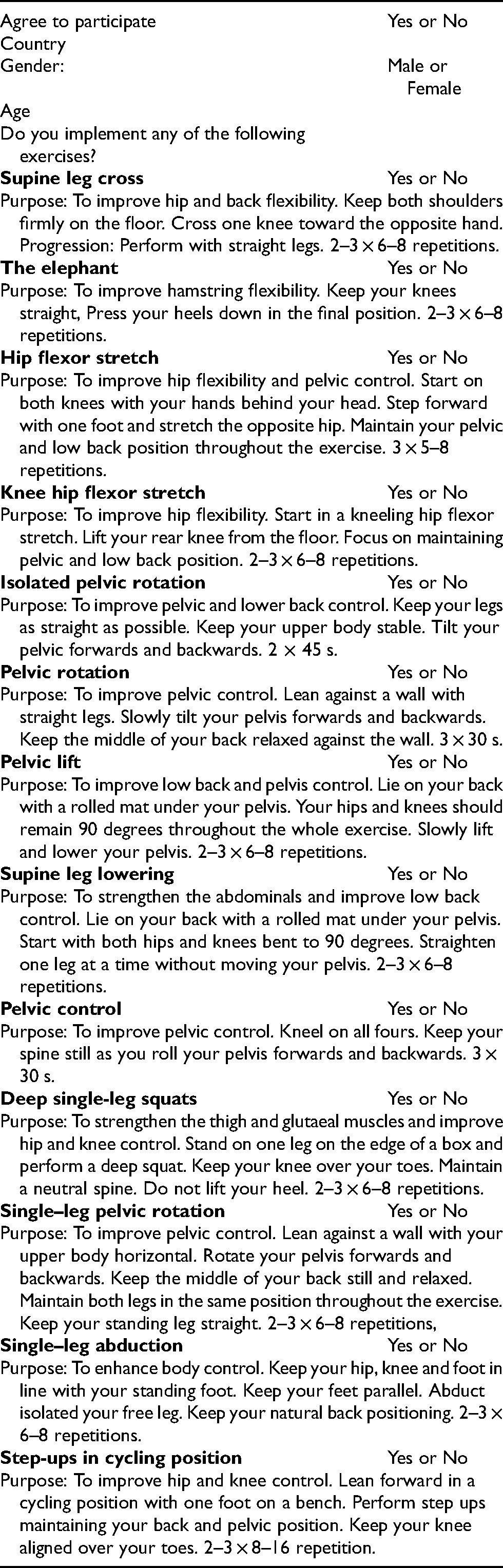
The Oslo Sports Trauma Research Center (OSTRC) was established to provide evidence-based exercises focussed on preventing overuse injuries in popular sports, including cycling. The OSTRC injury prevention programme is effective and available on Skadefri resources on the website (https://fittoplay.org/about-skadefri/about-us/) and mobile application. Skadefri was developed by Olympiatoppen (Norwegian Olympic Committee), the Norwegian High-Performance Centre, and the National Sports Federation, and its mission was better to understand injuries, their mechanism, and prevention. The Skadefri library contains resources of the best techniques that can be used to prevent the most common injuries for more than 50 sports. The OSTRC cycling injury prevention programme includes 13 injury prevention exercises: supine leg cross, elephant, hip flexor stretch, knee hip flexor stretch, isolated pelvic rotation, pelvic rotation, and pelvic lift. It also includes supine leg lowering, pelvic control, deep single-leg squats, single-leg pelvic rotation, single-leg abduction, and step-ups in the cycling position. The OSTRC questionnaire was reported to be valid and reliable and translated to other languages. It has an excellent ability to determine players who have an injury and health problem than those who do not.14
Although numerous studies of injury prevention programmes use different protocols, no study has investigated the implementation of OSTRC cycling injury prevention exercises to prevent injuries among cyclists. We hypothesised that more younger cyclists implement such exercises compared to older ones. Therefore, this study aimed to survey the implementation rate of OSTRC prevention exercises among cyclists in the Gulf Cooperation Council (GCC) countries and correlate it with the participants’ demographic characteristics such as age and country. The current study will provide insights into specific mentioned countries and age groups about employing the OSTRC cycling injury prevention programme. Therefore, it will provide suitable recommendations to cyclists, coaches, and policymakers to raise the awareness level.
Methods
Survey development
The study was based on a cross-sectional online questionnaire targeting cyclists in the GCC countries. However, no validated questionnaire addresses the cyclists’ injury prevention programmes to the authors’ knowledge. Therefore, the authors developed the questionnaire of the current study to collect information from cyclists about the implementation of injury prevention exercises to prevent the most common injuries during cycling. All participants must be elite cyclists participating in at least 3 h of cycling per week.
The questionnaire comprised two sections: The first section consisted of questions covering the cyclist's demographics, including the country of residence, age, and sex. The second section of the questionnaire assessed the implementation of the OSTRC cycling injury prevention programme, and the questions were to be answered as ‘yes’ or ‘no’. All questions were considered quantitative, and no open-ended questions were asked. The survey was developed in English and Arabic and supported by videos demonstrating each exercise (Table 1).
The survey questionnaire.
Survey validity and reliability
Face validity and pilot testing were performed before starting the study. First, the questionnaire was distributed to 30 cyclists, who were a representative sample of the final testing cohort due to their varying levels of experience, to assess the validity of each question. The pilot study participants were requested to rate the core questionnaire questions related to implementing injury prevention programmes for appropriateness, clarity, and comprehension based on a scale from 1 to 5. Questions scoring an average below 4.0 points on any of the parameters were discarded. Second, to assess the construct validity, the questions were divided into three subcategories to evaluate the structure of the three questions in terms of clarity, comprehension and appropriateness. It resulted in the following combinations related to stretching exercises (4 questions × 3), pelvic rotation and mobility exercises (5 questions × 3), and muscle activation exercises (4 questions × 3). It was determined using the exploratory factor analysis (EFA) adequacy and principle component analysis (PCA) with varimax rotation. Lastly, Cronbach's alpha test was utilised to measure the internal consistency.
Survey distribution and administration
The study's sample size was calculated using Raosoft (Raosoft, Inc., USA) to have a representative sample. According to the World Bank, about 54 million people live in the six countries based on the estimated figures of the GCC population.15 Thus, considering a 5% margin of error at a 95% confidence level, the recommended sample size was estimated at 385 participants.
Cyclists in the GCC countries were invited to complete an online survey to achieve the sample size. About 500 invitations were sent by the Bahrain Cycling Association, Kuwait Athletic and Cycling Federation, Oman Cycling Association, Qatar Cycling Federation, and Saudi Cycling Federation to male elite cyclists. The invitation provided a brief background of the survey and encouraged cyclists to participate. The invitations were distributed from June to October 2020, and responses were voluntary and anonymous.
During this period, the coronavirus disease 2019 (COVID-19) pandemic was ongoing, and most countries, including the GCC countries, had implemented quarantine measures to prevent the spread of the disease. Therefore, the cyclists were administered an online survey through the appropriate association/federation. The survey was completed anonymously and electronically via Google Forms (Alphabet Inc., Mountain View, California, United States) and was limited to one response.
Statistical analysis
Statistical analysis was performed using Statistical Package for the Social Sciences (SPSS) version 24. (IBM Corp., Armonk, New York, United States). Frequencies and percentages of all nominal variables and mean standard deviation (SD), median, and range for the total score were calculated. The total score was calculated as the overall number of exercises performed by each participant out of thirteen exercises. One-way analysis of variance was used to compare the total scores among GCC countries. In addition, the Student's t-test was used to compare the total scores of the two independent age groups (20–29 and 30–39 years). Finally, the chi-square test was used to compare the GCC countries and the two age groups. Statistical significance was set at P < 0.05. The research project was reviewed and approved by the Biomedical Ethics Committee of Umm Al Qura University (approval number: HAPO02K012202010465). Informed consent was obtained from each participant before data collection.
Results
The cyclist, who participated in the pilot study, thought the questions were clear, comprehensible, and appropriate, with scores above averages of 4.5 (Table I, supplementary material). For the stretching exercises-related questions, the 12 questions included in the EFA analysis identified that the three components (clarity, comprehension and appropriateness related to the first question explained 70.4% of the variance in the data related to these questions. Regarding the mobility exercises questions, three components related to the first question and one component related to the second question explained 79.2% of the variance in the data. Lastly, the three components related to the first question of the muscle activation exercises explained 71.3% of the data (Tables II, III and IV, supplementary material). Commonalities of the 34 components ranged from 0.503 to 0.929, indicating that these questions are rated high for clarity, comprehension, and appropriateness. However, questions 2, 3, 7, 8 and 12 showed slightly lower extraction values for comprehension ranging from 0.429 to 0.486. To resolve the issue, all questions were supplemented with videos (Table V, supplementary material). Cronbach's alpha values were 0.87, 0.87 and 0.88 for the stretching, mobility, and muscle activation exercises consecutively, indicating a high level of internal consistency.
The response rate was 84.6%, with 423 male elite cyclists participating in this study. Most of the cyclists (52%) aged 20–29 years (n = 220). The highest participation rate was from Kuwait (18%, n = 76), followed by Saudi Arabia and Oman (17%, n = 72 each). In comparison, the lowest response rate was reported from the United Arab Emirates (14.9%, n = 63), as shown in Table 2.
Demographic characteristics of the participants.
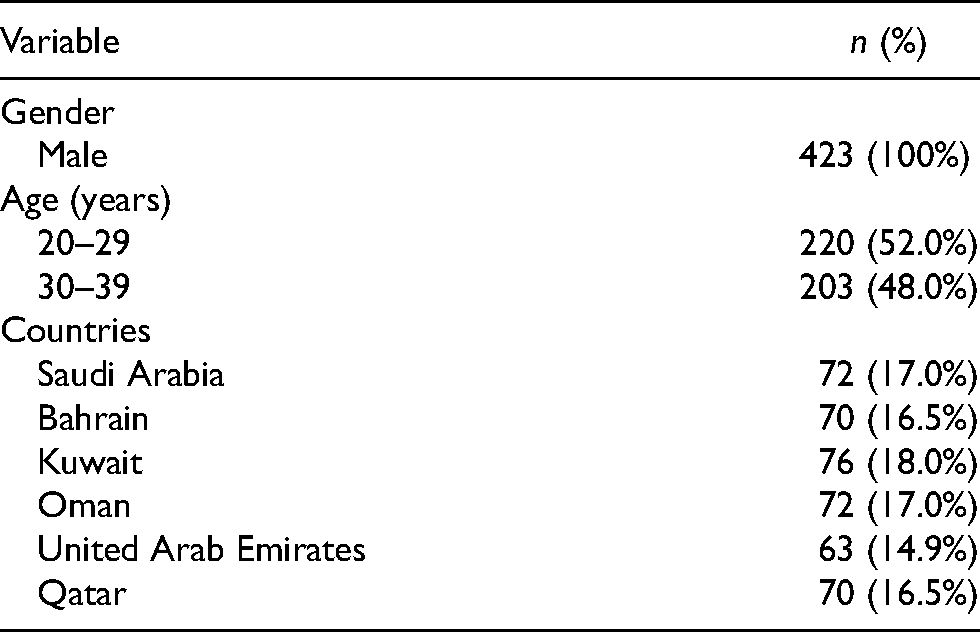
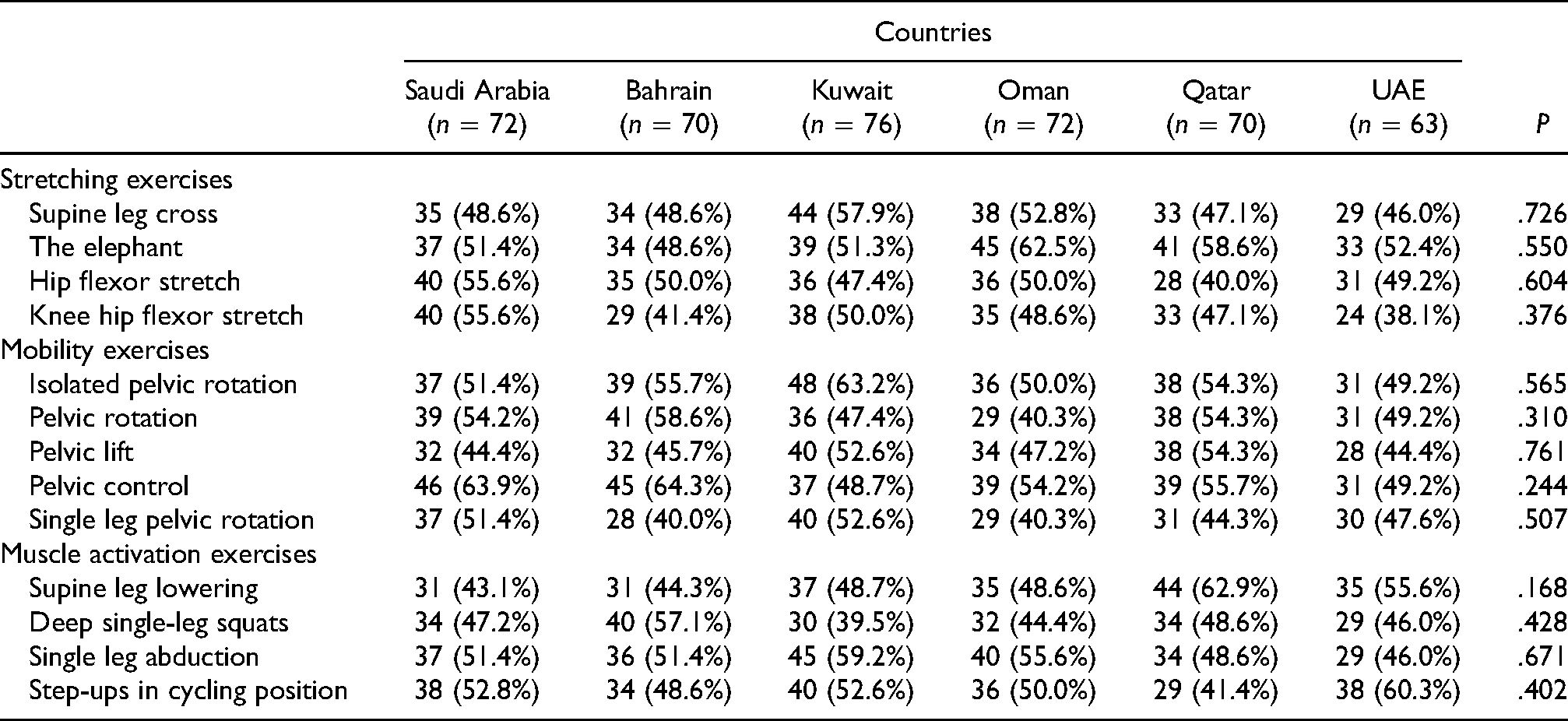
The elephant exercise was the most implemented (54.1%, n = 229), followed by the supine leg cross (50.4%, n = 213) for the stretching exercises. Regarding the mobility exercises, the pelvic control and isolated pelvic rotation exercises were the most common (56.0% and 54.1%, n = 237 and 229, consecutively). Single leg abduction (52.2%, n = 221) and step-ups in cycling position (50.8%, n = 215) were commonly applied as muscle activation exercises. The percentages of respondents who implemented each of the assessed injury prevention programmes are shown in Table 3.
Cycling injury prevention exercises implementation rate.
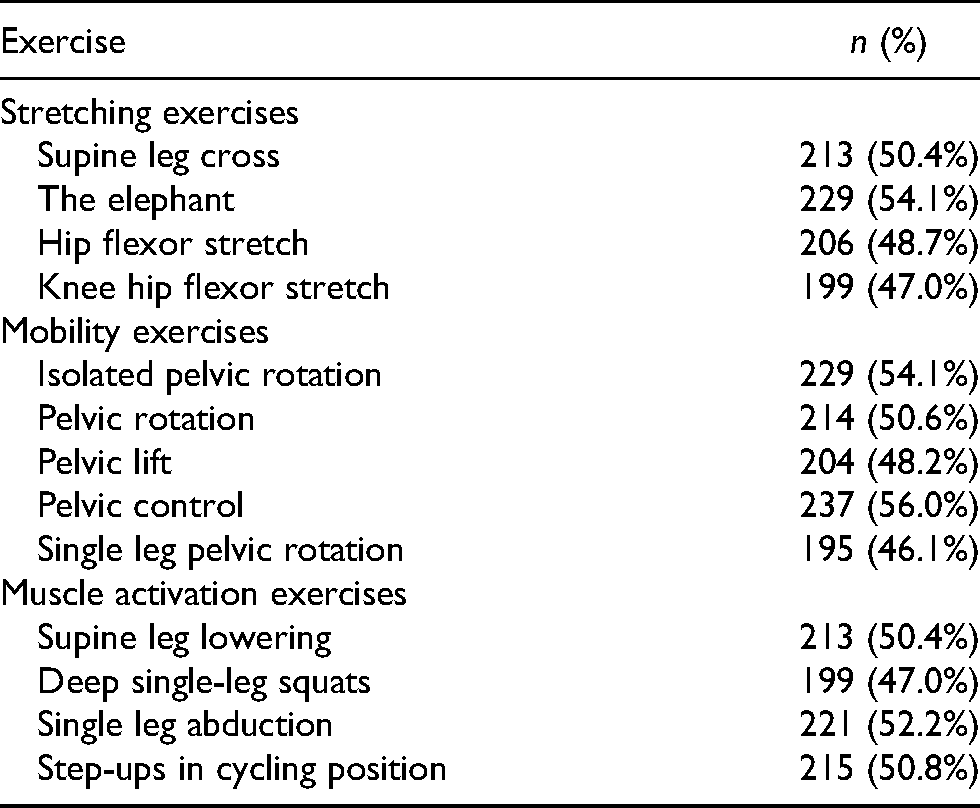
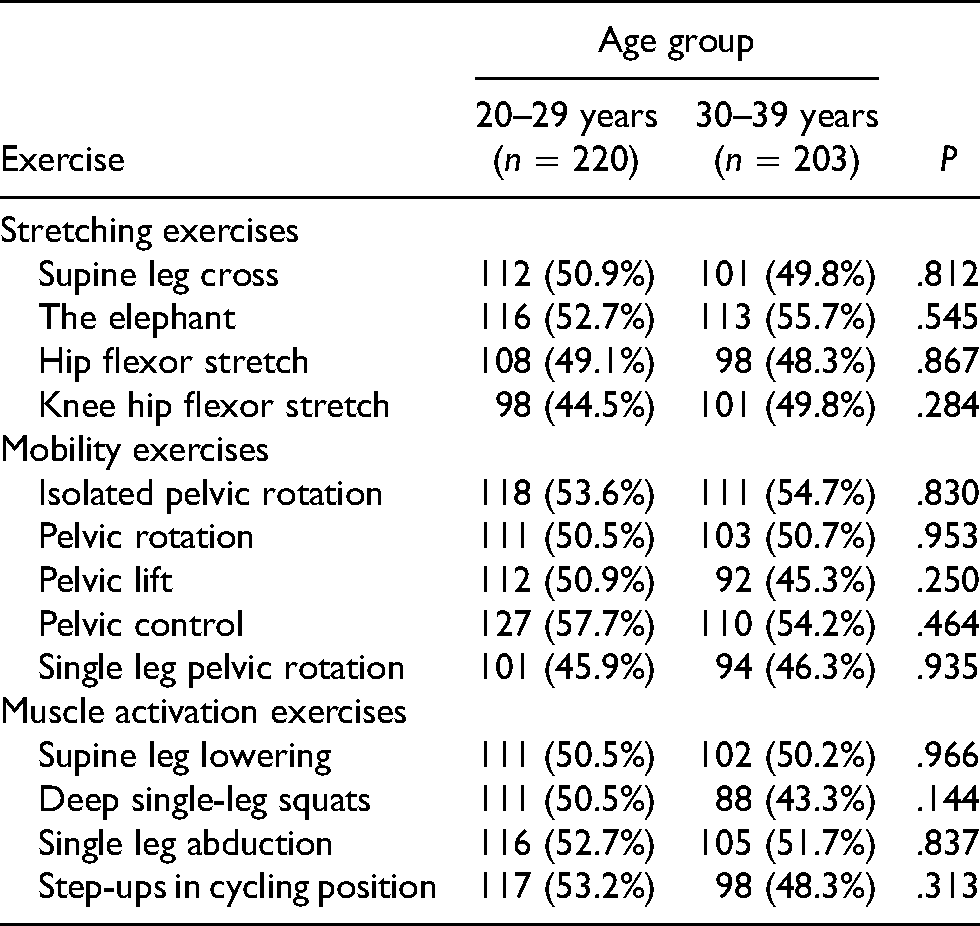
Concerning the age groups, the results revealed no statistically significant differences between those aged 20–29 and 30–39 years in implementing the stretching (P = 0.867), mobility (P = 0.953) and muscle activation exercises (P = 0.966) (Table 4). Similarly, comparable results with no statistically significant differences were obtained when comparing the implementation rates by country for the stretching (P = 0.726), mobility (P = 0.761) and muscle activation exercises (P = 0.671) (Table 5).
Cycling injury prevention exercises implementation comparison between age groups.
Cycling injury prevention exercises implementation comparison among the Gulf Cooperation Council (GCC) countries.
Overall, the total mean (±SD) score was not significantly different between the age groups (P = 0.407). It was slightly higher in the 20–29 years age group than in the 30–39 years age group (6.627 ± 1.9 vs 6.483 ± 1.6), as shown in Table 6. Based on the country, the highest scores of 6.71 (±1.74) and 6.71 (±1.92) were for Saudi Arabia and Kuwait, respectively. In contrast, the lowest mean score of 6.33 (±1.62) was observed in the United Arab Emirates. However, the differences were not statistically significant (P = 0.805), as shown in Table 7.
Comparison cycling injury prevention exercises implementation total score between the age groups.
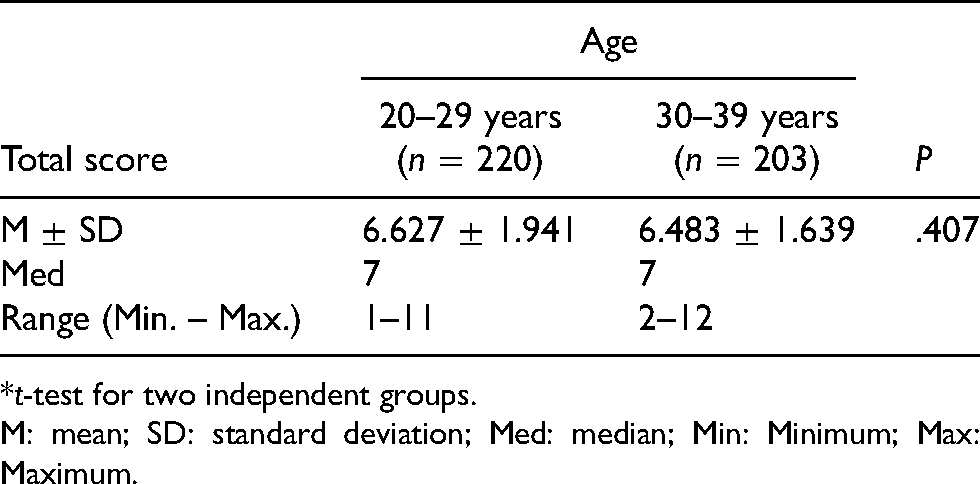
*t-test for two independent groups.
M: mean; SD: standard deviation; Med: median; Min: Minimum; Max: Maximum.
Comparison of the cycling injury prevention exercises the total score implementation among the Gulf Cooperation Council (GCC) countries.
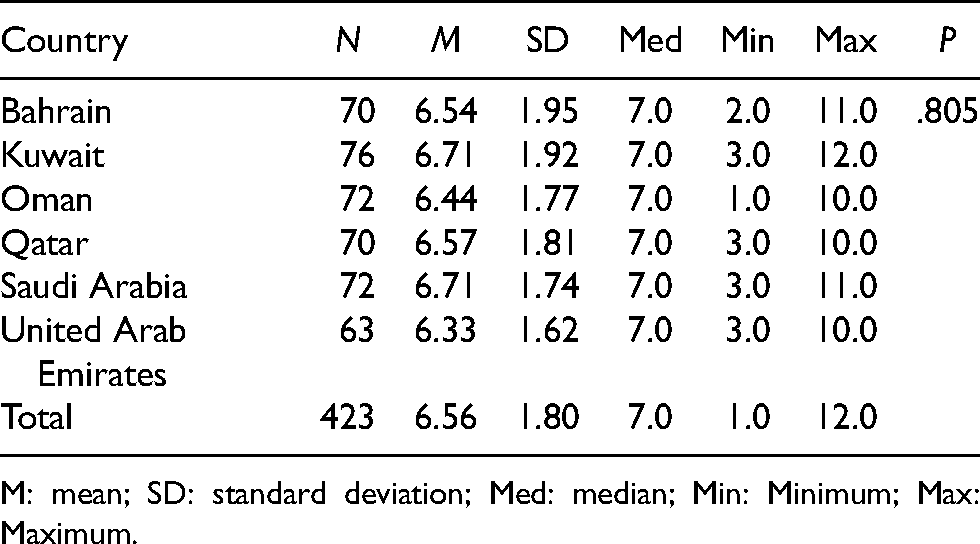
M: mean; SD: standard deviation; Med: median; Min: Minimum; Max: Maximum.
Discussion
This study aimed to investigate the implementation of OSTRC cycling injury prevention exercises among cyclists in the GCC countries and correlate it with the demographic characteristics of the participants. To the best of the author's knowledge, this is the first study to assess the implementation of evidence-based injury prevention exercises for cyclists in the GCC countries. The results of the current study indicated poor overall implementation rates of cycling injury prevention exercises among cyclists.
The scarcity of data regarding this topic made it exceedingly difficult to compare our results. However, many injuries experienced by cyclists throughout their active years of training are sustained owing to repetitive cyclic loading on the joints. Common problems and injuries among cyclists can be prevented by adhering to a preventive exercise programme targeting high-risk areas. Large-scale randomised controlled trials have revealed that exercise-based prevention programmes can reduce the incidence of injuries among football players and other sports.16 Since 2000, there has been a rapid growth in the volume of published research on injury prevention programmes.16–18 Knee control exercise programmes, including strength, core stability, and jumping/landing exercises, were found to reduce the rate of anterior cruciate ligament injuries by 64% in a trial involving more than 4500 adolescent female players.17 Other studies revealed that the overall reduction in injury rates after implementing the FIFA 11 + program18 was 32% among elite female athletes,19 41% among elite males,20 and 46% among collegiate male football players.21 Furthermore, Edouard et al.22 found scientific evidence that regular implementation of injury prevention programmes could reduce injury-related complaints in the short and long term.
In contrast to the study by McCall et al.,23 who reported general high compliance to injury prevention measures, cyclists in the current study were generally non-compliant in following the injury prevention exercises. The low implementation rate in the current study may be due to a lack of knowledge about these exercises, barriers to implementing them, lack of time, or unavailability of the required equipment. Moreover, the authors believe that the lack of formal or semi-formal training programmes, workshops or courses by qualified trainers may be one reason behind the reported implementation rates. Also, cycling as a sport is not widely practised compared with other common sports. Football, on the other hand, is more famous and more played on a broader scale. As a result, it receives significant media coverage, financial support, sponsorship, and investment. However, no official figures were reported about the financial support of the GCC football clubs and teams. Additionally, football federations, which oversees the game, are well established in the region and provide centralised and organisational support. To be more specific, first league football teams consist of well-established coaching, training, and medical personnel, unlike cycling teams, which do not receive such support. Thus, it is logical that professional cyclists do not implement injury prevention exercises.
Like any other sport, cycling is challenged by the high prevalence of physical inactivity in certain countries. Thus, implementing injury prevention programmes in an environment that fosters physical inactivity is another challenge in itself. The systematic review by Chaabane et al.,24 identified the barriers and facilitators related to physical activity in the Middle East and North Africa. The authors identified that the most significant barriers were the sweltering weather, unavailability of appropriate sporting facilities, time, support, and socio-cultural norms. Moreover, increasing age, lower education level, being female and married were also identified as obstacles. Similar results were reported by Burton et al.25 about the barriers and enablers of physical activity among female university students from the United Arab Emirates.
The OSTRC cycling injury prevention programme (including the 13 exercises) can be implemented without specific gymnasiums or instruments. Therefore, players, programme deliverers, and policymakers should be aware of injury prevention exercises. It can be achieved through embedding injury prevention programmes within coaches education using workshops, social media, apps, and websites. Cyclists’ compliance with the implementation of injury prevention programmes could be improved by providing adequate supporting materials (manuals, apps, and online resources), training, feedback, and mentoring.
The current study has some limitations, including the small sample size and the restriction to reach participants from the GCC countries. Therefore, the results of our study cannot be generalised globally. In addition, as the data were retrospective and self-reported, bias was probable. Moreover, the participants were not asked about the reasons behind not implementing the injury prevention exercises. Despite these limitations, the current study is considered the first study to address this topic in GCC countries. Thus, its results are significant for sports medicine authorities, coaches, and physical therapists working in these countries. However, there is a need for further large-scale prospective studies that address the causes of non-implementation or non-compliance with injury prevention programmes among cyclists and other sports.
Conclusions
The implementation rate of OSTRC cycling injury prevention exercises among cyclists in the GCC countries is low. Thus, there is a difference between awareness and implementation. However, further effort needs to be made to educate coaches and athletes about the importance of implementing the OSTRC cycling injury prevention programme in injury reduction to enhance the use of this programme. It can be reached by conducting several seminars and workshops to educate players, programme deliverers, and policymakers about the importance of such programmes.
Supplemental Material
sj-docx-1-otr-10.1177_22104917211039520 - Supplemental material for The current implementation of Oslo Sports Trauma Research Center cycling injury prevention exercises among male elite cyclists in the Gulf Cooperation Council
Supplemental material, sj-docx-1-otr-10.1177_22104917211039520 for The current implementation of Oslo Sports Trauma Research Center cycling injury prevention exercises among male elite cyclists in the Gulf Cooperation Council by Wesam Saleh A Al Attar, Mohamed A Husain, Ramy Komir, Khulud Alanazi and Hussain Ghulam in Journal of Orthopaedics, Trauma and Rehabilitation
Footnotes
Acknowledgements
The authors thank all the cyclists who participated in this study.
Declaration of conflicting interests
The authors declared no potential conflicts of interest with respect to the research, authorship, and/or publication of this article.
Funding
The authors received no financial support for the research, authorship and/or publication of this article.

Supplemental material
Supplemental material for this article is available online.
References
Supplementary Material
Please find the following supplemental material available below.
For Open Access articles published under a Creative Commons License, all supplemental material carries the same license as the article it is associated with.
For non-Open Access articles published, all supplemental material carries a non-exclusive license, and permission requests for re-use of supplemental material or any part of supplemental material shall be sent directly to the copyright owner as specified in the copyright notice associated with the article.
