




Abstract
The objective of this bibliometric literature review was to identify and analyze the most frequently cited manuscripts on the topic of periprosthetic joint infection. Periprosthetic infection following joint arthroplasty is a complication leading to rising rates of mortality and increasing economic strain. No prior study has evaluated the most impactful literature on the topic of periprosthetic joint infection (“PJI”) in total hip and knee arthroplasty. Knowledge and appreciation of the most influential publications on this topic can guide and inspire future research endeavors. Using the Clarivate Analytics Web of Science database, the 50 most cited articles related to periprosthetic infection following joint arthroplasty were identified. Numerous metrics including citation frequency, year of publication, country of origin, level-of-evidence (LOE), article type, and contributing authors/institutions were recorded. The seven most cited articles (per year) during the past 10 years were also identified. The years of publications of the articles included in the final analysis ranged from 1969 to 2014. “Current concepts: Prosthetic-joint infections” by Zimmerli et al. was the most frequently cited article. Level of Evidence (“LOE”) of 2 and 3 were the most common. Clinical outcomes was the most common article type. Mayo Clinic and Thomas Jefferson University produced the most publications. Hanssen and Parvisi were the most productive authors. 2000–2009 (n = 25) was the most prolific decade in terms of number of publications. Using citation analysis as an indication of influence, the most influential articles on periprosthetic joint infection were highlighted. Analysis of the most recognized publication on PJI provides an enhanced understanding of the diagnosis, treatment, and future research of PJI. Future studies may combine the search results of multiple databases including Scopus, Web of Science and PubMed to rectify any discrepancies in citation data and to capture additional literature on PJI.
Keywords
Introduction
Total joint arthroplasty (TJA), including total hip arthroplasty (THA) and total knee arthroplasty (TKA), is a well-known treatment for osteoarthritis. 1 With a large aging population, the demand for these procedures is projected to grow substantially. In 2009, 438,000 THAs and 686,000 TKAs were performed in the United States. 2 A recent report by Singh et al. projected the annual number of primary THAs and TKAs done in the United States to grow by 284% (1.43 million) and 401% (3.42 million), respectively by the year 2040. 3 As the rate of TJA increases, so do the number of associated complications.
Periprosthetic joint infection (PJI) continues to be a difficult to manage complication for both the patient and the orthopedic surgeon with rising rates. Data extrapolated from the Nationwide Inpatient Sample revealed that between 2001 and 2009 the annual incidence of PJI in the United States increased from 1.99% to 2.18% for THAs and 2.05% to 2.18% for TKAs. The economic strain of PJIs is substantial, costing the United States healthcare system $566 million in 2009 with a projected increase to $1.62 billion by 2020. 4 Although the economic impact of PJIs is large, the burden falls heaviest on the patient. Studies have shown that mortality in patients undergoing revision arthroplasty for PJI (up to 25.9% at 5 years) is as much as five-fold greater than the mortality in patients receiving revision for aseptic failures. 5
For treating orthopedic surgeons, a solid understanding of fundamental publications in PJI is crucial to adequately address this issue. A commonly used method for evaluating the level of influence of a publication is the number of citations. While there are other gauges of quality, citation frequency can establish “classic” articles which have greatly influenced practice and future research. 6 In recent years, there has been an effort to identify the most relevant articles in medical specialties, such as orthopaedics, through identification of the most cited works in the field. 7 Citation analysis has previously been used in various topics in orthopaedics, including hip and knee arthroplasty, ankle arthroplasty, elbow surgery, spine surgery, and sports medicine. 8 –14 At this time, there have been no studies investigating the most highly cited articles on the topic of PJI in total hip and knee arthroplasty.
The extensive impact of PJIs on patients and the economy, combined with the projected increase in TJA procedures and subsequent increase in PJIs in the future, has led to a recent escalation in PJI research. The objective of this study is to conduct a bibliometric analysis of the top 50 most cited scientific articles pertaining to PJIs after total hip or knee arthroplasty to identify which articles drive our current understanding, as well as identify potential knowledge gaps to direct future research.
Methods
Clarivate Analytics Web of Science is a comprehensive indexing database containing citation data. Web of Science contains an expansive collection of articles from over 18,000 journals, and clinical medicine is the domain with the most citations. The database calculates citation data, which allows authors to assess the relative influences of specific journals and journal articles. 15,16 There are numerous alternative databases containing medical research articles such as PubMed, Google Scholar, and Scopus. Both Scopus and Web of Science contain detailed citation data and scientometric analytical capabilities. However, Web of Science covers articles published within the largest time frame, ranging from 1900 to present. Web of Science contains analysis capabilities on article information including country of origin, institution of origin, article classifications, journal names, and funding agencies. 16,17
A Web of Science query was conducted to accumulate the most highly cited journal articles pertaining to infection following hip or knee arthroplasty. An initial search was conducted on April 4, 2019 using the following search terms: (“Arthroplasty” OR “Total Joints” AND “Hip” AND “Knee” AND “Infection”). The authors realized that the search terms limited the results to articles pertaining to both the hip and the knee. After discussion among authors, the search terms were adjusted in order to encompass publications related to either the hip, or the knee, or both, thus, yielding more exhaustive search results. The search terms of the second search were as follows: (“Arthro*” OR “Total Joint” AND “Hip” OR “Knee” AND “Infection”). This second search was conducted on April 9, 2019. The results of the first and second searches were combined in the same Excel file for further analysis. The results consisted of a total of 151,260 publications. Filters were placed on the search results such that all publications were limited to peer-reviewed articles written in English. No additional filters were implemented. The results were sorted by descending number of citations, excluding self-citations.
The article titles were screened sequentially for inclusion using a multi-step, two-author screening process. Step 1 consisted of sorting articles by descending number of citations and then sequentially reviewing the title and abstracts of the search results until 60 articles related to PJI were identified. A total of 763 citations underwent initial screening review, 703 out of 763 articles were excluded based on article topic, leaving 60 articles for full review. Step 2 consisted of abstract and manuscript review of the 60 articles retained in Step 1. The 50 most cited articles pertaining to total hip and knee arthroplasty infection were isolated for full bibliometric analysis (Figure 1).
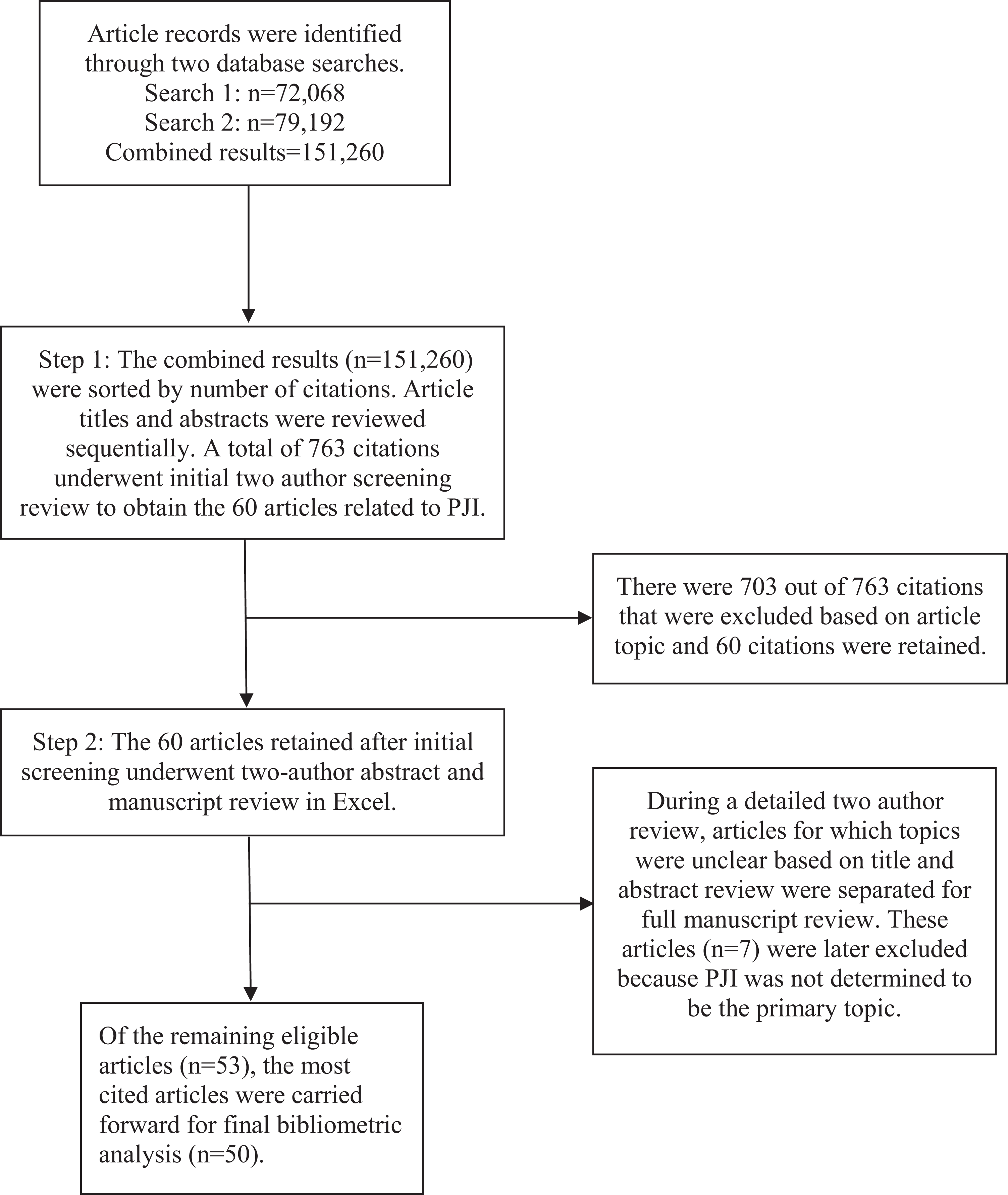
Modified PRISMA flowchart.
Level of evidence (LOE) and article types were assigned for each article by author review. Article type categories consisted of the following: Surgical technique, Clinical outcomes, Anatomy (Cadaver), Natural history, Epidemiology, Clinical description, Classification, Conservative therapy, Clinical guidelines, Imaging, Genetics, Questionnaire Development, Physical Examination, Technique, Pathogenesis, and Biomechanics. Articles were assigned to one category by two independent reviewers. Uncertainties within the data were discussed and rectified by a third independent reviewer.
Numerous additional characteristics were analyzed: citation frequency per year, citation frequency in the calendar year prior to the search (2018), publication year and decade, journal sources and associated Cite Scores, authorship, institutional contribution, and country of origin. Cite Score is a citation metric used to rank journals and is determined by the number of citations of articles published within a journal in a given time period and the number of papers published by that journal in the same time period. 18 Order of authorship was not considered in the analysis of author contribution. Authors and institutions that contributed to at least three papers within the top 50 list were reported.
Preferred Reporting Items for Systematic Reviews (PRISMA) guidelines and checklist items were followed in guiding the various steps of our methods: defining our criteria, sourcing data, designing a search strategy, removing duplicate results, specifying screening criteria, and reviewing search results using a multi-step author review.
Results
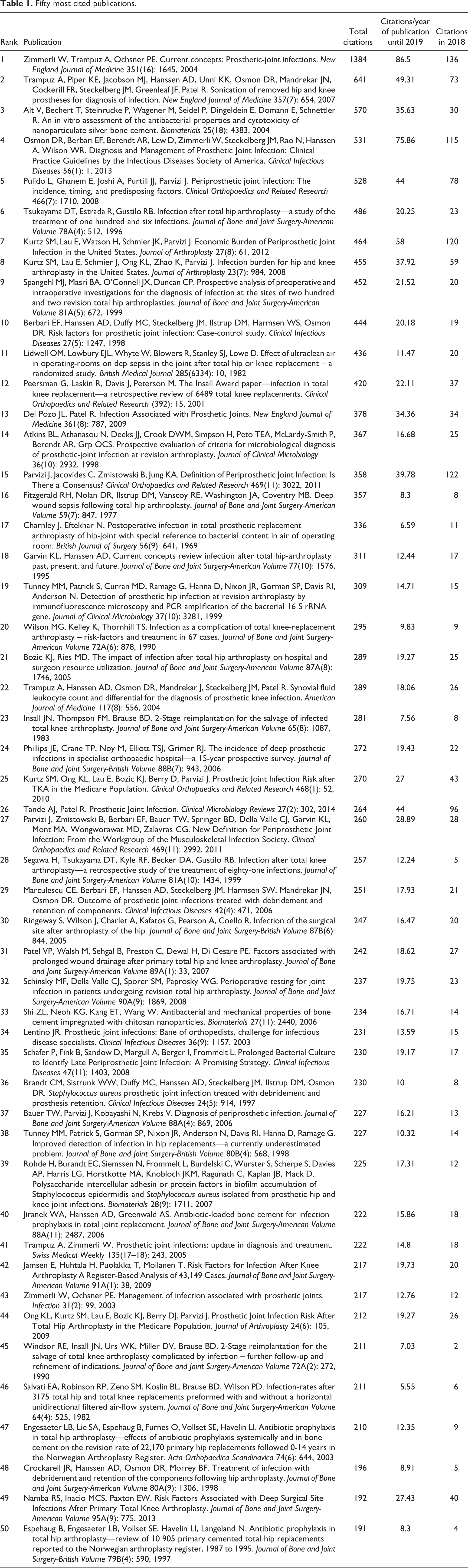
Publications ranged from 1969 to 2014 (Table 1). The peak years that produced the most articles were 2006 (n = 5) and 2008 (n = 4). The total number of citations of all articles within the list was 16,586, with a mean of 331.7 citations per article. The average number of citations per year for a given article, calculated from the year of publication until 2019, was 22.6. “Current concepts: Prosthetic-joint infections” by Zimmerli et al. and published in the New England Journal of Medicine, contained both the highest number of total citations at 1,384, and the highest average number of citations per year at 86.5. 19 The second ranked article was “Sonication of removed hip and knee prostheses for diagnosis of infection” by Trampuz et al., with 641 total citations. 20 The third most cited article was “An in vitro assessment of the antibacterial properties and cytotoxicity of nanoparticulate silver bone cement” by Alt et al., with 570 total citations. 21
Fifty most cited publications.
The most common Level of Evidence (LOE) was Level II (n = 20) and Level III (n = 19). The breakdown of the LOE are the following Level I (n = 2), Level II (n = 20), Level III (n = 19), Level IV (n = 5), and N/A (n = 4) (Figure 2). The four articles classified under N/A were comprised of basic science literature that did not fit LOE guidelines set forth by the Oxford Centre of Evidence-based Medicine guidelines. 22 Articles were also assessed by article topic. From the 8 categories of article type, clinical outcome articles (n = 19) were the most frequent, followed by review articles (n = 9), and clinical guideline papers (n = 8) (Figure 3).
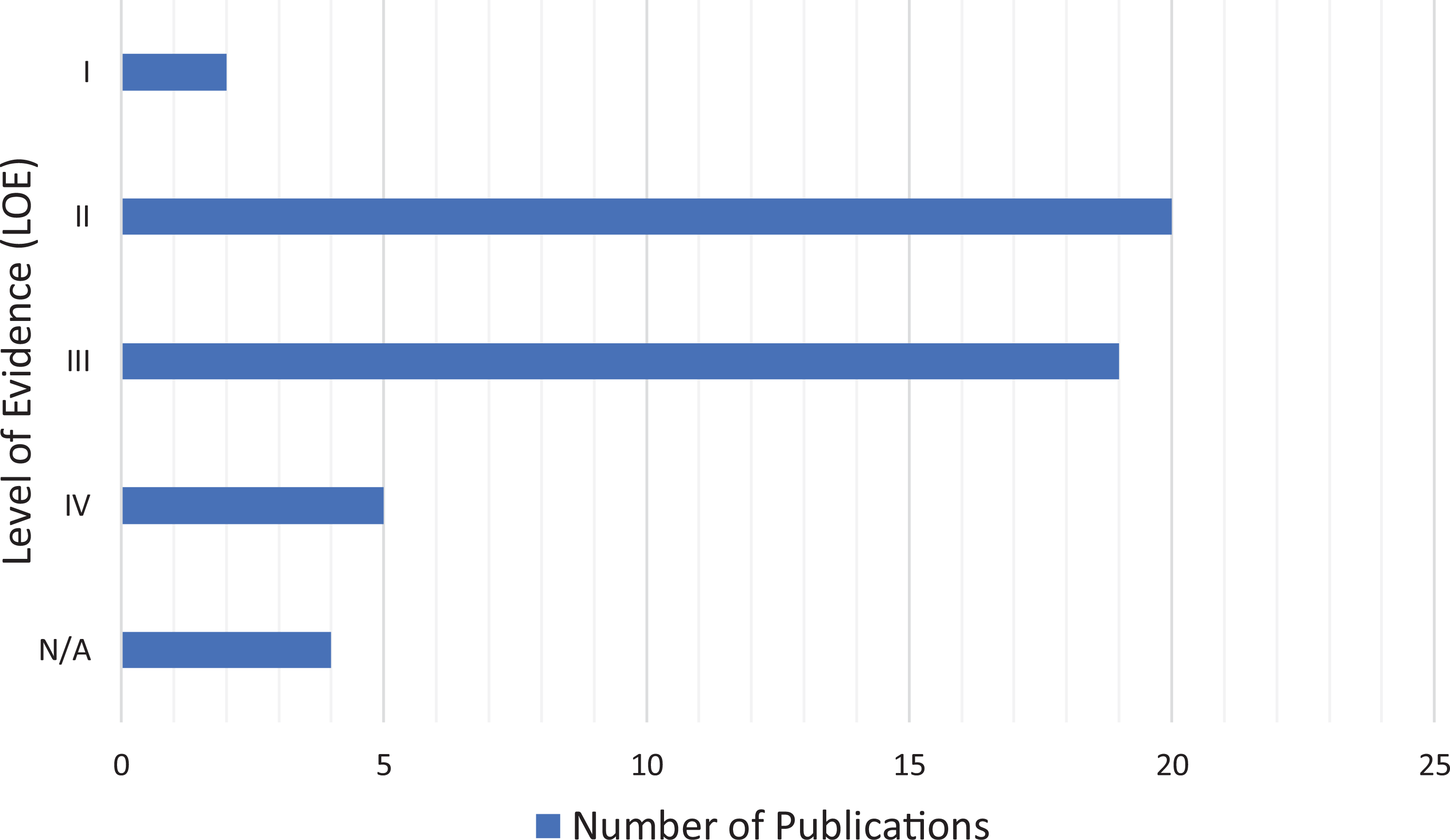
A breakdown of the level of evidence (LOE).
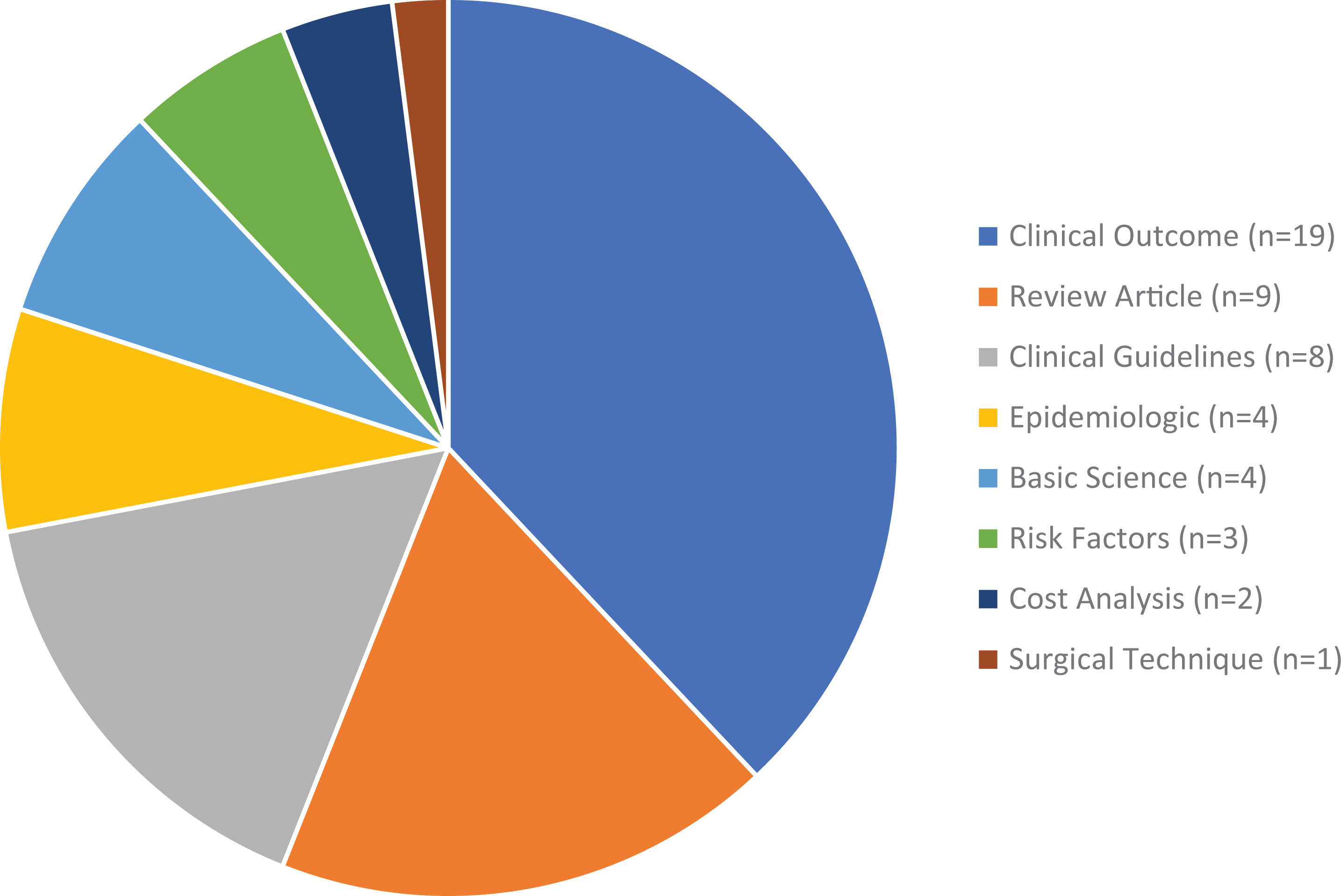
A pie chart of the article types.
The United States of America was the major contributor to the most cited articles in total hip and knee arthroplasty infection (n = 34). Other countries with at least 3 article contributions were the United Kingdom (n = 9), Switzerland (n = 4), and Germany (n = 3) (Figure 4). A total of 10 different countries contributed to our top 50 list. Analysis of contributing institutions indicated that Mayo Clinic (n = 15) produced the most publications, followed by Thomas Jefferson University/Rothman Institute (n = 11). Two institutions that came in third, each with four article contributions, were Exponent Inc. and University of Basel (Table 2). Overall, 9 institutions were associated with at least 3 publication contributions in our top 50 list. Further, the most productive authors included A.D. Hanssen (n = 9), J. Parvizi (n = 8), and D.R. Osmon (n = 7). Fourteen authors contributed to 3 or more papers within the top 50 list (Table 3).
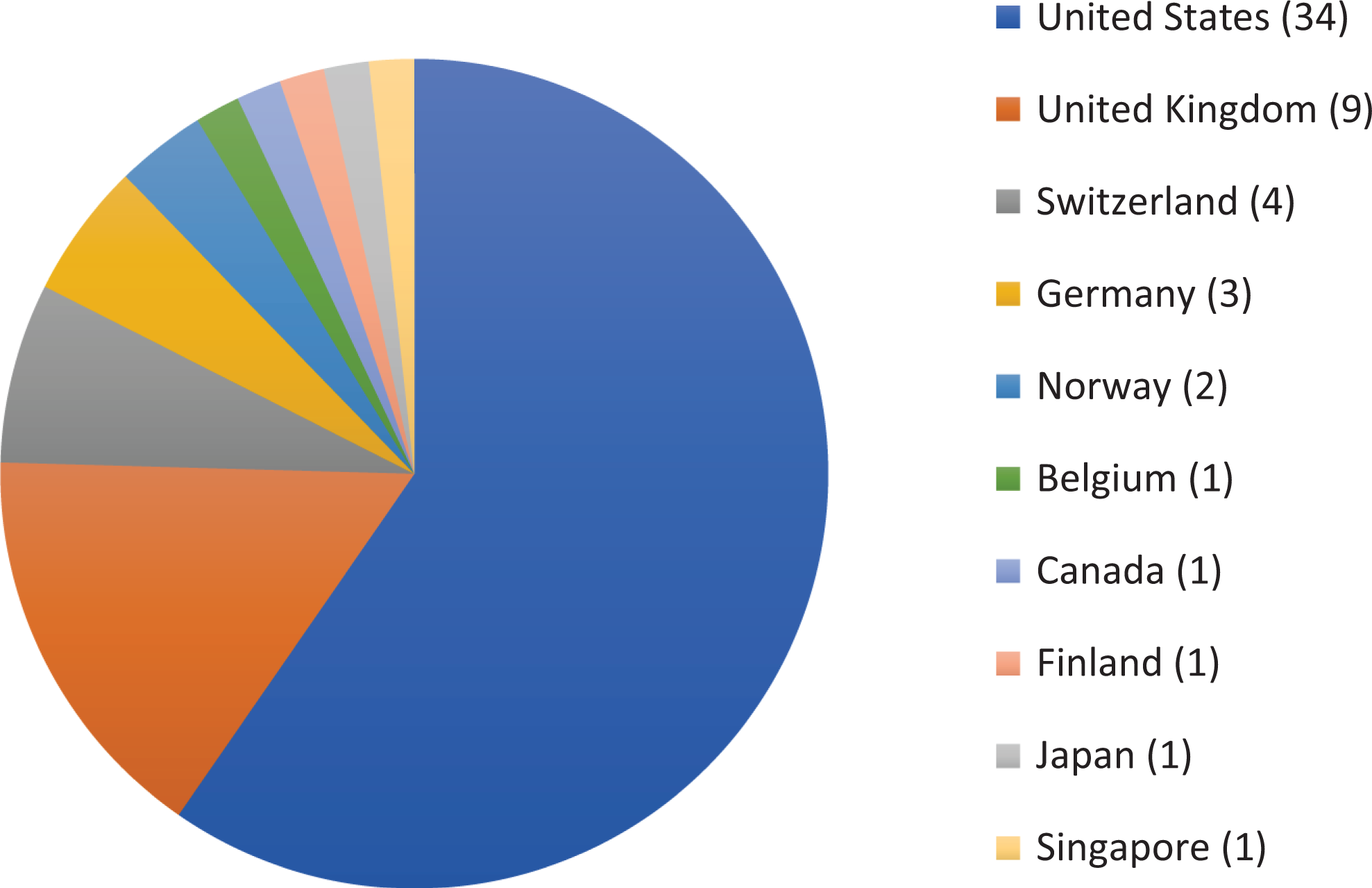
A summary of the countries of origin of the articles.
Contributing institutions.
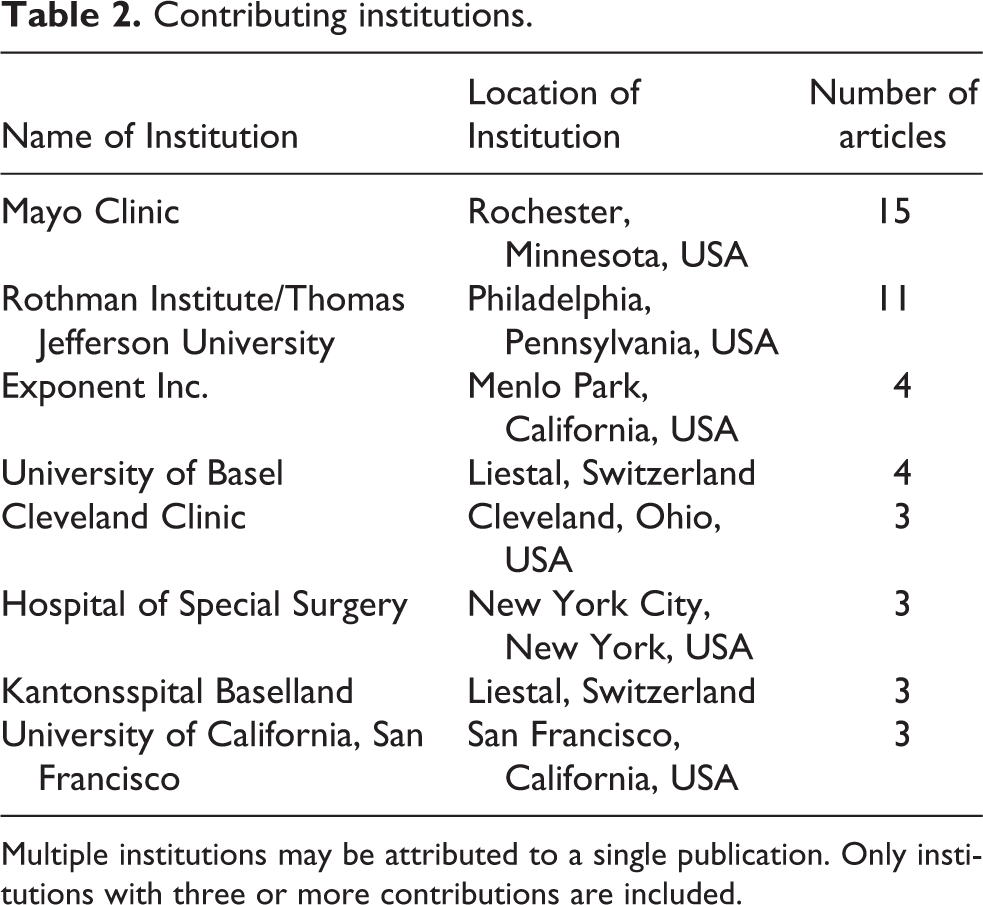
Multiple institutions may be attributed to a single publication. Only institutions with three or more contributions are included.
Author frequency.
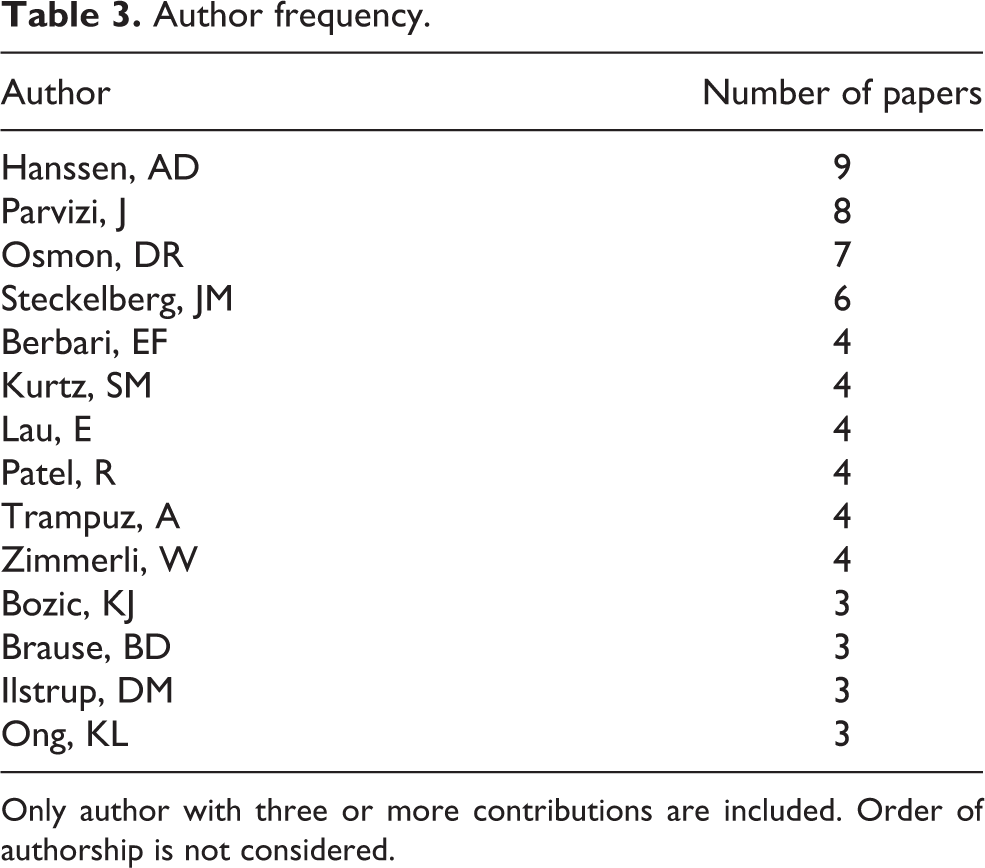
Only author with three or more contributions are included. Order of authorship is not considered.
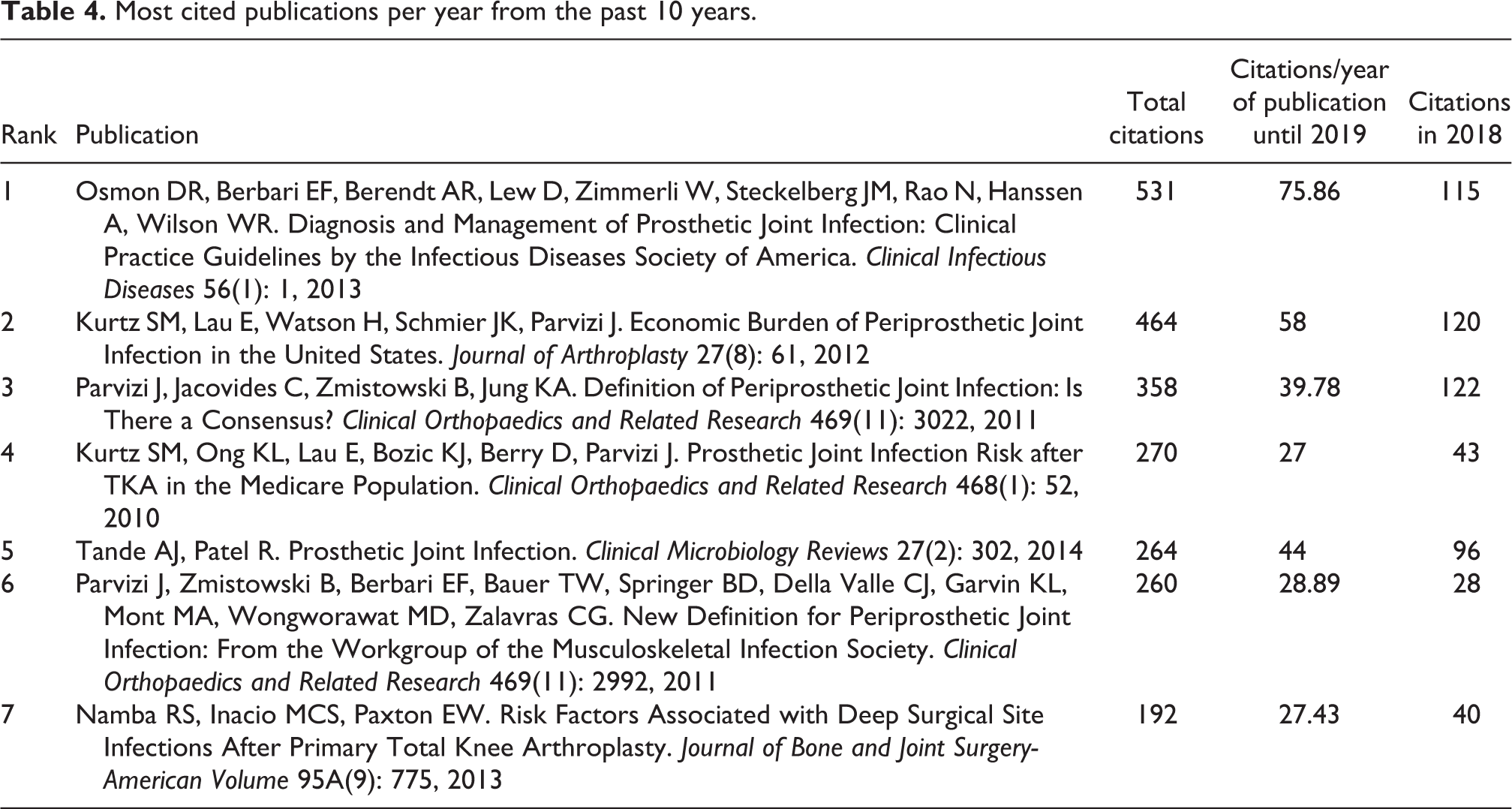
After filtering the articles published within the last 10 years from our top 50 list, “Diagnosis and Management of Prosthetic Joint Infection: Clinical Practice Guidelines by the Infectious Diseases Society of America” by Osmon et al. (75.9 citations/year) and “Economic Burden of Periprosthetic Joint Infection in the United States” by Kurtz et al. (58.0 citations/year) comprised the two major contributors (Table 4).
Most cited publications per year from the past 10 years.
The Journal of Bone and Joint Surgery, American Volume had the highest recorded Cite Score among all journals associated with our top 50 list and comprised over a third of the contributions (n = 17). The second most frequent journal was Clinical Infectious Diseases (n = 6), and the third most frequent journal was Clinical Orthopaedic and Related Research (n = 5) (Table 5).
Source journal.
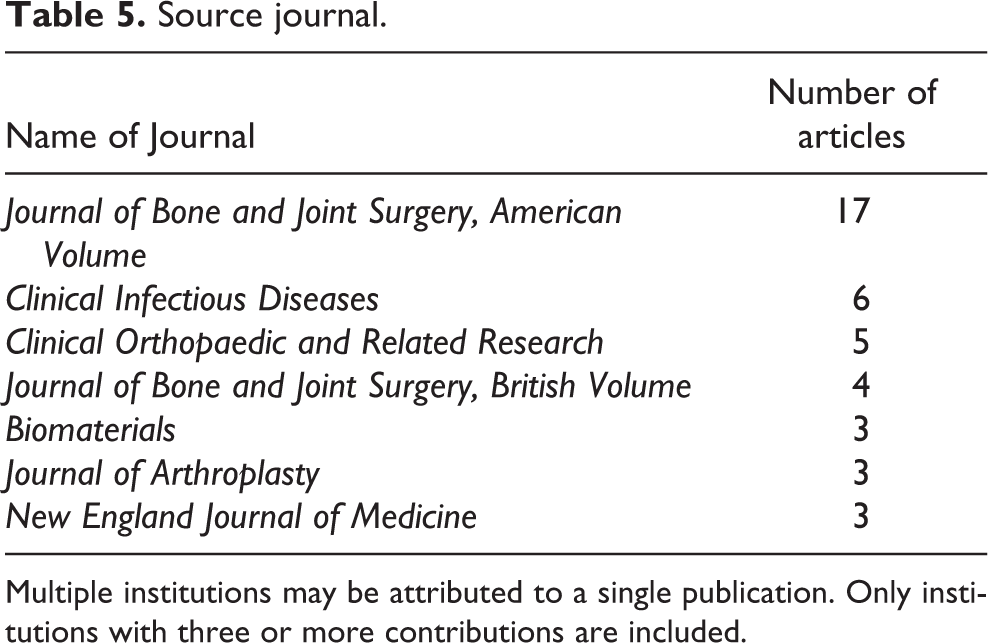
Multiple institutions may be attributed to a single publication. Only institutions with three or more contributions are included.
Publication analysis marked 2000–2009 (n = 25) as the most prolific decade. The number of publications within our top 50 list increased with each successive decade with exception of the most recent decade 2010–2019 (n = 7) (Figure 5). The oldest article on our list was from 1969, titled “Postoperative infection in total prosthetic replacement arthroplasty of hip-joint with special reference to bacterial content of air of the operating room,” written by Charnley and Eftekhar. This article saw a decrease in infection rate in total hip arthroplasty following measures to decrease air contamination, which lead to the conclusion that postoperative infection primarily occurred during the operation, particularly from the air particulates. 23 The most recent article, “Prosthetic joint infection” by Tande and Patel, reviews the epidemiology, pathophysiology, diagnosis, and treatment of prosthetic joint infections (PJIs) as of 2014 (Table 1). 24
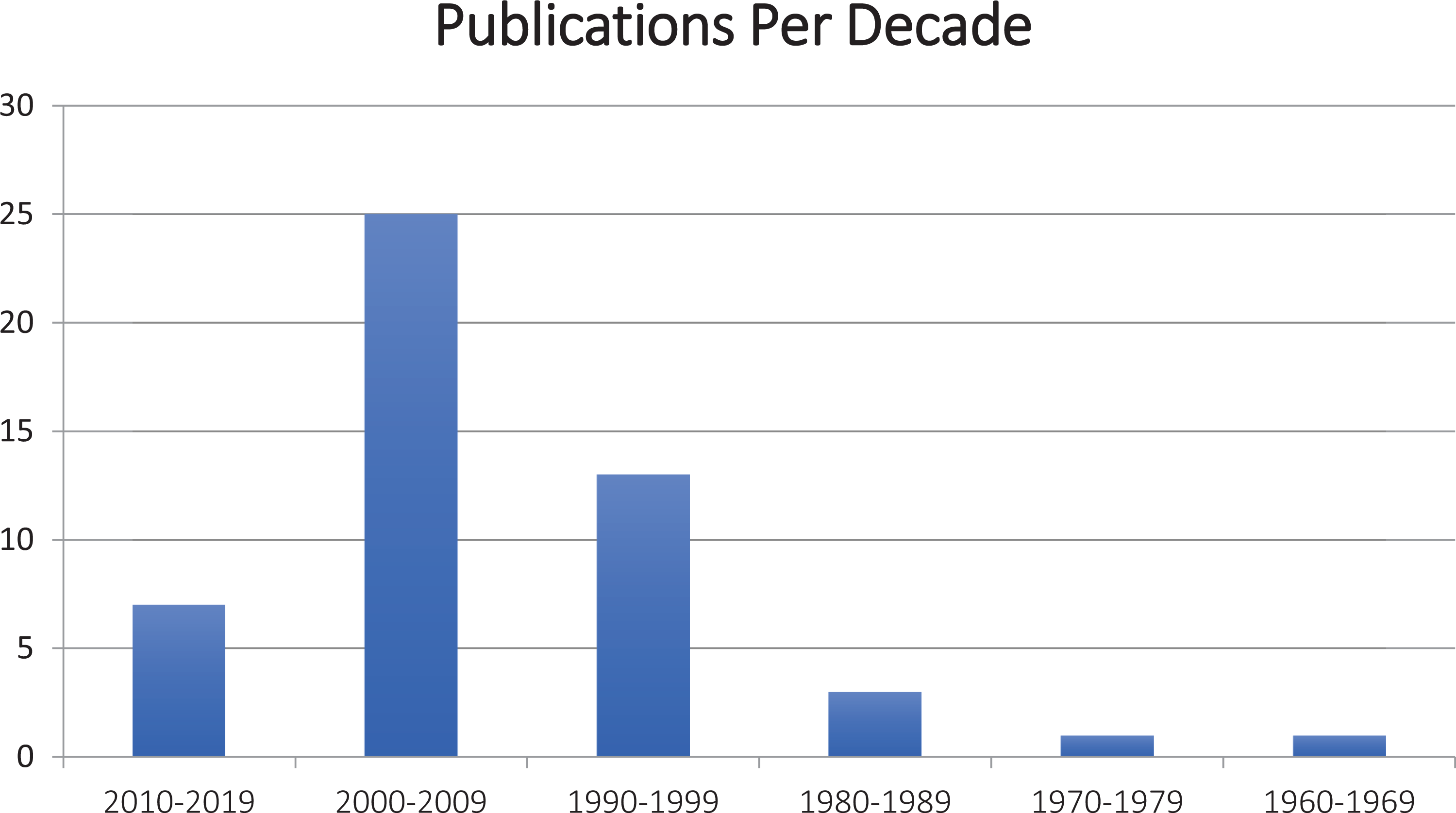
An analysis top 50 cited articles published between the 1960s and 2010s.
Discussion
The focus of this study is to identify the most cited articles concerning PJI in order to provide a reference of the work that supports current research and drives clinical understanding and decision-making for the orthopaedic Surgeon and the community. The most widely cited study is written by Zimmerli et al. (1,384 citations), which describes an overall outlook of PJI’s, explaining the pathogenesis, diagnosis and treatment of PJI. 19 Of all papers in our analysis, this paper also has the most citations in 2018 (136) and the most citations per year (86.5). This citation data shows the persistence in referencing the Zimmerli study, which supports this paper’s consistent relevance to PJI today.
The second most cited article, by Trampuz et al. (641 citations), found that using sonication to dislodge prosthetic joint infections was superior to periprosthetic tissue culture in regard to sensitivity, 78.5% to 60.8% respectively. Specificities were found to be 98.8% and 99.2%, respectively. This study ultimately provided an alternative method of diagnosing PJI in a field that, at the time, lacked accurate and sensitive microbacterial diagnostic testing. 20 This paper also had a relatively high number of citations in 2018 (73) and rate of citation per year (49.3), thus showing its importance in TJA through the years. The third most cited paper was done by Volker et al. in 2004 (570 citations) which explores the use of a novel component in bone cement. By using NanoSilver, rather than commercial silver powder, the new bone cement demonstrated an increased rate of antimicrobial properties in vitro. 21 This paper was cited 30 times in 2018 and has averaged 35.6 citations per year.
Because papers published more recently have a smaller window of opportunity to accrue cumulative citations, a separate analysis was conducted for papers published more recently. This analysis ranked papers that were published in the last 10 years and ranked these papers by the number of citations per year instead of the cumulative number citations. In this analysis, a paper written by Osmon et al. was the highest ranked with 531 citations, 75.86 per year and 115 total citations in 2018. This paper was also fourth on our main list of the top 50 most cited overall papers. The study used both opinion and evidence-based recommendations in order to outline the guidelines of diagnosing and treating PJIs. 25
The most common decade of cited literature on PJI was 2000–2009 (50%), followed by 1990–1999 (25%). This reflects a trend seen across many fields that can be accounted for by the increase in accessibility to electronically editing papers, increased emphasis on research to continue career development and the overall increase in journals. 14 Because of the recent publishing of articles from 2010 to 2019, they would not be expected to be as frequently cited as older articles. The most cited levels of evidence were Level II (40%) and Level III (38%). This finding shows the general trend that more highly cited articles tend to consist of higher quality research, as opposed to papers based on lower levels of evidence or opinion-based reasoning. This higher quality research in more recent years is a trend that is seen in many orthopedic journals. 26,27 Interestingly, only 2 papers within the top 50 list were Level I studies, a finding that indicates the relative scarcity of randomized controlled trials and high-quality meta-analyses, systematic reviews, and clinical guidelines literature on the topic of PJI.
The most publications are from the United States, specifically the Mayo Clinic (n = 15) and Thomas Jefferson University/Rothman Institute (n = 11). These institutes comprise 26 of 34 (76.5%) publications from the United States and are leading sources of reference, led by authors Hanssen (n = 9) and Parvizi (n = 8), respectively. These two authors also have the most citations amongst our top 50 list. These high-output institutions and authors all publish from the United States, where the gross number of TJAs performed far outpaces other countries. 28,29 In terms of the reported countries of origin, there may be an English-language bias toward western nations as more published literature is written in English. Moreover, the most highly cited journal was the Journal of Bone and Joint Surgery, American Volume. It consisted of 17 out of 50 citations (34%). A number of similar bibliometric studies analyzing the classic papers in orthopedics also found this journal to be the most popular. 30,31 This demonstrates the high-quality output seen from the Journal of Bone and Joint Surgery, American Volume. The next most highly cited journal was Clinical Infectious Diseases with 6 citations (12%) and Clinical Orthopedic and Related Research with 5 citations (10%). Our search criteria were not limited to specific journals, thus maximizing the breadth of our analysis. In addition, we found that the most likely type of article to be cited was clinical outcomes (n = 19), review articles (n = 9) and clinical guidelines (n = 8). Clinical outcomes are often most cited because of the relative ease in citing these papers when bolstering or opposing statements. 14 The most cited clinical article is a review article by Zimmerli et al., showing that these types of articles are particularly impactful because they synthesize expansive information on a topic into one source. Lastly, the fourth most cited paper, by Osmon, is a clinical guideline paper, which is widely cited due to its widespread use as a model in providing guidelines for diagnosing and treating PJIs. 25
There are limitations to this study. Of note, the main parameter in determining the importance of studies was the total number of citations. This methodology allows older and more established studies to have a greater likelihood of accruing a greater number of citations. This methodology can either downplay or overstate the significance of a study depending the study was a relatively newer or relatively older, respectively. Articles published in more reputable journals may accrue a greater number of citations because these articles are more widely available to authors. Conversely, many highly reputable journals require viewer subscriptions or institutional access, which may limit the viewership and citations of the articles published within these journals; as such, articles available in free and electronic versions may have increased viewership and therefore increased total citations.
Another study limitation is the breadth of literature searched. Although Clarivate Analytics Web of Science is regarded as a comprehensive search database, containing articles from a wide variety of fields and over 12 million citations, the database has notable deficits. Potential citations appearing in non-peer-reviewed sources may have been missed. Cite Scores can fluctuate over the years and can be inflated or deflated based on the editorial policy of each journal, which may further blur the relative impact of various journals and journal articles. As such, many scholars have suggested eliminating journal-based metrics as objective indicators of the value of research. Another disadvantage of Web of Science is that the database queries the citation, abstract, and keyword identifiers and does not query the full text of the articles. 32,33 Future bibliometric studies can aim to conduct more thorough reviews using multiple search databases to create a comprehensive list of articles for bibliometric analysis using additional author-level metrics as well as citation reports.
Despite these limitations, this study is useful in identifying the most cited articles concerning PJI in order to provide a framework of the literature that has supported current research and driven clinical understanding and decision-making.
Footnotes
Declaration of conflicting interests
The author(s) declared no potential conflicts of interest with respect to the research, authorship, and/or publication of this article.
Funding
The author(s) received no financial support for the research, authorship, and/or publication of this article.