




Abstract
Background/Purpose:
In soccer players, non-contact injuries are most common, especially hamstring muscle injuries, which can be prevented by the Nordic hamstring exercise (NHE). This study assessed the professional and semi-professional soccer players and coaches’ awareness, implementation, and opinion of the NHE efficacy in reducing hamstring injuries.
Methods:
A questionnaire regarding the awareness, implementation, and opinions of the NHE’s efficacy in reducing hamstring muscle injuries was distributed.
Results:
The survey was completed by 812 (88.3% male and 11.7% female) players and coaches. Of these, 395 (48.6%) were aware of the NHE, and 355 (43.7%) implemented it in their current practice. Those implementing NHE had a positive opinion about its efficacy in reducing hamstring injuries.
Conclusion:
Further efforts and research are warranted to increase the international awareness and implementation of the NHE and educate soccer players and coaches about the importance of its implementation and effectiveness in preventing hamstring injury.
Introduction
Recently, the increase in sports-related injuries and the cost of these injuries on teams and individuals has highlighted the importance of implementing preventive and curative exercises to mitigate and limit their occurrence. 1 –3 Soccer is a highly competitive and popular game among other sports, with more than a quarter billion soccer players around the world. 4 Both sports injury researchers and practitioners have focused on the study of the body mechanisms and developed training protocols to protect athletes from injuries. 4 Since over three decades, studies have shown that the percentage of non-contact injuries in soccer (64%) are higher than that in any other sport. 5 Furthermore, studies have reported that among the most common injuries occurring in soccer players, hamstring strain injury (HSI) has the greatest incidence. 6 In European soccer, the occurrence and recurrence of HSIs are the most frequent. 6 HSIs are also the most common in other competitive sports, accounting for 12–26% of injuries in Australian rules football (Aussie rules), cricket, and rugby. 7 The biceps femoris is the most injured muscle in the hamstring group, with 53–68% of injuries occurring during sprinting. 7
To prevent or mitigate hamstring muscle injuries, the Nordic Hamstring Exercise (NHE), also known as Nordic hamstring curl, has been utilized as an intervention. 7 Numerous studies have investigated various aspects of the relationship between NHE and hamstring injuries. One of these studies was a randomized control trial conducted by Van Der Horst et al. (2015) that evaluated the preventive effect of the NHE on hamstring injuries among amateur soccer players. The trial reported that 38 hamstring injuries affected 36 out of the total 579 players of the study sample. The results showed that the risk of hamstring injuries decreased in the intervention group when compared with the control group. The intervention in their study involved performing 25 NHE sessions for 13 weeks. They concluded that NHE significantly reduced the hamstring injury incidence, but it did not reduce the severity of the damage in case of incidence. 8 Another study by Al Attar et al. (2017) conducted a meta-analysis to evaluate the effect of injury prevention programs that included the NHE on hamstring injury rates in soccer players and demonstrated that such programs decreased the risk of hamstring injuries. These results were based on the total injuries per 1000 hours of exposure, which showed that teams using injury prevention programs that included the NHE showed a 51% reduction in the hamstring injuries (injury risk ratio 0.490, 95% confidence interval [CI] 0.291–0.827; p = 0.008) as compared to the teams that did not use any injury prevention methods. 8 Furthermore, in 2019, Al Attar et al. conducted a meta-analysis to investigate the preventive effect of the Fédération Internationale de Football Association (FIFA) injury prevention program that includes NHE in soccer. Four meta-analyses were included in this review, and the result indicated a reduction of 34% for all injuries (RR = 0.66 [0.60–0.73]) and of 29% for total injuries of the lower limbs (RR = 0.71 [0.63–0.81]). 9 Similarly, a systematic review and meta-analysis conducted by Van Dyk et al. (2019) demonstrated that injury prevention protocols including NHE showed about 51% reduction in hamstring injuries across multiple sports in different athletes. A study by Pollard et al. (2019) showed that NHE has a positive impact on the strengthening of the hamstring muscles, with due consideration of the intensity and selection of the exercise when suggesting it for hamstring injury prevention. 3 NHE has been used in many recreational activities, such as power lifting and bodybuilding. It was also used in other sports training environments, such as soccer, rugby union, and Australian rules football to improve eccentric muscle strength and reduce the occurrence of HSIs. 9 Furthermore, a previous study by Van Der Horst et al. (2015) emphasized that the NHE can reduce the frequency of hamstring injuries by 66–70%. 10
In professional male football players, the overall incidence of injuries was 8.1 injuries/1000 hours of exposure. 11 The highest incidence rates were reported in lower limb injuries at 6.8 injuries/1000 hours of exposure, with muscle/tendon injuries being the most common type of injuries (4.6 injuries/1000 hours of exposure). 11 Correspondingly, the rate of HSIs has not declined over the past 10 years but increased by 4%, which warrants further investigations to understand the reasons for this issue and to determine the reliability of NHE in decreasing HSIs. 12 A recent study by Cuthbert et al. (2020) concluded that reducing the NHE volume does not adversely affect adaptations in eccentric power and muscle architecture when compared with high-dose interventions. Their findings suggested that lower volumes of NHE could be more suitable for athletes to increase protocol compliance and reduce the risk of HSIs. 6
Studies on NHE and its effect on hamstring injury are well documented. It is also well acknowledged that decent implementation of NHE in injury prevention programs can mitigate hamstring injuries in different sports. Although there are numerous studies on NHE, no study has investigated the awareness and understanding of the soccer players and coaches about this exercise. Therefore, this study aimed to assess the awareness, implementation, and opinion of worldwide soccer players and coaches about NHE.
Methods
Survey development
To our knowledge, there are no validated questionnaires on the awareness, implementation, and opinion of the soccer players and coaches worldwide regarding NHE. Therefore, a survey was developed to collect this information from them.
This cross-sectional survey targeted soccer players and coaches from different continental football federations. The self-administered questionnaire consisted of socio-demographic questions regarding sex, level (professional soccer player, professional soccer coach, semi-professional soccer player, or semi-professional soccer coach), and country. The participants were asked if they are aware of the NHE with a response of “yes” or “no.” Those responding “yes” were asked if they are implementing it or not. Participants who reported implementing NHE were asked about their opinion about its effectiveness in the prevention of hamstring injuries on a linear scale of 0 (ineffective) to 10 (very effective). The survey was developed in English and translated to 10 languages (Arabic, Chinese, French, German, Italian, Japanese, Portuguese, Russian, Spanish, and Turkish). This study was reviewed and approved by the Biomedical Ethics Committee, XX University. Approval number HAPO-02-K-012-2020-11-496.
Survey software and administration
Players were invited to complete an online survey sent by the continental football federations. The link sent to the soccer players and coaches outlined the purpose of the survey and provided the survey link. The survey was uploaded using recognized online survey software (Google Forms, Mountain View, California, USA). Respondents were provided with the link, and the responses were limited to one. All responses were voluntary and anonymous.
Sample size and statistical analysis
According to FIFA’s most recent Big Count survey, there are 265 million players actively involved in soccer globally, accounting for 4% of the world’s population. To achieve a 3% margin of error at a 95% CI, 1067 soccer players and coaches of both sexes were invited through continental football federations from June 2019 to June 2020.
Responses were organized in Microsoft Excel 2010 (Microsoft Corporation, Redmond, Washington, USA) and analysed using the Statistical Package for the Social Sciences version 24.0 (SPSS Inc., Chicago, Illinois, USA). Descriptive statistics were presented as percentages and were compared using the chi-square test. Percentages were reported with 95% CIs. Statistical significance was set at a p-value of 0.05.
Results
This worldwide cross-sectional survey study was conducted to assess the knowledge and opinions of soccer players and coaches about the NHE. In total, 812 soccer players and coaches from 148 countries completed the survey, with a response rate of 76% (95% CI margin of error 3.44%). Majority of the respondents were male (88.3%; females: 11.7%). The highest percentage of the participants was from the Union of European Football Associations (UEFA) continental football federation (40.3%), followed by the Asian Football Confederation (AFC; 31.7%). The least number of participants was from the Oceania Football Confederation (OFC; 2.2%). According to their levels, most of the current study participants (61.6%) were semi-professional soccer players, 17.5% were semi-professional soccer coaches, and 14.9% were professional soccer players. More than half of the participants were not aware of the NHE (51.4%). Of the 48.6% participants who were aware of NHE, 43.7% reported implementing it. When the respondents who implemented the NHE were asked about their opinion on its effectiveness in preventing hamstring injuries, most of them (21.7%) considered it highly effective, 10.3% considered it effective, and only one participant (0.1%) considered it moderately effective. The data are shown in Table 1 and Figure 1.
Distribution of participants according to continental football federations, sex, levels, awareness, implementation, and opinions.
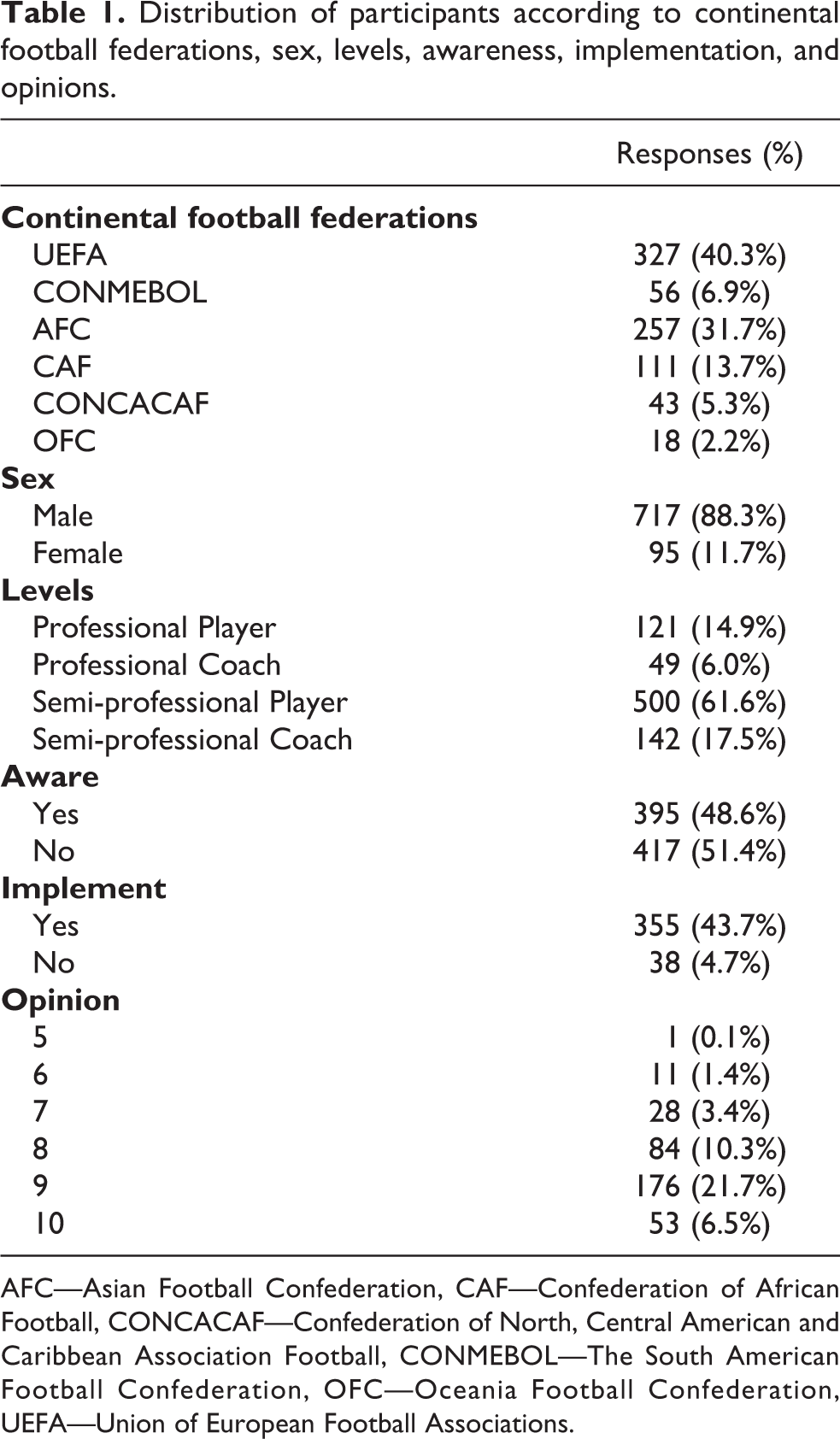
AFC—Asian Football Confederation, CAF—Confederation of African Football, CONCACAF—Confederation of North, Central American and Caribbean Association Football, CONMEBOL—The South American Football Confederation, OFC—Oceania Football Confederation, UEFA—Union of European Football Associations.
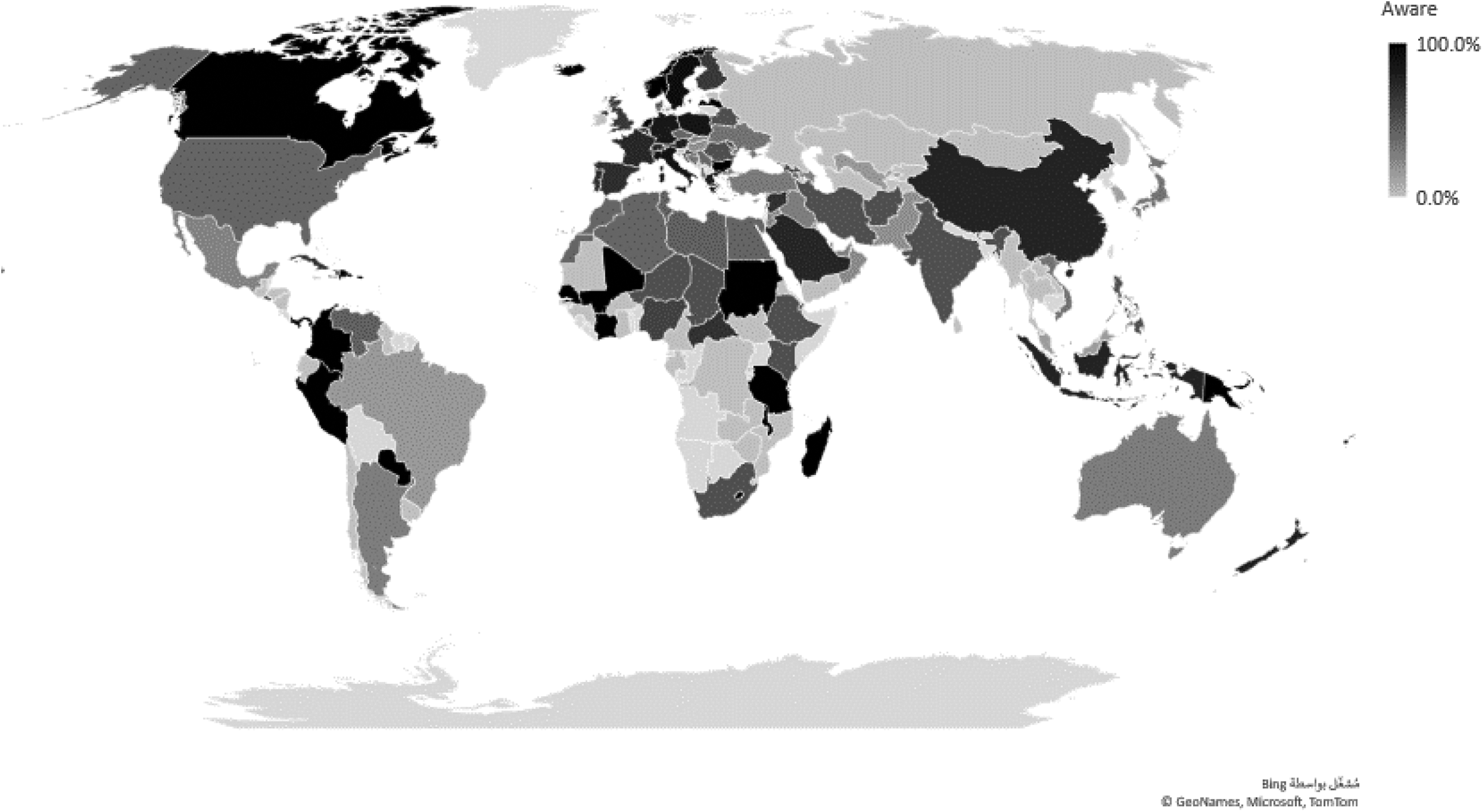
Awareness of Nordic hamstring exercise worldwide.
The results of this study revealed that there were statistically significant differences between the different continental football federations with respect to sex, awareness of NHE, and the opinion score of NHE effectiveness in preventing hamstring injuries (p < 0.001, for all). Regarding sex, majority of the participants were male, and their highest proportion (92.6%) was from the AFC; the highest percentage of females (27.1%) was from the Confederation of North, Central American, and Caribbean Association Football. The highest level of awareness about NHE was reported by the participants from OFC (77.8%). Among those who were not aware of the NHE, majority of them (67.9%) were from the South American Football Confederation (CONMEBOL). For NHE effectiveness in preventing hamstring injury, the highest positive mean (± standard deviation) score was reported by participants from the OFC and UEFA federations at 8.84 (±0.80) and 8.84 (±0.83), respectively. On the other hand, there was no statistically significant difference among the continental football federations according to the participants’ levels and the implementation of NHE (p = 0.77 and 0.196, respectively). All the OFC participants reported NHE implementation (100%), while the CONMEBOL participants had the lowest implementation rate at 83.3%. The data are shown in Table 2.
Difference between the continental football federations.
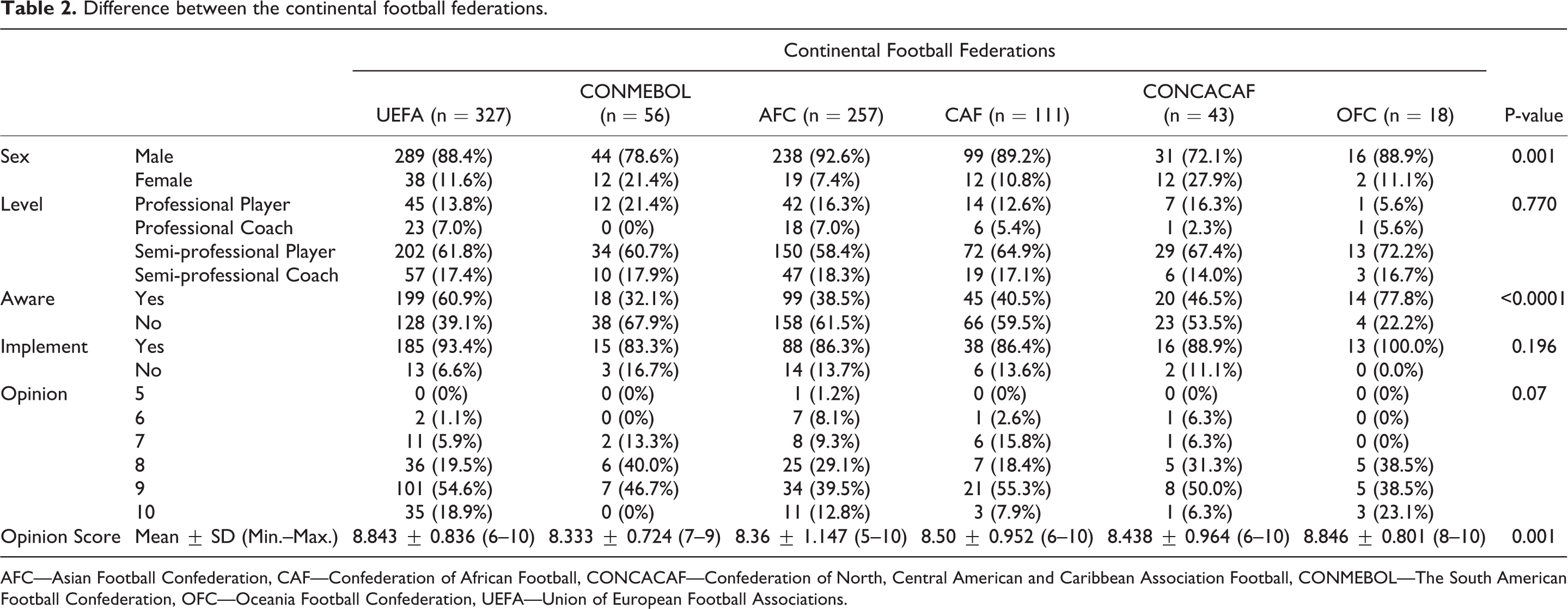
AFC—Asian Football Confederation, CAF—Confederation of African Football, CONCACAF—Confederation of North, Central American and Caribbean Association Football, CONMEBOL—The South American Football Confederation, OFC—Oceania Football Confederation, UEFA—Union of European Football Associations.
Discussion
This study revealed that the level of awareness of soccer players and coaches regarding the NHE in preventing hamstring injuries was poor. However, the rate of NHE implementation was high, and the participants had a positive attitude towards it.
Despite the fact that more than one and a half decades ago, the FIFA Medical and Research Centre included the NHE in the FIFA “11” prevention program development, 13,14 more than half the soccer players and coaches participating in this study were unaware of it. Previous studies supported the use of the NHE in prevention programs, as concluded in a recently published systematic review and meta-analysis that included studies with more than 8000 athletes. The meta-analysis revealed a statistically significant and clinically relevant reduction of 51% in the occurrence of hamstring injuries with NHE in all athletes competing at different levels of competition across multiple sports. 15 Therefore, to reduce the number of hamstring injuries, clinicians are encouraged to include the NHE in their prevention efforts, particularly among football federations that show a low level of awareness as per our study results. Additionally, educational programs on NHE and its importance in hamstring injury prevention are highly recommended for soccer players and coaches.
Based on the evidence-based strategy to prevent hamstring injuries, majority of the participants who were aware of the NHE in this study reported its implementation. In line with this data, a randomized controlled trial on the effects of NHE on hamstring injuries in high-school soccer players showed that the compliance rate with the NHE was 88%. 16 In contrast, it was reported that there is a large disconnect between the available evidence of NHE efficacy and its adoption in elite football, and the overall compliance level was not encouraging. 17,18 Bahr et al. (2015) published a study that showed that only 11% of the teams fully adopted the program. 19 It is worth mentioning here that some of the exercises adopted by the teams who participated in the study by Bahr et al. (2015) 19 have not shown encouraging evidence in the prevention of hamstring injuries. Another study among elite football teams in nine countries ranked NHE fifth in the top five injury prevention exercises. 20 However, it should be noted that the positive outcomes of the NHE do not necessarily indicate subsequent injury prevention. 21 Interventions can prevent injuries only when they are implemented and used appropriately by the intended end-users. 22
In this study, majority of respondents were male (88.3%; females: 11.7%). This is an expected distribution because soccer has usually been a male-dominated sport globally. However, since 2012, the number of national academies for females has doubled in less than a decade, with an increase in the number of registered female soccer players. 23 Thus, soccer continues to be more popular among males than among females. Additionally, the highest percentage of the participants in this study was from the UEFA (40.3%), followed by those from the AFC (31.7%). The least number of participants was from the OFC at 2.2%. These percentages were also expected. According to the list of football associations registered in the FIFA-affiliated confederations from these three federations, all 55 UEFA associations are affiliated with FIFA; 46 AFC associations are registered with FIFA, but one is not. Moreover, the OFC has only 11 affiliated associations with FIFA and three associations have not yet registered. 24 Therefore, based on the registered associations of these three federations, UEFA reported the highest number, followed by the AFC, and OFC reported the lowest; thus, the aforementioned percentages represent logical values.
Overall, the attitudes of the soccer players and coaches implementing the NHE in this study were mostly positive, and majority scored it as effective, but differed in their opinion of the degree of effectiveness in preventing hamstring injuries. A previous study has shown the effectiveness of NHE as a preventive measure for hamstring injuries in soccer 25 ; unfortunately, we did not find any study addressing the opinion of the soccer players to compare with ours. Our study results highlighted the rate of awareness and implementation of the NHE in preventing hamstring injuries in different countries, indicating the generalizability of these results, which could be the basis for future research. Therefore, clinician’s implementation and educational programs for improving the awareness and benefits of NHE are highly recommended. Moreover, future studies focusing on the pitfalls and opportunities for the implementation of NHE as an injury prevention strategy in soccer are needed.
In conclusion, the overall level of knowledge and awareness about the NHE among different levels of soccer players and coaches from different continental football federations was poor. However, the rate of NHE implementation among the aware participants was high. Participants showed a positive attitude towards NHE effectiveness in preventing hamstring injuries. Clinicians and sport medicine authorities should work on increasing the knowledge and implementation of the NHE among soccer players and coaches globally.
Footnotes
Declaration of conflicting interests
The author(s) declared no potential conflicts of interest with respect to the research, authorship, and/or publication of this article.
Funding
The author(s) received no financial support for the research, authorship, and/or publication of this article.
