




Abstract
Background:
Our aim was to conduct a review to summarize the existing information regarding the effects of shoe collar height in altering ankle sprain mechanics in athletes.
Methods:
A systematic literature search of PubMed, Embase, MEDLINE, and SPORTDiscus was conducted in September 2019.
Results:
There were 10 studies published from 1993 to 2019 that were included. Most studies showed high-top shoes limited ankle sprain kinematics and increased resistance to inversion moment in static but not dynamic testing. High-top shoes were associated with delayed pre-landing ankle evertor muscle activation and smaller electromyography amplitudes.
Conclusions:
There is currently weak evidence to support that high-top shoes can limit ankle sprain kinematics in dynamic testing. Further studies with more consistent study interventions and outcome variables are needed to definitively establish the effects of shoe collar height on ankle sprain mechanics in athletes.
The Translational Potential of this Article:
Multiple studies on the effects of shoe collar height and ankle sprain mechanics have been performed but there is a lack of consistency in terms of study design, intervention, and outcome measures. A formal systematic review and meta-analysis were not applicable due to the heterogeneity of studies, and mixed results from these studies can be confusing to interpret, making further research on this topic difficult as a result of lack of future direction. We summarized the existing literature on this topic to provide a clearer picture and guide future research on this controversial matter.
Introduction
Ankle sprains are the most common injuries in the athletic population. 1,2 The prevalence is as high as 28% and up to 73% of the athletes had recurrent ankle sprain. 3 . Lateral ankle sprain represents more than 75% of acute ankle injuries, 2 which an isolated injury to the anterior talofibular ligament occurs at 66%, while injuries to both the anterior talofibular ligament and calcaneofibular ligament concurrently occur at 20%. 4 Mechanisms of injury typically involve a combination of sudden excessive ankle inversion, internal rotation, with/without plantar flexion, which put these ligaments into great stress. 5 For instance, this includes landing on an inverted surface (e.g. an opponent’s foot), which is a frequently observed precipitating event for lateral ankle sprains in basketball and volleyball, 6,7 or abrupt lateral cutting motions in tennis. 5
Common methods of preventing ankle sprains include external ankle supports, such as athletic taping, braces, and high-top shoes. 8 –10 In a recent systematic review and meta-analysis by Barelds et al. in 2018, 8 ankle braces have been shown to be effective in reducing the incidence of ankle sprains, especially in athletes with a history of recurrent ankle sprains. Conversely, evidence to support the use of high-top shoes and ankle taping in preventing ankle sprains has not been fully established. 11,12
Compared to ankle taping and ankle braces, shoewear compliance may be higher since no additional adjuncts are involved. If simple measures like these are effective, this may provide a better alternative to prevent ankle sprain injuries. Multiple studies related to the effects of shoe collar height and ankle sprain mechanics have been performed. However, there is a lack of consistency in terms of study design, intervention, and outcome measures. Systematic review and meta-analysis were not applicable due to the heterogeneity of studies, and mixed results from these studies can be confusing to interpret, making further research on this topic difficult as a result of lack of future direction. With this said, this remains a controversial yet important topic because at least some studies have shown that ankle protection provided by high-top shoes may not be significant and may even be at the expense of athletic performance due to reduced agility. 13,14 Therefore, our aim of this review is to summarize the existing literature on this topic, to provide a clearer picture to guide future research on this controversial matter.
Methods
A systematic literature search was conducted to include as many relevant studies as possible, and synthesis of study results was then performed in a narrative manner.
Eligibility criteria
Full-text articles identified via English titles from peer-reviewed journals were retrieved and considered based on the following inclusion and exclusion criteria.
Inclusion criteria
Studies including investigation on the effects of shoe type on ankle function or injuries.
Studies reporting outcomes related to ankle range of motion (ROM) kinematics and ankle muscle activity.
Exclusion criteria
Studies involving subjects who had neuromuscular or other coexisting comorbidities that predisposed them to ankle sprains.
Studies focusing primarily on treatments instead of prevention.
Non-English, nonhuman, or commentary articles
Literature search
A systematic search and screening were conducted independently by two authors (JHCL and PC) using the following electronic databases, EMBASE via Ovid, Medline via Ovid, PubMed, and SPORTDiscus via EBSCOhost from inception to September 2019.
Search strategy and study selection
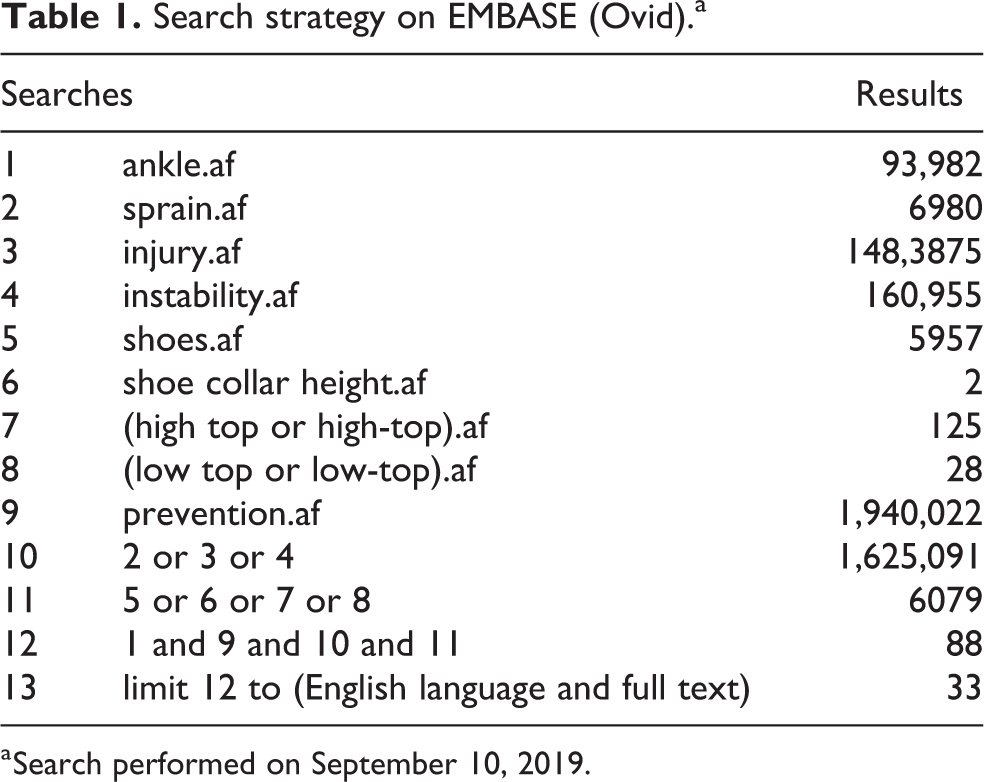
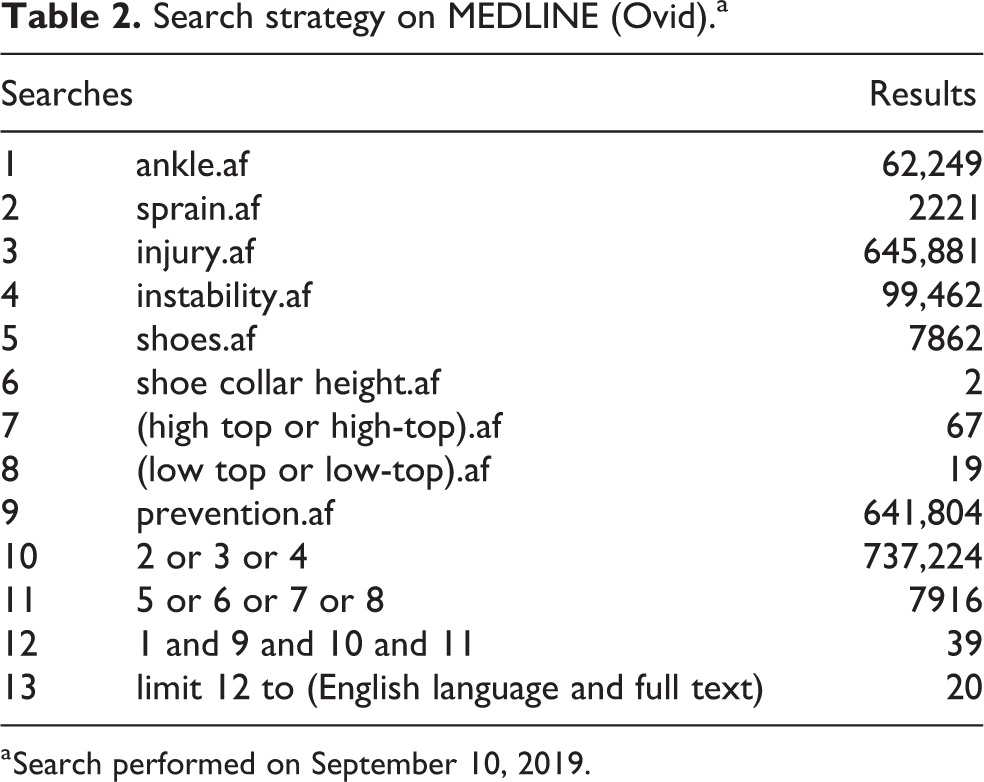
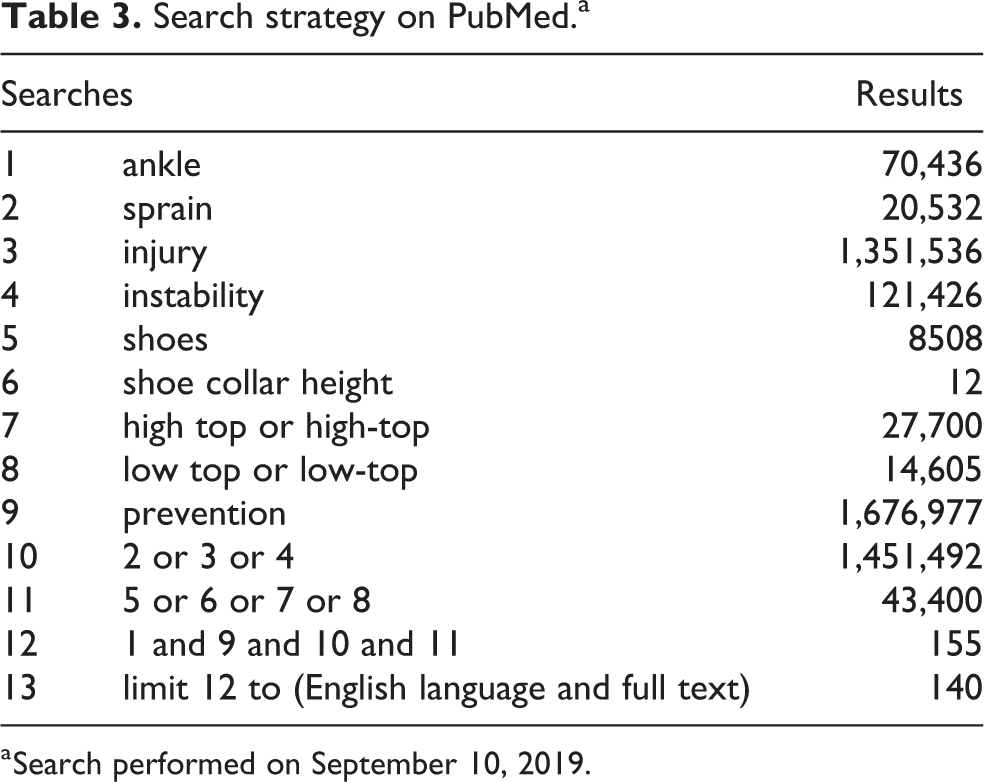
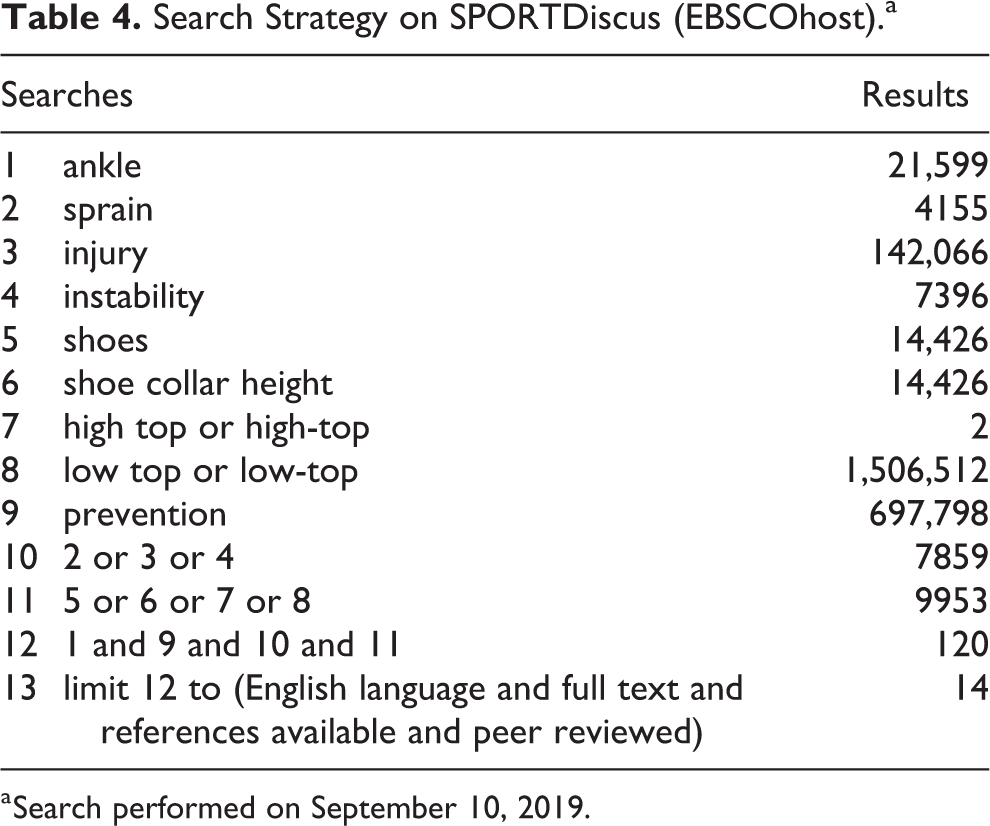
Keywords in our search included ankle, sprain, injury, instability, shoes, shoe collar height, high top (or high-top), low top (or low-top), and prevention, with one of the search strategies applied being presented in Tables 1 –4. Our search strategy was cross-checked by running additional searches from Cochrane Controlled Register of Trials (CENTRAL) and Cochrane Database of Systematic Reviews (CDSR). All titles and abstracts retrieved were read and assessed based on the eligibility criteria. Full texts were obtained for those papers not excluded at the abstract reviewing phase. References of each study were also screened to identify any further studies not retrieved from the initial search. Any discordance between the two reviewers was discussed until consensus was reached.
Search strategy on EMBASE (Ovid).a
a Search performed on September 10, 2019.
Search strategy on MEDLINE (Ovid).a
a Search performed on September 10, 2019.
Search strategy on PubMed.a
a Search performed on September 10, 2019.
Search Strategy on SPORTDiscus (EBSCOhost).a
a Search performed on September 10, 2019.
Data extraction and synthesis
Data extraction was performed independently by JHCL and PC and was reviewed by SKKL. Extracted data included authors, study title, design, year of publication, sampling procedure, and sample characteristics (number of participants, gender, average age, and participating sports if provided). Methodology which included shoe types, relevant outcome parameters, reliability, and validity, discussions, and main findings were also reported according to PRISMA guidelines. 15 Measured outcome parameters of interest in the shoe type or collar height study were broadly categorized into ankle kinematics 13,14,16 –20 and ankle muscle function. 14,16,19 –23
In terms of ankle kinematics, variables included active ankle ROM during ankle perturbation simulation or performance testing in sagittal plane (plantar-/dorsiflexion), frontal plane (inversion/eversion), and/or transverse plane (abduction/adduction). Passive non-weight ankle ROM before and after exercise was also included. Other included kinematic variables were mainly related to ankle inversion velocity.
In terms of ankle muscle function, variables included functional eversion ankle strength (i.e. resistance to inversion moment), inversion ankle strength (i.e. resistance to eversion moments), pre-activation timing and electromyography (EMG) amplitude of ankle evertor muscles (i.e. tibialis anterior, peroneal longus and brevis), as well as parameters indicative of athletic performance (e.g. time to complete performance test, jumping height).
Methodological quality assessment of evidence
The quality of each study was assessed and graded independently by two authors according to the modified Downs and Black checklist as this has been thoroughly validated for both randomized controlled and noncontrolled trials. 24 Downs and Black score ranges were given corresponding quality levels as reported: excellent (26–28), good (20–25), fair (15–19), and poor (<15), with full score being 28. The reviewers’ results were compared, and discrepancies were resolved in consensus meeting.
Results
The systematic search resulted in 220 articles, with 207 yielded from the electronic search and 13 identified through reference tracking. After duplicates were removed, a total of 144 articles remained and were screened for possible inclusion. Of the 144 articles screened, 50 relevant articles were identified. After the application of the inclusion and exclusion criteria, there were 10 articles ultimately included in this systematic review (Figure 1).
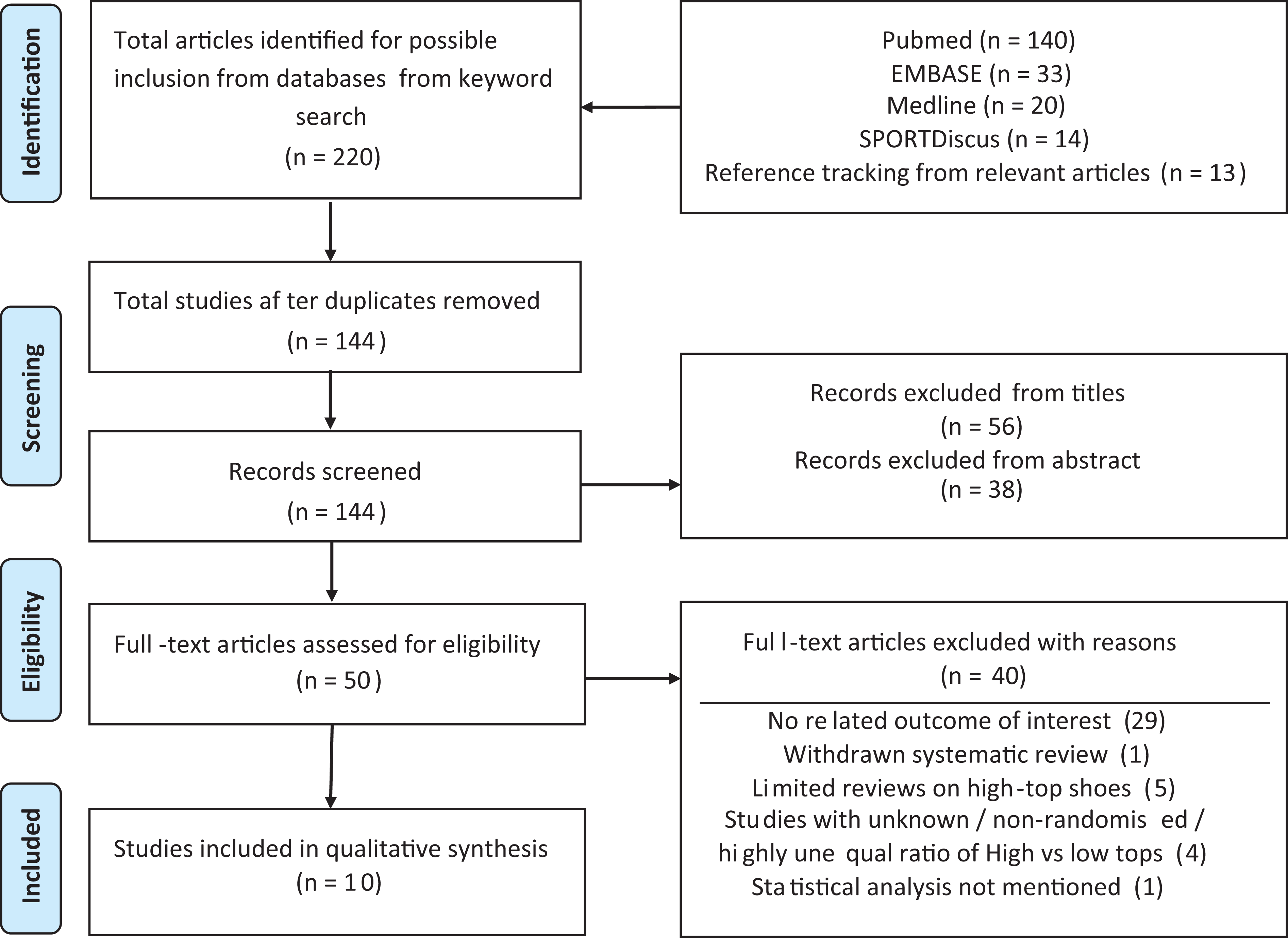
Flowchart of study inclusion and exclusion.
Study selection and characteristics
A total of 171 participants (151 males, 20 females) were involved in the included studies of this systematic review. Their study characteristics were summarized in Table 5. Mean age of subjects was 18.7. Types of sports, if specified, included basketball (20.5%), football (18.7%), and netball (6.5%).
Study characteristics of included studies: outcome of interest and subject demographics.
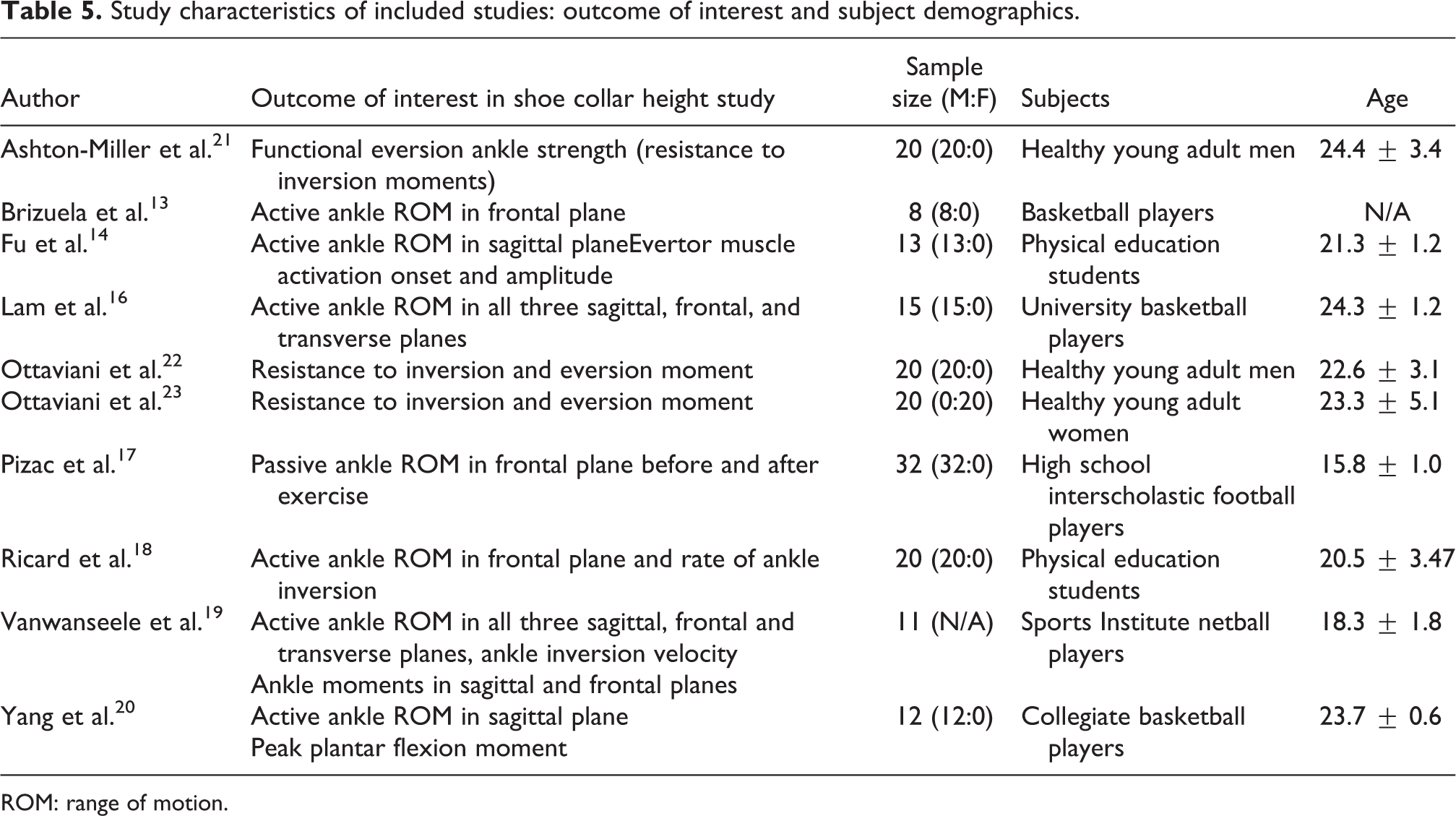
ROM: range of motion.
Types of Shoes
Each of the 10 included studies essentially involved comparison between high-top and low-top athletic shoes, although many either did not provide their definition of high- and low top in detail or the definitions were inconsistent among which they were stated (Table 6). While Fu et al. measured the difference in shoe collar height between high- and low top to be 6 cm, 14 Yang et al. and Lam et al. measured a difference of 4.3 cm and 8.5 cm, respectively. 16,20 Ottaviani et al. and Ashton-Miller et al. used three-quarter top (¾-top) to compare against low-top shoes. 21 –23 Whether ¾-top shoes were the same as high-top shoes was not mentioned. Brizuela et al. explored the comparison between high-support and low-support shoes. 13 High-support shoes were described as high-top shoes with additional heel counter with a rearfoot counter lacing system while low-support shoes were low-top shoes without. Finally, Pizac et al. on the other hand examined high-top versus mid-/low-top football cleats, although of which the collar height difference was not mentioned. 17
Study characteristics of included studies: methods and results.a
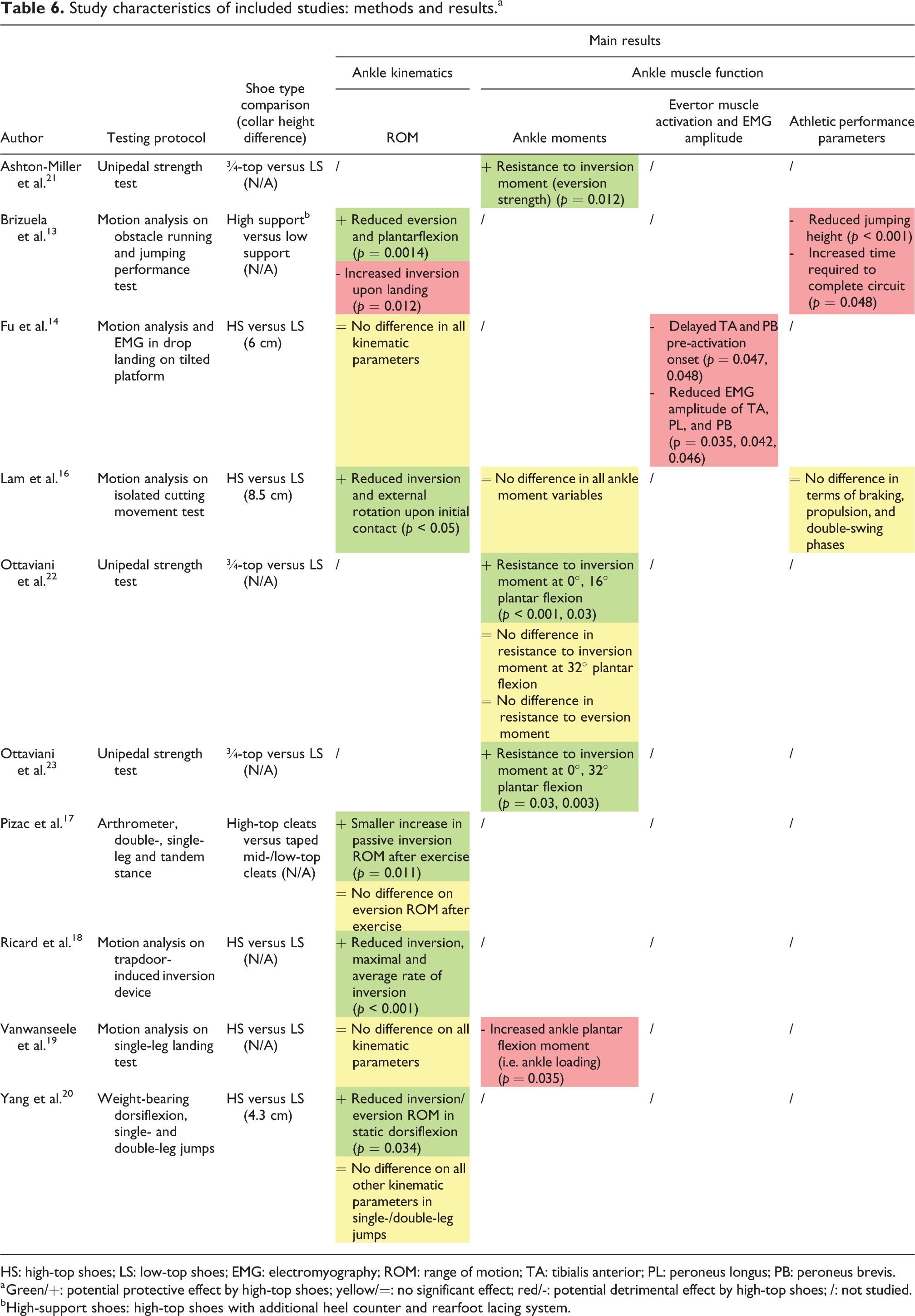
HS: high-top shoes; LS: low-top shoes; EMG: electromyography; ROM: range of motion; TA: tibialis anterior; PL: peroneus longus; PB: peroneus brevis.
a Green/+: potential protective effect by high-top shoes; yellow/=: no significant effect; red/-: potential detrimental effect by high-top shoes; /: not studied.
bHigh-support shoes: high-top shoes with additional heel counter and rearfoot lacing system.
Methodological quality of studies
Results of methodological quality of included studies using the modified Downs and Black checklist were presented in Tables 7 and 8. All 10 studies score within 20–22 (good) out of 28.
Modified Downs and Black checklist scores for included studies (reporting and external validity).a
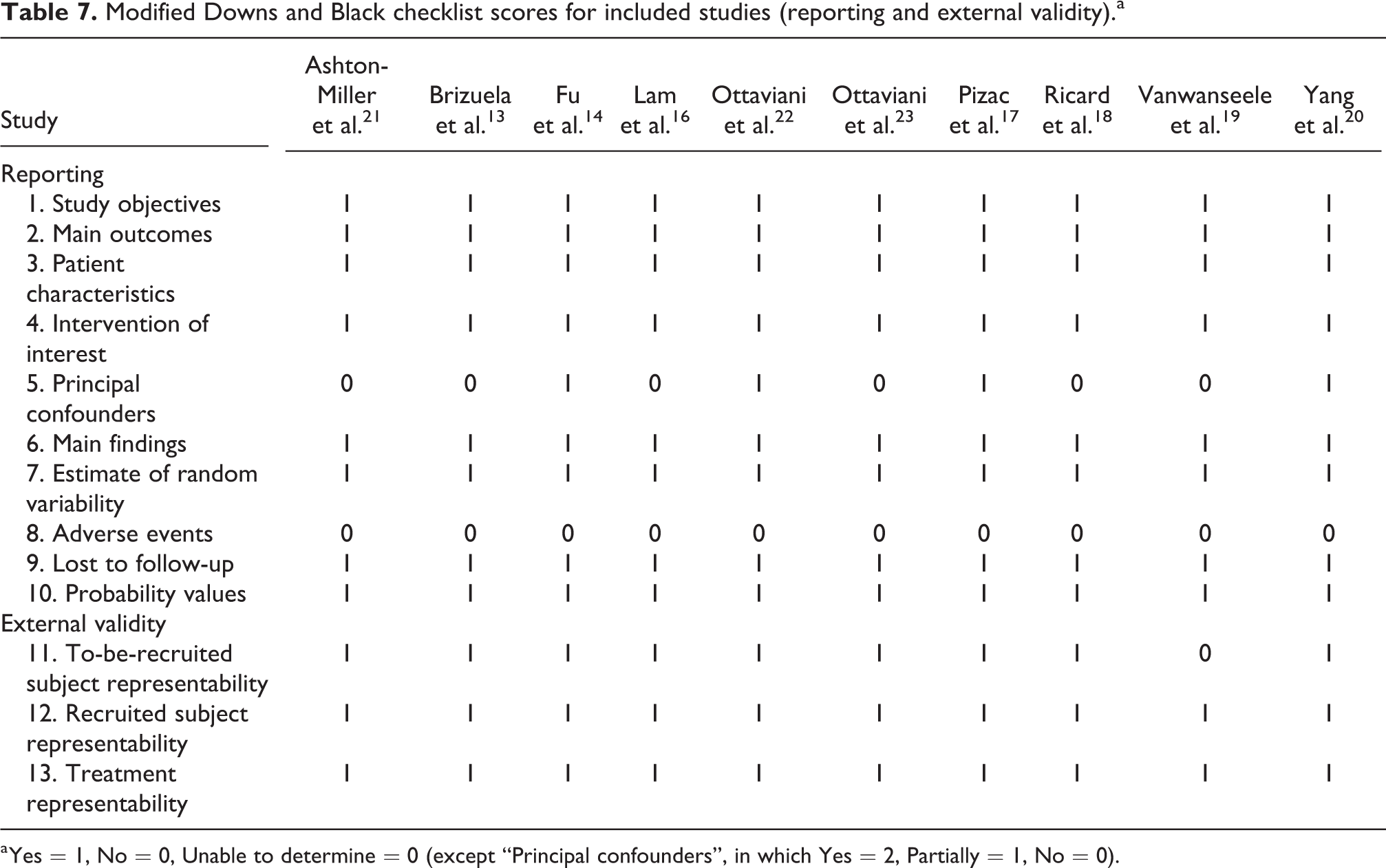
a Yes = 1, No = 0, Unable to determine = 0 (except “Principal confounders”, in which Yes = 2, Partially = 1, No = 0).
Modified Downs and BLACK checklist scores for included studies (internal validity and power).a
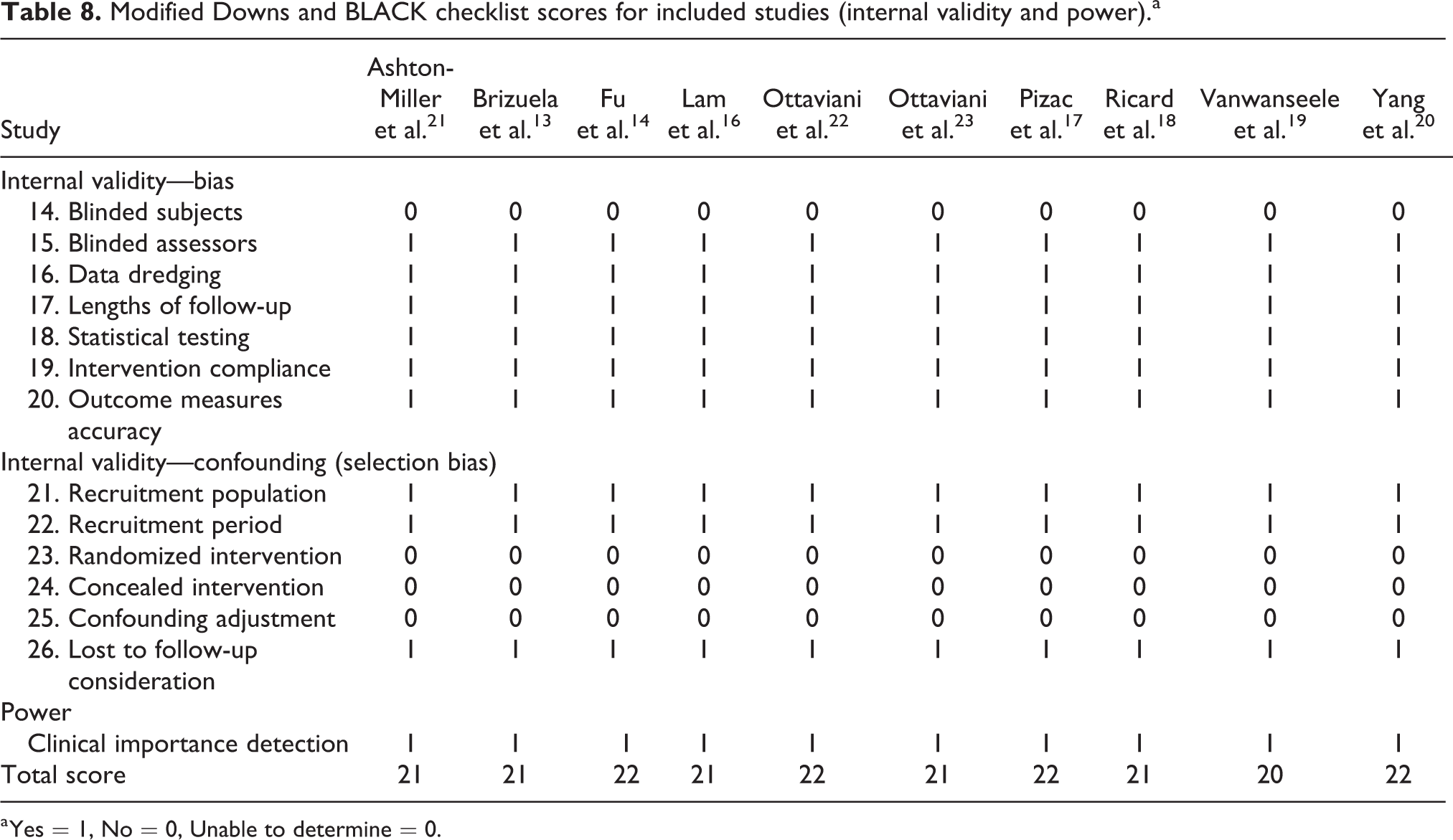
a Yes = 1, No = 0, Unable to determine = 0.
Synthesis of study results
Main findings of each of the 10 included studies were summarized to provide a clearer appraisal of the evidence (Table 6). Outcomes of interest were broadly classified into (i) ankle kinematics and (ii) ankle muscle function.
Shoe collar height and ankle kinematics
Ankle ROM. Seven studies investigated the impact of shoe collar height on ankle ROM kinematics. 13,14,16 –20 Mixed results were observed between studies involving static and dynamic protocols, but there was an overall trend that high-top shoes can limit ankle ROM in relatively static but not in more dynamic testing.
Two studies using relatively static maneuvers (i.e. weight-bearing dorsiflexion 20 and unanticipated drop on trapdoor-induced inversion device 18 ) revealed reduced plantarflexion, dorsiflexion, and inversion in high-top shoes compared to low-top shoes. However, result was inconsistent among five studies which involved more dynamic protocols (i.e. unanticipated cutting movement, 16 single-/double-leg jump landing, 19,20 drop landing on tilted platform, 14 and obstacle running and jumping performance test 13 ). Three of them revealed no high-top shoes related effect, 14,19,20 while the remaining two other studies illustrated that high-top shoes reduced plantar–dorsiflexion, inversion, eversion, and external rotation. 13,16
In addition, one study compared the effect of high-top versus taped low-top football cleats before and after a 2-h practice session. 17 High-top cleats were found to demonstrate a smaller increase in overall passive non-weight-bearing inversion/eversion ROM before and after practice when compared to combined taping and low-top cleats.
Ankle inversion velocity. All other parameters related to ankle inversion velocity in all except one study 18 (i.e. time to maximal ankle inversion angle, rate of ankle inversion, maximal ankle inversion angular velocity) showed no significant difference between high-top and low-top shoes. The only exception was observed in the study by Ricard et al., in which high-top shoes reduced maximal and average rate of inversion by 100° s−1 and 75° s−1 respectively when compared to low-top shoes (p < 0.001). 18
Shoe collar height and ankle muscle function
Seven studies examined the effect of shoe collar height on ankle muscle strength and activity. 14,16,19 –23 Mixed results were again observed, but there was an overall trend that high-top shoes are associated with greater resistance to inversion moment only in more static but not in dynamic testing. There was at least some evidence that high-top shoes may impede athletic performance. 13,14
Functional ankle strength (i.e. resistance to external moment). In terms of ankle eversion strength (i.e. resistance to external inversion moment), Ashton-Miller et al. found that ¾-top shoes increased such strength by 12% (6 N·m) compared to low-top shoes at 0° and 32° plantar flexion (p = 0.012). 21 Ottaviani et al. showed similar findings although such effect diminished with increasing plantar flexion from 0° (29.4% difference between high-top and low-top, p < 0.001) to 16° (20.4%, p = 0.003), to 32° (non-significant, p > 0.05), 22 or in other words, angles which are associated with higher risk of inversion ankle sprains.
Regarding all other direction of moments, there was no significant difference between high-top and low-top shoes in terms of resistance to eversion moments (i.e. inversion strength), 16,22,23 as well as peak plantar flexion moments in any other movement except lay jump (p = 0.028). 20
Pre-activation timing and EMG amplitude of ankle evertor muscles
Fu et al. concluded that high-top shoes were associated with delayed activation time as well as EMG amplitude of evertor muscles relative to low-top shoes (i.e. difference in EMG amplitude between high-top and low-top: tibialis anterior in inversion (F = 4.727, p = 0.035) and combined inversion–plantar flexion (F = 4.782, p = 0.033); peroneus longus (37.2% decrease, F = 4.574, p = 0.042), and peroneus brevis (31.0% decrease, F = 4.539, p = 0.046)). 14 Therefore, high-top shoes may decrease ankle joint stability and increase risk of ankle sprain.
Athletic performance parameters
Brizuela et al. demonstrated that high-top shoes was associated with reduced jumping height (3%, p < 0.0001), increased time required to complete circuit (1%, p = 0.048) compared to low-top shoes, while increasing shock transmission to ankle joint which may be detrimental. 13 However, Lam et al. found no shoe collar height effect on athletic performance in terms of braking, propulsion, and double-swing phases (p > 0.05). 16 An isolated cutting movement task was used in this latter study while a more lengthy agility course was used by Brizuela et al.
Discussion
Based on the selected studies, there was an overall trend that high-top shoes may alter ankle kinematics and increase resistance to external inversion moments in static maneuvers but not in more dynamic testing protocols, which should be more reflective of actual kinematics of ankle sprains. There was at least some evidence which suggested that high-top shoes might impede athletic performance. These findings may suggest that high-top shoes may not be useful to prevent ankle sprains in the athletic population, and such results were compatible with the inconsistent findings in multiple epidemiological studies that high-top shoes are associated with fewer ankle injuries. 25 –27
Effect on ankle kinematics
In the study by Brizuela et al., 13 the high-support shoes being used in this study contained additional structural supports in comparison to those used in other studies. These adjuncts might represent potential confounders if they were used to assess the effect of shoe collar height on ankle kinematics.
Pizac et al. showed that there was a higher sustainability in high-top-related protection of ankle inversion in comparison to taped low-/mid-top cleats after exercise. 17 Whether there was statistically significant comparison of ROM between high-top and low-top cleats without taping, as well as within each pre- and post-exercise session, was however not discussed. It was also important to note that the ROM measured in this study was passive, non-weight-bearing, which might be less reflective of real-life scenario.
Lastly, it was worth mentioning that Vanwanseele et al. applied an in-shoe calcaneal motion device which might better predict actual ankle ROM instead of estimation through tracking external shoe anchors as what most other studies did. 19 Result was consistent with general observations from most studies in this review.
Effect on ankle muscle function
Some might argue that reaction of peroneal muscles is typically too slow to stop sudden inversion from occurring 28 and that delayed peroneal muscle activation was inappropriately blamed for sprain accidents. In response to such argument, it would be particularly useful to differentiate neuromuscular activation due to stretch reflex after the impact from pre-landing neuromuscular activation. While the stretch reflex mechanism may indeed be too slow, current literature has demonstrated that strong preparatory co-activation of ankle evertors and invertors prior to landing prevented ankle inversion from exceeding injury threshold. Ashton-Miller et al. concluded that active evertor muscle group can provide the most effective ankle protection when compared to brace and taping, and such activation can provide up to six times the passive resistance that high-top shoes can provide. 21 There has also been robust data including a meta-analysis which determined that individuals with previous ankle sprain exhibited delayed and smaller peroneal muscle activation, and that deficit was even more evident in patients with chronic ankle instability. 29 –31 In other words, this impaired pre-landing peroneal activation (e.g. from the use of high-top shoes) may potentially put individuals at risk of sustaining ankle sprains.
In this review, two studies concluded that high-top shoes were not effective in increasing ankle joint stability, but might instead induce suboptimal muscular control and impaired functional stability. 14,15 With that said, this would call for further exploration regarding the possibility of ankle neuromuscular adaptation upon long-term use of high-top shoes through more extensive EMG studies.
Overall, there were some shortcomings identified in our included studies. Potential methodological limitations included small sample size, low female ratio, moderate risk of inevitable bias due to lack of blinding of participants and outcome accessors, lack of clarity or absence of adjustment for other confounding factors of ankle sprains, including athlete’s body height and weight, activity level, smoking history, use of long-term medications such as corticosteroids, as well as concomitant use of other ankle protective mechanisms (e.g. ankle proprioceptive training and strengthening programs, athletic taping and braces). All these factors could affect result interpretation.
Review limitation
Several limitations in our review should be noted. In terms of subject demographics, although the mean participant age in the 10 included studies was 18.7 years old, the level of training might vary. This may imply possible deviation from the common mechanisms of ankle sprains. Results should also be interpreted with caution if the findings are to be extrapolated to individuals outside this age range, as the musculoskeletal biomechanical properties may differ among age groups. Moreover, the selected studies had a high male predominance, which might affect applicability to female athletes. A recent meta-analysis by Doherty et al. 1 has suggested female preponderance in ankle sprain injuries.
As described above, heterogeneity was observed in design protocols of simulating ankle sprain mechanism of injury, as well as their corresponding measured outcomes. Regarding the types of intervention, there was also no consensus in the literature on the scientific definition of high-top shoes. Unless specified, it was difficult to gauge the exact difference in collar height between high-top and low-top shoes in most studies. The studies we identified used a variety of athletic shoe brands and designs across a 25-year time span. To name just a few, difference in collar heights, stiffness of materials, and additional supportive adjuncts observed in recent advancements are all variables which made pooling of results in this systematic review difficult.
Finally, publication bias would be expected. Inclusion of only published data as well as limitation of our search to full-text articles in English with electronic access would mean that there might be other relevant studies in other languages, from non-electronic sources, or unpublished data being missed.
Future research direction
This systematic review highlighted the paucity and heterogeneity of studies regarding the effect of shoe collar height on ankle sprain mechanics. To facilitate assessment of new findings based upon existing results, future studies should include consistent and detailed definition of high-top and low-top shoes, particularly the difference in collar height measurement. In terms of testing protocols, those involving more dynamic maneuvers such as controlled landing on inverted surfaces better resemble actual ankle kinematics in ankle sprain injuries than those only involving relatively static balancing on trapdoor devices, and thus can be adopted for reference in future studies. As mentioned by Fu et al., 18 it would also be helpful to further explore how shoe collar height may influence intrinsic neuromuscular response of ankle evertor muscles. In particular, based on our discussion, the possibility of ankle neuromuscular adaptation upon long-term use of high-top shoes could be addressed through more extensive EMG studies.
Summary
Our review summarized that high-top shoes generally alter ankle biomechanics in static maneuvers but not in more dynamic protocols in athletes. Such results may suggest that high-top shoes may not be as useful to prevent ankle sprains in real-life situation as commonly advertised in the sports community. Further studies with more consistent study interventions and outcome variables are needed to definitively establish the effects of shoe collar height on ankle sprain mechanics in athletes.
Footnotes
Declaration of conflicting interests
The author(s) declared no potential conflicts of interest with respect to the research, authorship, and/or publication of this article.
Funding
The author(s) received no financial support for the research, authorship, and/or publication of this article.
