




Abstract
Sexual-minority adolescents frequently endure peer rejection, yet scant research has investigated sexual-orientation differences in behavioral and neural reactions to peer rejection and acceptance. In a community sample of adolescents approximately 15 years old (47.2% female; same-sex attracted: n = 36, exclusively other-sex attracted: n = 310), we examined associations among sexual orientation and behavioral and neural reactivity to peer feedback and the moderating role of family support. Participants completed a social-interaction task while electroencephalogram data were recorded in which they voted to accept/reject peers and, in turn, received peer acceptance/rejection feedback. Compared with heterosexual adolescents, sexual-minority adolescents engaged in more behavioral efforts to ingratiate after peer rejection and demonstrated more blunted neural reactivity to peer acceptance at low, but not medium or high, levels of family support. By using a simulated real-world social-interaction task, these results demonstrate that sexual-minority adolescents display distinct behavioral and neural reactions to peer acceptance and rejection.
Adolescence is a developmental period in which building and navigating peer relationships takes on increasing importance (Brown & Larson, 2009; Collins & Steinberg, 2006). Sexual-minority adolescents (e.g., individuals who identify as lesbian, gay, bisexual, and/or report same-sex romantic attractions or behaviors) must face this normative social task while managing a minority-sexual identity, which increases exposure to stigma-related stressors, including peer rejection, bullying, social exclusion, and other stressful peer experiences (Russell & Fish, 2019). Approximately one third of sexual-minority adolescents are bullied at school compared with fewer than one in five heterosexual adolescents (Johns et al., 2018). Sexual-minority adolescent girls are approximately 50% more likely to experience bullying than heterosexual adolescent girls, whereas sexual-minority adolescent boys are about twice as likely to experience bullying than heterosexual adolescent boys (Johns et al., 2018). Prospective studies have found associations between elevated rates of peer rejection among sexual-minority young people and this population’s disproportionate risk of experiencing internalizing disorders, including depression and anxiety, starting in early adolescence (Marshal et al., 2013; Mittleman, 2019; Pachankis et al., 2022) and persisting into young and middle adulthood (Bränström et al., 2022; Rice et al., 2019).
Although sexual-minority adolescents frequently endure stigma-related peer rejection, scant research has examined sexual-orientation differences in behavioral and neural reactions to peer feedback (Nicholson et al., 2022). Research from the general population has shown that the ways in which adolescents react during peer interactions can be influenced by accumulated exposure to social stress, including peer rejection (Will, Crone, et al., 2016). For example, chronically rejected adolescents are more likely, compared with their accepted peers, to anticipate and react severely to peer rejection (Downey et al., 1998; Zimmer-Gembeck & Nesdale, 2013) and to display enhanced neural reactivity to peer rejection (Kujawa et al., 2017; Silk et al., 2014; Will, van Lier, et al., 2016). Examining whether sexual-minority adolescents, compared with their heterosexual peers, display individual differences in behavioral and neural reactions to peer feedback can further understanding of how stigma-related stress exposure can “get under the skin” (Hatzenbuehler, 2009) to contribute to sexual-minority adolescents’ elevated risk for internalizing disorders. Below, we describe evidence from laboratory tasks that assess behavioral and neural reactions to peer rejection and acceptance and argue for why sexual-minority adolescents may display distinct reactions to peer feedback compared with their heterosexual peers. We also highlight family support as an important protective factor against the negative effects of peer rejection that might be especially significant for sexual-minority adolescents.
Behavioral and Neural Reactions to Peer Feedback
Investigating emotional and behavioral reactions to peer feedback in laboratory tasks represents a growing area of inquiry. In the past two decades, researchers have developed several laboratory tasks that simulate real-world peer rejection, including Cyberball, a virtual ball-throwing task in which participants experience exclusion or inclusion in the online game (K. D. Williams et al., 2000), and the chatroom task, an online, profile-based task in which participants receive positive or negative peer feedback about their photograph (Guyer et al., 2012). Experiencing peer rejection in these laboratory tasks has been found to trigger negative mood, feelings of exclusion, low self-esteem, and rumination on negative feedback (e.g., see review in Platt et al., 2013). Using simulated peer-feedback tasks, researchers have also sought to assess how participants behaviorally react to their peers after rejection. For example, one study that used a task in which participants created a personal profile and then received peer feedback on their profile found that preadolescents who received negative feedback responded with more behavioral aggression, as measured by the delivery of a loud noise blast toward a peer, than participants who received neutral or positive feedback (Achterberg et al., 2017). In another study that used the Cyberball task, participants were more likely to engage in punishing behaviors (i.e., allocate less “money”) to peers who excluded them during the task, even when it was costly to the participant to punish the excluder (Will et al., 2015). Laboratory tasks have also sought to examine how adolescents behaviorally react to peer acceptance. In one study using the chatroom task, adolescents displayed heightened visual attention toward peer acceptance and away from peer rejection (Silk et al., 2012). Furthermore, in social-interaction tasks that involved early adolescents, across studies, participants were more likely to display accepting behavior, as indexed by voting to keep their peer in a game, toward peers who had accepted them in a previous round of game play (Kujawa et al., 2017; Weinberg et al., 2021). Taken together, these findings indicate that peer feedback elicits salient emotional and behavioral reactions that can be measured by laboratory tasks and that experiences of peer rejection and acceptance can affect responses on these tasks.
In addition to investigating emotional and behavioral responses to peer feedback, laboratory tasks have also examined neural reactivity to peer rejection and acceptance. For instance, the reward positivity (RewP) is an event-related-potential (ERP) that measures individual differences in neural reactivity to rewarding stimuli compared with neutral or punishing stimuli (Bress & Hajcak, 2013; Proudfit, 2015). Reduced reward responsiveness, as indicated by an individual’s blunted RewP reactivity when presented with reward, has been prospectively associated with increases in depressive symptoms (Bress et al., 2013; Burani et al., 2021; Nelson & Jarcho, 2021). Recent research has examined RewP to social reward using the island-getaway task, a novel, simulated real-world task developed for adolescents to elicit behavioral and ERP reactivity to peer acceptance and rejection feedback (Kujawa et al., 2014, 2017; Rappaport et al., 2019). Briefly, the island-getaway task is a computerized social-interaction task in which across several rounds of game play, participants vote to reject or accept peer coplayers (who are, in fact, preset computerized coplayers) and receive rejection and acceptance feedback from these peer coplayers (Kujawa et al., 2014, 2017). Research investigating associations among self-reported prior peer-victimization experiences and RewP to social reward (operationalized as RewP to peer-acceptance feedback controlling for responses to peer-rejection feedback) using the island-getaway task has shown that adolescents who report more chronic peer victimization also demonstrate blunted RewP to peer acceptance (Rappaport et al., 2019). Furthermore, a blunted RewP to peer acceptance controlling for responses to peer rejection is correlated with higher depressive symptoms in young adolescents (Kujawa et al., 2017). Taken together, these findings underscore the relevance of RewP to understanding individual differences in neural peer-feedback processing and highlight the island-getaway task as an effective way to measure behavioral and neural reactivity to peer feedback in adolescents.
Sexual Orientation and Behavioral and Neural Reactions to Peer Feedback
Converging lines of evidence suggest that sexual-minority adolescents might display altered behavioral and neural reactions to peer feedback compared with heterosexual adolescents. First, in the general population of adolescents, greater exposure to peer victimization is linked with distinct behavioral (Leadbeater & Hoglund, 2009; Troop-Gordon, 2017) and neural reactions (Rappaport et al., 2019) to peer rejection. As previously mentioned, because of their stigmatized social status, sexual-minority children and adolescents endure more frequent and severe peer victimization than their heterosexual peers (Earnshaw et al., 2016). Observational research has shown that exposure to stigma-related stressors, including peer rejection, can trigger distinct emotional (e.g., shame), behavioral (e.g., social withdrawal), and cognitive (e.g., lower self-esteem) processes in sexual-minority adolescents (Hatzenbuehler, 2009; Pachankis et al., in press) that can then compromise mental health. However, scant research using simulated real-world tasks has assessed sexual-minority adolescents’ behavioral and neural reactions to peer feedback, yet such research has the potential to further understanding of responses to potentially stigmatizing peer interactions in situ and in real time.
Another piece of evidence suggesting that sexual-minority adolescents may display altered behavioral and neural reactions to peer feedback is that sexual-minority young adults report higher levels of rejection sensitivity than heterosexual young adults (Maiolatesi et al., 2022). Rejection sensitivity—the tendency to anxiously expect and severely react to social rejection—is a transdiagnostic risk factor for interpersonal difficulties and internalizing disorders (Downey et al., 1998; McDonald et al., 2010). Sexual minorities are thought to display heightened rejection sensitivity because of being reared in social contexts that are often unaccepting of, if not outright threatening to, one’s identity (Baams et al., 2020; Maiolatesi et al., 2022; Pachankis et al., 2008). Heightened rejection sensitivity is thought to develop as an adaptive mechanism to protect individuals from rejection by fostering rapid detection of potentially threatening situations, but it can also contribute to maladaptive outcomes, including self-fulfilling prophecies (Downey et al., 1998). For instance, in studies conducted without regard for sexual orientation, rejection sensitivity has been shown to be associated with negative behavioral reactions to peer rejection, such as withdrawal and reactive aggression (Zimmer-Gembeck & Nesdale, 2013), and reduced neural reactivity to peer acceptance (Babinski et al., 2019). Furthermore, people high in rejection sensitivity have shown enhanced behavioral efforts to ingratiate after peer rejection by attempting to regain acceptance with their rejecter (Romero-Canyas et al., 2010). Indeed, people who are prone to anxiously expect rejection, and therefore wish to prevent or avoid such rejection, may overcompensate with ingratiation even to the point of compromising one’s own principles and accepting aggressive, hostile, or violent behavior to stave off rejection (Inman & London, 2022; Rudd et al., 1994). Because sexual minorities are higher in rejection sensitivity than heterosexuals (Maiolatesi et al., 2022), it follows that they may also display the distinct behavioral and neural reactions to peer rejection commonly observed in individuals high in rejection sensitivity.
Finally, one previous study directly examined the neural correlates of stigma-related stress exposure among sexual-minority adolescents (Eckstrand et al., 2019; Nicholson et al., 2022). The study examined sexual-orientation differences in neural reward responsiveness to a functional MRI (fMRI) task in which adolescent participants (eight sexual minority, 38 heterosexual) received positive or neutral peer feedback about their photograph (Eckstrand et al., 2019). Results showed that sexual-minority participants, compared with heterosexual participants, exhibited more blunted neural response to peer acceptance, as measured by reduced activity in social-reward neurocircuitry (Eckstrand et al., 2019). Although preliminary because of the small sample size, these findings offered the first evidence that neural responses to peer acceptance might be blunted among sexual-minority adolescents compared with heterosexual adolescents. Taken together, accumulating evidence suggests that perhaps because of greater exposure to actual and potentially threatening stigma-related social experiences, including peer rejection, sexual-minority adolescents compared with heterosexual adolescents may display altered behavioral and neural reactions to peer feedback.
Family Support Can Buffer Against the Negative Impacts of Stressful Peer Experiences
Although adolescence is a developmental period marked by the increased importance of peer relationships, family support remains a crucial factor in the healthy psychological development of adolescents (Collins & Steinberg, 2006). For adolescents who experience difficult peer relationships, evidence suggests that family support might be especially important in mitigating the negative mental-health consequences of peer rejection. For example, supportive parenting, especially from mothers, has been shown to attenuate the link between exposure to peer victimization and the development of depressive symptoms among adolescents (Kotchick et al., 2020). In addition, high family support, but not peer support, has been shown to protect against the development of suicidal ideation following a stressful interpersonal event among adolescent girls (Mackin et al., 2017). Furthermore, positive parental behaviors (e.g., parental affirmation, caring affect toward their child) have been found to buffer against children and adolescents’ negative emotional reactions to daily stressful peer events such as bullying and rejection (Oppenheimer et al., 2016). In one fMRI study, adolescents with parents with an authoritative style (i.e., characterized by emotional warmth, support, clear communication of expectations, and boundary setting) showed reduced neural reactivity to peer rejection, suggesting a buffering effect of parenting style on responses to social stress (Guyer et al., 2015). Taken together, these findings highlight that for all adolescents, family support is vital to protect against the negative impacts of stressful peer experiences.
As with in the general population, family support is an important buffer against negative mental-health impacts for sexual-minority adolescents facing peer rejection (Saewyc, 2011; van Beusekom et al., 2015). However, sexual-minority adolescents frequently report lower family support than their heterosexual peers, and adolescents with lower family support often concomitantly struggle with difficult peer relationships (Bos et al., 2008; Saewyc, 2011). Indeed, sexual-minority adolescents and young adults with lower family support also experience more frequent peer bullying and associated internalizing disorders, including depression and anxiety, than do individuals with higher family support (Clark et al., 2022; T. Williams et al., 2005). Few studies of sexual minorities have assessed the potential buffering effects of family support on the mechanisms underlying the pathway between social-stress exposure (e.g., peer rejection) and internalizing disorders. However, one study using a laboratory-induced social-stress task found that greater levels of family support, but not peer support, protected against physiological reactivity to social-evaluative stress among sexual-minority young people (Burton et al., 2014), offering some of the first evidence suggesting that family support, but not peer support, may protect against real-time reactivity to social stress among sexual minorities. Other studies assessing the protective role of multiple domains of social support (e.g., family, peer) on sexual-minority young people’s mental health frequently have found that family support serves as a protective buffer and that peer support does not (Craig & Smith, 2014; Kiekens & Mereish, 2022; Shilo & Savaya, 2011; Wang et al., 2018). Studies assessing multiple types of social support can help to specify the relative protective impact of different domains of social support, such as family versus peer support, for sexual-minority adolescents. Although no studies, to our knowledge, have assessed the protective (i.e., moderating) role of family or peer support in studies assessing sexual orientation and behavioral and neural reactivity to peer feedback, accumulating evidence from studies conducted with and without regard for sexual orientation pinpoint family support as a uniquely protective factor that might be especially salient for sexual-minority adolescents.
The Current Study
In the present study, we examined the association between sexual orientation, behavioral and neural reactions to peer feedback, and the potentially protective role of family support. A community sample of adolescents assessed when they were approximately 15 years old, which included 36 sexual-minority youths and 310 heterosexual youths, completed the island-getaway social-feedback task to measure behavioral and neural responses to peer acceptance and rejection. The present study was guided by three hypotheses. First, we hypothesized that sexual-minority adolescents, compared with heterosexual adolescents, would exhibit more behavioral efforts to ingratiate following peer rejection. Second, we hypothesized that sexual-minority adolescents, compared with heterosexual adolescents, would exhibit more blunted neural reactivity to peer-acceptance feedback. Third, we hypothesized that family support, but not peer support, would moderate the associations between sexual orientation and behavioral and neural reactivity to peer acceptance and rejection. Specifically, we hypothesized that sexual-minority adolescents, compared with heterosexual adolescents, would exhibit substantially more behavioral efforts to ingratiate after peer rejection and substantially blunted neural reactivity to peer acceptance at low, but not medium or high, levels of family support.
This study extends the current knowledge regarding sexual orientation and both behavioral and neural reactions to peer feedback during adolescence. First, we used a laboratory-based social-interaction task to assess whether there may exist sexual-orientation differences in behavioral reactions to peer feedback. Existing research assessing sexual-orientation differences in behavioral responses to peer rejection has relied almost exclusively on self-report measures collected retrospectively (Collier et al., 2013; Fedewa & Ahn, 2011), which can introduce several forms of bias, including recall, mood-state, and same-source reporter bias, and hampers understanding of how behavioral reactions to peer feedback occur in situ and in real time.
Second, to extend the current literature on sexual orientation and neural reactions to peer feedback, in the current study, we used ERP measurement to assess sexual-orientation differences in neural reactivity to peer feedback (Nicholson et al., 2022). The only previous study to investigate differences in neural reactivity to peer feedback between sexual-minority and heterosexual adolescents relied on fMRI (Eckstrand et al., 2019). ERP, because of its excellent temporal resolution and direct measurement of neural activity, is thought to be ideally suited for capturing rapid neural processing of social feedback in a laboratory task (Amodio et al., 2014; Kujawa et al., 2014). In sum, the current study advances understanding of how peer rejection may lead to distinct behavioral and neural reactions among sexual-minority adolescents compared with heterosexual adolescents.
Transparency and Openness
This study was not preregistered. De-identified data and syntax for all analyses can be accessed at https://osf.io/qmkwh/. Below, we report how we determined our sample size, all data exclusions, all manipulations, and all measures in the study. The Stony Brook University Institutional Review Board (No. 88933) approved study procedures.
Method
Participants and procedure
Participants were from the Stony Brook Temperament Study, an ongoing prospective community cohort study focused on childhood temperament and risk for internalizing disorders in which youths and parents completed assessments every 3 years starting when the youth was age 3 (Klein & Finsaas, 2017). Initial eligibility criteria included having a 3- or 4-year-old child with no developmental disabilities or serious medical conditions, at least one English-speaking biological parent, and living within 20 miles of Stony Brook, New York. At the age 3 assessment, 559 families were enrolled. At age 6, 50 additional families were recruited to increase the racial and ethnic diversity of the sample. At age 15, 467 participants were assessed (77% retention rate). The age 15 assessment was the first wave in which sexual-orientation information was collected. This wave was considered the ideal time to begin to examine same-sex attractions considering previous developmental research has documented that gay and bisexual youths report first same-sex attraction during midadolescence (at approximately age 13 among boys and age 15 among girls; e.g., Katz-Wise et al., 2017).
For the present analyses, we excluded 50 participants with missing sexual-orientation information. Adolescents missing sexual-orientation information did not significantly differ from the analytic sample on rejection sensitivity or behavioral and neural responses to peer feedback. We also excluded 48 other participants with missing data on the social-interaction task. Thus, the present study included 369 adolescents (47.2% female; 80.8% non-Hispanic White) assessed at age 15. Parents provided informed consent, and adolescents provided assent.
Measures
Independent variable
Sexual orientation
Participants’ romantic and sexual attractions were assessed using a 14-item measure adapted from the Erotic Response and Orientations Scale (Li & Hines, 2016; Storms, 1980). Participants described their past-6-month romantic and sexual attractions (e.g., thoughts, feelings, dreams about someone) toward same-sex and other-sex peers on separate subscales from 0 (not at all) to 4 (almost every day). Aligned with previous uses of the scale with adolescents (Pachankis et al., 2022) and to prevent misclassification of adolescents who reported only very occasional attractions to either or both sexes, we classified participants as “exclusively other-sex attracted” (n = 310, 84.0%) if they reported 0 or 1 on the same-sex-attracted subscale and greater than 1 on the other-sex-attracted subscale. Participants who reported greater than 1 on the same-sex-attracted subscale (regardless of other-sex attractions) were classified as “same-sex attracted” (n = 36, 9.8%). Given the current study’s focus on sexual-orientation differences in peer-feedback reactivity, participants who reported 0 or 1 on both the other-sex and same-sex subscales were classified as “nonattracted” and removed from further analyses (n = 23, 6.2%). Scale items on each subscale were normally distributed, and internal consistency among the items was high (same-sex attracted: α = .94; other-sex attracted: α = .93).
Outcomes
Social-interaction task
Participants completed the island-getaway task (task code available at https://github.com/Kodiologist/Survivor/tree/klein) while electroencephalogram (EEG) data were recorded (Kujawa et al., 2014, 2017). The island-getaway task is an interactive game that is designed to simulate real-world experiences of social rejection and acceptance while measuring behavioral and neural responses to peer feedback. Participants completed the task at age 12 (Kujawa et al., 2017) and age 15 and were not debriefed after the age 12 assessment. Participants were told that they would be playing a game with 11 age-matched perceived peers (when in fact all responses from supposed peers were computerized). Task instructions indicated that participants would be traveling in the Hawaiian Islands, and at each island, they had to vote whether they wanted each peer to continue with them to the next island or be kicked out of the game, with the premise that the player with the most rejection votes would be kicked out of the game. Participants first created a profile including their photograph and basic demographic information and reviewed profiles of peers. On each trial, participants first voted to accept (“Keep”) or reject (“Kick out”) a peer and then saw feedback indicating whether that peer had voted to accept or reject them. Acceptance feedback was indicated by an image of a green “thumbs up,” and rejection feedback was indicated by an image of a red “thumbs down.” Each voting trial began with the presentation of a coplayer profile until the participant’s vote, followed by a fixation “+” presented for 1,000 ms, feedback displayed for 2,000 ms, and a blank screen presented for 100 ms. To simulate variation in peer-response speed, a message “Waiting for [peer’s name] to vote . . . ” was shown before the fixation cross and feedback if participants voted faster than the simulated voting time selected for that peer. The task included 51 feedback trials split evenly between acceptance and rejection except for the last trial type, which was determined randomly. The task included a total of six rounds; players responded to an additional poll question (e.g., “If you could have a superpower, what would it be?”) at the start of each round to gradually learn more details about one another. After each of the first five rounds of voting, participants were told that one of the coplayers had been sent home, and after completing the sixth round, participants were informed that they had made it to the “Big Island.”
Behavioral measures of responses to peer feedback
During the island-getaway task, participants were instructed to vote off a minimum of one coplayer per round but were free to vote off as many coplayers as they choose. The total number of votes to keep coplayers who had voted the participant off in the previous round was evaluated as a behavioral measure of ingratiation (i.e., acting in socially desirable ways toward peers who reject them; Romero-Canyas et al., 2010). The total number of votes to keep coplayers who had voted to keep the participant in the previous round was evaluated as a behavioral measure of prosocial alliance building.
EEG data collection and processing
Continuous EEG data were recorded using a 34-electrode cap (32 channels with the addition of FCz and Iz) and a BioSemi system (BioSemi, Amsterdam, Netherlands). The electrooculogram generated from eye movements and blinks was recorded using facial electrodes placed approximately 1 cm above and below the eye and 1 cm from the outer corners of the eyes. Electrodes were also placed on the left and right mastoids. Recordings were digitized at a 24-bit resolution with a sampling rate of 1,024 Hz. Offline processing was conducted using BrainVision Analyzer software (Brain Products, Munich, Germany). Data were referenced to an average of the recordings from left and right mastoids, band-pass filtered with cutoffs of 0.1 and 30 Hz, and segmented for each trial 200 ms before feedback, continuing for 1,000 ms after feedback onset. In cases of unusable signals from single electrodes, data for that electrode site were interpolated from surrounding electrodes. Eye-blink correction (Gratton et al., 1983) and semiautomatic artifact-rejection procedures were conducted. Criteria of a voltage step of 50 μV between sample points, a maximum voltage difference of 300 μV within a 200-ms interval, and minimum activity of 0.5 μV within 100-ms intervals were used to automatically detect artifacts; additional artifacts were removed by visual inspection. ERPs were averaged across trials separately for acceptance and rejection feedback, and baseline was corrected to activity 200 ms before feedback. RewP was scored as mean amplitude 300 to 375 ms after feedback onset at Cz, where it was maximal in the overall sample (Fig. 1). This scoring is also consistent with prior research using this version of the task (Babinski et al., 2019) and the timing and distribution of the RewP peak previously identified using temporospatial principal component analysis (Kujawa et al., 2017). Unstandardized residualized scores were computed to isolate the variance in RewP associated with responses to acceptance, adjusting for responses to rejection (Meyer et al., 2017).
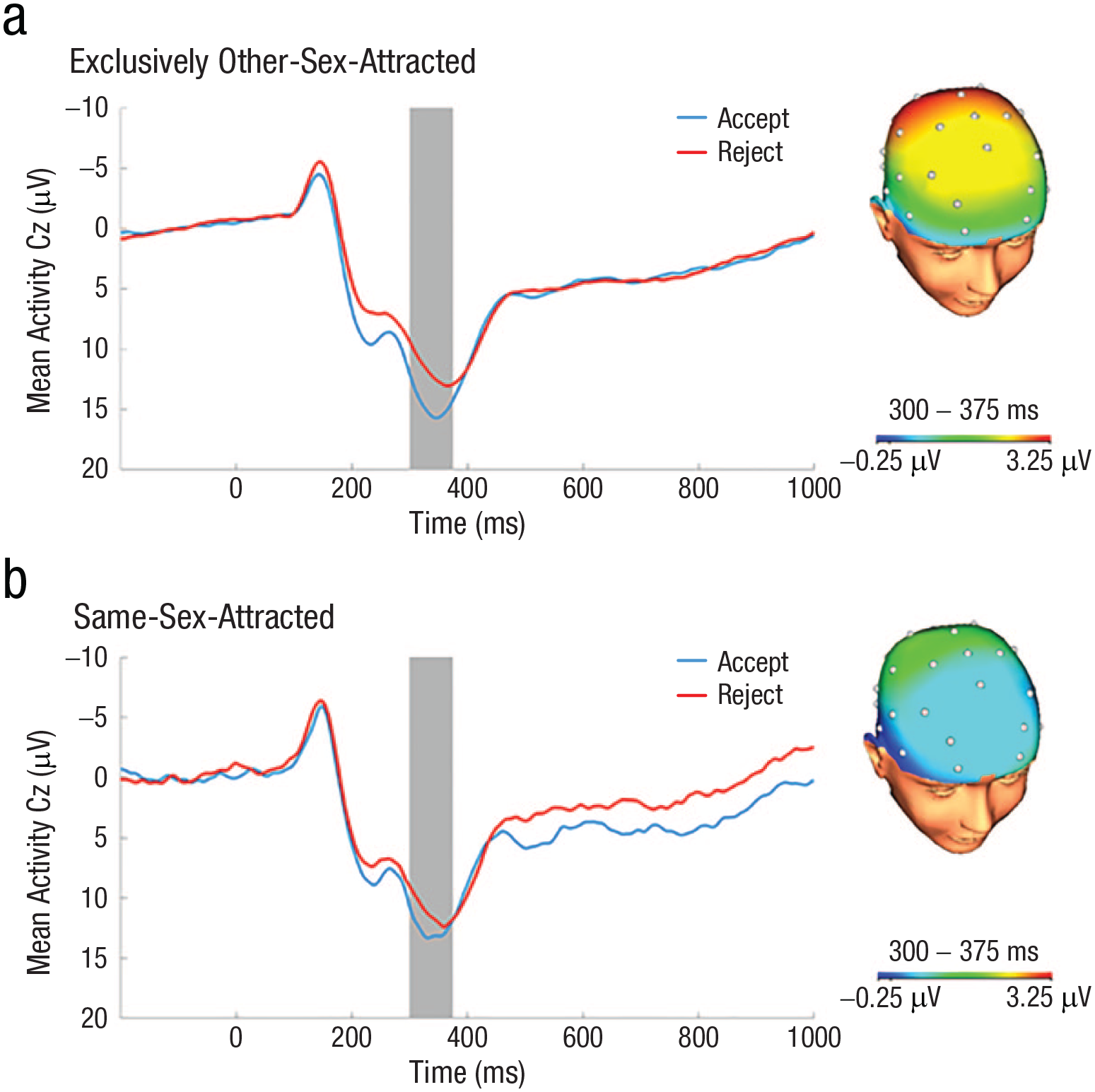
Grand average waveforms at Cz and scalp distributions of the voltage differences for accept minus reject trials during the time window for which the reward positivity was scored (300–375 ms). (a) Data from participants who were exclusively other-sex attracted. (b) Data from participants who were same-sex attracted.
Moderators
Social support
Perceived social support was assessed using the family- and peer-support subscales of the Multidimensional Scale of Perceived Social Support (MSPSS; Zimet et al., 1988). Participants rated support from family (e.g., “My family really tries to help me”) and peers (e.g., “I can talk about my problems with my friends”) on a scale from 1 (very strongly disagree) to 7 (very strongly agree). Separate MSPSS subscales have been found to independently predict distinct psychosocial outcomes among sexual-minority adolescents (McConnell et al., 2015; Wise et al., 2019; Ybarra et al., 2015), thus we analyzed the total score for the four-item family and four-item peer subscales separately and did not include the third subscale (“special person”) in analyses. The MSPSS subscales displayed strong internal consistency in the study sample (family: α = .95; peer: α = .96).
Demographics
Demographics assessed included age, race/ethnicity, and sex. At age 15, sex was treated as biological sex at birth and as a binary (male/female). Therefore, we used the same value for sex as when participants entered the study (at age 3 or for a small subset, age 6).
Rejection sensitivity
The Children’s Rejection Sensitivity Questionnaire assessed rejection sensitivity in terms of angry or anxious expectations of rejection (Downey et al., 1998). Briefly, the scale includes 12 vignettes of hypothetical interpersonal situations involving peers or teachers (e.g., “Everyone is splitting up into groups to work on a special project together. You sit there and watch lots of other kids get picked. As you wait you wonder if the kids will want you for their group”). For each situation, participants indicate whether they would be anxious or angry on a 6-point scale from 1 (not nervous/mad) to 6 (very, very nervous/mad) and the likelihood of rejection from 1 (yes!!!) to 6 (no!!!). To generate a score for angry and anxious expectations of rejection, the likelihood of rejection is multiplied by the degree of anger or anxiety, respectively, over the hypothetical situation and then averaged (angry: α = .85; anxious: α = .88; total: α = .91).
Data analyses
Data analyses were conducted in SAS (Version 9.4) and followed three steps. First, descriptive statistics including χ2 tests for categorical variables and t tests for continuous variables were used to assess bivariate sexual-orientation-group differences in age, sex, race/ethnicity, social support, rejection sensitivity, and behavioral and neural measures of peer-feedback processing. Cohen’s d was calculated as a measure of effect size of group differences. Pearson correlations were examined among all study variables in the total sample and then separately in the same-sex-attracted and exclusively other-sex-attracted groups.
Second, general linear regression models regressed each dependent variable (i.e., ingratiation, alliance building, and residual RewP) onto sexual orientation, the independent variable. In initial models, we adjusted for sex and race/ethnicity and family and peer support. We did not adjust for age because all participants were approximately the same age and age did not differ between sexual-orientation groups. In a second set of models, we then tested the interactions between sexual orientation and family support and peer support for each of the three outcomes.
Last, we probed interactions significant at p < .05 to examine the extent to which social support moderated the relationship between sexual orientation and reactivity to peer feedback. Interactions were probed at 1 SD above and below the mean on the social-support subscale (Aiken et al., 1991) with Johnson-Neyman region of significance testing assessing at which level of social support the sexual-orientation difference in social-reward responsiveness moved from nonsignificance to significance (Preacher et al., 2006).
We conducted two sets of supplemental analyses. In a first supplemental analysis, we ran the multiple regression main effects and interaction models described above with the outcome of residual RewP to rejection adjusting for RewP to acceptance. We conducted this analysis to clarify whether findings from the primary neural-reactivity analyses are specific to blunted RewP to acceptance feedback rather than reflective of a smaller overall RewP or alterations in responses to peer rejection in sexual-minority adolescents. In a second supplemental analysis, we conducted analyses in a matched sample whereby we matched same-sex-attracted adolescents to a subset of exclusively other-sex-attracted adolescents on sex, race/ethnicity, and family and peer support (within ±3 points on each social-support subscale, which represents approximately a .5-SD-unit change). With these parameters, we were able to match 33 of the 36 same-sex-attracted adolescents to 33 exclusively other-sex-attracted adolescents. We used generalized estimating equation models clustered by match ID to account for correlation in matched pairs to assess associations among sexual orientation and the three peer-feedback-reactivity outcomes. We conducted this supplemental analysis to balance the number of same-sex-attracted and exclusively other-sex-attracted participants to control for potential residual confounding.
Results
Sexual-orientation differences in age, sex, race/ethnicity, social support, and rejection sensitivity
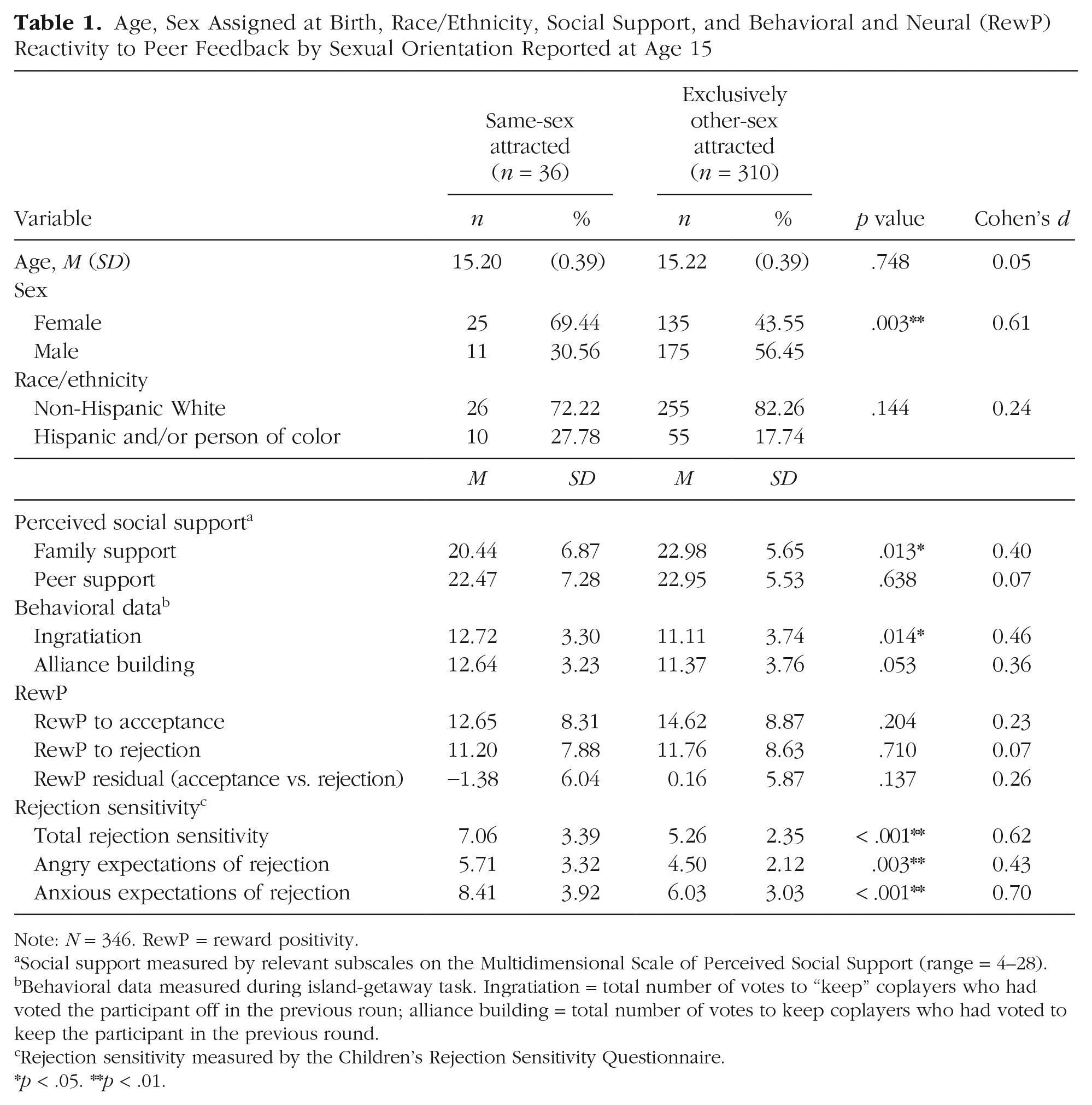
Participants were, on average, 15.2 years old, and age did not differ between same-sex-attracted and exclusively other-sex-attracted adolescents (d = 0.05). A higher proportion of same-sex-attracted adolescents were assigned female sex at birth (69.4%) than exclusively other-sex-attracted adolescents (43.6%; d = 0.61; see Table 1). Regarding race/ethnicity, there was not a significant group difference in the proportion of same-sex-attracted adolescents who identified as non-Hispanic White (72.2%) compared with exclusively other-sex-attracted adolescents (82.3%; d = 0.24). Same-sex-attracted adolescents reported significantly lower mean scores on the family-support subscale (M = 20.44) than exclusively other-sex-attracted adolescents (M = 22.98; d = 0.40). There were no sexual-orientation group differences in perceived level of peer support (same-sex-attracted: M = 22.47; exclusively other-sex-attracted: M = 22.95; d = 0.07). Same-sex-attracted adolescents reported significantly higher rejection sensitivity compared with exclusively other-sex-attracted adolescents, including angry expectations of rejection (d = 0.43), anxious expectations of rejection (d = 0.70), and overall rejection sensitivity (d = 0.62).
Age, Sex Assigned at Birth, Race/Ethnicity, Social Support, and Behavioral and Neural (RewP) Reactivity to Peer Feedback by Sexual Orientation Reported at Age 15
Note: N = 346. RewP = reward positivity.
Social support measured by relevant subscales on the Multidimensional Scale of Perceived Social Support (range = 4–28).
Behavioral data measured during island-getaway task. Ingratiation = total number of votes to “keep” coplayers who had voted the participant off in the previous roun; alliance building = total number of votes to keep coplayers who had voted to keep the participant in the previous round.
Rejection sensitivity measured by the Children’s Rejection Sensitivity Questionnaire.
p < .05. **p < .01.
Pearson correlations
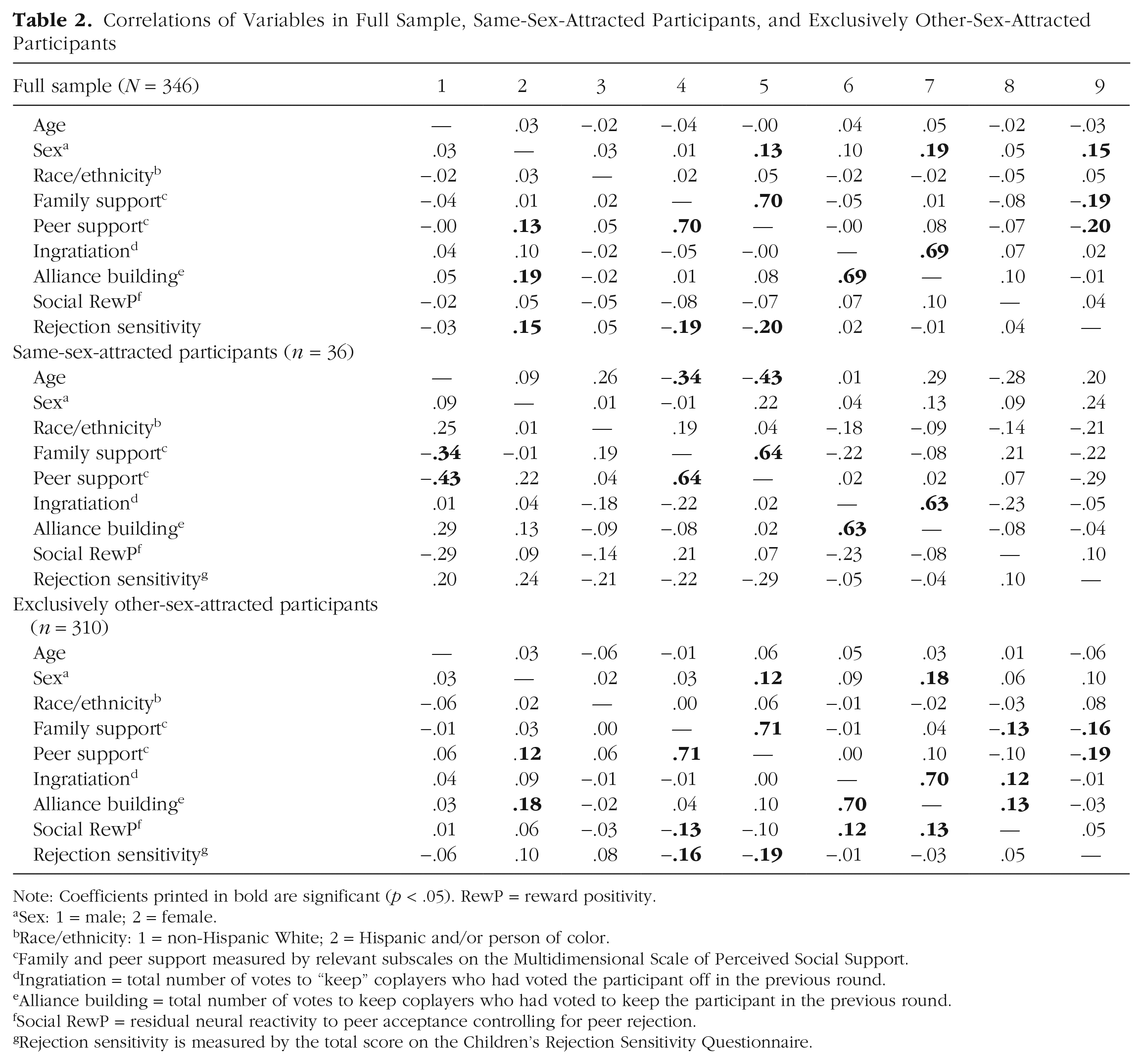
Pearson correlations among the study variables are presented in Table 2 for the full sample, same-sex-attracted adolescents, and exclusively other-sex-attracted adolescents. Briefly, in the full sample, family and peer support were positively correlated, as were ingratiation and alliance building. Rejection sensitivity and family and peer support were negatively correlated. Female sex was positively correlated with peer support, alliance building, and rejection sensitivity. Among same-sex-attracted but not exclusively other-sex-attracted adolescents, family and peer support were negatively correlated with age.
Correlations of Variables in Full Sample, Same-Sex-Attracted Participants, and Exclusively Other-Sex-Attracted Participants
Note: Coefficients printed in bold are significant (p < .05). RewP = reward positivity.
Sex: 1 = male; 2 = female.
Race/ethnicity: 1 = non-Hispanic White; 2 = Hispanic and/or person of color.
Family and peer support measured by relevant subscales on the Multidimensional Scale of Perceived Social Support.
Ingratiation = total number of votes to “keep” coplayers who had voted the participant off in the previous round.
Alliance building = total number of votes to keep coplayers who had voted to keep the participant in the previous round.
Social RewP = residual neural reactivity to peer acceptance controlling for peer rejection.
Rejection sensitivity is measured by the total score on the Children’s Rejection Sensitivity Questionnaire.
Sexual-orientation differences in behavioral and neural responses to peer feedback
Regarding behavioral responses to peer feedback, same-sex-attracted adolescents showed a significantly higher mean number of ingratiation efforts (M = 12.72) than exclusively other-sex-attracted adolescents (M = 11.11; d = 0.46; see Table 1). The sexual-orientation difference in alliance building did not reach statistical significance.
Regarding neural responses to peer feedback as measured by RewP, sexual-orientation differences did not reach statistical significance. Figure 1 depicts grand average waveforms at Cz and scalp distributions of the voltage differences for acceptance minus rejection trials during the time window for which the RewP was scored among exclusively other-sex-attracted adolescents (Fig. 1a) and same-sex-attracted adolescents (Fig. 1b).
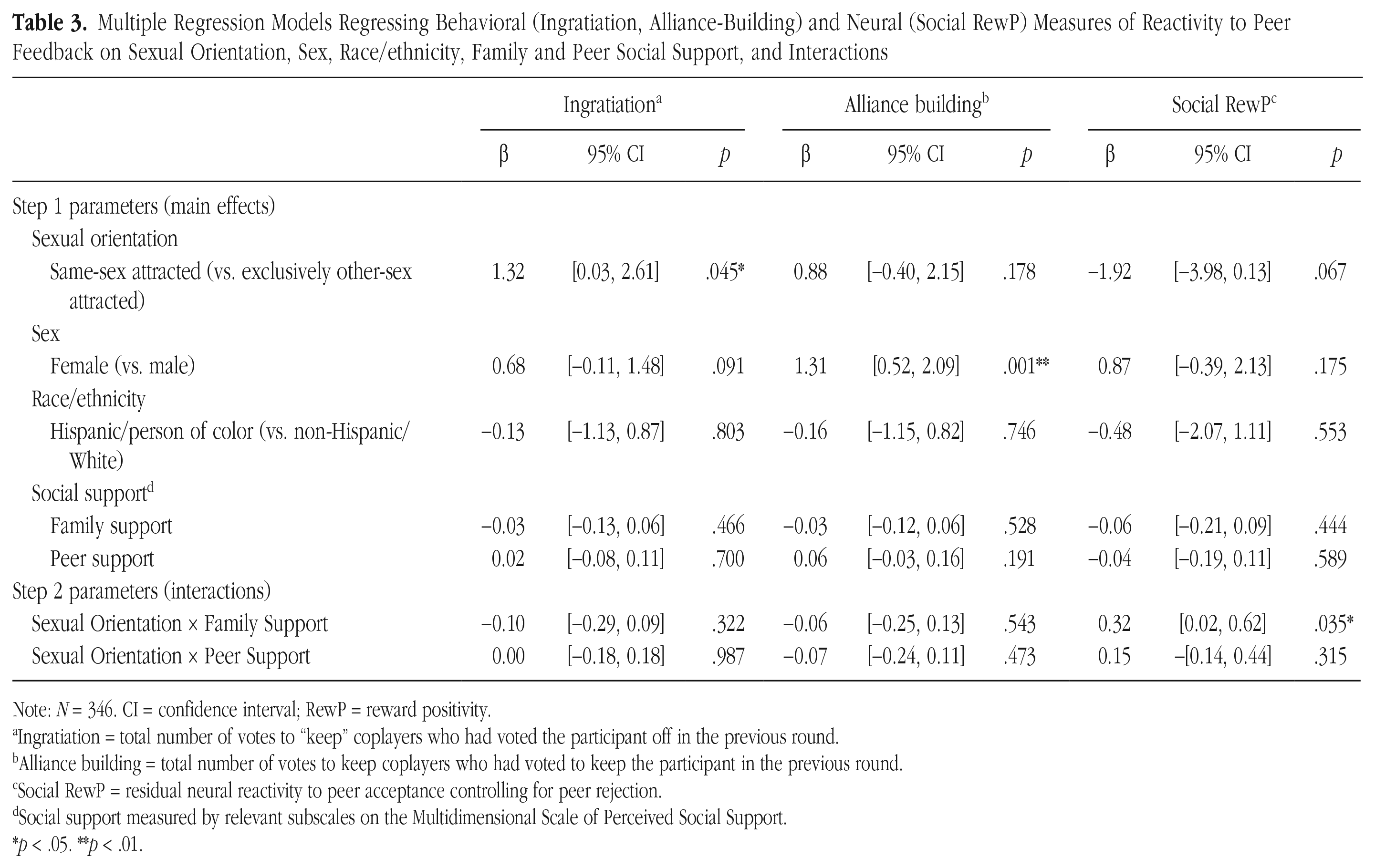
In the main-effects multiple regression analyses, for the behavioral measure of ingratiation efforts, same-sex-attracted adolescents engaged in a significantly higher average number of ingratiation efforts than exclusively other-sex-attracted adolescents (b = 1.32, p = .045; see Table 3). Sexual orientation was not significantly associated with the behavioral measure of alliance building (p = .178). For the outcome of residual RewP, there was a marginally significant effect for sexual orientation such that same-sex-attracted adolescents had a negative (blunted) residual RewP compared with exclusively other-sex-attracted adolescents (b = −1.92, p = .067).
Multiple Regression Models Regressing Behavioral (Ingratiation, Alliance-Building) and Neural (Social RewP) Measures of Reactivity to Peer Feedback on Sexual Orientation, Sex, Race/ethnicity, Family and Peer Social Support, and Interactions
Note: N = 346. CI = confidence interval; RewP = reward positivity.
Ingratiation = total number of votes to “keep” coplayers who had voted the participant off in the previous round.
Alliance building = total number of votes to keep coplayers who had voted to keep the participant in the previous round.
Social RewP = residual neural reactivity to peer acceptance controlling for peer rejection.
Social support measured by relevant subscales on the Multidimensional Scale of Perceived Social Support.
p < .05. **p < .01.
Assessing the moderating roles of family and peer support
Multiple regression models including interactions demonstrated that the interaction between sexual orientation and family support predicted residual RewP (interaction: p = .035; see Table 3). As depicted in Figure 2, decomposing the Family Support × Sexual Orientation interaction into simple slopes demonstrated that the sexual-orientation difference in neural responses to peer-acceptance feedback adjusting for peer-rejection feedback (residual RewP) was significant at low (−1 SD) levels of family support (t = −2.62, p = .009) but not at mean (t = −1.18, p = .238) or high (+1 SD) levels of family support (t = 0.36, p = .717). In other words, same-sex-attracted adolescents versus exclusively other-sex-attracted adolescents demonstrated substantially blunted neural reactivity to peer acceptance versus rejection feedback only when family support was low. In the current sample, 22.22% of same-sex-attracted and 12.58% of exclusively other-sex-attracted adolescents met criteria for low family support, which reflected a score of 16.88 or lower on the family-support subscale. A score of 16.88 represents generally choosing “neutral” in response to items such as “my family really tries to help me.” In the current study, the sexual-orientation difference in residual RewP moved from nonsignificance to significance below a score of 20.28 on the family-support subscale (sample: M = 22.71; range = 4–28). The other interactions—Sexual Orientation × Family Support in predicting ingratiation and alliance-building and Sexual Orientation × Peer Support in predicting all outcomes—were not significant at p < .05 and therefore not probed further (see Table 3).
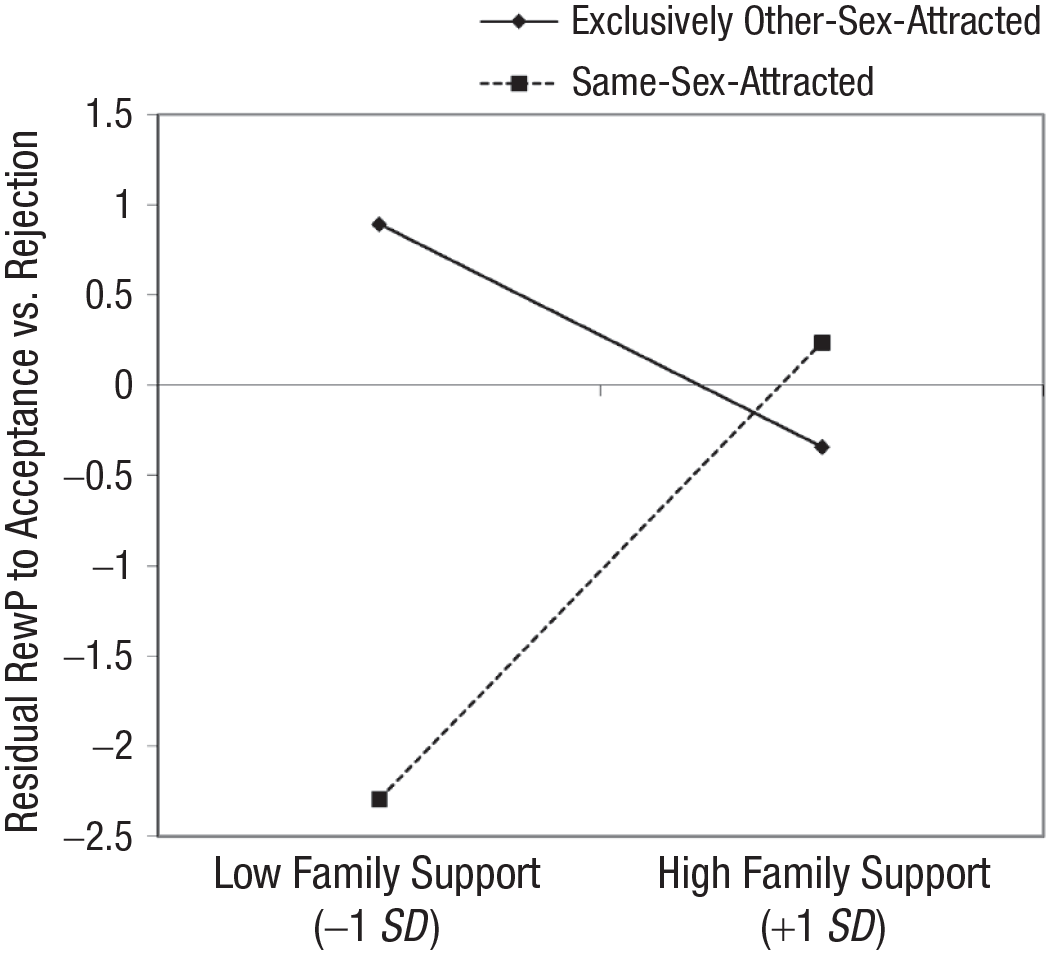
Simple slopes depicting the relationship between sexual orientation and residual reward positivity (RewP) to peer acceptance versus rejection at low (−1 SD) and high (+1 SD) levels of family support at age 15. The sexual-orientation difference in residual RewP was significant at low (t = −2.62, p = .009) but not at mean (t = −1.18, p = 0.238) or high (t = 0.36, p = .717) levels of family support. Region of significance testing showed that the sexual-orientation difference in residual RewP moved from nonsignificance to significance below a score of 20.28 on the Multidimensional Scale of Perceived Social Support family-support subscale.
Supplemental analyses
In the first supplemental analysis, we ran the main effects and interaction models described above with the outcome of residual RewP to rejection adjusting for RewP to acceptance. These supplemental models showed no significant sexual-orientation difference in residual RewP to rejection after adjusting for sex, race/ethnicity, and family and peer support (p = .178), and the Sexual Orientation × Family Support interaction estimate was also not significant (p = .203). This post hoc analysis lends support to the specificity of findings described above regarding blunted RewP to peer-acceptance feedback.
In a second supplemental analysis, we conducted a matched analysis. As displayed in Table S1 in the Supplemental Material available online, sexual-orientation differences by sex, race/ethnicity, and family and peer support were nonexistent, demonstrating that the matching procedure successfully balanced groups on these characteristics. Age and rejection sensitivity were not matching criteria but were also balanced after matching. Results from generalized estimating equation models are arrayed in Table S2 in the Supplemental Material. These results show that same-sex-attracted adolescents, compared with exclusively other-sex-attracted adolescents, engaged in significantly greater ingratiating behaviors (b = 2.03, p = .016) and displayed significantly blunted social RewP (b = −2.94, p = .042). As in the main analyses, there was not a significant association for the behavioral outcome of alliance building. In the matched sample (N = 66), there was not sufficient power to test interactions.
Discussion
The overall goal of this study was to examine associations between sexual orientation and behavioral and neural responses to peer feedback in adolescents and test whether family and peer support might serve as moderators of these associations. In support of our first hypothesis, sexual-minority adolescents engaged in more behavioral efforts to ingratiate after peer rejection compared with heterosexual adolescents. There was not a sexual-orientation group difference in alliance building. We did not find strong support in the main analyses for our second hypothesis that sexual-minority adolescents, compared with their heterosexual peers, would exhibit blunted neural reactivity to peer-acceptance feedback as measured by residual RewP. However, in a supplemental analysis in which same-sex-attracted and exclusively other-sex-attracted adolescents were matched on sex, race/ethnicity, and family and peer support, we found that sexual-minority adolescents, compared with heterosexual adolescents, demonstrated significantly blunted residual RewP. In support of our third hypotheses, we found that family support, but not peer support, moderated the relationship between sexual orientation and neural reactivity to peer feedback such that the sexual-orientation group difference in blunted residual RewP was statistically significant at low but not medium or high levels of family support. However, we did not find evidence that family support moderated the association between sexual orientation and behavioral efforts to ingratiate after peer rejection, potentially indicating the uniquely important role of family support in understanding sexual-orientation differences in neural, but not behavioral, reactivity to peer feedback. Overall, the results of this study provide preliminary evidence that sexual-minority adolescents, compared with heterosexual adolescents, may display ingratiating behavioral reactions to peer rejection and blunted neural reactions to peer acceptance, especially in the context of low family support.
In terms of behavioral reactions to rejection, we found that sexual-minority adolescents engaged in significantly more ingratiation efforts after rejection than heterosexual adolescents such that they voted to keep a greater number of participants who had voted them out in a previous round. Previous social-rejection research has shown that rejected participants are more likely to attempt to ingratiate themselves with their peers by conforming to group views compared with participants who did not face rejection; such ingratiation is argued to serve to reestablish social relationships and recoup a sense of belonging (Williams et al., 2000). Although ingratiation after rejection may reestablish belongingness with peers, ingratiation can also have negative consequences, such as social mimicry of poor health behaviors such as alcohol consumption among adolescents (Robinson et al., 2016). In addition, ingratiation has been shown to exacerbate associations between social rejection and psychological distress among individuals who have lower interpersonal skill and influence perhaps because the ingratiator’s motives may be perceived as insincere, thus leading to more social rejection (Wu et al., 2012). Experimental research has shown that efforts to ingratiate after harsh rejection are especially likely for individuals high in rejection sensitivity—that is, individuals who tend to anxiously expect social rejection (Romero-Canyas et al., 2010). Likely because of an elevated propensity to experience rejection, social exclusion, and other socially threatening situations (e.g., bullying; Earnshaw et al., 2016), we found that sexual-minority adolescents, compared with heterosexual adolescents, reported higher rejection sensitivity, a finding that is corroborated by previous research (Maiolatesi et al., 2022). Individuals high in rejection sensitivity have been shown to engage in ingratiation efforts, such as devaluing one’s own needs to please someone else, even when it can potentially lead to harm, such as in the case of hostile or aggressive intimate partners (Inman & London, 2022), or self-fulfilling prophecies of further social rejection (Downey et al., 1998). However, in the current study, we did not find that rejection sensitivity was correlated with engaging in ingratiating behaviors among either heterosexual or sexual-minority adolescents. Despite this, our findings that sexual-minority adolescents, compared with heterosexual adolescents, engage in greater ingratiation efforts after peer rejection and report higher levels of rejection sensitivity suggest interpersonal vulnerabilities that require further study.
In terms of neural reactivity to peer feedback, we found that blunted RewP in response to acceptance may represent an important neural mechanism to understanding peer-feedback processing in sexual-minority adolescents. Previous fMRI research found that sexual-minority adolescents, compared with heterosexual adolescents, exhibited blunted neural reactivity to peer acceptance (Eckstrand et al., 2019). The current study’s main analyses found that the sexual-orientation group difference in blunted RewP was small and did not reach statistical significance. However, in a supplemental matched analysis, sexual-minority adolescents displayed signficiantly blunted residual RewP, suggesting that the matching procedure may have reduced residual confounding. In the main analyses, an interaction effect contexualized the association such that residual RewP was significantly blunted among sexual-minority adolescents who reported low family support. In other words, the sexual-orientation difference in blunted RewP to acceptance is apparent only in the context of low family support. Because sexual-minority adolescents experience substantially more stigma-related social stress, including peer rejection, than their heterosexual peers (Earnshaw et al., 2016; Johns et al., 2018), the protective role of a supportive family environment is paramount to sexual-minority adolescents’ social functioning.
Previous research conducted without regard for sexual orientation suggests that there may be specific benefits of family support in the context of peer rejection such that a supportive family environment is strongly associated with positive peer-related factors in adolescence, including behavioral (e.g., peer acceptance) and neural (e.g., reduced reactivity to peer rejection) outcomes (Guyer et al., 2015). The current study’s finding that family support (but not peer support) moderates the association between sexual orientation and neural reactivity (but not behavioral reactions) may be due to the specific developmental influence of family environment on neural response to reward. For example, previous ERP and fMRI research has shown that RewP may become more stable early in development and be shaped by early parenting factors (Kujawa et al., 2015; Morgan et al., 2014). Sexual-minority adolescents often report lower family support than their heterosexual peers and in fact frequently report family rejection as a source of stress (Burton et al., 2014; Diamond et al., 2011; McConnell et al., 2015). Confirming the results of previous research, the current study found that sexual-minority adolescents reported lower family support compared with heterosexual adolescents. Extending this research, the present findings suggest that a supportive family environment may protect sexual-minority adolescents from developing blunted neural reactivity to social reward (i.e., peer acceptance), a biological mechanism that is prospectively associated with increased depressive symptoms in adolescents (Bress et al., 2013; Burani et al., 2021; Nelson & Jarcho, 2021).
These findings underscore the importance of considering behavioral and neural reactions to peer feedback in future research with sexual-minority individuals, especially during the developmentally sensitive period of adolescence. To date, a vast majority of research studying sexual-orientation disparities in peer interactions and associated mental-health difficulties has been conducted in observational studies relying on self-report measures (Collier et al., 2013; Fedewa & Ahn, 2011). Although these studies have established that sexual-minority adolescents are exposed to more peer rejection than heterosexual adolescents, little experimental research has assessed behavioral and neural mechanisms that might exacerbate or mitigate developmental trajectories of internalizing disorders in socially rejected sexual-minority adolescents. Only one previous study employing a laboratory-based task to elicit neural responses to peer rejection assessed sexual-orientation differences (Eckstrand et al., 2019). In fact, a recent systematic review identified that study as the only existing study of neural correlates of stigma-related stress exposure and called for future neuroimaging research to uncover the “neural circuits of minority stress (Nicholson et al., 2022, p. 16)” in sexual-minority populations. Indeed, assessing sexual-orientation differences in behavioral and neural reactivity to peer-feedback tasks that simulate real-world social interactions can provide insight into how stigmatizing and rejecting social experiences might get “under the skin” (Hatzenbuehler, 2009)—and even into the brain—to contribute to altered social processing in sexual-minority adolescents.
There are several limitations to the current study requiring consideration. First, our small sample of same-sex-attracted adolescents limited power to detect differences and our ability to assess within-groups moderators of reactivity to peer feedback (e.g., subgroup differences between bisexual and monosexual adolescents). Future research should include larger samples that permit such sexual-orientation subgroup analyses. Second, we used a developmentally validated assessment of romantic attraction to classify sexual orientation. Future research might consider including a more comprehensive assessment that considers dimensions of romantic attraction, sexual behavior, and self-reported identity. Third, this study was cross-sectional and cannot inform causal interpretations. Only additional follow-up data would allow testing prospective associations between sexual orientation and reactivity to peer feedback. Relatedly, to directly test how behavioral and neural reactivity to peer feedback may underlie sexual-orientation disparities in internalizing disorders, future prospective research should measure the mediating effect of behavioral and neural reactivity to peer feedback on developmental trajectories of internalizing disorders among sexual-minority adolescents. Fourth, because this is an ongoing longitudinal study and to avoid biasing participant responses in future assessment, we did not directly assess how believable participants found the task to be. Our prior work with young adults indicates that participants generally find the other players to be moderately realistic, but individual differences in perceptions of other players did correlate with the RewP to rejection feedback (Pegg et al., 2022). Thus, it will be important to assess the effectiveness of the deception in future studies and consider this as a covariate in analyses. Finally, note that the current sample included midadolescents recruited from a suburban, middle-class community. To enhance generalizability, our findings require replication with more diverse samples including higher-risk youths across phases of development and youths recruited from clinical settings.
Results of the current study demonstrate that sexual-minority adolescents show distinct behavioral and neural reactions to peer feedback and suggest that sexual-minority adolescents with low family support exhibit particularly blunted neural reactivity to peer acceptance, which has been implicated in the development of depressive symptoms. These results highlight behavioral and neural mechanisms that may contribute to sexual-orientation disparities in mental health during adolescence—a developmental period when sexual-minority adolescents face substantial interpersonal difficulties and when persistent sexual-orientation disparities in internalizing disorders first emerge (Pachankis et al., 2022). In addition, these results document the importance of assessing ERP measures of reactivity to peer feedback in populations frequently exposed to stigma-related stress including sexual-minority adolescents. Finally, these results may have implications for developing and deploying preventive interventions, especially for sexual-minority young people with low family support, as one way in which to mitigate trajectories of poor mental health among sexual-minority adolescents who face stigma-related social stress including peer rejection (Clark et al., 2022; Newcomb et al., 2019; Pachankis et al., 2022).
Supplemental Material
sj-pdf-1-cpx-10.1177_21677026231158574 – Supplemental material for Adolescents’ Sexual Orientation and Behavioral and Neural Reactivity to Peer Acceptance and Rejection: The Moderating Role of Family Support
Supplemental material, sj-pdf-1-cpx-10.1177_21677026231158574 for Adolescents’ Sexual Orientation and Behavioral and Neural Reactivity to Peer Acceptance and Rejection: The Moderating Role of Family Support by Kirsty A. Clark, John E. Pachankis, Lea R. Dougherty, Benjamin A. Katz, Kaylin E. Hill, Daniel N. Klein and Autumn Kujawa in Clinical Psychological Science
Footnotes
Acknowledgements
The content is solely the responsibility of the authors and does not necessarily represent the official views of the National Institutes of Health. We thank Kodi Arfer for his help programming the original version of the island-getaway task.
Transparency
Action Editor: Jennifer Lau
Editor: Jennifer L. Tackett
Author Contribution(s)

References
Supplementary Material
Please find the following supplemental material available below.
For Open Access articles published under a Creative Commons License, all supplemental material carries the same license as the article it is associated with.
For non-Open Access articles published, all supplemental material carries a non-exclusive license, and permission requests for re-use of supplemental material or any part of supplemental material shall be sent directly to the copyright owner as specified in the copyright notice associated with the article.
