



Abstract
We explored how emerging adults engaged in self-focused attention during stressors and whether specific forms of self-focus may enhance resilience capacities. We examined two forms: maladaptive ruminative thought and potentially adaptive non-ruminative self-reflection. Despite extensive research on rumination, the resilience-related role of non-ruminative self-reflection is less understood. Using reflexive thematic analysis, we analysed 44 interviews with culturally diverse Australians aged 18–25 years (22.5% male). Non-ruminative self-reflection involved recognising negative thoughts and feelings, evaluating coping strategies, and considering future adjustments. Conversely, rumination reflected cognitive rigidity and repetitive negative thinking. Non-ruminative self-reflection was typically prompted by perceived discrepancies between actual and desired states, while situational demands and emotional overwhelm often inhibited it. Motivations for in non-ruminative self-reflection included personal growth, addressing the situation, and gaining understanding, underscoring the role of motivational orientation in shaping non-ruminative self-reflection. Findings suggested that non-ruminative self-reflection may enhance resource use, self-efficacy, and coping adaptations during emerging adulthood.
Introduction
Emerging adulthood (ages 18–25 years; Arnett, 2000) is a distinct developmental period characterised by novel stressors as young adults transition into adult roles. Early on, many remain dependent on parents, attending high school or vocational education, and seriously exploring romantic relationships for the first time. By their mid-to-late 20s, emerging adults may live independently, form stable partnerships, and pursue career paths. However, the pace of transition in emerging adulthood varies, with some young adults forced rapidly into independence (Munson et al., 2024). The shift from school to university or work brings academic, social, and financial demands, heightening vulnerability to stress and subjective wellbeing often declines during this period (Baird et al., 2010; Burger & Samuel, 2017). Moreover, decisions made during this time can have lasting consequences, such as career setbacks that leave enduring “scarring effects” (Chauvel, 2010; Tanner, 2006). Without the appropriate adaptation of capacities for resilience, the challenges encountered during this transition can undermine long-term functioning. Scholars have recently highlighted the role of self-focused attention, particularly non-ruminative self-reflection, in supporting growth in capacities for resilience by promoting insight, flexible coping, and learning from experience during transitional life stages (Bucknell et al., 2022, 2024; Crane et al., 2019b). However, little is known about how emerging adults build the capacity to manage adult-like stressors over this period. In this paper, we examine how non-ruminative forms of self-reflection support the development and refinement of resilience capacities as emerging adults navigate daily stressors and novel challenges.
Why Life Transitions are Important to the Development of Capacities for Resilience
Resilience is an observable outcome and is defined as the maintenance or rapid recovery of mental health after experiencing significant stressors (Kalisch et al., 2017). Frequently studies exploring resilience operationalise resilience as the absence of mental health symptoms despite psychological risks (e.g., Bonanno, 2004; Karin et al., 2024). In this study, we are interested in capacities for resilience which are the modifiable psychosocial assets and protective factors that increase the potential for resilience in the future (Crane et al., 2019b). These capacities are well-studied predictors of resilience and are grouped into three categories: (i) resilient beliefs (i.e., systems of beliefs about agency and control over desired outcomes), (ii) use of coping and emotion-regulation repertoire (i.e., the range of strategies individuals possess and their ability to flexibly apply them over time), and (iii) coping resources (i.e., the practical, cognitive, motivational, and social resources that enable coping). Ideally, these capacities are developed over time, thereby increasing the likelihood of resilient outcomes in adulthood when individuals face more disruptive or potentially traumatic life challenges.
Life transitions, marked by significant shifts from one state to another (Kralik et al., 2006), introduce setbacks and novel stressors that disrupt routines and require adaptation. When adaptation fails, it can lead to long-term negative consequences such as psychological distress, substance use, reduced productivity, and greater reliance on mental health services (Huddle et al., 2017; Patrick et al., 2020). Yet, life transitions and disruptive moments can also be key opportunities for learning and growth, a point long recognised in the adult education scholarship (Mezirow, 1978). Ideally novel stressors, challenge young adults to rethink habitual strategies, adapt, and thereby build resilient capacities for adulthood. Successful adaptation requires confronting limitations, breaking old habits, and developing new approaches. Strategies effective in adolescence, such as relying on parents, may become maladaptive in emerging adulthood when independent problem-solving and financial self-sufficiency are required. How young people adapt their strategies and resources during this period may shape their later resilience and long-term outcomes.
The Systematic Self-Reflection Model of Resilience Strengthening (Crane et al., 2019b) posits that life transitions, such as emerging adulthood, offer opportunities to develop capacities for resilience. Unlike earlier work emphasising growth after trauma (e.g., Woodward & Joseph, 2003), this model highlights that daily stressors, combined with adaptive approaches to self-reflection, provide opportunities to build resilience capacities. Traumatic events may initially overwhelm coping resources, limiting reflection, and are too infrequent across the lifespan to reliably foster resilience. By contrast, everyday stressors occur more regularly and at manageable levels, offering consistent opportunities for growth via self-reflection.
Coping theory traditionally distinguishes between problem-focused strategies, which target the stressor, and emotion-focused strategies, which regulate emotional responses (Folkman and Tedlie, 2004; Lazarus & Folkman, 1984). Recent work suggests that neither type of strategy is inherently superior and effectiveness depends on the context. For example, problem-focused coping may be adaptive when stressors are controllable, whereas emotion-focused strategies, specifically reappraisal, may be more effective when stressors are uncontrollable (Troy et al., 2013). This contextual variability has led to growing interest in the concept of coping flexibility, the ability to discontinue ineffective strategies and flexibly implement alternatives in line with situational demands (Kato, 2020). The coping flexibility perspective adopts a fitness-based approach, proposing that coping strategies are most effective when they align with the demands of the situation. Crucially, coping flexibility presupposes a reflective evaluation of one’s coping efforts. That is, individuals must recognise when responses are misaligned with situational demands and consider potential alternatives. When suitable alternatives are not already known, self-reflection enables individuals to recognise these gaps, prompting a search for new strategies or resources (e.g., supportive social networks) that can broaden their coping repertoire. Thus, self-reflection not only facilitates the identification of ineffective coping but also provides the insight needed to select and implement existing strategies or to develop new ones. In this way, self-reflection contributes to the expansion of coping capacities that support flexible adaptation over time.
The Potential Role of Self-Reflection in the Strengthening of Capacities for Resilience
Self-focused attention involves inward attention to one’s thoughts, feelings, and internal states, behaviours or self-evaluations (Trapnell & Campbell, 1999). Within this broader construct, two conceptually distinct forms of self-focused attention are identified: rumination as a passive, self-critical, repetitive focus on distress and its causes or consequences (Nolen-Hoeksema, 2000; Nolen-Hoeksema et al., 2008; Trapnell & Campbell, 1999) and non-ruminative self-reflection, representing an active, sense-making and self-understanding practice aimed at understanding one’s emotions, cognitions, and actions (Takano & Tanno, 2009; Trapnell & Campbell, 1999). Historically, self-focused attention has had a complex association with mental health (He & Gan, 2025; Philippi & Koenigs, 2014; Stein & Grant, 2014) as it encompasses both maladaptive forms, such as rumination (e.g., Verhaeghen et al., 2014), and structured, potentially beneficial practices (Bucknell et al., 2022, 2024). Authors have highlighted the need to study non-ruminative and potentially adaptive self-reflection by measuring it as a distinct practice to ruminative thought (Bucknell et al., 2022; Trapnell & Campbell, 1999; Treynor et al., 2003).
Past work highlights rumination as a maladaptive, repetitive, and entrapping thought process with adverse psychosocial outcomes, linked to increased anxiety and depression symptoms (Moulds et al., 2020; Nolen-Hoeksema, 2000). Previous qualitative research has identified the subjective experience of ruminative thought in young adults with depressive symptoms as a process of cognitively reliving unresolved pain, perceptions of a failure to meet other’s expectations, and feelings of isolation, with far-reaching effects on mental and physical health (Ciobotaru et al., 2024). Other research has identified triggers and features of rumination, including loneliness, negative emotions, specific events, and variations in frequency and duration (Joubert et al., 2022; Sloan et al., 2021; Yun et al., 2023). Far less is known about potentially adaptive non-ruminative forms of self-reflection, which may be distinguished from rumination by its constructive, solution-focused, and growth-oriented qualities.
Research on non-ruminative self-reflection in mental health typically relies on clinical samples focused on patient understanding of symptoms (Taylor-Swanson et al., 2019; L. Webster et al., 2022) or apply broad self-examination measures that assess general reflections on one’s emotions and behaviour (A. M. Grant et al., 2002; Nakajima et al., 2017). A recent alternative measure emphasises non-ruminative self-reflection focused on coping processes, arguing that this form of reflection is essential for guiding real-world adjustments to resilience capacities (Bucknell et al., 2022; Crane et al., 2019b). Therefore, discrepancies in findings may reflect differences in how self-reflection is measured, sample characteristics, or the focus of reflection.
Non-ruminative forms of self-reflection are proposed to involve a process of sense making and are driven by a motivation for self-understanding (Trapnell & Campbell, 1999). Drawing from the coaching and education scholarship, adaptive forms of self-reflection, are defined as a meta-cognitive approach to experiential learning that fosters self-awareness and evaluation of thoughts, feelings, and behaviours, leading to greater self-insight (A. M. Grant et al., 2002; Hattie et al., 1996). Research on the adaptive role of self-reflection highlights its capacity to enhance resilience, skill development, and personal growth (Crane, Boga, et al., 2019; Ellis & Davidi, 2005; Ellis et al., 2014; Gale et al., 2016). These studies highlight the benefits of non-ruminative self-reflection, such as greater self-awareness, improved tools for personal change, and greater insight into difficulties, hardiness, well-being, and life satisfaction (Bucknell et al., 2022; Harrington & Loffredo, 2010; Joireman et al., 2002; Nakajima et al., 2017). Qualitative work has shown that young people in out-of-home care identified ‘hard learning’ and ‘learning from mistakes’ as helpful for developing into adulthood such that experiencing and overcoming difficulties has a role in preparing young people for adult life (Munson et al., 2024). While exposure to difficulties might appear to play a direct ‘resilience-building’ role, the Systematic Self-Reflection Model of Resilience Strengthening suggests that it is a particular style of coping self-reflection that enables individuals to derive such benefits from these experiences. These findings highlight non-ruminative self-reflection as a valuable tool for learning from stress, adapting behaviours, and strengthening resilience. However, these studies also acknowledge challenges in application and occasional negative experiences (Ellis & Davidi, 2005; Ellis et al., 2014).
The Systematic Self-Reflection Model of Resilience Strengthening (Crane et al., 2019b) proposes that resilience develops through the interplay of daily stressors and coping self-reflection. Coping self-reflection is a form of non-ruminative self-reflective practice through which individuals examine their emotions, cognitions, and actions during coping and is argued to be most directly tied to the development of capacities for resilience (Crane et al., 2019b). The specific practice of coping self-reflection is proposed to be the mechanism through which individuals extract new self-insights that guide growth, learning, and resource development from stressful experiences. This model emphasises daily stressors as providing frequent opportunities for iterative coping adjustments and capacity building. Through coping self-reflection, individuals gain insight into their: (i) emotional and cognitive reactions, (ii) stressor triggers, (iii) appraisals, (iv) the effectiveness of regulation strategies, and (v) potential improvements in coping and resource use. Such coping self-reflection refines resilience capacities, including the flexible application of coping strategies and the resources that enable them. This process is non-linear: resilience capacities may fluctuate in effectiveness but improve over time through repeated coping self-reflection and application. Although prior studies have drawn on existing literature to theorise the nature of coping self-reflection, there remains a lack of exploratory research that openly investigates how potentially adaptive, non-ruminative self-reflection is experienced in the context of coping with stressors.
Shifting from Habitual to Reflective Thinking: The Application of Dual Process Models
The Systematic Self-Reflection Model of Resilience Strengthening highlights the role of reflection in fostering flexible coping but does not specify what triggers shifts from automatic coping habits to non-ruminative reflective thinking. While structured self-reflective writing programs have been examined in educational and military contexts (Crane et al., 2019; Falon et al., 2021), little is known about the triggers and barriers to spontaneous non-ruminative self-reflection during daily stress or how such reflection supports coping development in real-world settings. The Dual Process Model of Human Decision Making offers a useful framework for understanding these shifts (De Neys, 2023; Evans, 2003; Evans & Stanovich, 2013). According to this model, human decision-making is governed by two systems. System 1 is fast, automatic, and intuitive, relying on heuristics and familiar patterns. In the context of stress and coping, it reflects habitual coping responses, unexamined assumptions, and resources use that remain unchanged. While often effective, System 1 can also limit adaptation. In contrast, System 2 is slow, deliberate, and analytical. It enables individuals to override automatic reactions and engage in reflective, problem-solving processes (De Neys, 2023; Evans, 2003). In the Dual Process Model, reflective thinking serves a similar function to that in the Systematic Self-Reflection Model, allowing individuals to pause, assess habitual coping responses, and identify more adaptive strategies. Over time, with repeated use, these effective strategies may become internalised into System 1, strengthening automatic coping capacity.
Over two decades of research have demonstrated variability in individuals’ propensity to engage reflective thinking across tasks (Stanovich & West, 1998). Cognitive theory has struggled to explain the shift from automatic to reflective thinking, with limited insight into its triggers. Dual Process Model, primarily applied to decision-making, suggests reflection arises from conflicts between automatic and reflective systems (Stanovich, 2009). However, this assumes that both systems operate simultaneously, contradicting cognitive conservation principles, whereby reflective thinking occurs only when necessary (De Neys, 2023). A recent perspective suggests that the automatic system resolves conflicts by comparing competing habitual responses and selecting the strongest. Reflective thinking is triggered when there is no clear dominant option (De Neys, 2023). However, this assumes that individuals must choose a single response, which does not apply to stress-coping contexts, where people use multiple ineffective coping habits simultaneously, rather than selecting just one. While the Systematic Self-Reflection Model highlights the importance of reflection in coping adaptation, it does not specify the processes that trigger or inhibit reflective thinking. Thus, despite the theoretical importance of this reflective process, little is known about the triggers that initiate the process of pausing and reflecting on coping responses and inhibitors. This process is thought to be key in identifying adaptive changes in resilience capacities in response to daily stressors. The Systematic Self-Reflection Model suggests potential inhibitory factors for engaging in reflective coping practices, such as tendencies toward avoidance, blaming others, or emotional and cognitive suppression (Crane et al., 2019b). However, these propositions remain conceptual in nature. A contribution of the current research is to identify the triggers and inhibitors of non-ruminative reflective thinking in the context of stress and coping during the developmental transitional period of emerging adulthood. Understanding these triggers and inhibitors can provide insight into when and how individuals will shift from habitual to non-ruminative reflective thinking, potentially enabling the development and refinement of capacities for resilience.
The Current Research
We conducted semi-structured interviews with emerging adults to explore when and how young adults engage non-ruminative reflective thinking when confronted with daily stressors. Quantitative studies have offered valuable insights into self-reflection and rumination but are limited in capturing mechanisms through which these processes function in daily life (Cornelissen & Werner, 2025). Qualitative methods are well suited to addressing such questions, as it can illuminate when and where a mechanism operates (contextual perspective), helping to show how the unique life transitions and stressors of emerging adulthood shape whether self-reflection functions adaptively. Such approaches are vital for clarifying early-stage concepts, identifying antecedents and barriers, and exploring the subjective meanings individuals attribute to their experiences. This is particularly relevant for self-reflection, where existing measures (e.g., A. M. Grant et al., 2002) may not adequately capture the lived practices that shape coping in context. Our study aimed to: (i) clarify the characteristics of non-ruminative self-reflection that support resilient capacity modification; (ii) identify the triggers, barriers, and motivations for non-ruminative self-reflection during stressors; and (iii) demonstrate how exposure to diverse, daily stressors during emerging adulthood provide a natural context for the development of personalised resilience capacities. In doing so, we propose a cognitive model of the processes that support resilient capacity development.
In the interviews, we focused on how emerging adults reflected on diverse and novel daily stressors; short-lived demands such as work deadlines, social conflicts, and financial concerns (Almeida, 2005). Stressor diversity refers to the range of stressors across life domains, with high diversity involving varied sources (e.g., financial, interpersonal), and low diversity limited to a single domain (Koffer et al., 2016). We prioritised theme development to address four guiding research questions about the role of self-reflection in emerging adulthood, including.
Methods
Transparency and Openness
We provide detailed methodological decisions below and within the Supplemental Materials. Researchers may access a non-downloadable version of the data via https://figshare.com/s/6d28c95d437bb2c85edf. Ethical approval was obtained from a nationally accredited human research ethics committee before data collection: Macquarie University Human Research Ethics Committee.
Participants and Design
Our study was conducted in Australia with a purposeful sampling approach to ensure participant diversity. Recruitment was promoted through a metropolitan university psychology participant pool, local sporting clubs, Prolific, and subreddit posts in research participant communities. Written informed consent was obtained prior to a brief screening to confirm eligibility (aged 18–25 years, current Australian residency). Forty-four participants between 18–25 years of age participated (22.7% male; Mage = 20.95; SDage = 2.74). Participants represented diverse cultural backgrounds (Caucasian/White = 34.1%, South-East Asian = 29.5%, African-American = 4%, Hispanic/Latino = 2%, Middle-East/North African = 4%, Sub-Saharan African = 4%, North-East Asian = 2%, Southern-Central Asian = 4%, and mixed ethnic background = 11.4%) and almost half the sample spoke a language other than English (45.5% from non-English background). In terms of highest level of education, 2.3% had exited high school education between years 7–11; 58.1% had completed year 12, 34.9 had an undergraduate certificate, 2.3% had a post-graduate qualification, and 4.7% had completed vocational training.
Before the interviews, participants were informed that they would need to discuss two moderate daily stressors from different life domains. In a pre-interview survey, they briefly identified these stressors and their life domains (e.g., interpersonal, work, family). Responses were screened against DSM-5-TR Criterion A for potentially traumatic events (American Psychiatric Association, 2022). If a stressor met these criteria, participants were asked to select a daily hassle instead. This occurred only once, when a participant reported involvement in an armed robbery. Event classifications were made by a project psychologist familiar with DSM-5-TR Criterion A. Interviews were conducted via MS Teams by four trained interviewers, transcribed using the platform’s function, and checked for accuracy by a research assistant. Transcripts were managed and analysed using NVivo v14 (QSR International Pty LTD). The sample size was guided by the concept of information power (Malterud et al., 2016), with fewer participants needed given the study’s specific focus, theoretical framework, and the in-depth nature of interviews emphasising detailed self-reflection on coping processes.
Overview of Interviews
The interview adhered to the following structure: (i) eligibility check (age 18–25, currently living in Australia), (ii) description of the event and its characteristics (disruptiveness, novelty, importance), and (iii) nature of reflection (timing, triggers, motivation, method, focus, and outcomes). Additional sections explored insights, and coping changes were beyond the scope of the current research. The interview is available in Supplemental Materials A.
Philosophical Positioning
We adopted a critical realist ontological position that assumes the existence of identifiable psychological processes (e.g., reflection, coping), yet acknowledges that our understanding of them is always filtered by human perception and interpretation (Fletcher, 2017). Our contextualist epistemology integrates realist assumptions with recognition of subjectivity, viewing knowledge as shaped by interpretation and reflexivity. Using reflexive thematic analysis, we prioritised shared organising concepts over consensus, with themes collaboratively refined through an iterative, theory-informed process that acknowledged the interpretative nature of qualitative research.
Researcher Backgrounds and Biases
Researchers contributing to coding and theme development brought diverse expertise in psychology and health sciences. The lead author [MC], a psychologist with 14 years’ experience in occupational mental health and resilience and prior theoretical contributions, offered interpretations informed by this background, balanced by additional coders. The second author [LS], a public health master’s student with training in biochemistry and research on neurobehavioral development and Indigenous health, contributed both academic expertise and lived experience as an emerging adult navigating study-related stress and chronic health challenges, anticipating that participants would show capacity for self-reflection and resilience.
Training of Coders
To ensure rigorous yet flexible coding, we adopted a structured, iterative approach (Syed & Nelson, 2015). A coding manual with clear definitions and examples was applied to guide interpretation. Coders engaged in collaborative discussions to refine shared understanding while acknowledging that meaning is shaped by context rather than fixed, objective categories. Training involved applying the manual to a subset of data, emphasising interpretive alignment over rigid agreement, consistent with our contextualist stance. Weekly meetings supported iterative refinement, balancing structure with reflexive adaptation to emerging insights. Reliability checks were used to maintain consistency, with discrepancies resolved through discussion rather than statistical agreement. This approach recognised researchers’ active role in shaping meaning while ensuring coherence and theoretical fidelity in theme development.
Data Analysis and Methodological Rigour
This study applied a theoretically informed inductive approach to qualitative coding. It combines the inductive generation of codes based on evidence in the data with the application of theoretical insights to guide the interpretation and naming of themes. This hybrid approach allows for a balance between data-driven discovery and theoretical grounding. Data were analysed using a six-step reflexive thematic framework (Braun & Clarke, 2006, 2021). First, coders familiarised themselves with each interview, making notes on responses and potential themes [MC, LS]. Second, a broad coding framework was developed, informed by the study’s aims and objectives, as well as patterns emerging from the data through repeated transcript review [MC]. Third, the initial framework was piloted on a subset of 10 transcripts, refined through discussion, and then applied to the full dataset [MC, LS]. Fourth, themes were reviewed in collaboration with a ‘critical friend’ [MK, PVB] to ensure that themes were conceptually distinct and reflected the content of quotes. Fifth, themes were defined and named in consultation with senior researchers [PVB, MK] and the research assistant [LS]. The coding framework and definitions is provided in Supplemental Table S1. Finally, the analysis was supported by ongoing reflections throughout the writing process to maintain clarity and coherence.
The first author [MC] led the data analysis with support from three co-authors with expertise in the reflective literature, emerging adulthood, clinical psychology, and organisational psychology. Collaborative discussions focused on interpreting quotes and codes, prioritising understanding over agreement (Smith & McGannon, 2018). Using reflexive thematic analysis, we examined both semantic (surface) and latent (underlying) meanings, recognising that experiences often reflect deeper, contextually embedded structures. The analysis was iterative and refined through ongoing team discussions and study meetings.
Results
Summary of Stressor Events Described by Participants
Supplemental Table S2 lists participants, and the specific stressors discussed during interviews. A total of 44 participants described two stressors across different life domains, while one participant discussed a single stressor, resulting in 87 stressors overall. Stressors reported related to academic and training demands (54.75%), financial (36.81%), health-related stressors including mental health (27.85%), work-related (20.82%), family-related (18.57%), interpersonal (16.05%), everyday tasks (13.82%), housing (6.97%) and future plans (4.55%).
Adaptive Forms of Non-Rssuminative Self-Reflection versus Ruminative Thought
In response to
All other reflections were categorised as non-ruminative and coded based on their content. The content of non-ruminative self-reflections were clustered into four overarching themes: sense-making, such as trying to understand the situation: “Then like the breakup happened then I was like, now I’ve kind of got all this free time to like, you know, think about what went wrong…” (ID15; Stressor 1, M, 25 yrs). Reflection on internal states, such as thoughts and emotions: “And it’s like. You like sort of go through like. What if I did make it? What if I didn’t make it? What could I have done better? What could I have not done better?” (ID39; Stressor 1, M, 24 yrs). Participants also demonstrated the capacity to consider coping effectiveness: “Like what could I have done better sort of thing? Like, I feel like for me there’s always like nothing’s perfect. And it’s like things can always be done better.” (ID39; Stressor 1, M, 29 yrs). Participants also reported reflection on building capacity for the future, such as how to manage the stressor in the future: “I then reflected on what I could have done better in the argument or how I felt, how I think she felt. I think like sort of where to go from then on.” (ID27; Stressor 2, F, 22 yrs). Table S3 provides the list of themes, codes and example quotes.
Motivations for Non-Ruminative Self-Reflection
Motivations for Reflection
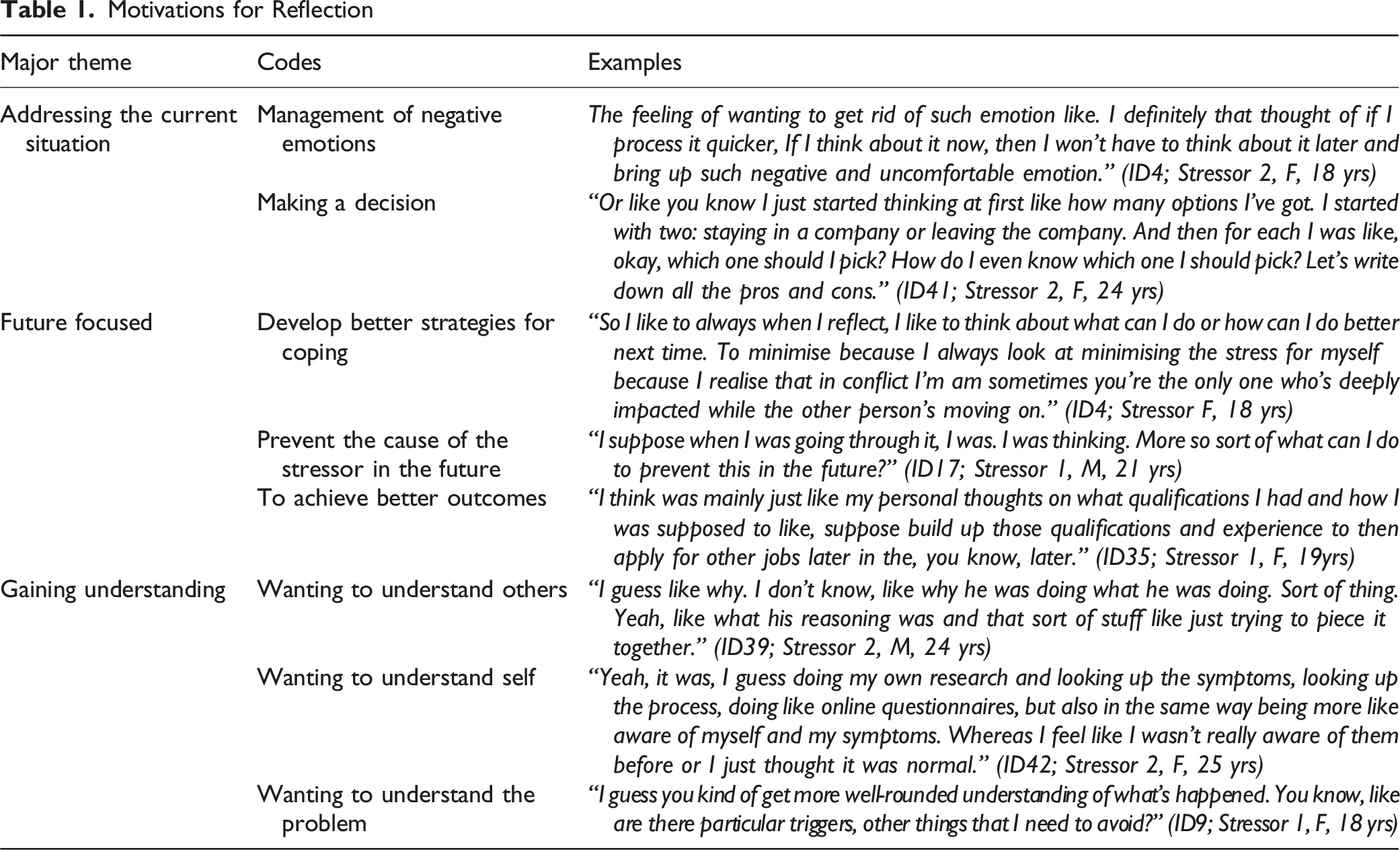
The Need to Address Current Stressful Experiences
The most common codes centred on addressing the current stressor situation. Participants often described motivations aimed at minimising or avoiding uncomfortable emotions, such as a desire to return to a previous emotional state “Like I said, mainly based on trying to feel better and my role in it and doesn’t really change too much for it to be different.” (ID3; Stressor 1, F, 23 yrs). Avoidance or minimisation of negative emotions serves as a key driver for reflection, as individuals seek to regulate their emotional state.
Another key motivation for reflection was decision-making about the present situation. Participants engaged in reflection to process unresolved personal dilemmas, with decisions often remaining uncertain. One participant described an ongoing internal debate about a relationship dilemma: “I still think about it constantly… Should I just go up and tell her? Should I cut her off?” (ID6; Stressor 1, F, 23 yrs).
Others used non-ruminative reflection to reassess life direction and personal values. These participants indicated that reflection served as a tool to weigh emotional and practical considerations, evaluate personal values, and navigate important life decisions. Going back in, in terms of what kind of life I wanted to lead, what kind of pressure I wanted in my life because there’s always gonna be pressure, there's always gonna be hard work. Still going through and working out which ones I valued in my life, which ones I didn't (ID22; Stressor 1, F, 24 yrs)
Desire to Improve Future Situations and Personal Capacities
Another overarching theme was reflection as a tool for improving future outcomes through personal growth. Participants commonly reflected on how to enhance their coping strategies by managing their emotional, cognitive, or behavioural responses. One participant described reflection as part of an adaptive process in coping with grief and loss: Mourning or loss or grief is things will be worse before they get better because you do have to reflect and get over things and cope with them. So, it's kind of just coming to terms, I think, and it's like a new grief process. (ID12; Stressor 1, F, 25 yrs)
Others framed non-ruminative reflection as an opportunity for continuous self-improvement. Participants frequently engaged in reflection to enhance their future outcomes in personal relationships, academics, or professional development: “If I had problems like this in the future, how can I get a better outcome?” (ID1; Stressor 1, M, 18 yrs), “I think just reflecting on how to get to know new people and understand their needs and make my needs known. I think just understanding how to effectively communicate at the beginning.” (ID16; Stressor 1, F, 18 yrs).
While some reflections were goal-oriented, aiming to achieve positive outcomes, others focused on avoidance goals, where participants reflected on past events with the aim of avoiding similar future outcomes such as poor wellbeing or mistakes: “I was thinking… what can I do to prevent this in the future? I never want something like that to happen to me again.” (ID25; Stressor 1, F, 18 yrs).
Across these quotes, participants aimed to learn from past experiences and develop strategies to better manage future emotional, academic, and interpersonal challenges.
Gaining Understanding About the Self, Situation or Others
Another overarching motivation for reflection was the desire to understand the problem, others, or oneself in the context of the stressor. Participants sought to analyse the source of their stress, questioning why certain situations affected them as they did: “Why is that causing me stress?” (ID40; Stressor 1, M, 20 yrs).
Some reflected on why particular stressors had happened to them, searching for explanations: “I was very curious as to why that happened to me.” (ID25; Stressor 1, F, 18 yrs) and “Am I doing something wrong? Like what are they doing better?” (ID19; Stressor 1, F, 18 yrs). These reflections were often linked to a desire to prevent similar experiences or stressors in the future, suggesting that understanding past challenges was key to avoiding them going forward.
Participants also engaged in reflection to better understand others involved in the situation, examining their own interactions, how they were perceived, and how they fit within broader social structures: “I just was wanting to learn more about how people view each other and think about each other and some of the ways that we might, you know, had biases and stuff like that.” (ID32; Stressor 1, F, 25 yrs).
The overarching theme was the motivation to gain insight into the self, others, and the broader context of the stressor. Participants aimed to make sense of their experiences, understand social dynamics, and use reflection as a tool for self-awareness and improving future interactions.
Triggers for Non-Ruminative Self-Reflection
Triggers for Reflection
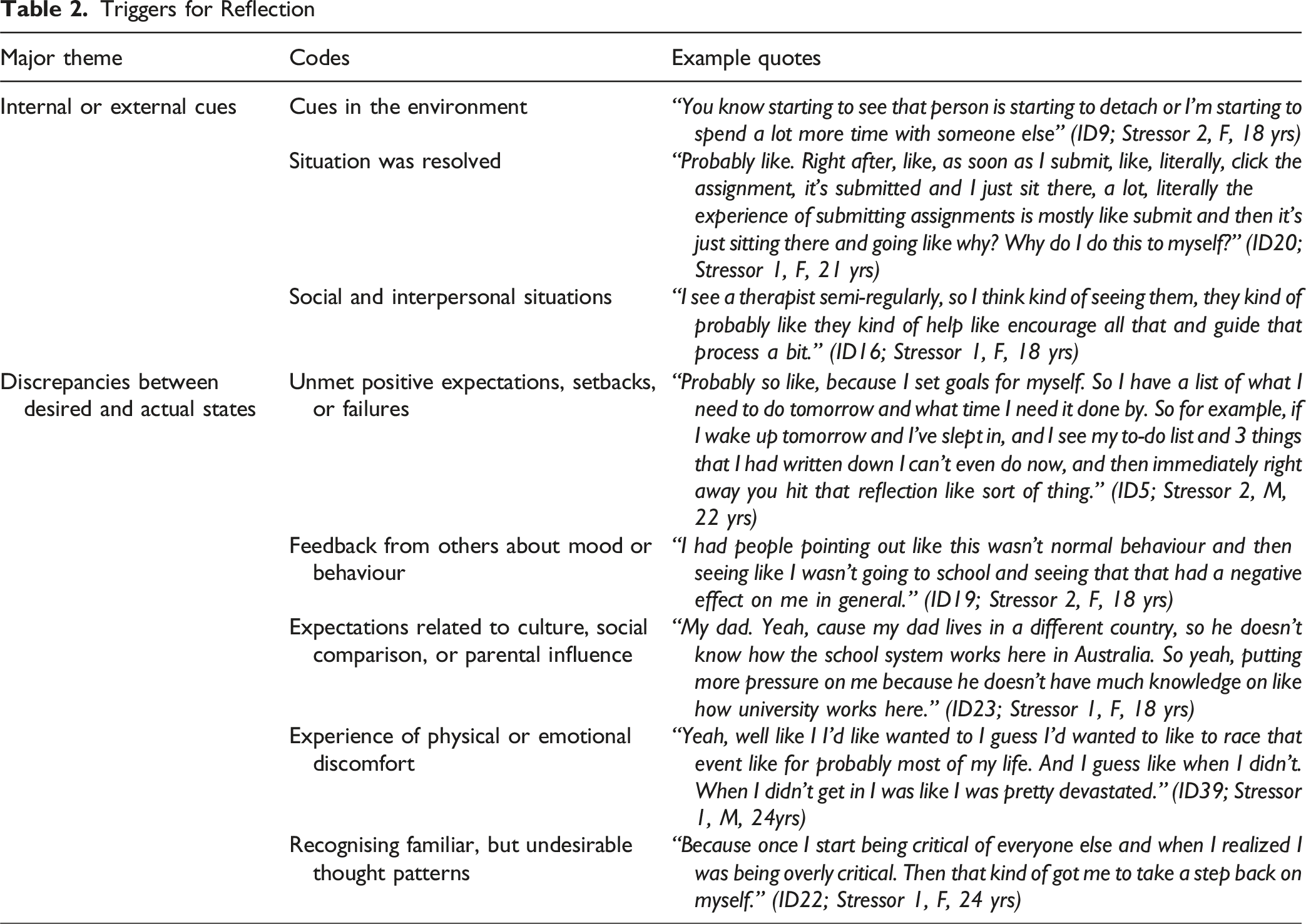
Internal or External Cues
While most cited external situations or events, others highlighted psychological experiences as key prompts. Physical, social, and digital cues in the environment often triggered reflection on past events or prompted an evaluation of their current situation. For some, media exposure also served as a reflection trigger: “There’s a lot of media nowadays… about the difficulty of money and people who are like struggling with their rent and such. I think every time I see one of those it kind of triggers it…” (ID3; Stressor 2, F, 23 yrs).
Other external cues included those related to transitions or life changes, such as starting something new or reaching a milestone: “Yeah, probably would have been, yes, starting uni.” (ID16; Stressor 2, F, 18 yrs), “Graduation time… thinking about the skills that I developed.” (ID31; Stressor 1, F, 23 yrs).
Reflection was often reported to begin after a situation was resolved, providing a clearer perspective. Once the stressor was resolved or the initial feelings of heighted emotion ceased, individuals perceived lower demands permitting more conscious and effortful reflection: “Once I resolved the scenario, once I did have income again, then I could reflect back.” (ID16; Stressor 1 F, 18 yrs), “It was sort of like, peaceful not having to sort of look for jobs as intensely as I was. And then I guess I sort of had more time to like to relax as well and then also think” (ID37; Stressor 1, F, 23 yrs).
Social and interpersonal situations were also found to trigger self-reflection. Some found that conversations related to the event prompted reflection, particularly when family members brought up past experiences: “Whenever it’s brought up, like whenever you know there’s talk about my grandmother, my family will come to me with updates.” (ID40; Stressor 2, M, 20 yrs).
Visiting a psychologist or mental health professional was another external trigger for reflection, as guided self-reflection is an integral part of psychological practice: “Seeing them [psychologist], they kind of help encourage all that and guide that process a bit.” (ID16; Stressor 1, F, 18 yrs). Some participants reported that those reflections continued outside of therapeutic settings: “So main one would probably be the talking with the therapists and stuff. But then I guess I did just kind of do some thinking afterwards that was self-prompted” (ID43; Stressor 1, M, 18 yrs).
Across these non-ruminative reflections, environmental, situational, and social cues acted as catalysts, prompting participants to revisit past experiences, assess their progress, and make sense of their personal and social contexts.
The Role of Discrepancies Between Desired and Actual States
Several quotes highlighted that recognising deviations from an anticipated state often triggered reflection. The cognitive salience of these discrepancies was influenced by various cues, including social cues. Participants described how feedback from friends, family, or colleagues about changes in their behaviour or mood prompted self-reflection. In some cases, it was triggered by questions about their wellbeing: “It had been noticeable to other people and my family actually approached me quite a few times. And would make comments like why are you so upset today? Or you know like what’s going on?” (ID4; Stressor 1, F, 18 yrs).
Other times a family member or friend pointed out a change in the participant’s behaviour: “My friends as well and like my family when they like tell me that like they’ve seen a change in my behaviour or like they see the shift in my mood. That’s when I step back and evaluate.” (ID19; Stressor 1, F, 18 yrs).
Reflection was also triggered by unmet positive expectations, setbacks, or failures: “After applying for a couple of jobs… you don’t meet our qualifications… I started to think about it more after that.” (ID35; Stressor 1, F, 19 yrs), “Like I’m not going anywhere close to what I thought I was trying to achieve. So that’s when I started to realise, oh, like, I’m not going about this the right way.” (ID19; Stressor 1, F, 18 yrs).
These reflections were often motivated by a need to course-correct, helping participants recognise gaps between actual and desired outcomes. Through processing setbacks, they identified mistakes, reassessed priorities, and refined strategies to enhance future success.
Certain internal cues also elicited reflection, such as the experience of physical or emotional discomfort. Participants reported the experience of emotional and physical discomfort as a cue for reflection: “So, by the third day, I was like feeling the stress and realising, wow, I’m getting really stressed out even though we have barely started.” (ID4; Stressor 1, F, 18 yrs). A further internal cue was the recognition of detrimental familiar thought patterns: “If I notice myself like slipping back into like you know, the competition mindset… I’m just like, well, what am I doing now?” (ID19; Stressor 1, F, 18 yrs).
Participants identified both external and internal triggers for self-reflection. External cues, such as contextual events, indicate that reflection is not solely driven by internal states. However, these cues were often interconnected, with internal responses (emotional, cognitive, or physical) frequently following external events. In many cases, these triggers revealed discrepancies between actual and desired states or outcomes, prompting self-reflection.
Inhibitors of Non-Ruminative Self-Reflection
Quotes highlighted several key themes that inhibit self-reflection (
Time constraints often delayed reflection, as participants prioritised immediate action over self-examination during stressful periods. Reflection occurred only once they had the time and capacity to process events: “I didn’t really have a chance to sit down and reflect much during the periods. Afterwards, I did. But during, didn’t have time.” (ID43, Stressor 1, M, 18 yrs). These quotes highlight the temporal dynamics of reflective thinking as a stressor unfolds. Initially, participants respond pragmatically and focus on action, only engaging in conscious and proactive reflection once they have the time and capacity.
Reflection was often hindered by intense emotions and the desire to avoid stress, preventing participants from engaging in meaningful self-examination. Some participants identified that overwhelming emotions disrupted their ability to reflect, delaying reflection until later: “During that, it was just confusion and everything. I feel like after that, like a few years after that, maybe like when I just randomly think about it.” (ID10; Stressor 1, F, 22 yrs), “I was like, I’m so overwhelmed, like this is too much. But after, I was like, okay, this is sort of what I need.” (ID44; Stressor 1, F, 18 yrs). Others actively avoided reflection out of fear that it would amplify their stress: “Or just like I didn’t really want to think about it because then that would be more stressful for me.” (ID28; Stressor 1, F, 18 yrs). Together, these quotes highlight the potential interplay between emotional regulation and the capacity for reflective thinking, where the initial or anticipated inability to manage emotions becomes a barrier to engaging in meaningful reflection.
Certain factors inhibited reflection, prompting participants to rely on habitual coping rather than deliberate self-examination. One such theme was acceptance of the status quo, where individuals recognised discomfort but felt no need to reflect or initiate change. Some participants expressed a willingness to continue without actively reassessing the situation: “I’m not unhappy… I’ll just keep going until I can’t.” (ID39; Stressor 1, M, 24 yrs), “I didn’t really enjoy school that much, so like getting it done was like a priority. I think I was quite happy to, you know, get my mark and then just move on.” (ID44, Stressor 1, F, 18 yrs). Such quotes, highlight the potential absence of a discrepancy between actual and desired states. While less common, this theme revealed a tendency to tolerate emotional strain without engaging in reflection. This suggests that some individuals default to endurance and routine coping rather than self-exploration aimed at growth.
Some participants attributed their lack of reflection to perceiving stress as externally caused and controlled. A key theme was blaming external factors or others, which diminished the need for self-examination: “I guess externally, like one big external factor for me is my partner studying medicine. So, they’re going to a large amount of placements. Having a partner that studies medicine is very hard…” (ID11; Stressor 2, F, 21 yrs). For some, shifting away from blame-based coping proved difficult, as it had become an ingrained habit: “I think it’s hard to do when there’s no one really to blame… With my previous situation, I had my mom to blame, and it was so-it’s so easy to blame my mom for things.” (ID6; Stressor 2, F, 23 yrs).
These reflections suggest that when stressors are externalised, individuals may struggle to engage in self-reflection, as their focus remains on external circumstances rather than their own role in either the cause or solution to the problem.
Perceived Adaptive Benefits of Non-Ruminative Self-Reflection
In response to
Non-ruminative Self-Reflection Leading to Adaptations in Coping Strategies
Participants reported that reflection helped them to reassess and refine their strategies, shifting from reactive or ineffective methods to more intentional, adaptive approaches: “As the result of my reflection, oh… I would say it made me come to a better conclusion on how to handle this situation.” (ID1; Stressor 1, M, 18 yrs), “It’s definitely given me the idea to like better myself for the better… And it’s given me thoughts of like how to progress further with myself in a positive and, you know, healthy way.” (ID19; Stressor 1, F, 18 yrs).
Many participants identified specific changes to their coping after reflecting on past stressors. This included recognising unhelpful behaviours and adopting new strategies for future challenges. One participant identified her initial reliance on avoidance: I did a portion of it and then I didn’t touch it for about quite a few months, and two weeks before it was due, I just started looking at it, and then a week before it was due, actually started writing it. (ID13; Stressor 1, F, 18)
And negative self-talk: “I don’t know how this is going to--how I’m going to finish this,” which shifted to self-affirmation and practical problem-solving: “It’s OK if I don’t know how to do it; I will find a way to do it.” and “Just try it—like write something even if it sounds really, really dumb. There’s no harm in editing.” (ID13; Stressor 1, F, 18).
Other participants started to recognise the need to engage social supports: “Maybe I would have seen a therapist to like talk these things through.” (ID40; Stressor 1, M, 20 yrs) and “I guess seeking help and guidance instead of dealing with it myself. Like seeking like an unbiased second or third voice instead of convincing myself that I’m right about something or I’m wrong about something.” (ID19; Stressor 1, F, 18 yrs).
Non-Ruminative Self-Reflection Leading to Growth in Personal Strengths and Resilient Beliefs
Some participants described how reflection helped them develop maturity, shifting their perspectives over time: And I'm just more rational as well… In the past, I think when I didn't speak to my parents for a year, I truly, truly thought that that was it. Like I'm never going to speak to them ever again. And I've kind of matured. (ID6; Stressor 1, F, 23 yrs)
Many participants expressed a growing confidence in their ability to handle stressors, regardless of external circumstances: “And I feel like I am able to like I know that I can cope when something like that happens.” (ID37; Stressor 1, F 23 yrs) and “It doesn’t feel like I have complete control of what’s happening to me as of right now, I’m just good at dealing with it.” (ID3; Stressor 1, F, 23 yrs).
Some participants reframed their experiences, moving from frustration and self-pity to gratitude and recognising their resilience: Originally it was very like, poor me, like, I can't do this, I can't do that, but I think now it's I'm get to do this and I'm really grateful to have the opportunity to be able to because I shouldn't have been able to do this and it's a lot of like kind of like a bit of a pat on the back to myself for how hard I worked. (ID7; Stressor 2, F, 20 yrs)
Non-Ruminative Self-Reflection with No Change to Coping
Other participants expressed that their coping strategies would remain unchanged, despite reflecting on their stressor experiences. This response was uncommon and often reflected contentment with past coping approaches or uncertainty about alternative strategies: Just thinking about having to adapt a new thing and not sure if it's going to work out for me and like especially in this critical period like I don't think I have time to experiment on that. And also, like what if yeah, the idea of learning a whole new technique and I'm not used to that. (ID18; Stressor F, 25 yrs)
While many participants adjusted their coping strategies through reflection, others saw no need for change, either because they felt their approach was effective or were uncertain about alternatives. This highlights that reflection does not always lead to adaptation, particularly when coping is perceived as sufficient or viable alternatives are unclear.
Discussion
This study examined non-ruminative reflection during emerging adulthood, a period marked by novel adult-like stressors. Given this distinctive context, we were interested to understand the role that non-ruminative forms of reflection play in evolving the way in which young adults cope with these stressors. We examined how emerging adults reflect on stressors and what triggers shifts from habitual to reflective thinking, fostering resilience. Figure 1 illustrates a unified model of this process, highlighting key enablers and barriers. Integrated model of how non-ruminative self-reflection is involved in the evolution of capacities for resilience and the events that inhibit or promote reflection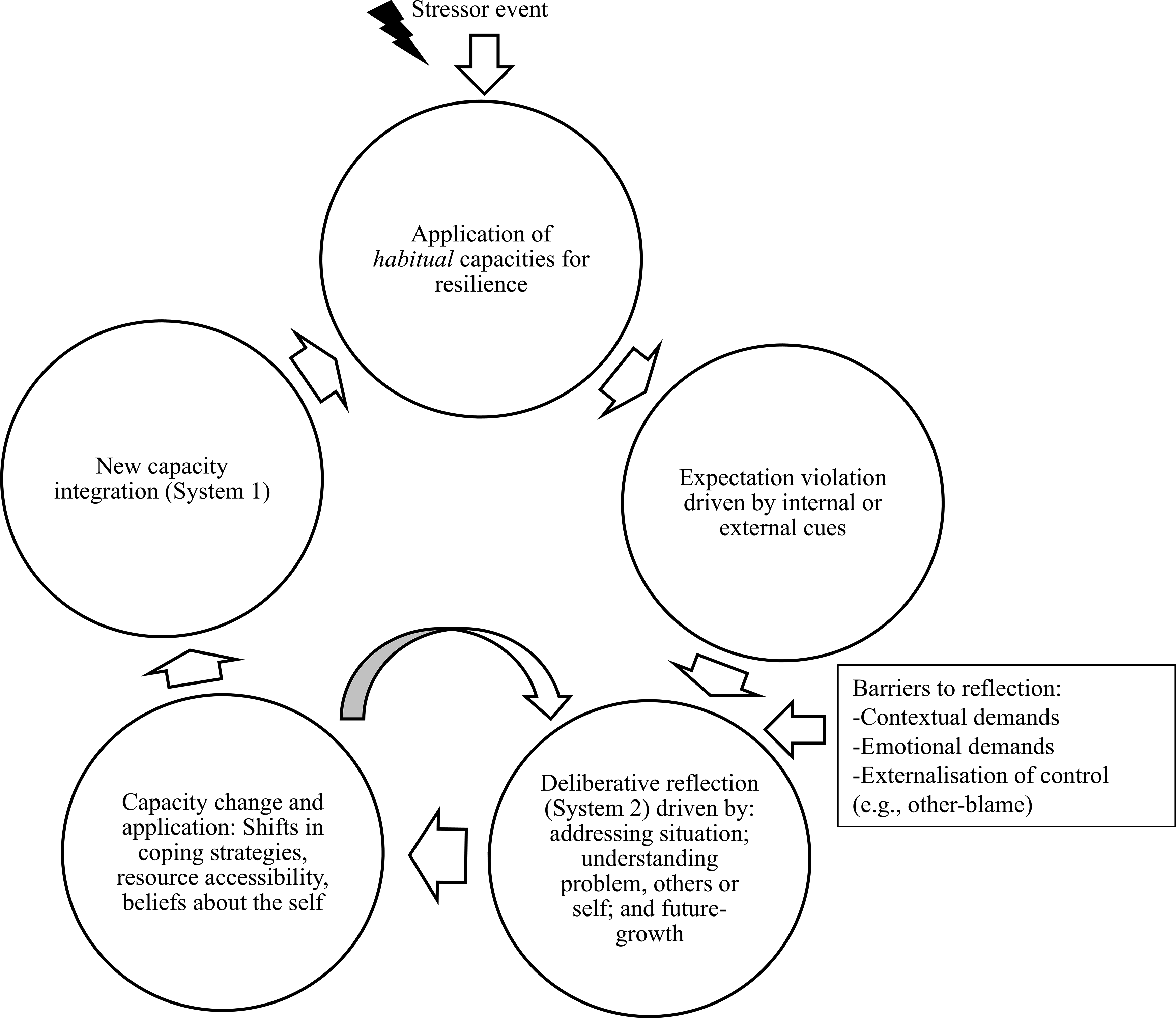
Theoretical Contributions of the Findings
Differences Between Rumination and Potentially Non-Ruminative Forms of Reflection
Past work highlights the benefits of non-ruminative self-reflection, including enhanced performance (e.g., Ellis & Davidi, 2005), reduced stress-related biomarkers after a psychosocial stressor (Crane et al., 2020; Woody et al., 2016), and lower depression symptoms (Takano & Tanno, 2009). In contrast, rumination has been linked to trait neuroticism and prolonged mental health issues (Blackburn & Owens, 2016; Harrington & Loffredo, 2010), reduced problem-solving (Lyubomirsky et al., 1999), and increased in social friction (Nolen-Hoeksema & Davis, 1999), highlighting the need to distinguish between these forms of introspection.
In addressing
The non-ruminative reflective approaches reported by participants were consistent with the Systematic Self-reflection Model of Resilience Strengthening which identifies three overarching key reflective practices: developing awareness of one’s coping, evaluating strategies, and planning for future capacities. This model parallels reflective practices in experiential learning, coaching, and self-regulation, where individuals monitor, refine, and adapt strategies to improve performance (Bonanno & Burton, 2013; Ellis & Davidi, 2005; A. M. Grant et al., 2009). Importantly, the distinction between rumination and adaptive self-reflection is not merely negative thought content. In non-ruminative reflection, participants critically evaluated coping strategies, goals, assumptions, and relationships, often prompted by perceived gaps between actual and desired states or selves.
Rethinking Emotional Outcomes in Self-Focused Attention
These findings suggest ruminative and non-ruminative reflection cannot be distinguished solely by emotional outcomes, since both may evoke negative affect. Relying on short-term emotional responses to differentiate ruminative and non-ruminative reflection may therefore be misleading. Importantly, negative emotions during non-ruminative reflection are not inherently maladaptive if they are part of a future-focused, solution-oriented process (Crane et al., 2019b). According to Crane and colleagues, resilience capacity development relies on person-situation interactions and self-reflective practices that support adaptation to changing demands. This involves evaluating coping efforts in the present, such as identifying strategies, recognising stressors, and assessing goal alignment, while also taking a future-oriented perspective to adjust or reapply strategies for upcoming challenges (Crane et al., 2019b; Falon, Kangas, et al., 2021). By integrating present-focused evaluation with future-oriented planning, non-ruminative reflection fosters capacity growth through abstract insight and concrete goal setting. These reflective practices are especially important during transitional stages such as emerging adulthood, when novel stressors require new coping strategies and resources. At this stage, young adults are consolidating identities and learning to navigate adult responsibilities without the safety nets of adolescence. Ultimately, the key distinction between rumination and adaptive self-reflection lies not in the presence of negative thoughts or emotions, but in cognitive flexibility: adaptive reflection moves toward growth and action, while rumination remains fixed on distress.
Self-Reflection and Motivation
We examined participants’ motivations for self-reflection (
Our findings suggest that motivation for reflection may play a critical role in shaping whether self-reflective content become rumination or adaptive reflection. When motivated by curiosity and a desire for understanding or growth, self-reflection may result in a future or development orientation creating opportunities for adaptation, but when motivated by self-pity or self-criticism, similar content risks becoming ruminative. These findings align with Self-Determination Theory (Deci & Ryan, 2012), particularly in relation to internalised forms of motivation, such as integrated and identified regulation. According to this theory, motivation for behaviour ranges from externally controlled to fully autonomous. In this study, themes of emotion regulation, self-understanding, and pursuit of meaningful goals reflect identified and integrated regulation. Together with prior work, this suggests adaptive self-reflection is linked to growth-oriented motivations such as development, mastery, and learning. These motivations are especially salient in emerging adulthood, a period of identity exploration, growing independence, and rapid skill development. Reflection driven by growth and learning supports coping while also contributing to identity consolidation.
Taken together, our findings suggest that adaptive forms of non-ruminative reflection in emerging adulthood are likely associated with growth-oriented motivations. Even when focused on managing a present stressor or gaining understanding, there is often an underlying belief that doing so will support future outcomes. Thus, adaptive reflection may be enveloped by a motivational orientation guiding the purpose for reflection toward growth, learning and understanding (Pennebaker & Francis, 1996) and shifts the reflective focus from “why me?” to “what can I do?” or “what can I learn?”
Triggers and Inhibitors for Self-Reflective Thought
In response to
Participants identified various external and internal triggers for non-ruminative self-reflection, often highlighting discrepancies between their current and desired states. External triggers included environmental stimuli (e.g., media exposure), significant life events, and personal milestones (e.g., graduation). While, at times, not explicitly reported by participants, it is plausible that several of these external cues (e.g., seeing a mental health professional, media) were the catalyst for an awareness of undesirable states or discrepancies as such events prompt reflection on progress, goals, and life circumstances. Having noted this, external cues were also explicitly identified by participants as highlighting discrepancies. For example, feedback from friends or family drawing attention to changes in behaviour, prompted participants to reassess their strategies. Internal triggers were equally significant for signalling discrepancy. Emotional discomfort (e.g., stress, low mood), undesirable physical sensations (e.g., fatigue), and recurring negative thoughts signalled the need for self-examination, leading participants to reconsider their actions and beliefs. Consistent with previous work (Barnett et al., 2017), we propose that these undesirable internal states serve as signals of deviation from homeostasis, prompting self-reflection to understand the cause of the disruption.
Participants encountered several barriers to non-ruminative self-reflection, including situational demands, emotional overwhelm, and an external locus of control. While some internal inhibiting factors align with the Systematic Self-Reflection Model (Crane et al., 2019b), external factors (such as the need for immediate action) were not identified as limiting factors. Time pressure and task-focused demands often postponed reflection until after cognitive load had eased, providing short-term stability but limiting deeper reflection. Emotional overwhelm similarly delayed reflective thinking, underscoring the role of emotion regulation in enabling non-ruminative self-reflection. Although not examined directly, our findings suggest that emerging adults facing heightened stress, limited adjustment time, or emotional dysregulation may have fewer opportunities to benefit from non-ruminative reflection, potentially constraining resilience development.
Additionally, externalising control over stressors, such as habitually blaming others, diverted attention away from internal processes, hindering adaptation and coping. These findings illustrate how situational and emotional features may obstruct self-reflection, reducing opportunities for critical self-reflection and resilience-building.
This research may inform Dual Process Models of decision-making applied to coping related changes. Extending the Dual Process Model of decision-making (Evans, 2003), this research suggests that the shift from habitual, automatic coping (System 1) to slower more, reflective thinking (System 2) is triggered by violations of positive expectations driven by external cues that challenge existing beliefs about good outcomes (e.g., belief that one will find a job in area after university, but receives external feedback via repeated job rejections). These violations of positive expectation are experienced as physical or emotional aversive arousal (Proulx et al., 2012), and have been previously identified to trigger behaviours to reduce arousal. However, the present research suggests that such violations may also trigger a self-reflective pathway that may elicit deliberate and conscious behavioural adaptations depending on motivational processes or other inhibitory factors, including cognitive demands.
Adaptation of Coping
Our findings contribute to the broader literature on coping by highlighting the dynamic nature of coping processes and the critical role of self-reflection in promoting coping adjustments
Emerging adulthood may be a critical period for developing coping flexibility, as major transitions can render familiar resources or strategies less effective. For example, leaving structured education settings may entail the loss of established support systems. Our findings suggest that non-ruminative self-reflection can help emerging adults revise and refine their coping approaches, enabling more adaptive responses across contexts. Participants described using reflective thinking to shift from maladaptive habits to more constructive strategies, such as moving from self-criticism to self-affirmation or problem-solving, thereby enhancing awareness, strategic adjustment, and person–situation fit. Self-reflection not only shaped coping behaviour but also fostered a sense of growth and maturation, which is central to identity development in emerging adulthood. Several participants described how reflective thinking enhanced their coping self-efficacy, strengthened beliefs in their ability to manage stress, and contributed to a more constructive outlook on future challenges (Chesney et al., 2006; Perraud et al., 2006). These accounts suggest that self-reflection in emerging adulthood serves both regulatory and developmental functions, supporting immediate coping while building longer-term capacities.
Applications to Practice
These findings have important implications for psychological interventions, educational programs, and resilience-building initiatives aimed at emerging adults. Findings highlight the need to focus on both maladaptive forms of ruminative thought, but also on non-ruminative self-reflection that may be harnessed to promote coping flexibility, resource access, and self-efficacy. First, previous work shows that distraction is the most common strategy for managing rumination (Joubert et al., 2022). Alternative interventions could help emerging adults re-shape rumination into purposeful, future-oriented non-ruminative reflection via structured exercises focused on meaning-making, emotional awareness, coping evaluation, and goal setting. Previous research has demonstrated the use of structured self-reflective activities to reduce depression symptoms via a reduction in rumination (Falon, Karin, et al., 2021). Second, intervention developers can draw on emerging adults’ reported stressor experiences and the language they use to describe and understand them, ensuring that reflective exercises and examples are developmentally relevant and grounded in real-world challenges. Third, psychoeducational programs in universities and workplace early career settings can teach young adults to recognise and use internal and external cues, such as emotional discomfort or perceived goal discrepancies, as signals to reflect and adjust. Fourth, interventions should emphasise not only the content of reflection but also its purpose. Encouraging intrinsic motivations, such as personal growth, value alignment, and self-understanding, may guide reflection toward adaptive outcomes. Techniques like reflective journaling, motivational interviewing, and values-based coaching can help shift thinking from “Why me?” to “What can I learn?” Finally, resilience-building programs for emerging adults should embed self-reflection training to help individuals manage adult-like stressors such as academic setbacks, financial strain, and relationship challenges.
Limitations, Strengths, and Future Directions
Our study has some notable strengths. Importantly, rapport was established between researchers and participants (Qualitative Studies Checklist - CASP, 2024). The interviewers, themselves emerging adults, brought valuable positionality to the study through self- and epistemological reflexivity. Their firsthand experience with daily stressors, challenges, and coping self-reflection during this life stage enriched both data collection and analysis. This shared perspective likely facilitated deeper participant engagement and nuanced interpretation of the reflective processes explored (Palaganas et al., 2017). Moreover, multiple coders analysed the data and were engaged in continual and robust discussion, allowing for the iterative and nuanced approach (Kitto et al., 2008). The recruitment process, conducted through various channels (e.g., psychology student participant pool, Prolific, and Reddit posts) allowed for ethnically diverse participants to be included in this study. However, most participants were pursuing or had obtained a university-level qualification, which may limit the generalisability of the findings. This sample likely overrepresents academic stressors and related coping strategies, and educational background may also influence the depth or nature of self-reflection (Neeraja & Thomas, 2024). Moreover, given their education level, our sample likely reflects middle-to upper-class youth rather than more financial or resource-based vulnerable groups. Better resourced young adults often transition gradually to independence, with resources for exploration less available to peers thrust into adult roles (Munson et al., 2024). Such contexts may limit opportunities for reflection and resilience, suggesting a ‘goldilocks principle’ where growth is optimised when challenges are neither too minimal nor too overwhelming (Seery et al., 2013). Nonetheless, our sample did include young people with other forms of vulnerability (e.g., chronic illness, neurodiversity, and sexual/gender minority identities). Future research could diversify recruitment, such as through vocational training institutions, to capture more diverse educational and social experiences.
A key limitation is the time gap between stressor experiences and recall, which may have affected memory, emotional intensity, and framing of reflections. Future research could use data-prompted interviews, diaries, or experience sampling to capture more immediate insights and reduce retrospective bias. Finally, self-report data may be influenced by social desirability and limited self-awareness, especially for sensitive topics.
This study offers a foundation for future research into the causal and reciprocal relationships between self-reflection, coping, and resilience. Key questions include what determines whether reflection becomes non-ruminative self-reflection or ruminative, with potential influences such as motivation, emotion regulation difficulties, coping efficacy, and individual differences in reflective ability. Goals may also shape outcomes: avoidance or self-validation goals may reinforce rumination after failure (H. Grant & Dweck, 2003), whereas coping efficacy may enable shifts toward adaptive reflection. Triggers for non-ruminative reflective thinking included a violation of positive expectations. Future research should identify whether different types of self-discrepancy or expectation violation influence the nature of reflection, shaping whether individuals engage in future-focused, solution-oriented thinking or ruminative patterns. Individual differences, such as motivation, perceived self-discrepancy, and coping efficacy, may also affect how emotional overwhelm is experienced and, in turn, how self-focused attention unfolds. Many participants identified emotional intensity and situational demands as key barriers to reflection, with intense negative emotions experienced as increasing ruminative thought, rather than adaptive processing. This is consistent with prior research showing that emotional distress increases the likelihood of maladaptive rumination (Cova et al., 2019). Another important research area is to confirm whether the self-reflective practices identified in this study are associated with functional changes in resilience capacities, as outlined by Crane et al. (2019a, 2019b). Future research is needed to empirically verify the link between non-ruminative self-reflection and the development or refinement of resilience capacities.
Conclusion
These findings highlight the role of adaptive self-reflection in fostering coping, growth, and resilience during emerging adulthood. By distinguishing rumination from potentially adaptive reflection, the study shows how sense-making, coping evaluation, and future planning support resilience, shaped by both triggers and barriers. Together, these insights advance theory on resilience development during key life transitions.
Supplemental Material
Supplemental Material - Reflection to Resilience: A Qualitative Study of Non-Ruminative Self-Reflection, Rumination, and Resilience in Emerging Adults
Supplemental Material for Reflection to Resilience: A Qualitative Study of Non-Ruminative Self-Reflection, Rumination, and Resilience in Emerging Adults by Monique Frances Crane, Layne Scopano, Penny Van Bergen, Mark Wiggins, Daniel Gucciardi, Eyal Karin, David Forbes, Maria Kangas in Emerging Adulthood.
Supplemental Material
Supplemental Material - Reflection to Resilience: A Qualitative Study of Non-Ruminative Self-Reflection, Rumination, and Resilience in Emerging Adults
Supplemental Material for Reflection to Resilience: A Qualitative Study of Non-Ruminative Self-Reflection, Rumination, and Resilience in Emerging Adults by Monique Frances Crane, Layne Scopano, Penny Van Bergen, Mark Wiggins, Daniel Gucciardi, Eyal Karin, David Forbes, Maria Kangas in Emerging Adulthood.
Footnotes

Funding
The authors disclosed receipt of the following financial support for the research, authorship, and/or publication of this article: This work was supported by the Australian Research Council Discovery Project Grant (DP230100444).
Declaration of Conflicting Interests
The authors declared no potential conflicts of interest with respect to the research, authorship, and/or publication of this article.
Data Availability Statement
Openness Transparency Statement
Inclusion of research materials: All other materials relating to the transparency of analysis is provided in the Supplementary materials.
Included in the supplementary materials is the: (i) interview protocol, (ii) coding framework, (iii) list of participants and their demographic characteristics and description of the stressor events discussed. We believe that this information is essential to provide readers with additional information that complements the analyses and details that support and enhance the main findings. Supplementary materials offer transparency, allowing for a more comprehensive understanding of the research methods and results. Overall, supplementary materials contribute to the integrity, reproducibility, and clarity of this research article.
Pre-registration: This study was not pre-registered.
Disclosure
All authors received institutional support for the submitted work. They report no financial or non-financial interests, and no affiliations with companies that may have an interest in the research. Additionally, the authors’ spouses, partners, or children have no relevant financial relationships.
Supplemental Material
Supplemental material for this article is available online.
Author Biographies
References
Supplementary Material
Please find the following supplemental material available below.
For Open Access articles published under a Creative Commons License, all supplemental material carries the same license as the article it is associated with.
For non-Open Access articles published, all supplemental material carries a non-exclusive license, and permission requests for re-use of supplemental material or any part of supplemental material shall be sent directly to the copyright owner as specified in the copyright notice associated with the article.
