



Abstract
Developmental crisis episodes that occur during emerging adulthood, also known as quarter-life crises, are emotionally unstable times of transition that typically last around a year or two. This study aims to expand the cross-cultural focus on this topic, by assessing prevalence and brief written descriptions of early adult crisis in 18–29-year-olds from eight countries (UK, Greece, Czechia, Turkey, India, Pakistan, Indonesia and Brazil), with a total sample of N = 2,247, with the objective of exploring similarities and differences across cultures. Crisis prevalence rates found ranged from 40% to 77% per country. Thematic analysis of descriptions of crisis elicited external and internal crisis features. With regards to external features, the most prevalent were career transition, financial difficulties, studying-based stress and struggle, and family difficulties. Internal features that were most prevalent were feeling fearful/anxious/worried, negative self-evaluation, feeling sad/down, and feelings of confusion/uncertainty. The findings align with existing research on early adult crisis, pointing to both cross-cultural similarities and differences.
Keywords
Introduction
The theoretical proposition that crisis episodes are normative and functional features of human development was originally put forward by theorists in the 1960s, including Caplan (1964), Dąbrowski (1964), Erikson (1968) and Forer (1963). These theorists argued that development oscillates between stable periods of structural coherence and unstable periods of structural incoherence. These unstable periods, they claimed, often lead to acute episodes of crisis, which have developmental functions, one of which is the loosening of prior mental and behavioral patterns and structures to facilitate a breakthrough into new patterns and structures (Dąbrowski, 1964; Levinson, 1978, 1996). Crises can therefore be construed as bringing potential for change and growth (Caplan, 1964; Hasyim et al., 2024; Slaikeu, 1990).
Early adult crisis episodes (also referred to as quarter-life crisis episodes) typically occur between the ages of 20 and 29 (Agarwal et al., 2020; Duara et al., 2021), although they can manifest in the 18–19 and 30–35 age range too (Robinson & Smith, 2010a). Research studies from the UK, India, Czechia, Turkey and Indonesia have found that early adult crises occur across a range of cultures. In all these cultures, crises tend to revolve around struggles with relationship, career, studying or finance, and an accompanying sense of uncertainty, confusion and transition (Çok et al., 2023; Hasyim et al., 2024; Millová & Svárovská, 2020; Robinson & Wright, 2013). In terms of cross-cultural differences in early adult crisis, only one prior study that we are aware of has compared samples across countries, which is an interview-based study of young adults in the UK and India (Duara et al., 2021). The authors found that the Indian participants referred to difficulties with family responsibilities more than the English participants, which the authors relate to the more collectivist norms of Indian culture.
Research suggests that negative emotions are amplified during crisis episodes, particularly anxiety, linked to uncertainty about the future that is perceived as threatening (Agarwal et al., 2020; Duara et al., 2021; Suyono et al., 2021; Zibrinyiová & Ráczová, 2016). One study also found a link between early adult crisis and suicidal ideation in a small number of participants (Alfaruqy & Indrawati, 2023). Crises that involve goals being perceived as unachievable can bring a negative sense of being locked-out of adult opportunities, while those that commence when in jobs or relationships that are experienced as oppressive or unfulfilling lead to a feeling of being locked-in to commitments, along with a desire to change these and start over (Robinson, 2015, 2019).
Questions of identity and self are also linked to early adult crisis. For example, data from Twitter posts about a quarter-life crisis found that episodes were linked to negative self-evaluations and negative appraisals of one’s life situation (Agarwal et al., 2020). A qualitative study from Indonesia found that inhibited self-exploration was experienced as leading to quarter-life crisis (Jamain et al., 2023). A search for an authentic expression of self is also central to the process of early adult crisis, as young adults seek a way of living that reflects their goals and values but allows them to fit in to society too (Marcia, 1993; Robinson & Smith, 2010b). With regard to perceived effects of early adult crisis, a UK study found that the majority reported subsequent growth, along with development of personal strength, resilience and a more authentic sense of self, while a minority reported post-crisis decline (Robinson & Wright, 2013).
The prevalence of early adult crisis has been estimated by various studies. In terms of current crisis appraisal prevalence, a study in the UK with participants aged 20–39 found that 22% reported being currently in a crisis episode, with a further 35% saying that they might be going through one (Robinson et al., 2017). In a sample of Czech young adults aged 21–30 years, prevalence estimates of current crises were higher; the results indicated that 51% of respondents were in an early adult crisis, 26% of respondents in a partial crisis, and 23% of respondents not in a crisis (Millová & Svárovská, 2020). Meanwhile, one study in Indonesia found a current crisis prevalence rate of 43% (Herawati & Hidayat, 2020), while another in Indonesia found 86% reporting a crisis (Riyanto & Arini, 2021). In a Turkish sample, 42.8% of participants reported experiencing crisis; 38.7% of them reported partial crisis, and 18.5% of them reported no crisis (Yeler et al., 2021).
Early Adult Crisis and Emerging Adulthood
Early adult crisis has been conceptually linked to the theory of emerging adulthood. The theory was developed to describe and explain the challenges faced by young adults within the contemporary socio-economic context of Western countries (Arnett, 2000). Central to this change is that adulthood in the West has become more ambiguous in terms of when adulthood is achieved, due to de-synchronization of economic and social adult statuses (Moffitt, 1993), while entry into adult work roles, parenthood and marriage has been postponed for the majority, leading to an extended period of adult non-committal exploration (Arnett, 2007; Setterstein & Ray, 2010).
Beyond these demographic features, emerging adulthood is highly heterogeneous in terms of the paths that young adults take through it (Nelson, 2021). Within this inherent diversity, five common psychosocial features can often be seen at the individual level, which capture the liminal and unpredictable nature of this life phase. These are (1) identity exploration via imaginal and active means, (2) instability of roles and relationships, (3) a confusing and ambiguous sense of feeling caught in-between adolescence and adulthood, (4) a notable focus on self as young adults build their future and make big decisions, and (5) an optimistic and proactive focus on future possibilities. The cross-cultural applicability of emerging adulthood has growing evidence, including in European and non-Western countries. Evidence of an emerging adulthood phase, including these features alongside varied pathways through this age range, has been found in countries including Greece (Galanaki & Sideridis, 2018; Vleioras & Galanaki, 2024), Turkey (Çok & Atak, 2015), Czechia (Macek et al., 2016), India (Choudhury & Raghavan, 2014; Mitra & Arnett, 2021), Indonesia (Alfaruqy & Indrawati, 2023), Brazil (Dutra-Thomé & Koller, 2019) and Pakistan (Numan et al., 2024).
Early adult crisis episodes show certain features of emerging adulthood in an amplified or exacerbated form. For example, in terms of identity exploration, there are acute identity shifts and identity reconstruction in episodes of early adult crisis (Robinson & Smith, 2010b). With regards to the characteristic of instability, periods of early adult crisis represent times of extreme social and economic instability that challenge the capacity of young adults to cope (Ranganathan et al., 2022). In terms of the self-focus and future-focus of emerging adulthood, early adult crisis is associated with high levels of intrapersonal curiosity and a search for meaning by way of considering and questioning matters of future purpose (Robinson, 2019; Robinson et al., 2017).
The struggle with personal goals and purpose in early adult crisis links to the challenges of transitioning out of emerging adulthood into a more stable and committed adult life structure (Robinson, 2015). Goals to gain a career, become financially independent, enter long-term relationships and create a stable residential situation, which together represent a transition beyond emerging adulthood, may be either thwarted by challenging circumstances, or achieved yet found to be dissatisfying (Robinson et al., 2013).
The Current Study: Aims and Research Questions
At the time of writing, research that compares the prevalence and features of early adult crisis episodes across more than one culture remains limited to a single published study (cf. Duara et al., 2021). To broaden the comparative cross-cultural scope of early adult crisis research, and to help develop models of early adult crisis to make them more cross-culturally valid, the current mixed-methods study aimed to gain quantitative prevalence estimates of crisis, and brief written accounts of early adult crisis, from eight countries: UK, Greece, Czechia, Turkey, India, Pakistan, Indonesia and Brazil. These countries were selected for three reasons; The first reason is that they have existing literature on emerging adulthood and/or early adult (quarter-life) crisis, which ensures there is a precedent for investigating the phenomenon we are studying. The second reason is that the countries cover a diverse range of socio-economic environments and cultures. The third reason was pragmatic. The UK-based team reached out to a larger number of countries who fitted the above criteria, and it was teams from these seven non-UK countries that responded positively and were in a position to contribute within the required timeframe and resource envelope.
The three research questions that directed the inquiry were as follows: (1) What is the prevalence of self-reported developmental crisis episodes in emerging adults across the UK, Greece, Czechia, Turkey, India, Pakistan, Indonesia and Brazil? (a) Based on the research reviewed above that includes data on prevalence of early adult crisis, by averaging across studies, we predicted that all countries would have a prevalence of 30% or more. (2) What emotions and events are conveyed within brief written descriptions of these crisis episodes? (3) How do the written emotions and events compare in content and frequency across the participating countries?
Methods
Participants and Recruitment Strategy
Participants were recruited in the eight participating countries by separate research teams from each country. The two inclusion criteria were that participants must be aged 18–29 years of age and living in the country in question (UK, Greece, Czechia, Turkey, India, Pakistan, Indonesia and Brazil). The age range was selected to fit with a commonly used age range for sampling emerging adults (Arnett et al., 2014). In the UK, participants were offered a £5 shopping voucher for participation. In other countries, participation was not financially incentivized. 2,247 individuals provided data relevant to the current study between October 2023 and October 2024. Figure 1 provides a breakdown of demographic frequencies in the dataset for each country. Demographic Details of the Sample (N = 2,247)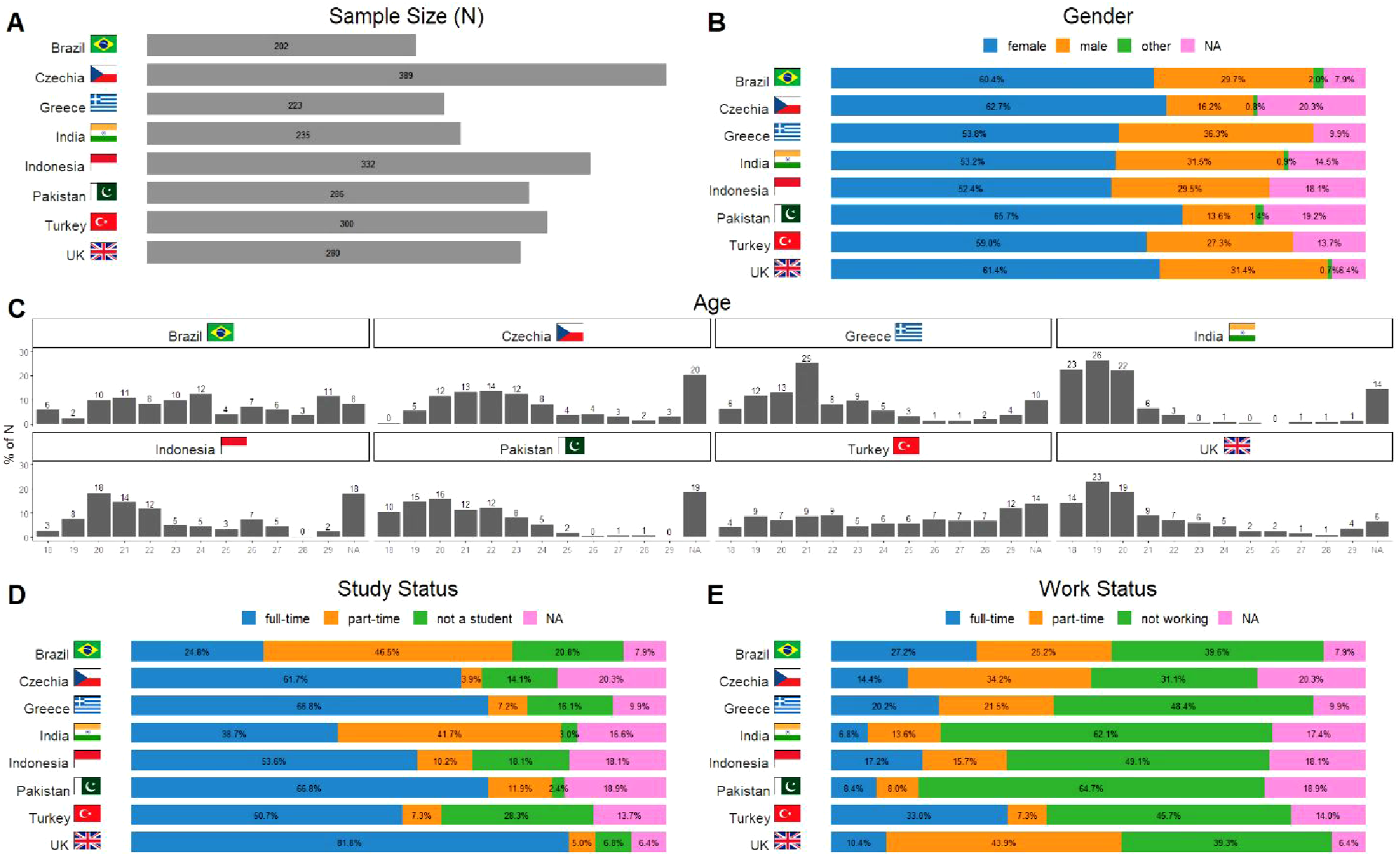
Measures and Qualitative Data Collection
The study employed a convergent mixed-methods design (Creswell & Plano Clark, 2017), in which quantitative and qualitative data were collected simultaneously and then combined to provide complementary information about early adult crisis. We collected quantitative prevalence data and qualitative data about the experience of the crisis through an online survey platform. The use of brief written texts from participants allows for anonymous open-ended exploration of the contents of crisis across a relatively large sample (Terry & Braun, 2017). The questionnaire included a closed-ended vignette-style question assessing the presence of developmental crisis, the Crisis Definition and Question (CDQ). The CDQ provides a brief definition of crisis then asks participants to state whether they are or aren’t experiencing a crisis episode by way of a Yes/No endorsement. This crisis self-assessment has been used in past studies and has been shown to have good predictive validity (Robinson et al., 2017; Robinson & Wright, 2013). The English wording used is as follows: “A crisis episode is a period in adult life that is noticeably more difficult, stressful and unstable than normal, and is an important turning point in your life due to changes that occur during it. Crisis episodes typically last for several years, but may be shorter or longer.” Would you say that you are currently experiencing a crisis episode in your life? Yes/No
Following that, participants who responded yes to the above question were presented with two open-ended questions about the experience of the crisis, as follows: “Please describe the main events and external situations in your life that have been part of the crisis you are currently experiencing, in 1-3 sentences.” “Please describe the emotions that you have been feeling and the thoughts you have been thinking about yourself during the crisis you are currently experiencing, in 1-3 sentences.”
The English questions were translated into the relevant languages for each participating country other than the UK. This was done in multiple stages (Tsang et al., 2017). First, a forward translation was done by two independent individuals who were native to the target language and fluent in English, followed by a consensus meeting. Second, a back-translation was done of the translated version from the first stage back to English from two new individuals, fluent in both languages, independently, after which they met to discuss and reach a consensus. Translations were reviewed by all four individuals involved in the translations, as well as 1–2 additional collaborators.
Ethical approval for the study was received from the University of Greenwich (application ref: 22.4.5.10).
Qualitative Analysis
The study employed Structured Tabular Thematic Analysis (ST-TA) to analyse the data. This form of thematic analysis is designed to analyse brief texts such as those elicited by open-ended questionnaires (Robinson, 2022). It draws on both the reflexive thematic analysis of Braun and Clarke (2006) and the ecumenical thematic analysis of Boyatzis (1998), and can be conducted in inductive, deductive and hybrid forms. The phases for analysis in ST-TA are as follows: Phase A: A Priori Theme Selection (Deductive and Hybrid Only); Phase B: Deep Immersion in the Data; Phase C: Generating Initial Codes and Themes (Inductive and Hybrid Only); Phase D: Tabulating Themes Against Data Segments; Phase E: Checking Inter-analyst Agreement; Phase F: Exploring Theme Frequencies; Phase G: Developing Thematic Maps and Diagrams; Phase H: Producing the Report.
For the current study, given the volume of data to be coded, we took an inductive-deductive sequential approach. Themes were developed inductively based on the UK data by two members of the UK research team. Research teams based in the other seven countries were then asked to scrutinise the themes and their data from a deductive perspective and consider if the themes provided a comprehensive coding scheme, or if any changes were required, based on the discursive approach to agreement seeking (selected given the number of individuals involved, as the aforementioned agreement check calculation process works with 2 individuals). Following incorporation of some minor additions and edits, a final scheme was then submitted to an agreement-level check. Agreement-checking was conducted via two analysts independently analyzing a randomly selected sample of texts and aiming for 80% agreement. This was conducted for the current study with the two primary analysts, with a sample of 30 narratives for the emotions theme and with another 30 scripts for the event themes. The first agreement check led to 76% agreement for events and 77% for emotions. Following this, the two analysts met and refined theme names, theme descriptions and combined two themes into a single theme. After that, an agreement check was run again, showing 91% agreement on events, and 83% on emotions. Following this, the two primary analysts along with four more members of the core research team coded the data into themes.
All data from the study are available on the Open Science Framework via the following link: https://osf.io/bxmez/.
Results
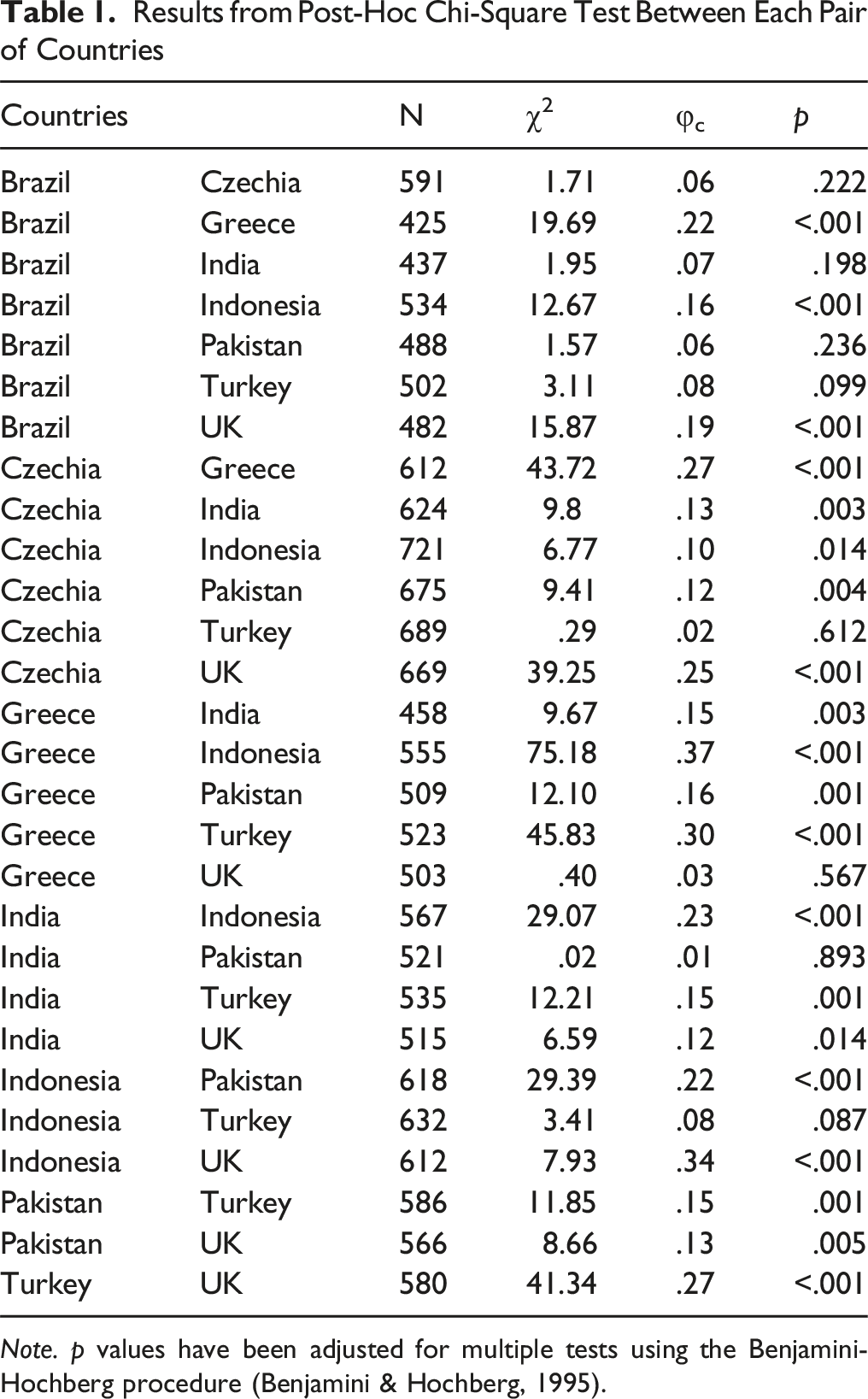
Our first aim was to determine how prevalent self-reported developmental crisis episodes were in the eight national samples. Figure 2 shows the prevalence of developmental crisis within each national sample, expressed as a percentage frequency of all who responded to the crisis vignette-question in that country. As can be seen, the Yes response varied from 77.1% (Indonesia) to 40.4% (Greece). Therefore, our descriptive hypothesis that crisis prevalence would be 30% or more in all countries was supported. A 2 × 8 Chi Square test determined that the differences found across the countries were statistically significant, χ2 (7, N = 2,247) = 136.49, p < .001, φc = .25. Post-hoc pairwise chi-square tests, adjusted for multiple tests using the Benjamini-Hochberg procedure (Benjamini & Hochberg, 1995), were also conducted between each pair of countries – see Table 1. Prevalence of Yes/No Responses to Self-Report Measure of Developmental Crisis Results from Post-Hoc Chi-Square Test Between Each Pair of Countries Note. p values have been adjusted for multiple tests using the Benjamini-Hochberg procedure (Benjamini & Hochberg, 1995).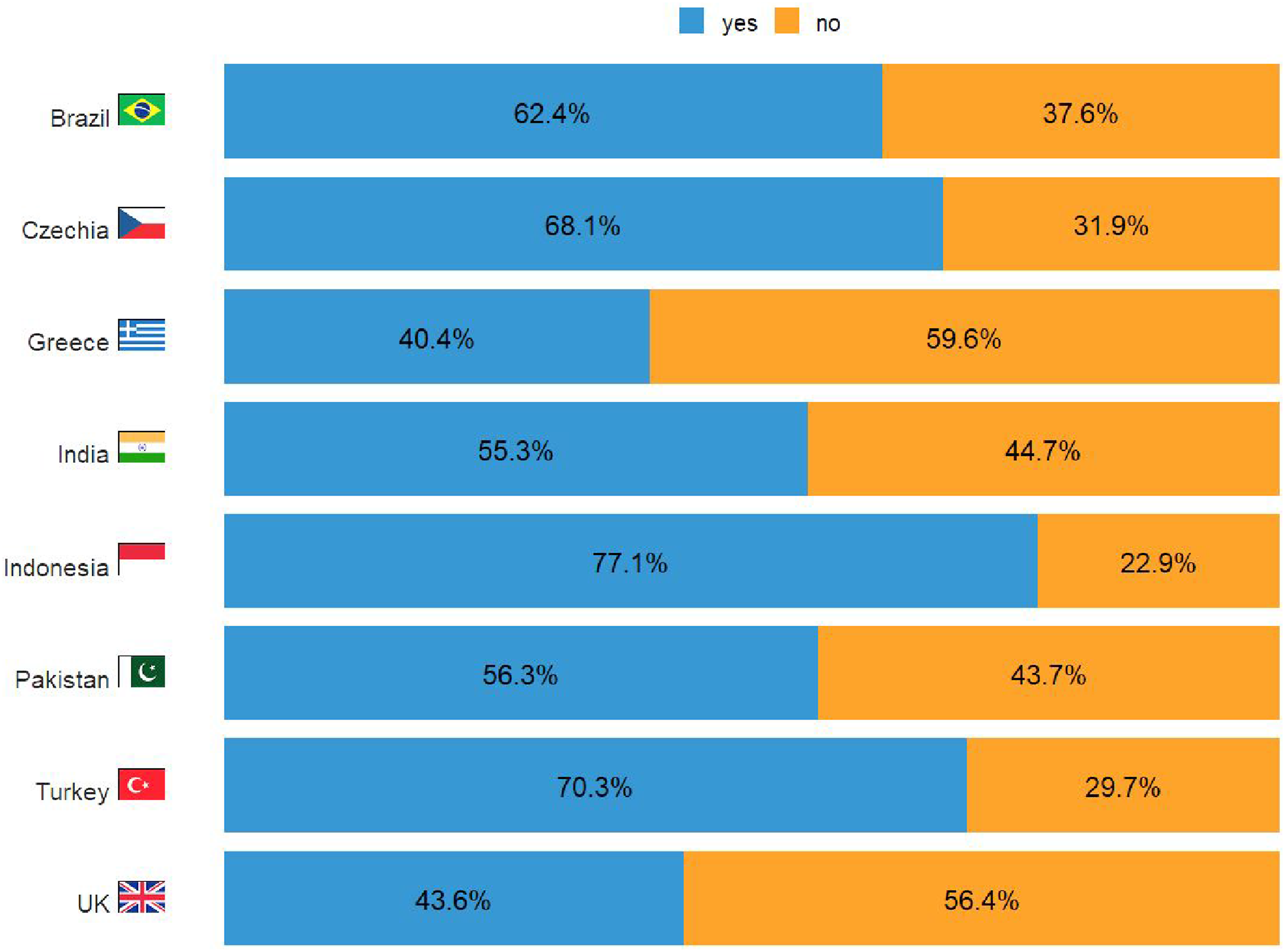
Our second aim was to investigate the content of brief written descriptions of crisis, and to compare these qualitatively across countries. Brief text qualitative data for external crisis features and internal crisis features were collected as responses to different questions and analyzed separately. We found that for both internal and external feature themes, the same set of themes was sufficient for all countries in coding 90%+ of the textual content of the texts for emotions and events, suggesting considerable cross-cultural thematic coherence in brief accounts of early adult crisis. Themes are briefly described below, with example quotes. For the reader wishing to see more data for each theme, all textual data is available via the open-source data repository provided.
External Crisis Features
External Feature Themes: Percentages by Country, with Three Most Prevalent Themes per Country Shown in Bold Font, and Most Prevalent Theme per Country Highlighted Grey
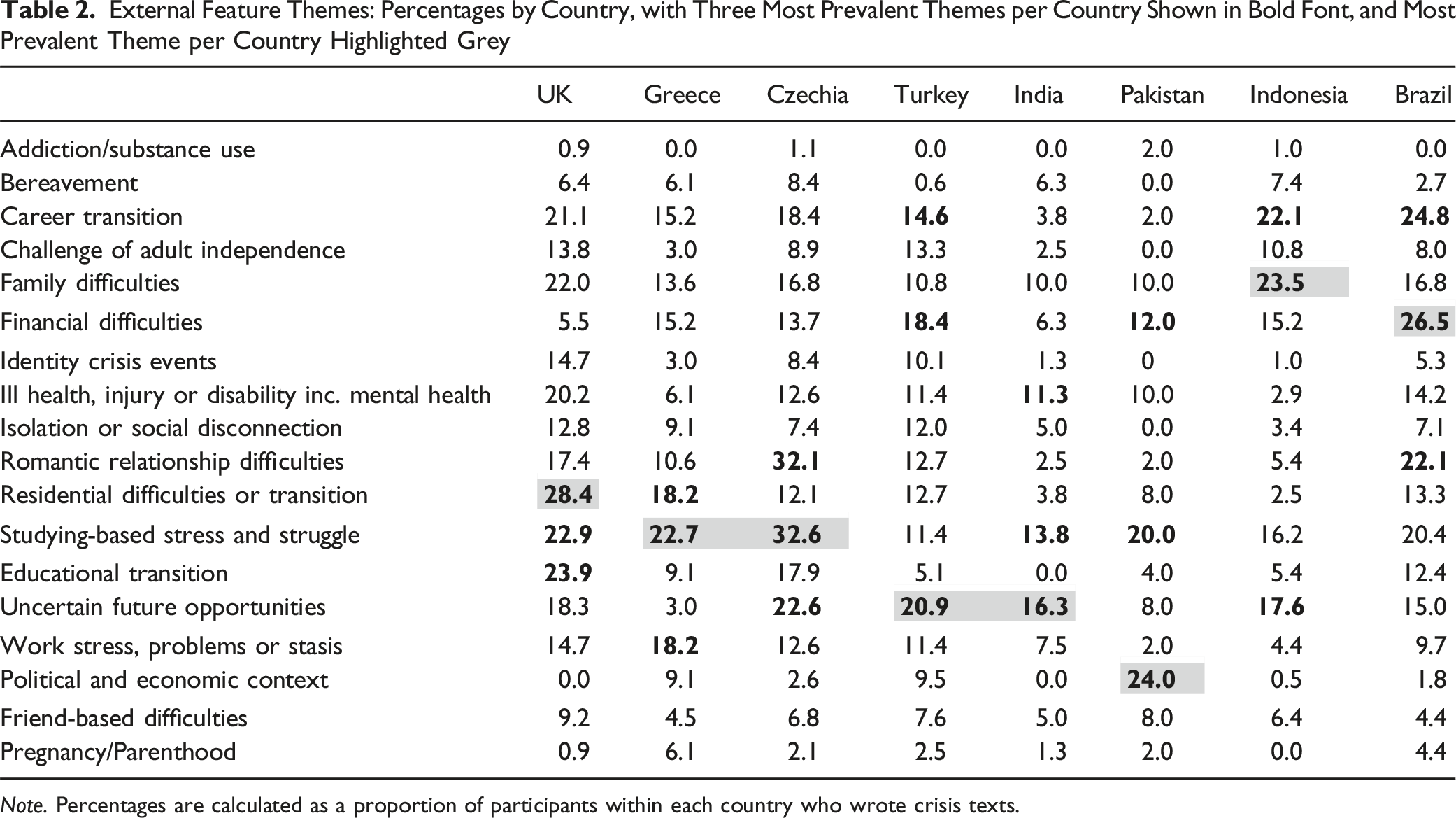
Note. Percentages are calculated as a proportion of participants within each country who wrote crisis texts.
Meta-Theme 1: Personal Crisis Events
Addiction/Substance Use
This theme relates to the use of alcohol or drugs as a perceived problem in life and as a means of self-medication for emotional distress. “Repeated worsening of addictions and self-destructive tendencies” Czechia
The Challenge of Adult Independence
This theme captured accounts of feeling that the process of becoming independent and entering adulthood was central to their crisis. “I am experiencing difficulties regarding my changing environment. Gradually, I feel that my responsibilities are increasing with the maturity of my age and I am getting stressed about that.” Turkey
Ill Health, Injury or Disability
This theme includes all mentions of physical injury or illness, surgery, mental health diagnoses and mediation, surgery and problematic weight gain. “I have faced health problems, which created a crisis in my life. This unexpected health challenge affected my social and financial situation.” Pakistan
Identity Crisis
This theme was not based on a specific event type, but rather captures all the comments about how a sense of identity was thrown into confusion amidst the events of the crisis. This includes losing a sense of identity, changes that relate to religious identity, sexuality, gender or values, negative self-comparisons with others or a sense of an identity that remains partially fused with parents. “I realized that I am queer, polyamorous, trans, and have autism. At the same time, I abandoned my religion and reevaluated much of my worldview, got into an openly queer relationship, and began a social transition.” Czechia
Residential Difficulties or Transition
This theme contains all issues related to moving homes, cities or countries, including issues of having to travel for long periods or issues that stem from residential transitions. Also, problems with one’s current residential situation were mentioned, such as the discomfort of living in a hostel. “Starting life in a new country that doesn’t speak my native language.” UK
Uncertain Future Opportunities
This theme is not linked to an event per se but was frequently mentioned in the events narratives. It refers to a sense of uncertainty about next steps and what the future holds, linked to major life events such as not getting a desired job or onto a desired course, or becoming disillusioned with choices. “My indecisiveness about the hundreds of career opportunities that came my way when I graduated from university, and the uncertainty of the opportunity that the universe would initially give me, began to turn into a crisis.” Turkey “I feel like I'm at a dead end when I need a change but I don't know where and how to start, what to do differently. It's like an engine starting at idle. You need to go, but you have absolutely no idea where and you have no control over anything.” Czechia “I'm at a point in my life that I see as definitive for my future (who I’ll be and what I want to be). In this regard, I've been questioning myself a lot about whether I'm on the right path. At the same time, I feel like I'm not giving my best or what I’d like to give at university, in terms of the opportunities I have now that may be slipping away.” Brazil
Pregnancy/Parenthood
This theme includes mentions of becoming a parent, being pregnant or the challenges of parenting young children. There were few mentions of this given that the typical age of the sample meant that few were likely to have children. “The pressure of the environment and myself on expectations of motherhood.” Czechia
Meta-Theme 2: Relational Crisis Events
Bereavement
This theme subsumes all mentions of the death of a family member or friend. These included mentions of suicide. There was also one instance of a pet dying that was included in this theme, as it provoked a bereavement reaction in the participant. “I have not dealt with my father's death that took place a year ago.” Greece
Family and Parental Difficulties
This includes issues and challenges that relate to direct family members, usually parents and/or siblings. Some participants wrote about ill health or drug use in family members, as well as demanding or disapproving parents and family conflicts or family breakdown. “In 2017 I had a big fight with my parents over the issue of faith. I found my true faith and chose to leave college and aspire to become a monk, thinking that to become a monk you don't have to go to college. After following my true faith, I was advised to stay in college.” Indonesia
Friend-Based Difficulties
Within this theme, we coded all mentions of problems with friends, loss of friends, being ostracised or being alienated by friends. “I feel that I changed a lot. Before, I trusted everyone so easily but now I changed I don’t make friends easily.” Pakistan
Isolation and Social Disconnection
This includes being away from friends and family, lacking social support, a sense of being alienated and some mentions of the enduring effects of Covid isolation-based measures. “Being alone most of the time and having no one to talk to.” UK
Romantic Relationship Difficultie
This refers to all mentions of being unable to hold down a stable relationship, relationship break up, volatile relationship and the strain of moving in with one’s partner. “I cannot break the ties from my old romantic relationship, we have been in and out for years and now it is like it is definitely over.” Turkey
Meta-Theme 3: Study and Work Based Crisis Events
Job Stress, Problems or Stasis
This theme included mentions of work stress, not enjoying work or finding it demotivating/unfulfilling, heavy work demands, having to work in two jobs simultaneously, and problematic behavior by colleagues or boss at work. “Unable to progress professionally, on the same job for over two years (job which i used to love) however feel that there is nothing more i can learn from and I do not feel appreciated by the manager.” UK “I started working about 9 months ago in a new job that constantly challenges me and demands a lot from me, both physically and mentally.” Brazil
Studying-Based Stress and Struggle
This theme relates to struggle or being overwhelmed with university workload, feeling that they may be doing the wrong degree or subject, or anxiety over degree outcome. “Anxiety about college and tiredness because everything coincides with everything…Demands and long hours of study and in a field that doesn't interest me, but in which I'm forced to work.” Greece
Career Transition
This includes descriptions of attempting to transition into the labor market, transitions between jobs or careers, and periods of unemployment. “I have started a new job, not in the industry I wanted or trained for, this is a new venture that has caused me anxiety and stress due to learning a new set of skills and rules.” UK
Financial Difficulties
This relates to debt, low or unstable income, not enough money to enjoy life or unwanted financial dependence on parents. “Being financially dependent on the family, both me and my husband (whom I don’t even feel like calling my husband because we are not independent in our lives and live in the family home), causes various feelings of discomfort, submission, and silence, as well as little autonomy. I feel my identity is shaken every time I need to ask for or endure situations due to financial reasons.” Brazil
Educational Transition
This theme includes references to issues and challenges surrounding either arriving at, leaving or moving between universities (or other educational establishments). “After failing at one university that I would have enjoyed but couldn't psychologically handle, I finished my BA at another.” Czechia
Meta Theme 4: Geopolitical Crisis Events
Political and Economic Context
This theme included descriptions of crisis being fuelled by the political situation, perceptions of incompetent government, inflation and broader financial and economic issues within a country, and labour market issues such as high unemployment rates. “Our government system is very poor specially for poor people”. Pakistan
Internal Crisis Features
Internal Feature Themes: Percentages by Country, with Three Most Prevalent Themes per Country Column Shown in Bold Font, and Most Prevalent Theme per Country Column Highlighted Grey
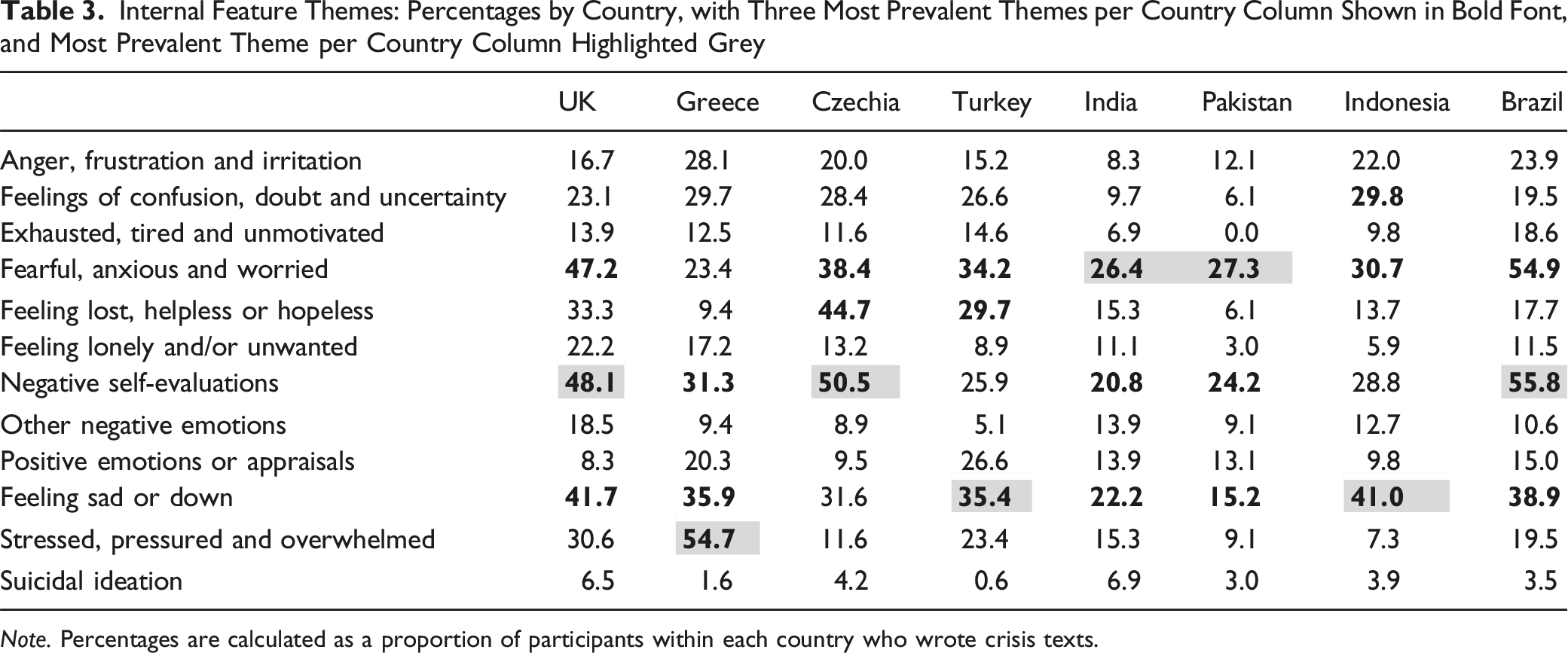
Note. Percentages are calculated as a proportion of participants within each country who wrote crisis texts.
Feeling Sad, Numb or Down
This theme captures the range of phrases used to capture feeling down, including mentions of low mood, feeling down, feeling numb, sad and despairing. For example: “Mostly been feeling a numbness but sometimes despair.” UK
Anger, Frustration and Irritation
This theme captures all descriptions of frustration and irritation, or at the stronger end of this emotive scale, anger and feelings of aggression. “I often get angry for no apparent reason and I am always angry and feel that everything is futile and useless.” Czechia
Fear, Anxiety and Worry
Under this theme we coded all descriptions of being scared, afraid, anxious or worried by current events or imagined futures. “Sometimes I feel very restless and anxious, it seems as if something bad is going to happen.” Pakistan
Other Negative Emotions (Guilt, Regret, Jealousy, Being Upset)
There were rare mentions of other negative emotions such as guilt, regret, jealousy, being upset, or being unstable (in a negative sense). These mentions of other negative emotions were coded into a single theme. “I feel..a little bit of regret for the wrong decisions.” Turkey
Positive Emotions and Appraisals
This theme captures any mention of feeling positive, optimistic, happy or excited. “I still find things worth living and striving for despite everything and trying to be positive by taking refuge in my faith and my family.” Turkey
Negative Self-Evaluation
This commonly cited theme captures all the phrases and comments that participants made in which they convey a negative evaluation of themselves. This includes phrases such as feeling useless or worthless, being not good enough, feeling like a failure, a sense of self-loathing, self-hatred, or just a lack of confidence. “I feel like I'm worthless, i can't do anything. I won't be able to graduate either. I won't be able to complete my dissertation and i will end up as a failure. I can't make friends because I'm incapable of it. i can't be in relationships because I bring out the worst in them.” India “I'm not strong enough, I'm weak, inconsistent.” Brazil
Feelings of Stress and Pressure
This theme includes all mentions of being stressed, feeling under pressure and feeling overwhelmed. “Stressed out - Not knowing if I’ll be good enough for the job market in my field I’ve chosen.” UK
Feeling Lost, Helpless or Hopeless
Within this theme, we included all descriptions of feeling that life has no meaning or point, of feeling lost or helpless, or of feeling doomed or hopeless. “What is the point in life? I’m so tired of everything.” UK “I felt helpless at times, as if I had no direction, didn't know where to go next.” Czechia
Feelings of Confusion, Doubt and Uncertainty
This theme captures accounts of feeling confused by what to do with life, a doubt or uncertainly over future direction. It is less severe in tone than the prior theme; the tone is more being unsure than being lost. “The thoughts I have are usually questioning what I am going to do about my life and how to come out of the slump I am currently in.” UK
Exhausted, Tired and Unmotivated
Under this theme, we included all cognitive-affective descriptions of feeling tired, exhausted, burnt out, demotivated and unmotivated. “I have been feeling constantly tired, lazy and demotivated.” UK
Feeling Lonely and/or Unwanted
This theme captures feelings and appraisals of being lonely, alone, excluded, alienated and of being an outsider. “I feel like there is no person who really cares about me. I feel alone even though I have people around me.” Greece
Suicidal Ideation
In all countries surveyed, a small minority of participants conveyed suicidal ideation. “I often think about finding another partner, an impossible career change due to circumstances and myself, or ending my life.” Czechia “I think about how much I would like to get hit by a car and suffer from complete amnesia. Or better yet die.” Greece
Discussion
Our quantitative and qualitative findings both contribute evidence to the proposition that early adult crisis is a common phenomenon that occurs in all participating countries that has some cross-culturally applicable features but also culturally specific features too. The quantitative findings provide prevalence estimates that contextualize the more in-depth presentation of the qualitative findings. Our descriptive-statistical hypothesis on crisis prevalence was that in all countries, over 30% of the sample would assess themselves as currently being in a developmental crisis. Prevalence rates of crisis in the study varied significantly across the participating countries, ranging from 40% in Greece, 44% in the UK, and up to 70% in Turkey and 77% in Indonesia. Our data broadly fit with existing prevalence data, such as Herawati and Hidayat (2020), Millová and Svárovská (2020), Riyanto and Arini (2021) and Yeler et al. (2021). While Robinson et al. (2017) found only 22% crisis episode prevalence, that study included a wider age range (20–39) and included a mid-point “maybe” option that was not included in the prevalence estimate, whereas the current study opted for a binary agree/disagree assessment.
The differences in cross-country prevalence may relate to contextual socio-economic factors. In Turkey, for example, which had a prevalence of 70%, the political and social climate for young people has been reported to be challenging in recent years (Çağlar & Çağlar, 2022) due to political polarisation, increased unemployment among young people, plus higher NEET (not in employment, education or training) rates (OECD, 2024). In Indonesia, which had a prevalence of 77%, there are also relatively high rates of youth unemployment, and issues in lack of graduate-level work availability for those who go to university, which is salient to the current study given the high number of students in the sample (Watters, 2023). Gender norms and roles may also restrict women’s opportunities in Indonesia, according to Yarrow and Afkar (2020). In Brazil, crises relate to great socioeconomic disparities and high rates of unemployment and NEET conditions, especially among young people, particularly socially disadvantaged groups (blacks, indigenous people) (IBGE, 2024; Dutra-Thomé & Koller, 2019). Compared to the other countries in the sample, the European countries in the sample (UK and Greece) have a more stable political and economic situation (Fragile States Index, 2024), and there is corresponding evidence of general optimism in emerging adults about their future (Galanaki & Sideridis, 2018; UCL, 2024). This may help to explain the lower prevalence rates of crisis in Greece and the UK.
The prevalence of crisis episodes across the eight countries reflects the fact that the features of crisis that were found from the qualitative phase are common experiences, such as educational transitions, study struggles, issues with self-evaluation/self-esteem and family challenges. The qualitative analysis established that the same set of themes was sufficient for coding 90% or more of qualitative content in all countries, due to descriptions of crisis across countries containing similar overall sets of external and internal features. This supports the theoretical proposition posed at the outset of this research that early adult crisis is an expression of developmental life-stage-specific phenomena that exist during the emerging adult life stage across cultures (Erikson, 1968; Nelson, 2021).
The most common external crisis features across countries were Career transition, Studying-based struggle and stress, Uncertain future opportunities, Financial difficulties and Family difficulties. These themes fit with existing theory and research on early adult crisis and quarter-life crisis. For example, the Career transition theme was predominantly coded for comments about the transition from education to work, and previous work has found that crisis occurs during the transition from higher education to work (Robinson et al., 2020). The Family difficulties theme relates to existing research that found a negative relationship between family functioning and quarter-life crisis (Korah, 2022), and also to previous research on how crisis relates to the challenge of renegotiating relationships with parents from parent-to-child to adult-to-adult (Robinson, 2019). The Financial difficulties theme links to the prior finding that this features as a common theme in early adult crisis in a representative UK sample (Robinson & Wright, 2013).
For the UK the most common external feature theme was Residential Difficulties. This partly relates to describing the challenges of migrants moving to the UK and settling down residentially. Of all the countries included in this study, the UK gets the highest number of incoming migrants, so the theme may reflect this cultural situation (World Population Review, 2024). In Pakistan, Political and Economic Context emerged as the most common theme. Comments coded under this theme mostly focus on the issue of inflation within the country, and a general state of financial/economic crisis that impacts on participants’ lives and creates individual crisis, along with comments about perceived poor governance. Pakistan has a relatively high inflation rate in comparison with other countries, and also ranks the lowest of the countries surveyed for GDP-per-capita, which in turn may reflect in descriptions of crisis often being related to economic issues. This fits with other research that has found a link between political and economic challenges on mental health and wellbeing in Pakistan (Ahmad et al., 2022; Shaikh et al., 2024). For Indonesia, the most common theme was Family Difficulties. Comments coded within this theme include demanding parents, family conflict, and also economic family issues such as having to provide financially for parents. This may reflect the fact that in Indonesia, the nuclear and extended family plays a central role in decision-making on family-related matters, including education, career, partner, and faith (Riany et al., 2016). Furthermore, a lot of Indonesian adults still live with their parents or in-laws even after they get married or have a job. This situation may explain why family difficulties are prominent in early adult crisis (Shulman & Connolly, 2013).
Moving on to internal features of crisis, Fearful, anxious and worried was the most common internal theme when combined across countries. This fits with previous findings that uncertainty and anxiety about the future are central components of early adult crisis (Agarwal et al., 2020; Duara et al., 2021; Suyono et al., 2021; Zibrinyiová & Ráczová, 2016). Negative self-evaluation was also a particularly common theme across countries, being the top theme in the UK, Brazil and Czechia, and in the top three themes in two other countries. This finding relates to existing theory on the role of the self in the dynamics of early adult crisis (Robinson & Smith, 2010c), and to emerging adulthood as a life stage (Nelson, 2021). Another internal theme that was common across all countries was Feeling sad or down. In Turkey and Indonesia, this was the most common theme. In previous research, this feeling is associated with feeling locked out of opportunity and with a sense of being rejected by others (Robinson, 2019). The finding also links to the finding by Petrov et al. (2022), which found a strong positive correlation between developmental crisis and depressive symptoms. It also links to how if a young person appraises that they have not or will not achieve their goals, they may feel down or depressed (Çok et al., 2023).
In sum, the conception of early adult/quarter-life crisis that emerges from our qualitative analysis fits well with existing theories of early adult crisis and with theories of emerging adulthood (e.g., Robinson et al., 2013). The picture that emerges from the cross-cultural data is one of crisis episodes being times of multiple disruptive transitional events, such as the transition from education to work, moving to a new city or country, family or relationship difficulties, along with struggles to gain psychological and financial independence, which together challenge coping strategies. Alongside these external features are internal struggles with identity, purpose, uncertainty and negative emotion. Early adult crises were often descriptively framed in cultural and socio-economic contexts, particularly when such contexts were perceived as limiting or problematic, hence as driving the crisis. One of the most salient features of the qualitative findings that has not yet been addressed by other studies on early adult crisis is the preponderance of negative self-evaluation, which emerged as a common feature of descriptions of crisis across all countries. This fits with the self-focus of emerging adulthood, manifesting in a maladaptive form (Nelson, 2021). Exploring the links between life events, crisis, emotions and these negative self-evaluations is an important direction for future research.
Limitations and Future Research
There are limitations to the current study that should be noted, each of which points to a corresponding opportunity for future research. Firstly, the samples from each country are composed mainly of students, having been partly recruited via the university contacts of the research teams in each country (as well as via alumni networks and other channels). The advantage of this is that it adds a level of demographic comparability to the samples. However, it also limits the generalisability of our findings, given that they relate predominantly to the experiences of those in a specific socio-economic situation and age group. Future research could move past this limitation by aiming to compare (a) university students with non-students, (b) those in the 18–24 age range with the 25–30 age range, and (c) genders, to explore the systematic differences between these groups in crisis features, prevalence and correlates. We intentionally didn’t compare genders in the current study in order to focus on the relative prevalence of crisis overall, without leading to Type 1 error risk by doubling the number of tests, and also in order to establish a general thematic structure within each country, prior to future research that could compare genders within each country. Purposive sampling of approximately equal numbers of male and female participants for future studies that aim to compare genders will help to ensure robust comparisons.
Another limitation in our data collection was the relatively high rate of non-response to some demographic questions including gender. This is likely due to the practical matter of locating demographic questions at the end of the questionnaire, and some participants not completing that final page of the questionnaire. In future studies, this can be remedied by locating demographic questions at the beginning of the questionnaire and by including more online prompts to ensure participants are aware of when they have reached the end of the survey.
Our assessment of crisis in this study was done using the vignette form of assessment that gives participants a definition of crisis and asks them to endorse the presence or lack of crisis in their life. A functional benefit of this binary response format for the current study is that, being a categorical variable, it gives a prevalence estimate. It also facilitates for participants who gave a “yes” answer to then be funnelled to the qualitative questions about the crisis. A limitation is that it does not provide for internal reliability estimates such as Cronbach’s alpha. Future research could also explore crisis using a scaled measure such as the Developmental Crisis Questionnaire, which has three subscales (Disconnection and Distress, Lack of Clarity and Control, Transition and Turning Point), to assess crisis as a continuous variable and as a multi-dimensional construct (Petrov et al., 2022). While this measure would not have met the needs of the current study, in other studies it will provide important cross-cultural data on the relative mean levels of, and correlative predictors/outcomes of, developmental crisis in early adulthood.
A limitation of working across multiple languages is that meanings of words will vary following translation to some degree. For example, if translated key words within the crisis assessment measure vary across some languages in terms of implied intensity, such that one word is slightly less intense/extreme than the other, this can affect the likelihood of a person endorsing the definition and self-assessing as being in crisis, which in turn could affect the prevalence rate. Similarly, there is a chance that differences in qualitative thematising may reflect linguistic differences, for example the theme Stressed, pressured and overwhelmed was more prevalent than Fearful, anxious and worried in the Greek sample, while Fearful, anxious and worried was more common than Stressed, pressured and overwhelmed in all the other samples. This could in principle relate to linguistic subtleties surrounding stress and anxiety, such that a word that was coded as stress in Greek was coded as anxiety in other languages. However, while this difficulty is inherent to cross-cultural research, it is worth taking on for the benefits that such multi-country work brings, and the risk of it is offset by rigorous translation and back-translation processes, such as those that we conducted.
Finally, the nature of the qualitative data in the current study was brief written data, which provided for gathering concise descriptions of crisis across thousands of participants in many countries but lacked the depth and nuance of interview data. Further studies on early adult crisis across countries and counties, such as the work by Duara et al. (2021) that compared English and Assamese individuals via interview data, are warranted.
Practical Implications
Periods of developmental crisis are appropriate times for psychological intervention, given that they are periods in which individuals have heightened curiosity towards themselves and the external world (Robinson et al., 2017), and during which they may well be actively seeking solutions to improve their life and wellbeing (Slaikeu, 1990). There is the potential for intervention in both the external features of crisis and internal features of crisis. For example, in terms of externally focused interventions, career-focused coaching can support young adults in managing the transition from education to career, by way of developing life skills that may not have been taught in school or university. As an example of this kind of coaching service in the UK, QuarterLife (https://www.quarter-life.co.uk/) provides one-to-one and group coaching for individuals who appraise that they may be going through a quarter-life crisis (i.e. early adult crisis). Also, in terms of intervening to alleviate the distressing internal features of crisis such as anxiety, confusion and feelings of being down, group-based resilience training can help support young adults in cultivating emotion regulation skills that can help young people to navigate through the emotional upheaval of early adult crisis (e.g., Chandler et al., 2015). Given the high prevalence of negative self-evaluation across all countries in our data, we propose that techniques for enhancing self-esteem should be a priority focus for educators, therapists or other clinicians working with young adults (Langford et al., 2022). Another frequent theme mentioned was the challenge of transitioning into or out of higher education. Based on this, we propose that higher education institutions could invest in courses to support wellbeing for new arrivals at university and for those leaving university to move into a work environment (Robinson et al., 2020). In summary, the implications of the current research are that the need for such support services to young adults extends across all the countries studied and beyond. Developing and sharing support strategies and resources across countries, while modifying such services to support cultural differences, may allow for the development of empirically supported and cross-culturally valid services for helping young adults through this highly challenging part of the lifespan that can support young adults around the world.
Supplemental Material
Supplemental Material - Developmental Crisis Episodes in Emerging Adulthood: A Mixed-Methods Analysis of Data From Eight Countries
Supplemental Material for Developmental Crisis Episodes in Emerging Adulthood: A Mixed-Methods Analysis of Data From Eight Countries by Oliver Robinson, Nikolay Petrov, Georgios Vleioras, Figen Çok, H. Kübra Özdoğan, Zehra Yeler, Kübra Berber, Katarina Millova, Saba Sajjad, Luciana Dutra-Thomé, Maria Nugraheni, Mardi Rahayu, Afinnisa Rasyida, Nindya Putri Aprodita, Shefali Mishra, Payal Sharma, Akancha Srivastava, Irini Dermitzaki, Anastasia Spyrou, Emmanouela Mante, Ume Laila, and Amy Fisher
Footnotes
ORCID iDs

Funding
The authors received no financial support for the research, authorship, and/or publication of this article.
Declaration of Conflicting Interests
The authors declared no potential conflicts of interest with respect to the research, authorship, and/or publication of this article.
Transparency and Openness Statement
The raw qualitative and quantitative data, the coded qualitative data, and the thematic analysis scheme used in this manuscript are openly available, and can be accessed at the Open Science Framework [url to be provided on acceptance]. No aspects of the study were pre-registered.
Supplemental Material
Supplemental material for this article is available online.
Author Biographies
References
Supplementary Material
Please find the following supplemental material available below.
For Open Access articles published under a Creative Commons License, all supplemental material carries the same license as the article it is associated with.
For non-Open Access articles published, all supplemental material carries a non-exclusive license, and permission requests for re-use of supplemental material or any part of supplemental material shall be sent directly to the copyright owner as specified in the copyright notice associated with the article.
