



Abstract
Although associations between parental divorce before children reach age 18 and increased risk of depression are well documented, less is known about when parental divorce occurs when children are emerging adults. Our study examined how change in parental marital status during emerging adulthood (EA) was associated with depressive symptom trajectories from adolescence through EA. Data were drawn from 2600 emerging adults, ages 18–25, who participated in the Children of the National Longitudinal Survey of Youth 1979. Findings from multi-group latent growth curve models suggested that depressive symptomology was higher at ages 18/19 and 20/21 when parental divorce occurred at 18/19 compared to those whose parents remained married. Additionally, we found no evidence of differences in the association between parental divorce and depressive symptoms between males and females. Given numerous negative consequences of depression, providing support to emerging adults who are experiencing their parents’ divorce is recommended, such as preventative interventions within colleges and non-college communities.
Keywords
Introduction
Researchers examining the consequences of parental divorce on children’s well-being have predominately focused on parental divorce that occurs during childhood or adolescence (Amato & Keith, 1991b; Lansford, 2009; McLanahan et al., 2013; Raley & Sweeney, 2020). Emerging adults, however, also experience parental divorce, especially as demographic trends in parental divorce have created a pattern of gray divorce in which parents are divorcing later in their lives (see Brown & Lin, 2012; Brown & Wright, 2017; Smock & Schwartz, 2020). According to Life Course Theory (LCT; Elder, 1998), transitions (e.g., parents divorcing), regardless of when they occur during the lifespan, can impact ongoing development, and that an individual’s life is interconnected with those with whom they have relationships. To the degree that the process of divorce negatively influences the parent-child relationship and undermines parents’ own stability and well-being, parents may be less able to support emerging adult children as they are navigating their path to adulthood. Such a pattern may have negative impacts on emerging adults’ mental health as parents remain important sources of instrumental and emotional support even as emerging adults are becoming more autonomous and self-sufficient (Arnett, 2014). Therefore, emerging adults with divorcing parents may experience more mental health challenges than their peers whose parents remained married throughout childhood and into emerging adulthood. In the present study, we tested that proposition using longitudinal data to determine how parental divorce that occurs when children are emerging adults influences the trajectory of depressive symptomology during emerging adulthood.
Theoretical Frameworks
Emerging adulthood is typically thought to span the ages of 18–29 (Arnett, 2014). It has been proposed as a developmental stage during which individuals focus on identity exploration, instability, self-focus, feeling in-between, and optimism about the future (Arnett, 2014). Emerging adults can also experience numerous life transitions such as residential moves, geographic relocation, entry into postsecondary education or the work force, and beginning a career (Arnett, 2000, 2014). Navigating those transitions can cause feelings of instability and being caught in-between (Arnett, 2000, 2014). When emerging adults encounter instability, parents can provide meaningful support (Mortimer, 2011). Therefore, even as emerging adults are more autonomous from parents than children and adolescents, many still rely on them for instrumental and emotional support well into their 20s (Arnett, 2014).
According to Elder (1998) a central tenet of LCT is that biological, psychological, and social changes occurring across the lifespan impact ongoing development. Additionally, LCT posits that shared relationships (e.g., emerging adults’ relationships with their parents and siblings) influence one’s developmental trajectory (Elder Jr., 1998; Elder et al., 2003). Those tenets indicate that significant changes to emerging adults’ family systems (e.g., parental divorce), should influence their development, including if they encounter mental health challenges. For example, divorce may impede parents’ instrumental and emotional support, as well as strain in the parent-child relationship following the divorce (Shanholtz et al., 2021). Further, parents may perceive their emerging adult child, unlike younger children, as a confidant and disclose more divorce information and potentially triangulate them into interparental conflicts (Cooney & Kurz, 1996.) If parents treat children differently during divorces occurring at different developmental stages, we may observe different impacts than if divorce had occurred during childhood.
Specific theoretical explanations for why parental divorce influences a child’s well-being has been primarily limited to under-age children, but the “parental absence” perspective and the “economic disadvantage” perspectives can also provide insights into why and how parental divorce during emerging adulthood affects mental health (e.g., Lansford, 2009). Specifically, the “parental absence” perspective suggests that when family systems change through parental divorce, the absence of a parent from the household can change how parents and child interact (Aquilino, 1994; Bulduc et al., 2007; Lin et al., 2022). For example, in a qualitative study some undergraduate emerging adults whose parents recently divorced reported feeling caught in the middle due to parents confiding in them (Cooney & Kurz, 1996). Researchers have previously found that feelings of being caught in the middle are associated with poorer young adult mental health (e.g., Afifi et al., 2009; Schrodt & LaFreniere, 2022). The “economic disadvantage” perspective reflects research finding that families often experience a decrease in socioeconomic status following divorce and reduced financial security can undermine a range of child developmental outcomes (Lansford, 2009). This perspective has primarily focused on the consequences of parental divorce for children under 18, as children are financially dependent upon their parents. However, emerging adults can also be financially-dependent, at least partially, on their parents well into their mid-20s (e.g., Arnett & Schwab, 2012; Arnett & Schwab, 2013; Lin et al., 2022). Therefore, changes in family finances due to parental divorce could have a trickle-down effect onto emerging adults’ own finances potentially leading to greater stress, which could contribute to depressive symptoms.
Emerging Adulthood and Depressive Symptoms
Across several studies, researchers have described a typical pattern of depression that entails a non-linear trajectory, in which depressive symptoms tend to increase during early and middle adolescence before beginning to decline across late adolescence and emerging adulthood (Ge et al., 1994; Ge et al., 2006; Meadows et al., 2006; Musliner et al., 2016; Rawana & Morgan, 2014). While these studies do indicate that rates of depression are lower during emerging adulthood compared to adolescence, the overall rate of depression still remains high. Depressive symptoms and disorders are still relatively common among emerging adults as 18.6% of 18- to 25-year-olds had been diagnosed with major depressive disorder in 2021 (Substance Abuse and Mental Health Services Administration [SAMHSA], 2022). Further, many of those with depressive disorders experience depressive episodes for the first time during emerging adulthood (Klein et al., 2013). As noted earlier, emerging adults experience a lot of instability and transition during this time period. This instability, which is a key characteristic of emerging adulthood, could influence ones depressive symptom trajectories.
Gender as a Moderator
It is important to consider gender as a potential moderator when studying depressive symptoms and experiences during emerging adulthood. According to diathesis-stress models, young women, compared to young men, may be at higher risk of depression following stressful events due to increased biological, affective, and cognitive vulnerabilities (Hyde et al., 2008). That may account for why young women are more likely than young men to have trajectories of depressive symptoms that are higher and remain high during early emerging adulthood (Frye & Liem, 2011). In studies that have examined depressive symptoms in children and adults as a function of parental divorce, significant associations between divorce and depressive symptoms have consistiently been found for females but not for males (e.g., Amato & Keith, 1991a; Cooney & Kurz, 1996; Furstenberg & Kiernan, 2001; Palosaari & Aro, 1994).
Parental Divorce and Emerging Adult Depression
Although researchers have found that parental divorce is associated with both child and adult depression (e.g., Amato & Keith, 1991a; Amato & Keith, 1991b; McCabe, 1997; Sands et al., 2017; Short, 2002), few prior studies have focused depressive symptoms among emerging adults who experienced parental divorce when they were emerging adults. Cooney and Kurz (1996) found early emerging adult (18- to 23-year-olds) women, but not men, whose parents had recently divorced had significantly more depressive symptoms than their peers whose parents remained married. Similarly, Cherlin et al. (1998) found that experiencing parental divorce during late adolescence or emerging adulthood was associated with more depressive symptoms when children were in their 20s and 30s. compared to those whose parents remained together (Cherlin et al., 1998; Furstenberg & Kiernan, 2001). Finally, Furstenberg and Kiernan (2001) found that the odds of experiencing depression were the same for adults who experienced parental divorce before age 16 and those whose parents divorced between age 21 to 33, suggesting similar risk to emerging adults as when parental divorce occurs during childhood. Based on those studies, it appears that parental divorce during emerging adulthood may be associated to experiencing more depressive symptoms.
Present Study
Our aim in the present study was to build on the prior limited research on parental divorce during emerging adulthood by addressing several important methodological limitations of those studies. In particular, prior studies have relied on cross-sectional data or when using longitudinal data only utilizing two time points. Another limitation has been analyzing current depressive symptoms based on retrospective reports of parental divorce (e.g., Cooney & Kurz, 1996). In the present study we used multi-wave longitudinal data to determine if parental divorce, when children are emerging adults, alters the trajectory of depressive symptoms over the first half of emerging adulthood (i.e., 18 to 25 years-old). We also tested if depressive symptom trajectories differed for males and females. Drawing from LCT and the limited research on parental divorce during emerging adulthood, we hypothesized that emerging adults whose parents divorced during emerging adulthood would have higher depressive symptom scores than those whose parents remained married (e.g., Amato & Keith, 1991b; Cherlin et al., 1998; Furstenberg & Kiernan, 2001; Lansford, 2009). Additionally, as researchers have documented gender differences in depressive symptomology (Mojtabai et al., 2016; Salk et al., 2017; SAMHSA, 2022), depressive symptom trajectories (Frye & Liem, 2011; Galambos et al., 2006), and in outcomes associated with parental divorce (e.g., Amato & Keith, 1991a; Cooney & Kurz, 1996; Furstenberg & Kiernan, 2001), we hypothesized that females would have more depressive symptoms overall and that risk of increased depressive symptomology associated with parental divorce would be greater for females than males.
Method
Transparency and Openness
We report all data exclusions and all measures in the study, and we follow Journal Article Reporting Standards (JARS; Kazak, 2018). All deidentified data are available to the public through the NLSY website for download (CNLSY; Bureau of Labor Statistics [BLS], 2014a). Data cleaning, coding, and preliminary analyses were analyzed using SAS/STAT® version 15.1 software, and primary analyses were analyzed using MPlus version 8.2 (Muthén & Muthén, 2017). This study’s design and its analysis were not pre-registered.
Participants
We used data from 2600 children and their mothers who participated in the Child and Young Adult Cohort of the National Longitudinal Survey of Youth 1979 through 2014 (CNLSY; Bureau of Labor Statistics [BLS], 2014a). The National Longitudinal Survey of Youth 1979 (NLSY79; BLS, 2014b) was a nationally representative survey of 12,686 young men and women. In 1986, female participants’ biological offspring were added to the study and beginning in 1994 they began completing biennial assessments. As of the 2014 data collection, a total of 11,521 children born to 3088 mothers were included in the CNLSY. Since analyses were limited to publicly de-identified secondary data, IRB approval was not needed for the present study.
Sample Characteristics by Parental Marital Status and Offspring Sex.
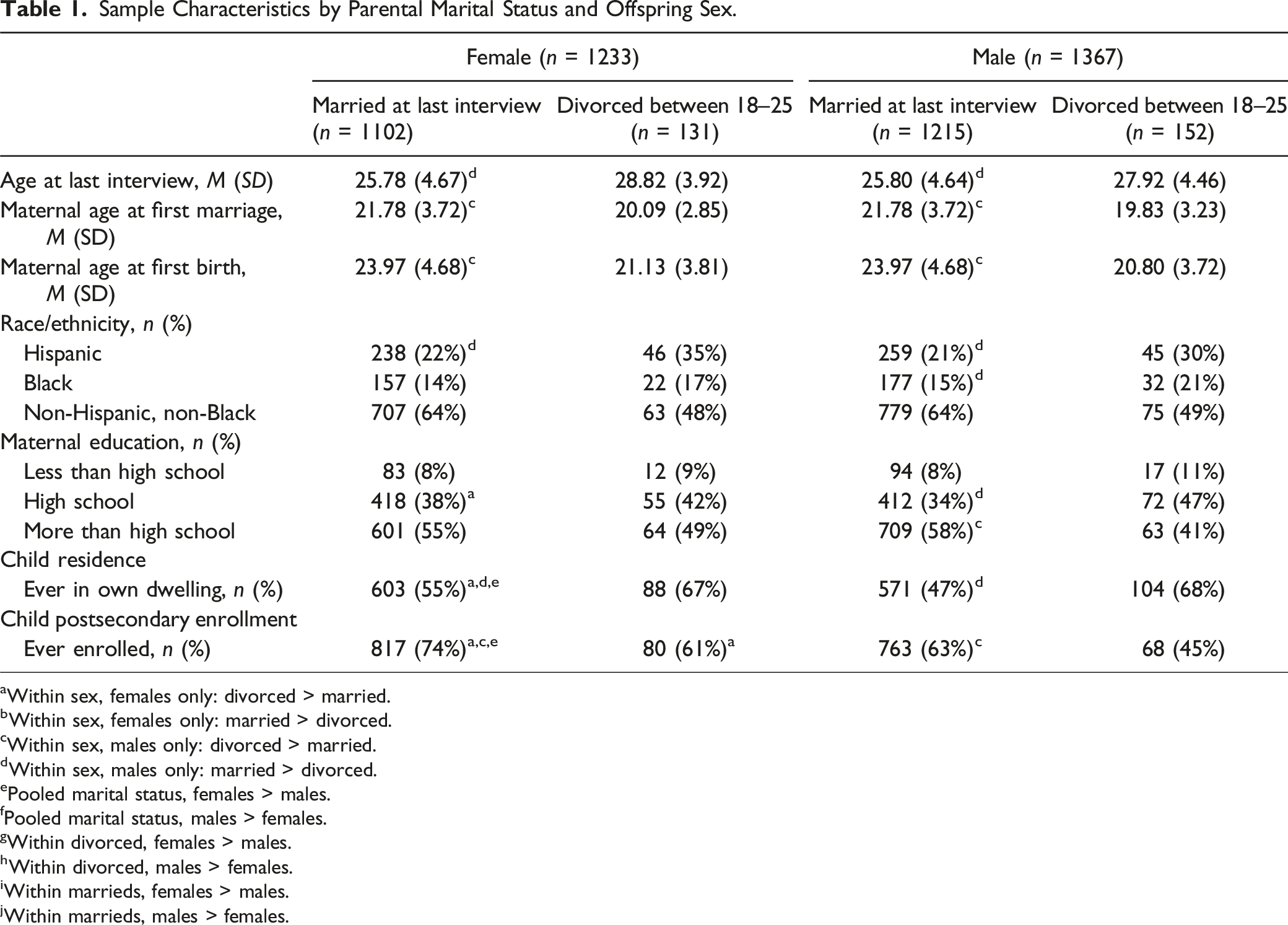
aWithin sex, females only: divorced > married.
bWithin sex, females only: married > divorced.
cWithin sex, males only: divorced > married.
dWithin sex, males only: married > divorced.
ePooled marital status, females > males.
fPooled marital status, males > females.
gWithin divorced, females > males.
hWithin divorced, males > females.
iWithin marrieds, females > males.
jWithin marrieds, males > females.
Descriptive Statistics by Parental Marital Status and Offspring Sex: Depressive Symptoms and Parental Divorce.
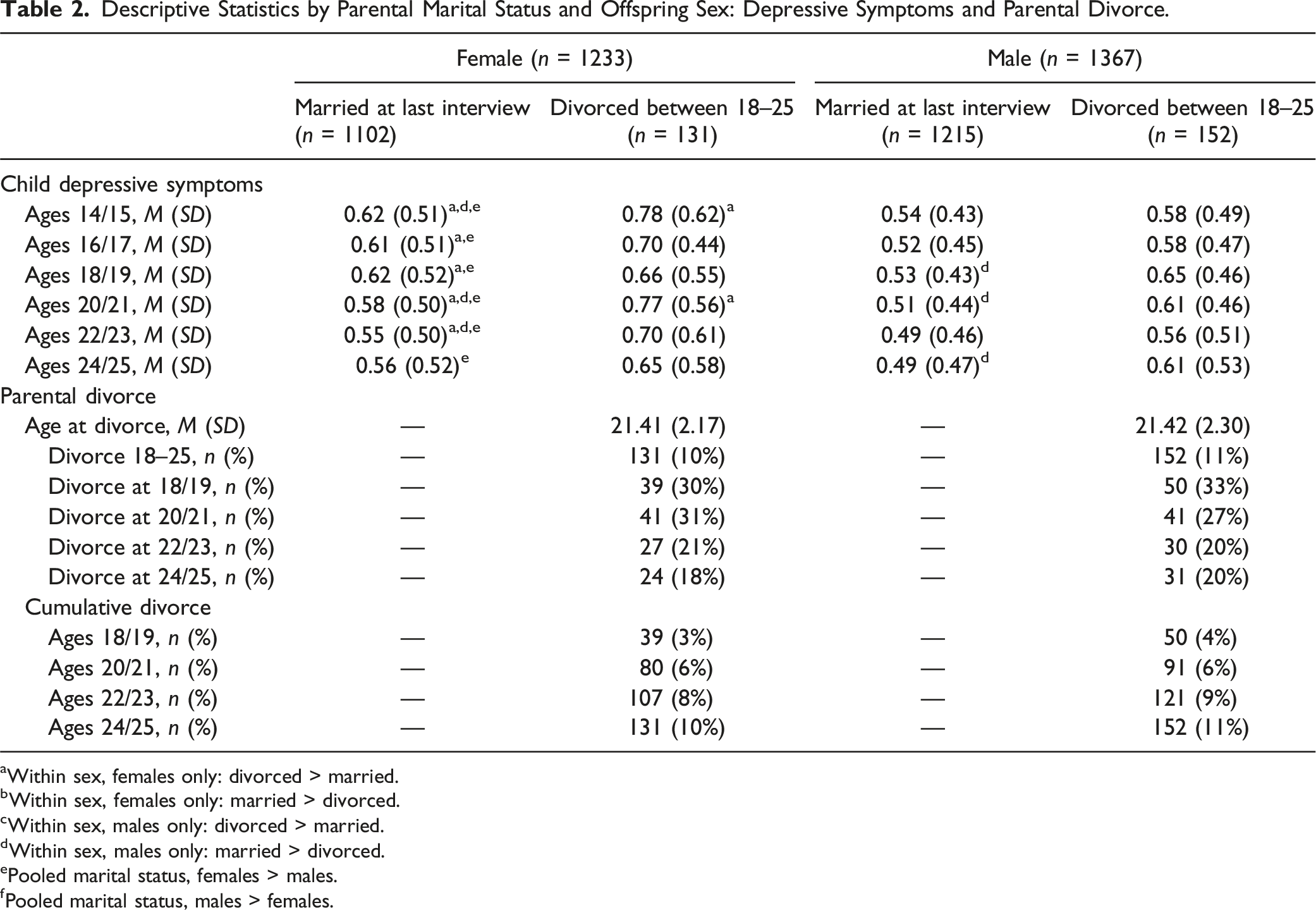
aWithin sex, females only: divorced > married.
bWithin sex, females only: married > divorced.
cWithin sex, males only: divorced > married.
dWithin sex, males only: married > divorced.
ePooled marital status, females > males.
fPooled marital status, males > females.
Measures
Depressive Symptoms
Depressive symptoms were measured with the 7-item version of the Center for Epidemiologic Studies Depression Scale, Short Form (CES-D-SF; Radloff, 1977). Participants reported past-week depressive symptoms on a 4-point scale (0 = Rarely, none of the time to 3 = Most, all of the time, 5-7 days). Depressive symptoms were assessed at six time points: ages 14/15, 16/17, 18/19, 20/21, 22/23, and 24/25. Scores for depressive symptoms were computed by averaging across the items at each time point; higher scores indicated more depressive symptoms (see Table 2; age 14/15: α = .66; age 16/17: α = .66; age 18/19: α = .64; age 20/21: α = .65; age 22/23: α = .69; age 24/25: α = .70).
Parental Divorce
At each wave, mothers were asked to report their current marital status and any changes in their marital status since their last interview. The age of the child at time of parental divorce (i.e., first divorce that occurred after the child’s birth) was coded using child date of birth and date of divorce. If the child’s parents did not divorce prior to mother’s last interview, the age of the child when parents were last married was coded using the age of the child at the mother’s last interview. Children whose parents’ marriage ended due to widowhood or if parents divorced before age 18 were excluded. Parental divorce was coded dichotomously at each age from 18/19–24/25, representing change from marriage to divorce (when applicable) as a time-varying predictor.
Control Variables
Consistent with the extant literature (see Raley & Sweeney, 2020), correlated sociodemographic characteristics were modeled in covariate-adjusted analyses. Race/ethnicity was coded from mother’s report of their child’s race/ethnicity. Two dummy variables were coded: (1) Non-Hispanic Black, and (2) Hispanic race/ethnicity, with non-Black, non-Hispanic (White, other) as the reference group. Maternal educational attainment was coded from mother self-report of her highest grade completed as of their last interview. Dummy variables were computed for less than high school (less than 12 years) and completion of any postsecondary education (13+ years), with completion of high school only (12 years) as the reference group. Primary residence of child respondents was dichotomously coded for whether they ever reported living on their own between ages 18/19–24/25 (0 = “no”, 1 = “yes). Secondary education enrollment status was dichotomously coded to reflect whether the young adult reported having ever enrolled in postsecondary education between ages 18/19–24/25. Biological sex was coded using the mothers’ report of their child’s biological sex (Male or Female).
Analysis Plan
The first step in our data analysis focused on addressing the missing data on parental marital status. We used multiple imputation (MI) to statistically account for missing values on marital status. Although, asymptotically, MI and full information maximum likelihood are equivalent means of treating missing data when the underlying distribution of variables is multivariate normal (Enders, 2022), we choose MI because our data are ordinal and we could impute values according to their specific distributions. We utilized MPlus version 8.2 (Muthén & Muthén, 2017) to impute 100 different datasets (Little, 2013). After this initial set of imputations, each new dataset is separately analyzed, resulting in 100 estimates for each parameter and standard error. Then the parameter estimates are combined according to Rubin’s rules to obtain good point estimates and standard errors (Rubin, 1987). When we conducted MI, we included auxiliary variables to control for possible explanations for missing data (Little, 2013). Specifically, we included child’s age at last interview, mother’s age at first childbirth, mother’s age at first marriage, and whether the child was born during the mother’s first marriage. Mother’s age at first childbirth and first marriage were coded using marital status history variables. Whether the child respondent was born during their mother’s first marriage or during a higher-order marriage was coded dichotomously as 1/0, respectively.
In the next step of our analysis, we used t-tests, chi-square comparisons, and logistic regression models to test for demographic differences in depressive symptoms. We also explored non-response bias by comparing characteristics of young adults included in the final sample versus those who were eligible but had missing data on items necessary to code both parental marital status and depressive symptoms (n = 408) and were therefore excluded. Finally, we assured that the measurement of depressive symptoms was valid over time by testing measurement invariance in depressive symptoms across time and groups.
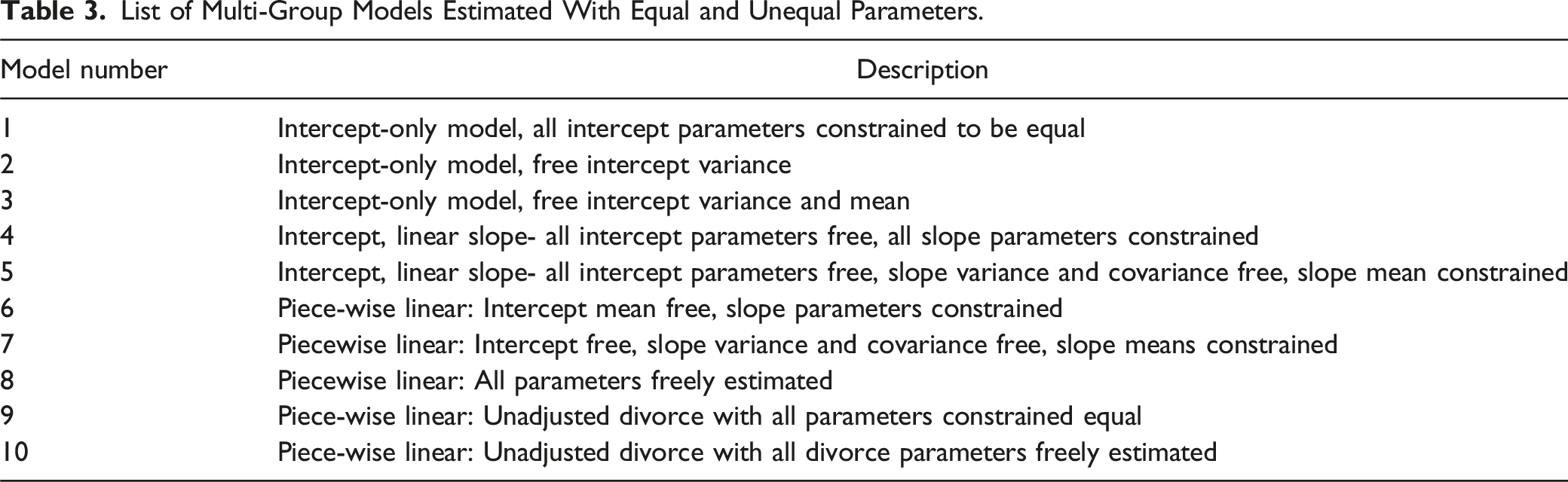
To test the study hypotheses, we first conducted a multi-group (female vs. male) latent growth curve model to estimate the trajectory of depressive symptoms from adolescence through emerging adulthood. Specifically, we fit a series of models that compared constrained and unconstrained parameters for males and females (see Table 2 for each model that was estimated). To model the trajectory of depressive symptoms we first fit a linear trajectory of depressive symptoms. Second, based on previous research suggesting that depressive symptoms increase during early and middle adolescence before declining across late adolescence and emerging adulthood (Ge et al., 1994; Ge et al., 2006; Meadows et al., 2006; Musliner et al., 2016; Rawana & Morgan, 2014), we tested for non-linearity via a piece-wise linear latent growth curve, with slope 1 estimating ages 14/15–18/19, and slope 2 estimating ages 18/19–24/25. Next, we added the time-varying divorce predictor at each age to the best fitting model. Each indicator of marital status predicted depressive symptoms at that simultaneous age, as well as subsequent ages (see Figure 1). Including parental divorce as a time-varying predictor explains how the change from married to divorced is associated with depressive symptoms trajectory (Acock, 2013). In subsequent analyses, two covariate-adjusted models were estimated: a model including as time-invariant covariates child race/ethnicity, and maternal education attainment (Adjusted I), and second, a model adding as covariates child residence and child postsecondary enrollment (Adjusted II). For all analyses, the robust maximum likelihood estimator (MLR; Muthén & Muthén, 2017) was used to adjust standard errors for non-independence of sibling data (1318 mothers). To evaluate overall model fit and test levels of invariance, we used the comparative fit indices (CFI Final Multi-Group Unadjusted Model.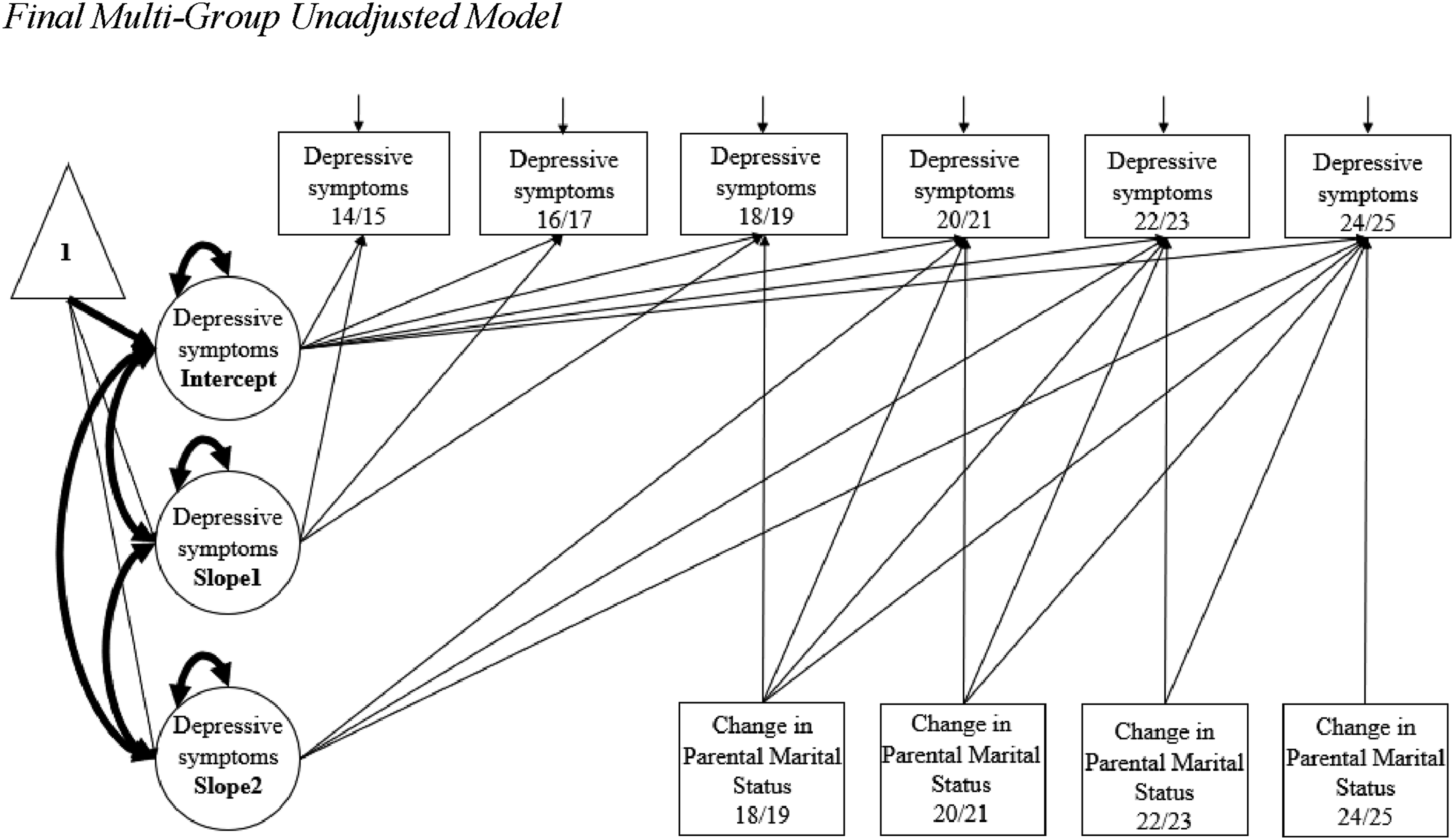
Results
Preliminary Analyses
Differences by Parental Marital Status
As shown in Tables 1 and 2, preliminary analyses were conducted to examine tests of differences in sociodemographic characteristics and depressive symptoms as a function offspring sex. Among females, those whose parents divorced were older at their last interview, t (1232) = 7.17, p < .001, had mothers who were younger at their first marriage, t (1231) = 5.02, p < .001, and younger at first childbirth, t (1231) = 6.69, p < .001, compared to females whose parents remained married. Females whose parents divorced were more likely to be Hispanic (
Also shown in Table 1, among males, those whose parents divorced were older at their last interview, t (1365) = 5.34, p < .001, had mothers who were younger at their first marriage, t (1365) = 5.90, p < .001, and younger at first childbirth, t (1365) = 7.92, p < .001, compared to males whose parents remained married. Males from divorced families were more likely to be Hispanic (
Differences by Emerging Adult Sex
As shown in Table 1, pooling across parental marital status, females were more likely to ever live in their own dwelling (
Likewise, limiting to respondents of parents who divorced, females were more likely to ever enroll in postsecondary education (
Missing Data Description
Participants who were excluded from the final sample due to missing data (i.e., missing on parent’s marital status and/or depressive symptoms) were on average older at their last interview, t (3006) = 3.52, p < .001, and had mothers who were younger at first childbirth compared to the final sample, t (3006) = 7.57, p < .001. There was no significant difference in missingness as a function of offspring sex (
Trajectories of Depressive Symptoms
List of Multi-Group Models Estimated With Equal and Unequal Parameters.
Model Fit for Models Assessing Multi-Group Analysis by Offspring Sex in Trajectories of Depressive Symptoms.
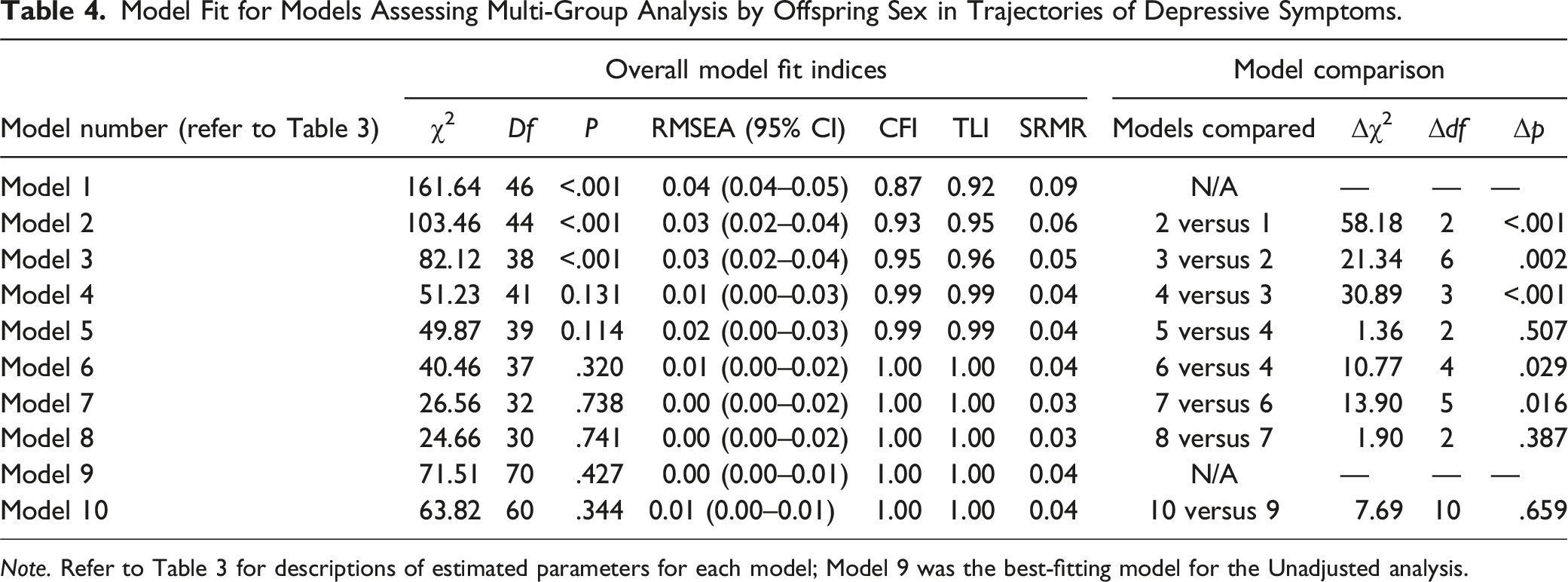
Note. Refer to Table 3 for descriptions of estimated parameters for each model; Model 9 was the best-fitting model for the Unadjusted analysis.
Parental Divorce and Depressive Symptoms
When the time-varying predictor of parental marital status was modeled, the best-fitting model constrained the divorce parameter to be equal between males and females (Model 9:
Female Emerging Adults
Parameter Estimates and Standard Errors of Parental Divorce Predicting Depressive Symptoms- Females Only.
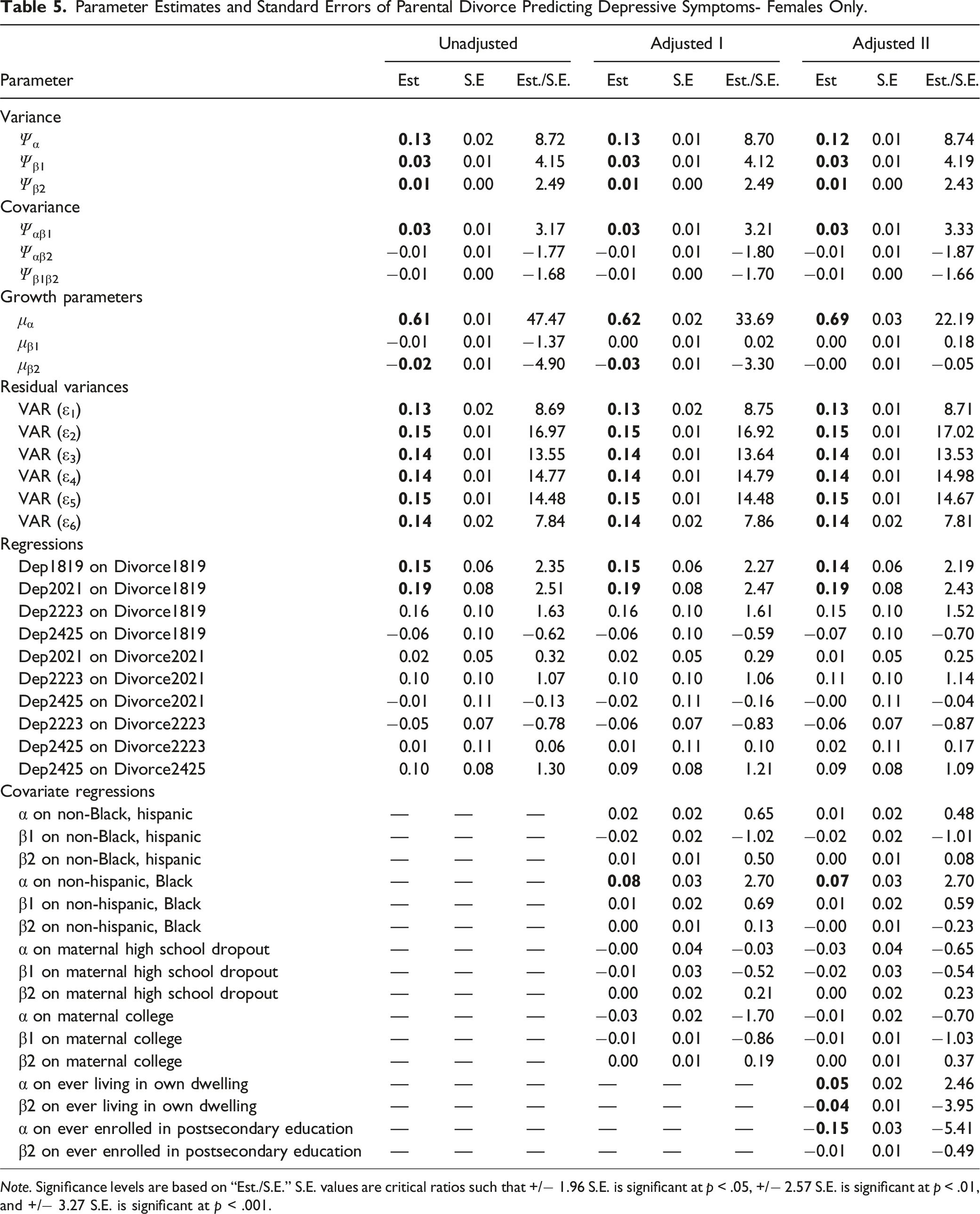
Note. Significance levels are based on “Est./S.E.” S.E. values are critical ratios such that +/− 1.96 S.E. is significant at p < .05, +/− 2.57 S.E. is significant at p < .01, and +/− 3.27 S.E. is significant at p < .001.
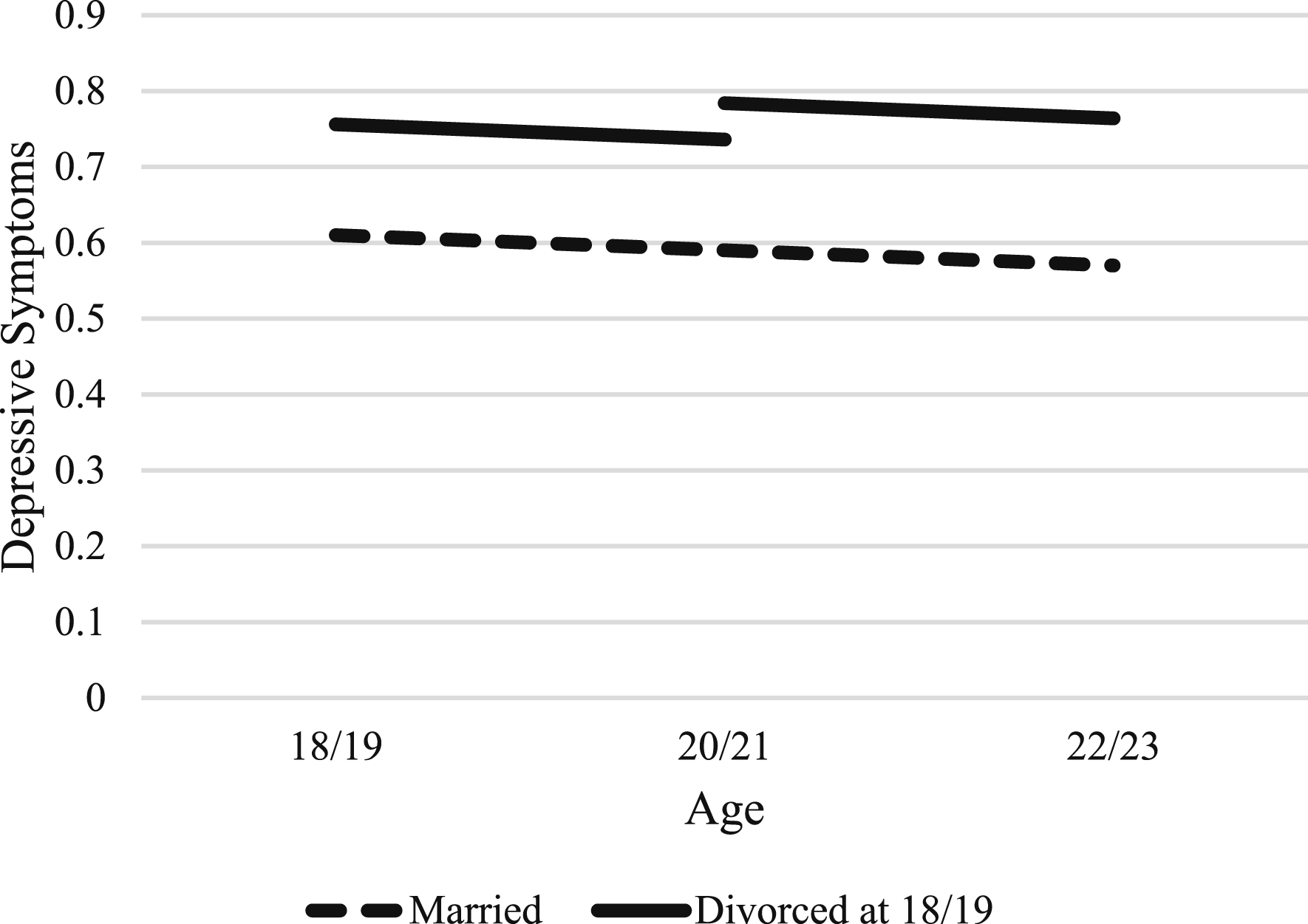
Association between parental marital status at age 18/19 and depressive symptoms across time.
Male Emerging Adults
Parameter Estimates and Standard Errors of Parental Divorce Predicting Depressive Symptoms- Males Only.
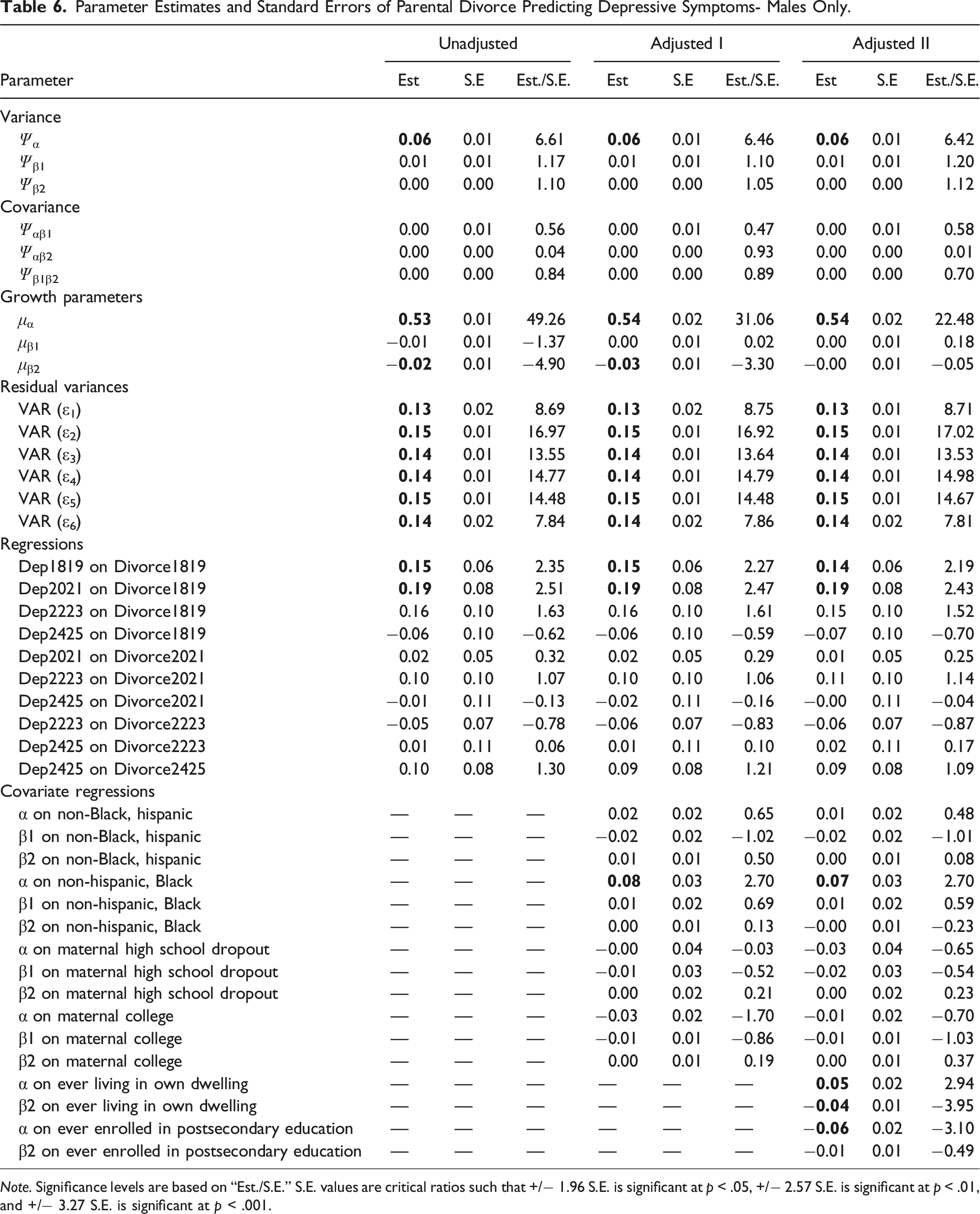
Note. Significance levels are based on “Est./S.E.” S.E. values are critical ratios such that +/− 1.96 S.E. is significant at p < .05, +/− 2.57 S.E. is significant at p < .01, and +/− 3.27 S.E. is significant at p < .001.
Discussion
As parental divorce has continued to become more prevalent later in the life course, it is important to examine the impacts that this family transition can have on emerging adult children. To that end, we explored how parental divorce during the child’s emering adult years impacted trajectories of depressive symptoms over the course of emerging adulthood. Building on prior studies, we used multiple waves of longitudinal data from children born to mothers participating in a nationally-representative survey. We employed latent growth curve modeling appropriate for use with repeated measures data to estimate both between-person and within-person change in depression over time. Overall, there were two main findings in our study. First, parental divorce occurring when children were 18 or 19 years-old was associated with simultaneous and short-term increases in depressive symptoms. The second finding was that we found no evidence that parental divorce occurring after children were 19 years-old was associated with a change in depressive symptoms. Thus, it appears that the adverse impacts of parental divorce (at least in terms of depressive symptoms) are limited to early emerging adulthood.
The transition to emerging adulthood can be an especially unstable time of the life course due to normative changes such as graduating from high school, moving away from home, renegotiating family relationships, and/or seeking employment (Arnett, 2014; Wood et al., 2017). Emerging adults may be especially reliant on the socioemotional and instrumental support from parents as they are navigating those transitions. Thus, when parents are divorcing as children are moving through those transitions, they may feel they are less able to rely on their parents. Further, parental divorce during this transition period likely adds an additional source of stress in their lives. Collectively, perceiving parents as less available for support and encountering additional divorce related stress could be account for these emerging adults increased depressive symptoms.
Although we did not find that parental divorce after age 19 was associated with changes in depressive symptoms, it may still impact other facets of an emerging adults’ life (e.g., educational or career experiences, romantic development, etc.) that were not captured in the present study. Further, there may be more delayed effects from these parental divorces on mental health during adulthood. There is some support for this possibility in the literature, including findings from Furstenberg and Kiernan (2001), who found that for both males and females odds of depression was higher at age 33 in families where parents divorced versus remained together. Therefore, continued assessment of both parental divorce and offspring depression into the late 20s and beyond may be necessary to document associations during later adulthood.
Although our primary study goal was to examine the impact of parental divorce on emerging adult depressive symptoms, our results also provide insights for the prevalence and trajectory of depressive symptoms more broadly during emerging adulthood. Similar to previous findings (Ge et al., 1994; Ge et al., 2006; Meadows et al., 2006; Musliner et al., 2016; Rawana & Morgan, 2014), our results suggested that depressive symptoms decreased, on average, during the emerging adult years. However, variability among individuals remain. Our analyses also help illustrate the connections between emerging adult gender and depressive symptoms. The best-fitting trajectory of depressive symptoms demonstrated that women and men had similar mean-level trajectories of depressive symptoms. This is in contrast to prior studies that have shown, on average, that women experience more depressive symptoms than men (e.g., Frye & Liem, 2011; Galambos et al., 2006; Meadows et al., 2006; Yaroslavsky et al., 2013). However, women did report greater depressive symptoms than men at age 18/19. Further, within the trajectories there was more variability in women’s than men’s depressive symptoms. Thus, the gender differences that we found for depressive symptoms was in terms of variability within gender rather than in the trajectory of depressive symptoms or the within age mean-levels of depressive symptoms, except for age 18/19. Women demonstrating greater variability in depressive symptoms is consistent with the diathesis-stress models that suggest females have a greater predisposition to depression than males (Hyde et al., 2008). Finally, we did not find significant differences between males and females in the relationship between parental divorce and depressive symptoms. In adjusted models, results were similar with regard to sex differences (or absence thereof) in depressive symptom trajectories and associations between parental divorce and depressive symptoms. Sex differences in offspring outcomes related to parental divorce have not always been found once other highly correlated risk factors such as stressful childhood events are included in the models (e.g., Cooney & Kurz, 1996).
Strengths and Limitations
This study represents an important extension to the parental divorce literature, helping to expand on the limited findings from prior research on parental divorce during emerging adulthood. Among methodological strengths, ours is the first study to examine the association between changes in parental marital status and changes in depressive symptoms during emerging adulthood using a large, representative sample of mothers and their children followed across adolescence and emerging adulthood. Unlike many prior studies of emerging adults that analyze data from samples of convenience or college-students, having access to a representative sample of families affords a number of benefits, including increased generalizability of findings, albeit limited to those meeting inclusion criteria. By examining prospectively-collected data, recall bias is also reduced and temporal ordering of predictors (parental divorce in the present study) relative to outcomes (depressive symptoms) is also ensured (Bollen & Curran, 2006; Little, 2013). Another methodological strength was the use of multiple imputation to statistically “fill in” missing values for parental divorce. Rather than excluding the participants with missing data from the sample, this method preserves sample size and power, and results in unbiased estimates by using incomplete data and filling in multiple sets of plausible values (Bollen & Curran, 2006).
Limitations should also be acknowledged, including those related to assessment of change in parental marital status. Although dates were assessed for when mother married, divorced, or widowed, dates were not assessed for marital separations. Longer term separations not resulting in divorce are not uncommon (U.S. Census Bureau, 2010), and many married parents who later divorce have been separated for some time, while others may never legally divorce (e.g., Tumin et al., 2015). Therefore, it is important to note that instability may be occuring within the family prior to the actual change in marital status from “married” to “divorced”. In addition, CNLSY administered items from the widely-used CES-D (Radloff, 1977). The original CES-D, as well as the CES-D-SF, assess past week symptomology and thus findings are limited to very recent symptomology. Although recall bias is reduced, depressive episodes in-between biennial assessments may be missed as major depressive disorder has an average duration of between four to six months (e.g., Lewinsohn et al., 1994). Finally, it is important to note that participants’ biological sex was used to dichotomously code participants as either male or female.
Future Directions
Our central aim was to test if parental divorce during emerging adulthood affected trajectories of depressive symptoms over the course of emerging adult and determine if gender moderated that effect. Now that there is support for this association, future research could continue to unpack this relationship. Progression to adulthood is highly individualized (Arnett, 2014) and additional measures of independence might help to explain risk to emerging adults as a function of changes in parent marital status. One way in which we can learn more about how parental divorce impacts the lives of emerging adult children is to examine the underlying processes that predate and postdate the divorce event. In other words, rather than exploring divorce as a static event, future studies could explore more moderating and mediating roles of the context in which they live. For example, one mediating factor may be the role of interpersonal relationships following divorce, including those related to the parent-child relationship. The overall relationship quality with parents, especially their fathers, tends worsen following parental divorce compared to those whose parents remain married (Ahrons & Tanner, 2003; Reed et al., 2016). In turn, poor parent-child relationship is associated with worse mental health compared to those with better parent-child relationships (e.g., Barry et al., 2008).
Among additional potential moderators is whether the emerging adult was living with their parents when the divorce occurred. Although our study assessed whether the emerging adult ever lived in their own dwelling between ages 18–25, we did not control for whether the emerging adult was residing with their parents at the time of the divorce. Copp et al. (2017) found that emerging adults who live independently but then returned to live at their parent’s home have significantly higher depressive symptoms than those who lived independently or always stayed with their parents. Emerging adult children still living with their parents at the time of their divorce may also be more closely entangled into the event.
Implications for Prevention and Intervention
Results of this study suggest that one useful target for depression prevention efforts may be emerging adults whose parents have recently divorced. As noted, past-year prevalence of major depressive episodes among adults ages 18–25 is highest amongst all adults aged 18 or older (SAMHSA, 2022), with serious associated consequences (e.g., Salmela-Aro et al., 2008). Unfortunately, too many emerging aduts are reluctant to seek help for mental health problems, including depression (Gulliver et al., 2010). Thus, it is important to identify risk factors for early symptomatology with the goal of developing interventions targeting at-risk youth who have yet to progress in severity of symptomolgy. While there are a number of preventive interventions for minor-aged children who experience parental divorce (e.g., Wolchik et al., 2005), fewer research-based interventions exist for emerging adults who experience parental divorce during emerging adulthood.
Resilience following parental divorce is associated with postitive self-worth and positive coping strategies (e.g., Barry et al., 2008), which might be fostered in therapy by teaching skills including cognitive reappraisal and restructuring (Aldao et al., 2010). Given changes to interpersonal relationships associated with parental divorce (e.g., Shanholtz et al., 2021), interpersonal therapy focusing on building and maintaining positive relationships (e.g., Weissman, 2006) could be beneficial, as well as grief counseling (Hage & Nosanow, 2000). Given that 40% of emerging adults ages 18–24 enroll in a two- or four-year college (U.S. Department of Commerce, 2018), such interventions might be provided on college and university campuses, as well as in the community for those emerging adults who do not attend college, for example, at local places of worship or at a local community center.
Conclusion
Consistent with LCT, findings of the present study highlight the importance of life events occurring after age 18, and the subsequent consequences for well-being. Using latent growth modeling as the primary analytic tool, this study examined potential differences in the association between parental divorce and depressive symptoms, with findings of significant differences between males and females on depressive symptom scores at age 18/19, but no differences in the overall trajectories of depressive symptoms. There were no differences between males and females in the association between parental divorce and depressive symptoms, suggesting that females who experienced parental divorce during emerging adulthood did not have greater depressive symptoms compared to males who likewise experienced parental divorce during emerging adulthood. However, parental divorce during early emerging adulthood increases depressive symptoms in the short term. Given well-documented consequences of depression, these findings also highlight the need for preventive interventions targeting emerging adults whose parents recently divorced.
Supplemental Material
Supplemental Material - Experiencing Parental Divorce During Emerging Adulthood and Depressive Symptom Trajectories for Males and Females
Supplemental Material for Experiencing Parental Divorce During Emerging Adulthood and Depressive Symptom Trajectories for Males and Females by Nicole K. Watkins, Jonathon J. Beckmeyer, Leslie Rutkowski, and Mary Waldron in Emerging Adulthood
Footnotes
Declaration of Conflicting Interests
The author(s) declared no potential conflicts of interest with respect to the research, authorship, and/or publication of this article.
Funding
The author(s) received no financial support for the research, authorship, and/or publication of this article.
Transparency and Openness Statement

Public Significance Statement
In recent decades, more emerging adults are experiencing the divorce of their parents during their emerging adult years. Following 2600 participants through their early 20s, we explore how parental divorce during this transition period influences depressive symptoms.
Supplemental Material
Supplemental material for this article is available online.
Author Biographies
References
Supplementary Material
Please find the following supplemental material available below.
For Open Access articles published under a Creative Commons License, all supplemental material carries the same license as the article it is associated with.
For non-Open Access articles published, all supplemental material carries a non-exclusive license, and permission requests for re-use of supplemental material or any part of supplemental material shall be sent directly to the copyright owner as specified in the copyright notice associated with the article.
