



Abstract
This study investigated how Italian emerging adults coped during COVID-19 from a Positive Youth Development framework. Five hundred sixty-five 18- to 29-year-olds completed surveys measuring personal (cognitive reappraisal, optimism), ecological (support and emotional connection with community) assets, and adaptation outcomes (anxiety and future societal expectations) during (T1) and after (T2) lockdown. Utilizing a person-centered approach, four profiles emerged at T1: promotive (high personal/ecological assets), personal (high personal/low ecological), contextual (low personal/high ecological), vulnerable (low on both). The promotive profile had the highest future societal expectations. The promotive/personal/contextual profiles reported the lowest anxiety at T2. Employing a variable-centered approach, only support and emotional connection with the community at T1 linked to reduced anxiety at T2; personal/ecological assets at T1 were not related to future societal expectations at T2. Findings supported PYD assumptions, indicating alignment of personal/ecological assets aids adaptation. We discuss implications for supporting young adults during crises like pandemics.
Introduction
The COVID-19 pandemic was one of the most stressful global events in recent history, profoundly impacting individuals’ psychological well-being (Xiong et al., 2020). Anxiety levels surged during the pandemic compared to pre-pandemic times (Lakhan et al., 2020), and optimism about the future of society declined noticeably (Ripoll et al., 2021). Despite these challenges, Italian emerging adults, characterized by a collectivistic orientation, showed some capacity to cope with pandemic-related stress (Germani et al., 2020). However, the role of other personal and contextual assets in supporting their adaptation remains underexplored.
Emerging adulthood, spanning ages 18–29 years, is a critical developmental stage marked by exploration and self-discovery. In Italy, this period is influenced by unique socio-economic and cultural factors, including high unemployment rates and strong family and social expectations. The pandemic exacerbated these challenges by disrupting job prospects, educational opportunities, and social connections. Italy, being one of the hardest hit countries, likely experienced these effects more intensely than other nations, with the exception of China. The rapid onset of restrictions and the resulting social and economic fallout (e.g., Auriemma & Iannaccone, 2020) may have intensified feelings of uncertainty and postponed the transition into adulthood, a period already characterized by the so-called “delay syndrome” (Livi Bacci, 2008).
This short-term two-wave longitudinal study aimed to investigate how the pandemic impacted Italian emerging adults and to identify the personal and contextual assets that may have facilitated their adaptation. Understanding these dynamics is crucial because the pandemic’s disruptions could have delayed young Italians’ future plans and undermined developmental goals, such as finding employment or achieving independence (Theron et al., 2023). The findings will contribute to a broader understanding of how emerging adults navigate crises while maintaining a positive outlook on their personal lives and societal future (Arnett, 2007; Lind et al., 2022). By focusing on the Italian context, this research sheds light on the unique challenges faced by this group and enhances our understanding of resilience and adaptation in emerging adulthood.
The Positive Youth Development (PYD) perspective on human resilience and growth underpinned this study, proposing that coping with threats or challenges results from the reciprocal relations and connections between individuals and their contexts (Lerner et al., 2023). Specifically, PYD posits that young people have personal and contextual resources (Ritella et al., 2020) enabling them to overcome adversities and that, when both types of assets are aligned, thriving is more likely to occur in the context of great difficulties (Masten, 2014). Personal resources entail individuals’ positive traits and characteristics, such as optimism, hopeful future expectations, and self-regulation. Contextual resources refer to assets traceable in young people’s ecologies, such as support from family, friends, and larger communities (Lerner et al., 2011).
In terms of individual factors, cognitive reappraisal, and disposition to optimism may serve as candidates in the context of the pandemic because they may have provided young people with visions of the present situation and of the future that helped them face the crisis. Cognitive reappraisal is defined as the attempt to reframe a situation in a way that remodels its meaning and moderates its emotional impact (Cutuli, 2014). Positively reinterpreting life events is a strategy to rapidly downregulate unfavorable emotions, with beneficial consequences for people’s psychological well-being (e.g., lower levels of anxiety; for a review, see Aldao et al., 2010). Thus, it is reasonable to suppose that in the context of the COVID-19 pandemic, cognitive reappraisal might have had healthful effects on emerging adults’ psychological well-being. Indeed, it is likely that such cognitive tactic has enabled young people to experience the health emergency as a less traumatic event and, thus, has hindered the rise in anxiety-related symptoms.
Beyond the promotion of emerging adults’ psychological well-being, cognitive reappraisal may also have encouraged positive expectations for the future. Constructing hypothetical scenarios of what is yet to come is an essential component of human cognition (Acevedo-Molina et al., 2020), but which conditions and factors may have contributed to young people’s hopeful expectations in a situation as unique as the pandemic are still unknown. Generally, cognitive reappraisal promotes experiences of positive emotions and affect (Haga et al., 2009), which may have fueled young people’s hopeful visions of the future in the context of the pandemic. Furthermore, cognitive reappraisal was arguably involved in emerging adults’ attempts to reorganize their daily lives more adaptively and to concentrate on finding solutions for all the problems related to the health emergency. Presumably, it made emerging adults perceive that their personal and collective future was still attainable.
Second, the disposition to optimism is a relatively stable tendency to expect positive rather than negative life outcomes (Scheier et al., 1994), and it may also influence well-being. People who are not able to think optimistically may experience feelings of hopelessness and distress, which may result in increased anxiety (e.g., Dolcos et al., 2016). Disposition to optimism, which is an intrinsically future-oriented construct (Carver & Scheier, 2018), appears to be linked to hopeful expectations about the future (McWhirter & McWhirter, 2008). Therefore, it is plausible to expect that during the pandemic the more optimistic the emerging adults were, the more likely they would show positive expectations for the future of society.
Moving to the ecological assets of emerging adults, support and emotional connection in the community may have enhanced their adaptation to the pandemic, by both lowering anxiety levels and corroborating hopeful expectations for the future of society. Support and emotional connection in the community may be defined as positive bonds, collaboration, mutual care, and help among community members (Albanesi et al., 2007). As such, this asset appears to protect from anxiety and the consequences of negative life events (Bowe et al., 2022). Indeed, social relationships might offer individuals unique instrumental, cognitive, and emotional resources that may alleviate stress and negative affect in crisis situations (Özmete & Pak, 2020).
In addition, support and emotional connection in the community may be linked to positive expectations towards the future of society in the context of the pandemic. Being connected to the community might reinforce one’s sense of belongingness, reduce feelings of uncertainty in times of crisis, as well as help to reevaluate one’s perceptions that the world is dangerous and that others are not trustworthy (e.g., Özmete & Pak, 2020). Based on these considerations, support and emotional connection in the community may lead emerging adults to imagine their society as a place where it is still possible to live and fulfill personal and collective aspirations.
The Present Study
The preceding considerations suggest that optimism, cognitive reappraisal, and support and emotional connection in the community play relevant roles in individuals’ psychological well-being and hopeful expectations for the future of society. However, to the best of our knowledge, research on the simultaneous and longitudinal associations of these constructs among emerging adults in the context of the COVID-19 pandemic is still limited. Emerging adulthood, marked by prolonged identity exploration and personal instability, is a critical period to investigate these relationships, as optimism and a sense of community can coexist with this stage’s inherent challenges (Arnett, 2007; Ingoglia et al., 2022). The pandemic likely intensified feelings of uncertainty among emerging adults, driven by job losses, economic instability, and social isolation. However, they may have also drawn on their cognitive and social resources to navigate this crisis. This is especially true in Italy, where emerging adults face additional challenges due to limited social policies and a weak welfare system but benefit from strong social ties for support (Sica et al., 2016).
In light of the above-mentioned theoretical considerations and empirical evidence, the present study sought to investigate how emerging adults in Italy, one of the countries severely affected by the health emergency, adapted after the COVID-19 lockdown. We focus on their levels of anxiety and positive expectations for the future of society in relation to their access to personal (i.e., cognitive reappraisal, optimism) and ecological (i.e., support and emotional connection in the community) assets during the quarantine. To attain this goal, two statistical approaches, person-centered and variable-centered, were used to provide a more nuanced picture of the topic under study. Indeed, the former methodological device helps to assign individuals characterized by similar patterns of personal and contextual resources to subgroups within a given population. In addition, it allows us to compare unique profiles of individuals on relevant outcomes, such as positive markers of adaptation (reduced anxiety and higher positive expectations for the future of society) as in the case of the current study. In contrast, in the latter approach, the associations of personal and ecological assets with markers of adaptation can be examined among the study participants as one homogeneous group.
Regarding the person-centered approach, we expected the group of individuals reporting higher levels of both personal and contextual resources simultaneously during the lockdown to exhibit better adaptation after it. As for the variable-centered approach, it was hypothesized that each personal and contextual asset would separately have an impact on emerging adults’ adaptation outcomes across time. Specifically, higher levels of cognitive reappraisal, disposition to optimism, and perceived support and emotional connection in the community during the lockdown were expected to be negatively associated with anxiety-related symptoms, but positively related to hopeful expectations for the future of society after the quarantine.
To recapitulate, based on PYD assumptions on human resilience and development, the current study aimed at (1) identifying profiles of emerging adults according to their levels of personal and ecological assets during the lockdown, (2) investigating patterns of association between the identified profiles of emerging adults and their levels of anxiety and positive future expectations of society after the quarantine, and (3) exploring the longitudinal associations of the personal and ecological assets of emerging adults during the lockdown on their adaptation outcomes after the lockdown.
Method
Participants
Participants were selected from an Italian dataset of emerging adults (N = 3919) which was collected through two online surveys, conducted during and after the first lockdown in Italy (from 9 March 2020 to 4 May 2020). The initial sample was reached using a snowball sampling approach, primarily targeting university students enrolled in psychology or social science courses in both Southern and Northern Italy. Those who had participated in the first online survey were recontacted via email or text message for the follow-up survey. Only respondents who completed both surveys and were living in Southern Italy (more than 80%) were included in the present study. The final sample consisted of 565 emerging adults aged 18–29 years (baseline M age = 23.25, SD = 3.01; 77.5% females and 22.5% males). This sample size was adequate to detect an effect size of 0.20 with 99.96% power at the 0.001% significance level and an association of r = .10 with 73% power at the 5% significance level. The gender distribution reflected the higher proportion of women in psychology and social science university courses in Italy (more than 80%, see AlmaLaurea, 2017). The initial sampling approach focused on university students who were contacted via email. They were asked to invite one to two additional individuals. Some extended the invitation to workers or people with work experience in the relevant age category. The snowball technique widened the sample to a broader network, including participants who were workers or had work experience. As a result, 83% of participants were university students, and 17% were either workers or individuals with work experience. About 97% were unmarried and living with their parents. Data collected for the current study are openly available (Musso et al., 2024; https://doi.org/10.6084/m9.figshare.25762317.v1).
Procedure
The Institutional Review Board (IRB) for Psychological Interventions of the University of Messina, Italy, approved the current study (protocol code 32215, 25 March 2020), which followed the guidelines for the ethical treatment of human participants of the Italian Association of Psychology (see https://aipass.org/chi-siamo/#ethical-code). Participation in the study was voluntary and anonymous, and participants received no compensation. All participants received written information about the study, and they provided informed consent to participate. The first online survey, using the Qualtrics web-based platform (https://www.qualtrics.com), was conducted from March 31, 2020, to April 30, 2020 (T1), and the second about one month later the ending of the lockdown, from June 3, 2020, to June 30, 2020 (T2).
Measures
Cognitive reappraisal (personal asset)
Cognitive reappraisal was assessed at T1 and T2 by using three items derived from the Cognitive Reappraisal (CR) subscale of the Emotion Regulation Questionnaire (ERQ; Gross & John, 2003). An example item is “When I’m faced with a stressful situation, I make myself think about it in a way that helps me stay calm.” Respondents answered on a five-point Likert scale from never true for me (1) to always true for me (5). Reliability and validity for the ERQ and its subscales have been provided in several studies, including Italian samples (e.g., Balzarotti et al., 2010). To test the factorial validity of the brief version of the CR subscale used in this study, a longitudinal confirmatory factor analysis (CFA; see the “Data Analysis Plan” section for details) was conducted, including the equivalent items at T1 and T2 and their respective correlations (e.g., item 1 at T1 and item 1 at T2) in the same model. Results, based on a robust maximum likelihood estimation procedure after constraining the factor loading for each item to be equal at T1 and T2, supported the one-factor structure of CR, χ2(7) = 25.80, p = .001, CFI = .975, RMSEA = .069, SRMR = .049. The Cronbach’s α coefficients were .77 at T1 and .84 at T2.
Disposition to Optimism (Personal Asset)
Disposition to optimism was assessed at T1 and T2 by using three items from the Life Orientation Test-Revised (LOT-R; Scheier et al., 1994). An example item is “In uncertain times, I usually expect the best.” Respondents answered on a five-point Likert scale from never true for me (1) to always true for me (5). The Italian version of the LOT-R demonstrated good validity and reliability (e.g., Chiesi et al., 2013). To test the factorial validity of the brief version used in this study, a longitudinal CFA was conducted, following the same procedure as the previous measure. Results supported a one-factor structure of the used measure, χ2(7) = 31.60 p < .001, CFI = .980, RMSEA = .079, SRMR = .038. The Cronbach’s α coefficients were .77 at T1 and .86 at T2.
Support and Emotional Connection in the Community (Contextual Asset)
Support and emotional connection in the community were assessed by using three items derived from the Support and Emotional Connection in the Community subscale (SECC) of the Sense of Community Scale (SCS; Albanesi et al., 2007). An example item is “People in my town collaborate together.” Respondents answered on a five-point Likert scale from very weak (1) to very strong (5). The SCS and SECC were developed and used in the Italian context and showed good construct validity and stability (see Albanesi et al., 2007). To test the factorial validity of the brief version used in this study, a longitudinal CFA was conducted, following the same procedure as the previous measures. Results supported the one-factor structure of the used measure, χ2(7) = 12.21, p = .09, CFI = .997, RMSEA = .036, SRMR = .024. The Cronbach’s α coefficients were .90 at T1 and .92 at T2.
Positive Future Expectations of Society
Positive future expectations of society at T1 and T2 were assessed by using three items derived from the Conditions of Society (CS) subscale of the Future Expectations Scale (FES; de Souza et al., 2013). Participants were asked to respond by thinking about what would happen after the COVID-19 pandemic. An example item is “Society will be fairer and safer.” Respondents answered on a five-point Likert scale from strongly disagree (1) to strongly agree (5). The reliability and validity of the FES and its subscales have not yet been established in the Italian context. To test the factorial validity of the brief version of the CS subscale used in this study, a longitudinal CFA was conducted, following the same procedure as the previous measures. Results supported the one-factor structure of CS, χ2(7) = 6.55, p = .48, CFI = 1.00, RMSEA = .001, SRMR = .019. The Cronbach’s α coefficients were .77 at T1 and .84 at T2.
Anxiety
Anxiety was measured at T1 and T2 by using three items from the Generalized Anxiety Disorder-7 Scale (GAD-7; Spitzer et al., 2006). Participants were asked to answer how often they were bothered by the following problems over the last weeks: “Feeling nervous, anxious or on edge” (item 1), “Worrying too much about different things” (item 2), and “Feeling afraid as if something awful might happen” (item 3). These items were rated on a four-point Likert scale from never (1) to almost every day (4). The Italian version of the GAD-7 demonstrated good internal consistency reliability in previous studies (e.g., Rossi et al., 2021). To test the factorial validity of the brief version used in this study, a longitudinal CFA was conducted, following the same procedure as the previous measures. Results supported the one-factor structure of the used measure, χ2(7) = 9.74, p = .20, CFI = .997, RMSEA = .026, SRMR = .019. The Cronbach’s α coefficients were .76 at T1 and .84 at T2.
Data Analysis Plan
Missing Data
Generally, few missing data for individual items were noted (maximum 2.8%) involving 10 cases at T1 and 36 distinct cases at T2. In the context of cluster analysis and multivariate analyses of variances and covariances, missing values were managed by replacing them with the mean values of the respective variables, after checking that different types of treatment of missing data or the deletion of cases with missing data did not affect the results. In the structural equation modeling analyses, the Full Information Maximum Likelihood (FIML) method was used as suggested by the literature (Enders, 2001).
Descriptive Analyses
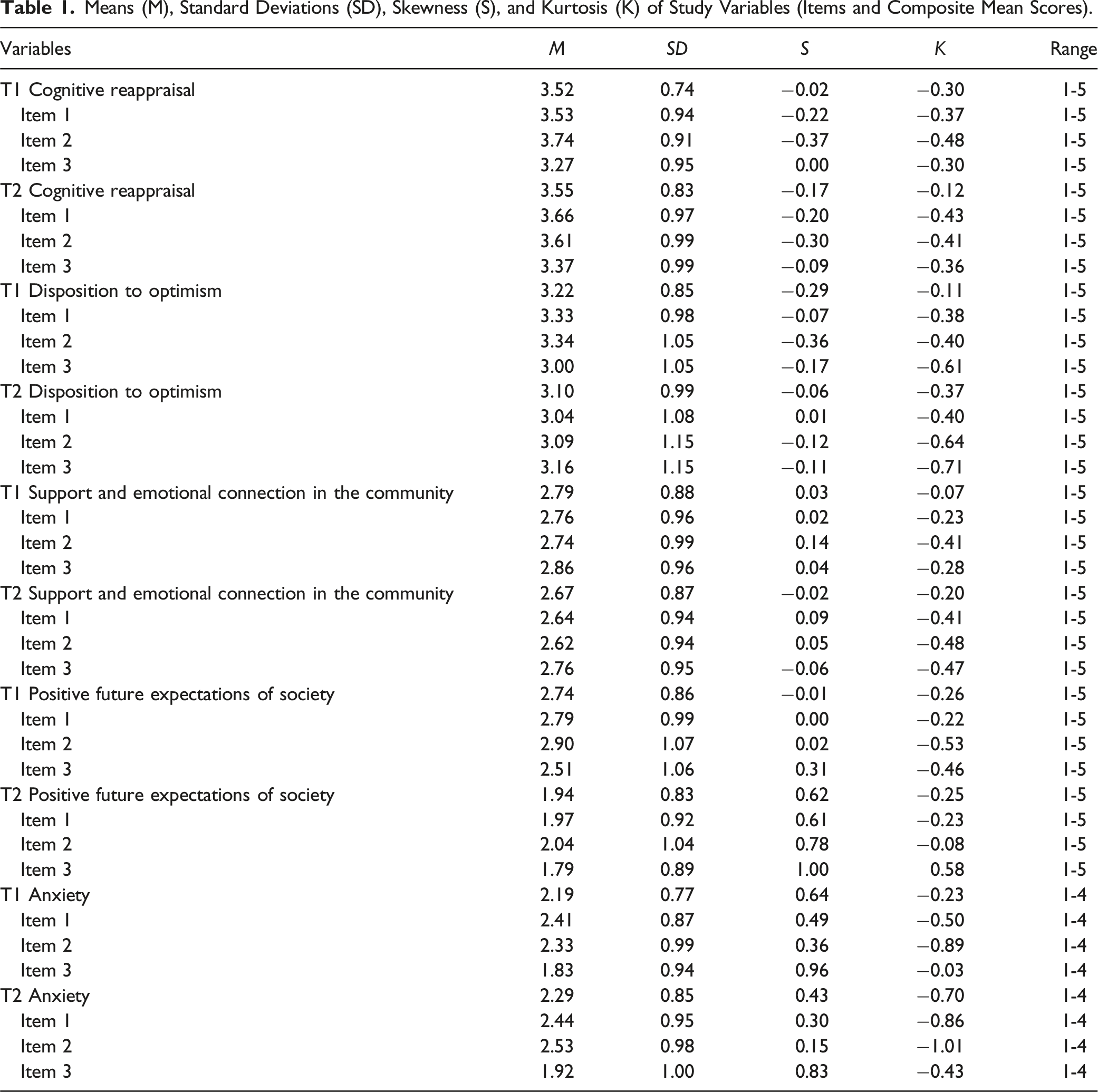
Means, standard deviations, and normality statistics for the observed variables (including item indicators and composite variables for each study construct) were computed.
Cluster Analyses
A cluster analytic approach was employed to identify profiles of personal and ecological assets at baseline (T1) based on the standardized scores of the composite variables of cognitive reappraisal, disposition to optimism, and support and emotional connection in the community. Initially, agglomerative hierarchical cluster analyses were conducted to determine the most appropriate number of clusters. Using Ward’s method based on the squared Euclidean distance (Aldenderfer & Blashfield, 1984), solutions from two to six clusters were assessed. Cluster solutions were compared according to three criteria: theoretical meaningfulness of each cluster, parsimony, and explanatory power (i.e., the cluster solution had to explain at least approximately 50% of the variance in all the variables considered for the clustering process). After that, study participants were grouped by K-means cluster analysis procedures. To check the validity of the solution, a multivariate analysis of variance (MANOVA) on cognitive reappraisal, disposition to optimism, and perception of support and emotional connection in the community by cluster was performed. The replicability of the solution was also tested by randomly dividing the data into two samples (A and B) and performing a full cluster analysis on each sample. Sample B was then classified into clusters according to the cluster centers derived from Sample A, and the agreement between the two sample solutions was computed using Cohen’s kappa, with higher agreement indicative of a more stable cluster solution.
Repeated Measures Multivariate Analysis of Covariance (Repeated-Measures MANCOVA)
A repeated-measures MANCOVA was used to inspect how positive future expectations of society and anxiety varied over time, using measurements of those constructs in terms of composite variables at T1 and T2. In addition to controlling whether and how positive future expectations of society and anxiety varied, we tested whether profiles of personal and ecological assets at T1, gender, and occupational status were predictive of their variability over time. Age was entered as a covariate.
Autoregressive Cross-Lagged Model Analyses
Associations among cognitive reappraisal, disposition to optimism, perception of support and emotional connection in the community, positive future expectations of society, and anxiety were analyzed by computing cross-lagged analyses in Mplus 7 using the maximum likelihood robust estimator (Muthén & Muthén, 2012). For each construct, a latent variable was modeled by three indicators both at T1 and T2. As a preliminary step, longitudinal measurement invariance for the whole model was tested (in the previous section, longitudinal CFA analyses only for every single measure were reported). Thus, the configural model was compared with the metric model (minimum sufficient condition for the longitudinal covariance analysis), in which factor loadings were constrained to be equal across the two-time points. Then, after reporting bivariate correlation coefficients between the latent variables, a fully cross-lagged model (Model 1) was tested including (a) cross-lagged paths between each latent variable at T1 and all the others at T2 and controlling for (b) stability paths (e.g., CR at T1 predicting CR at T2), (c) within-time correlations among the latent variables, and (d) gender (0 = male, 1 = female), occupational status (0 = student, 1 = worker), and age, specified to affect all latent variables at T1.
To model autocorrelations between the two different measurement occasions, covariances were estimated between the error terms of the same item indicators of latent constructs collected at subsequent time points (T1 and T2). Subsequently, a model (Model 2) in which all non-significant paths and covariances were constrained to zero compared to Model 1 was tested, representing a nested and more parsimonious model. The more parsimonious model should be preferred over the more complex model provided that the constraints did not lead to significant deterioration of the model fit. By acknowledging the potential limitation of the chi-square test (χ2 should be non-significant with p > .05), due to its tendency to reject the null hypothesis with large sample sizes and complex models, well-known goodness-of-fit indices and their associated cut-offs were adopted to evaluate model fit (e.g., Kline, 2015): CFI ≥ .90 for acceptable and ≥ 0.95 for good fit, RMSEA ≤ .08 for acceptable and ≤ .05 for good fit, and SRMR ≤ .10 for acceptable and ≤ .05 for good fit. To ascertain significant differences between nested models (the more vs. less restrictive model), at least two of these three criteria had to be satisfied: Δχ2 significant at p < .05, ΔCFI ≤ −.010, and ΔRMSEA ≥ .015 (Chen, 2007).
Results
Preliminary Analyses
Means (M), Standard Deviations (SD), Skewness (S), and Kurtosis (K) of Study Variables (Items and Composite Mean Scores).
Profiles of personal and contextual assets at T1
Based on the initial agglomerative hierarchical cluster analyses and the a priori criteria, a four-cluster solution resulted as the most acceptable. The solution with two or three clusters explained significantly less than 50% of the variability in all the variables considered for the clustering process. The solutions with five or six clusters represented only slight variations compared to the most interpretable four-cluster solution and did not have a clear theoretical meaning. Thus, participants were clustered into four groups by K-means cluster analysis. Figure 1 displays the obtained profiles of personal and ecological assets. The first profile (n = 126; 22.3%) included participants who scored higher on cognitive reappraisal and optimism, but lower on support and emotional connection in the community. The second cluster (n = 135; 23.9%) comprised participants scoring higher on all the variables. The third cluster (n = 133; 23.5%) consisted of participants scoring lower on all the variables. The fourth cluster (n = 171; 30.3%) was composed of participants who scored higher on support and emotional connection in the community, but lower on cognitive reappraisal and optimism. We respectively named these clusters as personal assets profile, promotive assets profile, vulnerable assets profile, and contextual assets profile (hereafter, we refer to them collectively as “profiles at T1”), as suggested by research in PYD (e.g., Desie, 2020). Z-scores of cognitive reappraisal, disposition to optimism, and support and emotional connection in the community for the four profiles obtained at the baseline time point.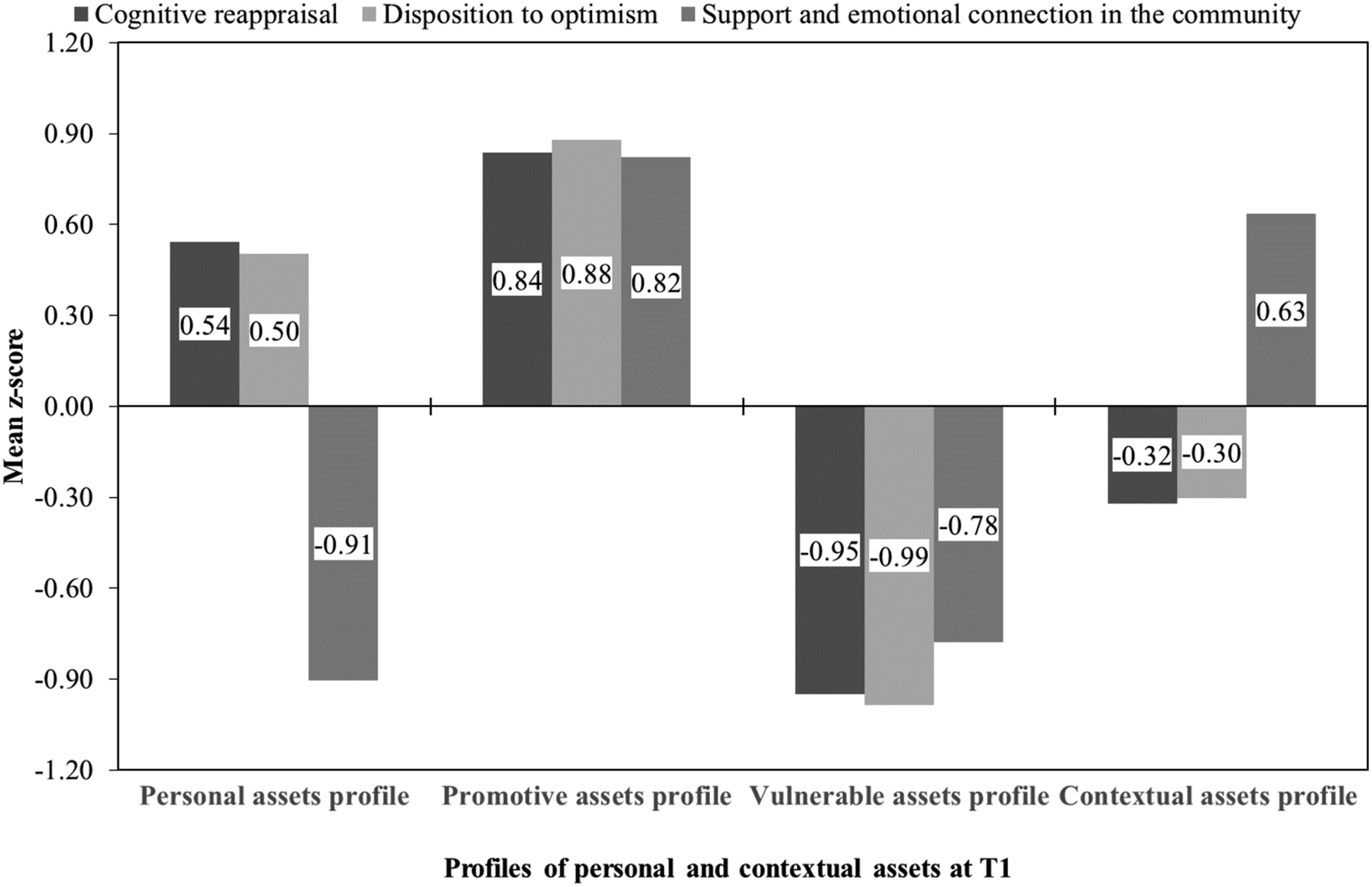
The MANOVA performed on the variables considered for the clustering process by profile revealed a significant multivariate effect, Wilks’ Lambda = .13, F (9, 1361) = 200.97, p < .001, partial η2 = .50, showing that 50% of the variability was explained by differences among the four clusters. Post-hoc tests of between-subjects effects revealed that the four-cluster solution explained 47% of variability for cognitive reappraisal, 50% for optimism, and 60% for support and emotional connection in the community, as reported by partial eta square (η2). Moreover, the replicability procedure confirmed that the four-cluster solution was the best for the two random subsamples and that the agreement value was satisfactory (k = .74).
Differences by Profile at T1 in Positive Future Expectations of Society and Anxiety at T2
Univariate Analyses of Covariance and Pairwise Comparisons Over Time (Time 1 vs. Time 2) on Positive Future Expectations of Society and Anxiety.
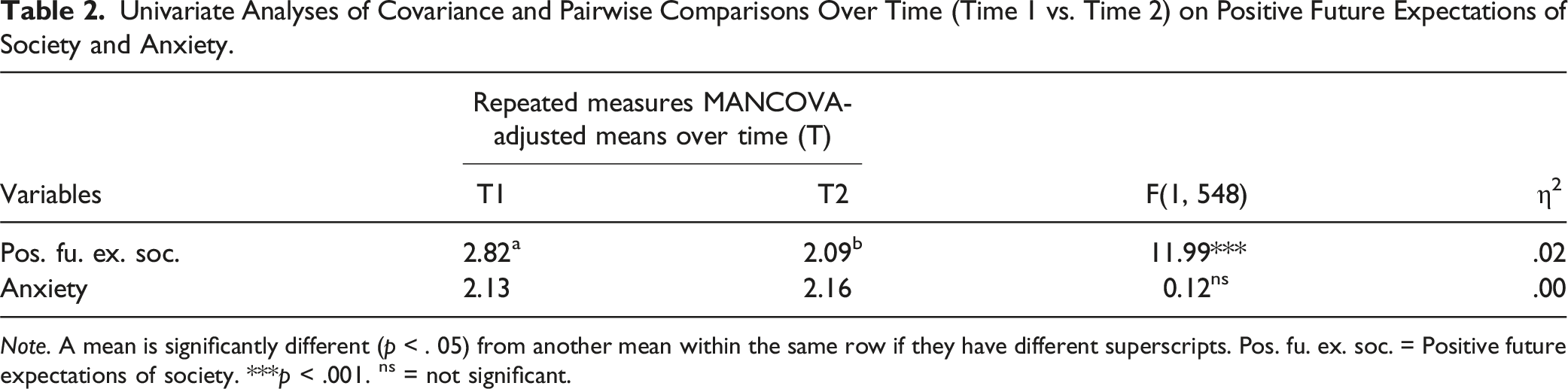
Note. A mean is significantly different (p < . 05) from another mean within the same row if they have different superscripts. Pos. fu. ex. soc. = Positive future expectations of society. ***p < .001. ns = not significant.
Results of Univariate Analyses of Covariance and Pairwise Comparisons for Time 1 Profiles on Positive Future Expectations of Society and Anxiety Levels.
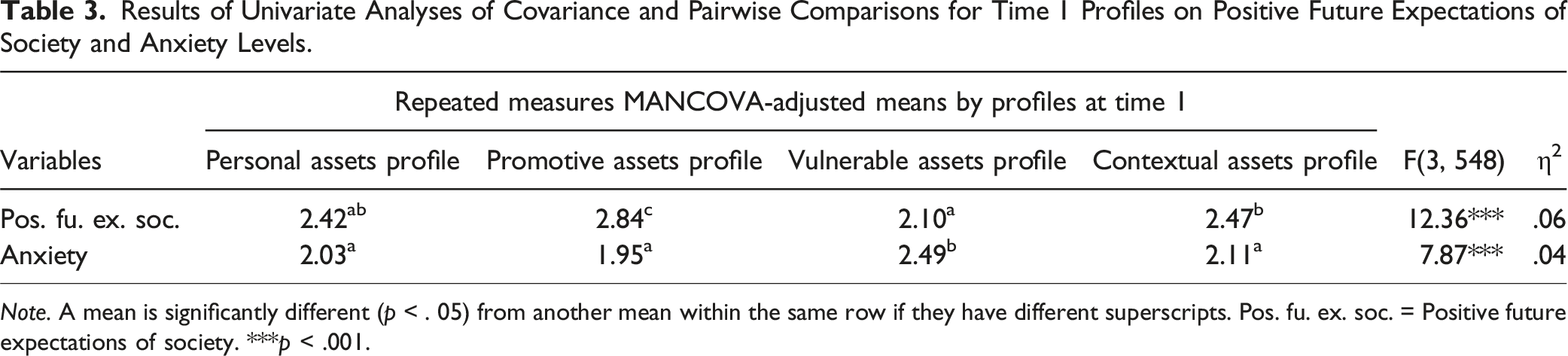
Note. A mean is significantly different (p < . 05) from another mean within the same row if they have different superscripts. Pos. fu. ex. soc. = Positive future expectations of society. ***p < .001.
Findings from Univariate Analyses of Covariance and Pairwise Comparisons by Gender and Occupational Status on Positive Future Expectations of Society and Anxiety Levels.
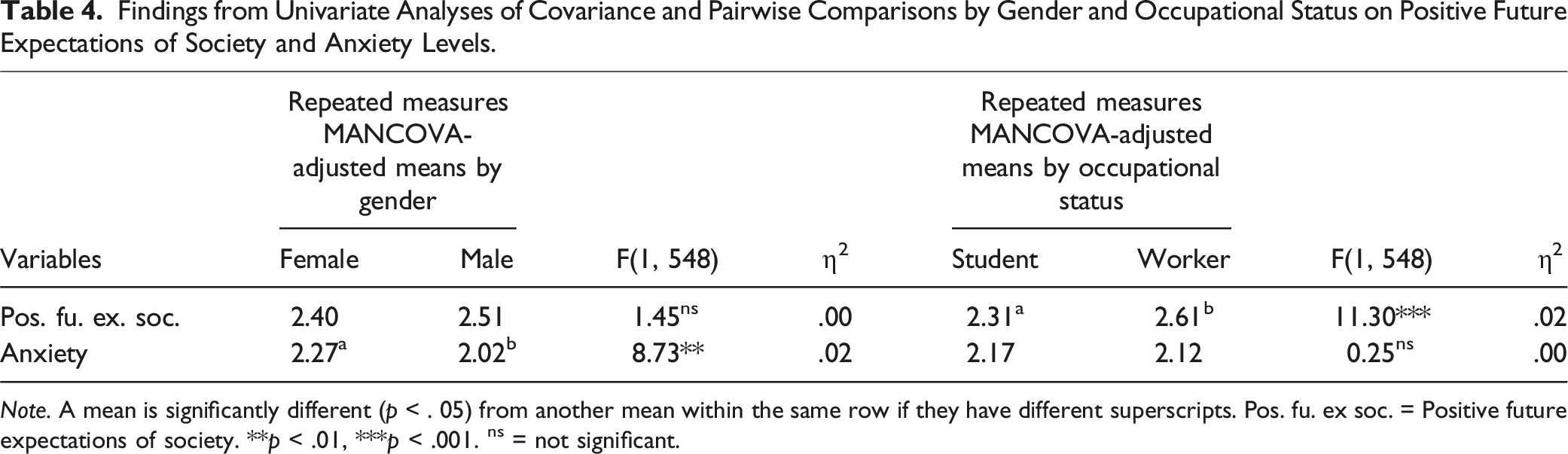
Note. A mean is significantly different (p < . 05) from another mean within the same row if they have different superscripts. Pos. fu. ex soc. = Positive future expectations of society. **p < .01, ***p < .001. ns = not significant.
Globally, these findings suggest the main effects of profiles at T1 on both positive future expectations of society and anxiety, the main effects of time and occupational status on positive future expectations of society, and the main effect of gender on anxiety. No interaction terms were statistically significant, meaning that differences between groups at T2 were largely reflective of the differences that existed at baseline (T1).
Associations Among Study Variables by the Cross-Lagged Model
Bivariate Correlations Among Latent Study Variables After Estimating a Metric Model Specifying all Covariances Between Them.
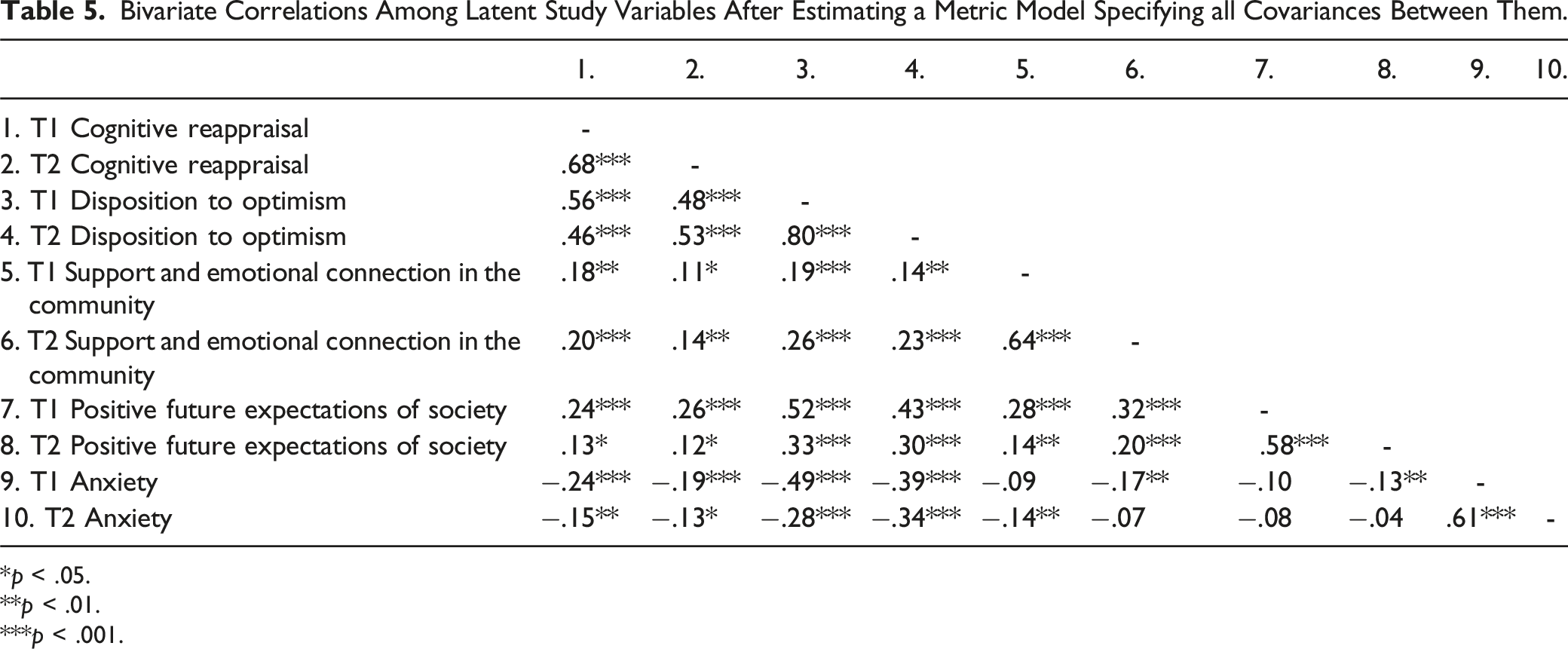
*p < .05.
**p < .01.
***p < .001.
We continued by estimating Model 1 (the fully cross-lagged model). Model 1 had good fit, χ2(430) = 568.50, p < .001, CFI = .982, RMSEA = .024, SRMR = .035. When comparing Model 1 with Model 2 (with non-significant paths and covariances constrained to zero), no significant differences in fit were found, χ2(473) = 616.05, p < .001, CFI = .982, RMSEA = .023, SRMR = .42, Δχ2(43) = 47.96, p = .028, ΔCFI = .000, and ΔRMSEA = −.001. Thus, Model 2 was considered the final model. Figure 2 shows the standardized estimates for this model. Factor loadings for all the latent variables at T1 and T2 were significantly high ranging from .62 to .92. Stability paths were highly significant with βs ranging from .59 to .81. Within-time correlations were: (a) positive and significant between CR, disposition to optimism, perception of support and emotional connection in the community, and positive future expectation of society at T1 (r coefficients ranging from .16, p = .01, to .56, p < .001); (b) negative and significant between CR and anxiety (r = −.21, p < .001) as well as between disposition to optimism and anxiety at T1 (r = −.45, p < .001); (c) positive and significant between CR and disposition to optimism at T2 (r = .30, p < .001), and (d) negative and significant between disposition to optimism and anxiety at T2 (r = −.25, p < .001). More interestingly, CR at T2 was positively associated with disposition to optimism at T1 (β = .15, p = .01), perception of support and emotional connection in the community at T2 was related to disposition to optimism at T1 (β = .17, p < .001), and anxiety at T2 was associated with perception of support and emotional connection in the community at T1 (β = −.10, p = .03). Finally, paths from gender to anxiety at T1 (β = .16, p = .001), from age to CR at T1 (β = .12, p = .01) and positive future expectation of society at T1 (β = −.18, p = .001), and from occupational status to CR at T1 (β = −.10, p = .03) and positive future expectation of society at T1 (β = .11, p = .01) were significant. Female participants showed higher levels of anxiety, older participants showed higher levels of cognitive reappraisal but lower levels of positive future expectations of society, and workers showed lower levels of cognitive reappraisal but higher positive future expectations of society than students. Standardized robust maximum likelihood estimates for the final autoregressive cross-lagged model at T1 and T2. Note. The key study latent variables and their related paths and covariances are presented in bold black. Indicators of latent variables, control variables, and their related paths are represented in grey. For parsimony, only significant paths are reported, covariances between error terms of the same item indicators of latent constructs collected at Time 1 and Time 2 were permitted but are not presented, and residuals are not shown. *p < .05, **p < .01, ***p < .001.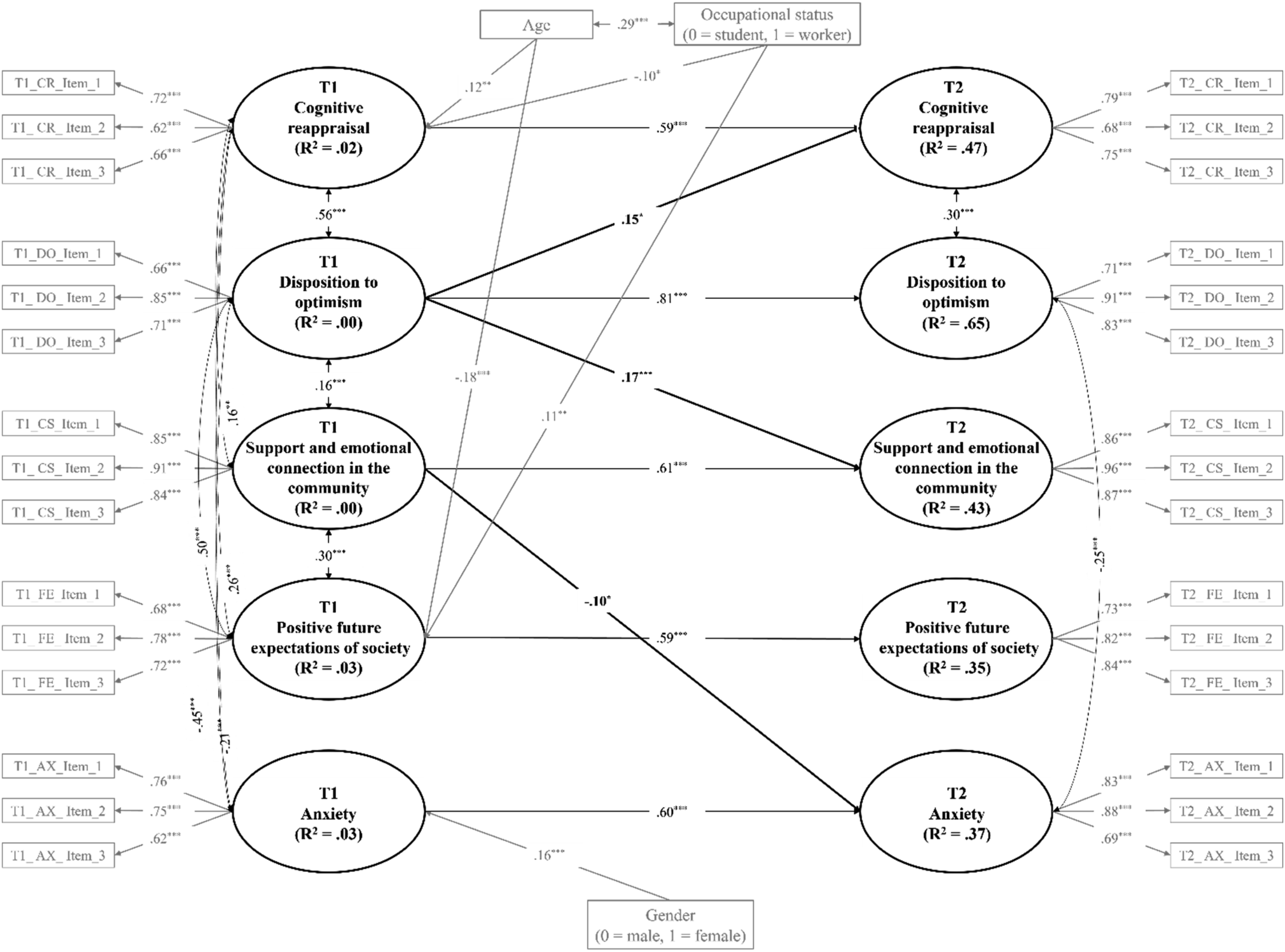
Discussion
The COVID-19 pandemic significantly impacted individuals’ well-being and life, yet emerging adults in Italy with a collectivistic orientation reported a better adaptation to these challenging circumstances (Germani et al., 2020). Building on this finding, the current study explored factors that might have helped Italian emerging adults cope with the pandemic by mitigating anxiety and negative thoughts about the future of society. Italian emerging adults are particularly interesting to study in this context. The pandemic’s social and financial consequences likely intensified their typical feelings of insecurity and uncertainty, which were already heightened by economic challenges. As a result, their well-being and outlook on the post-pandemic future may have been severely affected. This study adopted the PYD perspective on human resilience and development, which suggests that young people’s personal and ecological resources can help them navigate adversities that threaten their adaptation and growth, especially when both types of assets work in conjunction (Lerner et al., 2023; Masten, 2014).
In terms of personal resources, cognitive reappraisal and disposition to optimism were taken into account; perception of support and emotional connection in the community, instead, was considered as an ecological resource. To explore how these personal and ecological assets impacted emerging adults’ adaptation outcomes, both person- and variable-centered analytical approaches were used. The former allowed us to derive profiles of individuals based on their scores on cognitive reappraisal, disposition to optimism, and perceived support and emotional connection in the community during the lockdown and to compare these groups on the adaptation outcomes after the forced isolation. The latter approach allowed us to evaluate longitudinally the association of each single personal and ecological resource during the lockdown on such outcomes at the end of the lockdown. This mixed approach unveiled the complexity of the associations by showing how the resources under scrutiny simultaneously (using the person-centered approach) and separately (using the variable-centered approach) impacted Italian emerging adults’ anxious symptoms and hopeful expectations for the future of society.
Findings from the Person-Centered Approach: Profiles of Emerging Adults and Their Associations with the Outcomes
Results showed that emerging adults could be grouped within four profiles according to their scores on both personal (cognitive reappraisal and disposition to optimism) and ecological (perceived support and emotional connection in the community) assets, during the Italian forced quarantine. The personal assets profile encompassed those young people who were high in reinterpreting life events in a positive manner and in disposition to optimism, but whose perceived support and emotional connection in their community were low. The promotive assets profile consisted of emerging adults who were high in the ability to see life circumstances in ways that modified their meaning and dampened their negative impact. Emerging adults in this profile also reported a high disposition to optimism and high levels of perceived emotional connection and support in their community. The vulnerable assets profile represented those who were low in reinterpreting life events positively, in disposition to optimism, and in perceived support and emotional connection from others. The contextual assets profile categorized those who were low on cognitive reappraisal and disposition to optimism, but high on perceived support and emotional connection in their communities.
Concerning the associations among the profiles with the adaptation outcomes, results supported the hypothesis that the better the alignment between the personal and ecological resources, the better the adaptation to the pandemic crisis. More specifically, young people who were able to reinterpret negative life events, think optimistically, and perceive support and emotional connection in their community (promotive assets profile), reported higher levels of positive expectations for the future of society than any other profile. In addition, emerging adults in the promotive, personal, and contextual profiles were less anxious than those in the vulnerable assets profile.
Interestingly, it appeared that in the context of the pandemic, emerging adults’ hopeful expectations about the future of society were simultaneously influenced by the way they interpreted/approached circumstances and by the degree to which they perceived support and emotional connection within their communities. In other words, reframing life events or being optimistic alone is not enough to expect good things to happen in the future of society. One also needs to experience support and emotional connection in one’s community. Indeed, in a time of collective crisis, interconnectedness with people (Annese & Traetta, 2018), who can offer mutual support and share common goals (e.g., defeat the virus), may have several beneficial effects (Bowe et al., 2022), such as reinforcing one’s positive views of the post-pandemic future. Briefly, this finding somehow suggests that emerging adults’ cognitive reappraisal and dispositions to optimism can be related to visions of safer and fairer future societies when trustworthy and positive social ties or contexts make these visions more probable. This evidence, thus, confirms the relevant role of adaptive regulations between the personal and ecological assets of emerging adults in promoting their thriving (Wood et al., 2018), even under the pressure of stressful and difficult life conditions.
When it comes to subjective well-being, emerging adults appear to have the potential to benefit from cognitive reappraisal and personal disposition to optimism as well as from support and emotional connection in their communities to hinder a rise in their anxiety. These results indicate that emerging adults could cope with maladjustment during the pandemic both autonomously – probably because of their advanced cognitive resources (Cao et al., 2022) – and by feeling supported by an environment that they perceive as close and caring. However, the current findings also imply that emerging adults found it advantageous to combine their internal strengths with resources coming from their communities to overcome psychological distress. Arguably, uncertainties experienced during the quarantine exacerbated the typical insecurity of emerging adulthood (Germani et al., 2020). In such a scenario, young adults may have looked for stability and solace in communities that were united and had prosocial purposes (e.g., helping each other). Support and emotional connection gained from members of these communities may have corroborated emerging adults’ optimism and helped them regulate negative emotions (e.g., by offering alternative ways to interpret those tragic circumstances), with positive consequences for their well-being. Again, the alignment of both personal and contextual assets seemed to act as a protective factor because it prevented emerging adults’ maladjustment and facilitated their adaptation to that difficult situation (Masten, 2014).
Findings from the Variable-Centered Approach: Longitudinal Associations of Personal and Contextual Resources with the Outcomes
The variable-centered approach allowed us to verify the longitudinal perspective – even if over a short period – on the unique association of emerging adults’ personal and ecological assets with each of the adaptation outcomes. As expected, perceived support and emotional connection in the community at T1 were negatively associated with anxiety-related symptoms after the lockdown. This finding replicates other studies reporting the beneficial effects of social support in promoting individuals’ psychological well-being in crisis situations (Bowe et al., 2022; Özmete & Pak, 2020). Perhaps social relationships in the context of the pandemic provided emerging adults with a wide array of resources, such as reciprocal listening, advice, practical support, a sense of belongingness, and companionship, which may have hindered a rise in anxiety-related symptoms (e.g., the fear of being infected).
Contrary to the hypotheses, neither cognitive reappraisal nor disposition to optimism at T1 were related to anxiety across time. This lack of association can be interpreted by taking into consideration that a sense of social cohesion and mutual support (e.g., helping each other by respecting the rules during the lockdown) might have had a more relevant role in hindering anxiety compared to personal characteristics. Indeed, at the beginning of the lockdown, several messages from the Italian government reinforced social connectedness and cohesion, which might have helped emerging adults cope with stress and anxiety (Moscatelli et al., 2021) above and beyond the role of cognitive reappraisal and disposition to optimism.
Also, unexpectedly, cognitive reappraisal, optimism, and perceived support and emotional connection in the community at T1 were not associated with positive expectations about the future of society at T2. Such associations might have been moderated by other variables, such as the general emotional impact of the pandemic, relatives/friends’ infections, or personal losses in the early phases of the health crisis, which were not examined in this study. In addition, as our data were collected at the beginning of the pandemic, feelings of strong uncertainty and disorientation characterizing this period may have undermined the possible positive influence of any single personal and ecological resource on hopeful expectations about the future of society after the pandemic.
Disposition to optimism was linked to cognitive reappraisal at T2, which is in line with studies documenting such a positive association (e.g., Slattery et al., 2017). Arguably, individuals who tend to expect good rather than bad outcomes in life are also those who are inclined to engage in coping strategies, such as cognitive reappraisal, which help them positively reevaluate their present and future conditions. Disposition to optimism at T1 was also positively related to perceived support and emotional connection in the community at T2, which echoes similar findings from previous studies among disaster rescue workers who are exposed to traumatic events (Dougall et al., 2001) and women with breast cancer (Trunzo & Pinto, 2003). A possible explanation for such results could be that the general proneness of optimistic people to interpret things in a positive light might lead them to attribute positive behaviors to others and, thus, to perceive them as supportive and caring (e.g., Carver et al., 2010; Dougall et al., 2001).
Finally, although the impact of age, gender, and occupational status on the studied variables was not among the main aims of the current work, it is worth mentioning that women showed higher levels of anxiety than men, older participants exhibited higher levels of cognitive reappraisal but lower levels of positive future expectations of society than younger participants while workers had lower levels of cognitive reappraisal but higher positive future expectations of society than students.
As to gender, this finding is in line with studies reporting that women are generally more exposed to the risk of developing anxiety disorders (for a review, see Farhane-Medina et al., 2022), with research findings from other countries beyond Italy also showing that women had more symptoms of anxiety or depression during the pandemic (Herrera-Añazco et al., 2022).
Regarding age, it is not surprising that older participants reported higher levels of cognitive reappraisal as this ability appears to improve with age (McRae et al., 2012). Also, if older participants were more aware of the reality of the pandemic, which might have made their outlook on the future of larger society bleaker, this could explain the lower positive expectations about the future of society among the older participants.
As to occupational status, students had lower levels of hopeful expectations about the future of society than workers. Perhaps, uncertainty related to the health emergency added to that experienced by young people in the process of identity exploration (e.g., they have not settled on an occupation), with negative consequences for the perceptions of the post-pandemic future. Interestingly, students were higher in cognitive reappraisal compared to workers. This could be attributed to the status of still being in education: students may have had the opportunity to develop a more scientifically oriented approach to the pandemic and to integrate different perspectives, which helped them reevaluate their present conditions.
However, it is essential to interpret these findings with caution, especially regarding the comparisons related to gender and occupational status, due to the overrepresentation of female and student participants in the sample. A detailed discussion of these limitations and their implications is provided in the next section.
Limitations and Future Research
While these findings are informative, they should be considered in light of several limitations. First, all measures were self-reported, which may introduce social desirability bias. During the COVID-19 pandemic, participants might have been particularly inclined to present themselves in a more positive light or downplay negative aspects due to the heightened social scrutiny and stress associated with the crisis. This inclination could potentially affect the accuracy and validity of the results.
Second, the snowball sampling method may have influenced the results, as participants were not selected randomly but rather through referrals from those already involved in the study. Given the health emergency and restrictions to curb the pandemic, snowball sampling was one of the most viable recruitment methods available, despite its methodological limitations. This method predominantly yielded a sample of female university students because we primarily accessed students enrolled in psychology or social sciences courses in Italy, where women outnumber men. This overrepresentation of female participants could limit the generalizability of the findings, especially concerning gender-related comparisons. While we chose not to apply post-stratification weights due to our focus on specific psychosocial variables rather than aiming for population-level generalizations, this decision does mean that the gender-related findings should be interpreted with caution. The observed differences might not fully represent the broader population, and the potential for gender-based sampling bias should be acknowledged. Future research should strive to include a more balanced gender distribution to ensure the findings are more representative and to further explore the nuances of gender differences in this context. Additionally, our study primarily focused on a binary understanding of gender (male and female), which excluded or did not fully represent non-binary and gender-diverse individuals. This limitation may also affect the generalizability of our findings to the broader population, including those who do not identify strictly as male or female. The binary categorization also overlooks the complexity and fluidity of gender identity, potentially leading to an incomplete understanding of the psychological phenomena under study. Future research should incorporate more inclusive gender measures, allowing participants to identify as non-binary or with other gender identities. This would ensure that findings are more representative of the diverse experiences and identities within the population. By acknowledging this limitation, we emphasize the need for ongoing efforts to enhance gender inclusivity in psychological research to better capture the full spectrum of human experience.
Third, while the sample included young workers also recruited through the snowball approach, the comparison between students and workers is limited by an uneven distribution, which is heavily skewed toward students. Although the inclusion of workers added diversity, their smaller subgroup means that conclusions about occupational status are preliminary. This imbalance may have introduced bias, particularly regarding how occupational status affected psychosocial outcomes during the pandemic. Consequently, the findings may not fully generalize to all Italian emerging adults, especially those with different educational backgrounds or employment statuses, and should be validated further in studies with more balanced samples.
Fourth, our study was limited to Italian emerging adults, which may restrict the generalizability of the findings to other cultural contexts. Future research should involve more diverse and representative samples, including participants from different countries and cultural backgrounds, to determine the broader applicability of these findings.
Finally, this study was a short-term two-wave longitudinal investigation, which may not have fully captured the long-term changes in participants that could occur over a more extended period. Additionally, the study did not explore the mediating or moderating roles of relevant factors that could influence the direct relationships between predictors and outcomes, such as the general emotional impact of the pandemic or personal experiences of infection, death, or hospitalization.
Despite these shortcomings, this study attempted to test models linking personal and ecological assets of emerging adults to adaptation outcomes in the context of the pandemic by combining a person- and a variable-centered approach within a relevant theoretical framework, namely the PYD perspective on human resilience and development (Lerner et al., 2023; Masten, 2014). This study offers unique insights into how cognitive reappraisal, disposition to optimism, and support and emotional connection in the community jointly and singularly work to foster well-being and hopeful expectations for the future of society during the early stages of the COVID-19 pandemic.
Implications and Relevance in the Post-pandemic Context
The present study has implications for theory, research, and practice. Theoretically, this study provides a foundation for understanding whether, when, and under what ecological conditions (Lerner et al., 2006) the enhancement of emerging adults’ resilience is more likely in face of negative life circumstances. Specifically, the findings showed that, in the context of the pandemic, emerging adults had higher levels of psychological well-being and hopes about the future of society when their capacity to reinterpret life events positively and disposition to optimism (personal resources) were aligned with social environments characterized by mutual help and emotional connection (ecological assets). This appears to confirm the PYD perspective on resilience, stressing that the ability to cope with adversities lies in the reciprocal connections between the person and his or her contexts/ecologies (Masten, 2014).
Such an insight could not have been possible without the adoption of both a person- and a variable-centered approach. Indeed, while the latter evidenced only the beneficial role of perceived support and emotional connection in the community on emerging adults’ adaptation outcomes (specifically, only on their levels of anxiety), the former highlighted the simultaneous, positive influence of cognitive reappraisal, disposition to optimism, and perceived support and emotional connection in the community both on young people’s psychological well-being and expectations about the future of society after the pandemic. Thus, in terms of implications for research, this study demonstrates the utility of combining the two methodological approaches to obtain a clearer picture of the patterns of associations among personal and ecological assets and adaptation outcomes during the COVID-19 pandemic among young people.
Lastly, the findings indicated that the PYD framework is useful for the design of interventions aimed at fostering emerging adults’ resilience in the context of a pandemic (and similar life adversities). Specifically, PYD principles may inform the work of mental healthcare professionals, social workers, and, more generally, social institutions. The key message is that, in crisis situations as unique as the pandemic, emerging adults’ cognitive capacities of reinterpreting what they are going through (both as individuals and as members of social groups) and their positive perceptions of the future, should be reinforced. However, this is not enough if emerging adults do not feel that they are part of communities where they can experience solidarity, empathy, and mutual support. Thus, institutions and communities should make efforts to promote emerging adults’ feelings of social connectedness with other members of society with whom they can share a common history, goals, and visions about the future.
Although COVID-19 has largely receded, the insights from this study remain highly relevant. The personal and social resources identified – such as cognitive reappraisal, disposition to optimism, and strong support and emotional connection in the community – are crucial for managing both extraordinary and ordinary life challenges. During the pandemic, these resources helped emerging adults cope with an unprecedented global crisis, but their value extends beyond such emergencies. For instance, cognitive reappraisal and optimism are vital for addressing everyday stressors and uncertainties, such as career transitions or personal setbacks. Similarly, feeling connected to a supportive community can provide stability and encouragement during times of personal difficulty, not just during global crises. By fostering these resources, interventions can enhance young adults’ resilience and well-being in a variety of contexts, ensuring they are better equipped to handle both major life events and routine challenges effectively (Arnett et al., 2014).
Conclusion
This research identified four distinct profiles of emerging adults according to their levels of personal and contextual resources during the first COVID-19 lockdown in Italy and investigated how these profiles were related to adaptation outcomes after the end of the forced quarantine by means of a person-centered approach. In addition, the current study explored the longitudinal associations (albeit over a short period of time) among each single personal and ecological asset at T1 (during the lockdown) and the adaptation outcomes at T2 (after the isolation), by using a variable-centered approach. Interestingly, the person-centered approach revealed that the alignment between personal and ecological resources favored a better adaptation, both in terms of reduced anxiety and increased hopes about the future of society. In line with PYD assumptions on human resilience and development in the face of great life adversities, such as the COVID-19 emergency, these findings may help institutions, communities, and mental health professionals in designing interventions aimed at supporting young people in their transition to adulthood in crisis situations (Lind et al., 2022).
Supplemental Material
Supplemental Material - The Role of Individual and Contextual Resources Among Italian Emerging Adults During the COVID-19 Pandemic: A Person- and Variable-Centered Approach Within the Positive Youth Development Framework
Supplemental Material for The Role of Individual and Contextual Resources Among Italian Emerging Adults During the COVID-19 Pandemic: A Person- and Variable-Centered Approach Within the Positive Youth Development Framework by Pasquale Musso, Nicolò Maria Iannello, Fabiola Silletti, Rosalinda Cassibba, Caterina Laganà, Paolo Albiero, Martyn Barrett, Cristiano Inguglia, Francesca Liga, Alida Lo Coco, Harriet R. Tenenbaum, Nora Wiium, and Sonia Ingoglia in Emerging Adulthood.
Footnotes
Declaration of conflicting interests
The author(s) declared no potential conflicts of interest with respect to the research, authorship, and/or publication of this article.
Funding
The author(s) received no financial support for the research, authorship, and/or publication of this article.
Ethical Statement

Data Availability Statement
The data that support the findings of this study are available on https://doi.org/10.6084/m9.figshare.25762317.
Supplemental Material
Supplemental material for this article is available online.
Author Biographies
References
Supplementary Material
Please find the following supplemental material available below.
For Open Access articles published under a Creative Commons License, all supplemental material carries the same license as the article it is associated with.
For non-Open Access articles published, all supplemental material carries a non-exclusive license, and permission requests for re-use of supplemental material or any part of supplemental material shall be sent directly to the copyright owner as specified in the copyright notice associated with the article.
