



Abstract
Though young adult coresidence (in which individuals aged 18–35 reside within the family home) is stigmatized in mass media, research has not explored how such depictions relate to understandings of development. We used qualitative content analysis to explore how contemporary Canadian and American films depicted coresiding young adults and their similarly aged, residentially independent siblings with respect to various markers of adulthood. We found that coresiding characters were largely portrayed as developmentally immature both socially (e.g., full-time work) and characterologically (e.g., relational competence). In contrast, residentially independent siblings were overwhelmingly cast as developmentally on time. We argue that these depictions and contrasts reinforce a stigmatized coresider trope, framing the traits and actions of coresiders in terms of atypical development and attributing this living arrangement to individual faults. Implications for social attitudes and the wellbeing of emerging adults are discussed.
Contemporary Canadian and American young adults (often defined as 18–35 for demographic purposes [Mazurik et al., 2020]) are taking longer than previous generations to achieve adult milestones like completing postsecondary education, becoming financially independent, or having children (Krahn et al., 2017; South & Lei, 2015). In line with these developmental delays, rates of coresidence (in which young adults live with parents; Mazurik et al., 2020) have increased across the West in the past 3 decades (Esteve & Reher, 2021; Milan, 2016). In July 2020, a record number of young adults in the United States lived with their parents (Fry et al., 2020). In Canada, the proportion of young adults living with parents was roughly 35% in 2021 (Statistics Canada, 2022). Factors linked to rising rates of coresidence in these nations include financial constraints, extended postsecondary training and job search periods, cultural values and expectations, and the desire to receive or provide familial care and support (Cepa & Kao, 2019; Fry et al., 2020; Sørensen & Nielsen, 2020; Tomaszczyk & Worth, 2020).
Despite being increasingly common and driven by complex socioeconomic circumstances, coresidence is often stigmatized in Western sociocultural contexts (Casares & White, 2018; Mazurik et al., 2020; Tomaszczyk & Worth, 2020). As young adult development in Canada and the United States undergoes significant social, economic, and cultural shifts, the mass media play an important role in shaping local attitudes toward such changes and producing, perpetuating, or challenging various forms of stigma (Klin & Lemish, 2008; Srivastava et al., 2018). Media depictions influence our understandings of human development, shape expectations of self and family, and promulgate particular moral standards (Srivastava et al., 2018). They influence attitudes toward coresidence and can affect institutions, relationships, behaviors, and understandings of self and others (Potter, 2012). There have been numerous calls in psychology for more attention to media messaging (e.g., Giles & Shaw, 2009; Reeves et al., 2016). As Giles and Shaw (2009) argue, systematic analysis of media content, with careful attention to the context in which media is produced and consumed, is an essential first step in understanding how media portrayals influence the attitudes and experiences of individuals and groups. However, little is known about the representation of coresiders in mass media, including those produced in and for American and Canadian contexts.
While previous research has noted a distinct lack of attention to broader social, cultural, and economic factors in media representations of coresidence (Mitchell & Lennox, 2020; Smith et al., 2023), no one has explored the broader developmental positioning of coresiding young adults within mass media. It is also unclear how portrayals of coresiding young adults align with or depart from those of similarly aged peers with comparable familial, economic, social, cultural, and geographic backgrounds who live outside the family home. Delayed adult transitions are frequently linked to laziness, apathy, and entitlement within Canadian and American popular discourse (Cairns, 2017). However, given that past research has suggested that coresidence is particularly stigmatized within Canadian and American media (Mitchell & Lennox, 2020; Smith et al., 2023), we wondered if coresident characters might constitute a distinct trope (common narrative devices, including such elements as archetypal characters and plot arcs, used to efficiently convey ideas or essences; García-Sánchez et al., 2021) within contemporary films issuing from these nations. Specifically, we wondered to what extent coresiding young adults have become symbols of atypical developmental or generalized immaturity within this media genre in a manner which is distinct from the stereotypes that commonly characterize ‘millennials’ more broadly.
This study was guided by the exploratory question of how contemporary Canadian and American films depict the developmental status of coresiding young adults in comparison with similarly aged siblings who reside outside the family home. This work contributes to the existing literature by assessing the relationship between various social and characterological markers of adulthood and residential independence within mass media and considering whether coresiding characters represent distinct, stigmatized tropes within contemporary representations of young adults. By comparing depictions of young adult siblings who are and are not living at home, we are better able to isolate how coresidence is being constructed and morally positioned in contemporary films. Portrayals of sibling dyads assume similar familial, social, cultural, economic, and geographical developmental contexts and circumstances and present an opportunity to hone in on how filmmakers associate living circumstances with other aspects of adulthood and personal character.
Using qualitative content analysis, we systematically investigated 11 films released from 2010–2020. We argue that depictions of young adults who coreside with parents in these films comprise a distinct narrative trope marked by atypical (delayed) social and characterological development. In these works, siblings living outside the family home functioned as foil characters, contrasting the developmental traits and actions of coresiders in ways that reinforced the global immaturity of coresiding young adults. Such contrasts between young adults with similar familial, social, cultural, economic, and geographic locations highlights the distinct developmental positioning and specific stigma attached to coresidence in these works. Recognizing such negative portrayals of coresidence is important, as the ongoing pathologization, individualization, and responsibilization of this living arrangement in mass media are both internalised and reproduced by young adults themselves (Mitchell & Lennox, 2020). Consequently, such portrayals can have implications for the wellbeing of coresiders and parents. Indeed, perceptions of falling behind with regard to achieving markers of adulthood has been linked with psychological distress, depression, and anxiety amongst American young adults (Culatta & Clay-Warner, 2021), though further research is required to understand the relationship between exposure to media portrayals of coresidence and individual experiences of this living arrangement.
Coresidence in Western Society and Media
Attitudes Toward Coresidence
Mainstream discourses often link delayed adult transitions to laziness, apathy, and entitlement amongst young adults (Cairns, 2017). Within Canadian and American popular discourse, coresidence is often linked to poor parenting, flawed individual development, or personal failure (Abetz & Romo, 2021; Culatta & Clay-Warner, 2021; Mitchell & Lennox, 2020). For example, Abetz and Romo (2021) found that Americans aged 22–31 who had returned to the parental home after living independently worked to legitimize coresidence as an investment in their future rather than a sign of individual failing. Mitchell and Lennox (2020) similarly noted that the equation of adulthood with financial independence and responsibility within the general public and the media in Canada stigmatized coresidence and threatened to position coresiders as failed adults. They further noted that this stigma can be internalized by coresident young adults. In situations where financial motives were not the primary or sole reason for coresiding, participants frequently described themselves and their living situation in terms of defeat, failure, and poor decision making.
Adding important nuance, Evans et al. (2021) argued that negative attitudes toward coresidence are closely tied to the individualistic values that dominate White European and North American cultural spaces. They noted that while White Americans frequently position coresidence as a “failure to launch” (p. 459), Americans from more collectivist backgrounds frequently support, normalize, and celebrate young adult and parent coresidence. Socioeconomic status also influences the moral evaluation of coresidence. In interviews with Canadian young adults, Mitchell and Lennox (2020) found that participants from middle- and upper-class families were less accepting of coresidence than those from lower class households. Coresiding young adults with higher socioeconomic statuses were more likely to be considered mooches, unscrupulously living off the resources of others.
Speaking to how individual circumstances can impact moral judgements, studies have also found that attitudes toward coresidence vary according to the motivations and circumstances of the coresiding young adult. Though neither Canadians nor Americans have typically considered coresidence an ideal or preferable living situation for young adults (Evans et al., 2021; Mitchell & Lennox, 2020; Seltzer et al., 2012), this arrangement has been acceptable when the young adult is actively working toward financial and residential independence. Consistent with this, attitudes toward coresidence have been more favorable when temporary or short-term than indefinite (Mitchell & Lennox, 2020; Seltzer et al., 2012). In addition, vignette and interview studies have shown that attitudes toward coresidence are more positive when young adults have good relationships with their parents, contribute to household tasks, embody adult behavior, and articulate clear timelines for attaining residential independence (Abetz & Romo, 2021; Patterson & Reyes, 2022; Seltzer et al., 2012).
As Culatta and Clay-Warner (2021) noted, the social stigma of falling behind developmental expectations can have negative repercussions for individual wellbeing. In a study of over five hundred 18- to 29-year-olds in the United States, they reported a positive relationship between falling behind and both anxiety and depression, even after controlling for young adults’ own expectations about various markers of adulthood. Specifically, they found that falling behind expectations of peers is associated with anxiety and that falling behind expectations of parents and society is associated with depressive symptoms. As the mass media play an important role in shaping developmental expectations (Subrahmanyam & Smahel, 2011), attention to representations of coresidence and coresiders can inform attempts to mitigate their influence on young adult wellbeing.
In sum, empirical research has suggested that attitudes toward coresidence in the United States and Canada are complex and multifaceted. Though public acknowledgment of the economic barriers young adults face in pursuing residential independence is growing, dominant sociocultural norms and values continue to suggest that living outside the family home is a key component of adulthood. Consequently, coresidence and coresiders remain stigmatized, except where this living arrangement is aimed at facilitating greater independence. These implications of coresidence stigma and discourses of failed development for young adult mental health are worrying.
Media Representations of Coresidence
The stigmatization of coresidence and young adult coresiders in Canadian and American contexts is apparent in contemporary media. As Abetz and Romo (2021) noted, the media tend to portray young adult coresiders as “entitled, selfish, lazy, and unwilling to grow up” (p. 1096). Mitchell and Lennox’s (2020) investigation of coresidence in 44 Canadian news articles from 2012 to 2017 revealed that most (57%) described contemporary coresidence as largely driven by macrosocial forces, including fluctuating labor markets, high student debt, high housing prices, and changing social norms. However, even though social and economic shifts have made independent living more challenging for contemporary young adults, 23% of the articles contended that young adults should be capable of overcoming such challenges through effort. The remaining 20% of articles eschewed macrosocial forces in favor of individualized explanations, depicting coresiders as personally responsible for failing to achieve residential independence or as “mooches” who selfishly and immaturely rely on their parents for subsistence resources (Mitchell & Lennox, 2020, p. 226). Thus, while Canadian news media frequently acknowledge that young adults face greater economic obstacles to home ownership and financial independence than previous generations and construct coresidence as a means of coping with challenging socioeconomic circumstances, themes of failure and parasitism remain.
To our knowledge, the only other systematic study in this area examined portrayals of the causes of coresidence in Canadian and American films released between 2010 and 2020 (Smith et al., 2023). Focusing on how the motivations and circumstances of coresidence were depicted in these works, the team reported eight themes on why coresiding characters were living in the family home. The two most common frameworks portrayed coresidence as a consequence of young adults’ mental health challenges or flawed personalities. Here again, film portrayals depicted coresidence as symptomatic of individualized failings, simultaneously pathologizing coresidence and responsibilizing coresiders. Further, and in contrast to news media, film representations overwhelmingly ignored macrosocial drivers of coresidence.
Critical Reflections on the Literature
Mass media communications have far-reaching influences on institutions, relationships, attitudes, behaviors, and understandings of self and others (Potter, 2012) and are important to understanding everyday experiences. They can both reflect and shape how Canadians and Americans understand and evaluate coresidence and coresiders and how families experience this living situation. Films can also increase (Riles et al., 2021) or reduce (Sznajder et al., 2022) stigmatization of particular groups. For example, Mitchell and Lennox (2020) found that young adults echoed some of the stigmatizing discourses in news media to describe their own experiences of coresidence, including feeling that coresidence must be legitimized by financial need and that returning home entailed personal failure. Yet, despite the profound transformations of home, development, and family implied by increasing rates of coresidence, surprisingly little research has explored how coresidence and coresiders are portrayed in contemporary American and Canadian media. Given the distinct purpose (objective reporting of facts), style (nonfiction), and audience of the genre (Bennett & Serrin, 2005), it is unclear whether findings from news media generalize to other forms of mass communication. For example, Americans born after 1995 rarely engage with traditional news sources, including print newspapers and magazines, and evidence a strong preference for visual, verbal, and viral media (Gentilviso & Aikat, 2019). Moreover, while Smith et al.’s (2023) analysis of the motivations or causes of coresidence in contemporary film adds a great deal to our understanding of coresidence representations, it does little to advance our understanding of how coresiders are positioned in relation to local conceptualizations of maturity, adulthood, and development.
To address this gap, we examined how coresiding young adults and similarly aged siblings living outside the home were similarly or differently portrayed in Canadian and American films released between 2010 and 2020. By exploring similarities and differences in how sibling characters in different living situations were constructed, we highlight the role of coresidence in the social, psychological, and moral positioning of young adults in different living situations. This information helps us to better understand the potential influence of American and Canadian media on personal and interpersonal experiences of coresidence and the negative psychological states associated with this living arrangement better.
Research Approach
Conceptual Model
As Arnett (1997) noted, the notion of adulthood implies the existence of a collective understanding of “what it means to be an adult … a commonly held view concerning the criteria that constitute adult status” (p. 4). Such understandings are grounded in sociocultural conceptions of the “normal, expectable life,” which includes assumptions about the typical process of development and sequencing of life’s changes (Settersten et al., 2015, p. 3). Ideas of adulthood influence expectations about how individuals will live and behave as they move beyond adolescence. They also motivate behavior, as individuals seek to keep pace with developmental markers. By extension, notions of adulthood imply various forms of immaturity that mark individuals as not yet having achieved this status.
Arnett et al. (2014) defined emerging adulthood as a distinct developmental period between adolescence and adulthood characterized by independent identity explorations and development. The most recent conception of this term refers to 18–29 year olds. Amongst emerging adults (young adults who are preparing for and transitioning to adulthood and independence), local indices of adulthood shape behavior, encouraging particular ways of acting, interacting, and striving while discouraging others. To guide our comparison and contrast of the developmental positioning of coresident and residentially independent siblings, we developed a conceptual model of markers of adulthood in Canada and the United States that included both social status (role) and characterological (psychological and behavioral) indices.
Beginning with social markers, we incorporated five transitions used by Statistics Canada (Clark, 2007) and others to make sense of how young people make on their way to adulthood: finishing school (including postsecondary), leaving their parents’ home, finding full-year, full-time work, engaging in romantic cohabitation (married, common law relationships, or long-term cohabiting relationships —this includes those who are widowed, separated, or divorced), and having children (see Arnett, 1997; Settersten et al., 2015; Sharon, 2016; Walczak, 2023). As Settersten et al. (2015) noted, understandings of becoming an adult in the Western world have revolved around these markers since the middle of the 20th century. Becoming financially independent and responsible also rank highly amongst indices of adulthood (Arnett, 1997; Greene et al., 1992; Scheer et al., 1996; Walczak, 2023). Though this criterion is difficult to place, being tied to both social roles (job status) and patterns of value-driven behavior (accepting responsibility for personal spending), we grouped it with social indices.
In Canada and the United States, there has been ongoing debate about whether social role transitions remain the most appropriate benchmarks for reaching adulthood. Research has shown that the centrality and importance of traditional social status markers within emerging adults’ understandings of adulthood has diminished somewhat in recent years (Norman et al., 2023; Sharon, 2016; Settersten et al., 2015; Walczak, 2023). However, finishing school, getting married, having kids, and residential and financial independence continue to be construed as relevant indices of adulthood by the public (Settersten et al., 2015), while financial and residential independence continue to be important to how Canadian and American youth understand transitions to adulthood (Sharon, 2016; Walczak, 2023). The internalized stigma associated with coresidence and continued financial dependence on parents further supports the ongoing relevance of financial and residential independence to understandings of adulthood in these nations (Abetz & Romo, 2021; Mitchell & Lennox, 2020). In 1997, Arnett noted that American adolescents and college students aged 18–28 increasingly thought of adulthood as an abstract characterological or intellectual process. Psychological and characterological indicators are increasingly central to developmental understandings (e.g., Arnett & Galambos, 2003; Arnett & Padilla-Walker, 2015Arnett & Padilla‐Walker, 2015; Horowitz & Bromnick, 2007; Norman et al., 2023; Settersten et al., 2015; Sirsch et al., 2009).
To social markers of adulthood, we therefore added a series of characterological indices from social science research. These markers reflect ways of thinking, feeling, and behaving that are tied to notions of maturity, independence, responsibility, and personal control within Western developmental thought (Settersten et al., 2015; Sharon, 2016). As Arnett (1997) noted, such characterological markers are individualistic and speak to aspects of “psychological and moral identity” (p. 307). Across various studies, accepting responsibility for one’s self (self-reliance, self-sufficiency) and making independent decisions about beliefs and values (not relying on or needing the guidance or approval of parents—a form of emotional independence) have emerged as frequently endorsed criteria for transitioning to adulthood (Arnett, 1997, p. 1998; Greene et al., 1992; Scheer et al., 1996; Walczak, 2023; Wysota, 2014).
Other characterological indices in the literature include relational signs of adulthood, including establishing relationships with parents as an equal adult (Arnett, 1997), forming intimate relationships with others (friends or lovers) (Wysota, 2014), developing mature forms of communication, and being responsible for and to others. Behaving responsibly in everyday life (being aware of the consequences of one’s actions) is also a commonly cited indicator of adulthood (Greene et al., 1992; Wysota, 2014). As Arnett (1997) noted, this includes avoiding risky or antisocial behaviors that could bring harm to oneself or others (such as unprotected sex, substance use, or impaired driving). Several psycho-emotional characteristics are also suggested as indices of adulthood within the developmental literature, including the ability to set and pursue realistic goals, achieving insight into one’s self and motives, and evidencing emotional stability (Wysota, 2014). Thus, despite young people’s evolving notions of adulthood in Canada and the United States and the increasing importance of characterological and behavioural markers, traditional social indices remain relevant to conceptions of what it means to be an adult in these societies.
Methodology
The current research utilized qualitative content analysis to systematically evaluate trends in how young adult coresiders and residentially independent siblings were positioned in contemporary Canadian and American films relative to common indices of adulthood. By juxtaposing similarly aged characters from the same family unit who do and do not reside within the family home, we can better appreciate how the media construct the relationship between residential dependence/independence and adulthood. As Schreier (2012) noted, this methodology involves the iterative development of a hierarchical coding frame to organize and describe film content and draw inferences about the contexts in which these films were produced. This methodology aligns with a social constructionist approach to adulthood as socially and culturally defined in dynamic local contexts (Arnett, 1997; Settersten et al., 2015) and posits that meaning is constructed in the active engagement between a film and its consumers’ broader understandings of self and world (Crotty, 1998; Schreier, 2012).
Data Collection
Film Information.
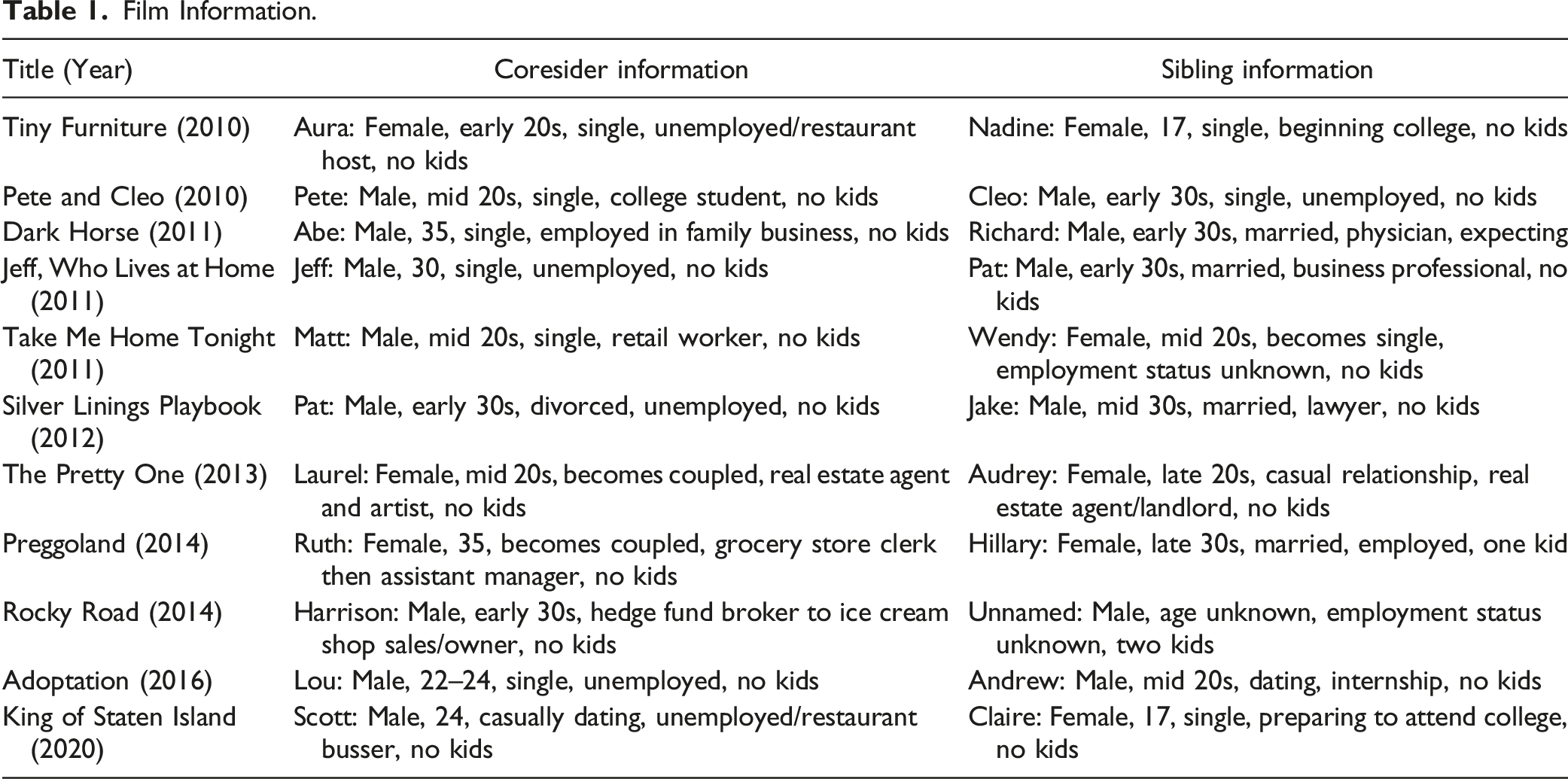
Data Analysis
We developed a coding frame by dividing the films as evenly as possible across four researchers. Each researcher developed an individual coding frame to account for depictions of adulthood and development in their assigned films. These coding frames were generated through a blend of inductive (data-driven) and deductive (concept-driven) approaches and ultimately reflect existing developmental theory and research and the team’s engagement with specific cinematic representations. This process was guided by the open coding procedure detailed by Schreier (2012). First, during the conceptualization phase, all researchers viewed their assigned films multiple times, looking for how coresiders and residentially independent peers were portrayed. They took notes on individual patterns of thinking, feeling, and behaving and how these related broadly to lay and academic conceptualizations of development, adulthood, and maturity. They paid attention to similarities and differences between coresiders and siblings within each film and amongst characters across films. Second, in the category definition step, all investigators grouped similar observations and concepts together and defined them based on their common characteristics. In this step, researchers reconsulted developmental literature to nourish emerging ideas. Last, in the category development phase, all researchers introduced structure to their coding frames through hierarchical organization and the development of mutually exclusive and exhaustive dimensions and subcategories. These dimensions and subcategories were ultimately influenced by, but not limited to, the criteria and concepts in the conceptual model.
The four coding frames involved a series of hierarchically organized dimensions and subcategories (Schreier, 2012). The research team then met several times to merge these individual frames into a single coding frame. Through this integration process, similar dimensions were consolidated, duplicate dimensions were removed, and dimension and subcategory definitions were refined by returning to film data and the developmental literature. The team then undertook trial coding to test the coding frame’s reliability. Four pilot films were selected for trial coding based on their breadth of sibling and coresider content. The first four authors took part in trial coding, and each pilot film was viewed by two different researchers. When trial coding the films, the researchers used Google Sheets displaying markers of adulthood as rows and films as columns. For each marker of adulthood, the researchers recorded whether the coresider and adult sibling characters in each film were portrayed as positively evidencing the marker (present), clearly lacking the marker (absent), or making progress towards achieving the marker (developing). Where there was insufficient evidence, the marker was categorized under insufficient data. Trial coding results were compared for intercoder consistency, and all inconsistencies (n = 7) were highlighted for group discussion and remedial action. Intercoder inconsistencies were addressed by clarifying the definitions of relevant dimensions and subcategories and adding new subcategories where needed. Two researchers subsequently divided and coded all films using the revised coding frame. In the end, only five inconsistencies emerged between coders, and all were the result of data entry errors. In total, our coding frame included four analytic dimensions.
Results
The findings of our qualitative content analysis are presented according to two analytic dimensions: social markers of adulthood and characterological markers of adulthood.
Social Markers of Adulthood
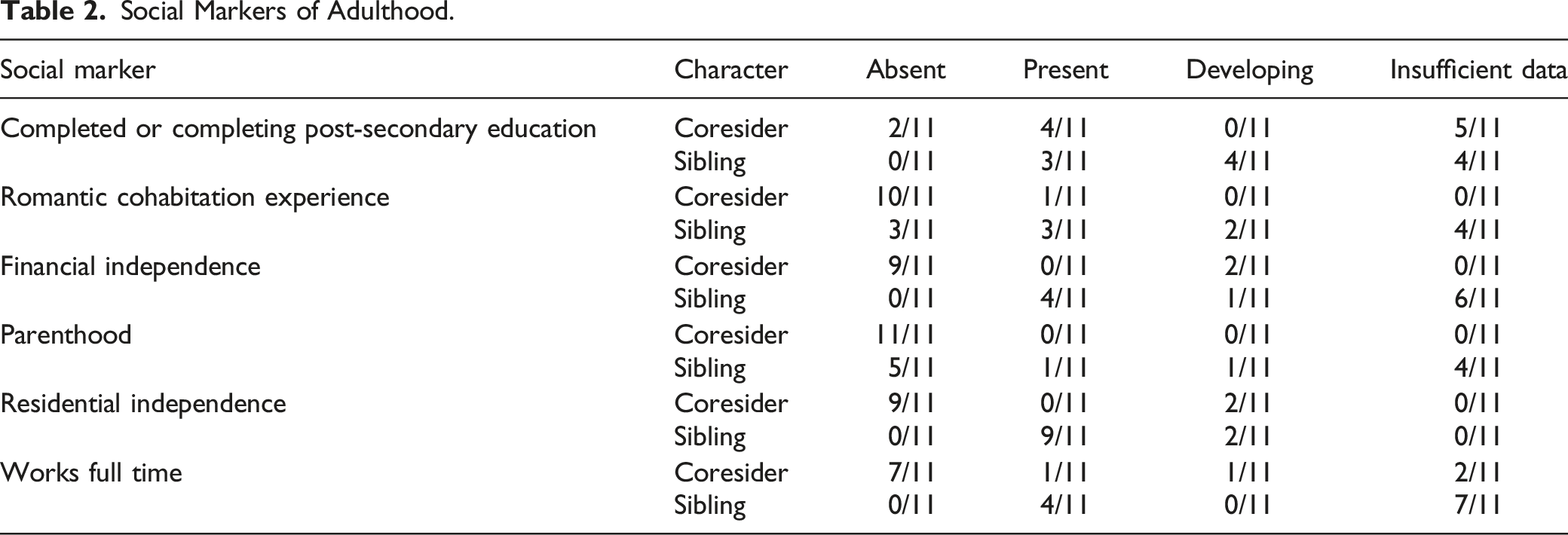
Social Markers of Adulthood.
Has Completed or is Completing Postsecondary Education
Postsecondary education included educational attainment of an apprenticeship or trades certificate or diploma, college or other recognized non-university certificate or diploma, or a university degree (Clark, 2007; Orton, 2009). In terms of the postsecondary education of coresiders, four out of 11 successfully graduated with diplomas or bachelor’s degrees, but none were employed in their area of training. For instance, Aura (Tiny Furniture) graduated with a filmmaking degree but did not pursue work in the filmmaking industry (Dunham, 2010) and Pat (Silver Linings Playbook) was a high-school teacher who lost his job following a violent incident (Russell, 2012). Abe (Dark Horse) had some college education, but dropped out without completing a degree (Solondz, 2011). Scott (King of Staten Island; Apatow, 2020) and Pete (Pete and Cleo; Hamilton, 2010) definitively did not pursue postsecondary education, not having completed high school, and the educational status of the five remaining coresiders was unclear. Thus, most coresiders were depicted as having some level of postsecondary training.
In contrast, residentially independent siblings were nearly twice as likely to be depicted as having completed (3/11) or completing (4/11) postsecondary education. As implied by their occupations, Richard (Dark Horse) completed medical school (Solondz, 2011) and Jake (Silver Linings Playbook) completed law school (Russell, 2012). Moreover, Cleo (Pete and Cleo; Hamilton, 2010) often discussed his progress towards a master’s degree and Wendy (Take Me Home Tonight; Dowse, 2011) applied to a master’s program at Cambridge after successfully completing her bachelor’s degree. Thus, although both coresiders and siblings were depicted as having achieved some postsecondary education, siblings were presented as more likely to find employment in their area of training and to achieve higher levels of education than coresiders.
Has Romantic Cohabitation Experience
This marker of adulthood was defined as being in or having previous experience with a marriage, common-law, or cohabiting romantic relationship (Clark, 2007). As per previous research, romantic or sexual relationships that did not involve cohabitation were not considered in the current analysis, as these relationships are not traditionally indicative of adulthood (they align more closely with the transient and delicate nature of adolescent romance) (Jamison & Sanner, 2021; Shulman & Connolly, 2013). Across all films, only one coresider was portrayed as having past romantic cohabitation experience and none were currently in such relationships. Pat (Silver Linings Playbook) was recently divorced, having been placed under a restraining order by his wife after assaulting her lover (Russell, 2012). Ten coresiders were depicted as having no romantic cohabitation experience, though eight were depicted as casually dating, often awkwardly. For instance, coresider Abe (Dark Horse) spent several hours waiting and sleeping outside the home of his love interest after she stood him up on their first date. When she eventually returned home, Abe stated “I know this might take you by surprise.… Miranda I want to marry you. Will you accept? Don’t say anything, just think about it!” (Solondz, 2011, 15:52). In King of Staten Island, coresider Scott had sex with his love interest and then asked if he could crash with her for a bit after being locked out of the family home by his mother, to which she replied, “Did you just fuck me for shelter?” (Apatow, 2020, 1:32:33). Such cringeworthy scenes draw on and perpetuate common stereotypes of coresiders as socially awkward, undesirable romantic partners, or perpetually single.
Three residentially independent adult siblings were clearly depicted in romantic cohabitation: Hillary (Preggoland; Tierney, 2014) and Patt (Jeff Who Lives at Home; Duplass & Duplass, 2011) were portrayed as married, and Jake (Silver Linings Playbook; Russell, 2012) was portrayed as engaged. Wendy (Take Me Home Tonight; Dowse, 2011) was depicted as progressing towards romantic cohabitation status by being in a long-term romantic relationship. One of three adult siblings who were not depicted as having romantic cohabitation experience was young enough that her single status was normative; Claire (King of Staten Island; Apatow, 2020) is aged 18 by the film’s end. The relationship status of four adult siblings was unknown. Thus, adult siblings were portrayed as more likely to have or progress towards romantic cohabitation experience than coresiders.
Is Financially and Residentially Independent
Regarding material individuation from parents, including the ability to support oneself fully financially and the successful establishment of an independent household (Arnett, 1994), all coresiders lacked residential independence by definition. In terms of finances, coresiding young adults were frequently portrayed as dependent on parents for financial support, and none of the films explicitly depicted coresiders as financially independent. For example, in Pete and Cleo, Cleo disparaged his brother for his lack of both residential and financial independence: “you are a joke, you know that? You stay home and you mooch off of mom” (Hamilton, 2010, 18:00). Throughout these works, only two coresiders progressed towards both residential and financial independence; Lou (Adoptation; Knoblauch & Matukewicz, 2016) secured employment and planned to move out, while Ruth (Preggoland; Tierney, 2014) packed her belongings into a moving van and explained her choice to move out to her father by the film’s end.
By comparison, residentially independent adult siblings were depicted as more materially individuated from parents. Nine siblings lived independently of their parents, while two had imminent plans to move out to attend college. Four out of 10 siblings were also explicitly portrayed as being financially independent of their parents. For example, Abe’s brother (Dark Horse) is a physician (Solondz, 2011), Pat’s brother (Silver Linings Playbook) is a lawyer (Russell, 2012), and Laurel’s twin, Audrey (The Pretty One) is a successful realtor who owns a house and rental property (LaMarque, 2013). Such portrayals framed coresiders as lagging in material self-sufficiency: coresiders predominantly did not achieve financial independence (despite the economic support of coresidence) while residentially independent siblings did.
Is a Parent
Parenthood is characterized by providing considerable care for at least one child within a familial, or comparable, context (Human-Hendricks & Roman, 2014). In the films, none of the coresiders were portrayed as being or wanting to become parents to children. For example, the final scene of Preggoland featured coresider Ruth mouthing the words “Fuck no” to her romantic partner when he noted that she looked pleased to be holding a child (1:45:18). Where the topic of children appeared in the films, numerous coresiding characters were also explicitly portrayed as ill-suited to care for children. Scott (King of Staten Island) tattooed an underage stranger in a park (Apatow, 2020) and Ruth (Preggoland) drunkenly hit her friend’s child in the face with a piñata stick (Tierney, 2014). Similarly, few residentially independent siblings were depicted as having children (1/11) or making concrete plans to adopt or conceive (1/11). However, though parental representations were also low amongst residentially independent siblings, only coresiders were portrayed as explicitly lacking the desirable qualities for parenthood.
Works full time
In terms of consistently working 30 hours or more per week (Clark, 2007), most coresiders were unemployed (5/11) or engaged in low-paying, part-time, entry-level positions (2/11), such as a restaurant busser (Scott in King of Staten Island; Apatow, 2020) and a video rental store salesclerk (Matt in Take Me Home Tonight; Dowse, 2011). Where coresiders were employed, they were frequently portrayed as unfit for their positions, and several lost their jobs due to incompetence, irresponsibility, or disinterest. Abe (Dark Horse) was fired from his father’s business for not doing any actual work (Solondz, 2011), Aura (Tiny Furniture) lost her position as a restaurant hostess due to recurring lateness and absences (Dunham, 2010), and Harrison (Rocky Road) was forced out of his job as a Wall Street investment banker for claiming excessive company expenses (Roberts, 2014). Only Ruth (Preggoland) is depicted as competently and responsibly working full time at a grocery store (Tierney, 2014), and Lou (Adoptation) appeared to secure future full-time employment as an insurance agent near the end of the film (Knoblauch & Matukewicz, 2016). Overall, coresiders were largely portrayed as struggling to find and maintain full-time employment given their poor work ethic and irresponsible behavior.
Most films did not explicitly portray or comment on the employment status of residentially independent adult siblings (7/11), though it was reasonable to assume that they were employed given their residential status. Where siblings were overtly depicted as working, they were in prestigious occupations (4/11). Abe’s brother in Dark Horse is a physician (Solondz, 2011), Pat’s brother in Silver Linings Playbook is a lawyer (Russell, 2012), Laurel’s twin, Audrey (The Pretty One) is a successful realtor who owns a house and rental property (LaMarque, 2013), and Jeff’s brother (Jeff, Who Lives at Home) is a successful business professional (Duplass & Duplass, 2011). These occupational pursuits sharply contrast with the unemployment or part-time, entry-level work of coresiders.
Characterological and Behavioral Markers of Adulthood
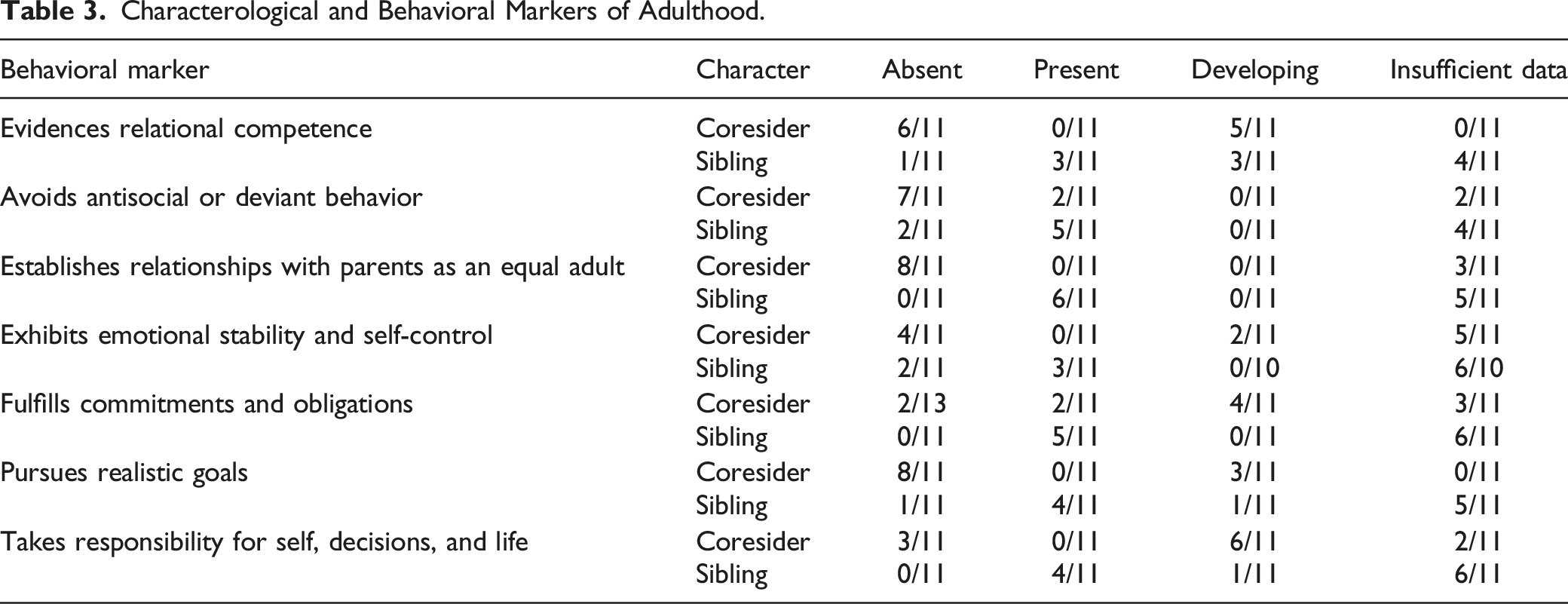
Characterological and Behavioral Markers of Adulthood.
Evidences relational competence
Relational competence is the ability to create and maintain close romantic, platonic, and familial bonds (Cashen, 2018). This concept regroups various relational abilities and tendencies of adulthood, including balancing personal needs with those of others, recognizing and addressing interpersonal conflict, expressing affection and care in intimate relationships, and evidencing dedication and commitment to sustaining close relationships (Shulman et al., 2011). About half the coresiders (6/11) clearly exhibited relational incompetence. For instance, rather than addressing feelings of resentment toward his brother around their lack of quality time together, coresider Pete (Pete and Cleo) destroyed the textbooks his brother brought on their camping excursion (Hamilton, 2010). Additionally, Ruth (Preggoland) and Lou (Adoptation) both evidenced a lack of mutuality in relationships, failing to appreciate the needs and desires of others. The former selfishly ruins the baby shower of a close friend (Tierney, 2014, 00:57) while the latter brings his seriously ill brother to a party while caring for the youth (Knoblauch & Matukewicz, 2016, 1:01:15). The remaining coresiders (5/11) were depicted as developing relational competence. For example, while Scott (King of Staten Island) initially attempts to sabotage his mother’s budding romantic relationship, he recognizes and communicates how his unresolved grief around the death of his father might be negatively impacting his family by the end of the film: “I know we don’t really talk about it much but I miss Dad. A lot.” (Apatow, 2020, 2:05.57). Laurel (The Pretty One) is portrayed as developing the ability to express care and affection throughout the film as she moves from spying on her ex-boyfriend to openly expressing a desire to rekindle their relationship (LaMarque, 2013). Thus, while all coresiders are initially portrayed as lacking relational competence, about half develop these skills during the film.
In contrast, where depictions of residentially independent siblings’ relationships were present (7/11 films), the films overwhelmingly portrayed them as possessing (3/11) or developing (3/11) relational competence. For example, Richard (Dark Horse) attempts to mediate conflict between coresiding sibling Abe and their father (Solondz, 2011) and Claire (King of Staten Island; Apatow, 2020) has close and supportive relationships with friends and family. Moreover, while Pat (Jeff, Who Lives at Home) was initially depicted as arrogant, self-involved, and insensitive to the needs and desires of others, he evidences concern and commitment to others and expresses affection and warmth by the film’s end, dramatically apologizing to his wife and risking his own life to save his brother. Only Hillary (Preggoland; Tierney, 2014) consistently evidenced relational incompetence amongst residentially independent siblings, spending much of the film engaged in combative, cruel, and manipulative behavior. Overall, when adequate evidence was present, siblings tended to exhibit more relational competence than coresiders.
Avoids Antisocial or Deviant Behavior
Most coresiding young adults (7/11) displayed antisocial or deviant behavior. Sometimes, this behavior was antagonistic and out of step with adult behavioral norms, but it did not necessarily violate the laws of society (Human-Hendricks & Roman, 2014). For instance, Lou (Adoptation; Knoblauch & Matukewicz, 2016) was shown flipping people off whilst jogging, Aura (Tiny Furniture; Dunham, 2010) frequently lied to others and consumed all her mother’s wine and food without permission, and Scott tattooed an underage stranger in a public park (King of Staten Island; Apatow, 2020). Other times, the antisocial behavior of coresiders obviously violated the laws of society (Human-Hendricks & Roman, 2014). Examples include Jeff’s illegal substance use (Jeff, Who Lives at Home; Duplass & Duplass, 2011), Matt’s car theft and destruction of others’ property (Take Me Home Tonight; Dowse, 2011), Scott’s selling of illegal substances (marijuana and stolen pharmaceuticals; King of Staten Island; Apatow, 2020), Pat’s verbal and physical assault of his wife’s boyfriend (Silver Linings Playbook; Russell, 2012), Laurel’s identity theft (The Pretty One; LaMarque, 2013), or Abe’s kissing of a woman without consent while infected with hepatitis (Dark Horse; Solondz, 2011). Only two coresiders were depicted as largely prosocial and adhering to the laws and customs of their context.
In contrast, only 2/11 residentially independent sibling characters were shown engaging in antisocial behavior. Pat (Jeff, Who Lives at Home) drove recklessly at high speeds in a busy residential area and eventually crashed his new vehicle into a tree (Duplass & Duplass, 2011), while Audrey (The Pretty One) intentionally caused conflict in her boss’s marriage and coldly evicted her tenant with little notice (LaMarque, 2013). Where sufficient data to make a decision was presented, most siblings (5/11) were depicted as prosocial, law-abiding citizens. For example, both Claire (King of Staten Island; Apatow, 2020) and Richard (Dark Horse; Solondz, 2011) actively endured their respective coresider siblings’ negative behavior while attempting to mediate family conflict. Claire provided Scott with thoughtful gifts, evidenced concern for his well-being and enquired about his mental health, encouraged him to socialize with peers by bringing him along to social events, and consistently encouraged him to pursue worthy goals. Likewise, at the behest of their mother, Abe’s brother Richard offered to loan him money, expressed understanding for the apparently challenging personality of their father, and encouraged him to finish his college degree to mitigate Abe’s conflict with their father. Both Richard and Claire disrupted or delayed their own activities and responsibilities to mediate such family conflicts.
Establishes Relationships with Parents as an Equal Adult
This marker of adulthood becomes evident through the establishment of mutual respect between young adults and their parents, as adult children come to perceive their parents as individuals with identities beyond their parental roles, balance self-needs with the needs of their parents, and reciprocate acts of care and support (Arnett, 1997; Badger et al., 2006; White et al., 1986). None of the coresiders established equal relationships with their parents. While adequate evidence was absent in three cases, the dynamic between the remaining eight coresiders and their parents resembled that of an underage child and an adult in that the coresiders were dependent on their parents and their parents acted as caretakers. For example, Jeff (Jeff, Who Lives at Home; Duplass & Duplass, 2011), Lou (Adoptation; Knoblauch & Matukewicz, 2016), Harrison (Rocky Road; Roberts, 2014), and Aura (Tiny Furniture; Dunham, 2010) all argued with their parents over contributing to simple household chores. After being asked to scoop the cat litter, for instance, Aura angrily accused her sister and mother of being unsympathetic toward the stresses of living at home and being unemployed (Dunham, 2010, 51:30). Other coresiders were coddled, overindulged, and overprotected by their parents. For example, when Abe (Dark Horse) was finally fired from his dad’s business after years of incompetence, he expressed indignation over being left to fend for himself, to which his brother responded, “Oh please, don’t be such a drama queen. You know mom and dad will never kick you out of your bedroom” (Solondz, 2011, 1:00:25). Thus, the films projected a general lack of age-appropriate relationships between coresiders and parents.
Frequently, relationships between residential independent siblings and parents were not depicted (5/11). When these relationships were portrayed, siblings established themselves as equal adults more often than coresiders (6/11). Richard (Dark Horse) and Jake (Silver Linings Playbook) reciprocate support received from parents; the former is consulted by his parents on coresider Abe’s lack of career goals and direction (Solondz, 2011), and the latter helps his father with money management (Russell, 2012). Other siblings maintained healthy boundaries with their parents. For instance, Audrey (The Pretty One) refused to enable her father’s codependency, which she saw played out in his relationship with coresider Laurel (LaMarque, 2013). The ability to engage in reciprocal support while maintaining boundaries suggested healthy, mutual relationships between adults, which contrasted with coresiders’ enmeshed or dependent–caretaker dynamic with their parents.
Exhibits Emotional Stability and Self-Control
This marker of adulthood refers to the ability to align emotions and behaviors with the standards and goals expected by society given one’s age and personal circumstances, even in the face of everyday stressors, strains, and impulses (Hennecke & Freund, 2017). Only 2/11 coresiders were depicted as developing emotional stability and self-control by learning to manage symptoms of bipolar disorder better (Pat in Silver Linings Playbook; Russell, 2012) and learning how to engage in healthy conflict and establish a stable identity (Laurel in The Pretty One; LaMarque, 2013). Other coresiders presented a low (4/11) degree of emotional stability and self-control, as evidenced by an inability to express, cope with, or regulate emotions and behavior in age-appropriate ways. For instance, Aura expressed her disapproval about a party her sister throws while their mom was out of town by impulsively walking through the party in her underwear in hopes of embarrassing her sister (Dunham, 2010). Five films lacked sufficient evidence to make a decision.
Where sufficient evidence was available, Richard (Dark Horse), Wendy (Take Me Home Tonight), and Claire (King of Staten Island) could regulate their emotions and behavior in response to their coresiding siblings’ immature or pathological behaviors. For instance, despite feeling frustrated with her coresiding brother, Claire (King of Staten Island) tried calmly to dissuade him from ruining their mom’s budding romantic relationship (Apatow, 2020, 1:14:30). On the other hand, Pat (Jeff, Who Lives at Home) and Hillary (Preggoland) could not express, cope with, or regulate their emotions or behaviors in healthy ways. For instance, coresider Ruth’s sister tried (and failed) to conceive throughout the duration of Preggoland, and showed malicious envy in response to the attention and support coresider Ruth received when faking a pregnancy (Tierney, 2014). Overall, the emotional stability and self-control or lack thereof of adult sibling characters was largely evidenced in their interactions with coresiders, with the former emerging in stark contrast to (and thus emphasizing) the coresiders’ dysregulated presentation.
Fulfills Commitments and Obligations
Only two coresiders were depicted as consistently fulfilling explicit or implied commitments and obligations to others. Pete (Pete and Cleo) fulfilled familial obligations, providing emotional and practical support to his mother and younger brother after the death of their father (Hamilton, 2010), while Harrison (Rocky Road) fulfilled his commitment to help to save his father’s ice cream truck business (Roberts, 2014). Four coresiders developed this tendency across the course of the films, as depicted through employment and caretaking responsibilities. For instance, Lou (Adoptation) progressed toward adequately meeting the obligations of caring for his younger adoptive brother, Owen, as the movie progressed (Knoblauch & Matukewicz, 2016). In contrast, Abe (Dark Horse) routinely failed to complete spreadsheets assigned to him while working for his dad’s business (Solondz, 2011) and Aura (Tiny Furniture) consistently failed to show up for shifts when working as a hostess. For the remaining three films, there was insufficient data to make a judgment on this aspect of adulthood.
Where sufficient data was available to make a judgment (5/11 films), evidence supported adult siblings’ ability to fulfil commitments and obligations to work, education, and family. For example, Jake in Silver Linings Playbook successfully built his career as a lawyer (Russell, 2012), while Claire in King of Staten Island was committed to school and consistently providing emotional support to her family (Apatow, 2020). Thus, although coresiders were sometimes depicted as fulfilling their commitments and obligations or developing these capacities, they sometimes shirked their duties, whereas the films never depicted siblings as shirking their commitments and obligations.
Pursues Realistic Goals
This subcategory encapsulated striving to achieve desired, specific, and achievable income, career, and relationship outcomes or other normative future-oriented states (Ranta et al., 2014). Most coresiders (8/11) were depicted as not pursuing realistic goals for their future. For some, this meant a lack of future aspirations (5/11). For others, it meant grandiose or poorly thought out aspirations (2/11) for which no meaningful action was taken (1/11). For instance, Scott (King of Staten Island; Apatow, 2020) aspired to open a tattoo diner, where patrons would be tattooed while dining (an idea his friends and family disparaged as unappealing, unsanitary, and unrealistic). Though Scott attempted to make some progress towards this goal through a tattoo apprenticeship, he quickly abandoned this pursuit. Conversely, three coresiders are shown as developing and working toward realistic goals, Harrison (Rocky Road), who achieves his goal of saving the family business (Roberts, 2014), Ruth (Preggoland), who earns a promotion and moves out of her father’s basement suite, and Pat (Silver Linings Playbook), who achieves a healthier mindset and lifestyle.
Where sufficient evidence was present (5/11 films), most residentially independent siblings had (4/11) or developed (1/11) realistic career, educational, or family goals and took meaningful action toward achieving these goals throughout the course of the films. For instance, Claire (King of Staten Island) and Andrew (Adoptation) were progressing toward career and educational goals by attending university and working at an internship, respectively (Apatow, 2020; Knoblauch & Matukewicz, 2016). Hillary (Preggoland) was working toward starting a family by trying to conceive and looking into adoption (Tierney, 2014). Only Pat (Jeff, Who Lives at Home) failed to set realistic goals and exert appropriate effort toward reaching them, instead spending lavishly while failing to progress in his career or develop some means of increasing his income. Thus, adult siblings were more likely to be depicted as recognizing and honoring socially sanctioned, practical, and age-appropriate courses of action, whereas coresiders were often unable or unwilling to direct their efforts towards doing the same.
Takes Responsibility for Self, Decisions, and Life
This marker referred to young adults’ ability to assume responsibility or moral accountability for their life choices and actions (for example, by accepting responsibility for and correcting their own mistakes) (Greene et al., 1992). Roughly half the coresiders (6/11) developed this capacity over the course of the films. Ruth in Preggoland made a series of bad decisions in the first half of the film, from throwing an after-hours party in the grocery store she works at to faking a pregnancy for attention. As the film progressed, Ruth took responsibility by fessing up to these decisions, acknowledging how her behavior had hurt others, and apologizing to her friends, family, and love interest/boss (Tierney, 2014). However, 3/11 coresiders failed in this regard for the whole films. For instance, Pete in Pete and Cleo blamed failing to launch on oppression by the White man and being parentified, or having to take on age-inappropriate family responsibilities, after the death of his father (Hamilton, 2010). Sufficient evidence to make a decision was absent for the two other coresiding characters.
Conversely, where sufficient evidence was present, siblings habitually took responsibility for themselves, their decisions, and their life (4/11) or progressed towards the same (1/11). For instance, Audrey moved out after her mother’s death, built a successful career, and owned her home, while by the end of Jeff, Who Lives at Home, Pat started to take responsibility for his arrogant and financially irresponsible behavior, saying to his wife: “Things have gotten way off track. And weird and shitty. And I’m a big part of that, and I’m really sorry for it” (Duplass & Duplass, 2011, 1:09:15). Sufficient evidence to make a decision was absent in six of the films. Although coresiders were mostly depicted as taking responsibility or developing the capacity to do so, they were sometimes depicted as failing in this regard throughout the whole film, whereas siblings were always depicted as taking responsibility or developing the capacity to do so. Across films, coresiders were largely depicted as having acquired or progressed towards few characterological and behavioral markers of adulthood. Ultimately, adult siblings were depicted as more on time in terms of exhibiting age-appropriate characterological and behavioral markers than coresiders.
Discussion
The present study explored the portrayal of coresiding young adults and their similarly-aged, residentially independent siblings with respect to social and characterological markers of adulthood. Across films, coresiders were largely depicted as having acquired or progressed toward few (if any) social markers of adulthood. For every social index considered, coresiders were less likely than residentially independent siblings to be portrayed as achieving adult milestones. In other words, in addition to being residentially independent, sibling characters are more likely than coresident young adults to be depicted as completed or completing schooling, having romantic cohabitation, attaining financial independence, having children, and working full time. Conversely, coresiding characters are always more likely than their siblings to lack key social markers of adulthood. The comparison is particularly stark for working full time, romantic cohabitation experience, and financial independence. In terms of characters’ development toward gaining social markers, coresiders are depicted more often as developing towards more social markers of adulthood (with moving out being the most common index). Thus, adult siblings were depicted as more on time in terms of age-appropriate social role and responsibility acquisition than coresiders.
Residentially independent siblings were also more likely than coresiders to be portrayed as achieving characterological markers of adulthood. Conversely, coresiding characters are always (i.e., for every index) more likely than their siblings to exhibit the absence of key characteristics of adulthood. This contrast is most apparent in relationship to establishing relationships with parents as an equal adult (absent for 8/11 coresiders vs. 0/11 siblings), acting toward achieving realistic goals (absent for 8/11 coresiders vs. 1/11 siblings) and avoiding antisocial or deviant behavior (absent for 7/11 of coresiders vs. 2/11 siblings). In terms of characters’ development toward gaining characterological maturity, slightly more coresiders than residentially independent siblings are depicted as developing towards these markers of adulthood (with the contrast most apparent in the takes responsibility for self, decisions, and life subcategories). Here again, adult siblings were depicted as more developmentally on time than coresiders.
In sum, the films in the present analysis portray coresident young adults as largely failing to embody adulthood as it is commonly constructed in the West (Mitchell & Lennox, 2020). Young adults who live at home are depicted as globally immature; they lack not only residential independence, but also the statuses, skills, characteristics, capacities, and desires of adulthood more broadly. In contrast, adult sibling characters are depicted as overwhelmingly developmentally on time in terms of age-appropriate roles and personal attributes. These recurring differences are all the more palpable given the shared early development context and economic, familial, social, cultural and geographic circumstances of sibling dyads. In these contrasts, residentially independent siblings serve as foil characters (i.e., a character who contrasts and thus emphasizes and underscores distinctive qualities of the protagonist [Abrams & Harpham, 2015]) who differ from coresiders in ways that highlight the distinct qualities of young adult characters who live at home.
Contrasting residentially independent and coresiding young adult characters in this manner accentuates the off-time personal and social development of coresiders. These foil characters (Smiley, 2005) work to develop the trope of the immature coresider, suggesting that this living arrangement reflects the individual qualities of coresiders, not their family dynamics or broader socioeconomic contexts. Because these characters are siblings, these matched portrayals also suggest that the residential status of coresiders are attributable to their global immaturity. They suggest that living at home—and other absent social role markers—reflects a difference between individuals, as opposed to, say, family finances or parenting approaches. The question of “if they can do it, why can’t you?” permeates many of these films. With socioeconomic and family factors held stable, audiences are primed to consider how individual differences account for the relative success and failure of young adult siblings to attain various markers of adulthood, including—but not limited to—residential independence. Such portrayals are in line with the findings of Smith et al. (2023), who pointed to the responsibilization of young adult coresiders. However, by looking at depictions of matched sibling pairs, the current work points to the comingling of ‘successful/mature’ and ‘unsuccessful/immature’ young adults within the same sociocultural, geographic, economic, and familial contexts and highlights the sense of individual responsibility and personal failure tied to coresidence within contemporary films.
Contributions and Implications
The present findings contribute to our understanding of how coresidence and coresiders are portrayed in Western mass media. We see that coresiders are framed in contemporary films as a particular kind of young person. While negative attitudes toward Millennials and Generation Z at large are common in the West (these generations are often portrayed as lazy, entitled, and narcissistic; Esposito & Raymond, 2023), coresiders are positioned in contemporary films as a particularly troubling class of young people who are failing to develop socially, psychologically, or relationally (Smith et al., 2023). As Worth (2021) noted, “stereotypes about laziness and personal failure” (p. 30) present simplistic and antagonistic views of coresidence. Unfortunately, such stigmatized representations and negative moral evaluations are both internalised and reproduced by young adults themselves (Mitchell & Lennox, 2020). Consequently, such portrayals can have implications for the wellbeing of coresiders and parents. Although further research is required to better understand the relationship between exposure to media portrayals of coresidence and individual experiences of this living arrangement, perceptions of falling behind with regard to achieving markers of adulthood has been linked with psychological distress, depression, and anxiety amongst American young adults (Culatta & Clay-Warner, 2021). As psychological distress in young adulthood can hinder educational and occupational achievement and increase the risk of substance use and violence (Patel et al., 2007), greater attention to the effect of stigmatized media portrayals on coresidence experiences and individual and familial wellbeing are warranted.
More broadly, the current analysis strongly suggests that media depictions of coresidence tend to reinforce traditional developmental norms and understandings of adulthood in the face of rapidly changing social and economic realities (Smith et al., 2023). As Tomaszczyk and Worth (2020) noted: “the prevalence of negative stereotypes about millennials as lazy, entitled and coddled in the media ignore the economic forces that contribute to young adults’ inability to transition into independent living situations” (pp. 10-11). Set against sibling foils, the characteristic immaturity and developmental atypicality of coresiding characters is highlighted, driving home stigmatized notions of personal responsibility and individual defect. Within this trope, coresidence is cast as an inevitable outcome of failed development amongst a specific group of immature young adults. At the same time, political and economic drivers of coresidence are obscured (Arundel & Ronald, 2016; Newman, 2012) and relevant social policies are spared interrogation (Chevalier, 2017). Such individuated rhetoric contradicts existing research, which validates families’ use of coresidence as a strategy to navigate economic challenges largely outside of their control, like increased competition in job markets, rising housing costs, and extended periods of higher education (Mazurik et al., 2020; Tomaszczyk & Worth, 2020). It also overlooks the important influence of social policies, programs, and processes on rates of young adult coresidence. For example, where young adults have access to affordable housing and education, coresidence rates are much lower (Arundel & Ronald, 2016). In short, the trope of the immature coresider favors individualized explanations of fault and failure over systemic explanations for coresidence and risks harming young people.
Limitations and Future Directions
The present study has several limitations. First, it included only North American films in English. This limits the generalizability of our findings, as studies have found important cultural differences in coresidence rates and attitudes across cultures (e.g., Arnett & Galambos, 2003; Britton, 2013; Tomaszczyk & Worth, 2020). Cultural differences in markers of adulthood have also been noted, suggesting that the conceptual model of adulthood used here could have limited applicability to other cultural settings (Arnett & Galambos, 2003). Second, as we examined films from 2010–2020, we cannot comment on possible shifts in portrayals of coresidence following the COVID-19 pandemic (Kajta et al., 2022). Third, our analysis cannot speak to how media representations influence the experience or evaluation of coresidence. Although media representations can have a profound impact on how individuals and groups make sense of the world, it is not the only influence and individuals variously internalize or challenge received messages according to their subjectivity and positionality (Reeves et al., 2016; Giles & Shaw, 2009). In other projects, we are working to better understand such audience effects and the experiences and attitudes of individuals, families, and the public with respect to coresidence more broadly.
Given that coresidence rates and attitudes vary across cultures, future research should attend to film depictions of young adult coresidence in other cultural settings and with reference to local developmental criteria. Such analyses and comparisons across contexts would provide a clearer understanding of how this living situation is portrayed in popular mass media around the globe. Future research might also examine portrayals of coresidence that have emerged since the COVID-19 pandemic to see if this event and the resulting forced displacement of many young persons back into the family home (Lei & South, 2023) has occasioned a shift in media representations. In addition, continued critical commentary around stigmatized representations of coresidence and its impact on the public is needed. In particular, research must begin to investigate the reception and consumption of such media portrayals, particularly by coresiding young adults and family members. How does exposure to stigmatized portrayals of coresidence shape attitudes toward coresidence and influence the wellbeing of young adult coresiders and their families via internalized stigma, social conflict, or other means? Attention should also be paid to how parents of coresiding young adult children evaluate the developmental status of their own coresiding and residentially independent children. Finally, interviewing other family members, like residentially independent siblings of coresiders, can also help us better understand embodied attitudes towards this living arrangement.
Footnotes
Declaration of Conflicting Interests
The author(s) declared no potential conflicts of interest with respect to the research, authorship, and/or publication of this article.
Funding
The author(s) received no financial support for the research, authorship, and/or publication of this article.
Transparency and Openness Statement
Raw data associated with this study are not available for open download (all films are copyright protected materials). Coding manuals and materials used in this study are not available for open download. No aspects of this study were pre-registered.
