



Abstract
Cumulative transitions in diverse life domains during emerging adulthood appear to promote both problems and fulfillment. This study aimed to shed light on the coexistence of these contradictory observations by examining the associations between cumulative transitions in four life domains (education, work, romantic, and residential) and adjustment problems (depressive symptoms and problematic alcohol use) and well-being. Participants (n = 255; 62 % women) were assessed annually between ages 18 to 25. Results of regression analyses partially confirmed both perspectives: cumulative transitions in the four life domains combined were curvilinearly associated with depressive symptoms (i.e., too few and too many transitions were associated with higher symptoms) and linearly and positively associated with well-being. Domain-specific effects were also observed. These results paint a more nuanced picture of how transitions are associated with adjustment in emerging adults, revealing how under- and over-exploration of the life domains predict individual adjustment.
Introduction
The transition to adulthood is a period marked with instability as emerging adults navigate numerous social role transitions associated with the education, work, romantic, and residential domains (Osgood et al., 2005). On the one hand, continuous changes appear detrimental for some individuals (Luyckx et al., 2011; Schulenberg et al., 2005). On the other hand, the literature reports life transitions may have several beneficial effects (Shulman, 2017). Thus, the turbulent whirlwinds that propel the journey to adulthood appear to have contradictory effects on mental health and well-being. This longitudinal study attempts to resolve this conflict by examining how cumulative transitions in diverse life domains during emerging adulthood are associated with well-being and with two frequently observed issues during this period: depressive symptoms and problematic alcohol use.
Adjustment Problems Associated With Instability During Emerging Adulthood
In industrialized countries affected by recent socio-economic changes, 18-to 25-year-olds are immersed in a unique developmental context, where decision-making and role-taking related to adulthood are postponed, and exploration and experimentation are favoured (Arnett, 2000; Wood et al., 2018). As a result, emerging adults are likely to experience multiple transitions resulting from movements in and out of different social roles associated with education, work, romantic relationships, and residential status (Patrick et al., 2018, 2020). Although some emerging adults have all the resources they need to find their path through the twists and turns, others seem susceptible to experiencing difficulties adjusting to the instability that typifies this period (Baggio et al., 2017; Schulenberg et al., 2005).
Emerging adulthood is the developmental period marked with the highest prevalence of various mental health disorders (SAMSHA, 2020), among which are the onset of depressive symptoms and problematic alcohol use of significant concern (Esmaeelzadeh et al., 2018; Jun et al., 2019). Depressive symptoms can lead to the development of mood disorders, as well as suicidal ideation (Hill et al., 2014). In addition, problematic alcohol use is likely to lead to an increase in risky behaviour, a reduction in well-being, and compromise socio-professional success (Bamberger et al., 2018). From among the many factors (i.e., genetic, psychosocial, environmental) that could contribute to these difficulties in emerging adulthood (Thapar et al., 2022), this study proposes that particular attention be paid to the instability experienced as a result of the many changes in the different life domains (Mushquash et al., 2013).
Transitions in Social Roles and Mental Health
Since transitions lead emerging adults to face new situations for which they have little experience (Melchior et al., 2007), they are a source of stress and can lead to difficulties related to alcohol use and depressive symptomatology (American College Health Association, 2014). The Overload Model developed by Schulenberg and Maggs (2002) suggests that if their adaptive capacities are overloaded, emerging adults may experience decreased well-being and resort to alcohol use to compensate for the stress that accompanies the occurrence of too many simultaneous transitions (Kuntsche et al., 2005; Patrick et al., 2018).
Although emerging adults may simultaneously experience many changes of trajectory across different life domains, studies to date have mainly focused on indicators of a sanctioned static social role (i.e., being married, being a university student) occurring within the same domain (Patrick et al., 2018). For example, entering college and leaving school are linked to an increase in problem drinking (Riordan et al., 2015). Moreover, multiple job changes are associated with greater alcohol use (Patrick et al., 2018), while joblessness is linked to an increase in depressive symptoms (Mossakowski, 2009). In terms of romantic relationships, romantic stability is associated with a reduction in alcohol use and mental health problems (Bachman et al., 2014), whereas casual dating and the beginning and end of relationships are associated with an increase in alcohol use and depressive symptoms (Salvatore et al., 2014). Finally, regarding residential status, a substantial increase in alcohol use is linked to moving out of the family home and living in shared accommodation (Bachman et al., 2013).
Accumulated Number of Transitions Across Domains
To this day, few longitudinal studies have examined the impact of instability experienced over long periods on emerging adults’ adjustment. The results indicate that the frequency of transitions in multiple domains is linked to an increase in psychological distress (Segrin et al., 2017) and drug and alcohol use (Cadigan et al., 2021; Patrick et al., 2020). According to Patrick et al. (2020), it seems that while the majority of emerging adults manage to adapt to the instability typical of this period, a certain threshold may exist where too many changes lead to more marked consequences for mental health and alcohol use.
The studies referred to above help us gain a better understanding of how the instability caused by the many changes in emerging adults’ lives affect their mental health. However, these studies have used time frames of one to two years at most, making it impossible to ascertain the long-term impact of greater or lesser degrees of instability experienced up to the mid-twenties. As emerging adults generally do not become entrenched in the roles and statuses associated with adulthood (i.e., completion of education, the start of a professional career, stabilization of romantic relationships, parenthood, etc.) until their mid-twenties (Tanner & Arnett, 2016), it would be worthwhile to get a better picture of how the instability typically experienced between the ages of 18 and 25 is associated with their trajectory.
Transitions as Opportunities for Change and Future Development
Nonetheless, some studies indicate that emerging adulthood represents a unique window for positive development, at least for most individuals (Padilla-Walker & Nelson, 2017). Exploring roles and lifestyles can facilitate the passage to adulthood by fostering optimal identity development and setting specific life goals (Arnett, 2023). In addition, the abundance of lifestyle choices provides opportunities for redirecting future plans (Arnett, 2015), which could provide the freedom to depart from a path fraught with difficulties and embark on a more positive direction (Magolda & Taylor, 2016).
Therefore, the role fluctuations associated with the progress toward adulthood may not be a sign of confusion or aimlessness (Shulman, 2017). For instance, some emerging adults decide to rethink their career choices after entering a profession that is out of tune with their aspirations. Similarly, explorations of romantic relationships may encourage individuals to leave a relationship that has become dysfunctional (Shulman & Connolly, 2013).
Emerging adults also experience transitions when they let go of goals that turn out to be unrealistic. Dropping one’s plans and rethinking one’s direction can be considered more adaptive than the stubborn pursuit of an original goal (Shulman, 2017). Thus, disengaging from an unattainable goal to pursue alternatives is a strategy to improve well-being and promote mastery development (Heckhausen et al., 2010). Conversely, persistence can increase stress in the case of failures or ongoing problems (Wrosch et al., 2013).
To Better Understand the Coexistence of the Two Perspectives
The above-cited studies support two seemingly contradictory perspectives: instability has both positive and negative effects on the development of emerging adults. One possible avenue to reconcile these two perspectives is to consider the associations between transitions and adjustment in emerging adults as curvilinear rather than linear. More specifically, too many transitions could bring problems, while conversely, too few transitions could result in stagnation and apathy. Therefore, a moderate number of transitions would be ideal for achieving maximum fulfillment. This proposal is consistent with the idea that instability may impact emerging adults differently depending on their threshold (Patrick et al., 2020). It is also in accordance with activation theory (Scott, 1966) and motivational flow theory (Csikszentmihalyi et al., 2005), which respectively propose that stress, whether high or low, is dysfunctional and that optimal challenges inspire individuals to perform at maximum capacity.
Moreover, given the feasibility of the two perspectives (chaotic instability leads to more serious problems, whereas exploration facilitates optimal development) and given that studies have limited their scope to adjustment problems associated with cumulative transitions, it should also be determined whether the same phenomenon could enable the attainment of a level of well-being indicative of positive and thriving mental health.
The accumulation of changes is a typical phenomenon of emerging adulthood and remains understudied (Cadigan et al., 2021). There is a need for a deeper understanding of how the frequent shifts between appropriating and relinquishing the roles associated with different domains of life are related to the adjustment of emerging adults and, consequently, what constitutes a more or less desirable level of exploration during the 18–25 age period (Wood et al., 2018).
The Present Study
This study examines cumulative transitions during emerging adulthood in four life domains that are typically more impacted by instability (i.e., education, work, romantic, and residential) in relation to depressive symptoms problematic alcohol use, and well-being. The main objective was to determine whether cumulative transitions in these life domains would be linearly or curvilinearly associated with adjustment problems (depressive symptoms and problematic alcohol use) and well-being reported at age 25.
A second exploratory objective was to examine these associations while considering the number of transitions in the individual domains. The aim was to determine the unique contribution of transitions in each domain to adjustment problems and well-being. The number of transitions experienced in each domain was measured prospectively using data collected annually from ages 18 to 25. The cumulative number of transitions was operationalized as a cumulative score based on all the transitions in the four life domains from ages 18 to 25.
Given the viability of the two perspectives (a negative and a positive effect of transitions on adjustment in emerging adulthood), we tested them within a strong inference framework (Platt, 1964). This enabled opposing two concurrent hypotheses to explain the same phenomenon. We proposed the following concurrent hypotheses: (H1) a positive linear or curvilinear association will be observed between the number of reported transitions (cumulatively and separately per domain) and the two indicators of adjustment problems; and (H2) a positive linear or curvilinear association will be observed between the number of reported transitions (cumulatively and separately per domain) and well-being. These hypotheses were tested, controlling for family demographics (parental level of education, parental income, family structure) because of these factors are associated with adjustment problems and well-being in emerging adulthood (Guo, 2019; Patrick et al., 2012).
Method
Participants
The participants were taken from a longitudinal study initiated with 390 sixth-grade students (58% girls; mean age 12.38 years; SD = 0.42) recruited from 12 schools in a large school board in the greater Montreal area (Province of Quebec, Canada). The majority of participants were Caucasian (about 3% Black, 1% Asian, 3% Latino, and 3% Arab) and spoke French. The average gross family income ranged from CAD $45,000 to 55,000, which is comparable to the provincial mean income at that time ($49,700) according to government data. Most participants were born in Canada (90%) and they were all French-speaking. At the beginning of the study, most lived with both biological parents (72%). Most of the parents had a high school diploma (64.9%) and more than a third had completed college (33.60%).
The participants completed several follow-up assessments. The data used for the present study were gathered annually over eight years from ages 18 to 25. During that period, some participants left the study, and some of them returned to the study later. Overall, 69% of the initial sample participated in all of the eight data collections, 8.7% in seven, 3.3% in six, 3.8% in five, 2.8% in four, 1% in three, 3.1% in two, and 8.2% in one.
To treat missing data and because each transition in a given domain was considered as a nominal variable that could not be estimated (e.g., the name of a romantic partner, see the Measures section), participants were included in the analysis if their data were available at time one (18 years) and eight (25 years), and for at least five of the eight measurement times. The retained participants (n = 255; 62 % women) differed from non-retained participants (n = 135; 51 % women) in terms of gender (χ2(1) = 4.27, p = .039, φ = −.10). Moreover, they differed on family structure at study start (χ2(1) = 23.66, p < .001, φ = .25); the proportion of retained participants who lived with both biological parents (77.6%) was higher than for non-retained (53.7%). They did not differ in terms of parent’s level of education (t (304) = 0.35, p = .725, d = 0.05)), nor in terms of parental income (t (302) = −0.15, p = .881, d = −.02)).
Procedures
Research assistants administered paper and pencil questionnaires at the participants’ homes at ages 18, 19, 20, 21, 22, and 25. At ages 23 and 24, research assistants gathered participants’ data from structured phone interviews. Participants gave their written informed consent and received financial compensation each year. This study obtained ethical approval from the research ethics committee of the authors’ university.
Measures
Transitions From 18 to 25 Years
The number of transitions was calculated from the responses to sociodemographic questionnaires administered annually from ages 18 to 25. Drawing on the studies that used cumulative measures of transitions based on the Overload Model (i.e., Patrick et al., 2018, 2020; Cadigan et al., 2021), the questionnaires addressed transitions that could cause stress in emerging adults. The items covered education, work, romantic relationships, and residential transitions.
The Education Domain
Each year, participants indicated (a) whether they were attending an educational institution (yes/no) and (b) if yes, their study program and level. A transition from one year to the next was counted for a different program from the previous year, a change in education level (e.g., from college to university), or a switch from student to non-student status or vice-versa. The total number of transitions could vary from zero to 7.
The Work Domain
Each year, participants indicated (a) whether they had a paid job (yes/no) and (b) if yes, what kind of job. A transition from one year to the next was counted as a job change from the previous year or a switch from employed to unemployed status or vice-versa. A transition was also counted for a change in professional status (e.g., promotion from clerk to manager by the same employer). The total number of transitions could vary from zero to 7.
The Romantic Domain
Each year, participants indicated (a) whether they were currently part of a couple (yes/no) and (b) if yes, the name of their current romantic partner. A transition was counted for a change in romantic status from the previous year (e.g., from being in a couple to single) or a change in the name of the romantic partner from the previous year. The total number of transitions could vary from zero to 7 (zero for no change in romantic status or partner from ages 18 to 25; 7 for a change in status or partner each year).
The Residential Domain
Each year, participants indicated whether they lived (a) alone, (b) with their parents or other family member(s), (c) with a roommate or roommates, or (d) with a romantic partner. A transition was counted for a change in residential status from the previous year. The total number of transitions could vary from zero to 7 (zero for no change in status from ages 18 to 25; 7 for a change in status each year).
Cumulative Transitions
A cumulative transition score was obtained by adding the number of transitions in the four life domains. This score could vary from zero to 28.
Depressive Symptoms at Age 25
Depressive symptoms were assessed using the subscale of the Symptom Checklist-90-Revised (SCL-90-R; Derogatis et al., 1973). It contains 13 items (e.g., “Feeling no interest in things”). Participants indicated the extent to which they had experienced each item in the last week on a Likert scale from zero (not at all) to 4 (extremely). A score was calculated using the mean scores for all items. The SCL-90-R has adequate psychometric properties (Derogatis, 1983) and satisfactory internal consistency (α = .87).
Problematic Alcohol Use at Age 25
A questionnaire developed by Poulin and Denault (2012) was used to measure problematic alcohol use. Participants responded (yes/no) to 19 items addressing alcohol-related problems. The items cover intoxication levels, dependency, and harmful consequences. Sample items are: “Have you ever been drunk in public?”; “Did you ever lose consciousness after consuming alcohol?”; and “Have you ever tried to stop drinking and failed?” Positive responses (yes) were added to obtain a global score. Higher scores indicated more problematic alcohol use.
Well-Being at Age 25
The Orientations to Happiness Questionnaire (Peterson et al., 2005) was used to measure hedonic and eudaimonic happiness. Participants rated nine items on a 5-point Likert scale from 1 (very much unlike me) to 5 (very much like me). Sample items are: “My life has a lasting meaning,” “In choosing what to do, I always take into account whether it will benefit other people,” and “Life is too short to postpone the pleasures it can provide.” A mean score was calculated from the item scores (α = .73).
Control Variables at Age 18
Depressive symptoms were measured using the Center for Epidemiologic Studies Depression Scale (CES-D; Radloff, 1977). Participants indicated the frequency of certain behaviours, thoughts, and feelings in the previous week. The scale contains 20 items, for example, “I felt that everything that I did was an effort” and “I felt sad.” Responses were rated on a Likert scale from zero (rarely or none of the time: less than one day) to 4 (most of the time: 5–7 days). The item scores were added to obtain a global score (α = .91).
Problematic alcohol use was measured using a short version (6 items) of Poulin and Denault’s (2012) questionnaire.
Well-being was operationalized by self-esteem. Studies showed that self-esteem is highly correlated with happiness (Baumeister et al., 2003; Lyubomirsky & Lepper, 1999). It was measured using the five-item self-esteem subscale of the validated French version of the Self-Perception Profile for Adolescents (Bouffard et al., 2002; Harter, 1985). The items are organized into pairs of statements that distinguish two types of adolescents relative to self-esteem. First, the participant chooses the type that most closely resembles them (statements on the left or right: e.g., “I am proud of the person I am” or “There are many things I would like to change about myself”). Then, they must indicate whether the statement is entirely or only somewhat like them. Responses to the items are scored on a four-point scale (1 = lowest perceived self-esteem to 4 = highest perceived self-esteem). A high score indicates higher self-esteem. The instrument’s internal consistency was very good (α = .84).
Demographic information includes the participant’s gender, coded zero for a woman and 1 for a man. Family income was reported on a 9-point scale (1 = less than CDN $20,000 to 9 = more than $100,000). Furthermore, the parent’s level of education was obtained by averaging the father and mother’s highest level of education completed. Responses ranged on a 12-point scale ranging from uncompleted high school to postdoctoral diploma. Family structure was coded “0” for non-intact families and “1” for intact families. A family was considered intact when youths lived with both biological parents.
Data Analysis Strategy
In line with the study’s main objective, to examine whether a linear or curvilinear association would be observed between the cumulative number of reported transitions and adjustment problems or well-being, three series of multiple hierarchical regression analyses were conducted, one for each dependent variable at age 25 (depressive symptoms, problematic alcohol use, and well-being). In the first step, gender, parental level of education, parental income, family structure, and the corresponding variable at age 18 were introduced as control variables (self-esteem at age 18 was used as a control variable for well-being; Model 1). The cumulative transition score was included in the second step to determine the linear effect (Model 2). In the third step, the cumulative score squared was included to test whether a curvilinear association would be more appropriate (Model 3).
For the second objective, the abovementioned analyses were repeated while replacing the cumulative transition score with the transition scores for the four individual domains (education, work, romantic, and residential). The scores were included simultaneously in a single regression.
Results
Preliminary and Descriptive Analyses
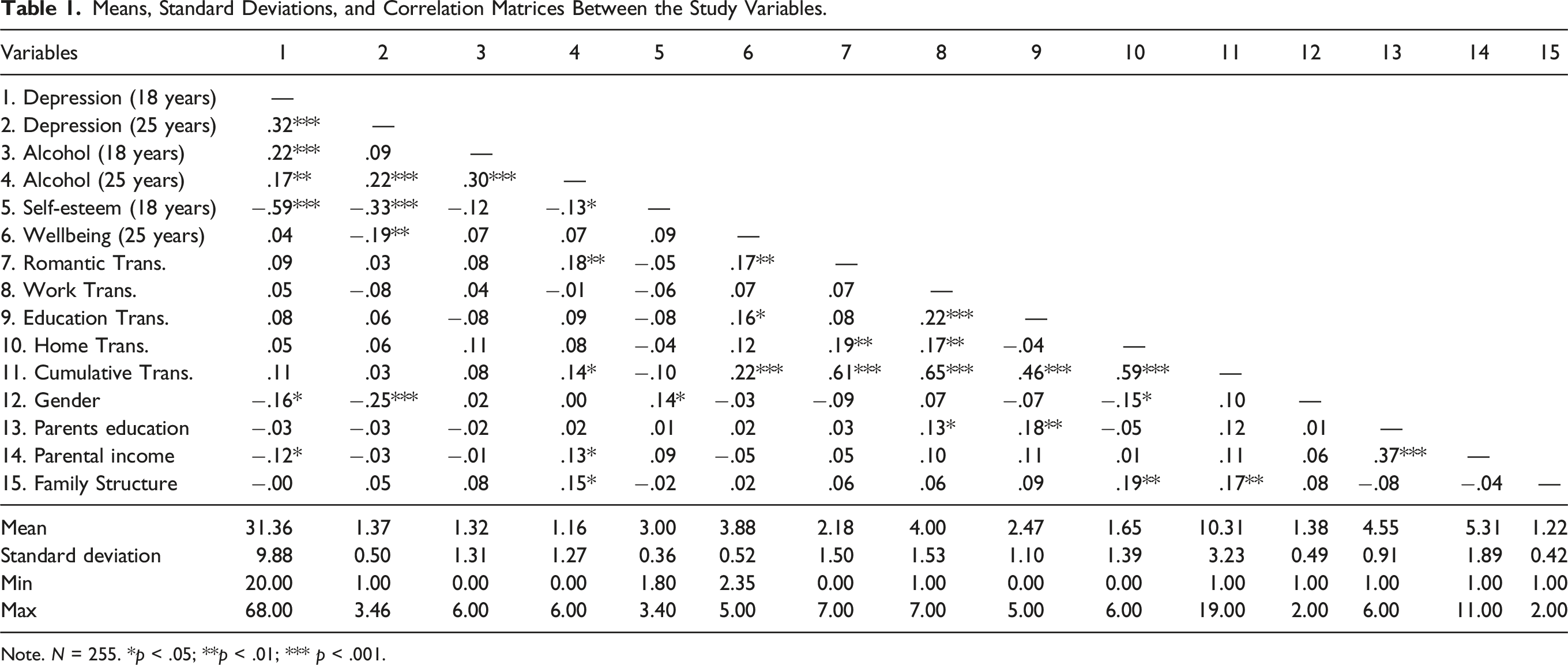
The data were analyzed for normal distribution and the presence of extreme values. Because depressive symptoms (ages 18–25) showed positive skewness and extreme data, logarithmic transformation was performed (Tabachnick et al., 2013). For depressive symptoms at age 18, skewness prior log transformation was 1.33, and kurtosis was 1.44, while skewness of the transformed variable was 0.73 and kurtosis was −0.16. For depressive symptoms at age 25, the prior log transformation skewness was 1.91 and kurtosis 3.71, while post transformation skewness was 1.21 and kurtosis 3.72. In both cases, the log transformation sufficiently improved skewness and kurtosis values. The results of the regression analyses were back-transformed prior to producing plots.
Means, Standard Deviations, and Correlation Matrices Between the Study Variables.
Note. N = 255. *p < .05; **p < .01; *** p < .001.
Linear and Curvilinear Effects of Cumulative Transitions
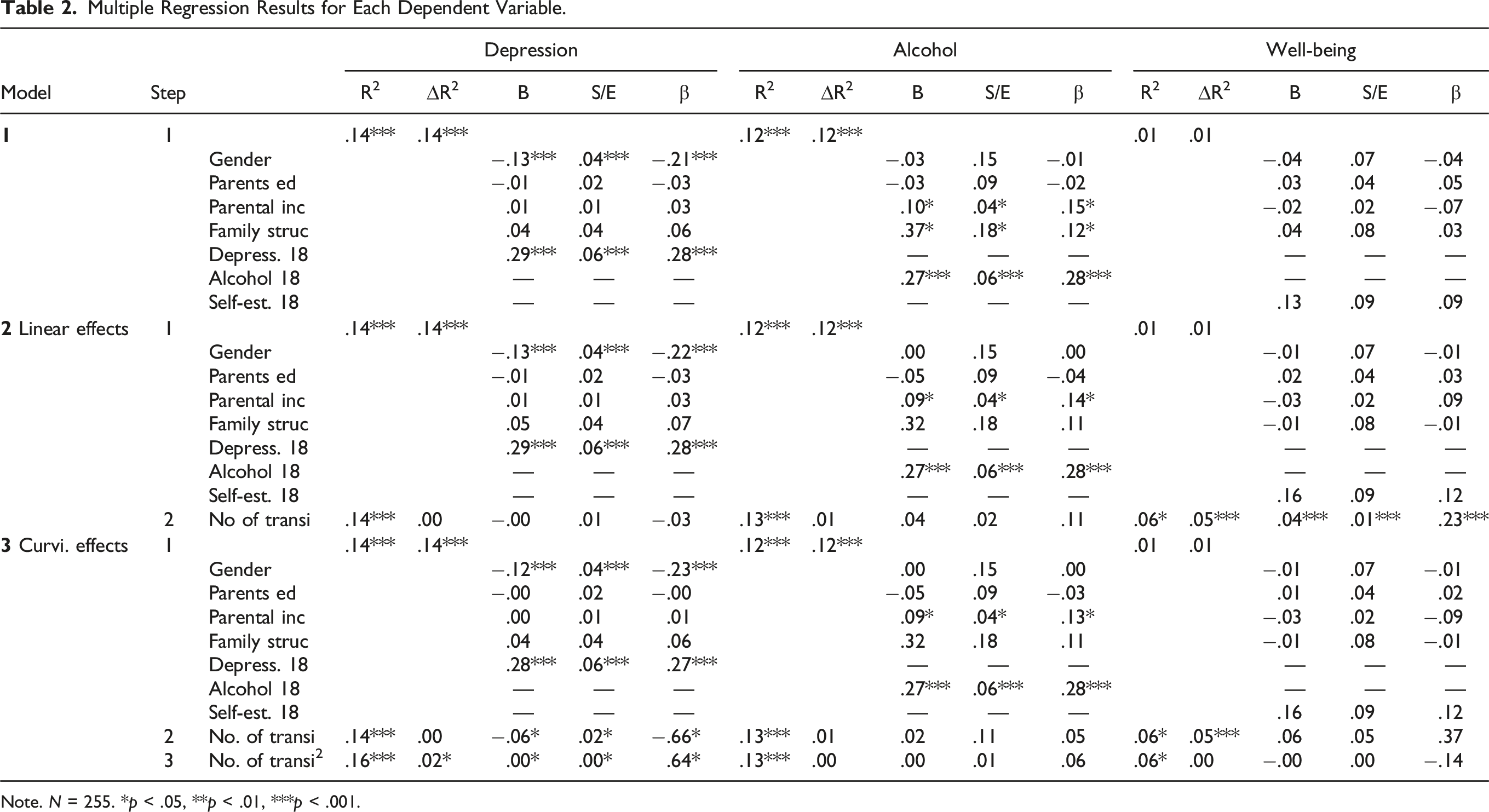
Multiple Regression Results for Each Dependent Variable.
Note. N = 255. *p < .05, **p < .01, ***p < .001.
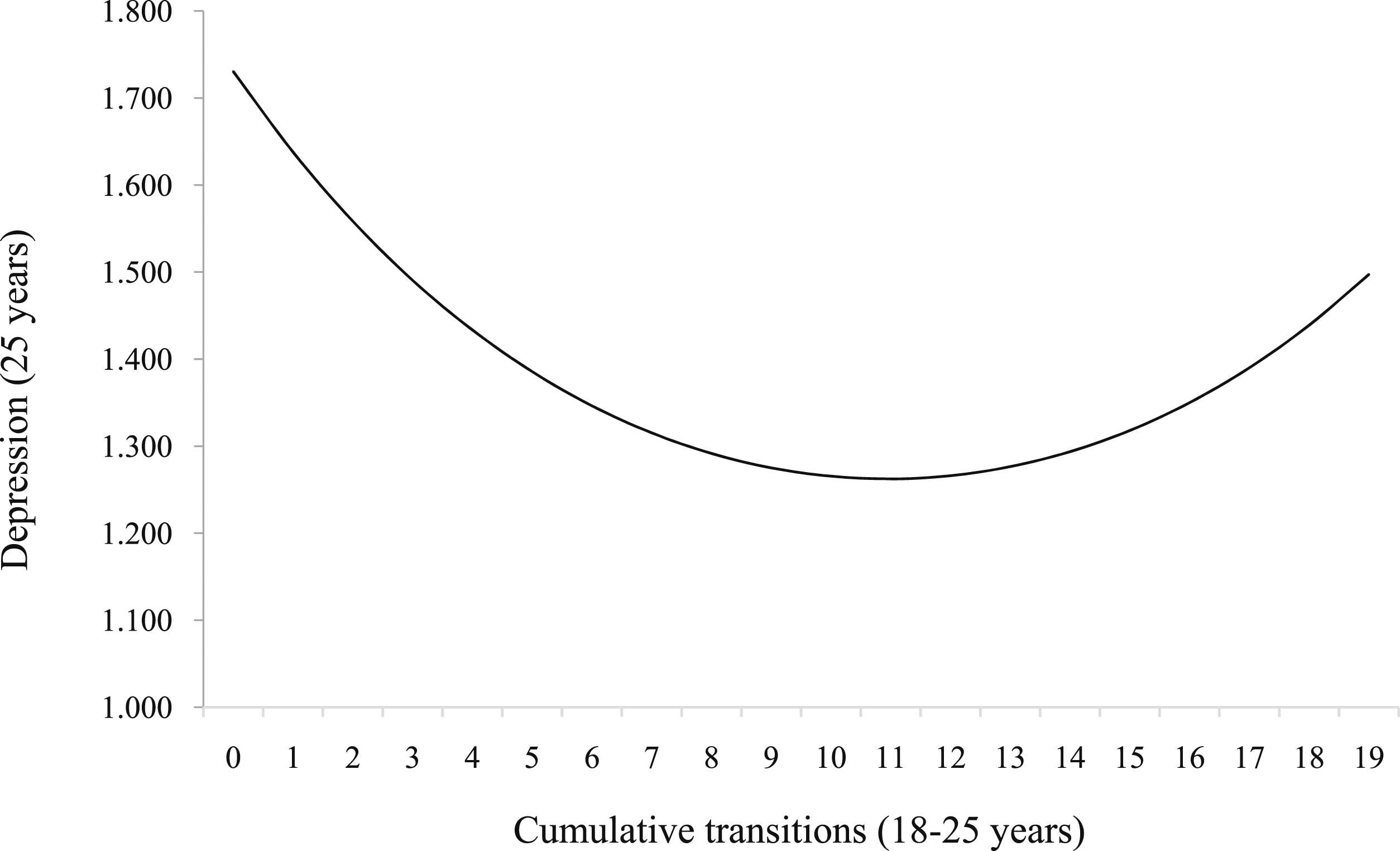
Curvilinear effect of Cumulative transitions from 18 to 25 years on Depression.
For problematic alcohol use at age 25, the variables in Step 1 account for a significant 11.70 % of the variance. Including the number of transitions and the number of transitions squared does not account for any further variance.
For well-being at age 25, the variables in Step 1 do not account for any significant variance. When the number of transitions is included, they account for 4.90 % of the variance. A positive linear relationship between cumulative transitions and well-being at age 25 (β = .23: small to medium effect size) is observed. Thus, a higher number of transitions is linked to increased well-being. Finally, including the number of transitions squared does not account for any additional variance.
Linear and Curvilinear Effects of Transitions in Individual Life Domains
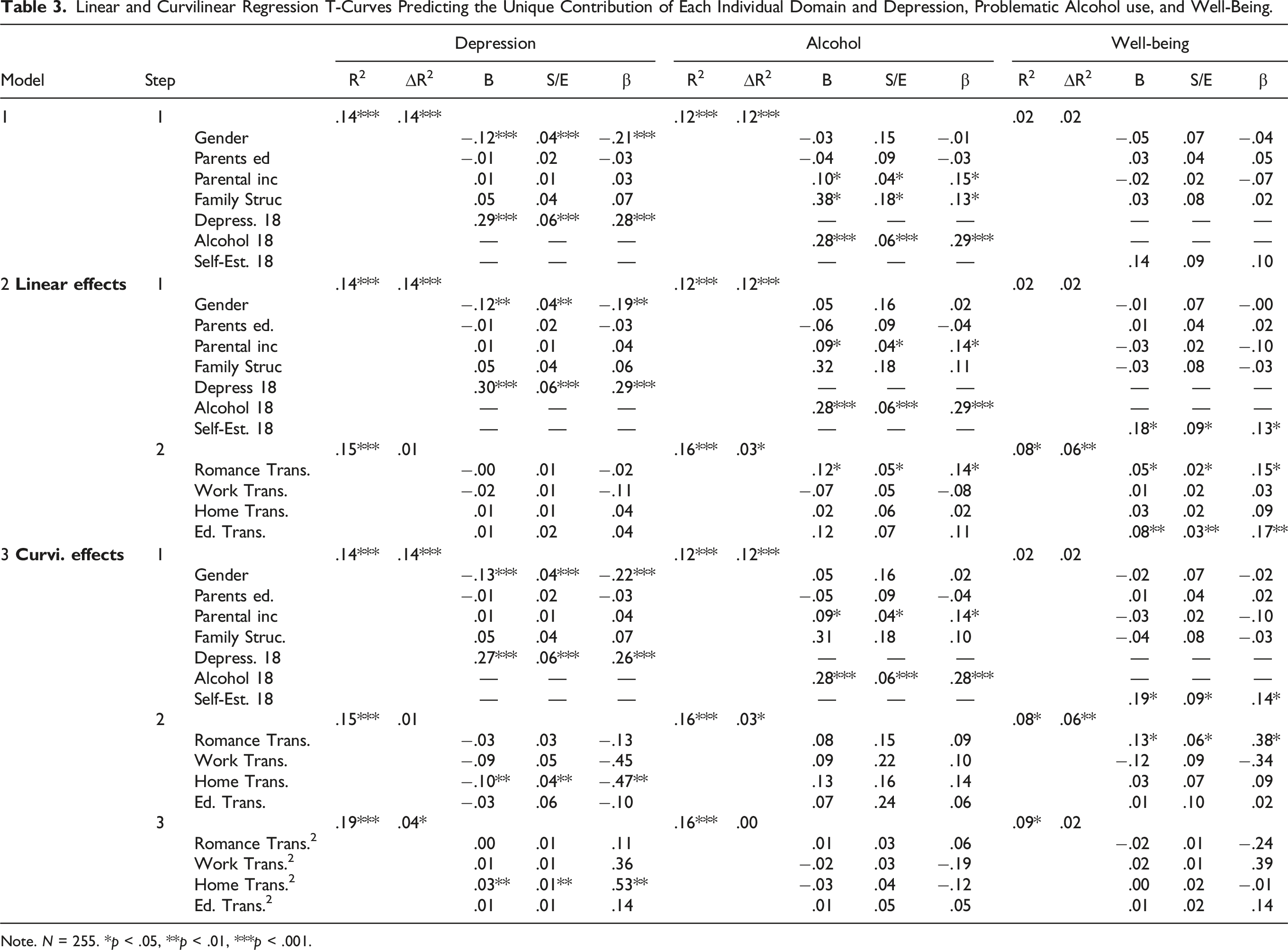
Linear and Curvilinear Regression T-Curves Predicting the Unique Contribution of Each Individual Domain and Depression, Problematic Alcohol use, and Well-Being.
Note. N = 255. *p < .05, **p < .01, ***p < .001.
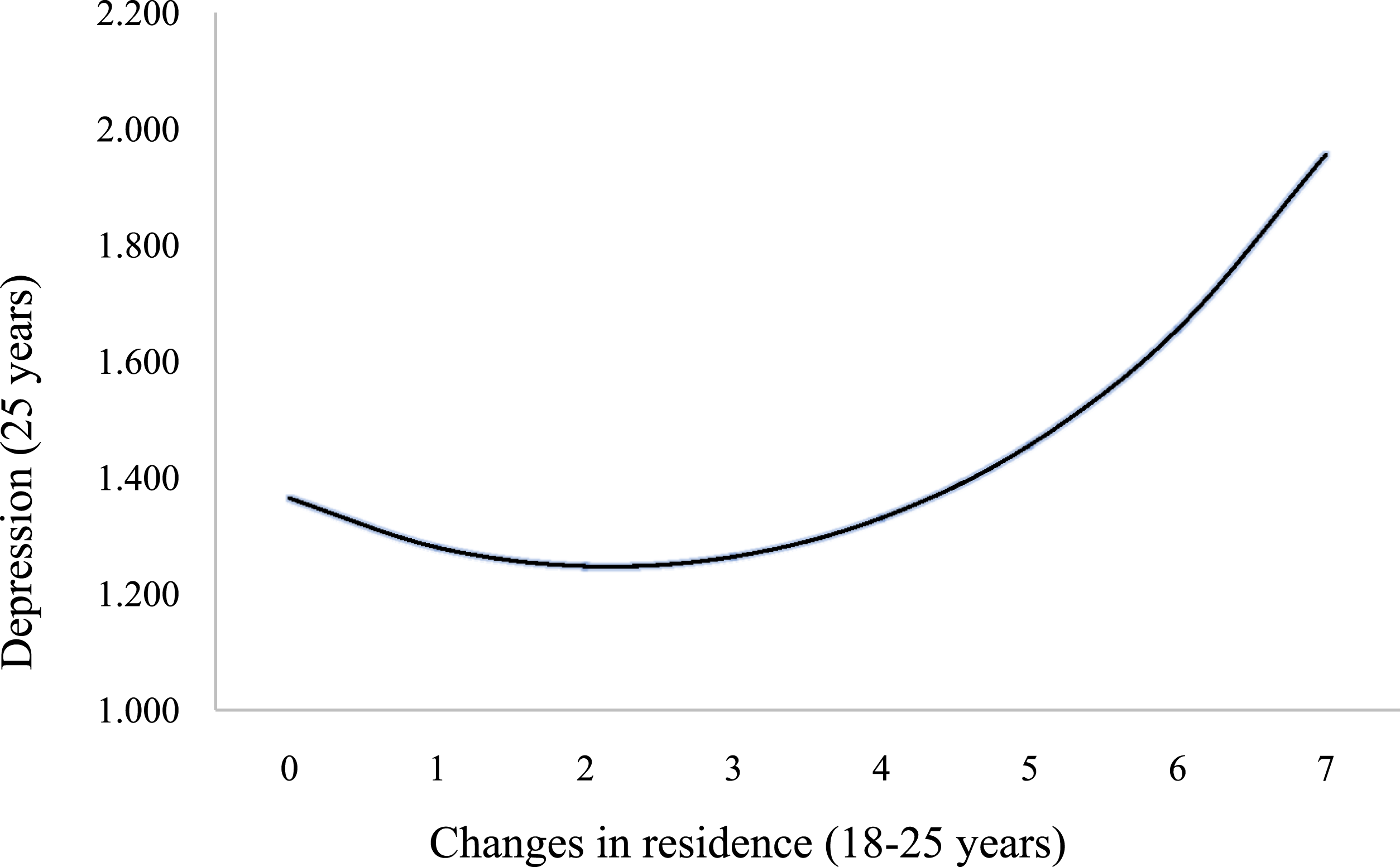
Curvilinear effect of Changes in residence on Depression.
When the control variables are considered for problematic alcohol use, including the number of transitions in each domain, they account for a significant 3.40 % additional variance. Specifically, the number of transitions in romantic relationships is positively related to problematic alcohol use at age 25 (β = .14: small effect size). Finally, including the number of transitions squared does not account for any additional variance.
When the control variables are considered for well-being, including the number of transitions for each domain, they account for a significant 6.40% additional variance. Specifically, the number of transitions in romantic relationships (β = .15: small effect size) and education (β = .17: small effect size) are linked to higher well-being at age 25. Finally, including the number of transitions squared does not account for any additional variance.
Discussion
In the research on emerging adulthood, life transitions have contradictory implications for mental health: they are associated with both adjustment problems and opportunities for fulfillment. This study aimed to resolve this conflict by opposing two concurrent hypotheses (H1 vs. H2) to better understand the coexistence of these two perspectives. The regression analysis results partially confirm both hypotheses: cumulative changes reported from ages 18 to 25 are curvilinearly related to depressive symptoms and linearly to well-being. Moreover, changes in each life domain have different effects on adjustment in emerging adults. We discuss the implications of these findings next.
Adjustment Problems in Relation to Changes (Results Confirming H1)
In line with the main objective, cumulative transitions are associated with depressive symptoms in emerging adulthood, and the association is curvilinear. Specifically, cumulative transitions appear to lead to higher levels of depressive symptoms in individuals situated at the extremes of the continuum (0–28): they experience either few (0–3) or many (17 and +) changes. Thus, individuals who went through a moderate number (4–17) of changes in different life domains did not report significant depression-related problems. These results point to an ideal window of exploration whereby individuals can avoid the negative effects of stagnation and the instability of too many changes.
Emerging adults who experience too few changes may feel disconnected or uninvolved during the transition to adulthood. They may be unable to seize opportunities to explore and reinvent themselves. Furthermore, this inertia could result in a lack of challenges, which could allow boredom and apathy to breed, leading, in turn, to depression. Inversely, emerging adults who must deal with too many transitions could be overwhelmed with adjustment problems that feel insurmountable. Our results are in line with activation theory (Scott, 1966) and motivational flow theory (Csikszentmihalyi et al., 2005), which respectively propose that stress, whether high or low, is dysfunctional and that optimal challenges inspire individuals to perform at maximum capacity. Thus, at the two extremes, it appears that emerging adults may feel either bored or overwhelmed. In contrast, those who adopt a balanced exploratory approach to life can avoid the consequences of excessive disengagement and instability.
For the second objective, examining the number of transitions in individual life domains reveals that only changes in residence wield a specific impact on depressive symptoms in a curvilinear manner. Thus, both few (0–1) and many (5–7) changes of residence are related to higher levels of depressive symptoms at age 25. This finding suggests that at least one change in residence from ages 18 to 25 is desirable to avoid potential stagnation. For example, emerging adults who are still living at their parents’ home at age 25 could develop depressive symptoms. Our findings concur with those of Copp et al. (2017), who showed that when combined with work-related problems, individuals who never leave the family home experience greater depressive symptoms. Inversely, too many changes in residence have a negative effect on emerging adults. This finding concurs with previous studies showing that moving is a stress factor, notably because it interrupts routines and habits (Cheung & Wong, 2022; Selye, 1976). On the other hand, the increase in depressive symptoms associated with more residential changes may be inherent in experiencing other types of difficulties. For example, the obligation to give up certain living environments or roommate arrangements could result from having difficulty maintaining satisfactory interpersonal relationships with those around them or experiencing financial difficulties during the period, or both.
The results also indicate that changes in the romantic domain are related to more problematic alcohol use at age 25. This finding concurs with previous studies reporting increased alcohol use at the start and end of romantic relationships (Patrick et al., 2018; Salvatore et al., 2014). Indeed, increased alcohol use at the beginning of a new relationship is associated with social drinking motives as it can facilitate meeting people in the transition to romantic engagements (Fleming et al., 2018; Patrick et al., 2018). Conversely, increased alcohol use at the end of a romantic relationship can be motivated by the need to cope with the emotional fallout of a breakup (Salvatore et al., 2014).
Our results do not allow us to confirm an association between changes in other life domains nor cumulative life transitions and problematic alcohol use. Although a departure from the family home, transition to college, and employment transitions have been associated with heavier drinking (Lee et al., 2018; Schulenberg et al., 2018), mixed findings have also been reported (i.e., Patrick et al., 2018; Simons-Morton et al., 2016). Although leaving the family home can lead to an unsupervised setting that encourages alcohol use (Bachman et al., 2013), the results of the present study do not allow us to conclude that changes in residence specifically lead to an increase in this problem. Moreover, since alcohol use is thought to be greatly influenced by the perception of social norms (Jackson et al., 2005), the inconsistency of the results reported to date could be explained by the wide diversity of mores conveyed in the academic and professional fields; contexts that sometimes encourage drinking (e.g., stress induced by long periods of study or work, experimentation) and sometimes its abstinence (e.g., commitment to the task and time allocated to work or study, or both) (Staff et al., 2010).
Changes in Well-Being (Results Confirming H2)
Cumulative transitions are linearly linked to higher well-being at age 25. Thus, the more transitions emerging adults experienced in the four life domains, the higher their reported well-being. These results indicate that rather than inducing problems, cumulative transitions from ages 18 to 25 can pave the way to fulfillment. However, the above-discussed results show that higher numbers of transitions (17 and +) are associated with higher levels of depressive symptoms. These findings appear contradictory.
However, most participants in the study appear to be in an ideal window of discovery, allowing them to take advantage of the opportunities available to them and thereby increasing their well-being. On the other hand, a minority of individuals are exceeding what seems to be a threshold at which the level of their explorations could be a sign of confusion and difficulties in putting down roots in the roles gradually taken on by the majority of 18 to 25-year-olds. The results of this study suggest that the scarring effects induced by excessive instability can only be observed above a certain threshold, a reality experienced by a minority of individuals who, compared to the average, clearly stand out. In this light, it would be relevant for future studies to better understand the inherent characteristics of emerging adults likely to engage too little or too much in exploring the various roles associated with the life domains. It is also possible that the results obtained are best explained by the perception (i.e., negative or positive) of the individuals who experienced the various changes. The present study does not enable us to understand the emotional valence or the underlying reasons associated with the different transitions. It is, therefore, possible that a greater number of unexpected or unwanted changes, or both, impact emerging adults differently (Cadigan et al., 2021). In this sense, it would be relevant for future studies to attempt to corroborate the results obtained by taking into account the emotional valence and reasons associated with the various changes reported.
Related to the second objective, changes in romantic relationships and education are associated with higher well-being at age 25. This suggests that changes in these domains are positively linked to emerging adults’ adjustment, as these transitions are not only associated with depressive symptoms, but they actually appear to foster higher well-being. There are several possible explanations for this. First, emerging adults may need to explore educational options to identify their purpose, pursue their goals, and achieve satisfaction (Bronk et al., 2009). Second, changes in romantic relationships may be due to a desire to find a more suitable partner who meets newly defined needs. A lifelong commitment in a romantic relationship has been associated with increased well-being (Dush & Amato, 2005). Still, new generations tend to put more emphasis on self-development as a way of reaching life satisfaction (Gross & Simmons, 2002). Thus, the level of relationship satisfaction would be highly defined by how the relationship is aligned with one’s values, interests, and identity, which, in turn, would lead to greater commitment (Nascimento & Little, 2022). Third, studies show that individuals who go through breakups may experience growth in their personal and romantic lives, which would increase their well-being and satisfaction in future relationships (Hebert & Popadiuk, 2008). Fourth, given that more normative changes (i.e., moving from college to university) were included in the present study, the observed relationship between well-being and the number of school transitions may depend on attaining a higher level of education. Indeed, it seems that emerging adults who have studied longer also report better overall health and fewer depressive symptoms (Walsemann et al., 2013).
As discussed above, whereas changes in the romantic domain appear to impact adjustment in emerging adults positively, they are also associated with heavier drinking. The context of experimentation in which emerging adults are immersed also favours substance use (Allem et al., 2013). Results showing the concomitant presence of a high level of experimentation and increased well-being have been reported previously (Lanctôt & Poulin, 2018). To this end, Baggio et al. (2017) propose that the increase in consumption in a context that encourages experimentation may be linked more to playful experimentation in search of novelty, potentially reducing the impact of consumption on well-being.
In short, increased exploration of the romantic domain seems to be linked to an increase in well-being, as well as to the incidence of a problem that is highly prevalent among emerging adults: problem drinking. In this respect, it would be essential to better understand how changes in romantic relationships impact emerging adults’ adjustment. For example, the more harmful consequences of heavy drinking could have more potent effects as individuals enter adulthood. It is possible that individuals who experience a good number of changes in romantic relationships during established adulthood could struggle to let go of heavy drinking habits and, therefore, would find it harder to embrace adult roles (i.e., incompatibility of role; Kandel, 1980) and suffer more serious consequences.
Of note, and contrary to both hypotheses (H1 and H2), no associations were found between residential changes and well-being or between work changes and any of the adjustment indicators. It is possible that considered in isolation, transitions in these domains do not significantly influence adjustment in emerging adulthood. Because post-secondary education delays individuals from committing to a job, owning property, and settling into a stable lifestyle, changes in these domains may have greater impact on individual adjustment later.
Strengths, Limitations, and Avenues for Future Research
This study includes some notable strengths. To our knowledge, it is the first to examine transitions annually in a prospective longitudinal manner that covers the first half (ages 18 to 25) of emerging adulthood. This study design enabled a more nuanced picture of the number of changes experienced year after year in the four life domains most typically linked to instability in emerging adulthood. Furthermore, it is the first study to simultaneously consider life-related changes’ negative and positive impacts on adjustment in emerging adulthood.
This study also differs in terms of the variety of life trajectories followed by participants. Unlike more frequently studied samples where emerging adults are recruited on university campuses, our sample was followed longitudinally from age 12, as participants were entering their teenage years, and therefore, includes individuals who did not pursue post-secondary education and joined the labour market at a younger age. This enabled the examination of various life trajectories to better generalize the results to the population aged 18 to 25.
However, some limitations should be mentioned. The first limitation concerns emotional valence and the lack of information on how individuals experienced the transitions. As previously mentioned, being forced to undergo a change versus voluntarily embracing a change could have different consequences for adjustment in emerging adulthood. Similarly, a negative perception of changes has been associated with increased stress levels, which, in turn, may be more implicated in the association between the accumulated number of transitions and adjustment problems (Cadigan et al., 2021). For that reason, information on the perception of the transition and the reason for the transition should be collected in future studies.
Furthermore, another limitation concerns the method used to determine the changes year after year. Thus, the sociodemographic questionnaires could not determine whether several changes occurred within an individual life domain within a single year. For example, several changes of residence in one year might be expected to increase depressive symptoms.
Finally, it is important to note that the sample used in this study is relatively homogeneous, consisting mainly of middle-class Caucasians emerging adults. In this sense, further work should attempt to reproduce the results presented in this study to verify to what extent they can be generalized to diverse communities (i.e., diverse ethnicities, SES).
Conclusion
This study aimed to better understand the impact of cumulative transitions in four life domains and the unique contribution of transitions in individual domains to adjustment in emerging adults. To clarify the coexistence of contradictory findings in the research to date, we opposed two concurrent hypotheses: that the changes could have both negative and positive repercussions for individuals. The results of the regression analyses shed light on how cumulative changes in the four life domains and changes in the individual domains differently predict adjustment in emerging adults. In sum, it appears that experiencing a balanced number of changes in different life domains constitutes an ideal window of exploration that avoids depression due to stagnation and instability and ultimately enables higher well-being. Moreover, the types of changes contribute differently to adjustment in emerging adults: residential changes, both too frequent and insufficiently frequent, are linked to higher depressive symptoms, whereas changes in romantic relationships are linked to heavier drinking. Furthermore, cumulative changes as well as changes in education and romantic relationships are linked to greater well-being. These results underscore the importance of accounting for the types of transitions in which emerging adults over- or under-invest. This understanding can inform awareness and preventive measures targeting individuals who are experiencing too few or too many changes in the residential domain), as they are possibly at risk for depressive related. In the same way, it would be relevant to take preventive action on the risks of problem drinking among emerging adults experiencing significant changes in their romantic relationships.
Supplemental Material
Supplemental Material - Cumulative Transitions in Emerging Adulthood: Portents of Adjustment Problems or a Window for Opportunities?
Supplemental Material for Cumulative Transitions in Emerging Adulthood: Portents of Adjustment Problems or a Window for Opportunities? by Joëlle Lanctôt and François Poulin in Emerging Adulthood
Footnotes
Declaration of Conflicting Interests
The author(s) declared no potential conflicts of interest with respect to the research, authorship, and/or publication of this article.
Funding
The author(s) disclosed receipt of the following financial support for the research, authorship, and/or publication of this article: This research was supported by research grants from the Social Sciences and Humanities Research Council of Canada and the Fonds Québécois pour la Recherche sur la Société et la Culture for the second author.
Ethical Statement
Transparency and Openness Statement
As requested as part of the peer review process for the submissionof the present manuscript, the authors would like to make the following statements: The raw data contained in this manuscript,the analysis syntax used for the quantitative analyses of this study,and materials used in the study are not openly available for download. However, they can be shared with other researchers upon reasonable request. This study did not used qualitative analyses and does not include a pre-registration plan for data collection and/or analysis. Although our scientific resources are not openly available for download, we consider that we have shown transparency in the writing of this manuscript, by describing the components of this scientific research in a clear, accurate and complete manner.

Supplemental Material
Supplemental material for this article is available online.
Author Biographies
References
Supplementary Material
Please find the following supplemental material available below.
For Open Access articles published under a Creative Commons License, all supplemental material carries the same license as the article it is associated with.
For non-Open Access articles published, all supplemental material carries a non-exclusive license, and permission requests for re-use of supplemental material or any part of supplemental material shall be sent directly to the copyright owner as specified in the copyright notice associated with the article.
