



Abstract
Loneliness, the distressing feeling that accompanies the perception of a person’s social relationships as inadequate, is common in emerging adulthood. This qualitative study explored the experiences and views of loneliness, and the causes of loneliness from the perspective of emerging adults. A youth Research Advisory Group was consulted during the design of the study. Semi-structured interviews were conducted with 27 emerging adults (18–25 years old, M = 20.81, SD = 1.78). Using framework analysis, two key themes were identified; loneliness and development “a part of growing up”, and expectations about a typical emerging adult’s life “that’s how my life should be”. Results suggested that social transitions and expectations for an emerging adults’ life contributed to feelings of loneliness. Our findings suggest that future efforts to understand and prevent loneliness in emerging adulthood should consider that loneliness may be transient in nature and a more complex experience during this life-stage.
Introduction
Loneliness is the distressing feeling that accompanies the experience of perceiving the quantity or quality of one’s social relationships as inadequate (Perlman & Paeplau, 1981). Loneliness can be experienced across the lifespan and is prevalent in young people; about 40% of 16–24 year olds report feeling lonely often or very often (Barreto et al., 2020; BBC Loneliness Experiment, 2018). In addition, young adults may feel more emotional pain and distress during loneliness compared to other age groups (Rokach, 2000). Therefore, there is a need to better understand the experience from the perspective of young adults. This qualitative interview study aimed to explore the views and experiences of loneliness in young, or emerging, adults.
Emerging Adulthood
Demographic shifts in industrialised western societies mean that the late teens and early twenties no longer constitutes a brief transition from adolescence to adulthood, but is its own distinct life-stage, called emerging adulthood (Arnett, 2000). Emerging adults, from about 18–25 years are of particular interest in loneliness research; Arnett’s theory of emerging adulthood (2000, 2014) informed our focus on this age group. Arnett (2000, 2014) proposed that this period is typically characterised by increased instability and possibilities, greater self-focus, identity exploration, and feeling in-between which may place this age group at increased risk for loneliness. Emerging adulthood is characterised by developmental tasks like transitioning from second-level education, entering the job market, leaving the family home, and shifts in one’s romantic, family, and social relationships (Arnett, 2014). Although these challenges apply outside of emerging adulthood, they are most prominent during these years (Arnett & Mitra, 2020). Indeed, it is this combination of social experiences, coupled with unique societal expectations during this life stage, that makes emerging adults particularly susceptible to loneliness (Qualter et al., 2015). Considering that emerging adult loneliness levels have shown small but significant increases over time (Buecker et al., 2021), loneliness may represent a growing issue in emerging adulthood. However, limited qualitative research has explored loneliness within an emerging adult framework.
Theories of Loneliness
Given its complexity, it is unsurprising that loneliness has been explored from many theoretical perspectives spanning multiple disciplines (Cacioppo et al., 2006; Peplau & Perlman, 1982; Weiss, 1973). Theories relevant for understanding loneliness in emerging adulthood include the cognitive discrepancy theory (Peplau & Perlman, 1982), the interactionist approach (Weiss, 1973), and the evolutionary theory of loneliness (Cacioppo et al., 2006). The cognitive discrepancy theory (Peplau & Perlman, 1982) highlights both the affective and cognitive nature of loneliness, in that the experience is emotionally unpleasant and involves a perception of the quantity or quality of one’s relationships, rather than an objective measure (Peplau & Perlman, 1982). This theory also considers the influence that personality (e.g., introversion), situational (e.g., transitions like starting university) and cultural (e.g., developmental norms) factors have on loneliness. The interactionist approach to loneliness (Weiss, 1973) built upon attachment theory (Bowlby, 1969) and conceptualises loneliness as multidimensional. This approach proposes that emotional loneliness is the result of a perceived lack of emotional connections, such as with an intimate tie (e.g., a partner, close friend, or family member); whereas social loneliness arises from the perceived absence of social relations like with a wider social network (e.g., colleagues or neighbours). The evolutionary theory of loneliness suggests that while chronic loneliness can be problematic, transient loneliness associated with specific life events, like beginning university, may have adaptive effects in that the negative affective states, or ‘social pain’, associated with loneliness motivates reconnection with others (Cacioppo et al., 2006). Importantly, these theoretical perspectives are not necessarily mutually exclusive; loneliness may well involve emotional and social components, be driven by personality, situational, cultural, and cognitive factors, and have some adaptive value. However, the relevance of these theoretical perspectives to loneliness in emerging adulthood has received relatively little attention.
Loneliness
Central to the experience of loneliness is that it is involuntary, negative, and subjective (Rokach, 2013); in contrast to simply being alone, which can be voluntary and positive (e.g., solitude) (Perlman & Peplau, 1982). Given the subjective nature of loneliness, mere social contact is not necessarily a protective factor; across age groups, objective measures of contact with friends and family are only weakly associated with loneliness (Luhmann & Hawkley, 2016). Factors associated with loneliness across adult age groups include number of friends, social engagement, living alone, perceived social exclusion, and psychological well-being. However, an age-normative perspective supports that certain risk factors for loneliness may be particularly relevant for emerging adults (Franssen et al., 2020; Luhmann & Hawkley, 2016).
Loneliness can be normative and tied to specific life events or social transitions, like moving out of the parental home (von Soest et al., 2020). While short-term, or transient, loneliness in itself is not necessarily pathological, for young people, loneliness is associated with poorer well-being (Goodfellow et al., 2022), and a smaller group will experience prolonged, or chronic, loneliness which can affect physical and mental health (Hawkley & Cacioppo, 2010; Vanhalst et al., 2015). Cross-sectional research suggests emerging adult loneliness is associated with hypertension, back pain, migraine, anxiety and depression symptoms, and alcohol problems (Christiansen et al., 2021). Lonelier emerging adults are more likely to have a mental health diagnosis, to self-harm, attempt suicide, engage in physical health risk behaviours like smoking, and to use negative coping strategies like problematic technology use (Matthews et al., 2018). Longitudinal research also suggests that lonely emerging adults are more likely to have increased risk of disability and lower income in midlife (von Soest et al., 2020). Taken together, the research on health outcomes associated with loneliness in emerging adulthood highlights a need to better understand the experience for this age group. Qualitative research with emerging adults can address this gap.
Qualitative Research on Loneliness in Emerging Adulthood
To date, much of the existing qualitative research on loneliness in younger age groups has focused on specific high-risk groups of emerging adults, including young people experiencing depression (e.g., Achterbergh et al., 2020) and young adults who have left home for university (e.g., Vasileiou et al., 2019). Fardghassemi and Joffe (2021, 2022) used a free association technique to explore loneliness from the perspective of emerging adults in low socio-economic status areas of London. Emerging adults perceived loneliness to be caused by feeling disconnected and misunderstood, contemporary culture, pressure to fit in, pressure related to work, money, transition periods, and social comparison, while social media exacerbated several of these causes. Other qualitative research conducted interviews with adolescent and young adult Swedish speaking Finns, an ethnic minority group, to explore experiences and perceived causes of loneliness (Hemberg et al., 2022; Sundqvist & Hemberg, 2021). Participants described loneliness as being linked to earlier life experiences such as parental attachment or bullying, mental or physical illness, a self-centred society, social media, and social norms (Hemberg et al., 2022). Similarly, the perceived risk factors for loneliness included negative self-image, self-esteem, social transitions, isolation, societal expectations, self-comparison, negative emotions and former negative experiences (Sundqvist & Hemberg, 2021). Although the few existing qualitative studies suggest that loneliness is relevant for particular emerging adult groups, the concept of emerging adulthood suggests that loneliness might be more widespread, as a consequence of the life transitions emerging adults undergo during this life stage. Therefore, qualitative research exploring loneliness in emerging adults more broadly (rather than in the context of high-risk groups), is needed.
Current Study
In summary, loneliness is a prevalent experience in emerging adulthood associated with a number of negative health outcomes. There is a lack of research capturing the complexities of the life-stage emerging adulthood (Schwab & Syed, 2015), and few qualitative studies have explored loneliness from the perspective of emerging adults. The current study used Arnett’s (2000) theory of emerging adulthood that views this age as a distinct period of the lifespan as the key theoretical framework to explore loneliness. Drawing from multidisciplinary approaches to loneliness including the cognitive discrepancy theory (Peplau & Perlman, 1982), interactionist approach (Weiss, 1973), and the evolutionary theory of loneliness (Cacioppo et al., 2006), this qualitative interview study aimed to explore loneliness in emerging adults to: (a) better understand the experience from the perspective of emerging adults, and (b) identify what emerging adults believe causes feelings of loneliness.
Methods
Participants
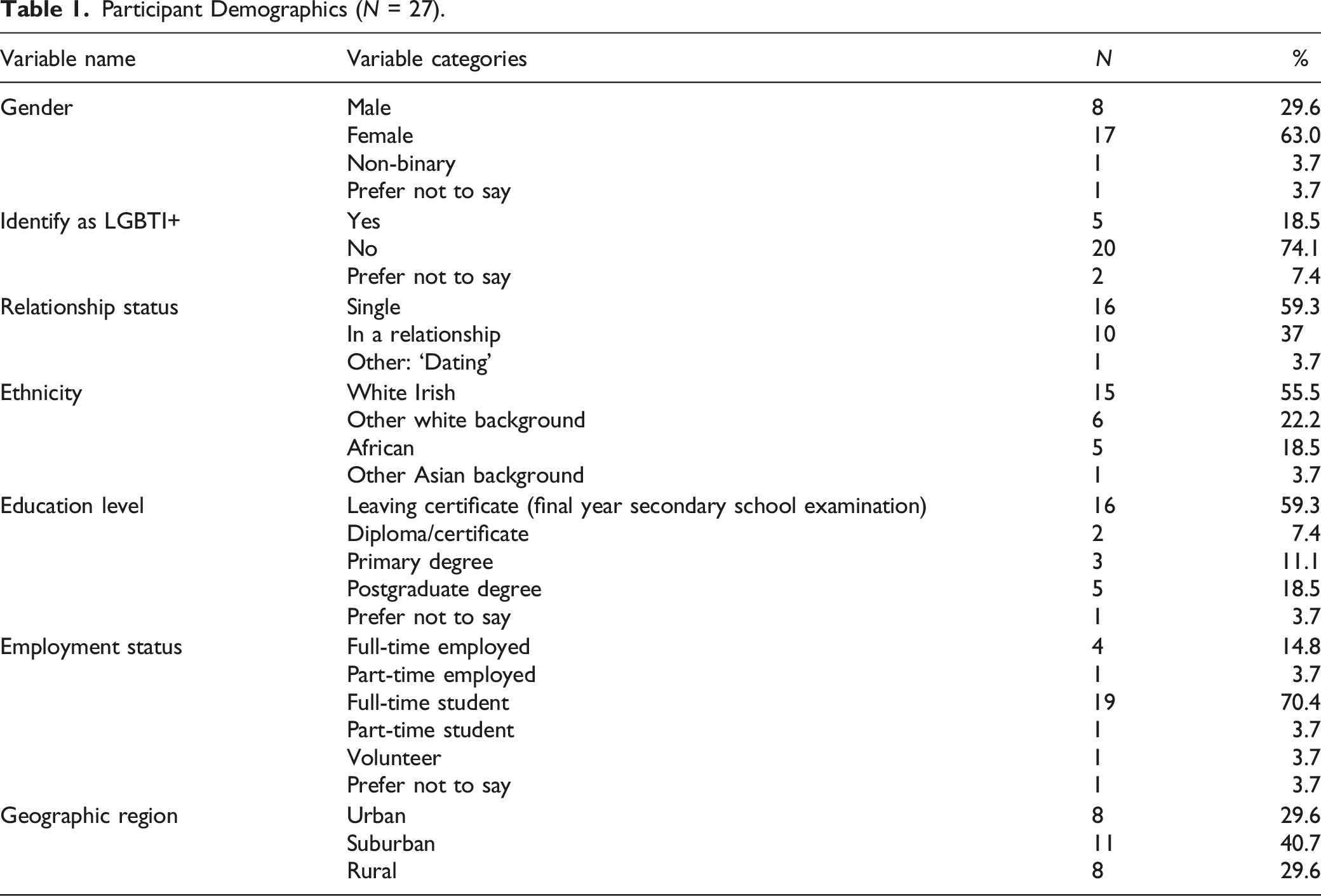
Participant Demographics (N = 27).
Youth Research Advisory Group
A youth Research Advisory Group (RAG) was recruited from members of an Irish non-governmental organisation (SpunOut.ie) focused on providing online youth information. More specifically, they were recruited from the SpunOut. i.e. Youth Action Panels which involve young people from across the country. Prior to data collection, the RAG was consulted on recruitment strategies, data collection plans, and the development of the study materials. The role of the RAG was to provide feedback on our study plans and materials from an emerging adult perspective; the RAG played no role in participant recruitment or data analysis. Following guidance from the RAG, we offered participants the option of a one-to-one interview with a member of the research team or a focus group with two other participants. However, all participants chose to take part in one-to-one virtual interviews. Participants received information about the interview team with the study information sheet and could choose their interviewer from our four-person team, including different genders, ethnicities, and proximity to age of target group (including authors EK, MO, EA, AMC). Participants were interviewed by EK, MO, and EA.
Interviews
A semi-structured interview schedule was developed that comprised 17 open questions on the following topics; (a) introduction, (b) loneliness and connecting with others, (c) quantity and quality of social relationships, (d) COVID-19, (e) social transitions, and (f) comparing with others: non-normative changes and social comparison. Interview questions on topics like social transitions and non-normative changes were guided by key features of emerging adulthood described in Arnett’s (2000, 2014) theory. Whereas well-established loneliness theories (Cacioppo et al., 2006; Peplau & Perlman, 1982; Weiss, 1973) guided topics like social and emotional loneliness. Examples of questions included “What does loneliness mean to you?” and “Feeling that you lack a group of friends or that you lack somebody close to you that you can trust, can both lead to loneliness, do you think either of these might be particularly important for young adults?”. See Appendix A for the complete interview schedule.
While we aimed to recruit approximately 30 emerging adult participants to give their views on loneliness on emerging adulthood, we completed data collection at 27 interviews. In line with the concept of information power (Malterud et al., 2016), we discussed the quality of dialogue and insights gained throughout data collection, following interview 27 we reached consensus that we had completed sufficient interviews to answer our research question and there was minimal value in interviewing additional participants. Twenty-seven virtual, semi-structured, one-to-one interviews were conducted between July and October 2021 using the videoconferencing platform Zoom (https://zoom.us). Using Zoom for qualitative data collection had several advantages at that time. First, participants were not required to have a Zoom account to join the virtual interview. Second, Zoom is considered a relatively accessible platform for participants who have low-level digital skills (Lobe et al., 2020). Third, audio recordings are possible in Zoom and only the meeting host (the interviewer) can control the recording during the meeting and access the recording after the meeting. Lastly, in relation to privacy, a Zoom feature allows meetings to be password protected and the host can control a meeting ‘waiting room’ to allow participants to enter.
Interviews lasted between 19 and 61 min. Participants were thanked and debriefed on the study at the end of the interviews. Only the audio of interviews was recorded using Zoom and these were later transcribed verbatim. Transcripts were stored in the university’s password protected Microsoft OneDrive file system and audio recordings were deleted once transcripts had been verified.
Procedure
This study received ethical approval from the first author’s university faculty ethics committee. This study (Creaven et al., 2021) was pre-registered on Open Science Framework (https://doi.org/10.17605/OSF.IO/DCQ7M). Participants were recruited via emails sent to all currently enrolled students in the authors’ university, as well as advertisements posted on social media platforms Twitter and Instagram. Recruitment information in the email and social media posts included that the authors were seeking young adults aged between 18 and 25 years to discuss their views on loneliness during young adulthood. Potential participants were informed that they were not required to share their personal experiences or have experienced loneliness to take part, and that interview participants would receive a €20 gift voucher and could enter into a prize draw.
Before the interview, participants were directed to Qualtrics (www.qualtrics.com) where they provided informed consent and demographic information including gender, age, ethnicity, employment status, and education level, and completed the 11-item De Jong-Gierveld (De Jong-Gierveld & Van Tilburg, 1990) loneliness measure. The De Jong-Gierveld (De Jong-Gierveld & Van Tilburg, 1990) asked participants to indicate ‘the way they feel now’ in response to a series of statements using the responses (1) yes, (2) more or less, and (3) no. According to the cut off scores recommended by the developers of the De Jong Gierveld loneliness measure (De Jong-Gierveld & Van Tilburg, 1990), three (11.1%) participants were categorised as not lonely, 10 (37.0%) were moderately lonely, seven (25.9%) were severely lonely, and seven (25.9%) were very severely lonely. Loneliness scores were used to provide descriptive information about participants’ loneliness levels and all participants were included in the final analysis.
Participants also indicated their preference for archiving of their anonymised transcript in the Irish Qualitative Data Archive (IQDA; www.maynoothuniversity.ie/iqda). While we recognise not all qualitative data is suitable for archiving, given the lack of qualitative data on loneliness in emerging adulthood and that participants were not required to disclose their personal experiences of loneliness in interviews, we considered that archiving transcripts would maximise the value of emerging adult participation in our study. Participants’ preference for data archiving was also verbally confirmed at the beginning of the interview recording. Most participants (n = 26) consented to the archiving of their anonymized transcript.
Analysis
This study used framework analysis (Ritchie & Spencer, 1994) to understand emerging adults’ views, perspectives, and experiences of loneliness. Framework analysis was considered appropriate for several reasons; this analytic approach is not bound by an epistemological position and it emphasises how the development of the analytic framework should be driven by both the a priori concerns and themes derived from the data. Framework analysis involves a five-step process; familiarization, identifying a thematic framework, indexing, charting, and mapping and interpretation (Ritchie & Spencer, 1994).
First, two researchers (EK and AMC) individually read a subset of the transcripts to form initial impressions and begin identifying a thematic framework through which the data could be organised. An initial thematic framework was constructed using a-priori concerns from the study’s aims and interview topics, key theoretical perspectives (Cacioppo et al., 2006; Peplau & Perlman, 1982; Weiss, 1973) and discussions about the transcripts. EK and AMC independently piloted the framework on a subset of the transcripts, and met regularly to review the framework before applying the framework to the data in the indexing stage. After the chunks of data were organised into framework categories, charting took place which involves summarising these chunks and organising them into a framework matrix, where each column represents a framework category and each row represents a participant. This approach organises the data into manageable sections to facilitate exploration and identification of patterns throughout the data. Finally, the interpretation stage involved EK checking the summaries in the framework matrix against the original data in transcripts to facilitate interpretation and identification of patterns in the data. EK incorporated our research questions into the interpretation to build an account of emerging adults’ views and perspectives of loneliness. EK presented the interpretation and patterns identified to AMC, where both authors discussed the results before summarising the key themes.
Although the steps in framework analysis are presented in a predefined order, our analysis was an iterative process. For example, we developed our initial thematic framework by going back and forth between the first two steps; familiarisation and identifying a thematic framework. Also, after piloting our framework by indexing a subset of transcripts, we returned to identifying a thematic framework to refine the categories before continuing with the entire dataset. Framework analysis has a strong focus on categorising and organising data, which aligned well with our study in that we had some predetermined framework categories derived from our interview schedule.
Analysts’ Positionality
The analysis was led by EK and AMC. EK is a White Irish early career researcher. As interviewer and researcher within the study’s target age range (18–25 years), EK was aware of how her position as an emerging adult researching loneliness in this life-stage may influence her interactions with participants and the interpretation of data during analysis. Although EK may have insider status with participants, she was potentially an outsider in relation to gender, sexuality, ethnicity, and other participant identities. While EK expected that her shared connection to the social world of the emerging adults would allow her to build rapport with participants, she was also conscious to avoid using her personal experiences to speak on behalf of participants throughout interviews or make assumptions in the analysis.
AMC is a White Irish mid-career researcher with prior expertise in loneliness research. While AMC did not conduct interviews for the study, she listened to the audio recordings and anonymised the transcripts. AMC made a concerted effort to remain open to insights from a group experiencing life at a different developmental stage. For example, descriptions of social media use were very different from AMC’s own experience of this life stage.
Thematic Findings
Emerging adults’ understanding of loneliness and their views on what causes and maintains feelings of loneliness was the focus of our analysis. We generated two key themes: (1) loneliness and development: “a part of growing up”, and (2) expectations about a typical emerging adult’s life, “that’s how my life should be”. See Figure 1 for a visual representation of themes. Themes and key aspects of themes on emerging adults’ understanding of loneliness and the causes of loneliness.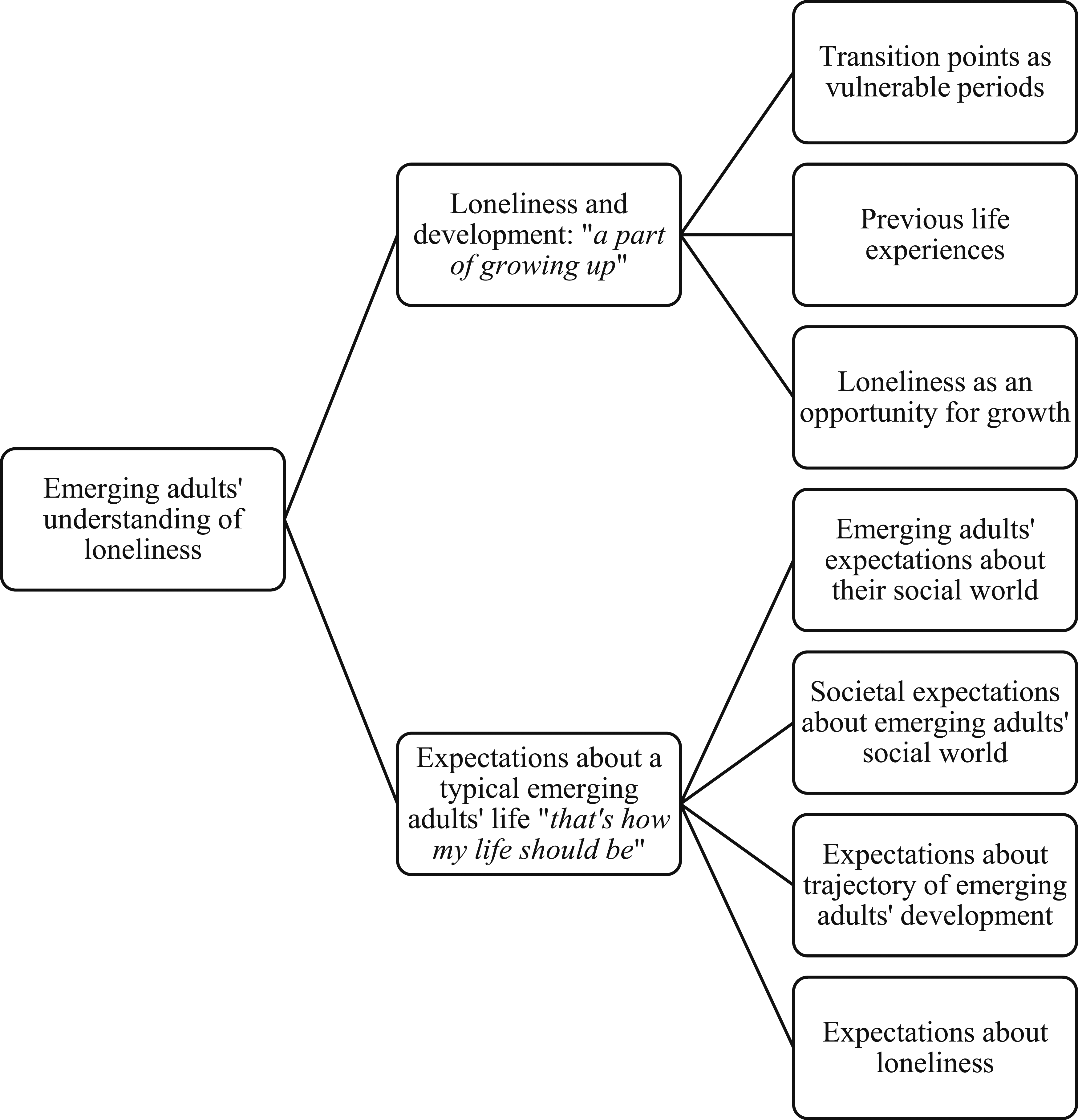
Loneliness and Development: “A Part of Growing Up”
Participants indicated that loneliness is a common and universal experience that can be a consequence of normative development. One participant even described loneliness as an unavoidable and inevitable aspect of development: “I don’t think it’s [loneliness] avoidable. I think it’s inevitable I think it is definitely a part of growing up and in the grand scheme of things, I think it is it’s a great way of or it maybe is the process is necessary to be comfortable with yourself” (P7, Michael).
Some participants described normative transition points, like beginning third-level education, moving out of the family home, or starting a new job, as specific periods of vulnerability to loneliness. Transitions were viewed as particularly sensitive periods for the formation of friendships and general social habits: “I would say, like every transition period, it’s kinda like a make-or-break moment. So like your first year of heading into university, that sets the trend for the rest of university.” (P15, Andrea). Additionally, participants felt that loneliness was impacted by what was described as a short window of time to form friendships during transition points, like starting university. As one participant said: “I definitely think that things like starting university or maybe you’re working in a job with people your age, and if you don’t make friends fast enough, if you get off on the wrong foot or whatever, that can definitely be a case. You know, beginning of feeling lonely because you feel like you’ve missed the boat.” (P19, Daniel). As well as the expectation to make many new friends within a short timeframe, feelings of anxiety around transition points were heightened by the pressure to form high quality, lifelong friendships. When asked about what contributes to loneliness at transition points, one participant said: “I think it’s the anxiety of making new friends, because everyone’s like, oh college is where you meet friends for life or like, oh you’re gonna make so many new friends in college and all that jazz” (P24, Caoimhe).
Not only are normative transition points an important time for forming new friendships, they were also described by participants as vulnerable periods for changes in one’s existing relationships, which may lead to loneliness. One participant spoke of how beginning university with a group of friends from secondary school can change the quality of these relationships: “even if you bring your friends with you, you’re all going to have different schedules, you’re all going to have different priorities in life. So, even if you have the same group of friends, it can still be difficult to foster that connection and keep it strong. I feel like it would be susceptible to kind of like getting a little less strong” (P15, Andrea).
Loneliness was often described as something that develops over time and a person’s vulnerability to loneliness is influenced by previous experiences, including childhood and adolescent experiences: “I just think some people have more like a predisposition to kind of feeling that way [lonely], like depending on like growing up” (P17, Gwen). One participant indicated that growing up in a rural versus urban environment can influence loneliness later in development through their social skills: “I always found growing up, there was no kids my age running around that I could play with, or there was no like, I don’t know, like even to go to my primary school was like a five, 10-min drive and to go, you know. So it was never like there was anyone like at the ready wanting to hang out and things like that. Whereas if you live towards the city centre, I think it’s more like that, you grow up with other kids like playing around. And, and I think that probably helps your social skills a lot” (P11, Sarah).
An additional aspect of loneliness that participants mentioned as relevant for development is the idea of loneliness as an opportunity for growth. While participants described feeling lonely as negative and distressing, using phrases like “a temporary depression” (P17, Gwen), there was recognition that experiencing loneliness can be positive for development; loneliness was described as an opportunity for self-reflection: “I think initially, like, you see it as a negative thing, but it can be a positive thing in the sense that you’re kind of forced to reflect on yourself and kind of see what makes you happy and how you can make yourself happy without, like, leaning too much on others.” (P24, Caoimhe). Loneliness can also prompt reflection on a person’s existing social relationships and motivate emerging adults to form new relationships. One participant felt that acknowledging the discrepancy between one’s desired and actual friendships can be positive for emerging adults relationships in the long term: “I think that at our age, it’s really important to realize that you deserve people that fully appreciate you and want to be around you and that you’re open with them. So that’s why I think that loneliness can be helpful, because it can make you realize those things.” (P11, Sara). Another participant expressed that although loneliness is unpleasant, it is better than spending time with the wrong people “So, as much as loneliness might not be easy or nice, it is easier than having to deal with people that are not so nice” (P4, Idris).
Theme 2. Expectations About a Typical Emerging Adult’s Life: “That’s How My Life Should Be”
The second theme captures the role of personal and societal expectations about emerging adulthood that contribute to loneliness. Participants acknowledged that loneliness is impacted by wider expectations about how emerging adults should live their lives; these included expectations from society and emerging adults themselves about their development, their social world, and loneliness.
Emerging adults’ felt that a person’s own ideas about their social world can contribute to loneliness. Participants described forming expectations about their social habits by comparing themselves to others who they perceive to be more popular, often on social media sites like Instagram, which contributed to feelings of loneliness: “you can look at the people around you who, who seem so popular through that lens of social media, and if you compare it to yourself, you can you could definitely feel even more lonely from that.” (P7, Michael). Participants described social media as an easily accessible and intense way of facilitating upward social comparison, which can in turn lead to loneliness. Emerging adults recognised that social media presents a false narrative where people tend to only publicly post the highlights of their life, yet it still negatively affects emerging adult’s view of their own social life:
“I feel like some people, they only post when they’re doing something or when they’re like, happy, when they’re with people, when they’re doing like amazing things, you’re only seeing the highlights of someone’s life. But then like, you could be watching it know, like they could be posting that alone in bed, like feeling shit, but to you, their life is just generally like that. So it kind of makes you feel like why aren’t I doing that, like how come they’re always out with their friends and they have so much to do. So it can make you feel like you’re not doing enough or that you’re not like, you know, as liked [as] them or something.” (P24, Caoimhe)
Participants also felt that wider societal expectations for young people to be confident and outgoing in their social life affects loneliness. One participant described how emerging adults feel a: “need to be like socially impressive” (P7, Michael). Participants acknowledged that popular social media applications exacerbate this need to impress others by encouraging users to spend more time on the app than with other people. Another participant described how loneliness is impacted by the blueprint for emerging adults’ behaviour and the negative labels assigned to some emerging adults according to societal norms: “not everybody wants to go out partying, not everyone can go up to somebody and start flirting. All these social expectations just places people in boxes and makes them feel lonely if they’re not able to break out of what would have been labelled like negative boxes” (P14, Oluwaseun). Cultural norms around social support and interpersonal relations also feed into emerging adults’ experience of loneliness; one participant described the expectation in her family to be self-reliant: “for me, like personally, like my parents are from a kind of former Soviet country, so they’re kind of very closed off. And still, they’re kind of like, you kind of deal with your own stuff on your own. So you kind of feel sometimes that it’s, you know, You’re kind of just on your own” (P22, Angelika).
Other expectations that influenced loneliness included norms about following a typical trajectory in emerging adulthood; trying to navigate these expectations and find one’s place in society contributed to feelings of loneliness. Participants described the expectation for emerging adults to follow a particular trajectory after second-level education (i.e., beginning university and establishing a career). According to one participant, deviating from this trajectory and failing to meet normative expectations can leave emerging adults feeling excluded from society, which feeds into loneliness: “it’s definitely just the stress that are like in life these days for young people, especially like if like after they finish Leaving Cert to go have to be in college or they have to work. And like if they don’t do either they’re very stigmatized or like they’d be like on the dole, they’re not doing anything and they’re just on benefits. So it’s just that concept from like society that people have to do something to contribute back. And like, if they don’t, then they’ll be marginalized.” (P16, Peter).
As well as perceiving expectations and social norms about their social life, participants felt that societal expectations about loneliness exacerbate the stigma of the experience. In addition, expectations about loneliness may differ for male and females; one participant described that although both men and women experience loneliness, men are more likely to ‘suffer in silence’: “I’d say they both suffer equally, but I suppose it’s just that society looks on it differently, I suppose it treats it differently in men and women” (P26, Hannah). Some participants described the common perception that loneliness is confined to old age and that youth is a barrier to loneliness. “I know when we think of loneliness, people think of elderly people automatically. And then, you know, when we’re talking about young people, people might think what reason do young people have to feel lonely or feel left out? It’s like you’re young, you’re healthy, you have more opportunities to do this and get out and that type of stuff.” (P14, Oluwaseun). Participants indicated that this loneliness narrative impacts the stigma of the experience and affects disclosure; emerging adults hide loneliness to avoid the shame and vulnerability of the experience. Emerging adults acknowledged that a person can experience loneliness even while surrounded by others and they described that the misperception that loneliness is akin to social isolation affects loneliness disclosure. The belief that if you have relationships, you can’t be lonely caused concern that peers might have difficulty accepting your loneliness. There was also an additional worry when disclosing loneliness that one’s existing relationships might be offended or feel that they have caused the loneliness:
“But then for me to say, for example, to my boyfriend that I feel lonely, it could also cause him to be kind of confused because he’s like, “oh, well, I’m here, so why do you feel lonely when you’re with me?” kind of thing. So I do have them [someone to disclose loneliness to] but it’s just a bit weird like I mean, it’s a bit of an awkward like, because then other people might start feeling like, “what am I doing wrong to make her feel so alone in this world” kind of thing?” (P6, Amara).
Discussion
Research capturing the complexities of the life-stage emerging adulthood is lacking (Schwab & Syed, 2015), and few qualitative studies have directly explored loneliness from the perspective of emerging adults. Informed by the theory of emerging adulthood (Arnett, 2000), this study aimed to understand the views and experiences of loneliness in emerging adults, and to explore emerging adults’ perspectives on the causes of loneliness during this life stage. We generated two key themes from the data, (1) loneliness and development: “a part of growing up”, and (2) expectations about a typical emerging adult’s life, “that’s how my life should be”.
Findings in Relation to Understanding Emerging Adulthood
Considering our results in relation to the theory of emerging adulthood (Arnett, 2000), our analysis reinforces the importance of emerging adulthood as a distinct life stage characterized by specific challenges, particularly in relation to the tapestry of social connections experienced and prioritised by this group. We found that emerging adults formed expectations about their social life through social comparison and via wider societal norms. Participants described comparing themselves to peers, often on social media, and that this can lead to loneliness when they perceive others to be more popular or sociable than themselves. In line with previous research (Sundqvist & Hemberg, 2021), we also found that wider societal expectations about emerging adulthood, like the need to be confident, or “socially impressive”, in social situations, contributed to loneliness through feeling excluded from society when they did not perceive themselves to meet these expectations. Given that key developmental milestones in emerging adulthood are associated with establishing new social relationships (Arnett, 2010), it follows that feeling uncertain or unconfident approaching other emerging adults may contribute to loneliness.
Findings in Relation to Theories of Loneliness
Taken together, our findings indicate that multiple theories of loneliness are relevant in emerging adulthood with participants endorsing several potential causal factors for loneliness. Our findings align with the cognitive discrepancy theory of loneliness (Perlman & Peplau, 1982) where loneliness is an unpleasant emotional experience arising from perceiving a discrepancy between the quantity or quality of a person’s expected, and actual social relationships. Perceiving one’s relationships as inadequate can be influenced by internal factors like social comparison, by previous experiences such as a person’s upbringing, and by wider social norms for quality social relationships (Peplau & Perlman, 1982). In addition, our finding that loneliness prompts reflection on one’s existing relationships is consistent with the evolutionary theory of loneliness (Cacioppo et al., 2006). This theory proposes that loneliness is mostly a transient experience that although unpleasant, can have adaptive effects where the negative affect associated with loneliness (e.g., sadness) acts as a signal to promote (re)connection with other people and generally subsides upon reconnection (Cacioppo et al., 2006). While our aim was to broadly explore loneliness in emerging adulthood and so our study was informed by several key loneliness theories, future qualitative research may wish to build on our findings and focus on a single loneliness theory in greater depth.
Implications for Understanding the Nature of Loneliness
Contrary to the notion that loneliness is a pathological experience, we found that while loneliness is acknowledged as distressing and associated with negative affect, some emerging adults viewed loneliness as positive for growth, in that it can promote reflection on oneself and one’s existing relationships. While acceptance and reflection may be an important coping strategy for loneliness (Rokach & Brock, 1998), this finding also suggests that loneliness is not always an entirely negative experience and can provide benefits. More broadly, our results suggest that the experience of loneliness may be even more nuanced in emerging adulthood than described in traditional definitions. The range of experiences of loneliness in emerging adulthood may not be fully understood at a group level; considering this is a relatively heterogenous group and a period involving social, demographic and psychological changes, there are likely to be individual differences in how a person perceives their experience of loneliness. Further, it is likely that loneliness is a negative emotional experience at the time of its occurrence and that some individuals can identify positive aspects only after reflecting on a transient loneliness experience. The distinction between transient and chronic loneliness (Young, 1982), which is not generally included in loneliness definitions, may be particularly important during this life-stage and for understanding potentially positive aspects of loneliness. Current definitions of loneliness may need extending to better fit our conceptual understanding of loneliness in emerging adults. This finding should be interpreted in the context that most participants of this study reported experiencing moderate levels of loneliness; it is possible that this particular sample of emerging adults had experience in coping with loneliness. We also acknowledge that our positionality is relevant in the interpretation of this data.
Consistent with evidence that age-related, normative life events account for at least some of a person’s social network changes during specific life stages (Wrzus et al., 2013), our analysis suggests that emerging adult loneliness can be transient and tied to normative development and typical life events, like the transition from second-level education to university. Transition points were seen as vulnerable periods for loneliness not only because they often require forming new relationships during a short window of time, but they are also points of potential disruption to an emerging adult’s existing social network. Together with the finding that loneliness is not an entirely negative experience, our findings suggest that specialist interventions for loneliness may not always be necessary; prevention of loneliness may be more useful and interventions to reduce loneliness in emerging adulthood should determine if the target group is experiencing transient or chronic loneliness (Young, 1982).
For emerging adults to meet perceived expectations about their social world (e.g., to be outgoing in social situations) and form social connections requires social skills, or the ability to interact and communicate in an effective way. Given that poor social skills have been linked to higher loneliness levels in emerging adults (Ozben, 2013; Panayiotou et al., 2016), supports focused on improving social skills may be effective in preventing emerging adults who experience transient loneliness from developing chronic loneliness (Eccles & Qualter, 2021).
Limitations and Directions for Future Research
Most (88.8%) of our participants were categorised as being at least moderately lonely, according to their score on the De-Jong Gierveld Loneliness Scale (De Jong-Gierveld & Van Tilburg, 1990). While our recruitment materials explicitly stated that participants did not need to have ever experienced loneliness to take part, there remains a possibility that our study attracted lonely emerging adults. Given that participants were not obligated to discuss their personal experiences of loneliness, they did so to varying degrees in this study. Therefore, we included all data in the analysis and did not compare the responses of emerging adults reporting different loneliness levels. However, the quantitative data included in this study are useful in understanding the cohort of participants and may facilitate comparison with other qualitative studies of loneliness. Also, this data used for this study is in preparation to be archived in the IQDA (www.maynoothuniversity.ie/iqda) and future qualitative research using this data may wish to compare the responses of emerging adults with different loneliness levels to explore potential similarities and differences in their experiences of loneliness.
Our results should also be interpreted considering the data for this study were collected during the Covid-19 pandemic in Ireland. Emerging adults in our study reported that social comparison on social media contributed to loneliness, but it must also be considered that social media may be used more intensely by lonely individuals to compensate for deficits in their in-person relationships (O’Day & Heimberg, 2021). Given that our study included the perspectives of emerging adults in Ireland, our findings may not be applicable to emerging adults from other more collectivist or individualistic cultures. While we included an relatively ethnically diverse sample of emerging adults in our study, most participants (70.4%) were relatively well-educated, full-time students. Although the experience and causes of loneliness in employed emerging adults from low socio-economic backgrounds in the United Kingdom is well-documented in previous qualitative research (Fardghassemi & Joffe, 2021, 2022), future research on loneliness that includes greater representation of emerging adults not in full-time education may be useful.
Conclusion
The aim of this study was to explore loneliness in emerging adulthood to understand the experience of loneliness from the perspective of emerging adults, and to identify what emerging adults believe causes feelings of loneliness. Informed by multidisciplinary approaches to loneliness and macro-theories of development that view emerging adulthood as a distinct period of the lifespan, we found that the expectations for an emerging adult’s life can contribute to loneliness. Emerging adults considered loneliness to be a consequence of normative development and social transitions. At least some emerging adult loneliness is transient, and although described as unpleasant, loneliness may not be an entirely negative experience; this should be taken into account when considering interventions for preventing and addressing emerging adult loneliness.
Supplemental Material
Supplemental Material - Exploring Loneliness in Emerging Adulthood: A Qualitative Study
Supplemental Material for Exploring Loneliness in Emerging Adulthood: A Qualitative Study by Emma Kirwan, Páraic S. O’Súilleabháin, Annette Burns, Mamobo Ogoro, Eoghan Allen, and Ann-Marie Creaven in Emerging Adulthood.
Footnotes
Acknowledgments
In addition to the study participants, the authors wish to thank the Research Advisory Group for their contribution to this study. We are also grateful to Ian Power and Sinead Beirne of SpunOut (SpunOut.ie) for helping to recruit our Research Advisory Group.
Declaration of Conflicting Interests
The author(s) declared no potential conflicts of interest with respect to the research, authorship, and/or publication of this article.
Funding
The author(s) disclosed receipt of the following financial support for the research, authorship, and/or publication of this article: The study was funded by an Irish Research Council New Foundations Award to AMC (NF/2020/21017360). The first author is in receipt of an Irish Research Council Government of Ireland Postgraduate Scholarship (GOIPG/2021/345).
Data Accessibility Statement
The data used in this manuscript are not openly available due to restrictions set by the institutional ethics board; anonymised interview transcripts have been deposited to the Irish Qualitative Data Archive for research use (Creaven, Kirwan, Ogoro, Allen, Burns, & Ó Súilleabháin, 2023). The data collection and analysis plan were pre-registered and the study materials are also available using the link to the pre-registration plan ( ).
).
Supplemental Material
The supplemental material for this article is available online.
Appendix
Author Biographies
References
Supplementary Material
Please find the following supplemental material available below.
For Open Access articles published under a Creative Commons License, all supplemental material carries the same license as the article it is associated with.
For non-Open Access articles published, all supplemental material carries a non-exclusive license, and permission requests for re-use of supplemental material or any part of supplemental material shall be sent directly to the copyright owner as specified in the copyright notice associated with the article.
