



Abstract
Despite the increasing popularity of canine-assisted interventions (CAIs) across a variety of contexts, there is a paucity of literature exploring participants’ perceptions of the mechanisms that contribute to the benefits reported by researchers. This study aimed to expand on the knowledge obtained by our Phase I findings and to better understand undergraduate participants’ (N = 280) perceptions and experiences of direct, physical contact versus indirect, close contact with therapy dogs and spending time with therapy dog handlers alone. Participants’ responses revealed that direct contact with therapy dogs was more likely to elicit benefits in positive affect, including reducing stress and improving mood, than those in the indirect or handler-only groups. Conversely, spending time with the handlers only was more likely to elicit social benefits, such as feeling more connected and less homesick. These findings hold implications for post-secondary CAIs and for therapy dog programs.
Introduction
It has been well-documented that being a university student is a stressful experience and that thriving in an environment of heightened academic pressures and shifting social pressures can be challenging (Durand-Bush et al., 2015; Othman et al., 2019; Shillington et al., 2020). Elevated stress over time can compromise students’ mental health, resiliency, and ability to succeed academically (King et al., 2020; Knoesen & Naude, 2018; Wilson, 2020). In fact, Frazier et al. (2019) reported that stress was “the number one health-related factor most often identified by students as impeding their performance” (p. 563). Further, researchers have posited that the COVID-19 pandemic has exacerbated stress and mental health concerns in post-secondary education (Ewing et al., 2022; Halliburton et al., 2021).
In addition to the heightened academic and social pressures faced in the undertaking of post-secondary studies, the majority of students are within the age range of 18–29, a developmental phase between adolescence and adulthood - also known as emerging adulthood (Arnett, 2000; Konasewski et al., 2022). This phase of development is “uniquely characterized by identity exploration, feeling in-between, entertaining possibilities, self-focus, and instability” (Lalonde et al., 2020, p. 79) and it has been argued that “no stage in life, other than perhaps infancy, experiences such dynamic and complex changes on the personal, social, emotional, neuroanatomical, and developmental levels” (D. Wood et al., 2018, p. 124). Emerging adulthood is also understood to be inherently stressful (Lalonde et al., 2020; Sussman & Arnett, 2014), lonely (Qualter et al., 2015), and is associated with higher prevalence of mental illness, including mood and anxiety disorders, than other age groups (Collishaw et al., 2010; Eckersley, 2011; Eisenberg et al., 2007). It follows that emerging adults are at an increased risk of struggling with substance abuse; poor social adaptation; poor academic, educational, and professional achievement; non-suicidal self-injury; and suicide ideation (Eisenberg et al., 2007; Eisenberg et al., 2013; Hunt & Eisenberg, 2010; Konasewski et al., 2022; Martínez-Hernáez et al., 2016).
Supporting emerging adults in their academic, educational, and professional achievement is especially important as “educational achievement has a major influence on the life trajectory, including financial stability and health in emerging adulthood and onward throughout adulthood” (D. Wood et al., 2018, p. 128). We also know that it is important for emerging adults to develop proactive and positive practices to support their social, psychological, and emotional well-being as this sets them on a positive trajectory for their well-being in adulthood (Tanner, 2015). As emerging adults are taking more responsibility for their mental health and well-being (Tanner, 2015), this stage represents an optimal time to engage them in well-being initiatives.
One resource that has emerged as a popular, low-cost, low-barrier intervention for reducing stress in emerging adults attending post-secondary education is for them to attend canine-assisted stress-reduction programs or canine-assisted interventions (CAIs; Binfet, 2017; Binfet et al., 2018; Huber et al., 2022; Pendry & Vandagriff, 2019). These programs provide opportunities for university students to spend time and interact with therapy dogs and their handlers and, findings across intervention studies, attest to the efficacy of this approach in reducing students’ stress and improving overall well-being (Binfet, 2017; Binfet et al., 2018; 2022; Barker et al., 2016; Crossman et al., 2015; Dell et al., 2015; Evans Robino et al., 2020; Pendry & Vandagriff, 2019; Sokal & Martin, 2021; Ward-Griffin et al., 2018). Though the structure and delivery of CAIs varies by institution, these sessions typically see multiple dog-handler teams brought to campus with a group session format offered (i.e., multiple visitors to one dog-handler team).
The pre-to-post-test effectiveness of CAIs in reducing undergraduate student stress has been well-documented however there is a dearth of research exploring participants’ experience in such programs. That is, we know that spending time with therapy dogs is effective in reducing stress but we do not fully understand how participation in these sessions is experienced by students themselves. It has been argued that qualitative research methods are considered valuable, yet underutilized, within the field of Human-Animal Interaction (HAI) research (Fournier, 2019; Kazdin, 2017). HAI research could “gain tremendously by more qualitative evaluation of the experience of therapy involving an animal, that is, precisely how participants (children, parents, other adults, therapists, and handlers) experience the interaction” (Kazdin, 2017, p. 156).
One example of a qualitative study exploring the efficacy of therapy dogs on student well-being is found in the research of Lalonde et al. (2020). Lalonde and colleagues conducted a study that saw researchers participate in open-ended dialogues with university students (N = 4) to understand their lived experiences having attended a CAI and the meanings derived from their interactions. Five themes emerged from the participants’ responses and included: being in-the-moment, social benefits, variations in coping ability, personalized interactions, and reciprocal interactions. Participants identified feeling grounded by the therapy dog which allowed them to “fully immerse themselves in the experience” (p. 82) and that the feeling of being “very-in-the-moment” (p. 82) was an aspect that participants reported finding beneficial. Participants also reported experiencing social benefits including decreased social pressure, a discovery of new social connections, and an increased ease in connecting with people in the room. They further reported that they felt supported and better able to cope and that the therapy dog program was complementary to their pre-existing coping mechanisms. One participant described the program as a “stress-reliever” (Participant Mira, p. 83) and another stated that spending time with therapy dogs made her feel “a lot better” and more able to cope with life’s stressors (Participant Dominique, p. 83). When exploring the meaning derived from the program, personalized interactions emerged as a meaningful experience arising from interactions with a therapy dog.
E. Wood et al. (2018) conducted a feasibility study wherein the benefits of spending time with Guide Dogs in-training on stress levels of emerging adults (N = 127) currently partaking in post-secondary education were explored. The intervention duration for this study was comprised of 10–15-minute interactions between participants and the guide dogs. In addition to assessing pre-to-post changes in anxiety and blood pressure, these researchers used open-ended prompts to explore participants’ perceptions of their interactions with the guide dogs. Feedback from students revealed they enjoyed the session, found it relaxing, developed a connection with the dogs, found the experience to be novel, and yearned for additional, future sessions (E. Wood et al., 2018). The generalizability of findings here are restricted by the study’s small sample, the variability in the duration of interactions across participants, and the inclusion of uniquely guide dogs (versus therapy dog-handler teams more commonly seen in on-campus CAIs).
Although the aforementioned studies have begun to address the need for qualitative research in the field of HAIs, the mechanisms of a CAI that foster well-being outcomes still warrants additional investigation. This is argued by Fournier (2019; p. vii) who asserts: “There is very little study of just how animals and humans interact and which interactions with or features of the animal are therapeutic.” This call for a deeper investigation of the mechanisms within interactions is echoed by Crossman (2017) who called for research examining the role of tactile stimulation (i.e., “contact comfort”) and the well-being this elicits within the context of HAIs. Exploring the role of touch between visitors to CAIs and therapy dogs holds potential to inform the planning, organization, and implementation of interventions whose aim is to foster human well-being. Might the experience of students taking part in CAIs be optimized by understanding the mechanisms within interactions with therapy dogs that best contribute to well-being?
Researchers have suggested that direct, physical contact with therapy animals is a key therapeutic component of CAIs. Despite this suggestion, a careful review of the literature in psychology and anthrozoology reveals limited empirical work exploring this component, especially from a qualitative perspective. Research by Kendziorski and Treacy (1999), who conducted interviews with 10 elderly residents at a long-term care facility to explore the perceptions of a resident canine program, informs the current investigation. From these interviews, a common theme that emerged was that the participants enjoyed physically petting the dog. The authors postulated that: “through physical contact individuals develop an attachment to their pets. The act of physically touching and caring for an animal may elicit a physical response such as reduced blood pressure, heart rate, and stress” (Kendziorski & Treacy, 1999, p.39). It should be noted however that the interviews conducted here did not explore or discuss any benefits that participants derived specifically from physically petting the dog nor was this a study exploring CAIs specifically.
Despite a paucity of research exploring the effects of physical touch with therapy dogs employing qualitative methodologies, there is emerging research examining the role of touch using quantitative methodologies. Beetz et al. (2011) reported the outcomes of an intervention with boys aged 7–12 (N = 31) that compared interactions with a real dog, toy dog, and friendly human and found a correlation between increased physical contact between children and the dog and decreased salivary cortisol levels. The findings here imply that physical contact is an important mechanism for reducing biomarker indicators of stress. These findings should be interpreted with caution however, as physical contact was not controlled as an experimental variable and neither was it compared with a no-touch real dog condition.
Pendry and Vandagriff (2019) examined salivary cortisol levels of undergraduate students participating in a canine visitation program. In this study, participants engaged in one of four 10-minute conditions: 1) physical contact with cats and dogs; 2) observation of other people petting cats and dogs; 3) viewing images of cats and dogs; or 4) a waitlist condition. The salivary cortisol levels of the participants in the hands-on petting condition were significantly lower than the levels of participants in all the other groups, thereby suggesting that students’ stress levels were significantly lower having participated in physical contact with animals than the non-contact groups.
More recently, Mueller et al. (2021) explored the effect of physical contact between adolescents (N = 75, 13–17 years) with anxiety and therapy dogs. Participants were randomly assigned to one of three conditions, each varying in their level of interaction: 1) a control condition involving a toy dog; 2) a social condition in which participants could touch a therapy dog; and 3) a social condition in which participants could not touch a therapy dog. As summarized by Mueller et al., (p. 374): “. . . there was no convincing evidence that the presence of a real dog, with or without the opportunity to touch it, reduced anxiety, autonomic reactivity, or increased cognifive performance relative to the presence of a stuffed dog in the control condition.” As acknowledged by these researchers, the restricted sample size per condition limits generalizability of these findings. The authors call for additional research that explores the nature of the relationship between participants and dogs and for research that elucidates the type of interactions that occur within a session.
In recent research by Sokal et al. (2021) using a within-participant design comprised of 10 minutes observing therapy dogs followed by interaction with therapy dog-handler teams, undergraduate students (N = 242) reported decreased stress and increased happiness and overall well-being. Though it is unclear how touch was monitored between participants and therapy dogs, the findings contribute to the growing body of literature attesting to the important role that touch plays during CAIs to foster a variety of well-being outcomes in students. As these researchers acknowledge, the lack of a control group, possible carry-forward effects of observing therapy dogs, and the varied intervention duration are limitations for this study.
Phase I
To extend our understanding of the role that touch plays in reducing stress in emerging adults participating in CAIs, we conducted a quantitative study that sought to answer the question: “Is direct contact through touch between clients (visitors to a CAI) and a therapy dog required for clients to experience well-being benefits?” (Binfet et al., 2022). This study compared the outcomes of well-being and ill-being of undergraduate students, predominantly emerging adults, (N = 284) who attended an established CAI on campus. These students were randomly assigned to one of three conditions: 1) direct, physical contact with therapy dogs; 2) indirect, close contact with therapy dogs; or 3) spending time with a handler-only (i.e., a no-dog condition). Findings revealed that students assigned to the direct contact group reported the greatest improvements in a wide range of outcomes, including stress, homesickness, loneliness, happiness, and social connectedness. Further, when compared with close but non-physical contact, having physical contact with the therapy dog yielded significant amelioration in many of the outcome variables including stress, happiness, and homesickness. Another notable finding from this study was that despite not being as effective, there was evidence to suggest that even spending time in close proximity (no physical contact) with therapy dogs or their handlers alone yielded some benefits. We concluded that program directors and developers should try to facilitate physical contact with therapy dogs as much as possible during sessions, but in cases where this is not possible, non-physical close contact with therapy dogs remains beneficial (Binfet et al., 2022).
Phase II
The aforementioned study helped us understand the effects of touch and the aim of the current study was to explore participants’ experiences participating in the three distinct approaches to CAIs (i.e., direct touch, no-touch, and no-dog conditions). The present study sought to expand on the knowledge obtained by our Phase I findings (Binfet et al., 2022) and to more fully understand emerging adults’ perceptions and experiences of direct, physical contact versus indirect, close contact with therapy dogs and spending time with therapy dog handlers alone.
Theoretical support for the conceptualization and design of our study is found in three theoretical frameworks: 1) Attachment Theory (Ainsworth, 1979; Bowlby, 1969; 1973); 2) Biophilia hypothesis (Wilson, 1984); and 3) Social Support Theory (Cobb, 1976; Cohen & Wills, 1985). One aspect of the attachment theory posits that individuals seek to be in closer proximity with an attachment figure, especially when under stress, in order to reduce fear, anxiety and distress (Bowlby, 1969; 1973; Simpson & Rholes, 2017). Further, it has been demonstrated that having interactions with supportive attachment figures facilitates positive self-worth, improved psychological well-being and more adaptive emotion regulation strategies (Mikulincer & Shaver, 2007). Within the context of HAIs, we might consider the therapy dog as a potential attachment figure and that being in close proximity with the dog may bring comfort to students facing academic or personal stress. As Zilcha-Mano et al. (2011) argue, within the context of animal-assisted therapy a “therapy pet can potentially become one of the figures in a client’s attachment hierarchy and that this pet can provide some sort of safe haven and secure base to the client during therapy sessions” (Zilcha-Mano et al., 2011, p.545). Similarly, the Biophilia hypothesis (Wilson, 1984) holds that humans have an affinity for spending time with animals and have evolved to pay particular attention to nature and animals as an indication of impending danger or safety. Being in the close presence of a calm therapy dog may signal to attendees that the environment is safe and therefore promotes emotional or physiological relaxation (Beetz, 2017). Finally, social support is described as that which “leads the subject to feel loved and cared for, […] esteemed and valued, [… or] to believe that he belongs to a network of communication and mutual obligation” (Cobb, 1976, p.300). Having social support throughout one’s life is considered to be a protective factor combating stress-related health concerns or crises (Cobb, 1976) and can be an important component of coping after stressful events (Joseph et al., 1995). Individuals who attend a group-based CAI program may receive social support from the handler(s) they meet or the fellow attendees they spend time with. In addition, it has been demonstrated that therapy canines provide social support equal to, or possibly more beneficial than, humans (Kloep et al., 2017).
Method
Participants
Canine Handlers
A recruitment email, including a description of the study, was sent to the entire pool of 60 handlers working in the on-campus canine therapy program Building Academic Retention though K9s (B.A.R.K.). Twenty-seven volunteer handlers responded and participated in this study (85% female, 15% male, 0% non-binary; 93% Caucasian, 7% mixed race, Mage = 41.5 years, SD = 13.9, range = 21–69; Mean prior canine therapy experience = 3.32 years, SD = 3.46). All canine handlers were fully certified by the B.A.R.K. program and had completed their handler assessments, a multi-step process that evaluates their canine handling skills, their ability to recognize and manage the needs of their canine, and their communication skills with small groups of clients (adults, young adults, and children), amongst other skills. Once the initial screening has been successfully completed, dog-handler teams participate in a semester-long internship which sees them practice skills and receive feedback from program personnel.
Therapy Canines
A total of 24 therapy canines participated in this study (75% female, 25% male; Mage = 5.65 years, SD = 2.81, range = 15 months–13 years; prior canine therapy experience = 2.10 years, SD = 0.18), all of whom were currently participating in the B.A.R.K. program. Of the 24 canines, 12 were pure breeds (including six Golden Retrievers, three Labradors, a Nova Scotia Duck Toller, a Husky, a Great Dane, a Border Collie, and a Wheaton Terrier) and six were mixed breeds (including Lab/Pit Bull, Chihuahua/Boston Terrier, and Shih Tzu/Bichon).
All therapy dogs were fully certified by the B.A.R.K. program and had completed a rigorous multi-step assessment process. During the assessment, dogs are evaluated for suitability for programming based on their demonstration of a set of skills including, but not limited to: Obedience; calm reactions to distractions or sudden noises; compatibility with other dogs; compatibility with clientele (adults, young adults, children); interest in attention from diverse, friendly strangers; and consent for, and enjoyment of, being physically touched by humans.
Student Participants
Participants (N = 280) were drawn from a mid-size, western Canadian university (student population 9120), were predominantly female (77%, 21% male, 2% non-binary), and their age ranged from 17 to 30 years (Mage = 20.2 years, SD = 1.89). Of the participants, 62% self-identified as Caucasian, 10% as South Asian, 10% as mixed race, 7% as Chinese, 2% as Black, and 2% as Latin American. Participants who identified as Aboriginal, Filipino, Korean, South Asian, or preferred to self-describe each comprised 1% of participants. In addition, 30% of the participants lived with pets. When asked to rate (i.e., low, medium, or high) their use of the existing CAI program offered on campus 89% self-identified as low consumers.
Undergraduate students were eligible to participate in the study if they were fluent in English (i.e., able to read at a Grade 12 level), 17 years or older, and currently enrolled at the university. In addition, participants had to be enrolled in a psychology course offering supplementary credit for participating in research studies. As such, students may have been taking a psychology course as an elective or a requirement, were at varying points in their degree, and may have been full- or part-time students. Students who were allergic or anxious around dogs were advised not to participate. As our focus was on understanding the experiences of physical touch between dogs and students within a framework of emerging adulthood, data from four participants (aged over 30 years) were removed from the analysis and are not included in the demographics reported above.
Procedures
Prior to the commencement of the study, university human (H19-02182) and animal (A18-0222) ethics approval was obtained and research assistants attended a training session to familiarize themselves with the study protocol and to ensure consistency across the conditions. The procedures were preregistered prior to commencement of data collection (https://osf.io/jvr23).
Participants were recruited via an online portal accessible to students taking undergraduate psychology courses wherein students are encouraged to participate in research studies in return for modest bonus course credit. Interested students could review the study details and the consent form prior to booking a time slot.
Upon arrival, participants reviewed the consent form, were given an opportunity to ask questions, and provided their written consent. Participants then completed the pre-test measure asking for demographic information and to respond to three open-ended prompts. Upon completion of the pre-test measure, participants were then randomly assigned to one of three groups: 1) a treatment condition in which participants were in the immediate proximity of a therapy dog and were asked to engage in direct physical contact (e.g., petting the dog); 2) a treatment condition in which participants were in the immediate proximity of a therapy dog but engaged in no physical contact with the dog; and 3) a control condition in which only the canine handler but no dogs were present (see Figure 1). Participants were then randomly-assigned for a second time, this time to the handler or handler-dog team they would be interacting with for the duration of the session. This was conducted to ensure that the specific characteristics of the dog-handler team (e.g., breed, personality) were randomized amongst student participants. There was thus randomization to condition and within condition. The sessions lasted for 20-minutes and were overseen by members of the research team. A 20-minute duration was chosen as this duration has strong ecological validity and has been used in previous on-campus CAI studies (Binfet, 2017; Grajfoner et al., 2017). The ratio of participants-to-handler was 3–6:1 across all three conditions (Mgroup = 4.35 participants). To ensure consistency across conditions, the distance between the handler and each of the participants was pre-determined with participants seated on markers on the floor. The distance between the student and the center of the mat (with or without a dog) was 94.11 cm and the distance between dog-handler stations was 213 cm. Handlers drew from a bank of questions to initiate discussion with participants (see Appendix A). Therapy dog welfare and signs of distress were monitored during each session by a trained research assistant. No incidents of canine distress were reported. Flow diagram illustrating randomization, intervention participation, and sample sizes per condition.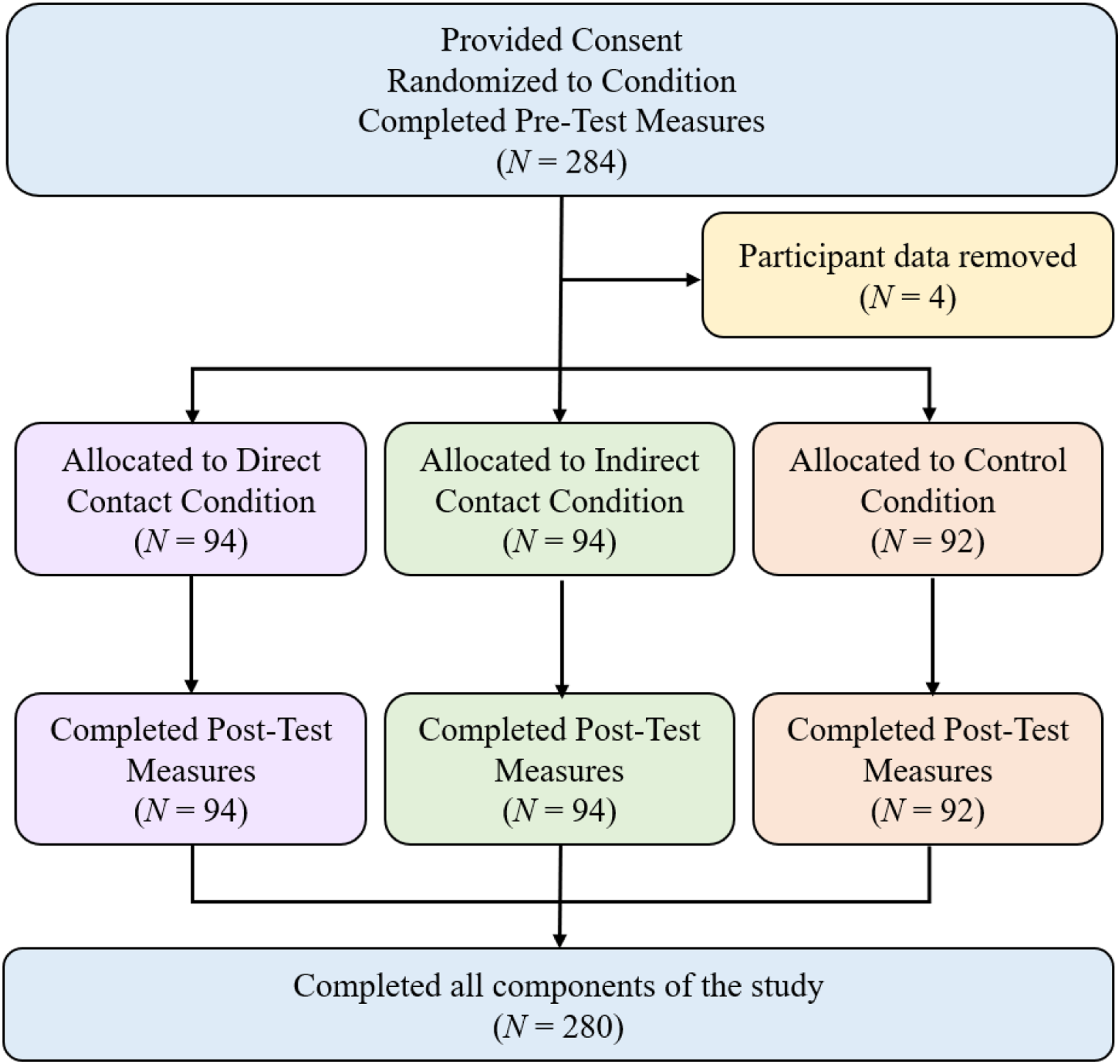
Measures
Demographic Questionnaire
To collect demographic information regarding age, gender, education, ethnic background, and living circumstances a 9-item questionnaire was administered.
Open-Ended Prompts
To capture participants’ perceptions of their experience in this study, participants hand wrote responses to the following three open-ended questions: 1) What did participating in this study mean to you?; 2) Participants in the conditions with a therapy dog present were asked: How did the dog make you feel? Participants in the handler-only condition were asked: How did the handler make you feel?; and all participants were asked 3) Was the intervention helpful?
Results
Although theory guided the conceptualization and design of our study, we employed an atheoretical inductive approach to data analysis. Inductive analysis allows researchers to view and interpret data with an openness to new ideas, patterns, and unexpected discoveries that arise from multiple readings of participants’ responses (Stake, 1995; (Thomas, 2006). As argued by Saldaña (2013), this allows for a rich and exhaustive understanding of the data. Given the paucity of prior research exploring the views and experiences of participants in CAIs, an inductive approach was determined to best honor participants’ responses.
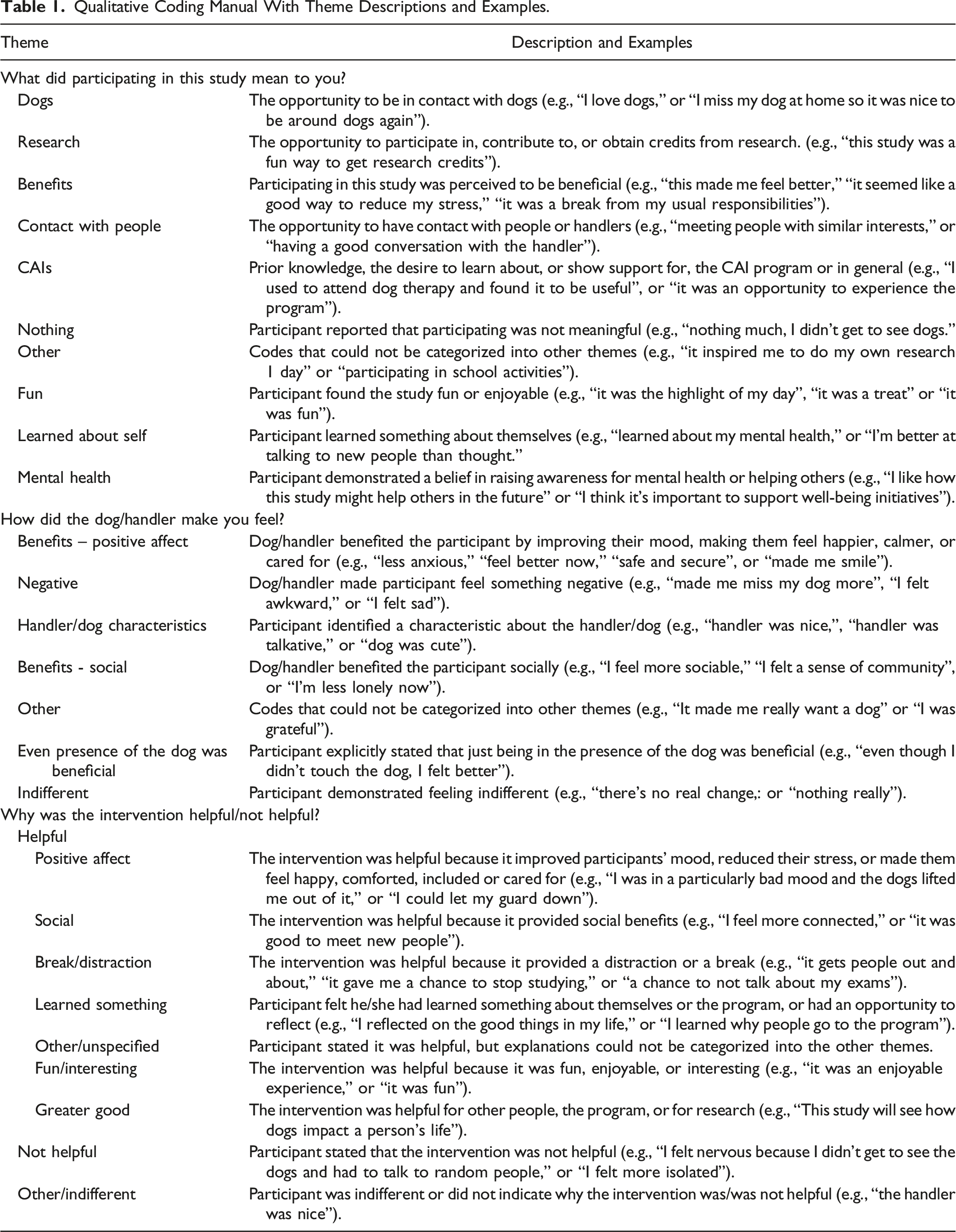
Qualitative Coding Manual With Theme Descriptions and Examples.
What Did Participating in This Study Mean to You?
For the question ‘What did participating in this study mean to you?” 110 sentences (1649 words) were analyzed for the handler-only group, 130 sentences (2091 words) for the direct contact group, and 121 sentences (1766 words) for the indirect contact group. The average number of words per sentence was 15, 16, and 15 for the handler-only, direct, and indirect groups, respectively.
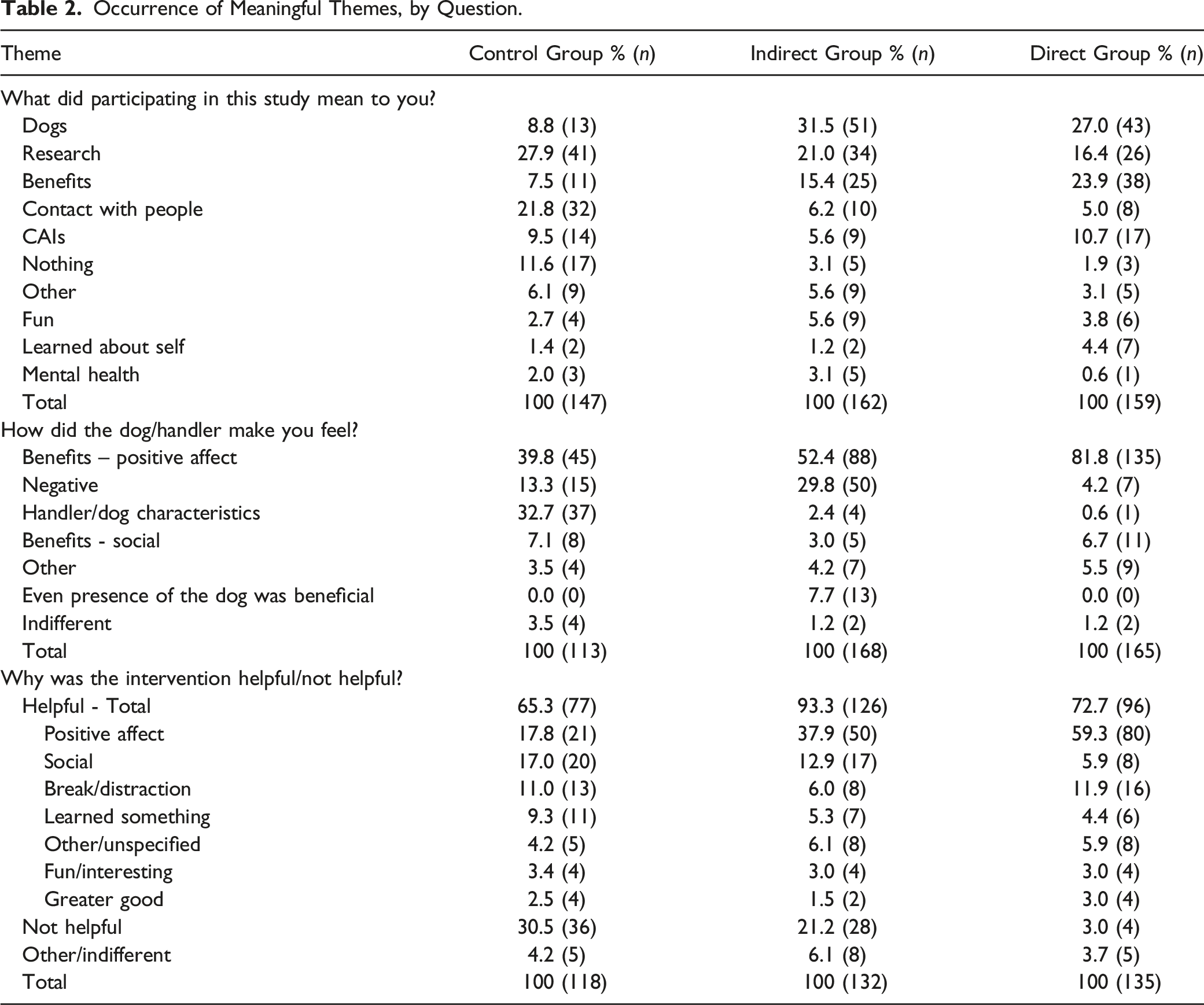
Occurrence of Meaningful Themes, by Question.
The Opportunity to Connect With Dogs
Participants identified the intervention as an opportunity to connect with, or have contact with dogs (22.8%). The prevalence of this code varied by condition and we see that participants in the indirect control group more often identified dogs (31.5%) than those in the direct (27.0%) and the handler-only (8.8%). Specifically, the most common reason that dogs emerged as a code was that participants described was their wanting to spend time with dogs (14.1% of all participants). Other participants specifically mentioned that they wanted to be involved in the study because they missed their dogs at home (3.8%). These sentiments are reflected in the following responses from participants: “I love dogs and as I can’t own one, these opportunities are important to me” (Participant 89; direct) and “I wanted to participate in this study as I love dogs and really miss my dog at home” (Participant 192; indirect). In addition, 3.0% of participants identified that they wanted to see dogs because they had a love of animals/dogs, such as “I was thrilled to participate in this study because I’m such a dog-lover. I felt very lucky to be one of the people who got to pet the dogs” (Participant 62; direct contact). Finally, 1.9% identified benefits of spending time with dogs, although this code was not identified in responses from participants in the handler-only group.
It merits noting that participants in the handler-only condition often reported being drawn to the study because of the potential to spend time with the dogs and/or their disappointment around not being able to spend time with the dogs, as is reflected in these participant quotes: “I was excited to be able to interact with the doggies today, although that didn’t happen” (Participant 232) and “I was a little disappointed not to see dogs but it’s all good” (Participant 208).
Involvement in Research
Across all conditions, participants reported that participating in the study meant involvement in, or contribution to, research. Participants reported a variety of reasons or justifications for this involvement including getting the bonus credits for their psychology classes (13.2%; e.g., “I was hoping to get bonus marks in my class to pet dogs which is the best way I can imagine getting grades;” Participant 49, handler-only); and being involved in active research (e.g., “I’m glad to be a part of what seems to be an important and interesting study; Participant 89, direct contact; and “this study allowed me to participate in the development of dog therapy research;” Participant 197, direct). In addition, participants voiced their awareness of research as a method for developing and informing mental well-being initiatives, as is illustrated in these participants’ quotes: “Contributing to a way to relieve stress in a very stressful place – school” (Participant 275; indirect), “It was meaningful that I could contribute to research concerning mental wellbeing and dog therapy” (Participant 260; indirect) and “I love contributing to science and I believe wholeheartedly in mental health awareness and what it can do for those in need” (Participant 70; handler-only group). For some participants, they gained a sense of purpose or inspiration for themselves by helping to contribute to the study, the B.A.R.K. program, or the research field, as was captured in these responses: “[Participating in the study meant] a sense of value being able to contribute and give my time to this study and show my support for it” (Participant 19; handler-only) and “It helped inspire me to maybe do my own research one day” (Participant 79; handler-only). For participants involved in the handler-only group, involvement in research was the most prevalent theme that emerged with 27.9% of participants in this group indicating research as their response to this question. In contrast, 21.0% of participants in the indirect contact group and 16.4% of those in the direct contact group reported involvement in research.
Benefits Derived From Participating
Another prevalent response to the question “What did participating in this study mean to you?” was that participants reported deriving some benefit from the study (15.8%). Participants in the direct group (i.e., those who were physically touching the dogs) were most likely to report benefits from the intervention (23.9%), followed by the indirect group (15.4%), and lastly, the handler-only group (7.5%). Across all three conditions, the most common benefits derived were that the intervention had helped them to de-stress (6.6%), have a break (4.1%), or improve their mood (2.6%). Examining these benefits by condition revealed that although the frequencies varied among groups, the order of importance of these benefits remained the same (i.e., the most common benefit in each condition was that the program had helped them to de-stress).
Participants in the direct condition reported that the session helped them to de-stress or relax at a rate of almost double those in the indirect group (10.7% and 5.6%, respectively), and more than triple those in the handler-only group (3.4%). Examples of the de-stressing benefit of the study are reflected in the following comments from participants: “It was really nice to do something that was stress relieving” (Participant 101, direct), “it made me relax, reduce my stress and homesickness” (Participant 170; direct), “even though I couldn’t touch the dogs, just being in their presence and their absolute pureness was very relaxing and made me unwind” (Participant 213, indirect) and “conversing with strangers helped me feel less stressed than I was earlier” (Participant 181, handler-only).
Opportunity to Have Contact With People
In addition to identifying the dogs as a prevalent theme, participants also identified people (10.7%) as a salient theme. Specifically, their responses included that the study had meant an opportunity to meet new people (3.6%), have general contact with people (3.2%), develop connections (2.3%), or spend time with B.A.R.K. handlers (1.5%). Specific examples of these themes include “I was happily surprised to meet new people and have substantial conversations with them” (Participant 12, indirect); “This study was important to me because it made me come out of my comfort zone and talk to people” (Participant 99, indirect); and “I was able to speak with a person from the same city as me, which reminded me of the past and made me feel grounded” (Participant 22, handler-only). The handler-only group was the most likely to identify contact with people or handlers, with the theme ‘People’ emerging from 21.8% of participants in this group. In contrast, 6.2% of participants in the indirect contact group and 5.0% of those in the direct group identified the opportunity to have contact with people.
Enjoyment
Another notable finding was that participants found participating in the intervention to be enjoyable or fun, regardless of the group they found themselves in. One participant described their involvement as “a treat – like a getaway that you look forward to” (Participant 134; direct). Participants in the indirect group were most likely to report the intervention as fun (5.6%), followed by the direct group (3.8%), and lastly, the handler-only group (2.7%).
How Did The Dog/Handler Make You Feel?
Recall that participants in the indirect and direct contact groups with a therapy dog present were asked “How did the dog make you feel?” and participants in the handler-only group were asked “How did the handler make you feel?.” A total of 392 sentences were analyzed for this question. These were broken down into 113 sentences (1366 words) for the handler-only group, 141 sentences (1720 words) for the direct, and 138 sentences (1814 words) for the indirect. The average number of words per sentence was 12, 12, and 13 for the handler-only, direct, and indirect groups, respectively.
The responses were broadly categorized based on whether participants reported benefits, were indifferent, felt something negative, or did not specify. Across all conditions, participants predominantly reported benefits (68.0%). Remaining codes comprised unspecified (13.9%), negative (16.1%) or indifferent (1.8%) comments. There were however, substantial variations among conditions, as is illustrated in Table 2.
Benefits
The benefits reported by participants were coded into two themes; 1) Benefits in positive affect and 2) Social benefits. Benefits in positive affect were most commonly reported by participants in the direct group (81.8%) compared to the indirect (52.4%) and the handler-only (39.8%) conditions. Conversely, the handler-only group was most likely to report social benefits (7.1%), closely followed by the direct group (6.7%), but in contrast to the indirect group (3.0%). Each of these will be discussed, in turn, below.
Within the benefits for positive affect, five sub-themes emerged including happiness/improved mood, de-stressing, feeling welcomed/cared for, having a break, and other. The most prevalent within responses was happiness/improved mood which was reported by 24.8% of all participants. Looking specifically at each condition, those participants in the direct group were most likely to report feeling happier or an improved mood compared to the indirect and handler only (31.5%, 28.6%, and 9.7% respectively). Happiness in participants’ responses is illustrated by the following quotes: “I felt so much joy petting Wrigley the Golden Retriever, he made my day” (Participant 98, direct); “Talking to the handler actually put a smile on my face” (Participant 79; handler-only) and “The dog made me feel very happy, immediately put a smile on my face” (Participant 120; indirect).
As identified above, participants also reported feeling less stressed or more relaxed (19.2% across all conditions). Similar to the happiness/improved mood theme, participants in the direct group were most likely to report feeling de-stressed (32.1%) when compared to the indirect (15.5%) and the handler-only (6.2%) groups. This is captured in the following example by a participant in the indirect condition: “The dogs made me feel calm and relaxed and the handlers were very nice and comforting too” (Participant 114).
Feeling welcomed or cared for, such as “the handler made me feel welcomed, loved, and cared for” (Participant 19; handler-only) and “the handler made the environment feel safe and friendly, and made sure everyone answered and felt accepted” (Participant 82, handler only) was reported by 10.1% of participants. Notably, this sense of feeling welcomed/cared for was most commonly reported in the handler-only group (20.4%) compared to the direct (8.5%) and the indirect (4.8%) groups. One participant in the direct group felt that the therapy dogs provided a unique opportunity to feel loved and cared for, in a way that humans do not. This is evident in the following quote: Dogs make me feel that I’m not alone in the world. They are just an extra person who is always happy to be around me. I live with my family and love them dearly but the interactions I have with my dog and the dogs today in the study are different in a good way. (Participant 86; direct)
Recall that participants reported social benefits when asked how the dog/dog-handler team made them feel. As mentioned above, the handler-only group were the most likely to report these social benefits which included feeling more connected (50.0% of social benefits), generalized social benefits (37.5%), and feeling less homesick (12.5%). Examples of participant comments that were coded as social – more connected include: “The dogs made me feel connected to the people around me” (Participant 167; direct); “I felt a connection I don’t get a lot during school” (Participant 179; control); and “The [handler] made me feel more connected with people” (Participant 283; direct). Generalized social benefits included a wide range of comments including feeling “more friendly” (Participant 116; direct) and “engaged” (Participant 247; control), that “interacting with different people was enjoyable” (Participant 144; indirect), and that “the handler made me feel more outgoing” (Participant 148; control). Finally, participants who reported feeling less homesick made comments such as “It honestly made me feel way less homesick because it gave me a sense of comfort and a feeling of home” (Participant 75; indirect), and “the dogs made me feel less homesick and reminded me of my own dogs” (Participant 56; direct). Examining the frequencies of each of the social benefits within each group illuminates that participants in the handler-only group were most likely to report feeling connected or generalized social benefits (each comprising 3.5% of handler-only group codes) but did not report feeling less homesick. The indirect group reported all three at similar rates but were least likely to report feeling connected (1.2% social – general and less homesick, 0.6% connected). Notably, the direct group were most likely to report feeling connected (4.2%), followed by generalized social benefits (1.8%) and finally, less homesick (0.6%)
Negatives
Feeling something negative emerged from 16.1% of participants across all conditions. Specifically, those in the indirect group reported negatives the most (29.8%), followed by those in the handler-only (13.3%) and those in the direct (4.2%). The negative comments were largely very specific to the condition in which the participants were involved. For example, the indirect group reported negative comments associated with not being able to touch the dog (26.9%) which comprised of 88% of all the negative comments from this group. In addition, negative comments associated with the absence of the dog were reported by 9.7% of participants in the handler-only group, which comprised 75.0% of their negative comments. The remaining negative comments (general negative feelings and feeling lonely or homesick) were more evenly spread between the three conditions. General negative feelings (1.8% across all conditions) were reported by 2.7% of participants in the handler-only group, and 1.8% and 1.2% of those in the indirect and direct groups, respectively. These generalized negative feelings included the fear of talking to new people, feeling overwhelmed with grief over lost dog, and feeling a bit awkward. Feeling lonely or homesick was reported by 2.0% of all participants, specifically 3.0% of those in the direct group, 1.8% of those in the indirect, and 0.9% of those in the handler-only group. Participants often described missing their dog more than before, but also feeling excluded from the group. One participant stated that: “the people in my group and I had nothing in common and I felt like an outsider because I couldn’t relate to anything they were saying, and petting a dog wasn’t helping with that” (Participant 239; direct).
Was The Intervention Helpful?
Participants were asked to respond ‘yes’ or ‘no’ to the question “Was the intervention helpful?” The majority responded that the intervention had been helpful, with 78.2% indicating ‘yes’, 20.7% indicating ‘no’, and 1.1% unspecified. These responses varied by the group to which the participants were assigned, with the direct contact group being the most likely to deem the intervention helpful (95.7%). The majority of participants in the indirect and handler-only groups also deemed it helpful but to a lesser degree (74.5% and 65.5%, respectively).
Upon deciding whether or not they found the intervention helpful, participants who indicated ‘yes’ were asked to provide an explanation as to why. Participants in the handler-only group wrote 87 sentences (1220 words), those in the direct wrote 110 sentences (1448 words), and those in the indirect 100 sentences (1440 words). The number of words per sentence on average was 14, 13, 14 and for the three groups, respectively.
Across all conditions, and largely consistent with the forced response, binary question above, 77.9% of responses to this question were coded as helpful, 17.4% as unhelpful, and 4.7% as did not specify. The prevalence of these themes varied by condition and are discussed in more detail below. Consistent with the aforementioned yes/no question, participants in the direct group were more likely to report the intervention as helpful (93.3%) compared those in the indirect (72.7%) and the handler-only (65.3%) groups (see Table 2).
Why Was The Intervention Helpful?
Benefits For Positive Affect
Positive affect emerged as the most prevalent (39.3%) explanation for why the intervention was helpful. Of the participants who reported the intervention as helpful, 42.5% reported feeling calmer (24.2% of all participants). These participants cited examples such as “I have midterms tomorrow and such a small thing like petting a happy dog eases some stress” (Participant 92, direct). Participants in the direct condition were more likely to report feeling calmer/de-stressed (39.3%) when compared to the indirect (21.2%) and the handler-only (10.2%) groups.
Within the theme of positive affect, and in addition to feeling calmer, four other sub-themes emerged including participants feeling happier (6.3% of all responses), having an improved mood (4.4%), general or unspecified positive affect (2.6%), or feeling cared for (1.8%). Examples of these are reflected in the following participants’ quotes: “I can immediately feel the difference from the moment I was with the dog – I’m happy!” (Participant 65, direct, happier); “I was in a particularly bad mood today and being with the dogs helped to lift me out of it” (Participant 8, direct, improved mood); and “It revitalized my mental state. Dogs fill me up with positive emotions and restore my mental and cognitive zest” (Participant 201, indirect, improved mood).
Social Benefits
The second most prevalent response to why the intervention was helpful was that it had benefited students in a social way (20.6% of those who deemed the intervention helpful; 11.7% of all responses) as is illustrated in these quotes: “It gave me a great sense of community” (Participant 142, handler-only) and “It provided social engagement with handlers and peers from UBC. It builds social skills. Helps confront social anxiety” (Participant 48; indirect). Within this, participants reported appreciating the contact with others (7.3%) feeling more connected or less lonely (2.9%), feeling less homesick (1.0%), and improving their social skills (0.5%). Notable differences between conditions included that participants in the handler-only and indirect groups were more likely to report social benefits (17.0% and 12.9%, respectively) when compared to the direct contact group (5.9%). This disparity is most notable in the sub-themes of contact and connected/less lonely. In addition, participants in both the direct and indirect groups reported feeling less homesick (1.5% in both groups) but not a single participant from the handler-only group reported the same.
Almost a 10th of the participants (9.6%) reported that the session had been helpful because it served as a break or distraction from their daily routine or stressors, such as “It introduced me to a new way of distracting myself from the negatives that are going on in life and allowed me to feel free” (Participant 20; direct). Participants in the direct group were most likely to report the break/distraction (11.9%), followed by the hander-only group (11.0%) and lastly, the indirect group (6.1%).
The remaining descriptors for why the intervention was helpful were coded into the following themes: That participants had learned or reflected on something (6.3%), they found the session to be helpful in a general or unspecified way (5.5%), that the program was fun/interesting (3.1%), or that it served a purpose for the greater good (2.3%). A participant in the handler-only group described the intervention as an opportunity to reflect and learn: “It makes you think about yourself and your personal emotions. I think this is very important and makes me realize things are better than they might seem (Participant 115, learned – reflection). A second participant, but one from the indirect contact group, described feeling more motivated and having more faith in their school: “I’ve recently been struggling with waking up and feeling motivated to come to school. Teaming up with B.A.R.K. further solidified my trust in this school and its programs activities” (coded as helpful – general; Participant 12).
Why Was The Intervention Not Helpful?
The majority of participants across all conditions found the intervention to be helpful, however 20.7% indicated ‘no’ when asked whether the intervention was helpful. Participants in the handler-only group were most likely to deem the intervention unhelpful (30.5%), followed by the indirect group (21.2%) and lastly, the direct group (3.0%). It should be noted that participants who indicated ‘no’ to this question were not specifically asked to explain why the intervention was not helpful, however, just under half, (49.1%) chose to do so. In total, there were 67 comments that were coded as unhelpful (17.4% of all comments). From these 67 comments, themes that emerged included that the session made them feel sad (14.9%), was boring/uncomfortable (9.0%), or made them nervous/anxious (3.0%). In addition, 22.4% of the comments that indicated that the session was unhelpful (3.9% of comments overall) stated that the intervention was not helpful because there were no dogs or because they could not touch them. These comments were exclusively from the handler-only and indirect groups.
Discussion
This study sought to expand upon a prior quantitative study (Binfet et al., 2022) and explored undergraduate students’ experiences of direct, physical contact, indirect, close contact with therapy dogs and spending time with therapy dog handlers alone. First, and in alignment with our quantitative findings, participants in the direct contact group shared that they had derived benefits from attending the CAI. Our quantitative study found that participants in the direct contact condition reported significantly greater decreases in stress, negative affect, and loneliness and increases in happiness, positive affect, and social connectedness, when compared to the indirect contact group. The present study corroborated the findings that the CAI was helpful in reducing stress, improving participants’ mood and making participants happy, which emerged from the responses from participants in all three conditions. As hands-on contact was deemed to be beneficial in both studies, it is important that research seek to understand the mechanisms that make physical contact with therapy dogs effective in reducing stress and increasing happiness. More research is certainly needed to understand the mechanisms at play during human-animal physical contact within the context of AAIs; however, we can infer some possible explanations from prior research examining human-human contact.
Levinson (1984) posited that we have an innate need for comfort throughout our lives and that touch evokes feelings of love, safety, and security; reduces tension; and promotes relaxation. Burleson and Davis (2013) add that touch indicates the presence of social support and that physical contact results in vagal activation and central opioid release which, in turn, reduce heart rate, blood pressure, and inhibit the HPA axis and the sympathetic branch of the autonomic nervous system – both of which contribute to an individual’s stress response (see also Morrison, 2016). These researchers stated that “physical affection has built-in hedonic and regulatory qualities that are incompatible with stress and negative emotions, and thereby promote resilience in a very direct way” (Burleson & Davis, 2013, p. 137). It may be that physical contact with a soft, warm, therapy dog elicits some of the same physiological, social, and emotional responses to that of physical contact with a friend or loved one.
The findings from our study bolster the argument that CAI programs should provide opportunities for hands-on contact between therapy dogs and the clients they serve. Program personnel designing programs to support emerging adults must plan and manage sessions so they prioritize access to the therapy dogs. This may be done by managing therapy dog numbers and a client-to-dog ratio that allows for all clients to be in close, physical contact with the therapy dog. The finding that direct, hands-on contact with therapy canines generated comments from participants reflecting stress reduction and improved students’ mood and happiness situates the findings within the context of attachment theory (Ainsworth, 1979; Bowlby, 1969; 1973). These insights from study participants suggest that being in close proximity with a source of attachment, in this case a therapy dog, helps to provide comfort and reduce feelings of stress. This not only corroborates previous findings that being in close proximity with an attachment figure promotes well-being and reduces anxiety, but also supports Kloep et al., 2017 postulation that therapy dogs may serve as a potential attachment figure.
The present study supported the finding from our initial quantitative study that saw participants report greater social connectedness after attending a CAI session. In particular, it revealed that participating in the program provided students opportunities to meet new people, have general contact with others, develop connections with their peers, and to spend time with dog-handlers. Interestingly, participants in the handler-only group shared that the CAI had provided an opportunity to connect as a key outcome. This finding was in contrast to the results for social connectedness in the quantitative study which found that the direct contact group reported the highest gains in social connectedness, followed by the indirect and lastly, the handler-only group. Given these discrepancies, future research could explore what CAI participants define as “social connectedness” and to what extent this connectedness is provided by contact with humans versus contact with therapy dogs. Could it be that the therapy dog serves as a sort of conduit, facilitating connections among humans? In turn, the role of the therapy dog within a session suggests that participation in a CAI may enhance participants’ perceptions of social support (Cobb, 1976). Program designers, in turn, should align their practices to ensure that CAIs foster social support whenever possible by encouraging small group interactions within visits – both between the visitor and the handler and among visitors. What remains to be studied is identifying just what constitutes a connection to the therapy dog from the perspective of visitors and how the duration of the interaction impacts this sense of connectedness – is there a minimum threshold required to establish such a connection?
Participants shared insights that illuminate the role that an on-campus CAI plays in the lives of post-secondary students. First, the program provided an opportunity to have a break or distraction from the pressures of school, offering a respite from day-to-day stressors. Despite being a new finding in emerging adulthood and within the post-secondary education context, the concept of CAIs providing a distracting break emerged from innovative research within a law-enforcement setting (Green & Binfet, 2021). In this study members of the Royal Canadian Mounted Police attended a CAI integrated within the working day of their detachment and participated in interviews to discuss their experiences of attending a CAI within their detachment as a stress-reduction resource. One notable finding from this study was that the program served as a break or distraction from work, an opportunity to remove oneself from stressful events and a stressful working environment (Green & Binfet, 2021). The present study combined with the findings from law-enforcement provide insights into the ability for CAIs to capture the full attention of attendees and to distract them from the stressors in their daily environment.
Extending our discussion of the notion of distraction further, participants who physically touched a therapy dog as well as those participants who spent time with handlers alone, shared that the session served as a break. What remains unanswered is why participants who were in close proximity but not physically touching the therapy dog did not report this to the same extent. One possibility is that participants who were asked not to touch the dogs were required to self-regulate their behaviour and inhibit their desire to pet the therapy dog right in front of them. Participants in the direct and handler-only groups were perhaps better able to focus on the experience or opportunity at hand whereas participants in the indirect group had the more taxing assignment of regulating their behaviour. Evans et al. (2016, p. 291), in their elucidation of the toll self-regulation has on individuals, posits that “. . . self-regulatory effort drains strength and leads to temporary self-regulatory fatigue . . .” Additionally, our findings suggest that the handlers or handler-dog teams made students feel welcomed. Participants described feeling that they were in a safe place; that they were cared for; accepted; and not alone in the world. Interestingly, this finding was brought forward by participants in the handler-only group where therapy dogs were not present. One possibility is that handlers may behave differently when they are without their therapy dog, whom they perceive to elicit benefits for the participants. It could be that handlers, in the absence of the therapy dog, feel that they need to put effort into initiating conversation and creating a welcoming environment. Future studies could explore whether therapy dog handlers perceive their role as different or behave differently when in the presence of their canine versus when they are alone.
A curious finding emerged in the insights and responses provided by participants in the indirect group that saw participants report feeling frustrated, sad, or annoyed about not being able to touch the therapy dog. The negative comments generated by participants in the indirect group suggest that participating in a CAI where one cannot physically touch a therapy dog contributed to negative perceptions by participants. This is noteworthy as these findings were not captured by measures used in the quantitative study. Despite negative comments emerging from the responses of participants in the indirect group they, paradoxically, shared that they found the intervention ‘fun’ or ‘enjoyable. This finding reflects that being in close proximity to, but not in physical contact with, therapy dogs is nevertheless still perceived as an enjoyable experience or intervention. The finding that participating in a CAI is enjoyable is not a novel finding. This finding is in concert with research exploring a canine-assisted social and emotional learning program with children aged 5–12 years (Harris & Binfet, 2022). Interviews with participants revealed that seven of the eight children described the CAI as “fun.” Descriptions from the children included quotes such as: “You really should do it because it’s lots of fun and you get to meet new people and get to learn stuff that you haven’t learned before” (Harris & Binfet, 2022; p. 9). Children found participating in an intervention with canines a positive and enjoyable experience (Harris & Binfet, 2022). Additional research has demonstrated that the presence of a therapy dog can enhance the enjoyment of reading tasks (Fisher & Cozens, 2014; Fung, 2017). One such example of this is Kaymen (2005) who explored children’s experiences in a canine-assisted reading program and identified that the children found that reading to a dog was motivating, enjoyable, and exciting. The enjoyment of CAIs may not be a novel finding, however, what remains unknown are the elements of CAIs that makes them enjoyable. It is curious that our study indicated that physically touching therapy dogs was not a key factor in participants’ enjoyment. This, in turn begs the question – what aspect of a CAI is most enjoyable for attendees if it is not the hands-on contact with the therapy dog? Further research should explore the enjoyment of CAI attendees in detail and seek to unpack the mechanisms within CAIs that lead to participants feeling like they had fun or enjoyed themselves.
Strengths and Limitations
Strengths of this study include the robust sample size studied, establishing inter-coder agreement for each open-ended prompt, and strong participation engagement (i.e., all of the students who began the study subsequently completed all components of the study including offering their insights via open-ended prompts). Despite best intentions, this study was not without limitations. First, although the sample size was robust, data collection to access participants’ views was restricted to three open-ended prompts. Conducting in-depth semi-structured interviews with a randomly selected subpopulation of participants would have afforded a deeper and more extensive exploration of viewpoints and experiences. Second, because pre-determined prompts were used, there was no opportunity for participants to share additional information regarding their experiences. The measures could have included a prompt along the lines of “Is there anything else about your participation in this study you would like to share?” to capture additional insights from participants. In addition, participants self-selected for this study and were aware of the potential to interact with therapy dogs prior to signing-up. This ensured that participants were comfortable around dogs, did not have allergies, phobias, or feared interacting with canines. Collectively, these characteristics describe a typical student who might access an on-campus CAI and reflect our study’s strong ecological validity. It should be noted however that, our sample of participants may not be representative of the larger student population as a whole. An additional limitation is found in our not including a “dog only” condition as part of our design. Although including a condition in which participants interacted uniquely with a therapy dog would help elicit participants’ views on spending time with therapy dogs, this proves challenging to orchestrate given therapy dogs work under the direct supervision of their handlers. Finally, we acknowledge that the indirect group wherein students were not allowed to have physical contact has limitations. Participants were asked not to touch the dogs during the course of the session yet this does not emulate the experience of a participant who chooses not to have physical contact during the session. As such, there are possible biases present in this data. Students may have felt frustrated, annoyed, or sad that they were asked not to pet the therapy dogs, and this may have contributed to the negative opinions of this group.
Conclusion
In light of the popularity of on-campus stress-reduction CAIs and in order to fully contextualize and understand CAIs, it is important to complement the findings of intervention research to include the perceptions of the participants who make use of these sessions to enhance their well-being. The perceptions of students reported in our study help elucidate both the elements or characteristics of CAIs that students find meaningful but also capture students’ understanding of how spending time with therapy dogs and the role that the dogs themselves play in enhancing or diminishing interactions. Touch between clients and therapy dogs within CAIs is important and, as seen by insights reflecting the experiences of participants, touch serves to engage the client, reassure the client, reduce their stress reduction, and fostering their well-being.
Footnotes
Declaration of Conflicting Interests
The author(s) declared no potential conflicts of interest with respect to the research, authorship, and/or publication of this article.
Funding

Appendix
Canine Handler Script
Session and Engagement Questionnaires
Semi-structured Question Guide for Handlers
This series of questions are designed to be a guide to the questions you may ask students, and the conversations you can have. This does not need to be a script followed directly but acts as a guide to keep the experience among groups consistent.
To start the conversation, please introduce yourself and your dog to the group and ask the students to introduce themselves to one another. To facilitate conversation, there is a list below of the types of questions you may ask the students: Tell me, where is home for you? Where are you from? What brought you here to the university? What program are you studying? Tell me about the courses you’re taking. Which ones are you enjoying the most? What are things you like to do outside of school? What is it you like about doing that? What do you like about living in our city? What are your favourite places to visit (e.g., parks, restaurants, cafes)? What is something good that has happened this week? What did you do over the weekend? What are your plans for the next week? What are your plans for the summer? What is something you’re looking forward to this month? What kind of music do you listen to? Do you have a favourite song? Artist? Have you been to see any shows or concerts recently? If so, what did you go and see? What did you think of the show? What kind of podcasts do you listen to? What books have you read recently? What genre do you like? Have you ever met anyone famous? If so, who? What were they like? Do you have any favourite things you like to cook? Do you have any favourite actors/actresses/artists/comedians? What is a special skill or talent that you have?
Note: please do not discuss the University’s dog therapy program, well-being or adjustment to campus, or their dogs at home.