



Abstract
The COVID-19 pandemic has disrupted emerging adults’ daily routines due to social distancing, stay-at-home orders, and public and educational facilities’ closure. This article uses longitudinal panel data from Germany (N = 625) to explore how the COVID-19 pandemic affects emerging adults’ mental health and life satisfaction. Specifically, we investigate risk and protective factors for within-person changes in life satisfaction and mental health using change score models. Our analysis reveals three main findings. First, we find a significant decline in emerging adults’ life satisfaction and mental health compared to pre-pandemic levels. Second, results show heterogeneity in life satisfaction and mental health trajectories. Third, limited peer contacts, financial strain, and returning to the parental home act as risk factors for longitudinal changes. Social integration, having an intimate partner, and self-efficacy act as protective factors. We discuss the implications of our findings for the consequences of the pandemic for emerging adults.
Introduction
The COVID-19 pandemic has disrupted daily life routines around the world, resulting in decreasing individuals’ well-being and mental health. Studies from all over the world report higher levels of depression and anxiety, lower levels of life satisfaction, and increasing rates of economic and financial uncertainty (Cao et al., 2020; Daly et al., 2020; Fried et al., 2020; Rodriguez-Rey et al., 2020; Satici et al., 2020; Wang & Zhao, 2020). While the physical health effects of COVID-19 on emerging adults are less severe compared to older adults, several population-based studies consistently reveal that emerging adults experience higher increases in depression, anxiety, and decreasing life satisfaction than any other age cohort (Daly et al., 2020; Gambin et al., 2021; Huang & Zhao, 2020; Kuhn et al., 2020; Pierce et al., 2020).
Emerging adulthood is the stage in life when individuals become independent from their parents and find new social roles. As Arnett (2000, P. 469) mentioned: “…emerging adults often explore a variety of possible life directions in love, work, and worldviews. Emerging adulthood is a time of life when many different directions remain possible, when little about the future has been decided for certain, when the scope of independent exploration of life’s possibilities is greater for most people than it will be at any other period of the life course.” The COVID-19 pandemic may have interfered with these processes in two main respects. First, the economic consequences of the COVID-19 pandemic may particularly hurt emerging adult’s educational and occupational opportunities. These economic disruptions may lead to longer periods of unemployment and low income, resulting in to roll back the process of independence when young people are forced to move back to their parental home. Second, the COVID-19 crisis has also changed emerging adults’ interpersonal relationships. Specifically, social distancing guidelines, the closure of public and educational facilities, and restricted mobility limited the amount of time spent with family members, peers, and partners. In particular, peer contacts and social integration into new educational or occupational contexts play a key role during the phase of independence from parents and the parental home. Limited opportunities for in-person contacts and a lack of personal support may increase levels of loneliness, depression, and anxiety (Elmer et al., 2020).
The aim of our study is to analyze changes in life satisfaction and mental health problems in emerging adulthood during the COVID-19 pandemic. Our study contributes to the growing body of literature on pandemics’ consequences in two ways. First, we uncover intra-individual changes in life satisfaction and mental health problems using German longitudinal data from the project “Life Course Perspective and Dropout from Higher Education (LAST)” collected before and during the COVID-19 pandemic. Thus, our data enable us to investigate intra-individual changes in life satisfaction and mental health during the pandemic compared to pre-pandemic levels. Second, we explore potential protective and risk factors for changes in life satisfaction and mental health problems during the COVID-19 pandemic. Specifically, we test the hypotheses if (1) strain due to limited peer contacts, strain due to financial insecurity, strain due to uncertain job market prospects, and the returning to the parental home function as risk factors and lead to decreasing levels of life satisfaction and higher levels of mental health problems, and (2) if relationship status, self-efficacy, and social integration serve as potential protective factors resulting in an increase in life satisfaction and lower levels of mental health problems.
Risk and Protective Factors
Research on previous crises and early evidence from the COVID-19 crisis suggest several factors that protect or deteriorate emerging adults’ life satisfaction and mental health in the wake of the COVID-19 pandemic. Based on these findings, we expect that emerging adults’ social networks, career opportunities and financial burdens, and living situations changed substantially due to pandemics’ circumstances and decrease individuals’ life satisfaction and mental health. Contrary, being in an intimate relationship, social integration into peer contexts, and high levels of self-efficacy should lower negative changes in well-being.
Peer Contacts and Social Integration
Starting in adolescence, peers’ and friends’ importance rises as time spent with peers increases and time spent with family decreases (Arnett, 2007). Although the time spent together with peers and friends declines during the transition from adolescence to emerging adulthood, they still play a substantial role in individuals’ positive development (O’Connor et al., 2011). Peers increasingly replace parents as the central figures of attachment during the process of independence (Doumen et al., 2012). Positive relationships with secure attachment with peers and friends enable emerging adults to explore their environment and adapt well to environmental change, including stressful events (Sroufe et al., 1999). Successful social integration and social support increase individuals’ subjective well-being and attenuate the mental health impacts of stressful events (Kawachi & Berkman, 2001). Higher social support and better social integration in times of stressful events reduce individuals’ negative emotional reactions and lead to a more benign appraisal of the situation (Kamarck et al., 1990). Recent findings on adolescents reveal that the most distressing issue during the COVID-19 pandemic was not seeing their friends (Magson et al., 2020). Those who perceived high levels of social connection reported significantly lower levels of depression and anxiety and higher levels of life satisfaction during the lockdown period in Australia (Magson et al., 2020). For emerging adults, recent evidence from Switzerland indicates that students report fewer interactions compared to the time before social distancing guidelines (Elmer et al., 2020). The share of students who report having no co-study partner increased from around 22%–40% (more students are socially isolated or out-isolated). The decrease in social contacts and the increased number of students in social isolation correlate with higher anxiety and depression levels. Consequently, we expect that a better social integration into peer contexts may be a protective factor resulting in smaller changes for life satisfaction and mental health during the phase of COVID-19. In contrast, we expect strain due to limited contacts with peers and friends due to the pandemic to be a risk factor for declining levels of life satisfaction and mental health.
Job Market Prospects and Financial Strain
The COVID-19 pandemic causes an economic recession, including rising unemployment rates, shrinking labor markets, and uncertain labor market prospects (Blustein et al., 2020). Analyses from previous recessions show that young workers, especially those entering the labor market during such crises, are most affected by higher unemployment rates, lower wages, and more fixed-term contracts (Bruno et al., 2014; Elsby et al., 2016). The consequences of economic crises extend well beyond the loss of income. In particular, non-monetary consequences of unemployment and economic recessions include declining subjective well-being and health and increasing rates of depression and anxiety (Gebel & Voßemer, 2014; Drydakis, 2015; Frasquilho et al., 2016). Studies also suggest long-term effects from economic conditions when entering the labor market for health and life satisfaction. People who experience higher unemployment rates at the beginning of their labor market entry experience poorer physical and mental health and life satisfaction later in life (Maclean, 2013; Cutler et al., 2015; Voßemer et al., 2018). Entering and establishing oneself in the labor market is a key marker in the phase of emerging adulthood. Therefore, emerging adults are highly affected by the consequences of shrinking or uncertain labor markets, and they are aware of possible long-lasting effects for later life. Early evidence from the current crisis reveals the profound consequences of the COVID-19 pandemic for emerging adults’ economic situation. Findings from the US show that around 40% of students lost a job, internship, or job offer due to pandemics’ economic consequences (Aucejo et al., 2020). Young people also expect long-lasting impacts on their careers because they expect a decreased probability of finding a job and expect lower earnings later in life due to the pandemic (Aucejo et al., 2020). Current worries about one’s financial situation and future career affect emerging adults’ mental health with higher stress and anxiety levels (Elmer et al., 2020). In Germany, more than half of all students work in students’ jobs during their course of studies (Middendorff et al., 2017). Due to changing circumstances during the pandemic, around one-third of students report that their employment situation became more difficult because of job loss or working time reduction (Becker & Lörz, 2020). In sum, we expect that uncertain job market prospects and financial strain due to the economic recession from the COVID-19 pandemic are risk factors for negative changes in life satisfaction and mental health.
Returning into the Parental Home
Leaving the parental home is a key marker in the transition to adulthood (Goldscheider & Goldscheider, 1999; Houle & Warner, 2017; Sironi & Furstenberg, 2012). Around 80% of emerging adults rate residential independence as an important marker to reach adulthood (Sharon, 2016). Findings from previous crises reveal that economic circumstances disrupt emerging adults’ transition toward residential independence (Dunne, 2012; Lee & Painter, 2013; Lennartz et al., 2015; Mykyta & Macartney, 2011). Moreover, recent studies suggest that economic setbacks force young adults to return to their parents’ home after already having experienced residential independence (Houle & Warner, 2017; South & Lei, 2015; Stone et al., 2014; Van den Berg et al., 2019). Since the number of returners is growing in times of economic recession, emerging adults may be moving back to their parents during the COVID-19 pandemic. Given the above-mentioned uncertain labor market situation or COVID-19-related health issues, most of these returns will be unintended. This rollback of independence disrupts the transition to adulthood and strains parent–adult child relationships due to rising conflicts over rent, bills, and private space (Parker, 2012; Sassler et al., 2008; Ward & Spitze, 2007). Further findings suggest consequences for well-being and mental health. Both emerging adults and parents experience increasing levels of depression and decreasing levels of subjective well-being after adult children return to the parental home (Caputo, 2019, 2020; Copp et al., 2017). Due to these previous results, we expect a return to the parental home functions as a potential risk factor for a decrease in life satisfaction and mental health. However, given the specific context of the COVID-19 pandemic, returning to the parental home could also help avoid loneliness. When emerging adults’ peer contacts are limited, they could benefit from family’s social support in stressful times, which may increase life satisfaction and decrease mental health problems. In this scenario, returning to the parental home functions as a potential protective factor.
Relationship Status
A large body of literature shows the positive association between relationship status and both health and subjective well-being (Averett et al., 2013; Carr & Springer, 2010; Musick & Bumpass, 2012; Rapp & Stauder, 2020; Simon, 2014; Soons & Liefbroer, 2008; Zella, 2017). Intimate relationships provide various forms of social support and emotional benefits, which improve well-being as well as mental and physical health (Koball et al., 2010). Several mechanisms explain the link between relationship status and health. First, intimate partners’ social support ensures high levels of functioning and lower levels of distress (Graham & Barnow, 2013). Second, social support buffers individuals from the health effects of stressful events. Generally, stressful life events have a damaging effect on individuals’ health and well-being. However, partners’ social support can help protect and maintain an individual’s functioning in times of high levels of stress. By reducing stress or facilitating healthy behaviors, social support can buffer the negative effects of stressful events (Cohen & Wills, 1985; Graham & Barnow, 2013; Zickar et al., 2008). A similar mechanism is found in studies about partners’ social control. Partners are interested in having a healthy partner and may monitor their partner’s health-related behavior (Umberson, 1987, 1992). Being in an intimate relationship is associated with the reduction of health-related risky behaviors (Duncan et al., 2006; Wood et al., 2007). We expect these positive effects from intimate relationships for subjective well-being and mental health to be particularly pronounced during the COVID-19 pandemic. Specifically, social distancing guidelines limit opportunities to meet peers and non-cohabiting family members. Therefore, partnered individuals should benefit from their partner’s emotional and instrumental support and partners’ monitoring. Thus, having an intimate partner should act as a protective factor for declining life satisfaction and mental health rates. Therefore, we expect positive effects of being in an intimate relationship on life satisfaction and mental health.
Self-Efficacy
In addition to structural factors, personality characteristics influence how individuals adapt to the consequences of the COVID-19 pandemic (Settersten et al., 2020). Personality characteristics shape individual responses to environmental changes, and differential responses are specifically pronounced in crises (Caspi & Moffitt, 1993). Self-efficacy is a particularly relevant psychological factor for individuals’ responses to crises. Individuals’ trust in their competency to cope with tasks or stressors is a key personality characteristic that influences individuals’ subjective well-being and mental health in times of crisis (Bandura, 2006; Yildirim & Güler, 2020). People’s beliefs about their capabilities directly influence what they feel, think, and do (Bandura, 1990). Thus, general self-efficacy may serve as a personal resource and protective factor in the context of stressful life events like the COVID-19 pandemic. Individuals with high levels of self-efficacy trust their own capabilities to handle environmental changes, which results in interpreting demands and problems more as challenges than threats (Jerusalem & Mittag, 1995). High levels of self-efficacy should serve as a protective factor that buffers distressing experiences and leads to higher levels of mental health (Hu et al., 2020; Hussong et al., 2021; Yildirim & Güler, 2020) and subjective well-being (Azizli et al., 2015; Cikrikci & Odaci, 2016; Moksnes et al., 2019; O’Sullivan, 2011). The COVID-19 pandemic differs in its global scope from most other natural disasters or outbreaks of infectious diseases. In contrast to other events, which are usually limited to a specific area and given time, individuals have only minimal opportunities to escape from the pandemic (Giallonardo et al., 2020). This inescapability, combined with a perception of low controllability of the pandemic, leads to high levels of uncertainty and worries. Therefore, we expect that individuals’ general self-efficacy should function as a highly relevant protective factor against declining rates of life satisfaction and mental health.
Method
Data and Participants
Participants were initially recruited in 2017 for a longitudinal survey entitled “Life Course Perspective and Dropout from Higher Education (LAST)” at a university in Lower Saxony, Germany. The survey recruited undergraduate students at the beginning of their study via personal recruitment during compulsory seminars and online invitations on the university’s central learning platform. In Germany, the majority of bachelor programs take six semesters. However, a majority of students study for a longer period and graduate after 7 or 8 semesters (Statistisches Bundesamt (Destatis), 2018). LAST collected data in four panel waves (2017–2019) before the outbreak of COVID-19. A fifth panel wave collected data between June 15 and July 7, 2020, 3 months after the implementation of social distancing guidelines in Germany.
Social distancing guidelines prompted universities to close campus facilities and switch to online teaching from the summer semester’s start in April 2020. In Germany, the summer semesters end with exams in late July. Thus, data from the fifth panel wave capture students’ life circumstances when they had already experienced the new conditions for about half of the semester. At the time of the survey, the number of registered new infections in Germany had stagnated at a low level. Consequently, our data primarily capture students’ experiences of COVID-19 through social distancing guidelines, remote online teaching, and public debate on non-pharmaceutical interventions.
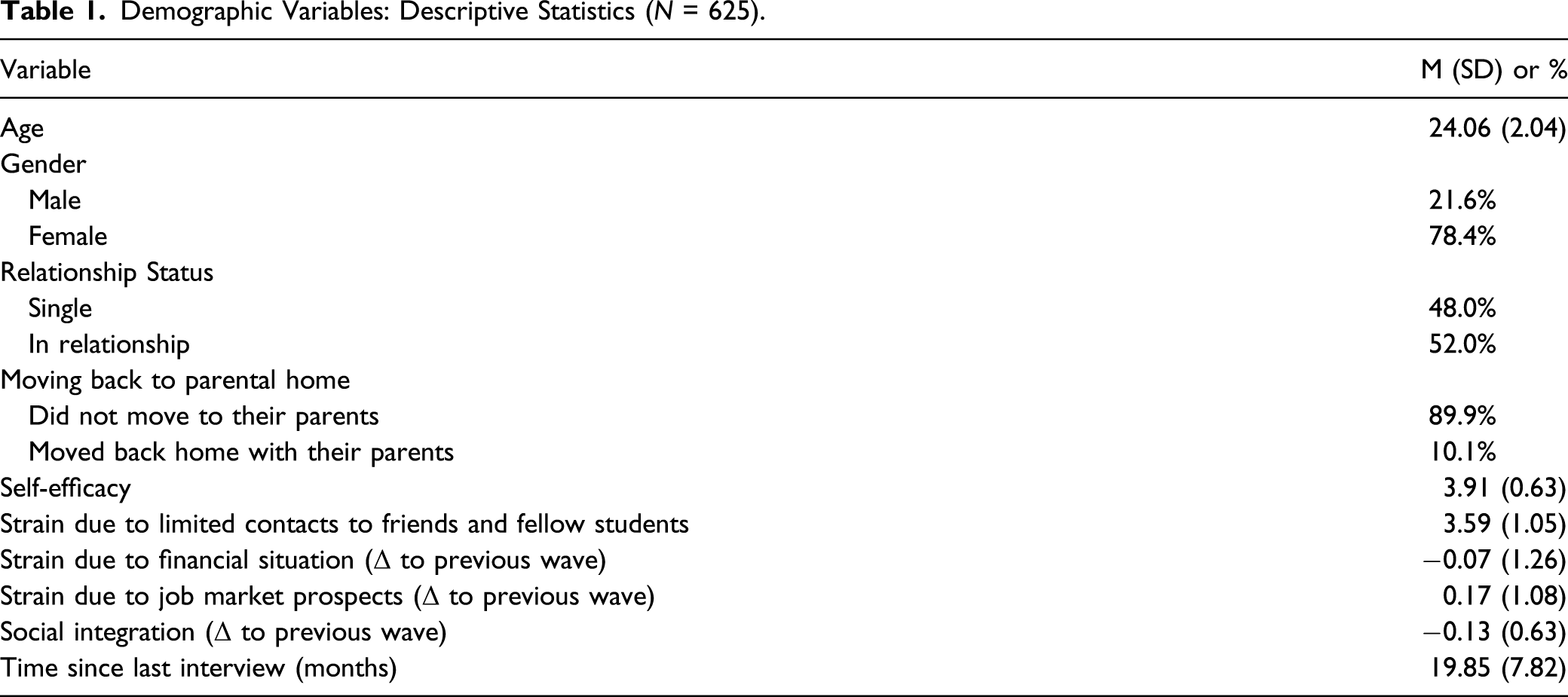
Data collection relied on an online survey tool, for which we recruited students using their email addresses that they provided in earlier panel waves. Participants were students from all disciplines, including STEM, medicine, business, social sciences, humanities, and teacher training programs. In total, 909 students participated in wave 5. From this sample, 719 individuals were in the emerging adult developmental period in 2020 (ages 18–29). The sample was further restricted by the listwise deletion of cases with missing information on life satisfaction, mental health, and/or independent variables. Due to the low number of cases, we excluded three participants who identified their gender as non-binary.
Demographic Variables: Descriptive Statistics (N = 625).
Measures
Our analyses focus on the within-person changes in two outcomes: life satisfaction and mental health problems.
Change in Life Satisfaction
Life satisfaction was measured based on a 10-point Likert-scale from 1 (very dissatisfied) to 11 (very satisfied). The item question was, “All in all, how satisfied are you with your life at the moment?” Based on these responses, we calculate participants’ within-person change in subjective well-being between June 2020 and their most recent previous response.
Change in Mental Health Problems
Mental health was measured using the SF-12 scale (Ware et al., 1995; Wirtz et al., 2018; Yu et al., 2015). The SF-12 mental health component score comprises six items covering vitality, social functioning, emotional role functioning (two items), and mental well-being (two items). Sample items include “During the past four weeks, how often have you felt downhearted and blue?” and “During the past four weeks, how often have emotional problems interfered with your social activities like visiting friends or relatives?” The SF-12 physical component score subscales were not fully accessible in the LAST dataset, which led us to refrain from using scale weights and standardization measures as recommended in the scoring instructions (Andersen et al., 2007). Instead, we calculated a mean score of all four subscales of SF-12 mental health ranging from 1 to 5, with higher values indicating higher levels of mental health problems (Cronbach’s α =.87). Based on this scale, we calculate participants’ within-person change in mental health problems between June 2020 and their state at the most recent previous response.
In our analytical models, we analyze a set of risk and protective factors that help to explain the different trajectories of life satisfaction and mental health problems before and after the outbreak of the pandemic. We differentiate those factors between change and state variables. Change variables measure changes before and during the COVID-19 pandemic and indicate parallel processes of covariates and dependent measures that may explain changes in life satisfaction and mental health problems. Contrary, state variables reflect the current level of self-efficacy, relationship status, or strain from limited peer contacts due to the pandemic and indicate differences in resources for coping with the demand of the pandemic.
Change in Strain by the Current Financial Situation
Participants’ financial strain was measured based on the item “How strained are you by your current financial situation?” Responses ranged from 1 (not at all)– to 5 (very much). We calculate within-person changes between June 2020 and the most recent previous response. Therefore, positive scores indicate an increase in the participants’ strain by their current financial situation compared to their previous response.
Change in Strain by Uncertain Job Market Prospects
Participants’ strain by uncertain job market prospects was measured based on the item “How strained do you feel by uncertain job market prospects?” Responses ranged from 1 (not at all)– to 5 (very much). We calculate within-person changes between June 2020 and the most recent previous response. Positive scores indicate an increase in the participants’ strain by job market prospects compared to their previous response.
Change in Social Integration
Participants’ change in social integration was measured based on the Social Integration Scale (Schiefele et al., 2002). The Social Integration Scale’s interaction component consists of three items capturing interactions with fellow students (Dahm et al., 2016). Sample items include “I have been successful in building contacts with other students during my studies” and “I have many contacts with students in my cohort.” The combined score for social integration ranges from 1– to 4. We calculate within-person changes between June 2020 and the most recent previous response. Consequently, higher scores on this index represent an increase in social integration with fellow students (Cronbach’s α =.85).
Return to Parental Home
Participants reported whether they currently live at a different residence than what they generally consider their place of residence. Moreover, participants listed co-occupants for both the general and current residence, if applicable. Based on this information, we created an indicator of whether students lived with their parents in June 2020 but generally considered a different place as their home.
Self-Efficacy
Participants’ self-efficacy was assessed on the ASKU scale (Beierlein et al., 2012). The ASKU scale consists of three items and ranges between 1 and 5. Higher scores represent a higher self-assessment of one’s competencies to plan and execute actions successfully to achieve desired goals. Self-efficacy scores were collected as part of the 2020 panel wave (Cronbach’s α =.85).
Strain from Limited Peer Contacts
Participants reported subjective strain from limited peer contacts due to social distancing guidelines in 2020. Specifically, participants rated their level of strain from lacking contact with friends and fellow students on separate five-point Likert-scales ranging from 1 (no strain at all)– to 5 (very straining). We combined these answers into a joint index for strain by restricted peer contacts. Higher scores on this index represent a higher subjective strain from limited peer contacts (Cronbach’s α =.78).
Time Interval Since the Previous Assessment
All models adjusted for the interval between the last pre-pandemic response and June 2020. To obtain sensible coefficients, the interval is measured in months.
Demographic Information
Participants provided demographic information, including age, gender, and relationship status.
Analytic Plan
Our analysis took a two-step approach. First, we explored within-in-person changes in life satisfaction and mental health before and after the outbreak of the COVID-19 pandemic. In a second step, we explored whether a set of potential risk and protective factors help explain different trajectories in these two dimensions. Specifically, we calculated change score models, which are OLS regressions using the change as the dependent variable
Results
Descriptive Analyses
Mean Values of Dependent Variables and Within-Person-Changes Prior and During the COVID-19 Pandemic.

Note. *p < .05. **p < .01. ***p < .001.
Standard errors in parentheses.
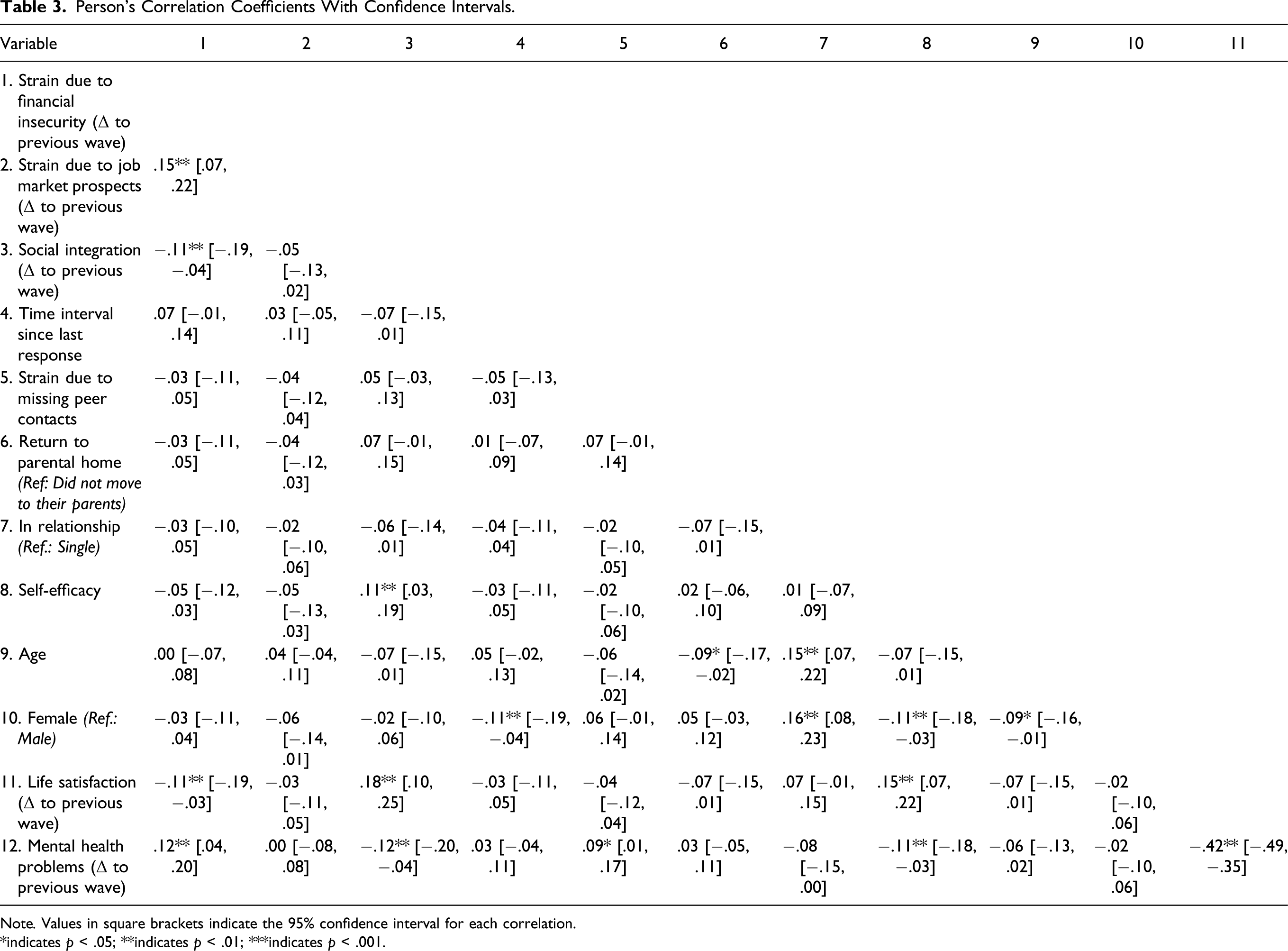
However, the full distribution of within-person changes in life satisfaction and mental health reveals substantial heterogeneity in participants’ trajectories (Figure 1). While 44.2% of participants report a decrease in life satisfaction, 30.5% exhibit a stable, and 25.3% experience higher life satisfaction, compared to pre-pandemic levels (left panel of Figure 1). Similarly, while 49.3% of participants report an increase in mental health problems, 25.6% report roughly stable (±.2) levels of mental health problems. An additional 25.1% of participants exhibit a decrease in mental health problems compared to their respective pre-pandemic scores. This heterogeneity in individual trajectories warrants an examination of potential risk and protective factors. Zero-order bivariate correlations between independent variables are presented in Table 3. Histogram for changes in overall life satisfaction and mental health problems prior and during the COVID-19 pandemic. Person’s Correlation Coefficients With Confidence Intervals. Note. Values in square brackets indicate the 95% confidence interval for each correlation. *indicates p < .05; **indicates p < .01; ***indicates p < .001.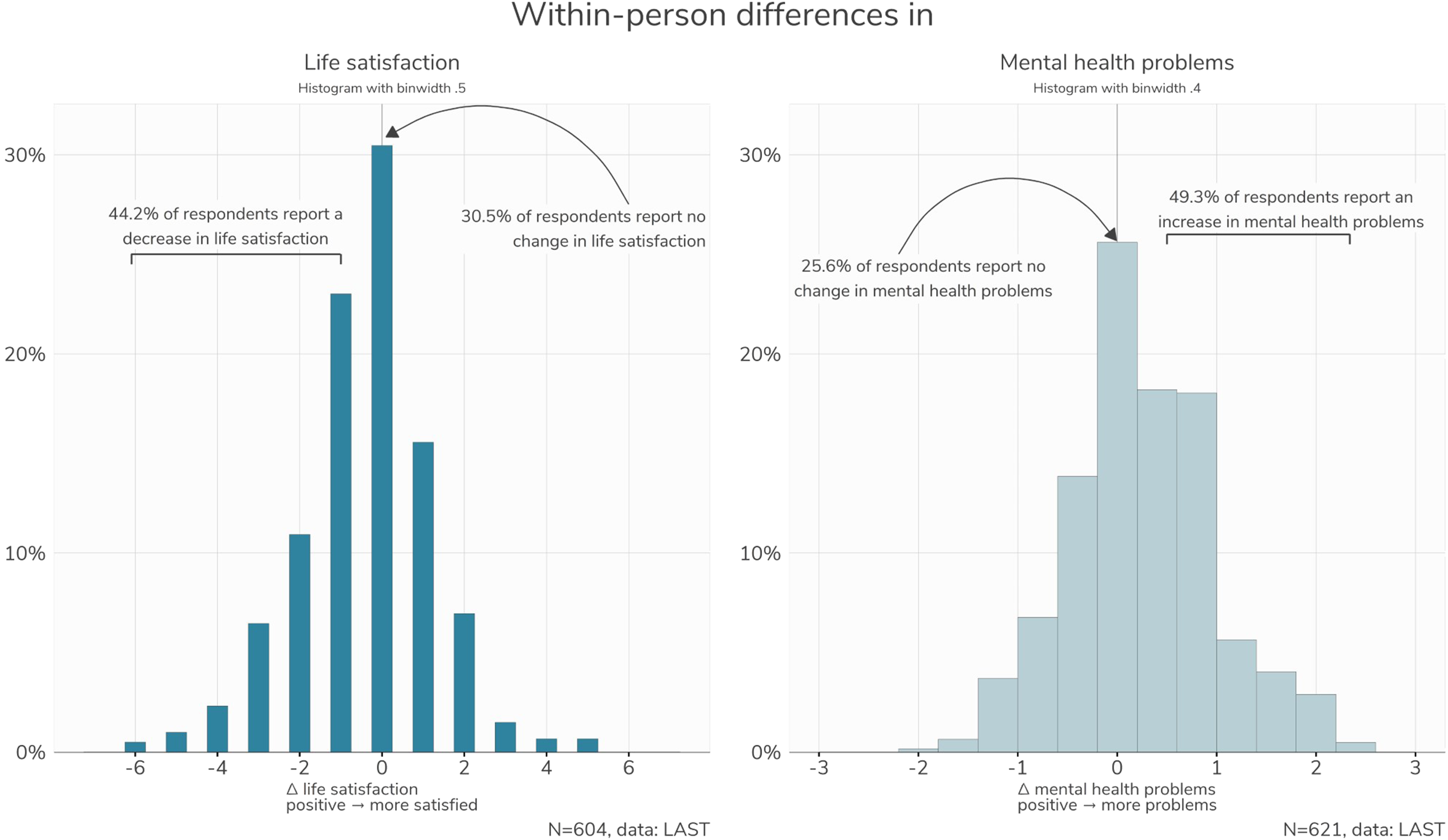
Multivariate Analyses
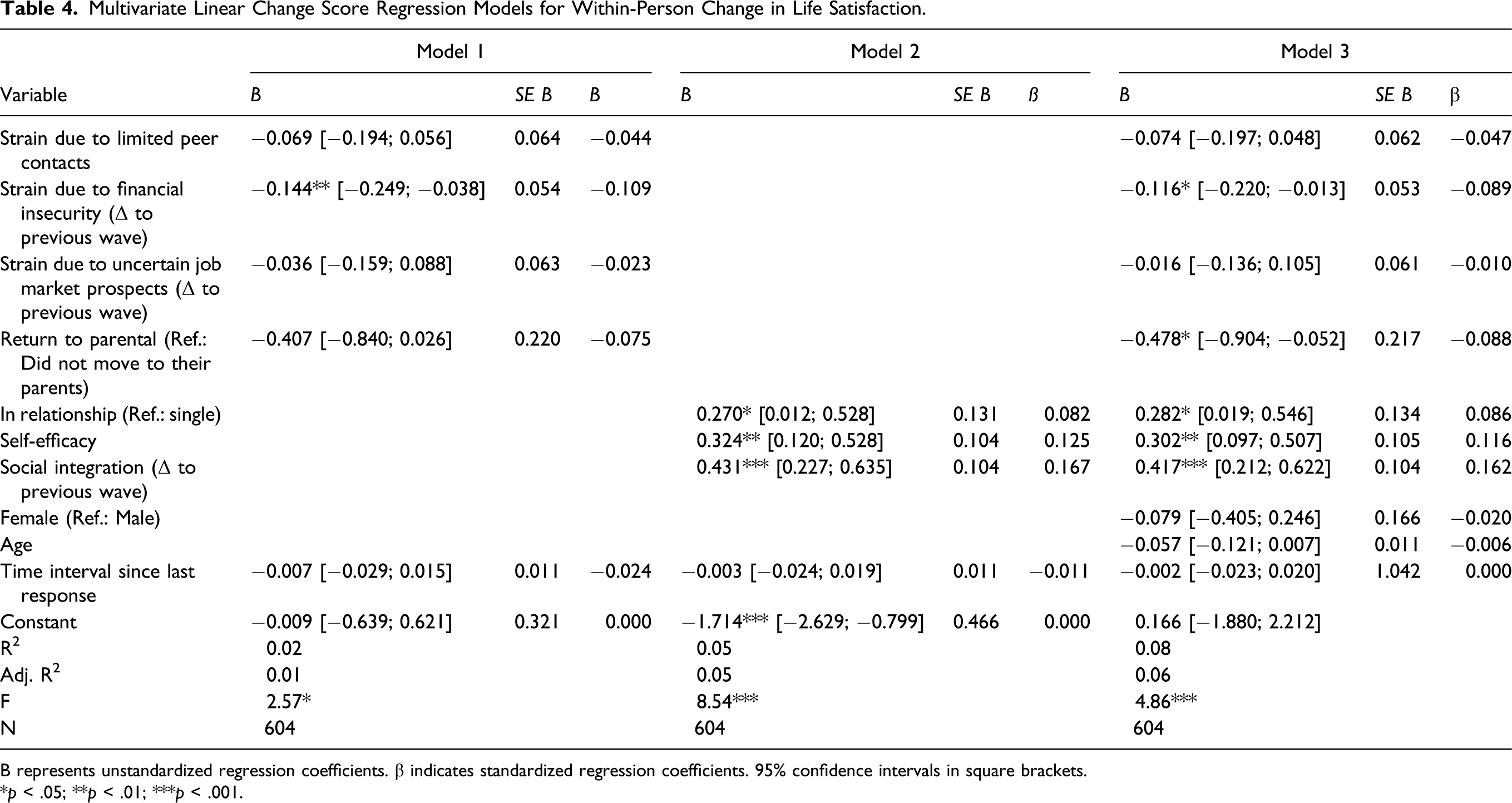
Multivariate Linear Change Score Regression Models for Within-Person Change in Life Satisfaction.
B represents unstandardized regression coefficients. β indicates standardized regression coefficients. 95% confidence intervals in square brackets.
*p < .05; **p < .01; ***p < .001.
Model 1 reveals that selected risk factors are negatively associated with emerging adults’ change in life satisfaction in a statistically significant way. Specifically, an increase in strain due to participants’ financial situation yields a negative association with participants’ change in life satisfaction, compared to pre-pandemic levels. Other risk factors, such as the strain due to limited peer contacts, returning to the parental home, and the change in strain due to uncertain job market prospects, do not yield significant coefficients (Model 1, Table 4).
Model 2 summarizes the coefficients for potential protective factors. Change in social integration, being in an intimate relationship during the pandemic, and self-efficacy are all significantly linked with differences in participants’ life satisfaction. Specifically, a positive change in social integration is associated with a more positive change in life satisfaction. Similarly, coefficients reveal that self-efficacy is positively and significantly associated with changes in students’ life satisfaction. Similarly, being in a relationship in Summer 2020 yields a positive coefficient, indicating a more positive trajectory in life satisfaction (Model 2, Table 4).
The full model confirms that both increased strain due to the financial situation and returns to parental homes are risk factors for students’ changes in life satisfaction (Model 3, Table 4). Self-efficacy, being in a relationship, and changes in social integration persist as significant protective factors in the full model. Finally, we do not find statistically significant effects for gender, age, or the time interval since the pre-pandemic interview. Note that although we find several significant coefficients, the explained variance for life satisfaction is relatively small with R2 0.08.
Multivariate Linear Change Score Regression Models for Within-Person Change in Mental Health Problems.
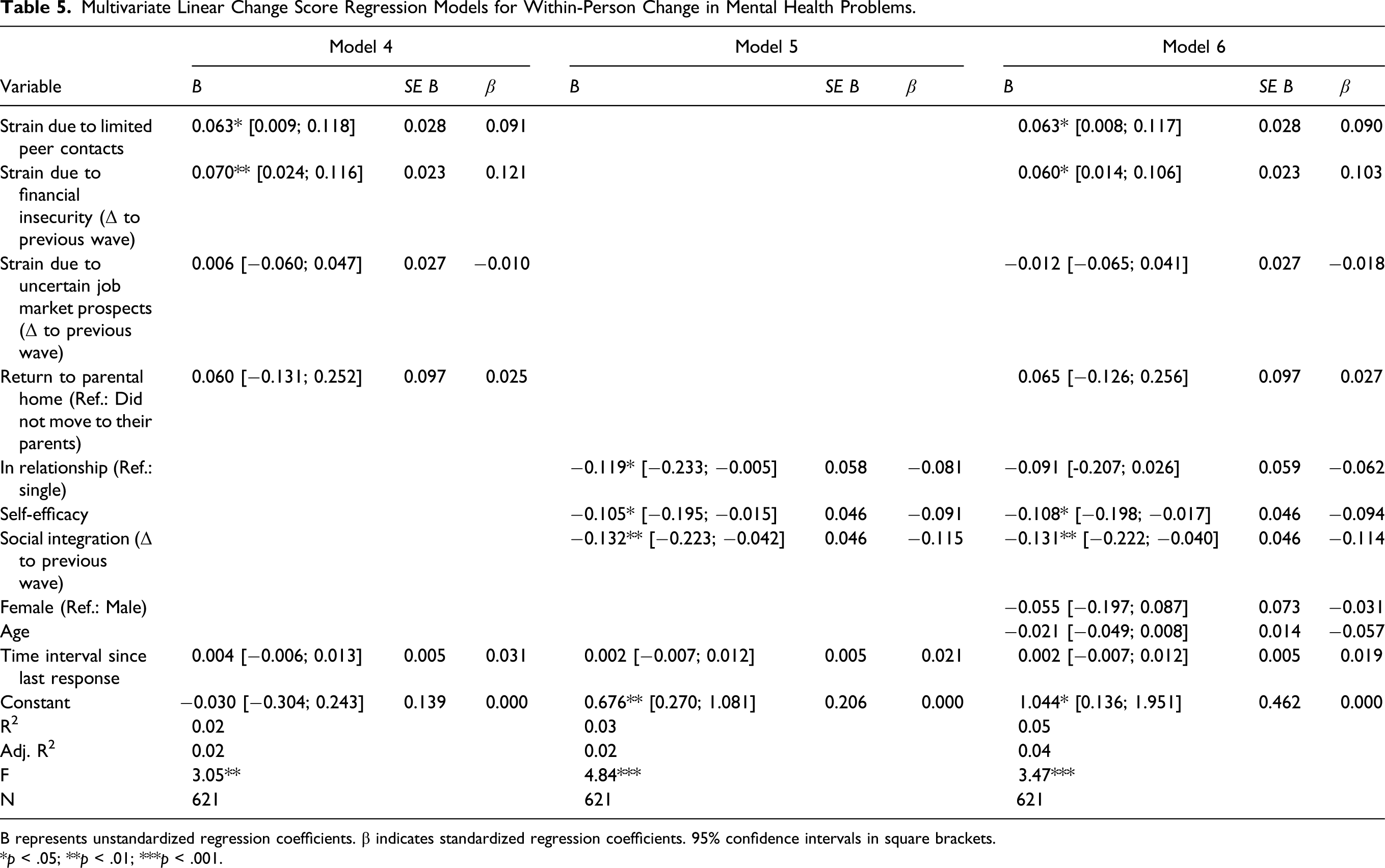
B represents unstandardized regression coefficients. β indicates standardized regression coefficients. 95% confidence intervals in square brackets.
*p < .05; **p < .01; ***p < .001.
Model 4 reveals that selected risk factors are negatively associated with emerging adults’ change in mental health problems in a statistically significant way. An increase in strain due to participants’ financial situation is significantly associated with increased mental health problems. Moreover, strain due to limited peer contacts during the pandemic is also associated with an increase in participants’ mental health problems. Further risk factors, such as returning to the parental home and the change in strain due to uncertain job market prospects, do not yield significant coefficients (Model 4, Table 5).
All three potential protective factors yield statistically significant coefficients for participants’ change in mental health problems (Model 5, Table 5). Specifically, being in a relationship in Summer 2020 yields a positive coefficient, indicating a lower level of mental health problems in partnered participants. Moreover, higher levels of self-efficacy significantly decrease mental health problems in participants compared to pre-pandemic levels. Finally, a positive change in social integration correlates with a more negative change in levels of mental health problems (Model 2, Table 4).
The full model confirms that both increased strain due to participants’ financial situation and strain due to limited peer contacts during the pandemic are risk factors for increases in participants’ mental health problems (Model 6, Table 5). On the other hand, self-efficacy and a positive change in social integration persist as significant protective factors against increased mental health problems in the full model. Finally, we do not find statistically significant coefficients for age, gender, or the time interval since the previous survey interview. Similar to the models about life satisfaction, the overall variance explained by the full model for changes in mental health problems is relatively small, with R2 0.05.
Discussion
The COVID-19 pandemic has disrupted emerging adults’ daily life routines. Social distancing, stay-at-home orders, and the closure of public and educational facilities disrupted their social, educational, and working lives. Our study investigated how emerging adults’ life satisfaction and mental health changed during the COVID-19 pandemic compared to pre-pandemic levels. Additionally, we analyzed the influence of potential risk and protective factors on life satisfaction and mental health changes. Using a longitudinal data set from Germany, we were able to explore the role of life circumstances and personality characteristics for participants’ changes in life satisfaction and mental health. Specifically, we compared data from before the outbreak of COVID-19 and after several governmental guidelines were adopted. The use of longitudinal data allowed us to investigate intra-individual changes in life satisfaction and mental health without recall bias problems.
Our results revealed three main findings. First, we found a statistically significant decline in emerging adults’ life satisfaction and a significant increase in mental health problems compared to pre-pandemic levels. Consequently, our results showed that emerging adults are at risk to suffer from negative consequences from stressful life events, such as the COVID-19 pandemic. Previous research emphasized that young adults, who may have less experience from previous life disruptions and adaptation processes, are particularly vulnerable in times of crises (Weinberger et al., 2018). Emerging adulthood is characterized by the transition to financial independence and detachment from parents and former social roles. Emerging adults experience an increase in agency and independence, resulting in having more choices of day-to-day activities and life decisions (Wood et al., 2018). Closures of educational facilities, social distancing guidelines, and stay-at-home orders interrupt emerging adults’ social life. This might explain decreased satisfaction with life in general and increased mental health problems, even though emerging adults face lower health risks from COVID-19.
Second, our results showed considerable heterogeneity in life satisfaction and mental health trajectories beyond the generally negative impact of COVID-19 on emerging adults’ well-being. Participants who have experienced a decline in life satisfaction (44%) and mental health (49%) constituted the largest group in both dimensions. Yet, a quarter of participants reported higher levels of life satisfaction and lower levels of mental health problems during the COVID-19 pandemic compared to pre-pandemic levels. These results indicate a resilient group of emerging adults who cope with pandemics’ challenges in a beneficial way.
Our third main finding constituted a first step toward a better understanding of potential risk and protective factors for changes in life satisfaction and mental health in the wake of COVID-19. While better social integration into peer contexts acted as a protective factor and increases life satisfaction and mental health, strain due to limited peer contacts during the pandemic leads to increased mental health problems. Several studies show higher levels of loneliness due to social distancing guidelines resulting in higher levels of mental health problems (Buecker et al., 2020; Killgore et al., 2020; Lee et al., 2020). In times of stress, social support reduces individuals’ negative emotions and helps them adapt to environmental changes (Kamarck et al., 1990). Specifically, campus closures abruptly disrupted university students’ social contacts and personal contact opportunities (Elmer et al., 2020). Virtual teaching and learning might not compensate for the crucial importance of in-person interactions on campus. This results in higher levels of loneliness and mental health problems. Changes in strain due to financial situation proved to be a risk factor for negative life satisfaction and mental health changes. Many university students lost their student jobs or internships because of the pandemic, resulting in uncertainty about their current and future financial situation (Aucejo et al., 2020). They might struggle to pay rent and other living expenses or tuition fees, which may increase worries and decrease daily life quality. This might lead to decreased mental health and life satisfaction. Findings from previous economic recessions suggest that young people entering the labor market are most affected by a shrinking labor market (Bruno et al., 2014; Elsby et al., 2016). However, we found no effects for changes in strain by uncertain job market prospects on life satisfaction and mental health. University students may be aware of their higher qualifications and better job opportunities in general. Current labor market data show the highest increases in unemployment rates for the least educated and jobs in construction, manufacturing, and transportation (Bell & Blanchflower, 2020). Furthermore, we found that returning to the parental home during the COVID-19 pandemic decreases life satisfaction but is not associated with mental health. Emerging adults rate residential independence as one of the most important markers to reach adulthood. Consequently, returning to their parents’ home disrupts the transition to adulthood. Instead of developing their own way of life, they are dependent on their parents. Previous findings suggest ensuing conflicts about private space and parental monitoring among those returning to the parental home (Sassler et al., 2008; Ward & Spitze, 2007). This may be an explanation for decreasing levels of life satisfaction. However, while we do not have any direct measures of parent–child conflicts, further studies should analyze the link between returning to the parental home and decreasing life satisfaction during the pandemic in more detail. For changes in mental health, we find no significant effect. These may arise later when conflicts between parents and adult children intensify and become stable. Lower levels of life satisfaction may be a hint for later mental health problems because permanent low levels of life satisfaction are associated with increases in mental health problems (Fergusson et al., 2015). Moreover, we find that participants in an intimate relationship experience a more positive trajectory of life satisfaction. Partners’ social support may buffer the negative effects of stress and uncertainty when COVID-19 occurred. Being in an intimate relationship may provide individuals stability in times of unsteadiness when partners keep each other grounded and reduce feelings of loneliness (Gómez-López et al., 2019; Lee & Goldstein, 2016). Finally, self-efficacy turns out to be a protective factor against negative changes in life satisfaction and mental health. Higher levels of self-efficacy lead to increased life satisfaction and decreased mental health problems. Thus, our findings confirm prior results suggesting that generalized self-efficacy is a key moderator for the impact of environmental changes on stress experiences. High levels of self-efficacy attenuate stress in general and help manage difficult circumstances of stressful life events (Jerusalem & Mittag, 1995). Our findings confirm that trust ones’ competencies to cope with stressors increase life satisfaction and lower the risk of mental health problems (Bandura, 2006; Yildirim & Güler, 2020).
Our study has several limitations. First, our sample is limited to university students and, therefore, only serves as evidence for this particular group of emerging adults. The COVID-19 pandemic significantly affected students’ daily life routines. Students’ opportunities to meet and find peers continue to be disrupted by the closures of university campuses, restaurants, and bars. Moreover, non-pharmaceutical interventions mainly affected student jobs, especially in the hospitality industry. Therefore, students’ life circumstances might be among those that are disrupted the most by the pandemic. However, population-based studies suggest that emerging adults, in general, experience a decline in life satisfaction and mental health. Future studies should investigate if our findings of risk and protective factors are also replicable for other groups of emerging adults. The factors in our analysis might be similarly associated with emerging adults’ well-being regardless of whether they study, go to school, or be part of the labor market. Given the relatively small variance that is explained by our models for changes in life satisfaction and mental health, the uncovering of more risk and protective factors is needed. Similar to previous studies, our approach of observing changes in life satisfaction and mental health problems between prior to and during the COVID-19 pandemic cannot definitely determine whether changes are due to the pandemic or happened before the outbreak of COVID-19. Furthermore, future studies should analyze possible long-term effects on COVID-19-related changes in life satisfaction and mental health. Individuals commonly adapt to major negative life events and recover after initial declines (Infurna & Luthar, 2018). Early evidence for various age groups suggests recovery from an initial rise of mental health problems after a few months during the COVID-19 pandemic (Daly et al., 2020; Daly & Robinson, 2020; Fried et al., 2020; Kujawa et al., 2020). Future studies should investigate the specificities of these adaptation processes among emerging adults.
Footnotes
Declaration of Conflicting Interests
The author(s) declared no potential conflicts of interest with respect to the research, authorship, and/or publication of this article.
Funding
The author(s) disclosed receipt of the following financial support for the research, authorship, and/or publication of this article: The research presented here was carried out with financial support from the German Ministry of Education and Research from 2017–2020 (FKZ 01PX16017 LAST) and also by the Department of Studies and Teaching, University of Oldenburg.
Open practices
The raw data and analysis code used in this study are not openly available but are available upon request to the corresponding author.
