




Abstract
This narrative review examines the antecedents of online abuse and specifically the factors that make sport an especially susceptible context and women athletes particularly at risk. The commercialisation of sport has intensified social media scrutiny, leading to increased online abuse of athletes, impacting their mental health and well-being. This narrative review identifies the need for sport policy makers to understand online abuse antecedents and to develop safeguarding measures. Narrative reviews are designed to provide meaningful synthesis of broad research that requires nuanced interpretation and are not intended to provide an exhaustive review of the literature. Bronfenbrenner’s ecological systems theory is used as a conceptual architecture for this narrative review to map the multi-level influences on online harm in sport and thus, guide the development of more comprehensive interventions. The review aims to identify multi-level risk factors for online abuse targeting women athletes and to synthesise theoretical insights using an ecological systems lens. It examines the broader social context, legal environment, and social media features, as well as specific factors like gambling associations, sport factors, and athlete characteristics. It also underscores the need for increased research, education, and policy to protect athletes. This review informs a series of recommendations to guide future policy and practice.
Introduction
Recent attention has spotlighted the effects of social media use and content on the mental health of athletes (e.g., Putukian et al., 2024), specifically highlighting the problem of online abuse in sport (Kavanagh & Mountjoy, 2024). Commentators have called for increased research, comprehensive education, and targeted policy to better safeguard athletes online (Kavanagh & Mountjoy, 2024). This narrative review examines the antecedents of online abuse and particularly the factors that make sport an especially susceptible context and women athletes particularly at risk. The review encompasses the wider ecosystem in which sport social media operates, including the broader social context, legal and regulatory environments, and characteristics of social media, as well as the narrower gambling associations, sport features, and athlete factors. A narrative review does not seek to answer a confined research question, nor conduct an exhaustive review of the literature, which would require a systematic or scoping review (Ferrari, 2015). Accordingly, this narrative review has two interrelated aims. First, it develops a theoretically and contextually rich ecological map of online abuse in sport. Second, within this map, it identifies the multi-level risk factors that render women athletes particularly vulnerable, and synthesises relevant theoretical insights from sport management, sport medicine, and digital media scholarship. The practical contribution is to inform policy interventions and regulatory structures designed to attenuate social media-related harm to athletes, with a particular focus on women.
The issue of online abuse has been recognised by sport governing bodies in sport including the International Olympic Committee (IOC, 2024) and the National Collegiate Athletic Association (NCAA) (Heath, 2024a; Wall Tweedie et al., 2025); at the same time, athletes, coaches, and officials are becoming more vocal about the mental health impacts (BBC Sport, 2021). In the sport medicine literature, online abuse is recognised as having potential negative consequences for athlete mental health and wellbeing while noting a dearth of research examining the link (Kavanagh & Mountjoy, 2024; Mountjoy et al., 2023). Researchers have called for sport mental health support personnel to understand online abuse and for the development of safeguarding policies to address the problem (Kavanagh & Mountjoy, 2024).
A variety of terms are used in the literature to describe anti-social online behaviours, including threatened violence, abuse, bullying, harassment, trolling or maladaptive parasocial interaction (Hand & Scott, 2022; Sanderson et al., 2020). All such behaviours can be captured under the term of virtual maltreatment, which Kavanagh et al. (2016) defines as, “direct or non-direct online communication that is stated in an aggressive, exploitative, manipulating, threatening or lewd manner and is designed to elicit fear, emotional and psychological upset, distress, alarm, or feelings of inferiority.” (p. 788) In the public domain, online abuse, is widely utilised and offers an intuitive description (e.g., BBC Sport, 2021). Within this narrative review, online abuse is the term utilised because of the broad and longstanding utility within both the academic literature and public discourse. However, it is acknowledged that online abuse is classified as psychological violence in accordance with the IOC’s consensus statement about interpersonal violence and safeguarding in sport (Tuakli-Wosornu et al., 2024). Additionally, the review incorporates the phrase online harm in parts which promotes a harm reduction lens prominent in discussions of the policy implications. The review aims to identify multi-level risk factors for online abuse targeting women athletes and to synthesise theoretical insights using an ecological systems lens. The next section outlines the theoretical framework guiding the review, leading to its content via six levels. The six levels of the ecological model are social (broader cultural norms and structural inequalities), legal and regulatory (laws, regulations, platform policies, and enforcement arrangements shaping online conduct), social media (platform affordances, algorithms, and interaction dynamics), sport (sport cultures, organisations, and live-event contexts), gambling (betting markets and gamblification-related incentives), and athlete (individual identities, resources, and psychosocial vulnerabilities).
Theoretical Framework: Ecological Systems Approach
As a conceptual architecture, this review employs Bronfenbrenner’s (e.g., 1979) ecological systems theory, which has been widely used in health behaviour research (Rosa & Tudge, 2013) and was adapted by Sallis et al. (2015) for application within the physical activity context. Similarly, the use here concords with Pascoe et al. (2022), who utilised an ecological systems approach in their review of women athletes’ gender-specific psychological stressors. Ecological models encourage the explicit recognition of multi-levels of influence, including environmental and individual factors, and thus, can guide the development of more comprehensive interventions (Sallis et al., 2015).
Online abuse in sport is a complex problem that arises from an accumulation of environmental and individual factors. This review aligns with health policy and policy management research that has utilised ecological systems theory to explain specific mental health related outcomes including bullying and peer victimisation in schools (Cross et al., 2015; Hong & Espelage, 2012; Upton Patton et al., 2013) and sexual assaults (Campbell et al., 2009). Although ecological systems theory is formally gender-neutral, in this review we apply it to a distinctly gendered harm: online abuse directed at women athletes. In doing so, we treat such abuse as a form of gender-based violence enacted through sport’s digital environments and draw selectively on feminist and intersectional perspectives to foreground how gendered power relations shape risk across ecological levels (Antunovic, 2019; Kavanagh et al., 2019; Litchfield et al., 2018).
The review process identified macro and micro antecedents to the problem of online abuse in sport and specifically for women. These factors are grouped into different levels in line with the ecological systems approach. Examination of these levels, and the interactions between them, provides a contextually specific model conceptualising online abuse. The framework was informed by Cross et al.’s (2015) ecological approach that extended previous social-ecological approaches to understanding cyberbullying by explicitly considering the place of online contexts within the systems and levels identified. The current framework seeks to illustrate factors that contribute to the experience of online harm and has the athlete, rather than the perpetrator, as the central point of focus. Placing the athlete at the centre of the analysis aligns with an athlete-centred approach to care and trauma-informed approach to safeguarding (e.g., McMahon & McGannon, 2024). A trauma-informed approach recognises the widespread prevalence and impact of trauma. Whilst the analysis was focused on mapping the antecedents to online abuse, recommendations and discussions sought to (re)position the athlete needs at the centre of decision making. The subsequent section details the method utilised in the review.
Method
There is limited research specifically addressing online abuse in sport (Kavanagh & Mountjoy, 2024; Mountjoy et al., 2023) and this narrative review necessarily draws from a wider body of research. Narrative reviews are appropriate for the meaningful synthesis of broad research that requires nuanced description and interpretation (Sukhera, 2022). Narrative reviews have been used sparingly in sport management and policy research, however, are often used in health-related fields of study (Furley & Goldschmied, 2021; Greenhalgh et al., 2018). The review and synthesis were undertaken by two researchers whose combined expertise spans health, sport management and sport consumer psychology. Both researchers read and summarised the included literature, met on several occasions to compare interpretations, and iteratively refined the allocation of antecedents to ecological levels in line with the ecological systems framework. Rather than applying a formal line-by-line coding scheme, we adopted an emergent narrative synthesis guided by this framework and our disciplinary expertise, with discussion and cross-checking used to enhance the transparency and plausibility of the findings (Ferrari, 2015; Sukhera, 2022).
To identify a preliminary sample of articles, a search was conducted across four databases (Scopus, ProQuest, EBSCO Host, and Emerald Insight), using the search term “sport*”, “athlete*” AND “social media”, “online”, “cyber*”, “virtual” AND “abuse”, “hate”, “bullying”, “maltreatment”, “violence”, “troll*”. From the outset, the intention was to draw from a broader body of literature and then to extract gender-specific findings. This purposeful approach was deemed essential to identify antecedents to the problem of online abuse and within that context identify and consider how women may be especially at risk (Kavanagh et al., 2019; Sallis et al., 2015). The selection of articles was limited to those published between January 2004 and May 2024, coinciding with the expansion of social media use in the 2004 Olympic Games, and sport’s commercial application of the technology (Gammelsæter, 2021). Only peer-reviewed articles written in English were considered in the primary search.
The two primary researchers conducted the synthesis process and writing the review. Collaboration between the two researchers allowed for a richer more nuanced sense making rather than pursuing a strict consensus. Numerous macro and micro antecedents to the problem of online abuse in sport and specifically for women were identified through the review process. These factors were grouped into different levels in line with the ecological systems approach (Bronfenbrenner, 1979). The process was also informed by Researcher 1’s training and experience in healthcare which prompted an epidemiological lens to examine online abuse—i.e., to consider contributing factors and patterns in the presentation of the problem. During the preliminary identification of antecedents, consideration was given to evidence quality, and the two primary researchers critically evaluated the articles (per Ferrari, 2015).
Methodology guides advocate for the integration of additional articles during the synthesis process when evidence was missing (Greenhalgh et al., 2018). As a result, the decision was made to incorporate grey literature, which includes industry reports, in the review (Furley & Goldschmied, 2021). Industry reports were deemed a required inclusion because these encapsulate efforts by sport organisations to measure and categorise online abuse (e.g., via data science firms). Moreover, public and academic understanding about the prevalence of online abuse in sport is currently dependent upon these industry reports (Wall Tweedie & Smith, 2025).These reports are externally commissioned by sport governing bodies but have not undergone the academic peer-review process. For example, World Athletics utilized the services of a data science provider to measure the prevalence and nature of online abuse at consecutive world athletic championships (World Athletics, 2021, 2022). Other industry reports included in the preceding review are funded by the IOC (Hayday et al., 2024), the International Tennis Federation (ITF, 2025), Fédération Internationale de Football Association and the players’ association (FIFA/FIFPro, 2023), and National Collegiate Athletic Association (NCAA; Signify Group, 2024). By incorporating industry reports into the narrative review, the distinction and limitation of this evidence, such as the financial interests of those collating the data, is recognised.
Finally, the two primary researchers incorporate relevant literature, drawing upon their expertise in sport management and sport consumer psychology, to further “tell the story” (Furley & Goldschmied, 2021) of the antecedents to online abuse in sport, especially for women athletes. For example, sport management literature pertaining to dysfunction sport fandom was considered essential to incorporate. Although this body of work is typically not gender-specific, it illuminates how strong team identification, perceived norm violations, and fan entitlement can escalate into verbal and online abuse of players and officials. In the context of women’s sport, these same dynamics frequently manifest through explicitly misogynistic, sexualised, or homophobic content directed at women athletes, making dysfunctional fandom a critical antecedent to their online abuse (Akhtar & Morrison, 2019; Burch, Fielding-Lloyd, & Hayday, 2024; Kavanagh et al., 2019). In outlining the method, it is acknowledged that a legitimate critique of narrative reviews can be that evidence is “cherry-picked” to support a certain perspective. However, as argued by Greenhalgh and colleagues (2018), the critique must be weighed against the counterargument that narrative reviewers select evidence judiciously and purposefully.
The narrative synthesis drew on 71 scholarly sources (peer-reviewed journal articles, books and book chapters) and 12 pieces of grey or industry literature (for example, organisational reports, media, and safeguarding evaluations). Articles did not map directly or exclusively to one ecological domain. Reflecting the ecological focus of the review, most sources pertained to social and social media-level antecedents (for example, gendered norms, fan cultures and platform affordances), with a smaller number addressing legal and regulatory frameworks, gambling-related drivers and athlete-level experiences and mental health outcomes. Discussion of the narrative results follows; each section includes a table summary of the synthesised theoretical insights for each level of the ecological model. The article culminating in conclusions and practical recommendations.
Narrative Review
Social
Summary of the Social-Level of the Ecological Model
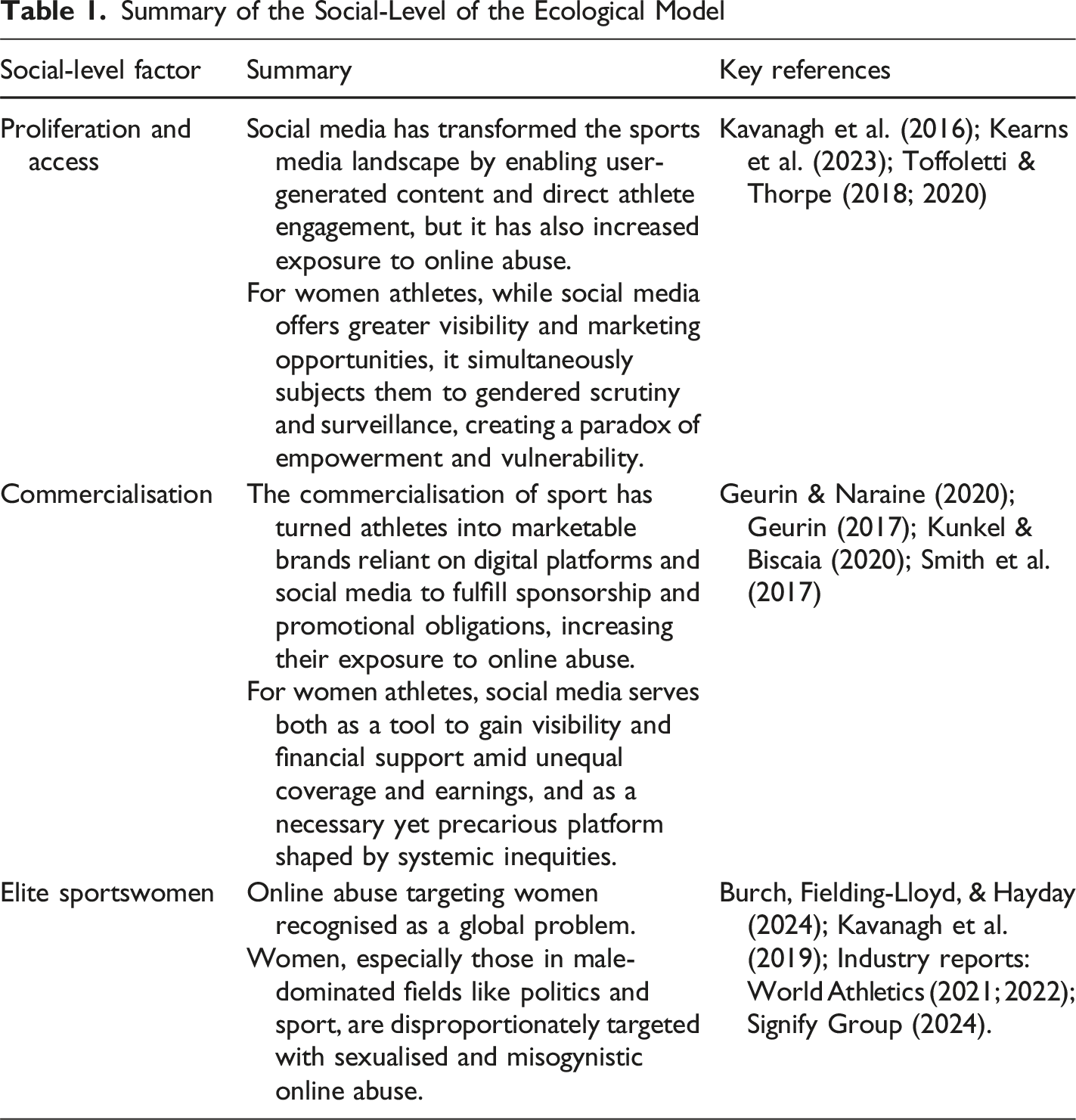
Proliferation and Access
Technological shifts have indelibly revolutionised our social context with social media’s proliferation marking an inflection point transforming the media ecosystem in which athletes participate. Where athletic performance under traditional media was reported through third-party informational portals, social media presents user-generated content subject to modification, reconstruction, interaction, substitution, and peer-to-peer interpretation and dissemination (McCay-Peet & Quan-Haase, 2016, 2017). Accompanying the rise in social media prevalence has been a commensurate increase in online abuse (Kavanagh et al., 2016; Kearns et al., 2023). Such attacks are characterised by aggression, criticism, and even direct threats, leaving athletes vulnerable to mental health harm.
Considering the ubiquity of social media platforms as central mediators of cultural literacy and economic engagement, their impact has seeded research seeking to better understand the implications for women athletes (Toffoletti & Thorpe, 2018, 2020). While newfound social media exposure has offered a more equitable marketing voice for women (Geurin, 2017), it has also been accompanied by gendered responses focusing on the body and trapping women into a contradictory double-bind where equal participation comes at the potential cost of malignant surveillance (e.g., Burch, Fielding-Lloyd, & Hayday, 2024).
Commercialisation
Sports and their constituent enterprises – including athletes and players – represent brands that rely heavily on digital revenue streams, and underpinning sponsorships and broadcast rights fees (Smith et al., 2017). Commercialisation means that players and athletes are properties, members and fans are consumers and customers, sponsors are corporate partners, and player and athlete brand names and images are used to propel merchandising and digital channels for promotion and monetised content distribution (Kunkel & Biscaia, 2020). The problem of online abuse, however, has deepened coinciding with the ever-growing commercial imperatives of sport that force elite athletes to deliver social media content. Athletes must maintain their currency as personal brands to attract sponsorship, and to meet their contractual, promotional obligations once they have secured the support (e.g., Geurin & Naraine, 2020). Most critically, the commercialisation of sport has had a differential effect on men’s and women’s sport. For example, social media has been a means for women athletes to attract interest and commercial support to counterbalance the lower earnings and media coverage compared to men’s sport (Geurin, 2017). Thus, women athletes have experienced the dependence on social media accompanying the rise in commercialisation of women’s sport, but also a reliance on social media born out of the inequity of commercialisation.
Elite Sportswomen
Whilst online abuse is a ubiquitous problem impacting all genders, reports by the United Nations (2015) and Amnesty International (2018) have recognised online abuse targeting women to be a global problem. These reports state that women may experience online abuse at a higher rate than men and this abuse tends to be distinctly misogynistic and sexualised in nature. Conversely, studies into online abuse targeting Members of Parliament (MPs) have found that men MPs received more online abuse in volume compared to women; however, the abuse received by women MPs tended to be gendered and sexualized in nature (Akhtar & Morrison, 2019; Erikson et al., 2023). Inter-Parliamentary Union research showed that women MPs report alarming levels of threats of sexual violence and repeated harassment (IPU, 2016). Moreover, research indicates that for men MPs, online abuse caused them to be concerned about reputational damage, whereas for women MPs, the predominant concern associated with online abuse was about their physical safety (Akhtar & Morrison, 2019). A prominent theme is that women entering a field predominantly occupied by men, like politics (IPU, 2016) or sport (Burch, Fielding-Lloyd, & Hayday, 2024; Kavanagh et al., 2019), face resistance in the form of sexist remarks, intimidation or harassment.
In some sport contexts, women receive a higher volume of online abuse compared to men. Recent reports for World Athletics have demonstrated the disproportionate manifestation of online abuse targeting women. Studies for World Athletics suggest that at the 2020 Tokyo Olympics, women athletes received 87% of all online abuse and at the 2022 World Athletic Championships, women received 60% of the online abuse (World Athletics, 2021, 2022). In the 2024 NCAA March Madness Championships (basketball), women received almost three times the abuse compared to men (Signify Group, 2024). Irrespective of the volume of abuse, it seems that for women in sport, online abuse tends to be especially sexualised and misogynistic (Akhtar & Morrison, 2019; Burch, Fielding-Lloyd, & Hayday, 2024; Kavanagh et al., 2019; Signify Group, 2024). Moreover, sport medicine researchers identified online abuse as a gender specific psychosocial stressor influencing athlete mental health (Pascoe et al., 2022)
Legal and Regulatory
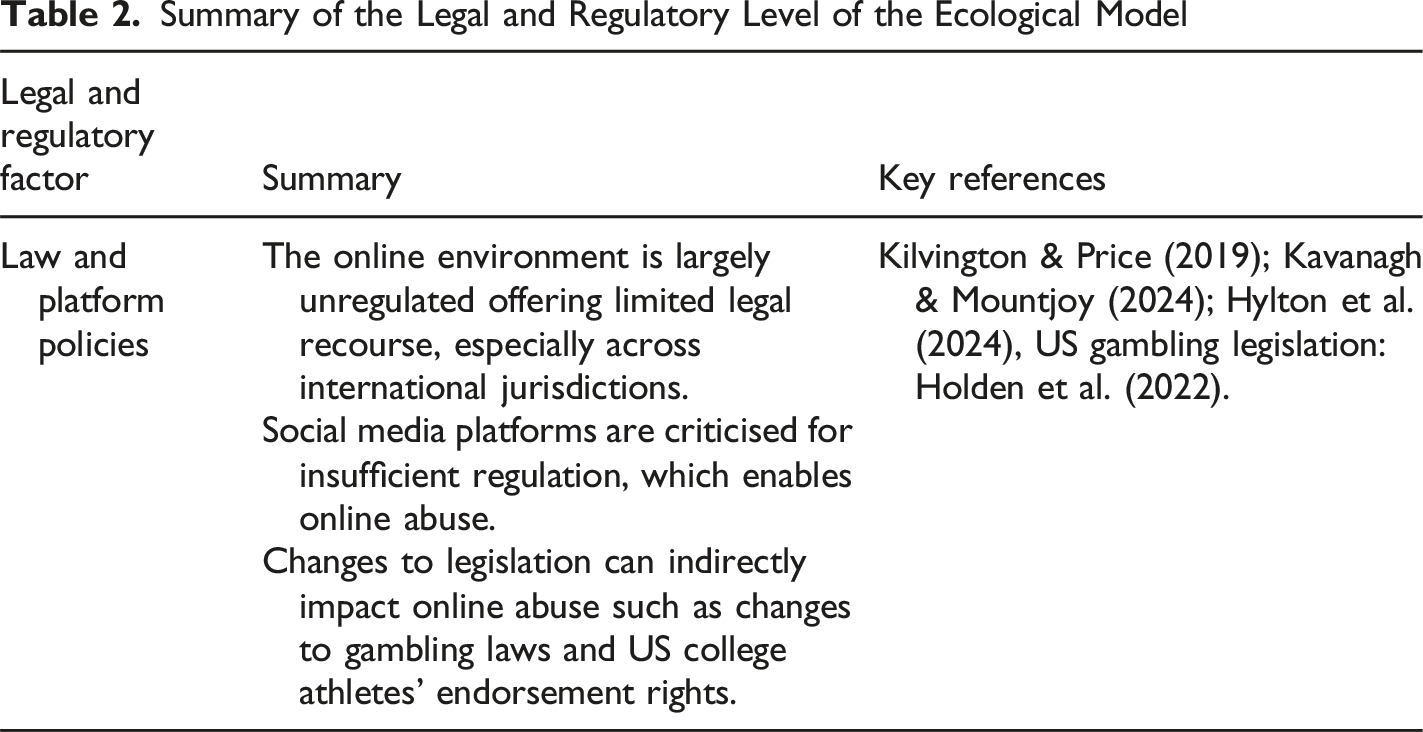
Law and Platform Policies
The utility of ecological systems theory promotes consideration of the legal and policy environments within which behaviours emerge (Sallis et al., 2015). There has been limited academic discussion about the legal and regulatory context that may enable or prevent online abuse, especially as associated with or targeted towards sport (McCarthy, 2022). This context is further complicated by the global and transnational nature of digital platforms. Athletes, perpetrators, social media companies, and sporting bodies are often located in different legal jurisdictions, subject to overlapping or inconsistent national laws, regional regulations and sport-specific codes of conduct, which can make redress and enforcement uneven. Overall, there is broad recognition that the online environment remains largely unregulated with vast opportunities for online abuse and limited legal recourse available to individuals experiencing harms (e.g., Kilvington & Price, 2019). Online abuse is not bound by geographic borders which adds complexity to finding legal remedy (Kavanagh & Mountjoy, 2024). A critical challenge is that the perpetrators of online abuse and the targets can reside in different parts of the globe and therefore in vastly different legal jurisdictions (Hayday et al., 2024). Hylton et al. (2024) draw attention to the lack of regulation by social media platforms, especially X (formerly Twitter), that perpetuates racism and thwarts efforts by professional sport clubs to challenge online racism.
Summary of the Legal and Regulatory Level of the Ecological Model
Social Media
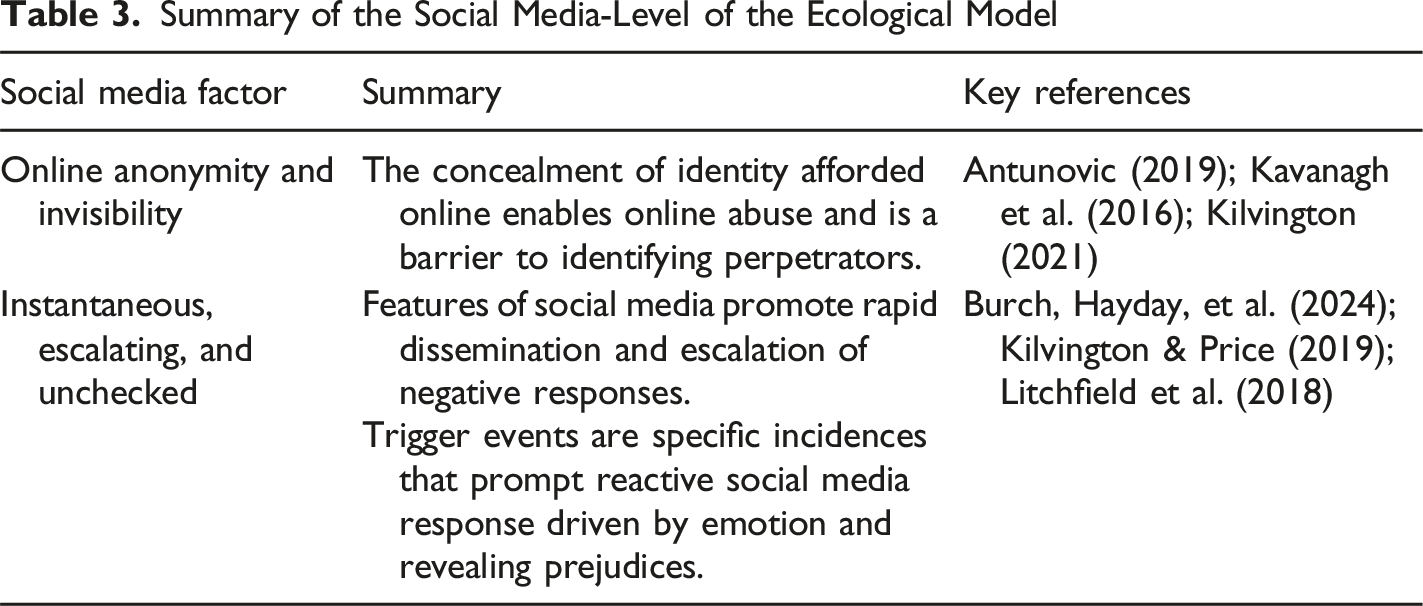
Online Anonymity and Invisibility
Social media has become a ubiquitous and pervasive part of modern lives. The literature describes several features of social media that make it especially vulnerable to use for harmful content, including its dynamic, interactive, escalating nature as well as the way it allows users to hide behind anonymity. Moreover, online abuse can itself be seen as part of the leisure experience for some people and sadistic enjoyment is what attracts them to engage in social media (Kavanagh et al., 2016). Researchers have posited that the anonymity – the concealment of identity – afforded by the online environment is a critical enabler in the perpetuation of online abuse (Antunovic, 2019; Kilvington, 2021). Moreover, this anonymity can be a barrier to effective monitoring and the identification of perpetrators (Kavanagh et al., 2016; 2019) and distinguishes online abuse from verbal abuse by spectators within the physical sporting arena.
Instantaneous, Escalating, and Unchecked
Social media allows for instantaneous and dynamic interactions amongst consumers. As discussed previously, there are boundless opportunities for athletes to capitalise on these opportunities for brand building and fan engagement (e.g., Fenton et al., 2021). However, the features of social media also allow for the rapid dissemination and escalation of negative responses (e.g., Burch, Hayday, et al., 2024). Kilvington & Price (2021) describe that, by design, social media platforms encourage users’ rapid responses, and “to post while angry” (p.113).
Summary of the Social Media-Level of the Ecological Model
Sport
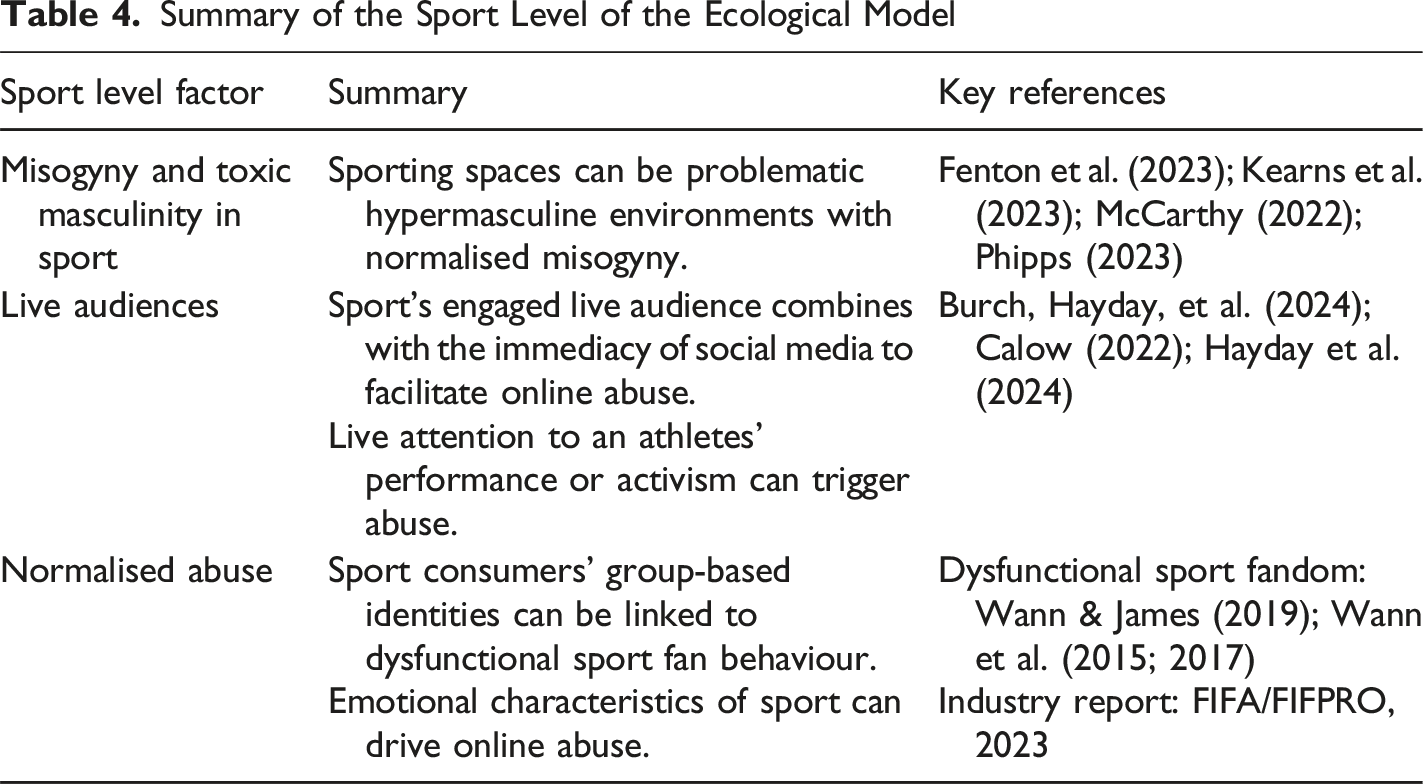
Misogyny and Toxic Masculinity in Sport
Sporting spaces can be especially problematic, hyper-masculine environments (e.g., McCarthy, 2022), and contexts where misogynistic and sexual abuse may be normalised (Chandra et al., 2024). Women in sport are particularly vulnerable to misogynistic abuse, sexual harassment, and exploitation (Pascoe et al., 2022). Moreover, the features of social media compound these darker aspects of sport culture. The hyper-masculinity in sport can be considered broadly as contributing to the problem of online abuse towards women in sport (e.g., Phipps, 2023). However, there is also the potential for specific male-dominated sports cultures to exert unwelcome pressures on women (Kearns et al., 2023; McCarthy, 2022). Examples of severe levels of online misogynistic abuse towards women have been researched in skateboarding (McCarthy, 2022), strength sports (Phipps, 2023), and football/soccer (Fenton et al., 2023). It follows that any efforts to prescribe remedies for online harm in sport should be done in appreciation of the sport-specific cultural contexts. Moreover, policies to address misogyny and toxic masculinity in sport must address social media platforms as critical climates for the enactment and reinforcement of this culture.
Live Audiences
One of sport’s inherent features is the live audiences that it attracts; a feature that distinguishes sport from most other entertainment products due in part to its outcome uncertainty (Collins & Humphreys, 2022). Live sport remains attractive to advertisers because it provides a unique opportunity to gain the attention of a captive audience and to engage fans. The live audience associated with sport extends beyond the stadium and can provide ripe opportunities for rapid online engagement (Filo et al., 2015). There is an interaction between the immediacy and escalating nature of social media and sport’s engaged live audience. The abuse tied to trigger events can by product of live broadcast audience attention. For example, Winter Olympian, Eileen Gu, who competed for China but was born in the USA, experienced online abuse that was xenophobic or focused on nationalism (anti-China sentiment) during the live broadcast of her gold medal win (Burch, Hayday, et al., 2024; Hayday et al., 2024).
Additionally, live attention towards social, or political positioning and activism by athletes and sport organisations can trigger online abuse. For example, significant online abuse can occur in response to high profile protests, such as athletes protesting systemic racism including American National Football League player, Colin Kaepernick (Duvall, 2020), and tennis player, Naomi Osaka (Calow, 2022). Surveillance and support aimed at protecting the mental health of athletes should include recognition of these potential trigger events.
Normalised Abuse
Academic attention has been given to aggressive and dysfunctional sport fan behaviour (see Wann & James, 2019). Anyone who has been amidst the crowds at a football match has likely witnessed verbal abuse directed at the opposition, officials, other spectators, and even at the players of the team the abuser supports. This “passion” or aggression demonstrated by sports fans can be the result of fan’s identification with the sport object (Sierra & Taute, 2019; Wann et al., 2015). Research has suggested that fans with high levels of identification with a sport team can have a greater propensity for dysfunctional behaviour and aggressive responses (Wann et al., 2017). Moreover, the emotional characteristics embedded within sport are likely a key ingredient for online abuse (Kearns et al., 2023).
A large body of research has examined the psychological connection that consumers experience with a sport product, such as a sport, team, or player (see Wann & James, 2019). Sport-based group identities may be strengthened by sport’s inherent competition. Consistent with social identity theory, intergroup competition enhances the salience of the out-group and underscores in-group identification (Foster et al., 2012). These identities interact with a person’s self-concept and hold some degree of emotional significance. As a result, consumers have a vested interest in related performances. Moreover, people are motivated to undergo identity “self-defence” to protect the self-esteem derived from their own identities (Lock & Heere, 2017). It follows that sport-based identities can manifest as in-person and online abuse which may include negative expressions toward the out-group (opposition) or towards one’s own team in disappointment. When these identity-driven reactions are directed at women athletes, they do not simply mirror generic ‘fan aggression’. Instead, they often mobilise gendered stereotypes and hostility, with disappointment or perceived betrayal expressed through misogynistic, sexualised, or homophobic abuse.
Summary of the Sport Level of the Ecological Model
Gambling
“Gamblification” and Sports Betting
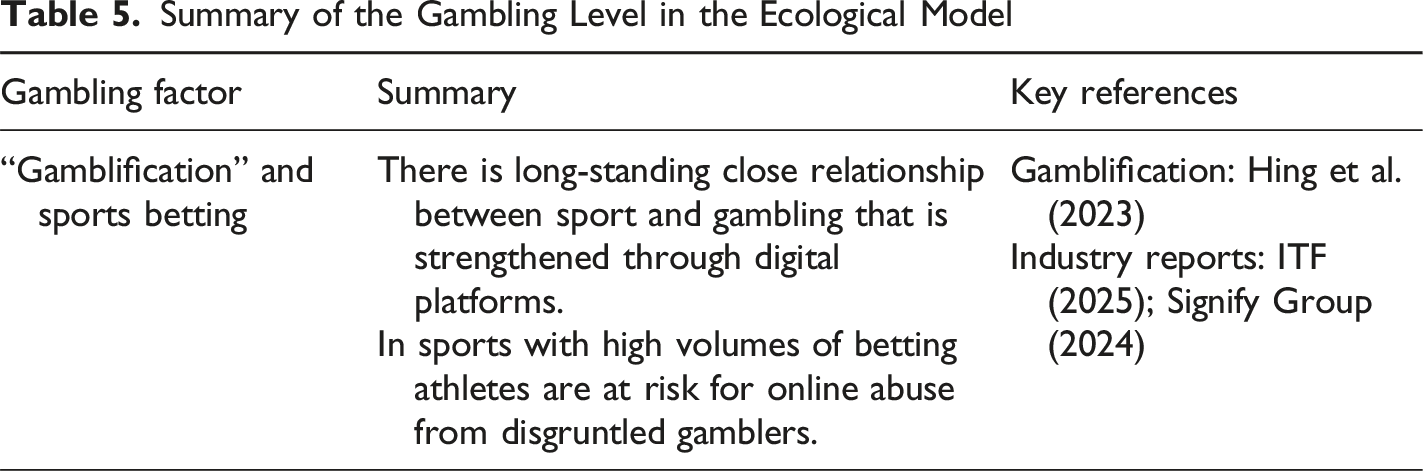
Across the globe – and increasingly through borderless digital platforms – the close relationship between the gambling and sports industries remains long-standing (Vamplew, 2022) and pervasive. This “gamblification” (Hing et al., 2023; McKelvey, 2004) of sport has placed athletes and officials at risk of abuse. A report from the international tennis governing bodies revealed that 40% of online abuse targeting players comes from angry gamblers (ITF, 2025). Women’s sports where there has been high (e.g., racquet sports) or increased gambling activity (e.g., college basketball), online abuse has accompanied the trend and women athletes are targeted with comments that are misogynistic and sexualised. Whilst these trends are apparent in both media and industry reports, the relationship between gambling and online abuse towards women athletes, and differences between genders, warrant further empirical research.
Summary of the Gambling Level in the Ecological Model
Athlete
Women Athletes as Influencers
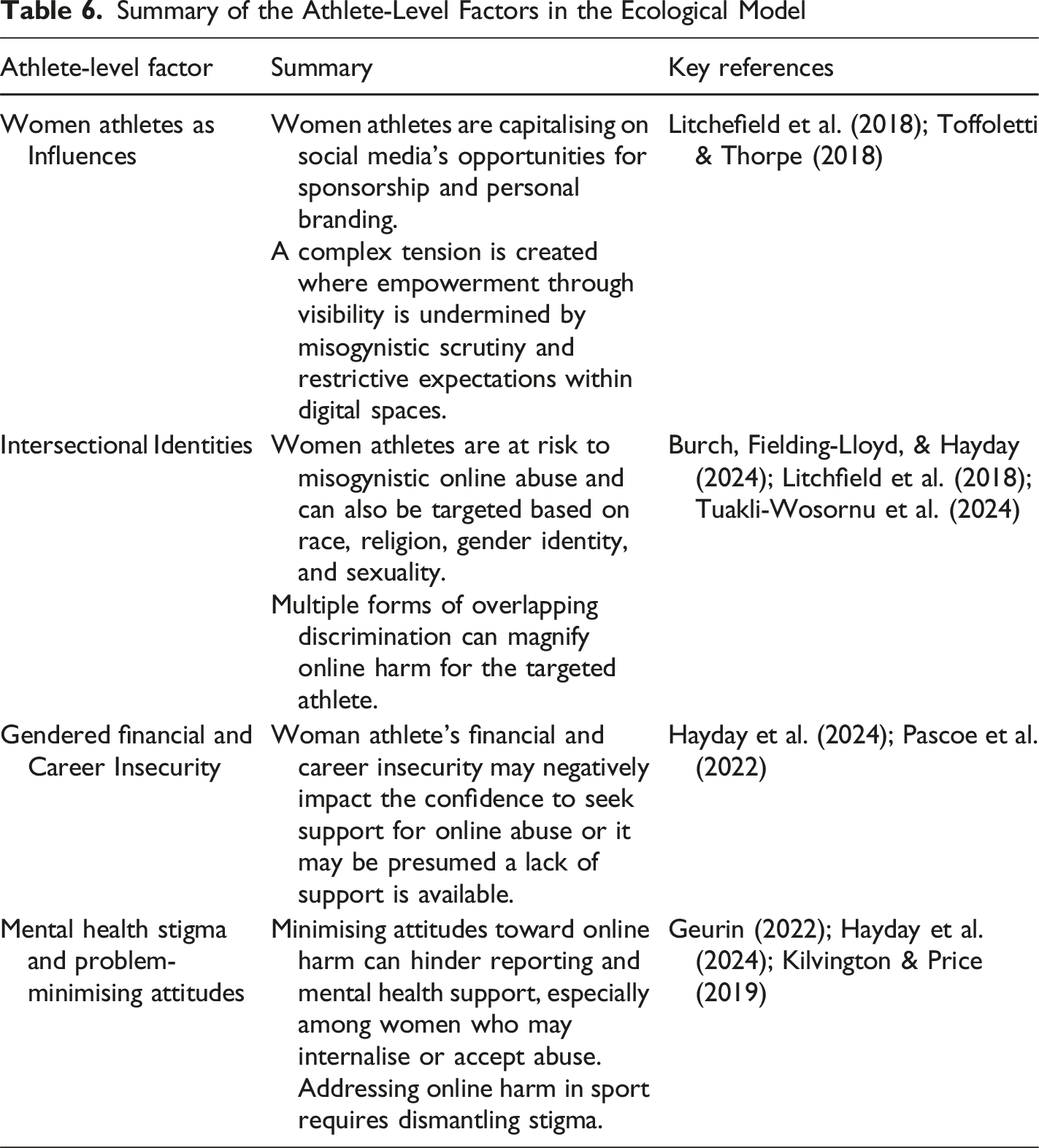
As outlined previously, social media presents athletes with opportunities for sponsorship and fan engagement (e.g., Geurin, 2017). Women in sport have capitalised on these marketing opportunities, however, the added exposure on social media is associated with an increased risk of online abuse (Burch, Fielding-Lloyd, & Hayday, 2024; Kavanagh et al., 2019). Moreover, women athletes can experience substantial pressure to engage in social media in particular ways, including the pressure to post sexualised content (Litchefield et al., 2018; Toffoletti & Thorpe, 2018). Women athletes are increasingly navigating the economic opportunities and pressures associated with social media engagement, and the accompanying increased risk of online abuse. The bind is especially tight given that social media platform engagement rewards visual content. As a result, self-expression and empowerment can be subject to misogynist gender displays. Social media has therefore become a significant risk for women athletes caught between the demand for equal exposure and the supply of social media abuse (Kavanagh et al., 2019). Using social media, women athletes can create content that helps them shape their identities as individuals and as sporting brands (Geurin, 2017). However, the use of social media is accompanied by socially enforced expectations and restrictions surrounding the norms of appearance and self-presentation afforded by digital spaces (Toffoletti & Thorpe, 2018; Wanzer et al., 2024).
Intersectional Identities
In addition to women athletes being especially vulnerable to misogynistic online abuse, online abuse can also be discriminatory based on other categorisations of the recipients, such as race, religion, gender identity, and sexuality (Kearns et al., 2023; Litchfield et al., 2018; Kavanaugh et al., 2016; Kilvington & Price, 2019; Sanderson et al., 2016). While each aspect of identity can present risk for experiencing online abuse, the individual experiences of abuse can occur at the nexus of multiple individual identities (Burch, Fielding-Lloyd, & Hayday, 2024; Tuakli-Wosornu et al., 2024). Litchfield et al., (2018) examined the intersectional abuse directed at tennis player, Serena Williams, who identifies as an African American woman, demonstrating the magnification of multiple forms of overlapping discrimination—i.e., misogyny and racism. The researchers highlighted that women athletes who possess strong and muscular bodies may be criticised if they are assessed not to comply with society’s perception and representation of a ‘typical’ female athlete (Litchfield et al., 2018). These patterns are consistent with an intersectional feminist account of gender-based violence, in which gender, race, sexuality, disability, and other axes of identity intersect to compound women athletes’ exposure to online abuse. For practitioners tasked with safeguarding athletes, it may be beneficial to recognise some athletes are at greater risk of experiencing online abuse. Additionally, it is necessary to view strategies aimed at mitigating online abuse as an essential component of an organisation’s diversity, equity and inclusion policies.
Gendered Financial and Career Insecurity
The gender pay gap in sport has been well-documented and publicised; and is recognised as a specific psychosocial stressor for women athletes (Pascoe et al., 2022). Despite notable efforts to improve pay equity in some sports, and growing public awareness, the gender pay gap between men and women’s sport endures. It follows that women athletes report financial and career insecurity (e.g., in football, FIFPRO, 2023), and this has several implications for the problem of online harm experienced by women athletes. First, these athletes may lack confidence in discussing their concerns with, or seeking support from, their sporting organisation. When there is already concern for their career and financial security, athletes may be reluctant to “rock the boat’ or risk drawing negative attention to themselves (Kilvington & Price, 2019). Furthermore, the athletes may presume that there is limited assistance or resources available to them from their sport organisation (Hayday et al., 2024). Overall, these issues can be recognised as secondary impacts of financial and career insecurity faced by women in the sport industry. Additional barriers relating to seeking help for online harms could be included in future research and guide related policies.
Mental Health Stigma and Problem-Minimising Attitudes
Summary of the Athlete-Level Factors in the Ecological Model
The preceding narrative review process has identified antecedents to the problem of online abuse in sport and specifically for women. These factors are categorised in line with the ecological systems approach and the resultant contextually specific model conceptualising online abuse is presented in Figure 1. Online abuse, sport, & social media ecological system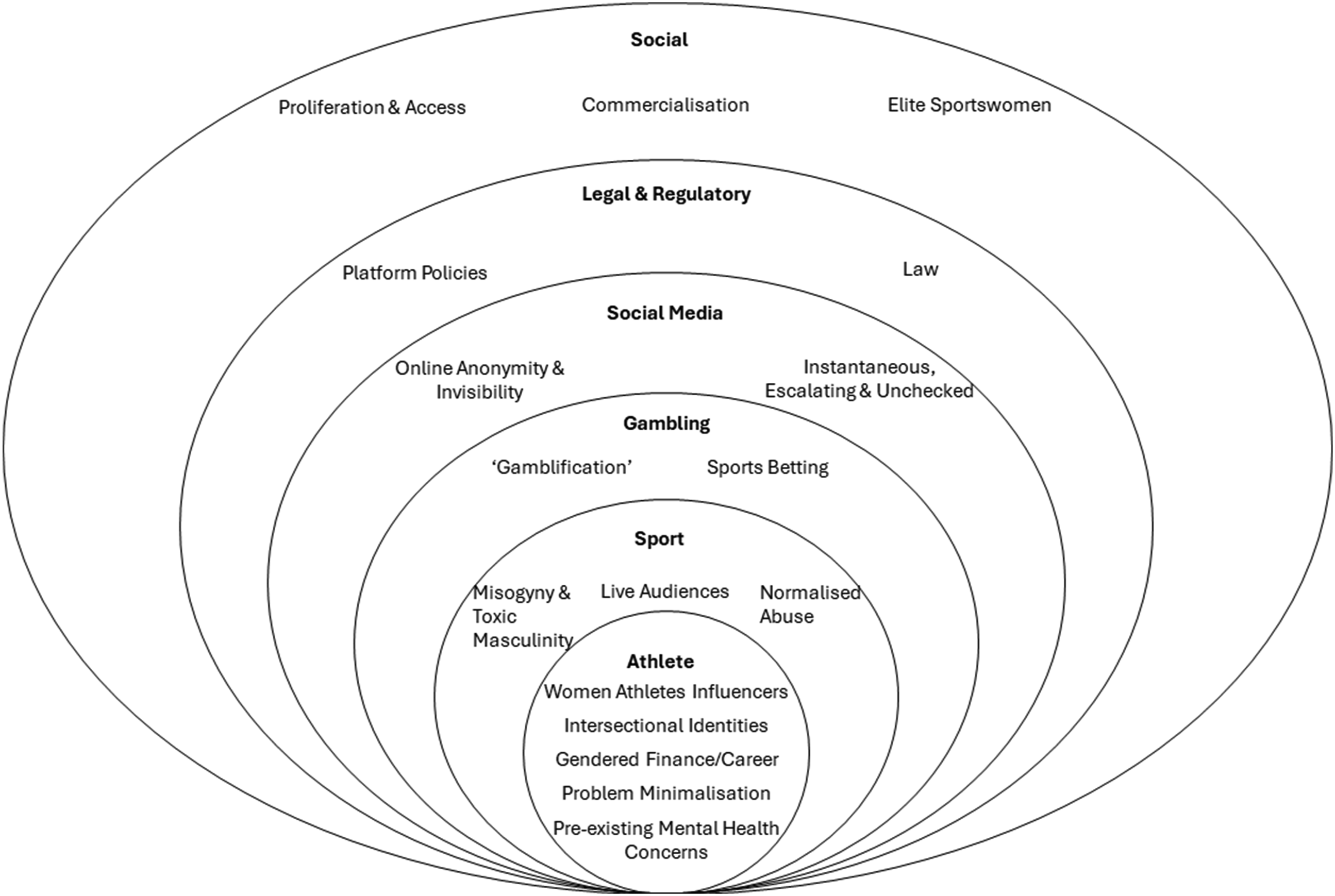
Discussion
Professional sports are social cornerstones, marked by the fusion of high-stakes athletic contests, fervent group loyalties, and boundless fan enthusiasm. Fans bask in the vicarious triumphs of their chosen teams yet are plunged into despair with their defeats. Beyond mere commerce, sports have become integral to the entertainment sector, including in some cases such as gambling, betting, and gaming, where money and meaning collide. At the heart of this sports-entertainment nexus lies a pleasure-seeking culture that glorifies victory, applauds physical endurance, savours aggression, upholds traditional male ideals, challenges gender parity, and indulges in exaggeration. Sport is a widely broadcasted ceremony that spotlights prevailing norms, captivating narratives, and entrenched clichés, all of which are magnified in the echo-chamber of digital and social media. For athletes, the incentives for success are significant but the opportunity demands financial support, which is not always sufficiently covered by team employers or government subsidisation. Most elite athletes therefore actively seek to grow their fan base, and therefore their brand value, through social media profiles. For women athletes, these pressures are far more pronounced. Social media has been a critical means for women athletes to attract interest and commercial support in an attempt to counterbalance the lower earnings and media coverage compared to men’s sport (Geurin, 2017).
The commercialisation of women’s sport has intensified the spotlight on athletes, leading to increased social media scrutiny and, unfortunately, abuse. High-profile athletes often face a barrage of online harassment, which can include criticism of their professional performance, personal insults, and even threats. This abuse can be triggered by events such as a poor performance or a good performance against a rival team, and it often occurs during or immediately after high-stakes competitions. Social media platforms have become arenas where the personal lives of athletes are subjected to public commentary, the line into abuse crossed regularly. The impact of this can be profound, affecting the mental health and well-being of the athletes involved.
The commercial environment creates a double-edged sword for athletes, where their public image and career can be both enhanced and harmed by social media interactions. The need for specific training on managing online profiles and dealing with social media challenges has been highlighted as a proactive measure to help athletes navigate this complex landscape. The ecological systems model presented in this narrative review recognises that there are a multitude of factors that make athletes, especially women, particularly susceptible to online abuse in contrast to other celebrity contexts. In line with the review’s stated aims, this ecological mapping draws together the social, legal, technological, gambling, sport and athlete-level factors that collectively heighten online abuse risk for women athletes. Therefore, there is an imperative for those tasked with the wellbeing of athletes to both support athletes to capitalise on the opportunities afforded by social media and to ensure mental health support is available to help navigate the inherent pressures and risks of online engagement.
The online abuse of women in sport has garnered increasing academic and public attention. Whilst efforts to shine a spotlight on the problem are to be commended, it is essential that the associated dialogue and discourse are underpinned by rigorous academic research. Little sport policy research has specifically examined the problem on online abuse of athletes regarding prevalence, impact, and effectiveness of interventions. This narrative review draws from related fields and can guide future research directions for sport management policy and practice to move toward evidence-based interventions. A critical area of future research is to extend academic understanding of the impact of online abuse on individuals’ mental health, well-being, marketing activity and sport performance. It is only by further understanding of the impacts of online abuse that effective interventions can be implemented and evaluated.
There are limitations in some of the existing research into online harm in sport that may prevent accurate representation of the problem. The fragmented and nascent evidence does not warrant some of the conclusions drawn and there is the potential for misrepresentation or inflammation without necessary data. As with other mental health research, self-report biases and underreporting may impede estimations of prevalence (Beisecker et al., 2024). A barrier to quantifying the problem of online harm is that the effects can extend beyond the individual targeted and experienced by others who witness the abuse. In addition, some research examining the online abuse of women may predominantly capture extreme examples of online abuse, or the sample of women in sport willing to report their experiences may not represent the broader population. Future research should be designed to contribute a nuanced understanding of online abuse in sport to effectively guide evidence-based interventions. The ecological framework provided in this narrative review offers a guide for possible research directions.
The findings of this review underscore the need for multi-level interventions, in this case helpfully informed by ecological systems theory, to comprehensively address online abuse in sport. Our narrative reveals an ecological systems theory that views behaviour and outcomes as emerging from dynamic interactions between individuals and multiple, nested layers of context (immediate relationships, organisations, communities, and wider social, economic, and legal structures), such that risks and protections are produced not by any single factor but by the way these levels intersect and reinforce one another over time. It supports a gendered ecological systems account of online abuse in sport. Integrating Bronfenbrenner’s ecological systems theory with gender-based violence and intersectional feminist perspectives, we conceptualise online abuse of women athletes as an emergent outcome of interacting processes across social, legal and regulatory, social media, sport, gambling and commercial, and athlete levels. We distil this account into the following propositions to guide future empirical work and policy design:
Proposition 1: Where broader social norms tolerate misogyny, gendered hostility and victim-blaming, and social media affordances (for example anonymity, visibility and algorithmic amplification) are weakly regulated, the baseline prevalence and intensity of online abuse targeting women athletes increases.
Proposition 2: Fragmented, weak or uneven legal and regulatory frameworks across geographic and sport jurisdictions reduce perceived consequences for perpetrators and organisational actors and thereby normalise online abuse of women athletes while limiting effective redress.
Proposition 3: Sport organisational cultures and governance structures mediate the impact of social and platform-level conditions on online abuse, such that environments characterised by toxic masculinity, entrenched gender hierarchies and under-developed safeguarding systems generate more frequent and more severe abuse towards women athletes.
Proposition 4: Commercial imperatives and the gamblification of sport intensify pathways from social and sport-level drivers to online abuse of women athletes by increasing their visibility, raising the emotional and financial stakes for fans, and fuelling entitlement and scapegoating when performances disappoint.
Proposition 5: Athlete-level characteristics, including intersectional identities, financial and career insecurity, and differential access to organisational and mental-health support, moderate these macro-level drivers so that women athletes in marginalised and precarious positions are disproportionately exposed to, and harmed by, online abuse.
Proposition 6: Highly visible episodes of online abuse and athlete activism feed back into the ecological system by reshaping public discourse and prompting changes in organisational policy, regulation and platform practices, which can either strengthen protective structures or, if mishandled, further entrench gendered harms.
The propositions fulfil the review’s objective of providing a contextually rich, gender-focused map of online abuse in sport and a theoretically grounded platform for future safeguarding policy and research.
Conclusion
This ecological systems model narrative review has demonstrated that online harm is a significant and pervasive issue, with women facing a greater risk of abuse in digital spaces. Across online environments, women experience disproportionate levels of harassment, more often manifesting in gendered and sexualised online abuse. The trend extends beyond sport—or indeed is instantiated through wider social contexts and pressures—reflecting broader social inequalities that encourage systemic misogyny in digital interactions. The impact of online abuse can be profound, affecting mental health, personal security, and professional opportunities. However, future research is needed to more clearly understand the impacts of online abuse on women athletes. Addressing online harm requires comprehensive interventions that span legal, social, and technological domains, ensuring that women, and particularly athletes, are better protected in online spaces.
The review reveals that sport is a susceptible environment for online abuse due to its unique characteristics, including heightened emotional investment, live audiences, and the increasingly commercialised and interactive nature of social media engagement. An advantage of the ecological lens is that it exposes how sport operates at the confluence of numerous levels and layers of risk and vulnerability. Moreover, the structure of sport inherently fosters strong fan identification, competition, and passionate reactions to performance outcomes, all of which can readily escalate into online aggression. Add to this sport’s increasingly close association with gambling, which has intensified instances of online abuse, as financial losses can trigger vitriolic reactions directed at athletes. Given these factors, sport organisations, governing bodies, and policymakers must recognise the structural vulnerabilities that exacerbate online abuse, and implement targeted safeguarding measures accordingly.
Within a high-risk sporting environment, women athletes face compounded risks due to the intersection of gendered online harm and sport-specific pressures. Women in sport already navigate structural inequalities, including pay disparities, media representation biases, and precarious career stability. The added burden of online abuse—underpinned by systemic social misogyny, objectification, and gendered expectations—further marginalises women athletes. The review highlights the need for increased research, policy intervention, and athlete support systems to mitigate the effects of online abuse. Sport organisations must adopt proactive approaches, such as providing education on digital self-protection, fostering supportive reporting mechanisms, and ensuring robust mental health resources. In addition, addressing the normalisation of misogyny in sport and online spaces is crucial in developing a safer digital environment for women athletes.
Future research should aim towards further understanding of the mechanisms driving the phenomenon, explore the effectiveness of existing interventions, and devise new strategies for safeguarding women athletes. Sport governing bodies, technology companies, and policymakers must collaborate to create a more protective digital landscape that upholds the dignity and well-being of athletes. An equitable, safe, and supportive sporting environment recognises online abuse and its potential for harm as a serious issue that demand coordinated interventions from policy makers and sporting authorities.
Recommendations
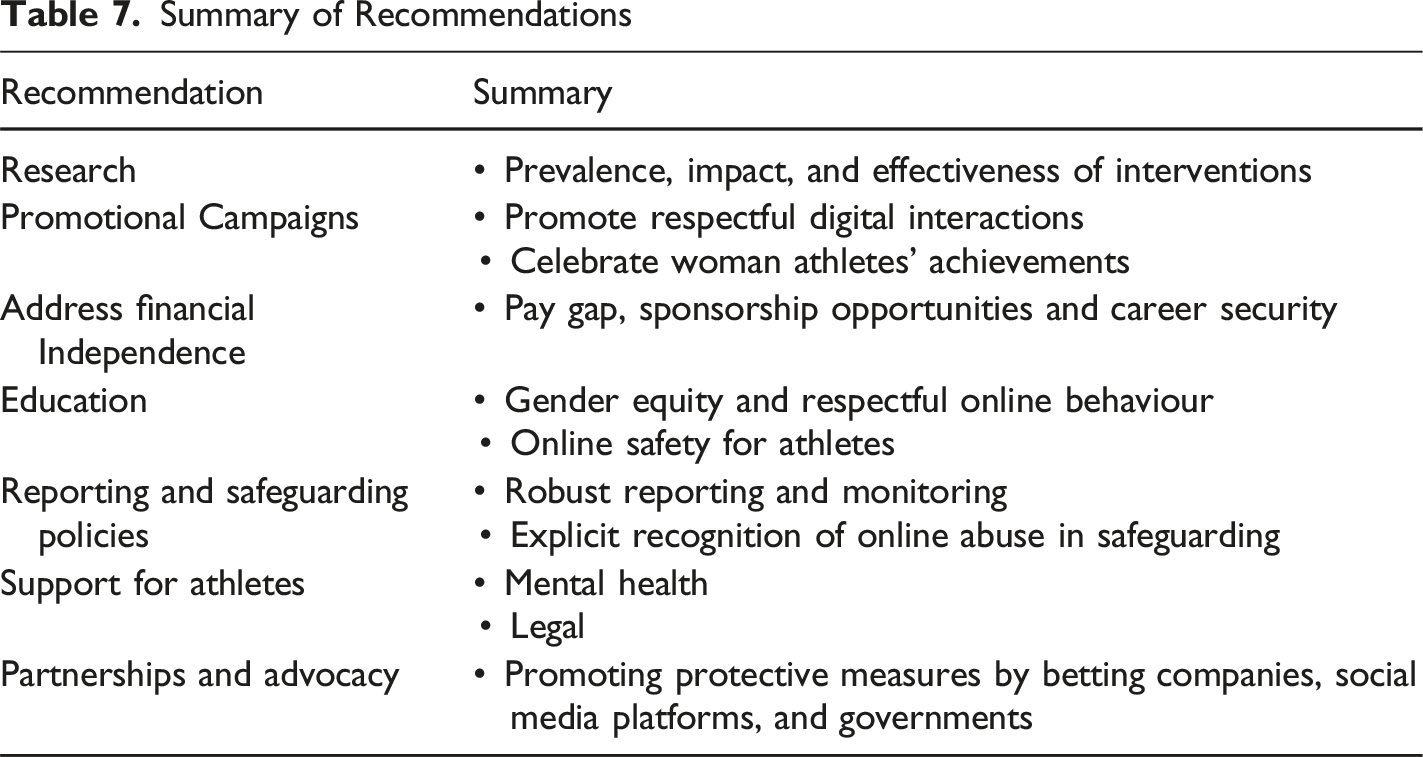
Summary of Recommendations
Footnotes
Acknowledgement
JWT’s postdoctoral position received co-funding from Sport Integrity Australia.

Ethical Consideration
There are no human participants in this article and informed consent is not required.
Funding
The authors received no financial support for the research, authorship, and/or publication of this article.
Declaration of Conflicting Interests
The authors declared no potential conflicts of interest with respect to the research, authorship, and/or publication of this article.