




Abstract
This study presents a comprehensive taxonomy of media technology used in live sport, addressing a critical gap in the sport media and management literature. Despite the growing presence of media technologies in live sport contexts, conceptual clarity around their classification remains limited. Drawing on qualitative content analysis of media articles, this research identifies key technological characteristics and maps their manifestations across diverse sport media environments. As a result, the Live Sport Media Technology (LSMT) taxonomy was developed around three overarching categories: Core, Experience, and Smart technologies. These categories reflect the different roles technologies play in enabling, enhancing, and innovating live sport media. Findings reveal two key trends: the increasing technological convergence across media platforms, and the growing personalisation of the sport viewing experience through user-controlled and system-driven technologies. These developments are reshaping the boundaries between production and consumption. This study provides a foundational and structured framework for future research, offering practical guidance for sport media-related organisations navigating the complex media technology landscape and its rapidly evolving interplay between technology, content, and audiences.
Introduction
Technological innovation is crucial in sport media given the significant roles technology plays in producing, distributing and consuming mediated sport content (Fujak & Frawley, 2022). Driven by globalisation, digitalisation and commercialisation, the growth of sport media has been accelerated by technological advancements (Westerbeek & Karg, 2022). Consequently, insights into specific technologies and their isolated adoptions have drawn considerable research interest: for example, action cameras, drones and GPS tracking (Thorpe, 2017); Augmented Reality (AR) (Gobert & Greenhalgh, 2020); televisual and virtual technologies (Sturm, 2021); artificial intelligence (AI) (Geissler et al., 2024); and metaverse (Kim & Kim, 2024).
These innovations have not only led to the creation of new sport media products, services and content but have also transformed the methods by which they are produced and consumed (Fujak et al., 2024) within the wider frame of mediatisation (Licen et al., 2022). Cummins and Hahn (2024) argue that the sport media and communication field benefits from more research into the linkages between actors involved in the production and consumption of mediatised sport content. Hence, a more holistic understanding of established and emerging media technologies, their interplay, and their transformative effects benefits researchers and practitioners to better identify and analyse the role of media technology in the production and consumption markets (Frevel et al., 2020; Ratten, 2020). Therefore, the objective of this study is to provide a comprehensive framework for understanding their evolving nature.
Specifically, the study develops the Live Sport Media Technology (LSMT) taxonomy that categorises the typical media technologies used in live sport based on their defining characteristics. This study defines media technology as the range of tools, platforms, and systems used in producing, distributing, and consuming media content (Croteau & Hoynes, 2015), particularly within sport media and communication environments. The focus is on media technologies applied to ‘live’ or ‘real-time’ sport content and environments, recognising its short-lived and perishable nature (Hutchins et al., 2019).
The LSMT taxonomy makes several key contributions. It offers conceptual clarity and a structured framework for understanding how different technologies intersect and evolve. It also serves as a practical tool to navigate a fragmented media technology landscape. By linking technologies to specific functions and usage patterns, the taxonomy enables informed decisions about technology adoption and innovation. Ultimately, it accounts for the multifaceted nature of live sport media by drawing on diverse conceptual and empirical insights into how sport content is created, distributed, and experienced.
Further, the taxonomy goes beyond a purely academic classification exercise. Specifically, in the live sport media landscape, stakeholders, including broadcasters, technology developers, and sport organisations, often lack a coherent framework for making sense of technologies. The taxonomy offers a common language and conceptual structure that supports more strategic decision-making, clearer cross-sector communication, and more focused research into innovation in live sport media.
Overall, our empirically supported conceptualisation of the LSMT taxonomy addresses a gap in both academic and industrial contexts and enhances conceptual clarity and navigation across the sport media, communication and management fields. It is a direct response to calls for linking producers, audiences and content logics to supporting both critical analysis and practical application (Abeza, 2023) and to overcome the disproportionate focus on mediated content in sport communication scholarship (Cummins & Hahn, 2024). In doing so, it enables researchers and practitioners to better navigate the live sport media landscape, make informed decisions about innovation and strategy, and identify areas of convergence, disruption, or underexplored opportunity.
Literature Review
Historical Evolution and Contemporary Media Technology Sport
The evolution of media technology in sport has been dramatic, transforming how sport is delivered and how audiences engage with sporting events. The media technology diffusion model provides insight into this evolution, suggesting that the adoption of these technologies is shaped by the interplay between social necessities as well as suppressing and enabling factors (Winston, 2002). For instance, the introduction of radio and television fulfilled the public’s desire to experience sport events remotely, although initial adoption was limited by technological constraints and costs. More recently, technologies such as Hawk-Eye have been integrated to meet audiences’ expectations for accuracy and fairness, allowing deeper cognitive understanding and trust in professional sport.
The telegraph marked a turning point in sport media by enabling the rapid, nationwide reporting of results, transforming the temporality of news circulation (Sowell, 2008). Although the sporting press had been growing since the mid-19th century, driven by the rise of gambling and advertising (Boyle & Haynes, 2009), the telegraph accelerated how sport was communicated to a mass audience. This was followed by film technologies in the late 1800s, which captured and distributed highlights. However, it was radio in the early 20th century that introduced a real-time, immersive sport experience to audiences, reaching millions by 1912 (Schultz & Wei, 2013). Offering immediacy and broader access, radio disrupted the dominance of the written press and transformed audience expectations.
Television broadcasting started with the 1936 Berlin Olympics, grew slowly in the 1950s, became more popular in the 1980s thanks to cable networks, and went digital in the 1990s (Rowe, 2011; Schultz & Wei, 2013). The convergence of broadcast networks with telecommunications led to the rise of new digital distribution platforms, including over-the-top (OTT) platforms and extended reality, which reshaped how audiences consume sport content (Boyle, 2019). These advancements align with Pine and Gilmore’s (1999) concept of the Experience Economy, as sport organisations increasingly leverage (and commercialise) these technologies to provide immersive experiences that go beyond mere spectatorship.
Contemporary media technology in sport encompasses a wide range of innovations. Advanced camera technologies provide multiple angles and perspectives, enhancing the visual experience for viewers (Sturm, 2020). Sophisticated data analysis tools offer deeper insights into player performance and game strategies (Abeza et al., 2022). AR and VR offer immersive experiences, enabling fans to engage with sports in novel and interactive ways (Kunz & Santomier, 2020). Officiating technologies such as Video Assistant Referee (VAR) have revolutionised decision-making processes in professional sport (Frandsen & Landgrebe, 2022), while digital interaction platforms, including co-streaming on Twitch and social media engagement, have transformed how fans interact with both content and each other (Filo et al., 2015; Qian, 2022). Clearly, technologies contribute to enhancing different aspects of the sport experience, aligning with conceptualisations of sport experience design (Funk, 2017).
Classifying Sport Technology: Industry and Academic Perspectives
Industry Classifications
A Summary of Industry Classifications of Sports Technology
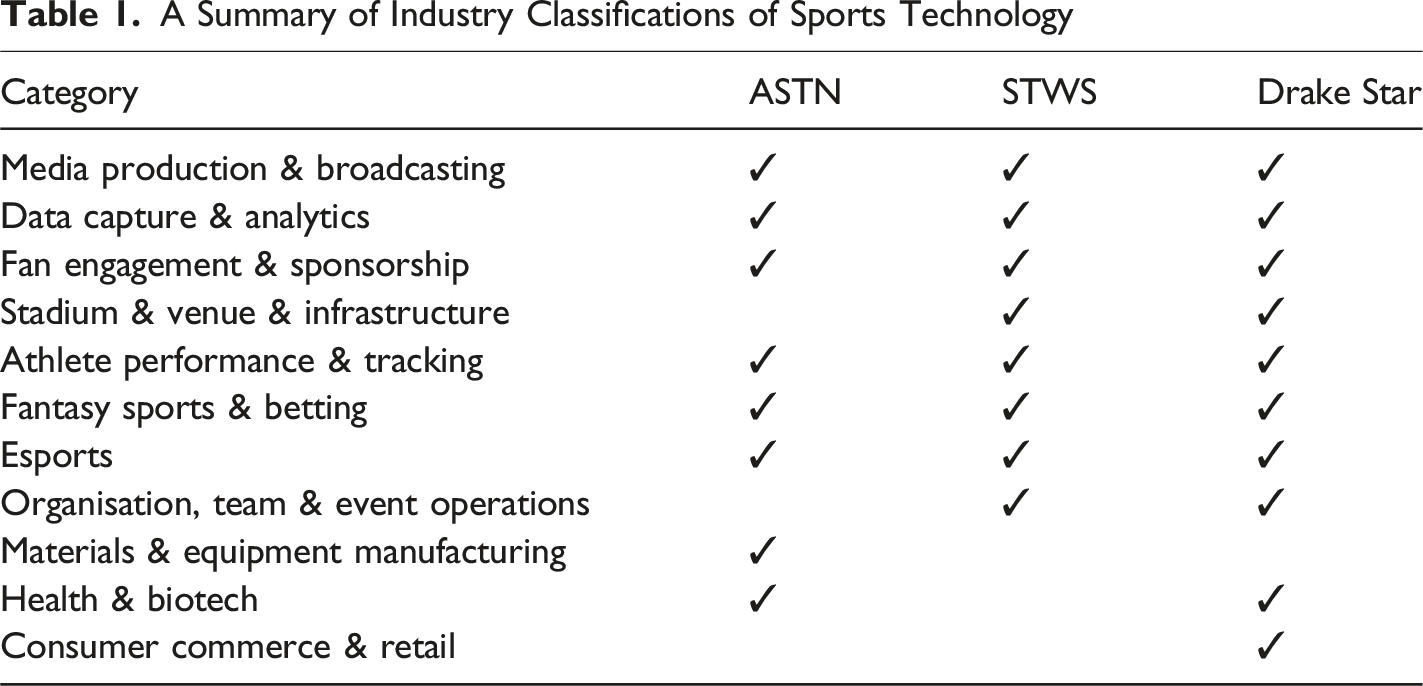
While commercially oriented classifications by ASTN, STWS, and Drake Star help map broad trends in sports technology, their impact on academic or applied research remains limited. These frameworks lack conceptual/methodological clarity and offer little insight into the specific functions or affordances of media technologies in live sport. Nevertheless, they serve as useful heuristics for identifying emerging trends of innovation.
Academic Frameworks
Academic research has also contributed to the classification of sport technology, offering perspectives on how these technologies influence sport – most prominent and developed are the Sportstech Matrix (Frevel et al., 2020) and the Mediasport Typology (Stavros et al., 2021).
A Summary of Technological Examples in the Sportstech Matrix
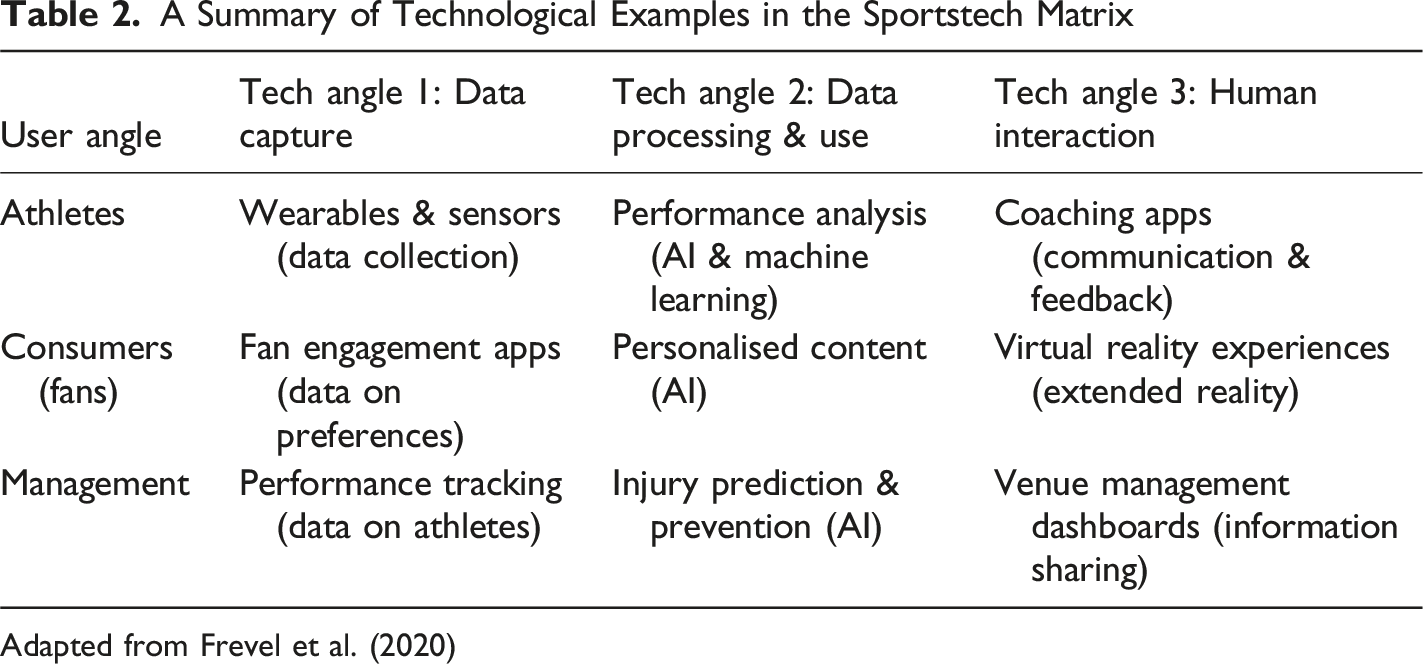
Adapted from Frevel et al. (2020)
A Summary of Viewing Experience and Technological Examples in the Mediasport Typology
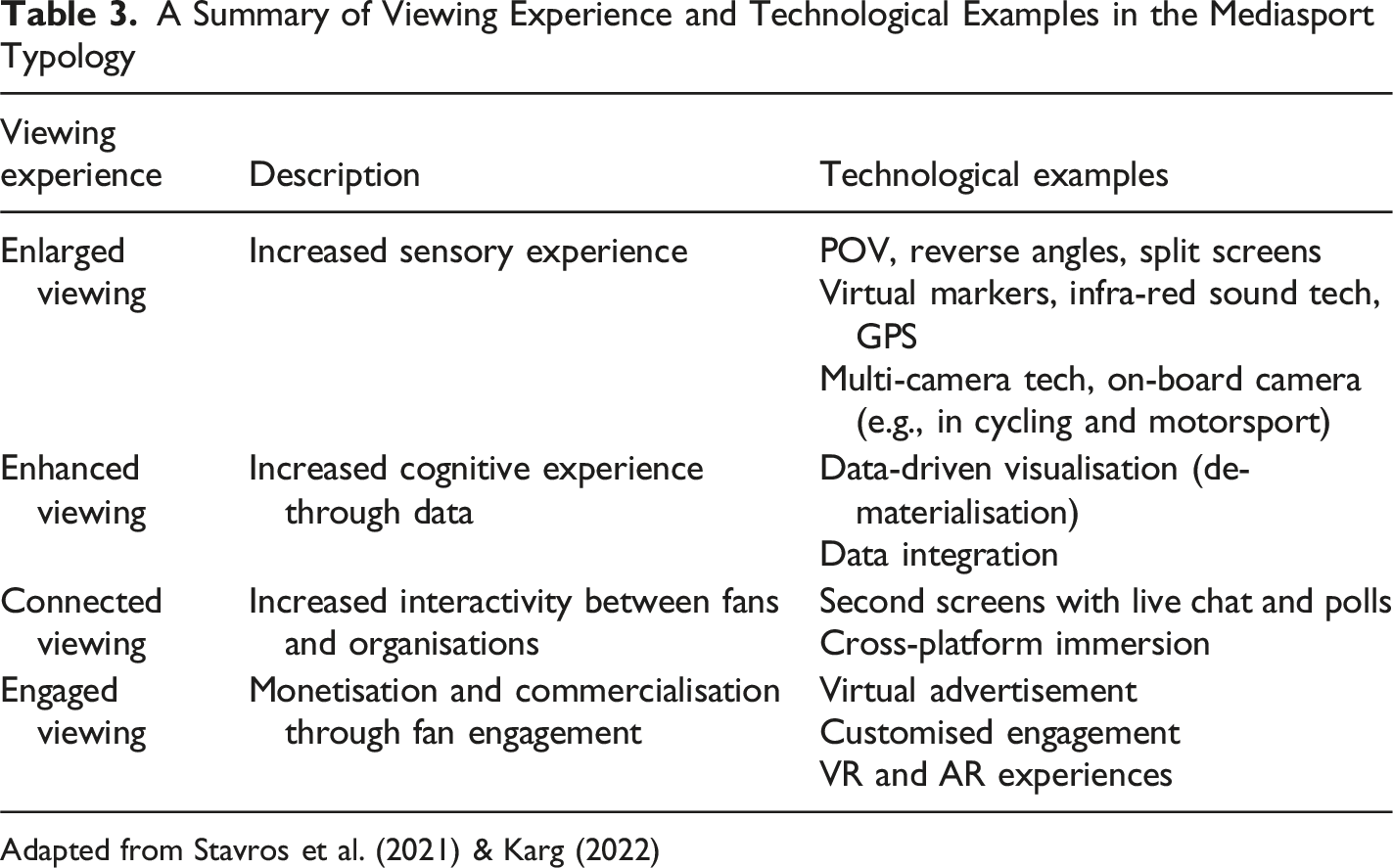
Adapted from Stavros et al. (2021) & Karg (2022)
The enlarged viewing emphasises increased sensory immersion through technologies. This includes multiple camera angles using drone cameras, action cameras, and innovative camera systems. These technologies deliver a wider range of content from diverse angles and vantage points, intensifying mobility to technologies and enriching the televised visual experience (Sturm, 2021). High-resolution television formats such as 4K and 8K further enhance this sensory immersion of global sporting events (Suzuki & Sujikai, 2020). Spain’s La Liga is a typical example of fostering the adoption of high-tech innovations for enlarged viewing, including 4K cameras, bird’s-eye cameras, and volumetric 360-degree replays (Supersport, 2025). These enlarged sensory features and characteristics are also often used to aid the referees in their decision-making and even become part of the spectacle themselves (d’Andréa & Stauff, 2022; Kim et al., 2023). Such mediated enlarged viewing experience accelerated during the COVID-19 pandemic when spectators were restricted from entering stadiums, and has continued their adoption since (Stavros et al., 2021).
Building on this foundation, the enhanced viewing leverages data, analysis, and statistics to provide viewers with a deeper cognitive understanding of the game. The integration of the Internet of Things (IoT) and information communication technology tools like sensors and wearables makes various data types more accessible (Deninger, 2022). These data sets can be visualised through 3D graphics and AR overlays in broadcasts, offering a richer understanding of the game’s complexities. This is exemplified by MLB’s Gameday 3D to show fans what is happening in the field in real-time (Adler, 2024). Further, the use of smartphones as second screens equipped with AR amplifies the experience by increasing the usability and interactivity of these data visualisations (Bielli & Harris, 2015). Such innovations contribute to fans’ analytical knowledge and capacity building through analytical omniscience to better understand the game (Sturm, 2021).
Connected viewing emphasises the social and interactive aspects of sport consumption. This component focuses on the interactivity between sport organisations and fans, as well as interactions among fans themselves. Social media platforms such as Instagram or X play a crucial role in facilitating this interactivity, providing spaces for fans to connect, showcase their experiences, express their passion and support for teams and athletes, and form a sense of community (Filo et al., 2015). The use of a second or third screen using smartphones further enhances the connection with others via third-party apps or platforms (Karg et al., 2022). VR experiences also create shared virtual settings, further fostering a sense of connection and togetherness (Langa et al., 2022), and more people are immersing themselves in the metaverse in sport (Kim & Kim, 2024). More recently, sport fans have the opportunity to co-view and interact in real-time. This can be achieved by utilising Watchalong online streaming, such as YouTube (Landino, 2022) or Cosm venues, which provide physical venues to come and engage in watching the game via extended reality (McCaskill, 2025).
The engaged viewing experience represents the intersection of monetisation and fan engagement. Sport organisations leverage these opportunities for connection with fans for strategic marketing and digital customer engagement (Smith & Stewart, 2014). Digital and online platforms are utilised for sponsorship, generating revenue and maximising profits through fan engagement and related outcome behaviours (Abeza et al., 2019). This is reflected in the growing popularity of fantasy sport platforms such as DraftKings, which foster active participation through live engagement and gamification. A further illustration of engaged viewing is virtual advertising, whereby different advertisements are displayed in response to the market in which they are broadcast (Karg, 2022). This engaged technology leverages targeted advertisements to create positive impacts on fan attitudes and behaviours (Park & Inou, 2018; Sander & Altobelli, 2011).
While the abovementioned industry classifications and academic frameworks are well-organised, their focus on experiences leaves critical technological aspects unexplored. For instance, while Mediasport Typology provides examples of accompanying technologies for each viewing experience, the specifics of the actual technological infrastructure and their implications are not fully elaborated. Therefore, a comprehensive taxonomy that integrates theoretical insights with empirical evidence seeks to help the sport media industry adapt to the modern hyper-digitalised sport setting beyond the post-pandemic era.
Method
Typology vs. Taxonomy: Conceptual Distinctions
Two prominent concepts commonly used for grouping and, subsequently, analysing evolving phenomena are typologies and taxonomies.
A typology is a conceptual classification system that relies on deductive reasoning to group objects or concepts into pre-defined categories based on shared characteristics and differences (Stapley et al., 2022). Typologies are often constructed through qualitative analysis techniques, such as ideal-type analysis, and are frequently employed in the social sciences to explore theoretical constructs or dimensions of phenomena (Stapley et al., 2022). Since typologies start with categories that reflect certain assumptions or theoretical expectations, they offer a structured way to understand and simplify complex concepts. However, in emerging fields where knowledge is still developing, typologies may carry the risk of researcher bias, as categories must be predetermined based on limited existing theory (Steininger et al., 2021). While typologies can be useful for synthesising known elements, they may fail to capture the full complexity of under-researched or fast-changing areas like sport media technologies.
In contrast, a taxonomy is an empirical, data-driven classification approach that begins with a set of existing objects or data points and uses quantitative techniques, such as cluster analysis, to inductively identify categories (Nickerson et al., 2013). Typically hierarchical, taxonomies reveal relationships between categories based on observable characteristics. Unlike typologies, they allow new categories to emerge directly from the data, thereby minimising the imposition of a priori theoretical assumptions. Although rooted in the biological sciences, taxonomies have increasingly been adopted in various business disciplines, such as information systems, where conceptual clarity is still emerging in fast-evolving fields. In such contexts, taxonomy development supports systematic inquiry by organising complex phenomena into distinct types, enabling analytical focus and comparative analysis (Steiniger et al., 2021). Accordingly, this study adopts a taxonomy approach to make sense of the developing landscape of live sport media technologies.
Taxonomy development methods often reflect both disciplinary conventions and the characteristics of the subject matter. Numerous studies – across information systems (Steininger et al., 2021), marketing (Ge & Gretzel, 2018), and sport management (Buck & Ifland, 2023) – have employed the hybrid approach proposed by Nickerson et al. (2013), which combines inductive and deductive logic. This study similarly aligns with the hybrid approach, drawing on both empirical data and conceptual frameworks. However, it differs by integrating insights from both academic and industry literature and incorporating a broader range of validation processes.
Data Collection
Following recent calls for reflexive transparency in scholarship (Corlett & Marvin, 2018; Hoeber, 2023), we note our positionality. The four-person research team comprises scholars with professional experience in sport management, technology consultancy, innovation, and community sport governance. These backgrounds afforded access to industry sources but also required ongoing reflexive dialogue to recognise and mitigate potential biases when selecting and interpreting material (Sveinson et al., 2025).
Our systematic data collection began by capturing news and trends on five prominent, up-to-date sport media and technology websites and databases. They are based in different parts of the world, providing a diverse range of perspectives: SportsPro Media (UK), Sports Video Group (US), Sport Business (UK, US, and Asia), Broadcast Sport (UK), and Ministry of Sport (Australia and New Zealand). These sources provide industry relevance and expertise with comprehensive coverage of a diverse range of media technologies. Up-to-date information and news are sourced from reputable industry experts and journalists, ensuring the accuracy and reliability of the information. The websites also provide industry relevance and expertise, covering a range of categories including media, technology, betting, industry movements, sponsorship, events, production, audio, digital, technology, stadiums and venues, business, broadcast and OTT, infrastructure, data analytics and fan engagement.
We opted for a full review of live sport-related articles across relevant categories on the selected websites. Following the initial review, retrieved articles were processed in Microsoft Excel to eliminate duplicates. Titles and abstracts were then screened to determine their relevance to the study’s objectives, with articles excluded if they did not explicitly address media technologies in live sport contexts.
To enhance the website search and ensure a more comprehensive data collection, Factiva, a well-known international news database encompassing newspapers, magazines, and trade publications, was utilised. A combination of keywords related to sport, media, broadcast, production, technology and innovation was employed using Boolean operators (e.g., ‘AND’ and/or ‘OR’) and a truncation character (e.g., *). Search strings were formulated with the use of parentheses to refine the search logic. Representative examples of search strings used include: “(sport* AND broadcast*) AND technolog*”, “(live sport* AND media) AND innovation”, “sport* production AND technolog*” and “(sport* media OR broadcast*) AND innovation”. These search strategies aimed to capture variations of key terms and their intersections, ensuring a broad and flexible identification of relevant articles.
The initial data collection was conducted from July 2022 to October 2022. The data collection process was repeated twice more at four-month intervals following the initial search (November 2022 to February 2023; March 2023 to June 2023). During these subsequent rounds, the focus shifted towards identifying new technologies rather than comprehensively re-reviewing all articles. This systematic review resulted in a final sample of 320 articles (298 from website searches and 22 from Factiva searches) (see Figure 1). The limitations imposed by the availability of relevant sources within the specified criteria determined the final sample size. Flow Diagram of Data Collection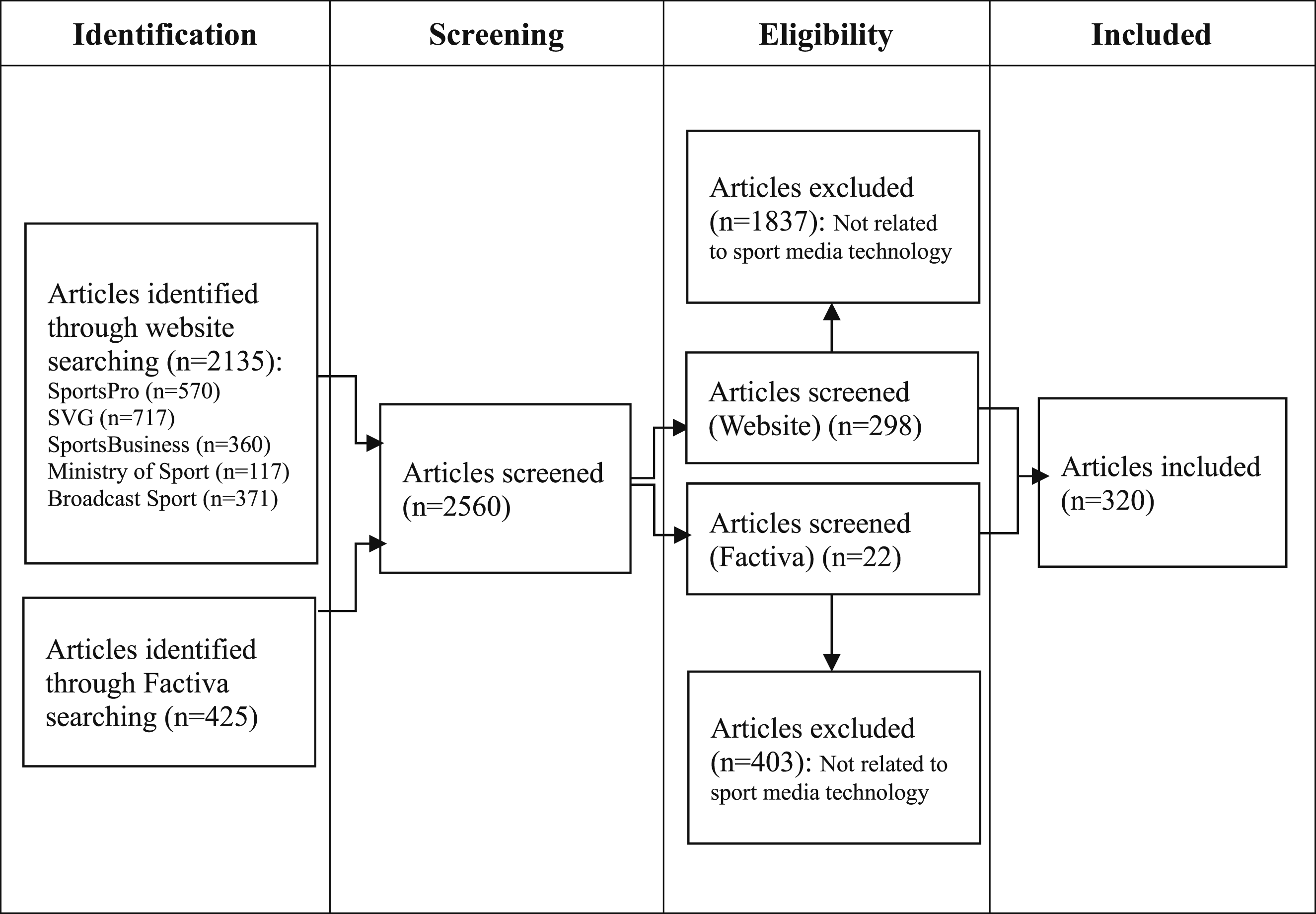
Data Analysis and Taxonomy Verification
To analyse the collected media articles and build a taxonomy, we employed content analysis, a method well-suited for identifying patterns and themes within textual data (Cavanagh, 1997). Our approach adhered to a manifest analysis, focusing on the explicit content within the articles related to media technologies used in live sports broadcasts, without inferring deeper meanings (Bengtsson, 2016). The object was to categorise these technologies based solely on the information presented in the articles, making it ideal for exploring new and uncharted territory within the dataset (Frevel et al., 2020). This systematic approach also contributes to the credibility and rigour of the qualitative inquiry (Tracy, 2010).
Given the qualitative nature of this research, we utilised an iterative qualitative approach to construct the taxonomy. This approach began with inductive content analysis (Saldaña, 2021) to identify the key characteristics of media technologies mentioned in the article. We performed open coding, meticulously reading each article and assigning initial codes to phrases or sentences that explicitly described technologies, their functions, or applications (e.g., “AI-powered analytics system” coded as ‘AI analytics’). Throughout this stage, we engaged in memo-writing to document our initial thoughts and emerging connections. These initial codes were then refined through focused coding, where similar codes were grounded to form preliminary characteristics, such as “Enhanced visual information” or “Interactive fan engagement” (Saldaña, 2021).
Following the identification of these characteristics, we explored their manifestations and densities within each live sport media context. This involved examining how each characteristic was described in use (e.g., for spectator experience, broadcast production, or officiating) and noting their relative prominence or frequency of mention across the articles. While not a quantitative measure, this provided a qualitative sense of emphasis in the media coverage.
Finally, the taxonomy development was conducted using an iterative constant comparative method (Glaser & Strauss, 1967). This process involved continuously comparing data segments with the emerging codes, codes with nascent categories, and categories with one another (Saldaña, 2021). For instance, initial codes related to ‘production’ and ‘consumption’ were continually compared and refined, leading to the emergence of broader, more abstract conceptual themes that ultimately formed our core categories: Core, Experience, and Smart technologies. This iterative refinement allowed us to construct a comprehensive system of categories and subcategories, ensuring they were well-defined and grounded in the explicit content of the media articles, thereby enhancing the overall meaningful coherence of the study (Tracy, 2010).
To ensure the reliability and validity of the taxonomy, a quality assurance protocol was implemented. This included cross-checking and achieving consensus among the research team to address any discrepancies in the coding process, following principles of intercoder reliability (O’Connor & Joffe, 2020). Through iterative discussions and reconciliations, internal consistency of coding decisions was enhanced (Tracy, 2010).
Following the internal quality assurance process, an external validation phase was conducted across 2023 and 2024 to further enhance the robustness of the taxonomy and strengthen the credibility of our findings (Lincoln & Guba, 1985). As this study is part of a broader research project on media technology in live sport, there were opportunities to receive feedback on the taxonomy’s structure and applicability from industry practitioners. Between October 2023 and August 2024, 20 interviewees (10 from Australia and 10 from South Korea) were engaged through semi-structured interviews of the broader project. As part of the invitation process, they were provided with the draft taxonomy. This purposeful inclusion, as a form of member checking, was intended to enhance the taxonomy’s relevance to current industry practice. Their insights informed minor refinements and confirmed the relevance of the identified categories.
Additionally, the taxonomy was presented at the Academic Day Conference held during the 2024 STWS Sports Tech Week. An audience comprising industry practitioners and academic experts provided feedback through a structured response platform (Socrative), accessed via QR code at the end of the presentation. This process, akin to a peer debriefing or expert review (Cresswell & Poth, 2025), helped verify the taxonomy’s clarity, applicability, and practical resonance across diverse stakeholder groups, even though critical feedback on the overall structure was limited. Together, iterative processes with both internal and external stakeholders helped to refine the taxonomy and ensure its accuracy and comprehensiveness. By following this approach, we developed a robust, empirically grounded taxonomy of live sport media technologies.
Findings
The Live Sport Media Tech (LSMT) Taxonomy
Built upon identified academic and industry gaps and guided by our research aims, the analysis resulted in the following LSMT taxonomy, which categorises media technologies into three distinct groups: Core technology, Experience technology, and Smart technology. Each group plays a vital role in the production, delivery, and overall viewer experience of live sport (see Figure 2). Live Sport Media Technology (LSMT) Taxonomy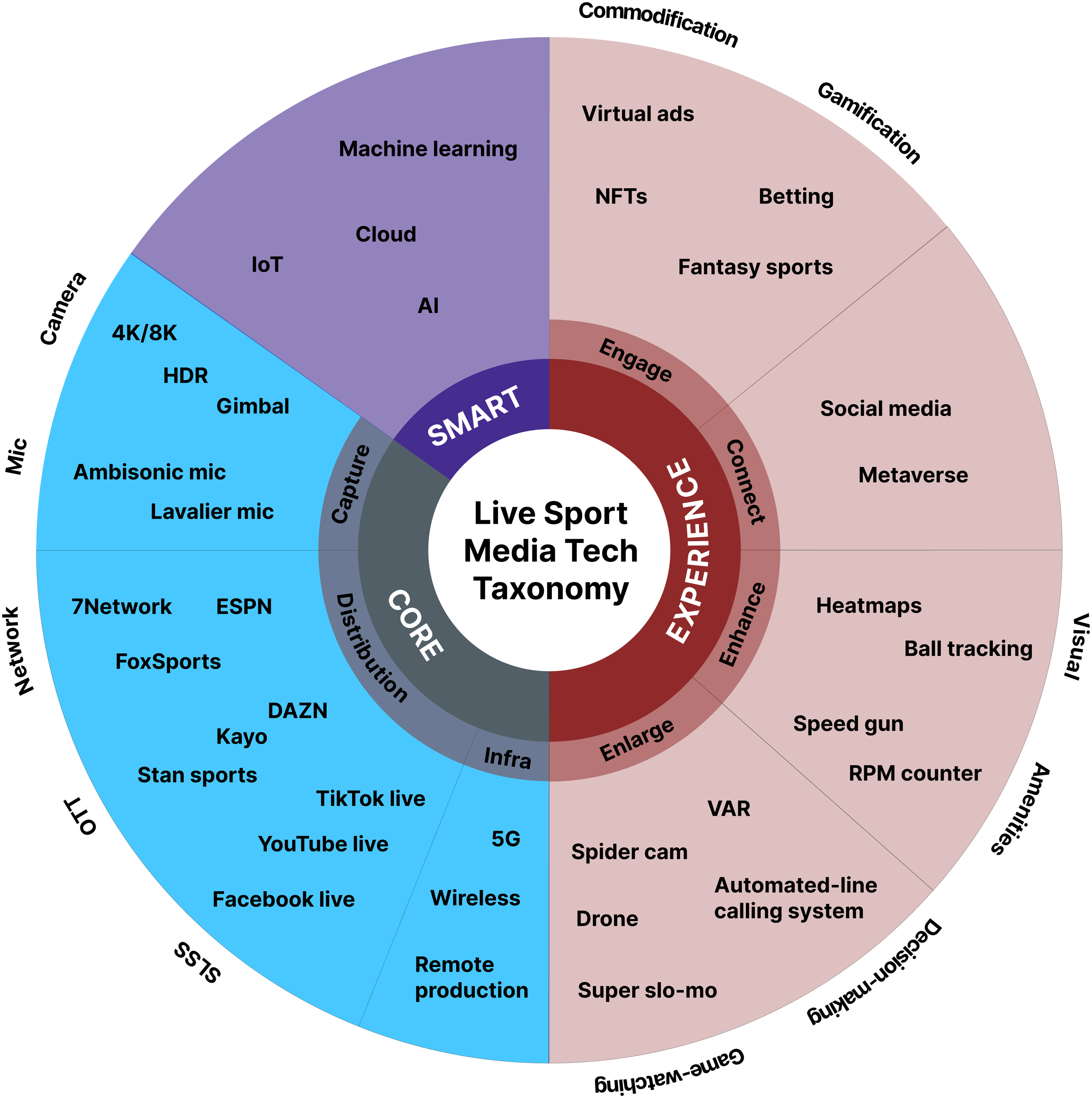
The identification and categorisation of specific technologies within each subcategory group are novel contributions of this research. In addition, the Core technology and Smart technology groups represent original constructs developed inductively from the empirical analysis of industry practices. Thus, the study offers an original, empirically grounded taxonomy tailored to the live sport media environment.
Core Technology
Core Technology
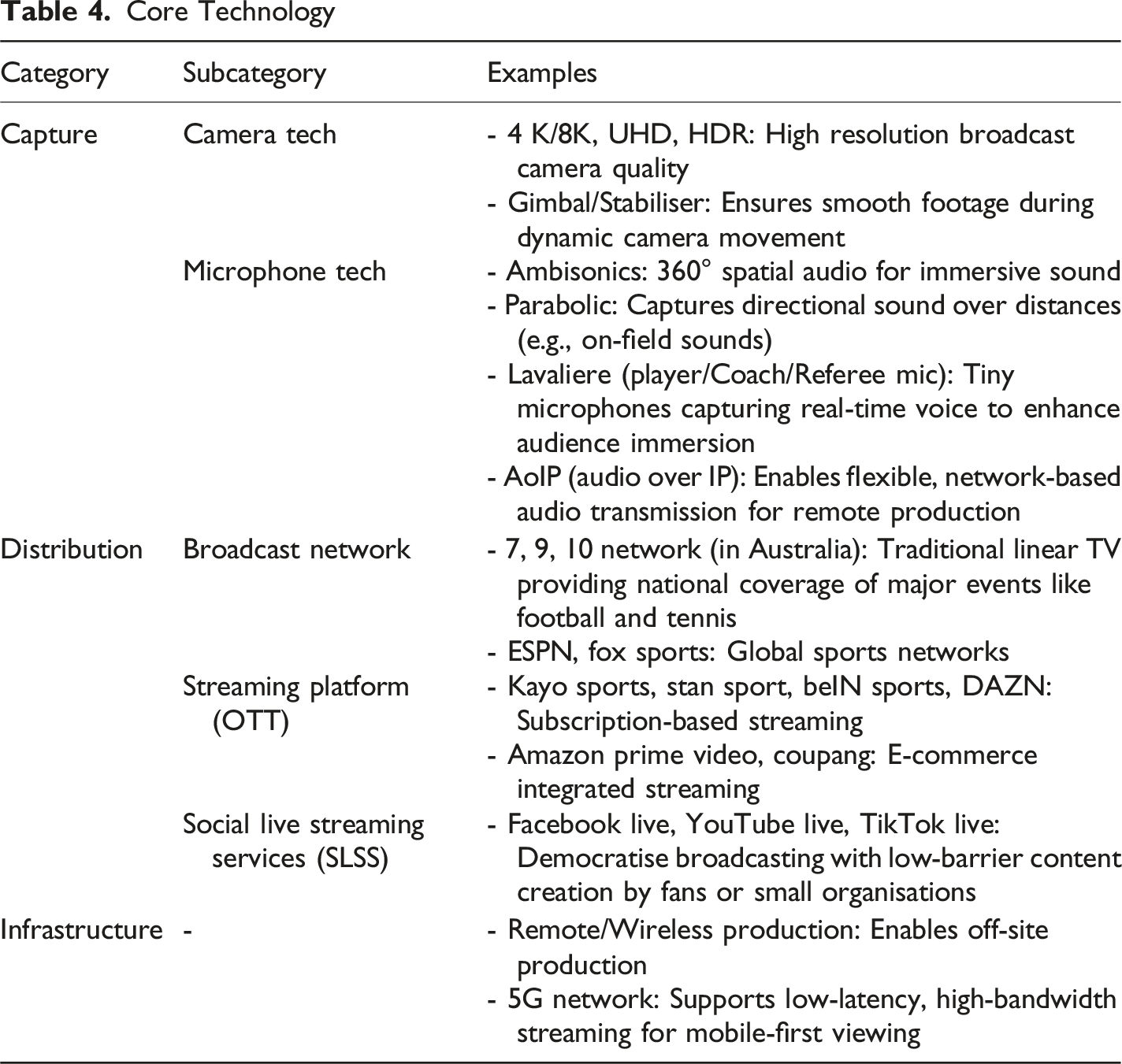
Capture technology focuses on capturing high-quality audio-visual content, which is an essential part of live sport. This study identified key technologies, including camera-related technologies like high-resolution cameras (i.e. 4K, 8K, and Ultra-High-Definition cameras) and High-Dynamic-Range imaging capabilities. Camera technologies also contain camera-supporting technologies such as stabilisers and gimbals. Advanced Microphone technologies ensuring high-fidelity audio capture were also identified as critical components.
Distribution technology encompasses the various channels through which live sport content reaches viewers. Beyond traditional broadcast networks, the study found the rising importance of OTT services and SLSS in distributing live sport. Infrastructure technology provides a technical backbone for production and delivery. Findings emphasised technologies such as remote production systems, wireless transmission capabilities, and 5G network integration, all of which significantly enhance production efficiency and flexibility.
Experience Technology
Experience Technology
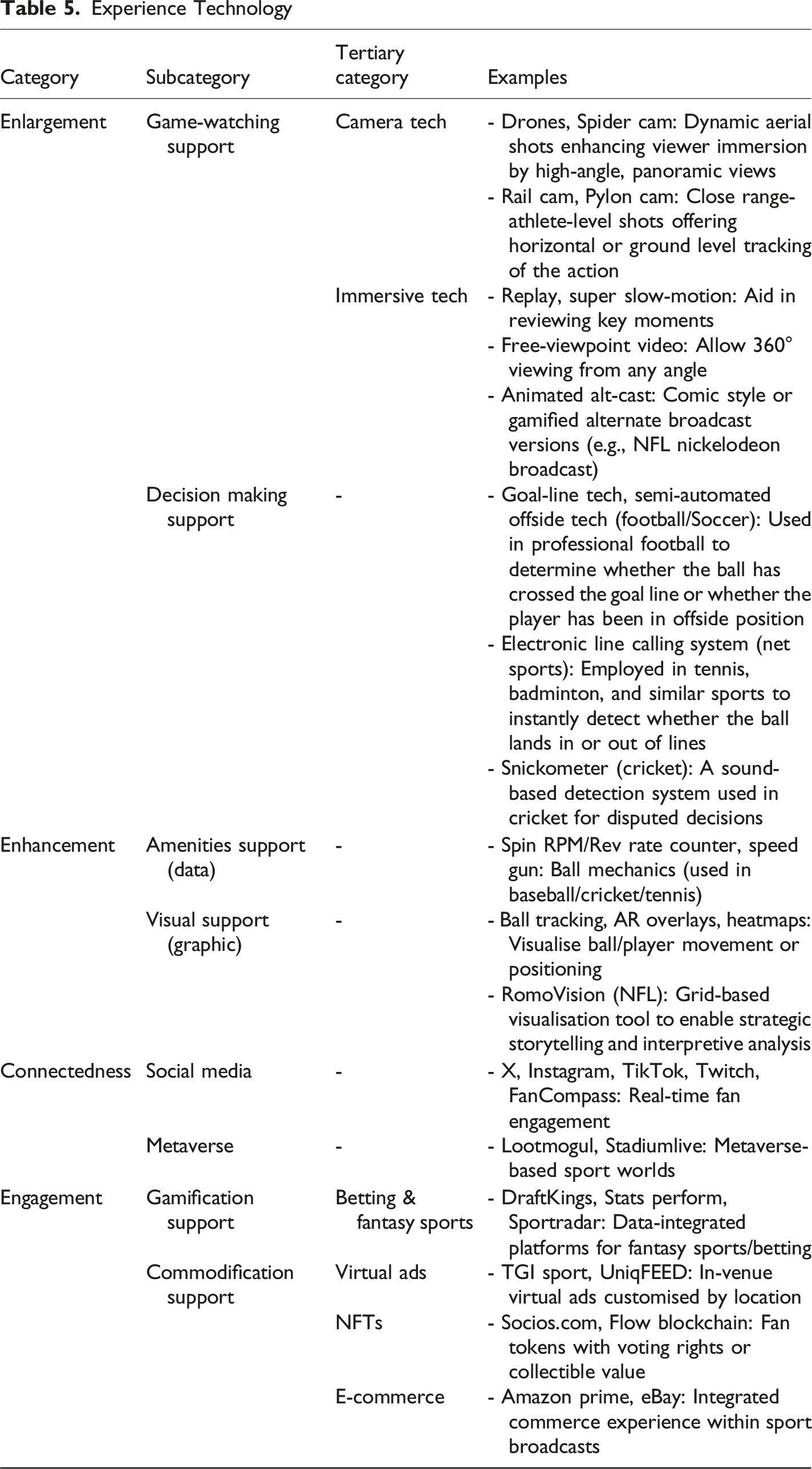
Enlargement technology refers to technologies that increase the sensory viewing experience and is further classified into two subcategories: Game-watching support and Decision-making support. Technologies such as drone cameras or spider cameras (Sturm, 2021) and immersive technologies including action replay or super slow-motion (Whannel, 2009) were identified as contributing to Game-watching support, enhancing the visual scope and perspective of live sport viewing. Meanwhile, decision-support systems like Hawk-Eye (Kim et al., 2023) and VAR (d’Andréa & Stauff, 2022) were categorised under Decision-making support, assisting both officials and audiences in interpreting pivotal events.
Enhancement technology improves fans’ cognitive understanding and enjoyment of live sport via Amenities support and Visual support. Amenities support encompasses real-time data provision systems, such as ball speed and spin metrics that enrich the informational environment of live sport events (Hassan, 2018). Visual support includes AR-based graphics overlays (Goebert et al., 2022) that visually augment the broadcast, making the experience more engaging and intelligible.
Connectedness technology refers to tools, platforms, and systems that enable sport fans to communicate with each other and foster interaction among them. This group was subdivided into two emerging domains: Social media and Metaverse platforms. Traditional social media platforms (e.g., X or TikTok) and co-streaming initiatives (e.g., NFL and Twitch collaborations) (Qian, 2022) represent the Social media subcategory. In more recent times, Metaverse platforms include virtual fan spaces and initiatives such as Manchester City’s metaverse projects (Sony, 2023), creating immersive environments for fan engagement.
Engagement technology aims to deepen fan participation and monetisation, operationalised into Gamification support and Commodification support. Gamification support technologies include sports betting platforms and fantasy sports that incentivise interactive participation (Gupta et al., 2024). Commodification support technologies, such as virtual advertising overlays and Non-Fungible Tokens (NFTs), provide new avenues for fan-driven revenue generation. By describing these subcategories within each experience type, this study extends previous theoretical frameworks and introduces a nuanced, practice-driven understanding of how specific media technologies shape live sport consumption.
Smart Technology
Smart Technology
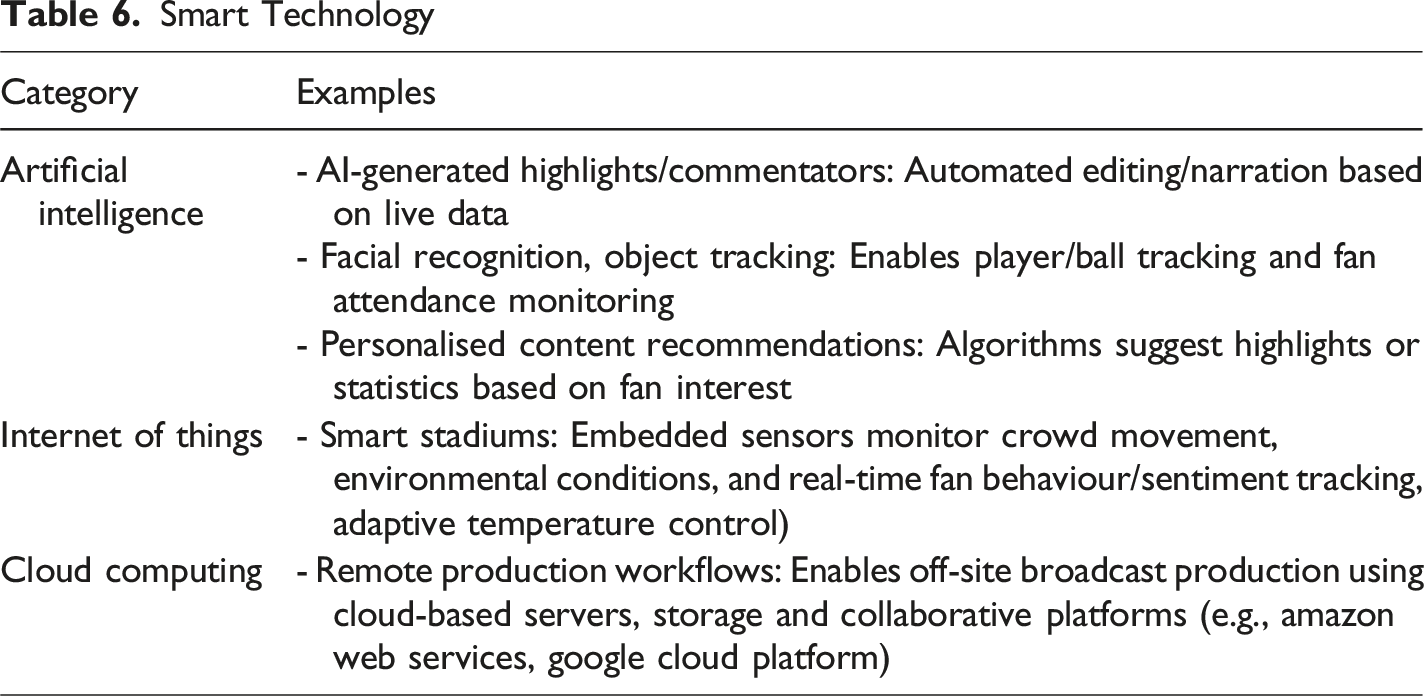
This study identifies Smart technology as a distinct category complementing Core and Experience technologies. Key findings include the application of AI for automated highlight generation, commentary, object tracking, and facial recognition. In the consumption sphere, personalised content recommendation engines exemplify how Smart technology enhances the live sport experience.
Through these contributions, the taxonomy developed in this study offers a refined, empirically grounded framework that both builds on and extends prior typologies, addressing the unique characteristics of media technology in live sport contexts.
Discussion: Trends and Limitations Revealed in Taxonomy Development
The LSMT taxonomy presented in this study provides a comprehensive framework for understanding the landscape of media technologies in live sport. By classifying them into Core, Experience, and Smart technologies, this taxonomy not only maps the diversity of tools in use but also emphasises emerging patterns and relationships across categories. In doing so, it supports both academic and practical analysis of how technologies converge and reshape the live sport experience. While offering a robust framework for understanding the current state of live sport media technologies, its development also revealed several notable trends and limitations.
Increasing Technological Convergence
The convergence between technology categories is becoming more prominent. For instance, SLSSs, which combine social media (Experience technology) and live streaming services (Core technology), enable fans to interact with each other while delivering live sport content. The combination of technologies in two different categories has enriched the sport fan experience by providing new forms of gratification (Kim & Kim, 2020).
Even within the same category, technologies from different subcategories can converge. One typical example is ‘Fanboost’ introduced in Formula E racing from 2014 to 2022, combining social media (Connectedness technology) and gamification (Engagement technology). This new type of fan engagement allowed fans to vote for their favourite driver on social media to give them an advantage in the form of an additional boost in the second half of the race (Formula E, n.d). While the idea of fans directly influencing the outcome of a game has been controversial, it is undoubtedly a unique form of sport mediatisation (Finn, 2021) that brings a new interactive experience to fan consumption by fusing different forms of Experience technology.
Furthermore, technologies from different categories converge to form new categories. The Hawk-Eye system is a composite technology that combines Camera technology with data analysis (Amenities support) and visualisation (Visual support) (Liu et al., 2022). Operationally, it is used for multiple purposes, being used as the Decision-making support technology as part of the Enlargement technology (to assist officiating), as well as being deployed as entertainment content via integration within broadcasts to provide viewers with a more enjoyable and interesting visual experience (Kim et al., 2023). Interestingly, the sport content reconstructed through this Hawk-Eye system also provides valuable statistics (Amenities support) for post-game analysis by coaches and players (Liu et al., 2022). As technological innovations converge and evolve, they increasingly shape cross-category interactions and dependencies. This blurring of boundaries challenges traditional classifications of media technologies in sport.
The LSMT taxonomy addresses this complexity by offering a structured framework to identify technologies that span multiple functional domains. Beyond classifications, it provides a common analytical language for examining convergence and hybridisation. As such, the taxonomy serves as a foundation to systematise comparison and render analyses of sport media technology more coherent and actionable.
Personalisation of the Viewing Experience
Media technology has revolutionised sport fan experiences by providing personalised, barrier-free engagement. For example, in the 20th century, advances in radio and television made it possible to watch live sport at home without the constraints of time and space, whereas before technology, it was only available to live spectators (Real & Mechikoff, 1992). More recently, both forms of personalisation, user-controlled and system-driven, delivered through mobile devices, have significantly impacted the viewing experience of large sporting events (Sun et al., 2016). This trend will further accelerate with the rapid development of more diverse media technologies.
User-controlled personalisation, which is also known as customisation (Lopez-Gonzalez et al., 2019a), empowers fans to tailor their viewing experience to their individual preferences. By leveraging a diverse range of media technologies, fans can customise or ‘co-create’ their consumption experience across multiple devices, such as smartphones, tablets, and smart TVs, and multiple platforms. This second screen approach enables simultaneous access to live matches, player statistics, social media feeds, and interactive features like custom camera angles and commentary options (Karg, 2022; Lopez-Gonzalez et al., 2019a). Additionally, immersive technologies like VR and AR can offer unparalleled opportunities for personalised and interactive experiences (Kim & Ko, 2019). Ultimately, user-controlled personalisation empowers fans to actively shape their own sport viewing experience, fostering a deeper connection with their favourite teams and athletes.
System-driven personalisation leverages AI and machine learning algorithms to analyse user behaviour and preferences, delivering tailored content and experiences. This approach offers a more proactive and intelligent way to enhance fan engagement, in particular the cognitive or learning component within the dimensions of engagement (Brodie et al., 2011). This type of personalisation is often related to the viewing experience, such as in-game data analysis (Lin et al., 2022) or personalised sport broadcasts (Chuang & Narasimhan, 2010). It is also increasingly relevant to other forms of engagement, such as playing, betting and marketing, in the form of fantasy sport (Yuksel et al., 2023), sport betting products (Lopez-Gonzalez et al., 2019b) or personalised sponsorship messages (Herold & Breuer, 2023). These highlight the growing trend of personalisation in sport media, from enhancing viewer engagement to tailoring advertising strategies.
Overall, media technology is transforming sport fandom by offering increasingly personalised and immersive experiences. By combining user-controlled and system-driven personalisation, sport organisations can create personalised viewing experiences that cater to the diverse needs and preferences of their audience and deliver on the multiple components of fan engagement for sport fans (Geissler et al., 2024).
These examples illustrate how personalisation reshapes the sport viewing experience. The LSMT taxonomy provides a structured way to situate these technologies, clarifying which functions drive personalisation; whether through interface control (e.g., multiple camera angles), algorithmic curation (e.g., AI-driven recommendations), or immersive interaction (e.g., VR). This perspective enables sport organisations and researchers to systematically assess how technologies deliver personalisation across production, distribution, and consumption processes.
Conclusion: Implications and Future Directions
The LSMT taxonomy contributes significantly to both academia and industry by providing an empirically grounded, technology-centred framework for live sport media. It addresses a critical gap by integrating technological functionalities with the outcomes they enable, such as enhancing fan experiences, improving operational efficiency, or enabling new forms of production and distribution. In doing so, it advances sport-specific theory (Cummins & Hahn, 2024; Ratten, 2016) and provides a structured basis for analysing technological trends and their implications across contexts.
For sport organisations, the taxonomy functions as a strategic tool to assess and select technologies aligned with organisational goals. It clarifies available options for enhancing fan engagement among Experience technologies (e.g., AR visualisation), or improving productivity among Smart technologies (e.g., automated production). The taxonomy supports decision-making by mapping technology options, balancing innovation with resources, and revealing competitive opportunities.
Broadcasters and media can use the taxonomy to create more engaging and informative broadcasts. Clear categorisation helps decision-makers quickly understand where a new technology fits with their current product and service, lowering adoption barriers. The taxonomy also highlights how to differentiate their offerings, respond to shifting audience demands, and collaborate more effectively with sponsors, advertisers and technology companies.
For technology companies, the taxonomy identifies sport-specific market segments, reveals overlaps, gaps, and potentials and supports competitive intelligence. By aligning capacities (e.g., machine learning, computer vision) with sport-sector needs (e.g., real-time analytics tools), companies can design targeted innovations, accelerate diffusion, and ensure compatibility with industry standards. This encourages collaborations with sport organisations and broadcasters.
For policymakers and regulators, the taxonomy provides a framework to assess societal impacts, including data privacy, equitable access, and commercialisation of sport through the metaverse. It enables proactive policy development that balances innovation with consumer protection, informed by clear categories that signal potential risks (e.g., AI-based fan tracking tools) and guide standard-setting
Academically, the taxonomy provides a consistent conceptual language that enables clearer dialogue on emerging technologies in live sport, reducing terminological ambiguity. It enhances comparability across studies by ensuring like-for-like classification, facilitating more reliable meta-analysis and theory building. The taxonomy also aids in identifying research gaps by revealing underrepresented categories and technological functions, which guide targeted investigation. As both a product of and an input to theory development, it bridges exploratory insights with more formal conceptual models, providing a stable reference point for future empirical and theoretical work.
Building on these academic foundations, the taxonomy opens multiple avenues for future inquiry. Comparative studies could explore adoption patterns across sports, competition levels, regions, and diverse cultural or regulatory contexts. Longitudinal studies could trace the diffusion and hybridisation of technologies over time, while interdisciplinary collaborations (e.g., with communication, sport management, media studies, or data science) could examine how converging tools reshape live sport. It also provides a lens for interrogating contested areas such as automated officiating, allowing scholars to systematically investigate tensions between technological precision and human judgment, and their implications for decision legitimacy, fan trust, and the cultural value of sport. As technology continues to reshape how sport is produced, consumed, and monetised, frameworks like this are essential for ensuring innovation enhances rather than diminishes the cultural, social, and emotional value of sport.
Footnotes

Ethical Consideration
This study does not involve collection of data from human subjects, but instead reflects the analysis of existing information/documents. No ethical approval was sought for the conduct of this research.
Funding
The authors received no financial support for the research, authorship, and/or publication of this article.
Declaration of Conflicting Interests
The authors declared no potential conflicts of interest with respect to the research, authorship, and/or publication of this article.