




Abstract
This study explores how FoMO fosters sports fan attachment and enhances team identification in the context of online sports fandom. Grounded in social capital theory and social identity theory, this paper investigates how sports fans’ experiences with FoMO activate socially driven behaviors, particularly social media involvement, which build attachment to sports and deepen team identification. An online survey of 451 U.S. based participants revealed that FoMO strongly correlates to social media involvement, which in turn enhances sports attachment and team identification; additionally, a moderating effect was observed among sports fans with moderate to high levels of bridging social capital, suggesting that fans with broader weak-tie networks gain more from FoMO-driven engagement. These findings reframe FoMO as a prosocial motivator within digital fan communities. The research also provides theoretical insights into FoMO’s role in identity-building and recommends practical approaches for sports organizations to boost long-term fan engagement.
Keywords
In August 2024, as the Paris Olympics approached, women’s tennis player Emma Raducanu announced her decision to forgo the Olympics to concentrate on the upcoming U.S. Open. In a press conference, she reflected on her Fear of Missing Out (FoMO), saying, “Seeing the Olympic ceremony and team kits makes me, of course, want to be there, representing my country” (Matthew, 2024). FoMO is a psychological phenomenon defined as the anxiety of missing out on others’ experiences (Przybylski et al., 2013), affecting athletes and general public. This effect has grown more prevalent with the rise of social media, which heightens fans’ exposure to real-time updates and activities (Brailovskaia & Margraf, 2024).
In the contemporary digital era, social media is vital for information dissemination and social connectivity, with 4.9 billion global users in 2023 and an average of 7.1 accounts per person in the US (Wong & Cassie, 2023). While it provides a vast array of information (Lee & Na, 2024) and facilitates new forms of connections (Guo & Chen, 2022), it can also be strongly associated with negative psychological impacts, such as heightened anxiety and addictive behaviors (Reer et al., 2019). However, in a sports context, FoMO does not solely lead to negative outcomes—it can drive increased social media engagement, strengthening fan’s sense of connection and affiliation with their teams (Lee & Na, 2024). This contrasting effect highlights the need for a deeper investigation into how FoMO among sports fans shapes social media engagement and the development of team identification.
Building on this background, this study examines the influence of FoMO on sports fans’ social media engagement and how this affects their team identification and emotional attachment. Specifically, it explores how the moderating role of bridging social capital—forming connections with diverse individuals online—modulates this relationship. Bridging social capital, as explained by social capital theory (Putnam, 2000), refers to loosely connected relationships with people from varied backgrounds, and social media can facilitate these connections. Through sports channels, fans can connect with a larger community that mirrors their identity, strengthening their sense of belonging. Identity is an individual’s emotional attachment and loyalty toward a group (Yoshida et al., 2015). In sports, team identification develops through group interactions where fans internalize the team’s attitudes and emotions, making it a part of their own identity (Katz et al., 2018; Lock & Heere, 2017). Social media thus serves as a platform where fans loosely connect through shared interests and interact with other fans, creating an extended network that supports group identity.
The present study examines how FoMO-driven social media involvement fosters fans’ sports attachment and team identification, particularly through the lens of bridging social capital. Importantly, this study reframes FoMO not as a purely fear-based phenomenon, but as a social motivator activating weak-tie involvement in online platforms, thereby enhancing identity-based community building. Beyond theoretical contributions, this study offers actionable insights for sports organizations seeking to build strong, digitally connected fan communities by recommending narrative arcs and time-sensitive content that activates FoMO and deepens identification.
Theoretical Background
Social Identity Theory and Team Identification
Social Identity Theory (SIT) suggests that individuals develop their sense of self by associating with social groups (Tajfel & Turner, 1979). In the realm of sports, this framework explains how fans construct their self-identity by aligning with a team, differentiating themselves from non-fans, and solidifying their place within the fan community (Delia & James, 2018). Because sports teams function as social groups, fan identification influences behaviors such as loyalty (Yoshida et al., 2015) and engagement (Cunningham & Eastin, 2017). A person’s perceived membership in a social group contributes to their self-concept by fostering connections with in-group members while distinguishing themselves from outsiders.
Identification has been defined as “an orientation of the self in relation to a person or group, resulting in strong feelings of attachment or affiliation” (Trail et al., 2000, pp. 165–166). SIT explains that fans are motivated to associate with teams as a way to enhance their self-image (Tajfel, 1982), which helps explain why sports fandom frequently becomes an integral component of personal identity. Team identification, in particular, suggests that individuals actively seek social affiliations and develop strong psychological connections to sports teams (Devlin & Brown-Devlin, 2017). Through this process, fans not only form emotional bonds with their team but also internalize the team’s values and identity as part of their own, thereby strengthening their commitment and engagement.
Within the sports context, favoritism toward one’s own team and negative perceptions of rival teams serve as clear markers of group identity and social belonging (Brown-Devlin et al., 2025). Sports fans often view their favorite teams as extensions of themselves, incorporating the teams’ identity into their own social self-concept (Delia & James, 2018; Wann et al., 2001). This identification is driven by the desire to engage with others and be part of a fan community, making it a critical element of long-term relationships between fans and sports teams (Watkins & Lee, 2016). As fans engage in repeated social interactions, they deepen their emotional investment in the team, often mirroring its successes and setbacks as their own (Santos et al., 2019). This process ultimately integrates the team into the fan’s personal identity, further solidifying their attachment (Lock & Heere, 2017; Wann & Branscombe, 1993).
Social media platforms facilitate direct communication among fans, strengthening their connection to sports teams and fostering team identification (Hull & Lewis, 2014). Participation in online sports communities has been shown to be a strong predictor of fan behavior, as interactions with other fans generate a sense of belonging and strengthen fan engagement. Katz et al. (2018), for instance, showed that behavioral outcomes, such as game attendance, are substantially influenced by fan-to-fan relationships within brand communities. Likewise, Yoshida et al. (2015) discovered that social ties with other fans were stronger predictors of behavioral loyalty than personal satisfaction with the team or individual intentions, therefore intensifying to the degree that fans internalize their team’s triumphs and defeats as their own lived experiences (Brown-Devlin et al., 2018).
Attachment to Sports
Attachment is a fundamental human experience that extends throughout life (Schultz et al., 1989), enabling self-expression and fostering connection among people (Wallendorf & Arnould, 1988). In the realm of sports, there are multiple “attachment points” such as teams, players, coaches, communities, the sport itself, universities, and different levels of competition (Robinson & Trail, 2005). Kwon and Armstrong (2004) argue that these points of attachment reflect a “psychological connection” with particular entities, prompting the question of what factors drive fans to develop a sense of connection with sports (Robinson & Trail, 2005). As Robinson and Trail (2005) highlight the diversity of attachment points for sports fans, categorizing them into two dimensions: organizational identification, which includes attachment to the team, coach, university, and players, and sports identification, which pertains to attachment to the sports as a whole and its various levels (Trail et al., 2000). Sports fans, defined as individuals: who actively support a sports, teams, or athletes, demonstrate varying attachment levels to the sports (Shuv-Ami & Toder Alon, 2023). In this study, we focus specifically on attachment to the broader concept of sports and different levels of competition. This focus is important for several reasons. First, it allows for examining how general feelings of belonging and interest in sports may develop into more specific attachments that are not limited to individual teams or players. Second, social media content encompasses a range of sports, exposing users to various sports rather than restricting them to specific teams or athletes. Finally, investigating how general interest in sports translates into attachment to specific teams is essential for understanding fans’ psychological motivations and developing effective communication strategies, which are valuable for sports communication scholars and sports team marketers.
Sports and Social Media Involvement
Involvement refers to the degree of importance an individual assigns to a particular object (Zaichkowsky, 1994). Involvement can be specifically pronounced among sports fans, as their passion and commitment to their favorite teams and sports often become integral to their identities (Kural & Özbek, 2023). In today’s digital era, social media platforms have redefined fan engagement, allowing fans to produce, share, and engage with like-minded individuals through content in ways that were previously unimaginable (Hull & Lewis, 2014).
Social media has revolutionized sports consumption by providing fans with constant access to team-related information and by creating opportunities for ongoing engagement (Filo et al., 2015). Through these interactions, fans build a sense of belonging and identity which fosters long-term team loyalty (Stavros et al., 2014). Prior research underscores the emotions that motivate fan engagement on social media. By staying informed about the latest updates and connecting with teams and other fans, individuals deepen their attachment and team identification with their favorite teams (Stavros et al., 2014). They found that fans participate in NBA team Facebook pages due to emotional factors such as passion, hope, self-esteem, and camaraderie. Similarly, Pu and James (2017) highlighted that sustained exposure through digital media strengthens the emotional bonds of geographically dispersed fans with their teams, illustrating digital platforms’ pivotal role in fostering their community involvement.
Considering prior research that emphasized the positive relationship between social media and fans’ emotional factors, it is expected that social media use, coupled with FoMO—generally considered a negative psychological factor—will have an even greater impact on sports attachment and identification.
Fear of Missing Out (FoMO)
Fear of Missing Out (FoMO) refers to “a pervasive apprehension that others might be experiencing rewarding events in one’s absence” (Przybylski et al., 2013, p. 1841), which can drive individuals to use social media compulsively in order to stay connected within their social networks. This desire to maintain connectivity reflects a fundamental need for social relationships and communication, which people often seek to fulfill through social media platforms (Ellison et al., 2011; Przybylski et al., 2013). Previous studies have explored FoMO as a driving factor behind various behaviors, including alcohol use (Riordan et al., 2015), problematic gambling (Delfabbro, King, & Parke., 2023; Song et al., 2024), social media usage (Beyens et al., 2016), and social media addiction (Ansari et al., 2024; Blackwell et al., 2017; Tandon et al., 2022), often highlighting its negative effects. However, FoMO can also produce positive outcomes. For instance, Lee et al. (2021) found that individuals with higher FoMO reported increased happiness when purchasing items recommended by social media influencers. Similarly, Roberts and David (2020) demonstrated that FoMO can positively impact well-being by encouraging social media use that promotes social connection.
Social media provides sports fans with easy access to the latest sports-related updates. Fans can indirectly receive team or player news through followers’ posts or directly from official team channels with live game updates. Additionally, social media platforms allow fans to interact with others through comment sections, creating a space for engagement and community building. In the context of sports fan behavior, FoMO often serves as a motivator for media consumption and active engagement (Lee & Na, 2024; Larkin & Fink, 2016). Social media enables continuous virtual interaction within sports communities, enhancing fans’ attachment to sports and strengthening team identification (Lee & Na, 2024). Even individuals who may not typically follow sports might find themselves drawn into sports content through FoMO, especially when friends or acquaintances are actively discussing or engaging in sports-related activities (Cunningham & Eastin, 2017). On major game days, FoMO may intensify as people worry about missing out on shared experiences or related conversations (Brown et al., 2015). Vale and Fernandes (2018) noted that social media’s interactive nature motivates fans to follow team channels, which aligns with Przybylski et al. (2013), who found that social media engagement serves as a coping strategy for FoMO-related anxiety.
Previous research has shown that sports fans’ FoMO can significantly influence team identification. Larkin and Fink (2016) found that FoMO among fantasy sports fans increases social media engagement during games, which ultimately strengthens team identification. Similarly, Lee & Na (2024) emphasized that sports fans’ use of second screens during live streams to stay updated on others’ actions heightens social media involvement, highlighting a distinct approach compared to the current study. Rather than focusing solely on live sports viewing, this study examines how FoMO, as a psychological factor measured in everyday contexts, enhances social media involvement, thus increasing exposure to sports-related channels and content on social media platforms. This exposure is expected to deepen fans’ attachment to sports and, ultimately, strengthen team identification.
Moderating Role of Bridging Social Capital
According to Coleman (1988), social capital serves as a resource that facilitates goal achievement and offers individuals access to valuable information and opportunities (Adler & Kwon, 2002). Putnam (2000) conceptualized social capital as the benefits individuals gain through their social networks, categorizing it into two main types: bonding and bridging social capital. Bonding social capital represents the strong emotional ties formed with close family and friends (Ellison et al., 2007), whereas bridging social capital promotes the exchange of information and perspectives across diverse networks, or “weak ties” (Granovetter, 1983; Putnam, 2000). This concept is especially relevant in social media contexts, where platforms such as Facebook have been shown to reinforce bridging social capital (Ellison et al., 2007; Steinfield et al., 2008).
Thus far, research applying social capital theory to social media contexts indicates that social media users experience higher levels of interaction and, consequently, greater social capital than those not engaged with social media (Brandtzæg, 2012; Quinn, 2016; Steinfield et al., 2008). Moreover, prior research has recognized social capital as a mediating factor between social media and behavioral outcomes. For instance, Horng and Wu (2020) found that both bonding and bridging social capital mediated the relationship between social media use and social commerce intentions, while Guo and Chen (2022) demonstrated that political engagement on social media can influence psychological well-being and social support through social capital.
In the sports domain, social media presents unique opportunities for fans to interact with teams, athletes, and other fans, thereby creating extensive social networks (Vale & Fernandes, 2018). Social media is particularly effective in facilitating numerous weak ties, which allow sports leagues and teams to maintain a broad range of connections (Donath, 2007). The strength of these weak ties lies in their ability to provide access to diverse information (Granovetter, 1983), enabling fans to communicate not only with close friends and family but also with people from various backgrounds. Recent studies have highlighted the functional relevance of weak-tie networks in fostering fan engagement and community building. For instance, Katz et al. (2020)found that fan behavior is influenced not only by one’s identification with the team, but also by perceptions of other fans' involvement, especially those seen as more dedicated or active within the fan community. This implies that one’s identity can be significantly shaped by interactions with a wide and diverse range of fans, including those with weaker ties. Likewise, Mastromartino et al. (2022) demonstrated that feelings of belonging to a fan community, primarily cultivated through weak-tie relationships, are key drivers of bridging social capital. These varied but casual interactions on social platforms ultimately promote greater involvement and foster a stronger sense of connection to the broader fan community. In this sense, individuals embedded in broader, weak-tie networks may be more susceptible to FoMO-driven engagement, as the desire to stay connected with a diverse and active fan base amplifies the effect of social media use on sports attachment and team identification.
Building on the reviewed literature, this study proposes that FoMO influences sports-related social media involvement, which subsequently fosters sports attachment and strengthens team identification. This pathway is expected to be moderated by fans’ bridging social capital, such that those embedded in broader, weak-tie networks experience stronger effects. Based on this theoretical perspective, we propose the following hypotheses: H1: FoMO will be positively associated with social media involvement among sports fans. H2: Social media involvement will be positively associated with attachment to sports among sports fans. H3: Attachment to sports will be positively associated with team identification. H4: The effects of FoMO on team identification will be serially mediated by social media involvement and attachment to sports. H5: Bridging social capital will moderate the effects of social media involvement on attachment to sports. Specifically, social media involvement will increase attachment to sports only for those with a moderate or higher level of bridging social capital. H6: The serial mediation effects of FoMO on team identification will be significant only for those with a moderate or higher level of bridging social capital.
Method
Participants
To achieve the goal of the current study, participants were restricted to (1) those who are currently fans of at least one sports team and (2) those who use at least one social media platform to keep up with sports news. Participants (N = 451) were recruited through Prolific, an online survey platform known for its high-quality, diverse participant pool and rigorous data validation (Douglas et al., 2023). Prolific enables researchers to set detailed eligibility criteria and provides tools to minimize selection bias. Participants receive study invitation via email, Prolific dashboards, or browser extension (Prolific, 2024), and all users are aged 18 or older, representing diverse national and demographic backgrounds (Prolific, 2025). Participation was entirely voluntary, and compensation was determined based on study duration and complexity. In this study, each participant received $1.34 for completing the survey. Given a median completion time of 8.11 minutes, this compensation translated to an approximate hourly rate of $9.91, consistent with Prolific’s fair compensation guidelines at the time of the study, which is June 2024.
A total of 451 U.S. residents participated in the study (42.10% male and 56.30% female, M = 37.08 years, SD = 11.50). Reported ethnicity/ethnic identification included White (65.00%), Black or African American (18.80%), Hispanic or Latino (7.80%), Asian (4.70%), and other (2.00%). 15.50% of the respondents earned a high school degree or equivalent, 20.00% had some college, 35.30% had a bachelor’s degree, and 17.30% completed a graduate degree. Lastly, participants reported their average social media usage as follows: less than 2 hours a day (42.60%), 2–5 hours a day (48.30%), and more than 5 hours a day (9.10%).
Procedure
Following approval from the university’s Institutional Review Board (IRB), an online survey was conducted to examine the proposed research model. Participants were informed that the participation was voluntary and could be withdraw at any time without penalty. Informed consent was obtained before the start of the survey.
Two screening questions were presented at the beginning of the survey: “Do you have your favorite sports/sports team? Please specify.” and “In order to keep up with news about your favorite sports team, which social media platform do you use the most?”. Participants who answered “No” to the first question (n = 80) or “Nothing” (n = 74) to the second question were excluded from the final sample. Before proceeding to the main measures, participants were asked to indicate how much time they spent on social media (e.g., “On average, how much time do you spend on social media per day?” and “On average, how much time do you think you spend consuming sports-related content on social media per week?”) At the end of the survey, participants were asked to identify their gender (male, female, preferred not to say), race (White, Black, Asian, American Indian/Alaska Native, Hawaiian Native/Pacific Islander, Two or more races), age (18–70 or older), income level, and education level. Finally, participants were fully debriefed and compensated at the very end of the survey.
Measurement
All questions were measured on a 7-point Likert scale, ranging from 1 = “Strongly disagree” to 7 = “Strongly agree” and self-reported based on the subjective perception of each variable.
FoMO
To measure participants’ experience of FoMO in sports domain, we adapted six items from Przybylski et al.’s (2013) original 10-item FoMO scale and tailored them to fit the sports context. Three original items were eliminated throughout this procedure due to their contextual relevance to sports (e.g., items referring vacations or general uncertainty about friends’ activities.) In addition, two items—“It bothers me when I miss an opportunity to meet up with friends” and “When I miss out on a planned get-together it bothers me”—were combined into a single item to reduce redundancy. Participants therefore indicated the degree of agreement with the following: “I fear others have more rewarding sports experiences than me,” “I fear my friends have more rewarding sports experience than me,” “I get worried when I find out my friends are having fun with the sports without me,” “When I have a good time at a sports event, I feel that sharing the details on the social media platform (e.g., updating status) is important,” and “It bothers me when I miss out on a sports event or a planned get-together.” (M = 3.38, SD = 1.30, Cronbach α = .84).
Social Media Involvement
Social media involvement was assessed using seven items adapted from prior research. These items were initially derived from Zaichkowsky’s (1994) Personal Involvement Inventory, and later adapted to the sports media context by Clavio and Kian (2010). More recently, Lee and Na (2024) modified these items to reflect individuals’ psychological involvement with social media platforms. Drawing from these studies, we selected and refined seven items that capture both the personal relevance and emotional salience of social media use with the following items: “Social media is important,” “Social media means a lot to me,” “Social media is valuable,” Social media is exciting,” “Social media is appealing,” “Social media is fascinating,” and “Social media is needed.” (M = 4.96, SD = 1.25, Cronbach α = .93).
Bridging Social Capital
Bridging social capital was assessed by adapting Ellison et al.’s (2007) scale. The questionnaire consisted of five items originally derived from Williams’ (2006) Bridging Social Capital subscale and three additional items designed to contextualize the outcomes of bridging social capital. Thus, a total of seven items were revised to fit in this study: “I feel like I’m part of the fan community for my favorite sports team,” “I am interested in what goes on with my favorite sports team,” “Interacting with my favorite team’s fan community makes me want to try new things,” “Interacting with my favorite teams’ fan community makes me feel like a part of a larger community,” “I am willing to spend time to support sports team’s community activities,” “Within my favorite sports team, I come into contact with new people all the time,” and “Interacting with my favorite sports team’s fan community reminds me that everyone in the world is connected.” (M = 4.89, SD = 1.07, Cronbach α = .88).
Attachment to Sports
Attachment to sports was measured with the adapted items from Kwon et al. (2005) and Robinson and Trail. (2005). The items include “I consider myself a sports fan,” “I am a sports fan at all levels (e.g., high school, college, professional),” “I am a fan of sports regardless of who is playing,” and “I am a fan of all sports teams and not just one specific team.” (M = 4.43, SD = 1.20, Cronbach α = .74).
Team Identification
Lastly, team identification was measured through the Sport Spectator Identification Scale (SSIS) from Wann and Branscombe (1993). We contextualized the original scale based on SSIS to better suit our study’s purpose. A total of nine items were used: “How important to you is it that your favorite sports team wins?,” “How strongly do you see yourself as a fan of your favorite sports team?,” “How strongly do your friends see you as a fan of your favorite sports team?,” “During the season, how much do you engage with your favorite sports team via in-person?,” “During the season, how much do you engage with your favorite sports team via radio/ television/ newspaper?,” “During the season, how much do you engage with your favorite sports team via social media,” “How often do you display your favorite sports team’s name of insignia at your place of work, where you live, or on your clothing?,” “How important is being a fan of your favorite sports team to you,?” and “How much do you dislike your favorite sports team’s greatest rivals?” (M = 4.54, SD = 1.18, Cronbach α = .86).
Pilot Study
Before launching the main study, a pilot study was conducted to test our conceptual model. We aimed to investigate how FoMO could influence sports fan behavior on social media and, subsequently, team identification. For the pilot study, 102 student participants (54.8% female, Mage = 19.57 years, 48.1% identifying as White) from a large university in the southern U.S. were recruited. All participants were undergraduate students, and those who participated in this study received one extra credit for their course. The measurement items were modified to reflect the collegiate sports level (e.g., “I am a fan of collegiate sports regardless of who is playing” and “I am a fan of collegiate sports teams and not just one specific team”). For team identification, the team was contextualized as a large public university (e.g., “How strongly do you see yourself as a fan of UT Austin (sports)?” and “During the season, how much do you engage with UT Austin via in-person?”). Other items remained the same as in the main study.
Results
Pilot Study Data Analysis
The underlying relationships among FoMO, social media involvement, attachment to sports, team identification, and bridging social capital were investigated. Analyses were conducted using PROCESS macro in SPSS 29.0. Firstly, using Model 1 (n = 5000; Hayes, 2013), we found that social media involvement has a positive relationship with attachment to sports (B = 1.54, SE = 0.60, 95% CI from 0.34 to 2.73). Further, we observed a statistically significant interaction effect between social media involvement and bridging social capital (B = −0.26, SE = 0.11, 95% CI from −0.49 to −0.04), indicating a moderation effect. That being said, this finding was contrary to our original hypothesis (H5), which predicted that the relationship would be stronger among individuals with moderate to high levels of bridging social capital (B = 0.38, SE = 0.15, 95% CI from 0.08 to 0.68). One possible explanation for this unexpected moderation effect may lie in the specific characteristics of the study’s sample, as college students may already possess strong identification with their school’s athletic team, regardless of their social networks or online engagement. In such a context, FoMO-driven social media use may play a less central role in shaping sports attachment or team identification, which could help explain the reverse moderation effect.
Despite this divergence, the serial mediation analysis using Model 6 (n = 5000; Hayes, 2013) confirmed the significance of pathways from FoMO to team identification through social media involvement and attachment to sports, with gender as a covariate (B = 0.05, SE = 0.01, 95% CI from 0.03 to 0.08). Taken together, the findings from the pilot test provided preliminary support for our conceptual model and highlighted important nuances in how bridging social capital functions in a university context. These insights drew attention the necessity of testing the model in a more demographically diverse sample. Accordingly, we conducted the main study with a broader sample to further validate the proposed moderated mediation model and enhance the generalizability of our findings.
Main Study Data Analysis
Hayes’ (2013) PROCESS macro was utilized to test the outlined hypotheses. We employed a bootstrapping procedure using Model 6 and Model 91, with 5000 bootstrap samples and 95% bootstrapped confidence intervals (CIs). In Model 6, we set FoMO as the fixed variable, social media involvement and attachment to sports as mediating variables, and team identification as the dependent variable. In Model 91, bridging social capital was added as a moderator, with gender as a covariate. Since participants’ gender may interfere with the effects of FoMO (Rozgonjuk et al., 2020; van Deursen et al., 2015), participants’ gender was controlled throughout the analyses.
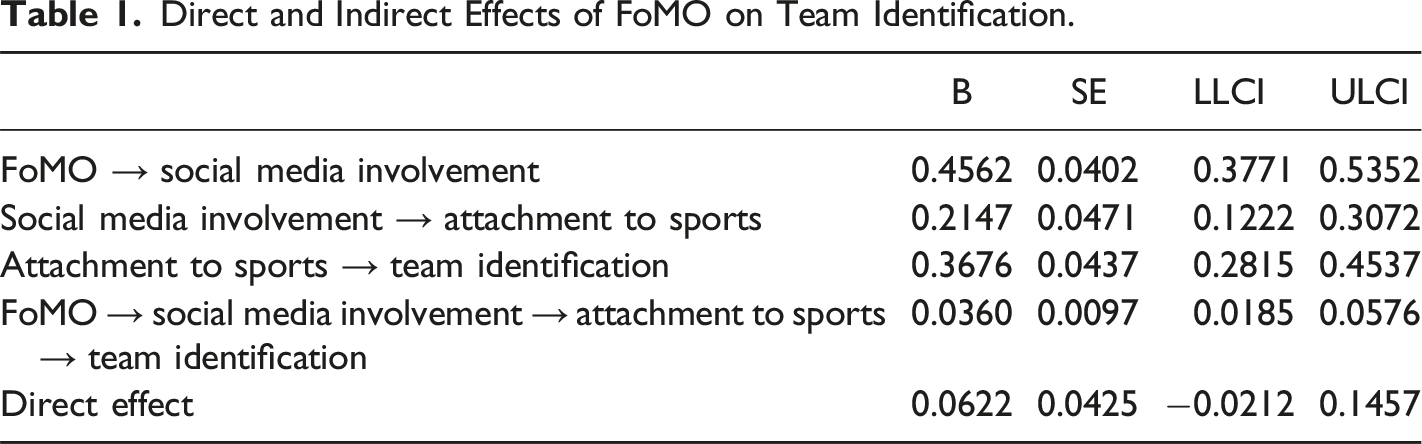
The Serial Mediating Role of Social Media Involvement and Attachment to Sports (H1-H4)
Direct and Indirect Effects of FoMO on Team Identification.
The Moderating Effects of Bridging Social Capital (H5)
First, Model 1 was used to test the moderating effect of bridging social capital in the relationship between social media involvement and attachment to sports, revealing a significant interaction effect (B = 0.12, SE = 0.03, 95% CI from 0.06 to 0.18). Specifically, the positive effect of social media involvement on attachment to sports was significant only for those with moderate (50th percentiles) (B = .11, SE = .05, 95% CI from 0.02 to 0.20) and high (84th percentiles) levels of bridging social capital (B = 0.25, SE = 0.06, 95% CI from 0.13 to 0.36). In contrast, no significant effects were shown for those with low (16th percentile; B = −0.01, SE = 0.05, 95% CI from −0.11 to 0.10) levels of bridging social capital. Thus, H5 was supported (Figure 1). The moderation effects of bridging social capital.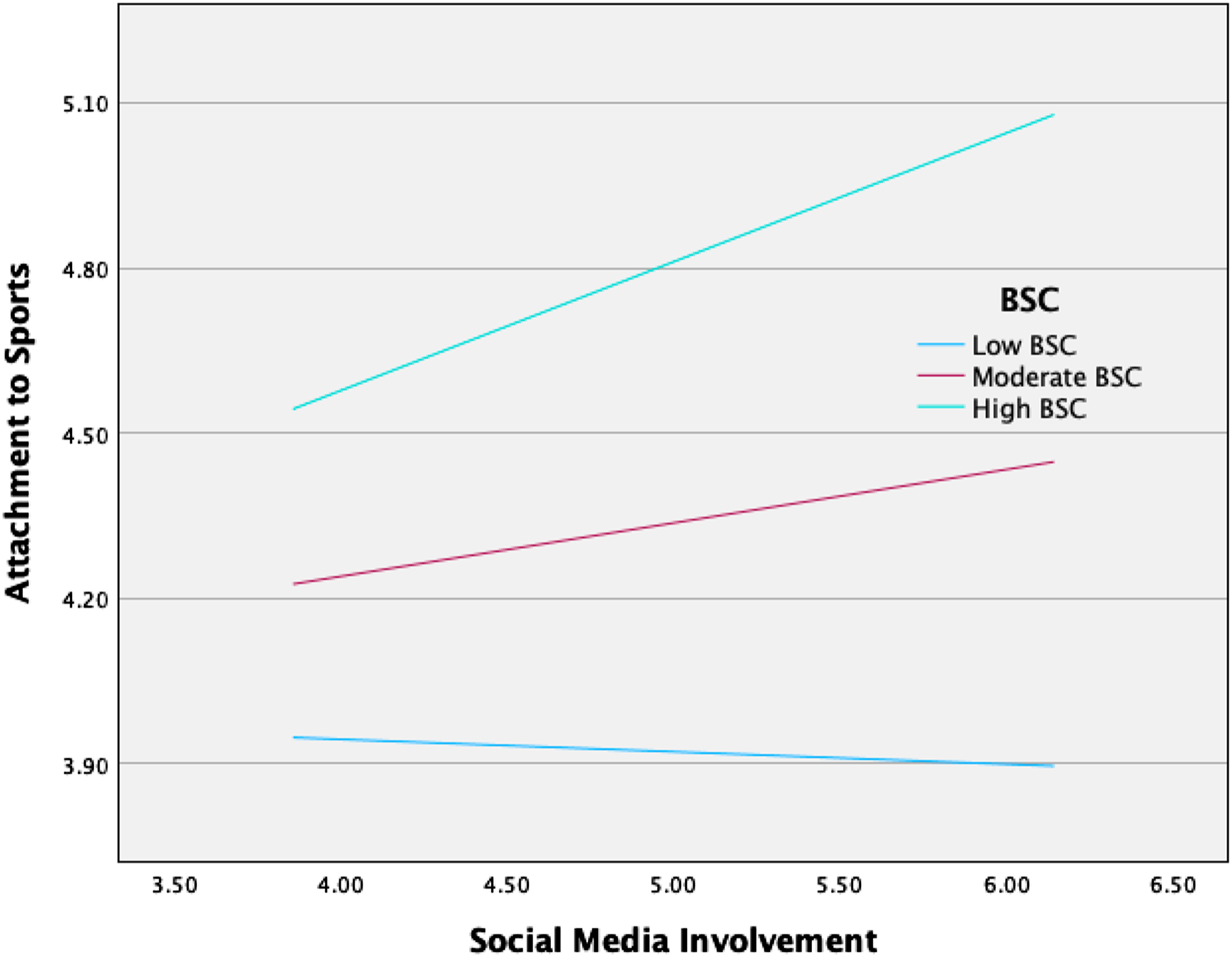
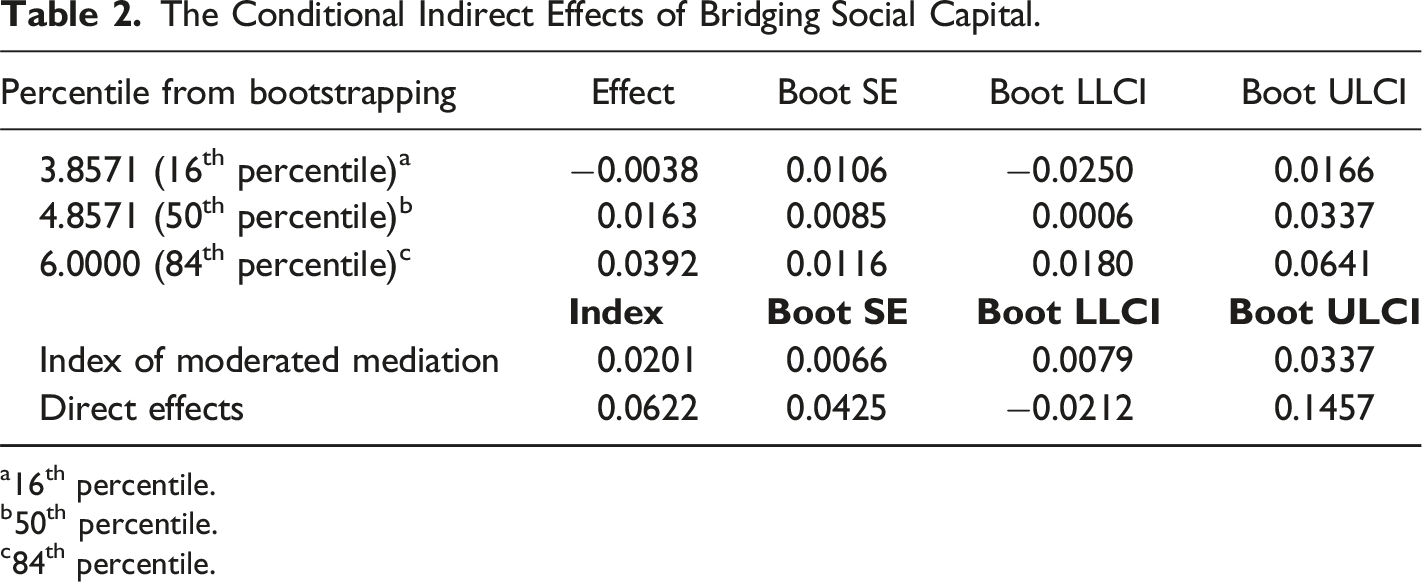
The Conditional Indirect Effects (H6)
The Conditional Indirect Effects of Bridging Social Capital.
a16th percentile.
b50th percentile.
c84th percentile.
Figure 2 provides an overview of the key findings from this study. Research model.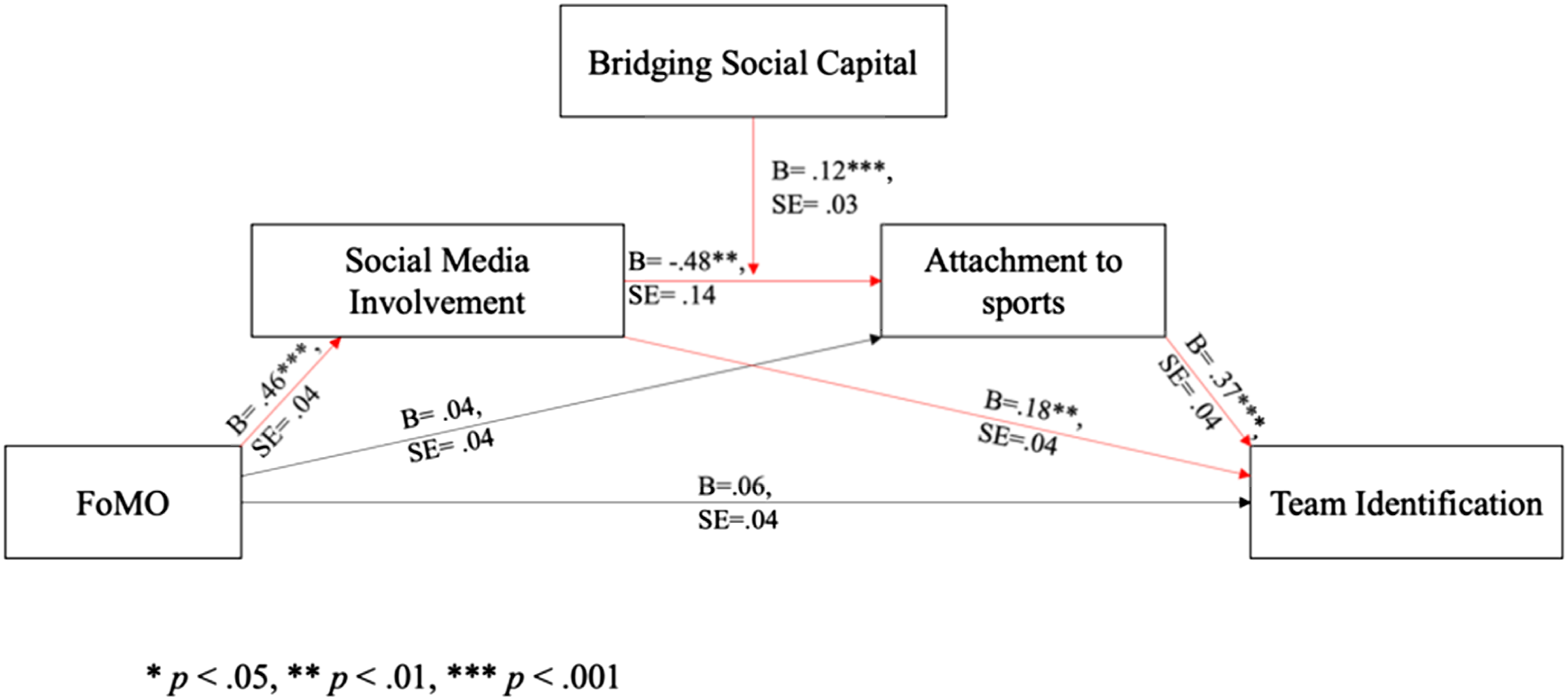
Discussion
This study contributes the knowledge of sports fan behavior by examining FoMO as a social motivator within the frameworks of SIT and SCT. By exploring how FoMO and social media involvement shape fans’ attachment to sports and team identification, the study highlights the role of weak-tie engagement in online fan communities. These findings not only extend prior work on FoMO beyond individual-level effects but also contribute to a more nuanced understanding of fan loyalty and sports attachment in online settings. Taken together, the results offer theoretical to sports communication research and practical guidance for teams aiming to build more connected and engaged fan communities.
Theoretical Implications
This study integrates SIT and SCT to explain the antecedent mechanisms that influence the development of team identification among sports fans, offering several theoretical contributions. First, it advances a theoretical understanding of FoMO beyond its traditional framing as a problematic or individually-centered psychological phenomenon. Although FoMO has usually been linked to unfulfilled desires for autonomy, competence, and relatedness (Przybylski et al., 2013), recent research has hinted at its social potential. For instance, Lee et al. (2021) identified FoMO as a factor that improves one’s happiness when it motivates social media users to interact more actively with others. Building on this notion, our study empirically shows its role as a social motivator, therefore moving beyond conventional ideas of FoMO as an individual-level phenomenon and encouraging fans to pursue connection, group belonging, and shared experiences on social media, particularly within fan communities. This reframing on digital fandom dynamics casts FoMO as a positive factor in identity-building.
Second, this study contributes a theoretically meaningful contribution by integrating SIT with SCT to explain how FoMO facilitates weak-tie engagement in online fandom era. While it has often been treated as an individual-level psychological response, our findings show that it can also serve as a social bridge, motivating fans to connect with casual acquaintances and engage more deeply within online fan communities. This aligns with Putnam’s (2000) concept of bridging social capital, where weak social ties play a vital role in expanding one’s social network and access to shared resources. In the context of sports fandom, such weak-tie engagement enables fans to interact with a more varied fan base, which subsequently enhances attachment and identification with teams. This view is further supported by Mastromartino et al. (2022), showing that a strong sense of community fosters both psychological and behavioral outcomes such as increasing game attendance and buying team goods, through bridging social capital. These insights reinforce our proposition that FoMO-driven engagement within weak-tie fan networks meaningfully contribute to identity-reinforcing interactions within fan communities. Moreover, while prior studies have examined the role of FoMO in fan engagement, they have largely been limited to specific platforms or contexts like live-streaming sports (Lee & Na, 2024) or to fantasy sports communities (Larkin & Fink, 2016). In contrast, this study broadens the scope by exploring FoMO in the context of everyday social media use among general sports fans. This approach offers a more ecologically valid perspective on how FoMO functions in diverse online environments. In doing so, it enhances our understanding of how weak-tie networks foster identity-building in modern fan communities, hence providing a significant theoretical advancement within the field of sports communication.
Lastly, this study builds upon the concept of team identification by empirically demonstrating that FoMO can trigger the innate desire for group belonging, motivating fans to actively participate in relationship-building activities within social networks. Stavros et al. (2014)’s exploration of fan engagement strategies highlights that the emotions associated with FoMO and attachment to sports develop gradually over time; the current study complements this by identifying FoMO as a psychological phenomenon that sports teams’ social marketers should consider. Furthermore, social media involvement driven by FoMO significantly influences fans’ willingness to engage in these activities, contributing to stronger fan identification with sports teams. In doing so, our study not only complements prior work on engagement strategies but also extends the theoretical scope of team identification research by situating FoMO as a bridge between individual motivation and collective fan identity formation.
Practical Implications
Building on SIT and SCT, this study highlights FoMO as a socially constructive mechanism that can drive meaningful fan involvement. Rather than viewing FoMO solely as a negative emotional state, the findings suggest that it can be purposefully activated through tailored content strategies and thoughtful online platform design, ultimately enhancing fan loyalty, emotional connection, and identification with teams.
First, this study demonstrates the constructive role that FoMO can play in enhancing fans’ attachment to sports and identification with teams. While prior research has primarily focused on the negative consequences of FoMO on well-being and social connection (Przybylski et al., 2013), recent studies shows its potential to enhance social engagement (Roberts & David, 2020). Also, Lee et al. (2021) found that FoMO-driven interactions on social media can increase happiness. Building on these findings, our study suggests that FoMO may encourage fans to connect with sports content and fellow supporters, fostering a stronger sense of community. Social media platforms serve not only as information channels but as spaces where FoMO can stimulate identity-building behaviors. Thus, regular team updates, fan-centered activities, and athlete-shared moments such as behind-the-scenes or real-time interactions (Geurin-Eagleman & Burch, 2016), can help geographically dispersed fans feel connected. These efforts contribute to fans’ sense of connectedness and team identification (Hull & Lewis, 2014; Stavros et al., 2014), demonstrating how FoMO can be harnessed to build lasting fan relationships and enhance overall well-being.
Second, this study offers practical insights by building on previous personality-informed approaches to fan engagement. While earlier work primarily focused on the risks of FoMO, such as its link to compulsive social media use (Liao et al., 2025), our findings highlight its potential to produce socially constructive outcomes, particularly in sports domain. FoMO can foster emotional attachment and identity formation when channeled through meaningful online experiences. Drawing on the HEXACO-PI framework (Devlin & Brown-Devlin, 2017), we propose that sports marketers tailor content strategies to fans’ dispositional traits. For example, nostalgic storytelling and personal messages may appeal to fans high in emotionality, whereas extraverted fans may be more engaged by interactive formats such as live chats or team challenges. These strategies can activate FoMO in a psychologically relevant manner and promote sustained, identity-driven interaction—not rooted in fear, but in belonging.
Third, teams can take inspiration from narrative-driven content models such as entertainment platform Hiand (Shin, 2025), where users interact with performers in character rather than simply observing a fan-actor connection. Similarly, sports organizations or teams can design athlete-centered narratives that unfold across a season, turning games and events into serialized story arcs. Within this approach, limited-time appearances, exclusive behind-the-scenes drops, or surprise live Q&A sessions can spark engagement and deepen fans’ emotional connection. By doing so, teams create a digital “playground” for fans that blurs the boundary between athlete and fan, as well as between performance and participation, offering a story-driven, time-sensitive experiences that fans won’t want to miss. As Mastromartino et al. (2022) discovered, even casual, weak-tie fan-to-fan communications can significantly enhance one’s sense of community within a broader fan network. As such, these platforms may serve as effective models for fostering bridging social capital and immersive fan engagement.
Limitations and Future Research
While this study provided notable theoretical and practical contributions, its findings should be evaluated considering its limitations, suggesting future research opportunities. First, this study was limited to participants who follow a favorite sports team or sports-related news, with an expectation of varying fan avidity levels influencing attitudinal and behavioral outcomes. However, following sports news is not the sole indicator of being a sports fan. There are sports “consumers” who may engage for social connections (Katz et al., 2020) but who are probably not directly affected by sports teams’ marketing activities (McDonald et al., 2024). Thus, future research should replicate this study among a broader participant base.
Second, there is still a need to explore what fans’ content preferences (Kim & Hull, 2017). For example, some may enjoy interacting with other fans on the sports team’s feed, while others prefer interacting with fan-generated content. Thus, experimental approaches could examine how different types of content shape fans’ sense of identification.
Conclusion
Overall, the present study contributes to the body of knowledge in two significant ways. First, it provides a theoretical integration of SIT and SCT to clarify how FoMO might function as a socially driven mechanism encouraging sports-related social media involvement, attachment to sports, and ultimately strengthens team identification. This paper increases our knowledge of how weak-tie networks influence identity-based results in online fandom settings by stressing the moderating function of bridging social capital. Second, the research offers sports organizations useful consequences, such narrative-based and personality-informed approaches to foster FoMO in positive ways. These results provide novel ideas to the changing body of work on social connection, media consumption, and sports consumer behavior and broaden present debates on online fan involvement.
Footnotes
Declaration of Conflicting Interests
The authors declared no potential conflicts of interest with respect to the research, authorship, and/or publication of this article.
Funding
The authors disclosed receipt of the following financial support for the research, authorship, and/or publication of this article: This research was funded to the first author from the Center for Sports Communication & Media from the Moody College of Communication, The University of Texas at Austin.
