




Abstract
In recent decades, the Paralympics have evolved into one of the largest and popular elite-level multisport global competitions. However, research has consistently highlighted issues with both – the quantity and quality of its media coverage. While the representation of the Paralympics in the media has been increasingly studied, there has been no study examining the relationship between the Paralympics and the media in Slovenia and Croatia. This study addresses this gap and examines the representation of the Paris 2024 Paralympics in the media in this region. It applies a mixed-methods approach and focuses on the volume of coverage, agenda diversity and the quality of reporting. The study uses a broader definition of sports media, and includes content from the respective Paralympic Committees, exploring a variety of traditional and digital media outlets. The findings show that coverage was limited, with notable differences between public and commercial legacy media. It also lacked agenda diversity, featuring a strong nationalistic focus that contributed to a relatively balanced gender representation. Furthermore, while disability narratives were minimized in competition coverage and athletes were portrayed as inspirational in other related content, the media largely failed to meaningfully address the broader social context of parasport and the inequalities faced by athletes and people with disabilities.
Introduction
“Full halls, loud fans – we’re not used to that. A whole show before and during the match, a real atmosphere. /…/ At first, we were a bit tense, but later we relaxed and it just blew us away.” Lena Gabršček, the Slovenian sitting volleyball player, made this statement during the 2024 Paralympic Games in Paris. It was later featured at the “Games of Courage” photo exhibition at Cankarjev dom, Slovenia’s main cultural and congress center, alongside the statements of some other Slovenian para-athletes, complementing a series of photos from one of the largest multisport events in the world. While the Paralympics have evolved into a popular, elite-level international competition, this statement reflects the ongoing marginalization of disability sport, which, despite global variations, is often overshadowed and overlooked compared to many mainstream sporting events. Not only athletes with disabilities (AWD), but the broader disability population – comprising 1.3 billion people or 16% of the world’s population (WHO, 2023) – continues to face stigmatization, discrimination and significant health inequalities in everyday life. Among other challenges, people with disabilities (PWD) are disproportionately affected by poverty, educational and employment exclusion, poor living conditions and unmet healthcare needs (WHO, 2023). In this context, the Paralympic Games are often regarded as a “human rights movement” with the potential to harness their growing – though globally inconsistent and short-lived – visibility to enhance social recognition of PWD, improve their daily living conditions and encourage greater participation in wellness activities (Hardin & Billings, 2024). The International Paralympic Committee (IPC) itself, in its Strategic Plan 2023–2026, highlights leveraging Para sport to promote greater inclusivity for PWD (IPC, 2023). Media representations, in turn, play a crucial role in shaping perceptions and understandings of disability (e.g., Misener et al., 2018). The media, in particular, is not merely a reflection of society, but an active co-creator of it, with significant pedagogical potential and ethical responsibilities (Antunovic & Bundon, 2022; Pullen et al., 2022). These roles become even more crucial in the context of parasport, as the media has the power to challenge stereotypical representations and stigmatization of PWD, ultimately promoting inclusion and driving progressive social change (Brittain, 2017; Bruce, 2014; Goggin & Hutchins, 2017). However, while the growing visibility of the Paralympics is important, it alone – without meaningful narratives and forms of representation – is insufficient to truly improve the wellbeing and lives of PWD (Hardin & Billings, 2024).
The present study examines the 2024 Paralympic Games in Paris, focusing on media representations in Slovenia and Croatia. Although recent years have seen gradual progress in understanding both the quantity and quality of media portrayals of disability sport, a significant gap in knowledge remains regarding the context of the former Yugoslavia. In fact, no research has been conducted on the media representation of the Paralympics in Slovenia and Croatia to date. This lack of scholarly attention further underscores how, despite evolving improvement, disability sport remains relatively sidelined within this geographical context. Compared to mainstream sports, it is still characterized by structural inequalities, including significant personnel and funding shortages (Doupona & Kustec, 2023). However, both countries established their umbrella organizations for disability sports in the 1960s, and Yugoslavia has participated in the Paralympic Games since 1960 (The Cord, 1960, p. 3). AWD from Slovenia and Croatia initially competed under the flag of Yugoslavia, and after its breakup in 1991, they competed under the flags of Slovenia and Croatia (Hrvatski paraolimpijski odbor [HPO], 2019; Zveza za šport invalidov Slovenije – Slovenski paralimpijski komite [Zveza ŠIS-SPK], 2022). In Paris, Slovenia was represented by 14 athletes (3 male and 11 female) competing in 4 sports (para archery, para athletics, shooting para sport and sitting volleyball), while Croatia sent 22 athletes (13 male and 9 female) in 6 sports (boccia, para athletics, para swimming, para table tennis, para taekwondo and para triathlon).
Addressing the identified research gap, this study aims to make a modest contribution by examining the scope and nature of media portrayals of the Paris Paralympics in Slovenia and Croatia. It begins with a brief overview of existing scholarship on media coverage and portrayals of the Paralympics and para-athletes across different regions of the world. Building on this foundation, the research questions are formulated, and the research methods outlined, with the consideration of modern transformations in the media landscape and the adoption of a broader conceptualization of sports media (Cooky & Antunovic, 2022) playing a decisive role in guiding the selection of the media under study. The analysis focuses on the volume of coverage, exploring its variations across specific sports, gender, and nationality. In addition, the dominant narratives and representations of disability are examined and analyzed.
Literature Review
Media Coverage of the Paralympics and Representation Narratives of para-Athletes
While the 1924 International Silent Games in Paris marked an early milestone in disability sport (Cherney et al., 2015), the Stoke Mandeville Games in the late 1940s were pivotal to the Paralympic movement, using sport for the rehabilitation of World War II veterans with spinal injuries. These games are considered the forerunners of the modern Paralympic Games, which were first held in Rome in 1960 and have since grown in importance and worldwide reach (Misener et al., 2018). Emerging as an important part of the disability sport progress already in the post-World War II era, the media has taken on an increasingly important role in the Paralympics since the 1960s, albeit not without issues (Goggin & Hutchins, 2017). As noted in research (Goggin & Hutchins, 2017; Misener et al., 2018), most coverage of the Paralympics initially appeared not as ‘real’ sports in the sports sections or on the main pages, but rather as human-interest or health-and-welfare stories in the society or lifestyle sections, likely due to the early Paralympic movement’s focus on participation over competition. It was not until the late 1980s or early 1990s that the IPC became increasingly committed to staging an elite and professional sporting event (Antunovic & Bundon, 2022), and although media coverage of the Paralympics remained limited, this period marked an important shift in how the media approached the Games, coinciding with wider social and political developments in disability rights, as well as growing awareness and visibility of disability issues in society, particularly in affluent countries (Goggin & Hutchins, 2017). The Sydney Paralympics in 2000 marked a turning point as marketing efforts increased audience and popularity, while the London 2012 Games further revolutionized coverage, leveraging social and online media to establish the Paralympics as a major sporting event in its own right (Goggin & Hutchins, 2017). Despite the IPC’s efforts to address previous shortcomings in media coverage through various initiatives – such as establishing its own digital media channels, issuing press releases and newsletters and introducing media awards (Brittain, 2017) – along with adopting a more proactive broadcast rights strategy from 2012 (Pullen et al., 2024), the quantity and quality of coverage remains uneven across countries and continues to face various challenges.
In terms of coverage quantity, and regardless of the media examined (with early research primarily focusing on print and televised content), studies consistently show that the Paralympic Games are marginalized compared to other major sporting events, particularly the Olympic Games (Antunovic & Bundon, 2022; Brittain, 2017; Bruce, 2014; Misener et al., 2018). The media’s comparatively limited coverage and resources allocated to the Paralympics, whether influenced by perceptions of an ‘athletic paradox’ (Hardin & Hardin, 2003), neoliberal body norms viewing disability as undesirable (Pullen et al., 2020), and/or tensions between commercial interests and inclusion agendas (Antunovic et al., 2025), may subtly imply that disability sport is considered inferior, less engaging and less significant than mainstream sport (Brittain, 2017). Paralympic broadcasts, which remain crucial to attracting large audiences despite changing media trends, have indeed improved in parts of the Global North (e.g., the UK, Canada, the US, Australia and parts of Northern Europe), particularly since 2012. Yet, their global distribution remains uneven, with much of the Global South facing significant limitations and few opportunities to watch the Games (Noske-Turner et al., 2022). Research analyzing the use of social media paints a similar picture. For example, in a study of 15 European public service media (PSM), Ramon and Rojas-Torrijos (2023) found that new media and the opportunities they offer do not necessarily increase visibility for all social groups. Despite significant imbalances between the countries and PSM studied, the Paralympics remained underreported in some of these regions. Similarly, the promise of increased visibility was not fulfilled in the social media profiles of North American broadcasters NBC and CBC, which failed to promote greater agenda diversity and instead reinforced existing patterns of limited coverage (Antunovic et al., 2025).
There are also notable differences in coverage quality both between and within countries, though recurring patterns have been highlighted in previous studies. One of the most common narratives about AWD frames disability through a medical model (Smith & Bundon, 2018), relying on stereotypical and ableist perceptions that portray impairment as an inherently negative condition to be overcome. The media has been criticized for often reinforcing medico-tragedy discourses and stereotypes about para-athletes, portraying them as pitiable freaks, helpless victims, passive cripples, childlike dependents, exotic curiosities, or inspiring and extraordinary supercrips (Cherney et al., 2015; Pullen et al., 2020). Particularly salient among these is the supercrip narrative, which refers to individuals who overcome their impairments to achieve success despite their disabilities, suggesting that through their will, courage and inspirational stories of hard work and dedication, they demonstrate that the impossible is possible if one simply tries hard enough (Silva & Howe, 2012; Sterba et al., 2022). While it is important to recognize that this narrative does not have the same implications in all social contexts (see, e.g., de Souza & Brittain, 2022 or Pullen et al., 2024), it has been problematized in Western representations from countries in the Global North. Namely, these representations often individualize impairment and rely on biophysical assumptions of normativity, overlooking social inequalities and attitudinal barriers faced by PWD, as they also reinforce the ‘achievement syndrome’ that promotes unrealistic expectations about what PWD can achieve through effort alone, further marginalizing those who lack the resources, capacity, or desire to achieve similar success (Cherney et al., 2015; Silva & Howe, 2012). The supercrip accounts also establish a hierarchy of disability in which the more ‘able-disabled’ are seen as more appealing and culturally acceptable (Pullen et al., 2021). In a recent UK-based study, three additional narratives of disability were introduced – extraordinary normalcy, ableist rehabilitation and sporting ablenationalism – but these frameworks, while adding more complexity and nuance to the portrayal of disability, ultimately leave the underlying hierarchy and the association of disability discourses with neoliberal and ableist ideologies largely unchallenged (Pullen et al., 2021). Alongside the supercrip depictions, the representation framing, consistent with the so-called ‘(in)visibility of disability’ (Bruce, 2014; DePauw, 1997) or the ‘athlete first’ approach, was also discussed as problematic. Although this narrative focuses on AWD’s athleticism, an excessive minimization or outright omission of discussions about disability can obscure its significance in shaping one’s embodied experience (Smith & Thomas, 2005). Such representations can also symbolically distance para-athletes from PWD, contributing to the so-called ‘Paralympic paradox’ (Purdue & Howe, 2012), 1 and reinforce the notion of ability as the norm, while treating disability as something to be avoided or ignored (Goggin & Hutchins, 2017; Page et al., 2024).
In addition to the hierarchy of disability, which treats different sports and types of disability unequally and favors para-athletes with less severe disabilities (Misener et al., 2018; Pullen et al., 2020), research on the intersection of disability with other social identities emphasizes the importance of considering gender and nationality as two particularly significant aspects. In terms of gender, female athletes often receive less media coverage compared to their male counterparts (Rees et al., 2017) and are often infantilized and trivialized in the media (de Léséleuc et al., 2010; Wu, 2024). While representations have become more sophisticated in some contexts, studies highlight persistent contradictions in narratives (Falcous & Scott, 2023) and patterns that may favor certain normatively gendered bodies while excluding others (Pullen & Silk, 2019). In relation to the second aspect highlighted, nationalism has been identified as an important driver of Paralympic media coverage (Antunovic et al., 2025; Brooke, 2019; Kolotouchkina et al., 2021; Pullen et al., 2020; Ramon & Rojas-Torrijos, 2023), with studies highlighting its potential to unite discourses of disability and elite sport (Bruce, 2014). However, while national interest may increase the quantity of media coverage, it reduces its quality by establishing the differences in the portrayal of ‘us’ and ‘them’ (Bruce, 2014), and limits agenda diversity (Antunovic et al., 2025; Ramon & Rojas-Torrijos, 2023). Furthermore, through ‘ablenationalism,’ it can promote the controlled inclusion and hyper-visibility of select para-athletes, further marginalizing those who are less ‘media-friendly’ or fall outside the normative frameworks of nationalism and ableism (Mitchell & Snyder, 2015; Pullen et al., 2020).
In light of this discussion, it is clear that the media landscape and narratives surrounding the Paralympics are often fraught with challenges. However, the media also has the potential to inspire resistance and drive social change (Bruce, 2014; Misener et al., 2018). Rather than simply serving as an ‘objective’ and descriptive mirror reflecting society, it is also an active co-creator of it, with a significant educational power and ethical responsibilities – especially within the narrower field of sports journalism (Antunovic & Bundon, 2022). Its role becomes even more significant not only because AWD themselves seek broader and more comprehensive media coverage (Hardin & Hardin, 2003; Pearson & Misener, 2024), but also because of the Paralympics’ historically unique role in empowering the wider disability community and its connection to the political voices and lived experiences of PWD (Goggin & Hutchins, 2017). Today, the Paralympic Games are a popular and prestigious mega sporting event that can spark audience interest, challenge stereotypical representations and stigmatization of PWD, introduce new concepts and ideas to spectators, and ultimately promote inclusion and drive progressive social change (Bissell et al., 2022; Brittain, 2017; Pullen et al., 2022).
Paralympic Media Coverage in Slovenia and Croatia – Research Questions
While the relationship between the Paralympics and the media has been extensively researched over the years, there is currently no study focusing on the media landscape and the representation of the Paralympics in the Slovenian and Croatian contexts. In both countries, once part of the former Yugoslavia but now democratic republics and members of the European Union, media coverage and narratives related to the Olympic Games have been studied to some extent (e.g., Ličen & Billings, 2013; Poteko & Doupona, 2024), including through comparative research (e.g., Antunovic & Bartoluci, 2023; Ličen et al., 2022). However, the media representation of the Paralympics in these countries remains entirely unexplored. Addressing this research gap has the potential to advance scholarship on disability sport representation by collecting and examining data from previously overlooked geographical locations. In the context of media representations, this is particularly important because although similar and consistent patterns may emerge across settings, they manifest within different, highly context-dependent media and sport systems, and the meanings of similar narratives may be interpreted differently across diverse social and cultural environments (Antunovic & Cooky, 2024; Donders, 2021). Furthermore, cross-national comparative research that examines comparable media systems – such as those in Slovenia and Croatia – can provide valuable and nuanced insights. In these countries, many major sporting events are still broadcast by PSM, which have historically played a key role in shaping patterns of sports media production and consumption (Ličen et al., 2022). These PSM also held the broadcasting rights for the Paralympics in Paris. By focusing on such cases, the research can help to avoid overgeneralizations in relation to existing literature and potentially highlight specific similarities and differences between various media systems. This study therefore builds on previous analyzes of Paralympic media coverage in other regions and extends them with a quantitative and qualitative analysis of media portrayals of the Paris 2024 Paralympics in Slovenia and Croatia.
To provide a comprehensive analysis, this paper goes beyond a singular focus on a particular type of media. Instead, it considers the modern transformations of media and adopts a broader definition of sports media (Cooky & Antunovic, 2022) in selecting the range of media examined. This definition extends beyond legacy media, allowing for the exploration of any content related to (para)sport, including that which is not produced by sports journalists or published in conventional sports outlets. Consequently, the study covers a broad spectrum of media, ranging from traditional outlets like newspapers to modern platforms such as news websites and social media. The decision to include both traditional and new media serves two main objectives: to ensure a broad and comprehensive analysis and to assess how effectively new media was used to enhance the visibility of Paralympic athletes compared to traditional media. Moreover, the study incorporates content from the Slovenian and Croatian Paralympic Committees, which are typically not classified as legacy media. Given the critical role of national Paralympic Committees in promoting parasport and advocating for greater social inclusion of PWD, these texts were included to assess potential disruptions in the scope of coverage and prevailing media narratives, while also creating opportunities for further knowledge production.
Rather than formulating theoretically motivated predictive hypotheses, the study addresses the following questions:
What was the amount of Paralympic coverage in the Slovenian and Croatian media during the Paralympic Games?
How did the amount of Paralympic coverage vary in relation to specific sports, gender and nationality?
How did the Slovenian and Croatian media report on the Paralympics and how were the Paralympic athletes portrayed?
Methodological and Theoretical Approaches
This study employs quantitative content and qualitative thematic analysis of various media texts to examine how Slovenian and Croatian media reported on the 2024 Paralympic Games in Paris. The following media from both countries were included in the study: two broadsheet newspapers and one tabloid or sports daily (Delo, Dnevnik and Slovenske novice from Slovenia; Jutarnji list, Večernji list and Sportske novosti from Croatia); 2 the most popular news website (24ur.com for Slovenia and Index.hr for Croatia); the news website and social media profiles of PSM (rtvslo.si, RTVSlo.si – Šport (Facebook) and MMC RTV Slovenija (X) for Slovenia; hrt.hr, HRT Sport (Facebook) and HRT Sport (X) for Croatia); the website and social media of the national Paralympic committee (pariz2024.zsis.si, Šport invalidov (Facebook) and NPC Slovenia (X) for Slovenia; hpo.hr, Paraolimpijac (Facebook) and Paraolimpijac (X) for Croatia). The analysis covered a period of 12 days during the Paralympic Games, starting on August 28 with the Opening Ceremony and ending on September 8 with the Closing Ceremony. The total number of texts analyzed, including both articles and social media posts, was N = 546.
To address the questions posed above, we employed two approaches. First, we conducted a quantitative content analysis to examine specific manifest aspects of media coverage while also reflecting on the agenda diversity presented in that coverage, drawing on insights from previous studies (e.g., Antunovic et al., 2025; Ramon & Rojas-Torrijos, 2023). The examination of agenda diversity is grounded in the agenda-setting framework, which demonstrates how the mass media direct audience attention through the selection of particular issues and influence the level of importance attached to those issues (McCombs & Shaw, 1972). In the context of sports coverage, a lack of agenda diversity can manifest in several ways, such as a limited choice of sports, the marginalization of women’s and/or disability sport, and a strong nationalistic bias (Antunovic & Bartoluci, 2023). To answer RQ1 and RQ2, we developed a codebook informed by previous studies and adapted to the context of our analysis. Given the scope and diversity of the media selected and the specific focus of this study, we only coded content related to the Paralympics and omitted articles or posts about other, mainstream sports. The codebook contained the following variables relevant to this study: type of sport, gender and nationality. We categorized sports based on the typology established by the International Paralympic Committee. For articles and posts containing several sports, each sport was coded individually. Additionally, we included an ‘other’ category to capture content not related to a specific sport, such as opening ceremony announcements. For gender, we used categories consistent with the sex-segregated system of (para)sport, distinguishing between female and male categories. We also added a mixed/neutral category to this variable to capture instances of mixed events, such as competitions where men and women compete against each other or in mixed teams, as well as coverage that featured both male and female para-athletes, or content that was neutral and not focused on individual athletes. The nationality variable included four categories: home athletes, international athletes, both and other. ‘Home athletes’ referred to either Slovenian or Croatian para-athletes, in relation to the media outlets in Slovenia and Croatia, while ‘international athletes’ referred to coverage of para-athletes from other countries. The category ‘both’ was used when the coverage included para-athletes from both categories, and the category ‘other’ was used for instances where the coverage did not refer to athletes, such as coverage on the impact of the Paralympics on Paris’s infrastructure. To ensure intercoder reliability, the two authors collected and coded about 5% of the data just prior to the data collection period, which was excluded from the overall dataset. The researchers had an intercoder agreement of 1.00 for the variables sport and gender. The nationality variable necessitated further discussion. The differences observed in the pre-test related to this variable occurred in cases where the articles technically included ‘both’ athletes, but focused predominantly on ‘home athletes.’ For example, it was common to encounter articles that devoted the majority of their content to ‘home athletes,’ emphasizing their statements and experiences. Although these articles occasionally mentioned the rivals faced by ‘home athletes,’ when foreign athletes were referenced only briefly as competitors, we determined that the primary focus remained on ‘home athletes.’ As a result, we classified such content as ‘home athletes’ rather than ‘both.’
The second, qualitative component of the analysis facilitated an examination of the dominant narratives and meanings surrounding the Paralympics and para-athletes. To answer RQ3, we employed reflexive thematic analysis (Braun & Clarke, 2021; Braun et al., 2016). Each author, leveraging their language skills and understanding of the specific socio-political and cultural contexts, analyzed the textual content from the respective country. In constructing and organizing the initial set of categories, as well as developing the final themes, both authors drew on previous research in sports media and critical disability studies, as outlined in the literature review. The analysis was systematic and deductive using predefined categories (e.g., supercrip narrative, athlete-first approach, minimization of disability), but remained flexible enough to inductively generate and develop additional themes. The results of the two approaches and their interpretation are presented in the following sections of the article.
Results
Quantitative Aspects – the Amount of Coverage and Agenda Diversity
The amount of coverage in Slovenian and Croatian media.
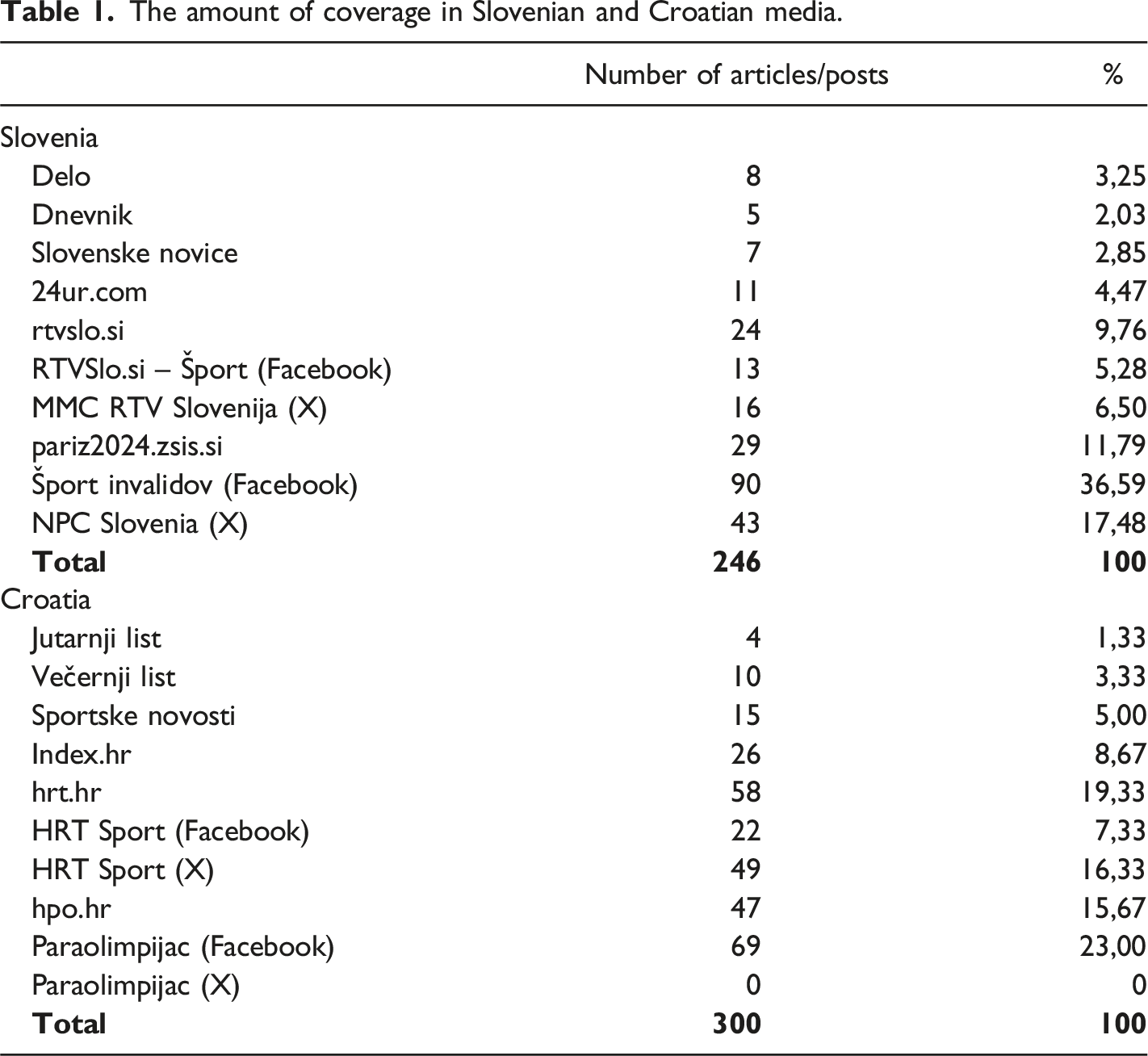
The amount of content on the websites of PSM was also comparable to that on the websites of the respective Paralympic Committees. The Slovenian Paralympic Committee (SPC) published slightly more articles than rtvslo.si, while the Croatian Paralympic Committee (CPC) published slightly fewer articles than hrt.hr. This difference can be attributed to the fact that the hrt.hr also published some content about international athletes, in contrast to the Paralympic Committees (and rtvslo.si), which prioritized coverage of ‘home athletes.’ However, both Paralympic Committees reported significantly more on the Games than commercial legacy media and, including social media posts in the analysis, showed a greater ability to leverage the potential of social media than PSM. The PSM posted less content on social media compared to their websites, suggesting that they not only failed to fully utilize social media’s potential by creating additional content, but also neglected to promote all of their own articles there. In contrast, the Paralympic Committees’ posts demonstrated a far more intensive use of social media. In both cases, their posts – especially on Facebook, a platform more popular than X among local users in this region (Ličen et al., 2022) – outperformed the volume of content published on their websites. For example, SPC shared 90 posts about the Paralympics on Facebook, representing 36,59% of the total sample, while RTVSlo.si – Šport published only 13 such posts, representing 5,28% of the total sample.
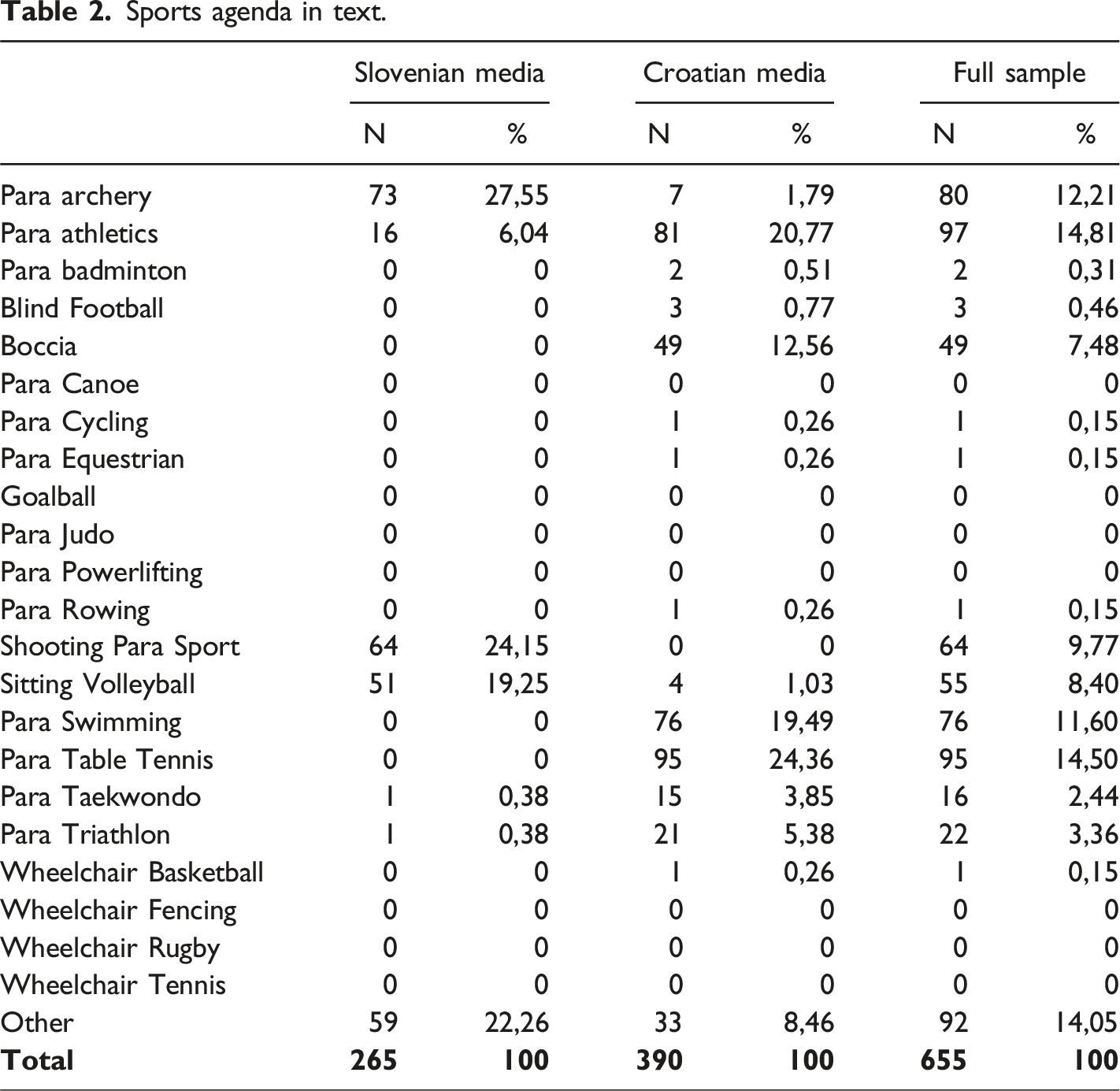
Sports agenda in text.
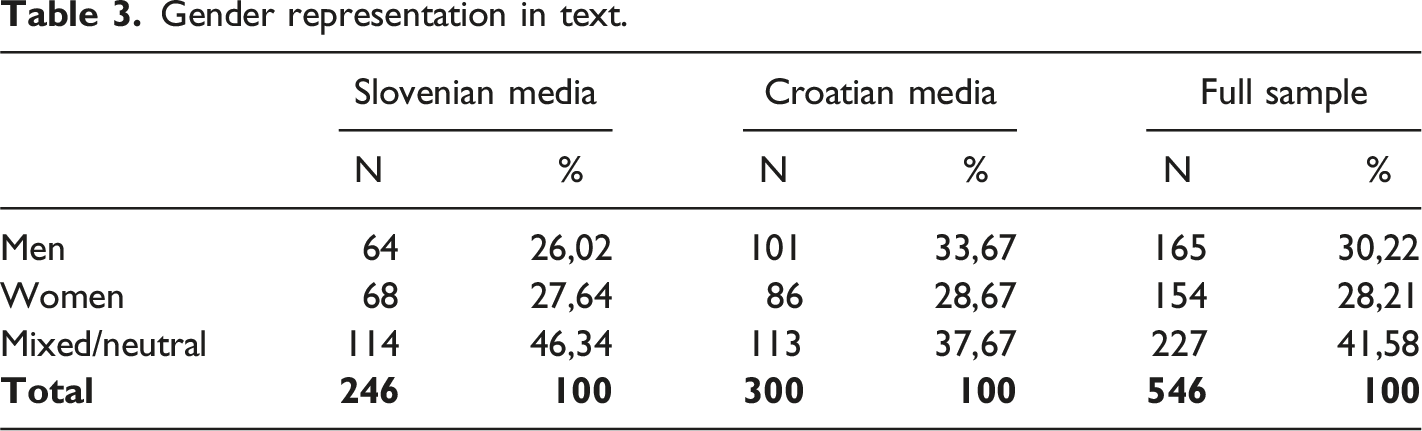
Gender representation in text.
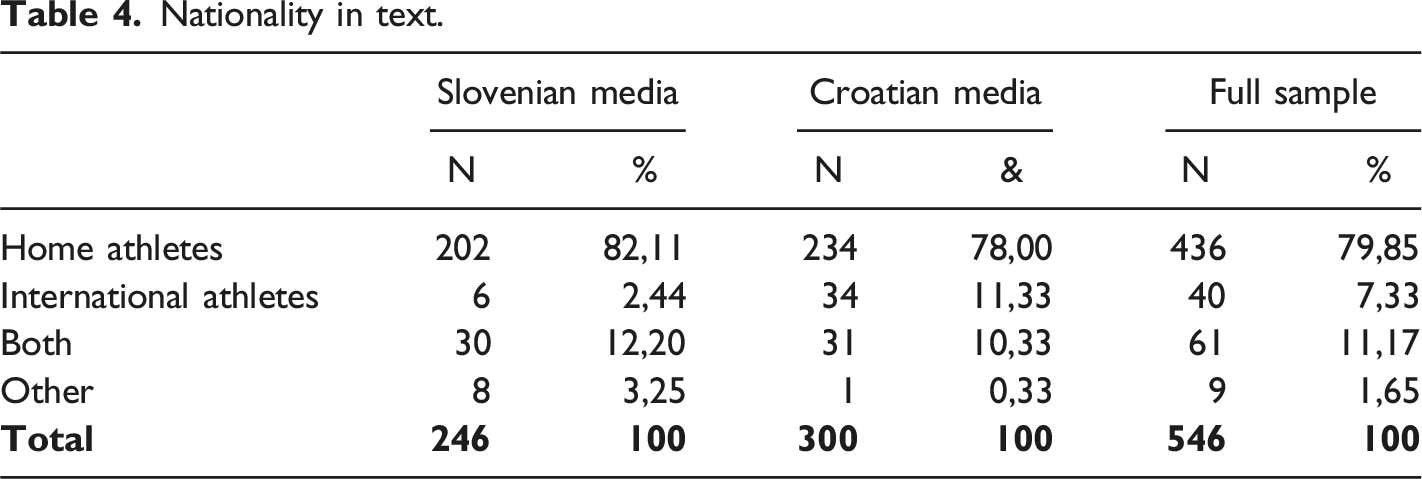
Nationality in text.
Qualitative Aspects – the Dominant Narratives
Slovenia
In response to RQ3, the thematic analysis generated four main themes in the Slovenian media content, grouped into two distinct fields: event-focused articles/posts and other Paralympics-related content. Within event-focused content, the themes of ‘Athletes first, disability minimized’ and ‘The electrifying atmosphere of unprecedented support’ were prominently developed. Except for two short articles focusing on an Italian trans athlete’s identity rather than sports performance or disability, most contributions within the first theme highlighted the successes and sporting achievements of Slovenian athletes and/or announced their (further) competitions (occasionally also TV broadcasts). Coverage was generally very similar across media, with most outlets often summarizing content from the Slovenian Press Agency in their articles – longer in the online versions and shortened to a few sentences in print. In these contributions, which made up the majority of the coverage, there was virtually no mention of athletes’ disabilities – rather, the focus was on sporting success and topics related to athletic performance. The only exception was a human interest story about a sitting volleyball player from Ljubljana, published in the ‘Ljubljana’ section of Dnevnik, which highlighted her Paralympic experience while briefly mentioning her right hand amputation. Another theme formulated from these contributions shifted the focus from the sporting performances to the atmosphere at the Paralympics, particularly the packed stands cheering on the para-athletes. As one statement by Lavrinc, the Slovenian para archer, reflects: “I really like the energy here, when such an audience watches you, since our competitions are usually boring, there’s nobody there” (Zveza ŠIS-SPK, 2024). Apart from Slovenian para-shooter Tiršek, who found the cheers from “French fans” distracting, Slovenian athletes, coaches and the broader organizing team frequently praised the lively atmosphere and full stands, a stark contrast to the usual lack of crowd support, highlighting the often marginalized status of para-sport compared to many mainstream sporting events.
In contrast to event-focused coverage, other Paralympic content mainly included announcements and reports on the opening and closing ceremonies, Paris infrastructure investments and visits by prominent Slovenian politicians. This content was limited and, apart from coverage of the opening ceremony, appeared mainly on RTV and via SPC. However, disability narratives in this coverage were expanded to emphasize two main themes: ‘Para-athletes as inspiration’ and ‘Paralympics as a tool for broader inclusion of PWD in sport and society.’ In the context of the first theme, aside from an article in Delo where McFall, a British Paralympic sprinter and European Space Agency project astronaut, was portrayed through the supercrip narrative, the focus was on Slovenian para-athletes. These athletes were predominantly presented as sources of inspiration, often highlighted by statements from Slovenian politicians and a promotional article published on RTV’s news site. They were celebrated as heroes who demonstrate that “limits are only in our minds” and that “any obstacle can be overcome with enough heart and dedication” (Lidl Slovenija, 2024). As the Slovenian Prime Minister emphasized, para-athletes “prove that they can accomplish far more than we think” (D.S.M., 2024). While the visits from politicians and sponsors, along with increased media attention, were well received by the SPC – understandably given the past neglect of para-athletes and para-sport – this coverage and the statements made, though well-intentioned, largely failed to address the broader conditions of para-sport in Slovenia and overlooked the wider social context and inequalities faced by athletes and PWD. As part of the second theme, the topic of broader integration of PWD in sport and society was discussed in some contributions. For example, representatives of the SPC emphasized the growing social importance of the Games and para-sport in Slovenia, as reflected in visits by politicians and broadcasts of the Paralympics. However, the media missed the opportunity for a deeper examination of these topics and addressed them only superficially and uncritically. The need for funding, systematic support and the ongoing efforts of the SPC to include PWD in para-sport were briefly mentioned only in contributions by the SPC.
Croatia
A thematic content analysis of Croatian media coverage of the Paralympic Games developed four main themes, grouped into two areas: articles/posts focusing on the events and other content related to the Paralympic Games. In the first area, the dominant themes generated were ‘Para sport and para- athletes through a sporting lens’ and ‘A fantastic atmosphere and packed stands as every athlete’s dream.’ Most contributions in the first theme emphasized past results and sporting achievements of Croatian athletes in previous competitions and the current Paralympic Games and/or announced their upcoming events, which were rarely broadcast live but rather presented as recorded highlights. The focus was on sporting performance, though a smaller number of pieces covered topics such as the causes/types of disabilities of para-athletes and the rules of lesser-known sports (e.g., boccia, blind football). These contributions were highly similar across media outlets, with most media republishing content from the Croatian News Agency, the country’s public media service. The second theme highlighted the fan atmosphere and the support from the stands, which was emphasized by most of the athletes. Para-swimmer Paula Novina described it as “a wonderful experience, an incredible feeling. Every athlete’s dreams of competing in front of packed stands; the atmosphere was fantastic” (Hina, 2024a).
Other content related to the Paralympic Games formed the themes ‘Para-athletes as inspiration’ and ‘Sport as a catalyst for transforming the lives of PWD.’ In connection with the first theme, Croatian Paralympians were portrayed in the lead-up to the Paris Paralympics as superheroes in a video game, showcasing their strength, perseverance, effort, and relentless dedication to achieving top results. Politicians articulated them as “role models for the entire society,” emphasizing that “They send the message that anything is possible, that they are winners – not just today or those who return with medals, but winners every single day” (Hina, 2024b). Despite this, news of the successes of Croatian Paralympians appeared on the front page of newspapers only once, when Anđela Mužinić Vincetić won a gold medal in para table tennis. The other three medal victories in para athletics and para swimming did not “earn” front-page coverage, even though they were officially considered equal in significance to those accomplished at the Olympic Games in mainstream sports. The second theme emphasized the role of sport as a transformative factor in the lives of PWD. This was echoed by Jürgen Klopp, the German football official, former manager and player, who stated: “In the Paralympic movement, there are clearly more barriers to overcome, to show young people and everyone what is possible” (I.Ž.K./HRT/Hina, 2024). He further emphasized that the media should pay more attention to para-athletes.
Discussion and Conclusion
This study employed a mixed-methods approach, integrating quantitative and qualitative analysis, to examine media coverage of the 2024 Paris Paralympics within the Slovenian and Croatian media landscape. It focused on the volume of coverage, agenda diversity and the quality of reporting within this geographical context from a cross-national comparative perspective. Addressing a significant research gap, the study aimed to make a modest contribution as the first to examine the intersection of media representation and disability sport in this region. Additionally, it uniquely examined a wide range of traditional and new media, incorporating also content from the respective Paralympic Committees as part of adopting a broader definition of sports media. The diverse range of media provided a comprehensive overview of the selected media landscape and allowed for assessing the utilization of the potential of new media, while the content of the Paralympic Committees helped to identify potential disruptions to the scope of coverage and prevailing media narratives.
As for the volume of coverage, it can be said that, in general, it was fairly limited. While the decision to focus exclusively on Paralympic content, combined with the absence of previous studies and data, is a notable limitation of this research, 3 the study nevertheless allows for other valuable comparisons and creates a basis for future research to monitor progress. First, significant differences were observed between commercial legacy media and PSM in both countries, as well as between PSM and national Paralympic committees in terms of social media engagement. Historically, PSM has played a distinctive role in fostering and shaping cultural citizenship through sport (Ramon & Rojas-Torrijos, 2023). Although today these media organizations often face a tension between their normative ideals and financial constraints, in our case, they still demonstrated a clear advantage over commercial legacy media in terms of the volume of reporting. These data underscore the enduring value of PSM, which, unlike the commercial media, are primarily accountable not to owners but to the public and the public interest. As our case shows, if PSM were to disappear, the Paralympics would likely be overlooked or relegated to the periphery of the media landscape. That said, the potential of digital media, especially social media, remained largely underutilized in PSM reporting. Despite relatively small national teams in both countries, PSM struggled even to promote the content of their own news websites, let alone leverage social media to generate additional content. A quantitative comparison with the more robust efforts of the Paralympic Committees shows considerable room for improvement in enhancing coverage of ‘home athletes’ and fully leveraging multimedia opportunities. 4 Observed social media activities by the Slovenian and Croatian Paralympic Committees suggest efforts in line with those of the IPC. Historically, and as part of its brand strategy, the IPC has sought to counter the apparent disinterest of mainstream sports media by investing in its own media production and developing social media strategies (Antunovic & Bundon, 2022; Brittain, 2017). These strategies have facilitated easier audience access to Paralympic events and increased their visibility. However, when making proposals for PSM based on the content of national Paralympic Committees, it is important to emphasize the need for a broader focus at the PSM level. While the ‘nationalized anchoring’ seen in the content of the SPC and CPC is understandable, PSM should broaden their agenda to increase diversity in coverage of various Paralympic sports and athletes. By doing so, they can contribute more effectively to stronger social and cultural citizenship (Ramon & Rojas-Torrijos, 2023) while fulfilling their task to inform, educate and entertain their audiences (Ličen et al., 2022).
The lack of agenda diversity was most pronounced in sports coverage, where Slovenian and Croatian media heavily favored sports featuring ‘home athletes.’ Although Croatian media offered somewhat broader coverage, reporting on other sports remained sparse and largely limited to a few PSM publications. This pronounced nationalistic focus also partly explains the relatively balanced gender representation observed. While a significant amount of content was mixed or neutral in terms of gender representation, coverage of male and female athletes was remarkably balanced, diverging from trends highlighted in some other studies (e.g., Ramon & Rojas-Torrijos, 2023; Rees et al., 2017). We would argue, however, that these data should not be viewed as a reflection of efforts toward “gender equality,” but rather considered in the context of the nationalistic focus driving the coverage, which temporarily disrupted both established gender patterns and the usual disability hierarchies found elsewhere (e.g., Pullen et al., 2020; Ramon & Rojas-Torrijos, 2023). Favoring athletes from their “own” countries is not new in mainstream or disability sport coverage (e.g., Antunovic & Bartoluci, 2023; Brooke, 2019; Bruce, 2014; Kolotouchkina et al., 2021), although the context and processes shaping national cultures are evolving, with “corporate nationalism” often shifting towards “ablenationalism” in the context of the Paralympics (Pullen et al., 2020). Drawing on Mitchell and Snyder (2015), the concept of ablenationalism in media coverage refers to narratives that align with normative neoliberal frames of ableism and nationalism, focusing on the most ‘able-disabled’ bodies, i.e. successful para-athletes who have either ‘overcome’ their impairment with technology or have impairments that are not visible or severe enough to challenge neoliberal ableist bodily norms (see also Pullen et al., 2021). However, in the Slovenian and Croatian media landscape, the national lens did not so much emphasize the most able-bodied athletes as it functioned as a precondition for the Paralympics to be included in the media agenda at all.
The thematic analysis developed similar dominant themes in both countries. While the excitement surrounding the atmosphere and fan support in Paris highlights the often-overlooked status of disability sport in the region, 5 it also serves as a potential catalyst for its wider social recognition. However, disability narratives, particularly in competition coverage, were generally minimized, with the primary focus placed on the athleticism of AWD. Previous studies have critiqued excessive minimization or omission of disability discussions, arguing that it risks obscuring the crucial role of disability in shaping individual embodied experiences and contributing to the so-called ‘Paralympic paradox,’ thereby perpetuating the idealization of ability as the normative standard (Misener et al., 2018; Page et al., 2024; Smith & Thomas, 2005). Considering studies suggesting that similar narratives may be perceived differently across various social contexts (e.g., de Souza & Brittain, 2022), as well as the fact that the narratives analyzed were closely similar across media, including Paralympic Committees’ publications, it would be valuable for future research to complement these findings by examining para-athletes’ own perceptions of media narratives. Some contributions by Paralympic committees indicated a general satisfaction with media coverage. However, this satisfaction may be partly influenced by the broader social and media context, including the media’s habitual marginalization of disability sports. These disability narratives can also be considered alongside those in other Paralympic content, which largely centered on individualized, depoliticized stories of inspiration and heroism of para-athletes, yet failed to address the broader social context of parasport and the inequalities faced by AWD and PWD. Although significant progress has been made in recent decades toward recognizing the equal social status of PWD and para-athletes as equal to other athletes, obstacles still exist at the individual, social and political levels in these two countries (HPO, 2022; Zveza ŠIS-SPK, 2022). These challenges include insufficient financial and human resources support for AWD (Doupona & Kustec, 2023), inadequate training facilities, as well as the need to establish a robust local para-sport network to encourage more PWD to engage in regular physical activity and pursue high-level sports (HPO, 2022; Zveza ŠIS-SPK, 2022). While some articles touched on the growing social importance of the Games and the need for greater inclusion of PWD in sport and society, the media missed the opportunity for a more critical, contextualized and in-depth examination (Antunovic & Bundon, 2022). Except for one article by the SPC, which briefly addressed the need for funding and systematic support in efforts to include PWD in parasport, these issues were omitted from legacy media coverage.
While this study attempted to encompass a wide range of media, Paralympic broadcasts were not included. In Croatia, for example, the media’s treatment of Paralympians was reflected in the fact that the Paralympics opening ceremony was televised only after a Champions League qualifying match and its post-match program; prior to that, it was shown exclusively on the HRT website. In Slovenia, the Paris Paralympics marked the first time the event was broadcast live on television, though not without issues. In terms of agenda diversity, for example, only the four sports in which Slovenian athletes competed were broadcast. Paralympic broadcasts therefore represent another promising avenue for future research in this region. Given the media’s potential to inspire resistance and promote social change, it would be of great value to further explore media coverage in this geographical region. By improving our understanding, this may play a role in shaping and influencing future coverage, potentially also challenging stereotypical portrayals and reducing the stigmatization of PWD.
Footnotes
Declaration of Conflicting Interests
The author(s) declared no potential conflicts of interest with respect to the research, authorship, and/or publication of this article.
Funding
The author(s) received no financial support for the research, authorship, and/or publication of this article.
Correction (April 2025):
Proofreading comments were mistakenly included in the published article. The article has been updated to remove those comments since its original publication.
