



Abstract
Social media provides athletes with many opportunities as well as challenges. Scholars have argued for proactive, educational social media training instead of traditional policy and punishment models, yet research on this topic is limited. Therefore, this study sought to understand the social media training/education national governing bodies (NGBs) provided to athletes ranging from Youth Olympic Games (YOG) to Olympic level, and to examine NGB communication employees’ perceptions regarding athletes’ social media use and their organization’s social media training. Utilizing uses and gratifications theory, a sequential mixed method was employed involving a survey of U.S. NGBs and in-depth interviews with NGB communication personnel. While most NGBs used proactive, educational social media training for Olympic athletes, few did the same for YOG athletes. NGB employees felt social media use posed significant benefits or gratifications to athletes, and education and training helped to enhance those benefits as well as minimize the challenges, or failed gratifications, athletes experience on social media.
Introduction
Social media use provides athletes with the opportunity to craft their desired image and begin developing their personal athlete brand (Arai et al., 2014). This can be accomplished through the creation of official social media profiles and efforts to build their social media following amongst fans of their sport. Although social media use provides valuable brand-building and communication opportunities for athletes, it also poses threats. For example, elite U.S. female athletes between the ages of 24–35 reported receiving unwanted communication on social media from so-called “fans,” and it was often negative or sexual in nature (Geurin, 2017). The athletes in Geurin’s study also felt that they did not receive adequate social media training or guidance from their national governing bodies (NGBs), organizations that oversee specific sports in a country, govern the way the sport operates within that country, and select national teams, World Championship teams, and Olympic teams for that sport (e.g., USA Basketball, USA Gymnastics, and USA Swimming). Numerous studies analyzing athletes’ social media use have suggested that social media education is of paramount importance in ensuring athletes use social media in a way that is beneficial to their image, and in preparing them for negative situations they may encounter on social media (e.g., Geurin, 2017; Geurin-Eagleman & Burch, 2016; Hayes et al., 2020; Hayes et al., 2019; Lebel & Danylchuk, 2014; MacIntosh & Dill, 2015; Sanderson & Browning, 2013).
In addition to elite athletes who hope to compete in the Olympics or other top international competitions such as World Championships or World Cups, thousands of younger athletes around the globe compete in the Youth Olympic Games (YOG), designed for athletes aged 14–18. First introduced in 2010, the YOG takes place every 2 years with alternating Summer and Winter Games. The most recent Winter YOG, held in Lausanne, Switzerland, in 2020 drew over 1800 athletes from 79 nations, and the most recent Summer YOG, held in Buenos Aires, Argentina, in 2018 consisted of 4000 athletes from 206 different nations (Olympic.org, n.d.). Many YOG athletes have gone on to compete in major international competitions after their YOG experience, such as the World Championships or the Olympic Games. As many young athletes are placed in the international spotlight for the first time in their careers when they compete in the YOG (Kristiansen & Parent, 2014), the event provides an ideal platform from which to begin developing their personal athlete brands, which will follow them throughout their athletic careers (Peters & Schnitzer, 2015).
Research focused on YOG athletes’ experiences at the YOG revealed that “communication aspects are particularly important to young athletes’ Games experience” (Parent, Kristiansen et al., 2014, p. 315). Further, Peters and Schnitzer (2015) found that through their YOG experience, young athletes felt they learned about self-presentation and how to communicate with the media more effectively. Despite these findings, no research to date has focused on the training and/or resources YOG athletes receive prior to the Games. Parent, Houlihan et al. (2014) suggested one area of importance for future YOG-related research was to examine “the role and significance of social media” (p. 240).
Just as research has not focused on social media training for YOG athletes, no known studies have focused on social media training and resources for elite Olympic-level athletes either. Geurin (2017) explored the ways in which elite athletes utilized social media for marketing communication purposes, and Hayes et al. (2019, 2020) examined athletes’ perceptions of social media use during major sport events, yet neither of these studies attempted to analyze the training or resources athletes received. Geurin (2017) noted that although no such research had been conducted within the sport management literature, other industries provided evidence that such training is beneficial. Geurin (2017) and Hayes et al. (2019, 2020) highlighted the need for such training, outlining opportunities for sport organizations to provide training to athletes. In addition to the sport management literature, such research is also largely missing from the sport communication literature. We do not yet know what training exists within Olympic sport organizations or whether the organizations believe social media training is effective. Therefore, the purpose of this study was twofold: first, to develop an understanding of the social media training and resources that NGBs of sport provide to their athletes ranging from YOG to Olympic level, and second, to examine the perceptions of NGB employees regarding athletes’ social media use and their organization’s social media education and training. The study utilized uses and gratifications theory (U&G), which focuses on why people use certain media and what gratifications they gain from such use (Katz et al., 1973). From a theoretical perspective, using U&G as a lens by which to examine athletes’ social media education/training and use will help to reveal why NGBs feel that such education/training is necessary and what gratifications they believe athletes experience from engaging in this education/training. The findings will also provide sport communication scholars and practitioners with knowledge regarding what types of training and resources currently exist, an understanding of NGB employees’ perspectives on any perceived benefits or challenges of athletes’ social media use, their perceptions of the impacts of social media training, and an opportunity to understand any best practices or recommendations for improvement. The study was conducted within a U.S. context, but its findings can be utilized by NGBs in other countries where athletes also use social media to build their personal brand.
The following section provides a review of relevant literature relating to U&G theory, athlete social media use, and social media policies and training.
Literature Review
Uses and Gratifications Theory
Uses and gratifications theory is a communication theory which posits that individuals use certain types of media to meet their specific needs (i.e., gratifications) (Katz et al., 1973). While research guided by U&G has traditionally focused on the needs of media consumers and the gratifications they receive from using certain media outlets, more recently scholars have called for use of the theory to also understand media or content producers such as athletes (Hayes et al., 2019; Sanderson, 2013). New media platforms such as the Internet and social media mean that media consumers now have an opportunity to also act as content producers (Lee & Ma, 2012).
Uses and gratifications theory research has uncovered reasons why different sport stakeholders use social media. For example, Clavio and Kian (2010) discovered that Twitter followers of a retired female athlete were motivated to follow her due to fan-related needs as opposed to interactive needs, which some might presume is the primary goal of social media users. Similarly, Geurin-Eagleman (2015) studied users of online master’s gymnastics communities and found that building relationships and a sense of community with other users was not of great importance to the participants; instead, they were motivated by information gathering and learning technical information about the sport. Other studies have used U&G to examine content posted on social media, such as Hambrick et al., (2010), who analyzed professional athletes’ tweets and identified six ways they used the platform: interactivity, diversion, information sharing, content, promotional, and fanship.
Sanderson (2013) asserted that “one of the key voices missing in this [U&G] literature is that of the athlete” (p. 60). In response, Hayes et al. (2019) utilized U&G to survey 57 elite athletes about their social media use during major international sporting events. While the uses uncovered aligned with previous research, such as communication with supporters, promotion of sponsors and of oneself, and information gathering/sharing, one unique aspect of Hayes et al.’s study was the examination of challenges of social media use through a U&G lens. Social media challenges, or failed gratifications (Raacke & Bonds-Raacke, 2008), could impact an athlete’s use of social media, potentially resulting in athletes using it less often or ceasing use of social media entirely (Hayes et al., 2019). One avenue of future research identified by Hayes et al. was the need to use U&G theory to further understand athlete social media challenges. Additionally, they recommended considering the perspectives of athlete support networks; NGB communication employees fall into this category. The current study offers new insights in response to Hayes et al.’s (2019) call for the need to understand athlete support networks using a U&G lens, as it aims to understand the perspectives of NGB employees regarding athlete social media education and training, including challenges that athletes face with their social media use.
Athlete Social Media Use
The popularity of social media use by athletes is well documented (e.g., Burch et al., 2014; Geurin-Eagleman & Burch, 2016; Hayes et al., 2019; Pegoraro, 2010; Smith & Sanderson, 2015) and gained prominence amongst Olympic athletes during the 2012 Olympic Games, dubbed “the social media Olympics” (Miah, 2012, p. 39). Social media offers athletes an opportunity to build their personal brand via the content they post and the ways in which they present themselves (Geurin-Eagleman & Burch, 2016; Lebel & Danylchuk, 2014; Parmentier & Fischer, 2012). Arai et al. (2014) introduced the term athlete brand, defined as “a public persona of an individual athlete who has established their own symbolic meaning and value using their name, face or other brand elements in the market” (p. 98). In building their brand, athletes can connect with stakeholders such as fans, fellow athletes, potential sponsors, and sponsors (Frederick et al., 2012; Geurin, 2017; Hayes et al., 2019). Other benefits associated with developing a strong athlete brand include increasing one’s fan bases and publicity (Parmentier & Fischer, 2012), and engaging in active marketing opportunities beyond traditional endorsements (Arai et al., 2014). Geurin (2017) highlighted the pressure Olympic athletes feel to build their personal brand in Olympic years, as this is the only time that many of these athletes receive attention from the public and media.
Athletes have revealed various goals for using social media in relation to their athletic careers. Geurin’s (2017) study of female Olympic athletes uncovered four goals, including sharing one’s life with fans/followers, developing a connection with fans/followers, gaining personal sponsorship opportunities, and self-promotion, which was described as a way to promote one’s public image. Similarly, Hayes et al. (2019) examined athletes’ reasons for using social media while at a competition, and found communication with one’s supporters, promotion of both oneself and their sponsors, and the gathering and sharing of information were most prominent. Hayes et al. (2019) also discovered that athletes received gratifications from using social media during events, namely, connectedness to the outside world and support networks, positive reinforcement from followers and support networks, and relaxation and escape from the competition. The athletes in Geurin’s (2017) study reported similar benefits to using social media, such as the opportunity to interact with their supporters, share aspects of their lives, and communicate with other athletes in their sport.
Athletes’ perspectives on the benefits of social media use are well documented, yet no research to date has examined sport organizations’ perceptions of athletes’ social media use and the potential benefits it provides. Therefore, the first research question for this study is as follows: RQ 1—What do NGB communication employees perceive to be the greatest benefits of athletes’ social media use?
Despite the potential benefits to athletes’ social media use, research has also revealed negative aspects to social media use. For example, the female athletes in Geurin’s (2017) study revealed that they received rude public messages on their social media posts as well as unwanted private communication via social media, which athletes described as “disturbing” and sometimes sexual in nature. Similarly, Sanderson and Weathers (2020) highlighted the use of Snapchat as a tool used by some coaches to perpetuate sexual abuse of child athletes, noting that others may use social media platforms for this purpose as well. Hayes et al. (2020) examined distractions social media posed to athletes during competitions and found that athletes felt a sense of obligation to respond to social media messages and a sense of guilt if they did not respond to positive messages, and they were exposed to unwanted commentary about their performances via social media. Some athletes also reported tensions between their desire to build their personal brand via social media and focusing on their performance at the competition. Additionally, exposure to their competitors’ content was viewed as a negative distraction.
One aspect of social media use unique to Olympic athletes is the International Olympic Committee’s (IOC) Rule 40, which prevents athletes from posting about their personal sponsors during a specified time period prior to, during, and after the Olympic Games (Ormond, 2014). The rule has been highly controversial with athletes due to its restrictiveness, and in 2019, the IOC began allowing each nation to set its own enforcement criteria, which means some nations’ athletes will be subject to less strict criteria, while other nations might adhere to the former guidelines (Bradish et al., 2020). Ormond (2014) reported that many athletes are uncomfortable using social media during the Olympics due to fear of violating the rule. Interestingly, a study of U.S. Olympic athletes’ Instagram posts before, during, and after the 2016 Rio Summer Olympic Games found that 19.5% of all posts violated Rule 40 (Geurin & McNary, 2020). Rule 40 violations can result in athletes being disqualified from Olympic competition, stripped of their medals, or asked to leave the Olympic Games (Chavez, 2016), though Geurin and McNary (2020) noted that no U.S. athletes were known to have been punished despite the clear evidence of violations. Due to the potentially severe consequences involved with violation, Rule 40 presents yet another challenge related to Olympic athletes’ social media use.
With a range of challenges to social media use stated by athletes themselves (e.g., Geurin, 2017; Hayes et al., 2020) as well as those posed by Rule 40, it is necessary to understand what sport organizations consider to be the greatest challenges for athletes regarding social media use. Uncovering this information will expand our understanding of social media challenges from an organizational perspective, which may be valuable in terms of social media education and training. Therefore, the second research question is as follows: RQ 2—What do NGB communication employees perceive to be the greatest challenges of athletes’ social media use?
Social Media Policies and Training
According to Sanderson (2018), “Once teens start to gain recognition for their athletic prowess, their social media content becomes subject to public consumption and scrutiny” (p. 83). Many athletes do not realize, however, that their posting behaviors may need to change by becoming more strategic and/or responsible due to their newfound public stature (Sanderson, 2018). Social media training and education can help athletes develop a more strategic approach to their social media use (Geurin, 2016), but historically, organizations have used social media policies to attempt to control athletes’ social media use (Sanderson, 2018). Researchers have studied social media policies in the context of U.S. college athletics, finding that such policies primarily presented athletes with prohibitions and restrictions (Sanderson, 2011; Sanderson et al., 2015). Additionally, the policies were found to be confusing and ambiguous. For example, in Sanderson et al., 2015 study, the term “inappropriate” was not well defined in a policy; therefore, athletes were left to interpret what type of content would be deemed inappropriate on their own. Sanderson (2011) suggested that such ambiguity was used to ensure athletic departments could maintain power over the athletes. Sanderson and Browning (2013) referred to this behavior by the athletic departments as “naïve and short-sighted” (p. 110).
Several scholars have called for sport organizations to move beyond social media policies to instead provide proactive educational social media training for athletes (e.g., Geurin, 2017; Geurin & McNary, 2020; Hayes et al., 2019, 2020; Sanderson, 2011; Sanderson et al., 2015; Sanderson & Browning, 2013). Sanderson (2018) noted that some athletic departments were moving toward a more education-centered approach that included social media training, and stated that “rather than framing social media in negative ways, social media education centers on helping student-athletes see the benefits of social media” (p. 86). Sanderson et al., 2015 examined college athletes’ perceptions of social media training and found that the vast majority of college athletes actually wanted to receive such training. In order to better understand what forms of social media training and/or education NGBs are using for their athletes, the following research questions were formed: RQ 3—What social media training and education methods do U.S. NGBs use with their Olympic-level athletes? RQ 4—What social media training and education methods do U.S. NGBs use specifically for Youth Olympic Games athletes?
Much of the research on athletes’ use of social media has offered suggestions for organizations to provide effective social media training and education. Some of the recommendations included providing positive examples of athletes’ social media content in training sessions, using rewards as an incentive for athletes who exhibited positive social media posting behavior (Sanderson et al., 2015), providing opportunities for athletes to speak with organizational personnel about how to best express their thoughts and experiences on social media (Sanderson, 2018), helping athletes develop coping and mental skills to deal with negative social media experiences (Hayes et al., 2020), and helping athletes to develop their own personal social media plan (Hayes et al., 2019). Additionally, athletes in Geurin’s (2017) study indicated that any social media training or advice they received from NGBs was usually given just before a major competition such as the Olympic Games, and the athletes did not retain the messages as well as they would have during a different time of year when they were not focusing on a major competition.
While some knowledge exists regarding athletes’ feelings toward social media education, no known studies have examined sport organizations’ perceptions on such training. Therefore, the final two research questions were formed: RQ 5—What have been the effects of social media training and education for athletes from NGB communication employees’ perspectives? RQ 6—How do NGB communication employees believe they can improve their social media education and training efforts?
Method
To achieve the study’s purpose of developing an understanding of NGBs’ social media training and resources and NGB employees’ perceptions relating to social media education and training, a sequential mixed method design was used. First, an online survey of U.S.-based NGB communication employees was conducted to assess their organization’s practices relating to social media education/training for athletes, and then in-depth interviews were conducted with nine U.S.-based NGB communication employees to gather additional details about their perceptions of social media education/training and resources for athletes. The survey provided baseline data on the prevalence of certain practices within NGBs (i.e., use of a social media policy, training, and educational resources) as well as whether these mechanisms were used with YOG athletes. The data collected from the survey helped to inform the question development for the interviews. Of the nine interview participants, all of their NGBs had athletes participate in the last Olympic Games, but only six had athletes compete in the last Youth Olympic Games. The following sections describe the method and data analysis procedures in greater detail.
Survey
An online survey instrument was used to gather information on the types of social media training and resources that NGBs provided to their athletes. The survey consisted of both fixed-response and short-answer open-ended questions and was divided into three sections: organization demographics (e.g., Summer or Winter sport NGB and number of full-time staff members); social media policy, training, and resources offered to Olympic-level athletes; and social media policy, training, and resources offered to YOG athletes. Examples of the fixed-response questions included items such as, “Does your organization have a social media policy that athletes must abide by?” and “Does your organization conduct social media training for its athletes?” An example of an open-ended response question included, “Please explain, to the best of your knowledge, your organization’s rationale for not conducting social media training for athletes” if a respondent answered “no” to the question about social media training. At the end of the survey, respondents were asked to include their email address if they would be willing to take part in an interview at a later date. An expert panel of three sport management professors with additional industry experience with NGBs reviewed the survey and deemed it acceptable for use. Two of the expert panelists did not believe any revisions or additions were necessary, whereas one expert suggested including a question relating to whether NGBs trained athletes on requirements to disclose sponsor relationships on social media. Following that feedback, a relevant question was added to the survey.
Summary of Survey Results.
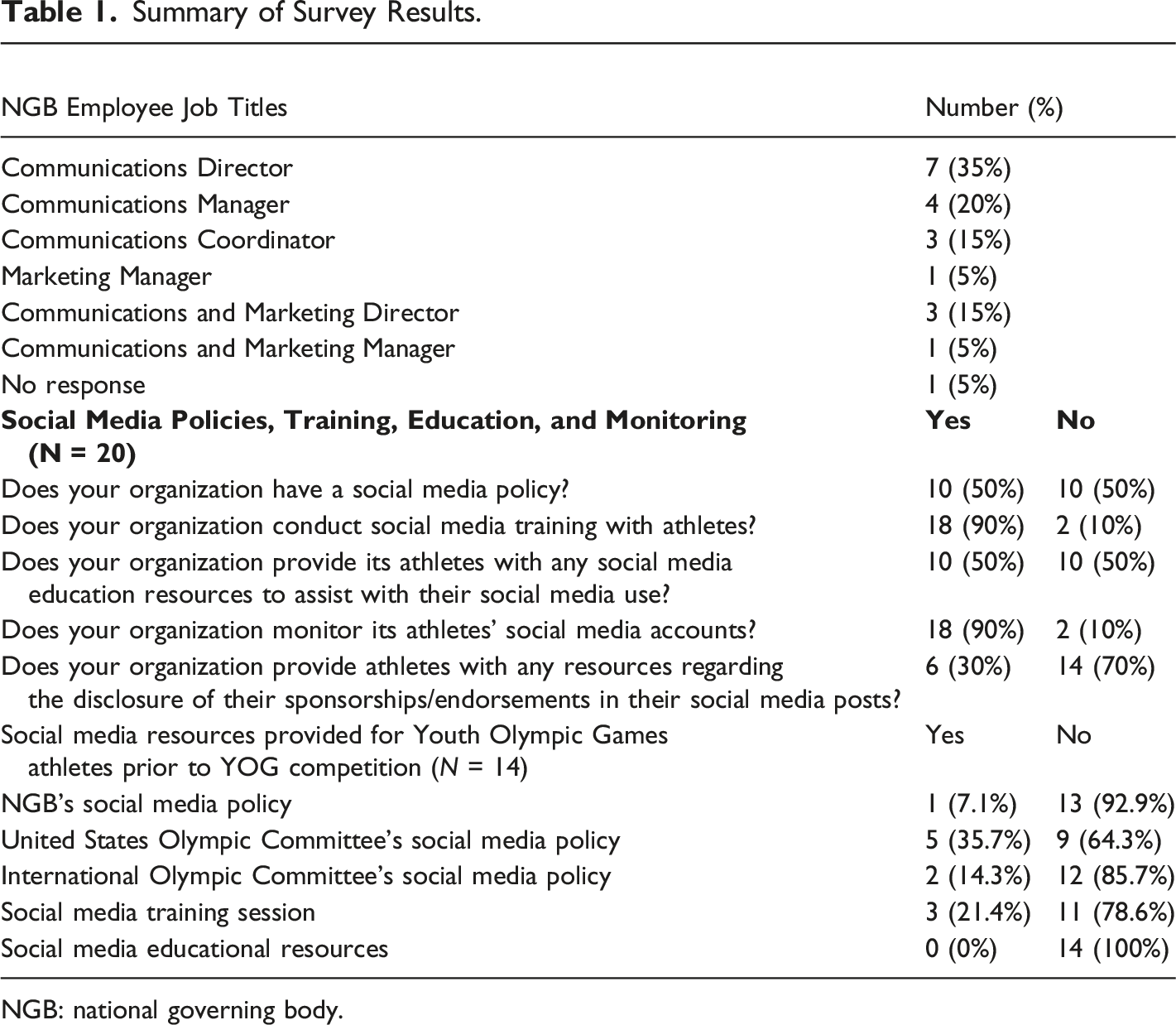
NGB: national governing body.
Interviews
The survey results were used to develop questions for the interviews, which all took place via telephone or Skype. For example, the survey uncovered the most commonly used education and training resources, which led to the creation of interview questions that uncovered deeper information about those resources. One example of a way in which the survey results helped inform the interview questions was the high percentage of NGBs (90%) that indicated they conducted social media training with their elite athletes. The knowledge that most NBGs were engaging in some form of social media training led to a series of questions about what topics were covered during social media training, how the materials for training were developed, how often and at what time of year the training took place, whether it was one-on-one or in a group setting, and whether sessions were in-person or conducted virtually.
Interview Participants.
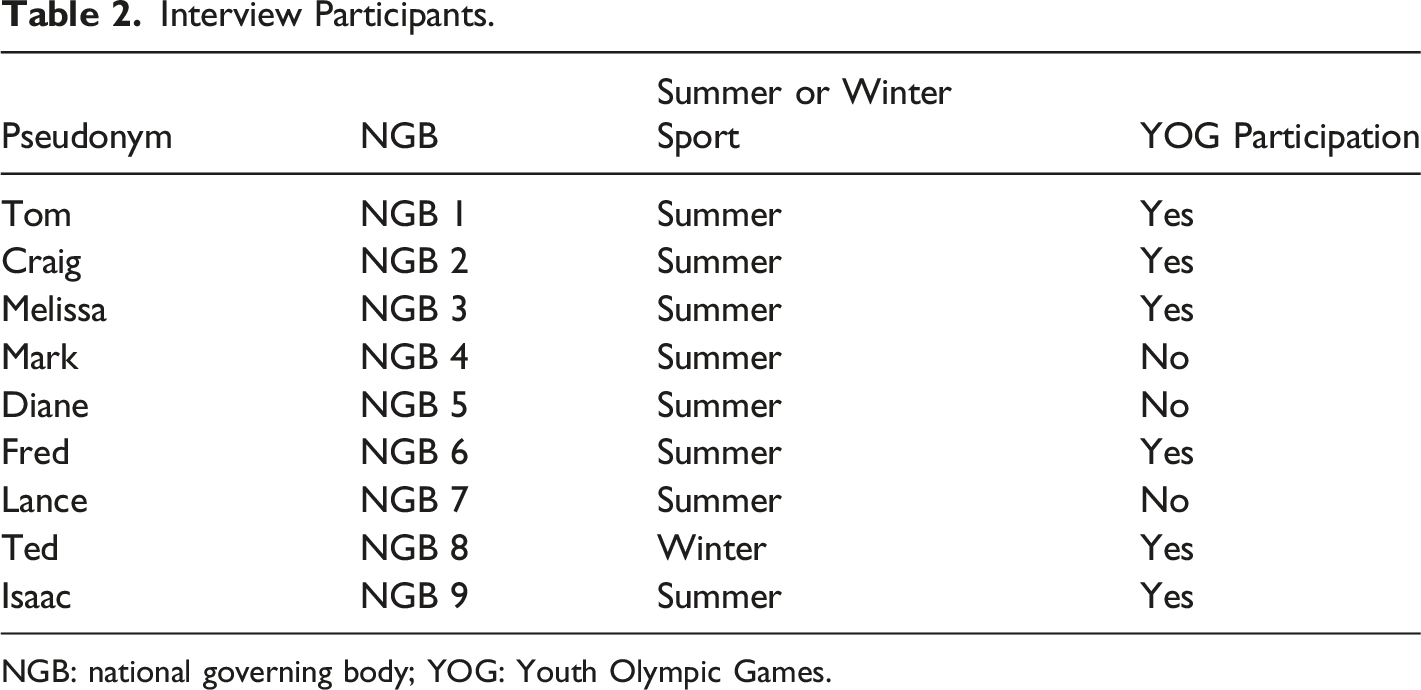
NGB: national governing body; YOG: Youth Olympic Games.
Each interview began by obtaining verbal consent from the participant to participate in the research project. Next, a series of 18 questions were asked relating to the interviewee’s job duties (e.g., “Please describe the job duties of your communication (or marketing) role.”), perceptions of athlete social media use (e.g., “What challenges do you believe social media poses to your athletes?”), the social media education and resources utilized for athletes (e.g., “Does your organization provide athletes with any social media education resources to assist with their social media use?” If yes, “Please describe the educational resources provided to athletes.” Followed by, “Of these resources, which do you believe are most effective and why?”), and the interviewee’s perceptions of the effectiveness of their NGB’s social media education and training efforts (e.g., “Can you describe a time when you felt your social media training had an impact on your athletes?”). Additional clarifying questions were asked at times, as demonstrated in one of the sample questions from the previous sentence. The interviews ranged between 40 to 60 minutes in length, and all were audio recorded. A professional transcription company was hired to transcribe all interviews verbatim. Member checks (Krefting, 1991) were conducted in two phases to ensure the credibility and trustworthiness of the qualitative analysis (Cope, 2014). First, participants were invited to read their full interview transcript in order to ensure it was transcribed accurately. No participants raised any issues with their transcript. Next, after completing the data analysis (to be detailed in the next section), each participant was provided with a written description of the study results to ensure that the interpretation of the information they provided was accurate. Again, no participants raised any issues with the interpretation of their interview. In addition to allowing participants to reflect on the information they provided, member checks also help to ensure the researcher’s personal biases (based on their own personal experiences) do not impact the data interpretation (Kornbluh, 2015).
Data Analysis
SPSS Statistics 19 was used for quantitative data analysis from the survey. Descriptive statistics were calculated using this software. In order to analyze qualitative data from the survey and to a much larger extent, the interviews, qualitative thematic analysis was employed, which involved two stages of data coding (Braun & Clarke, 2008). The first stage included the development of descriptors, or codes, to identify various areas within the transcripts that related to the study’s research questions and purpose. For this stage, data were manually coded using different colored highlighters and taking notes directly on the transcripts. In second cycle coding, the researcher summarized and grouped codes from the first cycle into smaller themes. A Microsoft Word document was used to organize and assign the codes into themes. Member checking, as described above, as well as peer debriefing, took place to ensure the accuracy and trustworthiness of the analysis. Peer debriefing is a process in which the researcher engages in conversations with another scholar who was not involved in the data analysis in order to describe the findings and field questions that the outside scholar may have about the clarity and completeness of the analysis (Krefting, 1991). This process enhances the accuracy of the results according to Creswell (2014).
In qualitative research, especially when in-depth interviews are used, small sample sizes are appropriate and allow researchers to collect rich data regarding the participant’s opinions and experiences (Wimmer & Dominick, 2006). Researchers typically do not have a set number of participants in mind when they engage in qualitative research, and instead aim to achieve a saturation point at which no new or different information is being gathered (Gratton & Jones, 2004). In this study, a saturation point regarding Olympic-level athletes was reached after seven interviews, but because the researcher felt that more information was needed about YOG athletes, two additional interviews were conducted, at which time a final saturation point was reached and no new information emerged from the interviews.
Results
Perceived Benefits of Athlete Social Media Use
The first research question asked what NGB employees perceived to be the greatest benefits of athletes using social media. This question, along with RQ2, assists in understanding how NGB communication employees perceive athletes’ social media use and the gratifications they believe athletes receive from social media use. Data analysis of the interview transcripts revealed three themes related to benefits: showcasing their personality, building a personal brand, and developing commercial opportunities. The first theme, showcasing their personality, indicated that social media allowed athletes to present their personality to their fans or fans of their sport in the way they wished to be portrayed. For example, Fred (NGB 6) said, “Some of our top-tier athletes are very unique in personality, and not only are they strong and good competitors, but they’re also interesting people. And I think social media helps not only expose the sport, but expose the personality behind the athlete.” Many respondents felt that this was a benefit not afforded to athletes through traditional media coverage, in which they are unable to control the narrative or the way they are portrayed. Isaac (NGB 9) said, “from an athlete perspective, you control the message, you control when it goes out, where it goes out, what platform it goes out on and that’s really the benefit to [social media].”
The second theme, building a personal brand, was mentioned by every participant. This theme built on the first theme, as showcasing their personalities allowed athletes to portray themselves in their desired manner, thus leading to the second theme of creating a personal brand that helped to differentiate them from other athletes. Melissa (NGB 3) indicated, “Social media is a huge opportunity for our athletes to build their brand and to build a fan base, really.” Isaac (NGB 9) explained further, I think it [social media] provides them an opportunity to promote themselves in a manner that they want, that’s associated with their image, their brand. It allows them, if they don’t have a brand, to start creating one themselves, and then portraying themselves to the general public in that way, whatever they see fit.
Tom (NGB 1) indicated that his NGB assisted athletes with their personal brand development, stating, We help them start to build their brand so when it is time for them to do their next venture in the sport, it can help them gain sponsors, fans, help build their brand, and help them get out there and be known not just in [their sport], but also outside [their sport].
Finally, the third theme regarding benefits of social media use was developing commercial opportunities. This theme emerged after participants discussed brand-building and seemed to develop from this theme. Participants explained that once athletes built a brand persona, they were able to use social media to capitalize on this in terms of getting new sponsors or commercial opportunities, both while competing and after retirement. Craig (NGB 2) explained that for his NGB’s athletes, A lot of them have established themselves pretty well on social media and have been able to use that monetarily when it comes to sponsors. And so, it’s kind of a resource for them to hopefully build upon and kind of the financial model for them to use if they can, I guess, get up there to where brands and sponsors will see that as a valuable resource.
Melissa (NGB 3) echoed this, stating that social media allowed athletes from her NGB to capture the attention of potential sponsors, and Diane (NGB 5) said that her athletes use social media as a place to talk about their personal sponsors, thus providing value to the sponsors.
Perceived Challenges of Athlete Social Media Use
The second research question sought to understand what NGB employees perceived to be the greatest challenges to athletes’ social media use, or what Raacke and Bonds-Raacke (2008) referred to as failed gratifications when viewing these from a U&G lens. Two themes emerged from the data analysis regarding challenges: thinking before speaking and understanding reach and impact of what they post. Additionally, two NGB employees expressed a challenge of understanding the need to own their name on social media, which will also be discussed in this section.
The first theme, thinking before speaking, was indicated by almost every participant, as many of them spoke about the need to help athletes learn to give more critical thought to the messages they posted on social media. They felt this was necessary to ensure that the post would not be taken out of context, be perceived as offensive, give sensitive information to competitors, or result in any other negative consequences. Tom (NGB 1) described this challenge by stating, Sometimes they might post something before thinking or realizing. So, I think that aspect of making sure that all levels know, ‘This is something that can harm you. It can help you, obviously, but it can also harm your brand or your persona to others.’
Diane (NGB 5) described this challenge by telling a story about an athlete who spoke out about a specific political candidate without giving it any prior thought. Diane said of the athlete, “She freaked out after, like, ‘did I just take a stance?’” Fred (NGB 6) described this challenge in relation to giving away information to competitors, stating, Sometimes strategy comes into play where the athletes are showing their new personal records that they set in training, and sometimes you want to keep that closer to the vest so the other nations don’t know what we have going on. So, that’s a challenge.
The next theme relating to challenges was understanding reach and impact of what they post. Similar to the first theme, participants stressed the importance of helping athletes understand that their posts could be read by thousands or even millions of people and could have an impact on their athletic career, personal life, or post-athletic career. Lance (NGB 7) explained this by saying, Unfortunately, they sometimes don’t realize that their words or their photos can reach a lot more people than they realize. It can come back to them, whether that is political or social commentary; whether it’s posting something critical of someone else. So, finding the balance between having a voice and using it responsibly is one of the biggest challenges that our athletes face.
Melissa (NGB 3) felt that it was important for athletes to understand the range of people who might see their posts, from major international news outlets to young children who looked up to the athlete, and use that understanding to make decisions on what was appropriate to post.
Ted (NGB 8) described conversations he had with athletes about the consequences of irresponsible social media posts, stating, Something we have to talk to our athletes about is, ‘Hey, if you tweet something, even if you delete it, it’s not going away. And if you tweet something and it’s up for five minutes, it’s going to spread like wildfire if it’s one of those tweets.’ … I’m trying to teach some of the younger athletes, ‘you may not realize that something is inappropriate or may be immature, and that’s not going to go away. So, ten years down the line when you’re in the mix for an Olympic berth, an Olympic spot, that video might come back. Or that post or that picture might come back.’ And I think, especially now given what’s going on with the political climate and all of that, this stuff does not go away.
Finally, two participants explained that their athletes questioned why they should have handles (accounts) on all social media platforms, leading to a challenge of understanding the need to own their name on social media. Although this was not a common theme expressed in the interviews, it represented a challenge that other NGBs may want to be aware of in the future. Both Mark (NGB 4) and Diane (NGB 5) explained that when athletes did not own their name as a handle on social media, others could use that name to create fake accounts or take advantage of the athlete’s name/likeness. Mark (NGB 4) explained, I think initially part of the challenge was convincing them that having social media was important. I kind of encouraged them to just kind of hold their place in this social media world, even if it’s not really your thing, it might be good just to kind of claim your territory, your name, so that someone else doesn’t pretend to be you.
Similarly, Diane (NGB 5) shared a story about an athlete who did not have social media accounts set up prior to the Olympic Games, and after experiencing success at the Games, had to deal with the challenge of fake accounts being set up in her name. Diane said, There were a lot of fake accounts that sprung up for her. And so that was a huge lesson for her, because she was one of those [athletes that] I was like, ‘Just claim your name. Just claim your name.’ I was like, ‘Even if you don’t use them, at least no one else can.’ She did not do that. She did not heed that advice. We had to kill maybe 12 fake social media accounts.
Social Media Education and Training Methods
Social Media Training and Education Methods Used by NGBs.
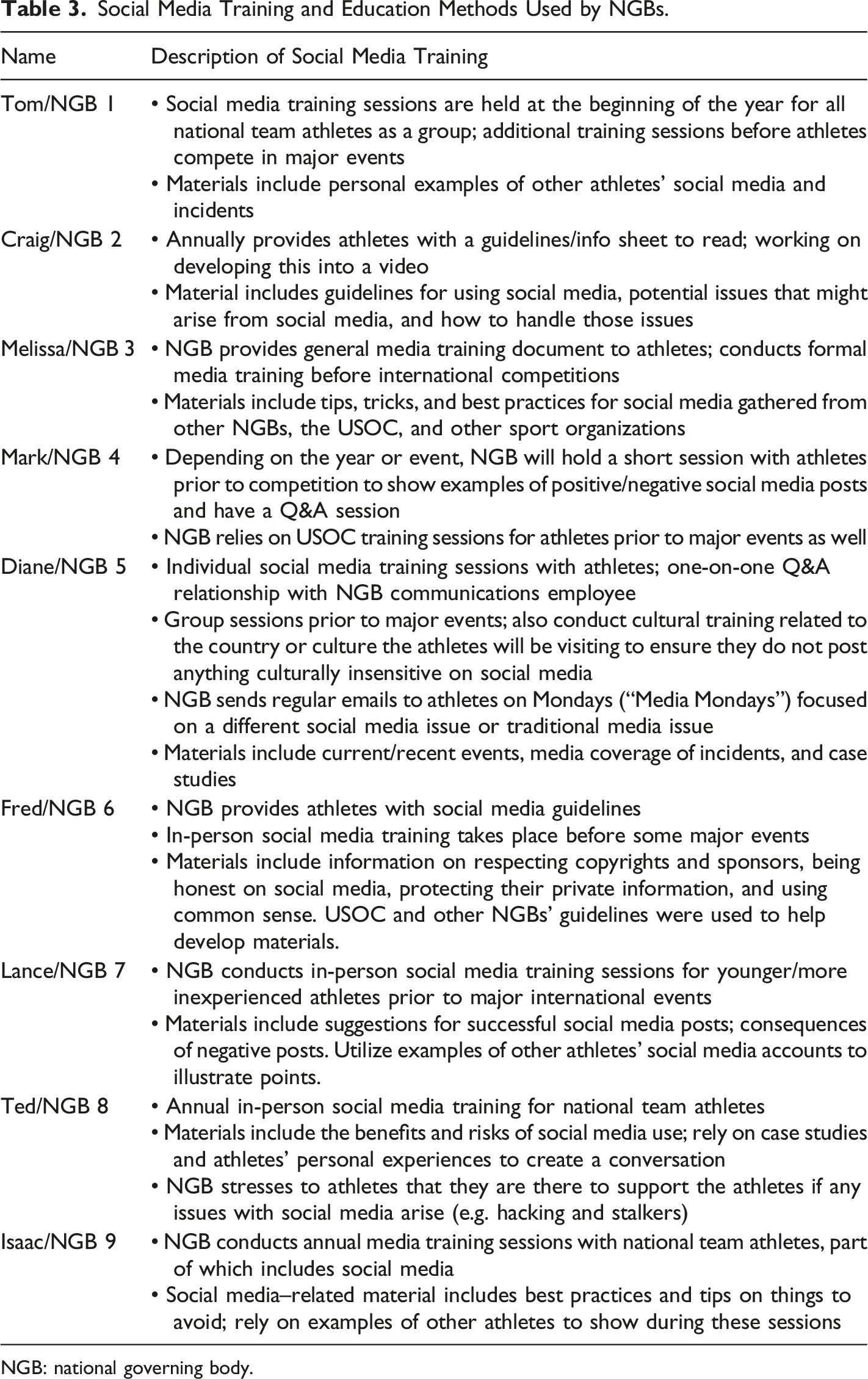
NGB: national governing body.
The fourth research question asked which social media training and education methods were used for YOG athletes. Survey results revealed that only 14 of the 20 NGBs that responded to the survey sent athletes to the YOG. As shown in Table 1, only one of these 14 organizations (7.1%) provided YOG athletes with the NGB’s social media policy prior to competition, compared to 50% of the NGBs that provided this to senior elite-level athletes. Five NGBs with YOG athletes (35.7%) provided YOG athletes with the USOC’s social media policy, and two (14.3%) provided them with the IOC’s social media policy. In terms of social media training, only three (21.4%) conducted training with YOG athletes. No NGBs provided YOG athletes with any additional educational resources such as best practice guides, pamphlets, or websites.
The qualitative data from both the survey and interviews shed more insights into NGBs’ views on providing social media training or resources for their YOG athletes. Within the survey, several respondents indicated that they needed to provide more training for these athletes. One respondent wrote, “We do not do a ton of training for our youth athletes, so overall, we need to do more!” Another respondent echoed this, stating, “[We need to] bring them into the fold.” Yet another respondent simply said, “We need to do more.”
While the survey results indicated a greater willingness to work with youth athletes regarding social media education, themes from the interviews indicated otherwise. One theme that emerged was that the YOG was not a high priority for NGBs; therefore, training YOG athletes was not a high priority either. Craig (NGB 2) illustrated this, saying, “They don’t deal with nearly as much [media] coverage … and they’re just kind of here on such a short-term basis.” Tom (NGB 1) said that providing social media training might add pressure to YOG athletes, as they might view their competition as a “bigger deal” than it actually was.
One participant, Diane (NGB 5), indicated that by the researcher asking a question about YOG social media training, it reminded her that her NGB should be more focused on its youth athletes. She said, “Even just you asking that question here kind of almost indicates to me, yeah, we should probably have a somewhat different [education/training plan] given age groups.”
Only one interview participant, Ted (NGB 8), reported that his NGB provided in-depth social media training to athletes between the ages of 9–12 and involved the athletes’ parents in this training as well. Ted said that he actually contacted his former high school guidance counselor to ask, “Hey, what are you telling parents right now? What are some of the things that are going on in social media that they need to be aware of?” He went on to describe his approach to educating youth athletes and their parents, stating, “We don’t want to scare them. But we want to tell them about, hey, here are some things that are happening. Here are some things that you should be concerned about. And here are some ways that you can make sure that this isn’t an issue for you or your child.” He said that he holds these sessions with both the athletes and parents in the room at the same time, which allows for an open dialogue and also allows the NGB to “start building that relationship of trust with the parents and the athlete.”
Effects of Social Media Training and Education
The fifth research question asked what NGB employees felt the effects were of their social media training and education efforts, which could also be viewed as NGB employees’ gratifications derived from social media training. Three themes were uncovered in the data analysis, including very few negative social media incidents, greater willingness to seek advice/assistance from NGB, and athletes built stronger personal brands. With regard to the first theme, most participants seemed relieved that their NGB had dealt with very few social media incidents with their athletes, and they attributed this to the social media education provided to athletes. Craig (NGB 2) said, “I think the greatest success is [that] there have been very, very, very few instances where we’ve had to refer back to these guidelines, where we’ve had to essentially raise a red flag.” Diane (NGB 5) echoed this, stating that her NGB had never needed to ask an athlete to remove something they posted on social media, for which she was thankful. Fred (NGB 6) said that although his NGB had faced public controversy over organizational decisions it made, none of its athletes had ever faced controversy over something they posted on social media, which he attributed to the social media training they received.
With regard to the second theme, greater willingness to seek advice/assistance from NGB, participants reported that social media training allowed the athletes to get to know the NGB communication personnel and become more comfortable with these individuals, which led athletes to feel more comfortable contacting them to ask social media–related questions or to seek advice about their social media use. For example, Tom (NGB 1) said that athletes often texted him to share what they want to post and ask for his advice. Mark (NGB 4) echoed this, stating that he is often used as a sounding board for athletes who ask about potential posts or who wonder how to respond to certain comments they received. Ted (NGB 8) indicated that he believed athletes were more willing to communicate with his department because they built trust with the athletes, which made them feel supported.
As for the final theme, athletes built stronger personal brands, participants reported that they were able to witness some of their athletes develop stronger personal brands as a result of the social media training and education they received. For example, Melissa (NGB 3) stated that after social media training, “Most of our elite athletes learned some new things moving forward about how they can really build their own brand and build their own image of how they want to be portrayed.” Similarly, Lance (NGB 7) said that he noticed a difference in the type of content athletes posted on social media after their training sessions, and many athletes began showcasing who they were as people both in and out of their sport, helping to build their personal brand in the minds of their followers.
Methods to Improve Social Media Education
The final research question asked how NGB employees believed they could improve their social media education and training efforts. Two themes emerged from the data analysis, including more frequent communication or training with athletes and enhanced training/education materials. Relating to the first theme, most NGBs indicated that they had only one social media training session per year with athletes, and felt that communicating with athletes more frequently regarding their social media use would help to reinforce the messages and lessons learned in training sessions, and would also build a stronger relationship between the NGB and the athletes. For example, Ted (NGB 8) said, I think probably creating a link from maybe the beginning of the season through the year. I think we have some touch points where we can check in with them. And the athletes who feel comfortable with us and are less shy reach out often, but there’s got to be a way that we can do more throughout the year in a very noninvasive way. Just to keep reminding them about subtle things here and there, whether it be stuff to avoid or ways to improve their brand.
Tom (NGB 1) echoed this sentiment, stating that he wished his NGB could conduct training sessions every 3 months to refresh the lessons learned previously.
The second theme, enhanced training/education materials, was expressed by every participant. Some of the participants’ ideas for enhancing educational materials included developing resources that would help support athletes in understanding how to build their personal brand, building a repository of resources that athletes could easily access throughout the year, and exchanging best practices with other sport organizations that provide social media training to athletes. Isaac (NGB 9) also spoke about the need to develop interactive participatory sessions with athletes instead of presenting a lecture to them: I want them to be engaged, and creating a platform for them to be open in an interactive place and we can really discuss ideas and throw things out there and help them where they retain the information as opposed to me giving a lecture and then some of them taking notes and some of them sleeping in the back. I mean, that would be what I want to see, is being able to devote more time to it and have more resources available for me to be able to put together what I would need to put together to really have any engaging, beneficial seminar, if you want to call it, for the athletes where they can definitely take advantage of it.
The following section highlights the most important findings from this study and discusses them in greater detail, including the theoretical and practical implications of this study.
Discussion
Utilizing U&G as a theoretical framework, the purpose of this study was to develop an understanding of the social media training and resources that NGBs of sport provide to their elite athletes ranging from YOG to Olympic level, and to examine the perceptions of NGB employees regarding athletes’ social media use and their organization’s social media education and training. Several important findings from this study are worthy of further discussion to enhance our understanding of U&G theory and Olympic sport organizations’ social media training and education, and these are provided below.
From a theoretical standpoint, this is one of the first known studies to utilize U&G theory to attempt to understand athlete support networks (Hayes et al., 2019) and one of the few sport communication studies thus far to examine the concept of failed gratifications (Raacke & Bond-Raacke, 2008). In terms of athlete support networks, the communication employees of U.S. NGBs are integral to athletes’ understanding of how to best use social media in relation to their athletic career and to achieve goals such as enhancing their personal brand (Geurin, 2017). Through surveying and interviewing NGB communication employees regarding their social media education and training practices, this study uncovered their uses for such education and the gratifications that they perceived athletes to receive from such training (both positive and negative gratifications).
Prior to this study, very little was known regarding the ways in which NGBs used social media education and training with athletes. The results showed that U.S. NGBs are making a strong effort to provide Olympic-level athletes with social media education opportunities. The most common educational uses of NGBs included social media training sessions and providing athletes with resources such as best practice guides or websites to complement the training. While these methods were used for senior elite athletes, NGBs largely did not report providing comparable education and training for YOG athletes. This finding is surprising, as many YOG athletes progress through their sport to compete at higher levels, such as in World Championships or Olympic Games. Therefore, it would seem important for NGBs to provide social media education to these athletes at an early age. If social media education for athletes is truly crucial to their long-term success in building and maintaining a desired image (Geurin, 2017; Geurin-Eagleman & Burch, 2016; Hayes et al., 2019, 2020; Lebel & Danylchuk, 2014; MacIntosh & Dill, 2015; Sanderson & Browning, 2013), it seems that such education and training is especially critical for young athletes, such as those who compete in the YOG. From a U&G perspective, it seems NGBs would receive more long-term gratification from implementing social media education and training with young athletes such as those at the YOG level. This could help to instill positive social media behaviors from a young age and would likely mean these athletes would avoid many social media pitfalls later in their careers. It might also mean less training and education is necessary from the NGB as athletes become older and begin competing at the senior elite level. Ted (NGB 8), whose NGB was one of the few to focus on social media education with YOG athletes, highlighted gratifications his NGB experienced from this practice such as building a relationship between the communication staff and athletes from a young age, building trust with both the athlete and their parents, and developing a level of comfort for the athletes in using different social media platforms.
The IOC published a “Social and Digital Media Guidelines” document for the most recent 2020 Lausanne YOG, which stated that athletes were encouraged to “share Youth Olympic Games Content on their personal social/digital media accounts or website, including short clips of the athlete’s experience of events or competitions (without intending to provide coverage of them) on the field of play” (IOC, 2019, p. 1). The policy provided specific information about what type of content was permissible and impermissible to post but did not offer any education or training for athletes, presumably because the IOC leaves such training to athletes’ NGBs. As previous research highlighted the importance of communication aspects in YOG athletes’ experiences (e.g., Parent, Houlihan et al., 2014; Peters & Schnitzer, 2015), it seems short-sighted of the NGBs that are not providing these athletes with social media education prior to competing in a major international competition. Additionally, research has highlighted negative situations that athletes face with social media use, such as unwanted private communication from followers and rude public messages (Geurin, 2017), as well as the use of social media platform Snapchat for coaches and other adults to perpetuate sexual abuse of child athletes (Sanderson & Weathers, 2020). Young athletes should be prepared for how to handle these potentially severe situations should they arise during the YOG.
Ted (NGB 8) was the only participant who reported holding training sessions for YOG athletes and additionally indicated that he maintained a very open line of communication in which YOG athletes and/or their parents would often contact him for help setting up social media accounts and asking questions about the potential issues they might face on social media. It would seem to benefit NGBs and their YOG athletes in both the short-term and the long-term if they implemented YOG social media training/education and communication similar to Ted’s.
While previous research found that much of the social media training efforts with athletes at the collegiate level were focused on the enforcement of policies and punishments, the social media education described by the NGBs in this study were decidedly more proactive and positive. Table 3 describes the types of training resources used by NGBs, which largely consisted of best practice literature, examples of positive and negative social media use, and in-person training sessions with athletes. This suggests that NGBs’ uses for social media education have moved beyond the policy/punishment model described by Sanderson 2011; Sanderson et al., 2015 and have progressed to more positive, educational, and interactive approaches. Additionally, Sanderson (2018) encouraged sport organizations to provide opportunities for athletes to communicate with organizational personnel regarding their social media use, which was evident in this study. All NGB participants described the personal nature of their communication with athletes, providing many examples of athletes contacting them to seek one-on-one advice or assistance with their social media use, which was a gratification experienced by the NGB communication staff with regard to social media education. Diane (NGB 5) talked about her willingness to be available to help her athletes, stating, They have very unique personalities and it’s required a lot more nurturing and putting myself out there. I know you can’t really be their friend, per se, but being friendly and creating that safe space [is important]. I need to make sure they’re comfortable in talking about what they do [on social media].
Next, despite some challenging aspects of social media use, NGB participants seemed to overwhelmingly feel that social media use posed significant benefits (or perceived gratifications) to athletes and that education and training helped to enhance those benefits as well as minimize the challenges athletes face on social media. The benefit themes of showcasing their personality, building a personal brand, and developing commercial opportunities all mirrored Geurin’s (2017) findings regarding the perceived benefits Olympic athletes reported for their social media use. These benefits, or gratifications, appeared to be linked to building a stronger personal brand, one of the reported impacts of social media training. Building a strong personal brand has been linked to positive outcomes such as increasing one’s fan base and publicity, as well as engaging in marketing opportunities with partner brands (Arai et al., 2014; Parmentier & Fischer, 2012). The positive gratifications NGB employees perceived athletes to receive from social media use in the present study differed slightly from the gratifications uncovered by Hayes et al. (2019) in their interviews with elite athletes. Their findings highlighted connectedness with followers, positive reinforcement from followers, and relaxation and escape from a sporting event environment. These differences could be due to the context of their study focusing on athletes using social media while at events such as the World Championships or Olympic Games, whereas the current study explored the concept of social media use from a wider lens, similar to the research by Geurin (2017). The finding that NGB employees correlated social media education with very few negative social media incidents for athletes further illustrates the power of social media training.
Although few negative social media incidents were reported, some were highlighted when NGB employees discussed their perceived challenges, or failed gratifications, experienced by athletes in regard to social media use. Several participants described moments when athletes posted something without properly thinking through the potential repercussions of their posts or understanding the impact their post may have and subsequently feeling stress or anxiety, such as the example Diane (NGB 5) gave of an athlete who took a specific political stance. Mark (NGB 4) provided another example about an athlete who retweeted something containing inappropriate language and the athlete did not understand that all of his followers could see the retweet and might interpret it as the athlete endorsing the viewpoint/language presented in the tweet. These findings mirrored those of Hayes et al. (2019) regarding failed gratifications from athletes’ perspectives.
One unique finding from this study was that two NGB employees reported a negative gratification being the repercussions of athletes not owning their name on some social media outlets, which led to fake accounts being created and the NGBs trying to help the athletes get these accounts removed from various platforms. As social media use is an important mechanism by which athletes can build their personal brand (Arai et al., 2014; Geurin-Eagleman & Burch, 2016; Lebel & Danylchuk, 2014; Parmentier & Fischer, 2012), owning their name on every platform possible is extremely important to control messaging relating to their personal brand. Formally encouraging athletes to own their name on multiple platforms not only helps the athletes from a personal branding perspective, but also results in less time the NGB might have to spend controlling the damage done when athletes do not own their name.
Recommendations
NGBs from both the U.S. and abroad can utilize the data from this study to better develop training and educational materials that assist athletes in capitalizing on the opportunities provided by social media, while minimizing the challenges. Based on the results, it appears that opportunities exist for NGBs to develop more consistent points of communication with athletes throughout the year regarding social media education and training. Even if this takes the form of emails with practical tips and reminders from larger and more in-depth training sessions, such practices would help to keep the importance of positive social media use top of mind for athletes.
Along with providing more consistent points of contact, it is recommended that NGB communication employees work with their counterparts at other NGBs to develop social media education and training materials. Based on the interviews conducted for this study, it does not appear NGBs are working together in their social media education efforts. Every nation has multiple NGBs (i.e., 39 NGBs for sports that participate in the Olympic Games in the U.S.), so it would save a great deal of time if NGB communication employees worked together to create these materials rather than developing potentially 39 different social media education/training programs. Collaborating on this would allow communication employees more time for one-on-one communication with athletes on a regular basis regarding their social media goals and how to achieve those and to build strong relationships and trust with athletes, as Ted (NGB 8) discussed.
Additionally, it is incumbent upon NGBs to provide social media training and education for their YOG athletes. Due to the somewhat permanent nature of social media posts, it is recommended that youth athletes be educated to allow them to post as smartly as possible now and avoid making social media mistakes that may come back to haunt them in the future when they reach higher levels of competition. NGBs should avoid using the outdated policy/punishment model (Sanderson, 2011, (Sanderson et al., 2015)) and instead focus on engaging, positive education that allows young athletes to feel comfortable using social media. As this age group is susceptible to online bullying, harassment, or grooming by predators, it is also important that these athletes receive training on what to do if they experience negative/harmful comments or private messages. These athletes should feel empowered through their social media training to speak up if they experience this type of behavior from others.
Youth athletes are a valuable resource for NGBs, as they represent the next generation of elite athletes, and if they become accustomed to social media education/training, it will result in them becoming even savvier athletes on social media as they get older. Materials should be tailored to the age group involved, as the training and education materials used for athletes aged 18+ will not necessarily translate well to those who are in their early teens or pre-teens. Ted’s (NGB 8) methods for conducting social media training for youth athletes and engaging their parents can be looked at as a blueprint for developing this type of training.
Limitations and Directions for Future Research
As this was the first known study to examine Olympic sport organizations’ social media training and education efforts, this study was quite exploratory in nature and the findings were largely descriptive. The results should provide a foundation upon which future research on this topic can build as well as a foundation for additional U&G research on athlete support networks and on failed gratifications. The study uncovered the uses of social media education and training by U.S. NGBs, as well as NGB employees’ perceptions of athlete social media use (including perceived gratifications) and the training provided.
It is important to acknowledge the limitations of this study. First, it was conducted only in the U.S. context, and therefore the findings may not be accurate for other national contexts. Additionally, the major findings stemmed from interviews with employees from nine NGBs (as opposed to the survey data, which offered less significant results), and it is possible that selection bias could have occurred. The nine employees who agreed to participate in an interview may have done so because they engaged in fairly robust and proactive social media education and training, and therefore felt they had a lot to offer to the study. It is possible that employees from NGBs that did not offer as much in terms of athlete social media education did not elect to provide their email addresses in the survey to participate in an interview. Along with this, the NGB employees’ descriptions of their training and resources were used, but the researcher did not have access to the actual training materials and resources in order to review those and compare them to the information provided by NGB employees. Finally, the study only considered the views of NGB employees, and not the athletes themselves.
These limitations, along with the study’s findings, offer a great number of ideas for future research on this topic. For example, future research could attempt to study social media education and training in multiple countries to provide a cross-cultural comparison. Examining the actual training materials and resources used by NGBs, as well as athletes’ perceptions on social media training and education are also important to provide a more holistic understanding of the perceived effectiveness of NGBs’ social media training. Additional research on YOG athlete social media training is necessary to understand whether this group continues to be ignored, or if practices have changed. Additionally, studying any potential differences in the positive and negative aspects of social media for YOG and senior elite athletes could lead to more effective social media training practices for these two groups. As previously noted, this study only considered the perspectives of NGB employees, but future research should also attempt to understand the perspectives of athletes regarding social media education and training, as well as the perspectives of other individuals in the athletes’ support networks (e.g., parents or coaches). Finally, while a limited body of research exists regarding the uses and gratifications of athletes’ social media use, more research is necessary from a variety of perspectives (e.g., athletes, NGBs, coaches, and parents), as these findings could help to inform NGBs’ social media education and training programs to make them as effective as possible.
Footnotes
Declaration of Conflicting Interests
The author(s) declared no potential conflicts of interest with respect to the research, authorship, and/or publication of this article.
Funding
The author(s) disclosed receipt of the following financial support for the research, authorship, and/or publication of this article: The New York University School of Professional Studies Dean's Research Grant provided funding for this research.
