




Abstract
Transition to post-school life is known to be a time when autistic students encounter additional barriers that may impact their successful movement into adulthood. Preparation for the transition may help autistic students make this change, but little is known about what school staff believe to be important to include in these preparations. Therefore, using the Q-Sort method, this study sought the views of 42 school staff by asking them to rank, and explain their rankings of, the important activities and supports for autistic students transitioning to post-school life. Descriptive statistics and deductive content analysis revealed that school staff rank highly the importance of support from family and friends during this transition. They also prioritise the importance of autistic students developing the skills needed to be independent in post-school life. School staff consistently discussed the need to focus on personalisation of transition support, and that supportive relationships are important for transition success. Notably, the importance of empowering autistic students to make decisions about their post-school lives was not highly endorsed across all participants. This indicates further work is needed to identify and address the reasons for this limited endorsement, as this may help increase autistic students’ involvement in transition preparations.
Background
The transition from school and into emerging adulthood can be a challenging time for all young adults, as they navigate the identity explorations, instability, need for self-focus and feelings of uncertainty, possibilities and optimism associated with this life phase (Arnett, 2024). For autistic students and other students with disabilities, multiple barriers encountered during this transition can make this process even more complex (Ingimarsdóttir et al., 2024). Research shows that autistic students are at greater risk of negative transition experiences compared to their non-autistic peers (Wisner-Carlson et al., 2020). Autistic students will likely need to overcome additional barriers, such as unaccommodating environments, limited supports, exclusion and discrimination (Parliament of Australia, 2022) to successfully transition into their new adult roles. Autistic adults have reported both social and logistical barriers to successful transition, such as difficulties understanding complex government systems and in navigating new relationships (White et al., 2024). These barriers to successful transition are likely to be contributing to the poorer post-school outcomes often experienced by autistic adults (Flower et al., 2021). Specifically, upon exit from secondary schooling, autistic young adults have reported lower rates of participation in post-school education and are more likely to experience social isolation (Select Committee on Autism, 2022). They also experience higher rates of unemployment and earn less money than their non-autistic peers (Kraemer et al., 2024; Roux et al., 2015). This means that many of the traditional markers of successful transition, including gaining employment, movement to further education and social and community integration and participation (Arnett, 2018, 2024; Katsiaficas, 2017), are often not achieved by autistic young adults.
The poorer post-school outcomes often experienced by autistic young adults suggest that current approaches to supporting their transition to post-school life may not be meeting their needs. Globally, there has been work undertaken to ensure that students who require additional support are sufficiently prepared to transition from secondary school into adulthood (LaPoint et al., 2024). This research has shown that formalised transition support programmes, such as Project SEARCH (Wehman et al., 2017) and STEPS (White et al., 2021), as well as other programmes from outside the United States (e.g. Nadig et al., 2018), consistently have a positive impact on transition-related employment, education and social outcomes for autistic students (White et al., 2025a). However, there is an urgent need for more of these programmes to be developed, and for access to be more readily available to autistic students (Wehman et al., 2014; White et al., 2025a).
In the absence of formalised transition programmes, research has shown that students with disabilities benefit from purposeful, early transition planning, as this helps them to overcome systemic barriers and to access opportunities (Shogren & Wittenburg, 2020). For autistic students, the importance of transition planning has been consistently highlighted (Wehman et al., 2014); however, the impact of this transition planning has been described as unsatisfactory (Chun et al., 2023). Furthermore, while it is known that positive home-school collaboration is most helpful in supporting this transition, this approach is regularly not taken, leading to communication breakdown (Pillay et al., 2023). This disjuncture often results in fragmented planning and support that focuses on topics and goals that are not considered important by all stakeholders (Lee & Carter, 2012).
To overcome this disjuncture, it is important to identify what is considered important by all stakeholders involved in supporting an autistic student’s preparation for transition to post-school life. Seeking the most important views on this transition – those of autistic people – has resulted in recognition of the powerful role played by school staff during this period, and has highlighted how the culture, values and beliefs of school staff contribute to the success of an autistic young person’s move to adulthood (White et al., 2024). School staff are known to be important supporters of autistic students across all aspects of their education (Anderson et al., 2024; Rämä et al., 2020), including during transition preparation (Crane et al., 2022). Teachers work to foster engagement, facilitate classwork and manage the classroom, while teacher aides’ close support often helps autistic students to feel safe and to achieve increased academic and social progress (Esqueda Villegas et al., 2024; Page & Ferrett, 2018). School staff are therefore entrusted with enabling positive learning experiences and supporting autistic students to grow, develop, and work towards a future focused on wellbeing and success (Anderson et al., 2024).
Research has shown that the success of support for autistic students relies heavily on the attitudes of their educators (Esqueda Villegas et al., 2024). Knowledge, resources, understandings of autism and training all contribute to the development of positive teacher attitudes, which are especially important during preparations for post-school transition (Anderson et al., 2024; Crane et al., 2022). Teachers and teacher aides have the potential to provide essential support, which is known to need to increase as autistic students approach school exit (LaPoint et al., 2024). Furthermore, the school cultures, values and beliefs that are fostered by staff have been specifically identified by autistic people as being an important influence on the success of their transition (White et al., 2024). Therefore, identifying what these school staff believe to be important supports and activities to offer to autistic students during the transition phase is an important research consideration. However, of available research exploring the transition from school for autistic students, only 9.7% of studies included teachers as sole informants (White et al., 2025a). Importantly, voices of teacher aides are almost absent from all literature, with no Australian studies having sought their views on this topic (White et al., 2025a).
Aims
This study aimed to seek the perspectives of teachers and teacher aides on the activities and supports that they considered to be most important for an autistic student to make the transition from school to post-school life. The study findings are timely and could help schools and educational authorities to effectively implement procedures and policies to guide this transition process for autistic students. Therefore, this study posed three Research Questions:
What activities and supports do teachers and teacher aides identify as most important for an autistic student to make the transition from school to post-school life?
What reasons do teachers and teacher aides report for identifying specific activities and supports as more or less important for autistic students to make the transition from school to post-school life?
Is there any variance in the activities and supports ranked to be important for different groups of teachers and teacher aides?
Method
Ethics
Prior to the commencement of the study, ethical clearance was granted by Griffith University Human Research Ethics Committee (2024/319).
Positioning and Involvement of the Autistic and Autism Communities
The first author is an autistic teacher who is the parent of autistic children. Other authors are non-autistic neurodivergent and neurotypical, and have expertise in psychology, teaching and occupational therapy. The authors assumed a pragmatic position, seeking knowledge based on exploring perspectives (Feilzer, 2010; Kaushik & Walsh, 2019). This pragmatism is derived from the ontological and epistemological beliefs that reality is best understood through human experience (Maarouf, 2019). All four authors have worked professionally with autistic individuals and their families and were aware of the often deficit-focused perspective taken in relation to students with disabilities within education systems (Cartagena & Pike, 2022; Dudley-Marling & Burns, 2014). Therefore, to reduce bias, members of the autism and autistic communities were consulted throughout the study. This involved an autistic research consultant contributing his views through regular consultation meetings with the first author. Furthermore, parents of autistic students, teachers of autistic students, and autistic adults also contributed to multiple aspects of the study. They did this through providing feedback in relation to aspects of the study design including the content of recruitment and participant information and consent materials, the wording of Q-Sort statements, and the clarity of instructions for completing the Q-Sort. Feedback from the project’s autistic research consultant also helped shape the interpretation of results and discussion.
Data-Collection Procedures
The Q-Sort Method
This study used Q-Sort or Q-methodology. Q-Sort was chosen because it allows the exploration of participants’ perspectives on a specific topic by asking them to rank and sort a series of statements. The process of sorting requires participants to engage in abstract thinking, systematic evaluation and comparison, creating data that represents a comprehensive evaluation of participants’ holistic thinking and decision-making processes (Takács et al., 2024). This method is known to be powerful in educational research because it allows researchers to identify educators’ subjective experiences and interpretations, and to identify patterns of consensus and disagreement in their views on a subject (Buchholtz & Vollstedt, 2024). The Q-Sort method has been applied to education research to understand teacher beliefs and perspectives, including in relation to mathematic practices (Wilkerson & Shelton, 2023), teaching priorities (Lim-Ratnam et al., 2022), and multilingualism and multilingual students (Lundberg, 2019). Q-Sort’s mixed-method approach integrates both quantitative analysis and qualitative insights, allowing researchers to unify statistical data and personal narrative (Buchholtz & Vollstedt, 2024). Using Q-Sort allowed the collection of more comprehensive data than would be gathered using a questionnaire. It also allowed this collection to happen in a more structured way than could be achieved through other methods, such as interviews (Ambrose et al., 2024).
This Q-Sort study was conducted in two stages: Stage 1 included the development of the ‘Q-Set’, or written statements that represent a range of experiences relevant to the topic, and Stage 2, where participants sorted Q-set statements in relation to their own experience (Ambrose et al., 2024). Each of these two stages is described in more detail below.
Stage 1: Development of the Q-Set
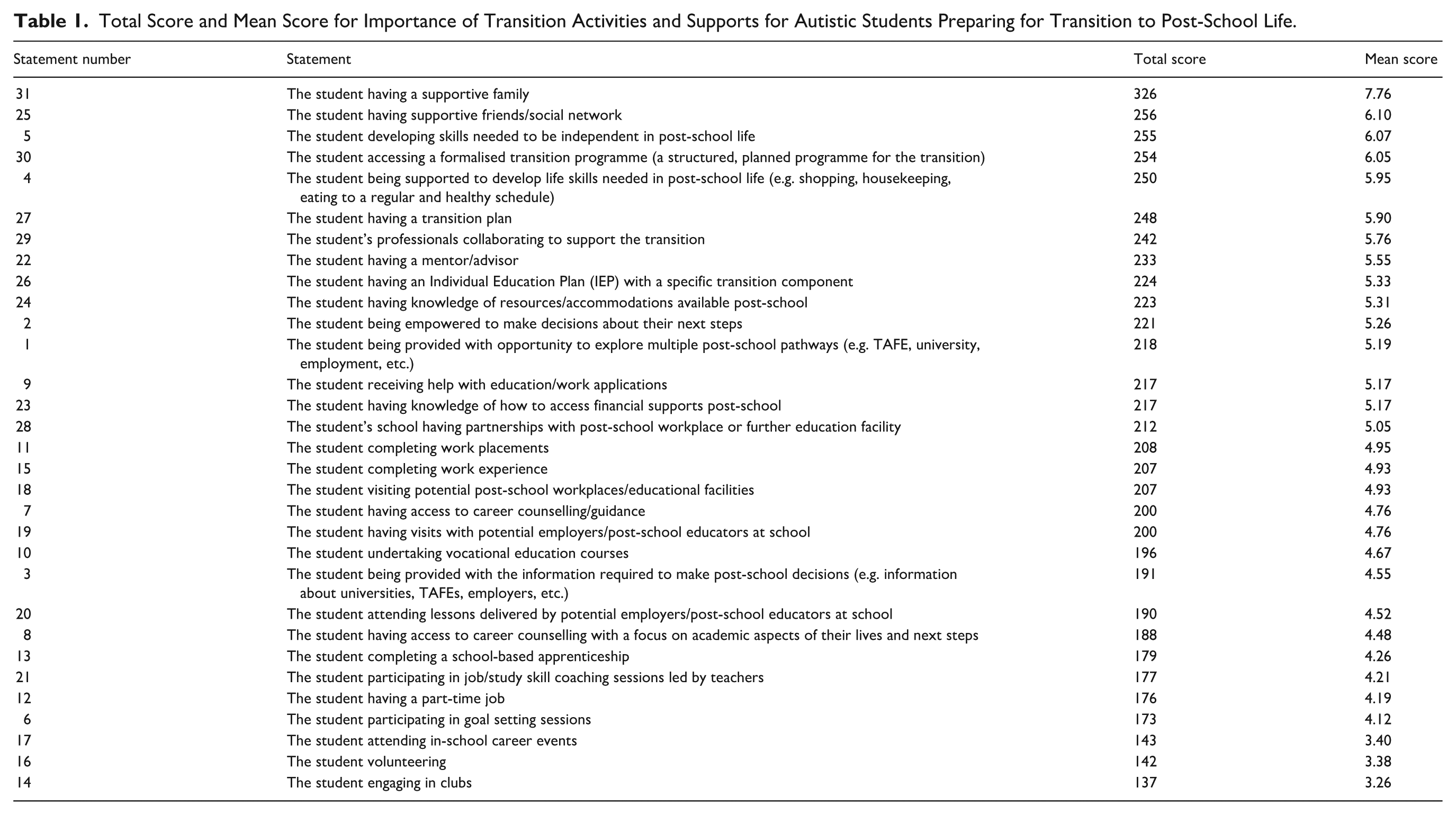
The 31 statements contained within the Q-Set were derived from the findings of two previous studies conducted by the research team. The first study (White et al., 2024) collected data via interviews with autistic adults in which they reflected on the helpful and effective supports they received during their transition from secondary school. In this study, autistic adults highlighted the importance of being provided with opportunities to explore post-school pathways, being empowered to make their own decisions, being provided with information to make decisions and being supported to develop the life and independence skills needed in post-school life. These priorities informed statements 1 to 5 in the Q-Sort activity. The remaining 26 statements were informed by the second study (White et al., 2025b), which asked parents of autistic young adults to rate, using an online questionnaire, what they believed to be important skills, supports and activities for their child to develop in preparation for the transition to post-school life. The first author extracted the top-rated items (based on median rank) from the support and activity rank lists within this study and compared these to the priorities already identified by autistic adults included in the first five Q-Sort statements. Parents prioritised activities such as career counselling, help with work applications, work placements and vocational courses, and supports such as having friends, access to mentors/advisors, having a transition plan, and professional collaboration. These, along with the remaining top-rated skills and activities in the study, informed statements 6 to 31. These statements were discussed with the project’s autistic research consultant and a final set of 31 statements that reflected activities and supports that teachers and teacher aides may consider important during an autistic student’s transition to post-school life was confirmed. The Q-Set statements and the Q-Sort activity were piloted with an autistic primary school teacher and a primary school teacher aide who were invited due to their specialist qualifications in autism studies and their experience supporting autistic students. It was felt that these school staff with relevant autism knowledge would be able to provide this feedback. The pilot feedback template was focused on seeking their views on the clarity of instructions, the time taken to complete the activity and the clarity in wording of the Q-Sort statements. Feedback was discussed with the project’s autistic research consultant, and adjustments made to the wording of four statements and to some aspects of the Q-Sort’s functionality. The final 31 Q-Sort statements are detailed in Table 1.
Total Score and Mean Score for Importance of Transition Activities and Supports for Autistic Students Preparing for Transition to Post-School Life.
Stage 2: The Q-Sort Activity
Recruitment
To be included in this study, participants needed to be Australian teachers and teacher aides who were currently teaching, or who in the last five years had taught, autistic secondary school students. When providing demographic information, participants were asked to self-report that they were currently teaching, or had in the last five years taught, autistic students. Participants were excluded if they did not confirm this to be true. Primary school teachers and teacher aides were also excluded, as were participants responding from outside Australia. In August and September, 2024, the study utilised convenience sampling (Golzar et al., 2022) to invite participants to participate via an advertisement on social media.
Initial responses to the advertisement included some (n = 32) ‘scammer participants’ (Pellicano et al., 2023). These were identified by the first author during response screening and were excluded based on criteria by Salinas (2023). This included removing responses using a range of strategies such as Qualtrics identifying that the response was lodged outside Australia or the participant providing demographic and school details that were nonsensical or insufficient.
Participants
Interested participants clicked a link within the advertisement which took them through to the information sheet and consent form. Upon provision of consent, participants answered demographic questions including age, ethnicity, gender, role, autism diagnosis, years of experience and school details (location, sector and type). This data was then considered by the first author and participants who met the inclusion criteria and were deemed genuine were sent a personal link to access the online platform for the Q-Sort activity (Q-Method). In total, 57 participants were sent the Q-Sort statements, a personalised link and written instructions to support completion of the activity. Of these, 42 completed the Q-Sort. Large numbers of participants are not required in Q-Sort studies, as the aim is to gain the views of a select participant group. Therefore, participant groups of between 40 and 60 are known to be effective (Dziopa & Ahern, 2011). So, a target sample size of 40 was set, which was determined based on the number of participants in other Q-Sort studies reporting the views of teachers of non-autistic and autistic students (e.g. Barutcu et al., 2024 (n = 21); Duong et al., 2025 (n = 41); Lim-Ratnam et al., 2022 (n = 30); Lundberg, 2019 (n = 40); Van Der Steen et al., 2020 (n = 43); Wilkerson & Shelton, 2023 (n = 39)).
Most participants within the current study were female (92.9%) and reported their ethnicity as Australian (52.4%) or White (28.6%). Current teachers (73.8%) working in mainstream schools (83.3%) in regional, remote or rural areas (69.0%) were also highly represented. Importantly, nearly one-quarter (23.8%) of participants were autistic. An overview of the participants’ demographic information is presented in Table 2.
Characteristics of Teachers and Teacher Aides, as Reported by Participants.
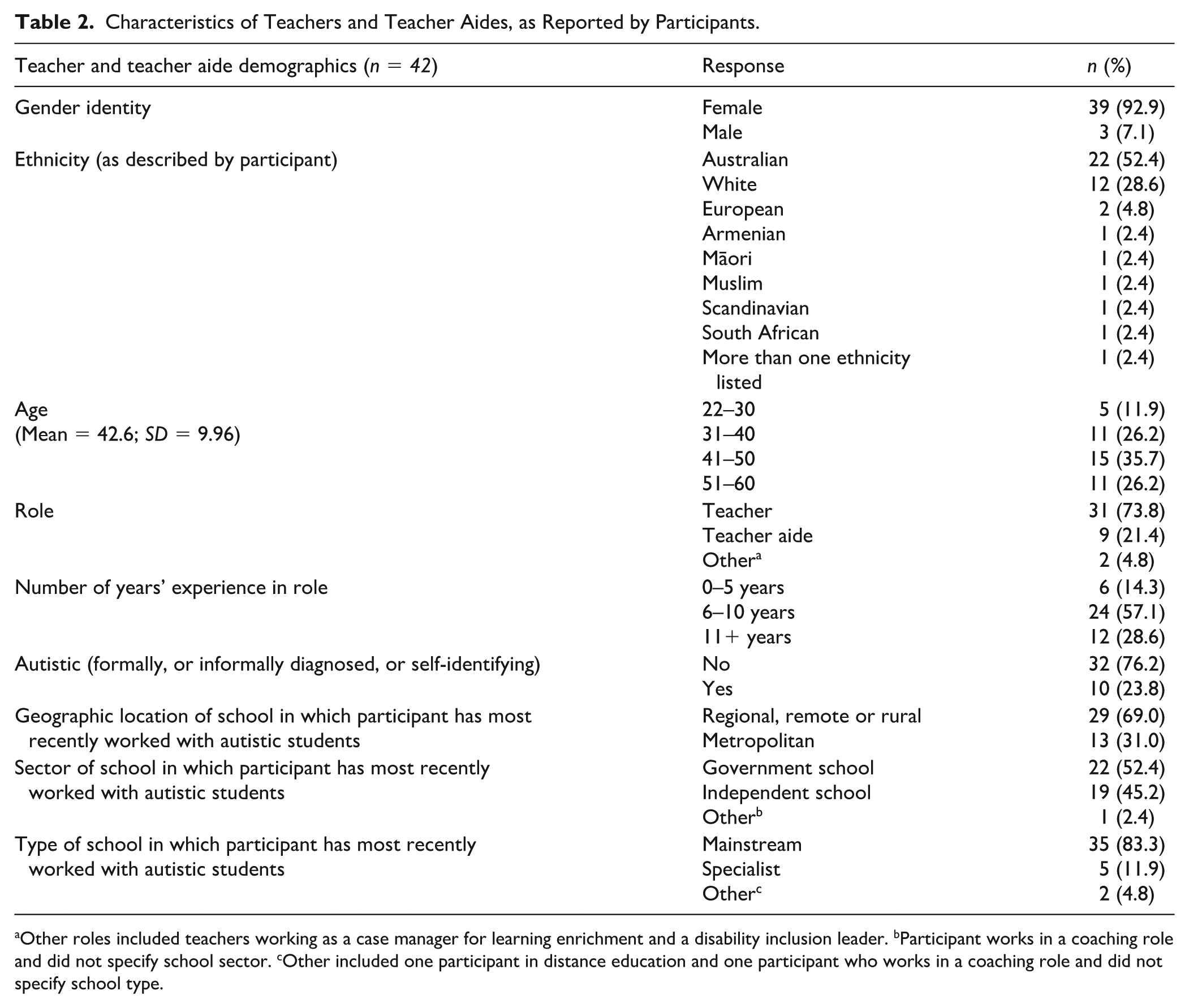
Other roles included teachers working as a case manager for learning enrichment and a disability inclusion leader. bParticipant works in a coaching role and did not specify school sector. cOther included one participant in distance education and one participant who works in a coaching role and did not specify school type.
Procedure
Upon clicking their personal Q-Method link, each of the 42 participants were provided the final Q-Set of 31 statements and the instruction:
The question you are answering is: For an autistic student to make the transition from school to post-school life, which of these activities and supports are most important? Please think about the importance of each activity and support for the autistic students with whom you have worked as you sort the statements.
Participants then sorted the 31 statements depending on their view of the importance of each activity and support, from +4 (most important) to −4 (least important) using an online 31-space quasi-normal distribution grid (Figure 1). Only one statement per participant could be assigned the highest (+4) and lowest (−4) values, but seven statements per participant were assigned the neutral (0) position. Statements appeared one at a time, and participants moved each statement to their chosen position on the grid. They could move statements into different positions in the grid at any point in the activity. When all 31 statements were in position, participants submitted the Q-Sort. The final stage of participation was a short questionnaire, where participants answered two open questions. The first question asked about why they sorted statements into the ‘most important’ section (ranks 3 to 4) and the second question asked about why they sorted statements into the ‘least important’ (ranks −3 to −4) section. When participants had sorted all statements and answered the short-answer questions, the activity was complete.
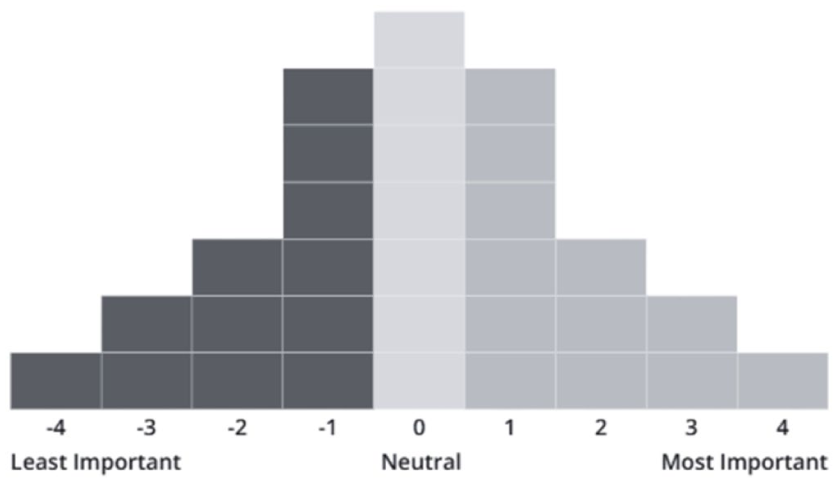
The Q-Sort Distribution Grid.
Data Analysis Procedures
To answer Research Question 1, Q-Sort data were analysed to identify the overall relative importance of the statements. As per analytic approaches in other Q-Sort studies (e.g. Ambrose et al., 2024), to enable the statements to be compared based on overall levels of agreement, for each participant, each statement was rescored on a 9-point scale. The scale ranged from 1 (items that had been previously scored −4 on the Q-Sort grid) to 9 (items that had been previously scored +4 on the Q-Sort grid). An average (or mean) score for each item was then calculated by summing the score from each participant and dividing this sum by the number of participants (42). This process was then repeated for teachers only (dividing the sum by 33), and for teacher aides only (dividing the sum by 9), to obtain the mean for each item within each of those separate participant groups. Visual inspection then allowed analysis of alignment of responses from both groups.
To answer Research Question 2, participants’ open-text responses were analysed using deductive content analysis (Elo & Kyngäs, 2008). Content analysis allows researchers to make replicable and valid inferences from data (Krippendorff, 2004). Researchers using content analysis aim to recognise meanings created within texts, inferring answers to Research Questions in a systematic, verifiable way (Krippendorff, 2004). This approach reflects the pragmatic position of this study. As such, a structured categorisation matrix was developed. A structured categorisation matrix consists of categories that are based on prior theories, models or literature, to which data from a new study is coded (Elo & Kyngäs, 2008). The matrix used in this study was based on findings of a previous study by the research team (White et al., 2025b), which examined parents’ views of the important supports, activities and skills for schools to provide to autistic young adults during transition to post-school life. To complete the coding process, the first author initially read through each participant’s response several times, to make sense of the data set. The same author then coded each participant’s short-answer responses according to the 13 categories within the matrix. Only data that fit the matrix categories were recorded. Any data that did not fit was recorded separately, and the first author engaged in inductive content analysis to create two additional categories. Please see Supplemental Table 1 for the final 15 categories and their definitions. To ensure reliability, a research assistant then independently coded the responses of nine (21.4%) participants. Agreement between the two coders was 91.9% with full consensus reached after discussion. To allow identification of the most often reported reasons for participants placing statements into the most or least important categories, the number and percentage of responses coded to each category were calculated.
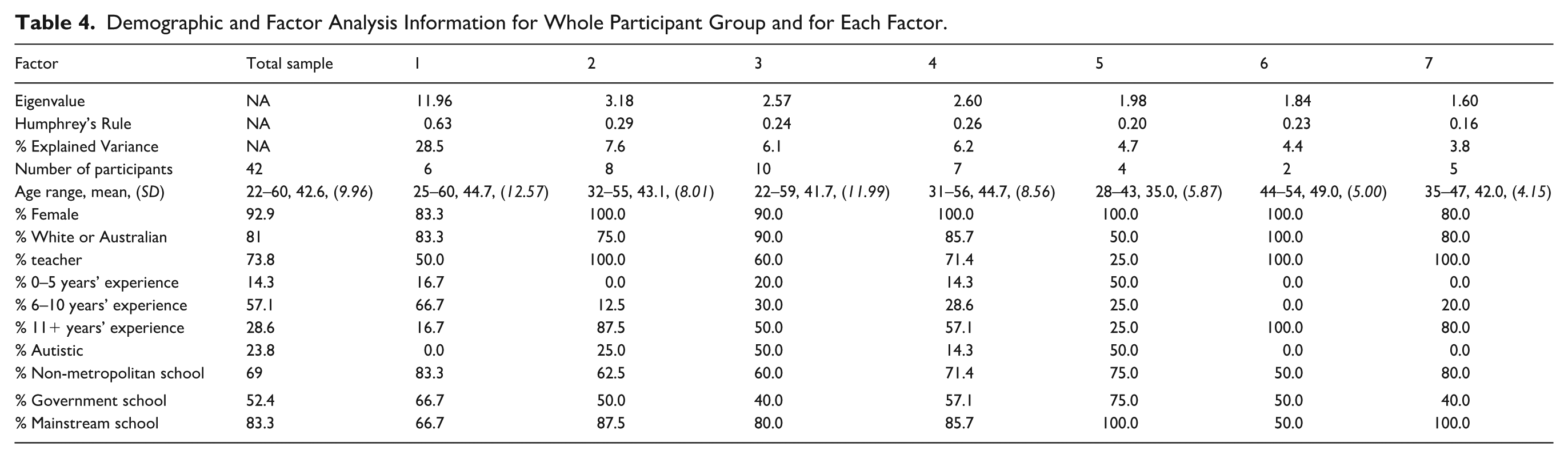
For Research Question 3, by-person factor analysis was used, which involved correlating responses of individuals with other participants. Q-Method software computed correlations by taking individual participant responses and comparing those with other participants. The programme then identified factors that were composed of multiple participants whose Q-Sort statements were sorted in similar ways. Then, using Q-Method software, factor extraction was completed. This involved using a statistical procedure to facilitate the grouping of participants who had ranked statements similarly. Both mathematical (Dziopa & Ahern, 2011) and theoretical (e.g., Ambrose et al., 2024) perspectives were combined to create the criteria for factor inclusion. Factors were included if all three of the following conditions were met: (a) at least two participants loaded onto the factor; (b) the factor had an Eigenvalue greater than 1, thereby meeting the Kaiser–Guttman criterion and (c) the factor met Humphrey’s rule, or the cross-product of the factor’s two highest loadings exceeds twice the standard error (Watts & Stenner, 2012). All seven extracted factors met these conditions. These factors were rotated using Varimax rotation to maximise the number of Q-Sorts included in each factor. This also ensured that variance was accurately represented. Factors were then renamed as viewpoints 1–7, to facilitate interpretation. A composite Q-sort that best represented the position of each statement on the grid for participants in each viewpoint was generated. Each viewpoint was then analysed, or interpreted, using Q-Method software (Watts & Stenner, 2012). This included the programme identifying most and least characteristic statements, consensus statements (ranked similarly by many participants), contention statements (ranked differently across participants) for each viewpoint and statements that were ranked differently within that viewpoint in comparison to the other viewpoints.
Results
Research Question 1: What Activities and Supports do Teachers and Teacher Aides Identify as Most Important for an Autistic Student to Make the Transition from School to Post-School Life?
In response to Research Question 1, Table 1 shows the total score and mean score based on all participants’ (n = 42) Q-sort rank scores for each statement of activities and supports, presented in order of highest to lowest importance. Autistic students having a supportive family was ranked as most important (M = 7.76). Having supportive friends (M = 6.10), developing skills needed to be independent in post-school life (M = 6.07) and accessing a formalised transition programme (M = 6.05) were also ranked as important. Participants ranked engaging in clubs (M = 3.26) as least important. The student volunteering (M = 3.38) and attending in-school career events (M = 3.40) were also ranked as less important.
Additional inspection of teacher and teacher aide respondents’ total scores and mean scores (see Supplemental Tables 2 and 3) identified some key similarities and differences in each group’s importance rankings. Both groups ranked autistic students having a supportive family as most important (M teachers = 7.61, teacher aides = 8.33). Teachers ranked highly items related to formal components, including a formalised transition programme (M = 6.15) and the student having a transition plan (M = 6.12), while teacher aides ranked highly the development of life skills (M = 7.22), independence skills (M = 7.11) and having friends/social network (M = 7.11).
Research Question 2: What Reasons do Teachers and Teacher Aides Report for Identifying Specific Activities and Supports as More or Less Important for Autistic Students to Make the Transition from School to Post-School Life?
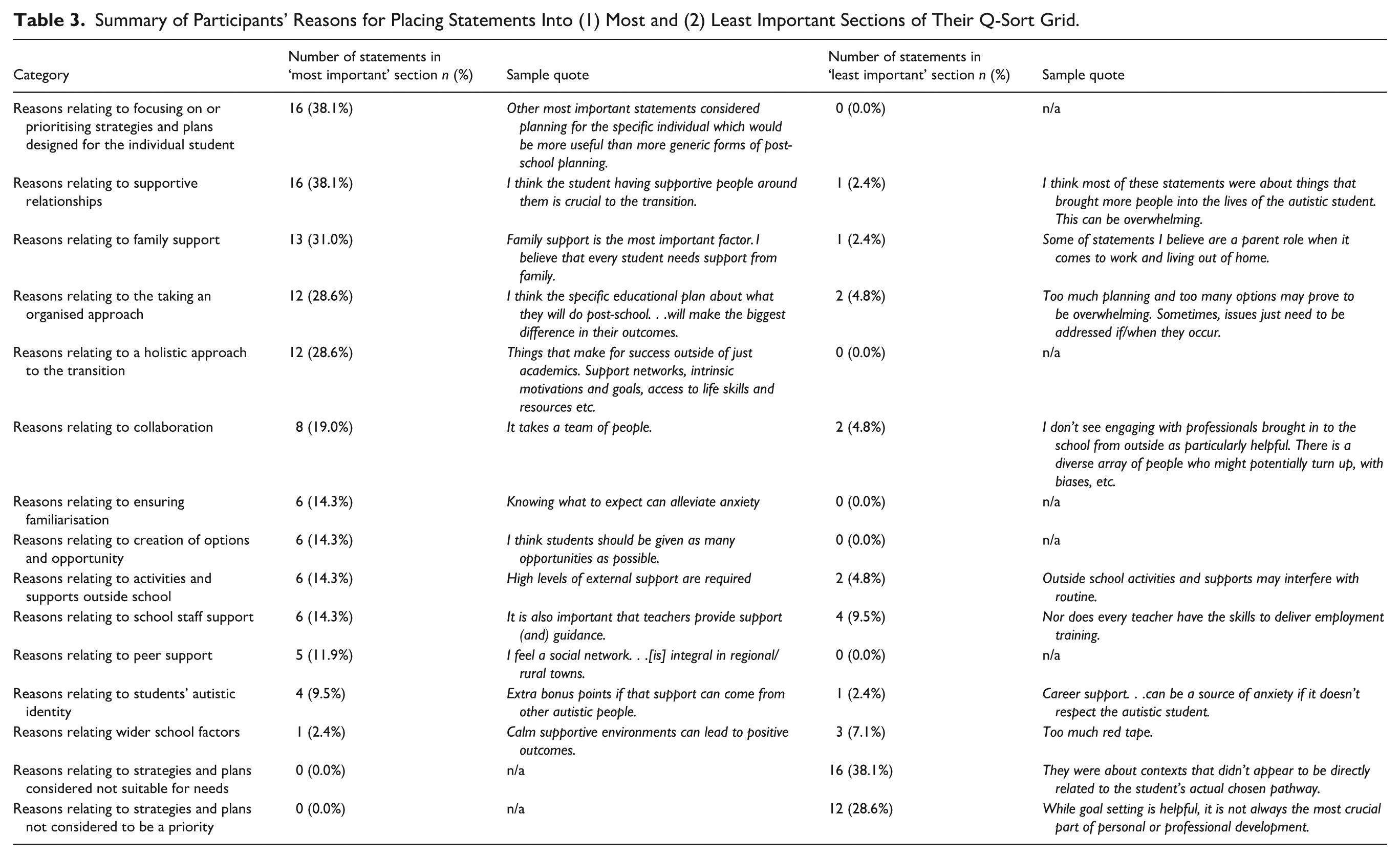
Relating to Research Question 2, a summary of the analysis of participants’ responses to the open questions is presented in Table 3. Participants’ reasons for placing statements into the ‘most important’ section of the grid were most often coded to strategies and plans designed for the individual student, supportive relationships, and family support. Reasons for statements being placed into the ‘least important’ section of the grid were most often coded to not suitable and not a priority. Generally, responses were coded consistently to either ‘Reasons for placing statements into ‘most important’ section’ or ‘Reasons for placing into ‘least important’ section’. The exception to this was school staff support (most important = 14.3%; least important = 9.5%) which was relatively equally represented across both categories.
Summary of Participants’ Reasons for Placing Statements Into (1) Most and (2) Least Important Sections of Their Q-Sort Grid.
Research Question 3: Is There Any Variance in the Activities and Supports Ranked to be Important for Different Groups of Teachers and Teacher Aides?
Relating to Research Question 3, seven factors were identified and interpreted as viewpoints. Relevant demographic information was analysed for participants that loaded onto each factor. Interpretation of demographics within each viewpoint needs to take into consideration sample size due to some viewpoints having smaller numbers of participants than others. Table 4 shows factor characteristics and inclusion conditions, as well as demographic information (age, gender identity, ethnicity, role, experience and whether the participant was diagnosed or identified as autistic) and school information (geographic location, sector and type).
Demographic and Factor Analysis Information for Whole Participant Group and for Each Factor.
Factor Interpretation
The first author interpreted viewpoints using data from both factor analysis and demographics. Within each viewpoint, statement numbers presented are the same as the statement numbers presented in Table 1, and the viewpoint rank of that statement is presented as ranging from −4 to +4, based on the factor’s composite Q-sort.
Viewpoint 1: The People and Processes Around the Student are More Important Than What the Student is Doing for Themselves (n = 6; 14.3%)
Half of the participants in this group were teacher aides, and, of all groups, this had the highest percentage of participants with 6–10 years’ experience in their role (n = 4; 66.7%). It also had the highest percentage of participants who worked in non-metropolitan areas (n = 5; 83.3%). One-third (n = 2; 33.3%) of participants in this group had worked with autistic students at a specialist (specialty) school. This group ranked a supportive family (S31; +4), supportive friends/social network (S25; +3) and a formalised transition programme (S30; +3) as the most important activities and supports. These participants ranked volunteering (S16; −4), providing autistic students with opportunities to explore future pathways (S1; −3) and empowering those students to make decisions about their futures (S2; −3) as least important.
Viewpoint 2: Working Together to Support the Student is More Important Than Practical Experiences (n = 8; 19.0%)
This group included the second-highest percentage of teachers and teacher aides who reported their ethnicity as non-White or non-Australian (n = 2; 25.0%). It also included the second highest percentage of teachers with 11+ years’ experience (n = 7; 87.5%) of all groups, and one-quarter of participants (n = 2; 25.0%) loaded to this viewpoint were diagnosed or identified as autistic. This group rated a supportive family (S31; +4), schools collaborating with other professionals (S29; +3) and schools having partnerships with post-school employment or education facilities (S28; +3) as most important. The least important activities or supports were work experience (S15; −4), vocational courses (S10; −3) and engaging in clubs (S14; −3).
Viewpoint 3: Working Together to Support and Empower the Student is More Important Than Exposing the Student to Specific Post-School Opportunities (n = 10; 23.8%)
This was the largest group. It was one of the two groups with the highest percentage of participants who were diagnosed or identified as autistic (n = 5; 50.0%). It was also one of the two groups with the highest percentage of participants who worked in non-government schools (n = 6; 60.0%). This group considered empowering autistic students to make decisions about their post-school lives (S2; +4), the student having a supportive family (S31; +3) and schools collaborating with other professionals (S29; +3) as most important. They ranked schools having partnerships with post-school employment or education facilities (S28; −4) to be least important. Students attending lessons taught by potential employers at school (S20; −3) and school-based apprenticeships (S13; −3) were also ranked as least important.
Viewpoint 4: Formalised Plans and Family Helping to Support Independence are More Important Than Practical Work and Social Experiences (n = 7; 16.7%)
Just under three-quarters (n = 5; 71.4%) of the participants loaded to this viewpoint were teachers, and the majority worked with autistic students in mainstream schools (n = 6; 85.7%). This group ranked a supportive family (S31; +4), supporting autistic students to develop independence skills (S5; +3) and the student having an Individual Education Plan (IEP) with a specific transition component (S26; +3) as most important. Least important was the student having a part-time job (S12; −4), completing a school-based apprenticeship (S13; −3) and participating in clubs (S14; −3).
Viewpoint 5: Practical Work Experience and Partnerships are More Important Than Discussions or Events (n = 4; 9.5%)
The participants loaded to this group had the lowest mean age (35.0) and had the highest percentage of participants listing an ethnicity other than White or Australian (n = 2; 50.0%). It also had the highest percentage of teacher aides (n = 3; 75.0%), and the highest percentage of participants who had fewer than 5 years’ experience (n = 2; 50.0%). Half of the participants were diagnosed or identified as autistic. All participants worked in mainstream settings. For these participants, a supportive family (S31; +4) was most important. School partnerships with post-school workplaces and educational settings (S28; +3) and work experience (S15; +3) were also most important. Least important were career counselling or guidance (S7; −4), students attending lessons taught by potential employers at school (S20; −3) and in-school career events (S17; −3).
Viewpoint 6: Support from Those Around the Student and Knowing About Post-School Support is More Important Than Advice, Guidance and Activities (n = 2; 4.8%)
This was the group who had the highest mean age (49.0), and both participants had 11+ years’ experience as teachers. For this group, a supportive family (S31; +4), supportive friends/social network (S25, +3) and the student having knowledge of available post-school resources (S24, +3) were rated most important. Least important statements included goal setting sessions (S6, −4), participation in clubs (S14, −3) and the student having a mentor or advisor (S22, −3).
Viewpoint 7: A Formalised Approach and Partnerships are More Important Than Events and Activities (n = 5; 11.9%)
This group included the second-highest percentage of participants who were in non-metropolitan schools (n = 4; 80%) and was one of the two groups with the highest percentage of participants who worked in non-government schools (n = 3; 60%). All worked in mainstream schools. This group rated having a transition plan (S27; +4), access to a formalised transition programme (S30; +3) and the school having partnerships with post-school education and employment providers (S28, +3) as most important. Least important were in-school career events (S17, −4), the student participating in clubs (S14, −3) and teacher-led job/study skill coaching sessions (S21, −3).
Discussion
This study asked 42 teachers and teacher aides to rank the importance of specific activities and supports for autistic students to make the transition from school to post-school life. In response to Research Question 1, teachers and teacher aides consistently ranked support offered by family and friends of autistic students as the most important activity or support for transition to post-school life. They also ranked highly the importance of autistic students developing the skills needed to be independent in their post-school lives. In response to Research Question 2, when explaining the reason why activities and supports were ranked as most important, participants regularly mentioned the need to focus on and prioritise strategies and plans that are designed for each autistic student. They also often mentioned reasons relating to the need for autistic students to have supportive relationships during the transition. Finally, in response to Research Question 3, while there were some commonalities across viewpoints, only one viewpoint, the viewpoint to which half of all autistic participants was loaded, ranked empowering autistic students to make decisions about their post-school lives as most important. Taken together, these findings suggest that providing autistic students with personalised support to develop important independence skills and encouraging the formation of supportive relationships are important considerations as they transition to post-school life. By highlighting the importance school staff place on autistic students being supported to develop relevant independence skills, this study adds to an emerging body of research that discusses the need for holistic, person-centred post-school transition support for autistic people, including those with co-occurring intellectual disability (Edwards et al., 2025). However, this study has also identified that more needs to be done to explore why school staff are not consistently identifying the importance of empowering autistic students to make their own decisions during transition preparations, as this may help increase student involvement in transition preparations.
The Importance of Family, Friends and Developing Skills Associated with Increased Independence
Participants ranked the support of family and friends during an autistic student’s transition from school to post-school life highly, indicating the importance of this support. The wider body of research on autistic students’ educational experiences shows that increased family advocacy and support leads to improved educational outcomes for autistic students (Kurth et al., 2020) and that autistic individuals who have supportive friendships generally experience greater overall wellbeing (Black et al., 2024). School staff ranking this support highly suggest that this may be especially important during autistic students’ transition to post-school life. This is perhaps unsurprising, as families are often reported to be responsible for ensuring the success of their child’s transition, and the support of family and friends can help autistic students to enhance self-advocacy and acceptance as they move into adulthood (González-Rodríguez et al., 2024).
Participants also identified the importance of autistic students developing skills associated with increased independence in post-school life. Autistic adults have reported that what this means is deeply personal for each autistic person and that there is no ‘one-size-fits-all’ definition of independence (Bhattacharya et al., 2025). However, autistic people have identified the importance of developing a broad range of community participation skills that they associated with increased independence, such as those related to securing housing, dealing with government agencies, driving, housekeeping, shopping and making decisions (Cheak-Zamora et al., 2022; White et al., 2024). Autistic students are known to encounter challenges when navigating the expectation for independence that comes upon entry into adulthood (White et al., 2024). Therefore, it is necessary for schools, families and friends to take a collaborative approach to transition support (e.g. Chun et al., 2023) that ideally focuses on autistic students developing a highly personalised, broad and balanced set of skills associated with independence in preparation for the demands of post-school life.
The Importance of Personalisation and Supportive Relationships
Participants most regularly stated reasons relating to focusing on or prioritising strategies and plans designed for the individual student and reasons relating to supportive relationships as their reasons for placing items into the ‘most important’ section of their Q-Sort grid. It is regularly reported that transition support that prioritises the goals and needs for each autistic individual is preferable (Chun et al., 2024). There may be multiple elements required for effective tailoring of transition plans and strategies to individual needs, such as adaptations for different communication preferences and identification of relevant goals and opportunities (Gregory & Atkinson, 2024; Hamilton et al., 2024). Participants in this study also reported the need for supportive relationships as a reason for placement of ‘most important’ items. Supportive relationships can have an important role from childhood into adulthood for autistic people, having a positive impact and providing both physical and emotional support (Robledo & Donnellan, 2016; Xueyan, 2021). Wider research has shown that it is often families who provide these supportive relationships for autistic students during transition to post-school life (Pillay et al., 2022). Therefore, schools may consider aiming to take a tailored, relationship-focused and collaborative approach to transition support for autistic students, as this approach may enable the creation of increasingly effective personalised transition plans.
The Importance of Empowering Autistic Students
Interestingly, participants in only one of the seven viewpoints identified the importance of the student being empowered to make decisions about their next steps. Active participation in transition planning is associated with increased success, including improved employment outcomes and post-transition participation, as well as improved quality of life (Shogren et al., 2015; Strnadová et al., 2016). However, while autistic students are regularly present during discussions about their transition, their active participation through contribution to discussions and setting goals is often minimal (Chandroo et al., 2018; Strnadová et al., 2016). Previous research has suggested that this could be because students do not know the purpose of the discussions, or that teachers may not be trained in transition planning (Chandroo et al., 2018). As empowering students to make their own decisions about their next steps was not consistently highly endorsed by participants within the current study, it is possible that this could impact the inclusion of autistic students in their own transition planning. This may reflect that fact that existing transition support programmes often place greatest emphasis on the involvement of the young autistic person’s family in the transition planning process (Rumsa et al., 2025). This is problematic, as it is known that increased self-determination contributes to improved quality of life for autistic young adults (Lubin et al., 2025) and that empowering autistic young adults to self-advocate and make their own decisions leads to improved levels of adjustment, greater educational and employment outcomes, improved relationships and enhanced self-concept (Martino et al., 2025). Therefore, schools prioritising this self-advocacy and ensuring that they provide a safe environment in which autistic students’ self-advocacy is welcomed and responded to positively is an important priority. The lack of consistency in the prioritisation of the empowerment of autistic students to make their own decisions about their next steps during their transition to post-school life is likely to be a contributory factor to the current limited success of transition preparations (Chun et al., 2023). It may also explain why current research reports that autistic students have been frustrated by transition processes that fail to sufficiently encourage their input, exclude them from communication about their activities and do not focus on goals that link to their skills and ambitions (Lowy et al., 2023).
Notably, teacher aide participants, who are often tasked with supporting autistic students with the highest needs (Hook, 2023; Page & Ferrett, 2018), ranked the importance of student empowerment considerably lower than teacher participants. This is an important finding, particularly because of its relevance to autistic students receiving higher levels of support. Of note, however, is that half of the autistic participants within the study were loaded to the viewpoint that did prioritise the empowerment of autistic students to make their own transition decisions. This is perhaps unsurprising, as autistic adults desire self-determination and to exert autonomy through choice and control over decisions that impact their lives (Ryan et al., 2024; Thompson-Hodgetts et al., 2023). Therefore, the current study suggests that there is more to learn about why the empowerment of autistic students to make decisions about their own post-school lives is not being consistently prioritised. Identifying and addressing these reasons, as well as increasing what is known about ways to empower autistic young adults throughout this process, may help to increase autistic students’ active involvement in their own transition preparation and planning and is therefore an important focus for future research.
Limitations and Future Directions
It is important to consider the limitations within this study. First, this study utilised convenience sampling, which may increase risk of bias (Golzar et al., 2022), especially as participants were recruited through advertisements on social media. These advertisements were shared on pages that are perhaps more likely to be followed by school staff with a special interest in supporting autistic students, which means findings may be subject to sampling bias. Second, the study was piloted by primary school staff with relevant knowledge of autism, but whose experiences of post-secondary transition were potentially limited. Furthermore, Ambrose et al. (2024) highlight that Q-Sort is a method designed to record the views of a specific sample, so the data captured may not represent a wider population. However, participants in the current study, although limited in terms of diversity of gender and ethnicity, represented staff from a wide range of school locations, types and sectors and incorporated the perspectives of both teachers and teacher aides, which is a novel advance in this research area. Future research, though, may wish to utilise different methods to collect the views of a larger number of school staff from these diverse settings and locations, to determine if findings within the current study are consistent with the views of a larger, more gender and ethnically diverse, participant group.
Importantly, the current study did not capture in-depth the intersectionality of participant demographic and other characteristics, such as financial situation, educational experiences and family backgrounds. Seeking this information may have provided greater insight into the demographics and characteristics of participants loaded to each viewpoint. For example, identifying if participants were also parents of autistic students may have provided increased insight within each viewpoint, as it is known that families often report being strong advocates who assume most responsibility for navigating their autistic child’s transition into adulthood and beyond (Hamilton et al., 2024). Therefore, capturing more clearly the intersectionality of these characteristics may help to explore in greater depth any variations in what specific groups of school staff consider to be important during an autistic student’s post-school transition.
Implications
Results of this study have notable implications for families, school and communities supporting autistic students, as well as researchers working to identify effective approaches to supporting this transition and advocates working to ensure the implementation of findings.
Implications for Policy and Practice
The study has highlighted the importance of encouraging positive, relationship-focused collaboration throughout the transition phase. Positive collaboration, with the aim of supporting autistic students to develop the skills to be independent in their post-school lives, is important. Therefore, it is necessary to consider how to embed this approach within policies and procedures that govern how schools deliver transition support to autistic students. In both policy and practice, schools need to be supported to ensure that all staff have the knowledge and understanding required to interact with and support autistic students in meaningful ways, particularly during their preparations for transition to post-school life.
Implications for Research and Advocacy
Findings also indicate that there is urgent need to identify reasons why school staff are not consistently recognising the importance of empowering autistic students to make their own transition decisions, and to implement practical solutions to remedy this. Furthermore, the development of transition support programmes that prioritise the empowerment of autistic young adults during this transition could also be beneficial. This is because not empowering autistic students to make their own decisions can result in the devaluation of autonomy (Dee-Price et al., 2024), which could be another barrier to an autistic student’s transition success. This barrier can be overcome through adequate resourcing and training, and through creating school cultures in which students with disabilities are authentically included and valued (Freer, 2023). Therefore, future researchers may wish to explore whether factors such as internalised bias, including the impact of systemic ableism, may affect how educators rank the importance of the involvement of autistic students in their own transition planning. This would potentially enable supporters to continue to advocate for positive change in approaches to effective support of autistic young adults as they complete this transition.
Conclusion
While it is known that exiting school and moving to adulthood is a time when autistic students may encounter additional challenges, the implementation of appropriate activities and supports may ease this transition. The current study highlights what school staff see as important when providing personalised supports and activities to enable autistic students to make a successful transition to post-school life. Findings suggest that the support of family and friends, the development of key skills for independent post-school living and autistic students having access to supportive relationships are important considerations. Findings also suggest that there is more to learn about why the empowerment of autistic students during this transition is not consistently prioritised, and to consider how to overcome this barrier. As such, findings may provide guidance during the development of future transition policies and procedures for autistic students.
Supplemental Material
sj-docx-1-cde-10.1177_21651434261426249 – Supplemental material for What Is Important for Autistic Students’ Post-School Transition?: A Q-Sort Study With School Staff
Supplemental material, sj-docx-1-cde-10.1177_21651434261426249 for What Is Important for Autistic Students’ Post-School Transition?: A Q-Sort Study With School Staff by Louise M. White, Dawn Adams, Kate Simpson and Stephanie Malone in Career Development and Transition for Exceptional Individuals
Supplemental Material
sj-docx-2-cde-10.1177_21651434261426249 – Supplemental material for What Is Important for Autistic Students’ Post-School Transition?: A Q-Sort Study With School Staff
Supplemental material, sj-docx-2-cde-10.1177_21651434261426249 for What Is Important for Autistic Students’ Post-School Transition?: A Q-Sort Study With School Staff by Louise M. White, Dawn Adams, Kate Simpson and Stephanie Malone in Career Development and Transition for Exceptional Individuals
Supplemental Material
sj-docx-3-cde-10.1177_21651434261426249 – Supplemental material for What Is Important for Autistic Students’ Post-School Transition?: A Q-Sort Study With School Staff
Supplemental material, sj-docx-3-cde-10.1177_21651434261426249 for What Is Important for Autistic Students’ Post-School Transition?: A Q-Sort Study With School Staff by Louise M. White, Dawn Adams, Kate Simpson and Stephanie Malone in Career Development and Transition for Exceptional Individuals
Footnotes
Acknowledgements
The authors acknowledge Michael Nathaniel Dyer for sharing his experience and expertise while consulting on this project.

Consent to Participate
Informed consent was obtained from all participants involved in the study.
Author Contributions
Conceptualisation, data curation, methodology, formal analysis, writing – original draft preparation, writing – review and editing, project administration: L.M.W. Conceptualisation, writing – review and editing, supervision: K.S., D.A. and S.M.
Funding
The authors disclosed receipt of the following financial support for the research, authorship and/or publication of this article: The authors acknowledge receipt of funding in the form of the Michael Nathaniel Dyer Ph.D. scholarship provided by The Dyer Family Foundation.
Declaration of Conflicting Interests
The authors declared no potential conflicts of interest with respect to the research, authorship and/or publication of this article.
Data Availability Statement
Permission to share data from this study was not sought during ethical approval.
Institutional Review Board Statement
This study was conducted in accordance with the Declaration of Helsinki and approved by the Human Research Ethics Committee of Griffith University (2024/319).
References
Supplementary Material
Please find the following supplemental material available below.
For Open Access articles published under a Creative Commons License, all supplemental material carries the same license as the article it is associated with.
For non-Open Access articles published, all supplemental material carries a non-exclusive license, and permission requests for re-use of supplemental material or any part of supplemental material shall be sent directly to the copyright owner as specified in the copyright notice associated with the article.
