



Abstract
Students with disabilities experience poorer post-school outcomes compared to their peers without disabilities. This study examined special educators’ confidence and knowledge in implementing evidence- and research-based transition practices (effective practices) and facilitating community connections within a single state. We administered a survey to 185 special education teachers across 57 Tennessee school districts. Participants rated their confidence in implementing 27 effective practices and connecting students to nine community supports and opportunities. Training history and professional development preferences were also assessed. Results revealed substantial gaps in educator confidence and preparation. Only one transition practice reached majority confidence, and confidence in facilitating community connections was similarly low. Teachers reported receiving no training on most transition practices, and when training occurred, it was primarily through in-service rather than pre-service preparation. Findings highlight the need for systematic professional development targeting effective transition practices, enhanced pre-service preparation programs, and sustained implementation support through mentorship or coaching.
Keywords
Collective federal legislation provides a strong foundation for the implementation of transition services. The Every Student Succeeds Act (ESSA, 2015) emphasizes rigorous preparation for postsecondary outcomes for all students, requiring schools to establish plans that adequately equip students for adulthood through access to appropriate curricula and high academic standards. For students with disabilities, the Individuals with Disabilities Education Improvement Act (IDEIA, 2004) provides additional protections by mandating specialized transition services. Under IDEIA, students with disabilities must have transition-focused Individualized Education Programs (IEPs) beginning no later than age 16, with annual goals, specialized instruction, and supports specifically designed to prepare them for employment and education and, where appropriate, independent living and community participation after high school.
In addition, the Workforce Innovation and Opportunity Act (WIOA, 2014) further reinforces the federal commitment to improving post-school outcomes for youth with disabilities by emphasizing competitive integrated employment as a primary outcome of transition services. The WIOA established Pre-Employment Transition Services (Pre-ETS) as a requirement for state vocational rehabilitation agencies, ensuring that students with disabilities receive early exposure to employment-related experiences and skill development while still in high school. These services include job exploration counseling, work-based learning experiences, counseling on postsecondary opportunities, workplace readiness training, and instruction in self-advocacy. Of importance, the provision of Pre-ETS is not meant to be duplicative of instruction students are already receiving. Therefore, the delivery of transition services through Pre-ETS or classroom instruction and services requires close collaboration between schools, vocational rehabilitation agencies, and community partners.
Despite this legislative framework, students with disabilities continue to face poor in-school experiences to prepare them for adulthood and post-school outcomes (Cheng & Shaewitz, 2021; Lipscomb et al., 2017). Considering preparation for postsecondary education, high school students with disabilities are much less likely to be prepared for some kind of postsecondary education or training than their peers without disabilities (Lipscomb et al., 2017). Cheng and Shaewitz (2021) found that students with disabilities have lower rates of entry into college than those without disabilities. In 2019, the national college entry rate for young adults with disabilities was 27.3% compared to 43.4% of peers without disabilities. Considering work, employment rates for individuals with disabilities continue to lag when compared with those without disabilities: 22.7% compared with 65.5% (U.S. Bureau of Labor Statistics, 2025), respectively. Moreover, according to the Bureau of Labor Statistics (2025), among those who were employed in 2024, workers with a disability were nearly twice as likely to work part-time as workers with no disability. Finally, unemployment rates were much higher for people with a disability than for those with no disability across all educational attainment groups. These persistent disparities suggest that current transition programming may not be adequately preparing students with disabilities for successful adult outcomes, raising questions about both the practices being implemented and the preparation of those responsible for their delivery.
Effective transition service delivery requires the systematic implementation of evidence-based practices (EBPs) and research-based practices (RBPs; heretofore collectively referred to as effective practices). Effective practices rely on systematically gathered information about what works best in a given context or situation. They prioritize outcomes supported by scientific studies, ensuring that decisions and actions are informed by the most reliable and effective information available (Cook & Cook, 2011).
Recently, Rowe et al. (2021) conducted an updated comprehensive analysis of transition-related interventions, identifying nine EBPs and 22 RBPs across more than 45 distinct transition skills. These practices included student-directed learning strategies (such as self-advocacy instruction and self-determination curricula), instructional approaches (such as community-based instruction and video modeling), and system-level interventions (such as interagency collaboration and person-centered planning), among others. Of note, the authors emphasized that successful implementation of effective practices depends critically on “the specific implementers [who] affect practice and increase the likelihood of student acquisition of skills” (p. 39), highlighting the central role of educator competence in achieving positive outcomes.
Extensive literature underscores the significance of effective practices in facilitating the transition process, emphasizing their potential to enhance post-school outcomes in the four primary transition domains of employment, education, independent living, and community involvement (Kohler & Field, 2003; Rowe et al., 2021; Test et al., 2009; Trainor et al., 2020). However, there remains a large gap between research and practice. If a practice is known to be effective, this does not mean that teachers have heard of this practice and can implement it with fidelity (Mazzotti et al., 2013; Plotner et al., 2016). Ongoing teacher training is necessary to ensure effective practices are being implemented as intended (Morningstar & Benitez, 2013).
Special education teachers serve as the primary implementers of effective transition practices, yet research consistently indicates they may not receive adequate preparation for this critical role (Morningstar et al., 2018; Williams-Diehm et al., 2018). In a survey involving 280 teachers from five states, about three-quarters disagreed that their university preparation programs adequately equipped them with the knowledge to implement transition EBPs (Plotner et al., 2016). Moreover, the preparation gap identified in this study extended beyond pre-service education to in-service professional development. Plotner et al. found that 50% of teachers reported seldom or never receiving resources related to transition EBPs from their district. More recently, Travers et al. (under review) analyzed syllabi of required transition coursework sampled from every institution of higher education (IHE) with an initial licensure program in a single state. The results of this work revealed that less than half (42.3%) of the 26 IHEs mandated transition-focused coursework. Furthermore, there were variations in when coursework was required (undergraduate vs. graduate level) and how instruction on transition practices was provided (e.g., course reading, quiz/test, lecture/presentation, class demonstration/modeling).
Given the complexity of transition services, this preparation gap during the pre- and in-service training times is particularly concerning. Unlike many academic interventions, transition practices often require coordination with community partners, an understanding of adult service systems, and skills in facilitating family engagement. The multifaceted nature of transition work demands specialized knowledge.
Teacher confidence, or self-efficacy, plays a crucial role in the implementation of effective practices (Haley-Clark, 2023). According to social cognitive theory, individuals’ beliefs about their capabilities to execute specific behaviors directly influence their willingness to attempt those behaviors and their persistence when faced with challenges (Bruno et al., 2021). Research examining special educators’ confidence in implementing effective practices reveals concerning patterns. Brock et al. (2014) surveyed teachers of students with autism and found that educators expressed low confidence in implementing various EBPs, despite recognizing their importance. Similarly, Knight et al. (2019) found that while transition teachers reported implementing EBPs in their classrooms, very few had received recent training on these practices, suggesting a disconnect between confidence in implementation and actual preparation.
The relationship between preparation and confidence is particularly relevant for transition services, where the stakes are high and the practices are often complex. Teachers who lack confidence in implementing effective transition practices may avoid using them altogether, rely on less effective yet familiar practices, or implement them with poor fidelity—all of which can negatively impact student outcomes. Understanding teachers’ confidence levels and the factors that contribute to or undermine their sense of efficacy is essential for designing effective professional development and support systems.
A critical but often overlooked aspect of transition services involves connecting students to community-based experiences and supports during high school. Research consistently demonstrates that students who participate in community experiences during high school, including paid employment and work experiences, achieve better post-school outcomes (Mazzotti et al., 2021). However, facilitating these community connections can include coordinating with external partners, navigating liability and transportation issues, and managing scheduling challenges (Awsumb et al., 2022), all of which require specialized knowledge and skills that extend beyond traditional classroom instruction. The complexity of this work may contribute to its underutilization, as teachers may lack confidence in their ability to successfully establish and maintain community partnerships.
Despite the critical importance of effective transition practices and community connections for improving post-school outcomes, little is known about special educators’ confidence and knowledge in these areas. While previous research from a decade ago has examined teacher confidence in implementing EBPs (Plotner et al., 2016), no study has comprehensively examined transition teachers’ confidence across the updated range of effective transition practices identified by Rowe et al. (2021). As well, research has not specifically investigated teachers’ knowledge and confidence in connecting students to community supports and opportunities, despite the demonstrated importance of these experiences for post-school success.
Understanding teachers’ confidence and knowledge gaps is essential for developing targeted professional development initiatives and support systems. If teachers lack confidence in implementing specific practices or connecting students to community resources, simply providing information about these practices is unlikely to result in meaningful implementation (Cook & Odom, 2013; Fixsen et al., 2005). Instead, professional development must address both knowledge and confidence barriers while providing ongoing implementation support.
The purpose of this study was to examine the perspectives of a statewide sample of special education teachers to gain a comprehensive understanding of their needs related to implementing effective transition practices and facilitating community connections. Specifically, this research addressed five key questions:
Method
Recruitment
We sought to recruit a representative sample of special educators working with transition-aged students across Tennessee. Upon receiving university institutional review board (IRB) approval, we implemented a multi-pronged recruitment strategy to maximize participation and representativeness. First, we emailed survey information and an electronic survey link to all 149 special education directors in Tennessee, inviting them to forward the survey to special educators serving middle and high school students with disabilities. Our recruitment email included the study purpose, participant inclusion criteria, and information about benefits to participating districts, specifically that we would share statewide findings and collaborate with the state’s secondary transition technical assistance provider to align future support with identified needs.
To expand our reach beyond director networks, we partnered with the state’s secondary transition technical assistance center to include survey information in their electronic newsletter, which was distributed to 3,877 individuals across Tennessee. While 2,096 recipients (54.1%) opened the newsletter, only 50 clicked the survey link, highlighting the challenges of newsletter-based recruitment. All eligible participants who completed the survey were entered into a drawing for one of ten $20 gift cards as compensation for their time.
Participants
Our recruitment efforts yielded 253 initial respondents. We applied strict inclusion criteria, removing 68 participants: three who did not work in Tennessee, 13 who were not special education teachers, two who did not currently serve transition-aged students, and 50 who only completed demographic questions without proceeding to survey items. Our final sample included 185 participants representing 57 unique Tennessee school districts, encompassing 38.3% of all districts statewide.
The sample was predominantly White, non-Hispanic (85.9%) and female (83.2%), with 58.4% holding master’s degrees as their highest educational attainment. This demographic profile closely mirrors statewide teacher demographics, with a slight overrepresentation of White, non-Hispanic teachers compared to the state average of 75%, and master’s degree holders compared to the state average of 50.2%, during the 2022–2023 school year (Southern Regional Education Board, n.d.).
Participants worked across diverse settings: 45.4% in middle schools, 66.5% in high schools, and 10.8% in community-based classrooms for students ages 18–22 years, with many serving multiple settings. Only 13 participants (7.0%) identified as transition specialists or job/vocational coaches, indicating that most respondents were special education teachers with transition responsibilities. Using participant school zip codes and National Center for Education Statistics (NCES) locale classifications (Geverdt & Maselli, 2024), we determined geographic representation across all locale types: city (29.2%), suburb (7.6%), town (36.8%), and rural (26.5%). This distribution reasonably reflects Tennessee’s demographics, with a slight underrepresentation of suburban districts.
Teachers reported serving students across all IDEIA disability categories, with intellectual disability, autism, and multiple disabilities being the most frequently served populations. Participants averaged 15.2 years of special education teaching experience (Mdn = 13; range 1–42 years) and 11.6 years specifically working with transition-aged students (Mdn = 9; range 1–50 years), indicating an experienced sample.
Survey Design and Instrumentation
We developed a comprehensive 121-item survey instrument to address our five research questions. The survey development process involved a research team comprising a university faculty member with expertise in secondary transition, a doctoral student, and an undergraduate student. Both the faculty member and doctoral student had prior experience as teachers of transition-aged youth with disabilities, bringing a practical perspective to the instrument development. Surveys were piloted by three faculty/staff colleagues not involved in the research project who had previously served as special education teachers. The final survey took less than 20 min to complete and was administered anonymously through REDCap (Research Electronic Data Capture; Harris et al., 2009) during April and May 2024.
The survey was organized into distinct sections corresponding to our research questions: (a) confidence in implementing effective transition practices, (b) training history for effective transition practices, (c) confidence regarding community supports and opportunities, (d) training history for community connections, and (e) professional development preferences. For participants who indicated serving students with extensive support needs, we included additional open-ended questions to capture their unique perspectives; findings from this subset are reported in a companion paper (Cole et al., under review). Participants were required to respond to all closed-ended questions.
Effective Transition Practices
We first assessed overall comfort with transition services using a single item asking teachers to rate their comfort level preparing transition-aged students for adulthood on a 3-point scale (not comfortable, somewhat comfortable, very comfortable). We then asked participants to identify which transition services they provided to their students from a list of 11 options (yes/no; e.g., writing IEPs/transition plans, delivering transition assessments, providing community-based instruction).
Confidence of Implementation
We asked participants to rate their confidence implementing each of 27 effective transition practices using a 6-point scale: 5 = very confident, 4 = quite confident, 3 = a little confident, 2 = not at all confident, 1 = I do not implement this practice, and 0 = I’m unsure what this practice is. This scale allowed us to distinguish between practices teachers knew but felt unprepared to implement versus those they were entirely unfamiliar with. Moreover, all effective practices included detailed definitions and examples provided through a linked information sheet.
We based our list of 27 effective transition practices on the Effective Practices in Secondary Transition document developed by the National Technical Assistance Center on Transition: The Collaborative (NTACT:C, 2022). This selection ensured we examined practices with established research support across diverse transition domains. Practices ranged from instructional strategies (e.g., Direct Instruction of Main Idea, Video Modeling) to curricular interventions (e.g., Self-Directed IEP, WAGES Curriculum) to systemic approaches (e.g., Person-Centered Planning, CIRCLES).
Training History
For each effective transition practice where participants indicated some familiarity (ratings of 1–5 in the previous section), we asked about their training history. Response options included 1 = I don’t remember, 2 = No training received, 3 = In-service training (received while working as a teaching professional), and 4 = Pre-service training (received before becoming a teaching professional).
Community Supports and Opportunities
Our nine community supports and opportunities were selected based on transition outcome research demonstrating their predictive value for post-school success (Mazzotti et al., 2021; Test et al., 2009) and included both work-based experiences (paid work, internships, apprenticeships) and community engagement opportunities (volunteering, recreation programs, career competitions).
Confidence in Connection
Using a 5-point Likert scale (5 = very confident, 4 = quite confident, 3 = a little confident, 2 = not at all confident, 1 = I’m unsure what this option means), participants rated their confidence connecting students to nine community supports and opportunities during high school. Detailed definitions and examples were provided for each option through a linked information sheet.
Training History
Following the same logic-based design as the effective transition practices section, participants who indicated familiarity with community supports (ratings of 2–5) were asked about their training history using the same response options as the previous training section (1 = I don’t remember, 2 = No training received, 3 = In-service training [received while working as a teaching professional], and 4 = Pre-service training [received before becoming a teaching professional]).
Professional Development Preferences
We assessed current and preferred professional development through several items. Participants indicated their familiarity with their statewide secondary transition technical assistance center and their usage of the center’s resources. We asked about participation in various professional development activities over the past 3 years, allowing multiple selections from 12 options ranging from literature review to formal coursework to mentorship.
Finally, participants selected their top three preferred methods for future professional development from ten options, providing insight into how to meet the needs of professionals in the future.
Data Analysis
We used descriptive statistics (i.e., frequencies, percentages, medians) to summarize all participant ratings and responses and to answer our research questions. For analysis purposes, we created composite variables by combining related response categories. For all confidence ratings, we grouped very confident and quite confident responses and a little confident and not at all confident responses to facilitate interpretation. All analyses were conducted using Microsoft Excel. Given the descriptive nature of our research questions, most findings are presented as frequencies and percentages to provide clear pictures of the current state of teacher confidence and preparation.
Results
Confidence of Special Educators in Implementing Effective Transition Practices
When asked about their general comfort level preparing transition-aged students for adulthood, the majority of participants (59.7%) indicated they were “somewhat comfortable”; 30.1% reported being “very comfortable,” and 9.7% reported being “not comfortable.” Regarding specific transition services provided, nearly all participants (93.0%) reported writing IEPs and transition plans. However, participation in other critical transition activities was more limited: two-thirds (66.7%) delivered transition assessments; just over half (55.4%) provided instruction in education and training; and fewer than half provided families with information about adult service agencies (43.5%), provided instruction on employment (34.9%), provided instruction on independent living (33.9%), provided instruction on community involvement (28.5%), or planned and executed work-based activities in the school setting (23.7%) or at job sites (12.9%).
Across the 27 effective transition practices examined, teachers indicated feeling very or quite confident in exceedingly few areas. Indeed, only one practice achieved majority confidence: Direct Instruction of Main Idea (61.6%). Additional effective practices for which the highest percentage of teachers said they were very or quite confident included Mentoring (38.9%) and Self-Advocacy Strategy (37.3%). The effective practices for which the highest percentage of teachers said they were not at all or a little confident included Self-Management Instruction (36.8%), Self-Monitoring Instruction (36.2%), Self-Directed IEP (31.4%), and SDLMI (31.4%). The effective practices for which the highest percentage of teachers said they did not implement the practice were Internships (43.2%), Service Learning (32.4%), and Parent Training in Transition (30.3%). Finally, the effective practices for which the highest percentage of teachers said they were unsure what the practice is included the WAGES curriculum (47.6%), “Whose Future is It? Plus, Rocket Reader” Curriculum (47.0%), the Take Charge Curriculum (44.3%), and Check and Connect (44.3%). Teacher ratings of confidence to implement effective practices are displayed in Table 1.
Confidence of Special Educators in Implementing Effective Transition Practices.
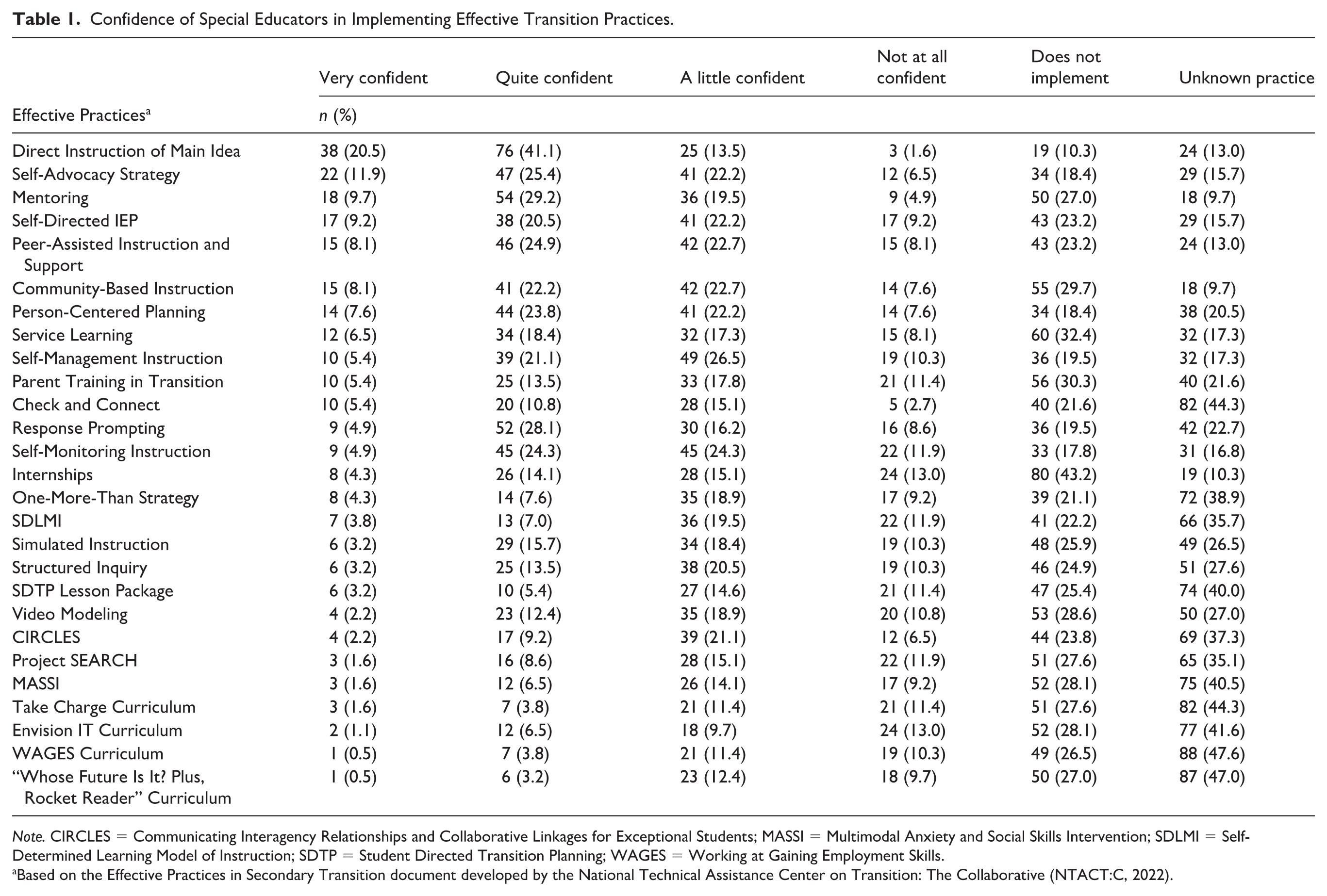
Note. CIRCLES = Communicating Interagency Relationships and Collaborative Linkages for Exceptional Students; MASSI = Multimodal Anxiety and Social Skills Intervention; SDLMI = Self-Determined Learning Model of Instruction; SDTP = Student Directed Transition Planning; WAGES = Working at Gaining Employment Skills.
Based on the Effective Practices in Secondary Transition document developed by the National Technical Assistance Center on Transition: The Collaborative (NTACT:C, 2022).
Prior Training on Effective Transition Practices
Teachers reported receiving minimal training on the majority of listed effective transition practices. For example, over half of the teachers indicated receiving no training on 25 of the 27 practices examined. The effective practices for which the highest percentage of teachers reported they received no training were the Take Charge Curriculum (84.0%), the WAGES Curriculum (83.1%), and the Envision IT Curriculum (81.6%). When training was received, in-service professional development was more common than pre-service preparation. The effective practices for which the highest percentage of teachers reported they received in-service training included Community-Based Instruction (35.3%), Direct Instruction of Main Idea (30.6%), and Self-Directed IEP (30.3%). The effective practices for which the highest percentage of teachers reported they received pre-service training included Direct Instruction of a Main Idea (17.7%), Video Modeling (11.4%), and Self-Monitoring Instruction (10.7%). Teacher ratings of training related to each of the 27 effective practices are displayed in Table 2.
Reported Training Special Educators Received on Effective Transition Practices.
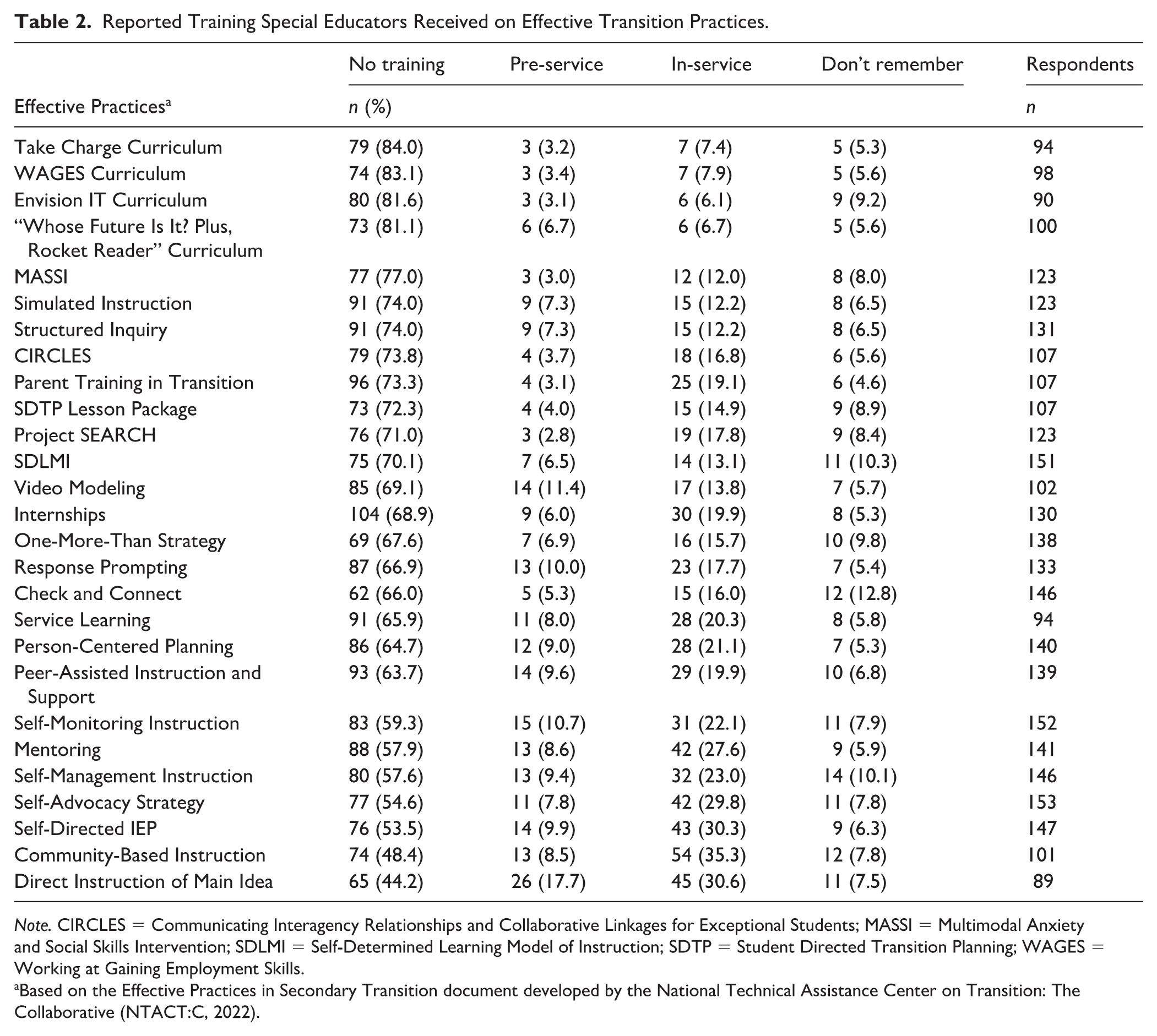
Note. CIRCLES = Communicating Interagency Relationships and Collaborative Linkages for Exceptional Students; MASSI = Multimodal Anxiety and Social Skills Intervention; SDLMI = Self-Determined Learning Model of Instruction; SDTP = Student Directed Transition Planning; WAGES = Working at Gaining Employment Skills.
Based on the Effective Practices in Secondary Transition document developed by the National Technical Assistance Center on Transition: The Collaborative (NTACT:C, 2022).
Confidence of Connecting Students to Community Supports and Opportunities
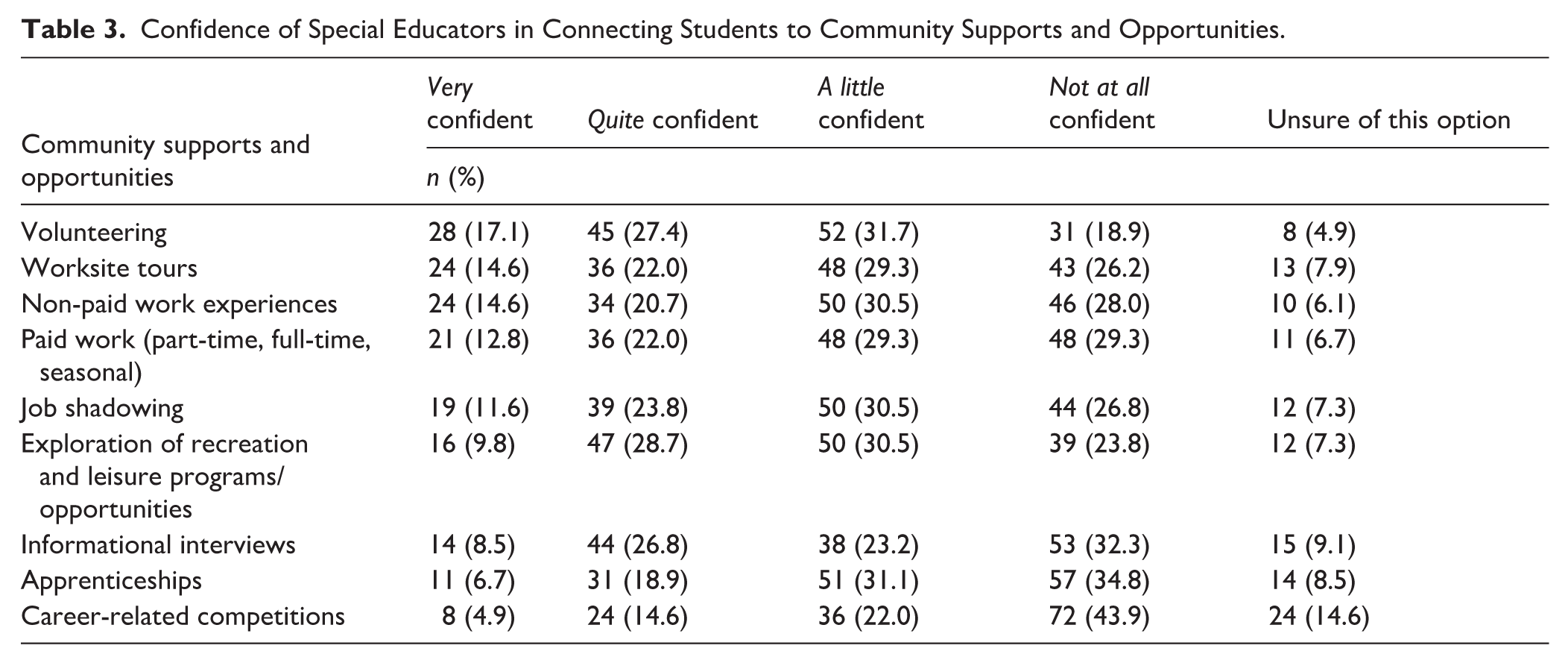
Overall, teachers indicated low levels of confidence in connecting students to each of the nine community supports and opportunities we listed as part of our survey. The community support or opportunity for which the highest percentage of teachers reported being very or quite confident about connecting students included volunteering (44.5%), exploration of recreation and leisure programs/opportunities (38.4%), and worksite tours (36.6%). Conversely, the community supports or opportunities for which the highest percentage of teachers reported being a little or not at all confident about connecting students included career-related competitions (65.9%), apprenticeships (65.9%), paid work (58.5%), and non-paid work experiences (58.5%). Teacher ratings of confidence in connecting students to community supports and opportunities are displayed in Table 3.
Confidence of Special Educators in Connecting Students to Community Supports and Opportunities.
Prior Training on Community Supports and Opportunities
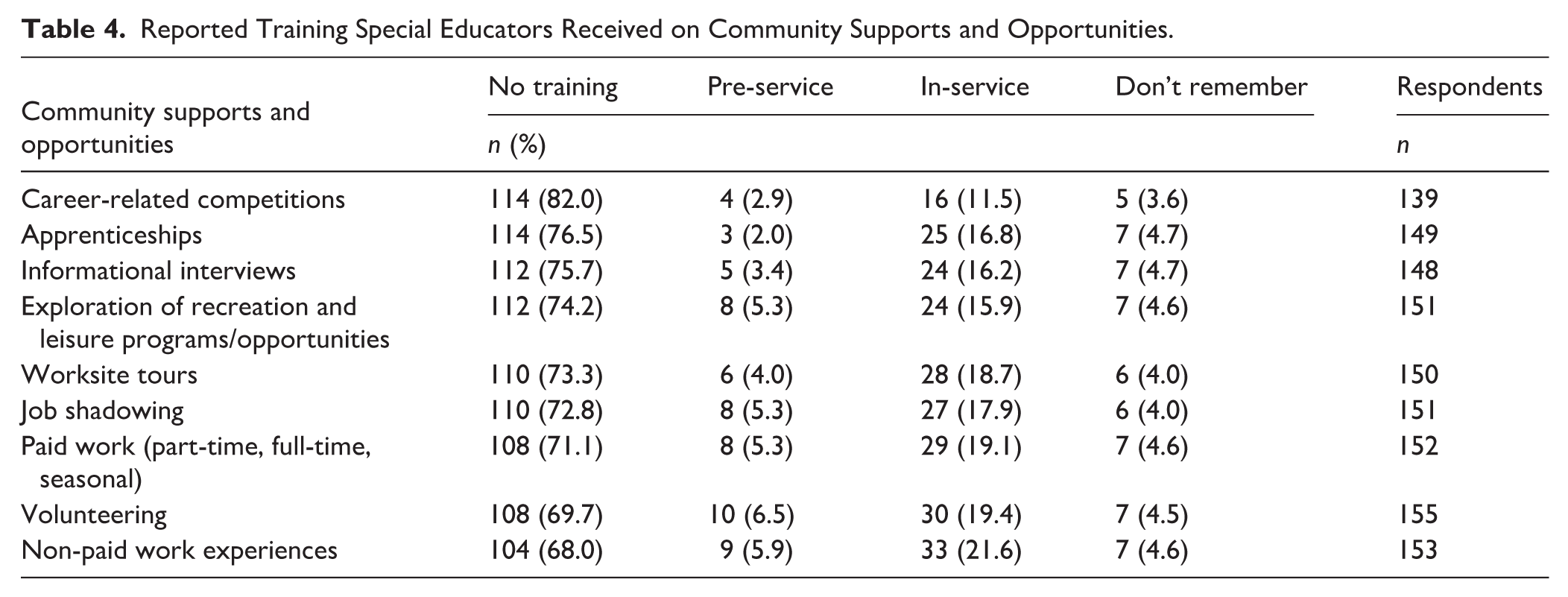
Similar to the effective transition practices findings, teachers reported receiving very little training on how to connect students to community supports and opportunities. The majority of participants indicated receiving no training on all nine community supports examined. The community supports or opportunities for which the highest percentage of teachers reported they received no training were career-related competitions (82.0%), apprenticeships (76.5%), and informational interviews (75.7%). The community supports or opportunities for which the highest percentage of teachers reported they received in-service training included volunteering (19.4%), paid work (19.1%), and worksite tours (18.7%). The community supports or opportunities for which the highest percentage of teachers reported they received pre-service training included volunteering (6.5%) and non-paid work experience (5.9%). Teacher ratings of training related to each of the nine community supports or opportunities are displayed in Table 4.
Reported Training Special Educators Received on Community Supports and Opportunities.
Professional Development Preferences
Teachers demonstrated awareness of available resources, with 78.6% indicating familiarity with the statewide secondary transition technical assistance center. Among those familiar with the center, 68.8% reported using its resources or attending a training. The majority of teachers (67.9%) also expressed participating in a range of professional development opportunities over the past 3 years to deepen their knowledge of secondary transition. Specifically, 43.4% reviewed literature or pamphlets on transition topics, 31.4% attended a virtual training, 29.6% viewed a web-based presentation (e.g., previously recorded or live webinar), 25.2% attended a conference or presentation, 22.6% observed peers or transition professionals in other programs, 20.8% attended a live training, 15.1% participated in an online professional learning community (PLC) or community of practice (CoP), 11.3% received mentorship or coaching, 9.4% took an in-person course, 9.4% participated in an in-person PLC or CoP, 8.8% took an online asynchronous transition course, and 1.3% indicated other (i.e., participated in a master’s program and watched relevant videos with students).
Finally, when asked about preferred methods for future professional development, teachers showed diverse interests but clear preferences for active, interactive learning: 58.5% preferred in-person training, 43.4% preferred virtual training, 39.6% preferred webinar (live or pre-recorded), 36.5% preferred conference presentation, 27.7% preferred mentorship or coaching, 26.4% preferred online PLC or CoP, 18.2% preferred in-person course, 17.6% preferred online asynchronous course, 13.8% preferred in-person PLC or CoP, and 11.3% preferred literature or pamphlets.
Discussion
The purpose of this study was to examine the perspectives of a statewide sample of special education teachers to gain a comprehensive understanding of their confidence in implementing effective transition practices and connecting students to community supports and opportunities, as well as their ongoing training needs. Given the persistent gaps in post-school outcomes for students with disabilities, despite decades of federal legislation aimed at improving outcomes, it is critical to understand the capacity and preparation needs of those responsible for delivering transition services and instruction. Our research extends the field’s knowledge in several key ways.
First, the findings reveal concerning gaps in special educators’ confidence to implement effective transition practices. Despite the majority of participants reporting being “somewhat comfortable” or “very comfortable” preparing students for adulthood, their confidence in implementing specific practices known to be effective to support student transition to adulthood was remarkably low. This suggests that while most teachers do not feel completely unprepared, there is substantial room for improvement in their overall confidence with effective practices. This finding was consistent with prior research (Brock et al., 2014). Only one practice—Direct Instruction of Main Idea—achieved majority confidence at 61.6%. The disconnect between general comfort and specific practice confidence suggests that teachers may be relying on familiar but potentially less effective approaches rather than implementing practices with demonstrated research support.
Second, teachers demonstrated similarly low confidence in connecting students to community supports and opportunities. Recent research found that there was a strong, significant, and positive correlation between teachers’ confidence in using effective practices and their implementation of effective practices (Haley-Clark, 2023). Therefore, we can conclude that the teachers in our sample were not likely to connect students to community supports and opportunities, despite research consistently showing that community-based experiences during high school predict better post-school outcomes. As well, the limited confidence in facilitating paid work opportunities is particularly important to note, given the strong predictive relationship between paid work during high school and post-school employment success (Mamun et al., 2017; Mazzotti et al., 2021).
Third, despite the identified gaps in confidence and training, teachers demonstrated encouraging engagement with professional development opportunities. Nearly 68% of participants reported engaging in professional development activities over the past 3 years, and 78.6% were familiar with their state’s transition technical assistance center. This finding suggests teachers are motivated to seek support when they know it exists. However, the most common professional development activities teachers reported participating in were passive (reviewing literature, attending presentations) rather than the active, experiential learning that research suggests is most effective for developing implementation skills (Livingston & Cummings-Clay, 2023) and was desired by our sample of teachers. As well, nearly 28% of our participants expressed interest in mentorship or coaching, suggesting recognition of the need for ongoing support during implementation. These preferences align with research on effective professional development, which emphasizes the importance of active learning, collaboration, and sustained support (Hunzicker, 2011).
Study Limitations
Several limitations should be considered when interpreting these findings. First, we intended to allow participants to check all training options that applied for each of the training matrices. For example, a teacher may have received pre-service and in-service training on a practice. However, in reviewing the completed surveys, we realized that we unintentionally limited response options. Therefore, future surveys of this type should ensure teachers can select all the ways in which participants may have received training. Second, the study relied on self-reported data regarding confidence and training history, which may be subject to social desirability effects or recall bias. Teachers may have over- or under-estimated their confidence levels, and their recollections of training experiences may be incomplete or inaccurate. Third, while the sample was geographically diverse and reasonably representative of Tennessee’s special education teacher workforce, the findings may not generalize to other states with different contexts, professional development systems, or teacher preparation requirements. The generalizability of findings is further limited by the predominantly White, female sample, which, while representative of the special education teacher workforce, may not capture the perspectives of teachers from diverse backgrounds. Furthermore, participants were volunteers from a large recruitment effort. Those who chose to participate may not be representative of all special education teachers in the state.
Implications for Research
This study’s findings suggest several important directions for future research. First, research is needed to examine the relationship between teacher confidence and student outcomes in transition programming. While this study documented concerning gaps in the confidence of teachers to implement effective transition practices and to connect students to known beneficial community supports and opportunities, the direct impact on student achievement of post-school goals remains unclear. Longitudinal studies that track both teacher implementation fidelity and student outcomes could provide valuable insights into the practical significance of these confidence gaps.
Second, intervention research is needed to identify effective professional development models for building teacher capacity in effective transition practices. While this study documented preferences for interactive learning, experimental studies are needed to determine which specific professional development approaches most effectively improve both confidence and implementation quality. Such research should examine both short-term changes in teacher knowledge and skills and longer-term impacts on practice and student outcomes.
Third, while the study examined confidence in implementing specific practices, it did not assess actual implementation quality or fidelity. Teachers who report confidence in implementing a practice may not necessarily implement it effectively, and those who report low confidence may still provide quality instruction. Observational studies would provide important complementary data about the relationship between confidence and implementation quality.
Implications for Practice
The findings from this study have several important implications for university preparation programs and local education agencies (LEAs) tasked with equipping their staff with supportive professional development. The study revealed a substantial training gap that may, in part, underlie the confidence deficits reported (Haley-Clark, 2023). Teachers indicated receiving no training on the majority of effective transition practices, with over half indicating no training on 25 of the 27 practices examined. Furthermore, when training was received, it occurred predominantly through in-service professional development rather than pre-service preparation. This finding is supported by previous research and suggests that university preparation programs are not adequately addressing transition-specific content (Morningstar et al., 2018; Travers et al., under review; Williams-Diehm et al., 2018). The reliance on in-service training, while necessary, may be insufficient to develop the depth of knowledge and skill required for complex transition practices.
There is an urgent need for systematic pre- and in-service professional development that targets effective transition practices and connection to community supports and opportunities. Considering pre-service preparation, universities must examine their special education preparation programs to ensure adequate coverage of transition-specific content. Programs preparing teachers to work with students in eighth through twelfth grade should require dedicated transition coursework and field experiences in transition settings to better prepare new teachers, as well as embed transition concepts throughout other courses required for licensure. For in-service professional development, initiatives should prioritize hands-on learning experiences that allow teachers to practice implementing effective transition strategies with feedback and support. As well, professional development must address the complexity of community partnerships and work-based learning experiences. Teachers need specific training on how to identify community partners and maintain ongoing relationships that benefit students. This training could include practical components such as how to run employment planning meetings to connect students to employment opportunities before they graduate (Awsumb et al., 2024). Finally, LEAs should consider creating mentorship or coaching programs to provide ongoing support for teachers. The preference for mentorship expressed by teachers, combined with the complexity of some transition practices, suggests that one-time training events may be insufficient. Sustained support through mentoring relationships could help bridge the gap between knowledge acquisition and confident implementation.
Conclusion
This study identifies significant gaps in special educators’ confidence and preparation for implementing effective transition practices and facilitating community connections. Despite over a decade’s worth of research identifying effective transition practices and legislative mandates for transition services, the majority of special education teachers in our sample lacked confidence in implementing these critical interventions. These findings highlight the urgent need for action. The gap between research and practice documented in this study represents missed opportunities for countless students who could benefit from more effective transition programming to improve post-school outcomes. The path forward requires sustained commitment to professional development for special educators, systematic implementation support, and continued research to refine our understanding of effective transition service delivery.
Footnotes

Funding
The authors disclosed receipt of the following financial support for the research, authorship, and/or publication of this article: This research was partially funded through a contract with the Tennessee Department of Education. The content of this manuscript does not necessarily reflect the views of the funding agency.
Declaration of Conflicting Interests
The authors declared no potential conflicts of interest with respect to the research, authorship, and/or publication of this article.