




Abstract
Transitioning students with disabilities are at a disadvantage for post-school employment. This article explores ASPIRE case managers’ roles in promoting employment among transition-age youth with disabilities receiving SSI. Qualitative and quantitative studies examined programmatic factors related to employment. Results showed that higher rates of face-to-face case management meetings and early employment experiences were associated with improved employment outcomes. Effective case managers’ interactions with families were characterized by persistence, flexibility, and a holistic focus. Case management during the transition to adulthood, which crosses independent living, education, and employment domains, is important. A cross-domain case management model can be effective in mitigating multiple barriers to self-sufficiency experienced by families living with disability and poverty. Limitations and implications for research and practice are included.
Transition-age youth with disabilities have fewer employment opportunities while in high school compared with their peers without disabilities. Data from the U.S. Department of Labor (2019) indicate that labor force participation by youth with disabilities (aged 16 to 19 years) is approximately two-thirds of youth without disabilities (23.5% compared to 35.8%). Low participation rates during the transition period negatively impact employment in adulthood. Researchers have attempted to address this disparity by studying strategies to promote employment for youth with disabilities in the transition period. Numerous studies have pointed to the importance of participation in community-based work experiences while in high school (Carter et al., 2012; Mazzotti et al., 2016; Test et al., 2009; Wehman et al., 2014). For example, Carter et al. (2012) found that adolescents with severe disabilities who held a school-sponsored, after-school, or summer job were more than twice as likely as students who lacked these experiences to connect to a paid job after high school. Similarly, another study involving youth receiving Supplemental Security Income (SSI) found that exposure to early work experiences increased the likelihood of subsequent employment by 17% (Mamun et al., 2018). Research also indicates that having relevant work experience and completing youth-identified goals related to transition are highly associated with improved graduation rates and employment outcomes (Benz et al., 2000; Nord et al., 2018).
Other studies support the value of volunteer experiences for youth with disabilities. Unpaid work can provide opportunities for youth with disabilities to develop employment skills while exploring career interests (Lindsay et al., 2018). Despite the potential benefits of volunteering, youths with disabilities often have fewer opportunities for volunteer and paid work experiences compared to youth without disabilities (Lindsay, 2016).
Strategies for Promoting Employment in Transition
Career preparation and work-based learning experiences are shown to help youth develop aspirations for employment and make their own informed choices about careers (Certo et al., 2008; Kohler & Field, 2003; National Alliance for Secondary Education and Transition, 2005; Wehmeyer & Webb, 2012). As a result, the promotion of early work experiences has become a core component of many transition frameworks, including Pre-Employment Transition Services (Pre-ETS) outlined in the Workforce Innovation and Opportunity Act of 2014 (Employment and Training Administration, 2019; Wehmeyer & Webb, 2012).
Despite growing evidence that early work experiences enhance post-school employment outcomes, education systems face substantial barriers in implementing employment-related programs. Barriers include a lack of professional development for teachers in how to develop business partnerships (Carter et al., 2010) and limited staffing to perform tasks of job development and support outside the school setting (Carter et al., 2009). In 2013, the U.S. Department of Education, Department of Health and Human Services, Department of Labor, and the Social Security Administration jointly funded the Promoting Readiness of Minors in Supplemental Security Income (PROMISE) initiative. PROMISE’s goal was to test strategies for improving the long-term employment and educational outcomes of transition-aged youth with disabilities receiving SSI and their families. As outlined in the funding announcement, an important intermediary step to long-term self-sufficiency is employment experiences during and immediately following high school. In part, the PROMISE initiative addressed historical barriers by exploring how best to offer and support career exploration and work-based learning. One of the PROMISE demonstration sites, the Achieving Success by Promoting Readiness for Education and Employment (ASPIRE) project, implemented a case management system outside the school setting to support youth receiving SSI with transition-related goals and their families. ASPIRE was a consortium of six states, including Arizona, Colorado, Montana, North Dakota, South Dakota, and Utah, to inform federal policymakers on strategies for improving employment outcomes for youth with disabilities living in more rural locations. The purpose of this article was to study ASPIRE strategies to promote integrated, competitive employment for youth with disabilities receiving SSI while in transition. This article is guided by the research question: Which ASPIRE strategies to promote integrated, competitive employment for youth with disabilities were most effective? Quantitative and qualitative methods were used to address this question.
Methods
The ASPIRE Project
A total of 2,051 youth with disabilities aged 14 to 16 years receiving SSI benefits were recruited into the ASPIRE study between October 2014 and April 2016 and randomly assigned into either a control (n = 1,018) or an intervention (n = 1,033) group. The intervention, or ASPIRE group, received ASPIRE services, including case management, targeted training, and benefits counseling. ASPIRE case management services were unique to the project and focused on helping the youth and their families develop employment, education, and independent living goals. ASPIRE group trainings included youth self-determination/self-advocacy training, parent transition training, and family financial literacy training (Chambless et al., 2019; Ipsen et al., 2019b). To facilitate employment outcomes for youth during high school, ASPIRE case managers were charged with promoting a variety of employment preparation activities, such as resume development, job shadowing, informational interviews, volunteer events, job fairs, and career exploration.
Based on previous findings of longitudinal survey analyses, case management records showed that the probability of employment among ASPIRE youth increased based on the number of in-person case management meetings each year (Ipsen, 2019; Ipsen et al., 2019a). Researchers also found that youths’ early involvement in career exploration activities was associated with greater likelihood of subsequent employment (Ipsen, 2019). With these significant results in mind, researchers wanted to explore factors associated with employment in more depth.
Study Participants
Study 1 participants consisted of youth who were randomly assigned to ASPIRE services, did not withdraw from the study, and for whom we had complete data on measures related to employment outcomes, participation in ASPIRE case management, and youth/family demographics. If data were missing for any of the dependent variables of interest, the case was excluded from the sample for Study 1 analyses, yielding a final sample size of 876 youth. Table 1 provides demographic information for both the employed (n = 366) and not employed (n = 510) groups used in these analyses. The primary disability type reported in Table 1 is the youths’ categorization, as defined by the Social Security Administration (2019). The disability type was reported by the five most prevalent categories—developmental disorders, intellectual disability, autistic disorders, personality and impulse control disorders, and nervous system disorders, plus “other” for those falling into all other SSA disability categories. Study 2 participants included a random sample of 60 ASPIRE youth who achieved competitive, integrated employment during the analysis period. Researchers conducted an in-depth examination of case management notes for a subsample of that group (n = 30). Study 3 participants included 10 ASPIRE case managers from five sites. The case managers volunteered to participate in a focus group on employment (Hall et al., 2020). Case managers from all sites were invited to participate, but staff from one site could not attend due to scheduling conflicts.
Sample Demographics (N = 876).
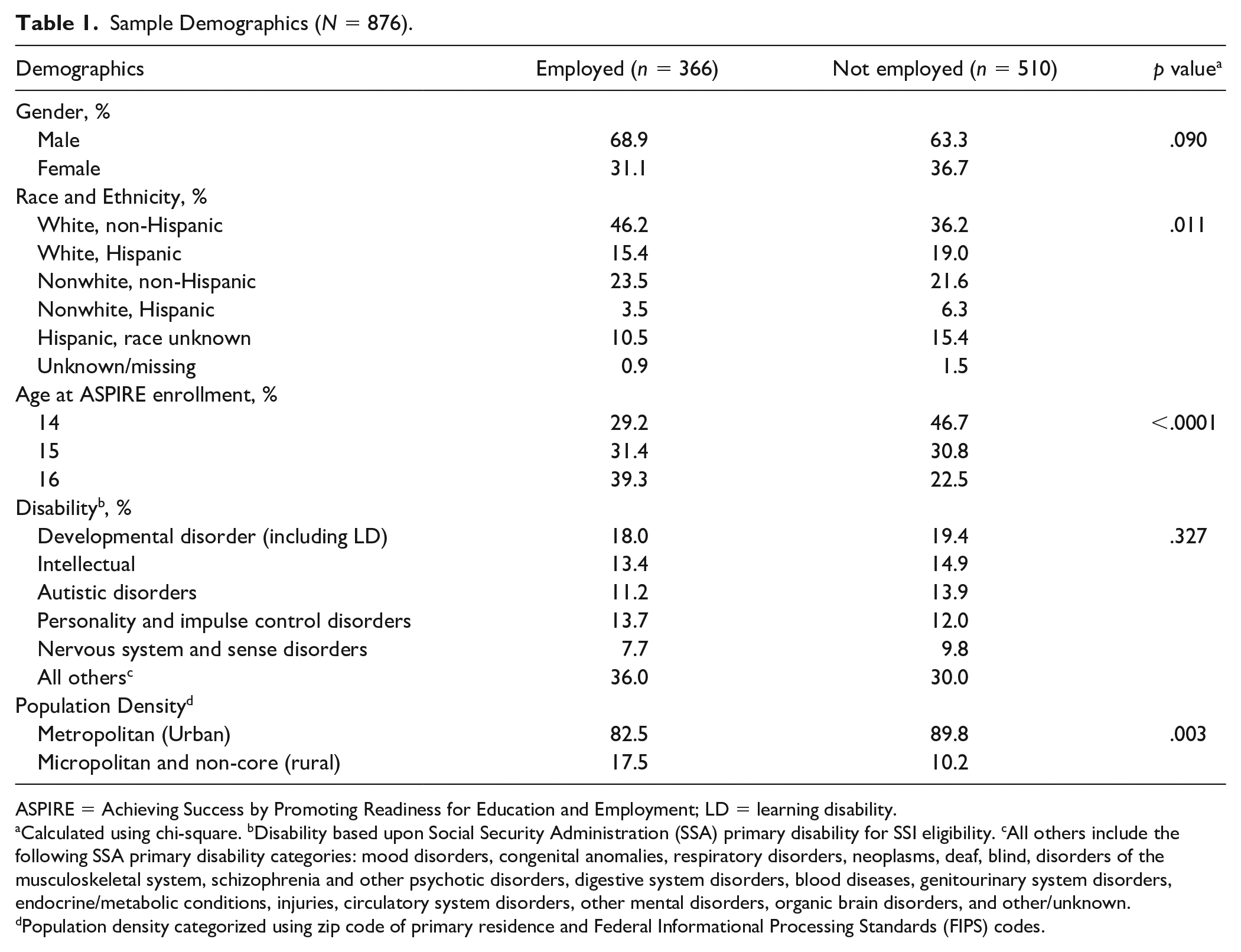
ASPIRE = Achieving Success by Promoting Readiness for Education and Employment; LD = learning disability.
Calculated using chi-square. bDisability based upon Social Security Administration (SSA) primary disability for SSI eligibility. cAll others include the following SSA primary disability categories: mood disorders, congenital anomalies, respiratory disorders, neoplasms, deaf, blind, disorders of the musculoskeletal system, schizophrenia and other psychotic disorders, digestive system disorders, blood diseases, genitourinary system disorders, endocrine/metabolic conditions, injuries, circulatory system disorders, other mental disorders, organic brain disorders, and other/unknown. dPopulation density categorized using zip code of primary residence and Federal Informational Processing Standards (FIPS) codes.
Data Collection and Analyses
To obtain a broader understanding of ASPIRE programmatic factors associated with employment outcomes, we conducted three studies using quantitative and qualitative methods. We focused on data collected from April 2016 to the conclusion of intervention delivery in March 2019, which included a 3-year period when all enrollment activities had been completed and ASPIRE youth were able to participate in ASPIRE interventions. Our primary outcome variable of interest was obtaining employment at any point during the analysis period (April 2016 through March 2019). ASPIRE defined employment as being competitively paid (at least minimum wage) in an integrated setting.
Study 1: Comparison of employed youth and unemployed youth
Study 1 data came from case management notesrecorded in the ASPIRE Information Management System (AIMS), a REDCap database, within 24 hours of each contact with the youth or family. Notes included baseline demographics and ongoing case management information about attempted contacts with the family, face-to-face meetings, interventions received, job exploration activities, employment status, and general case notes. We imported raw case management data from AIMS into SPSS (Version 24) and constructed variables at the individual level.
We used binary logistic regression to explore how participation in case management services and career exploration activities, and the timing of these activities, predicted youth employment during ASPIRE. We used attainment of competitive, integrated employment at any point across the 3-year study period as the dependent variable. We entered variables in three blocks, including demographics, participation in case management, and career exploration activities early in the ASPIRE study (April 2016–March 2018), and participation in case management and career exploration activities late in the ASPIRE study (April 2018—March, 2019).
Block 1 predictors included age at enrollment (indicator variables for ages 15 and 16 years, relative to the age of 14 years), non-White, Hispanic, and disability type. We included one additional indicator variable in this block to control for possible variation introduced by one ASPIRE site with significant service delivery delays. Block 2 and Block 3 variables focused on case management intensity and participation in various work experiences. Face-to-face meeting variables were constructed by aggregating whether or not a family received a face-to-face meeting with a case manager each month; values ranged from 0 to 24 for Block 2 (early participation) and 0 to 12 for Block 3 (late participation). Work experience variables, including gathering information about jobs, external guidance, and unpaid work experience, were constructed as indicator variables if a particular activity took place at any point during each block (i.e., April 2016–March 2018 for Block 2; April 2018–March 2019 for Block 3). We calculated Nagelkerke pseudo R2 and chi-square for each block in the regression model to measure how well the model’s independent variables predicted the dependent variable with higher values being more indicative of the block’s contribution to the model.
Study 2: In-depth analysis of case records for employed youth
Study 2 explored case manager activities as well as the broader family and community context for youth who obtained employment during the analysis period. We randomly selected 60 cases for intensive examination. First, we calculated two indicators of service intensity (frequency of case manager contacts and number of goals developed) and compared the sample (n = 60) with the overall employed group (n = 366). Frequency of contacts was defined as the number of in-person meetings between the case manager and the youth during the 36 months of the study timeframe. The number of goals was measured by the total number of written SMART goals developed during case management meetings. ASPIRE case managers were trained to develop goals that were SMART: specific, measurable, actionable, realistic, and time-limited (O’Neill & Conzemius, 2005; Scott, 2014).
We analyzed a subset of the 60 cases using grounded theory (Strauss & Corbin, 1998) to obtain a more nuanced understanding of the family, community context, and service delivery factors leading to competitive, integrated employment outcomes. Two researchers reviewed the case manager notes of the randomly selected cases. One researcher coded the data into five categories corresponding to factors believed to be associated with employment outcomes. The categories were (a) home/family environment, (b) assessment activities, (c) career exploration activities, (d) content of youth goals, and (e) involvement by other agencies outside of ASPIRE. A second researcher reviewed the coded data for consistency. Data were then displayed in a matrix to facilitate the identification of patterns and themes. Through discussion, researchers identified four overarching themes to summarize the data: holistic family focus, persistence, flexibility, and cross-domain service. These same themes were identified in earlier research by the ASPIRE research team (Ipsen, 2019) and appropriately fit these data as well. Data analysis was discontinued after reviewing 30 cases because researchers determined saturation had been reached (Bowen, 2008). Grounded theory does not require a specific sample size but rather enough data to establish trustworthiness (O’Brien et al., 2014).
Study 3: Focus groups with case managers
To obtain broader insight into ASPIRE career exploration activities, researchers conducted two 90 min focus groups in the project’s final year with case managers located across ASPIRE sites. Case managers from five of the six ASPIRE states volunteered to participate (n = 10) in one of the two teleconference discussions. Focus group questions were developed based on observations during site visits, case reviews, and conversations with ASPIRE staff and managers. Topics included career exploration/pre-employment activities found to be the most effective for youth; helping youth and families understand the importance of these experiences for future employment; and the role Vocational Rehabilitation (VR) or other agencies played in pre-employment activities. Researchers recorded and transcribed discussions and reviewed the transcripts separately to identify themes (Schreier, 2014). One researcher coded the transcripts based on the themes identified. A second researcher reviewed the coding and summaries. The two researchers discussed and came to consensus on all coding (Hsieh & Shannon, 2005).
Results
Study 1: Comparison Between Employed Youth and Unemployed Youth
We calculated group means of key ASPIRE services variables for employed and un employed youth. This step included calculating the number of face-to-face meetings with ASPIRE case managers; number of SMART goals set as part of case management planning; and the three categories of career exploration activities (i.e., external guidance, gathering job-specific information, work experience). Table 2 includes career exploration categories; Table 3 contains examples of career exploration from ASPIRE case records.
ASPIRE Services Received.
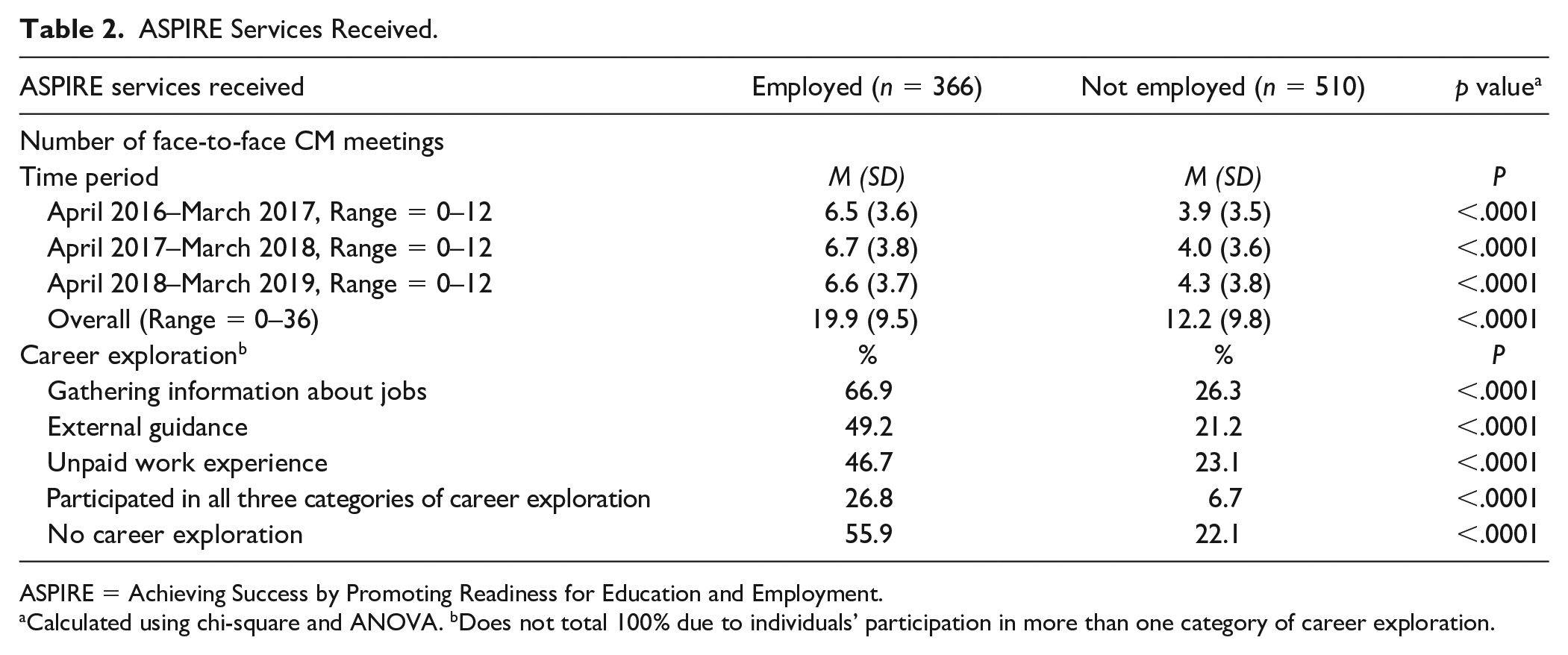
ASPIRE = Achieving Success by Promoting Readiness for Education and Employment.
Calculated using chi-square and ANOVA. bDoes not total 100% due to individuals’ participation in more than one category of career exploration.
Career Exploration Types, Definitions, and Examples.
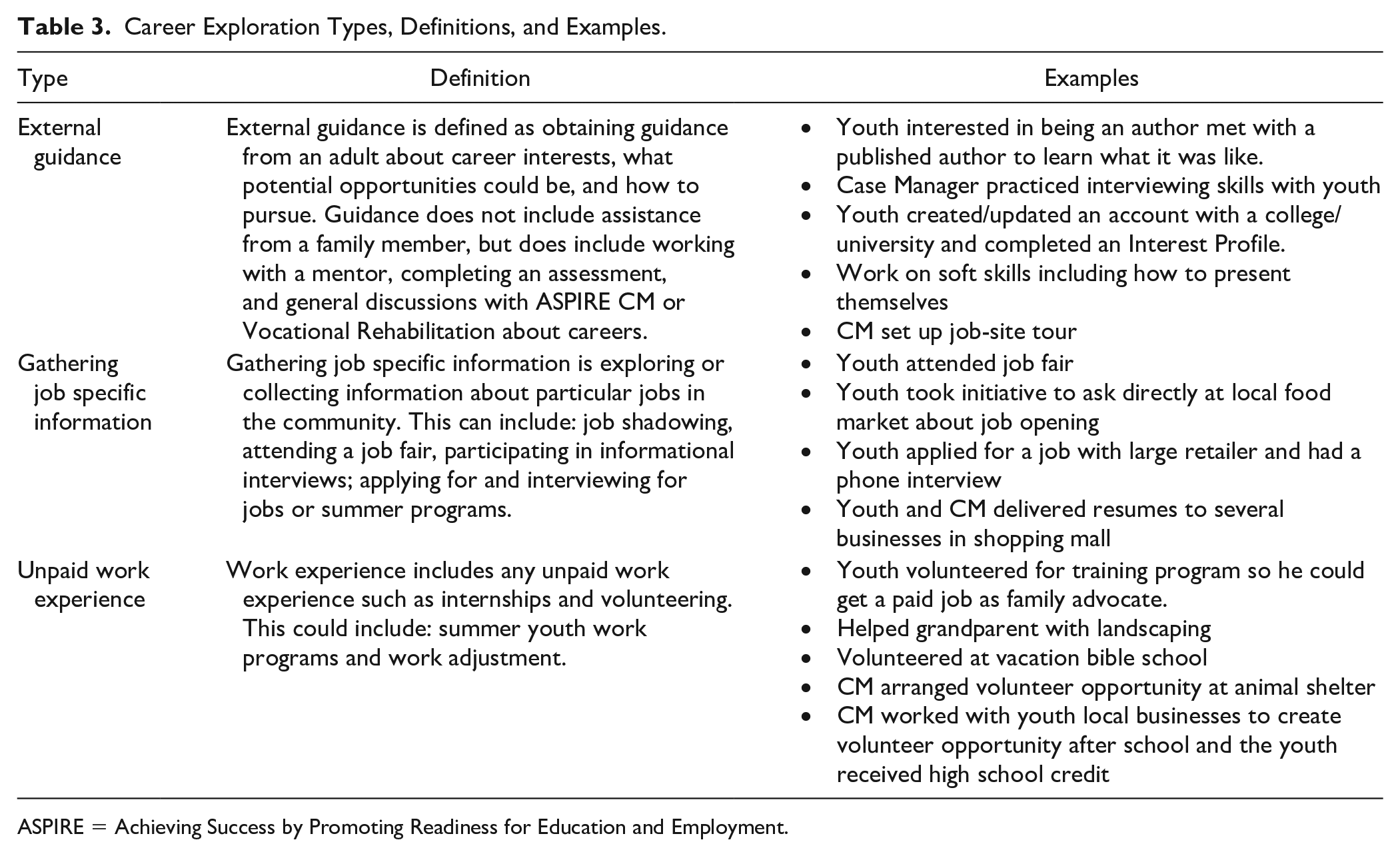
ASPIRE = Achieving Success by Promoting Readiness for Education and Employment.
We used binary logistic regression to measure the degree to which youth demographics, face-to-face contact with case managers, and career exploration types predicted employment. We excluded SMART goals from this analysis because they are highly correlated with the number of face-to-face case management meetings. The full results for the model are included in Tables 4 and 5. The odds of obtaining employment were less than half for youth in Site 1 than in the other five sites (OR = 0.463, p ≤ .001). Youth who enrolled in ASPIRE at age 15 (OR = 2.212, p ≤ .001) or age 16 (OR = 4.357, p ≤ .001) were significantly more likely to obtain employment during the analysis period, compared to those enrolled at age 14. In terms of disability type, youth with autistic disorders (OR = 0.466, p = .012) and nervous system disorders (OR = 0.457, p =.020) were significantly less likely to be employed than the “other” referent group.
Binary Logistic Regression to Determine If Activities Impact Employment, All Ages (N = 757).
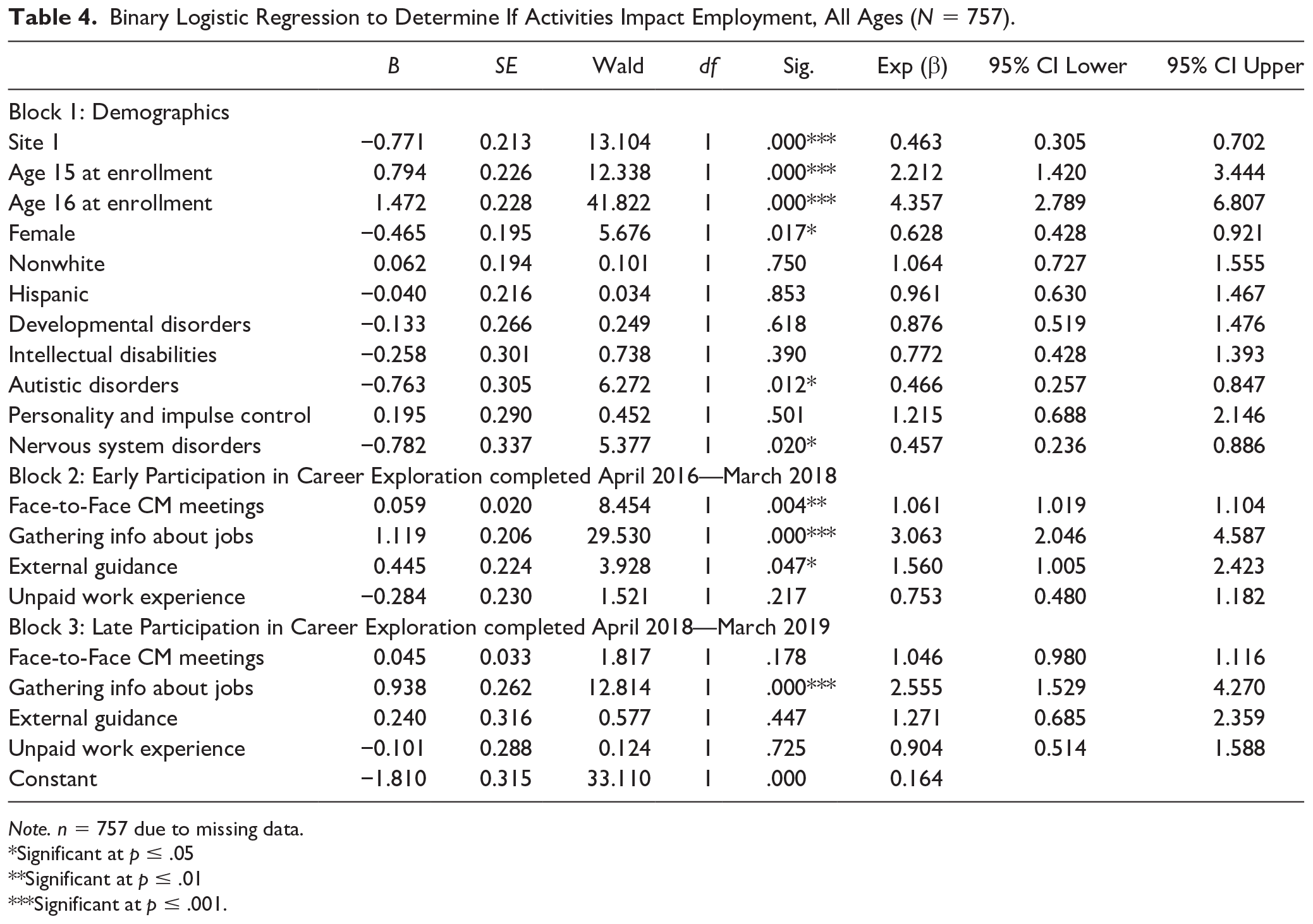
Note. n = 757 due to missing data.
Significant at p ≤ .05
Significant at p ≤ .01
Significant at p ≤ .001.
Regression Model Summary Statistics, All Ages.

Higher rates of face-to-face meetings that occurred early in the ASPIRE study (OR = 1.061, p = .004) and early delivery of career exploration activities, including gathering information about jobs (OR = 3.063, p ≤ .001) and external guidance (OR = 1.56, p = .047), were associated with an increased probability of a successful employment outcome. Gathering information about jobs as a form of career exploration that occurred later in the ASPIRE study was also significantly associated with an employment outcome (OR = 2.56, p ≤ .001).
Study 2: In-Depth Analysis of Employed Youth
Study 2 identified specific case manager interventions used to facilitate youth employment. Service intensity measures (frequency of case management contacts and number of goals developed) showed that service intensity for the sample of 60 youth who achieved competitive, integrated employment was aligned with ASPIRE youth who obtained employment outcomes (n = 366). Service intensity measures exceeded means for youth who did not gain employment at any point during the study period (n = 510). Table 2 summarizes the ASPIRE services received.
Analyses of case records led to identifying three broad categories of career exploration activities, which were used as explanatory variables for Study 1. The categories included gathering information about jobs, external guidance, and unpaid work experiences. “Gathering information about jobs” included practicing interview skills, conducting informational interviews, and completing job applications. The activities focused on assisting youth in obtaining entry-level jobs in the near term. The category of “external guidance” included referrals to other workforce systems, such as career centers and VR, where youth explored potential career interests and future post-school career opportunities. Finally, “unpaid work experiences” included activities such as short-term volunteering or longer unpaid work. For example, youth found unpaid work opportunities at a museum, a deli, an animal shelter, and Bible school. Table 3 lists examples of career exploration activities. In addition, through analysis of case records, we identified four themes associated with employment outcomes during the project: holistic family focus, persistence, flexibility, and cross-domain support.
Holistic family focus
We defined holistic family focus as case manager actions that served youth in the context of pressing family issues. Household compositions of ASPIRE youth often included youth living with grandparents, single parents, step-parents, siblings, and non-related adults. Less than half of the youth in the qualitative study sample were living in households with two parents. ASPIRE families shared common challenges related to living in poverty and having at least one youth with a significant disability. Hall et al. (2020) describe other family challenges in further detail. Analysis of qualitative results indicated that case managers often needed to collaborate with multiple social support systems to address a variety of family issues such as mental health, criminal justice, public assistance, protective services, health care, and Social Security. Sorting out and prioritizing the many issues faced by families was challenging for case managers—they had to respond to family crises and priorities while making progress on ASPIRE’s goals. One family found themselves homeless because the mother lost her job. The mother and ASPIRE youth had to move in with a relative, which required changing school districts. The youth wanted to get a job instead of starting a new school. The case manager assisted the youth in locating a part-time job in the new area. At the beginning of a new semester, the case manager persuaded the youth to re-enroll in a new school.
Persistence
We defined persistence as a case manager’s perseverance to maintain contact with youth and families to facilitate progress toward desired outcomes of education and employment. A key performance measure for ASPIRE case managers was to have one face-to-face meeting each month with the youth and/or parent. This performance expectation motivated case managers to use various strategies to schedule monthly meetings and make contact. Case managers demonstrated persistence by multiple attempts and methods (phone, text, email, letters, and follow-up reminders) to schedule monthly meetings. Once scheduled, the case managers made efforts to accommodate family preferences for where to meet, such as meeting in the family’s home, in public places such as a library, or going to the youth’s school. One example of extreme persistence was demonstrated by a case manager who, over the 36-month study period, contacted one youth and family an average of 5.6 times per month to obtain a single monthly meeting. Contact methods included telephone, Skype, email, voicemail, text message, postal mail, and in-person meetings.
Flexibility
We defined flexibility as a case manager’s focus on issues of greatest concern to the youth and family at the time. This strategy required case managers to adapt services to address immediate family needs rather than focusing first or only on ASPIRE interventions. At times, flexibility required case managers to solve problems, identify creative solutions, or learn about new or needed resources they were not familiar with or had not used before. If they did not have training or experience in certain areas, some case managers reached out to supervisors for guidance or contacted outside agencies to seek information and resources to address the family’s issues. Flexibility often required case managers to set aside ASPIRE objectives during the monthly meetings because the youth or family was not ready to focus on career exploration, school progress, or to participate in other ASPIRE interventions. One example was a youth who refused to meet face-to-face with the case manager for the first two meetings. The youth would respond to questions from an adjacent room, but was too anxious to meet the case manager up-close. The case manager continued to meet monthly with the parent and, eventually, the youth became engaged and joined a self-determination class. In another example, a case manager demonstrated flexibility by engaging with a youth during several moves. The youth had left her home, moved in with her boyfriend’s family, and subsequently moved to another state. The case manager maintained monthly contact through these transitions, checked on progress, and contacted the new state’s VR agency to facilitate the youth establishing an Individual Plan for Employment (IPE) similar to what she had in her ASPIRE state.
Cross-domain support
We defined cross-domain support as the case manager attending to goals in multiple life domains, including independent living, education, and employment. This multi-faceted approach was valuable for supporting youth progress toward employment outcomes. A barrier in one domain made it more difficult to progress in other domains. Case management for independent living assisted youth in gaining skills in independence and accessing the community. Examples of independent living support included activities such as transportation training, referrals, and financial subsidies to attend self-determination or leadership training, and family support regarding issues related to guardianship and Social Security.
Supporting education meant removing barriers to completion of high school and providing information about postsecondary options. Youths’ graduation from high school and continuing their education were important to future job opportunities. Case managers (a) supported youth to stay in school, (b) participated in Individual Education Program (IEP) or 504 planning, and (c) advised youth and families about alternative high school options. One example of this was a case manager’s work with a youth with serious behavioral issues. Despite having a documented disability, the youth did not have an IEP or 504 Plan. The case manager helped the youth find and transfer to another school and advocated for the new school to develop a 504 plan. Case managers also helped youth engage with postsecondary education (e.g., setting up college tours, assisting with Free Application for Federal Student Aid [FAFSA], college applications, registration).
Study 3: Focus Groups With Case Managers
We conducted focus groups with case managers to increase our understanding of how they helped youth obtain competitive, integrated employment. We identified four key themes from the focus groups: providing career exploration, coordinating with partner agencies, overcoming barriers to employment, and helping youth and families overcome perceptions about youths’ ability to be employed.
Providing career exploration
Case managers reported helping youth engage in a wide variety of employment exploration activities that fell into the categories of external guidance, gathering job-specific information, and work experience. Table 3 categorizes and defines career exploration types and provides examples from ASPIRE case notes. For example, case managers directly provided services, including coaching on applications and resumes, practicing interviews, and discussing soft skills. As one case manager shared, “we went around to a strip mall of businesses and just . . . asked different questions and asked for applications. That was probably the best because every time we went [to a business], we had somebody else try to ask the question, and they learned what to ask, who to ask it to.”
Case managers frequently referred youth to other agencies for career preparation and support. One case manager said, “Well, I know I referred all my youth to VR and so a lot of the older ones get that [career exploration] through them, too.”
Coordinating with partner agencies
The case managers’ role was to facilitate connections between the families and any community agencies that provided services families needed. Case managers most frequently reported working with schools, VR, parent centers, and independent living centers (ILCs). As a case manager highlighted, The local ILC put together a couple folks to help facilitate job shadows [for] youth with disabilities; we had two or three of our students involved in this, I found it to be real effective that they were able to facilitate taking the students out into the community where they job shadowed.
Some communities had specific transition programs, such as Transition School to Work, or relied on VR mentoring and job coaching. Other sites had unique programs, such as Project Skills, which provides 250 hours of paid internships to help students transition, and Project SEARCH, which provides skills training and job coaching in a business setting that leads to competitive employment. Case managers noted that some rural areas had less access to hands-on activities leading to employment opportunities than did urban and suburban areas. Case managers indicated that training regarding local agencies and resources would have been beneficial, especially related to VR’s role. Availability of VR services varied by site depending on state funding priorities and waiting lists. Some case managers reported that ASPIRE participants could not consistently or reliably access VR services and noted VR caseloads were very large. Others indicated having VR built into the ASPIRE model would have greatly enhanced outcomes. For example, one case manager reported that ASPIRE youth in schools with VR relationships were more likely to have employment during high school. “It’s kind of nice to have a VR counselor working collaboratively. They can take a more intensive approach to or are more focused on employment and job coaching.”
Overcoming barriers to employment
Case managers indicated they had to maintain a consistent focus on employment during their meetings. Given the other challenges facing families, doing so was frequently difficult. Often, they helped the family move through a crisis to keep them moving toward longer-term planning for the youth. Highlighted barriers included transportation issues related to reaching employment activities and jobs and a lack of employment opportunities. In the words of one case manager, One of the biggest impacts is having reliable transportation . . . two school districts were able to facilitate transportation during the school day to a volunteer or paid work experience. However, their families weren’t able to provide the same transportation opportunities, so [the students] weren’t able to take that experience further in their life after school.
Finally, case managers noted that youth needed internal motivation to find employment, which not all youth had.
Helping families understand the importance of employment
Case managers reported that some families and their youth were resistant to youth becoming employed, and therefore, did not see the value of career exploration activities. They suggested some parents were reluctant for their youth to engage in the activities because they believed employment was unattainable or unfeasible due to the youth’s disability. Other parents had reasons relating to their own views of work. As one case manager stated, “The parents can be the problem . . . for their own reasons they don’t want the kid to maybe, you know, do better than them, or because [the youth] might move away.”
Discussion
Transition-age students with disabilities have been shown to be at a disadvantage for post-school employment outcomes. The studies summarized above present effective strategies to reduce barriers and to promote competitive, integrated employment for transition-age youth with disabilities receiving SSI. The following sections summarize the findings, limitations, implications for policy and practice, and recommendations for future research.
Case Management Effectiveness
The transition process is a journey that crosses many paths and encounters numerous decision points. The case manager can be an influential guide through this journey if the family has trust and confidence in the case manager and the program. Conversely, the likelihood of successful outcomes declines when there are frequent changes in case management personnel, inconsistent contact, or delays in service provision.
Moreover, case management should reflect a service approach that incorporates the whole family in a holistic process to have a meaningful impact on the youth’s potential in employment and in life. Services must address poverty-related barriers by addressing or mitigating the multiple stressors in families’ lives, such as food and housing insecurity.
Case manager persistence and flexibility are important attributes because families facing multiple challenges can be distracted and overwhelmed. Case manager persistence serves as a steady guide to assist the family and youth in establishing and monitoring goals and navigating competing priorities. Case manager flexibility is necessary to respond to unexpected family/youth needs and concerns while also helping families focus on longer-range goals. Finally, when ASPIRE was most successful in supporting youth to gain employment, it was usually because case managers made extensive, proactive efforts to contact families even when doing so was challenging due to competing demands on the family.
Facilitating Youth Employment
Case managers should facilitate career preparation and support activities for youth that provide real-world experiences and paid employment options. These activities are as important early in the transition process (age 14) as later (age 18) in producing successful employment outcomes. These activities, including searching for available job openings, preparing applications, and participating in job interviews, are relatively simple, cost-effective strategies commonly included in transition services. Career exploration should include both a hypothetical, future-focused imagining of what a person can aspire to and real-life, concrete experience with jobs available and attainable to the individual now. Prior evidence has established that work at an early age is an important building block to future work and career aspirations. Our studies found that, in particular, career guidance provided by non-family members and gathering information about jobs helped youth develop knowledge of what options might be available to them and steps to attain those options. Youth who experienced these activities were more likely to achieve competitive integrated employment while in transition.
Parent attitudes regarding their youth going to work can be a support or a hindrance. Youth are more willing to participate in career exploration and job search activities if parents are supportive and encouraging. Some parents are reluctant for their son or daughter on SSI to obtain paid employment while in high school; their attitudes can create barriers to employment. Some parents find it difficult to imagine their youth capable of holding a job; others worry about losing SSI benefits needed by the family. The case manager plays a role in helping parents understand the social benefits of working and the financial implications by referring them to benefits counseling.
Limitations
These studies and ASPIRE as a whole have several limitations that should be considered when reviewing results and drawing conclusions. First, variations across sites in service delivery, data collection, and data quality impacted the results. As a six-state consortium, ASPIRE included a broad cross-section of agency relationships and protocols, and geographic considerations, such as rural and tribal lands, which introduced variations in implementation strategies. Site variations also included economic conditions affecting employment opportunities, inconsistent availability of transition and related programs, and varying eligibility rules VR and Medicaid services. Also, proven-effective programs such as Project Skills, Project Search, or on-the-job training (OJT) were not available in all sites. Some sites had VR programs operating on Order of Selection based on budgetary constraints.
In addition, some sites had issues working across multiple state agencies that resulted in significant implementation delays. To control for these delays, our analyses were limited to the final 3 years of the project when the complete study sample was enrolled, and the majority of training initiatives were established and functioning across sites.
ASPIRE leadership worked to make case management uniform across sites by holding semi-annual staff meetings that included staff training and technical assistance, conducting site visits, and delivering extensive case management training efforts throughout the project. As could be expected, 38 case managers providing services across six states with differing interagency relationships, and multiple rural, urban, and reservation locations, introduced variation into project implementation, and services were not always delivered consistently.
Data collection and quality also differed across sites. This was particularly evident when staff turnover resulted in periods of lower service delivery, while new staff members learned ASPIRE protocols. ASPIRE leadership attempted to address this issue through periodic review of case management records and targeted training to address variances in data quality. A final audit of all ASPIRE cases in AIMS focused on inconsistent data entry across time, sites, and individual case managers. When necessary, leadership corrected data entry.
Future Research
Future research, which does not face the same challenges as the ASPIRE consortium, would provide additional insights into the key factors for success in promoting integrated, competitive employment for youth with disabilities. Research examining ways VR and schools could collaboratively deliver transition services to promote employment would be beneficial. Evaluating pre-ETS services that do not include family systems approaches and whether they achieve the same or similar outcomes observed in ASPIRE would be useful as well. Finally, studying the provision of early employment experiences to youth who do not receive SSI could expand the discussion of pre-employment services’ impact. Mathematica Policy Research is conducting a long-term evaluation of the PROMISE project; their findings will provide additional insights into future research topics.
Implications for Policy and Practice
ASPIRE demonstrated that services must avoid “silos” and serve the youth and families across systems and domains such as education, independent living, and employment. Case managers should provide information, resources, and guidance in all three domains. Any barrier experienced in one domain makes it more difficult to progress in other domains. For example, independent living skills such as personal grooming, keeping appointments, and showing initiative are essential to keep a job and succeed in school. If a youth cannot obtain assistance in this domain, they may be unable to achieve success in employment and high school, which are critical milestones for obtaining a better job or going to college. The case manager’s role should be to identify resources across program areas, help reduce cross-system barriers when possible, and provide follow-up support to ensure the individual is proceeding toward their goals. To effectively work with the family, the case manager needs to establish a trusting relationship through consistent and ongoing contact.
To overcome cross-system barriers, case managers need to know about a wide array of support services ranging from secondary education to higher education, criminal justice, income support, health care, and mental health services, as well as specific disability supports. Community resource training should be ongoing and pertinent to the community and region in which the family and youth reside.
Continued implementation of effective strategies and practices is a pressing concern as the PROMISE demonstrations end. A vehicle for expanding case management services to transition-age youth with disabilities comes from the Workforce Innovation and Opportunity Act (2014) (CFR §361.5[c](42)). WIOA requires the state/federal system of VR programs to allocate 15% of service dollars to Pre-ETS for students with disabilities ages 14 to 21 who are in high school, college, or other postsecondary education (U.S. Department of Education, 2015). Specifically, VR can use Pre-ETS dollars for job exploration counseling, work-based learning experiences, counseling on postsecondary education opportunities, work-place readiness, and instruction in self-advocacy. However, Pre-ETS cannot pay for transportation services, which ASPIRE case managers found was a critical gap for families. Policies need to be changed to allow for essential transportation services for low-income families.
As state VR programs build out infrastructure to support the delivery of Pre-ETS, a service-delivery system and infrastructure that support sustained family-focused case management could come from a collaboration between VR and school programs. The collaborations should include transition youth age 14 and over and their family systems since Pre-ETS is authorized to start as early as age 14. Also, the programs should support targeted services appropriate to the youth’s stage in life. Early teens need guidance in general vocational exploration, while older teens need support finding entry-level jobs. In addition, youth need to develop expectations of future employment in careers that are individually valued and build their intrinsic motivation for the future. Information from PROMISE demonstrations builds a compelling case for the creation of services to family systems instead of individualized services for the youth. Data from PROMISE demonstrations, such as ASPIRE, are sources of important information about delivery for Pre-ETS by identifying effective methods and strategies for reaching youth and providing services.
Conclusion
The PROMISE demonstration projects were created, in part, to explore barriers to employment for youth with disabilities and how best to support early employment. Our findings indicate that case management for these families can be most effective if consistent, sustained, and family-focused. A specific focus on employment and career exploration activities starting at an early age and continuing throughout the transition process can result in youth with disabilities obtaining competitive, integrated employment. In the absence of comprehensive programs like ASPIRE, other systems, such as schools, community-based organizations, and VR, should step in to provide coordinated services for youth receiving SSI and their families, who often experience multiple barriers to self-sufficiency, including disability and poverty. Services need to span multiple domains, including education, independent living, and employment, to maximize progress. ASPIRE demonstrated that “services as usual” will likely not succeed with this population unless systems and services are adapted to address their diverse needs.
Footnotes
Acknowledgements
The authors would like to acknowledge Carol Ruddell from Utah State Office of Rehabilitation for her leadership, as well as ASPIRE project staff in Arizona, Colorado, Montana, North Dakota, South Dakota and Utah for their collaboration and data collection efforts. Sara McCormick would like to acknowledge University of Utah’s Department of Family and Consumer Studies for their support for the ASPIRE project.
Authors’ Note
The authors certify that IRB approval was obtained for this study from the University of Utah IRB (IRB_00071115).
Study data were collected and managed using REDCap electronic data capture tools hosted at University of Utah. REDCap (Research Electronic Data Capture) is a secure, web-based application designed to support data capture for research studies, providing (a) an intuitive interface for validated data entry; (b) audit trails for tracking data manipulation and export procedures; (c) automated export procedures for seamless data downloads to common statistical packages; and (d) procedures for importing data from external sources.
Declaration of Conflicting Interests
The authors declared no potential conflicts of interest with respect to the research, authorship, and/or publication of this article.
Funding
The author(s) disclosed receipt of the following financial support for the research, authorship, and/or publication of this article: Data for these analyses were collected under a cooperative agreement with the U.S. Department of Education, Office of Special Education Programs associated with PR Award # H418P140002. David Emenheiser served as the project officer. The views expressed herein do not necessarily represent the positions or policies of the Department of Education or its federal partners. No official endorsement by the U.S. Department of Education of any product, commodity, service or enterprise mentioned in this publication is intended or should be inferred.
