



Abstract
Background: Interest in post-coronavirus disease 2019 (COVID-19) syndrome following COVID-19 infection has been increasing. Maintaining quality of life (QoL) is vital for airline crews because they work in a special environment, where they are responsible for the passengers’ safety. This study aims to closely investigate factors affecting the QoL of airline crews, including post-COVID-19 syndrome. Methods: This study was designed as a cross-sectional survey, comprising 167 crews. Findings: Age-specific significant differences were observed in social, overall, and total QoL scores. The physical domain QoL was significantly higher in the cockpit crews than that in the cabin crews. Significant differences were found in psychological and overall QoL depending on years of continuous service. Social domain and environmental QoL were lower in those who had no symptoms after being diagnosed with COVID-19 than in those who were symptomatic. Among the participants, 4.2% had post-COVID-19 syndrome, indicating significant differences in the physical domain, depending on whether they exhibit post-COVID-19 syndrome. Conclusion: It is urgent to develop measures to increase the QoL of airline crews, investigate post-COVID-19 syndrome before returning to work, and develop strategies to manage it. Application to practice: The QoL among airline crews differed not only by the demographic characteristics of the participants but also by the presence of symptoms during COVID-19 diagnosis and post-COVID-19 syndrome. Higher QoL among airline crews is associated with the safety of both airline crews and passengers. Therefore, it is necessary to establish a systematic management protocol for airline crews returning to work after following COVID-19 infection.
Background
As of March 2021, approximately 125 million cases of coronavirus disease 2019 (COVID-19) have been reported worldwide, resulting in 2.7 million deaths (Worldometer, 2022). Common symptoms of COVID-19 include fever, fatigue, cough, diarrhea, olfactory disorders, and headache (Kaur et al., 2020). However, interest in long-term symptoms of post-COVID-19 syndrome, including fatigue and dyspnea, following COVID-19 recovery, has been increasing. While the definition of post-COVID-19 syndrome remains unclear, it is commonly defined as the persistence of symptoms for more than 3 months following the initial onset of COVID-19 symptoms (Yong, 2021). Post-COVID-19 syndrome has also been reported among young individuals who have received respiratory treatment or have not been hospitalized; however, the symptoms and causes remain to be elucidated (Yong, 2021). Fatigue and dyspnea are the most commonly recognized symptoms of post-COVID-19 syndrome while other symptoms, including cognitive and mood disorders, chest pain, arthralgia, palpitations, myalgia, olfactory disorders, dysgeusia, cough, headache, and gastrointestinal discomfort have also been reported (Yong, 2021).
However, a recent study reported that post-COVID-19 syndrome is not only associated with fatigue, dyspnea, olfactory and sleep disorders, and mental health issues but also with a decline in the quality of life (QoL; Malik et al., 2022). Airline crews spend extended periods in the air travel environment and are exposed to environmental factors, such as sudden pressure changes in the cabin, lack of oxygen, noise, and vibration, as well as mental and physical factors, including mental stressors regarding safe operations, irregular meal patterns, flight fatigue, and disharmony in biological rhythm related to irregular work or sleep cycles (Sohn et al., 2005). The health of airline crews not only affects their individual QoL but ultimately affects flight operation work, which in turn, can compromise passenger safety and reduce work efficiency (Sohn et al., 2005). Therefore, it is necessary to closely examine the relationship between the pattern of post-COVID-19 syndrome and decline of QoL among airline crews. Accordingly, this study aimed to investigate the prevalence and symptoms of post-COVID-19 syndrome among airline crews and determine its impact on their QoL.
Methods
Study Design
This study was designed as a cross-sectional survey to evaluate the prevalence and symptoms of post-COVID-19 syndrome in airline crew members and factors that relate to their QoL.
Setting
This study recruited participants by posting a study notification on the company bulletin board after generating an online link to the questionnaire and consent form and obtaining approval from the institution administrator. Data collection was conducted from February to April 2023. When participants expressed their intentions to participate in the study, a link to the study questionnaire was sent, participants read the explanation, agreed online, and subsequently completed the survey.
Participants
Participants who understood the intent and purpose of this study and agreed to participate were included. Additional participants were recruited using a snowball sampling method. The inclusion criteria include airline crews confirmed to have had COVID-19 and have been released from quarantine at the time of questionnaire completion. The exclusion criteria include crews not currently performing flight duties. Using G*Power 3.1.9.4 for one-way ANOVA analysis, the significance level was calculated at .05. To achieve an effect size of 0.3 (for a medium effect size), 90% power (1-β error probability), and number of groups of 3, a total of 144 participants were required (S.-H. Choi et al., 2014). Accounting for a 13% dropout rate, 167 participants were needed. The dropout rate was determined based on the results of a previous study conducted on airline cabin crew in Korea (M.-S. Choi, 2023).
Ethical Considerations
This study was conducted with the approval of the institutional review board (IRB) of Gachon University for the study plan and questionnaire (IRB No. 1044396-202211-HR-217-01). Potential participants were informed of the purpose and intent of the study, confidentiality and anonymity of the data, and the option to decline or withdraw from participation at any point if they chose not to participate. The questionnaire consisted of 52 items, and the time required to complete the questionnaire was less than 10 minutes. Written consent was obtained from those who participated and a gift certificate worth one cup of coffee of appreciation was provided to the participants after completing the survey.
Instruments
In this study, a structured questionnaire was used as a research instrument through which we investigated participants’ general characteristics (12 items), COVID-19 symptoms (14 items), and QoL (26 items). COVID-19 symptoms included the symptoms present when confirmed, the duration of initial symptoms (no symptoms, disappeared within 4 weeks after confirmation, lasted 4–8 weeks after confirmation, lasted 8–12 weeks after confirmation, and lasted more than 12 weeks after confirmation), and the duration when new symptoms occurred after completing quarantine treatment (no newly onset symptom, within 4 weeks after confirmation, 4–8 weeks after confirmation, 8–12 weeks after confirmation, and lasted more than 12 weeks after confirmation). If the participant had no symptoms or the symptoms disappeared within 4 weeks, it was not considered as a post-COVID-19 syndrome; if the participant’s initial symptoms, or new symptoms that occurred after completing quarantine treatment, persisted for 4 to 12 weeks, it was classified as ongoing symptomatic COVID-19; if the participant had symptoms that could not be attributed to other diagnosis even after 12 weeks following their COVID-19 diagnosis (including all initial and new symptoms after quarantine), it was classified as post-COVID-19 syndrome.
World Health Organization Quality of Life–Brief Version
The QoL was measured using World Health Organization Quality of Life–Brief Version (WHOQOL-BREF), a standardized version of the WHOQOL-100 (Group, 1998) modified by WHO into the Korean version. It comprises 26 items and is divided into four domains (physical health, psychological health, social relationships, and environment; Min et al., 2000). The reliability as measured by Cronbach’s alpha was .89 in a previous study (Min et al., 2000), whereas it was .906 in this study.
This scale consisted of 24 items belonging to four domains, including physical health (physical: Items 3, 4, 10, 15, 16, 17, and 18), psychological health (psychological: Items 5, 6, 7, 11, 19, and 26), social relationships (social: Items 20, 21, and 22), and living environment (environmental: Items 8, 9, 12, 13, 14, 23, 24, and 25), as well as two items about the overall QoL and general health (Items 1 and 2). Each item comprises a 5-point scale, with 1 point being strongly disagree, 2 points being slightly agree, 3 points being agree, 4 points being very much agree, and 5 points being strongly agree, indicating that the higher the total score, the more positive the response to QoL. The score of each domain can be converted to a scale of 4 to 20 points or 0 to 100 points, and this study used a scale of 0 to 100 (WHOQOL-BREF). The domain score ranges from 4 to 20; the total score was calculated as the sum of the domain scores (range = 20–100 points).
Data Analysis
The collected data were analyzed using Predictive Analytics Software (PASW) Statistics 21.0 (IBM Corp., Armonk, NY, USA) and the detailed analysis method is as follows. The participants’ general characteristics and study variables were calculated using real numbers, percentages, means, and standard deviations. Differences in QoL were analyzed depending on the participants’ general characteristics and the post-COVID-19 syndrome using a t test or one-way analysis of variance, and Scheffé post hoc test for the QoL to the age, working period, and post-COVID 19 syndrome.
Results
Characteristics of the Participants
Out of the 167 participants, 73.1% were female, and the average age was 43.02 years. Cabin crews comprised 88.0% of the participants, whereas cockpit crews comprised 12.0%. Overall, 11.4% had underlying diseases, and 88.6% of the participants were symptomatic during their COVID-19 diagnosis. Although the symptoms in 63.5% of the participants disappeared within 4 weeks after confirmation, 17.4% had symptoms that persisted up to 8 weeks, 4.8% for up to 12 weeks, and 3.0% for more than 12 weeks. In addition, when new symptoms emerged after completing quarantine treatment, 25.7% had symptoms within 4 weeks, 15.6% up to 8 weeks, 4.8% up to 12 weeks, and 2.4% had symptoms even after 12 weeks. When long COVID-19 was determined based on symptom duration, regardless of whether the symptoms developed at the time of diagnosis or after completing quarantine treatment, 64.1% were not post-COVID-19 syndrome, 31.7% were ongoing symptomatic COVID-19, and 4.2% were post-COVID-19 syndrome (Table 1).
Characteristics of the Participants (N = 167)
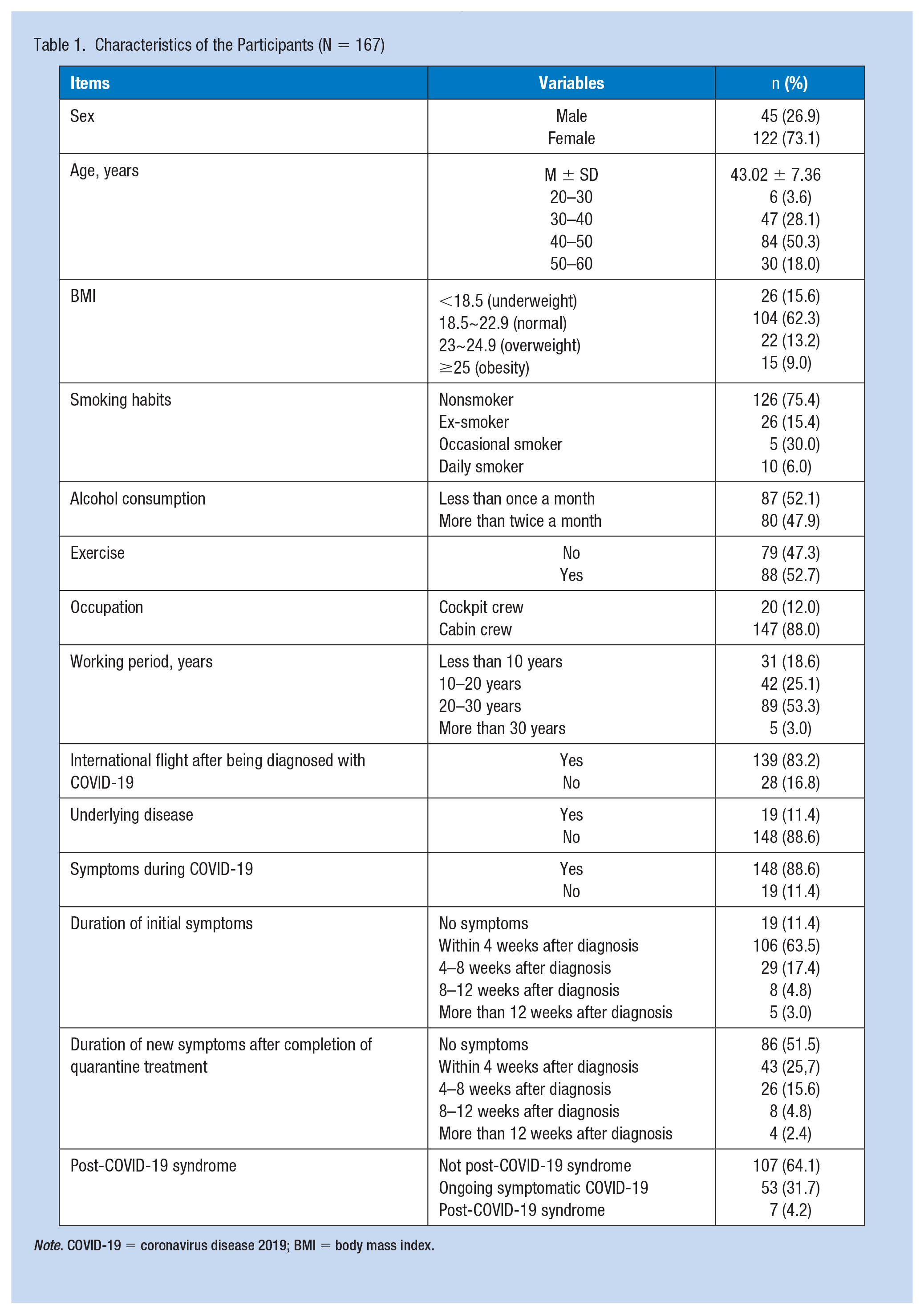
Note. COVID-19 = coronavirus disease 2019; BMI = body mass index.
COVID-19 Symptoms
The most common symptoms that appeared during COVID-19 diagnosis were cough (82.43%), fatigue (78.38%), and pain (68.59%). Symptoms that lasted up to 4 weeks were fatigue (29.25%) and cough (18.87%), whereas symptoms that lasted up to 12 weeks were fatigue (35.14%), cough (21.62%), and chest tightness (16.22%). Symptoms that lasted more than 12 weeks were fatigue (40%), cough (20%), and chest tightness (20%; Table 2). The symptoms of seven participants classified as post-COVID-19 syndrome were as follows: fatigue/dyspnea (n = 1), fatigue/pain/dyspnea/chest tightness (n = 2), cough (n = 2), fatigue/hair loss (alopecia)/forgetfulness/menstrual irregularity (n = 1), and fatigue/chest pain (tightness)/anxiety/headache (n = 1).
Symptoms of COVID-19 (N = 167)
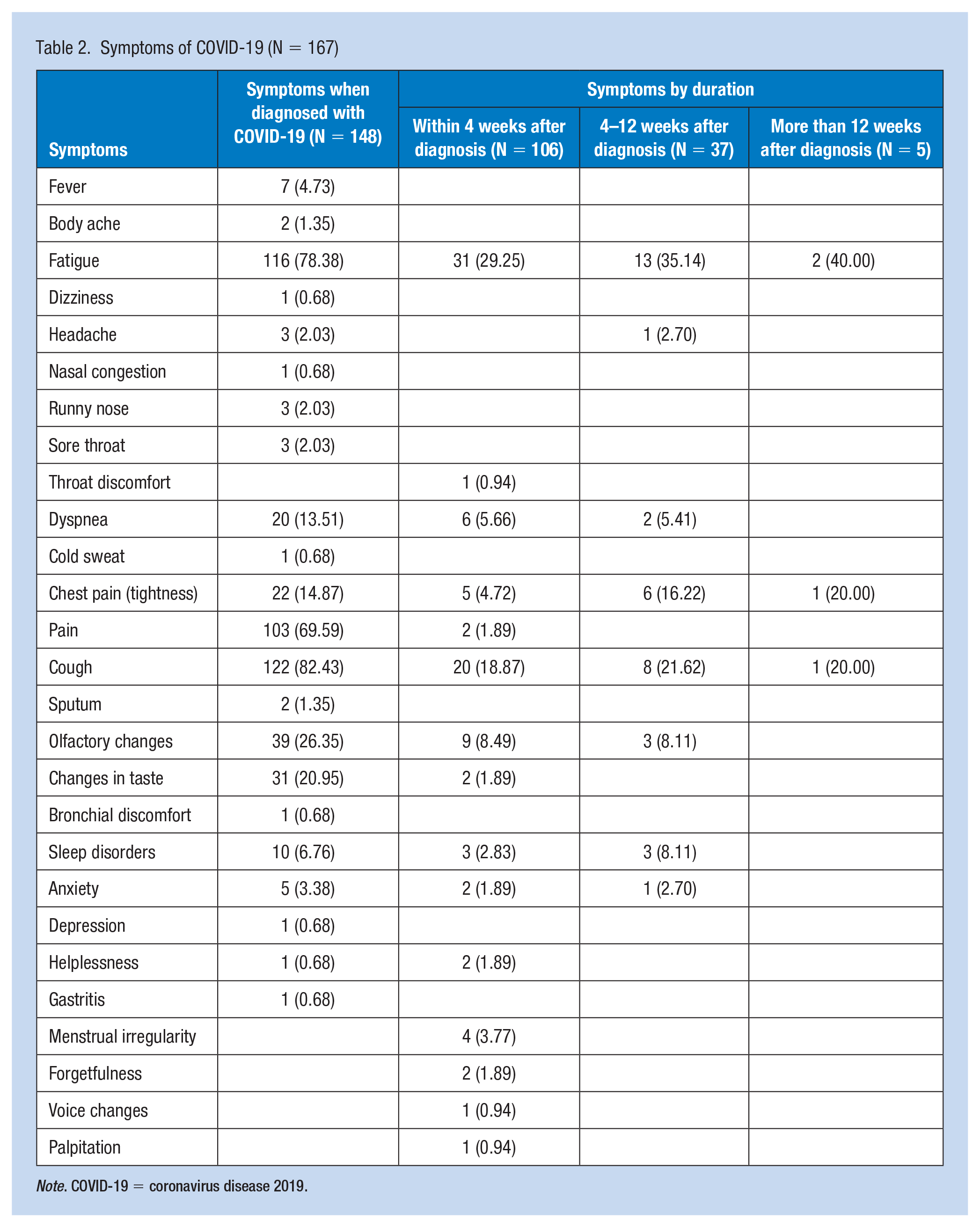
Note. COVID-19 = coronavirus disease 2019.
QoL of the Participants
The mean total QoL score of the participants was 64.56, with the physical domain being 11.76, psychological domain being 12.32, social domain being 13.89, environmental domain being 13.30, and overall QoL and general health domain being 13.29 (Table 3).
Quality of Life of the Participants (N = 167)
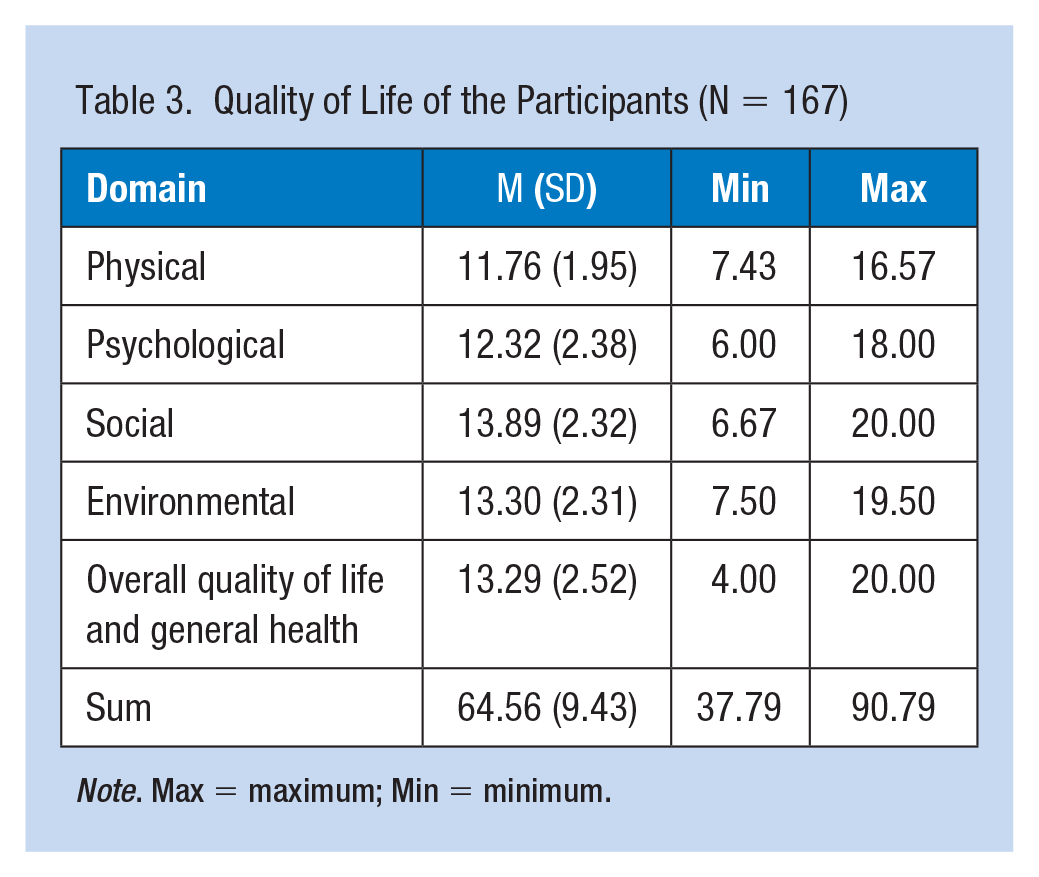
Note. Max = maximum; Min = minimum.
QoL According to the Characteristics of the Participants
The results of comparing QoL according to the characteristics of the participants by domain were as follows. Although there were no significant differences in the post hoc test, significant differences were found in social, and total QoL scores depending on age (p = .027, and p = .037, respectively). There was a significant difference in overall QoL scores depending on age (p = .010), and post hoc analysis results showed that participants in their 30s had a significantly higher overall QoL than those in their 40s. The social and overall QoL were the highest in participants in their 20s and 30s, decreased with age, and then increased again in their 50s and 60s. People who consumed alcohol more than twice a month had significantly higher overall and general health QoL than those who did not (p = .013). Cockpit crews had significantly higher physical domain QoL than cabin crews (p = .043). Although there were no significant differences in the post hoc test, significant differences were found in psychological and overall QoL depending on the years of continuous service (p = .047 and p = .021, respectively). Psychological QoL was the highest when service was continuous for 10 to 20 years. Social and environmental QoL were lower in cases where no symptoms were observed after being diagnosed with COVID-19 (p = .027 and p = .025, respectively). Significant differences were found in the physical domain, depending on the presence of post-COVID-19 syndrome (p = .037; Table 4).
Quality of Life According to the Characteristics of the Participants (N = 167)
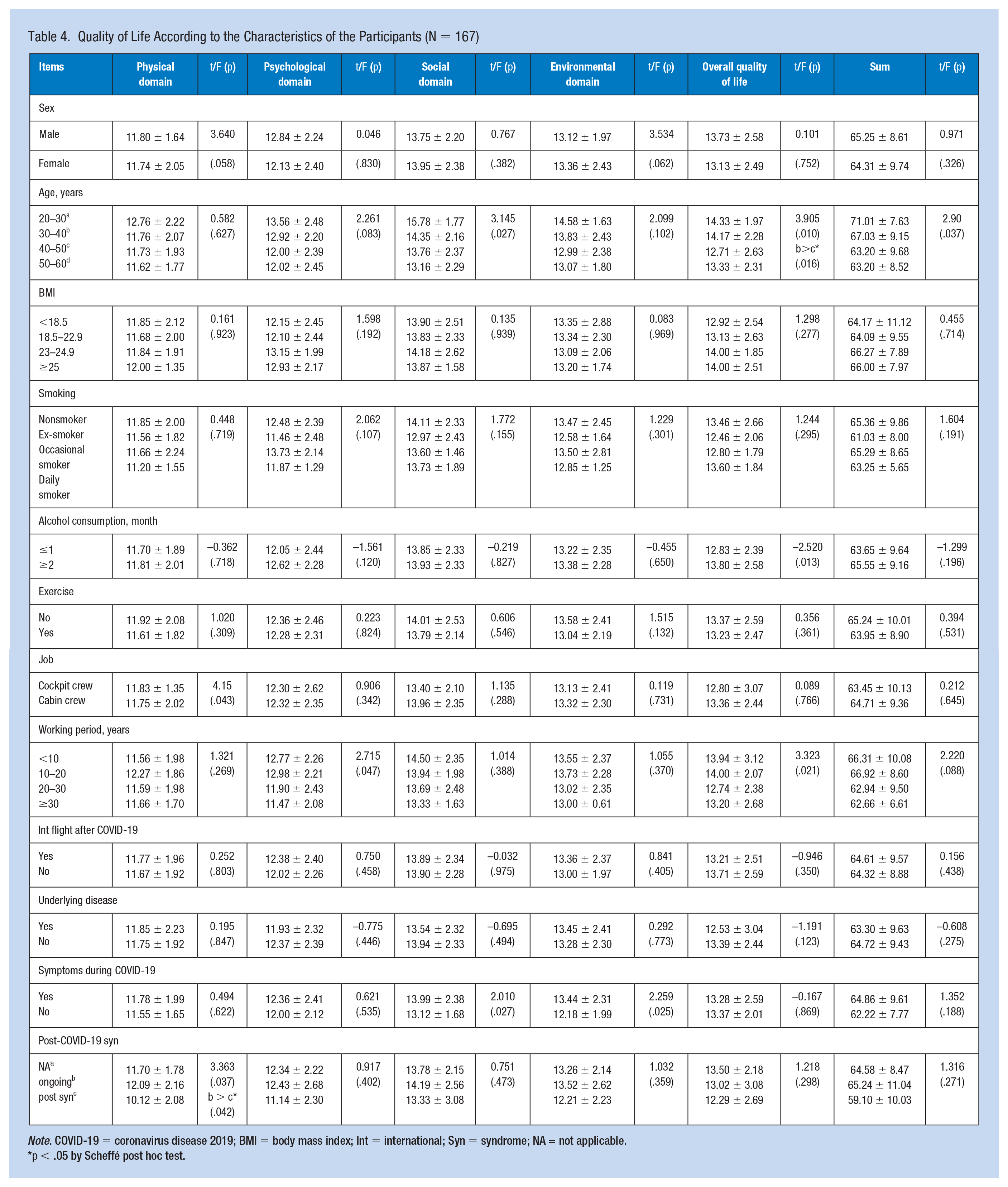
Note. COVID-19 = coronavirus disease 2019; BMI = body mass index; Int = international; Syn = syndrome; NA = not applicable.
p < .05 by Scheffé post hoc test.
Discussion
This study attempted to investigate the occurrence of post-COVID-19 syndrome among airline crews after being diagnosed with COVID-19 and identify the factors affecting their QoL. To our knowledge, this is the first study to investigate the factors affecting the QoL of cockpit and cabin crews in Korea after COVID-19 diagnosis granting it significance.
The rate of post-COVID-19 syndrome was approximately 4.2% among the participants in this study, which was lower than that in a previous study (Augustin et al., 2021). This could be attributed to several factors. First, the participants in this study are relatively healthier than those in the previous study. Airline crews have a healthier lifestyle than the general population, leading to a significantly lower mortality rate due to cancer and chronic diseases, and thus the incidence of post-COVID-19 syndrome may be higher in those with underlying diseases (Mastrorosa et al., 2023; Pizzi et al., 2008). First, approximately, 11% of the participants had underlying diseases, with a low smoking rate of about 36%. Second, the participants exhibited no COVID-19 symptoms at the time of their diagnosis compared with those in the previous study. About 95.6% of the participants in the previous study were symptomatic during COVID-19 diagnosis compared with 88.6% in this study. Third, the occurrence of symptoms related to olfactory changes and diarrhea, which were reported to persist for an extended period of time in the previous study, were notably low among the participants in this study (26% for olfactory changes, and no diarrhea symptoms were reported; Augustin et al., 2021).
The mean QoL in this study was 64.56, which was higher than that in a previous study using a similar instrument (Chung & Chung, 2009). This could be attributed to the timing of the survey as all study participants were able to return to flight duty after 7 days, which is the quarantine period set by the government, even if they were confirmed to have COVID-19 (Korea Disease Control and Prevention Agency, 2022).
The most common cause of anxiety for airline crews during COVID-19 was the fear of being unable to return to work (Görlich & Stadelmann, 2020) due to the fact that the borders of many countries were closed, leading most airlines to reduce flights and forcing many airline crews to take leave (Jeong & Kim, 2022). Moreover, airlines in Korea significantly reduced the number of flights from 2020 to 2022 during the COVID-19 pandemic. However, when collecting data for this study, aircraft operations gradually returned to normal as expected and thus anxiety was not high. This finding is also supported by the results of a previous study on cabin crews, which reported that the higher their position during COVID-19, the higher their anxiety due to the possibility of recommended resignation during the pandemic (Jeong & Kim, 2022). In this study, psychological QoL was highest in those with 10 to 20 years of continuous service and lowest in those with more than 30 years.
The results of this study showed higher environmental and social QoL compared with that in a previous study of healthcare workers (Maqsood et al., 2021). In the previous study 38.6% of participants provided in-person care for COVID-19 patients, whereas the overtime work was high at 66.9% (Maqsood et al., 2021). In fact, 74.2% of nurses experienced COVID-19-related overtime work in Seoul, Korea (J.-H. Kim et al., 2023). Nonetheless, airline crews in Korea rotate with other crews when overtime is expected, according to relevant regulations. During the COVID-19 pandemic, face-to-face services were minimized according to the Ministry of Land, Infrastructure, and Transport (MOLIT) regulations to reduce local transmission. Hence, the QoL in the environmental and social domains was high. In addition, airline crews should receive healthcare in accordance with International Civil Aviation Organization (ICAO, 2018) regulations for flight duties, and airlines often actively support them. Thus, the QoL in the environmental and social domains was high. In fact, the scores for items “How satisfied are you with the ease with which you can receive medical services?” and “How satisfied are you with the transportation you use” were measured as high as 3.96 and 3.74, respectively. However, age-specific differences were observed in social and overall QoL. Particularly, it was the highest in those aged in their 20s and 30s, then decreased with age, and then increased again in those aged in their 50s and 60s. Work–family strains from marriage and childbirth can happen in those aged in their 30s (Ji & Jung, 2021) and thus requiring attention.
Participants with COVID-19 symptoms had higher QoL in the social and environmental domains than those without symptoms. This finding contradicts a previous study showing that QoL is lower in those with symptoms (Seeßle et al., 2022). Although direct comparison is difficult due to the different measurement instruments employed, this observation could be attributed to the fact that the participants’ symptoms in this study were mild. In this study, the most common symptoms during COVID-19 diagnosis were cough, fatigue, and pain (82.43%, 78.38%, and 69.59% respectively). This may be because the symptoms’ duration was relatively short as most study participants (63.5%) were symptomatic for less than 4 weeks. According to the previous study (Seeßle et al., 2022), approximately 53.1% complained of fatigue at the end of 12 months, and 37.5% complained of dyspnea. In addition, the symptoms of fatigue and dyspnea increased between 5 and 9 months (Seeßle et al., 2022). However, this study found that most symptoms were reduced within 3 months after the onset of symptoms.
The results of this study showed that the physical domain QoL among those with post-COVID-19 syndrome was low. The most frequently cited symptoms of post-COVID-19 syndrome in previous studies were fatigue, dyspnea, and pain. In this study, participants had fatigue that persisted for more than 12 weeks, which is consistent with the finding of a previous study (Jacobs et al., 2020; Kokolevich et al., 2022; Scharf & Anaya, 2023) and may be related to the high proportion of women among the participants in this study. In the previous study, women complained of fatigue approximately twice as much as men (Augustin et al., 2021). The symptom of fatigue due to COVID-19 is described as a psychological defense mechanism against cytokines released by the SARS-CoV-2 infection (Joli et al., 2022). This finding has significant implications, considering the characteristics of airline crews, where fatigue management is considered essential for safe aircraft operation (J. Kim et al., 2022). In addition, the participants in this study may have experienced the worst fatigue symptoms as they took a long-distance flight after COVID-19 diagnosis. Long-distance flights have been reported as a factor affecting fatigue. Thus, the feeling of fatigue experienced by the participants in this study may be attributed to flight duty rather than COVID-19 symptoms. In fact, 83% of the participants in this study had international flights after COVID-19 diagnosis. As fatigue management among airline crews is a crucial part of safe aircraft operation, it is necessary for airlines to identify those who suffered from fatigue due to post-COVID-19 syndrome and prepare management measures prior to their returning to flight duty.
This study had certain limitations. Repeated studies for many airline crews are required to investigate the frequency and incidence pattern of post-COVID-19 syndrome among airline crews. Although a post hoc power calculation resulted in a value close to 100% (Rosner, 2011), there were limitations in proving the cause and effect. Because this was a cross-sectional study, experimental studies are warranted to devise measures for managing post-COVID-19 syndrome. In this study, we did not investigate airline crew members’ cognitive decline or work efficiency; therefore, it is necessary to check for post-COVID-19 symptoms over a long period of time after recovery from COVID-19 and establish practical guidelines that allow for an adjustment of flight schedules when symptoms exist.
Implication for Occupational Health Practice
We recommend that occupational health professionals operate a specialized healthcare program for airline crews confirmed to have COVID-19, to ensure flight safety, specifically, by assessing suitability before flight duty and managing long COVID-19 syndrome.
Our findings showed that after being diagnosed with COVID-19, there were significant differences in social, overall, and total QoL scores, depending on the subject’s age, and significant differences in psychological and overall QoL, depending on work periods. This suggests that a healthcare approach that considers age and work period is necessary, especially in cases where there were no symptoms after COVID-19 diagnosis as social and environmental QoL were lower than in cases with symptoms. Airline nurses must focus not only on the healthcare of symptomatic crews, but also on whether asymptomatic crews have a decline in QoL. Moreover, airlines should consider crew members who work on domestic flights and then on international flights for fatigue management when airline crews return to flight duty after being infected with COVID-19.
Applying Research to Occupational Health Practice
Approximately, 4.2% of airline crews returning to work after their quarantine period for COVID-19 infection had post-COVID-19 syndrome. Post-COVID-19 syndromes have been shown to reduce airline crew’s physical QoL. There were various factors that affected the quality of life of airline crews, including age, place of work, and years of service.
Including ongoing symptomatic COVID-19, 35.9% of all participants had COVID-19 symptoms for more than 4 weeks. Fatigue is the most common symptom, and 83.2% of the participants worked on international flights after the COVID-19 quarantine period. Therefore, continuous evaluation of airline crews returning to work after infectious disease and adjustment of their duty accordingly may be necessary.
Footnotes
Author Contributions
J.-H.K. contributed substantially to the conception, design of the work, the acquisition and analysis of data for the work, drafting the work or reviewing it critically for important intellectual content, and giving final approval for the version to be published. S.C. contributedsubstantially to the conception, design of the work, the analysis and interpretation of data for the work, drafting the work or reviewing it critically for important intellectual content, and giving final approval for the version to be published.
Conflict of Interest
The author(s) declared no potential conflicts of interest with respect to the research, authorship, and/or publication of this article.
Funding
The author(s) received no financial support for the research, authorship, and/or publication of this article.
Human Subject Review Details
The institutional review board of Gachon University gave approval for the study plan and questionnaire (IRB no. 1044396-202211-HR-217-01).
