




Abstract
Background:
Physical inactivity is a major global health problem. Industrial automation has led to an increased number of workers who are sedentary at work. We examined whether three socioecological factors (i.e., predisposing, reinforcing, and enabling factors) derived from the PRECEDE-PROCEED model would be significantly associated with the physical activity and sedentary behavior among workers.
Methods:
A cross-sectional study was conducted among 539 employees at an electronic manufacturing plant in Gumi, South Korea. Physical activity variables of energy expenditure (MET-min/week) and sitting time at work (minutes/day) were measured by the International Physical Activity Questionnaire and the Workforce Sitting Questionnaire, respectively. Of the socioecological factors, a predisposing factor defined as self-determined motivation was measured by the Exercise Self-Regulation Questionnaire; a reinforcing factor defined as autonomy support was measured by the Work Climate Questionnaire; and an enabling factor defined as supportive workplace environment was measured by the Perceived Workplace Environment Scale.
Findings:
Self-determined motivation (i.e., autonomous and controlled forms of motivation), autonomy support, and a supportive workplace environment were all significantly associated with increased physical activity energy expenditure during leisure-time. However, they were not significantly associated with sitting time on working and non-working days.
Conclusion/Applications to Practice:
Three socioecological factors of the PRECEDE-PROCEED model were significantly associated with leisure-time physical activity among workers. Our findings may help occupational health nurses use a socioecological approach for designing effective workplace strategies to increase leisure-time physical activity among workers.
Background
Physical inactivity is attributed to the risk of mortality from cardiovascular disease, diabetes, and cancer (Gilchrist et al., 2020; Li et al., 2020) and contributes to approximately 11% of global mortality annually (Forouzanfar et al., 2016). Recently, industrial automation and increased office-based jobs have led to an increased number of workers who perform sedentary tasks at work with a lower occupation-related energy expenditure (Church et al., 2011; Straker et al., 2016). During the past 50 years, the number of workers with sedentary occupations has increased by approximately 28% (Church et al., 2011), which may contribute to a decrease in physical activity and increase in sedentary behaviors among workers.
Generally, physical activity is defined as any bodily movement produced by skeletal muscles that results in energy expenditure (Caspersen et al., 1985) and refers to all movements including those during leisure time, transport, and occupational activities (World Health Organization, 2018). Sedentary behavior is defined as any waking behaviors characterized by the energy expenditure of ≤1.5 metabolic equivalents (METs), such as sitting, reclining, or lying postures (Thivel et al., 2018). Physical activity and sedentary behavior are associated with cardiovascular risk. In particular, a cohort study reported that increasing physical activity in workers was significantly associated with a decreased incidence of coronary heart disease and cardiovascular diseases (Ferrario et al., 2018). A systematic review and meta-analysis study reported that increasing sedentary behavior in adults was significantly associated with cardiovascular disease mortality and incidence, cancer incidence, and type 2 diabetes incidence (Biswas et al., 2015).
Workers with sedentary occupations might have lower total daily physical activity levels than those with non-sedentary occupations (Van Domelen et al., 2011). Previously, it was reported that workers with occupations classified as low-activity occupational categories had the least moderate/vigorous physical activity and the highest sedentary behavior, compared with those with occupations classified as high-activity occupational categories (Steeves et al., 2018). Furthermore, workers with computer and management occupations were characterized by the lowest levels of daily physical activity (Quinn et al., 2020; Steeves et al., 2018). Thus, it serves the health of workers to identify ways to increase physical activity and to decrease sedentary behavior. Therefore, workers with sedentary occupations should not only be exposed to a workplace environment that strives to decrease physical inactivity and sedentary behavior but also workers should be encouraged to engage in leisure-time physical activity in their daily life for the offset of their sedentary time at work (Pierce et al., 2019).
A systematic review reported that single-component interventions might have inconsistent effects, but multicomponent interventions may be more effective in reducing workers’ physical inactivity; however, the quality of the studies was generally low (Shrestha et al., 2018). In spite of this, we argue that physical activity interventions for workers with sedentary occupations should comprise multiple components to improve systematically identified predictors of workers’ physical activity. However, there is limited information on the predictors of physical activity and sedentary behavior among workers based on a systematic and theoretical approach. Therefore, the identification of such predictors may be critical for developing a workplace physical activity intervention with multiple components.
Physical activity is characterized by health behavior that is influenced by interactions with socioecological environment factors (Green & Kreuter, 2005; King & Gonzalez, 2018; Sallis et al., 2006). The PRECEDE-PROCEED model delineates a systematic approach to identify three socioecological factors associated with physical activity, that is, predisposing, reinforcing, and enabling factors (Green & Kreuter, 2005; Jirathananuwat & Pongpirul, 2017). The PRECEDE-PROCEED model is well-known as being useful for population-based health program planning to promote health behaviors using socioecological and educational approaches with eight phases of assessment, intervention alignment, and evaluation (Green & Kreuter, 2005). The PRECEDE-PROCEED model guides socioecological factors influencing a health behavior in the phase for the educational and ecological assessment, such as predisposing, reinforcing, and enabling factors (Green & Kreuter, 2005). The socioecological factors identified are included into the development of a health program in the phase for the intervention alignment and then evaluated in following phases for process, impact, and outcome evaluations.
The predisposing factor may include autonomy that is conceptualized as motivation for behavioral changes at an intrapersonal level (Green & Kreuter, 2005) based on self-determination theory (Hagger & Chatzisarantis, 2007). Autonomy is defined as the degree of autonomous motive (Hagger & Chatzisarantis, 2007) on a continuum from less autonomy (controlling motives) to more autonomy (autonomous motives) (Hagger & Chatzisarantis, 2007). Empirically, autonomous motives (autonomous form) have positive associations with physical activity among workers, whereas controlling motives (controlled form) have negative associations with physical activity among workers (van Scheppingen et al., 2014).
The reinforcing factor may imply autonomy support conceptualized as encouragement of self-initiation and acknowledgment of the perspectives of others at an interpersonal level (Green & Kreuter, 2005; Hagger & Chatzisarantis, 2007; Ryan & Deci, 2018). In this context, work supervisors may play a role in supporting the activation of subordinates’ health behavior through positive feedback and encouragement and by reinforcing their self-regulation and self-initiation (Baard et al., 2004; Ryan & Deci, 2018; Slemp et al., 2015). Empirically, autonomy support from supervisors or other workers has positive associations with the well-being and health of workers (Moreau & Mageau, 2012).
The enabling factors include environmental resource availability and accessibility that can promote behavioral changes at an organizational level (Green & Kreuter, 2005). A supportive workplace environment may be an enabling factor that promotes workers’ behavioral changes (Green & Kreuter, 2005), including accessibility to workstations, convenience of work schedules, organizational modifications, and availability of space (de Jersey et al., 2017; Green & Kreuter, 2005). Empirically, supportive workplace environments such as facilities, policies, and work rules for physical activity have positive associations with physical activity among white-collar workers (Watanabe et al., 2018).
The study aimed to determine whether the three socioecological factors (i.e., predisposing, reinforcing, and enabling factors) derived from the PRECEDE-PROCEED model would be significantly associated with physical activity and sedentary behavior among workers.
Methods
This study utilized a cross-sectional design, and participants were recruited from an electronics manufacturer that employed 605 workers in Gumi, South Korea. Participants were operators, technicians, and engineers who evaluated electronic products via direct observation or via computer screens to check any product problems. Data were obtained through self-reported questionnaires collected in June 2016. The minimum required sample size to achieve a desired statistical power level of .90, an anticipated effect size of .10 for predictor variables of outcome variables, a type I error rate of .05, and 15 predictors was 249 subjects (Cohen et al., 2003; Soper, 2020).
Sociodemographic, health-related, and work-related characteristics of the participants were collected by self-reported questionnaires. The sociodemographic characteristics were age (years), gender (male/female), marital status (yes/no), and educational background (elementary, middle, high school, college, graduate school) was collapsed into college versus less than college.
Health-related characteristics included body mass index (body weight/height = kg/m2), current smoking status (yes/no), alcohol drinking defined as drinking any alcohol at least once a month (yes/no), and self-rated health status. The self-rated health status was assessed by the question, “How is your health in general?” with a 5-point scale (excellent, good, fair, bad, and very bad) and it was recoded as good (including excellent and good) versus bad (including fair, bad, and very bad).
Work-related characteristics included shift work (yes/no), duration of employment (years), weekly working hours (≤40 hours/week vs. >40 hours/week), break time during working per day (minutes), work intensity score, and self-rated work environment. Work intensity was calculated by perceived workload multiplied by frequency of work. Perceived workload was assessed by asking participants, “During the past month, how do you perceive the workload in your current work?” with a 5-point scale (very easy = 1, easy = 2, a little hard = 3, hard = 4, and very hard = 5). The frequency of work was assessed by asking, “During the past month, how frequently have you worked” with responses including: 1 = 1–2 times per bi-monthly, 2 = 2–3 days per week, 3 = less than 4 hours per day, 4 = not less than 4 hours per day, and 5 = not less than 8 hours per day. The self-rated work environment was assessed by asking, “How is your work environment in general?” with a 5-point scale (no problem at all, no problem, usually, serious, and very serious), and it was recoded as adequate (including no problem at all and no problem) vs. inadequate (including usually, serious, and very serious).
Physical Activity and Sedentary Behavior
Physical activity was defined as physical activity energy expenditure measured using the Korean version of the self-administered International Physical Activity Questionnaire-Long Form (IPAQ-LF) that estimates physical activity levels across four domains: occupational, transportation, household, and leisure-time (IPAQ Research Committee, 2010). The IPAQ-LF was used to collect data regarding the reported frequency (days) and duration (minutes) of moderate and vigorous activities for each domain during the past week. Only activities that were performed for at least 10 minutes each time were reported in the questionnaire. The IPAQ-LF score was also used to calculate the metabolic equivalent of each task for each domain (MET-min/week). The following four domain subscores were calculated: time spent performing occupation-related physical activity = (3.3 × walking minutes × walking days at work) + (4.0 × moderate activity minutes × moderate activity days at work) + (8.0 × vigorous activity minutes × vigorous activity days at work); time spent performing transportation-related physical activity = (3.3 × walking minutes × walking days for transportation) + (6.0 × cycling minutes × cycling days for transportation); time spent performing household-related physical activity = (5.5 × vigorous activity minutes × vigorous activity days performing yard work) + (4.0 × moderate activity minutes × moderate activity days performing yard work) + (3.0 × moderate activity minutes × moderate activity days performing inside chores); time spent performing physical activity during leisure-time = (3.3 × walking minutes × walking days during leisure-time) + (4.0 × moderate activity minutes × moderate activity days during lei-sure-time) + (8.0 × vigorous activity minutes × vigorous activity days during leisure-time).
Sedentary behavior was defined as sitting time (minutes per day). The sitting time was measured as the sum of sitting time on workdays and non-workdays using a modified Workforce Sitting Questionnaire (WSQ) developed by Chau et al. (2011). The English version of the WSQ was translated to Korean separately by three Korean nursing scholars; then, the three Korean versions were discussed, confirmed, and consolidated into a single Korean version. The Korean version was back-translated by a native English speaker, and the back-translated English version was again confirmed by the three nursing scholars and another person who was bilingual in English and Korean. The WSQ asked participants to report their time spent sitting while traveling to and from places, while at work, while watching television, while using a computer at home, and while performing other leisure activities on an average workday and on an average non-workday during the past month to reflect the shift work characteristics. We used three variables: total, workday, and non-workday sitting times. Total sitting time was measured as the average of the sitting time on a workday and non-workday.
Socioecological Factors: Predisposing, Reinforcing, and Enabling Factors
Self-determined motivation (predisposing factor) was measured using the Exercise Self-Regulation Questionnaire (SRQ-E) developed by Ryan and Connell (1989). The English version of the SRQ-E was translated and back-translated in the same manner as the WSQ. The 12 items were divided into four subscales with a 7-point Likert-type scale ranging from 1 (not at all true) to 7 (very true): external regulation, introjected regulation, identified regulation, and intrinsic motivation. These four subscales were divided into autonomous and controlled forms of motivation. The autonomous forms were averaged using the intrinsic motivation and identified regulation items, and the controlled forms were averaged using the introjected and external regulation items (van Scheppingen et al., 2014). Higher scores indicated higher levels of self-determined motivation. In a previous study, Cronbach’s α values for the subscales of autonomous and controlled forms were .81 and .78, respectively (van Scheppingen et al., 2014). In this study, Cronbach’s α values for the subscales of autonomous and controlled forms were .87 and .80, respectively.
Autonomy support (reinforcing factor) was measured using the Work Climate Questionnaire (WCQ) developed by Baard et al. (2004). The English version of the WCQ was translated and back-translated in the same manner as the WSQ. The WCQ contains 15 items with a 7-point Likert-type scale ranging from 1 (strongly disagree) to 7 (strongly agree). The scores were calculated by averaging the individual item scores. Higher average scores represented higher levels of perceived autonomy support. Cronbach’s α for the scale was .97 in a previous study (Slemp et al., 2015) and .96 in this study.
The supportive workplace environment (enabling factor) was measured using modified Perceived Workplace Environment Scale (PWES). The PWES was originally developed by Prodaniuk et al. (2004) and translated to Korean by Roh et al. (2012). The scale contains six items with a 5-point Likert-type scale ranging from 1 (none) to 5 (a great amount). The six items of the PWES are as follows: (a) individual level item, “How much information is provided in your workplace to educate and/or encourage employees about physical activity?,” (b) social level item, “Is there a positive social climate that encourages physical activity in your workplace?,” (c) community level item, “Has your organization used any services or resources in the community to support the physical activity of employees? (e.g., local recreation center and community events),” (d) organizational level item, “How much organizational capacity (i.e., infrastructure, will, and leadership) is there in your workplace that promotes physical activity for employees?,” (e) policy level item, “Does your workplace have policies that promote the physical activity of employees? (e.g., no meetings scheduled over lunch and subsidized memberships at a fitness center),” (f) physical environment level item, “Are there convenient and appropriate facilities that you can access to do physical activity during the workday?” The scores of these six items were summed. Higher scores indicated more supportive workplace environments in terms of physical activity. Cronbach`s α for this scale was .81 in a previous study (Roh et al., 2012) and .88 in this study.
This study was approved by the Institutional Review Board of Korea University (no. 1040548-KU-IRB-15-270-A-1 [R-A-1]). All participants provided written informed consent.
Data Analysis
Data were analyzed using IBM SPSS version 23.0 (IBM Co., Armonk, NY, USA); p < .05 was considered statistically significant. The descriptive statistics of participants’ general characteristics, physical activity levels, and socioecological factor (predisposing, reinforcing, and enabling factors) levels were summarized as frequencies and percentages for categorical variables and as mean values and standard deviations for continuous variables. To examine the association between socioecological factors (i.e., predisposing, reinforcing, and enabling factors) and physical activity (i.e., physical activity energy expenditure and sitting time), a multiple regression analysis was performed, respectively. To test our hypotheses, two regression models were conducted: (a) crude model without any adjustment for covariates and (b) adjusted models with an adjustment for covariates. The covariates were selected based on previous literature with a cutoff of p < .20 from the results of the crude associations with the outcome variables (i.e., physical activity energy expenditure and sitting time). All categorical covariates were dichotomously coded before they were included in the regression models. In the adjusted models for the outcome variable of physical activity energy expenditure, covariates were age (years), gender, education, body mass index (kg/m2), weekly working hours (hours), break time during working (minutes), and self-rated work environment. In the adjusted models for the outcome variable of total sitting time, covariates were age (years), gender marital status and education
Results
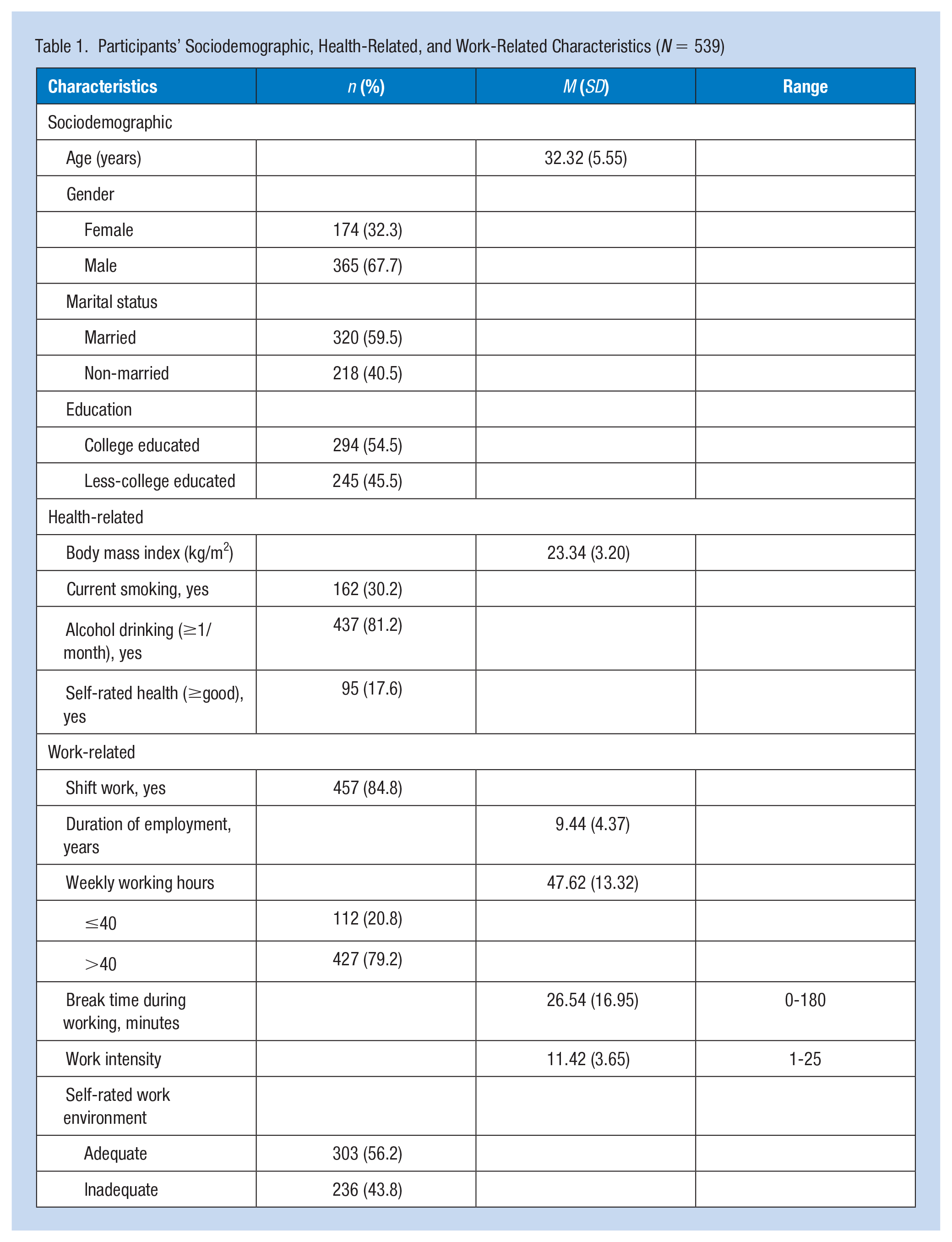
A total of 571 of 605 invited workers enrolled (participation rate = 94.4%), pregnant female employees (n = 7) and employees with missing examination results or data (n = 25) were excluded; consequently, 539 employees were included in the final sample. The participants (N = 539) had a mean age of 32.3 years and 67.7% were men, 59.5% married, and 54.5% had a college degree or higher education (Table 1). The mean body mass index of the participants was 23.3 kg/m2. One-third (30.2%) were current smokers, 81.2% consumed alcohol at least once per month, and 17.6% self-reported their health status as better than good. In addition, 84.8% performed shift work. The mean duration of employment was 9.4 years, the mean weekly work time was 47.6 hours and the mean break time per day during working per day was 26.5 minutes. The mean work intensity score was 11.4 (range, 1–25), with 43.8% reporting that they perceived their work environment as inadequate.
Participants’ Sociodemographic, Health-Related, and Work-Related Characteristics (N = 539)
The mean total physical activity energy expenditure was 4311.0 MET-min/week (Table 2). The mean occupation-related physical activity energy expenditure was 2289.4 MET-min/week. The mean physical activity energy expenditure for transportation was 554.4 MET-min/week, for household-activities was 440.6 MET-min/week, and leisure-time was 1015.0 MET-min/week. The mean total sitting time (workday and non-workday combined) was 468.2 min/day; including the mean sitting time during a workday of 485.8 min/day and non-workday of 450.5 min/day.
Levels of Physical Activity and Sedentary Behavior Among Manufacturing Workers (N = 539)
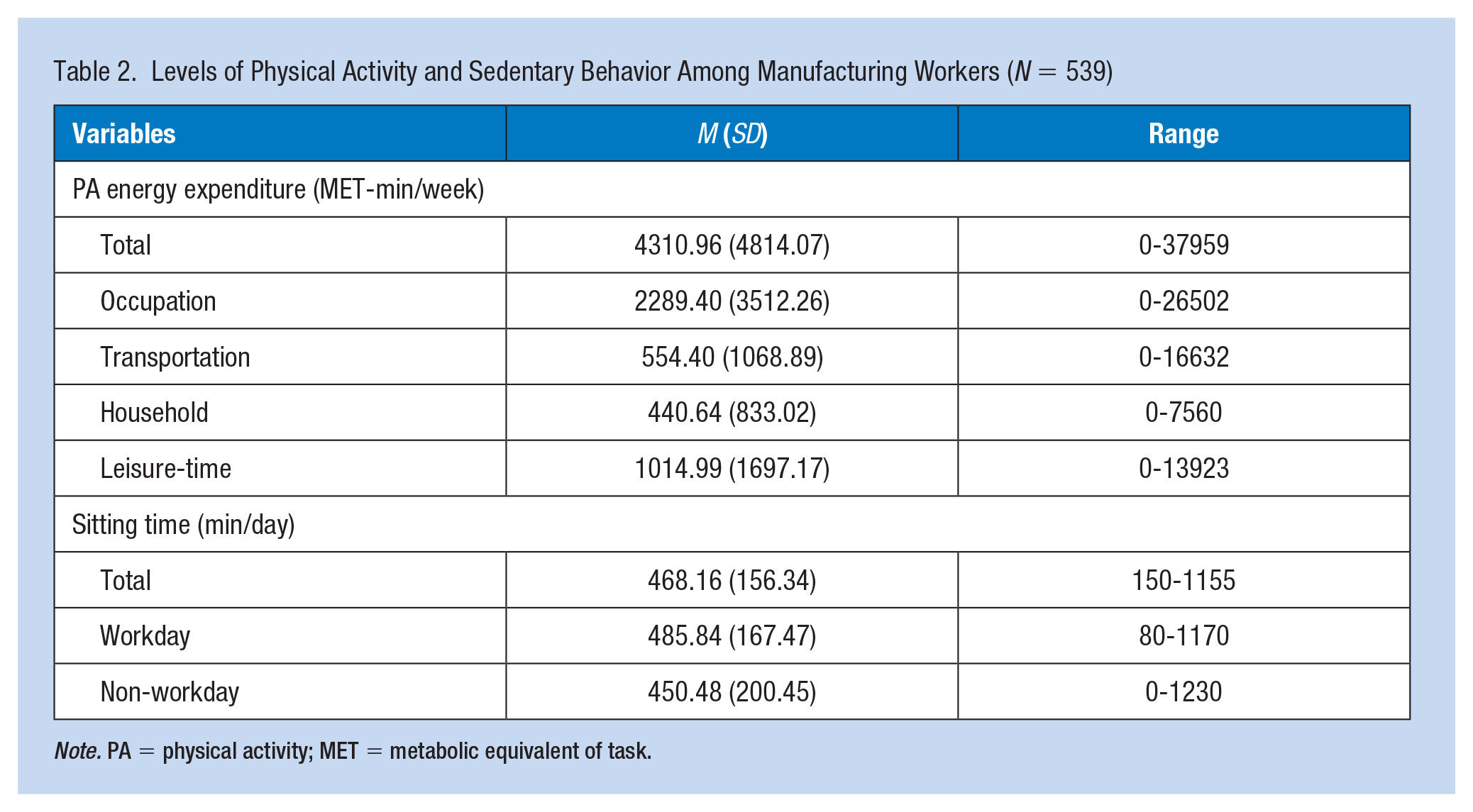
Note. PA = physical activity; MET = metabolic equivalent of task.
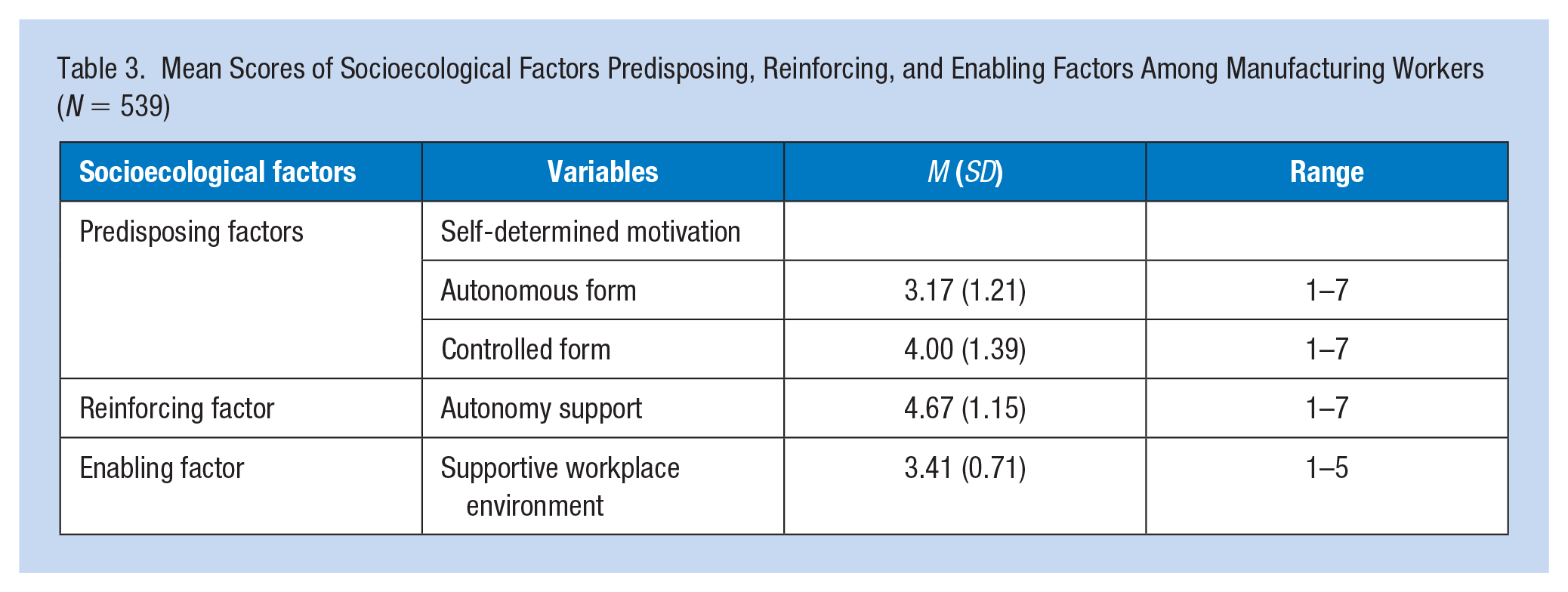
Regarding the predisposing factor of self-determined motivation, the mean autonomous and controlled forms scores were 3.2 and 4.0 (range, 1–7), respectively (Table 3). For reinforcing factors of autonomy support, the mean score was 4.7 (range, 1–7), while the enabling factor of the supportive workplace environment had a mean score of 3.4 (range, 1–5).
Mean Scores of Socioecological Factors Predisposing, Reinforcing, and Enabling Factors Among Manufacturing Workers (N = 539)
For the multivariate analyses in which we examined the outcome of physical activity energy expenditure (physical activity), autonomous and controlled forms of self-determined motivation (predisposing factors) were significantly and positively associated with total physical activity energy expenditure (beta = .17, p <.001; beta = .16, p < .001) and leisure-time physical activity energy expenditure (beta = .33, p < .001; beta = .30, p <.001) in the crude model, respectively. These associations remained significant in the adjusted model (beta = .13, p = .002; beta = .13, p = .002; beta = .33, p < .001; beta = .29, p < .001), respectively. The controlled form, but not the autonomous form, of self-determined motivation was significantly and positively associated with transportation-related physical activity energy expenditure (beta = .11, p = .013) in the crude model and this association remained significant in the adjusted model (beta = .10, p = .029).
Autonomy support (reinforcing factor) was significantly and positively associated with leisure-time physical activity energy expenditure (beta = .17, p < .001) in the crude model and this association remained significant in the adjusted model (beta = .16, p < .001). Supportive workplace environment (enabling factor) was significantly and positively associated with leisure-time physical activity energy expenditure (beta = .16, p < .001) in the crude model and significantly and positively associated with leisure-time physical activity energy expenditure (beta = .15, p < .001) and total physical activity energy expenditure (beta = .10, p = .018) in the adjusted model.
With regard to the outcome variable of sitting time (sedentary behavior) (Table 4), autonomous form of self-determined motivation (predisposing factor) was only significantly and negatively associated with total sitting times (beta = –.10, p = .016) in the crude model, but this association remained not significant in the adjusted model. Furthermore, autonomy support (reinforcing factor) and supportive workplace environment (enabling factor) were not significantly associated with total sitting time in any of the regression models.
Multivariable Models Examining Associations of Socioecological Factors with Physical Activity and Sedentary Behavior Among Manufacturing Workers (N = 539)
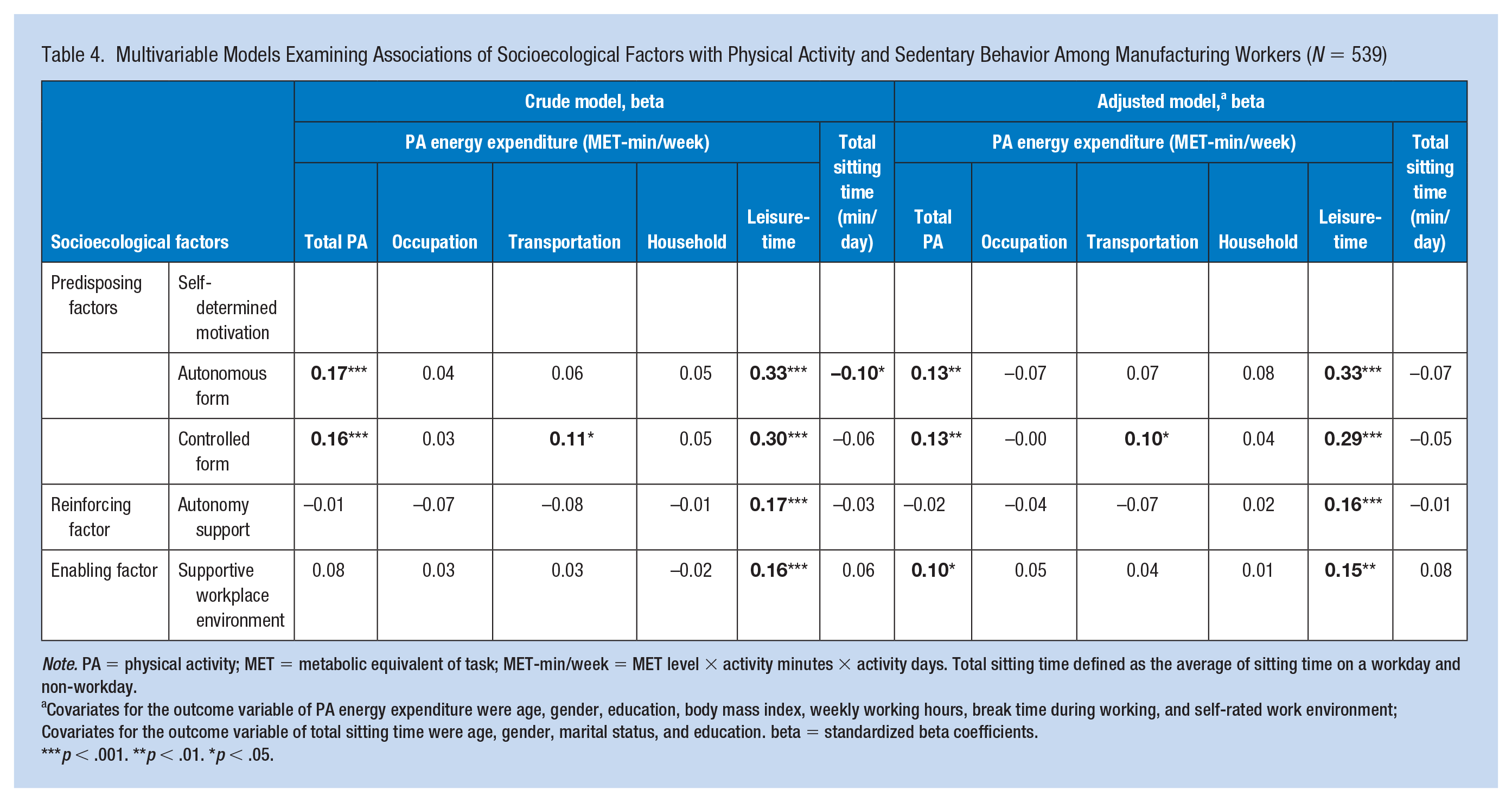
Note. PA = physical activity; MET = metabolic equivalent of task; MET-min/week = MET level × activity minutes × activity days. Total sitting time defined as the average of sitting time on a workday and non-workday.
Covariates for the outcome variable of PA energy expenditure were age, gender, education, body mass index, weekly working hours, break time during working, and self-rated work environment; Covariates for the outcome variable of total sitting time were age, gender, marital status, and education. beta = standardized beta coefficients.
p < .001. **p < .01. *p < .05.
Discussion
All the socioecological factors addressed by the PRECEDE-PROCEED model were significantly associated with the leisure-time physical activity domain among workers who mainly evaluated electronic products as part of their employment. However, they were not significantly associated with sedentary behavior as measured by sitting time among the workers. Self-determined motivation was significantly and positively associated with total physical activity and leisure-time physical activity energy expenditures. Autonomy support was significantly and positively associated with leisure-time physical activity energy expenditure. A supportive workplace environment was significantly and positively associated with total physical activity and leisure-time physical activity energy expenditures. Hence, socioecological factors were all significantly associated with increased physical activity energy expenditure during leisure-time among workers.
Regarding predisposing factors (self-determined motivation) at the intrapersonal level, we found that the autonomous and controlled forms of self-determined motivation were positively associated with total and leisure-time physical activity energy expenditure. This finding was not consistent with previous findings (Hong et al., 2020; van Scheppingen et al., 2014). van Scheppingen et al. (2014) reported that the autonomous forms were positively associated with physical activity, while the controlled forms were negatively associated with physical activity among workers in a Dutch dairy company (van Scheppingen et al., 2014). Hong et al. (2020) reported that the autonomous forms, but not the controlled form, were associated with physical activity among a Korean socioeconomically disadvantaged children group (Hong et al., 2020). This inconsistency might be attributable to the nature of autonomous and controlled forms based on the self-determination theory (Ryan & Deci, 2018) as well as the different characteristics of study participants. According to the self-determination theory (Ryan & Deci, 2018), autonomous forms were related to behaviors experienced as emanating from oneself, whereas controlled forms were related to behaviors by feeling pressured either externally or internally (Ryan & Deci, 2018). In this context, a meticulous assessment of two self-determined motivation forms among workers was prioritized, and through this assessment, workers-specific motivational intervention for enhancing physical activity should be implemented. Hence, we suggest that occupational health nurses should consider each of the characteristics of autonomous forms (e.g., personally valued, inherent satisfaction) and controlled forms (e.g., external rewards, punishments as incentives), when designing a workplace nursing intervention for improving physical activity of workers (Hagger & Chatzisarantis, 2007).
Regarding reinforcing factor (autonomy support) at the interpersonal level, we found that autonomy support was positively associated with leisure-time physical activity energy expenditure. Hagger and Chatzisarantis (2007) reported that autonomy support was fostered by supportive significant others in motivational contexts (Hagger & Chatzisarantis, 2007). Wang (2017) reported an association between autonomy support and leisure-time physical activity among adolescents (Wang, 2017); the autonomy support from parents, teachers, and peers was positively associated with leisure-time physical activity (Wang, 2017). Moreover, a meta-analysis (Slemp et al., 2018) found that autonomy support by supervisors of employees was significantly associated with the needs—autonomy, competence, and relatedness needs, which exhibited positive associations with self-determined motivation. Therefore, considering interpersonal strategies for enhancing physical activity in workers, the provision of autonomy support from supervisors may be essential. Notably, increased autonomy support needs five components (i.e., choice, rationale, empathy, collaboration, and strengths) and providers’ skills training (Kayser et al., 2014). Thus, a workplace skills training program for using the five components (i.e., choice, rationale, empathy, collaboration, and strengths) targeting supervisors should be preceded to increase autonomy support via supervisors. Based on these finding, we suggest that occupational health nurses consider an autonomy support intervention using choice (e.g., providing choice in type of exercise), rationale (e.g., providing a meaningful rationale information), empathy (e.g., acknowledging workers’ feelings and perspectives), collaboration (e.g., encouraging workers’ self-initiatives and increased self-responsibility), and strengths (e.g., providing feedback on workers’ strengths) via trained supervisors (Hagger and Chatzisarantis, 2007; Kayser et al., 2014).
Regarding the enabling factor (supportive workplace environment) at the organizational level, we found that a supportive workplace environment was positively associated with total and leisure-time physical activity energy expenditure. Similarly, Lin et al., (2012) reported that a supportive workplace environment was positively associated with total and leisure-time physical activity energy expenditure among information technology professionals who are sedentary at work in Taiwan (Lin et al., 2012). In contrast, Roh et al. (2012) reported that a supportive workplace environment was not significantly associated with total physical activity energy expenditure among Navy personnel in South Korea (Roh et al., 2012). The inconsistency findings could be attributable to the occupation-related working environment. The workplace environment of participants in this study was characterized: workers sit with at least body movement and inspect products continuously generated from automated manufacturing machines with either naked eyes or computer screens. Our participants and IT professionals (Lin et al., 2012) had a sedentary workplace, while the Navy personnel (Roh et al., 2012) had a workplace with some occupational activities inside a navy vessel. In this context, workers with a sedentary workplace may perceive a supportive workplace for physical activity as important. These findings suggest that the association between perceived supportive workplace environment and workers’ physical activity might have been different depending on workers’ workplace environment. Thus, when establishing organizational strategies for enhancing physical activity in workers who are sedentary at work, we suggest considering characteristics of occupation-related working environments preferentially. Moreover, health care professionals should consider policies, resources, and organizational situations of the workplace that could hinder or facilitate the implementation of the physical activity program (Green & Kreuter, 2005).
We found that predisposing, reinforcing, and enabling factors were not significantly associated with sitting time at the workplace. Indeed, there was little empirical evidence on associations of sitting time with all the three socioecological factors used in this study, except for a predisposing factor. In contrast to our finding of a non-significant association between sitting time (at both working and non-working days) and self-determined motivation forms, Gaston et al. (2016) reported that both autonomous and controlled forms were positively associated with sitting time among university students and staff (Gaston et al., 2016). Meanwhile, sitting time among workers may be associated with complex factors beyond the factors used in this study. Mullane et al. (2017) suggested that factors associated with workplace sitting time may be job-specific and workplace-specific and involve an array of individual, cultural, physical, and organizational factors. Particularly, cultural factors at workplace (i.e., walking during lunch time and face-to-face interactions) are negatively associated with prolonged sitting among office workers (Mullane et al., 2017). Hadgraft et al. (2018) suggested in their qualitative synthesis study that acceptability and feasibility for reducing sitting times in workplace are influenced by social norms (e.g., workplace culture) and physical environment (e.g., sit-stand work-station designs) (Hadgraft et al., 2018). Thus, strategies for reducing sitting time among workers should be designed to include workplace-specific social norm, cultural, and physical environmental factors.
This study had some limitations. First, the cross-sectional design of this study might not guarantee causal relationships between socioecological factors (self-determined motivation, autonomy support, and supportive workplace environment) and physical activity. Second, self-reported physical activity and sitting time obtained using questionnaire, rather than a validated objective instrument, for example, accelerometer, could have resulted in a recall bias in our findings. In this regard, some participants might have misreported their average sitting time per day during the past month. The levels of physical activity might be overestimated (Lim et al., 2020), which may potentially lead to increased probability for type I error. Conversely, sitting time might be underestimated, which might potentially lead to increased probability for type II error. Third, we might not exclude any residual confounding effects on the associations between three ecological factors and physical activity (or sedentary behavior), because potential covariates were not able to be included in the regression models, such as the presence of musculoskeletal injuries, household income, home environment, family support, or psychological stress. Meanwhile, the workers recruited as study participants were those who visually inspect electronic products with minimal movement throughout the working hours. However, our findings revealed that occupational energy expenditures were over the half of total energy expenditures and sitting time on workdays was comparable with that on non-workdays. These may imply that the workers have performed additional occupational task, for example, lifting or carrying electronic products as well as the inspection of them. For this reason, additional studies should spend more time investigating work characteristics meticulously and measure physical activity levels among workers. Finally, this finding was not generalizable to other ethnic population groups. Therefore, studies in the future should conduct a longitudinal study design by using more validated measures of physical activity targeting other ethnic population groups.
In conclusion, three socioecological factors (i.e., predisposing, reinforcing, and enabling factors) of the PRECEDE-PROCEED model were significantly associated with leisure-time physical activity among workers. Our findings provided information on the necessities of a socioecological approach for designing effective workplace strategies to increase leisure-time physical activity among workers.
Implications for Occupational Health Nursing Practice
The PRECEDE-PROCEED model guides an important theoretical framework for identifying the key elements of planning effective health promotion programs to change the health behaviors of workers who are sedentary at work. This study showed that self-determined motivation (predisposing factor), autonomy support (reinforcing factor), and a supportive workplace environment (enabling factor) were socioecological factors associated with leisure-time physical activity performed by workers. In this context, multilevel (e.g., intrapersonal-, interpersonal-, and organizational-level) nursing strategies should be considered when establishing physical activity promotion programs for workers. Furthermore, improving physical activity programs for workers should be planned under the initiative of occupational health nurses who most closely recognize the work environment and characteristics of the workers. Therefore, at the interpersonal level, occupational health nurses should use differentiated strategies based on the nature of the autonomous and controlled forms to promote the physical activity of workers. At the interpersonal level, occupational health nurses should provide autonomy support strategies via their supervisors for enhancing physical activity. At the organizational level, occupational health nurses should implement strategies to create a supportive workplace environment that promotes physical activity.
Applying Research to Occupational Health Practice
We examined whether three socioecological factors (i.e., predisposing, reinforcing, and enabling factors) derived from the PRECEDE-PROCEED model would be associated with physical activity and sedentary behavior among workers in a manufacturing workplace, and found that all the three factors were significantly associated with leisure-time physical activity. However, the relationship between socioecological factors and physical activity should be further confirmed from experimental trials. Finally, the three socioecological factors may give interventional insights on increasing leisure-time physical activity among workers. Occupational health nurses in manufacturing workplaces should make efforts to develop interventions for increasing the self-determined motivation, autonomy support, and supportive workplace environment relevant to leisure-time physical activity.
Footnotes
Acknowledgements
The authors thank the health manager of LG Display Gumi Complex who assisted and supported the process of data collection.
Correction (January 2023)
The affiliation of Jina Choo is Korea University.
Author Contributions
J.C. contributed to the study conceptualization, funding acquisition, investigation, methodology, project administration, supervision, and manuscript draft. H.-J.K. contributed to the study data curation, formal analysis, investigation, methodology, project administration, and manuscript draft. All authors were involved in the manuscript review, revision, and final approval process.
Conflict of Interest
The author(s) declared no potential conflicts of interest with respect to the research, authorship, and/or publication of this article.
Funding
The author(s) disclosed receipt of the following financial support for the research, authorship, and/or publication of this article: This research was supported by the Korea University (K1602071) and the National Research Foundation of Korea grant funded by the Korea government (MSIP) (No. NRF-2019R1A2C1004116).
Research Ethics
This study was approved by the Institutional Review Board of Korea University (no. 1040548-KU-IRB-15-270-A-1 [R-A-1]) on May 19, 2016.

Author Biographies
Hye-Jin Kim, PhD, RN is an Assistant Professor of community health nursing, department of nursing, Catholic Kwandong University. She has a certificate of advanced occupational health nursing and approximately 10 years of professional experience as an occupational health nurse.
Jina Choo, PhD, DrPH, RN is a tenured Professor of Community Health Nursing, College of Nursing, Korea University in Seoul, South Korea. She was a chief director of the Expert Group on Health Promotion for the Seoul Metropolitan Government for the last two years (2020–2021). Currently, She is a president of the Korean Academy of Community Health Nursing.